2015 Honda Civic Reviews, Pricing & Specs
Write a review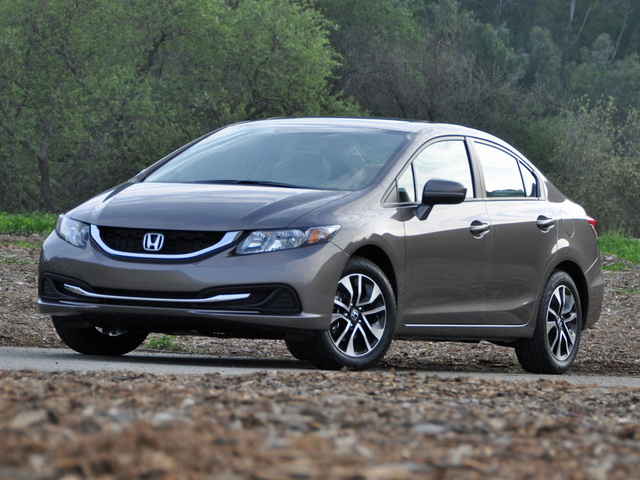
The 2015 Honda Civic is a car that will please the vast majority of the people the vast majority of the time.
Anyone who can’t recognize the Honda Civic’s multiple rays of automotive sunshine for what they are is a crank pot, a nattering nabob of negativism, and you don’t need people like that in your life.
The model year 2015 Honda Civic meets and exceeds small-car buyer preferences for reliability, safety, fuel efficiency, quality, and value without so much as breathing hard. It’s everything you’d expect in a compact economy sedan, and so much more.

As the saying goes, you can please some of the people some of the time, but you can’t please all of the people all of the time. With the 2015 Civic, Honda inflates the proportions of this idiom, because this is a car that will please the vast majority of the people the vast majority of the time.
Anyone who can’t recognize the Civic’s multiple rays of automotive sunshine for what they are is a crank pot, a nattering nabob of negativism, and you don’t need people like that in your life. Seriously, how can you argue with such high reliability ratings? Top safety scores? Effortless fuel economy in the low 7 L/100 km range? Through-the-roof residual values? You can’t. But the Civic goes beyond mere scores and metrics to earn your loyalty. It actually has some personality and zing to boot.
Honda sells a Honda Civic coupe and Honda Civic sedan, both in a variety of trim levels designed to serve widely diverse customers. Base DX and LX trims are the most affordable, the Civic Hybrid is the most efficient, and the performance-tuned Civic Si variant is the one that’s the most fun to drive.
For this test, I drove the version of the Civic most people buy: the Honda Civic EX Sedan, one painted Urban Titanium Metallic and priced at just over $22,000. This mild-mannered version of the Civic Sedan includes a continuously variable transmission (CVT), a 7-inch touchscreen infotainment system with HondaLink connectivity and services, heated seats in the front row, automatic climate control, LaneWatch technology, keyless entry and push-button engine start, a power sunroof, automatic headlights, and a nice set of aluminum alloy wheels.
No, my Civic test vehicle wasn’t pretty or sexy. In fact, it’s a little boring despite the futuristic, swooping exterior styling theme that’s now almost 10 years old. I’m hoping that when Honda next redesigns this car it will regain a crisp, clean, pert visage similar to that of Civics past. The interior design is aging, too, but remains so unusual as to still look and feel fresh. Plus, it got an extensive upgrade last year; quality materials and attention to detail never go out of style.

Although my Civic EX Sedan test vehicle wasn’t particularly fast, it was surprisingly fun to drive, so add that to this Honda’s long list of attributes. In most Civics, the powertrain is a 1.8-litre 4-cylinder engine that generates power specs of 143 horsepower, paired with a front-wheel drive (FWD) drivetrain and a remarkably refined CVT makes the most of that power in order to make merging onto the highway or climbing mountain grades relatively effortless. For those who find the notion of a CVT alienating, Honda has even dialed in algorithmic “gear changes” so that it “feels” more like a traditional automatic transmission when the driver is accelerating. A five-speed manual transmission is standard on the DX, LX, and EX grades, with the CVT optional on the latter two and standard on the Touring.
If you’re wondering how quick this Civic is, independent publications have timed the car’s acceleration to 100 km/h at a hair over 9 seconds. It feels faster than that, though, thanks in part to an engine that revs with spirit. As far as fuel economy is concerned, Natural Resources Canada states that the Civic should consume 7.2 litres per 100 kilometres in combined driving. I averaged 7.4 L/100 km, driving without the car’s Econ mode engaged. Perhaps if I’d pushed the little green button to the left of the steering wheel, I’d have come even closer to hitting those projections.
It isn’t a fast car, but the refined Civic’s driving dynamics dazzle thanks to a taut and athletic suspension that makes the car feel light, lively, like it dances around corners. Composed and connected, yet soaking up the big bumps and zits that dot the surface of most roads, the Civic’s suspension displays tossability complemented by effortlessly precise steering. Yes, the Civic Si model is engineered to deliver more outright grip and fun, but even mainstream versions of the Civic never fail to impress when it comes to handling.

The Civic may be considered a compact car, but hop inside and you'll find a surprising amount of space for its passengers and their things. Look around, and you’ll find plenty of thoughtful trays, bins, nooks, and crannies in which to store your odds and ends. Best of all, they’re situated in a cabin that’s crafted with refinement, made with quality materials and exhibiting close attention to detail. The Civic is not fancy, but it’s nicely done, and it doesn’t make you feel like you’re stuck driving an economy car.
Better still, the front seats are perfectly comfortable, and outward visibility is excellent in every direction thanks to the Civic’s slender roof pillars and large side mirrors. Front passengers do not get a seat-height adjuster, but thankfully the seat is mounted high enough above the floor that this omission is not an issue.
Rear seat passengers are comfortable, too, as space in the back is a lot more generous than the Civic’s tidy dimensions might suggest. Trunk-wise, the Civic offers 353 litres of space, but the flat and wide layout makes the cargo area seem roomier than that. Expand room by folding the 60/40-split rear seatbacks.

The 2015 Civic trends ahead of the curve when it comes to keeping drivers informed and entertained while traveling. Every 2015 Civic is equipped with Bluetooth calling and text-messaging, and if you upgrade beyond the Honda Civic LX trim level, you’ll get the automaker’s touchscreen infotainment system with HondaLink smartphone connectivity and services technology.
With HondaLink, Civic owners can access social media platforms, Internet radio stations, audio books, podcasts, and more through an Aha Radio app. The system also supports a navigation system and a variety of third-party apps, all running through your paired smartphone. A HondaLink Assist collision-notification system is also active when you’ve paired your device to the system and indicated that you would like this feature to automatically call the authorities in the event of a collision. Pair an iPhone to the system and Siri Eyes Free technology works via the voice-recognition system.
The 7-inch touchscreen display is also rather Apple-like, responding to taps, swipes, and pinches just like your favourite tablet computer. Of course, when you go over a bump and accidentally direct the screen to do something you never intended, the whole high-tech approach causes aggravation, but that’s a common problem now that this type of technology is commonplace in compact cars. Nevertheless, the Civic’s system is familiar, easy, and comprehensive, a refreshing approach when it comes to infotainment systems.

If you’re looking for a small, affordable, and safe car, the Honda Civic Sedan is a total rock star. In addition to a 5-star overall crash-test safety rating from the NHTSA and a Top Safety Pick rating from the Insurance Institute for Highway Safety (IIHS), the Civic is equipped with a backup camera that’s standard on all trims but the base DX. Also, don’t forget about the HondaLink Assist service described in the previous section.
Where Honda stirs the pot of controversy is with regard to the LaneWatch system that is standard for all but the Civic DX and LX trims. LaneWatch installs a rearview camera on the Civic’s passenger-side mirror, and when you manually activate the camera or use the right turn signal, it shows what is alongside the car on the dashboard’s touchscreen display. The idea here is for the system to eliminate the right blind spot. What about the left side, you ask? All you get is an expanded-view mirror for that.
Personally, I’d much prefer a traditional blind-spot monitoring system that lets you know if a vehicle is in your blind spot with a brightly illuminated icon on the sideview mirrors. In my opinion, LaneWatch is not intuitive and adds another reference point to check before switching lanes. As a result, it also adds distraction. C’mon, Honda. Let’s stick with what works.

Thanks to the Civic’s ability to hold its value over time, there is always a good lease deal available on this car, especially if you’re willing to get the least expensive DX and LX sedan models. Aside from lease deals, Honda occasionally offers low-rate financing for limited-term loans, but rarely, if ever, slaps a rebate on the Civic’s hood. That doesn’t mean dealers won’t provide a discount, just don’t expect to get as screaming a deal as the guy choosing, say, a Dodge Dart.
This approach doesn’t appear to hurt Civic sales much. It is the best-selling new car in Canada, top-rated for reliability, an impressive performer in quality surveys, and inexpensive to insure and own. Add the Civic’s effortlessly good fuel economy, and you’ve got one cost-effective set of commuter wheels.
Note: Images show a US model.

User reviews for 2015 Honda Civic
Write a review2015 Honda Civic Pricing
Trims & specs
Air Conditioning
Single front air conditioning zones
Airbags
Dual front airbags · Passenger airbag deactivation: occupant sensing deactivation · Front side airbags · Rear side curtain airbags
Audio System
Antenna Type: element · Bluetooth auxiliary audio input · Single disc in-Dash CD · Pandora internet radio · MP3 player: CD MP3 Playback · AM/FM radio · Total Number of Speakers: 4 · 160 watts
Brakes
ABS: 4-wheel · Front brake diameter: 11.1 · Front brakes: ventilated disc · Rear brake diameter: 10.2 · Rear brakes: disc
Comfort Features
Floor Mat Material: carpet · Floor Material: carpet · Floor Mats: front
Convenience Features
Assist handle: front · Center console: front console with armrest and storage · Cupholders: front · Multi-function remote: keyless entry · One-touch windows: 1 · Power outlet(s): two 12V front · Power steering: electric · Power windows: lockout button · Reading lights: front · Steering wheel: tilt and telescopic · Steering wheel mounted controls: audio · Storage: door pockets · Vanity mirrors: dual
Drivetrain
Axle ratio: 3.94
Exterior Features
Door handle color: body-color · Front bumper color: body-color · Grille color: black · Mirror color: body-color · Rear bumper color: body-color · Window trim: black
Headrests
Front headrests: adjustable · Number of front headrests: 2 · Number of rear headrests: 3
Instrumentation
Fuel economy display: range · Warnings and reminders: maintenance reminder
Lights
Headlights: Halogen
Mirrors
Exterior mirrors: manual folding · Inside rearview mirror: manual day/night
Rear Seats
Type: bench
Safety
Camera system: rearview · Child seat anchors: LATCH system · Crumple zones: front · Rearview monitor: in dash
Seatbelts
Emergency locking retractors: front · Front seatbelts: 3-point · Seatbelt force limiters: front · Seatbelt pretensioners: front · Seatbelt warning sensor: driver and passenger · Second row seatbelts: 3-point
Seats
Driver seat manual adjustments: height · Front seat type: bucket · Rear headrests: adjustable · Upholstery: cloth
Spare Tire
Mount Location: inside · Size: temporary
Spare Wheel
Rim Type: steel
Steering
Steering ratio: 14.9 · Turns lock-to-lock: 2.90
Suspension
Front Arm Type: lower control arms · Front Shock Type: gas shock absorbers · Front Spring Type: coil springs · Front Stabilizer Bar: diameter 19mm · Front Suspension Classification: independent · Front Suspension Type: MacPherson struts · Rear Shock Type: gas shock absorbers · Rear Spring Type: coil springs · Rear Stabilizer Bar: diameter 16 mm · Rear Suspension Classification: independent · Rear Suspension Type: multi-link
Telematics
Electronic messaging assistance: with read function · Phone wireless data link: Bluetooth
Tires
Type: all season
Tires and Rims
Wheels: steel
Wheels
Wheel covers: full
Windows
Front wipers: intermittent
Air Conditioning
Automatic climate control front air conditioning · Single front air conditioning zones
Airbags
Dual front airbags · Passenger airbag deactivation: occupant sensing deactivation · Front side airbags · Rear side curtain airbags
Audio System
Antenna Type: element · Bluetooth auxiliary audio input · Single disc in-Dash CD · Pandora internet radio · MP3 player: CD MP3 Playback · Touch screen display radio · Total Number of Speakers: 6 · 360 watts
Brakes
ABS: 4-wheel · Front brake diameter: 10.3 · Front brakes: ventilated disc · Rear brake diameter: 7.9 · Rear brakes: disc
Comfort Features
Floor Mat Material: carpet · Floor Material: carpet · Floor Mats: front
Convenience Features
Assist handle: front · Center console: front console with armrest and storage · Cupholders: front · Multi-function remote: trunk release · One-touch windows: 1 · Power outlet(s): two 12V front · Power steering: electric · Power windows: lockout button · Reading lights: rear · Steering wheel: tilt and telescopic · Steering wheel mounted controls: cruise controls · Storage: door pockets · Vanity mirrors: dual
Drivetrain
Axle ratio: 3.94
Exterior Features
Door handle color: body-color · Front bumper color: body-color · Grille color: black · Mirror color: body-color · Rear bumper color: body-color · Window trim: black
Headrests
Front headrests: adjustable · Number of front headrests: 2 · Number of rear headrests: 3
In Car Entertainment
Infotainment: HondaLink · Infotainment screen size: 7 in.
Instrumentation
Fuel economy display: MPG · Warnings and reminders: low fuel level
Lights
Headlights: Halogen
Mirrors
Exterior mirrors: manual folding · Inside rearview mirror: manual day/night
Rear Seats
Type: bench
Safety
Camera system: rearview · Child seat anchors: LATCH system · Crumple zones: front · Rearview monitor: in dash
Seatbelts
Emergency locking retractors: front · Front seatbelts: 3-point · Seatbelt force limiters: front · Seatbelt pretensioners: front · Seatbelt warning sensor: driver and passenger · Second row seatbelts: 3-point
Seats
Driver seat manual adjustments: height · Front seat type: bucket · Rear headrests: adjustable · Upholstery: cloth
Spare Tire
Mount Location: inside · Size: temporary
Spare Wheel
Rim Type: steel
Steering
Steering ratio: 14.9 · Turns lock-to-lock: 2.90
Suspension
Front Arm Type: lower control arms · Front Shock Type: gas shock absorbers · Front Spring Type: coil springs · Front Stabilizer Bar: diameter 19mm · Front Suspension Classification: independent · Front Suspension Type: MacPherson struts · Rear Shock Type: gas shock absorbers · Rear Spring Type: coil springs · Rear Stabilizer Bar: diameter 16 mm · Rear Suspension Classification: independent · Rear Suspension Type: multi-link
Telematics
Electronic messaging assistance: with read function · Phone wireless data link: Bluetooth
Tires
Type: all season
Tires and Rims
Wheel type: aluminum alloy
Windows
Front wipers: intermittent
Air Conditioning
Single front air conditioning zones
Airbags
Dual front airbags · Passenger airbag deactivation: occupant sensing deactivation · Front side airbags · Front side curtain airbags
Audio System
Antenna Type: element · Bluetooth auxiliary audio input · Single disc in-Dash CD · Pandora internet radio · MP3 player: CD MP3 Playback · AM/FM radio · Total Number of Speakers: 4 · 160 watts
Brakes
ABS: 4-wheel · Front brake diameter: 10.3 · Front brakes: ventilated disc · Rear brake diameter: 7.9 · Rear brakes: disc
Comfort Features
Floor Mat Material: carpet · Floor Material: carpet · Floor Mats: front
Convenience Features
Assist handle: rear · Center console: front console with armrest and storage · Cupholders: front · Multi-function remote: trunk release · One-touch windows: 1 · Power outlet(s): two 12V front · Power steering: electric · Power windows: lockout button · Reading lights: front · Steering wheel: tilt and telescopic · Steering wheel mounted controls: phone · Storage: door pockets · Vanity mirrors: dual
Drivetrain
Axle ratio: 3.94
Exterior Features
Door handle color: body-color · Front bumper color: body-color · Grille color: black · Mirror color: body-color · Rear bumper color: body-color · Rear spoiler: decklid · Rear spoiler color: body-color · Window trim: black
Headrests
Front headrests: adjustable · Number of front headrests: 2 · Number of rear headrests: 3
Instrumentation
Fuel economy display: range · Warnings and reminders: turn off headlights
Lights
Headlights: Auto off
Mirrors
Exterior mirrors: power · Inside rearview mirror: manual day/night
Rear Seats
Type: bench
Safety
Camera system: rearview · Child seat anchors: LATCH system · Crumple zones: front · Rearview monitor: in dash
Seatbelts
Emergency locking retractors: front and rear · Front seatbelts: 3-point · Seatbelt force limiters: front · Seatbelt pretensioners: front · Seatbelt warning sensor: driver and passenger · Second row seatbelts: 3-point
Seats
Driver seat manual adjustments: height · Front seat type: bucket · Rear headrests: adjustable · Upholstery: cloth
Spare Tire
Mount Location: inside · Size: temporary
Spare Wheel
Rim Type: steel
Steering
Steering ratio: 14.9 · Turns lock-to-lock: 2.90
Suspension
Front Arm Type: lower control arms · Front Shock Type: gas shock absorbers · Front Spring Type: coil springs · Front Stabilizer Bar: diameter 19mm · Front Suspension Classification: independent · Front Suspension Type: MacPherson struts · Rear Shock Type: gas shock absorbers · Rear Spring Type: coil springs · Rear Stabilizer Bar: diameter 16 mm · Rear Suspension Classification: independent · Rear Suspension Type: multi-link
Telematics
Electronic messaging assistance: with read function · Phone wireless data link: Bluetooth
Tires
Type: all season
Tires and Rims
Wheel type: aluminum alloy
Windows
Front wipers: intermittent
Air Conditioning
Automatic climate control front air conditioning · Single front air conditioning zones
Airbags
Dual front airbags · Passenger airbag deactivation: occupant sensing deactivation · Front side airbags · Rear side curtain airbags
Audio System
Antenna Type: element · Bluetooth auxiliary audio input · Single disc in-Dash CD · Pandora internet radio · MP3 player: CD MP3 Playback · Touch screen display radio · Total Number of Speakers: 6 · 360 watts
Brakes
ABS: 4-wheel · Front brake diameter: 11.1 · Front brakes: ventilated disc · Rear brake diameter: 10.2 · Rear brakes: disc
Comfort Features
Armrests: rear center folding with storage · Floor Mat Material: carpet · Floor Material: carpet · Floor Mats: front
Convenience Features
Assist handle: front · Center console: front console with armrest and storage · Cupholders: front · Multi-function remote: proximity entry system · One-touch windows: 1 · Power outlet(s): two 12V front · Power steering: electric · Power windows: lockout button · Reading lights: rear · Steering wheel: tilt and telescopic · Steering wheel mounted controls: cruise controls · Storage: front seatback · Vanity mirrors: dual
Drivetrain
Axle ratio: 3.94
Exterior Features
Door handle color: body-color · Front bumper color: body-color · Grille color: black · Mirror color: body-color · Rear bumper color: body-color · Window trim: black
Headrests
Front headrests: adjustable · Number of front headrests: 2 · Number of rear headrests: 3
In Car Entertainment
Infotainment: HondaLink · Infotainment screen size: 7 in.
Instrumentation
Fuel economy display: MPG · Warnings and reminders: maintenance reminder
Lights
Headlights: Halogen
Mirrors
Exterior mirrors: power · Inside rearview mirror: manual day/night
Rear Seats
Type: 60-40 split bench
Roof
Moonroof: one-touch open/close
Safety
Blind spot safety: passenger side camera · Camera system: rearview · Child seat anchors: LATCH system · Crumple zones: front · Rearview monitor: in dash
Seatbelts
Emergency locking retractors: front and rear · Front seatbelts: 3-point · Seatbelt force limiters: front · Seatbelt pretensioners: front · Seatbelt warning sensor: driver and passenger · Second row seatbelts: 3-point
Seats
Driver seat manual adjustments: height · Front seat type: bucket · Rear headrests: adjustable · Rear seat folding: split · Upholstery: cloth
Spare Tire
Mount Location: inside · Size: temporary
Spare Wheel
Rim Type: steel
Steering
Steering ratio: 14.9 · Turns lock-to-lock: 2.90
Suspension
Front Arm Type: lower control arms · Front Shock Type: gas shock absorbers · Front Spring Type: coil springs · Front Stabilizer Bar: diameter 19mm · Front Suspension Classification: independent · Front Suspension Type: MacPherson struts · Rear Shock Type: gas shock absorbers · Rear Spring Type: coil springs · Rear Stabilizer Bar: diameter 16 mm · Rear Suspension Classification: independent · Rear Suspension Type: multi-link
Telematics
Electronic messaging assistance: with read function · Phone wireless data link: Bluetooth
Tires
Type: all season
Tires and Rims
Wheel type: aluminum alloy
Windows
Front wipers: variable intermittent
Air Conditioning
Automatic climate control front air conditioning · Single front air conditioning zones
Airbags
Dual front airbags · Passenger airbag deactivation: occupant sensing deactivation · Front side airbags · Rear side curtain airbags
Audio System
Antenna Type: element · Bluetooth auxiliary audio input · Single disc in-Dash CD · Pandora internet radio · MP3 player: CD MP3 Playback · AM/FM radio · Total Number of Speakers: 6 · 360 watts
Brakes
ABS: 4-wheel · Front brake diameter: 11.1 · Front brakes: ventilated disc · Rear brake diameter: 10.2 · Rear brakes: disc
Comfort Features
Armrests: rear center folding with storage · Center console trim: leather · Door trim: leather · Floor Mat Material: carpet · Floor Material: carpet · Floor Mats: front · Shift knob trim: leather · Steering wheel trim: leather
Convenience Features
Assist handle: rear · Center console: front console with armrest and storage · Cupholders: front · Multi-function remote: trunk release · One-touch windows: 1 · Power outlet(s): two 12V front · Power steering: electric · Power windows: lockout button · Reading lights: rear · Steering wheel: tilt and telescopic · Steering wheel mounted controls: audio · Storage: door pockets · Vanity mirrors: dual
Driver Seat
Power adjustments: 8
Drivetrain
Axle ratio: 3.94
Exterior Features
Door handle color: body-color · Front bumper color: body-color · Grille color: black · Mirror color: body-color · Rear bumper color: body-color · Window trim: black
Headrests
Front headrests: adjustable · Number of front headrests: 2 · Number of rear headrests: 3
In Car Entertainment
Infotainment: HondaLink · Infotainment screen size: 7 in.
Instrumentation
Fuel economy display: range · Warnings and reminders: low fuel level
Lights
Headlights: Halogen
Mirrors
Exterior mirrors: manual folding · Inside rearview mirror: manual day/night
Rear Seats
Type: 60-40 split bench
Roof
Moonroof: one-touch open/close
Safety
Blind spot safety: passenger side camera · Camera system: rearview · Child seat anchors: LATCH system · Crumple zones: front · Rearview monitor: in dash
Seatbelts
Emergency locking retractors: front · Front seatbelts: 3-point · Seatbelt force limiters: front · Seatbelt pretensioners: front · Seatbelt warning sensor: driver and passenger · Second row seatbelts: 3-point
Seats
Driver seat power adjustments: height · Front seat type: bucket · Rear headrests: adjustable · Rear seat folding: split · Upholstery: leather-trimmed
Spare Tire
Mount Location: inside · Size: temporary
Spare Wheel
Rim Type: steel
Steering
Steering ratio: 14.9 · Turns lock-to-lock: 2.90
Suspension
Front Arm Type: lower control arms · Front Shock Type: gas shock absorbers · Front Spring Type: coil springs · Front Stabilizer Bar: diameter 19mm · Front Suspension Classification: independent · Front Suspension Type: MacPherson struts · Rear Shock Type: gas shock absorbers · Rear Spring Type: coil springs · Rear Stabilizer Bar: diameter 16 mm · Rear Suspension Classification: independent · Rear Suspension Type: multi-link
Telematics
Electronic messaging assistance: with read function · Phone wireless data link: Bluetooth
Tires
Type: all season
Tires and Rims
Wheel type: aluminum alloy
Windows
Front wipers: variable intermittent
Air Conditioning
Single front air conditioning zones
Airbags
Dual front airbags · Front side airbags · Rear side curtain airbags
Audio System
Antenna Type: element · Bluetooth auxiliary audio input · Single disc in-Dash CD · Pandora internet radio · MP3 player: CD MP3 Playback · Touch screen display radio · 1 subwoofer · Total Number of Speakers: 7 · 360 watts
Brakes
ABS: 4-wheel · Front brake diameter: 11.8 · Front brakes: ventilated disc · Rear brake diameter: 10.2 · Rear brakes: disc
Comfort Features
Armrests: rear center folding with storage · Floor Mat Material: carpet · Floor Material: carpet · Floor Mats: front · Foot pedal trim: aluminum · Shift knob trim: leather · Steering wheel trim: leather
Convenience Features
Assist handle: rear · Center console: front console with armrest and storage · Cupholders: rear · Multi-function remote: trunk release · One-touch windows: 1 · Power outlet(s): 12V front · Power steering: electric · Power windows: lockout button · Reading lights: front · Steering wheel: tilt and telescopic · Steering wheel mounted controls: audio · Storage: door pockets · Vanity mirrors: dual
Drivetrain
Axle ratio: 4.76 · Limited slip differential: front
Exterior Features
Door handle color: body-color · Exhaust tip color: chrome · Front bumper color: body-color · Grille color: black · Mirror color: body-color · Rear bumper color: body-color · Rear spoiler: wing · Rear spoiler color: body-color · Window trim: black
Headrests
Front headrests: adjustable · Number of front headrests: 2 · Number of rear headrests: 3
In Car Entertainment
Infotainment: HondaLink · Infotainment screen size: 7 in.
Instrumentation
Fuel economy display: MPG · Warnings and reminders: turn off headlights
Lights
Headlights: Auto on/off
Mirrors
Exterior mirrors: manual folding · Inside rearview mirror: manual day/night
Rear Seats
Type: 60-40 split bench
Roof
Moonroof: power
Safety
Blind spot safety: passenger side camera · Camera system: rearview · Child seat anchors: LATCH system · Crumple zones: front · Rearview monitor: in dash
Seatbelts
Emergency locking retractors: front · Front seatbelts: 3-point · Seatbelt force limiters: front · Seatbelt pretensioners: front · Seatbelt warning sensor: driver and passenger · Second row seatbelts: 3-point
Seats
Driver seat manual adjustments: height · Front seat type: bucket · Rear headrests: adjustable · Rear seat folding: split · Upholstery: cloth
Spare Tire
Mount Location: inside · Size: temporary
Spare Wheel
Rim Type: steel
Steering
Steering ratio: 15.1 · Turns lock-to-lock: 2.8
Suspension
Front Arm Type: lower control arms · Front Shock Type: gas shock absorbers · Front Spring Type: coil springs · Front Stabilizer Bar: diameter 21 mm · Front Suspension Classification: independent · Front Suspension Type: MacPherson struts · Rear Shock Type: gas shock absorbers · Rear Spring Type: coil springs · Rear Stabilizer Bar: diameter 20 mm · Rear Suspension Classification: independent · Rear Suspension Type: multi-link
Telematics
Electronic messaging assistance: with read function · Phone wireless data link: Bluetooth
Tires
Type: all season
Tires and Rims
Wheel type: aluminum alloy
Windows
Front wipers: variable intermittent
Air Conditioning
Single front air conditioning zones
Airbags
Dual front airbags · Front side airbags · Rear side curtain airbags
Audio System
Antenna Type: element · Auxiliary audio input: jack · Single disc in-Dash CD · Pandora internet radio · MP3 player: CD MP3 Playback · Touch screen display radio · 1 subwoofer · Total Number of Speakers: 7 · 360 watts
Brakes
ABS: 4-wheel · Front brake diameter: 11.8 · Front brakes: ventilated disc · Rear brake diameter: 10.2 · Rear brakes: disc
Comfort Features
Armrests: rear center folding with storage · Floor Mat Material: carpet · Floor Material: carpet · Floor Mats: front · Foot pedal trim: aluminum · Shift knob trim: alloy · Steering wheel trim: leather
Convenience Features
Assist handle: rear · Center console: front console with armrest and storage · Cupholders: rear · Multi-function remote: proximity entry system · One-touch windows: 1 · Power outlet(s): 12V front · Power steering: electric · Power windows: lockout button · Reading lights: rear · Steering wheel: tilt and telescopic · Steering wheel mounted controls: audio · Storage: front seatback · Vanity mirrors: dual
Drivetrain
Axle ratio: 4.76 · Limited slip differential: front
Exterior Features
Door handle color: body-color · Exhaust tip color: chrome · Front bumper color: body-color · Grille color: black · Mirror color: body-color · Rear bumper color: body-color · Rear spoiler: wing · Rear spoiler color: body-color · Window trim: black
Headrests
Front headrests: adjustable · Number of front headrests: 2 · Number of rear headrests: 3
In Car Entertainment
Infotainment: HondaLink · Infotainment screen size: 7 in.
Instrumentation
Fuel economy display: MPG · Warnings and reminders: turn off headlights
Lights
Headlights: Halogen
Mirrors
Exterior mirrors: power · Inside rearview mirror: manual day/night
Rear Seats
Type: 60-40 split bench
Roof
Moonroof: one-touch open/close
Safety
Blind spot safety: passenger side camera · Camera system: rearview · Child seat anchors: LATCH system · Crumple zones: front · Rearview monitor: in dash
Seatbelts
Emergency locking retractors: front and rear · Front seatbelts: 3-point · Seatbelt force limiters: front · Seatbelt pretensioners: front · Seatbelt warning sensor: driver and passenger · Second row seatbelts: 3-point
Seats
Driver seat manual adjustments: height · Front seat type: bucket · Rear headrests: adjustable · Rear seat folding: split · Upholstery: cloth
Spare Tire
Mount Location: inside · Size: temporary
Spare Wheel
Rim Type: steel
Steering
Steering ratio: 15.1 · Turns lock-to-lock: 2.8
Suspension
Front Arm Type: lower control arms · Front Shock Type: gas shock absorbers · Front Spring Type: coil springs · Front Stabilizer Bar: diameter 21 mm · Front Suspension Classification: independent · Front Suspension Type: MacPherson struts · Rear Shock Type: gas shock absorbers · Rear Spring Type: coil springs · Rear Stabilizer Bar: diameter 20 mm · Rear Suspension Classification: independent · Rear Suspension Type: multi-link
Telematics
Electronic messaging assistance: with read function · Phone wireless data link: Bluetooth
Tires
Type: summer performance
Tires and Rims
Wheel type: aluminum alloy
Windows
Front wipers: variable intermittent
Air Conditioning
Automatic climate control front air conditioning · Single front air conditioning zones
Airbags
Dual front airbags · Passenger airbag deactivation: occupant sensing deactivation · Front side airbags · Rear side curtain airbags
Audio System
Antenna Type: element · USB auxiliary audio input · Single disc in-Dash CD · Pandora internet radio · MP3 player: CD MP3 Playback · HD radio · Satellite Radio: SiriusXM · Total Number of Speakers: 6 · 360 watts
Brakes
ABS: 4-wheel · Front brake diameter: 11.1 · Front brakes: ventilated disc · Rear brake diameter: 10.2 · Rear brakes: disc
Comfort Features
Armrests: rear center folding with storage · Center console trim: leather · Door trim: leather · Floor Mat Material: carpet · Floor Material: carpet · Floor Mats: front · Shift knob trim: leather · Steering wheel trim: leather
Convenience Features
Assist handle: front · Center console: front console with armrest and storage · Cupholders: front · Multi-function remote: proximity entry system · One-touch windows: 1 · Power outlet(s): two 12V front · Power steering: electric · Power windows: lockout button · Reading lights: rear · Rear view camera: multi-view · Steering wheel: tilt and telescopic · Steering wheel mounted controls: audio · Storage: front seatback · Vanity mirrors: dual
Driver Seat
Power adjustments: 8
Drivetrain
Axle ratio: 3.94
Exterior Features
Door handle color: body-color · Front bumper color: body-color · Grille color: black · Mirror color: body-color · Rear bumper color: body-color · Window trim: black
Headrests
Front headrests: adjustable · Number of front headrests: 2 · Number of rear headrests: 3
In Car Entertainment
Infotainment: HondaLink · Infotainment screen size: 7 in.
Instrumentation
Fuel economy display: MPG · Warnings and reminders: low fuel level
Lights
Headlights: Halogen
Mirrors
Exterior mirrors: manual folding · Inside rearview mirror: manual day/night
Rear Seats
Type: 60-40 split bench
Roof
Moonroof: power
Safety
Blind spot safety: passenger side camera · Child seat anchors: LATCH system · Crumple zones: front · Rearview monitor: in dash
Seatbelts
Emergency locking retractors: front and rear · Front seatbelts: 3-point · Seatbelt force limiters: front · Seatbelt pretensioners: front · Seatbelt warning sensor: driver and passenger · Second row seatbelts: 3-point
Seats
Driver seat power adjustments: height · Front seat type: bucket · Rear headrests: adjustable · Rear seat folding: split · Upholstery: leather-trimmed
Spare Tire
Mount Location: inside · Size: temporary
Spare Wheel
Rim Type: steel
Steering
Steering ratio: 14.9 · Turns lock-to-lock: 2.90
Suspension
Front Arm Type: lower control arms · Front Shock Type: gas shock absorbers · Front Spring Type: coil springs · Front Stabilizer Bar: diameter 19mm · Front Suspension Classification: independent · Front Suspension Type: MacPherson struts · Rear Shock Type: gas shock absorbers · Rear Spring Type: coil springs · Rear Stabilizer Bar: diameter 16 mm · Rear Suspension Classification: independent · Rear Suspension Type: multi-link
Telematics
Electronic messaging assistance: with read function · Navigation system: with voice recognition · Phone wireless data link: Bluetooth
Tires
Type: all season
Tires and Rims
Wheel type: aluminum alloy
Windows
Front wipers: variable intermittent
Air Conditioning
Single front air conditioning zones
Airbags
Dual front airbags · Front side airbags · Front side curtain airbags
Audio System
Antenna Type: diversity · Bluetooth auxiliary audio input · Single disc in-Dash CD · Pandora internet radio · MP3 player: CD MP3 Playback · Touch screen display radio · Satellite Radio: SiriusXM · 1 subwoofer · Total Number of Speakers: 7 · 360 watts
Brakes
ABS: 4-wheel · Front brake diameter: 11.8 · Front brakes: ventilated disc · Rear brake diameter: 10.2 · Rear brakes: disc
Comfort Features
Armrests: rear center folding with storage · Floor Mat Material: carpet · Floor Material: carpet · Floor Mats: front · Foot pedal trim: aluminum · Shift knob trim: alloy · Steering wheel trim: leather
Convenience Features
Assist handle: rear · Center console: front console with armrest and storage · Cupholders: front · Multi-function remote: trunk release · One-touch windows: 1 · Power outlet(s): 12V front · Power steering: electric · Power windows: lockout button · Reading lights: front · Rear view camera: multi-view · Steering wheel: tilt and telescopic · Steering wheel mounted controls: multi-function screen controls · Storage: door pockets · Vanity mirrors: dual
Drivetrain
Axle ratio: 4.76 · Limited slip differential: front
Exterior Features
Door handle color: body-color · Exhaust tip color: chrome · Front bumper color: body-color · Grille color: black · Mirror color: body-color · Rear bumper color: body-color · Rear spoiler: wing · Rear spoiler color: body-color · Window trim: black
Headrests
Front headrests: adjustable · Number of front headrests: 2 · Number of rear headrests: 3
In Car Entertainment
Infotainment: HondaLink · Infotainment screen size: 7 in.
Instrumentation
Fuel economy display: MPG · Warnings and reminders: turn off headlights
Lights
Headlights: Halogen
Mirrors
Exterior mirrors: manual folding · Inside rearview mirror: manual day/night
Rear Seats
Type: 60-40 split bench
Roof
Moonroof: power
Safety
Blind spot safety: passenger side camera · Child seat anchors: LATCH system · Crumple zones: front · Rearview monitor: in dash
Seatbelts
Emergency locking retractors: front · Front seatbelts: 3-point · Seatbelt force limiters: front · Seatbelt pretensioners: front · Seatbelt warning sensor: driver and passenger · Second row seatbelts: 3-point
Seats
Driver seat manual adjustments: height · Front seat type: bucket · Rear headrests: adjustable · Rear seat folding: split · Upholstery: cloth
Spare Tire
Mount Location: inside · Size: temporary
Spare Wheel
Rim Type: steel
Steering
Steering ratio: 15.1 · Turns lock-to-lock: 2.8
Suspension
Front Arm Type: lower control arms · Front Shock Type: gas shock absorbers · Front Spring Type: coil springs · Front Stabilizer Bar: diameter 21 mm · Front Suspension Classification: independent · Front Suspension Type: MacPherson struts · Rear Shock Type: gas shock absorbers · Rear Spring Type: coil springs · Rear Stabilizer Bar: diameter 20 mm · Rear Suspension Classification: independent · Rear Suspension Type: multi-link
Telematics
Electronic messaging assistance: with read function · Navigation system: touch screen display · Phone wireless data link: Bluetooth
Tires
Type: all season
Tires and Rims
Wheel type: aluminum alloy
Windows
Front wipers: variable intermittent
Air Conditioning
Single front air conditioning zones
Airbags
Dual front airbags · Passenger airbag deactivation: occupant sensing deactivation · Front side airbags · Front side curtain airbags
Audio System
Antenna Type: element · Bluetooth auxiliary audio input · Single disc in-Dash CD · Pandora internet radio · MP3 player: CD MP3 Playback · Touch screen display radio · Total Number of Speakers: 4 · 160 watts
Brakes
ABS: 4-wheel · Front brake diameter: 11.1 · Front brakes: ventilated disc · Rear brake diameter: 8.7 · Rear brakes: drum
Comfort Features
Floor Mat Material: carpet · Floor Material: carpet · Floor Mats: front
Convenience Features
Assist handle: rear · Center console: front console with armrest and storage · Cupholders: front · Multi-function remote: trunk release · One-touch windows: 1 · Power outlet(s): 12V front · Power steering: electric · Power windows: lockout button · Reading lights: front · Steering wheel: tilt and telescopic · Steering wheel mounted controls: phone · Storage: door pockets · Vanity mirrors: dual
Drivetrain
Axle ratio: 4.44
Exterior Features
Door handle color: body-color · Front bumper color: body-color · Grille color: chrome surround · Mirror color: body-color · Rear bumper color: body-color · Window trim: black
Headrests
Front headrests: adjustable · Number of front headrests: 2 · Number of rear headrests: 3
In Car Entertainment
Infotainment: HondaLink · Infotainment screen size: 7 in.
Instrumentation
Fuel economy display: range · Warnings and reminders: turn off headlights
Lights
Headlights: Halogen
Mirrors
Exterior mirrors: power · Inside rearview mirror: manual day/night
Rear Seats
Type: bench
Safety
Blind spot safety: passenger side camera · Camera system: rearview · Child seat anchors: LATCH system · Crumple zones: front · Rearview monitor: in dash
Seatbelts
Emergency locking retractors: front · Front seatbelts: 3-point · Seatbelt force limiters: front · Seatbelt pretensioners: front · Seatbelt warning sensor: driver and passenger · Second row seatbelts: 3-point
Seats
Driver seat manual adjustments: height · Front seat type: bucket · Rear headrests: adjustable · Upholstery: cloth
Spare Tire
Mount Location: inside · Size: temporary
Spare Wheel
Rim Type: steel
Steering
Steering ratio: 14.9 · Turns lock-to-lock: 2.90
Suspension
Front Arm Type: lower control arms · Front Shock Type: gas shock absorbers · Front Spring Type: coil springs · Front Stabilizer Bar: diameter 19mm · Front Suspension Classification: independent · Front Suspension Type: MacPherson struts · Rear Shock Type: gas shock absorbers · Rear Spring Type: coil springs · Rear Stabilizer Bar: diameter 17 mm · Rear Suspension Classification: independent · Rear Suspension Type: multi-link
Telematics
Electronic messaging assistance: with read function · Phone wireless data link: Bluetooth
Tires
Type: all season
Tires and Rims
Wheel type: aluminum alloy
Windows
Front wipers: variable intermittent
Air Conditioning
Automatic climate control front air conditioning · Single front air conditioning zones
Airbags
Dual front airbags · Passenger airbag deactivation: occupant sensing deactivation · Front side airbags · Rear side curtain airbags
Audio System
Antenna Type: element · Voice recognition audio system · Bluetooth auxiliary audio input · Single disc in-Dash CD · Pandora internet radio · MP3 player: CD MP3 Playback · AM/FM radio · Satellite Radio: SiriusXM · Total Number of Speakers: 6 · 160 watts
Brakes
ABS: 4-wheel · Front brake diameter: 11.1 · Front brakes: ventilated disc · Rear brake diameter: 8.7 · Rear brakes: drum
Comfort Features
Floor Mat Material: carpet · Floor Material: carpet · Floor Mats: front · Steering wheel trim: leather
Convenience Features
Assist handle: front · Center console: front console with armrest and storage · Cupholders: front · Multi-function remote: keyless entry · One-touch windows: 1 · Power outlet(s): 12V front · Power steering: electric · Power windows: lockout button · Reading lights: front · Rear view camera: multi-view · Steering wheel: tilt and telescopic · Steering wheel mounted controls: cruise controls · Storage: door pockets · Vanity mirrors: dual
Drivetrain
Axle ratio: 4.44
Exterior Features
Door handle color: body-color · Front bumper color: body-color · Grille color: chrome surround · Mirror color: body-color · Rear bumper color: body-color · Window trim: black
Headrests
Front headrests: adjustable · Number of front headrests: 2 · Number of rear headrests: 3
In Car Entertainment
Infotainment: HondaLink · Infotainment screen size: 7 in.
Instrumentation
Fuel economy display: range · Warnings and reminders: low fuel level
Lights
Headlights: Auto off
Mirrors
Exterior mirrors: manual folding · Inside rearview mirror: manual day/night
Rear Seats
Type: bench
Safety
Blind spot safety: passenger side camera · Child seat anchors: LATCH system · Crumple zones: front · Rearview monitor: in dash
Seatbelts
Emergency locking retractors: front · Front seatbelts: 3-point · Seatbelt force limiters: front · Seatbelt pretensioners: front · Seatbelt warning sensor: driver and passenger · Second row seatbelts: 3-point
Seats
Driver seat manual adjustments: height · Front seat type: bucket · Rear headrests: adjustable · Upholstery: leather-trimmed
Spare Tire
Mount Location: inside · Size: temporary
Spare Wheel
Rim Type: steel
Steering
Steering ratio: 14.9 · Turns lock-to-lock: 2.90
Suspension
Front Arm Type: lower control arms · Front Shock Type: gas shock absorbers · Front Spring Type: coil springs · Front Stabilizer Bar: diameter 19mm · Front Suspension Classification: independent · Front Suspension Type: MacPherson struts · Rear Shock Type: gas shock absorbers · Rear Spring Type: coil springs · Rear Stabilizer Bar: diameter 17 mm · Rear Suspension Classification: independent · Rear Suspension Type: multi-link
Telematics
Electronic messaging assistance: with read function · Navigation system: with voice recognition · Phone wireless data link: Bluetooth
Tires
Type: all season
Tires and Rims
Wheel type: aluminum alloy
Windows
Front wipers: variable intermittent
