2020 Acura TLX Reviews, Pricing & Specs
Write a reviewPros
Multiple powertrain options
Excellent value for money
Cons
Poor ergonomic design
Outdated technology

It is sometimes said that Acura has forgotten its roots. Take an all-wheel-drive 2020 Acura TLX on a road you know well, and you might disagree.

A few years ago, Acura slapped a new grille and nose on its TLX midsize sedan, curing a design cancer that had spread to the company’s entire lineup. As a result of this rhinoplasty, the model year 2020 TLX is a handsome—if somewhat anonymous—car.
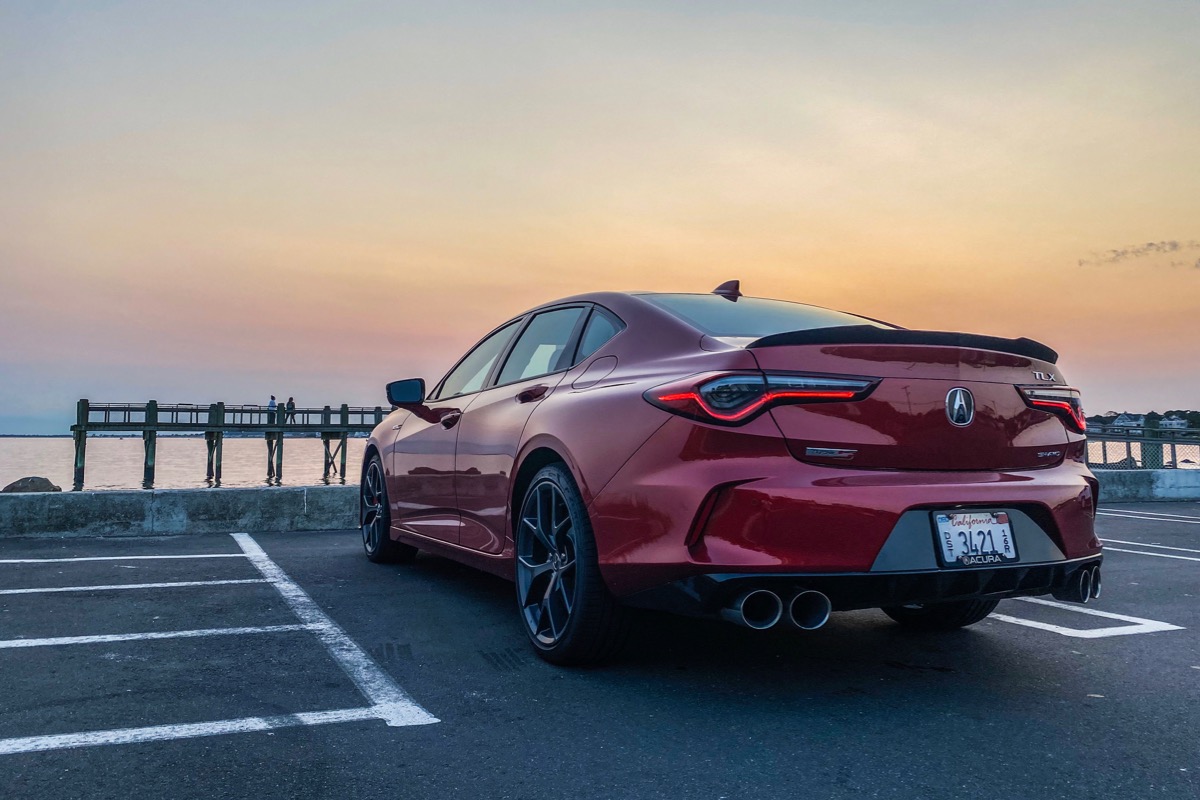
That’s why you need to choose the A-Spec option package, which improves the styling with go-faster visual upgrades like 19-inch wheels, revised bumper designs, side sill skirts, and oversize round exhaust outlets.
My test car was a special edition that was not sold in Canada. You can spend as little as $37,490 MSRP on a 2020 TLX, not including fees of $2,190. But CarGurus recommends upgrading to the SH-AWD powertrain with the Technology Package ($43,190) for its comfort, convenience, safety, and infotainment enhancements. Go to the SH-AWD with Technology and A-Spec ($45,690) for its racy appearance, and you’ve got a good-looking TLX for less than $50,000.

Front-wheel drive TLX models ship with the standard 206-horsepower, 2.4-litre four-cylinder engine and eight-speed dual-clutch transmission. Versions with Acura’s torque-vectoring Super Handling All-Wheel Drive system (SH-AWD) come with the powertrain that incorporates a 290-hp, 3.5-litre V6 engine and a nine-speed automatic. The only downside to this more powerful drivetrain is that the 267 pound-feet of peak torque takes awhile to show up, arriving at 4,500 rpm.
Unlike a turbocharged engine, which delivers its punch of torque down low and across a broad portion of the engine’s rev range, this creamy smooth V6 provides a steady build-up of power, the car gathering speed with increasing urgency as it rushes forward. Switch from Econ or Normal mode into Sport or Sport+ mode, and a TLX turns into a real thrill ride.
As enjoyable as it is to run the TLX to redline, the greatest contributor to this Acura’s capable driving dynamics is the SH-AWD. A torque-vectoring system, it can put up to 70% of total engine output to a single rear wheel. From the driver’s seat, you can feel it. Stab the gas pedal at mid-corner, and the TLX pivots and lunges out of the curve and down the next straight.
Though it has nine forward speeds, the automatic transmission remains well behaved, and the paddle shifters are pleasing to use. Sophisticated amplitude reactive dampers contribute to the TLX’s feeling of solidity on the road, as do the somewhat heavy steering and the fact that 61% of the car’s weight sits over the front wheels.
For daily driving as opposed to canyon carving, the Acura TLX feels comfortable and quiet, a lovely place to spend time when traffic is clogging the freeway. The car’s impressive handling capabilities do not require trade-offs in terms of ride quality, either. The TLX feels firm but not too stiff on city streets and highways.
On my testing loop, the TLX returned 10.2 litres per 100 kilometres, which is just a tick below the 10.3 L/100 km that Natural Resources Canada says this car should consume in combined driving (non-A-Spec SH-AWD models, and FWD models, have lower figures). And remember, I was using the paddle shifters in Sport and Sport+ driving modes during the mountainous part of the route.

Since the average driver is unlikely to explore the TLX SH-AWD’s performance capabilities on a regular basis, it’s important a car like this one exudes quality and coddles its passengers with comfort. A loaded TLX does that, convincingly.
From the materials used within the cabin to the outstanding front seats, this Acura is a compelling companion for the daily drive. Supple leather, perfect positioning, heated and ventilated seats, and plenty of room greet the driver and front passenger. Keyless entry is standard equipment, while a heated steering wheel and rain-sensing wipers are optional.
Rear seat occupants enjoy favourable accommodations, too, with plenty of leg room, air-conditioning vents that help during heat waves, and available heated rear cushions warming rumps during cold snaps.
Storage space is generous in frequency if not size. The trunk isn’t spacious, either, measuring just 405 litres. That’s compact-car territory, not midsize.

Ugh. Acura can’t rid itself of its dual screens soon enough. Where Acura has lost its way isn’t with regard to driving dynamics. The company, once a master of ergonomics, flunked Dashboard Design 101 when it comes to the TLX’s infotainment system layout.
The redesigned RDX got what other Acuras will soon have: a widescreen static display and a trackpad on which you use your fingertip to execute commands. Normally, I can’t stand touch-sensing, haptic-feedback touchpads, and George Kennedy agrees in his review of the 2019 RDX. But anything is better than what the TLX currently has.
What’s the big deal? The top display is not a touchscreen, but the bottom display is. A row of climate control buttons and switches resides under the bottom screen, but some climate functions are included on the bottom portion of the touchscreen. Below those, you’ll find buttons and a knob that operate the top screen, some covered in a glossy coating that makes them nearly impossible to read.
Beyond these foibles, there is a stereo volume/power knob, but not a corresponding tuning knob. The navigation map's graphics are yesterday's tech. The voice-recognition system isn’t up to snuff, either, causing more frustration than it’s worth.
Wait, I’m not done. When you’re driving, you need to remember which screen conveys what information, and then how to use that screen. Reach for the bottom display to select a different radio station, hit a bump, and you might accidentally activate the seat heaters instead. That’s lovely when it's almost 40 degrees Celsius outside.
This infotainment setup causes both distraction and frustration, irritating me to the point that I think a trackpad design is an improvement. But I will say this: The Acura/ELS premium audio system sounds pretty good. I also liked the smartphone charger Acura installs in the bin forward of the shifter and cup holders. And the car has Apple CarPlay and Android Auto connectivity. An on-board navigation system is optional.

Now that my primary complaint about the TLX is out of the way, let’s address the car’s aging vehicle architecture, safety features, and advanced driver assistance systems (ADAS).
Designed and engineered in the early teens, the TLX is getting old, and that’s reflected in its Insurance Institute for Highway Safety (IIHS) crash-test ratings. It doesn’t qualify for a Top Safety Pick due to an Acceptable rather than Good result in the small overlap frontal-impact test on the driver’s side.
On a positive note, however, the TLX does earn 5-star ratings in every test conducted by the National Highway Traffic Safety Administration (NHTSA), including the rollover test.
To help prevent a crash from occurring in the first place, every TLX has adaptive cruise control, forward-collision warning, automatic emergency braking, lane-keeping assist, and road-departure mitigation systems as standard features. A blind-spot monitoring system with rear cross-traffic alert is included on all but the base TLX with no option packages.
While these technologies are effective, they lack smoothness, refinement, and sophistication in comparison to more modern vehicles from both mainstream and luxury brands.
For example, when the adaptive cruise control is set and attempting to maintain the desired following distance from vehicles ahead, the driver is constantly aware of the brakes pulsing or the engine accelerating. And if another vehicle tucks into the gap ahead, get ready for some braking, whether it’s warranted or not.
The lane-departure-warning system doesn’t beep, but it doesn’t vibrate the steering wheel, either. Instead, it wobbles the steering wheel in an exaggerated manner. While preferable to incessant beeping, it's not as subtle as a vibration.
Frankly, I found the car more pleasing to drive without the militant adaptive cruise control or steering-wheel-wobbling lane-departure-warning systems engaged.
The Acura TLX is a bit of a "tweener." By that, I mean it overlaps smaller and more basic cars in terms of its base price but also provides far more value than slightly larger and more opulent cars when fully loaded. And because of that market positioning, it is a truly cost-effective way to own a luxury car.
Furthermore, as the company prepares to replace this current version of the car with something approximating (fingers crossed) the sensational Type S Concept that the automaker rolled out for the Concours d’ Elegance in Pebble Beach in August 2019, it will no doubt discount the 2020 model through low payments, favourable terms, and other incentives designed to move the metal.
Should such deals entice you, know that while the car’s design is somewhat dull, some ADAS behavior is aggravating, and the infotainment system is downright infuriating, the rest of the TLX is easy enough to like. And with more sporty and aggressive TLX A-Spec package, the sonorous V6 engine, the sophisticated SH-AWD system, and the right kind of road, you might even love the TLX.
With the TLX, and the TL that preceded it, a degree of performance has always been present. But now, the company’s personality is going to start shining brightly once again.
Maybe as brightly as this special edition TLX’s Valencia Red Pearl paint.
Note: Images show a US model.

User reviews for 2020 Acura TLX
Write a review2020 Acura TLX Pricing
Trims & specs
Air Conditioning
Automatic climate control front air conditioning · Dual front air conditioning zones
Airbags
Dual front airbags · Driver knee airbags · Passenger airbag deactivation: occupant sensing deactivation · Front side airbags · Front side curtain airbags
Audio System
Antenna Type: mast · Bluetooth auxiliary audio input · Single disc in-Dash CD · Aha internet radio · Pandora internet radio · MP3 player: CD MP3 Playback · Touch screen display radio · Satellite Radio: SiriusXM · 1 subwoofer · Total Number of Speakers: 6 · Watts: 335
Brakes
ABS: 4-wheel · Braking assist: hill start assist · Electronic parking brake: auto off · Front brake diameter: 12.6 · Front brakes: ventilated disc · Rear brake diameter: 12.2 · Rear brakes: disc
Comfort Features
Armrests: rear center with cupholders · Center console trim: alloy · Dash trim: wood · Door trim: wood · Floor Mat Material: carpet · Floor Material: carpet · Floor Mats: front · Shift knob trim: leather · Steering wheel trim: leather
Convenience Features
Adaptive stop and go cruise control: semi-automatic · Assist handle: rear · Autonomous lane guidance: lane centering · Center console: with lighting · Cruise control: adaptive · Cupholders: front · Dimming rearview mirror: auto-dimming · Easy entry: power driver seat · Memorized settings: 2 driver · Multi-function remote: vehicle and key memory · One-touch windows: 4 · Power outlet(s): 12V front · Power steering: electric · Power windows: lockout button · Reading lights: front · Rear view camera: multi-view · Steering wheel: tilt and telescopic · Steering wheel mounted controls: phone · Storage: in dash · Universal garage door opener: Homelink · Vanity mirrors: dual illuminating
Driver Seat
Adjustable lumbar support: power · Power adjustments: 10
Drivetrain
Axle ratio: 4.57
Engine
Battery: maintenance-free
Exterior Features
Door handle color: body-color · Front bumper color: body-color · Grille color: chrome surround · Mirror color: body-color · Rear bumper color: body-color · Window trim: chrome
Headrests
Front headrests: adjustable · Number of front headrests: 2 · Number of rear headrests: 3
In Car Entertainment
Connected in-car apps: Google search · Infotainment: Apply CarPlay ready · Infotainment screen size: 7 in. and 8 in. (dual)
Instrumentation
Fuel economy display: range · Instrument cluster screen size: 4.2 in. · Warnings and reminders: low oil level
Lights
Daytime running lights: LED · Exterior entry lights: security approach lamps · Headlights: LED · Tail and brake lights: LED
Mirrors
Exterior mirrors: reverse gear tilt
Passenger Seat
Power adjustments: 4
Rear Seats
Type: 60-40 split bench
Roof
Moonroof: tilt/slide
Safety
Automatic emergency braking: front · Child seat anchors: LATCH system · Crumple zones: rear · Pre-Collision Warning System: audible warning · Rearview monitor: in dash
Seatbelts
Emergency locking retractors: front · Front seatbelts: 3-point · Seatbelt force limiters: front · Seatbelt pretensioners: front · Seatbelt warning sensor: driver and passenger · Second row seatbelts: 3-point
Seats
Driver seat power adjustments: height · Front seat type: sport bucket · Passenger seat power adjustments: reclining · Rear headrests: adjustable · Rear seat folding: split · Upholstery: leatherette
Security
Power door locks: anti-lockout
Spare Tire
Kit: inflator kit
Steering
Steering ratio: 15 · Turns lock-to-lock: 2.6
Suspension
Front Arm Type: lower control arms · Front Shock Type: gas shock absorbers · Front Spring Type: coil springs · Front Stabilizer Bar: diameter 26 mm · Front Suspension Classification: independent · Front Suspension Type: MacPherson struts · Rear Shock Type: coil over shock · Rear Spring Type: coil springs · Rear Stabilizer Bar: diameter 25 mm · Rear Suspension Classification: independent · Rear Suspension Type: multi-link
Telematics
Driver assistance app: roadside assistance · Electronic messaging assistance: with voice recognition · Phone wireless data link: Bluetooth · Smart device app compatibility: AcuraLink · Smart device app function: maintenance scheduling
Tires
Type: all season
Tires and Rims
Wheel type: aluminum alloy
Windows
Front wipers: speed sensitive · Laminated glass: acoustic · Power windows: with safety reverse
Air Conditioning
Automatic climate control front air conditioning · Dual front air conditioning zones
Airbags
Dual front airbags · Driver knee airbags · Passenger airbag deactivation: occupant sensing deactivation · Front side airbags · Front side curtain airbags
Audio System
Antenna Type: element · Bluetooth auxiliary audio input · Single disc in-Dash CD · Aha internet radio · Pandora internet radio · MP3 player: CD MP3 Playback · Touch screen display radio · Satellite Radio: SiriusXM · 1 subwoofer · Total Number of Speakers: 6 · Watts: 335
Brakes
ABS: 4-wheel · Braking assist: hill start assist · Electronic parking brake: auto off · Front brake diameter: 12.6 · Front brakes: ventilated disc · Rear brake diameter: 12.2 · Rear brakes: disc
Comfort Features
Armrests: rear center with cupholders · Center console trim: wood · Dash trim: alloy · Door trim: wood · Floor Mat Material: carpet · Floor Material: carpet · Floor Mats: front · Steering wheel trim: leather
Convenience Features
Adaptive stop and go cruise control: semi-automatic · Assist handle: front · Autonomous lane guidance: lane centering · Center console: front console with armrest and storage · Cruise control: adaptive · Cupholders: rear · Dimming rearview mirror: auto-dimming · Easy entry: power driver seat · Memorized settings: driver seat · Multi-function remote: vehicle and key memory · One-touch windows: 4 · Power outlet(s): 12V front · Power steering: speed-proportional · Power windows: lockout button · Reading lights: front · Rear view camera: multi-view · Steering wheel: tilt and telescopic · Steering wheel mounted controls: paddle shifter · Storage: in dash · Universal garage door opener: Homelink · Vanity mirrors: dual illuminating
Driver Seat
Adjustable lumbar support: power · Power adjustments: 10
Drivetrain
Axle ratio: 3.52
Engine
Battery: maintenance-free
Exterior Features
Door handle color: body-color · Exhaust: dual exhaust tips · Front bumper color: body-color · Grille color: black · Mirror color: body-color · Rear bumper color: body-color · Window trim: chrome
Headrests
Front headrests: adjustable · Number of front headrests: 2 · Number of rear headrests: 3
In Car Entertainment
Connected in-car apps: Google search · Infotainment: Android Auto ready · Infotainment screen size: 7 in. and 8 in. (dual)
Instrumentation
Fuel economy display: range · Instrument cluster screen size: 4.2 in. · Warnings and reminders: low oil level
Lights
Daytime running lights: LED · Exterior entry lights: security approach lamps · Headlights: Auto on/off · Tail and brake lights: LED
Mirrors
Exterior mirrors: integrated turn signals
Passenger Seat
Power adjustments: 8
Rear Seats
Type: 60-40 split bench
Roof
Moonroof: power glass
Safety
Automatic emergency braking: front · Child seat anchors: LATCH system · Crumple zones: rear · Pre-Collision Warning System: visual warning · Rearview monitor: in dash
Seatbelts
Emergency locking retractors: front · Front seatbelts: 3-point · Seatbelt force limiters: front · Seatbelt pretensioners: front · Seatbelt warning sensor: driver and passenger · Second row seatbelts: 3-point
Seats
Driver seat power adjustments: height · Front seat type: sport bucket · Passenger seat power adjustments: height · Rear headrests: adjustable · Rear seat folding: split · Upholstery: leatherette
Security
Power door locks: anti-lockout
Spare Tire
Kit: inflator kit
Steering
Steering ratio: 14.6 · Turns lock-to-lock: 2.6
Suspension
Front Arm Type: lower control arms · Front Shock Type: gas shock absorbers · Front Spring Type: coil springs · Front Stabilizer Bar: diameter 26 mm · Front Suspension Classification: independent · Front Suspension Type: MacPherson struts · Rear Shock Type: coil over shock · Rear Spring Type: coil springs · Rear Stabilizer Bar: diameter 25 mm · Rear Suspension Classification: independent · Rear Suspension Type: multi-link
Telematics
Driver assistance app: roadside assistance · Electronic messaging assistance: with voice recognition · Phone wireless data link: Bluetooth · Smart device app compatibility: AcuraLink · Smart device app function: maintenance status
Tires
Type: all season
Tires and Rims
Wheel type: aluminum alloy
Windows
Front wipers: speed sensitive · Laminated glass: acoustic · Power windows: remote operation
Air Conditioning
Automatic climate control front air conditioning · Dual front air conditioning zones
Airbags
Dual front airbags · Driver knee airbags · Passenger airbag deactivation: occupant sensing deactivation · Front side airbags · Rear side curtain airbags
Audio System
Antenna Type: diversity · Voice recognition audio system · Bluetooth auxiliary audio input · Single disc in-Dash CD · Aha internet radio · Pandora internet radio · MP3 player: CD MP3 Playback · Premium brand: ELS Studio · Touch screen display radio · Satellite Radio: SiriusXM · 1 subwoofer · Surround audio: 5.1 · Total Number of Speakers: 9 · Watts: 490
Brakes
ABS: 4-wheel · Braking assist: hill start assist · Electronic parking brake: auto off · Front brake diameter: 12.6 · Front brakes: ventilated disc · Rear brake diameter: 12.2 · Rear brakes: disc
Comfort Features
Armrests: rear center with cupholders · Center console trim: wood · Dash trim: alloy · Door trim: wood · Floor Mat Material: carpet · Floor Material: carpet · Floor Mats: front · Shift knob trim: leather · Steering wheel trim: leather
Convenience Features
Adaptive stop and go cruise control: semi-automatic · Assist handle: front · Autonomous lane guidance: lane centering · Center console: with lighting · Cruise control: adaptive · Cupholders: front · Dimming rearview mirror: auto-dimming · Easy entry: power driver seat · Memorized settings: driver seat · Multi-function remote: vehicle and key memory · One-touch windows: 4 · Power outlet(s): 12V front · Power steering: speed-proportional · Power windows: lockout button · Reading lights: front · Rear view camera: multi-view · Steering wheel: tilt and telescopic · Steering wheel mounted controls: audio · Storage: door pockets · Universal garage door opener: Homelink · Vanity mirrors: dual illuminating
Driver Seat
Adjustable lumbar support: power · Power adjustments: 10
Drivetrain
Axle ratio: 4.57
Engine
Battery: maintenance-free
Exterior Features
Door handle color: body-color · Front bumper color: body-color · Grille color: black · Mirror color: body-color · Rear bumper color: body-color · Window trim: chrome
Headrests
Front headrests: adjustable · Number of front headrests: 2 · Number of rear headrests: 3
In Car Entertainment
Connected in-car apps: Google search · Infotainment: Apply CarPlay ready · Infotainment screen size: 7 in. and 8 in. (dual)
Instrumentation
Fuel economy display: MPG · Instrument cluster screen size: 4.2 in. · Warnings and reminders: low fuel level
Lights
Daytime running lights: LED · Exterior entry lights: security approach lamps · Headlights: automatic high beam dimmer · Tail and brake lights: LED
Mirrors
Exterior mirrors: reverse gear tilt
Passenger Seat
Power adjustments: 4
Rear Seats
Type: 60-40 split bench
Roof
Moonroof: power glass
Safety
Automatic emergency braking: front · Child seat anchors: LATCH system · Cross Traffic Alert: rear · Crumple zones: rear · Impact sensor: alert system · Pre-Collision Warning System: visual warning · Rearview monitor: in dash
Seatbelts
Emergency locking retractors: front and rear · Front seatbelts: 3-point · Seatbelt force limiters: front · Seatbelt pretensioners: front · Seatbelt warning sensor: driver and passenger · Second row seatbelts: 3-point
Seats
Driver seat power adjustments: height · Front seat type: sport bucket · Passenger seat power adjustments: reclining · Rear headrests: adjustable · Rear seat folding: split · Upholstery: perforated
Security
Power door locks: anti-lockout
Spare Tire
Kit: inflator kit
Steering
Steering ratio: 15 · Turns lock-to-lock: 2.6
Suspension
Front Arm Type: lower control arms · Front Shock Type: gas shock absorbers · Front Spring Type: coil springs · Front Stabilizer Bar: diameter 26 mm · Front Suspension Classification: independent · Front Suspension Type: MacPherson struts · Rear Shock Type: coil over shock · Rear Spring Type: coil springs · Rear Stabilizer Bar: diameter 25 mm · Rear Suspension Classification: independent · Rear Suspension Type: multi-link
Telematics
Driver assistance app: roadside assistance · Electronic messaging assistance: with read function · Navigation system: hard drive navigation system · Phone: voice activated · Phone wireless data link: Bluetooth · Satellite communications: Turn-by-Turn Navigation · Smart device app compatibility: AcuraLink · Smart device app function: maintenance scheduling
Tires
Type: all season
Tires and Rims
Wheel type: aluminum alloy
Windows
Front wipers: speed sensitive · Laminated glass: acoustic · Power windows: remote operation
Air Conditioning
Automatic climate control front air conditioning · Dual front air conditioning zones
Airbags
Dual front airbags · Driver knee airbags · Passenger airbag deactivation: occupant sensing deactivation · Front side airbags · Front side curtain airbags
Audio System
Antenna Type: element · Bluetooth auxiliary audio input · Single disc in-Dash CD · Aha internet radio · Pandora internet radio · MP3 player: CD MP3 Playback · Touch screen display radio · Satellite Radio: SiriusXM · 1 subwoofer · Total Number of Speakers: 6 · Watts: 335
Brakes
ABS: 4-wheel · Braking assist: hill start assist · Electronic parking brake: auto off · Front brake diameter: 12.6 · Front brakes: ventilated disc · Rear brake diameter: 12.2 · Rear brakes: disc
Comfort Features
Armrests: rear center with cupholders · Center console trim: alloy · Dash trim: alloy · Door trim: wood · Floor Mat Material: carpet · Floor Material: carpet · Floor Mats: front · Steering wheel trim: leather
Convenience Features
Adaptive stop and go cruise control: semi-automatic · Assist handle: rear · Autonomous lane guidance: lane centering · Center console: front console with armrest and storage · Cruise control: adaptive · Cupholders: rear · Dimming rearview mirror: auto-dimming · Easy entry: power driver seat · Memorized settings: driver seat · Multi-function remote: trunk release · One-touch windows: 4 · Power outlet(s): 12V front · Power steering: speed-proportional · Power windows: lockout button · Reading lights: front · Rear view camera: multi-view · Steering wheel: tilt and telescopic · Steering wheel mounted controls: cruise controls · Storage: in dash · Universal garage door opener: Homelink · Vanity mirrors: dual illuminating
Driver Seat
Adjustable lumbar support: power · Power adjustments: 10
Drivetrain
4WD Type: full time · Axle ratio: 3.52
Engine
Battery: maintenance-free
Exterior Features
Door handle color: body-color · Exhaust: dual exhaust tips · Front bumper color: body-color · Grille color: black · Mirror color: body-color · Rear bumper color: body-color · Window trim: chrome
Headrests
Front headrests: adjustable · Number of front headrests: 2 · Number of rear headrests: 3
In Car Entertainment
Connected in-car apps: Google POIs · Infotainment: Android Auto ready · Infotainment screen size: 7 in. and 8 in. (dual)
Instrumentation
Fuel economy display: range · Instrument cluster screen size: 4.2 in. · Warnings and reminders: maintenance reminder
Lights
Daytime running lights: LED · Exterior entry lights: security approach lamps · Headlights: auto delay off · Tail and brake lights: LED
Mirrors
Exterior mirrors: heated
Passenger Seat
Power adjustments: 8
Rear Seats
Type: 60-40 split bench
Roof
Moonroof: sliding sunshade
Safety
Automatic emergency braking: front · Child seat anchors: LATCH system · Crumple zones: rear · Pre-Collision Warning System: audible warning · Rearview monitor: in dash
Seatbelts
Emergency locking retractors: front · Front seatbelts: 3-point · Seatbelt force limiters: front · Seatbelt pretensioners: front · Seatbelt warning sensor: driver and passenger · Second row seatbelts: 3-point
Seats
Driver seat power adjustments: reclining · Front seat type: sport bucket · Passenger seat power adjustments: reclining · Rear headrests: adjustable · Rear seat folding: split · Upholstery: leatherette
Security
Power door locks: anti-lockout
Spare Tire
Kit: inflator kit
Steering
Steering ratio: 16.1 · Turns lock-to-lock: 2.7
Suspension
Front Arm Type: lower control arms · Front Shock Type: gas shock absorbers · Front Spring Type: coil springs · Front Stabilizer Bar: diameter 26 mm · Front Suspension Classification: independent · Front Suspension Type: MacPherson struts · Rear Shock Type: gas shock absorbers · Rear Spring Type: coil springs · Rear Stabilizer Bar: diameter 25 mm · Rear Suspension Classification: independent · Rear Suspension Type: multi-link
Telematics
Driver assistance app: roadside assistance · Electronic messaging assistance: with read function · Phone wireless data link: Bluetooth · Smart device app compatibility: AcuraLink · Smart device app function: maintenance scheduling
Tires
Type: all season
Tires and Rims
Wheel type: aluminum alloy
Windows
Front wipers: variable intermittent · Laminated glass: acoustic · Power windows: with safety reverse
Air Conditioning
Sun sensor climate control front air conditioning · Dual front air conditioning zones
Airbags
Dual front airbags · Driver knee airbags · Passenger airbag deactivation: occupant sensing deactivation · Front side airbags · Rear side curtain airbags
Audio System
Antenna Type: element · Voice recognition audio system · Auxiliary audio input: jack · Single disc in-Dash CD · Aha internet radio · Pandora internet radio · MP3 player: CD MP3 Playback · Premium brand: ELS Studio · AM/FM radio · Satellite Radio: SiriusXM · 1 subwoofer · Surround audio: 5.1 · Total Number of Speakers: 9 · Watts: 490
Brakes
ABS: 4-wheel · Braking assist: hill start assist · Electronic parking brake: auto off · Front brake diameter: 12.6 · Front brakes: ventilated disc · Rear brake diameter: 12.2 · Rear brakes: disc
Comfort Features
Armrests: rear center folding with pass-thru · Center console trim: aluminium · Dash trim: aluminum · Door trim: aluminum · Floor Mat Material: carpet · Floor Material: carpet · Floor Mats: front · Shift knob trim: leather · Steering wheel trim: leather
Convenience Features
Adaptive stop and go cruise control: semi-automatic · Ambient lighting: color · Assist handle: rear · Autonomous lane guidance: lane centering · Center console: front console with armrest and storage · Cruise control: adaptive · Cupholders: rear · Dimming rearview mirror: auto-dimming · Easy entry: power driver seat · Memorized settings: audio system · Multi-function remote: vehicle and key memory · One-touch windows: 4 · Power outlet(s): 12V front · Power steering: electric · Power windows: lockout button · Reading lights: front · Rear view camera: multi-view · Steering wheel: tilt and telescopic · Steering wheel mounted controls: paddle shifter · Storage: front seatback · Universal garage door opener: Homelink · Vanity mirrors: dual illuminating
Driver Seat
Adjustable lumbar support: power · Power adjustments: 12
Drivetrain
Axle ratio: 4.57
Engine
Battery: maintenance-free
Exterior Features
Door handle color: body-color · Exhaust: dual exhaust tips · Front bumper color: body-color · Grille color: chrome surround · Mirror color: body-color · Rear bumper color: body-color · Rear spoiler: decklid · Rear spoiler color: black · Window trim: black
Headrests
Front headrests: adjustable · Number of front headrests: 2 · Number of rear headrests: 3
In Car Entertainment
Connected in-car apps: Google search · Infotainment: AcuraLink · Infotainment screen size: 7 in. and 8 in. (dual)
Instrumentation
Fuel economy display: MPG · Instrument cluster screen size: 4.2 in. · Warnings and reminders: maintenance reminder
Lights
Daytime running lights: LED · Exterior entry lights: security approach lamps · Front fog lights: LED · Headlights: LED · Tail and brake lights: LED
Mirrors
Exterior mirrors: power
Passenger Seat
Power adjustments: 8
Rear Seats
Type: 60-40 split bench
Roof
Moonroof: tilt/slide
Safety
Automatic emergency braking: front · Child seat anchors: LATCH system · Cross Traffic Alert: rear · Crumple zones: front · Impact sensor: alert system · Pre-Collision Warning System: visual warning · Rearview monitor: in dash
Seatbelts
Emergency locking retractors: front · Front seatbelts: 3-point · Seatbelt force limiters: front · Seatbelt pretensioners: front · Seatbelt warning sensor: driver and passenger · Second row seatbelts: 3-point
Seats
Driver seat power adjustments: reclining · Front seat type: sport bucket · Passenger seat power adjustments: reclining · Rear headrests: adjustable · Rear seat folding: split · Upholstery: contrast stitching · Upholstery accents: faux suede
Security
Power door locks: anti-lockout
Spare Tire
Kit: tire sealant
Steering
Steering ratio: 15 · Turns lock-to-lock: 2.6
Suspension
Front Arm Type: lower control arms · Front Shock Type: gas shock absorbers · Front Spring Type: coil springs · Front Stabilizer Bar: diameter 26 mm · Front Suspension Classification: independent · Front Suspension Type: MacPherson struts · Rear Shock Type: gas shock absorbers · Rear Spring Type: coil springs · Rear Stabilizer Bar: diameter 25 mm · Rear Suspension Classification: independent · Rear Suspension Type: multi-link
Telematics
Driver assistance app: roadside assistance · Electronic messaging assistance: with read function · Navigation system: with voice recognition · Phone: voice activated · Phone wireless data link: Bluetooth · Satellite communications: Turn-by-Turn Navigation · Smart device app compatibility: AcuraLink · Smart device app function: lock operation
Tires
Type: all season
Tires and Rims
Wheels: painted aluminum
Windows
Front wipers: variable intermittent · Laminated glass: acoustic · Power windows: with safety reverse
Air Conditioning
Sun sensor climate control front air conditioning · Dual front air conditioning zones
Airbags
Dual front airbags · Driver knee airbags · Passenger airbag deactivation: occupant sensing deactivation · Front side airbags · Front side curtain airbags
Audio System
Antenna Type: element · Voice recognition audio system · USB auxiliary audio input · Single disc in-Dash CD · Aha internet radio · Pandora internet radio · MP3 player: CD MP3 Playback · Premium brand: ELS Studio · HD radio · Satellite Radio: SiriusXM · 1 subwoofer · Surround audio: 5.1 · Total Number of Speakers: 9 · Watts: 490
Brakes
ABS: 4-wheel · Braking assist: hill start assist · Electronic parking brake: auto off · Front brake diameter: 12.6 · Front brakes: ventilated disc · Rear brake diameter: 12.2 · Rear brakes: disc
Comfort Features
Armrests: rear center with cupholders · Center console trim: wood · Dash trim: alloy · Door trim: wood · Floor Mat Material: carpet · Floor Material: carpet · Floor Mats: front · Steering wheel trim: leather
Convenience Features
Adaptive stop and go cruise control: semi-automatic · Assist handle: rear · Autonomous lane guidance: lane centering · Center console: front console with armrest and storage · Cruise control: adaptive · Cupholders: front · Dimming rearview mirror: auto-dimming · Easy entry: power driver seat · Memorized settings: side mirrors · Multi-function remote: proximity entry system · One-touch windows: 4 · Power outlet(s): 12V front · Power steering: speed-proportional · Power windows: lockout button · Reading lights: rear · Rear view camera: multi-view · Steering wheel: tilt and telescopic · Steering wheel mounted controls: paddle shifter · Storage: front seatback · Universal garage door opener: Homelink · Vanity mirrors: dual illuminating
Driver Seat
Adjustable lumbar support: power · Power adjustments: 12
Drivetrain
Axle ratio: 3.52
Engine
Battery: maintenance-free
Exterior Features
Door handle color: body-color · Exhaust: dual exhaust tips · Front bumper color: body-color · Grille color: chrome surround · Mirror color: body-color · Rear bumper color: body-color · Window trim: chrome
Headrests
Front headrests: adjustable · Number of front headrests: 2 · Number of rear headrests: 3
In Car Entertainment
Connected in-car apps: Google POIs · Infotainment: AcuraLink · Infotainment screen size: 7 in. and 8 in. (dual)
Instrumentation
Fuel economy display: MPG · Instrument cluster screen size: 4.2 in. · Warnings and reminders: low fuel level
Lights
Daytime running lights: LED · Exterior entry lights: security approach lamps · Headlights: auto delay off · Tail and brake lights: LED
Mirrors
Exterior mirrors: integrated turn signals
Passenger Seat
Power adjustments: 8
Rear Seats
Type: 60-40 split bench
Roof
Moonroof: tilt/slide
Safety
Automatic emergency braking: front · Child seat anchors: LATCH system · Cross Traffic Alert: rear · Crumple zones: front · Impact sensor: alert system · Pre-Collision Warning System: visual warning · Rearview monitor: in dash
Seatbelts
Emergency locking retractors: front · Front seatbelts: 3-point · Seatbelt force limiters: front · Seatbelt pretensioners: front · Seatbelt warning sensor: driver and passenger · Second row seatbelts: 3-point
Seats
Driver seat power adjustments: height · Front seat type: sport bucket · Passenger seat power adjustments: height · Rear headrests: adjustable · Rear seat folding: split · Upholstery: leather-trimmed
Security
Power door locks: anti-lockout
Spare Tire
Kit: tire sealant
Steering
Steering ratio: 14.6 · Turns lock-to-lock: 2.6
Suspension
Front Arm Type: lower control arms · Front Shock Type: gas shock absorbers · Front Spring Type: coil springs · Front Stabilizer Bar: diameter 26 mm · Front Suspension Classification: independent · Front Suspension Type: MacPherson struts · Rear Shock Type: coil over shock · Rear Spring Type: coil springs · Rear Stabilizer Bar: diameter 25 mm · Rear Suspension Classification: independent · Rear Suspension Type: multi-link
Telematics
Driver assistance app: roadside assistance · Electronic messaging assistance: with read function · Navigation system: touch screen display · Phone: voice activated · Phone wireless data link: Bluetooth · Satellite communications: Turn-by-Turn Navigation · Smart device app compatibility: AcuraLink · Smart device app function: maintenance status
Tires
Type: all season
Tires and Rims
Wheel type: aluminum alloy
Windows
Front wipers: variable intermittent · Laminated glass: acoustic · Power windows: remote operation
Air Conditioning
Sun sensor climate control front air conditioning · Dual front air conditioning zones
Airbags
Dual front airbags · Driver knee airbags · Passenger airbag deactivation: occupant sensing deactivation · Front side airbags · Rear side curtain airbags
Audio System
Antenna Type: element · Voice recognition audio system · Bluetooth auxiliary audio input · Single disc in-Dash CD · Aha internet radio · Pandora internet radio · MP3 player: CD MP3 Playback · Premium brand: ELS Studio · HD radio · Satellite Radio: SiriusXM · 1 subwoofer · Surround audio: 5.1 · Total Number of Speakers: 9 · Watts: 490
Brakes
ABS: 4-wheel · Braking assist: hill start assist · Electronic parking brake: auto off · Front brake diameter: 12.6 · Front brakes: ventilated disc · Rear brake diameter: 12.2 · Rear brakes: disc
Comfort Features
Armrests: rear center folding with pass-thru · Center console trim: wood · Dash trim: wood · Door trim: wood · Floor Mat Material: carpet · Floor Material: carpet · Floor Mats: front · Steering wheel trim: leather
Convenience Features
Adaptive stop and go cruise control: semi-automatic · Assist handle: front · Autonomous lane guidance: lane centering · Center console: front console with armrest and storage · Cruise control: adaptive · Cupholders: rear · Dimming rearview mirror: auto-dimming · Easy entry: power driver seat · Memorized settings: side mirrors · Multi-function remote: vehicle and key memory · One-touch windows: 4 · Power outlet(s): 12V front · Power steering: speed-proportional · Power windows: lockout button · Reading lights: front · Rear view camera: multi-view · Steering wheel: tilt and telescopic · Steering wheel mounted controls: paddle shifter · Storage: door pockets · Universal garage door opener: Homelink · Vanity mirrors: dual illuminating
Driver Seat
Adjustable lumbar support: power · Power adjustments: 12
Drivetrain
4WD Type: full time · Axle ratio: 3.52
Engine
Battery: maintenance-free
Exterior Features
Door handle color: body-color · Exhaust: dual exhaust tips · Front bumper color: body-color · Grille color: chrome surround · Mirror color: body-color · Rear bumper color: body-color · Window trim: chrome
Headrests
Front headrests: adjustable · Number of front headrests: 2 · Number of rear headrests: 3
In Car Entertainment
Connected in-car apps: Google POIs · Infotainment: Android Auto ready · Infotainment screen size: 7 in. and 8 in. (dual)
Instrumentation
Fuel economy display: MPG · Instrument cluster screen size: 4.2 in. · Warnings and reminders: low oil level
Lights
Daytime running lights: LED · Exterior entry lights: security approach lamps · Headlights: auto delay off · Tail and brake lights: LED
Mirrors
Exterior mirrors: integrated turn signals
Passenger Seat
Power adjustments: 8
Rear Seats
Type: 60-40 split bench
Roof
Moonroof: tilt/slide
Safety
Automatic emergency braking: front · Child seat anchors: LATCH system · Cross Traffic Alert: rear · Crumple zones: rear · Impact sensor: alert system · Pre-Collision Warning System: visual warning · Rearview monitor: in dash
Seatbelts
Emergency locking retractors: front · Front seatbelts: 3-point · Seatbelt force limiters: front · Seatbelt pretensioners: front · Seatbelt warning sensor: driver and passenger · Second row seatbelts: 3-point
Seats
Driver seat power adjustments: height · Front seat type: sport bucket · Passenger seat power adjustments: height · Rear headrests: adjustable · Rear seat folding: split · Upholstery: contrast stitching
Security
Power door locks: anti-lockout
Spare Tire
Kit: inflator kit
Steering
Steering ratio: 16.1 · Turns lock-to-lock: 2.7
Suspension
Front Arm Type: lower control arms · Front Shock Type: gas shock absorbers · Front Spring Type: coil springs · Front Stabilizer Bar: diameter 26 mm · Front Suspension Classification: independent · Front Suspension Type: MacPherson struts · Rear Shock Type: coil over shock · Rear Spring Type: coil springs · Rear Stabilizer Bar: diameter 25 mm · Rear Suspension Classification: independent · Rear Suspension Type: multi-link
Telematics
Driver assistance app: roadside assistance · Electronic messaging assistance: with read function · Navigation system: with voice recognition · Phone: voice activated · Phone wireless data link: Bluetooth · Satellite communications: Turn-by-Turn Navigation · Smart device app compatibility: AcuraLink · Smart device app function: maintenance status
Tires
Type: all season
Tires and Rims
Wheel type: aluminum alloy
Windows
Front wipers: rain sensing · Laminated glass: acoustic · Power windows: remote operation
Air Conditioning
Sun sensor climate control front air conditioning · Dual front air conditioning zones
Airbags
Dual front airbags · Driver knee airbags · Passenger airbag deactivation: occupant sensing deactivation · Front side airbags · Rear side curtain airbags
Audio System
Antenna Type: diversity · Voice recognition audio system · Bluetooth auxiliary audio input · Single disc in-Dash CD · Aha internet radio · Pandora internet radio · MP3 player: CD MP3 Playback · Premium brand: ELS Studio · HD radio · Satellite Radio: SiriusXM · 1 subwoofer · Surround audio: 5.1 · Total Number of Speakers: 9 · Watts: 490
Brakes
ABS: 4-wheel · Braking assist: hill start assist · Electronic parking brake: auto off · Front brake diameter: 12.6 · Front brakes: ventilated disc · Rear brake diameter: 12.2 · Rear brakes: disc
Comfort Features
Armrests: rear center with cupholders · Center console trim: aluminium · Dash trim: aluminum · Door trim: aluminum · Floor Mat Material: carpet · Floor Material: carpet · Floor Mats: front · Steering wheel trim: leather
Convenience Features
Adaptive stop and go cruise control: semi-automatic · Ambient lighting: color · Assist handle: rear · Autonomous lane guidance: lane centering · Center console: front console with armrest and storage · Cruise control: adaptive · Cupholders: rear · Dimming rearview mirror: auto-dimming · Easy entry: power driver seat · Memorized settings: audio system · Multi-function remote: keyless entry with panic alarm · One-touch windows: 4 · Power outlet(s): 12V front · Power steering: speed-proportional · Power windows: lockout button · Reading lights: front · Rear view camera: multi-view · Steering wheel: tilt and telescopic · Steering wheel mounted controls: multi-function screen controls · Storage: door pockets · Universal garage door opener: Homelink · Vanity mirrors: dual illuminating
Driver Seat
Adjustable lumbar support: power · Power adjustments: 12
Drivetrain
Axle ratio: 3.52
Engine
Battery: maintenance-free
Exterior Features
Door handle color: body-color · Exhaust: dual exhaust tips · Front bumper color: body-color · Grille color: chrome surround · Mirror color: body-color · Rear bumper color: body-color · Rear spoiler: decklid · Rear spoiler color: black · Window trim: black
Headrests
Front headrests: adjustable · Number of front headrests: 2 · Number of rear headrests: 3
In Car Entertainment
Connected in-car apps: Google POIs · Infotainment: AcuraLink · Infotainment screen size: 7 in. and 8 in. (dual)
Instrumentation
Fuel economy display: MPG · Instrument cluster screen size: 4.2 in. · Warnings and reminders: low oil level
Lights
Daytime running lights: LED · Exterior entry lights: security approach lamps · Front fog lights: LED · Headlights: Auto on/off · Tail and brake lights: LED
Mirrors
Exterior mirrors: power
Passenger Seat
Power adjustments: 8
Rear Seats
Type: 60-40 split bench
Roof
Moonroof: power glass
Safety
Automatic emergency braking: front · Child seat anchors: LATCH system · Cross Traffic Alert: rear · Crumple zones: front · Impact sensor: alert system · Parking sensors: rear · Pre-Collision Warning System: visual warning · Rearview monitor: in dash
Seatbelts
Emergency locking retractors: front · Front seatbelts: 3-point · Seatbelt force limiters: front · Seatbelt pretensioners: front · Seatbelt warning sensor: driver and passenger · Second row seatbelts: 3-point
Seats
Driver seat power adjustments: reclining · Front seat type: sport bucket · Passenger seat power adjustments: reclining · Rear headrests: adjustable · Rear seat folding: split · Upholstery: leather-trimmed · Upholstery accents: faux suede
Security
Power door locks: anti-lockout
Spare Tire
Kit: inflator kit
Steering
Steering ratio: 14.6 · Turns lock-to-lock: 2.6
Suspension
Front Arm Type: lower control arms · Front Shock Type: gas shock absorbers · Front Spring Type: coil springs · Front Stabilizer Bar: diameter 26 mm · Front Suspension Classification: independent · Front Suspension Type: MacPherson struts · Rear Shock Type: gas shock absorbers · Rear Spring Type: coil springs · Rear Stabilizer Bar: diameter 25 mm · Rear Suspension Classification: independent · Rear Suspension Type: multi-link
Telematics
Driver assistance app: roadside assistance · Electronic messaging assistance: with voice recognition · Navigation system: with voice recognition · Phone: voice activated · Phone wireless data link: Bluetooth · Satellite communications: Turn-by-Turn Navigation · Smart device app compatibility: AcuraLink · Smart device app function: maintenance scheduling
Tires
Type: all season
Tires and Rims
Wheels: painted aluminum
Windows
Front wipers: speed sensitive · Laminated glass: acoustic · Power windows: with safety reverse
Air Conditioning
Sun sensor climate control front air conditioning · Dual front air conditioning zones
Airbags
Dual front airbags · Driver knee airbags · Passenger airbag deactivation: occupant sensing deactivation · Front side airbags · Front side curtain airbags
Audio System
Antenna Type: mast · Voice recognition audio system · Bluetooth auxiliary audio input · Single disc in-Dash CD · Aha internet radio · Pandora internet radio · MP3 player: CD MP3 Playback · Premium brand: ELS Studio · AM/FM radio · Satellite Radio: SiriusXM · 1 subwoofer · Surround audio: 5.1 · Total Number of Speakers: 9 · Watts: 490
Brakes
ABS: 4-wheel · Braking assist: hill start assist · Electronic parking brake: auto off · Front brake diameter: 12.6 · Front brakes: ventilated disc · Rear brake diameter: 12.2 · Rear brakes: disc
Comfort Features
Armrests: rear center folding with pass-thru · Center console trim: aluminium · Dash trim: aluminum · Door trim: aluminum · Floor Mat Material: carpet · Floor Material: carpet · Floor Mats: front · Steering wheel trim: leather
Convenience Features
Adaptive stop and go cruise control: semi-automatic · Ambient lighting: color · Assist handle: rear · Autonomous lane guidance: lane centering · Center console: front console with armrest and storage · Cruise control: adaptive · Cupholders: rear · Dimming rearview mirror: auto-dimming · Easy entry: power driver seat · Memorized settings: 2 driver · Multi-function remote: proximity entry system · One-touch windows: 4 · Power outlet(s): 12V front · Power steering: speed-proportional · Power windows: lockout button · Reading lights: front · Rear view camera: multi-view · Steering wheel: tilt and telescopic · Steering wheel mounted controls: phone · Storage: sunglasses holder · Universal garage door opener: Homelink · Vanity mirrors: dual illuminating
Driver Seat
Adjustable lumbar support: power · Power adjustments: 12
Drivetrain
4WD Type: full time · Axle ratio: 3.52
Engine
Battery: maintenance-free
Exterior Features
Door handle color: body-color · Exhaust: dual exhaust tips · Front bumper color: body-color · Grille color: black · Mirror color: body-color · Rear bumper color: body-color · Rear spoiler: decklid · Rear spoiler color: black · Window trim: black
Headrests
Front headrests: adjustable · Number of front headrests: 2 · Number of rear headrests: 3
In Car Entertainment
Connected in-car apps: Google POIs · Infotainment: AcuraLink · Infotainment screen size: 7 in. and 8 in. (dual)
Instrumentation
Fuel economy display: range · Instrument cluster screen size: 4.2 in. · Warnings and reminders: maintenance reminder
Lights
Daytime running lights: LED · Exterior entry lights: security approach lamps · Front fog lights: LED · Headlights: Auto on/off · Tail and brake lights: LED
Mirrors
Exterior mirrors: heated
Passenger Seat
Power adjustments: 8
Rear Seats
Type: 60-40 split bench
Roof
Moonroof: power glass
Safety
Automatic emergency braking: front · Child seat anchors: LATCH system · Cross Traffic Alert: rear · Crumple zones: rear · Impact sensor: alert system · Parking sensors: front · Pre-Collision Warning System: visual warning · Rearview monitor: in dash
Seatbelts
Emergency locking retractors: front · Front seatbelts: 3-point · Seatbelt force limiters: front · Seatbelt pretensioners: front · Seatbelt warning sensor: driver and passenger · Second row seatbelts: 3-point
Seats
Driver seat power adjustments: height · Front seat type: sport bucket · Passenger seat power adjustments: height · Rear headrests: adjustable · Rear seat folding: split · Upholstery: leather-trimmed · Upholstery accents: faux suede
Security
Power door locks: anti-lockout
Spare Tire
Kit: inflator kit
Steering
Steering ratio: 15.1 · Turns lock-to-lock: 2.6
Suspension
Front Arm Type: lower control arms · Front Shock Type: gas shock absorbers · Front Spring Type: coil springs · Front Stabilizer Bar: diameter 26 mm · Front Suspension Classification: independent · Front Suspension Type: MacPherson struts · Rear Shock Type: coil over shock · Rear Spring Type: coil springs · Rear Stabilizer Bar: diameter 25 mm · Rear Suspension Classification: independent · Rear Suspension Type: multi-link
Telematics
Driver assistance app: roadside assistance · Electronic messaging assistance: with read function · Navigation system: with voice recognition · Phone: voice activated · Phone wireless data link: Bluetooth · Satellite communications: Turn-by-Turn Navigation · Smart device app compatibility: AcuraLink · Smart device app function: security event/collision alert
Tires
Type: all season
Tires and Rims
Wheels: painted aluminum
Windows
Front wipers: rain sensing · Laminated glass: acoustic · Power windows: with safety reverse
Air Conditioning
Sun sensor climate control front air conditioning · Dual front air conditioning zones
Airbags
Dual front airbags · Driver knee airbags · Passenger airbag deactivation: occupant sensing deactivation · Front side airbags · Rear side curtain airbags
Audio System
Antenna Type: element · Voice recognition audio system · Bluetooth auxiliary audio input · Single disc in-Dash CD · Aha internet radio · Pandora internet radio · MP3 player: CD MP3 Playback · Premium brand: ELS Studio · AM/FM radio · Satellite Radio: SiriusXM · 1 subwoofer · Surround audio: 5.1 · Total Number of Speakers: 9 · Watts: 490
Brakes
ABS: 4-wheel · Braking assist: hill start assist · Electronic parking brake: auto off · Front brake diameter: 12.6 · Front brakes: ventilated disc · Rear brake diameter: 12.2 · Rear brakes: disc
Comfort Features
Armrests: rear center folding with pass-thru · Center console trim: wood · Dash trim: alloy · Door trim: wood · Floor Mat Material: carpet · Floor Material: carpet · Floor Mats: front · Steering wheel trim: leather
Convenience Features
Adaptive stop and go cruise control: semi-automatic · Assist handle: rear · Autonomous lane guidance: lane centering · Center console: front console with armrest and storage · Cruise control: adaptive · Cupholders: rear · Dimming rearview mirror: auto-dimming · Easy entry: power driver seat · Memorized settings: 2 driver · Multi-function remote: proximity entry system · One-touch windows: 4 · Power outlet(s): 12V front · Power steering: speed-proportional · Power windows: lockout button · Reading lights: rear · Steering wheel: tilt and telescopic · Steering wheel mounted controls: paddle shifter · Storage: front seatback · Universal garage door opener: Homelink · Vanity mirrors: dual illuminating
Driver Seat
Adjustable lumbar support: power · Power adjustments: 12
Drivetrain
4WD Type: full time · Axle ratio: 3.52
Engine
Battery: maintenance-free
Exterior Features
Door handle color: body-color · Exhaust: dual exhaust tips · Front bumper color: body-color · Grille color: chrome surround · Mirror color: body-color · Rear bumper color: body-color · Rear spoiler: decklid · Rear spoiler color: body-color · Window trim: chrome
Headrests
Front headrests: adjustable · Number of front headrests: 2 · Number of rear headrests: 3
In Car Entertainment
Connected in-car apps: Google search · Infotainment: AcuraLink · Infotainment screen size: 7 in. and 8 in. (dual)
Instrumentation
Fuel economy display: MPG · Instrument cluster screen size: 4.2 in. · Warnings and reminders: low oil level
Lights
Daytime running lights: LED · Exterior entry lights: puddle lamps · Front fog lights: LED · Headlights: wiper activated · Tail and brake lights: LED
Mirrors
Exterior mirrors: auto-dimming
Passenger Seat
Power adjustments: 8
Rear Seats
Type: 60-40 split bench
Roof
Moonroof: tilt/slide
Safety
Automatic emergency braking: front · Camera system: surround view · Child seat anchors: LATCH system · Cross Traffic Alert: rear · Crumple zones: front · Impact sensor: alert system · Parking sensors: front · Pre-Collision Warning System: audible warning · Rearview monitor: in dash
Seatbelts
Emergency locking retractors: front and rear · Front seatbelts: 3-point · Seatbelt force limiters: front · Seatbelt pretensioners: front · Seatbelt warning sensor: driver and passenger · Second row seatbelts: 3-point
Seats
Driver seat power adjustments: height · Front seat type: sport bucket · Passenger seat power adjustments: height · Rear headrests: adjustable · Rear seat folding: split · Upholstery: leather-trimmed
Security
Power door locks: anti-lockout
Spare Tire
Kit: inflator kit
Steering
Steering ratio: 16.1 · Turns lock-to-lock: 2.7
Suspension
Front Arm Type: lower control arms · Front Shock Type: gas shock absorbers · Front Spring Type: coil springs · Front Stabilizer Bar: diameter 26 mm · Front Suspension Classification: independent · Front Suspension Type: MacPherson struts · Rear Shock Type: coil over shock · Rear Spring Type: coil springs · Rear Stabilizer Bar: diameter 25 mm · Rear Suspension Classification: independent · Rear Suspension Type: multi-link
Telematics
Driver assistance app: roadside assistance · Electronic messaging assistance: with read function · Navigation system: with voice recognition · Phone: voice activated · Phone wireless data link: Bluetooth · Satellite communications: Turn-by-Turn Navigation · Smart device app compatibility: AcuraLink · Smart device app function: maintenance status
Tires
Type: all season
Tires and Rims
Wheel type: aluminum alloy
Windows
Front wipers: variable intermittent · Laminated glass: acoustic · Power windows: remote operation
Air Conditioning
Automatic climate control front air conditioning · Dual front air conditioning zones
Airbags
Dual front airbags · Driver knee airbags · Passenger airbag deactivation: occupant sensing deactivation · Front side airbags · Rear side curtain airbags
Audio System
Antenna Type: mast · Voice recognition audio system · Bluetooth auxiliary audio input · Single disc in-Dash CD · Aha internet radio · Pandora internet radio · MP3 player: CD MP3 Playback · Premium brand: ELS Studio · HD radio · Satellite Radio: SiriusXM · 1 subwoofer · Surround audio: 5.1 · Total Number of Speakers: 9 · Watts: 490
Brakes
ABS: 4-wheel · Braking assist: hill start assist · Electronic parking brake: auto off · Front brake diameter: 12.6 · Front brakes: ventilated disc · Rear brake diameter: 12.2 · Rear brakes: disc
Comfort Features
Armrests: rear center folding with pass-thru · Center console trim: aluminium · Dash trim: aluminum · Door trim: aluminum · Floor Mat Material: carpet · Floor Material: carpet · Floor Mats: front · Foot pedal trim: stainless steel · Steering wheel trim: leather
Convenience Features
Adaptive stop and go cruise control: semi-automatic · Ambient lighting: color · Assist handle: rear · Autonomous lane guidance: lane centering · Center console: front console with armrest and storage · Cruise control: adaptive · Cupholders: rear · Dimming rearview mirror: auto-dimming · Easy entry: power driver seat · Memorized settings: side mirrors · Multi-function remote: proximity entry system · One-touch windows: 4 · Power outlet(s): 12V front · Power steering: electric · Power windows: lockout button · Reading lights: rear · Steering wheel: tilt and telescopic · Steering wheel mounted controls: phone · Storage: front seatback · Universal garage door opener: Homelink · Vanity mirrors: dual illuminating
Driver Seat
Adjustable lumbar support: power · Power adjustments: 12
Drivetrain
4WD Type: full time · Axle ratio: 3.52
Engine
Battery: maintenance-free
Exterior Features
Door handle color: black · Exhaust: dual exhaust tips · Exhaust tip color: black · Front bumper color: body-color · Grille color: black · Mirror color: body-color · Paint: contrast roof · Rear bumper color: body-color · Rear spoiler: decklid · Rear spoiler color: black · Window trim: black
Headrests
Front headrests: adjustable · Number of front headrests: 2 · Number of rear headrests: 3
In Car Entertainment
Connected in-car apps: Google POIs · Infotainment: Apply CarPlay ready · Infotainment screen size: 7 in. and 8 in. (dual)
Instrumentation
Fuel economy display: MPG · Instrument cluster screen size: 4.2 in. · Warnings and reminders: low fuel level
Lights
Daytime running lights: LED · Exterior entry lights: security approach lamps · Front fog lights: LED · Headlights: LED · Tail and brake lights: LED
Mirrors
Exterior mirrors: reverse gear tilt
Passenger Seat
Power adjustments: 8
Rear Seats
Type: 60-40 split bench
Roof
Moonroof: one-touch open/close
Safety
Automatic emergency braking: front · Camera system: surround view · Child seat anchors: LATCH system · Cross Traffic Alert: rear · Crumple zones: front · Impact sensor: alert system · Parking sensors: rear · Pre-Collision Warning System: visual warning · Rearview monitor: in dash
Seatbelts
Emergency locking retractors: front · Front seatbelts: 3-point · Seatbelt force limiters: front · Seatbelt pretensioners: front · Seatbelt warning sensor: driver and passenger · Second row seatbelts: 3-point
Seats
Driver seat power adjustments: reclining · Front seat type: sport bucket · Passenger seat power adjustments: reclining · Rear headrests: adjustable · Rear seat folding: split · Upholstery: contrast stitching · Upholstery accents: faux suede
Security
Power door locks: anti-lockout
Spare Tire
Kit: inflator kit
Steering
Steering ratio: 16.1 · Turns lock-to-lock: 2.7
Suspension
Front Arm Type: lower control arms · Front Shock Type: gas shock absorbers · Front Spring Type: coil springs · Front Stabilizer Bar: diameter 26 mm · Front Suspension Classification: independent · Front Suspension Type: MacPherson struts · Rear Shock Type: gas shock absorbers · Rear Spring Type: coil springs · Rear Stabilizer Bar: diameter 25 mm · Rear Suspension Classification: independent · Rear Suspension Type: multi-link
Telematics
Driver assistance app: roadside assistance · Electronic messaging assistance: with voice recognition · Navigation system: with voice recognition · Phone: voice activated · Phone wireless data link: Bluetooth · Satellite communications: Turn-by-Turn Navigation · Smart device app compatibility: AcuraLink · Smart device app function: lock operation
Tires
Type: all season
Tires and Rims
Wheels: painted aluminum
Windows
Front wipers: variable intermittent · Laminated glass: acoustic · Power windows: with safety reverse
Air Conditioning
Automatic climate control front air conditioning · Dual front air conditioning zones
Airbags
Dual front airbags · Driver knee airbags · Passenger airbag deactivation: occupant sensing deactivation · Front side airbags · Front side curtain airbags
Audio System
Antenna Type: mast · Voice recognition audio system · Auxiliary audio input: iPod/iPhone integration · Single disc in-Dash CD · Aha internet radio · Pandora internet radio · MP3 player: CD MP3 Playback · Touch screen display radio · Satellite Radio: SiriusXM · 1 subwoofer · Surround audio: 5.1 · Total Number of Speakers: 9 · Watts: 490
Brakes
ABS: 4-wheel · Braking assist: hill start assist · Electronic parking brake: auto off · Front brake diameter: 12.6 · Front brakes: ventilated disc · Rear brake diameter: 12.2 · Rear brakes: disc
Comfort Features
Armrests: rear center folding with pass-thru · Center console trim: wood · Dash trim: alloy · Door trim: wood · Floor Mat Material: carpet · Floor Material: carpet · Floor Mats: front · Steering wheel trim: leather
Convenience Features
Assist handle: rear · Center console: front console with armrest and storage · Cruise control: adaptive · Cupholders: rear · Dimming rearview mirror: auto-dimming · Easy entry: power driver seat · Memorized settings: side mirrors · Multi-function remote: vehicle and key memory · One-touch windows: 4 · Power outlet(s): 12V front · Power steering: speed-proportional · Power windows: lockout button · Reading lights: front · Steering wheel: tilt and telescopic · Steering wheel mounted controls: multi-function screen controls · Storage: in dash · Universal garage door opener: Homelink · Vanity mirrors: dual illuminating
Driver Seat
Adjustable lumbar support: power · Power adjustments: 12
Drivetrain
Axle ratio: 3.52
Engine
Battery: maintenance-free
Exterior Features
Door handle color: body-color · Exhaust: dual exhaust tips · Front bumper color: body-color · Grille color: black · Mirror color: body-color · Rear bumper color: body-color · Rear spoiler: decklid · Rear spoiler color: body-color · Window trim: chrome
Headrests
Front headrests: adjustable · Number of front headrests: 2 · Number of rear headrests: 3
In Car Entertainment
Connected in-car apps: Google search · Infotainment: Apply CarPlay ready · Infotainment screen size: 7 in. and 8 in. (dual)
Instrumentation
Fuel economy display: range · Instrument cluster screen size: 4.2 in. · Warnings and reminders: low oil level
Lights
Daytime running lights: LED · Exterior entry lights: puddle lamps · Front fog lights: LED · Headlights: auto delay off · Tail and brake lights: LED
Mirrors
Exterior mirrors: heated
Passenger Seat
Power adjustments: 8
Rear Seats
Type: 60-40 split bench
Roof
Moonroof: remote operation
Safety
Camera system: surround view · Child seat anchors: LATCH system · Cross Traffic Alert: rear · Crumple zones: rear · Parking sensors: front · Pre-Collision Warning System: audible warning · Rearview monitor: in dash
Seatbelts
Emergency locking retractors: front · Front seatbelts: 3-point · Seatbelt force limiters: front · Seatbelt pretensioners: front · Seatbelt warning sensor: driver and passenger · Second row seatbelts: 3-point
Seats
Driver seat power adjustments: height · Front seat type: sport bucket · Passenger seat power adjustments: height · Rear headrests: adjustable · Rear seat folding: split · Upholstery: perforated
Security
Anti-theft alarm system: remote · Power door locks: anti-lockout
Spare Tire
Kit: inflator kit
Steering
Steering ratio: 14.6 · Turns lock-to-lock: 2.6
Suspension
Front Arm Type: lower control arms · Front Shock Type: gas shock absorbers · Front Spring Type: coil springs · Front Stabilizer Bar: diameter 26 mm · Front Suspension Classification: independent · Front Suspension Type: MacPherson struts · Rear Shock Type: coil over shock · Rear Spring Type: coil springs · Rear Stabilizer Bar: diameter 25 mm · Rear Suspension Classification: independent · Rear Suspension Type: multi-link
Telematics
Driver assistance app: roadside assistance · Electronic messaging assistance: with read function · Navigation system: with voice recognition · Phone: voice activated · Phone wireless data link: Bluetooth · Satellite communications: Turn-by-Turn Navigation · Smart device app function: maintenance status
Tires
Type: all season
Tires and Rims
Wheel type: aluminum alloy
Windows
Front wipers: rain sensing · Laminated glass: acoustic · Power windows: with safety reverse
