2020 Honda Civic Reviews, Pricing & Specs
Write a reviewPros
Excellent value for money
Multiple body styles
Multiple powertrain options
Cons
Outdated technology
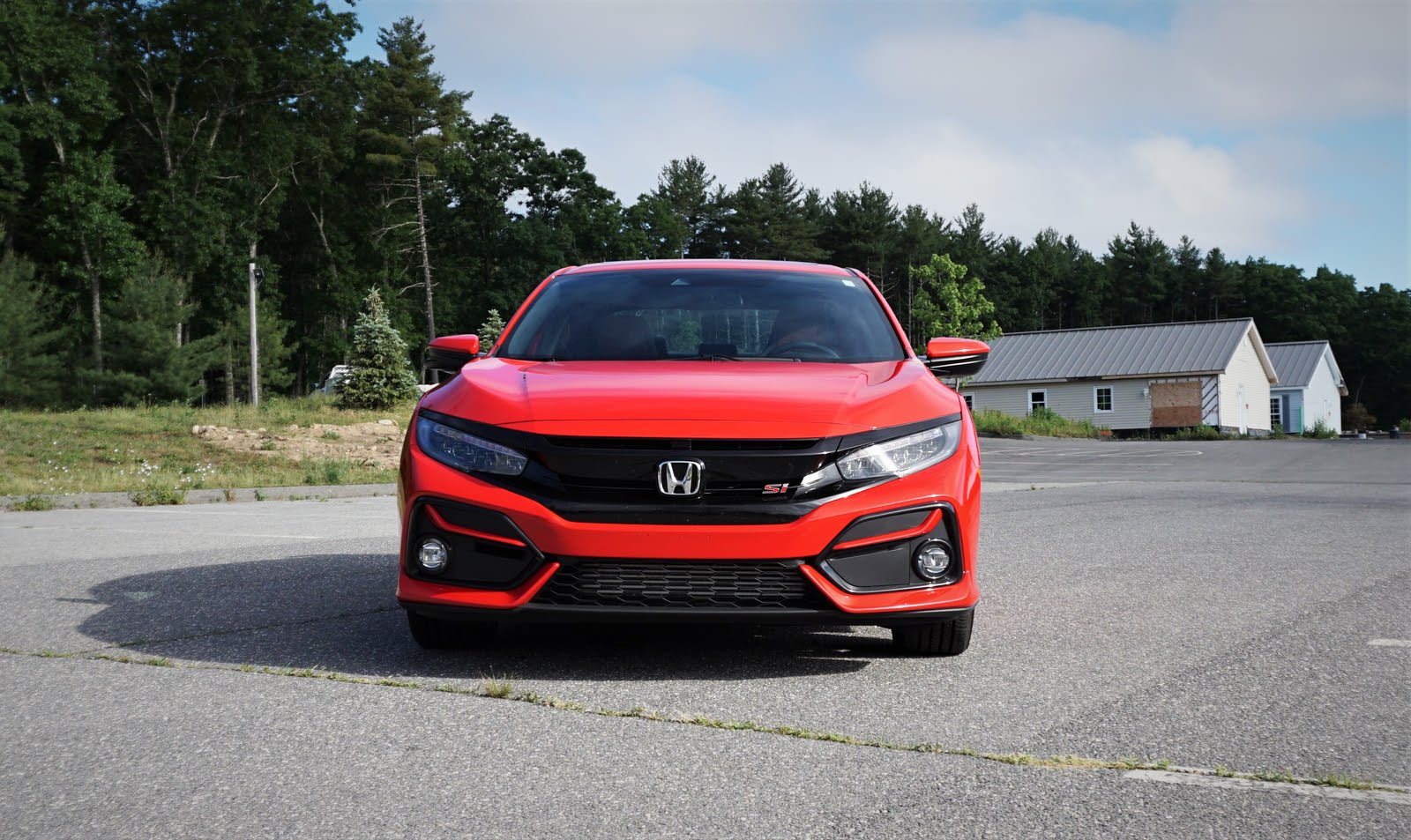
The 2020 Honda Civic is, in our opinion, one of the best small cars you can buy.
Minor design tweaks and more standard safety and convenience features arrive as the standout changes for the Civic's 2020 model year. Last redesigned for the 2016 model year, the Civic keeps outperforming its small-car peers by offering the performance and quality of more expensive cars, while retaining the value and longevity expected of a Honda. Plus, I had a really fun week with the turbocharged Civic Si.

The Civic is the crown jewel in Honda's lineup—not the pricier Accord, the big Pilot, or the $220,000 Acura NSX supercar. This is a $20,000 compact car sold to the broadest chunk of buyers, who don't have a ton of money to spend, and yet Honda blesses them with a bounty of choices and a level of engineering excellence typically found at BMW. The Honda Civic comes in three body styles—sedan, coupe, and 4-door hatchback—that direct attention to its sharp design, not its small footprint. The sedan has the svelte roofline of the coupe, only the body is elongated and elegant. Body panel creases and wide, arcing headlights accentuate the car's low and wide stance, while large, sweeping LED taillights do the same for the rear. Proportionally, the Civic hatchback's tall rump is a tad quirky past the rear door and the Honda Civic Type R is the exaggerated car an anime character would drive. But there's nothing else I can knock at the Civic's exterior. It's visually stimulating without a whiff of cheapness.
The 2019 model year upgraded the grilles, bumpers, and wheels of the standard Civic sedan and coupe models. Those carry over for 2020, but on the Civic Si sedan I drove, there are new matte-black 18-inch wheels, available LED fog lights with gloss black trim, available LED headlights (which look like crystals when they're on or off), an updated grille, and a new rear bumper with more body-colour and gloss-black trim. The same goes for the Si coupe. The 2020 Civic hatchback also gets the new bumper and light changes, plus new wheels in gray or black.
The simple interior, with its narrow centre stack and minimal instrumentation, is built with soft-touch rubbers and high-quality switchgear. The hard plastics on the lower sections of the dash and on the doors are acceptable and have a fine grain. More gloss-black trim on the steering wheel and dash, the feel of the metal shift knob, the pulsing red glow of the start button, and even the way the central air vents play off their symmetry are all pleasing to the eye.
Interior styling changes for 2020 include three new dash accents on the hatchback (depending on trim), and for the Si, a thin red line accenting the instrument panel like on the Type R. The Si also gets revised sport seats with red bands woven into the fabric.

Four engines and two transmissions are available across the Civic lineup of trim levels, all of which are front-wheel drive (FWD). In Canada, the base engine on the sedan and coupe is the 2.0-litre inline 4-cylinder engine with power specs of 158 horsepower and 138 pound-feet of torque. A six-speed manual transmission is standard and available with every Civic, while a continuously variable transmission (CVT) is available on all grades but the DX sedan. On the Honda Civic Touring trims for the sedan and coupe, and standard on the hatchback, you’ll find a CVT and a 1.5-litre inline-4 turbocharged engine making 174 hp and 162 lb-ft. The Honda Civic Sport or Sport Touring hatchbacks include a version that makes 180 hp.
The 1.5-litre engine is preferred for greater mid-range acceleration and responsiveness. Honda engines are smooth, quick to rev, and are a delight to string through the manual's tight shifter (I flubbed a few times, as it's way tighter and shorter in throw than my own car's). The CVT responds well, too, without hesitation or peaking the engine to high revs for seconds on end. The powertrains are, in a word, flawless.
On the Si, the 1.5-litre engine is boosted to 205 hp and 192 lb-ft (in both the coupe and sedan). The Type R, with 306 hp and 295 lb-ft, is predictably insane. Both the Civic Si and Type R come exclusively with a stick-shift.
While the Type R is a delight—and remarkably composed despite ultra-thin 20-inch tires and all that power routed to the front wheels—the Si is more the everyday delight. Adaptive dampers come standard and really remove the body roll, though the Si rides noticeably stiffer than the regular Civic even in the normal setting. Still, without the available summer tires, the Si is balanced, direct, and always willing to play. The combination of a great suspension, precise steering, and a torque-rich engine without much torque steer make driving the Civic Si a thrill without making you public-enemy number-one to the police. There's some turbo lag, but the boost arrives in a linear, predictable fashion without overwhelming the car's steering or grip.
For 2020, Honda reduced the final-drive ratio by 6 percent. Shorter final-drive ratios improve acceleration in all gears, but can impact fuel efficiency. And that's what happened to the Si: Natural Resources Canada has rated it at 8.9 litres per 100 kilometres in the city, 6.4 on the highway, and 7.8 combined (up from 8.4 city/6.2 hwy/7.4 combined). That's still good and greater than the larger, less powerful engine in the base Honda Civic LX sedan (9.3/6.5/8.0 with the manual). Else, most Civic models with the CVT hit near 8.0 L/100 km city and as low as 6.0 L/100 km highway.

The big deal for 2019 was a volume knob and better cupholders. The hatchback now has more sound insulation in the floor, trunk, and wheel wells. On Honda Civic EX hatchback models, the driver's seat is eight-way power adjustable. Compared to how earlier Civic models equipped with the touchscreen also relied on touch-sensitive controls for the climate fan speed and stereo volume, it's significantly better.
The three-spoke steering wheel has controls for both the central display and the instrument panel's digital tachometer and speedometer panel, with easy access to recent destinations, audio sources, phone numbers, trip information, and more. Analog fuel and coolant gauges flank the tach. Honda's confusing push-button/pull-tab gear selector is not in the Civic. Instead, there is a conventional PRNDL shifter and the usual pull tab for the electronic parking brake. The centre console has a deep storage bin with item trays and cupholders that slide along rails and are removable. It's nice that you can configure the Civic's storage just the way you want it.
With the coupe as the obvious exception, the Honda Civic feels considerably roomy for rear passengers in all directions. Available two-stage heated outboard seats are a nice luxury, but Honda's major oversight is not including any rear air vents. People do enjoy breathing these days, don't they?
The trunk's cargo space is also very roomy, at 416 litres in all sedan trims (minus a few unnoticeable tenths if you select the Touring model with the subwoofer). The Civic coupes have 343 litres of cargo space. The hatchback is noticeably larger, at 728 litres behind the rear seats and 1,302 litres with them folded down. It's not Honda CR-V massive in there, but it'll let you take home that garden rake from the hardware store.

The Civic still uses an outdated infotainment system that runs slower, looks graphically dated, and remains too complex versus the new system in the Accord and other Honda models. Bluetooth connectivity is standard. The 7-inch touchscreen, now standard on all models except the base DX sedan, comes with Apple CarPlay and Android Auto to let you bypass the factory interface. At least the navigation on top-end trims is Garmin-based, fast, and has accurate voice recognition. A garage-door opener is now standard on the Sport Touring hatchback.
New to the 2020 Civic Si is Active Sound Control, which pumps fake engine sounds through the audio system's speakers. I turned it off, because fake is fake (I played my own tunes through the Si's 450-watt, 10-speaker stereo). The Si also comes with standard push-button start, keyless entry, power moonroof, and heated front seats. What's also superb is LaneWatch, a camera mounted on the right-side mirror that reveals a live feed of your blind spot, with lines indicating how many car lengths there are from your bumper, whenever you activate the right-hand turn signal. It's very effective.
Automatic climate control is standard on all models, and now Si models get Honda Sensing like every other Civic trim, which features active lane centring, adaptive cruise control, and auto high beams. Leather is included on the Touring sedan and hatchback, as are rain-sensing wipers (Sport Touring in the hatch). LED headlights are included on Touring, Si, and Sport Touring models.


The 2020 Civic sedan starts at an MSRP of $18,390, the Civic coupe starts at $21,690, and the Civic hatchback at $24,190. Fully loaded with a $1,770 destination charge, every Civic costs less than $33,000 except the Type R, which stickers for thousands more. In general, these prices put the Civic in a position just barely more expensive than the Kia Forte, in line with the Hyundai Elantra and Toyota Corolla, and slightly less pricey than a Mazda3.
My Honda Civic Si sedan test car was $32,060 with destination (Canadian, estimated). Considering the level of performance, refinement, style, safety, and high quality baked into every Civic, these are great prices for an exceptional small car.
Note: Images show a US model.

User reviews for 2020 Honda Civic
Write a review2020 Honda Civic Pricing
Trims & specs
Air Conditioning
Automatic climate control front air conditioning · Single front air conditioning zones
Airbags
Dual front airbags · Passenger airbag deactivation: occupant sensing deactivation · Front side airbags · Rear side curtain airbags
Audio System
Antenna Type: element · Bluetooth auxiliary audio input · AM/FM radio · Total Number of Speakers: 4 · 160 watts
Brakes
ABS: 4-wheel · Braking assist: hill start assist · Electronic parking brake: auto off · Front brake diameter: 11.1 · Front brakes: ventilated disc · Rear brake diameter: 10.2 · Rear brakes: disc
Comfort Features
Dash trim: simulated alloy · Door trim: simulated alloy · Floor Mat Material: carpet · Floor Material: carpet · Floor Mats: front · Shift knob trim: urethane · Steering wheel trim: urethane
Convenience Features
Adaptive stop and go cruise control: semi-automatic · Assist handle: rear · Autonomous lane guidance: lane centering · Center console: front console with armrest and storage · Cruise control: adaptive · Cupholders: front · Multi-function remote: keyless entry with panic alarm · One-touch windows: 2 · Power outlet(s): 12V front · Power steering: speed-proportional · Power windows: lockout button · Reading lights: front · Rear view camera: multi-view · Steering wheel: tilt and telescopic · Steering wheel mounted controls: multi-function screen controls · Storage: door pockets · Vanity mirrors: dual
Driver Seat
Manual adjustments: 6
Drivetrain
Axle ratio: 3.94
Engine
Battery: maintenance-free
Exterior Features
Door handle color: body-color · Front bumper color: body-color · Grille color: black with chrome accents · Mirror color: body-color · Rear bumper color: body-color · Window trim: chrome
Headrests
Front headrests: adjustable · Number of front headrests: 2 · Number of rear headrests: 3
In Car Entertainment
Infotainment screen size: 5 in.
Instrumentation
Fuel economy display: range · Warnings and reminders: low battery
Lights
Daytime running lights: LED · Exterior entry lights: security approach lamps · Headlights: Auto on/off · Tail and brake lights: LED
Mirrors
Exterior mirrors: manual folding · Inside rearview mirror: manual day/night
Passenger Seat
Manual Adjustments: 4
Rear Seats
Type: bench
Safety
Automatic emergency braking: front pedestrian · Child seat anchors: LATCH system · Crumple zones: front · Pre-Collision Warning System: audible warning · Pre-collision warning system: pedestrian detection · Rearview monitor: in dash
Seatbelts
Emergency locking retractors: front and rear · Front seatbelts: 3-point · Seatbelt force limiters: front · Seatbelt pretensioners: front · Seatbelt warning sensor: driver and passenger · Second row seatbelts: 3-point
Seats
Driver seat manual adjustments: reclining · Front seat type: bucket · Passenger seat manual adjustments: reclining · Rear headrests: adjustable · Rear seat folding: one-piece · Upholstery: cloth
Spare Tire
Mount Location: inside · Size: temporary
Spare Wheel
Rim Type: steel
Steering
Steering ratio: 10.9 · Turns lock-to-lock: 2.2
Suspension
Front Arm Type: lower control arms · Front Shock Type: gas shock absorbers · Front Spring Type: coil springs · Front Stabilizer Bar: diameter 25 mm · Front Suspension Classification: independent · Front Suspension Type: MacPherson struts · Rear Shock Type: gas shock absorbers · Rear Spring Type: coil springs · Rear Stabilizer Bar: diameter 17 mm · Rear Suspension Classification: independent · Rear Suspension Type: multi-link
Telematics
Driver assistance app: roadside assistance · Phone: voice activated · Phone wireless data link: Bluetooth · Smart device app compatibility: HondaLink · Smart device app function: maintenance status
Tires
Type: all season
Tires and Rims
Wheels: steel
Wheels
Wheel covers: full
Windows
Front wipers: intermittent · Laminated glass: acoustic · Power windows: with safety reverse
Air Conditioning
Automatic climate control front air conditioning · Single front air conditioning zones
Airbags
Dual front airbags · Passenger airbag deactivation: occupant sensing deactivation · Front side airbags · Rear side curtain airbags
Audio System
Antenna Type: element · Bluetooth auxiliary audio input · AM/FM radio · Total Number of Speakers: 4 · 160 watts
Brakes
ABS: 4-wheel · Braking assist: hill start assist · Electronic parking brake: auto off · Front brake diameter: 11.1 · Front brakes: ventilated disc · Rear brake diameter: 10.2 · Rear brakes: disc
Comfort Features
Dash trim: simulated alloy · Floor Mat Material: carpet · Floor Material: carpet · Floor Mats: front · Shift knob trim: urethane · Steering wheel trim: urethane
Convenience Features
Adaptive stop and go cruise control: semi-automatic · Assist handle: front · Autonomous lane guidance: lane centering · Center console: front console with armrest and storage · Cruise control: adaptive · Cupholders: rear · Multi-function remote: keyless entry with panic alarm · One-touch windows: 2 · Power outlet(s): 12V front · Power steering: speed-proportional · Power windows: lockout button · Reading lights: front · Rear view camera: multi-view · Steering wheel: tilt and telescopic · Steering wheel mounted controls: multi-function screen controls · Storage: door pockets · Vanity mirrors: dual
Driver Seat
Manual adjustments: 6
Drivetrain
Axle ratio: 3.94
Engine
Battery: maintenance-free
Exterior Features
Door handle color: body-color · Front bumper color: body-color · Grille color: black with chrome accents · Mirror color: body-color · Rear bumper color: body-color · Window trim: chrome
Headrests
Front headrests: adjustable · Number of front headrests: 2 · Number of rear headrests: 3
In Car Entertainment
Infotainment screen size: 5 in.
Instrumentation
Fuel economy display: MPG · Warnings and reminders: maintenance reminder
Lights
Daytime running lights: LED · Exterior entry lights: security approach lamps · Headlights: automatic high beam dimmer · Tail and brake lights: LED
Mirrors
Exterior mirrors: manual folding · Inside rearview mirror: manual day/night
Passenger Seat
Manual Adjustments: 4
Rear Seats
Type: 60-40 split bench
Safety
Automatic emergency braking: front · Child seat anchors: LATCH system · Crumple zones: front · Pre-Collision Warning System: audible warning · Pre-collision warning system: pedestrian detection · Rearview monitor: in dash
Seatbelts
Emergency locking retractors: front and rear · Front seatbelts: 3-point · Seatbelt force limiters: front · Seatbelt pretensioners: front · Seatbelt warning sensor: driver and passenger · Second row seatbelts: 3-point
Seats
Driver seat manual adjustments: height · Front seat type: bucket · Passenger seat manual adjustments: reclining · Rear headrests: adjustable · Rear seat folding: split · Upholstery: cloth
Spare Tire
Mount Location: inside · Size: temporary
Spare Wheel
Rim Type: steel
Steering
Steering ratio: 10.9 · Turns lock-to-lock: 2.2
Suspension
Front Arm Type: lower control arms · Front Shock Type: gas shock absorbers · Front Spring Type: coil springs · Front Stabilizer Bar: diameter 25 mm · Front Suspension Classification: independent · Front Suspension Type: MacPherson struts · Rear Shock Type: gas shock absorbers · Rear Spring Type: coil springs · Rear Stabilizer Bar: diameter 16 mm · Rear Suspension Classification: independent · Rear Suspension Type: multi-link
Telematics
Driver assistance app: roadside assistance · Phone: voice activated · Phone wireless data link: Bluetooth · Smart device app compatibility: HondaLink · Smart device app function: maintenance scheduling
Tires
Type: all season
Tires and Rims
Wheel type: aluminum alloy
Windows
Front wipers: intermittent · Laminated glass: acoustic · Power windows: with safety reverse
Air Conditioning
Automatic climate control front air conditioning · Single front air conditioning zones
Airbags
Dual front airbags · Passenger airbag deactivation: occupant sensing deactivation · Front side airbags · Front side curtain airbags
Audio System
Antenna Type: element · Voice recognition audio system · Bluetooth auxiliary audio input · Pandora internet radio · AM/FM radio · Total Number of Speakers: 8 · 180 watts
Brakes
ABS: 4-wheel · Braking assist: hill start assist · Electronic parking brake: auto off · Front brake diameter: 11.1 · Front brakes: ventilated disc · Rear brake diameter: 10.2 · Rear brakes: disc
Comfort Features
Dash trim: simulated alloy · Door trim: simulated alloy · Floor Mat Material: carpet · Floor Material: carpet · Floor Mats: front · Foot pedal trim: aluminum · Shift knob trim: leather · Steering wheel trim: leather
Convenience Features
Adaptive stop and go cruise control: semi-automatic · Assist handle: rear · Autonomous lane guidance: lane centering · Center console: front console with armrest and storage · Cruise control: adaptive · Cupholders: rear · Multi-function remote: keyless entry with panic alarm · One-touch windows: 2 · Power outlet(s): 12V front · Power steering: electric · Power windows: lockout button · Reading lights: front · Rear view camera: multi-view · Steering wheel: tilt and telescopic · Steering wheel mounted controls: phone · Storage: door pockets · Vanity mirrors: dual illuminating
Driver Seat
Manual adjustments: 6
Drivetrain
Axle ratio: 3.94
Engine
Battery: maintenance-free
Exterior Features
Door handle color: body-color · Exhaust tip color: chrome · Front bumper color: body-color · Grille color: black · Mirror color: body-color · Rear bumper color: body-color · Rear spoiler: decklid · Rear spoiler color: black · Window trim: chrome
Headrests
Front headrests: adjustable · Number of front headrests: 2 · Number of rear headrests: 3
In Car Entertainment
Connected in-car apps: Google POIs · Infotainment: Android Auto ready · Infotainment screen size: 7 in.
Instrumentation
Fuel economy display: range · Instrument cluster screen size: 7 in. · Warnings and reminders: low battery
Lights
Daytime running lights: LED · Exterior entry lights: security approach lamps · Headlights: automatic high beam dimmer · Tail and brake lights: LED
Mirrors
Exterior mirrors: power · Inside rearview mirror: manual day/night
Passenger Seat
Manual Adjustments: 4
Rear Seats
Type: 60-40 split bench
Safety
Automatic emergency braking: front pedestrian · Child seat anchors: LATCH system · Crumple zones: front · Pre-Collision Warning System: visual warning · Pre-collision warning system: pedestrian detection · Rearview monitor: in dash
Seatbelts
Emergency locking retractors: front and rear · Front seatbelts: 3-point · Seatbelt force limiters: front · Seatbelt pretensioners: front · Seatbelt warning sensor: driver and passenger · Second row seatbelts: 3-point
Seats
Driver seat manual adjustments: reclining · Front seat type: bucket · Passenger seat manual adjustments: reclining · Rear headrests: adjustable · Rear seat folding: split · Upholstery: cloth
Security
Power door locks: anti-lockout
Spare Tire
Mount Location: inside · Size: temporary
Spare Wheel
Rim Type: steel
Steering
Steering ratio: 11.1 · Turns lock-to-lock: 2.2
Suspension
Front Arm Type: lower control arms · Front Shock Type: gas shock absorbers · Front Spring Type: coil springs · Front Stabilizer Bar: diameter 27 mm · Front Suspension Classification: independent · Front Suspension Type: MacPherson struts · Rear Shock Type: gas shock absorbers · Rear Spring Type: coil springs · Rear Stabilizer Bar: diameter 17 mm · Rear Suspension Classification: independent · Rear Suspension Type: multi-link
Telematics
Driver assistance app: roadside assistance · Electronic messaging assistance: with read function · Phone: voice activated · Phone wireless data link: Bluetooth · Smart device app compatibility: HondaLink · Smart device app function: maintenance scheduling
Tires
Type: all season
Tires and Rims
Wheels: aluminum with painted accents
Windows
Front wipers: variable intermittent · Laminated glass: acoustic · Power windows: with safety reverse
Air Conditioning
Automatic climate control front air conditioning · Single front air conditioning zones
Airbags
Dual front airbags · Passenger airbag deactivation: occupant sensing deactivation · Front side airbags · Rear side curtain airbags
Audio System
Antenna Type: element · Voice recognition audio system · Bluetooth auxiliary audio input · Pandora internet radio · Touch screen display radio · Total Number of Speakers: 8 · 180 watts
Brakes
ABS: 4-wheel · Braking assist: hill start assist · Electronic parking brake: auto off · Front brake diameter: 11.1 · Front brakes: ventilated disc · Rear brake diameter: 10.2 · Rear brakes: disc
Comfort Features
Dash trim: simulated alloy · Floor Mat Material: carpet · Floor Material: carpet · Floor Mats: front · Foot pedal trim: aluminum · Shift knob trim: leather · Steering wheel trim: leather
Convenience Features
Adaptive stop and go cruise control: semi-automatic · Assist handle: front · Autonomous lane guidance: lane centering · Center console: front console with armrest and storage · Cruise control: adaptive · Cupholders: front · Multi-function remote: trunk release · One-touch windows: 2 · Power outlet(s): 12V front · Power steering: electric · Power windows: lockout button · Reading lights: front · Rear view camera: multi-view · Steering wheel: tilt and telescopic · Steering wheel mounted controls: cruise controls · Storage: door pockets · Vanity mirrors: dual
Driver Seat
Manual adjustments: 6
Drivetrain
Axle ratio: 3.94
Engine
Battery: maintenance-free
Exterior Features
Door handle color: body-color · Exhaust tip color: chrome · Front bumper color: body-color · Grille color: black · Mirror color: body-color · Rear bumper color: body-color · Window trim: chrome
Headrests
Front headrests: adjustable · Number of front headrests: 2 · Number of rear headrests: 3
In Car Entertainment
Connected in-car apps: Google POIs · Infotainment: Apply CarPlay ready · Infotainment screen size: 7 in.
Instrumentation
Fuel economy display: MPG · Instrument cluster screen size: 7 in. · Warnings and reminders: maintenance reminder
Lights
Daytime running lights: LED · Exterior entry lights: security approach lamps · Headlights: automatic high beam dimmer · Tail and brake lights: LED
Mirrors
Exterior mirrors: power · Inside rearview mirror: manual day/night
Passenger Seat
Manual Adjustments: 4
Rear Seats
Type: 60-40 split bench
Safety
Automatic emergency braking: front · Child seat anchors: LATCH system · Crumple zones: front · Pre-Collision Warning System: audible warning · Pre-collision warning system: pedestrian detection · Rearview monitor: in dash
Seatbelts
Emergency locking retractors: front · Front seatbelts: 3-point · Seatbelt force limiters: front · Seatbelt pretensioners: front · Seatbelt warning sensor: driver and passenger · Second row seatbelts: 3-point
Seats
Driver seat manual adjustments: reclining · Front seat type: bucket · Passenger seat manual adjustments: reclining · Rear headrests: adjustable · Rear seat folding: split · Upholstery: cloth
Security
Power door locks: anti-lockout
Spare Tire
Mount Location: inside · Size: temporary
Spare Wheel
Rim Type: steel
Steering
Steering ratio: 11.1 · Turns lock-to-lock: 2.1
Suspension
Front Arm Type: lower control arms · Front Shock Type: gas shock absorbers · Front Spring Type: coil springs · Front Stabilizer Bar: diameter 27 mm · Front Suspension Classification: independent · Front Suspension Type: MacPherson struts · Rear Shock Type: gas shock absorbers · Rear Spring Type: coil springs · Rear Stabilizer Bar: diameter 17 mm · Rear Suspension Classification: independent · Rear Suspension Type: multi-link
Telematics
Driver assistance app: roadside assistance · Electronic messaging assistance: with read function · Phone: voice activated · Phone wireless data link: Bluetooth · Smart device app compatibility: HondaLink · Smart device app function: maintenance scheduling
Tires
Type: all season
Tires and Rims
Wheels: aluminum with painted accents
Windows
Front wipers: intermittent · Laminated glass: acoustic · Power windows: with safety reverse
Air Conditioning
Automatic climate control front air conditioning · Dual front air conditioning zones
Airbags
Dual front airbags · Passenger airbag deactivation: occupant sensing deactivation · Front side airbags · Rear side curtain airbags
Audio System
Antenna Type: diversity · Voice recognition audio system · Bluetooth auxiliary audio input · Pandora internet radio · AM/FM radio · Satellite Radio: SiriusXM · 1 subwoofer · Total Number of Speakers: 9 · 450 watts
Brakes
ABS: 4-wheel · Braking assist: hill start assist · Electronic parking brake: auto off · Front brake diameter: 11.1 · Front brakes: ventilated disc · Rear brake diameter: 10.2 · Rear brakes: disc
Comfort Features
Dash trim: simulated alloy · Floor Mat Material: carpet · Floor Material: carpet · Floor Mats: front · Shift knob trim: leather · Steering wheel trim: leather
Convenience Features
Adaptive stop and go cruise control: semi-automatic · Assist handle: front · Autonomous lane guidance: lane centering · Center console: front console with armrest and storage · Cruise control: adaptive · Cupholders: rear · Multi-function remote: keyless entry with panic alarm · One-touch windows: 2 · Power outlet(s): 12V front · Power steering: electric · Power windows: lockout button · Reading lights: front · Rear view camera: multi-view · Steering wheel: tilt and telescopic · Steering wheel mounted controls: audio · Storage: door pockets · Vanity mirrors: dual illuminating
Driver Seat
Manual adjustments: 6
Drivetrain
Axle ratio: 3.24
Engine
Battery: maintenance-free
Exterior Features
Door handle color: body-color · Front bumper color: body-color · Grille color: black with chrome accents · Mirror color: body-color · Rear bumper color: body-color · Window trim: chrome
Headrests
Front headrests: adjustable · Number of front headrests: 2 · Number of rear headrests: 3
In Car Entertainment
Connected in-car apps: Google POIs · Infotainment: HondaLink · Infotainment screen size: 7 in.
Instrumentation
Fuel economy display: range · Instrument cluster screen size: 7 in. · Warnings and reminders: low battery
Lights
Daytime running lights: LED · Exterior entry lights: security approach lamps · Headlights: Auto on/off · Tail and brake lights: LED
Mirrors
Exterior mirrors: manual folding · Inside rearview mirror: manual day/night
Passenger Seat
Manual Adjustments: 4
Rear Seats
Type: 60-40 split bench
Roof
Moonroof: tilt/slide
Safety
Automatic emergency braking: front pedestrian · Blind spot safety: passenger side camera · Child seat anchors: LATCH system · Crumple zones: front · Pre-Collision Warning System: visual warning · Pre-collision warning system: pedestrian detection · Rearview monitor: in dash
Seatbelts
Emergency locking retractors: front and rear · Front seatbelts: 3-point · Seatbelt force limiters: front · Seatbelt pretensioners: front · Seatbelt warning sensor: driver and passenger · Second row seatbelts: 3-point
Seats
Driver seat manual adjustments: reclining · Front seat type: bucket · Passenger seat manual adjustments: reclining · Rear headrests: adjustable · Rear seat folding: split · Upholstery: cloth
Security
Power door locks: anti-lockout
Spare Tire
Mount Location: inside · Size: temporary
Spare Wheel
Rim Type: steel
Steering
Steering ratio: 10.9 · Turns lock-to-lock: 2.2
Suspension
Front Arm Type: lower control arms · Front Shock Type: gas shock absorbers · Front Spring Type: coil springs · Front Stabilizer Bar: diameter 27 mm · Front Suspension Classification: independent · Front Suspension Type: MacPherson struts · Rear Shock Type: gas shock absorbers · Rear Spring Type: coil springs · Rear Stabilizer Bar: diameter 16 mm · Rear Suspension Classification: independent · Rear Suspension Type: multi-link
Telematics
Driver assistance app: roadside assistance · Electronic messaging assistance: with read function · Phone: voice activated · Phone wireless data link: Bluetooth · Smart device app compatibility: HondaLink · Smart device app function: maintenance status
Tires
Type: all season
Tires and Rims
Wheel type: aluminum alloy
Windows
Front wipers: variable intermittent · Laminated glass: acoustic · Power windows: with safety reverse
Air Conditioning
Automatic climate control front air conditioning · Dual front air conditioning zones
Airbags
Dual front airbags · Passenger airbag deactivation: occupant sensing deactivation · Front side airbags · Rear side curtain airbags
Audio System
Antenna Type: mast · Voice recognition audio system · USB auxiliary audio input · Pandora internet radio · AM/FM radio · Satellite Radio: SiriusXM · Total Number of Speakers: 8 · 180 watts
Brakes
ABS: 4-wheel · Braking assist: hill start assist · Electronic parking brake: auto off · Front brake diameter: 11.1 · Front brakes: ventilated disc · Rear brake diameter: 10.2 · Rear brakes: disc
Comfort Features
Armrests: rear center with cupholders · Dash trim: simulated alloy · Door trim: simulated alloy · Floor Mat Material: carpet · Floor Material: carpet · Floor Mats: front · Shift knob trim: leather · Steering wheel trim: leather
Convenience Features
Adaptive stop and go cruise control: semi-automatic · Assist handle: front · Autonomous lane guidance: lane centering · Center console: front console with armrest and storage · Cruise control: adaptive · Cupholders: front · Multi-function remote: trunk release · One-touch windows: 2 · Power outlet(s): 12V front · Power steering: electric · Power windows: lockout button · Reading lights: front · Rear view camera: multi-view · Steering wheel: tilt and telescopic · Steering wheel mounted controls: audio · Storage: front seatback · Vanity mirrors: dual illuminating
Driver Seat
Power adjustments: 8
Drivetrain
Axle ratio: 3.24
Engine
Battery: maintenance-free
Exterior Features
Door handle color: body-color · Front bumper color: body-color · Grille color: black with chrome accents · Mirror color: body-color · Rear bumper color: body-color · Rear spoiler: decklid · Rear spoiler color: body-color · Window trim: chrome
Headrests
Front headrests: adjustable · Number of front headrests: 2 · Number of rear headrests: 3
In Car Entertainment
Connected in-car apps: Google search · Infotainment: Apply CarPlay ready · Infotainment screen size: 7 in.
Instrumentation
Fuel economy display: MPG · Instrument cluster screen size: 7 in. · Warnings and reminders: low fuel level
Lights
Daytime running lights: LED · Exterior entry lights: security approach lamps · Headlights: auto delay off · Tail and brake lights: LED
Mirrors
Exterior mirrors: power · Inside rearview mirror: manual day/night
Passenger Seat
Manual Adjustments: 4
Rear Seats
Type: 60-40 split bench
Roof
Moonroof: tilt/slide
Safety
Automatic emergency braking: front pedestrian · Blind spot safety: passenger side camera · Child seat anchors: LATCH system · Crumple zones: front · Pre-Collision Warning System: visual warning · Pre-collision warning system: pedestrian detection · Rearview monitor: in dash
Seatbelts
Emergency locking retractors: front · Front seatbelts: 3-point · Seatbelt force limiters: front · Seatbelt pretensioners: front · Seatbelt warning sensor: driver and passenger · Second row seatbelts: 3-point
Seats
Driver seat power adjustments: reclining · Front seat type: bucket · Passenger seat manual adjustments: reclining · Rear headrests: adjustable · Rear seat folding: split · Upholstery: cloth
Security
Power door locks: anti-lockout
Spare Tire
Mount Location: inside · Size: temporary
Spare Wheel
Rim Type: steel
Steering
Steering ratio: 10.9 · Turns lock-to-lock: 2.2
Suspension
Front Arm Type: lower control arms · Front Shock Type: gas shock absorbers · Front Spring Type: coil springs · Front Stabilizer Bar: diameter 27 mm · Front Suspension Classification: independent · Front Suspension Type: MacPherson struts · Rear Shock Type: gas shock absorbers · Rear Spring Type: coil springs · Rear Stabilizer Bar: diameter 17 mm · Rear Suspension Classification: independent · Rear Suspension Type: multi-link
Telematics
Driver assistance app: roadside assistance · Electronic messaging assistance: with read function · Phone: voice activated · Phone wireless data link: Bluetooth · Smart device app compatibility: HondaLink · Smart device app function: maintenance scheduling
Tires
Type: all season
Tires and Rims
Wheel type: aluminum alloy
Windows
Front wipers: variable intermittent · Laminated glass: acoustic · Power windows: with safety reverse
Air Conditioning
Automatic climate control front air conditioning · Dual front air conditioning zones
Airbags
Dual front airbags · Passenger airbag deactivation: occupant sensing deactivation · Front side airbags · Front side curtain airbags
Audio System
Antenna Type: diversity · Voice recognition audio system · Bluetooth auxiliary audio input · Pandora internet radio · Touch screen display radio · Satellite Radio: SiriusXM · Total Number of Speakers: 8 · 180 watts
Brakes
ABS: 4-wheel · Braking assist: hill start assist · Electronic parking brake: auto off · Front brake diameter: 11.1 · Front brakes: ventilated disc · Rear brake diameter: 10.2 · Rear brakes: disc
Comfort Features
Armrests: rear center folding with storage · Dash trim: simulated alloy · Door trim: simulated alloy · Floor Mat Material: carpet · Floor Material: carpet · Floor Mats: front · Shift knob trim: leather · Steering wheel trim: leather
Convenience Features
Adaptive stop and go cruise control: semi-automatic · Assist handle: front · Autonomous lane guidance: lane centering · Center console: front console with armrest and storage · Cruise control: adaptive · Cupholders: rear · Dimming rearview mirror: auto-dimming · Multi-function remote: proximity entry system · One-touch windows: 2 · Power outlet(s): 12V front · Power steering: speed-proportional · Power windows: lockout button · Reading lights: front · Rear view camera: multi-view · Steering wheel: tilt and telescopic · Steering wheel mounted controls: multi-function screen controls · Storage: front seatback · Universal garage door opener: Homelink · Vanity mirrors: dual illuminating
Driver Seat
Power adjustments: 8
Drivetrain
Axle ratio: 3.24
Engine
Battery: maintenance-free
Exterior Features
Door handle color: body-color · Front bumper color: body-color · Grille color: black with chrome accents · Mirror color: body-color · Rear bumper color: body-color · Rear spoiler: decklid · Rear spoiler color: body-color · Window trim: chrome
Headrests
Front headrests: adjustable · Number of front headrests: 2 · Number of rear headrests: 3
In Car Entertainment
Connected in-car apps: Google search · Infotainment: Apply CarPlay ready · Infotainment screen size: 7 in.
Instrumentation
Fuel economy display: MPG · Instrument cluster screen size: 7 in. · Warnings and reminders: maintenance reminder
Lights
Daytime running lights: LED · Exterior entry lights: security approach lamps · Headlights: Auto on/off · Tail and brake lights: LED
Mirrors
Exterior mirrors: heated
Passenger Seat
Manual Adjustments: 4
Rear Seats
Type: 60-40 split bench
Roof
Moonroof: one-touch open/close
Safety
Automatic emergency braking: front · Blind spot safety: passenger side camera · Child seat anchors: LATCH system · Crumple zones: front · Pre-Collision Warning System: audible warning · Pre-collision warning system: pedestrian detection · Rearview monitor: in dash
Seatbelts
Emergency locking retractors: front · Front seatbelts: 3-point · Seatbelt force limiters: front · Seatbelt pretensioners: front · Seatbelt warning sensor: driver and passenger · Second row seatbelts: 3-point
Seats
Driver seat power adjustments: reclining · Front seat type: bucket · Passenger seat manual adjustments: reclining · Rear headrests: adjustable · Rear seat folding: split · Upholstery: leather-trimmed
Security
Power door locks: anti-lockout
Spare Tire
Mount Location: inside · Size: temporary
Spare Wheel
Rim Type: steel
Steering
Steering ratio: 10.9 · Turns lock-to-lock: 2.2
Suspension
Front Arm Type: lower control arms · Front Shock Type: gas shock absorbers · Front Spring Type: coil springs · Front Stabilizer Bar: diameter 27 mm · Front Suspension Classification: independent · Front Suspension Type: MacPherson struts · Rear Shock Type: gas shock absorbers · Rear Spring Type: coil springs · Rear Stabilizer Bar: diameter 17 mm · Rear Suspension Classification: independent · Rear Suspension Type: multi-link
Telematics
Driver assistance app: roadside assistance · Electronic messaging assistance: with read function · Phone: voice activated · Phone wireless data link: Bluetooth · Smart device app compatibility: HondaLink · Smart device app function: maintenance status
Tires
Type: all season
Tires and Rims
Wheel type: aluminum alloy
Windows
Front wipers: variable intermittent · Laminated glass: acoustic · Power windows: with safety reverse
Air Conditioning
Automatic climate control front air conditioning · Dual front air conditioning zones
Airbags
Dual front airbags · Passenger airbag deactivation: occupant sensing deactivation · Front side airbags · Front side curtain airbags
Audio System
Antenna Type: diversity · USB auxiliary audio input · Pandora internet radio · HD radio · Satellite Radio: SiriusXM · 1 subwoofer · Total Number of Speakers: 9 · 450 watts
Brakes
ABS: 4-wheel · Braking assist: hill start assist · Electronic parking brake: auto off · Front brake diameter: 12.3 · Front brakes: ventilated disc · Rear brake diameter: 11.1 · Rear brakes: disc
Comfort Features
Armrests: rear center with cupholders · Dash trim: simulated alloy · Door trim: simulated alloy · Floor Mat Material: carpet · Floor Material: carpet · Floor Mats: front · Foot pedal trim: aluminum · Shift knob trim: aluminum · Steering wheel trim: leather
Convenience Features
Assist handle: rear · Autonomous lane guidance: lane centering · Center console: front console with armrest and storage · Cruise control: adaptive · Cupholders: front · Multi-function remote: keyless entry with panic alarm · One-touch windows: 2 · Power outlet(s): 12V front · Power steering: electric · Power windows: lockout button · Reading lights: front · Rear view camera: multi-view · Steering wheel: tilt and telescopic · Steering wheel mounted controls: audio · Storage: front seatback · Vanity mirrors: dual
Driver Seat
Manual adjustments: 6
Drivetrain
Axle ratio: 4.35 · Limited slip differential: front
Engine
Battery: maintenance-free
Exterior Features
Door handle color: body-color · Exhaust tip color: chrome · Front bumper color: body-color · Grille color: black · Mirror color: body-color · Rear bumper color: body-color · Rear spoiler: wing · Rear spoiler color: body-color · Window trim: chrome
Headrests
Front headrests: integrated · Number of front headrests: 2 · Number of rear headrests: 3
In Car Entertainment
Connected in-car apps: Google POIs · Infotainment: HondaLink · Infotainment screen size: 7 in.
Instrumentation
Fuel economy display: range · Instrument cluster screen size: 7 in. · Warnings and reminders: low fuel level
Lights
Daytime running lights: LED · Exterior entry lights: security approach lamps · Front fog lights: LED · Headlights: LED · Tail and brake lights: LED
Mirrors
Exterior mirrors: manual folding · Inside rearview mirror: manual day/night
Passenger Seat
Manual Adjustments: 4
Rear Seats
Type: 60-40 split bench
Roof
Moonroof: anti-trapping feature
Safety
Automatic emergency braking: front pedestrian · Blind spot safety: passenger side camera · Child seat anchors: LATCH system · Crumple zones: front · Pre-Collision Warning System: audible warning · Pre-collision warning system: pedestrian detection · Rearview monitor: in dash
Seatbelts
Emergency locking retractors: front · Front seatbelts: 3-point · Seatbelt force limiters: front · Seatbelt pretensioners: front · Seatbelt warning sensor: driver and passenger · Second row seatbelts: 3-point
Seats
Driver seat manual adjustments: reclining · Front seat type: sport bucket · Passenger seat manual adjustments: reclining · Rear headrests: adjustable · Rear seat folding: split · Upholstery: cloth
Security
Power door locks: anti-lockout
Spare Tire
Kit: tire sealant
Steering
Steering ratio: 10.9 · Turns lock-to-lock: 2.1
Suspension
Driver Adjustable Suspension: ride control · Front Arm Type: lower control arms · Front Shock Type: gas shock absorbers · Front Spring Type: coil springs · Front Stabilizer Bar: diameter 27 mm · Front Suspension Classification: independent · Front Suspension Type: MacPherson struts · Rear Shock Type: gas shock absorbers · Rear Spring Type: coil springs · Rear Stabilizer Bar: diameter 18 mm · Rear Suspension Classification: independent · Rear Suspension Type: multi-link · Suspension control: electronic
Telematics
Driver assistance app: roadside assistance · Electronic messaging assistance: with read function · Phone: voice activated · Phone wireless data link: Bluetooth · Smart device app compatibility: HondaLink · Smart device app function: maintenance scheduling
Tires
Type: all season
Tires and Rims
Wheels: painted aluminum
Windows
Front wipers: variable intermittent · Laminated glass: acoustic · Power windows: with safety reverse
Air Conditioning
Automatic climate control front air conditioning · Dual front air conditioning zones
Airbags
Dual front airbags · Passenger airbag deactivation: occupant sensing deactivation · Front side airbags · Rear side curtain airbags
Audio System
Antenna Type: diversity · USB auxiliary audio input · Pandora internet radio · AM/FM radio · Satellite Radio: SiriusXM · 1 subwoofer · Total Number of Speakers: 9 · 450 watts
Brakes
ABS: 4-wheel · Braking assist: hill start assist · Electronic parking brake: auto off · Front brake diameter: 12.3 · Front brakes: ventilated disc · Rear brake diameter: 11.1 · Rear brakes: disc
Comfort Features
Dash trim: simulated alloy · Door trim: simulated alloy · Floor Mat Material: carpet · Floor Material: carpet · Floor Mats: front · Foot pedal trim: aluminum · Shift knob trim: aluminum · Steering wheel trim: leather
Convenience Features
Assist handle: front · Autonomous lane guidance: lane centering · Center console: front console with armrest and storage · Cruise control: adaptive · Cupholders: rear · Multi-function remote: trunk release · One-touch windows: 2 · Power outlet(s): 12V front · Power steering: speed-proportional · Power windows: lockout button · Reading lights: front · Rear view camera: multi-view · Steering wheel: tilt and telescopic · Steering wheel mounted controls: phone · Storage: door pockets · Vanity mirrors: dual
Driver Seat
Manual adjustments: 6
Drivetrain
Axle ratio: 4.35 · Limited slip differential: front
Engine
Battery: maintenance-free
Exterior Features
Door handle color: body-color · Exhaust tip color: chrome · Front bumper color: body-color · Grille color: black · Mirror color: body-color · Rear bumper color: body-color · Rear spoiler: wing · Rear spoiler color: body-color · Window trim: chrome
Headrests
Front headrests: integrated · Number of front headrests: 2 · Number of rear headrests: 3
In Car Entertainment
Connected in-car apps: Google search · Infotainment: Android Auto ready · Infotainment screen size: 7 in.
Instrumentation
Fuel economy display: MPG · Instrument cluster screen size: 7 in. · Warnings and reminders: turn off headlights
Lights
Daytime running lights: LED · Exterior entry lights: security approach lamps · Front fog lights: LED · Headlights: Auto on/off · Tail and brake lights: LED
Mirrors
Exterior mirrors: power · Inside rearview mirror: manual day/night
Passenger Seat
Manual Adjustments: 4
Rear Seats
Type: 60-40 split bench
Roof
Moonroof: power glass
Safety
Automatic emergency braking: front pedestrian · Blind spot safety: passenger side camera · Child seat anchors: LATCH system · Crumple zones: front · Pre-Collision Warning System: visual warning · Pre-collision warning system: pedestrian detection · Rearview monitor: in dash
Seatbelts
Emergency locking retractors: front · Front seatbelts: 3-point · Seatbelt force limiters: front · Seatbelt pretensioners: front · Seatbelt warning sensor: driver and passenger · Second row seatbelts: 3-point
Seats
Driver seat manual adjustments: reclining · Front seat type: sport bucket · Passenger seat manual adjustments: reclining · Rear headrests: adjustable · Rear seat folding: split · Upholstery: embroidered
Security
Power door locks: anti-lockout
Spare Tire
Kit: tire sealant
Steering
Steering ratio: 10.9 · Turns lock-to-lock: 2.1
Suspension
Driver Adjustable Suspension: ride control · Front Arm Type: lower control arms · Front Shock Type: gas shock absorbers · Front Spring Type: coil springs · Front Stabilizer Bar: diameter 27 mm · Front Suspension Classification: independent · Front Suspension Type: MacPherson struts · Rear Shock Type: gas shock absorbers · Rear Spring Type: coil springs · Rear Stabilizer Bar: diameter 18 mm · Rear Suspension Classification: independent · Rear Suspension Type: multi-link · Suspension control: electronic
Telematics
Driver assistance app: roadside assistance · Electronic messaging assistance: with read function · Phone: voice activated · Phone wireless data link: Bluetooth · Smart device app compatibility: HondaLink · Smart device app function: maintenance scheduling
Tires
Type: all season
Tires and Rims
Wheels: painted aluminum
Windows
Front wipers: variable intermittent · Laminated glass: acoustic · Power windows: with safety reverse
Air Conditioning
Automatic climate control front air conditioning · Dual front air conditioning zones
Airbags
Dual front airbags · Passenger airbag deactivation: occupant sensing deactivation · Front side airbags · Front side curtain airbags
Audio System
Antenna Type: mast · USB auxiliary audio input · Pandora internet radio · Touch screen display radio · Satellite Radio: SiriusXM · 1 subwoofer · Total Number of Speakers: 9 · 450 watts
Brakes
ABS: 4-wheel · Braking assist: hill start assist · Electronic parking brake: auto off · Front brake diameter: 12.3 · Front brakes: ventilated disc · Rear brake diameter: 11.1 · Rear brakes: disc
Comfort Features
Armrests: rear center folding with storage · Dash trim: simulated carbon fiber · Door trim: simulated alloy · Floor Mat Material: carpet · Floor Material: carpet · Floor Mats: front · Foot pedal trim: aluminum · Shift knob trim: leather · Steering wheel trim: leather
Convenience Features
Assist handle: front · Autonomous lane guidance: lane centering · Center console: front console with armrest and storage · Cruise control: adaptive · Cupholders: front · Multi-function remote: proximity entry system · One-touch windows: 2 · Power outlet(s): 12V front · Power steering: speed-proportional · Power windows: lockout button · Reading lights: front · Rear view camera: multi-view · Steering wheel: tilt and telescopic · Steering wheel mounted controls: multi-function screen controls · Storage: front seatback · Vanity mirrors: dual
Driver Seat
Manual adjustments: 6
Drivetrain
Axle ratio: 4.35 · Limited slip differential: front
Engine
Battery: maintenance-free
Exterior Features
Door handle color: body-color · Exhaust tip color: chrome · Front bumper color: body-color · Grille color: black · Mirror color: body-color · Rear bumper color: body-color · Rear spoiler: wing · Rear spoiler color: body-color · Window trim: chrome
Headrests
Front headrests: integrated · Number of front headrests: 2 · Number of rear headrests: 3
In Car Entertainment
Connected in-car apps: Google POIs · Infotainment: Android Auto ready · Infotainment screen size: 7 in.
Instrumentation
Fuel economy display: MPG · Instrument cluster screen size: 7 in. · Warnings and reminders: low fuel level
Lights
Daytime running lights: LED · Exterior entry lights: security approach lamps · Front fog lights: LED · Headlights: Auto on/off · Tail and brake lights: LED
Mirrors
Exterior mirrors: heated · Inside rearview mirror: manual day/night
Passenger Seat
Manual Adjustments: 4
Rear Seats
Type: 60-40 split bench
Roof
Moonroof: power glass
Safety
Automatic emergency braking: front pedestrian · Blind spot safety: passenger side camera · Child seat anchors: LATCH system · Crumple zones: front · Pre-Collision Warning System: audible warning · Pre-collision warning system: pedestrian detection · Rearview monitor: in dash
Seatbelts
Emergency locking retractors: front and rear · Front seatbelts: 3-point · Seatbelt force limiters: front · Seatbelt pretensioners: front · Seatbelt warning sensor: driver and passenger · Second row seatbelts: 3-point
Seats
Driver seat manual adjustments: height · Front seat type: sport bucket · Passenger seat manual adjustments: reclining · Rear headrests: adjustable · Rear seat folding: split · Upholstery: cloth
Security
Power door locks: anti-lockout
Spare Tire
Kit: inflator kit
Steering
Steering ratio: 10.9 · Turns lock-to-lock: 2.1
Suspension
Driver Adjustable Suspension: ride control · Front Arm Type: lower control arms · Front Shock Type: gas shock absorbers · Front Spring Type: coil springs · Front Stabilizer Bar: diameter 27 mm · Front Suspension Classification: independent · Front Suspension Type: MacPherson struts · Rear Shock Type: gas shock absorbers · Rear Spring Type: coil springs · Rear Stabilizer Bar: diameter 18 mm · Rear Suspension Classification: independent · Rear Suspension Type: multi-link · Suspension control: electronic
Telematics
Driver assistance app: roadside assistance · Electronic messaging assistance: with read function · Phone: voice activated · Phone wireless data link: Bluetooth · Smart device app compatibility: HondaLink · Smart device app function: maintenance status
Tires
Type: summer performance
Tires and Rims
Wheels: painted aluminum
Windows
Front wipers: variable intermittent · Laminated glass: acoustic · Power windows: with safety reverse
Air Conditioning
Automatic climate control front air conditioning · Dual front air conditioning zones
Airbags
Dual front airbags · Passenger airbag deactivation: occupant sensing deactivation · Front side airbags · Front side curtain airbags
Audio System
Antenna Type: mast · USB auxiliary audio input · Pandora internet radio · HD radio · Satellite Radio: SiriusXM · 1 subwoofer · Total Number of Speakers: 9 · 450 watts
Brakes
ABS: 4-wheel · Braking assist: hill start assist · Electronic parking brake: auto off · Front brake diameter: 12.3 · Front brakes: ventilated disc · Rear brake diameter: 11.1 · Rear brakes: disc
Comfort Features
Dash trim: simulated alloy · Door trim: simulated alloy · Floor Mat Material: carpet · Floor Material: carpet · Floor Mats: front · Foot pedal trim: aluminum · Shift knob trim: aluminum · Steering wheel trim: leather
Convenience Features
Assist handle: front · Autonomous lane guidance: lane centering · Center console: front console with armrest and storage · Cruise control: adaptive · Cupholders: front · Multi-function remote: trunk release · One-touch windows: 2 · Power outlet(s): 12V front · Power steering: electric · Power windows: lockout button · Reading lights: front · Rear view camera: multi-view · Steering wheel: tilt and telescopic · Steering wheel mounted controls: multi-function screen controls · Storage: door pockets · Vanity mirrors: dual
Driver Seat
Manual adjustments: 6
Drivetrain
Axle ratio: 4.35 · Limited slip differential: front
Engine
Battery: maintenance-free
Exterior Features
Door handle color: body-color · Exhaust tip color: chrome · Front bumper color: body-color · Grille color: black · Mirror color: body-color · Rear bumper color: body-color · Rear spoiler: wing · Rear spoiler color: body-color · Window trim: chrome
Headrests
Front headrests: integrated · Number of front headrests: 2 · Number of rear headrests: 3
In Car Entertainment
Connected in-car apps: Google search · Infotainment: HondaLink · Infotainment screen size: 7 in.
Instrumentation
Fuel economy display: MPG · Instrument cluster screen size: 7 in. · Warnings and reminders: maintenance reminder
Lights
Daytime running lights: LED · Exterior entry lights: security approach lamps · Front fog lights: LED · Headlights: auto delay off · Tail and brake lights: LED
Mirrors
Exterior mirrors: heated · Inside rearview mirror: manual day/night
Passenger Seat
Manual Adjustments: 4
Rear Seats
Type: 60-40 split bench
Roof
Moonroof: anti-trapping feature
Safety
Automatic emergency braking: front pedestrian · Blind spot safety: passenger side camera · Child seat anchors: LATCH system · Crumple zones: front · Pre-Collision Warning System: audible warning · Pre-collision warning system: pedestrian detection · Rearview monitor: in dash
Seatbelts
Emergency locking retractors: front · Front seatbelts: 3-point · Seatbelt force limiters: front · Seatbelt pretensioners: front · Seatbelt warning sensor: driver and passenger · Second row seatbelts: 3-point
Seats
Driver seat manual adjustments: height · Front seat type: sport bucket · Passenger seat manual adjustments: reclining · Rear headrests: adjustable · Rear seat folding: split · Upholstery: embroidered
Security
Power door locks: anti-lockout
Spare Tire
Kit: tire sealant
Steering
Steering ratio: 10.9 · Turns lock-to-lock: 2.1
Suspension
Driver Adjustable Suspension: ride control · Front Arm Type: lower control arms · Front Shock Type: gas shock absorbers · Front Spring Type: coil springs · Front Stabilizer Bar: diameter 27 mm · Front Suspension Classification: independent · Front Suspension Type: MacPherson struts · Rear Shock Type: gas shock absorbers · Rear Spring Type: coil springs · Rear Stabilizer Bar: diameter 18 mm · Rear Suspension Classification: independent · Rear Suspension Type: multi-link · Suspension control: electronic
Telematics
Driver assistance app: roadside assistance · Electronic messaging assistance: with read function · Phone: voice activated · Phone wireless data link: Bluetooth · Smart device app compatibility: HondaLink · Smart device app function: maintenance scheduling
Tires
Type: summer performance
Tires and Rims
Wheels: painted aluminum
Windows
Front wipers: variable intermittent · Laminated glass: acoustic · Power windows: with safety reverse
Air Conditioning
Automatic climate control front air conditioning · Dual front air conditioning zones
Airbags
Dual front airbags · Passenger airbag deactivation: occupant sensing deactivation · Front side airbags · Front side curtain airbags
Audio System
Antenna Type: mast · Voice recognition audio system · USB auxiliary audio input · Pandora internet radio · AM/FM radio · Satellite Radio: SiriusXM · 1 subwoofer · Total Number of Speakers: 9 · 450 watts
Brakes
ABS: 4-wheel · Braking assist: hill start assist · Electronic parking brake: auto off · Front brake diameter: 11.1 · Front brakes: ventilated disc · Rear brake diameter: 10.2 · Rear brakes: disc
Comfort Features
Dash trim: simulated alloy · Floor Mat Material: carpet · Floor Material: carpet · Floor Mats: front · Foot pedal trim: aluminum · Shift knob trim: leather · Steering wheel trim: leather
Convenience Features
Adaptive stop and go cruise control: semi-automatic · Assist handle: front · Autonomous lane guidance: lane centering · Center console: front console with armrest and storage · Cruise control: adaptive · Cupholders: rear · Dimming rearview mirror: auto-dimming · Multi-function remote: trunk release · One-touch windows: 2 · Power outlet(s): 12V front · Power steering: electric · Power windows: lockout button · Reading lights: front · Rear view camera: multi-view · Steering wheel: tilt and telescopic · Steering wheel mounted controls: paddle shifter · Storage: door pockets · Universal garage door opener: Homelink · Vanity mirrors: dual illuminating
Driver Seat
Manual adjustments: 6
Drivetrain
Axle ratio: 3.24
Engine
Battery: maintenance-free
Exterior Features
Door handle color: chrome · Front bumper color: body-color · Grille color: black with chrome accents · Mirror color: body-color · Rear bumper color: body-color · Window trim: chrome
Headrests
Front headrests: adjustable · Number of front headrests: 2 · Number of rear headrests: 3
In Car Entertainment
Connected in-car apps: Google POIs · Infotainment: HondaLink · Infotainment screen size: 7 in.
Instrumentation
Fuel economy display: MPG · Instrument cluster screen size: 7 in. · Warnings and reminders: turn off headlights
Lights
Daytime running lights: LED · Exterior entry lights: security approach lamps · Headlights: automatic high beam dimmer · Tail and brake lights: LED
Mirrors
Exterior mirrors: manual folding
Passenger Seat
Manual Adjustments: 4
Rear Seats
Type: 60-40 split bench
Roof
Moonroof: sliding sunshade
Safety
Automatic emergency braking: front pedestrian · Blind spot safety: passenger side camera · Child seat anchors: LATCH system · Crumple zones: front · Pre-Collision Warning System: audible warning · Pre-collision warning system: pedestrian detection · Rearview monitor: in dash
Seatbelts
Emergency locking retractors: front · Front seatbelts: 3-point · Seatbelt force limiters: front · Seatbelt pretensioners: front · Seatbelt warning sensor: driver and passenger · Second row seatbelts: 3-point
Seats
Driver seat manual adjustments: height · Front seat type: bucket · Passenger seat manual adjustments: reclining · Rear headrests: adjustable · Rear seat folding: split · Upholstery: leather-trimmed
Security
Power door locks: anti-lockout
Spare Tire
Mount Location: inside · Size: temporary
Spare Wheel
Rim Type: steel
Steering
Steering ratio: 11.1 · Turns lock-to-lock: 2.1
Suspension
Front Arm Type: lower control arms · Front Shock Type: gas shock absorbers · Front Spring Type: coil springs · Front Stabilizer Bar: diameter 27 mm · Front Suspension Classification: independent · Front Suspension Type: MacPherson struts · Rear Shock Type: gas shock absorbers · Rear Spring Type: coil springs · Rear Stabilizer Bar: diameter 16 mm · Rear Suspension Classification: independent · Rear Suspension Type: multi-link
Telematics
Driver assistance app: roadside assistance · Electronic messaging assistance: with read function · Navigation system: touch screen display · Phone: voice activated · Phone wireless data link: Bluetooth · Smart device app compatibility: HondaLink · Smart device app function: maintenance scheduling
Tires
Type: all season
Tires and Rims
Wheels: aluminum with painted accents
Windows
Front wipers: variable intermittent · Laminated glass: acoustic · Power windows: with safety reverse
Air Conditioning
Automatic climate control front air conditioning · Dual front air conditioning zones
Airbags
Dual front airbags · Passenger airbag deactivation: occupant sensing deactivation · Front side airbags · Rear side curtain airbags
Audio System
Antenna Type: diversity · Voice recognition audio system · USB auxiliary audio input · Pandora internet radio · AM/FM radio · Satellite Radio: SiriusXM · 1 subwoofer · Total Number of Speakers: 9 · 450 watts
Brakes
ABS: 4-wheel · Braking assist: hill start assist · Electronic parking brake: auto off · Front brake diameter: 11.1 · Front brakes: ventilated disc · Rear brake diameter: 10.2 · Rear brakes: disc
Comfort Features
Armrests: rear center folding with storage · Dash trim: simulated alloy · Door trim: simulated alloy · Floor Mat Material: carpet · Floor Material: carpet · Floor Mats: front · Foot pedal trim: aluminum · Shift knob trim: leather · Steering wheel trim: leather
Convenience Features
Adaptive stop and go cruise control: semi-automatic · Assist handle: rear · Autonomous lane guidance: lane centering · Center console: front console with armrest and storage · Cruise control: adaptive · Cupholders: rear · Dimming rearview mirror: auto-dimming · Multi-function remote: trunk release · One-touch windows: 2 · Power outlet(s): 12V front · Power steering: electric · Power windows: lockout button · Reading lights: front · Rear view camera: multi-view · Steering wheel: tilt and telescopic · Steering wheel mounted controls: paddle shifter · Storage: door pockets · Universal garage door opener: Homelink · Vanity mirrors: dual illuminating
Driver Seat
Power adjustments: 8
Drivetrain
Axle ratio: 3.24
Engine
Battery: maintenance-free
Exterior Features
Door handle color: chrome · Front bumper color: body-color · Grille color: black with chrome accents · Mirror color: body-color · Rear bumper color: body-color · Rear spoiler: decklid · Rear spoiler color: body-color · Window trim: chrome
Headrests
Front headrests: adjustable · Number of front headrests: 2 · Number of rear headrests: 3
In Car Entertainment
Connected in-car apps: Google POIs · Infotainment: HondaLink · Infotainment screen size: 7 in.
Instrumentation
Fuel economy display: MPG · Instrument cluster screen size: 7 in. · Warnings and reminders: low fuel level
Lights
Daytime running lights: LED · Exterior entry lights: security approach lamps · Headlights: Auto on/off · Tail and brake lights: LED
Mirrors
Exterior mirrors: power
Passenger Seat
Power adjustments: 4
Rear Seats
Type: 60-40 split bench
Roof
Moonroof: tilt/slide
Safety
Automatic emergency braking: front pedestrian · Blind spot safety: passenger side camera · Child seat anchors: LATCH system · Crumple zones: front · Pre-Collision Warning System: visual warning · Pre-collision warning system: pedestrian detection · Rearview monitor: in dash
Seatbelts
Emergency locking retractors: front · Front seatbelts: 3-point · Seatbelt force limiters: front · Seatbelt pretensioners: front · Seatbelt warning sensor: driver and passenger · Second row seatbelts: 3-point
Seats
Driver seat power adjustments: height · Front seat type: bucket · Passenger seat power adjustments: reclining · Rear headrests: adjustable · Rear seat folding: split · Upholstery: leather-trimmed
Security
Power door locks: anti-lockout
Spare Tire
Mount Location: inside · Size: temporary
Spare Wheel
Rim Type: steel
Steering
Steering ratio: 11.1 · Turns lock-to-lock: 2.2
Suspension
Front Arm Type: lower control arms · Front Shock Type: gas shock absorbers · Front Spring Type: coil springs · Front Stabilizer Bar: diameter 27 mm · Front Suspension Classification: independent · Front Suspension Type: MacPherson struts · Rear Shock Type: gas shock absorbers · Rear Spring Type: coil springs · Rear Stabilizer Bar: diameter 17 mm · Rear Suspension Classification: independent · Rear Suspension Type: multi-link
Telematics
Driver assistance app: roadside assistance · Electronic messaging assistance: with read function · Navigation system: touch screen display · Phone: voice activated · Phone wireless data link: Bluetooth · Smart device app compatibility: HondaLink · Smart device app function: maintenance status
Tires
Type: all season
Tires and Rims
Wheels: aluminum with painted accents
Windows
Front wipers: rain sensing · Laminated glass: acoustic · Power windows: with safety reverse
Air Conditioning
Automatic climate control front air conditioning · Dual front air conditioning zones
Airbags
Dual front airbags · Passenger airbag deactivation: occupant sensing deactivation · Front side airbags · Front side curtain airbags
Audio System
Antenna Type: mast · Voice recognition audio system · USB auxiliary audio input · Pandora internet radio · Touch screen display radio · Satellite Radio: SiriusXM · 1 subwoofer · Total Number of Speakers: 11 · Watts: 540
Brakes
ABS: 4-wheel · Braking assist: hill start assist · Electronic parking brake: auto off · Front brake diameter: 13.8 · Front brakes: ventilated disc · Premium brakes: Brembo · Rear brake diameter: 12.0 · Rear brakes: disc
Comfort Features
Center console trim: simulated alloy · Dash trim: simulated carbon fiber · Door trim: simulated carbon fiber · Floor Mat Material: carpet · Floor Material: carpet · Floor Mats: front · Foot pedal trim: aluminum · Shift knob trim: aluminum
Convenience Features
Assist handle: rear · Cargo cover: retractable · Center console: front console with armrest and storage · Cruise control: adaptive · Cupholders: rear · Multi-function remote: keyless entry with panic alarm · One-touch windows: 2 · Power outlet(s): 12V front · Power steering: speed-proportional · Power windows: lockout button · Reading lights: front · Rear view camera: multi-view · Steering wheel: tilt and telescopic · Steering wheel mounted controls: cruise controls · Storage: cargo tie-down anchors and hooks · Vanity mirrors: dual illuminating
Driver Seat
Manual adjustments: 6
Drivetrain
Axle ratio: 4.11 · Limited slip differential: front
Engine
Battery: maintenance-free · Oil cooler: auxiliary
Exterior Features
Door handle color: body-color · Exhaust: triple tip · Exhaust tip color: stainless-steel · Front bumper color: body-color · Grille color: black · Mirror color: body-color · Rear bumper color: body-color · Rear spoiler: wing · Rear spoiler color: body-color · Rear trunk/liftgate: liftgate · Window trim: black
Headrests
Front headrests: integrated · Number of front headrests: 2 · Number of rear headrests: 2
In Car Entertainment
Connected in-car apps: driving performance · Infotainment: Apply CarPlay ready · Infotainment screen size: 7 in.
Instrumentation
Fuel economy display: range · Instrument cluster screen size: 7 in. · Warnings and reminders: low fuel level
Lights
Daytime running lights: LED · Front fog lights: LED · Headlights: automatic high beam dimmer · Tail and brake lights: LED
Mirrors
Exterior mirrors: integrated turn signals · Inside rearview mirror: manual day/night
Passenger Seat
Manual Adjustments: 4
Rear Seats
Type: 60-40 split bench
Safety
Child seat anchors: LATCH system · Crumple zones: front · Pre-Collision Warning System: visual warning · Rearview monitor: in dash
Seatbelts
Emergency locking retractors: front and rear · Front seatbelts: 3-point · Seatbelt force limiters: front · Seatbelt pretensioners: front · Seatbelt warning sensor: driver and passenger · Second row seatbelts: 3-point
Seats
Driver seat manual adjustments: height · Front seat type: sport bucket · Passenger seat manual adjustments: reclining · Rear seat folding: split · Upholstery: suede
Security
Anti-theft alarm system: remote · Power door locks: anti-lockout
Spare Tire
Kit: inflator kit
Steering
Steering ratio: 11.7 · Turns lock-to-lock: 2.1
Suspension
Driver Adjustable Suspension: ride control · Front Arm Type: lateral links · Front Shock Type: gas shock absorbers · Front Spring Type: coil springs · Front Stabilizer Bar: diameter 29 mm · Front Suspension Classification: independent · Front Suspension Type: MacPherson struts · Rear Shock Type: gas shock absorbers · Rear Spring Type: coil springs · Rear Stabilizer Bar: diameter 21 mm · Rear Suspension Classification: independent · Rear Suspension Type: multi-link · Suspension control: electronic
Telematics
Driver assistance app: roadside assistance · Electronic messaging assistance: with read function · Navigation system: with voice recognition · Phone: voice activated · Phone wireless data link: Bluetooth · Smart device app function: maintenance status
Tires
Type: summer performance
Windows
Front wipers: variable intermittent · Laminated glass: acoustic · Liftgate window: fixed · Power windows: with safety reverse · Rear wiper: auto-on in reverse
