2020 Nissan Rogue Reviews, Pricing & Specs
Write a reviewPros
Stylish design
Cons
Poor value for money
Sluggish performance
Unintuitive technology
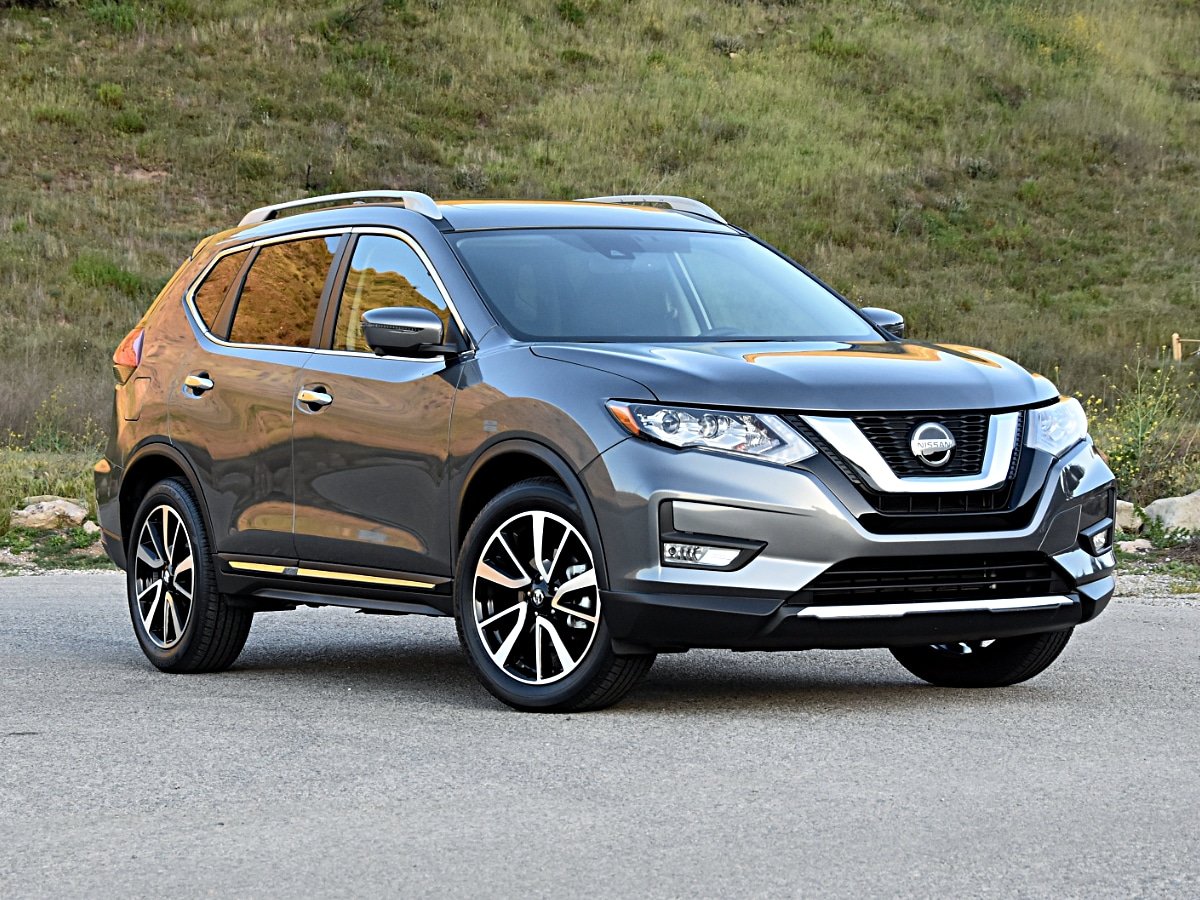
The Nissan Rogue remained a popular compact crossover SUV in the 2020 model year, despite the imminent arrival of its replacement.
Available in S (with an optional Special Edition package), SV, and SL Platinum trim levels with a single engine and transmission combination and a choice between front-wheel drive (FWD) and all-wheel drive (AWD), the 2020 Nissan Rogue is nothing if not simple. Our test car for this review came with SL Platinum trim, which window-stickered at an MSRP of $37,998 (Canadian, estimated), not including a $1,930 destination charge.
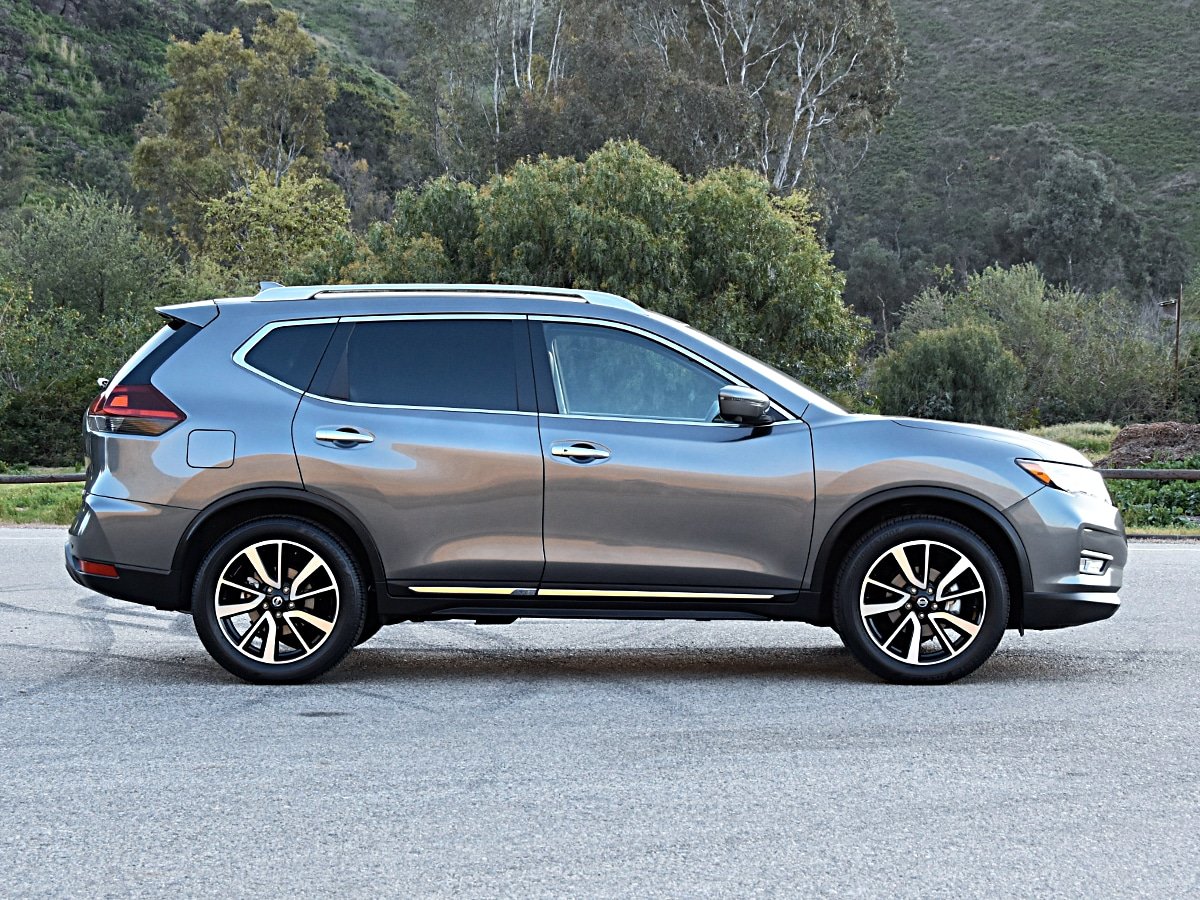
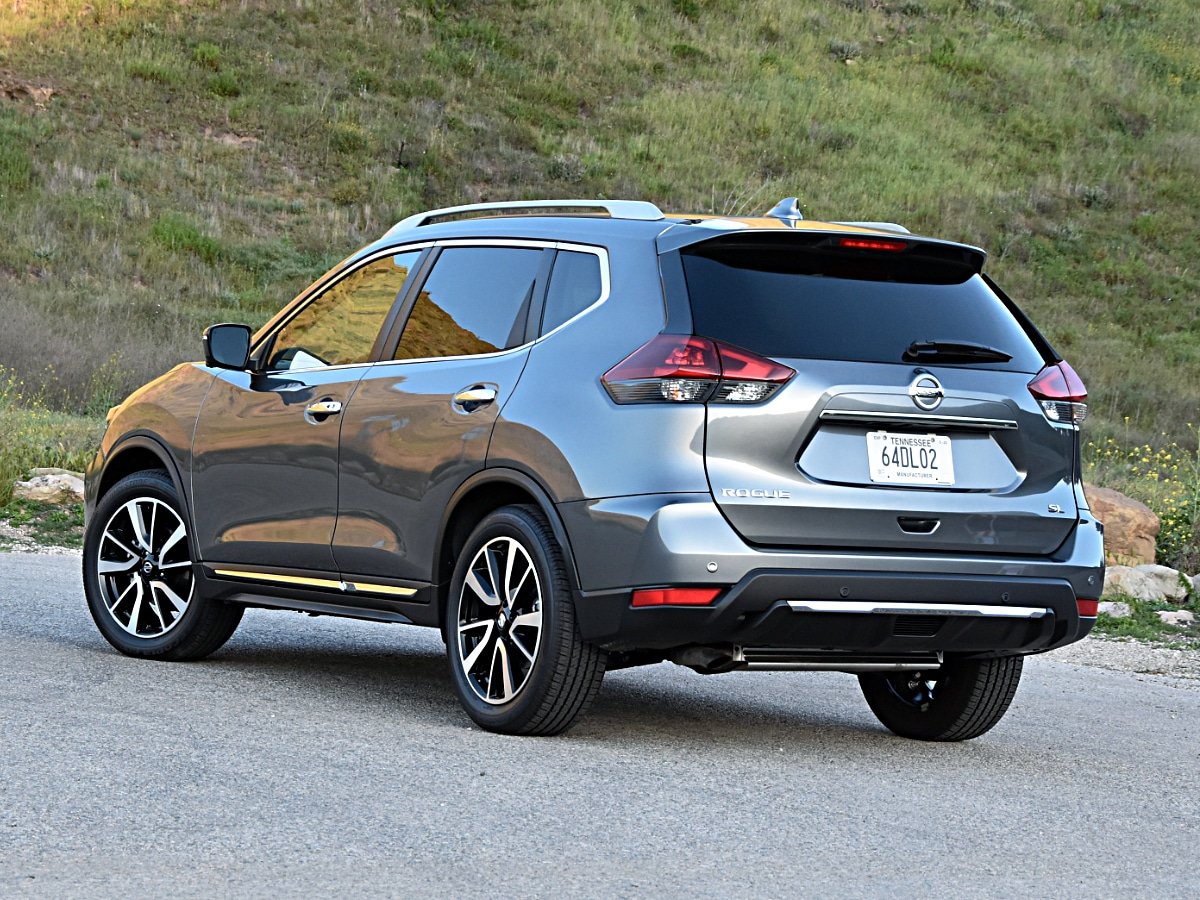
As far as looks go, the Rogue remains attractive in spite of its age. The big, bold V-Motion grille design is a little much, and the fender swells are a tad exaggerated, but especially with the Nissan Rogue SL Platinum’s 19-inch aluminum alloy wheels, this is an appealing vehicle.
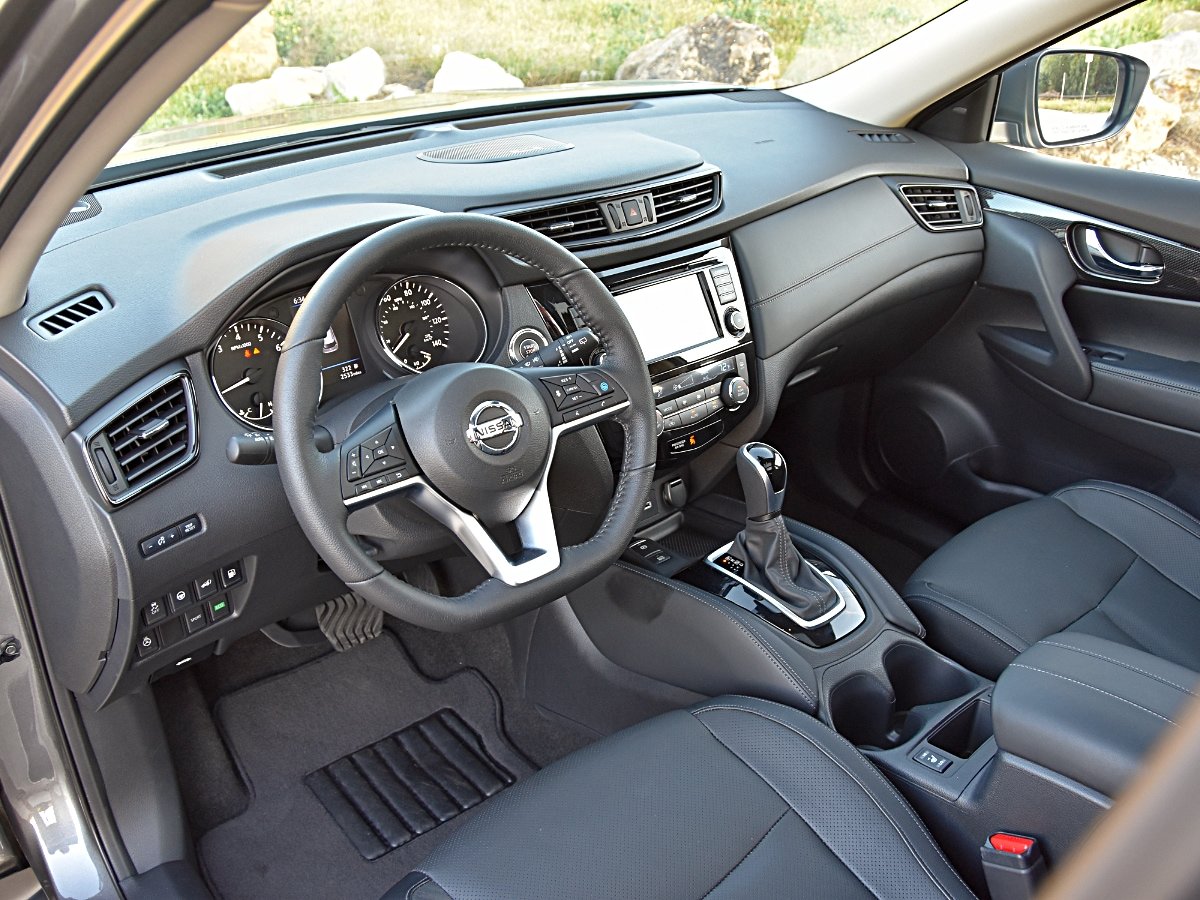
Open a door, and the Rogue’s age is more apparent. The waterfall control panel down the centre of the dashboard and the interior’s rounded forms and surfaces are older styling themes in a world where car designers are adopting wide, horizontal, angular motifs. The plastic surfaces fail to impress, too.
On a positive note, though, the Rogue SL Platinum’s centre console sides are padded where drivers' legs might rest against it, a thoughtful touch.
Nissan offers a single engine and transmission for the 2020 Rogue, and the powertrain combination is merely adequate in a vehicle weighing as much as 1,664 kilograms (3,668 pounds). We’re talking about power specs of 170-horsepower and 175 lb-ft of torque from a 2.5-litre four-cylinder paired with a continuously variable transmission (CVT) instead of an automatic transmission, and while there is a Sport driving mode, it doesn’t make the Rogue sporty.
Admittedly, many Rogue owners won’t notice the lack of power much of the time, in part because the Xtronic CVT does a good job of making the most of it. However, when you’re accelerating onto a highway, or when you want to pass slower vehicles, or when you need to get a jump on traffic to make a turn ahead, or when you’re climbing a mountain grade, the Rogue disappoints with its response of noise rather than action.
Compounding the potential for dismay, Natural Resources Canada leads a Rogue owner to believe FWD-drivetrain versions of this SUV will return fuel consumption of 8.2 litres per 100 kilometres in combined driving. During testing, the Rogue managed no better than 9.4 L/100 km on a loop that included plenty of highway driving. Fuel efficiency doesn't work in the Rogue's favour. (The test vehicle is in U.S. specification; the SL Platinum grade is sold exclusively with all-wheel drive in Canada, which is rated at an average of 8.7 L/100 km combined.)
Dynamically, where the Nissan Rogue improves is in the ride and handling department, thanks in large part to brake-induced technologies called Intelligent Trace Control and Active Ride Control. The former acts like a torque-vectoring system to tuck the Rogue tighter into a turn, while the latter aims to smooth out speed humps and pavement undulations. They work as advertised but, despite its 19-inch wheels and tires, the Rogue SL Platinum isn’t much fun to drive.
Equipped with lifeless and heavy electrically assisted steering, lacking in terms of suspension isolation, and suffering from occasional CVT drone, the Rogue is to be endured rather than enjoyed.
If you’re heavier of frame or longer of legs, getting comfortable in the 2020 Nissan Rogue isn’t easy. The seats themselves are fine, somewhat undersized examples of Nissan’s normally excellent Zero Gravity cushion designs, which aim to replicate the weightlessness of space with perfect support. And they’re standard with so-called Quick Comfort heating.
My problem was that I could not dial the driver's seat in for the right amount of seat height for my preferred tall driving position combined with good space for my 33-inch-inseam legs. Forced to sit lower than preferred so that my legs weren’t folded up under the steering wheel, the Rogue was to be endured rather than enjoyed for yet another reason.
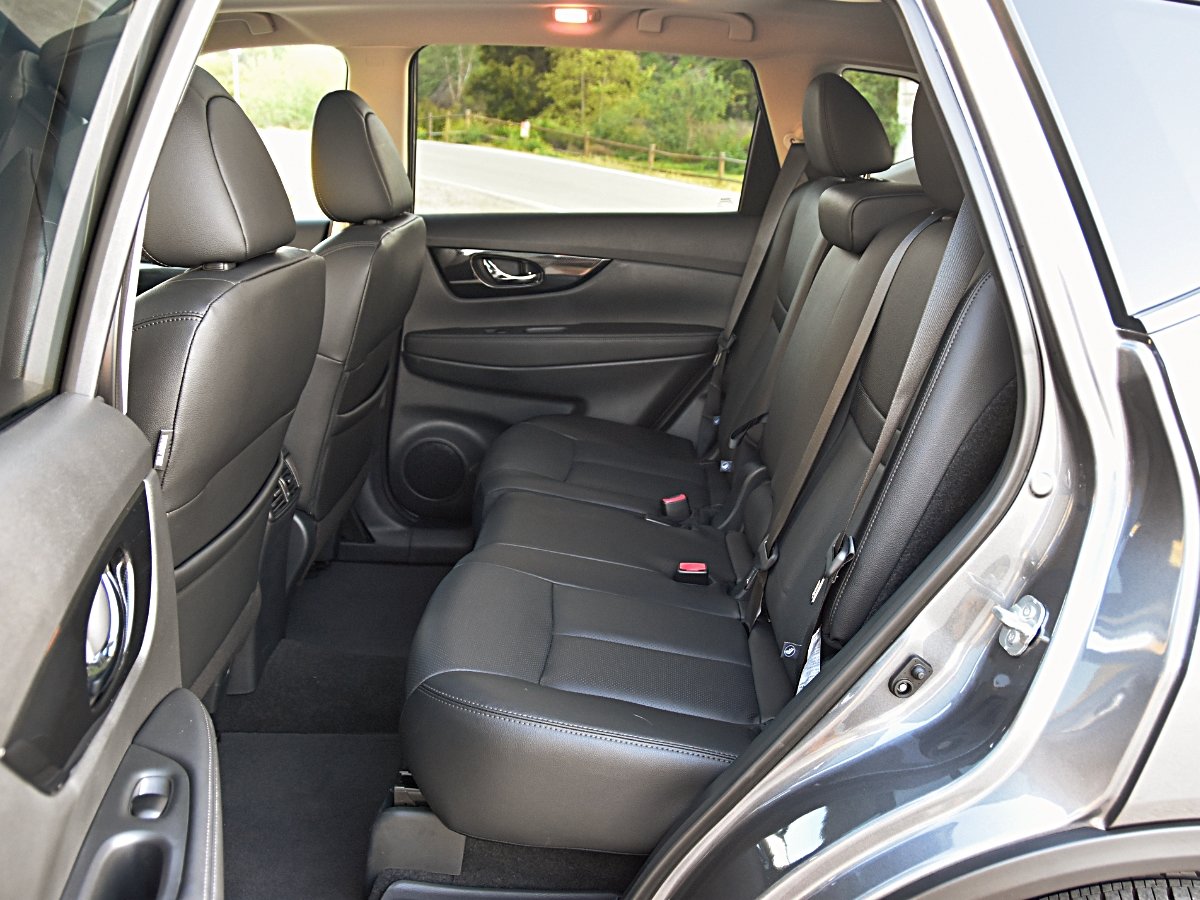
People sitting in the back seat of this compact SUV are lucky. The seat cushion sits high off of the floor, stadium-style in relationship to the front seats, and provides terrific thigh support coupled with good leg room and a proper backrest angle. Plus, the view out is excellent, amplified by the available panoramic glass moonroof. As a result of these characteristics, the rear climate control vents, and the available rear USB charging ports, my children were mighty happy campers, and adults are likely to prefer sitting in this location as opposed to the front passenger seat.
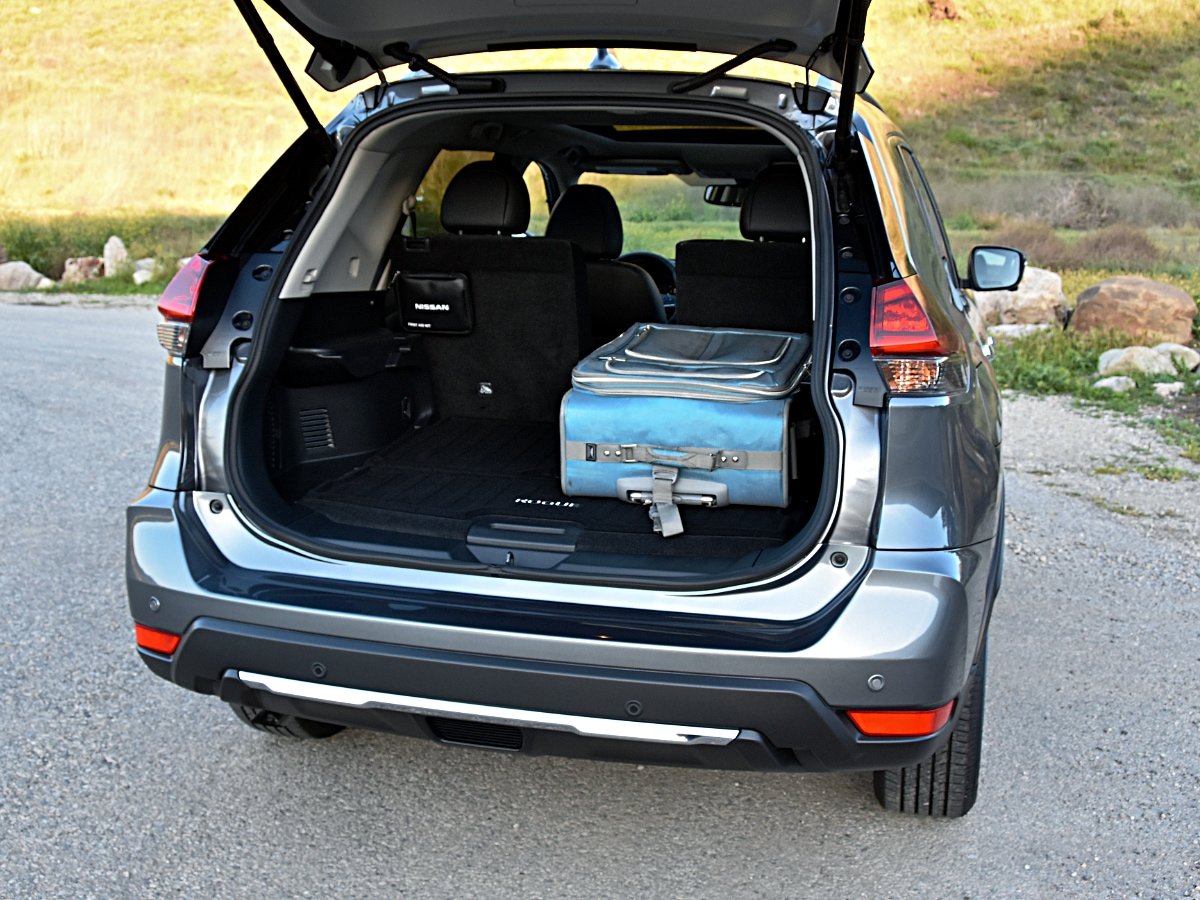
Back up front, in-cabin storage is lacking. Only the glove compartment offers a healthy amount of space. Open the liftgate, and the opposite is true for cargo area and utility, where 1,112 litres of cargo space await behind the back seat—significantly more than the Mazda CX-5. The Rogue also has underfloor storage compartments and a standard Divide-n-Hide cargo management system.
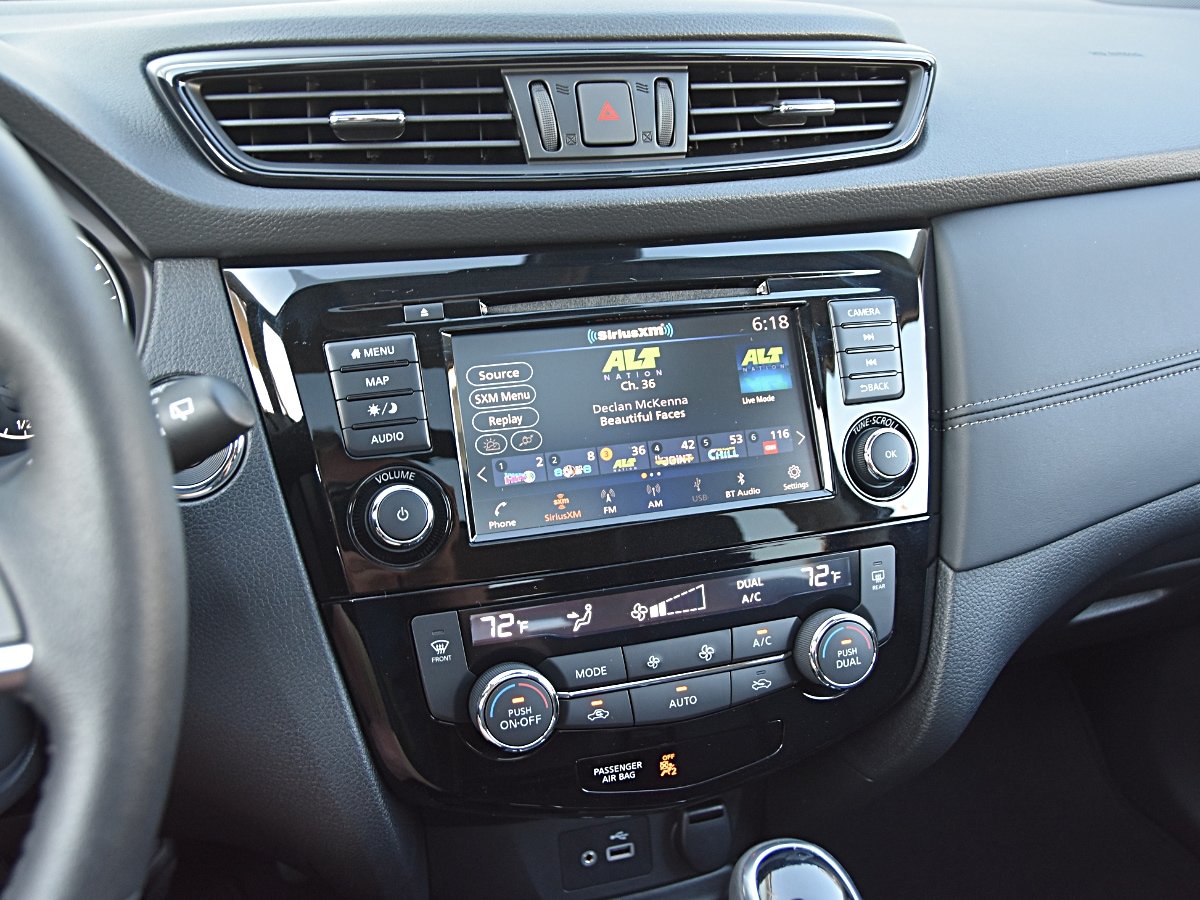
Review the list of infotainment features available in the 2020 Rogue, and you’ll be impressed. Try to use them, and you might be frustrated.
Every Rogue infotainment system includes Bluetooth connectivity, Apple CarPlay, Android Auto, SiriusXM satellite radio, and a hands-free text messaging assistant. For some people, that’s good enough right there. Upgrades, depending on trim level and equipment, include navigation with door-to-door assistance via smartphone app, a decent-sounding Bose premium audio system, and NissanConnect Services.
Subscription-based, NissanConnect Services equips Rogue models with features such as remote access to engine starting and door lock operation, a car finder function, automatic collision notification, emergency SOS calling, and safe teen driver settings related to speed, curfew, and geographic boundaries. Free trial periods range from six months to three years, depending on the feature.
If this sounds sophisticated, you’re right. But the Rogue’s NissanConnect interface leaves plenty to be desired. It uses a 7-inch touchscreen with a recessed display that looks about as modern as an iPhone 6. Add slow response to inputs, especially when you’re trying in vain to accurately zoom the navigation map with your fingertips, as well as voice-recognition technology that is not up to par, and the Rogue’s tech quotient suffers.
A similar story is true when it comes to the Rogue’s safety features. A bunch of stuff is standard, and the options are impressive, but put everything to use and you’re left wanting for better.
Nissan gathers multiple advanced driver-assistance systems (ADAS) in the standard Safety Shield 360 collection. It includes forward-collision warning, forward automatic emergency braking (dubbed Intelligent Emergency Braking), blind-spot monitoring, and rear cross-traffic alert. These are among the most useful and effective ADAS in daily driving, making Safety Shield 360 more useful than what some competitors provide.
Additionally, the Rogue includes a Rear Door Alert as well as a Tire Fill Alert system. The former is designed to prevent you from leaving someone or something important behind in the rear seats when exiting the SUV. The latter makes it super easy to maintain proper tire pressures.
Options include automatic high beams, pedestrian detection, rear automatic emergency braking, lane departure warning and lane change intervention, a surround-view camera, and ProPilot Assist adaptive cruise control with lane-centring capability. When Nissan first added ProPilot Assist to the Rogue a couple of years ago, it was sophisticated and rare at the Rogue’s price point. Now, however, it comes across as dated as competitors introduce newer and more refined versions of the same technology.
The Rogue’s advancing age is also reflected in its crash-test ratings. The National Highway Traffic Safety Administration (NHTSA) gives the Rogue a 4-star overall rating due to the SUV’s dismal 3-star protection for the driver in a frontal-impact collision. In testing performed by the Insurance Institute for Highway Safety (IIHS), dings against the Rogue’s headlights and front-passenger protection in a frontal-impact collision prevent the SUV from earning a Top Safety Pick designation.
With average warranty protection, and average free trial periods to NissanConnect Services, the 2020 Rogue is left to entice you with “the deal.”
The new 2021 Nissan Rogue will need to build upon what makes the current model appealing while improving in the areas where it falls short. If you can wait for it, you should wait for it.
But really, aside from achieving mere competence, Nissan needs to find a more compelling reason for consumers shopping for a compact crossover SUV to choose a Rogue over a Subaru Forester, Honda CR-V or Toyota RAV4.
Note: Images show a US model.

User reviews for 2020 Nissan Rogue
Write a review2020 Nissan Rogue Pricing
Trims & specs
Air Conditioning
Single front air conditioning zones
Airbags
Dual front airbags · Passenger airbag deactivation: occupant sensing deactivation · Front side airbags · Front side curtain airbags
Audio System
Antenna Type: diversity · Voice recognition audio system · Auxiliary audio input: jack · Single disc in-Dash CD · IHeartRadio internet radio · MP3 player: CD MP3 Playback · Touch screen display radio · Satellite Radio: SiriusXM · Total Number of Speakers: 4
Brakes
ABS: 4-wheel · Braking assist: hill start assist · Front brake diameter: 11.7 · Front brake width: 1.02 · Front brakes: ventilated disc · Rear brake diameter: 11.5 · Rear brake width: .63 · Rear brakes: ventilated disc
Comfort Features
Armrests: rear center with cupholders · Floor Material: carpet · Shift knob trim: urethane · Steering wheel trim: urethane
Convenience Features
Assist handle: front · Cargo area power outlet: 12V · Cargo cover: hard · Center console: front console with armrest and storage · Cupholders: front · Multi-function remote: keyless entry with panic alarm · One-touch windows: 1 · Power outlet(s): two 12V front · Power steering: electric · Power windows: lockout button · Reading lights: rear · Steering wheel: tilt and telescopic · Steering wheel mounted controls: voice recognition controls · Storage: in-floor · Vanity mirrors: dual
Driver Seat
Manual adjustments: 6
Drivetrain
Axle ratio: 6.39
Engine
Alternator: 110 amps
Exterior Features
Door handle color: black · Exhaust tip color: stainless-steel · Front bumper color: body-color · Grille color: black with chrome accents · Mirror color: body-color · Rear bumper color: body-color · Rear spoiler: roofline spoiler · Rear spoiler color: body-color · Rear trunk/liftgate: liftgate · Window trim: chrome
Headrests
Front headrests: adjustable · Number of front headrests: 2 · Number of rear headrests: 3
In Car Entertainment
Connected in-car apps: SiriusXM Weather · Infotainment: Apply CarPlay ready · Infotainment screen size: 7 in.
Instrumentation
Fuel economy display: MPG · Instrument cluster screen size: 5 in. · Warnings and reminders: lamp failure
Lights
Daytime running lights: LED · Headlights: automatic high beam dimmer · Tail and brake lights: LED
Mirrors
Exterior mirrors: power · Inside rearview mirror: manual day/night
Passenger Seat
Manual Adjustments: 4
Rear Seats
Type: 40-20-40 split bench
Safety
Automatic emergency braking: front · Camera system: rearview · Child seat anchors: LATCH system · Cross Traffic Alert: rear · Crumple zones: front · Parking sensors: front · Pre-Collision Warning System: audible warning · Pre-collision warning system: pedestrian detection · Rearview monitor: in dash
Seatbelts
Emergency locking retractors: front · Front seatbelts: 3-point · Seatbelt force limiters: front · Seatbelt pretensioners: front · Seatbelt warning sensor: driver and passenger · Second row seatbelts: 3-point
Seats
Driver seat manual adjustments: height · Front seat type: bucket · Passenger seat manual adjustments: reclining · Rear headrests: adjustable · Rear seat folding: split · Rear seat manual adjustments: reclining · Upholstery: cloth
Security
Power door locks: anti-lockout
Spare Tire
Mount Location: inside · Size: temporary
Spare Wheel
Rim Type: steel
Steering
Steering ratio: 17.1 · Turns lock-to-lock: 3.0
Suspension
Front Arm Type: lower control arms · Front Shock Type: twin-tube gas shock absorbers · Front Spring Type: coil springs · Front Stabilizer Bar: diameter 23 mm · Front Suspension Classification: independent · Front Suspension Type: MacPherson struts · Rear Shock Type: twin-tube gas shock absorbers · Rear Spring Type: coil springs · Rear Stabilizer Bar: diameter 19 mm · Rear Suspension Classification: independent · Rear Suspension Type: multi-link
Telematics
Electronic messaging assistance: with read function · Phone: voice activated · Phone wireless data link: Bluetooth
Tires
Type: all season
Tires and Rims
Wheels: steel
Wheels
Wheel covers: full
Windows
Front wipers: variable intermittent · Liftgate window: fixed · Power windows: with safety reverse · Rear wiper: intermittent · Solar-tinted glass: front
Air Conditioning
Single front air conditioning zones
Airbags
Dual front airbags · Passenger airbag deactivation: occupant sensing deactivation · Front side airbags · Rear side curtain airbags
Audio System
Antenna Type: diversity · Voice recognition audio system · Bluetooth auxiliary audio input · Single disc in-Dash CD · Pandora internet radio · MP3 player: CD MP3 Playback · Touch screen display radio · Satellite Radio: SiriusXM · Total Number of Speakers: 4
Brakes
ABS: 4-wheel · Braking assist: hill start assist · Front brake diameter: 11.7 · Front brake width: 1.02 · Front brakes: ventilated disc · Rear brake diameter: 11.5 · Rear brake width: .63 · Rear brakes: ventilated disc
Comfort Features
Armrests: rear center with cupholders · Floor Material: cargo area carpet · Shift knob trim: urethane · Steering wheel trim: urethane
Convenience Features
Assist handle: rear · Cargo area power outlet: 12V · Cargo cover: hard · Center console: front console with armrest and storage · Cupholders: front · Multi-function remote: keyless entry with panic alarm · One-touch windows: 1 · Power outlet(s): two 12V front · Power steering: electric · Power windows: lockout button · Reading lights: rear · Steering wheel: tilt and telescopic · Steering wheel mounted controls: phone · Storage: door pockets · Vanity mirrors: dual
Driver Seat
Manual adjustments: 6
Drivetrain
4WD Type: on demand · Axle ratio: 6.39 · Locking differential: center
Engine
Alternator: 110 amps
Exterior Features
Door handle color: black · Exhaust tip color: stainless-steel · Front bumper color: body-color · Grille color: black with chrome accents · Mirror color: body-color · Rear bumper color: body-color · Rear spoiler: roofline spoiler · Rear spoiler color: body-color · Rear trunk/liftgate: liftgate · Window trim: chrome
Headrests
Front headrests: adjustable · Number of front headrests: 2 · Number of rear headrests: 3
In Car Entertainment
Connected in-car apps: Google POIs · Infotainment: Android Auto ready · Infotainment screen size: 7 in.
Instrumentation
Fuel economy display: range · Instrument cluster screen size: 5 in. · Warnings and reminders: low fuel level
Lights
Daytime running lights: LED · Headlights: auto delay off · Tail and brake lights: LED
Mirrors
Exterior mirrors: power · Inside rearview mirror: manual day/night
Passenger Seat
Manual Adjustments: 4
Rear Seats
Type: 40-20-40 split bench
Safety
Automatic emergency braking: front · Camera system: rearview · Child seat anchors: LATCH system · Cross Traffic Alert: rear · Crumple zones: rear · Parking sensors: front · Pre-Collision Warning System: visual warning · Pre-collision warning system: pedestrian detection · Rearview monitor: in dash
Seatbelts
Emergency locking retractors: front and rear · Front seatbelts: 3-point · Seatbelt force limiters: front · Seatbelt pretensioners: front · Seatbelt warning sensor: driver and passenger · Second row seatbelts: 3-point
Seats
Driver seat manual adjustments: reclining · Front seat type: bucket · Passenger seat manual adjustments: reclining · Rear headrests: adjustable · Rear seat folding: split · Rear seat manual adjustments: reclining · Upholstery: cloth
Security
Power door locks: anti-lockout
Spare Tire
Mount Location: inside · Size: temporary
Spare Wheel
Rim Type: steel
Steering
Steering ratio: 17.1 · Turns lock-to-lock: 3.0
Suspension
Front Arm Type: lower control arms · Front Shock Type: twin-tube gas shock absorbers · Front Spring Type: coil springs · Front Stabilizer Bar: diameter 23 mm · Front Suspension Classification: independent · Front Suspension Type: MacPherson struts · Rear Shock Type: twin-tube gas shock absorbers · Rear Spring Type: coil springs · Rear Stabilizer Bar: diameter 19 mm · Rear Suspension Classification: independent · Rear Suspension Type: multi-link
Telematics
Electronic messaging assistance: with read function · Phone: voice activated · Phone wireless data link: Bluetooth
Tires
Type: all season
Tires and Rims
Wheels: steel
Wheels
Wheel covers: full
Windows
Front wipers: variable intermittent · Liftgate window: fixed · Power windows: with safety reverse · Rear wiper: intermittent · Solar-tinted glass: front
Air Conditioning
Automatic climate control front air conditioning · Dual front air conditioning zones
Airbags
Dual front airbags · Passenger airbag deactivation: occupant sensing deactivation · Front side airbags · Front side curtain airbags
Audio System
Antenna Type: mast · Voice recognition audio system · Auxiliary audio input: jack · Single disc in-Dash CD · IHeartRadio internet radio · MP3 player: CD MP3 Playback · AM/FM radio · Satellite Radio: SiriusXM · Total Number of Speakers: 6
Brakes
ABS: 4-wheel · Braking assist: hill start assist · Front brake diameter: 11.7 · Front brake width: 1.02 · Front brakes: ventilated disc · Rear brake diameter: 11.5 · Rear brake width: .63 · Rear brakes: ventilated disc
Comfort Features
Armrests: rear center with pass-thru · Floor Material: carpet · Shift knob trim: leather · Steering wheel trim: leather
Convenience Features
Assist handle: front · Cargo area power outlet: 12V · Cargo cover: hard · Center console: front console with armrest and storage · Cupholders: rear · Memorized settings: liftgate · Multi-function remote: proximity entry system · One-touch windows: 1 · Power outlet(s): two 12V front · Power steering: speed-proportional · Power windows: lockout button · Reading lights: front · Steering wheel: tilt and telescopic · Steering wheel mounted controls: cruise controls · Storage: dual level cargo area · Vanity mirrors: dual illuminating
Driver Seat
Adjustable lumbar support: power · Power adjustments: 8
Drivetrain
Axle ratio: 6.39
Engine
Alternator: 110 amps
Exterior Features
Door handle color: chrome · Exhaust tip color: stainless-steel · Front bumper color: body-color · Grille color: black with chrome accents · Mirror color: body-color · Rear bumper color: body-color · Rear spoiler: roofline spoiler · Rear spoiler color: body-color · Rear trunk/liftgate: power operated · Window trim: chrome
Headrests
Front headrests: adjustable · Number of front headrests: 2 · Number of rear headrests: 3
In Car Entertainment
Connected in-car apps: SiriusXM Travel Link · Infotainment: Android Auto ready · Infotainment screen size: 7 in.
Instrumentation
Fuel economy display: MPG · Instrument cluster screen size: 5 in. · Warnings and reminders: maintenance reminder
Lights
Daytime running lights: LED · Headlights: Auto on/off · Tail and brake lights: LED
Mirrors
Exterior mirrors: integrated turn signals · Inside rearview mirror: manual day/night
Passenger Seat
Manual Adjustments: 4
Rear Seats
Type: 40-20-40 split bench
Roof
Roof rails: chrome
Safety
Automatic emergency braking: front · Camera system: rearview · Child seat anchors: LATCH system · Cross Traffic Alert: rear · Crumple zones: rear · Parking sensors: rear · Pre-Collision Warning System: visual warning · Pre-collision warning system: pedestrian detection · Rearview monitor: in dash
Seatbelts
Emergency locking retractors: front and rear · Front seatbelts: 3-point · Seatbelt force limiters: front · Seatbelt pretensioners: front · Seatbelt warning sensor: driver and passenger · Second row seatbelts: 3-point
Seats
Driver seat power adjustments: height · Front seat type: bucket · Passenger seat manual adjustments: reclining · Rear headrests: adjustable · Rear seat folding: split · Rear seat manual adjustments: reclining · Upholstery: cloth
Security
Power door locks: anti-lockout
Spare Tire
Mount Location: inside · Size: temporary
Spare Wheel
Rim Type: steel
Steering
Steering ratio: 17.1 · Turns lock-to-lock: 3.0
Suspension
Front Arm Type: lower control arms · Front Shock Type: twin-tube gas shock absorbers · Front Spring Type: coil springs · Front Stabilizer Bar: diameter 23 mm · Front Suspension Classification: independent · Front Suspension Type: MacPherson struts · Rear Shock Type: twin-tube gas shock absorbers · Rear Spring Type: coil springs · Rear Stabilizer Bar: diameter 19 mm · Rear Suspension Classification: independent · Rear Suspension Type: multi-link
Telematics
Electronic messaging assistance: with voice recognition · Phone: voice activated · Phone wireless data link: Bluetooth
Tires
Type: all season
Tires and Rims
Wheel type: aluminum alloy
Windows
Front wipers: variable intermittent · Liftgate window: fixed · Power windows: remote operation · Rear wiper: with washer · Solar-tinted glass: front
Air Conditioning
Automatic climate control front air conditioning · Dual front air conditioning zones
Airbags
Dual front airbags · Passenger airbag deactivation: occupant sensing deactivation · Front side airbags · Front side curtain airbags
Audio System
Antenna Type: mast · Voice recognition audio system · Bluetooth auxiliary audio input · Single disc in-Dash CD · Pandora internet radio · MP3 player: CD MP3 Playback · Touch screen display radio · Satellite Radio: SiriusXM · Total Number of Speakers: 6
Brakes
ABS: 4-wheel · Braking assist: hill start assist · Front brake diameter: 11.7 · Front brake width: 1.02 · Front brakes: ventilated disc · Rear brake diameter: 11.5 · Rear brake width: .63 · Rear brakes: ventilated disc
Comfort Features
Armrests: rear center with pass-thru · Floor Material: carpet · Shift knob trim: leather · Steering wheel trim: leather
Convenience Features
Assist handle: rear · Cargo area power outlet: 12V · Cargo cover: hard · Center console: front console with armrest and storage · Cupholders: front · Memorized settings: liftgate · Multi-function remote: keyless entry with panic alarm · One-touch windows: 1 · Power outlet(s): two 12V front · Power steering: electric · Power windows: lockout button · Reading lights: front · Steering wheel: tilt and telescopic · Steering wheel mounted controls: phone · Storage: cargo tie-down anchors and hooks · Vanity mirrors: dual illuminating
Driver Seat
Adjustable lumbar support: power · Power adjustments: 8
Drivetrain
4WD Type: on demand · Axle ratio: 6.39 · Locking differential: center
Engine
Alternator: 110 amps
Exterior Features
Door handle color: chrome · Exhaust tip color: stainless-steel · Front bumper color: body-color · Grille color: black with chrome accents · Mirror color: body-color · Rear bumper color: body-color · Rear spoiler: roofline spoiler · Rear spoiler color: body-color · Rear trunk/liftgate: sensor-activated · Window trim: chrome
Headrests
Front headrests: adjustable · Number of front headrests: 2 · Number of rear headrests: 3
In Car Entertainment
Connected in-car apps: SiriusXM Weather · Infotainment: NissanConnect · Infotainment screen size: 7 in.
Instrumentation
Fuel economy display: range · Instrument cluster screen size: 5 in. · Warnings and reminders: low oil pressure
Lights
Daytime running lights: LED · Headlights: Halogen · Tail and brake lights: LED
Mirrors
Exterior mirrors: heated · Inside rearview mirror: manual day/night
Passenger Seat
Manual Adjustments: 4
Rear Seats
Type: 40-20-40 split bench
Roof
Roof rails: chrome
Safety
Automatic emergency braking: rear · Camera system: rearview · Child seat anchors: LATCH system · Cross Traffic Alert: rear · Crumple zones: rear · Parking sensors: rear · Pre-Collision Warning System: visual warning · Pre-collision warning system: pedestrian detection · Rearview monitor: in dash
Seatbelts
Emergency locking retractors: front · Front seatbelts: 3-point · Seatbelt force limiters: front · Seatbelt pretensioners: front · Seatbelt warning sensor: driver and passenger · Second row seatbelts: 3-point
Seats
Driver seat power adjustments: height · Front seat type: bucket · Passenger seat manual adjustments: reclining · Rear headrests: adjustable · Rear seat folding: split · Rear seat manual adjustments: reclining · Upholstery: cloth
Security
Power door locks: anti-lockout
Spare Tire
Mount Location: inside · Size: temporary
Spare Wheel
Rim Type: steel
Steering
Steering ratio: 17.1 · Turns lock-to-lock: 3.0
Suspension
Front Arm Type: lower control arms · Front Shock Type: twin-tube gas shock absorbers · Front Spring Type: coil springs · Front Stabilizer Bar: diameter 23 mm · Front Suspension Classification: independent · Front Suspension Type: MacPherson struts · Rear Shock Type: twin-tube gas shock absorbers · Rear Spring Type: coil springs · Rear Stabilizer Bar: diameter 19 mm · Rear Suspension Classification: independent · Rear Suspension Type: multi-link
Telematics
Electronic messaging assistance: with voice recognition · Phone: voice activated · Phone wireless data link: Bluetooth
Tires
Type: all season
Tires and Rims
Wheel type: aluminum alloy
Windows
Front wipers: variable intermittent · Liftgate window: fixed · Power windows: with safety reverse · Rear wiper: intermittent · Solar-tinted glass: front
Air Conditioning
Automatic climate control front air conditioning · Dual front air conditioning zones
Airbags
Dual front airbags · Passenger airbag deactivation: occupant sensing deactivation · Front side airbags · Front side curtain airbags
Audio System
Antenna Type: diversity · Voice recognition audio system · Bluetooth auxiliary audio input · Single disc in-Dash CD · Pandora internet radio · MP3 player: CD MP3 Playback · Premium Brand: Bose · AM/FM radio · Satellite Radio: SiriusXM · 2 subwoofers · Total Number of Speakers: 7
Brakes
ABS: 4-wheel · Braking assist: hill start assist · Electronic parking brake: auto off · Front brake diameter: 11.7 · Front brake width: 1.02 · Front brakes: ventilated disc · Rear brake diameter: 11.5 · Rear brake width: .63 · Rear brakes: ventilated disc
Comfort Features
Armrests: rear center with pass-thru · Floor Material: carpet · Shift knob trim: leather · Steering wheel trim: leather
Convenience Features
Adaptive stop and go cruise control: semi-automatic · Assist handle: rear · Cargo area power outlet: 12V · Cargo cover: hard · Center console: front console with armrest and storage · Cruise control: adaptive · Cupholders: rear · Dimming rearview mirror: auto-dimming · Memorized settings: liftgate · Multi-function remote: keyless entry with panic alarm · One-touch windows: 1 · Power outlet(s): two 12V front · Power steering: speed-proportional · Power windows: lockout button · Reading lights: front · Steering wheel: tilt and telescopic · Steering wheel mounted controls: multi-function screen controls · Storage: in-floor · Universal garage door opener: Homelink · Vanity mirrors: dual illuminating
Driver Seat
Adjustable lumbar support: power · Power adjustments: 8
Drivetrain
Axle ratio: 6.39
Engine
Alternator: 110 amps
Exterior Features
Door handle color: chrome · Exhaust tip color: stainless-steel · Front bumper color: body-color · Grille color: black with chrome accents · Mirror color: body-color · Rear bumper color: body-color · Rear spoiler: roofline spoiler · Rear spoiler color: body-color · Rear trunk/liftgate: power operated · Window trim: chrome
Headrests
Front headrests: adjustable · Number of front headrests: 2 · Number of rear headrests: 3
In Car Entertainment
Connected in-car apps: Google search · Infotainment: Android Auto ready · Infotainment screen size: 7 in.
Instrumentation
Fuel economy display: range · Instrument cluster screen size: 5 in. · Warnings and reminders: low oil pressure
Lights
Daytime running lights: LED · Headlights: auto delay off · Tail and brake lights: LED
Mirrors
Exterior mirrors: reverse gear tilt
Passenger Seat
Power adjustments: 4
Rear Seats
Type: 40-20-40 split bench
Roof
Roof rails: chrome
Safety
Automatic emergency braking: front pedestrian · Camera system: surround view · Child seat anchors: LATCH system · Cross Traffic Alert: rear · Crumple zones: front · Impact sensor: post-collision safety system · Parking sensors: front · Pre-Collision Warning System: visual warning · Pre-collision warning system: pedestrian detection · Rearview monitor: in dash
Seatbelts
Emergency locking retractors: front · Front seatbelts: 3-point · Seatbelt force limiters: front · Seatbelt pretensioners: front · Seatbelt warning sensor: driver and passenger · Second row seatbelts: 3-point
Seats
Driver seat power adjustments: height · Front seat type: bucket · Passenger seat power adjustments: reclining · Rear headrests: adjustable · Rear seat folding: split · Rear seat manual adjustments: reclining · Upholstery: leather-trimmed
Security
Power door locks: anti-lockout
Spare Tire
Mount Location: inside · Size: temporary
Spare Wheel
Rim Type: steel
Steering
Steering ratio: 17.1 · Turns lock-to-lock: 3.0
Suspension
Front Arm Type: lower control arms · Front Shock Type: twin-tube gas shock absorbers · Front Spring Type: coil springs · Front Stabilizer Bar: diameter 23 mm · Front Suspension Classification: independent · Front Suspension Type: MacPherson struts · Rear Shock Type: twin-tube gas shock absorbers · Rear Spring Type: coil springs · Rear Stabilizer Bar: diameter 19 mm · Rear Suspension Classification: independent · Rear Suspension Type: multi-link
Telematics
Driver assistance app: roadside assistance · Electronic messaging assistance: with voice recognition · Navigation system: with voice recognition · Phone: voice activated · Phone wireless data link: Bluetooth · Smart device app compatibility: NissanConnect · Smart device app function: maintenance status · Wifi: connection only
Tires
Type: all season
Tires and Rims
Wheel type: aluminum alloy
Windows
Front wipers: variable intermittent · Liftgate window: fixed · Power windows: with safety reverse · Rear wiper: with washer · Solar-tinted glass: front
Air Conditioning
Automatic climate control front air conditioning · Dual front air conditioning zones
Airbags
Dual front airbags · Passenger airbag deactivation: occupant sensing deactivation · Front side airbags · Rear side curtain airbags
Audio System
Antenna Type: mast · Voice recognition audio system · Bluetooth auxiliary audio input · Single disc in-Dash CD · IHeartRadio internet radio · MP3 player: CD MP3 Playback · Premium Brand: Bose · Touch screen display radio · Satellite Radio: SiriusXM · 2 subwoofers · Total Number of Speakers: 7
Brakes
ABS: 4-wheel · Braking assist: hill start assist · Electronic parking brake: auto off · Front brake diameter: 11.7 · Front brake width: 1.02 · Front brakes: ventilated disc · Rear brake diameter: 11.5 · Rear brake width: .63 · Rear brakes: ventilated disc
Comfort Features
Armrests: rear center with pass-thru · Floor Material: cargo area carpet · Shift knob trim: leather · Steering wheel trim: leather
Convenience Features
Adaptive stop and go cruise control: semi-automatic · Assist handle: front · Cargo area power outlet: 12V · Cargo cover: hard · Center console: front console with armrest and storage · Cruise control: adaptive · Cupholders: front · Dimming rearview mirror: auto-dimming · Memorized settings: side mirrors · Multi-function remote: trunk release · One-touch windows: 1 · Power outlet(s): two 12V front · Power steering: electric · Power windows: lockout button · Reading lights: rear · Steering wheel: tilt and telescopic · Steering wheel mounted controls: audio · Storage: door pockets · Universal garage door opener: Homelink · Vanity mirrors: dual illuminating
Driver Seat
Adjustable lumbar support: power · Power adjustments: 8
Drivetrain
4WD Type: on demand · Axle ratio: 6.39 · Locking differential: center
Engine
Alternator: 110 amps
Exterior Features
Door handle color: chrome · Exhaust tip color: stainless-steel · Front bumper color: body-color · Grille color: black with chrome accents · Mirror color: body-color · Rear bumper color: body-color · Rear spoiler: roofline spoiler · Rear spoiler color: body-color · Rear trunk/liftgate: liftgate · Window trim: chrome
Headrests
Front headrests: adjustable · Number of front headrests: 2 · Number of rear headrests: 3
In Car Entertainment
Connected in-car apps: SiriusXM Weather · Infotainment: Apply CarPlay ready · Infotainment screen size: 7 in.
Instrumentation
Fuel economy display: MPG · Instrument cluster screen size: 5 in. · Warnings and reminders: maintenance reminder
Lights
Daytime running lights: LED · Headlights: Auto on/off · Tail and brake lights: LED
Mirrors
Exterior mirrors: integrated turn signals
Passenger Seat
Power adjustments: 4
Rear Seats
Type: 40-20-40 split bench
Roof
Roof rails: chrome
Safety
Automatic emergency braking: front · Camera system: surround view · Child seat anchors: LATCH system · Cross Traffic Alert: rear · Crumple zones: front · Impact sensor: post-collision safety system · Parking sensors: front · Pre-Collision Warning System: visual warning · Pre-collision warning system: pedestrian detection · Rearview monitor: in dash
Seatbelts
Emergency locking retractors: front and rear · Front seatbelts: 3-point · Seatbelt force limiters: front · Seatbelt pretensioners: front · Seatbelt warning sensor: driver and passenger · Second row seatbelts: 3-point
Seats
Driver seat power adjustments: reclining · Front seat type: bucket · Passenger seat power adjustments: reclining · Rear headrests: adjustable · Rear seat folding: split · Rear seat manual adjustments: reclining · Upholstery: leather-trimmed
Security
Power door locks: anti-lockout
Spare Tire
Mount Location: inside · Size: temporary
Spare Wheel
Rim Type: steel
Steering
Steering ratio: 17.1 · Turns lock-to-lock: 3.0
Suspension
Front Arm Type: lower control arms · Front Shock Type: twin-tube gas shock absorbers · Front Spring Type: coil springs · Front Stabilizer Bar: diameter 23 mm · Front Suspension Classification: independent · Front Suspension Type: MacPherson struts · Rear Shock Type: twin-tube gas shock absorbers · Rear Spring Type: coil springs · Rear Stabilizer Bar: diameter 19 mm · Rear Suspension Classification: independent · Rear Suspension Type: multi-link
Telematics
Driver assistance app: roadside assistance · Electronic messaging assistance: with read function · Navigation system: memory card navigation system · Phone: voice activated · Phone wireless data link: Bluetooth · Smart device app compatibility: NissanConnect · Smart device app function: engine start · Wifi: connection only
Tires
Type: all season
Tires and Rims
Wheel type: aluminum alloy
Windows
Front wipers: variable intermittent · Liftgate window: fixed · Power windows: remote operation · Rear wiper: intermittent · Solar-tinted glass: front
