2021 Lincoln Navigator Reviews, Pricing & Specs
Write a review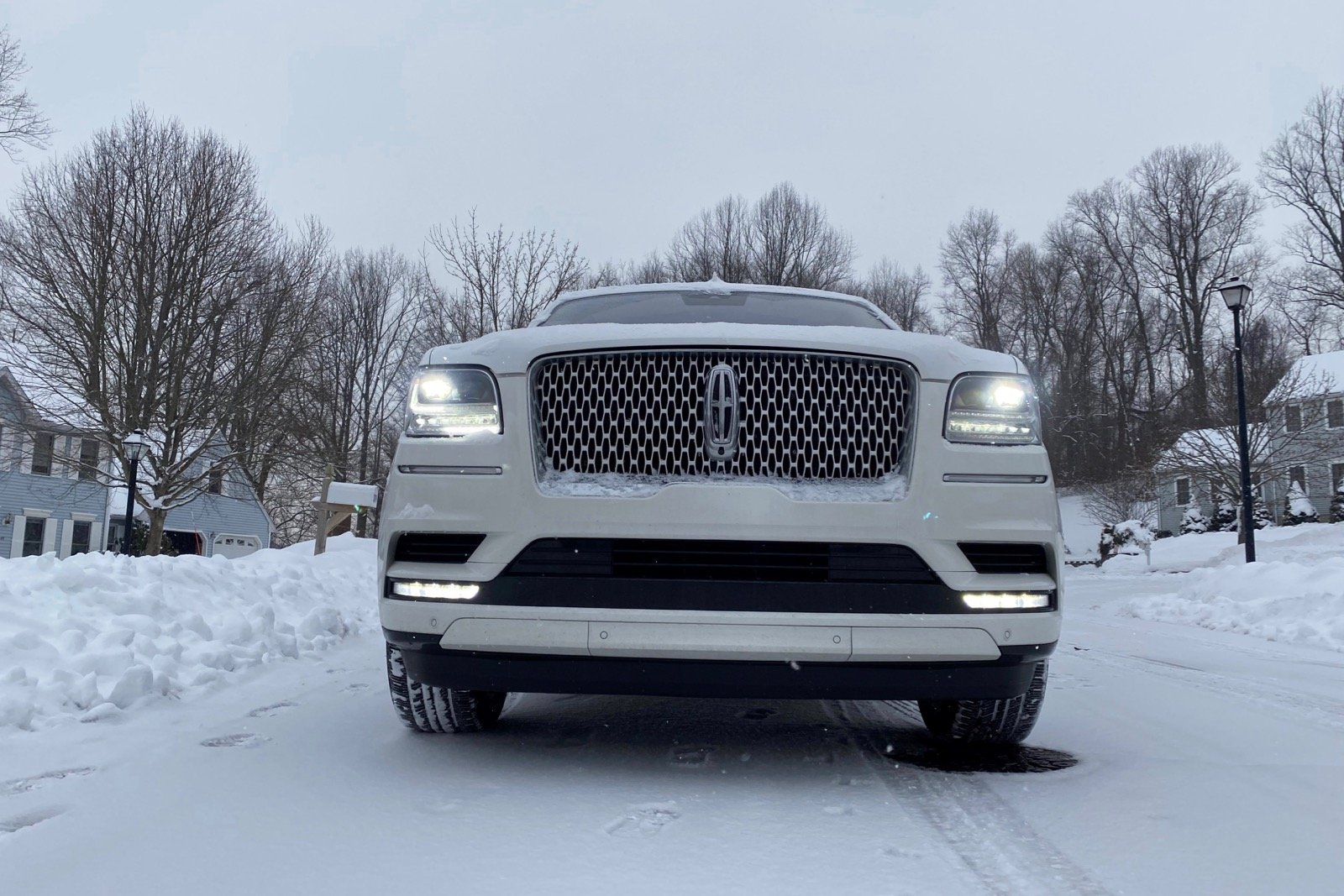
The 2021 Lincoln Navigation is a luxury apartment with four-wheel drive and comfier seating.

Past Navigators looked like dressed-up Ford Expeditions because that's mostly what they were. The current Navigator shares its side glass and overall footprint with the Expedition along with the general shape of the rear seats. No points off there. Else, the Navigator is like nothing else Ford makes, not even the turn signal stalk. One glance and another (big) step inside are enough to convince anyone, including people with Benzes and Range Rovers, that our Navigator Reserve is worth every dollar of its $97,000 MSRP. It's built by Ford and yet never feels like one.
The styling theme is elegance and understatement—not easy to pull off on a three-ton truck that blocks the sun and rides on 22-inch wheels. Simple rectilinear shapes define the grille—body-colour on the Monochromatic Package—windows, headlights with their double sweeping LED running lights, and full-width taillight assembly. A few splashes of chrome for the door trim, grille, and the fender logos keep things classy. Our Pristine White example with the white-painted grille, black wheels, and illuminated Lincoln logo was the perfect snowmobile during our winter test. The Navigator puts on a small light show when you unlock or lock the remote, with gentle fades and big spotlights on either side of the powered running boards.
The interior impresses. Seven colour palettes, especially the Slate Gray of our test truck, show a taste for finer details. The way the wood trim is layered behind the 10-inch touchscreen, or how the push-button gear selector blends into the centre stack, the floating centre console with its chromed switches, or the minimalist digital instrument panel—it's muted and modern.
Materials are very good and panel gaps are tight. The Perfect Position seats have backrests curved like a one-piece bucket you'd find in a sports car, only the cushions are separated and elevated from the frame. That's because they can adjust in 30 mind-bogglingly different ways. Fully loaded, there are very few trucks this big that feel better inside. A Land Rover Range Rover can be more sumptuous, but it's a lot smaller—and it starts at a price that’s more than $25,000 higher.

One engine is on tap, and it's incredible: The twin-turbo V6 from the Ford Raptor! With only 3.5 litres of displacement, this boosted six cranks out 450 horsepower and 510 lb-ft of torque. It's more than enough to make the Navigator feel sprightly—and it sounds terrific, with enough intake snarl and turbo whoosh coming through the truck's highly insulated cabin. Paired with a 10-speed automatic transmission and standard four-wheel drive (4WD) drivetrain in Canada (rear-wheel drive is not offered), the Navigator responds much faster than its body style suggests. Its 4WD system doesn't bind when circling a tight turn at low speeds—and it's smoother at switching between RWD and 4WD High than its General Motors competitors. Towing capacity is also giant at 3,765 kilograms (8,300 pounds).
Fuel efficiency is appropriately awful and no better than GM's larger V8 engines. We averaged in the double digits, which fits the Natural Resources Canada-estimated 13.8 litres per 100 kilometres combined rating (15.0 city, 11.5 hwy). Adaptive dampers come standard but the suspension feels rudimentary compared to the Escalade's magnetic shocks and air springs. The Navigator doesn't have the supple ride over bad pavement like you'll find in Lincoln's smaller SUV, the Aviator, which comes equipped with an air suspension. Sometimes a bump will shake the Navigator's structure with a loud bang. The steering is looser without the controlled, precise feel you'll find in the Escalade and so are the brakes—they feel too soft on initial application. It's not enough to make the Navigator feel unwieldy. It's only that the Navigator doesn't exude the superior control offered by Cadillac, which is the big SUV benchmark for handling.
Because the Navigator's low-end thrust feels like a freight train and its quiet cabin is so plush on the highway—the proper route for any vehicle this huge—we're less concerned with nimbleness and steering feel as we are amazed by its overall refinement and power. Also, the paddle shifters add some semblance of sportiness with their quick reaction time and rev-matched downshifts.

The Navigator has the square footage of a small bedroom, and it's shaped like one. It's a tall box, which can house six adults and all their arms, heads, and legs with ample space. This is technically a seven-passenger SUV, but you won't put anyone but a child in the third row's middle seat, which power folds and raises. Manually reclining and tilting captain's chairs come standard for the second row and a bench is optional, for a possible total of eight passengers. The box shape helps with cargo space—546 litres behind the third row, 1,627 behind the second, and 2,925 in total. The 2021 Cadillac Escalade has an even bigger cargo hold, but you can opt for the long-wheelbase Lincoln Navigator L for 972, 2,077, and 3,403 litres of respective storage. The rear glass opens separately from the tailgate, a convenient feature when you've crammed the back with bags and can't risk anything spilling out. Dogs will love it, too.
Our Navigator Reserve had heated rear second-row seats and a three-zone climate. The second row has an optional console that mimics the front with integrated climate and stereo controls, but German competitors are offering five zones and heated seats for the third row. There were no side window shades, either. Because the Navigator lets you remove the second-row seats for max storage, they don't electrically recline—which we think they should do (and cool and massage) at least as an option. No vehicle in the segment does this aside from a $200,000 Maybach GLS 600, but consider this a wish-list for the next Navigator.
The front seats—they're sumptuous and cosseting like the best down-filled pillows. The adjustments are insane: separate left and right thigh extensions, thigh bolsters, torso bolsters, an upper backrest tilt that's separate from the main backrest, a four-way headrest, three-way lumbar, and two massage programs. When you're not falling asleep in these chairs, the Navigator's large windows and high driving position make visibility a snap. Parking, of course, is a bear. The 360-degree cameras are fuzzy but they aren't the issue. This is a bus.

It's telling how fast technology moves when a 10-inch touchscreen infotainment system looks tiny. Compared to the multi-piece, curved LEDs on the new Escalade that are motion-sensitive and project augmented reality with 4K resolution, the Navigator feels old. The instrument panel can't show full-screen navigation system maps or different designs, the cameras are low-res, and while the infotainment has Bluetooth and SiriusXM satellite radio, it can't wirelessly connect to Apple CarPlay or Android Auto. The 20-speaker Revel Ultima audio system is merely good, not exceptional.
But this doesn't mean bad. The software is intuitive and shares its basic interface with Fords, but with a new skin that makes it feel unique to Lincoln. It's a tad slow in reaction, but everything is clear and easy to find. Voice recognition is fast and accurate. However, there are no onboard apps or wireless software updates through the vehicle's modem (you need an external Wi-Fi network for that).
But there's still wireless device charging and the ability to make your smartphone the vehicle's ignition key. The rear entertainment system includes Roku media streaming and other USB, HDMI, and wireless connections. Switching drive modes will play beautiful animations on the instrument panel. And actually, compared to the overkill found on a Mercedes dash, it's a relief the Lincoln is so simple.

The 2021 Navigator was crash-tested by the National Highway Traffic Safety Administration and received five stars overall and five stars in every test except for rollover resistance (four stars for 4WD models). The Insurance Institute for Highway Safety has not rated the Navigator in its current generation. Knee airbags are not offered. Inflatable rear seat belts for the second row are optional, which is a rare safety feature intended to reduce chest injuries.
Automatic emergency braking, lane-keep assist, blind-spot monitoring, and auto high beams come standard. Adaptive cruise control is optional, although the Navigator will not self-steer and track highway lanes as competently as competitors.


User reviews for 2021 Lincoln Navigator
Write a review2021 Lincoln Navigator Pricing
Trims & specs
Air Conditioning
Automatic climate control front air conditioning · Dual front air conditioning zones · Automatic climate control rear air conditioning · Single rear air conditioning zones · Second and third row rear heat vents
Airbags
Dual front airbags · Dual front knee airbags · Passenger airbag deactivation: occupant sensing deactivation · Front side airbags · Front side curtain airbags
Audio System
Antenna Type: element · Voice recognition audio system · Bluetooth auxiliary audio input · Premium brand: Revel · HD radio · Satellite Radio: SiriusXM · 1 subwoofer · Total Number of Speakers: 13
Brakes
ABS: 4-wheel · Braking assist: hill start assist · Electronic parking brake: auto off · Front brake diameter: 13.8 · Front brakes: ventilated disc · Rear brake diameter: 13.8 · Rear brakes: ventilated disc
Comfort Features
Armrests: rear outboard seats · Cargo area floor mat material: carpet · Center console trim: leatherette · Dash Trim: Leatherette · Dash trim: wood · Door sill trim: aluminum · Door trim: leatherette · Floor Mat Material: carpet · Floor Material: carpet · Floor Mats: front · Interior accents: wood · Steering wheel trim: wood
Convenience Features
Active parking system: fully automated · Adjustable pedals: power · Assist handle: rear · Cargo area power outlet: 12V · Center console: front console with armrest and storage · Cupholders: front · Dimming rearview mirror: auto-dimming · Easy entry: manual rear seat · Keyless entry: keypad · Memorized settings: climate control · Multi-function remote: vehicle and key memory · One-touch windows: 4 · Power outlet(s): USB third row · Power steering: electric · Power windows: lockout button · Reading lights: front · Rear power outlet: 115V · Steering wheel: power tilt and telescopic · Steering wheel mounted controls: cruise controls · Storage: front seatback · Universal garage door opener: Homelink · Vanity mirrors: dual illuminating
Driver Seat
Adjustable lumbar support: power · Power adjustments: 10
Drivetrain
Axle ratio: 3.73
Engine
Battery: maintenance-free
Exterior Features
Body side moldings: chrome · Door handle color: body-color with chrome accents · Exhaust: dual exhaust tips · Exhaust tip color: chrome · Front bumper color: body-color · Grille color: chrome · Lower body step rails: power-retractable · Mirror color: black · Rear bumper color: body-color · Rear spoiler: roofline spoiler · Rear spoiler color: body-color · Rear trunk/liftgate: liftgate · Running boards: black · Window trim: chrome
Headrests
Adjustable rear headrests: foldable · Front headrests: adjustable · Number of front headrests: 2 · Number of rear headrests: 2 · Number of third row headrests: 3
In Car Entertainment
Connected in-car apps: app marketplace integration · Infotainment: Android Auto ready · Infotainment screen size: 10 in.
Instrumentation
Fuel economy display: range · Instrument cluster screen size: 12 in. · Warnings and reminders: coolant temperature warning
Lights
Daytime running lights: LED · Exterior entry lights: puddle lamps · Front fog lights: LED · Headlights: LED · Tail and brake lights: LED
Mirrors
Exterior mirrors: power folding
Passenger Seat
Adjustable lumbar support: power · Power adjustments: 10
Rear Seats
Type: captains chairs
Roof
Roof rails: chrome
Safety
Automatic emergency braking: front · Blind spot safety: trailer coverage · Camera system: rearview · Camera system washer: rear · Child seat anchors: LATCH system · Cross Traffic Alert: rear · Crumple zones: front · Impact sensor: fuel cut-off · Parking sensors: front · Pre-Collision Warning System: audible warning · Pre-collision warning system: pedestrian detection · Programmable safety key: MyKey · Rearview monitor: in dash
Seatbelts
Emergency locking retractors: front, rear, third, and fourth row · Front seatbelts: 3-point · Seatbelt force limiters: front · Seatbelt pretensioners: front · Seatbelt warning sensor: driver and passenger · Second row seatbelts: 3-point · Third row seatbelts: 3-point
Seats
Driver seat power adjustments: reclining · Front seat type: captains chairs · Passenger seat power adjustments: reclining · Rear headrests: adjustable · Rear seat folding: flat · Rear seat manual adjustments: reclining · Third row headrests: adjustable · Third row seat folding: flat · Upholstery: leatherette
Security
Power door locks: anti-lockout
Spare Tire
Mount Location: underbody · Size: full-size
Spare Wheel
Rim Type: steel
Stability and Traction
Traction control: with trailer stability control
Steering
Steering ratio: 19.6
Suspension
Driver Adjustable Suspension: ride control · Front Arm Type: short and long arm (SLA) · Front Shock Type: gas shock absorbers · Front Spring Type: coil springs · Front Suspension Classification: independent · Front Suspension Type: strut · Rear Shock Type: gas shock absorbers · Rear Spring Type: coil springs · Rear Suspension Classification: independent · Rear Suspension Type: multi-link · Stabilizer bar(s): front · Suspension control: electronic
Telematics
Electronic messaging assistance: with read function · Navigation system: memory card navigation system · Phone: voice activated · Phone wireless data link: Bluetooth · Smart device app compatibility: Lincoln Way · Smart device app function: lock operation · Wifi: hotspot
Third Row Seat
Type: 40-60 split bench
Tires
Type: all season
Tires and Rims
Wheels: polished aluminum
Towing and Hauling
Trailer hitch: Class IV · Trailer wiring: 4-pin
Windows
Front wipers: variable intermittent · Laminated glass: acoustic · Liftgate window: manual flip-up · Power windows: with safety reverse · Rear wiper: intermittent · Solar-tinted glass: front
Air Conditioning
Automatic climate control front air conditioning · Dual front air conditioning zones · Rear air conditioning: with independent controls · Single rear air conditioning zones · Second and third row rear heat vents
Airbags
Dual front airbags · Dual front knee airbags · Passenger airbag deactivation: occupant sensing deactivation · Front side airbags · Front side curtain airbags
Audio System
Antenna Type: element · Voice recognition audio system · USB auxiliary audio input · Premium brand: Revel · AM/FM radio · Satellite Radio: SiriusXM · 1 subwoofer · Total Number of Speakers: 13
Brakes
ABS: 4-wheel · Braking assist: hill start assist · Electronic parking brake: auto off · Front brake diameter: 13.8 · Front brakes: ventilated disc · Rear brake diameter: 13.8 · Rear brakes: ventilated disc
Comfort Features
Armrests: rear outboard seats · Cargo area floor mat material: carpet · Center console trim: leatherette · Dash Trim: Leatherette · Dash trim: wood · Door sill trim: aluminum · Door trim: wood · Floor Mat Material: carpet · Floor Material: carpet · Floor Mats: front · Interior accents: wood · Steering wheel trim: wood
Convenience Features
Active parking system: fully automated · Adjustable pedals: power · Assist handle: rear · Cargo area power outlet: 12V · Center console: front console with armrest and storage · Cupholders: front, rear and third row · Dimming rearview mirror: auto-dimming · Easy entry: manual rear seat · Keyless entry: keypad · Memorized settings: climate control · Multi-function remote: keyless entry with panic alarm · One-touch windows: 4 · Power outlet(s): USB third row · Power steering: electric · Power windows: lockout button · Reading lights: front · Rear power outlet: 12V · Steering wheel: power tilt and telescopic · Steering wheel mounted controls: cruise controls · Storage: cargo net · Universal garage door opener: Homelink · Vanity mirrors: dual illuminating
Driver Seat
Adjustable lumbar support: power · Power adjustments: 10
Drivetrain
4WD Type: part time w/ on demand setting · Axle ratio: 3.73 · Transfer Case: electronic
Engine
Battery: maintenance-free
Exterior Features
Body side moldings: chrome · Door handle color: body-color with chrome accents · Exhaust: dual exhaust tips · Exhaust tip color: chrome · Front bumper color: body-color · Grille color: chrome · Lower body step rails: power-retractable · Mirror color: black · Rear bumper color: body-color · Rear spoiler: roofline spoiler · Rear spoiler color: body-color · Rear trunk/liftgate: liftgate · Running boards: black · Window trim: chrome
Headrests
Adjustable rear headrests: foldable · Front headrests: adjustable · Number of front headrests: 2 · Number of rear headrests: 2 · Number of third row headrests: 3
In Car Entertainment
Connected in-car apps: Google search · Infotainment: SYNC · Infotainment screen size: 10 in.
Instrumentation
Fuel economy display: range · Instrument cluster screen size: 12 in. · Warnings and reminders: low oil pressure
Lights
Daytime running lights: LED · Exterior entry lights: puddle lamps · Front fog lights: LED · Headlights: automatic high beam dimmer · Tail and brake lights: LED
Mirrors
Exterior mirrors: power folding
Passenger Seat
Adjustable lumbar support: power · Power adjustments: 10
Rear Seats
Type: captains chairs
Roof
Roof rails: chrome
Safety
Automatic emergency braking: front · Blind spot safety: trailer coverage · Camera system: rearview · Camera system washer: rear · Child seat anchors: LATCH system · Cross Traffic Alert: rear · Crumple zones: front · Impact sensor: fuel cut-off · Parking sensors: front · Pre-Collision Warning System: audible warning · Pre-collision warning system: pedestrian detection · Programmable safety key: MyKey · Rearview monitor: in dash
Seatbelts
Emergency locking retractors: front, rear, third, and fourth row · Front seatbelts: 3-point · Seatbelt force limiters: front · Seatbelt pretensioners: front · Seatbelt warning sensor: driver and passenger · Second row seatbelts: 3-point · Third row seatbelts: 3-point
Seats
Driver seat power adjustments: reclining · Front seat type: captains chairs · Passenger seat power adjustments: reclining · Rear headrests: adjustable · Rear seat folding: flat · Rear seat manual adjustments: reclining · Third row headrests: adjustable · Third row seat folding: flat · Upholstery: leatherette
Security
Power door locks: anti-lockout
Spare Tire
Mount Location: underbody · Size: full-size
Spare Wheel
Rim Type: steel
Stability and Traction
Traction control: with trailer stability control
Steering
Steering ratio: 19.6
Suspension
Driver Adjustable Suspension: ride control · Front Arm Type: short and long arm (SLA) · Front Shock Type: gas shock absorbers · Front Spring Type: coil springs · Front Suspension Classification: independent · Front Suspension Type: strut · Rear Shock Type: gas shock absorbers · Rear Spring Type: coil springs · Rear Suspension Classification: independent · Rear Suspension Type: multi-link · Stabilizer bar(s): front · Suspension control: electronic
Telematics
Electronic messaging assistance: with voice recognition · Navigation system: with voice recognition · Phone: voice activated · Phone wireless data link: Bluetooth · Smart device app compatibility: Lincoln Way · Smart device app function: maintenance scheduling · Wifi: hotspot
Third Row Seat
Type: 40-60 split bench
Tires
Type: all season
Tires and Rims
Wheels: polished aluminum
Towing and Hauling
Tow hooks: front · Trailer hitch: Class IV · Trailer wiring: 4-pin
Windows
Front wipers: speed sensitive · Laminated glass: acoustic · Liftgate window: manual flip-up · Power windows: remote operation · Rear wiper: with washer · Solar-tinted glass: front
Air Conditioning
Automatic climate control front air conditioning · Dual front air conditioning zones · Automatic climate control rear air conditioning · Single rear air conditioning zones · Second and third row rear heat vents
Airbags
Dual front airbags · Dual front knee airbags · Passenger airbag deactivation: occupant sensing deactivation · Front side airbags · Rear side curtain airbags
Audio System
Antenna Type: diversity · Voice recognition audio system · Bluetooth auxiliary audio input · Premium brand: Revel · HD radio · Satellite Radio: SiriusXM · 1 subwoofer · Total Number of Speakers: 13
Brakes
ABS: 4-wheel · Braking assist: hill start assist · Electronic parking brake: auto off · Front brake diameter: 13.8 · Front brakes: ventilated disc · Rear brake diameter: 13.8 · Rear brakes: ventilated disc
Comfort Features
Armrests: rear outboard seats · Cargo area floor mat material: carpet · Center console trim: leatherette · Dash Trim: Leatherette · Dash trim: wood · Door sill trim: illuminated scuff plate · Door trim: leatherette · Floor Mat Material: carpet · Floor Material: carpet · Floor Mats: front · Interior accents: wood · Steering wheel trim: leather
Convenience Features
Active parking system: fully automated · Adjustable pedals: power · Assist handle: front · Cargo area power outlet: 12V · Center console: front console with armrest and storage · Cupholders: front · Dimming rearview mirror: auto-dimming · Easy entry: power steering wheel · Keyless entry: keypad · Memorized settings: audio system · Multi-function remote: proximity entry system · One-touch windows: 4 · Power outlet(s): USB rear · Power steering: electric · Power windows: lockout button · Reading lights: front · Rear power outlet: 115V · Steering wheel: power tilt and telescopic · Steering wheel mounted controls: paddle shifter · Storage: accessory hook · Universal garage door opener: Homelink · Vanity mirrors: dual illuminating
Driver Seat
Adjustable lumbar support: power · Power adjustments: 10
Drivetrain
Axle ratio: 3.73
Engine
Battery: maintenance-free
Exterior Features
Body side moldings: chrome · Door handle color: body-color with chrome accents · Exhaust: dual exhaust tips · Exhaust tip color: chrome · Front bumper color: body-color · Grille color: chrome · Lower body step rails: power-retractable · Mirror color: black · Rear bumper color: body-color · Rear spoiler: roofline spoiler · Rear spoiler color: body-color · Rear trunk/liftgate: power operated · Running boards: black · Window trim: chrome
Headrests
Adjustable rear headrests: foldable · Front headrests: adjustable · Number of front headrests: 2 · Number of rear headrests: 2 · Number of third row headrests: 3
In Car Entertainment
Connected in-car apps: Google POIs · Infotainment: Apply CarPlay ready · Infotainment screen size: 10 in.
Instrumentation
Fuel economy display: MPG · Instrument cluster screen size: 12 in. · Warnings and reminders: lamp failure
Lights
Daytime running lights: LED · Exterior entry lights: puddle lamps · Front fog lights: LED · Headlights: Auto on/off · Tail and brake lights: LED
Mirrors
Exterior mirrors: integrated turn signals
Passenger Seat
Adjustable lumbar support: power · Power adjustments: 10
Rear Seats
Type: captains chairs
Roof
Roof rails: chrome
Safety
Automatic emergency braking: front · Blind spot safety: trailer coverage · Camera system: rearview · Camera system washer: rear · Child seat anchors: LATCH system · Cross Traffic Alert: rear · Crumple zones: rear · Impact sensor: fuel cut-off · Parking sensors: rear · Pre-Collision Warning System: audible warning · Pre-collision warning system: pedestrian detection · Programmable safety key: MyKey · Rearview monitor: in dash
Seatbelts
Emergency locking retractors: front and rear · Front seatbelts: 3-point · Seatbelt force limiters: front · Seatbelt pretensioners: front · Seatbelt warning sensor: driver and passenger · Second row seatbelts: 3-point · Third row seatbelts: 3-point
Seats
Driver seat power adjustments: height · Front seat type: captains chairs · Passenger seat power adjustments: height · Rear headrests: adjustable · Rear seat folding: flat · Rear seat manual adjustments: reclining · Third row headrests: adjustable · Third row seat folding: power · Upholstery: perforated
Security
Power door locks: anti-lockout
Spare Tire
Mount Location: underbody · Size: full-size
Spare Wheel
Rim Type: steel
Stability and Traction
Traction control: with trailer stability control
Steering
Steering ratio: 19.6
Suspension
Driver Adjustable Suspension: ride control · Front Arm Type: short and long arm (SLA) · Front Shock Type: gas shock absorbers · Front Spring Type: coil springs · Front Suspension Classification: independent · Front Suspension Type: strut · Rear Shock Type: coil over shock · Rear Spring Type: coil springs · Rear Suspension Classification: independent · Rear Suspension Type: multi-link · Stabilizer bar(s): rear · Suspension control: electronic
Telematics
Electronic messaging assistance: with read function · Navigation system: with voice recognition · Phone: voice activated · Phone wireless data link: Bluetooth · Smart device app compatibility: Lincoln Way · Smart device app function: maintenance status · Wifi: hotspot
Third Row Seat
Type: 40-60 split bench
Tires
Type: all season
Tires and Rims
Wheels: polished aluminum
Towing and Hauling
Trailer hitch: Class IV · Trailer wiring: 7-pin
Windows
Front wipers: variable intermittent · Laminated glass: acoustic · Liftgate window: manual flip-up · Power windows: with safety reverse · Rear wiper: with washer · Solar-tinted glass: front
Air Conditioning
Automatic climate control front air conditioning · Dual front air conditioning zones · Rear air conditioning: with independent controls · Single rear air conditioning zones · Second and third row rear heat vents
Airbags
Dual front airbags · Dual front knee airbags · Passenger airbag deactivation: occupant sensing deactivation · Front side airbags · Front side curtain airbags
Audio System
Antenna Type: diversity · Voice recognition audio system · USB auxiliary audio input · Premium brand: Revel · Touch screen display radio · Satellite Radio: SiriusXM · 1 subwoofer · Total Number of Speakers: 13
Brakes
ABS: 4-wheel · Braking assist: hill start assist · Electronic parking brake: auto off · Front brake diameter: 13.8 · Front brakes: ventilated disc · Rear brake diameter: 13.8 · Rear brakes: ventilated disc
Comfort Features
Armrests: rear outboard seats · Cargo area floor mat material: carpet · Center console trim: leather · Dash trim: leather · Door sill trim: illuminated scuff plate · Door trim: wood · Floor Mat Material: carpet · Floor Material: carpet · Floor Mats: front · Interior accents: wood · Steering wheel trim: wood
Convenience Features
Active parking system: fully automated · Adaptive stop and go cruise control: semi-automatic · Adjustable pedals: power · Assist handle: rear · Cargo area power outlet: 12V · Center console: front console with armrest and storage · Cruise control: adaptive · Cupholders: front, rear and third row · Dimming rearview mirror: auto-dimming · Easy entry: manual rear seat · Keyless entry: keypad · Memorized settings: passenger seat · Multi-function remote: keyless entry with panic alarm · One-touch windows: 4 · Power outlet(s): 12V front · Power steering: speed-proportional · Power windows: lockout button · Reading lights: front · Rear power outlet: 12V · Steering wheel: power tilt and telescopic · Steering wheel mounted controls: voice recognition controls · Storage: cargo tie-down anchors and hooks · Universal garage door opener: Homelink · Vanity mirrors: dual illuminating
Driver Seat
Adjustable lumbar support: 4-way power
Drivetrain
Axle ratio: 3.73
Engine
Battery: maintenance-free
Exterior Features
Body side moldings: chrome · Door handle color: body-color with chrome accents · Exhaust: dual exhaust tips · Exhaust tip color: chrome · Front bumper color: body-color · Grille color: chrome · Illuminated accent: grille · Lower body step rails: power-retractable · Mirror color: black · Rear bumper color: body-color · Rear spoiler: roofline spoiler · Rear spoiler color: body-color · Rear trunk/liftgate: power operated · Running boards: black · Window trim: chrome
Headrests
Adjustable rear headrests: foldable · Front headrests: power adjustable · Number of front headrests: 2 · Number of rear headrests: 2 · Number of third row headrests: 3
In Car Entertainment
Connected in-car apps: app marketplace integration · Infotainment: Apply CarPlay ready · Infotainment screen size: 10 in.
Instrumentation
Fuel economy display: MPG · Instrument cluster screen size: 12 in. · Warnings and reminders: maintenance reminder
Lights
Daytime running lights: LED · Exterior entry lights: puddle lamps · Front fog lights: LED · Headlights: automatic high beam dimmer · Tail and brake lights: LED
Mirrors
Exterior mirrors: heated
Rear Seats
Type: captains chairs
Roof
Moonroof: remote operation · Moonroof / Sunroof: power sunshade · Roof rails: chrome
Safety
Automatic emergency braking: front · Blind spot safety: trailer coverage · Camera system: surround view · Camera system washer: front · Child seat anchors: LATCH system · Cross Traffic Alert: rear · Crumple zones: rear · Impact sensor: post-collision safety system · Parking sensors: front · Pre-Collision Warning System: visual warning · Pre-collision warning system: pedestrian detection · Programmable safety key: MyKey · Rearview monitor: in dash
Seatbelts
Emergency locking retractors: front, rear, third, and fourth row · Front seatbelts: 3-point · Seatbelt force limiters: front · Seatbelt pretensioners: front · Seatbelt warning sensor: driver and passenger · Second row seatbelts: 3-point · Third row seatbelts: 3-point
Seats
Driver seat power adjustments: height · Front seat type: captains chairs · Passenger seat power adjustments: height · Rear headrests: adjustable · Rear seat folding: power · Rear seat manual adjustments: reclining · Third row headrests: adjustable · Third row seat folding: split · Third row seat upholstery: leatherette · Upholstery: perforated
Security
Power door locks: anti-lockout
Spare Tire
Mount Location: underbody · Size: full-size
Spare Wheel
Rim Type: steel
Stability and Traction
Traction control: with trailer stability control
Steering
Steering ratio: 19.6
Suspension
Driver Adjustable Suspension: ride control · Front Arm Type: short and long arm (SLA) · Front Shock Type: gas shock absorbers · Front Spring Type: coil springs · Front Suspension Classification: independent · Front Suspension Type: strut · Rear Shock Type: coil over shock · Rear Spring Type: coil springs · Rear Suspension Classification: independent · Rear Suspension Type: multi-link · Stabilizer bar(s): front · Suspension control: electronic
Telematics
Electronic messaging assistance: with voice recognition · Navigation system: with voice recognition · Phone: voice activated · Phone wireless data link: Bluetooth · Smart device app compatibility: Lincoln Way · Smart device app function: maintenance scheduling · Wifi: hotspot
Third Row Seat
Type: 40-60 split bench
Tires
Type: all season
Tires and Rims
Wheels: polished aluminum with painted accents
Towing and Hauling
Trailer hitch: Class IV · Trailer wiring: 7-pin
Windows
Front wipers: speed sensitive · Laminated glass: acoustic · Liftgate window: manual flip-up · Power windows: with safety reverse · Rear wiper: intermittent · Solar-tinted glass: front
Air Conditioning
Automatic climate control front air conditioning · Dual front air conditioning zones · Rear air conditioning: with independent controls · Single rear air conditioning zones · Second and third row rear heat vents
Airbags
Dual front airbags · Dual front knee airbags · Passenger airbag deactivation: occupant sensing deactivation · Front side airbags · Rear side curtain airbags
Audio System
Antenna Type: element · Voice recognition audio system · USB auxiliary audio input · Premium brand: Revel · HD radio · Satellite Radio: SiriusXM · 1 subwoofer · Total Number of Speakers: 13
Brakes
ABS: 4-wheel · Braking assist: hill start assist · Electronic parking brake: auto off · Front brake diameter: 13.8 · Front brakes: ventilated disc · Rear brake diameter: 13.8 · Rear brakes: ventilated disc
Comfort Features
Armrests: rear outboard seats · Cargo area floor mat material: carpet · Center console trim: wood · Dash Trim: Leatherette · Dash trim: wood · Door sill trim: illuminated scuff plate · Door trim: wood · Floor Mat Material: carpet · Floor Material: carpet · Floor Mats: front · Interior accents: wood · Steering wheel trim: leather
Convenience Features
Active parking system: fully automated · Adjustable pedals: power · Assist handle: front · Cargo area power outlet: 12V · Center console: front console with armrest and storage · Cupholders: front · Dimming rearview mirror: auto-dimming · Easy entry: power driver seat · Keyless entry: keypad · Memorized settings: liftgate · Multi-function remote: vehicle and key memory · One-touch windows: 4 · Power outlet(s): 12V front · Power steering: speed-proportional · Power windows: lockout button · Reading lights: front · Rear power outlet: 115V · Steering wheel: power tilt and telescopic · Steering wheel mounted controls: paddle shifter · Storage: cargo net · Universal garage door opener: Homelink · Vanity mirrors: dual illuminating
Driver Seat
Adjustable lumbar support: power · Power adjustments: 10
Drivetrain
4WD Type: part time w/ on demand setting · Axle ratio: 3.73 · Transfer Case: electronic
Engine
Battery: maintenance-free
Exterior Features
Body side moldings: chrome · Door handle color: body-color with chrome accents · Exhaust: dual exhaust tips · Exhaust tip color: chrome · Front bumper color: body-color · Grille color: chrome · Lower body step rails: power-retractable · Mirror color: black · Rear bumper color: body-color · Rear spoiler: roofline spoiler · Rear spoiler color: body-color · Rear trunk/liftgate: power operated · Running boards: black · Window trim: chrome
Headrests
Adjustable rear headrests: foldable · Front headrests: adjustable · Number of front headrests: 2 · Number of rear headrests: 2 · Number of third row headrests: 3
In Car Entertainment
Connected in-car apps: SiriusXM Travel Link · Infotainment: SYNC · Infotainment screen size: 10 in.
Instrumentation
Fuel economy display: range · Instrument cluster screen size: 12 in. · Warnings and reminders: low fuel level
Lights
Daytime running lights: LED · Exterior entry lights: security approach lamps · Front fog lights: LED · Headlights: Auto on/off · Tail and brake lights: LED
Mirrors
Exterior mirrors: power
Passenger Seat
Adjustable lumbar support: power · Power adjustments: 10
Rear Seats
Type: captains chairs
Roof
Roof rails: chrome
Safety
Automatic emergency braking: front pedestrian · Blind spot safety: trailer coverage · Camera system: rearview · Camera system washer: rear · Child seat anchors: LATCH system · Cross Traffic Alert: rear · Crumple zones: front · Impact sensor: fuel cut-off · Parking sensors: rear · Pre-Collision Warning System: audible warning · Pre-collision warning system: pedestrian detection · Programmable safety key: MyKey · Rearview monitor: in dash
Seatbelts
Emergency locking retractors: front · Front seatbelts: 3-point · Seatbelt force limiters: front · Seatbelt pretensioners: front · Seatbelt warning sensor: driver and passenger · Second row seatbelts: 3-point · Third row seatbelts: 3-point
Seats
Driver seat power adjustments: reclining · Front seat type: captains chairs · Passenger seat power adjustments: reclining · Rear headrests: adjustable · Rear seat folding: power · Rear seat manual adjustments: reclining · Third row headrests: adjustable · Third row seat folding: split · Upholstery: leatherette
Security
Power door locks: anti-lockout
Spare Tire
Mount Location: underbody · Size: full-size
Spare Wheel
Rim Type: steel
Stability and Traction
Traction control: with trailer stability control
Steering
Steering ratio: 19.6
Suspension
Driver Adjustable Suspension: ride control · Front Arm Type: short and long arm (SLA) · Front Shock Type: gas shock absorbers · Front Spring Type: coil springs · Front Suspension Classification: independent · Front Suspension Type: strut · Rear Shock Type: gas shock absorbers · Rear Spring Type: coil springs · Rear Suspension Classification: independent · Rear Suspension Type: multi-link · Stabilizer bar(s): front · Suspension control: electronic
Telematics
Electronic messaging assistance: with voice recognition · Navigation system: with voice recognition · Phone: voice activated · Phone wireless data link: Bluetooth · Smart device app compatibility: Lincoln Way · Smart device app function: maintenance status · Wifi: hotspot
Third Row Seat
Type: 40-60 split bench
Tires
Type: all season
Tires and Rims
Wheels: polished aluminum
Towing and Hauling
Tow hooks: front · Trailer hitch: Class IV · Trailer wiring: 4-pin
Windows
Front wipers: rain sensing · Laminated glass: acoustic · Liftgate window: manual flip-up · Power windows: with safety reverse · Rear wiper: with washer · Solar-tinted glass: front
Air Conditioning
Automatic climate control front air conditioning · Dual front air conditioning zones · Rear air conditioning: with independent controls · Single rear air conditioning zones · Second and third row rear heat vents
Airbags
Dual front airbags · Dual front knee airbags · Passenger airbag deactivation: occupant sensing deactivation · Front side airbags · Front side curtain airbags
Audio System
Antenna Type: diversity · Voice recognition audio system · USB auxiliary audio input · Premium brand: Revel · HD radio · Satellite Radio: SiriusXM · 1 subwoofer · Total Number of Speakers: 13
Brakes
ABS: 4-wheel · Braking assist: hill start assist · Electronic parking brake: auto off · Front brake diameter: 13.8 · Front brakes: ventilated disc · Rear brake diameter: 13.8 · Rear brakes: ventilated disc
Comfort Features
Armrests: rear outboard seats · Cargo area floor mat material: carpet · Center console trim: leather · Dash trim: leather · Door sill trim: illuminated scuff plate · Door trim: wood · Floor Mat Material: carpet · Floor Material: carpet · Floor Mats: front · Interior accents: wood · Steering wheel trim: leather
Convenience Features
Active parking system: fully automated · Adaptive stop and go cruise control: semi-automatic · Adjustable pedals: power · Assist handle: front · Cargo area power outlet: 12V · Center console: front console with armrest and storage · Cruise control: adaptive · Cupholders: front · Dimming rearview mirror: auto-dimming · Easy entry: manual rear seat · Keyless entry: keypad · Memorized settings: passenger seat · Multi-function remote: keyless entry with panic alarm · One-touch windows: 4 · Power outlet(s): 12V front · Power steering: electric · Power windows: lockout button · Reading lights: front · Rear power outlet: 115V · Steering wheel: power tilt and telescopic · Steering wheel mounted controls: cruise controls · Storage: cargo tie-down anchors and hooks · Universal garage door opener: Homelink · Vanity mirrors: dual illuminating
Driver Seat
Adjustable lumbar support: 4-way power
Drivetrain
4WD Type: part time w/ on demand setting · Axle ratio: 3.73 · Transfer Case: electronic
Engine
Battery: maintenance-free
Exterior Features
Body side moldings: chrome · Door handle color: body-color with chrome accents · Exhaust: dual exhaust tips · Exhaust tip color: chrome · Front bumper color: body-color · Grille color: chrome · Illuminated accent: grille · Lower body step rails: power-retractable · Mirror color: black · Rear bumper color: body-color · Rear spoiler: roofline spoiler · Rear spoiler color: body-color · Rear trunk/liftgate: liftgate · Running boards: illuminated · Window trim: chrome
Headrests
Adjustable rear headrests: foldable · Front headrests: power adjustable · Number of front headrests: 2 · Number of rear headrests: 2 · Number of third row headrests: 3
In Car Entertainment
Connected in-car apps: app marketplace integration · Infotainment: SYNC · Infotainment screen size: 10 in.
Instrumentation
Fuel economy display: range · Instrument cluster screen size: 12 in. · Warnings and reminders: low fuel level
Lights
Daytime running lights: LED · Exterior entry lights: security approach lamps · Front fog lights: LED · Headlights: automatic high beam dimmer · Tail and brake lights: LED
Mirrors
Exterior mirrors: power
Rear Seats
Type: captains chairs
Roof
Moonroof: remote operation · Moonroof / Sunroof: power sunshade · Roof rails: chrome
Safety
Automatic emergency braking: front pedestrian · Blind spot safety: trailer coverage · Camera system: surround view · Camera system washer: rear · Child seat anchors: LATCH system · Cross Traffic Alert: rear · Crumple zones: front · Impact sensor: post-collision safety system · Parking sensors: rear · Pre-Collision Warning System: visual warning · Pre-collision warning system: pedestrian detection · Programmable safety key: MyKey · Rearview monitor: in dash
Seatbelts
Emergency locking retractors: front, rear, third, and fourth row · Front seatbelts: 3-point · Seatbelt force limiters: front · Seatbelt pretensioners: front · Seatbelt warning sensor: driver and passenger · Second row seatbelts: 3-point · Third row seatbelts: 3-point
Seats
Driver seat power adjustments: height · Front seat type: captains chairs · Passenger seat power adjustments: height · Rear headrests: adjustable · Rear seat folding: power · Rear seat manual adjustments: reclining · Third row headrests: adjustable · Third row seat folding: flat · Third row seat upholstery: leatherette · Upholstery: premium leather
Security
Power door locks: anti-lockout
Spare Tire
Mount Location: underbody · Size: full-size
Spare Wheel
Rim Type: steel
Stability and Traction
Traction control: with trailer stability control
Steering
Steering ratio: 19.6
Suspension
Driver Adjustable Suspension: ride control · Front Arm Type: short and long arm (SLA) · Front Shock Type: gas shock absorbers · Front Spring Type: coil springs · Front Suspension Classification: independent · Front Suspension Type: strut · Rear Shock Type: coil over shock · Rear Spring Type: coil springs · Rear Suspension Classification: independent · Rear Suspension Type: multi-link · Stabilizer bar(s): front · Suspension control: electronic
Telematics
Electronic messaging assistance: with read function · Navigation system: memory card navigation system · Phone: voice activated · Phone wireless data link: Bluetooth · Smart device app compatibility: Lincoln Way · Smart device app function: engine start · Wifi: hotspot
Third Row Seat
Type: 40-60 split bench
Tires
Type: all season
Tires and Rims
Wheels: polished aluminum with painted accents
Towing and Hauling
Tow hooks: front · Trailer hitch: Class IV · Trailer wiring: 4-pin
Windows
Front wipers: speed sensitive · Laminated glass: acoustic · Liftgate window: manual flip-up · Power windows: with safety reverse · Rear wiper: intermittent · Solar-tinted glass: front
Air Conditioning
Automatic climate control front air conditioning · Dual front air conditioning zones · Rear air conditioning: with independent controls · Single rear air conditioning zones · Second and third row rear heat vents
Airbags
Dual front airbags · Dual front knee airbags · Passenger airbag deactivation: occupant sensing deactivation · Front side airbags · Front side curtain airbags
Audio System
Antenna Type: diversity · Voice recognition audio system · Bluetooth auxiliary audio input · Premium brand: Revel · HD radio · Satellite Radio: SiriusXM · 1 subwoofer · Total Number of Speakers: 13
Brakes
ABS: 4-wheel · Braking assist: hill start assist · Electronic parking brake: auto off · Front brake diameter: 13.8 · Front brakes: ventilated disc · Rear brake diameter: 13.8 · Rear brakes: ventilated disc
Comfort Features
Armrests: rear outboard seats · Cargo area floor mat material: carpet · Center console trim: leather · Dash trim: leather · Door sill trim: aluminum · Door trim: wood · Floor Mat Material: carpet · Floor Material: carpet · Floor Mats: front · Interior accents: wood · Steering wheel trim: leather
Convenience Features
Active parking system: fully automated · Adaptive stop and go cruise control: semi-automatic · Adjustable pedals: power · Assist handle: front · Cargo area power outlet: 12V · Center console: front console with armrest and storage · Cruise control: adaptive · Cupholders: rear · Dimming rearview mirror: auto-dimming · Easy entry: manual rear seat · Keyless entry: keypad · Memorized settings: passenger seat · Multi-function remote: keyless entry with panic alarm · One-touch windows: 4 · Power outlet(s): USB third row · Power steering: electric · Power windows: lockout button · Reading lights: front · Rear power outlet: 12V · Steering wheel: power tilt and telescopic · Steering wheel mounted controls: voice recognition controls · Storage: accessory hook · Universal garage door opener: Homelink · Vanity mirrors: dual illuminating
Driver Seat
Adjustable lumbar support: 4-way power
Drivetrain
Axle ratio: 3.73
Engine
Battery: maintenance-free
Exterior Features
Body side moldings: chrome · Door handle color: body-color with chrome accents · Exhaust: dual exhaust tips · Exhaust tip color: chrome · Front bumper color: body-color · Grille color: chrome · Illuminated accent: grille · Lower body step rails: power-retractable · Mirror color: black · Rear bumper color: body-color · Rear spoiler: roofline spoiler · Rear spoiler color: body-color · Rear trunk/liftgate: power operated · Running boards: illuminated · Window trim: chrome
Headrests
Adjustable rear headrests: foldable · Front headrests: power adjustable · Number of front headrests: 2 · Number of rear headrests: 2 · Number of third row headrests: 3
In Car Entertainment
Connected in-car apps: app marketplace integration · Infotainment: Apply CarPlay ready · Infotainment screen size: 10 in.
Instrumentation
Fuel economy display: range · Instrument cluster screen size: 12 in. · Warnings and reminders: maintenance reminder
Lights
Daytime running lights: LED · Exterior entry lights: puddle lamps · Front fog lights: LED · Headlights: auto delay off · Tail and brake lights: LED
Mirrors
Exterior mirrors: heated
Rear Seats
Type: captains chairs
Roof
Moonroof: anti-trapping feature · Moonroof / Sunroof: power sunshade · Roof rails: chrome
Safety
Automatic emergency braking: front · Blind spot safety: trailer coverage · Camera system: surround view · Camera system washer: front · Child seat anchors: LATCH system · Cross Traffic Alert: rear · Crumple zones: rear · Impact sensor: post-collision safety system · Parking sensors: rear · Pre-Collision Warning System: audible warning · Pre-collision warning system: pedestrian detection · Programmable safety key: MyKey · Rearview monitor: in dash
Seatbelts
Emergency locking retractors: front, rear, third, and fourth row · Front seatbelts: 3-point · Seatbelt force limiters: front · Seatbelt pretensioners: front · Seatbelt warning sensor: driver and passenger · Second row seatbelts: 3-point · Third row seatbelts: 3-point
Seats
Driver seat power adjustments: height · Front seat type: captains chairs · Passenger seat power adjustments: height · Rear headrests: adjustable · Rear seat folding: power · Rear seat manual adjustments: reclining · Third row headrests: adjustable · Third row seat folding: flat · Third row seat upholstery: leatherette · Upholstery: premium leather
Security
Power door locks: anti-lockout
Spare Tire
Mount Location: underbody · Size: full-size
Spare Wheel
Rim Type: steel
Stability and Traction
Traction control: with trailer stability control
Steering
Steering ratio: 19.6
Suspension
Driver Adjustable Suspension: ride control · Front Arm Type: short and long arm (SLA) · Front Shock Type: gas shock absorbers · Front Spring Type: coil springs · Front Suspension Classification: independent · Front Suspension Type: strut · Rear Shock Type: coil over shock · Rear Spring Type: coil springs · Rear Suspension Classification: independent · Rear Suspension Type: multi-link · Stabilizer bar(s): rear · Suspension control: electronic
Telematics
Electronic messaging assistance: with read function · Navigation system: memory card navigation system · Phone: voice activated · Phone wireless data link: Bluetooth · Smart device app compatibility: Lincoln Way · Smart device app function: phone as a key · Wifi: hotspot
Third Row Seat
Type: 40-60 split bench
Tires
Type: all season
Tires and Rims
Wheels: polished aluminum with painted accents
Towing and Hauling
Trailer hitch: Class IV · Trailer wiring: 4-pin
Windows
Front wipers: speed sensitive · Laminated glass: acoustic · Liftgate window: manual flip-up · Power windows: with safety reverse · Rear wiper: intermittent · Solar-tinted glass: front
Air Conditioning
Automatic climate control front air conditioning · Dual front air conditioning zones · Automatic climate control rear air conditioning · Single rear air conditioning zones · Second and third row rear heat vents
Airbags
Dual front airbags · Dual front knee airbags · Passenger airbag deactivation: occupant sensing deactivation · Front side airbags · Third row side curtain airbags
Audio System
Antenna Type: element · Voice recognition audio system · Bluetooth auxiliary audio input · Premium brand: Revel · AM/FM radio · Satellite Radio: SiriusXM · 1 subwoofer · Total Number of Speakers: 13
Brakes
ABS: 4-wheel · Braking assist: hill start assist · Electronic parking brake: auto off · Front brake diameter: 13.8 · Front brakes: ventilated disc · Rear brake diameter: 13.8 · Rear brakes: ventilated disc
Comfort Features
Armrests: rear outboard seats · Cargo area floor mat material: carpet · Center console trim: wood · Dash trim: wood · Door sill trim: illuminated scuff plate · Door trim: wood · Floor Mat Material: carpet · Floor Material: carpet · Floor Mats: front · Interior accents: wood · Steering wheel trim: wood
Convenience Features
Active parking system: fully automated · Adaptive stop and go cruise control: semi-automatic · Adjustable pedals: power · Assist handle: rear · Cargo area power outlet: 12V · Center console: front console with armrest and storage · Cruise control: adaptive · Cupholders: front, rear and third row · Dimming rearview mirror: auto-dimming · Easy entry: power steering wheel · Keyless entry: keypad · Memorized settings: adjustable pedals · Multi-function remote: trunk release · One-touch windows: 4 · Power outlet(s): USB rear · Power steering: electric · Power windows: lockout button · Reading lights: front · Rear power outlet: 12V · Steering wheel: power tilt and telescopic · Steering wheel mounted controls: voice recognition controls · Storage: accessory hook · Universal garage door opener: Homelink · Vanity mirrors: dual illuminating
Driver Seat
Adjustable lumbar support: 4-way power
Drivetrain
4WD Type: part time w/ on demand setting · Axle ratio: 3.73 · Transfer Case: electronic
Engine
Battery: maintenance-free
Exterior Features
Body side moldings: chrome · Door handle color: body-color with chrome accents · Exhaust: dual exhaust tips · Exhaust tip color: chrome · Front bumper color: body-color · Grille color: chrome · Illuminated accent: grille · Lower body step rails: power-retractable · Mirror color: black · Rear bumper color: body-color · Rear spoiler: roofline spoiler · Rear spoiler color: body-color · Rear trunk/liftgate: liftgate · Running boards: illuminated · Window trim: chrome
Headrests
Adjustable rear headrests: foldable · Front headrests: power adjustable · Number of front headrests: 2 · Number of rear headrests: 2 · Number of third row headrests: 3
In Car Entertainment
Connected in-car apps: Google search · Infotainment: SYNC · Infotainment screen size: 10 in.
Instrumentation
Fuel economy display: range · Instrument cluster screen size: 12 in. · Warnings and reminders: maintenance reminder
Lights
Daytime running lights: LED · Exterior entry lights: puddle lamps · Front fog lights: LED · Headlights: wiper activated · Tail and brake lights: LED
Mirrors
Exterior mirrors: driver side auto-dimming
Rear Seats
Type: captains chairs
Roof
Moonroof: anti-trapping feature · Moonroof / Sunroof: power sunshade · Roof rails: chrome
Safety
Automatic emergency braking: front pedestrian · Blind spot safety: trailer coverage · Camera system: surround view · Camera system washer: front · Child seat anchors: LATCH system · Cross Traffic Alert: rear · Crumple zones: rear · Impact sensor: post-collision safety system · Parking sensors: front · Pre-Collision Warning System: audible warning · Pre-collision warning system: pedestrian detection · Programmable safety key: MyKey · Rearview monitor: in dash
Seatbelts
Emergency locking retractors: front · Front seatbelts: 3-point · Seatbelt force limiters: front · Seatbelt pretensioners: front · Seatbelt warning sensor: driver and passenger · Second row seatbelts: 3-point · Third row seatbelts: 3-point
Seats
Driver seat power adjustments: height · Front seat type: captains chairs · Passenger seat power adjustments: height · Rear headrests: adjustable · Rear seat folding: flat · Rear seat manual adjustments: reclining · Third row headrests: adjustable · Third row seat folding: flat · Third row seat upholstery: leatherette · Upholstery: perforated
Security
Power door locks: anti-lockout
Spare Tire
Mount Location: underbody · Size: full-size
Spare Wheel
Rim Type: steel
Stability and Traction
Traction control: with trailer stability control
Steering
Steering ratio: 19.6
Suspension
Driver Adjustable Suspension: ride control · Front Arm Type: short and long arm (SLA) · Front Shock Type: gas shock absorbers · Front Spring Type: coil springs · Front Suspension Classification: independent · Front Suspension Type: strut · Rear Shock Type: coil over shock · Rear Spring Type: coil springs · Rear Suspension Classification: independent · Rear Suspension Type: multi-link · Stabilizer bar(s): rear · Suspension control: electronic
Telematics
Electronic messaging assistance: with voice recognition · Navigation system: with voice recognition · Phone: voice activated · Phone wireless data link: Bluetooth · Smart device app compatibility: Lincoln Way · Smart device app function: vehicle location · Wifi: hotspot
Third Row Seat
Type: 40-60 split bench
Tires
Type: all season
Tires and Rims
Wheels: polished aluminum with painted accents
Towing and Hauling
Tow hooks: front · Trailer hitch: Class IV · Trailer wiring: 4-pin
Windows
Front wipers: rain sensing · Laminated glass: acoustic · Liftgate window: manual flip-up · Power windows: with safety reverse · Rear wiper: intermittent · Solar-tinted glass: front
Air Conditioning
Automatic climate control front air conditioning · Dual front air conditioning zones · Rear air conditioning: with independent controls · Single rear air conditioning zones · Second and third row rear heat vents
Airbags
Dual front airbags · Dual front knee airbags · Passenger airbag deactivation: occupant sensing deactivation · Front side airbags · Front side curtain airbags
Audio System
Antenna Type: element · Voice recognition audio system · Bluetooth auxiliary audio input · Premium brand: Revel · HD radio · Satellite Radio: SiriusXM · 1 subwoofer · Total Number of Speakers: 19
Brakes
ABS: 4-wheel · Braking assist: hill start assist · Electronic parking brake: auto off · Front brake diameter: 13.8 · Front brakes: ventilated disc · Rear brake diameter: 13.8 · Rear brakes: ventilated disc
Comfort Features
Armrests: rear outboard seats · Cargo area floor mat material: carpet · Center console trim: wood · Dash trim: wood · Door sill trim: aluminum · Door trim: wood · Floor Mat Material: carpet · Floor Material: carpet · Floor Mats: front · Headliner trim: Alcantara · Interior accents: wood · Steering wheel trim: wood
Convenience Features
Active parking system: fully automated · Adaptive stop and go cruise control: semi-automatic · Adjustable pedals: power · Assist handle: rear · Cargo area power outlet: 12V · Center console: front console with armrest and storage · Cruise control: adaptive · Cupholders: front, rear and third row · Dimming rearview mirror: auto-dimming · Easy entry: power driver seat · Keyless entry: keypad · Memorized settings: passenger seat · Multi-function remote: vehicle and key memory · One-touch windows: 4 · Power outlet(s): USB third row · Power steering: electric · Power windows: lockout button · Reading lights: front · Rear power outlet: 12V · Steering wheel: power tilt and telescopic · Steering wheel mounted controls: phone · Storage: cargo tie-down anchors and hooks · Universal garage door opener: Homelink · Vanity mirrors: dual illuminating
Driver Seat
Adjustable lumbar support: 4-way power
Drivetrain
4WD Type: part time w/ on demand setting · Axle ratio: 3.73 · Locking differential: rear · Transfer Case: electronic hi-lo gear selection
Engine
Battery: maintenance-free
Exterior Features
Body side moldings: chrome · Door handle color: body-color with chrome accents · Exhaust: dual exhaust tips · Exhaust tip color: chrome · Front bumper color: body-color · Grille color: chrome · Illuminated accent: grille · Lower body step rails: power-retractable · Mirror color: chrome · Rear bumper color: body-color · Rear spoiler: roofline spoiler · Rear spoiler color: body-color · Rear trunk/liftgate: liftgate · Running boards: black · Window trim: chrome
Headrests
Adjustable rear headrests: foldable · Front headrests: power adjustable · Number of front headrests: 2 · Number of rear headrests: 2 · Number of third row headrests: 3
In Car Entertainment
Connected in-car apps: app marketplace integration · Infotainment: Android Auto ready · Infotainment screen size: 10 in.
Instrumentation
Fuel economy display: MPG · Instrument cluster screen size: 12 in. · Warnings and reminders: lamp failure
Lights
Daytime running lights: LED · Exterior entry lights: puddle lamps · Front fog lights: LED · Headlights: auto delay off · Tail and brake lights: LED
Mirrors
Exterior mirrors: heated
Rear Seats
Type: captains chairs
Roof
Moonroof: remote operation · Moonroof / Sunroof: power sunshade · Roof rails: chrome
Safety
Automatic emergency braking: front pedestrian · Blind spot safety: trailer coverage · Camera system: surround view · Camera system washer: front · Child seat anchors: LATCH system · Cross Traffic Alert: rear · Crumple zones: rear · Impact sensor: fuel cut-off · Parking sensors: rear · Pre-Collision Warning System: visual warning · Pre-collision warning system: pedestrian detection · Programmable safety key: MyKey · Rearview monitor: in dash
Seatbelts
Emergency locking retractors: front, rear, third, and fourth row · Front seatbelts: 3-point · Seatbelt force limiters: front · Seatbelt pretensioners: front · Seatbelt warning sensor: driver and passenger · Second row seatbelts: 3-point · Third row seatbelts: 3-point
Seats
Driver seat power adjustments: height · Front seat type: captains chairs · Passenger seat power adjustments: height · Rear headrests: adjustable · Rear seat folding: power · Rear seat manual adjustments: reclining · Third row headrests: adjustable · Third row seat folding: flat · Upholstery: premium leather
Security
Power door locks: anti-lockout
Spare Tire
Mount Location: underbody · Size: full-size
Spare Wheel
Rim Type: steel
Stability and Traction
Traction control: with trailer stability control
Steering
Steering ratio: 19.6
Suspension
Driver Adjustable Suspension: ride control · Front Arm Type: short and long arm (SLA) · Front Shock Type: gas shock absorbers · Front Spring Type: coil springs · Front Suspension Classification: independent · Front Suspension Type: strut · Rear Shock Type: coil over shock · Rear Spring Type: coil springs · Rear Suspension Classification: independent · Rear Suspension Type: multi-link · Stabilizer bar(s): front · Suspension control: electronic
Telematics
Electronic messaging assistance: with read function · Navigation system: memory card navigation system · Phone: voice activated · Phone wireless data link: Bluetooth · Smart device app compatibility: Lincoln Way · Smart device app function: horn/light operation · Wifi: hotspot
Third Row Seat
Type: 40-60 split bench
Tires
Type: all season
Tires and Rims
Wheels: polished aluminum with painted accents
Towing and Hauling
Tow hooks: front · Trailer hitch: Class IV · Trailer wiring: 4-pin
Windows
Front wipers: variable intermittent · Laminated glass: acoustic · Liftgate window: manual flip-up · Power windows: with safety reverse · Rear wiper: intermittent · Solar-tinted glass: front
Air Conditioning
Automatic climate control front air conditioning · Dual front air conditioning zones · Rear air conditioning: with independent controls · Single rear air conditioning zones · Second and third row rear heat vents
Airbags
Dual front airbags · Dual front knee airbags · Passenger airbag deactivation: occupant sensing deactivation · Front side airbags · Front side curtain airbags
Audio System
Antenna Type: element · Voice recognition audio system · Bluetooth auxiliary audio input · Premium brand: Revel · Touch screen display radio · Satellite Radio: SiriusXM · 1 subwoofer · Total Number of Speakers: 19
Brakes
ABS: 4-wheel · Braking assist: hill start assist · Electronic parking brake: auto off · Front brake diameter: 13.8 · Front brakes: ventilated disc · Rear brake diameter: 13.8 · Rear brakes: ventilated disc
Comfort Features
Armrests: rear outboard seats · Cargo area floor mat material: carpet · Center console trim: leather · Dash trim: wood · Door sill trim: illuminated scuff plate · Door trim: wood · Floor Mat Material: carpet · Floor Material: carpet · Floor Mats: front · Headliner trim: Alcantara · Interior accents: wood · Steering wheel trim: leather
Convenience Features
Active parking system: fully automated · Adaptive stop and go cruise control: semi-automatic · Adjustable pedals: power · Assist handle: front · Cargo area power outlet: 12V · Center console: front console with armrest and storage · Cruise control: adaptive · Cupholders: front, rear and third row · Dimming rearview mirror: auto-dimming · Easy entry: manual rear seat · Keyless entry: keypad · Memorized settings: adjustable pedals · Multi-function remote: proximity entry system · One-touch windows: 4 · Power outlet(s): 12V front · Power steering: speed-proportional · Power windows: lockout button · Reading lights: front · Rear power outlet: 12V · Steering wheel: power tilt and telescopic · Steering wheel mounted controls: multi-function screen controls · Storage: cargo net · Universal garage door opener: Homelink · Vanity mirrors: dual illuminating
Driver Seat
Adjustable lumbar support: 4-way power
Drivetrain
4WD Type: part time w/ on demand setting · Axle ratio: 3.73 · Locking differential: rear · Transfer Case: electronic hi-lo gear selection
Engine
Battery: maintenance-free
Exterior Features
Body side moldings: chrome · Door handle color: body-color with chrome accents · Exhaust: dual exhaust tips · Exhaust tip color: chrome · Front bumper color: body-color · Grille color: chrome · Illuminated accent: grille · Lower body step rails: power-retractable · Mirror color: chrome · Rear bumper color: body-color · Rear spoiler: roofline spoiler · Rear spoiler color: body-color · Rear trunk/liftgate: liftgate · Running boards: black · Window trim: chrome
Headrests
Adjustable rear headrests: foldable · Front headrests: power adjustable · Number of front headrests: 2 · Number of rear headrests: 2 · Number of third row headrests: 3
In Car Entertainment
Connected in-car apps: Google POIs · Infotainment: Android Auto ready · Infotainment screen size: 10 in.
Instrumentation
Fuel economy display: range · Instrument cluster screen size: 12 in. · Warnings and reminders: low fuel level
Lights
Daytime running lights: LED · Exterior entry lights: security approach lamps · Front fog lights: LED · Headlights: Auto on/off · Tail and brake lights: LED
Mirrors
Exterior mirrors: integrated turn signals
Rear Seats
Type: captains chairs
Roof
Moonroof: tilt/slide · Moonroof / Sunroof: power sunshade · Roof rails: chrome
Safety
Automatic emergency braking: front pedestrian · Blind spot safety: trailer coverage · Camera system: surround view · Camera system washer: front · Child seat anchors: LATCH system · Cross Traffic Alert: rear · Crumple zones: rear · Impact sensor: fuel cut-off · Parking sensors: rear · Pre-Collision Warning System: audible warning · Pre-collision warning system: pedestrian detection · Programmable safety key: MyKey · Rearview monitor: in dash
Seatbelts
Emergency locking retractors: front · Front seatbelts: 3-point · Seatbelt force limiters: front · Seatbelt pretensioners: front · Seatbelt warning sensor: driver and passenger · Second row seatbelts: 3-point · Third row seatbelts: 3-point
Seats
Driver seat power adjustments: 30 · Front seat type: captains chairs · Passenger seat power adjustments: 30 · Rear headrests: adjustable · Rear seat folding: flat · Rear seat manual adjustments: reclining · Third row headrests: adjustable · Third row seat folding: split · Upholstery: perforated
Security
Power door locks: anti-lockout
Spare Tire
Mount Location: underbody · Size: full-size
Spare Wheel
Rim Type: steel
Stability and Traction
Traction control: with trailer stability control
Steering
Steering ratio: 19.6
Suspension
Driver Adjustable Suspension: ride control · Front Arm Type: short and long arm (SLA) · Front Shock Type: gas shock absorbers · Front Spring Type: coil springs · Front Suspension Classification: independent · Front Suspension Type: strut · Rear Shock Type: coil over shock · Rear Spring Type: coil springs · Rear Suspension Classification: independent · Rear Suspension Type: multi-link · Stabilizer bar(s): rear · Suspension control: electronic
Telematics
Electronic messaging assistance: with voice recognition · Navigation system: with voice recognition · Phone: voice activated · Phone wireless data link: Bluetooth · Smart device app compatibility: Lincoln Way · Smart device app function: vehicle location · Wifi: hotspot
Third Row Seat
Type: 40-60 split bench
Tires
Type: all season
Tires and Rims
Wheels: polished aluminum with painted accents
Towing and Hauling
Tow hooks: front · Trailer hitch: Class IV · Trailer wiring: 7-pin
Windows
Front wipers: rain sensing · Laminated glass: acoustic · Liftgate window: manual flip-up · Power windows: remote operation · Rear wiper: intermittent · Solar-tinted glass: front
