2022 Chevrolet Bolt EUV Reviews, Pricing & Specs
Write a review
The 2022 Chevrolet Bolt gets bigger, but does it get better?
The original Chevrolet Bolt EV debuted for the 2017 model year as the first mass-market electric car from General Motors. Now Chevy is back with not one, but two Bolt EV models.
The 2022 Chevrolet Bolt EV is an updated version of the original hatchback electric vehicle, with new exterior styling and a redesigned interior. It’s joined by the 2022 Chevrolet Bolt EUV, an enlarged version that aims to provide a more crossover or SUV-like experience. The Bolt EUV is also the first non-Cadillac model available with GM’s Super Cruise driver-assist system (the standard Bolt EV doesn’t get it).
Chevy needed to give the Bolt EV a major update because the competition is getting tougher. The Hyundai Kona Electric, Kia Niro EV, and Nissan Leaf Plus now offer more than 350 kilometres of range, as does the recently-launched Volkswagen ID.4, and more affordable EVs are on the way as automakers get serious about reducing emissions.
Since it’s a new model, and since it gets Super Cruise, Chevy offered us a test drive of the Bolt EUV first. The EUV is available in LT and Premier trim levels in Canada. We drove a Premier model.
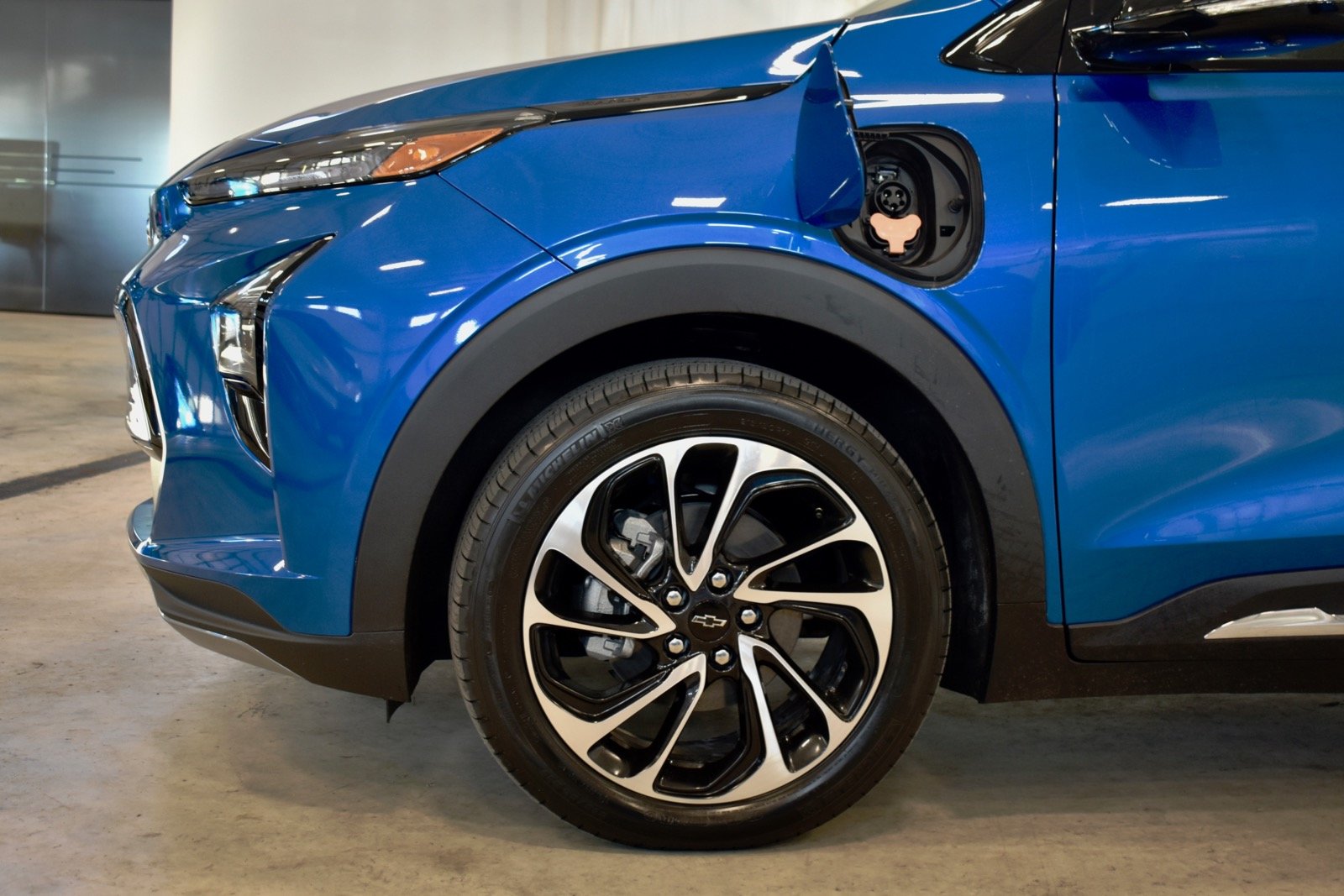
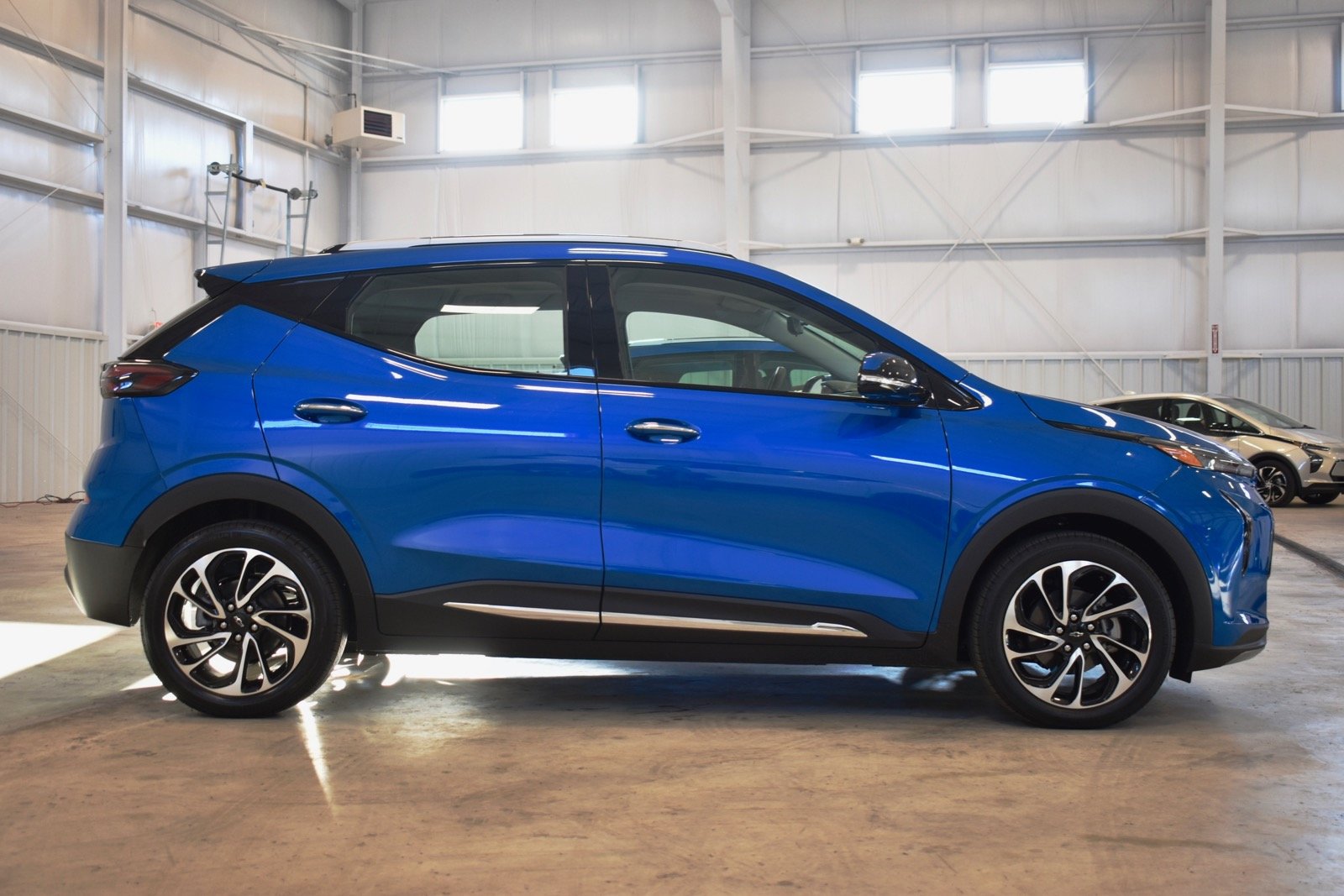
At first glance, it’s hard to tell the Bolt EUV apart from the Bolt EV, which gets new, more aggressive styling. Chevy says no exterior panels are shared between the two models, but the differences are fairly subtle. The Bolt EUV has a more upright front end and roof, with different front lighting elements (they’re connected by black trim in the Bolt EV; separated in the EUV). As with many other EVs, it’s unclear if the styling will be SUV-like enough for customers, especially when the Bolt EUV and Bolt EV look so similar.
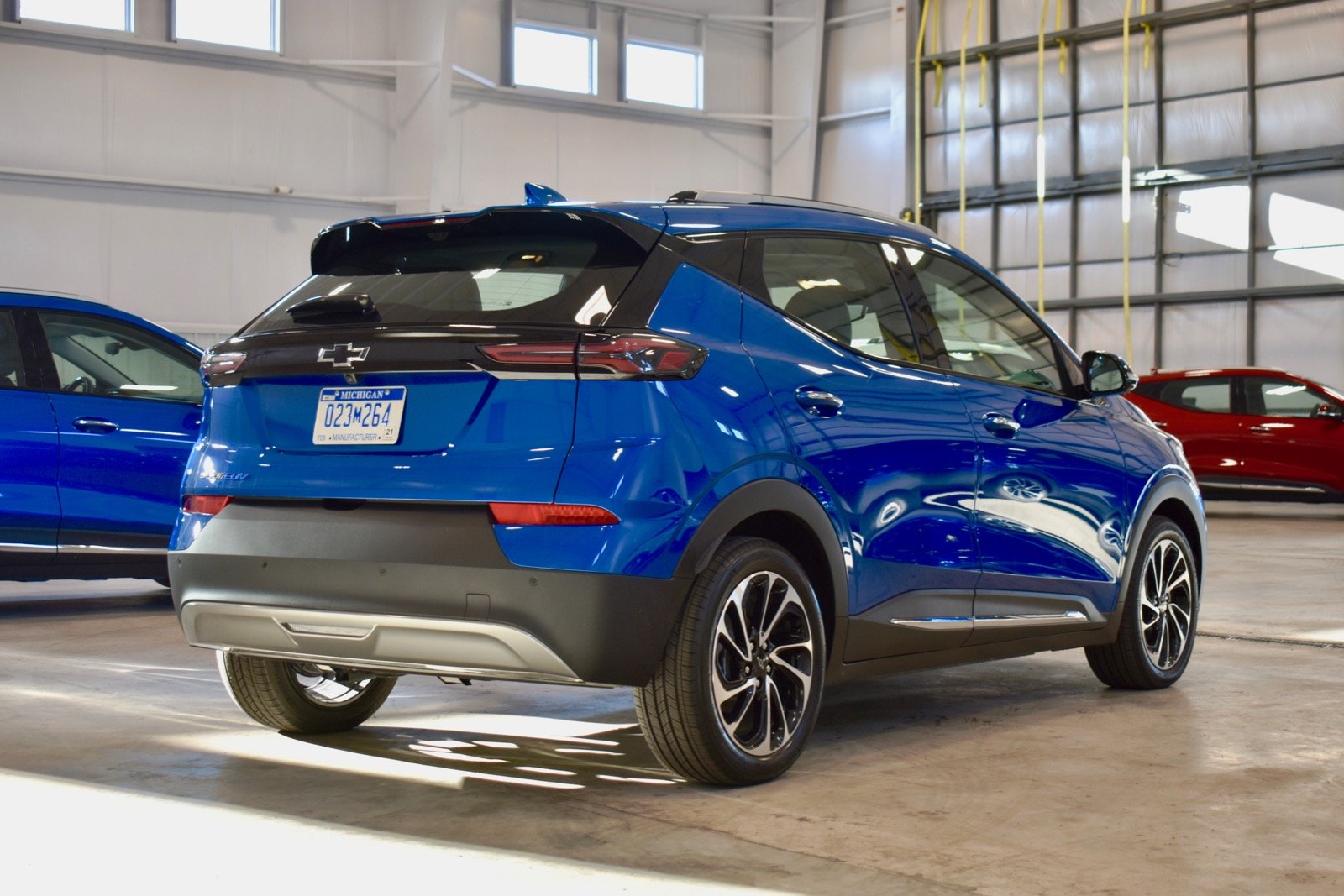
On both models, designers split up the lighting elements. The thin elements at the tops of the fenders that look like headlights are actually the daytime running lights and turn signals, while the headlights are mounted below. It’s a trick previously seen on Chevy’s Hyundai Kona Electric rival, and designers also did the same thing at the back. The brake lights are mounted low in the bumpers, not with the taillights. Hopefully, other drivers will still notice them.
The Bolt EUV is half a centimetre taller than the Bolt EV, and a bit wider, but the main difference is that the EUV is about 15 cm longer than the EV.
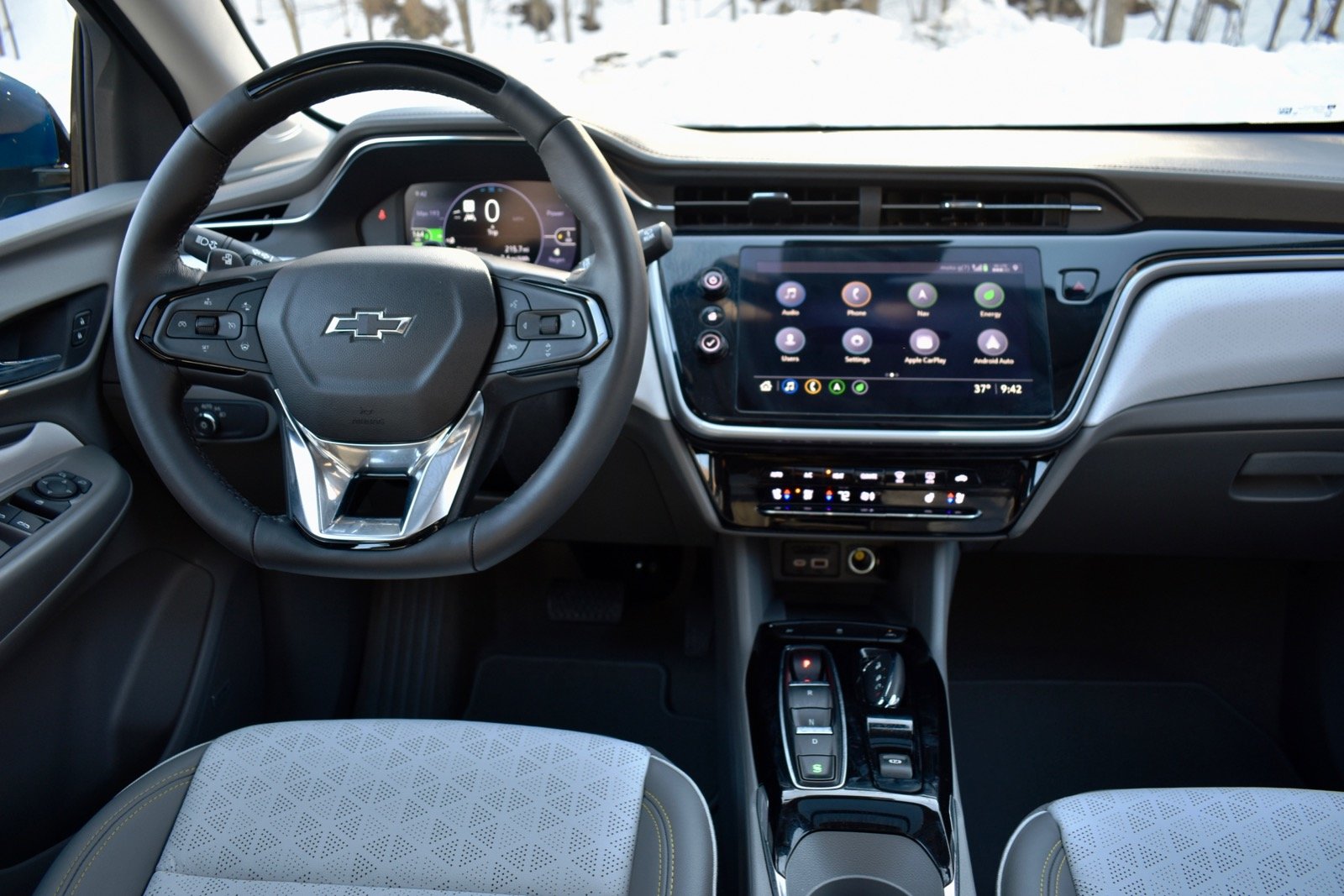
The interior is shared with the Bolt EV. A flat-bottom steering wheel incorporates the LED light bar for Super Cruise, and a series of toggle switches replace the traditional shift lever. While the original Bolt EV had special lightweight front seats, the 2022 Bolt EV and Bolt EUV have seats with a more conventional design that trades weight for comfort. Cloth seats are standard on the base Bolt EUV LT, with leather upholstery on the Bolt EUV Premier trim level. We drove early engineering-validation vehicles, and Chevy specifically noted that the interior materials were not quite production-spec, so we can’t make a firm judgment on material quality.
The Bolt EUV gets the same powertrain as the 2022 Bolt EV, which in turn carries over from the 2021 model. That means a single electric motor producing 200 horsepower and 266 pound-feet of torque, with front-wheel drive (FWD). Chevy decided not to offer all-wheel drive (AWD) to keep the purchase price down, but it still seems like a major omission in a vehicle marketed as an SUV alternative.
We liked the Bolt EUV’s comfortable ride, but it wasn’t a very remarkable car to drive. It will likely serve well as a daily driver, as long as owners don’t expect much fun from their cars. The instant shove of electric torque was fun, but that’s a trait common to all EVs. Heavy steering and, perhaps, the longer wheelbase also seemed to dial out some of the quick reflexes that made the previous Bolt EV surprisingly fun to drive.
All-electric cars have regenerative braking, which uses the motor to slow the car without using the friction brakes, helping to recover some energy in the process. Chevy takes things a little bit further. In addition to the regen paddle from the 2021 Bolt EV, the 2022 Bolt EV and Bolt EUV feature a one-pedal mode. Press a button on the dashboard, and you get enough regen for true one-pedal driving. You can then use the steering-wheel paddle for even more aggressive regen, similar to engine braking in an internal-combustion car.
The one-pedal button is a good solution, as it lets drivers choose between one-pedal driving and a driving experience that’s more like an internal-combustion car. However, the Nissan Leaf’s e-Pedal also blends regenerative and friction braking, making it even easier to avoid using the brake pedal. Even with maximum regen, we still needed to use the brake pedal to bring the Bolt EUV to a complete stop.
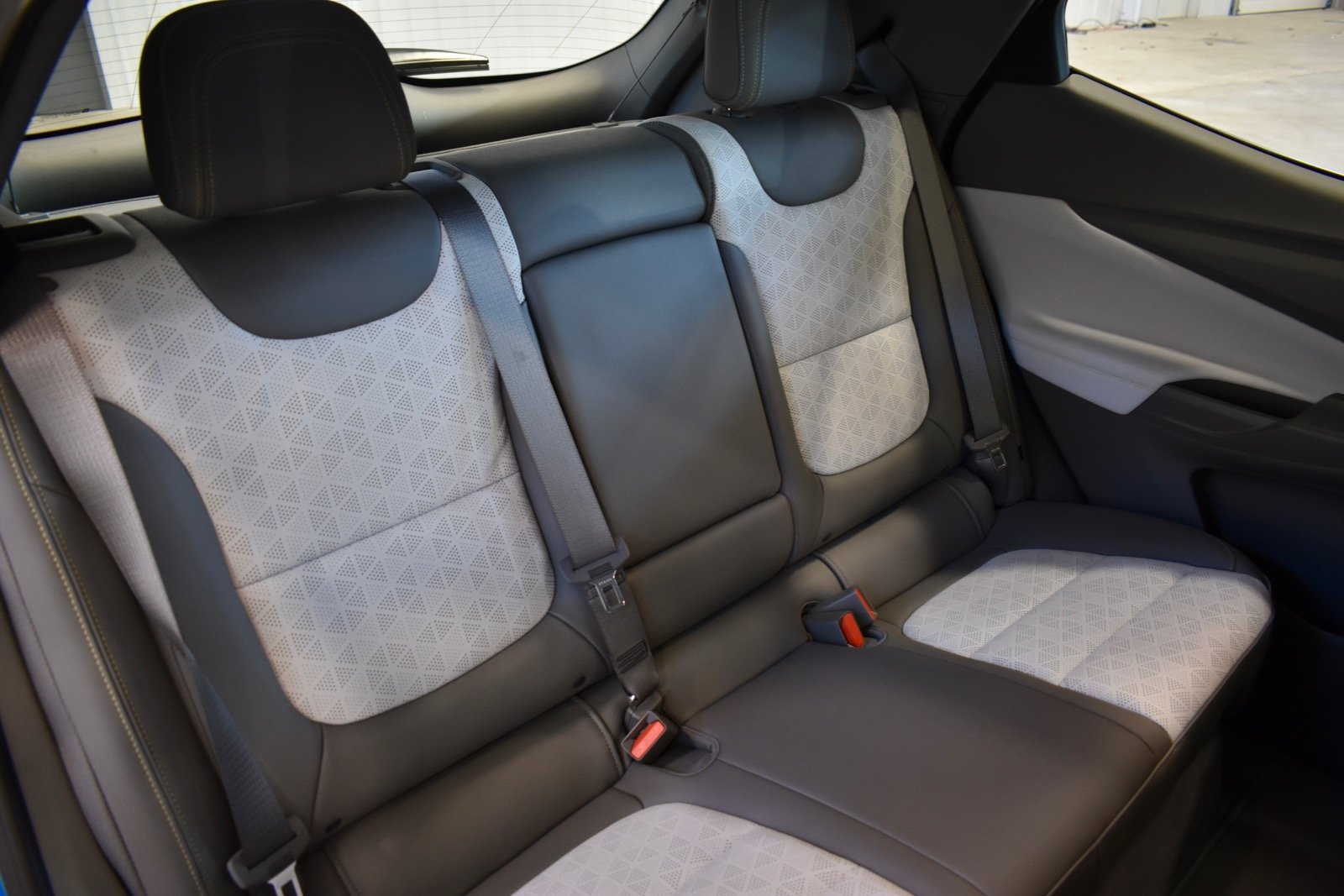
Thanks to its longer wheelbase, the Bolt EUV has 7.8 cm of extra legroom compared to the Bolt EV. That’s the only area where the EUV has a definitive advantage over the EV, however. Front legroom is the same in both models and, despite the EUV’s more upright roofline, the Bolt EV has more headroom in both rows. Still, the Bolt EUV has more legroom in both rows than its rivals, although the Volkswagen ID.4 boasts more front and rear headroom.
At 461 litres with the rear seats in place and 1,611 litres with the rear seats folded, the Bolt EUV actually has a bit less cargo space than the Bolt EV, which has 470 litres of space with the seats up and 1,614 litres with the seats down. With the rear seats up, the EUV also has substantially less cargo space than competitors, but most don’t have as much with the rear seats folded (only the Volkswagen ID.4 beats it in that metric). Interior storage space is also fairly limited, and road trippers will likely be underwhelmed by the undersized cupholders.
The snub-nosed design doesn’t leave room for a “frunk,” like you get in a Tesla, but that’s also the case with other EVs in this price range. That design also creates excellent forward visibility, and the EUV didn’t have the massive rear blind spots of the VW ID.4, either.
The relatively tall seating position might appeal to SUV shoppers, but it made us feel like we were driving a van. We did like the redesigned seats though, appreciating the extra cushioning over the previous Bolt EV seats.
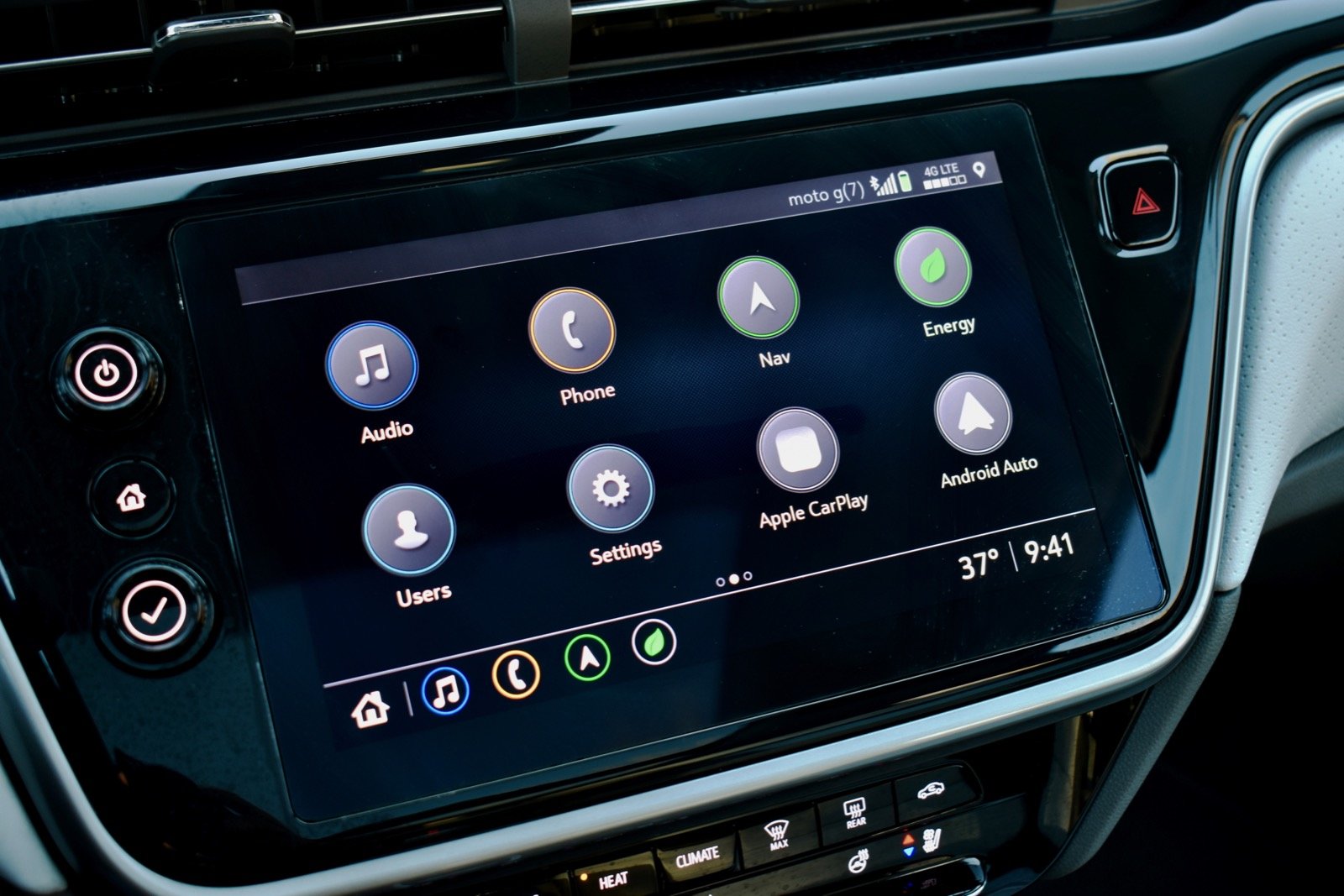
The standard infotainment system includes a 10.2-inch touchscreen and 8.0-inch digital instrument cluster, with Bluetooth and wireless Apple CarPlay and Android Auto compatibility. The Bolt EUV also gets standard wireless phone charging (it’s an optional extra on the Bolt EV), and is available with a 4G LTE WiFi hotspot as well.
The touchscreen checked the important boxes. It was well-positioned, within easy reach of the driver, and responded quickly to inputs. We also liked the graphics, which included smartphone-style icons for the main menus, and a neat-looking energy-flow display.
The instrument cluster wasn’t as clean-looking, with lots of information crammed into a relatively small space. This display shows everything from speed and range to the availability of Super Cruise, and we think Chevy could have done a better job arranging everything.
Crash-test ratings from the National Highway Traffic Safety Administration (NHTSA) and Insurance Institute for Highway Safety (IIHS) have not yet been completed, but that’s typical for new vehicles.
Standard safety features include automatic emergency braking, forward-collision warning, lane-keep assist, lane-departure warning, a forward-distance indicator, front pedestrian braking, blind-spot monitoring, and rear cross-traffic alert. A surround-view camera system, rearview camera mirror, and adaptive cruise control are extra-cost options, as is Super Cruise. The system isn’t available on the base LT trim level and is an optional extra on the Premier. Launched by GM’s Cadillac luxury brand, Super Cruise can handle acceleration, braking, and lane centring on designated stretches of limited-access highway. It only works on roads that have been thoroughly mapped, but Chevy said about 320,000 kilometres in the United States and Canada are available.
Super Cruise is marketed as a hands-free system but still requires an attentive driver. It uses a driver-facing camera to monitor for distraction, and an LED bar on the steering wheel to communicate when the system is working. If it’s green, you’re good to go. The light turns blue when Super Cruise is available, but not active, and red when the driver needs to take over.
While our experience with Super Cruise in the Bolt EUV was brief, we were impressed by the system’s performance and ease of use. Activating Super Cruise only required pressing a button on the steering wheel, which is more straightforward than some less-elaborate adaptive cruise control systems.
The test route covered stretches of multiple New Jersey highways, which have a well-deserved reputation for aggressive drivers. Super Cruise handled everything with a grace many human drivers lack, reacting quickly when (inevitably) a car cut in front, and responding promptly to changes in set speed. It also handled curves very well—something that usually trips up these kinds of systems.
Chevy quotes a 397-kilometre driving range for the Bolt EUV. That’s less than the Bolt EV and the Hyundai Kona Electric, but more than a Nissan Leaf Plus or Kia Niro EV, and just shy of the VW ID.4.
The Bolt EUV comes with an 11-kilowatt onboard charger, which can return the car to a full charge in seven hours from a 240-volt Level 2 AC source. The standard Dual Level Charge Cord lets owners plug directly into 120-volt or 240-volt outlets, albeit with charging power reduced to 7.2-kW. Standard DC fast charging can recover up to 154 kilometres of range in 30 minutes, according to Chevy.
Chevy offers a three-year, 60,000-kilometre, bumper-to-bumper warranty, a five-year, 100,000-kilometre, powertrain warranty, and an eight-year, 160,000-kilometre, battery warranty.
Pricing for the 2022 Chevrolet Bolt EUV starts at an MSRP of $40,198, which is $2,000 more than a 2022 Bolt EV, but still $4,800 less than the base price of a 2021 Bolt EV, which already qualified for federal EV rebates as well as provincial ones where available.
At that price, the Bolt EUV still undercuts the Volkswagen ID.4 Pro S and Nissan Leaf Plus. The Bolt EUV also offers more range than the Leaf Plus, and Super Cruise is much more sophisticated than the driver-assist systems offered by Nissan and VW.
That value is the Chevy Bolt EUV’s biggest strength. While its exterior styling and interior dimensions don’t distinguish it enough from the standard Bolt EV, the available Super Cruise does. The pricing of both Bolt models, combined with their relatively long ranges, is also a compelling combination against rivals. The original Bolt EV was a major leap forward for electric cars, while the 2022 Bolt EV and Bolt EUV are a smaller, but still significant, evolutionary step.
Yet we also wish Chevy had combined the best features of the Bolt EV and Bolt EUV into one model. On its own, the new Bolt EUV doesn’t stand up as an SUV alternative, especially with an AWD Volkswagen ID.4 and the Nissan Ariya waiting in the wings. Super Cruise and extra rear legroom seem like features that could have been added to the standard Bolt EV without creating a new model. Why didn’t Chevy just do that?

User reviews for 2022 Chevrolet Bolt EUV
Write a review2022 Chevrolet Bolt EUV Pricing
Trims & specs
Air Conditioning
Automatic climate control front air conditioning · Single front air conditioning zones
Airbags
Dual front airbags · Dual front knee airbags · Passenger airbag deactivation: occupant sensing deactivation · Front side airbags · Front side curtain airbags
Audio System
Antenna Type: mast · Voice recognition audio system · Bluetooth auxiliary audio input · Touch screen display radio · Satellite Radio: SiriusXM · Total Number of Speakers: 6
Brakes
ABS: 4-wheel · Braking assist: hill start assist · Electronic parking brake: auto off · Front brake diameter: 10.9 · Front brakes: ventilated disc · Rear brake diameter: 10.4 · Rear brakes: disc
Comfort Features
Cargo area floor mat: rubber/vinyl · Center console trim: metallic · Floor Mat Material: carpet · Floor Material: carpet · Floor Mats: front · Shift knob trim: leather · Steering wheel trim: urethane
Convenience Features
Assist handle: rear · Center console: front console with armrest and storage · Cupholders: front · Multi-function remote: trunk release · One-touch windows: 4 · Power outlet(s): USB-C front · Power steering: electric · Power windows: lockout button · Reading lights: front · Steering wheel: tilt and telescopic · Steering wheel mounted controls: phone · Storage: accessory hook · Vanity mirrors: dual illuminating
Driver Seat
Manual adjustments: 6
Drivetrain
Axle ratio: 7.05
Engine
EV battery capacity: 66 kWh · EV on-board charger rating: 11.5 kW · Electric Charge Cord: 120 volt · Electric Motor Battery Type: lithium ion · Electric Motor HP: 200 · Electric Motor Power Output (Kilowatts): 150 · Electric Motor Torque: 266 · Electric motor charger: DC fast charging · Electric motor charger connector: SAE J1772 · Electric motor charging time: 7 hours · Electric motor miles per charge: 247
Exterior Features
Door handle color: body-color · Fender lip moldings: black · Front bumper color: body-color · Grille color: black · Mirror color: black · Rear bumper color: body-color · Rear spoiler: roofline spoiler · Rear spoiler color: body-color · Rear trunk/liftgate: liftgate · Rocker panel color: chrome accents · Window trim: chrome
Headrests
Adjustable rear headrests: foldable · Front headrests: adjustable · Number of front headrests: 2 · Number of rear headrests: 2
In Car Entertainment
Connected in-car apps: Google POIs · Infotainment: Chevrolet Infotainment System · Infotainment screen size: 10.2 in. · Smartphone integration: wireless Apple CarPlay
Instrumentation
Fuel economy display: range · Instrument cluster screen size: 8 in. · Warnings and reminders: low battery
Lights
Daytime running lights: LED · Headlights: auto delay off · Tail and brake lights: LED
Mirrors
Exterior mirrors: manual folding · Inside rearview mirror: manual day/night
Passenger Seat
Manual Adjustments: 6
Rear Seats
Type: 60-40 split bench
Roof
Roof rails: silver
Safety
Automatic emergency braking: front pedestrian · Camera system: rearview · Child seat anchors: LATCH system · Pre-Collision Warning System: visual warning · Programmable safety key: MyKey · Rearview monitor: in dash
Seatbelts
Emergency locking retractors: front · Front seatbelts: 3-point · Seatbelt force limiters: front · Seatbelt pretensioners: front · Seatbelt warning sensor: driver and passenger · Second row seatbelts: 3-point
Seats
Driver seat manual adjustments: reclining · Front seat type: bucket · Passenger seat manual adjustments: reclining · Rear seat folding: split · Upholstery: premium cloth
Security
Power door locks: anti-lockout
Suspension
Front Arm Type: lower control arms · Front Shock Type: gas shock absorbers · Front Spring Type: coil springs · Front Suspension Classification: independent · Front Suspension Type: MacPherson struts · Rear Shock Type: gas shock absorbers · Rear Spring Type: coil springs · Rear Suspension Classification: semi-independent · Rear Suspension Type: torsion bar · Stabilizer bar(s): front
Telematics
Driver assistance app: roadside assistance · Electronic messaging assistance: with voice recognition · Phone: voice activated · Phone wireless data link: Bluetooth · Satellite communications: OnStar · Smart device app compatibility: myChevrolet with Connected Access · Smart device app function: maintenance status · Wifi: hotspot
Tires
Type: all season
Tires and Rims
Wheels: painted aluminum
Windows
Front wipers: variable intermittent · Liftgate window: fixed · Power windows: with safety reverse · Rear wiper: intermittent · Solar-tinted glass: front
Air Conditioning
Automatic climate control front air conditioning · Single front air conditioning zones
Airbags
Dual front airbags · Dual front knee airbags · Passenger airbag deactivation: occupant sensing deactivation · Front side airbags · Front side curtain airbags
Audio System
Antenna Type: mast · Voice recognition audio system · USB auxiliary audio input · AM/FM radio · Satellite Radio: SiriusXM · Total Number of Speakers: 6
Brakes
ABS: 4-wheel · Braking assist: hill start assist · Electronic parking brake: auto off · Front brake diameter: 10.9 · Front brakes: ventilated disc · Rear brake diameter: 10.4 · Rear brakes: disc
Comfort Features
Armrests: rear center with cupholders · Cargo area floor mat: rubber/vinyl · Center console trim: metallic · Floor Mat Material: carpet · Floor Material: carpet · Floor Mats: front · Shift knob trim: alloy · Steering wheel trim: leather
Convenience Features
Adaptive stop and go cruise control: semi-automatic · Assist handle: rear · Center console: front console with armrest and storage · Cruise control: adaptive · Cupholders: front · Dimming rearview mirror: auto-dimming · Multi-function remote: keyless entry with panic alarm · One-touch windows: 4 · Power outlet(s): 12V front · Power steering: electric · Power windows: lockout button · Reading lights: front · Rearview mirror: camera-based · Steering wheel: tilt and telescopic · Steering wheel mounted controls: cruise controls · Storage: accessory hook · Vanity mirrors: dual illuminating
Driver Seat
Adjustable lumbar support: power · Power adjustments: 8
Drivetrain
Axle ratio: 7.05
Engine
EV battery capacity: 66 kWh · EV on-board charger rating: 11.5 kW · Electric Charge Cord: 120 volt · Electric Motor Battery Type: lithium ion · Electric Motor HP: 200 · Electric Motor Power Output (Kilowatts): 150 · Electric Motor Torque: 266 · Electric motor charger: DC fast charging · Electric motor charger connector: SAE Combo CCS · Electric motor charging time: 7 hours · Electric motor miles per charge: 247
Exterior Features
Body side moldings: chrome · Door handle color: body-color with chrome accents · Fender lip moldings: black · Front bumper color: body-color · Grille color: body-color · Mirror color: black · Rear bumper color: body-color · Rear spoiler: roofline spoiler · Rear spoiler color: body-color · Rear trunk/liftgate: liftgate · Rocker panel color: chrome accents · Window trim: chrome
Headrests
Adjustable rear headrests: foldable · Front headrests: adjustable · Number of front headrests: 2 · Number of rear headrests: 2
In Car Entertainment
Connected in-car apps: Google search · Infotainment: Chevrolet Infotainment System · Infotainment screen size: 10.2 in. · Smartphone integration: wireless Apple CarPlay
Instrumentation
Fuel economy display: range · Instrument cluster screen size: 8 in. · Warnings and reminders: low battery
Lights
Daytime running lights: LED · Headlights: LED · Tail and brake lights: LED
Mirrors
Exterior mirrors: manual folding
Passenger Seat
Manual Adjustments: 6
Rear Seats
Type: 60-40 split bench
Roof
Roof rails: silver
Safety
Automatic emergency braking: front · Camera system: surround view · Child seat anchors: LATCH system · Cross Traffic Alert: rear · Parking sensors: rear · Pre-Collision Warning System: visual warning · Programmable safety key: MyKey · Rearview monitor: in mirror
Seatbelts
Emergency locking retractors: front and rear · Front seatbelts: 3-point · Seatbelt force limiters: front · Seatbelt pretensioners: front · Seatbelt warning sensor: driver and passenger · Second row seatbelts: 3-point
Seats
Driver seat power adjustments: height · Front seat type: bucket · Passenger seat manual adjustments: height · Rear seat folding: split · Upholstery: leather-trimmed
Security
Power door locks: anti-lockout
Suspension
Front Arm Type: lower control arms · Front Shock Type: gas shock absorbers · Front Spring Type: coil springs · Front Suspension Classification: independent · Front Suspension Type: MacPherson struts · Rear Shock Type: gas shock absorbers · Rear Spring Type: coil springs · Rear Suspension Classification: semi-independent · Rear Suspension Type: torsion bar · Stabilizer bar(s): front
Telematics
Driver assistance app: roadside assistance · Electronic messaging assistance: with read function · Phone: voice activated · Phone wireless data link: Bluetooth · Satellite communications: Turn-by-Turn Navigation · Smart device app compatibility: myChevrolet with Connected Access · Smart device app function: lock operation · Wifi: hotspot
Tires
Type: all season
Tires and Rims
Wheels: aluminum with painted accents
Windows
Front wipers: variable intermittent · Liftgate window: fixed · Power windows: with safety reverse · Rear wiper: intermittent · Solar-tinted glass: rear
