2022 Jeep Grand Cherokee L Reviews, Pricing & Specs
Write a review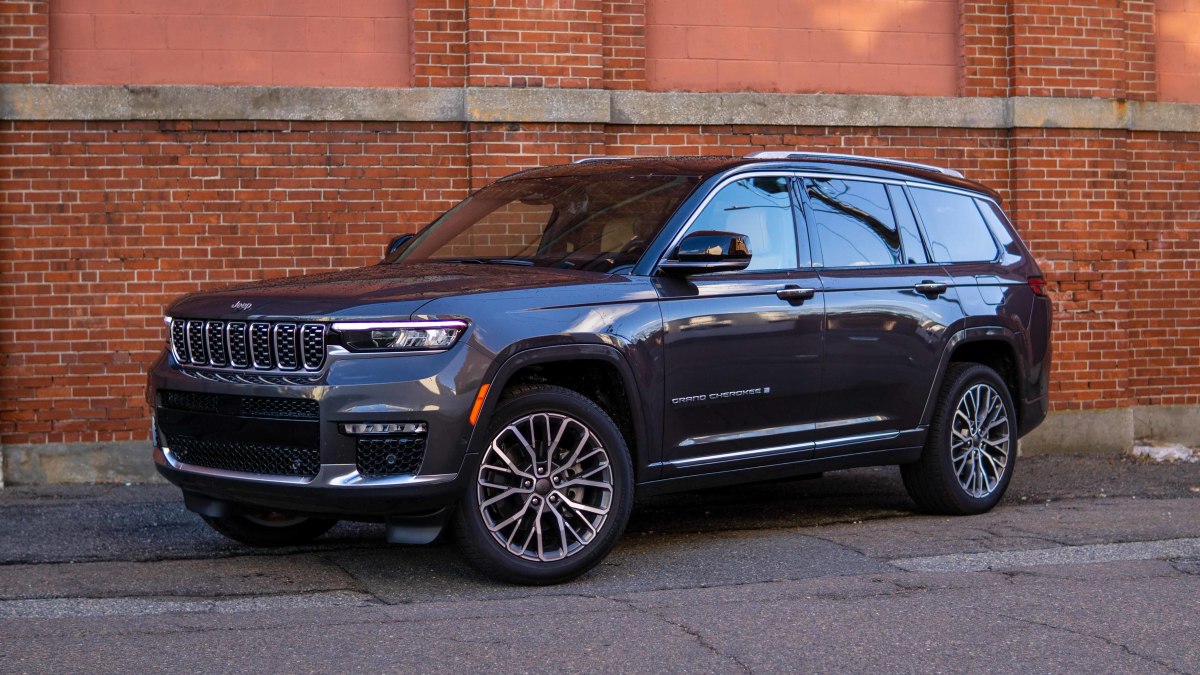
The 2022 Jeep Grand Cherokee L is a thoroughly composed three-row SUV that is one engine away from greatness.

The L means long. Compared to the standard two-row Grand Cherokee, the L is 29 centimetres longer to accommodate third-row seats. The wheelbase also stretches 12.7 cm for more second-row legroom and wider rear doors. The extra mass and bigger caboose blend into the body so well that the L makes the standard Grand Cherokee look like Jeep lopped off its tail. That's partly Jeep's fault, because it introduced the L first, as an all-new 2021 model, and waited almost a year to release the two-row Grand Cherokee as a 2022 model.
It's a good fault to have. The GC L is elegant and recognizable as a Jeep from any angle. The seven-slot rectangular grille, U-shaped wheel arches, and blunt front end are all Jeep, though the lighting is modernized to be slimmer and brighter, while the paint finish and panel fit are markedly better. Whether the base Laredo or the loaded Summit Reserve, all Grand Cherokee L trim levels look impressive. The high-end Summit and Summit Reserve finish the design with black roofs, larger wheels, and more chrome.
The interior goes further. Yes, this Jeep is roughly 25 grand more than a loaded Kia Telluride, but the dual high-resolution screens, real wood, aluminum, Palermo leather seating, faux-suede roof, and the general interior layout feel like money well spent. The last Grand Cherokee was based on a Mercedes. This new one is every bit a Mercedes, in style and tactile quality—without sharing any parts.
Even in all-black, there's enough detail and contrast to keep passengers comfortable and visually stimulated. Order the lighter tan leather and you'll be asking passengers to wipe their hands and feet before stepping inside. It's properly lux.

Two familiar engines are available: a 3.6-litre Pentastar V6 or a 5.7-litre V8, both paired to an eight-speed automatic transmission. In Canada, four-wheel drive (4WD) is standard with three different systems available, while rear-wheel drive (RWD) is not offered in our market.
A 48-volt hybrid system pairs to these same engines on Ram pickup trucks but is unavailable in the Grand Cherokee L.
Our test Jeep had the V6, which we found wanting on a vehicle this heavy. All 293 horsepower requires big revs to summon, and the same goes for the 260 lb-ft of torque. It's insufficient when driving alone, and will get annoying quick when the Jeep's filled with six or seven people. While Jeep is generous with insulation, the engine noise pours through the cabin under acceleration, and it's wheezy and coarse.
The transmission's early upshifts don't do the engine any favors, and what Sport mode fixes by keeping the revs high it takes away by never letting the revs settle. We favoured manual mode with the paddle shifters, but ultimately, the transmission programming cannot sync with this weaker engine.
Choose the V8 powertrain, which has a healthy 357 hp and 390 lb-ft, and sounds fabulous. The V8 is available only on the Grand Cherokee L Overland, Summit, and Summit Reserve trims.
Fuel efficiency is decent with the V6, at a Natural Resources Canada rated 13.0 litres per 100 kilometres in the city, 9.4 highway, and 11.3 combined. The V8 engine is notably worse at 16.7 L/100 km city, 10.9 hwy, 14.1 combined.
But the sad V6 is saved by the grace of the chassis. In a word, it's stellar. Ride composure and steering feel are incredibly taut and direct for a vehicle this large. The optional air suspension is like someone is changing your mattress from underneath. It varies between down-pillow soft and a medium-firm memory foam with the flick of the driving mode switch. Body roll, pitch, and dive are practically banished. The previous Grand Cherokee was a better performer than the one before it. This one steers and handles with more precision than the crazy 702-hp Trackhawk version of the previous-generation Grand Cherokee. We can only imagine what a new Grand Cherokee Trackhawk would be like on this new platform.
What's also great about the Jeep's air springs are their five ride height settings. An Access height lowers the SUV almost two inches so stepping in and out is just as easy as with a smaller crossover. The default Aero mode keeps the truck below the standard 21.5 cm height to promote aerodynamic efficiency at higher road speeds. Finally, two off-road modes raise the ride height allowing for up to 27.6 centimetres of ground clearance in the Off-road 2 mode, according to Jeep.
Jeep's driving modes are like Land Rover's: You select the desired terrain and the truck modulates the throttle, transmission, axle lockers, torque split, suspension, and other systems for you.
We don't recommend taking a Grand Cherokee L on rougher trails without all-terrain tires, which come on the Overland trim level with the Off-Road Group option package. That's the only trim that earns the Jeep Trail-Rated badge. It also includes skid plates and smaller 18-inch wheels that won't get scuffed as easily as our test vehicle's 21s.
Any Grand Cherokee L will handle lousy roads—the approach and breakover angles are laudable—but compared to a Wrangler, this is a family vehicle optimized for on-road comfort. Jeep quotes a maximum towing capacity of 3,265 kilograms (6,200 pounds).

Jeep went for simplicity and straightforward graphics for the Grand Cherokee L's Uconnect 5 infotainment system. This has long been a hallmark of Uconnect, only now the interface is sleeker and sharper to the eyes. But Jeep also cares about the physical switches, which separate the climate, seat climate controls, and stereo functions from the touchscreen. Not only are they easy to use, every switch twists, pulls, and slides with a damped click. A row of buttons above the touchscreen are handy for adjusting other necessities, like deactivating the auto stop-start, parking sensors, and traction control. The central rotary shifter takes no time to learn, and there's a large bin for wireless phone charging and a big central cubby under the armrest.
The Laredo and Altitude trims come with an 8.4-inch touchscreen and a 10-inch digital instrument panel. The Limited, Overland, Summit, and Summit Reserve have an available 10.1-inch touchscreen (standard on Summit Reserve) that's unavailable on the lower trims. We noticed some legibility concerns with tiny graphics and text, particularly for the speed limit signs and air suspension modes. Also, in Jeep's 4x4 app, the buttons and menus were washed out by the background graphics. The system occasionally lagged when switching menus in various parts of the interface as well.
The Grand Cherokee L offers plenty of space in all directions, in all rows—even the third row can fit an average adult for an extended time (how much is up to those adults who drew the short straw, but it's not a penalty box). Second-row seats are captain's chairs as standard for six-person seating, while a 60/40 split bench rear seat is an option on all trims. A sweeping panoramic roof, large windows, and ample USB ports help make long journeys a breeze. However, there's an issue with the actual breeze. The air vents appear to be too small and don't direct enough air flow to the cabin. That forces the driver to keep the fan on high, and that fan is quite loud.

Spend and you shall receive. Upper trims have available niceties to match premium nameplates, including multiple massage modes for the 16-way power adjustable front seats, a head-up display, night vision with pedestrian and animal detection, crystal-clear 360-degree camera system, and an Active Driving Assist system that does a great job steering the Jeep on marked highway lanes. The navigation can take over the instrument panel and it's zoomed in enough so you can preview the next corner—very handy on dark, twisty roads. When you have an active route set in the factory system and then plug something into your phone, UConnect will cancel the nav and automatically bring up your preferred app (Apple CarPlay and Android Auto are wireless, and two phones can be connected at once).
Adaptive cruise control, lane-keep assist, forward collision warning and automatic emergency braking, blind spot monitoring, and rear parking sensors come standard. Our test vehicle didn't have Active Driving Assist, so we were unable to try it out.
Automatic parking, intersection collision assist, driver attention monitor, traffic sign recognition, and four-zone climate control come standard on the Summit trims, and some of these features are optional on other trims. A rear-facing camera in the ceiling can show what's going on in the second and third rows via the touchscreen. The Summit Reserve comes with the 19-speaker McIntosh audio system that's good, but not as great as the bigger, more powerful system in the Grand Wagoneer. Lower trim levels get nine-speaker or six-speaker no-name stereos.


Pricing for the 2022 Jeep Grand Cherokee starts at $53,545 for the Laredo trim while a loaded Summit Reserve starts at an MSRP of $83,535. Destination charges vary from $1,895 to $2,795.
The significant upgrade in technology, lavish interior appointments, and off-road capability justify this Jeep's premium over other midsize three-row SUVs like the Hyundai Palisade. The new Grand Cherokee L is even a better alternative to luxury models like the Mercedes-Benz GLE or Audi Q7. But if you prefer more on-road grunt and sportiness, a BMW X5 or Acura MDX will wet your whistle.
If you'd like to save money and don't need the extra space, read our review of the 2022 Grand Cherokee two-row model.
Note: Images show a US model.

User reviews for 2022 Jeep Grand Cherokee L
Write a review2022 Jeep Grand Cherokee L Pricing
Trims & specs
Air Conditioning
Automatic climate control front air conditioning · Dual front air conditioning zones · Automatic climate control rear air conditioning · Single rear air conditioning zones
Airbags
Dual front airbags · Dual front knee airbags · Passenger airbag deactivation: occupant sensing deactivation · Front side airbags · Third row side curtain airbags
Audio System
Antenna Type: mast · Voice recognition audio system · Bluetooth auxiliary audio input · AM/FM radio · Total Number of Speakers: 6
Brakes
ABS: 4-wheel · Braking assist: hill start assist · Electronic parking brake: auto off · Front brake diameter: 13.9 · Front brake width: 1.1 · Front brakes: ventilated disc · Rear brake diameter: 13.8 · Rear brake width: 0.87 · Rear brakes: ventilated disc
Comfort Features
Armrests: rear outboard seats · Floor Mat Material: carpet · Floor Material: carpet · Floor Mats: front · Steering wheel trim: leatherette
Convenience Features
Adaptive stop and go cruise control: semi-automatic · Assist handle: rear · Cargo area power outlet: 12V · Center console: front console with armrest and storage · Cruise control: adaptive · Cupholders: rear · Easy entry: manual rear seat · Multi-function remote: proximity entry system · One-touch windows: 2 · Power outlet(s): USB-C rear · Power steering: electric · Power windows: lockout button · Reading lights: front · Steering wheel: tilt and telescopic · Steering wheel mounted controls: phone · Storage: accessory hook · Vanity mirrors: dual illuminating
Driver Seat
Adjustable lumbar support: 4-way power · Power adjustments: 8
Drivetrain
Axle ratio: 3.45
Engine
Alternator: 160 amps · Battery: 650 CCA · Oil cooler: auxiliary
Exterior Features
Door handle color: body-color · Exhaust: dual exhaust tips · Fender lip moldings: black · Grille color: black with chrome accents · Mirror color: black · Rear spoiler: roofline spoiler · Rear spoiler color: body-color · Rear trunk/liftgate: liftgate · Rocker panel color: black · Window trim: chrome
Headrests
Adjustable rear headrests: foldable · Front headrests: adjustable · Number of front headrests: 2 · Number of rear headrests: 2 · Number of third row headrests: 2
In Car Entertainment
Connected in-car apps: Google POIs · Infotainment: Uconnect · Infotainment screen size: 8.4 in.
Instrumentation
Fuel economy display: range · Instrument cluster screen size: 10.25 in. · Warnings and reminders: coolant temperature warning
Lights
Daytime running lights: LED · Headlights: Auto on/off · Tail and brake lights: LED
Mirrors
Exterior mirrors: heated · Inside rearview mirror: manual day/night
Passenger Seat
Manual Adjustments: 4
Rear Seats
Type: captains chairs
Roof
Roof rails: black
Safety
Automatic emergency braking: front pedestrian · Camera system: rearview · Child seat anchors: LATCH system · Cross Traffic Alert: rear · Crumple zones: rear · Impact sensor: post-collision safety system · Parking sensors: rear · Pre-Collision Warning System: audible warning · Pre-collision warning system: pedestrian detection · Rearview monitor: in dash
Seatbelts
Emergency locking retractors: front · Front seatbelts: 3-point · Seatbelt force limiters: front · Seatbelt pretensioners: front · Seatbelt warning sensor: driver and passenger · Second row seatbelts: 3-point · Third row seatbelts: 3-point
Seats
Driver seat power adjustments: height · Front seat type: bucket · Passenger seat manual adjustments: reclining · Rear seat folding: flat · Rear seat manual adjustments: reclining · Third row headrests: foldable · Third row seat folding: flat · Upholstery: cloth
Spare Tire
Mount Location: underbody · Size: temporary
Spare Wheel
Rim type: aluminum alloy
Stability and Traction
Traction control: with trailer stability control
Steering
Steering ratio: 16.9 · Turns lock-to-lock: 2.90
Suspension
Front Shock Type: twin-tube gas shock absorbers · Front Spring Type: coil springs · Front Suspension Classification: independent · Front Suspension Type: multi-link · Rear Shock Type: twin-tube gas shock absorbers · Rear Spring Type: coil springs · Rear Suspension Classification: independent · Rear Suspension Type: multi-link · Stabilizer bar(s): front
Telematics
Driver assistance app: roadside assistance · Electronic messaging assistance: with voice recognition · Phone: voice activated · Phone wireless data link: Bluetooth · Wifi: hotspot
Third Row Seat
Type: 50-50 split bench
Tires
Type: all terrain
Tires and Rims
Wheels: painted aluminum
Windows
Front wipers: variable intermittent · Laminated glass: acoustic · Liftgate window: fixed · Power windows: with safety reverse · Rear wiper: intermittent
Air Conditioning
Automatic climate control front air conditioning · Dual front air conditioning zones · Automatic climate control rear air conditioning · Single rear air conditioning zones
Airbags
Dual front airbags · Dual front knee airbags · Passenger airbag deactivation: occupant sensing deactivation · Front side airbags · Front side curtain airbags
Audio System
Antenna Type: mast · Voice recognition audio system · Bluetooth auxiliary audio input · Touch screen display radio · Total Number of Speakers: 6
Brakes
ABS: 4-wheel · Braking assist: hill start assist · Electronic parking brake: auto off · Front brake diameter: 13.9 · Front brake width: 1.1 · Front brakes: ventilated disc · Rear brake diameter: 13.8 · Rear brake width: 0.87 · Rear brakes: ventilated disc
Comfort Features
Armrests: rear outboard seats · Floor Mat Material: carpet · Floor Material: carpet · Floor Mats: front · Steering wheel trim: leatherette
Convenience Features
Adaptive stop and go cruise control: semi-automatic · Assist handle: front · Cargo area power outlet: 12V · Center console: front console with armrest and storage · Cruise control: adaptive · Cupholders: front · Easy entry: manual rear seat · Multi-function remote: keyless entry with panic alarm · One-touch windows: 2 · Power outlet(s): 12V front · Power steering: electric · Power windows: lockout button · Reading lights: third row · Steering wheel: tilt and telescopic · Steering wheel mounted controls: voice recognition controls · Storage: cargo tie-down anchors and hooks · Vanity mirrors: dual illuminating
Driver Seat
Adjustable lumbar support: 4-way power · Power adjustments: 8
Drivetrain
4WD Type: full time · Axle ratio: 3.45
Engine
Alternator: 160 amps · Battery: 650 CCA · Oil cooler: auxiliary
Exterior Features
Door handle color: body-color · Exhaust: dual exhaust tips · Fender lip moldings: black · Grille color: chrome surround · Mirror color: black · Rear spoiler: roofline spoiler · Rear spoiler color: body-color · Rear trunk/liftgate: liftgate · Rocker panel color: black · Window trim: chrome
Headrests
Adjustable rear headrests: foldable · Front headrests: adjustable · Number of front headrests: 2 · Number of rear headrests: 2 · Number of third row headrests: 2
In Car Entertainment
Connected in-car apps: Google POIs · Infotainment: Android Auto ready · Infotainment screen size: 8.4 in.
Instrumentation
Fuel economy display: range · Instrument cluster screen size: 10.25 in. · Warnings and reminders: low oil pressure
Lights
Daytime running lights: LED · Headlights: auto delay off · Tail and brake lights: LED
Mirrors
Exterior mirrors: manual folding · Inside rearview mirror: manual day/night
Passenger Seat
Manual Adjustments: 4
Rear Seats
Type: captains chairs
Roof
Roof rails: black
Safety
Automatic emergency braking: rear · Camera system: rearview · Child seat anchors: LATCH system · Cross Traffic Alert: rear · Crumple zones: rear · Impact sensor: post-collision safety system · Parking sensors: rear · Pre-Collision Warning System: visual warning · Pre-collision warning system: pedestrian detection · Rearview monitor: in dash
Seatbelts
Emergency locking retractors: front, rear, third, and fourth row · Front seatbelts: 3-point · Seatbelt force limiters: front · Seatbelt pretensioners: front · Seatbelt warning sensor: driver and passenger · Second row seatbelts: 3-point · Third row seatbelts: 3-point
Seats
Driver seat power adjustments: height · Front seat type: bucket · Passenger seat manual adjustments: reclining · Rear seat folding: flat · Rear seat manual adjustments: reclining · Third row headrests: foldable · Third row seat folding: flat · Upholstery: cloth
Spare Tire
Mount Location: underbody · Size: temporary
Spare Wheel
Rim type: aluminum alloy
Stability and Traction
Traction control: with trailer stability control
Steering
Steering ratio: 15.6 · Turns lock-to-lock: 3.0
Suspension
Front Shock Type: twin-tube gas shock absorbers · Front Spring Type: coil springs · Front Suspension Classification: independent · Front Suspension Type: strut · Rear Shock Type: twin-tube gas shock absorbers · Rear Spring Type: coil springs · Rear Suspension Classification: independent · Rear Suspension Type: multi-link · Stabilizer bar(s): front
Telematics
Driver assistance app: roadside assistance · Electronic messaging assistance: with voice recognition · Phone: voice activated · Phone wireless data link: Bluetooth · Wifi: hotspot
Third Row Seat
Type: 50-50 split bench
Tires
Type: all terrain
Tires and Rims
Wheels: painted aluminum
Windows
Front wipers: variable intermittent · Laminated glass: acoustic · Liftgate window: fixed · Power windows: with safety reverse · Rear wiper: with washer
Air Conditioning
Automatic climate control front air conditioning · Dual front air conditioning zones · Automatic climate control rear air conditioning · Single rear air conditioning zones
Airbags
Dual front airbags · Dual front knee airbags · Passenger airbag deactivation: occupant sensing deactivation · Front side airbags · Rear side curtain airbags
Audio System
Antenna Type: mast · Voice recognition audio system · Bluetooth auxiliary audio input · Touch screen display radio · Total Number of Speakers: 6
Brakes
ABS: 4-wheel · Braking assist: hill start assist · Electronic parking brake: auto off · Front brake diameter: 13.9 · Front brake width: 1.1 · Front brakes: ventilated disc · Rear brake diameter: 13.8 · Rear brake width: 0.87 · Rear brakes: ventilated disc
Comfort Features
Armrests: rear outboard seats · Floor Mat Material: carpet · Floor Material: carpet · Floor Mats: front · Steering wheel trim: leather
Convenience Features
Adaptive stop and go cruise control: semi-automatic · Assist handle: front · Cargo area power outlet: 12V · Center console: front console with armrest and storage · Cruise control: adaptive · Cupholders: front · Easy entry: manual rear seat · Multi-function remote: proximity entry system · One-touch windows: 2 · Power outlet(s): USB rear · Power steering: electric · Power windows: lockout button · Reading lights: front · Rear power outlet: 115V · Steering wheel: tilt and telescopic · Steering wheel mounted controls: multi-function screen controls · Storage: cargo tie-down anchors and hooks · Vanity mirrors: dual illuminating
Driver Seat
Adjustable lumbar support: 4-way power · Power adjustments: 8
Drivetrain
Axle ratio: 3.45
Engine
Alternator: 160 amps · Battery: 650 CCA · Oil cooler: auxiliary
Exterior Features
Door handle color: body-color · Exhaust: dual exhaust tips · Fender lip moldings: black · Grille color: black with chrome accents · Mirror color: black · Rear spoiler: roofline spoiler · Rear spoiler color: body-color · Rear trunk/liftgate: liftgate · Rocker panel color: black · Window trim: chrome
Headrests
Adjustable rear headrests: foldable · Front headrests: adjustable · Number of front headrests: 2 · Number of rear headrests: 2 · Number of third row headrests: 2
In Car Entertainment
Connected in-car apps: Google POIs · Infotainment: Android Auto ready · Infotainment screen size: 8.4 in.
Instrumentation
Fuel economy display: MPG · Instrument cluster screen size: 10.25 in. · Warnings and reminders: lamp failure
Lights
Daytime running lights: LED · Headlights: auto delay off · Tail and brake lights: LED
Mirrors
Exterior mirrors: integrated turn signals · Inside rearview mirror: manual day/night
Passenger Seat
Manual Adjustments: 4
Rear Seats
Type: captains chairs
Roof
Roof rails: black
Safety
Automatic emergency braking: front · Camera system: rearview · Child seat anchors: LATCH system · Cross Traffic Alert: rear · Crumple zones: rear · Impact sensor: post-collision safety system · Parking sensors: rear · Pre-Collision Warning System: audible warning · Pre-collision warning system: pedestrian detection · Rearview monitor: in dash
Seatbelts
Emergency locking retractors: front · Front seatbelts: 3-point · Seatbelt force limiters: front · Seatbelt pretensioners: front · Seatbelt warning sensor: driver and passenger · Second row seatbelts: 3-point · Third row seatbelts: 3-point
Seats
Driver seat power adjustments: reclining · Front seat type: bucket · Passenger seat manual adjustments: reclining · Rear seat folding: flat · Rear seat manual adjustments: reclining · Third row headrests: foldable · Third row seat folding: split · Upholstery: perforated
Spare Tire
Mount Location: underbody · Size: temporary
Spare Wheel
Rim type: aluminum alloy
Stability and Traction
Traction control: with trailer stability control
Steering
Steering ratio: 16.9 · Turns lock-to-lock: 2.90
Suspension
Front Shock Type: twin-tube gas shock absorbers · Front Spring Type: coil springs · Front Suspension Classification: independent · Front Suspension Type: strut · Rear Shock Type: twin-tube gas shock absorbers · Rear Spring Type: coil springs · Rear Suspension Classification: independent · Rear Suspension Type: multi-link · Stabilizer bar(s): front
Telematics
Driver assistance app: roadside assistance · Electronic messaging assistance: with read function · Phone: voice activated · Phone wireless data link: Bluetooth · Wifi: hotspot
Third Row Seat
Type: 50-50 split bench
Tires
Type: all season
Tires and Rims
Wheels: painted aluminum
Windows
Front wipers: variable intermittent · Laminated glass: acoustic · Liftgate window: fixed · Power windows: with safety reverse · Rear wiper: intermittent
Air Conditioning
Automatic climate control front air conditioning · Dual front air conditioning zones · Automatic climate control rear air conditioning · Single rear air conditioning zones
Airbags
Dual front airbags · Dual front knee airbags · Passenger airbag deactivation: occupant sensing deactivation · Front side airbags · Third row side curtain airbags
Audio System
Antenna Type: diversity · Voice recognition audio system · Auxiliary audio input: jack · Pandora internet radio · Touch screen display radio · Satellite Radio: SiriusXM · Total Number of Speakers: 6
Brakes
ABS: 4-wheel · Braking assist: hill start assist · Electronic parking brake: auto off · Front brake diameter: 13.9 · Front brake width: 1.1 · Front brakes: ventilated disc · Rear brake diameter: 13.8 · Rear brake width: 0.87 · Rear brakes: ventilated disc
Comfort Features
Armrests: rear outboard seats · Dash trim: simulated wood · Door trim: vinyl · Floor Mat Material: carpet · Floor Material: carpet · Floor Mats: front · Steering wheel trim: leather
Convenience Features
Adaptive stop and go cruise control: semi-automatic · Assist handle: rear · Cargo area power outlet: 12V · Center console: front console with armrest and storage · Cruise control: adaptive · Cupholders: front, rear and third row · Easy entry: power driver seat · Memorized settings: 2 driver · Multi-function remote: proximity entry system · One-touch windows: 2 · Power outlet(s): USB front · Power steering: electric · Power windows: lockout button · Reading lights: front · Rear power outlet: 115V · Steering wheel: tilt and telescopic · Steering wheel mounted controls: phone · Storage: accessory hook · Vanity mirrors: dual illuminating
Driver Seat
Adjustable lumbar support: 4-way power · Power adjustments: 8
Drivetrain
Axle ratio: 3.45
Engine
Alternator: 180 amps · Battery: 650 CCA · Oil cooler: auxiliary
Exterior Features
Door handle color: body-color · Exhaust: dual exhaust tips · Fender lip moldings: black · Grille color: black with chrome accents · Mirror color: black · Rear spoiler: roofline spoiler · Rear spoiler color: body-color · Rear trunk/liftgate: power operated · Rocker panel color: black · Window trim: chrome
Headrests
Adjustable rear headrests: foldable · Front headrests: adjustable · Number of front headrests: 2 · Number of rear headrests: 2 · Number of third row headrests: 2
In Car Entertainment
Connected in-car apps: Google search · Infotainment: Android Auto ready · Infotainment screen size: 8.4 in.
Instrumentation
Fuel economy display: MPG · Instrument cluster screen size: 10.25 in. · Warnings and reminders: lamp failure
Lights
Daytime running lights: LED · Front fog lights: LED · Headlights: wiper activated · Tail and brake lights: LED
Mirrors
Exterior mirrors: heated · Inside rearview mirror: manual day/night
Passenger Seat
Power adjustments: 8
Rear Seats
Type: captains chairs
Roof
Roof rails: black
Safety
Automatic emergency braking: front · Camera system: rearview · Child seat anchors: LATCH system · Cross Traffic Alert: rear · Crumple zones: rear · Impact sensor: post-collision safety system · Parking sensors: rear · Pre-Collision Warning System: visual warning · Pre-collision warning system: pedestrian detection · Rearview monitor: in dash
Seatbelts
Emergency locking retractors: front · Front seatbelts: 3-point · Seatbelt force limiters: front · Seatbelt pretensioners: front · Seatbelt warning sensor: driver and passenger · Second row seatbelts: 3-point · Third row seatbelts: 3-point
Seats
Driver seat power adjustments: reclining · Front seat type: bucket · Passenger seat manual adjustments: reclining · Passenger seat power adjustments: height · Rear seat folding: flat · Rear seat manual adjustments: reclining · Third row headrests: foldable · Third row seat folding: flat · Upholstery: leather
Spare Tire
Mount Location: underbody · Size: temporary
Spare Wheel
Rim type: aluminum alloy
Stability and Traction
Traction control: with trailer stability control
Steering
Steering ratio: 16.9 · Turns lock-to-lock: 2.90
Suspension
Front Shock Type: twin-tube gas shock absorbers · Front Spring Type: coil springs · Front Suspension Classification: independent · Front Suspension Type: strut · Rear Shock Type: twin-tube gas shock absorbers · Rear Spring Type: coil springs · Rear Suspension Classification: independent · Rear Suspension Type: multi-link · Stabilizer bar(s): front
Telematics
Driver assistance app: roadside assistance · Electronic messaging assistance: with voice recognition · Phone: voice activated · Phone wireless data link: Bluetooth · Wifi: hotspot
Third Row Seat
Type: 50-50 split bench
Tires
Type: all season
Tires and Rims
Wheels: painted aluminum
Windows
Front wipers: variable intermittent · Laminated glass: acoustic · Liftgate window: fixed · Power windows: with safety reverse · Rear wiper: with washer
Air Conditioning
Automatic climate control front air conditioning · Dual front air conditioning zones · Automatic climate control rear air conditioning · Single rear air conditioning zones
Airbags
Dual front airbags · Dual front knee airbags · Passenger airbag deactivation: occupant sensing deactivation · Front side airbags · Third row side curtain airbags
Audio System
Antenna Type: mast · Voice recognition audio system · Bluetooth auxiliary audio input · Touch screen display radio · Total Number of Speakers: 6
Brakes
ABS: 4-wheel · Braking assist: hill start assist · Electronic parking brake: auto off · Front brake diameter: 13.9 · Front brake width: 1.1 · Front brakes: ventilated disc · Rear brake diameter: 13.8 · Rear brake width: 0.87 · Rear brakes: ventilated disc
Comfort Features
Armrests: rear outboard seats · Floor Mat Material: carpet · Floor Material: carpet · Floor Mats: front · Steering wheel trim: leather
Convenience Features
Adaptive stop and go cruise control: semi-automatic · Assist handle: front · Cargo area power outlet: 12V · Center console: front console with armrest and storage · Cruise control: adaptive · Cupholders: front, rear and third row · Easy entry: manual rear seat · Multi-function remote: proximity entry system · One-touch windows: 2 · Power outlet(s): USB front · Power steering: electric · Power windows: lockout button · Reading lights: rear · Rear power outlet: 115V · Steering wheel: tilt and telescopic · Steering wheel mounted controls: voice recognition controls · Storage: accessory hook · Vanity mirrors: dual illuminating
Driver Seat
Adjustable lumbar support: 4-way power · Power adjustments: 8
Drivetrain
4WD Type: full time · Axle ratio: 3.45
Engine
Alternator: 160 amps · Battery: 650 CCA · Oil cooler: auxiliary
Exterior Features
Door handle color: body-color · Exhaust: dual exhaust tips · Fender lip moldings: black · Grille color: black with chrome accents · Mirror color: black · Rear spoiler: roofline spoiler · Rear spoiler color: body-color · Rear trunk/liftgate: power operated · Rocker panel color: black · Window trim: chrome
Headrests
Adjustable rear headrests: foldable · Front headrests: adjustable · Number of front headrests: 2 · Number of rear headrests: 2 · Number of third row headrests: 2
In Car Entertainment
Connected in-car apps: Google search · Infotainment: Apply CarPlay ready · Infotainment screen size: 8.4 in.
Instrumentation
Fuel economy display: range · Instrument cluster screen size: 10.25 in. · Warnings and reminders: maintenance reminder
Lights
Daytime running lights: LED · Headlights: wiper activated · Tail and brake lights: LED
Mirrors
Exterior mirrors: heated · Inside rearview mirror: manual day/night
Passenger Seat
Manual Adjustments: 4
Rear Seats
Type: captains chairs
Roof
Roof rails: black
Safety
Automatic emergency braking: rear · Camera system: rearview · Child seat anchors: LATCH system · Cross Traffic Alert: rear · Crumple zones: rear · Impact sensor: post-collision safety system · Parking sensors: rear · Pre-Collision Warning System: visual warning · Pre-collision warning system: pedestrian detection · Rearview monitor: in dash
Seatbelts
Emergency locking retractors: front and rear · Front seatbelts: 3-point · Seatbelt force limiters: front · Seatbelt pretensioners: front · Seatbelt warning sensor: driver and passenger · Second row seatbelts: 3-point · Third row seatbelts: 3-point
Seats
Driver seat power adjustments: height · Front seat type: bucket · Passenger seat manual adjustments: reclining · Rear seat folding: flat · Rear seat manual adjustments: reclining · Third row headrests: foldable · Third row seat folding: split · Upholstery: perforated
Spare Tire
Mount Location: underbody · Size: temporary
Spare Wheel
Rim type: aluminum alloy
Stability and Traction
Traction control: with trailer stability control
Steering
Steering ratio: 15.6 · Turns lock-to-lock: 3.0
Suspension
Front Shock Type: twin-tube gas shock absorbers · Front Spring Type: coil springs · Front Suspension Classification: independent · Front Suspension Type: multi-link · Rear Shock Type: twin-tube gas shock absorbers · Rear Spring Type: coil springs · Rear Suspension Classification: independent · Rear Suspension Type: multi-link · Stabilizer bar(s): rear
Telematics
Driver assistance app: roadside assistance · Electronic messaging assistance: with voice recognition · Phone: voice activated · Phone wireless data link: Bluetooth · Wifi: hotspot
Third Row Seat
Type: 50-50 split bench
Tires
Type: all season
Tires and Rims
Wheels: painted aluminum
Windows
Front wipers: rain sensing · Laminated glass: acoustic · Liftgate window: fixed · Power windows: with safety reverse · Rear wiper: with washer
Air Conditioning
Automatic climate control front air conditioning · Dual front air conditioning zones · Automatic climate control rear air conditioning · Single rear air conditioning zones
Airbags
Dual front airbags · Dual front knee airbags · Passenger airbag deactivation: occupant sensing deactivation · Front side airbags · Rear side curtain airbags
Audio System
Antenna Type: mast · Voice recognition audio system · Auxiliary audio input: jack · Pandora internet radio · Touch screen display radio · Satellite Radio: SiriusXM · Total Number of Speakers: 6
Brakes
ABS: 4-wheel · Braking assist: hill start assist · Electronic parking brake: auto off · Front brake diameter: 13.9 · Front brake width: 1.1 · Front brakes: ventilated disc · Rear brake diameter: 13.8 · Rear brake width: 0.87 · Rear brakes: ventilated disc
Comfort Features
Armrests: rear outboard seats · Dash trim: simulated wood · Door trim: vinyl · Floor Mat Material: carpet · Floor Material: carpet · Floor Mats: front · Steering wheel trim: leather
Convenience Features
Adaptive stop and go cruise control: semi-automatic · Assist handle: front · Cargo area power outlet: 12V · Center console: front console with armrest and storage · Cruise control: adaptive · Cupholders: illuminated · Easy entry: manual rear seat · Memorized settings: audio system · Multi-function remote: proximity entry system · One-touch windows: 2 · Power outlet(s): USB third row · Power steering: electric · Power windows: lockout button · Reading lights: third row · Rear power outlet: 115V · Steering wheel: tilt and telescopic · Steering wheel mounted controls: multi-function screen controls · Storage: door pockets · Vanity mirrors: dual illuminating
Driver Seat
Adjustable lumbar support: 4-way power · Power adjustments: 8
Drivetrain
4WD Type: full time · Axle ratio: 3.45
Engine
Alternator: 180 amps · Battery: AGM · Oil cooler: auxiliary
Exterior Features
Door handle color: body-color · Exhaust: dual exhaust tips · Fender lip moldings: black · Grille color: chrome surround · Mirror color: black · Rear spoiler: roofline spoiler · Rear spoiler color: body-color · Rear trunk/liftgate: liftgate · Rocker panel color: black · Window trim: chrome
Headrests
Adjustable rear headrests: foldable · Front headrests: adjustable · Number of front headrests: 2 · Number of rear headrests: 2 · Number of third row headrests: 2
In Car Entertainment
Connected in-car apps: Google POIs · Infotainment: Uconnect · Infotainment screen size: 8.4 in.
Instrumentation
Fuel economy display: range · Instrument cluster screen size: 10.25 in. · Warnings and reminders: coolant temperature warning
Lights
Daytime running lights: LED · Front fog lights: LED · Headlights: LED · Tail and brake lights: LED
Mirrors
Exterior mirrors: heated · Inside rearview mirror: manual day/night
Passenger Seat
Power adjustments: 8
Rear Seats
Type: captains chairs
Roof
Roof rails: black
Safety
Automatic emergency braking: front · Camera system: rearview · Child seat anchors: LATCH system · Cross Traffic Alert: rear · Crumple zones: front · Impact sensor: post-collision safety system · Parking sensors: rear · Pre-Collision Warning System: visual warning · Pre-collision warning system: pedestrian detection · Rearview monitor: in dash
Seatbelts
Emergency locking retractors: front and rear · Front seatbelts: 3-point · Seatbelt force limiters: front · Seatbelt pretensioners: front · Seatbelt warning sensor: driver and passenger · Second row seatbelts: 3-point · Third row seatbelts: 3-point
Seats
Driver seat power adjustments: reclining · Front seat type: bucket · Passenger seat manual adjustments: reclining · Passenger seat power adjustments: reclining · Rear seat folding: flat · Rear seat manual adjustments: reclining · Third row headrests: foldable · Third row seat folding: split · Upholstery: leather
Spare Tire
Mount Location: underbody · Size: temporary
Spare Wheel
Rim type: aluminum alloy
Stability and Traction
Traction control: with trailer stability control
Steering
Steering ratio: 15.6 · Turns lock-to-lock: 3.0
Suspension
Front Shock Type: twin-tube gas shock absorbers · Front Spring Type: coil springs · Front Suspension Classification: independent · Front Suspension Type: strut · Rear Shock Type: twin-tube gas shock absorbers · Rear Spring Type: coil springs · Rear Suspension Classification: independent · Rear Suspension Type: multi-link · Stabilizer bar(s): front
Telematics
Driver assistance app: roadside assistance · Electronic messaging assistance: with voice recognition · Phone: voice activated · Phone wireless data link: Bluetooth · Wifi: hotspot
Third Row Seat
Type: 50-50 split bench
Tires
Type: all season
Tires and Rims
Wheels: painted aluminum
Windows
Front wipers: variable intermittent · Laminated glass: acoustic · Liftgate window: fixed · Power windows: with safety reverse · Rear wiper: intermittent
Air Conditioning
Automatic climate control front air conditioning · Dual front air conditioning zones · Automatic climate control rear air conditioning · Single rear air conditioning zones
Airbags
Dual front airbags · Dual front knee airbags · Passenger airbag deactivation: occupant sensing deactivation · Front side airbags · Front side curtain airbags
Audio System
Antenna Type: diversity · Voice recognition audio system · Auxiliary audio input: jack · Pandora internet radio · Premium Brand: Alpine · AM/FM radio · Satellite Radio: SiriusXM · 1 subwoofer · Total Number of Speakers: 8 · 506 watts
Brakes
ABS: 4-wheel · Braking assist: hill start assist · Electronic parking brake: auto off · Front brake diameter: 13.9 · Front brake width: 1.1 · Front brakes: ventilated disc · Rear brake diameter: 13.8 · Rear brake width: 0.87 · Rear brakes: ventilated disc
Comfort Features
Armrests: rear outboard seats · Dash trim: simulated wood · Door sill trim: chrome · Door trim: simulated wood · Floor Mat Material: carpet · Floor Material: carpet · Floor Mats: front · Steering wheel trim: leather
Convenience Features
Adaptive stop and go cruise control: semi-automatic · Ambient lighting: color-adjustable · Assist handle: rear · Cargo area power outlet: 12V · Center console: front console with armrest and storage · Cruise control: adaptive · Cupholders: front · Dimming rearview mirror: auto-dimming · Easy entry: manual rear seat · Memorized settings: steering wheel · Multi-function remote: keyless entry with panic alarm · One-touch windows: 4 · Power outlet(s): USB front · Power steering: electric · Power windows: lockout button · Reading lights: third row · Rear power outlet: 115V · Steering wheel: power tilt and telescopic · Steering wheel mounted controls: voice recognition controls · Storage: accessory hook · Vanity mirrors: dual illuminating
Driver Seat
Adjustable lumbar support: 4-way power · Power adjustments: 8
Drivetrain
Axle ratio: 3.45
Engine
Alternator: 240 amps · Battery: 700 CCA · Oil cooler: auxiliary
Exterior Features
Door handle color: body-color · Exhaust: dual exhaust tips · Exhaust tip color: chrome · Fender lip moldings: body-color · Grille color: chrome surround · Mirror color: black · Rear spoiler: roofline spoiler · Rear spoiler color: body-color · Rear trunk/liftgate: power operated · Rocker panel color: body-color · Window trim: chrome
Headrests
Adjustable rear headrests: foldable · Front headrests: adjustable · Number of front headrests: 2 · Number of rear headrests: 2 · Number of third row headrests: 2
In Car Entertainment
Connected in-car apps: Google POIs · Infotainment: Uconnect · Infotainment screen size: 8.4 in.
Instrumentation
Fuel economy display: MPG · Instrument cluster screen size: 10.25 in. · Warnings and reminders: low fuel level
Lights
Daytime running lights: LED · Exterior entry lights: puddle lamps · Front fog lights: LED · Headlights: automatic high beam dimmer · Tail and brake lights: LED
Mirrors
Exterior mirrors: auto-dimming
Passenger Seat
Power adjustments: 8
Rear Seats
Type: captains chairs
Roof
Moonroof: power panoramic · Moonroof / Sunroof: power sunshade · Roof rails: black
Safety
Automatic emergency braking: front · Camera system: in-vehicle passenger · Child seat anchors: LATCH system · Cross Traffic Alert: rear · Crumple zones: front · Impact sensor: post-collision safety system · Parking sensors: rear · Pre-Collision Warning System: audible warning · Pre-collision warning system: pedestrian detection · Rearview monitor: in dash
Seatbelts
Emergency locking retractors: front, rear, third, and fourth row · Front seatbelts: 3-point · Seatbelt force limiters: front · Seatbelt pretensioners: front · Seatbelt warning sensor: driver and passenger · Second row seatbelts: 3-point · Third row seatbelts: 3-point
Seats
Driver seat power adjustments: reclining · Front seat type: bucket · Passenger seat manual adjustments: reclining · Passenger seat power adjustments: reclining · Rear seat folding: flat · Rear seat manual adjustments: reclining · Third row headrests: foldable · Third row seat folding: flat · Upholstery: leather
Spare Tire
Mount Location: underbody · Size: temporary
Spare Wheel
Rim type: aluminum alloy
Stability and Traction
Traction control: with trailer stability control
Steering
Steering ratio: 16.9 · Turns lock-to-lock: 2.90
Suspension
Front Shock Type: twin-tube gas shock absorbers · Front Spring Type: coil springs · Front Suspension Classification: independent · Front Suspension Type: multi-link · Rear Shock Type: twin-tube gas shock absorbers · Rear Spring Type: coil springs · Rear Suspension Classification: independent · Rear Suspension Type: multi-link · Stabilizer bar(s): front
Telematics
Driver assistance app: roadside assistance · Electronic messaging assistance: with read function · Navigation system: with voice recognition · Phone: voice activated · Phone wireless data link: Bluetooth · Smart device app function: send destination to vehicle · Wifi: hotspot
Third Row Seat
Type: 50-50 split bench
Tires
Type: all season
Tires and Rims
Wheels: polished aluminum
Towing and Hauling
Tow hooks: front
Windows
Front wipers: variable intermittent · Laminated glass: acoustic · Liftgate window: fixed · Power windows: remote operation · Rear wiper: intermittent
Air Conditioning
Automatic climate control front air conditioning · Dual front air conditioning zones · Automatic climate control rear air conditioning · Single rear air conditioning zones
Airbags
Dual front airbags · Dual front knee airbags · Passenger airbag deactivation: occupant sensing deactivation · Front side airbags · Third row side curtain airbags
Audio System
Antenna Type: diversity · Voice recognition audio system · Bluetooth auxiliary audio input · Pandora internet radio · Premium Brand: Alpine · HD radio · Satellite Radio: SiriusXM · 1 subwoofer · Total Number of Speakers: 8 · 506 watts
Brakes
ABS: 4-wheel · Braking assist: hill start assist · Electronic parking brake: auto off · Front brake diameter: 13.9 · Front brake width: 1.1 · Front brakes: ventilated disc · Rear brake diameter: 13.8 · Rear brake width: 0.87 · Rear brakes: ventilated disc
Comfort Features
Armrests: rear outboard seats · Dash trim: simulated wood · Door sill trim: chrome · Door trim: simulated wood · Floor Mat Material: carpet · Floor Material: carpet · Floor Mats: front · Steering wheel trim: leather
Convenience Features
Adaptive stop and go cruise control: semi-automatic · Ambient lighting: color-adjustable · Assist handle: front · Cargo area power outlet: 12V · Center console: front console with armrest and storage · Cruise control: adaptive · Cupholders: rear · Dimming rearview mirror: auto-dimming · Easy entry: manual rear seat · Memorized settings: steering wheel · Multi-function remote: keyless entry with panic alarm · One-touch windows: 4 · Power outlet(s): USB rear · Power steering: electric · Power windows: lockout button · Reading lights: rear · Rear power outlet: 115V · Steering wheel: power tilt and telescopic · Steering wheel mounted controls: audio · Storage: front seatback · Vanity mirrors: dual illuminating
Driver Seat
Adjustable lumbar support: 4-way power · Power adjustments: 8
Drivetrain
4WD Type: on demand · Axle ratio: 3.45 · Locking differential: center · Transfer Case: electronic hi-lo gear selection
Engine
Alternator: 240 amps · Battery: maintenance-free · Oil cooler: auxiliary
Exterior Features
Door handle color: body-color · Exhaust: integrated exhaust · Exhaust tip color: chrome · Fender lip moldings: body-color · Grille color: black with chrome accents · Mirror color: black · Rear spoiler: roofline spoiler · Rear spoiler color: body-color · Rear trunk/liftgate: power operated · Rocker panel color: body-color · Window trim: chrome
Headrests
Adjustable rear headrests: foldable · Front headrests: adjustable · Number of front headrests: 2 · Number of rear headrests: 2 · Number of third row headrests: 2
In Car Entertainment
Connected in-car apps: Google POIs · Infotainment: Uconnect · Infotainment screen size: 8.4 in.
Instrumentation
Fuel economy display: range · Instrument cluster screen size: 10.25 in. · Warnings and reminders: maintenance reminder
Lights
Daytime running lights: LED · Exterior entry lights: puddle lamps · Front fog lights: LED · Headlights: automatic high beam dimmer · Tail and brake lights: LED
Mirrors
Exterior mirrors: power
Passenger Seat
Power adjustments: 8
Rear Seats
Type: captains chairs
Roof
Moonroof: power panoramic · Moonroof / Sunroof: power sunshade · Roof rails: black
Safety
Automatic emergency braking: rear · Camera system: in-vehicle passenger · Child seat anchors: LATCH system · Cross Traffic Alert: rear · Crumple zones: front · Impact sensor: post-collision safety system · Parking sensors: front · Pre-Collision Warning System: audible warning · Pre-collision warning system: pedestrian detection · Rearview monitor: in dash
Seatbelts
Emergency locking retractors: front, rear, third, and fourth row · Front seatbelts: 3-point · Seatbelt force limiters: front · Seatbelt pretensioners: front · Seatbelt warning sensor: driver and passenger · Second row seatbelts: 3-point · Third row seatbelts: 3-point
Seats
Driver seat power adjustments: reclining · Front seat type: bucket · Passenger seat manual adjustments: reclining · Passenger seat power adjustments: reclining · Rear seat folding: power · Rear seat manual adjustments: reclining · Third row headrests: foldable · Third row seat folding: split · Upholstery: leather
Spare Tire
Mount Location: underbody · Size: full-size
Spare Wheel
Rim Type: steel
Stability and Traction
Traction control: with trailer stability control
Steering
Steering ratio: 15.6 · Turns lock-to-lock: 3.0
Suspension
Front Shock Type: twin-tube gas shock absorbers · Front Spring Type: pneumatic springs · Front Suspension Classification: independent · Front Suspension Type: multi-link · Leveling: self leveling suspension · Rear Shock Type: twin-tube gas shock absorbers · Rear Spring Type: pneumatic springs · Rear Suspension Classification: independent · Rear Suspension Type: multi-link · Stabilizer bar(s): rear · Suspension control: electronic
Telematics
Driver assistance app: roadside assistance · Electronic messaging assistance: with read function · Navigation system: touch screen display · Phone: voice activated · Phone wireless data link: Bluetooth · Smart device app function: send destination to vehicle · Wifi: hotspot
Third Row Seat
Type: 50-50 split bench
Tires
Type: all season
Tires and Rims
Wheels: polished aluminum
Towing and Hauling
Tow hooks: front · Trailer hitch: Class IV · Trailer wiring: 7-pin
Windows
Front wipers: variable intermittent · Laminated glass: acoustic · Liftgate window: fixed · Power windows: remote operation · Rear wiper: intermittent
Air Conditioning
Automatic climate control front air conditioning · Dual front air conditioning zones · Automatic climate control rear air conditioning · Dual rear air conditioning zones
Airbags
Dual front airbags · Dual front knee airbags · Passenger airbag deactivation: occupant sensing deactivation · Front side airbags · Rear side curtain airbags
Audio System
Antenna Type: mast · Voice recognition audio system · USB auxiliary audio input · Pandora internet radio · Premium Brand: Alpine · AM/FM radio · Satellite Radio: SiriusXM · 1 subwoofer · Total Number of Speakers: 8 · 506 watts
Brakes
ABS: 4-wheel · Braking assist: hill start assist · Electronic parking brake: auto off · Front brake diameter: 13.9 · Front brake width: 1.1 · Front brakes: ventilated disc · Rear brake diameter: 13.8 · Rear brake width: 0.87 · Rear brakes: ventilated disc
Comfort Features
Armrests: rear outboard seats · Dash trim: wood · Door sill trim: illuminated scuff plate · Door trim: leather · Floor Mat Material: carpet · Floor Material: carpet · Floor Mats: front · Steering wheel trim: leather
Convenience Features
Active parking system: driver controlled brake, gas and gear selection · Adaptive stop and go cruise control: semi-automatic · Ambient lighting: color-adjustable · Assist handle: front · Autonomous lane guidance: lane centering · Cargo area power outlet: 12V · Center console: rear console with armrest and storage · Cruise control: adaptive · Cupholders: front · Dimming rearview mirror: auto-dimming · Easy entry: manual rear seat · Memorized settings: 2 driver · Multi-function remote: proximity entry system · One-touch windows: 4 · Power outlet(s): 12V front · Power steering: electric · Power windows: lockout button · Reading lights: third row · Rear power outlet: 115V · Steering wheel: power tilt and telescopic · Steering wheel mounted controls: audio · Storage: cargo tie-down anchors and hooks · Vanity mirrors: dual illuminating
Driver Seat
Adjustable lumbar support: 4-way power · Power adjustments: 12
Drivetrain
Axle ratio: 3.45
Engine
Alternator: 240 amps · Battery: maintenance-free · Oil cooler: auxiliary
Exterior Features
Door handle color: body-color · Exhaust: integrated exhaust · Exhaust tip color: chrome · Fender lip moldings: body-color · Grille color: chrome surround · Mirror color: black · Paint: contrast roof · Rear spoiler: roofline spoiler · Rear spoiler color: black · Rear trunk/liftgate: liftgate · Rocker panel color: chrome accents · Window trim: chrome
Headrests
Adjustable rear headrests: foldable · Front headrests: adjustable · Number of front headrests: 2 · Number of rear headrests: 2 · Number of third row headrests: 2
In Car Entertainment
Connected in-car apps: Google POIs · Infotainment: Uconnect · Infotainment screen size: 10.1 in.
Instrumentation
Fuel economy display: range · Instrument cluster screen size: 10.25 in. · Warnings and reminders: lamp failure
Lights
Daytime running lights: LED · Exterior entry lights: security approach lamps · Front fog lights: LED · Headlights: Auto on/off · Tail and brake lights: LED
Mirrors
Exterior mirrors: auto-dimming
Passenger Seat
Power adjustments: 12
Rear Seats
Type: captains chairs
Roof
Moonroof: power panoramic · Moonroof / Sunroof: power sunshade · Roof rails: silver
Safety
Automatic emergency braking: intersection/junction turn · Camera system: in-vehicle passenger · Camera system washer: rear · Child seat anchors: LATCH system · Cross Traffic Alert: rear · Crumple zones: front · Impact sensor: post-collision safety system · Parking sensors: front · Pre-Collision Warning System: visual warning · Pre-collision warning system: intersection/junction turn · Rearview monitor: in dash
Seatbelts
Emergency locking retractors: front and rear · Front seatbelts: 3-point · Seatbelt force limiters: front · Seatbelt pretensioners: front · Seatbelt warning sensor: driver and passenger · Second row seatbelts: 3-point · Third row seatbelts: 3-point
Seats
Driver seat power adjustments: reclining · Front seat type: bucket · Passenger seat manual adjustments: reclining · Passenger seat power adjustments: 4-way power lumbar · Rear seat folding: power · Rear seat manual adjustments: reclining · Third row headrests: foldable · Third row seat folding: power · Upholstery: perforated
Spare Tire
Mount Location: underbody · Size: temporary
Spare Wheel
Rim type: aluminum alloy
Stability and Traction
Traction control: with trailer stability control
Steering
Steering ratio: 16.9 · Turns lock-to-lock: 2.90
Suspension
Front Shock Type: twin-tube gas shock absorbers · Front Spring Type: coil springs · Front Suspension Classification: independent · Front Suspension Type: strut · Rear Shock Type: twin-tube gas shock absorbers · Rear Spring Type: coil springs · Rear Suspension Classification: independent · Rear Suspension Type: multi-link · Stabilizer bar(s): rear
Telematics
Driver assistance app: roadside assistance · Electronic messaging assistance: with read function · Navigation system: touch screen display · Phone: voice activated · Phone wireless data link: Bluetooth · Smart device app function: send destination to vehicle · Wifi: hotspot
Third Row Seat
Type: 50-50 split bench
Tires
Type: all season
Tires and Rims
Wheels: painted aluminum
Windows
Front wipers: rain sensing · Laminated glass: acoustic · Liftgate window: fixed · Power windows: remote operation · Rear wiper: with washer
Air Conditioning
Automatic climate control front air conditioning · Dual front air conditioning zones · Automatic climate control rear air conditioning · Dual rear air conditioning zones
Airbags
Dual front airbags · Dual front knee airbags · Passenger airbag deactivation: occupant sensing deactivation · Front side airbags · Rear side curtain airbags
Audio System
Antenna Type: mast · Voice recognition audio system · Bluetooth auxiliary audio input · Pandora internet radio · Premium Brand: Alpine · HD radio · Satellite Radio: SiriusXM · 1 subwoofer · Total Number of Speakers: 8 · 506 watts
Brakes
ABS: 4-wheel · Braking assist: hill start assist · Electronic parking brake: auto off · Front brake diameter: 13.9 · Front brake width: 1.1 · Front brakes: ventilated disc · Rear brake diameter: 13.8 · Rear brake width: 0.87 · Rear brakes: ventilated disc
Comfort Features
Armrests: rear outboard seats · Dash trim: wood · Door sill trim: illuminated scuff plate · Door trim: wood · Floor Mat Material: carpet · Floor Material: carpet · Floor Mats: front · Steering wheel trim: leather
Convenience Features
Active parking system: driver controlled brake, gas and gear selection · Adaptive stop and go cruise control: semi-automatic · Ambient lighting: color-adjustable · Assist handle: front · Autonomous lane guidance: lane centering · Cargo area power outlet: 12V · Center console: front console with armrest and storage · Cruise control: adaptive · Cupholders: front · Dimming rearview mirror: auto-dimming · Easy entry: manual rear seat · Memorized settings: side mirrors · Multi-function remote: proximity entry system · One-touch windows: 4 · Power outlet(s): USB-C front · Power steering: electric · Power windows: lockout button · Reading lights: rear · Rear power outlet: 115V · Steering wheel: power tilt and telescopic · Steering wheel mounted controls: audio · Storage: door pockets · Vanity mirrors: dual illuminating
Driver Seat
Adjustable lumbar support: 4-way power · Power adjustments: 12
Drivetrain
4WD Type: on demand · Axle ratio: 3.45 · Limited slip differential: rear · Locking differential: center · Transfer Case: electronic hi-lo gear selection
Engine
Alternator: 240 amps · Battery: 700 CCA · Oil cooler: auxiliary
Exterior Features
Door handle color: body-color · Exhaust: integrated exhaust · Exhaust tip color: chrome · Fender lip moldings: body-color · Grille color: chrome surround · Mirror color: black · Paint: contrast roof · Rear spoiler: roofline spoiler · Rear spoiler color: black · Rear trunk/liftgate: liftgate · Rocker panel color: body-color · Window trim: chrome
Headrests
Adjustable rear headrests: foldable · Front headrests: adjustable · Number of front headrests: 2 · Number of rear headrests: 2 · Number of third row headrests: 2
In Car Entertainment
Connected in-car apps: Google POIs · Infotainment: Uconnect · Infotainment screen size: 10.1 in.
Instrumentation
Fuel economy display: MPG · Instrument cluster screen size: 10.25 in. · Warnings and reminders: maintenance reminder
Lights
Daytime running lights: LED · Exterior entry lights: puddle lamps · Front fog lights: LED · Headlights: auto delay off · Tail and brake lights: LED
Mirrors
Exterior mirrors: auto-dimming
Passenger Seat
Power adjustments: 12
Rear Seats
Type: captains chairs
Roof
Moonroof: power panoramic · Moonroof / Sunroof: power sunshade · Roof rails: silver
Safety
Automatic emergency braking: intersection/junction turn · Camera system: in-vehicle passenger · Camera system washer: rear · Child seat anchors: LATCH system · Cross Traffic Alert: rear · Crumple zones: front · Impact sensor: post-collision safety system · Parking sensors: rear · Pre-Collision Warning System: audible warning · Pre-collision warning system: intersection/junction turn · Rearview monitor: in dash
Seatbelts
Emergency locking retractors: front and rear · Front seatbelts: 3-point · Seatbelt force limiters: front · Seatbelt pretensioners: front · Seatbelt warning sensor: driver and passenger · Second row seatbelts: 3-point · Third row seatbelts: 3-point
Seats
Driver seat power adjustments: reclining · Front seat type: bucket · Passenger seat manual adjustments: reclining · Passenger seat power adjustments: 4-way power lumbar · Rear seat folding: flat · Rear seat manual adjustments: reclining · Third row headrests: foldable · Third row seat folding: power · Upholstery: leather
Spare Tire
Mount Location: underbody · Size: full-size
Spare Wheel
Rim Type: steel
Stability and Traction
Traction control: with trailer stability control
Steering
Steering ratio: 15.6 · Turns lock-to-lock: 3.0
Suspension
Front Shock Type: twin-tube gas shock absorbers · Front Spring Type: pneumatic springs · Front Suspension Classification: independent · Front Suspension Type: strut · Leveling: self leveling suspension · Rear Shock Type: twin-tube gas shock absorbers · Rear Spring Type: pneumatic springs · Rear Suspension Classification: independent · Rear Suspension Type: multi-link · Stabilizer bar(s): rear · Suspension control: electronic
Telematics
Driver assistance app: roadside assistance · Electronic messaging assistance: with read function · Navigation system: touch screen display · Phone: voice activated · Phone wireless data link: Bluetooth · Smart device app function: send destination to vehicle · Wifi: hotspot
Third Row Seat
Type: 50-50 split bench
Tires
Type: all season
Tires and Rims
Wheels: painted aluminum
Towing and Hauling
Trailer hitch: Class IV · Trailer wiring: 4-pin
Windows
Front wipers: variable intermittent · Laminated glass: acoustic · Liftgate window: fixed · Power windows: remote operation · Rear wiper: with washer
Air Conditioning
Automatic climate control front air conditioning · Dual front air conditioning zones · Automatic climate control rear air conditioning · Dual rear air conditioning zones
Airbags
Dual front airbags · Dual front knee airbags · Passenger airbag deactivation: occupant sensing deactivation · Front side airbags · Front side curtain airbags
Audio System
Antenna Type: mast · Voice recognition audio system · Bluetooth auxiliary audio input · Pandora internet radio · Premium Brand: McIntosh · AM/FM radio · Satellite Radio: SiriusXM · 1 subwoofer · Total Number of Speakers: 18 · Watts: 950
Brakes
ABS: 4-wheel · Braking assist: hill start assist · Electronic parking brake: auto off · Front brake diameter: 13.9 · Front brake width: 1.1 · Front brakes: ventilated disc · Rear brake diameter: 13.8 · Rear brake width: 0.87 · Rear brakes: ventilated disc
Comfort Features
Armrests: rear outboard seats · Dash trim: wood · Door sill trim: illuminated scuff plate · Door trim: wood · Floor Mat Material: carpet · Floor Material: carpet · Floor Mats: front · Steering wheel trim: wood
Convenience Features
Active parking system: driver controlled brake, gas and gear selection · Adaptive stop and go cruise control: semi-automatic · Ambient lighting: color-adjustable · Assist handle: rear · Autonomous lane guidance: lane centering · Cargo area power outlet: 12V · Center console: front console with armrest and storage · Cruise control: adaptive · Cupholders: front, rear and third row · Dimming rearview mirror: auto-dimming · Easy entry: manual rear seat · Memorized settings: passenger seat · Multi-function remote: trunk release · One-touch windows: 4 · Power outlet(s): 12V front · Power steering: electric · Power windows: lockout button · Reading lights: rear · Rear power outlet: 115V · Steering wheel: power tilt and telescopic · Steering wheel mounted controls: cruise controls · Storage: cargo tie-down anchors and hooks · Vanity mirrors: dual illuminating
Driver Seat
Adjustable lumbar support: 4-way power · Power adjustments: 12
Drivetrain
4WD Type: on demand · Axle ratio: 3.45 · Limited slip differential: rear · Locking differential: center · Transfer Case: electronic hi-lo gear selection
Engine
Alternator: 240 amps · Battery: 700 CCA · Oil cooler: auxiliary
Exterior Features
Door handle color: body-color · Exhaust: dual exhaust tips · Exhaust tip color: chrome · Fender lip moldings: body-color · Grille color: black with chrome accents · Mirror color: black · Paint: contrast roof · Rear spoiler: roofline spoiler · Rear spoiler color: black · Rear trunk/liftgate: liftgate · Rocker panel color: body-color · Window trim: chrome
Headrests
Adjustable rear headrests: foldable · Front headrests: adjustable · Number of front headrests: 2 · Number of rear headrests: 2 · Number of third row headrests: 2
In Car Entertainment
Connected in-car apps: Google search · Front passenger screen size: 10.25 in. · Infotainment: Uconnect · Infotainment screen size: 10.1 in.
Instrumentation
Fuel economy display: MPG · Instrument cluster screen size: 10.25 in. · Warnings and reminders: low fuel level
Lights
Daytime running lights: LED · Exterior entry lights: puddle lamps · Front fog lights: LED · Headlights: LED · Tail and brake lights: LED
Mirrors
Exterior mirrors: reverse gear tilt
Passenger Seat
Power adjustments: 12
Rear Seats
Type: captains chairs
Roof
Moonroof: anti-trapping feature · Moonroof / Sunroof: power sunshade · Roof rails: silver
Safety
Automatic emergency braking: rear · Camera system: surround view · Camera system washer: rear · Child seat anchors: LATCH system · Cross Traffic Alert: rear · Crumple zones: front · Impact sensor: post-collision safety system · Parking sensors: front · Pre-Collision Warning System: audible warning · Pre-collision warning system: pedestrian detection · Rearview monitor: in dash
Seatbelts
Emergency locking retractors: front, rear, third, and fourth row · Front seatbelts: 3-point · Seatbelt force limiters: front · Seatbelt pretensioners: front · Seatbelt warning sensor: driver and passenger · Second row seatbelts: 3-point · Third row seatbelts: 3-point
Seats
Driver seat power adjustments: height · Front seat type: bucket · Passenger seat manual adjustments: reclining · Passenger seat power adjustments: height · Rear seat: ventilated · Rear seat folding: power · Rear seat manual adjustments: reclining · Third row headrests: foldable · Third row seat folding: flat · Upholstery: perforated
Spare Tire
Mount Location: underbody · Size: full-size
Spare Wheel
Rim Type: steel
Stability and Traction
Traction control: with trailer stability control
Steering
Steering ratio: 15.6 · Turns lock-to-lock: 3.0
Suspension
Front Shock Type: twin-tube gas shock absorbers · Front Spring Type: pneumatic springs · Front Suspension Classification: independent · Front Suspension Type: multi-link · Leveling: self leveling suspension · Rear Shock Type: twin-tube gas shock absorbers · Rear Spring Type: pneumatic springs · Rear Suspension Classification: independent · Rear Suspension Type: multi-link · Stabilizer bar(s): front · Suspension control: electronic
Telematics
Driver assistance app: roadside assistance · Electronic messaging assistance: with read function · Navigation system: hard drive navigation system · Phone: voice activated · Phone wireless data link: Bluetooth · Smart device app function: send destination to vehicle · Wifi: hotspot
Third Row Seat
Type: 50-50 split bench
Tires
Type: all season
Tires and Rims
Wheels: aluminum with painted accents
Towing and Hauling
Trailer hitch: Class IV · Trailer wiring: 7-pin
Windows
Front wipers: rain sensing · Laminated glass: acoustic · Liftgate window: fixed · Power windows: with safety reverse · Rear wiper: intermittent
