2022 Land Rover Defender Reviews, Pricing & Specs
Write a reviewPros
Stylish design
Multiple body styles
Great ride quality
Cons
Sluggish touchscreen response
Advanced safety features are not standard
Poor fuel economy
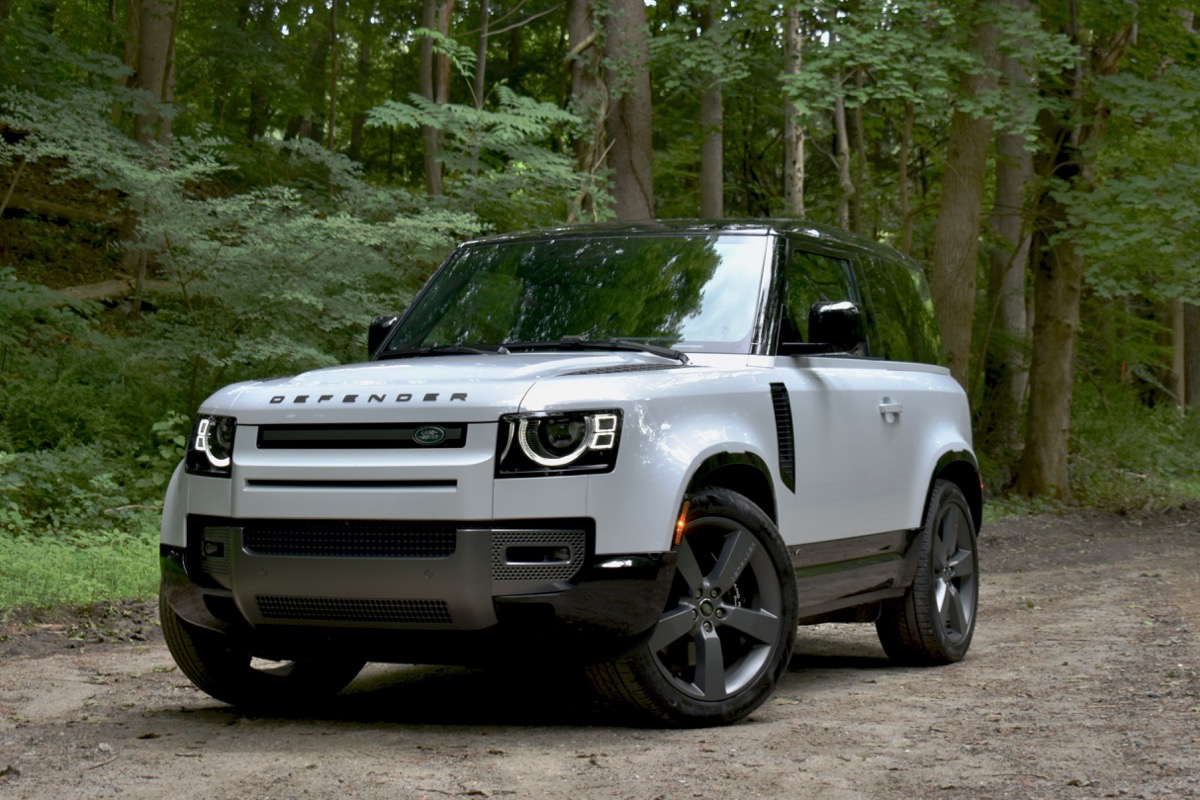
The Defender combines the capability and style of a traditional off-roader with modern tech and road manners.
Over seven decades in the car business, Land Rover has shifted from making utilitarian vehicles prized by farmers, explorers, and soldiers to making luxury vehicles prized by wealthy suburbanites. The 2022 Land Rover Defender aims to bridge the gap between Land Rover’s past and present.
As other Land Rover models got more luxurious, the original Defender carried on as a rugged, basic off-roader. While Land Rover stopped selling the old school Defender in North America during the 1990s, it remained in production for other markets until 2016. By that time, Land Rover was already planning a clean-sheet redesign that brought the Defender back to North America for the 2020 model year.
The new Land Rover Defender contrasts the automaker’s other models, like the Discovery and Range Rover, with an emphasis on ruggedness. It’s still bigger and cushier than the original Defender, but less fancy than its sibling models. And like the original Defender, the new model is available in two-door 90 and four-door 110 body styles. A three-row, eight-seat Land Rover Defender 130 body style is also on the way for the 2023 model year.
Meanwhile, changes for the 2022 model year include a new optional 11.4-inch touchscreen, standard wireless phone charging, and an expansion of trim levels. The Defender 90 gets a new X-Dynamic SE trim, and a new V8 powertrain option debuts for both the 90 and Defender 110. Shared with other Jaguar Land Rover products, the supercharged 5.0-litre V8 provides a serious boost in performance. We sampled it in a Defender 90 for this review.

The Defender doesn’t get any major exterior styling changes for 2022, but it remains distinctive. The boxy profile, tailgate-mounted spare wheel, and flat hood visually tie the 2022 Defender to the original version, and the classic Series Land Rovers that preceded it. You can even spec a white contrasting roof and steel wheels to up the retro factor.
Those callbacks aside, though, this is a thoroughly modern design. Rounded corners acknowledge the importance of aerodynamics in modern car design, while recessed LED headlights give the Defender a distinct personality. The modern Defender is also much larger than the original version, which pays dividends in interior space and ergonomics.
The original Defender is romanticized for its simplicity, but it was also fairly cramped, with an upright driving position more akin to a tractor than an SUV. The modern Defender is more generous with headroom and legroom, and has a more comfortable driving position that still allows good outward visibility.
The interior design also plays up the Defender’s rugged character without seeming cheesy. While most luxury automakers cover every surface in leather, wood, and plastic, Land Rover wasn’t afraid to leave some bare metal and exposed screws in the door for a different kind of look, along with nice metal trim for the steering wheel. Even our high-end Defender 90 V8 test car had a mix of leather upholstery and suede, which looked like it would handle mud and dirt better than the traditional all-leather approach. One might think twice about taking a Range Rover off-road and ruining the interior, but that’s not a concern here.

The aforementioned V8 joins two carryover powertrains for 2022. Base models get a 2.0-litre turbocharged four-cylinder engine producing 296 horsepower and 295 pound-feet of torque. The mid-level option is a 3.0-litre turbocharged inline-six mild-hybrid powertrain rated at 395 hp and 406 lb-ft. All Defender models use a ZF eight-speed automatic transmission, with standard four-wheel drive (4WD) with a two-speed transfer case.
The four-cylinder and six-cylinder powertrains provide adequate power, but if you want something more than adequate, go for the new-for-2022 V8 engine. Producing 518 hp and 461 lb-ft of torque, it can get the Defender 90 from zero to 100 km/h in 5.2 seconds, and up to a top speed of 240 km/h (expect 110 models to be slightly slower). And while the other powertrains are refined and unintrusive, the V8 is a riot. Bury your right foot and the Defender will rear up as it accelerates, accompanied by a glorious bellow from its quad exhaust tips.
V8 models also get an electronic active rear differential, Dynamic drive mode, and unique transmission and suspension tuning, the latter including model-specific spring and damper rates. According to Land Rover’s press materials, this was done to provide sportier handling in line with the V8’s extra power. But overall the Defender 90 V8 felt less poised than the six-cylinder model, bringing the wrong kind of drama to cornering.
Still, for a dedicated off-roader, the Defender was impressively comfortable on the pavement. The suspension absorbed bumps as well as in Land Rover’s more luxury-oriented models and noise from the massive 22-inch tires was effectively blocked. Despite its boxy shape, the Defender also seemed less susceptible to crosswinds than a Jeep Wrangler. The Wrangler and other hardcore off-roaders compromise on-road driving dynamics to achieve their off-road ability, but that’s not the case with the Defender. We would gladly drive one everyday and everywhere.
While we didn’t get a chance to take our Defender 90 V8 test car off-road, past experience with other models showed that the Defender lives up to Land Rover’s reputation. The Defender has all of the ingredients, including a 4WD system with low range, good approach, departure, and breakover angles, and lots of ground clearance (up to 29 centimetres with the optional air suspension at its off-road height). The optional Terrain Response 2 system includes drive modes for different surfaces, while All-Terrain Progress Control acts as low-speed off-road cruise control.
An 3,500-kilogram (7,716-pound) maximum towing capacity is also more than many other similarly sized luxury SUVs offer.

All Defender models get 40/20/40 split-folding rear seats, and we found them to be surprisingly comfortable in our Defender 90 test vehicle. However, as with all two-door vehicles, accessing them was a bit of a chore, and they don’t leave much room for cargo space. The fact that the rear seats are usable at all is impressive, though, and you can always fold them down for more cargo space. It’s not a bad tradeoff for the classic styling of the Defender 90, and the greater off-road nimbleness afforded by its shorter wheelbase.
You can also opt for the four-door Defender 110 model, which is offered in two-row, five-seat, and three-row, seven-seat, configurations. Three-row models have 160 litres of cargo space with all seats in place, 743 litres with the third-row seat folded, and 1,826 litres with the second row folded. Two-row versions have a listed 786 litres with the rear seats up, and 1,875 litres with the rear seats folded. That’s more cargo space than you get in a Jeep Wrangler Unlimited, for example, although the two vehicles are fairly close on passenger space.
Land Rover’s interior design also emphasizes functionality. The shifter and climate-control knobs are placed on a shelf extending from the dashboard, leaving room for a large caged storage space below. That also makes the controls easy to reach from the driver’s seat. The centre-console storage bin is one of the biggest we’ve seen outside a full-size pickup truck, and it can be equipped with refrigeration. You can also ditch it entirely and add a jump seat between the front seats.
Thanks to grainy footage of old Land Rovers traversing the wilderness with gear strapped to their hoods and roofs, we’re conditioned to think Defenders should carry cargo on the outside as well as the inside. Land Rover indulges that with an optional basket-style roof rack and cargo boxes that mount to the side pillars. We’d be afraid of forgetting whatever items are left in those boxes, though.

The standard Pivi Pro infotainment system includes a 10-inch central touchscreen and wireless Apple CarPlay/Android Auto connectivity. A 12.3-inch digital instrument cluster is also standard on every trim level except the base model. As mentioned above, an 11.4-inch touchscreen is newly available for the 2022 model year.
The difference between the two central touchscreens isn’t dramatic, as the base screen isn’t exactly small. Land Rover’s user experience designers also did a good job on the graphics and menu layouts. We generally found it easy to find things, and the palette of muted, cool colors gives the interface a distinctive look. However, in our experience the screen required more than a mere touch to work. Only a strong poke would get it to respond.
A surround-view camera system that really comes in handy when off-roading is standard, and optional features include a 14-speaker Meridian audio system and head-up display. Side camera views can help supplement the mirrors and show how close you are to obstacles, while the front view is great for spotting rocks or tree stumps that might be on your chosen driving line.

Standard driver-assist tech includes lane-keep assist, automatic emergency braking, traffic-sign recognition (with speed-limit adapter), and blind-spot monitoring. Adaptive cruise control is optional.
While some SUVs from non-luxury brands offer more features as standard equipment, Land Rover is not the only luxury brand to be stingy with standard driver-assist tech. You won’t find standard adaptive cruise control on most BMW or Mercedes-Benz SUVs either, for example.
The Insurance Institute for Highway Safety (IIHS) and National Highway Traffic Safety Administration (NHTSA) haven’t published safety ratings for the Defender. That’s not unusual for vehicles from luxury brands.

The base four-cylinder Defender 90 gets Natural Resources Canada-rated fuel consumption of 12.3 litres per 100 kilometres combined (13.2 city, 11.3 highway); the 110 version is rated at 13.0 L/100 km combined (14.2 city, 11.7 hwy). With the six-cylinder mild hybrid powertrain, the Defender is rated at 12.3 L/100 km combined (13.5 city, 10.8 highway) in both 90 and 110 guises. So, while the mild hybrid cancels out the fuel economy penalty of a larger engine, it’s not a true step up in efficiency.
V8 fuel economy reminds us why automakers have largely moved on from these powerful yet thirsty engines. The Defender 90 V8 is rated at 14.3 L/100 km combined (15.8 city, 12.4 highway). The 110 V8 burns 14.7 L/100 km combined (16.4 city, 12.7 hwy). We averaged 13.5 L/100 km in our Defender 90 V8 test car, according to the trip computer estimate.
Like other Land Rover models, the Defender gets a four-year, 80,000-kilometre, new car limited warranty. Land Rover also includes a four-year, 80,000-kilometre, roadside assistance plan and six years of corrosion coverage with unlimited kilometres.
With so many combinations of body style, powertrain, and trim level to choose from, Defender pricing can vary greatly. The base price of $64,100 buys a Defender 90 with a turbo-four engine (prices do not include a $2,445 destination charge). But our Defender 90 V8 test car has a Canadian MSRP of $125,300 before fees, options, and accessories.
It’s worth noting that Defender V8 models get nearly every optional feature from the lower trim levels, including an upgraded Meridian sound system, 22-inch wheels, and the full array of driver-assist features. In fact, the only options on our test car were the larger infotainment touchscreen, an interior protection and storage package, and Yulong White paint.
Given Land Rover’s status as a luxury brand, some of those options—particularly the driver-assist features—should really be standard across the board. But the Defender still offers a lot of capability for the money. Skip the V8 and you still have a hardcore off-roader with the road manners of a luxury car.
A loaded Jeep Wrangler Rubicon, Ford Bronco Wildtrak, or Toyota 4Runner TRD Pro will come close to the Defender’s base price, but none are as nice to drive on the road or as functional in everyday use. And most other luxury SUVs from the likes of Audi, BMW, or Mercedes can’t match the Defender’s off-road capability. That combination of ruggedness and refinement makes the Defender a compelling choice.
Note: Images show a US model.

User reviews for 2022 Land Rover Defender
Write a review2022 Land Rover Defender Pricing
Trims & specs
Air Conditioning
Automatic climate control front air conditioning · Dual front air conditioning zones
Airbags
Dual front airbags · Passenger airbag deactivation: occupant sensing deactivation · Front side airbags · Front side curtain airbags
Audio System
Antenna Type: diversity · Voice recognition audio system · Bluetooth auxiliary audio input · Internet radio app: Spotify · HD radio · Satellite Radio: SiriusXM · Total Number of Speakers: 6 · 180 watts
Brakes
ABS: 4-wheel · Braking assist: hill start assist · Electronic parking brake: auto off · Front brake diameter: 14.29 · Front brakes: ventilated disc · Rear brake diameter: 13.8 · Rear brakes: ventilated disc
Comfort Features
Door sill trim: scuff plate · Floor Material: rubber · Shift knob trim: alloy · Steering wheel trim: leather
Convenience Features
Assist handle: front · Cargo area power outlet: 12V · Cargo cover: retractable · Center console: front console with armrest and storage · Cupholders: front · Dimming rearview mirror: auto-dimming · Easy entry: manual driver seat · Multi-function remote: proximity entry system · One-touch windows: 2 · Power outlet(s): 12V front · Power steering: electric · Power windows: lockout button · Reading lights: rear · Rear power outlet: 12V · Steering wheel: tilt and telescopic · Steering wheel mounted controls: voice recognition controls · Storage: cargo tie-down anchors and hooks · Universal garage door opener: Homelink · Vanity mirrors: dual illuminating
Driver Seat
Power adjustments: 8
Drivetrain
4WD Type: full time · Axle ratio: 3.60 · Locking differential: center · Transfer Case: electronic hi-lo gear selection
Engine
Battery: maintenance-free
Exterior Features
Door handle color: body-color · Exhaust tip color: stainless-steel · Front bumper color: black · Grille color: black · Mirror color: black · Rear bumper color: black · Rear trunk/liftgate: side-hinged · Rocker panel color: black · Window trim: black
Headrests
Front headrests: adjustable · Number of front headrests: 2 · Number of rear headrests: 3
In Car Entertainment
Connected in-car apps: app marketplace integration · Infotainment: PIVI Pro · Infotainment screen size: 10 in.
Instrumentation
Fuel economy display: MPG · Instrument cluster screen size: 7 in. · Warnings and reminders: lamp failure
Lights
Daytime running lights: LED · Exterior entry lights: security approach lamps · Headlights: LED · Tail and brake lights: LED
Mirrors
Exterior mirrors: power folding
Passenger Seat
Power adjustments: 8
Rear Seats
Type: 40-20-40 split bench
Roof
Roof rails: black
Safety
Automatic emergency braking: front · Camera system: surround view · Child seat anchors: LATCH system · Cross Traffic Alert: rear · Crumple zones: rear · Impact sensor: post-collision safety system · Parking sensors: rear · Pre-Collision Warning System: visual warning · Pre-collision warning system: pedestrian detection · Rearview monitor: in dash · Traffic sign recognition: adaptive speed limiting
Seatbelts
Emergency locking retractors: front and rear · Front seatbelts: 3-point · Seatbelt force limiters: front · Seatbelt pretensioners: front and rear · Seatbelt warning sensor: driver and passenger · Second row seatbelts: 3-point
Seats
Driver seat power adjustments: reclining · Front seat type: bucket · Passenger seat power adjustments: reclining · Rear headrests: adjustable · Rear seat folding: split · Upholstery: cloth
Security
Power door locks: anti-lockout
Spare Tire
Mount Location: outside · Size: full-size
Spare Wheel
Rim Type: steel
Stability and Traction
Traction control: with trailer stability control
Suspension
Front Arm Type: short and long arm (SLA) · Front Spring Type: coil springs · Front Suspension Classification: independent · Front Suspension Type: strut · Front shock type: monotube · Rear Spring Type: coil springs · Rear Suspension Classification: independent · Rear Suspension Type: multi-link · Rear shock type: monotube · Stabilizer bar(s): front
Telematics
Driver assistance app: roadside assistance · Electronic messaging assistance: with voice recognition · Navigation system: with voice recognition · Phone: voice activated · Phone wireless data link: Bluetooth · Smart device app compatibility: InControl · Smart device app function: horn/light operation
Tires
Type: all season
Tires and Rims
Wheels: painted steel
Towing and Hauling
Tow hooks: front
Wheels
Wheel spokes: 5
Windows
Front wipers: rain sensing · Liftgate window: fixed · Power windows: with safety reverse · Rear wiper: variable intermittent
Air Conditioning
Automatic climate control front air conditioning · Dual front air conditioning zones
Airbags
Dual front airbags · Passenger airbag deactivation: occupant sensing deactivation · Front side airbags · Rear side curtain airbags
Audio System
Antenna Type: mast · Voice recognition audio system · USB auxiliary audio input · Internet radio app: Spotify · HD radio · Satellite Radio: SiriusXM · Total Number of Speakers: 6 · 180 watts
Brakes
ABS: 4-wheel · Braking assist: hill start assist · Electronic parking brake: auto off · Front brake diameter: 13.7 · Front brakes: ventilated disc · Rear brake diameter: 12.8 · Rear brakes: ventilated disc
Comfort Features
Door sill trim: scuff plate · Floor Material: rubber · Shift knob trim: alloy · Steering wheel trim: leather
Convenience Features
Assist handle: front · Cargo area power outlet: 12V · Cargo cover: retractable · Center console: front console with armrest and storage · Cupholders: front · Dimming rearview mirror: auto-dimming · Multi-function remote: keyless entry with panic alarm · One-touch windows: 4 · Power outlet(s): USB front · Power steering: speed-proportional · Power windows: lockout button · Reading lights: front · Rear power outlet: 12V · Steering wheel: tilt and telescopic · Steering wheel mounted controls: voice recognition controls · Storage: cargo tie-down anchors and hooks · Universal garage door opener: Homelink · Vanity mirrors: dual illuminating
Driver Seat
Power adjustments: 8
Drivetrain
4WD Type: full time · Axle ratio: 4.10 · Locking differential: center · Transfer Case: electronic hi-lo gear selection
Engine
Battery: maintenance-free
Exterior Features
Door handle color: body-color · Exhaust tip color: stainless-steel · Front bumper color: black · Grille color: black · Mirror color: black · Rear bumper color: black · Rear trunk/liftgate: side-hinged · Rocker panel color: black · Window trim: black
Headrests
Front headrests: adjustable · Number of front headrests: 2 · Number of rear headrests: 3
In Car Entertainment
Connected in-car apps: Google search · Infotainment: PIVI Pro · Infotainment screen size: 10 in.
Instrumentation
Fuel economy display: range · Instrument cluster screen size: 7 in. · Warnings and reminders: maintenance reminder
Lights
Daytime running lights: LED · Exterior entry lights: security approach lamps · Headlights: wiper activated · Tail and brake lights: LED
Mirrors
Exterior mirrors: integrated turn signals
Passenger Seat
Power adjustments: 8
Rear Seats
Type: 40-20-40 split bench
Roof
Roof rails: black
Safety
Automatic emergency braking: front pedestrian · Camera system: surround view · Child seat anchors: LATCH system · Crumple zones: front · Impact sensor: fuel cut-off · Parking sensors: front · Pre-Collision Warning System: audible warning · Pre-collision warning system: pedestrian detection · Rearview monitor: in dash · Traffic sign recognition: adaptive speed limiting
Seatbelts
Emergency locking retractors: front · Front seatbelts: 3-point · Seatbelt force limiters: front · Seatbelt pretensioners: front and rear · Seatbelt warning sensor: driver and passenger · Second row seatbelts: 3-point
Seats
Driver seat power adjustments: height · Front seat type: bucket · Passenger seat power adjustments: height · Rear headrests: adjustable · Rear seat folding: split · Upholstery: cloth
Security
Power door locks: anti-lockout
Spare Tire
Mount Location: outside · Size: full-size
Spare Wheel
Rim Type: steel
Stability and Traction
Traction control: with trailer stability control
Suspension
Front Arm Type: short and long arm (SLA) · Front Spring Type: coil springs · Front Suspension Classification: independent · Front Suspension Type: strut · Front shock type: monotube · Rear Spring Type: coil springs · Rear Suspension Classification: independent · Rear Suspension Type: multi-link · Rear shock type: monotube · Stabilizer bar(s): rear
Telematics
Driver assistance app: roadside assistance · Electronic messaging assistance: with voice recognition · Navigation system: with voice recognition · Phone: voice activated · Phone wireless data link: Bluetooth · Smart device app compatibility: InControl · Smart device app function: vehicle location
Tires
Type: all season
Tires and Rims
Wheels: painted steel
Towing and Hauling
Tow hooks: front
Wheels
Wheel spokes: 8
Windows
Front wipers: rain sensing · Liftgate window: fixed · Power windows: with safety reverse · Rear wiper: variable intermittent
Air Conditioning
Automatic climate control front air conditioning · Dual front air conditioning zones
Airbags
Dual front airbags · Passenger airbag deactivation: occupant sensing deactivation · Front side airbags · Front side curtain airbags
Audio System
Antenna Type: diversity · Voice recognition audio system · Bluetooth auxiliary audio input · Internet radio app: Spotify · Premium Brand: Meridian · AM/FM radio · Satellite Radio: SiriusXM · 1 subwoofer · Total Number of Speakers: 10 · 400 watts
Brakes
ABS: 4-wheel · Braking assist: hill start assist · Electronic parking brake: auto off · Front brake diameter: 14.29 · Front brakes: ventilated disc · Rear brake diameter: 13.8 · Rear brakes: ventilated disc
Comfort Features
Armrests: rear center with cupholders · Door sill trim: scuff plate · Floor Material: rubber · Shift knob trim: alloy · Steering wheel trim: leather
Convenience Features
Assist handle: rear · Cargo area power outlet: 12V · Cargo cover: retractable · Center console: front console with armrest and storage · Cupholders: rear · Dimming rearview mirror: auto-dimming · Easy entry: manual driver seat · Multi-function remote: proximity entry system · One-touch windows: 2 · Power outlet(s): USB rear · Power steering: electric · Power windows: lockout button · Reading lights: front · Rear power outlet: 12V · Steering wheel: tilt and telescopic · Steering wheel mounted controls: multi-function screen controls · Storage: cargo tie-down anchors and hooks · Universal garage door opener: Homelink · Vanity mirrors: dual illuminating
Driver Seat
Adjustable lumbar support: power · Power adjustments: 12
Drivetrain
4WD Type: full time · Axle ratio: 3.60 · Locking differential: center · Transfer Case: electronic hi-lo gear selection
Engine
Battery: maintenance-free
Exterior Features
Door handle color: body-color · Exhaust tip color: stainless-steel · Front bumper color: black · Grille color: black · Mirror color: black · Rear bumper color: black · Rear trunk/liftgate: side-hinged · Rocker panel color: black · Window trim: black
Headrests
Front headrests: adjustable · Number of front headrests: 2 · Number of rear headrests: 3
In Car Entertainment
Connected in-car apps: app marketplace integration · Infotainment: PIVI Pro · Infotainment screen size: 10 in.
Instrumentation
Fuel economy display: range · Instrument cluster screen size: 12.3 in. · Warnings and reminders: maintenance reminder
Lights
Daytime running lights: LED · Exterior entry lights: puddle lamps · Headlights: auto delay off · Tail and brake lights: LED
Mirrors
Exterior mirrors: reverse gear tilt
Passenger Seat
Adjustable lumbar support: power · Power adjustments: 12
Rear Seats
Type: 40-20-40 split bench
Roof
Roof rails: black
Safety
Automatic emergency braking: front pedestrian · Camera system: surround view · Child seat anchors: LATCH system · Cross Traffic Alert: rear · Crumple zones: front · Impact sensor: fuel cut-off · Parking sensors: front · Pre-Collision Warning System: audible warning · Pre-collision warning system: pedestrian detection · Rearview monitor: in dash · Traffic sign recognition: adaptive speed limiting
Seatbelts
Emergency locking retractors: front and rear · Front seatbelts: 3-point · Seatbelt force limiters: front and rear · Seatbelt pretensioners: front and rear · Seatbelt warning sensor: driver and passenger · Second row seatbelts: 3-point
Seats
Driver seat power adjustments: height · Front seat type: bucket · Passenger seat power adjustments: height · Rear headrests: adjustable · Rear seat folding: split · Upholstery: leather · Upholstery accents: cloth
Security
Power door locks: anti-lockout
Spare Tire
Mount Location: outside · Size: full-size
Spare Wheel
Rim type: aluminum alloy
Stability and Traction
Traction control: with trailer stability control
Suspension
Front Arm Type: short and long arm (SLA) · Front Spring Type: coil springs · Front Suspension Classification: independent · Front Suspension Type: strut · Front shock type: monotube · Rear Spring Type: coil springs · Rear Suspension Classification: independent · Rear Suspension Type: multi-link · Rear shock type: monotube · Stabilizer bar(s): front
Telematics
Driver assistance app: roadside assistance · Electronic messaging assistance: with voice recognition · Navigation system: with voice recognition · Phone: voice activated · Phone wireless data link: Bluetooth · Smart device app compatibility: InControl · Smart device app function: engine start
Tires
Type: all season
Tires and Rims
Wheel type: aluminum alloy
Towing and Hauling
Tow hooks: front
Wheels
Wheel spokes: 6
Windows
Front wipers: rain sensing · Liftgate window: fixed · Power windows: with safety reverse · Rear wiper: variable intermittent
Air Conditioning
Automatic climate control front air conditioning · Dual front air conditioning zones
Airbags
Dual front airbags · Passenger airbag deactivation: occupant sensing deactivation · Front side airbags · Front side curtain airbags
Audio System
Antenna Type: mast · Voice recognition audio system · Bluetooth auxiliary audio input · Internet radio app: Spotify · Premium Brand: Meridian · Touch screen display radio · Satellite Radio: SiriusXM · 1 subwoofer · Total Number of Speakers: 10 · 400 watts
Brakes
ABS: 4-wheel · Braking assist: hill start assist · Electronic parking brake: auto off · Front brake diameter: 13.7 · Front brakes: ventilated disc · Rear brake diameter: 12.8 · Rear brakes: ventilated disc
Comfort Features
Armrests: rear center with cupholders · Door sill trim: scuff plate · Floor Material: rubber · Shift knob trim: alloy · Steering wheel trim: leather
Convenience Features
Assist handle: rear · Cargo area power outlet: 12V · Cargo cover: retractable · Center console: front console with armrest and storage · Cupholders: rear · Dimming rearview mirror: auto-dimming · Multi-function remote: proximity entry system · One-touch windows: 4 · Power outlet(s): USB-C front · Power steering: electric · Power windows: lockout button · Reading lights: front · Rear power outlet: 12V · Steering wheel: tilt and telescopic · Steering wheel mounted controls: phone · Storage: cargo tie-down anchors and hooks · Universal garage door opener: Homelink · Vanity mirrors: dual illuminating
Driver Seat
Adjustable lumbar support: power · Power adjustments: 12
Drivetrain
4WD Type: full time · Axle ratio: 4.10 · Locking differential: center · Transfer Case: electronic hi-lo gear selection
Engine
Battery: maintenance-free
Exterior Features
Door handle color: body-color · Exhaust tip color: stainless-steel · Front bumper color: black · Grille color: black · Mirror color: black · Rear bumper color: black · Rear trunk/liftgate: side-hinged · Rocker panel color: black · Window trim: black
Headrests
Front headrests: adjustable · Number of front headrests: 2 · Number of rear headrests: 3
In Car Entertainment
Connected in-car apps: Google POIs · Infotainment: Apply CarPlay ready · Infotainment screen size: 10 in.
Instrumentation
Fuel economy display: MPG · Instrument cluster screen size: 12.3 in. · Warnings and reminders: maintenance reminder
Lights
Daytime running lights: LED · Exterior entry lights: puddle lamps · Headlights: Auto on/off · Tail and brake lights: LED
Mirrors
Exterior mirrors: heated
Passenger Seat
Adjustable lumbar support: power · Power adjustments: 12
Rear Seats
Type: 40-20-40 split bench
Roof
Roof rails: black
Safety
Automatic emergency braking: front · Camera system: surround view · Child seat anchors: LATCH system · Crumple zones: rear · Impact sensor: fuel cut-off · Parking sensors: front · Pre-Collision Warning System: audible warning · Pre-collision warning system: pedestrian detection · Rearview monitor: in dash · Traffic sign recognition: adaptive speed limiting
Seatbelts
Emergency locking retractors: front and rear · Front seatbelts: 3-point · Seatbelt force limiters: front and rear · Seatbelt pretensioners: front · Seatbelt warning sensor: driver and passenger · Second row seatbelts: 3-point
Seats
Driver seat power adjustments: height · Front seat type: bucket · Passenger seat power adjustments: height · Rear headrests: adjustable · Rear seat folding: split · Upholstery: perforated · Upholstery accents: cloth
Security
Power door locks: anti-lockout
Spare Tire
Mount Location: outside · Size: full-size
Spare Wheel
Rim type: aluminum alloy
Stability and Traction
Traction control: with trailer stability control
Suspension
Front Arm Type: short and long arm (SLA) · Front Spring Type: coil springs · Front Suspension Classification: independent · Front Suspension Type: strut · Front shock type: monotube · Rear Spring Type: coil springs · Rear Suspension Classification: independent · Rear Suspension Type: multi-link · Rear shock type: monotube · Stabilizer bar(s): front
Telematics
Driver assistance app: roadside assistance · Electronic messaging assistance: with read function · Navigation system: with voice recognition · Phone: voice activated · Phone wireless data link: Bluetooth · Smart device app compatibility: InControl · Smart device app function: engine start
Tires
Type: all season
Tires and Rims
Wheel type: aluminum alloy
Towing and Hauling
Tow hooks: front
Wheels
Wheel spokes: 6
Windows
Front wipers: variable intermittent · Liftgate window: fixed · Power windows: with safety reverse · Rear wiper: auto-on in reverse
Air Conditioning
Automatic climate control front air conditioning · Dual front air conditioning zones
Airbags
Dual front airbags · Passenger airbag deactivation: occupant sensing deactivation · Front side airbags · Rear side curtain airbags
Audio System
Antenna Type: diversity · Voice recognition audio system · Bluetooth auxiliary audio input · Internet radio app: Spotify · Premium Brand: Meridian · AM/FM radio · Satellite Radio: SiriusXM · 1 subwoofer · Total Number of Speakers: 10 · 400 watts
Brakes
ABS: 4-wheel · Braking assist: hill start assist · Electronic parking brake: auto off · Front brake diameter: 14.29 · Front brakes: ventilated disc · Rear brake diameter: 13.8 · Rear brakes: ventilated disc
Comfort Features
Armrests: rear center with cupholders · Door sill trim: illuminated scuff plate · Floor Material: rubber · Shift knob trim: alloy · Steering wheel trim: leather
Convenience Features
Assist handle: rear · Cargo area power outlet: 12V · Cargo cover: retractable · Center console: front console with armrest and storage · Cupholders: front · Dimming rearview mirror: auto-dimming · Easy entry: manual driver and passenger seat · Multi-function remote: trunk release · One-touch windows: 2 · Power outlet(s): USB rear · Power steering: electric · Power windows: lockout button · Reading lights: rear · Rear power outlet: 12V · Steering wheel: tilt and telescopic · Steering wheel mounted controls: audio · Storage: door pockets · Universal garage door opener: Homelink · Vanity mirrors: dual illuminating
Driver Seat
Adjustable lumbar support: power · Power adjustments: 12
Drivetrain
4WD Type: full time · Axle ratio: 3.60 · Locking differential: center · Transfer Case: electronic hi-lo gear selection
Engine
Battery: maintenance-free · Electric Motor Battery Type: lithium ion · Electric Motor HP: 10 · Electric Motor Power Output (Kilowatts): 7 · Electric Motor Torque: 40 · Hybrid Gas Engine HP: 395 · Hybrid Gas Engine HP@RPM: 5000 · Hybrid Gas Engine Torque: 406 · Hybrid gas Engine Torque@RPM: 2000
Exterior Features
Door handle color: body-color · Exhaust tip color: stainless-steel · Front bumper color: black · Grille color: black · Mirror color: black · Rear bumper color: black · Rear trunk/liftgate: side-hinged · Rocker panel color: black · Skid plate(s): front and rear · Window trim: black
Headrests
Front headrests: adjustable · Number of front headrests: 2 · Number of rear headrests: 3
Hybrid
Starter Type: motor/generator
In Car Entertainment
Connected in-car apps: Google POIs · Infotainment: Android Auto ready · Infotainment screen size: 10 in.
Instrumentation
Fuel economy display: range · Instrument cluster screen size: 12.3 in. · Warnings and reminders: low fuel level
Lights
Daytime running lights: LED · Exterior entry lights: puddle lamps · Headlights: automatic high beam dimmer · Tail and brake lights: LED
Mirrors
Exterior mirrors: power
Passenger Seat
Adjustable lumbar support: power · Power adjustments: 12
Rear Seats
Type: 40-20-40 split bench
Roof
Roof rails: black
Safety
Automatic emergency braking: front pedestrian · Camera system: surround view · Child seat anchors: LATCH system · Cross Traffic Alert: rear · Crumple zones: front · Impact sensor: post-collision safety system · Parking sensors: front · Pre-Collision Warning System: audible warning · Pre-collision warning system: pedestrian detection · Rearview monitor: in dash · Traffic sign recognition: adaptive speed limiting
Seatbelts
Emergency locking retractors: front and rear · Front seatbelts: 3-point · Seatbelt force limiters: front and rear · Seatbelt pretensioners: front · Seatbelt warning sensor: driver and passenger · Second row seatbelts: 3-point
Seats
Driver seat power adjustments: reclining · Front seat type: bucket · Passenger seat power adjustments: reclining · Rear headrests: adjustable · Rear seat folding: split · Upholstery: leather · Upholstery accents: cloth
Security
Power door locks: anti-lockout
Spare Tire
Mount Location: outside · Size: full-size
Spare Wheel
Rim type: aluminum alloy
Stability and Traction
Traction control: with trailer stability control
Suspension
Front Arm Type: short and long arm (SLA) · Front Spring Type: coil springs · Front Suspension Classification: independent · Front Suspension Type: strut · Front shock type: monotube · Rear Spring Type: coil springs · Rear Suspension Classification: independent · Rear Suspension Type: multi-link · Rear shock type: monotube · Stabilizer bar(s): rear
Telematics
Driver assistance app: roadside assistance · Electronic messaging assistance: with read function · Navigation system: hard drive navigation system · Phone: voice activated · Phone wireless data link: Bluetooth · Smart device app compatibility: InControl · Smart device app function: engine start
Tires
Type: all season
Tires and Rims
Wheels: painted aluminum
Towing and Hauling
Tow hooks: front
Wheels
Wheel spokes: 6
Windows
Front wipers: speed sensitive · Liftgate window: fixed · Power windows: remote operation · Rear wiper: with washer
Air Conditioning
Automatic climate control front air conditioning · Dual front air conditioning zones
Airbags
Dual front airbags · Passenger airbag deactivation: occupant sensing deactivation · Front side airbags · Rear side curtain airbags
Audio System
Antenna Type: mast · Voice recognition audio system · USB auxiliary audio input · Internet radio app: Spotify · Premium Brand: Meridian · Touch screen display radio · Satellite Radio: SiriusXM · 1 subwoofer · Total Number of Speakers: 10 · 400 watts
Brakes
ABS: 4-wheel · Braking assist: hill start assist · Electronic parking brake: auto off · Front brake diameter: 14.29 · Front brakes: ventilated disc · Rear brake diameter: 13.8 · Rear brakes: ventilated disc
Comfort Features
Armrests: rear center with cupholders · Door sill trim: scuff plate · Floor Material: rubber · Shift knob trim: alloy · Steering wheel trim: leather
Convenience Features
Assist handle: front · Cargo area power outlet: 12V · Cargo cover: retractable · Center console: front console with armrest and storage · Cupholders: rear · Easy entry: power steering wheel · Memorized settings: driver seat · Multi-function remote: proximity entry system · One-touch windows: 4 · Power outlet(s): USB front · Power steering: electric · Power windows: lockout button · Reading lights: front · Rear power outlet: 12V · Rearview mirror: camera-based · Steering wheel: power tilt and telescopic · Steering wheel mounted controls: phone · Storage: door pockets · Universal garage door opener: Homelink · Vanity mirrors: dual illuminating
Driver Seat
Adjustable lumbar support: power · Power adjustments: 12
Drivetrain
4WD Type: full time · Axle ratio: 3.60 · Locking differential: center · Transfer Case: electronic hi-lo gear selection
Engine
Battery: maintenance-free · Electric Motor Battery Type: lithium ion · Electric Motor HP: 10 · Electric Motor Power Output (Kilowatts): 7 · Electric Motor Torque: 40 · Hybrid Gas Engine HP: 395 · Hybrid Gas Engine HP@RPM: 5000 · Hybrid Gas Engine Torque: 406 · Hybrid gas Engine Torque@RPM: 2000
Exterior Features
Door handle color: body-color · Exhaust tip color: stainless-steel · Front bumper color: black · Grille color: black · Mirror color: black · Rear bumper color: black · Rear trunk/liftgate: side-hinged · Rocker panel color: black · Window trim: black
Headrests
Front headrests: adjustable · Number of front headrests: 2 · Number of rear headrests: 3
Hybrid
Starter Type: motor/generator
In Car Entertainment
Connected in-car apps: Google POIs · Infotainment: Apply CarPlay ready · Infotainment screen size: 10 in.
Instrumentation
Fuel economy display: MPG · Instrument cluster screen size: 12.3 in. · Warnings and reminders: low fuel level
Lights
Daytime running lights: LED · Exterior entry lights: puddle lamps · Headlights: self-leveling · Tail and brake lights: LED
Mirrors
Exterior mirrors: integrated turn signals
Passenger Seat
Adjustable lumbar support: power · Power adjustments: 12
Rear Seats
Type: 40-20-40 split bench
Roof
Roof rails: black
Safety
Automatic emergency braking: front pedestrian · Camera system: surround view · Child seat anchors: LATCH system · Cross Traffic Alert: rear · Crumple zones: rear · Impact sensor: post-collision safety system · Parking sensors: rear · Pre-Collision Warning System: visual warning · Pre-collision warning system: pedestrian detection · Rearview monitor: in dash · Traffic sign recognition: adaptive speed limiting
Seatbelts
Emergency locking retractors: front · Front seatbelts: 3-point · Seatbelt force limiters: front and rear · Seatbelt pretensioners: front · Seatbelt warning sensor: driver and passenger · Second row seatbelts: 3-point
Seats
Driver seat power adjustments: reclining · Front seat type: bucket · Passenger seat power adjustments: reclining · Rear headrests: adjustable · Rear seat folding: split · Upholstery: leather · Upholstery accents: cloth
Security
Power door locks: anti-lockout
Spare Tire
Mount Location: outside · Size: full-size
Spare Wheel
Rim type: aluminum alloy
Stability and Traction
Traction control: with trailer stability control
Suspension
Front Arm Type: short and long arm (SLA) · Front Spring Type: coil springs · Front Suspension Classification: independent · Front Suspension Type: strut · Front shock type: monotube · Rear Spring Type: coil springs · Rear Suspension Classification: independent · Rear Suspension Type: multi-link · Rear shock type: monotube · Stabilizer bar(s): rear
Telematics
Driver assistance app: roadside assistance · Electronic messaging assistance: with voice recognition · Navigation system: with voice recognition · Phone: voice activated · Phone wireless data link: Bluetooth · Smart device app compatibility: InControl · Smart device app function: vehicle location
Tires
Type: all season
Tires and Rims
Wheel type: aluminum alloy
Towing and Hauling
Tow hooks: rear
Wheels
Wheel spokes: 6
Windows
Front wipers: speed sensitive · Liftgate window: fixed · Power windows: remote operation · Rear wiper: with washer
Air Conditioning
Automatic climate control front air conditioning · Dual front air conditioning zones
Airbags
Dual front airbags · Passenger airbag deactivation: occupant sensing deactivation · Front side airbags · Front side curtain airbags
Audio System
Antenna Type: diversity · Voice recognition audio system · Bluetooth auxiliary audio input · Internet radio app: Spotify · Premium Brand: Meridian · HD radio · Satellite Radio: SiriusXM · 1 subwoofer · Total Number of Speakers: 14 · 700 watts
Brakes
ABS: 4-wheel · Braking assist: hill start assist · Electronic parking brake: auto off · Front brake diameter: 14.29 · Front brakes: ventilated disc · Rear brake diameter: 13.8 · Rear brakes: ventilated disc
Comfort Features
Armrests: rear center with cupholders · Door sill trim: illuminated scuff plate · Floor Material: rubber · Shift knob trim: alloy · Steering wheel trim: leather
Convenience Features
Assist handle: rear · Cargo area power outlet: 12V · Cargo cover: retractable · Center console: front console with armrest and storage · Cupholders: front · Dimming rearview mirror: auto-dimming · Easy entry: manual driver and passenger seat · Memorized settings: side mirrors · Multi-function remote: keyless entry with panic alarm · One-touch windows: 2 · Power outlet(s): 12V front · Power steering: electric · Power windows: lockout button · Reading lights: rear · Rear power outlet: 12V · Steering wheel: power tilt and telescopic · Steering wheel mounted controls: cruise controls · Storage: front seatback · Universal garage door opener: Homelink · Vanity mirrors: dual illuminating
Driver Seat
Adjustable lumbar support: power · Power adjustments: 12
Drivetrain
4WD Type: full time · Axle ratio: 3.60 · Locking differential: center · Transfer Case: electronic hi-lo gear selection
Engine
Battery: maintenance-free · Electric Motor Battery Type: lithium ion · Electric Motor HP: 10 · Electric Motor Power Output (Kilowatts): 7 · Electric Motor Torque: 40 · Hybrid Gas Engine HP: 395 · Hybrid Gas Engine HP@RPM: 5000 · Hybrid Gas Engine Torque: 406 · Hybrid gas Engine Torque@RPM: 2000
Exterior Features
Door handle color: body-color · Exhaust tip color: stainless-steel · Front bumper color: black · Grille color: black · Mirror color: black · Rear bumper color: black · Rear trunk/liftgate: side-hinged · Rocker panel color: black · Skid plate(s): front and rear · Window trim: black
Headrests
Front headrests: adjustable · Number of front headrests: 2 · Number of rear headrests: 3
Hybrid
Starter Type: motor/generator
In Car Entertainment
Connected in-car apps: app marketplace integration · Infotainment: PIVI Pro · Infotainment screen size: 10 in.
Instrumentation
Fuel economy display: range · Instrument cluster screen size: 12.3 in. · Warnings and reminders: lamp failure
Lights
Daytime running lights: LED · Exterior entry lights: security approach lamps · Headlights: automatic high beam dimmer · Tail and brake lights: LED
Mirrors
Exterior mirrors: power
Passenger Seat
Adjustable lumbar support: power · Power adjustments: 12
Rear Seats
Type: 40-20-40 split bench
Roof
Roof rails: black
Safety
Automatic emergency braking: front · Camera system: surround view · Child seat anchors: LATCH system · Cross Traffic Alert: rear · Crumple zones: front · Impact sensor: door unlock · Parking sensors: front · Pre-Collision Warning System: audible warning · Pre-collision warning system: pedestrian detection · Rearview monitor: in dash · Traffic sign recognition: adaptive speed limiting
Seatbelts
Emergency locking retractors: front · Front seatbelts: 3-point · Seatbelt force limiters: front and rear · Seatbelt pretensioners: front and rear · Seatbelt warning sensor: driver and passenger · Second row seatbelts: 3-point
Seats
Driver seat power adjustments: height · Front seat type: bucket · Passenger seat power adjustments: height · Rear headrests: adjustable · Rear seat folding: split · Upholstery: premium leather · Upholstery accents: cloth
Security
Power door locks: anti-lockout
Spare Tire
Mount Location: outside · Size: full-size
Spare Wheel
Rim type: aluminum alloy
Stability and Traction
Traction control: with trailer stability control
Suspension
Front Arm Type: short and long arm (SLA) · Front Spring Type: coil springs · Front Suspension Classification: independent · Front Suspension Type: strut · Front shock type: monotube · Rear Spring Type: coil springs · Rear Suspension Classification: independent · Rear Suspension Type: multi-link · Rear shock type: monotube · Stabilizer bar(s): rear
Telematics
Driver assistance app: roadside assistance · Electronic messaging assistance: with voice recognition · Navigation system: touch screen display · Phone: voice activated · Phone wireless data link: Bluetooth · Smart device app compatibility: InControl · Smart device app function: engine start
Tires
Type: all season
Tires and Rims
Wheels: painted aluminum
Towing and Hauling
Tow hooks: front
Wheels
Wheel spokes: 5
Windows
Front wipers: speed sensitive · Liftgate window: fixed · Power windows: with safety reverse · Rear wiper: variable intermittent
Air Conditioning
Automatic climate control front air conditioning · Dual front air conditioning zones
Airbags
Dual front airbags · Passenger airbag deactivation: occupant sensing deactivation · Front side airbags · Rear side curtain airbags
Audio System
Antenna Type: diversity · Voice recognition audio system · USB auxiliary audio input · Internet radio app: Spotify · Premium Brand: Meridian · HD radio · Satellite Radio: SiriusXM · 1 subwoofer · Total Number of Speakers: 10 · 400 watts
Brakes
ABS: 4-wheel · Braking assist: hill start assist · Electronic parking brake: auto off · Front brake diameter: 14.29 · Front brakes: ventilated disc · Rear brake diameter: 13.8 · Rear brakes: ventilated disc
Comfort Features
Armrests: rear center with cupholders · Door sill trim: illuminated scuff plate · Floor Material: rubber · Shift knob trim: alloy · Steering wheel trim: leather
Convenience Features
Assist handle: front · Cargo area power outlet: 12V · Cargo cover: retractable · Center console: front console with armrest and storage · Cupholders: front · Easy entry: power steering wheel · Memorized settings: driver seat · Multi-function remote: trunk release · One-touch windows: 4 · Power outlet(s): 12V front · Power steering: electric · Power windows: lockout button · Reading lights: rear · Rear power outlet: 12V · Rearview mirror: camera-based · Steering wheel: power tilt and telescopic · Steering wheel mounted controls: voice recognition controls · Storage: door pockets · Universal garage door opener: Homelink · Vanity mirrors: dual illuminating
Driver Seat
Adjustable lumbar support: power · Power adjustments: 12
Drivetrain
4WD Type: full time · Axle ratio: 3.60 · Locking differential: center · Transfer Case: electronic hi-lo gear selection
Engine
Battery: maintenance-free · Electric Motor Battery Type: lithium ion · Electric Motor HP: 10 · Electric Motor Power Output (Kilowatts): 7 · Electric Motor Torque: 40 · Hybrid Gas Engine HP: 395 · Hybrid Gas Engine HP@RPM: 5000 · Hybrid Gas Engine Torque: 406 · Hybrid gas Engine Torque@RPM: 2000
Exterior Features
Door handle color: body-color · Exhaust tip color: stainless-steel · Front bumper color: black · Grille color: black · Mirror color: black · Rear bumper color: black · Rear trunk/liftgate: side-hinged · Rocker panel color: black · Skid plate(s): front and rear · Window trim: black
Headrests
Front headrests: adjustable · Number of front headrests: 2 · Number of rear headrests: 3
Hybrid
Starter Type: motor/generator
In Car Entertainment
Connected in-car apps: Google search · Infotainment: Android Auto ready · Infotainment screen size: 10 in.
Instrumentation
Fuel economy display: range · Instrument cluster screen size: 12.3 in. · Warnings and reminders: maintenance reminder
Lights
Daytime running lights: LED · Exterior entry lights: puddle lamps · Headlights: auto delay off · Tail and brake lights: LED
Mirrors
Exterior mirrors: power
Passenger Seat
Adjustable lumbar support: power · Power adjustments: 12
Rear Seats
Type: 40-20-40 split bench
Roof
Roof rails: black
Safety
Automatic emergency braking: front · Camera system: surround view · Child seat anchors: LATCH system · Cross Traffic Alert: rear · Crumple zones: rear · Impact sensor: fuel cut-off · Parking sensors: rear · Pre-Collision Warning System: audible warning · Pre-collision warning system: pedestrian detection · Rearview monitor: in dash · Traffic sign recognition: adaptive speed limiting
Seatbelts
Emergency locking retractors: front · Front seatbelts: 3-point · Seatbelt force limiters: front · Seatbelt pretensioners: front · Seatbelt warning sensor: driver and passenger · Second row seatbelts: 3-point
Seats
Driver seat power adjustments: reclining · Front seat type: bucket · Passenger seat power adjustments: reclining · Rear headrests: adjustable · Rear seat folding: split · Upholstery: leather · Upholstery accents: cloth
Security
Power door locks: anti-lockout
Spare Tire
Mount Location: outside · Size: full-size
Spare Wheel
Rim type: aluminum alloy
Stability and Traction
Traction control: with trailer stability control
Suspension
Front Arm Type: short and long arm (SLA) · Front Spring Type: coil springs · Front Suspension Classification: independent · Front Suspension Type: strut · Front shock type: monotube · Rear Spring Type: coil springs · Rear Suspension Classification: independent · Rear Suspension Type: multi-link · Rear shock type: monotube · Stabilizer bar(s): front
Telematics
Driver assistance app: roadside assistance · Electronic messaging assistance: with voice recognition · Navigation system: touch screen display · Phone: voice activated · Phone wireless data link: Bluetooth · Smart device app compatibility: InControl · Smart device app function: engine start
Tires
Type: all season
Tires and Rims
Wheels: painted aluminum
Towing and Hauling
Tow hooks: rear
Wheels
Wheel spokes: 5
Windows
Front wipers: rain sensing · Liftgate window: fixed · Power windows: remote operation · Rear wiper: with washer
Air Conditioning
Automatic climate control front air conditioning · Dual front air conditioning zones
Airbags
Dual front airbags · Passenger airbag deactivation: occupant sensing deactivation · Front side airbags · Rear side curtain airbags
Audio System
Antenna Type: mast · Voice recognition audio system · Bluetooth auxiliary audio input · Internet radio app: Spotify · Premium Brand: Meridian · AM/FM radio · Satellite Radio: SiriusXM · 1 subwoofer · Total Number of Speakers: 14 · 700 watts
Brakes
ABS: 4-wheel · Braking assist: hill start assist · Electronic parking brake: auto off · Front brake diameter: 14.29 · Front brakes: ventilated disc · Rear brake diameter: 13.8 · Rear brakes: ventilated disc
Comfort Features
Armrests: rear center with cupholders · Dash trim: leather · Door sill trim: illuminated scuff plate · Floor Material: rubber · Shift knob trim: alloy · Steering wheel trim: leather
Convenience Features
Adaptive stop and go cruise control: semi-automatic · Assist handle: front · Cargo area power outlet: 12V · Cargo cover: retractable · Center console: front console with armrest and storage · Cruise control: adaptive · Cupholders: rear · Easy entry: manual driver seat · Memorized settings: 3 driver · Multi-function remote: proximity entry system · One-touch windows: 2 · Power outlet(s): USB-C front · Power steering: speed-proportional · Power windows: lockout button · Reading lights: front · Rear power outlet: 12V · Rearview mirror: camera-based · Steering wheel: power tilt and telescopic · Steering wheel mounted controls: multi-function screen controls · Storage: tablet holder · Universal garage door opener: Homelink · Vanity mirrors: dual illuminating
Driver Seat
Adjustable lumbar support: power · Power adjustments: 14
Drivetrain
4WD Type: full time · Axle ratio: 3.60 · Locking differential: center · Transfer Case: electronic hi-lo gear selection
Engine
Battery: maintenance-free · Electric Motor Battery Type: lithium ion · Electric Motor HP: 10 · Electric Motor Power Output (Kilowatts): 7 · Electric Motor Torque: 40 · Hybrid Gas Engine HP: 395 · Hybrid Gas Engine HP@RPM: 5000 · Hybrid Gas Engine Torque: 406 · Hybrid gas Engine Torque@RPM: 2000
Exterior Features
Door handle color: body-color · Exhaust tip color: stainless-steel · Front bumper color: black · Grille color: black · Mirror color: black · Rear bumper color: black · Rear trunk/liftgate: side-hinged · Rocker panel color: black · Skid plate(s): front · Window trim: black
Headrests
Front headrests: adjustable · Number of front headrests: 2 · Number of rear headrests: 3
Hybrid
Starter Type: motor/generator
In Car Entertainment
Connected in-car apps: Google search · Infotainment: Android Auto ready · Infotainment screen size: 10 in.
Instrumentation
Fuel economy display: range · Instrument cluster screen size: 12.3 in. · Warnings and reminders: coolant temperature warning
Lights
Daytime running lights: LED · Exterior entry lights: puddle lamps · Headlights: Auto on/off · Tail and brake lights: LED
Mirrors
Exterior mirrors: reverse gear tilt
Passenger Seat
Adjustable lumbar support: power · Power adjustments: 14
Rear Seats
Type: 40-20-40 split bench
Roof
Moonroof: power panoramic · Moonroof / Sunroof: power sunshade · Roof rails: black
Safety
Automatic emergency braking: front pedestrian · Camera system: surround view · Child seat anchors: LATCH system · Cross Traffic Alert: rear · Crumple zones: rear · Impact sensor: fuel cut-off · Parking sensors: front · Pre-Collision Warning System: audible warning · Pre-collision warning system: pedestrian detection · Rearview monitor: in dash · Traffic sign recognition: adaptive speed limiting
Seatbelts
Emergency locking retractors: front · Front seatbelts: 3-point · Seatbelt force limiters: front and rear · Seatbelt pretensioners: front · Seatbelt warning sensor: driver and passenger · Second row seatbelts: 3-point
Seats
Driver seat power adjustments: height · Front seat type: bucket · Passenger seat power adjustments: height · Rear headrests: adjustable · Rear seat folding: split · Upholstery: perforated · Upholstery accents: cloth
Security
Power door locks: anti-lockout
Spare Tire
Mount Location: outside · Size: full-size
Spare Wheel
Rim type: aluminum alloy
Stability and Traction
Traction control: with trailer stability control
Suspension
Front Arm Type: short and long arm (SLA) · Front Spring Type: coil springs · Front Suspension Classification: independent · Front Suspension Type: strut · Front shock type: monotube · Rear Spring Type: coil springs · Rear Suspension Classification: independent · Rear Suspension Type: multi-link · Rear shock type: monotube · Stabilizer bar(s): front
Telematics
Driver assistance app: roadside assistance · Electronic messaging assistance: with voice recognition · Navigation system: with voice recognition · Phone: voice activated · Phone wireless data link: Bluetooth · Smart device app compatibility: InControl · Smart device app function: maintenance status
Tires
Type: all season
Tires and Rims
Wheels: painted aluminum
Towing and Hauling
Tow hooks: front
Wheels
Wheel spokes: 5
Windows
Front wipers: rain sensing · Liftgate window: fixed · Power windows: with safety reverse · Rear wiper: with washer
Air Conditioning
Air filtration: ionizing · Automatic climate control front air conditioning · Dual front air conditioning zones · Rear air conditioning: with independent controls · Single rear air conditioning zones
Airbags
Dual front airbags · Passenger airbag deactivation: occupant sensing deactivation · Front side airbags · Rear side curtain airbags
Audio System
Antenna Type: mast · Voice recognition audio system · Bluetooth auxiliary audio input · Internet radio app: Spotify · Premium Brand: Meridian · AM/FM radio · Satellite Radio: SiriusXM · 1 subwoofer · Total Number of Speakers: 10 · 400 watts
Brakes
ABS: 4-wheel · Braking assist: hill start assist · Electronic parking brake: auto off · Front brake diameter: 14.29 · Front brakes: ventilated disc · Rear brake diameter: 13.8 · Rear brakes: ventilated disc
Comfort Features
Armrests: rear center with cupholders · Dash trim: leather · Door sill trim: illuminated scuff plate · Floor Material: rubber · Shift knob trim: alloy · Steering wheel trim: leather
Convenience Features
Adaptive stop and go cruise control: semi-automatic · Assist handle: rear · Cargo area power outlet: 12V · Cargo cover: retractable · Center console: front console with armrest and storage · Cruise control: adaptive · Cupholders: rear · Easy entry: power steering wheel · Memorized settings: 3 driver · Multi-function remote: trunk release · One-touch windows: 4 · Power outlet(s): USB front · Power steering: electric · Power windows: lockout button · Reading lights: rear · Rear power outlet: 12V · Rearview mirror: camera-based · Steering wheel: power tilt and telescopic · Steering wheel mounted controls: multi-function screen controls · Storage: door pockets · Universal garage door opener: Homelink · Vanity mirrors: dual illuminating
Driver Seat
Adjustable lumbar support: power · Power adjustments: 14
Drivetrain
4WD Type: full time · Axle ratio: 3.60 · Locking differential: center · Transfer Case: electronic hi-lo gear selection
Engine
Battery: maintenance-free · Electric Motor Battery Type: lithium ion · Electric Motor HP: 10 · Electric Motor Power Output (Kilowatts): 7 · Electric Motor Torque: 40 · Hybrid Gas Engine HP: 395 · Hybrid Gas Engine HP@RPM: 5000 · Hybrid Gas Engine Torque: 406 · Hybrid gas Engine Torque@RPM: 2000
Exterior Features
Door handle color: body-color · Exhaust tip color: stainless-steel · Front bumper color: black · Grille color: black · Mirror color: black · Rear bumper color: black · Rear trunk/liftgate: side-hinged · Rocker panel color: black · Skid plate(s): front and rear · Window trim: black
Headrests
Front headrests: adjustable · Number of front headrests: 2 · Number of rear headrests: 3
Hybrid
Starter Type: motor/generator
In Car Entertainment
Connected in-car apps: app marketplace integration · Infotainment: PIVI Pro · Infotainment screen size: 10 in.
Instrumentation
Fuel economy display: MPG · Instrument cluster screen size: 12.3 in. · Warnings and reminders: maintenance reminder
Lights
Daytime running lights: LED · Exterior entry lights: security approach lamps · Headlights: automatic high beam dimmer · Tail and brake lights: LED
Mirrors
Exterior mirrors: power
Passenger Seat
Adjustable lumbar support: power · Power adjustments: 14
Rear Seats
Type: 40-20-40 split bench
Roof
Moonroof: tilt/slide · Moonroof / Sunroof: power sunshade · Roof rails: black
Safety
Automatic emergency braking: front · Camera system: surround view · Child seat anchors: LATCH system · Cross Traffic Alert: rear · Crumple zones: front · Impact sensor: fuel cut-off · Parking sensors: rear · Pre-Collision Warning System: audible warning · Pre-collision warning system: pedestrian detection · Rearview monitor: in dash · Traffic sign recognition: adaptive speed limiting
Seatbelts
Emergency locking retractors: front and rear · Front seatbelts: 3-point · Seatbelt force limiters: front and rear · Seatbelt pretensioners: front · Seatbelt warning sensor: driver and passenger · Second row seatbelts: 3-point
Seats
Driver seat power adjustments: reclining · Front seat type: bucket · Passenger seat power adjustments: reclining · Rear headrests: adjustable · Rear seat folding: split · Upholstery: premium leather
Security
Power door locks: anti-lockout
Spare Tire
Mount Location: outside · Size: full-size
Spare Wheel
Rim type: aluminum alloy
Stability and Traction
Traction control: with trailer stability control
Suspension
Front Arm Type: short and long arm (SLA) · Front Spring Type: coil springs · Front Suspension Classification: independent · Front Suspension Type: strut · Front shock type: monotube · Rear Spring Type: coil springs · Rear Suspension Classification: independent · Rear Suspension Type: multi-link · Rear shock type: monotube · Stabilizer bar(s): rear
Telematics
Driver assistance app: roadside assistance · Electronic messaging assistance: with voice recognition · Navigation system: hard drive navigation system · Phone: voice activated · Phone wireless data link: Bluetooth · Smart device app compatibility: InControl · Smart device app function: lock operation
Tires
Type: all season
Tires and Rims
Wheels: painted aluminum
Towing and Hauling
Tow hooks: rear
Wheels
Wheel spokes: 5
Windows
Front wipers: variable intermittent · Liftgate window: fixed · Power windows: with safety reverse · Rear wiper: auto-on in reverse
Air Conditioning
Automatic climate control front air conditioning · Dual front air conditioning zones
Airbags
Dual front airbags · Passenger airbag deactivation: occupant sensing deactivation · Front side airbags · Front side curtain airbags
Audio System
Antenna Type: diversity · Voice recognition audio system · USB auxiliary audio input · Internet radio app: Spotify · Premium Brand: Meridian · Touch screen display radio · Satellite Radio: SiriusXM · 1 subwoofer · Total Number of Speakers: 10 · 400 watts
Brakes
ABS: 4-wheel · Braking assist: hill start assist · Electronic parking brake: auto off · Front brake diameter: 14.29 · Front brakes: ventilated disc · Rear brake diameter: 13.8 · Rear brakes: ventilated disc
Comfort Features
Armrests: rear center with cupholders · Dash trim: leather · Door sill trim: illuminated scuff plate · Floor Material: rubber · Shift knob trim: alloy · Steering wheel trim: leather
Convenience Features
Adaptive stop and go cruise control: semi-automatic · Assist handle: rear · Cargo area power outlet: 12V · Cargo cover: retractable · Center console: front console with armrest and storage · Cruise control: adaptive · Cupholders: front · Easy entry: power steering wheel · Memorized settings: steering wheel · Multi-function remote: proximity entry system · One-touch windows: 4 · Power outlet(s): 12V front · Power steering: speed-proportional · Power windows: lockout button · Reading lights: rear · Rear power outlet: 12V · Rearview mirror: camera-based · Steering wheel: power tilt and telescopic · Steering wheel mounted controls: voice recognition controls · Storage: tablet holder · Universal garage door opener: Homelink · Vanity mirrors: dual illuminating
Driver Seat
Adjustable lumbar support: power · Power adjustments: 14
Drivetrain
4WD Type: full time · Axle ratio: 3.60 · Locking differential: center · Transfer Case: electronic hi-lo gear selection
Engine
Battery: maintenance-free · Electric Motor Battery Type: lithium ion · Electric Motor HP: 10 · Electric Motor Power Output (Kilowatts): 7 · Electric Motor Torque: 40 · Hybrid Gas Engine HP: 395 · Hybrid Gas Engine HP@RPM: 5000 · Hybrid Gas Engine Torque: 406 · Hybrid gas Engine Torque@RPM: 2000
Exterior Features
Door handle color: body-color · Exhaust tip color: stainless-steel · Front bumper color: black · Grille color: black · Mirror color: black · Rear bumper color: black · Rear trunk/liftgate: side-hinged · Rocker panel color: black · Skid plate(s): front · Window trim: black
Headrests
Front headrests: adjustable · Number of front headrests: 2 · Number of rear headrests: 3
Hybrid
Starter Type: motor/generator
In Car Entertainment
Connected in-car apps: app marketplace integration · Infotainment: Android Auto ready · Infotainment screen size: 10 in.
Instrumentation
Fuel economy display: range · Instrument cluster screen size: 12.3 in. · Warnings and reminders: coolant temperature warning
Lights
Daytime running lights: LED · Exterior entry lights: puddle lamps · Headlights: LED · Tail and brake lights: LED
Mirrors
Exterior mirrors: driver side auto-dimming
Passenger Seat
Adjustable lumbar support: power · Power adjustments: 14
Rear Seats
Type: 40-20-40 split bench
Roof
Moonroof: anti-trapping feature · Moonroof / Sunroof: power sunshade · Roof rails: black
Safety
Automatic emergency braking: front · Camera system: surround view · Child seat anchors: LATCH system · Cross Traffic Alert: rear · Crumple zones: rear · Impact sensor: post-collision safety system · Parking sensors: front · Pre-Collision Warning System: audible warning · Pre-collision warning system: pedestrian detection · Rearview monitor: in dash · Traffic sign recognition: adaptive speed limiting
Seatbelts
Emergency locking retractors: front and rear · Front seatbelts: 3-point · Seatbelt force limiters: front and rear · Seatbelt pretensioners: front · Seatbelt warning sensor: driver and passenger · Second row seatbelts: 3-point
Seats
Driver seat power adjustments: height · Front seat type: bucket · Passenger seat power adjustments: height · Rear headrests: adjustable · Rear seat folding: split · Upholstery: premium leather
Security
Power door locks: anti-lockout
Spare Tire
Mount Location: outside · Size: full-size
Spare Wheel
Rim type: aluminum alloy
Stability and Traction
Traction control: with trailer stability control
Suspension
Front Arm Type: short and long arm (SLA) · Front Spring Type: coil springs · Front Suspension Classification: independent · Front Suspension Type: strut · Front shock type: monotube · Rear Spring Type: coil springs · Rear Suspension Classification: independent · Rear Suspension Type: multi-link · Rear shock type: monotube · Stabilizer bar(s): front
Telematics
Driver assistance app: roadside assistance · Electronic messaging assistance: with read function · Navigation system: hard drive navigation system · Phone: voice activated · Phone wireless data link: Bluetooth · Smart device app compatibility: InControl · Smart device app function: horn/light operation
Tires
Type: all season
Tires and Rims
Wheels: painted aluminum
Towing and Hauling
Tow hooks: rear
Wheels
Wheel spokes: 5
Windows
Front wipers: variable intermittent · Liftgate window: fixed · Power windows: remote operation · Rear wiper: variable intermittent
Air Conditioning
Automatic climate control front air conditioning · Dual front air conditioning zones
Airbags
Dual front airbags · Passenger airbag deactivation: occupant sensing deactivation · Front side airbags · Rear side curtain airbags
Audio System
Antenna Type: diversity · Voice recognition audio system · USB auxiliary audio input · Internet radio app: Spotify · Premium Brand: Meridian · HD radio · Satellite Radio: SiriusXM · 1 subwoofer · Total Number of Speakers: 14 · 700 watts
Brakes
ABS: 4-wheel · Braking assist: hill start assist · Electronic parking brake: auto off · Front brake diameter: 14.29 · Front brakes: ventilated disc · Rear brake diameter: 13.8 · Rear brakes: ventilated disc
Comfort Features
Armrests: rear center with cupholders · Center console trim: wood · Dash trim: leather · Door sill trim: illuminated scuff plate · Floor Material: rubber · Foot pedal trim: alloy · Shift knob trim: alloy · Steering wheel trim: leather
Convenience Features
Adaptive stop and go cruise control: semi-automatic · Assist handle: front · Cargo area power outlet: 12V · Cargo cover: retractable · Center console: front console with armrest and storage · Cruise control: adaptive · Cupholders: rear · Easy entry: manual driver and passenger seat · Memorized settings: driver seat · Multi-function remote: trunk release · One-touch windows: 2 · Power outlet(s): 12V front · Power steering: speed-proportional · Power windows: lockout button · Reading lights: rear · Rear power outlet: 12V · Rearview mirror: camera-based · Steering wheel: power tilt and telescopic · Steering wheel mounted controls: audio · Storage: front seatback · Universal garage door opener: Homelink · Vanity mirrors: dual illuminating
Driver Seat
Adjustable lumbar support: power · Power adjustments: 14
Drivetrain
4WD Type: full time · Axle ratio: 3.60 · Locking differential: center · Transfer Case: electronic hi-lo gear selection
Engine
Battery: maintenance-free · Electric Motor Battery Type: lithium ion · Electric Motor HP: 10 · Electric Motor Power Output (Kilowatts): 7 · Electric Motor Torque: 40 · Hybrid Gas Engine HP: 395 · Hybrid Gas Engine HP@RPM: 5000 · Hybrid Gas Engine Torque: 406 · Hybrid gas Engine Torque@RPM: 2000
Exterior Features
Door handle color: body-color · Exhaust tip color: stainless-steel · Front bumper color: black · Grille color: metallic · Mirror color: black · Paint: contrast roof · Rear bumper color: black · Rear trunk/liftgate: side-hinged · Rocker panel color: black · Skid plate(s): front and rear · Window trim: black
Headrests
Front headrests: adjustable · Number of front headrests: 2 · Number of rear headrests: 3
Hybrid
Starter Type: motor/generator
In Car Entertainment
Connected in-car apps: Google POIs · Infotainment: PIVI Pro · Infotainment screen size: 10 in.
Instrumentation
Fuel economy display: MPG · Instrument cluster screen size: 12.3 in. · Warnings and reminders: lamp failure
Lights
Daytime running lights: LED · Exterior entry lights: puddle lamps · Headlights: self-leveling · Tail and brake lights: LED
Mirrors
Exterior mirrors: power folding
Passenger Seat
Adjustable lumbar support: power · Power adjustments: 14
Rear Seats
Type: 40-20-40 split bench
Roof
Moonroof: power panoramic · Moonroof / Sunroof: power sunshade · Roof rails: black
Safety
Automatic emergency braking: front pedestrian · Camera system: surround view · Child seat anchors: LATCH system · Cross Traffic Alert: rear · Crumple zones: front · Impact sensor: door unlock · Parking sensors: front · Pre-Collision Warning System: audible warning · Pre-collision warning system: pedestrian detection · Rearview monitor: in dash · Traffic sign recognition: adaptive speed limiting
Seatbelts
Emergency locking retractors: front · Front seatbelts: 3-point · Seatbelt force limiters: front and rear · Seatbelt pretensioners: front · Seatbelt warning sensor: driver and passenger · Second row seatbelts: 3-point
Seats
Driver seat power adjustments: reclining · Front seat type: bucket · Passenger seat power adjustments: reclining · Rear headrests: adjustable · Rear seat folding: split · Upholstery: perforated · Upholstery accents: cloth
Security
Power door locks: anti-lockout
Spare Tire
Mount Location: outside · Size: full-size
Spare Wheel
Rim type: aluminum alloy
Stability and Traction
Traction control: with trailer stability control
Suspension
Driver Adjustable Suspension: ride control · Front Arm Type: short and long arm (SLA) · Front Spring Type: pneumatic springs · Front Suspension Classification: independent · Front Suspension Type: strut · Front shock type: monotube · Leveling: self leveling suspension · Rear Spring Type: pneumatic springs · Rear Suspension Classification: independent · Rear Suspension Type: multi-link · Rear shock type: monotube · Stabilizer bar(s): front · Suspension control: electronic
Telematics
Driver assistance app: roadside assistance · Electronic messaging assistance: with voice recognition · Navigation system: hard drive navigation system · Phone: voice activated · Phone wireless data link: Bluetooth · Smart device app compatibility: InControl · Smart device app function: lock operation
Tires
Type: all season
Tires and Rims
Wheel type: aluminum alloy
Towing and Hauling
Tow hooks: front
Wheels
Wheel spokes: 5
Windows
Front wipers: rain sensing · Liftgate window: fixed · Power windows: with safety reverse · Rear wiper: with washer
Air Conditioning
Automatic climate control front air conditioning · Dual front air conditioning zones
Airbags
Dual front airbags · Passenger airbag deactivation: occupant sensing deactivation · Front side airbags · Rear side curtain airbags
Audio System
Antenna Type: mast · Voice recognition audio system · Bluetooth auxiliary audio input · Internet radio app: Spotify · Premium Brand: Meridian · HD radio · Satellite Radio: SiriusXM · 1 subwoofer · Total Number of Speakers: 14 · 700 watts
Brakes
ABS: 4-wheel · Braking assist: hill start assist · Electronic parking brake: auto off · Front brake diameter: 14.29 · Front brakes: ventilated disc · Rear brake diameter: 13.8 · Rear brakes: ventilated disc
Comfort Features
Armrests: rear center with cupholders · Center console trim: wood · Dash trim: leather · Door sill trim: illuminated scuff plate · Floor Material: rubber · Foot pedal trim: alloy · Shift knob trim: alloy · Steering wheel trim: leather
Convenience Features
Adaptive stop and go cruise control: semi-automatic · Assist handle: front · Cargo area power outlet: 12V · Cargo cover: retractable · Center console: front console with armrest and storage · Cruise control: adaptive · Cupholders: front · Easy entry: power steering wheel · Memorized settings: side mirrors · Multi-function remote: keyless entry with panic alarm · One-touch windows: 4 · Power outlet(s): USB rear · Power steering: electric · Power windows: lockout button · Reading lights: rear · Rear power outlet: 115V · Rearview mirror: camera-based · Steering wheel: power tilt and telescopic · Steering wheel mounted controls: audio · Storage: front seatback · Universal garage door opener: Homelink · Vanity mirrors: dual illuminating
Driver Seat
Adjustable lumbar support: power · Power adjustments: 14
Drivetrain
4WD Type: full time · Axle ratio: 3.60 · Locking differential: rear · Transfer Case: electronic hi-lo gear selection
Engine
Battery: maintenance-free · Electric Motor Battery Type: lithium ion · Electric Motor HP: 10 · Electric Motor Power Output (Kilowatts): 7 · Electric Motor Torque: 40 · Hybrid Gas Engine HP: 395 · Hybrid Gas Engine HP@RPM: 5000 · Hybrid Gas Engine Torque: 406 · Hybrid gas Engine Torque@RPM: 2000
Exterior Features
Door handle color: body-color · Exhaust tip color: stainless-steel · Front bumper color: black · Grille color: metallic · Mirror color: black · Paint: contrast roof · Rear bumper color: black · Rear trunk/liftgate: side-hinged · Rocker panel color: black · Skid plate(s): front · Window trim: black
Headrests
Front headrests: adjustable · Number of front headrests: 2 · Number of rear headrests: 3
Hybrid
Starter Type: motor/generator
In Car Entertainment
Connected in-car apps: app marketplace integration · Infotainment: PIVI Pro · Infotainment screen size: 10 in.
Instrumentation
Fuel economy display: MPG · Instrument cluster screen size: 12.3 in. · Warnings and reminders: coolant temperature warning
Lights
Daytime running lights: LED · Exterior entry lights: security approach lamps · Headlights: LED · Tail and brake lights: LED
Mirrors
Exterior mirrors: power folding
Passenger Seat
Adjustable lumbar support: power · Power adjustments: 14
Rear Seats
Type: 40-20-40 split bench
Roof
Moonroof: tilt/slide · Moonroof / Sunroof: power sunshade · Roof rails: black
Safety
Automatic emergency braking: front pedestrian · Camera system: surround view · Child seat anchors: LATCH system · Cross Traffic Alert: rear · Crumple zones: front · Impact sensor: door unlock · Parking sensors: rear · Pre-Collision Warning System: audible warning · Pre-collision warning system: pedestrian detection · Rearview monitor: in dash · Traffic sign recognition: adaptive speed limiting
Seatbelts
Emergency locking retractors: front · Front seatbelts: 3-point · Seatbelt force limiters: front · Seatbelt pretensioners: front and rear · Seatbelt warning sensor: driver and passenger · Second row seatbelts: 3-point
Seats
Driver seat power adjustments: reclining · Front seat type: bucket · Passenger seat power adjustments: reclining · Rear headrests: adjustable · Rear seat folding: split · Upholstery: premium leather · Upholstery accents: cloth
Security
Power door locks: anti-lockout
Spare Tire
Mount Location: outside · Size: full-size
Spare Wheel
Rim type: aluminum alloy
Stability and Traction
Traction control: with trailer stability control
Suspension
Driver Adjustable Suspension: ride control · Front Arm Type: short and long arm (SLA) · Front Spring Type: pneumatic springs · Front Suspension Classification: independent · Front Suspension Type: strut · Front shock type: monotube · Leveling: self leveling suspension · Rear Spring Type: pneumatic springs · Rear Suspension Classification: independent · Rear Suspension Type: multi-link · Rear shock type: monotube · Stabilizer bar(s): front · Suspension control: electronic
Telematics
Driver assistance app: roadside assistance · Electronic messaging assistance: with voice recognition · Navigation system: touch screen display · Phone: voice activated · Phone wireless data link: Bluetooth · Smart device app compatibility: InControl · Smart device app function: horn/light operation
Tires
Type: all season
Tires and Rims
Wheels: painted aluminum
Towing and Hauling
Tow hooks: rear
Wheels
Wheel spokes: 5
Windows
Front wipers: speed sensitive · Liftgate window: fixed · Power windows: remote operation · Rear wiper: variable intermittent
Air Conditioning
Automatic climate control front air conditioning · Dual front air conditioning zones
Airbags
Dual front airbags · Passenger airbag deactivation: occupant sensing deactivation · Front side airbags · Front side curtain airbags
Audio System
Antenna Type: diversity · Voice recognition audio system · Bluetooth auxiliary audio input · Internet radio app: Spotify · Premium Brand: Meridian · Touch screen display radio · Satellite Radio: SiriusXM · 1 subwoofer · Total Number of Speakers: 10 · 400 watts
Brakes
ABS: 4-wheel · Braking assist: hill start assist · Electronic parking brake: auto off · Front brake diameter: 14.29 · Front brakes: ventilated disc · Rear brake diameter: 13.8 · Rear brakes: ventilated disc
Comfort Features
Armrests: rear center with cupholders · Door sill trim: illuminated scuff plate · Floor Material: rubber · Shift knob trim: alloy · Steering wheel trim: leather
Convenience Features
Assist handle: front · Cargo area power outlet: 12V · Cargo cover: retractable · Center console: front console with armrest and storage · Cupholders: rear · Easy entry: power steering wheel · Memorized settings: passenger seat · Multi-function remote: proximity entry system · One-touch windows: 4 · Power outlet(s): USB front · Power steering: speed-proportional · Power windows: lockout button · Reading lights: front · Rear power outlet: 12V · Rearview mirror: camera-based · Steering wheel: power tilt and telescopic · Steering wheel mounted controls: phone · Storage: cargo tie-down anchors and hooks · Universal garage door opener: Homelink · Vanity mirrors: dual illuminating
Driver Seat
Adjustable lumbar support: power · Power adjustments: 12
Drivetrain
4WD Type: full time · Axle ratio: 3.60 · Locking differential: center · Transfer Case: electronic hi-lo gear selection
Engine
Battery: maintenance-free · Electric Motor Battery Type: lithium ion · Electric Motor HP: 10 · Electric Motor Power Output (Kilowatts): 7 · Electric Motor Torque: 40 · Hybrid Gas Engine HP: 395 · Hybrid Gas Engine HP@RPM: 5000 · Hybrid Gas Engine Torque: 406 · Hybrid gas Engine Torque@RPM: 2000
Exterior Features
Door handle color: body-color · Exhaust tip color: stainless-steel · Front bumper color: black · Grille color: black · Mirror color: black · Mudguards: rear · Rear bumper color: black · Rear trunk/liftgate: side-hinged · Rocker panel color: black · Skid plate(s): front · Window trim: black
Headrests
Front headrests: adjustable · Number of front headrests: 2 · Number of rear headrests: 3
Hybrid
Starter Type: motor/generator
In Car Entertainment
Connected in-car apps: Google search · Infotainment: Apply CarPlay ready · Infotainment screen size: 11.4 in.
Instrumentation
Fuel economy display: MPG · Instrument cluster screen size: 12.3 in. · Warnings and reminders: lamp failure
Lights
Daytime running lights: LED · Exterior entry lights: puddle lamps · Headlights: Auto on/off · Tail and brake lights: LED
Mirrors
Exterior mirrors: integrated turn signals
Passenger Seat
Adjustable lumbar support: power · Power adjustments: 12
Rear Seats
Type: 40-20-40 split bench
Roof
Roof rack color: black · Roof rails: black
Safety
Automatic emergency braking: front pedestrian · Camera system: surround view · Child seat anchors: LATCH system · Cross Traffic Alert: rear · Crumple zones: rear · Impact sensor: fuel cut-off · Parking sensors: front · Pre-Collision Warning System: audible warning · Pre-collision warning system: pedestrian detection · Rearview monitor: in dash · Traffic sign recognition: adaptive speed limiting
Seatbelts
Emergency locking retractors: front · Front seatbelts: 3-point · Seatbelt force limiters: front and rear · Seatbelt pretensioners: front · Seatbelt warning sensor: driver and passenger · Second row seatbelts: 3-point
Seats
Driver seat power adjustments: height · Front seat type: bucket · Passenger seat power adjustments: height · Rear headrests: adjustable · Rear seat folding: split · Upholstery: leather · Upholstery accents: cloth
Security
Power door locks: anti-lockout
Spare Tire
Mount Location: outside · Size: full-size
Spare Wheel
Rim type: aluminum alloy
Stability and Traction
Traction control: with trailer stability control
Suspension
Driver Adjustable Suspension: height · Front Arm Type: short and long arm (SLA) · Front Spring Type: pneumatic springs · Front Suspension Classification: independent · Front Suspension Type: strut · Front shock type: monotube · Leveling: self leveling suspension · Rear Spring Type: pneumatic springs · Rear Suspension Classification: independent · Rear Suspension Type: multi-link · Rear shock type: monotube · Stabilizer bar(s): front
Telematics
Driver assistance app: roadside assistance · Electronic messaging assistance: with read function · Navigation system: with voice recognition · Phone: voice activated · Phone wireless data link: Bluetooth · Smart device app compatibility: InControl · Smart device app function: vehicle location
Tires
Type: all terrain
Tires and Rims
Wheels: painted aluminum
Towing and Hauling
Tow hooks: front · Trailer hitch: receiver hitch
Wheels
Wheel spokes: 5
Windows
Front wipers: rain sensing · Liftgate window: fixed · Power windows: with safety reverse · Rear wiper: with washer
Air Conditioning
Air filtration: ionizing · Automatic climate control front air conditioning · Dual front air conditioning zones · Automatic climate control rear air conditioning · Single rear air conditioning zones
Airbags
Dual front airbags · Passenger airbag deactivation: occupant sensing deactivation · Front side airbags · Rear side curtain airbags
Audio System
Antenna Type: diversity · Voice recognition audio system · Bluetooth auxiliary audio input · Internet radio app: Spotify · Premium Brand: Meridian · AM/FM radio · Satellite Radio: SiriusXM · 1 subwoofer · Total Number of Speakers: 14 · 700 watts
Brakes
ABS: 4-wheel · Braking assist: hill start assist · Electronic parking brake: auto off · Front brake diameter: 14.9 · Front brakes: ventilated disc · Rear brake diameter: 14.3 · Rear brakes: ventilated disc
Comfort Features
Armrests: rear center with cupholders · Door sill trim: illuminated scuff plate · Floor Material: rubber · Shift knob trim: alloy · Steering wheel trim: suede
Convenience Features
Adaptive stop and go cruise control: semi-automatic · Assist handle: rear · Cargo area power outlet: 12V · Cargo cover: retractable · Center console: front console with armrest and storage · Cruise control: adaptive · Cupholders: rear · Easy entry: manual driver seat · Memorized settings: steering wheel · Multi-function remote: trunk release · One-touch windows: 2 · Power outlet(s): USB rear · Power steering: speed-proportional · Power windows: lockout button · Reading lights: front · Rear power outlet: 12V · Rearview mirror: camera-based · Steering wheel: power tilt and telescopic · Steering wheel mounted controls: paddle shifter · Storage: door pockets · Universal garage door opener: Homelink · Vanity mirrors: dual illuminating
Driver Seat
Adjustable lumbar support: power · Power adjustments: 14
Drivetrain
4WD Type: full time · Axle ratio: 3.60 · Locking differential: center · Transfer Case: electronic hi-lo gear selection
Engine
Battery: maintenance-free
Exterior Features
Door handle color: body-color · Exhaust tip color: stainless-steel · Front bumper color: black · Grille color: metallic · Mirror color: black · Paint: contrast roof · Rear bumper color: black · Rear trunk/liftgate: side-hinged · Rocker panel color: black · Skid plate(s): front and rear · Window trim: black
Headrests
Front headrests: adjustable · Number of front headrests: 2 · Number of rear headrests: 3
In Car Entertainment
Connected in-car apps: Google POIs · Infotainment: Android Auto ready · Infotainment screen size: 10 in.
Instrumentation
Fuel economy display: MPG · Instrument cluster screen size: 12.3 in. · Warnings and reminders: low fuel level
Lights
Daytime running lights: LED · Exterior entry lights: puddle lamps · Headlights: self-leveling · Tail and brake lights: LED
Mirrors
Exterior mirrors: reverse gear tilt
Passenger Seat
Adjustable lumbar support: power · Power adjustments: 14
Rear Seats
Type: 40-20-40 split bench
Roof
Moonroof: power panoramic · Moonroof / Sunroof: power sunshade
Safety
Automatic emergency braking: front pedestrian · Camera system: surround view · Child seat anchors: LATCH system · Cross Traffic Alert: rear · Crumple zones: front · Impact sensor: post-collision safety system · Parking sensors: rear · Pre-Collision Warning System: audible warning · Pre-collision warning system: pedestrian detection · Rearview monitor: in dash · Traffic sign recognition: adaptive speed limiting
Seatbelts
Emergency locking retractors: front · Front seatbelts: 3-point · Seatbelt force limiters: front and rear · Seatbelt pretensioners: front · Seatbelt warning sensor: driver and passenger · Second row seatbelts: 3-point
Seats
Driver seat power adjustments: reclining · Front seat type: bucket · Passenger seat power adjustments: reclining · Rear headrests: adjustable · Rear seat folding: split · Upholstery: perforated · Upholstery accents: cloth
Security
Power door locks: anti-lockout
Spare Tire
Mount Location: outside
Spare Wheel
Rim type: aluminum alloy
Stability and Traction
Traction control: with trailer stability control
Suspension
Driver Adjustable Suspension: height · Front Arm Type: short and long arm (SLA) · Front Spring Type: pneumatic springs · Front Suspension Classification: independent · Front Suspension Type: strut · Front shock type: monotube · Leveling: self leveling suspension · Rear Spring Type: pneumatic springs · Rear Suspension Classification: independent · Rear Suspension Type: multi-link · Rear shock type: monotube · Stabilizer bar(s): rear · Suspension control: electronic
Telematics
Driver assistance app: roadside assistance · Electronic messaging assistance: with voice recognition · Navigation system: with voice recognition · Phone: voice activated · Phone wireless data link: Bluetooth · Smart device app compatibility: InControl · Smart device app function: maintenance status
Tires
Type: all season
Tires and Rims
Spare tire size: full-size matching · Wheels: painted aluminum
Towing and Hauling
Tow hooks: front · Trailer hitch: receiver hitch
Wheels
Wheel spokes: 5
Windows
Front wipers: speed sensitive · Liftgate window: fixed · Power windows: remote operation · Rear wiper: with washer
Air Conditioning
Air filtration: ionizing · Automatic climate control front air conditioning · Dual front air conditioning zones · Rear air conditioning: with independent controls · Single rear air conditioning zones
Airbags
Dual front airbags · Passenger airbag deactivation: occupant sensing deactivation · Front side airbags · Rear side curtain airbags
Audio System
Antenna Type: mast · Voice recognition audio system · USB auxiliary audio input · Internet radio app: Spotify · Premium Brand: Meridian · HD radio · Satellite Radio: SiriusXM · 1 subwoofer · Total Number of Speakers: 14 · 700 watts
Brakes
ABS: 4-wheel · Braking assist: hill start assist · Electronic parking brake: auto off · Front brake diameter: 14.9 · Front brakes: ventilated disc · Rear brake diameter: 14.3 · Rear brakes: ventilated disc
Comfort Features
Armrests: rear center with cupholders · Door sill trim: illuminated scuff plate · Floor Material: rubber · Shift knob trim: alloy · Steering wheel trim: suede
Convenience Features
Adaptive stop and go cruise control: semi-automatic · Assist handle: front · Cargo area power outlet: 12V · Cargo cover: retractable · Center console: front console with armrest and storage · Cruise control: adaptive · Cupholders: front · Easy entry: power steering wheel · Memorized settings: side mirrors · Multi-function remote: trunk release · One-touch windows: 4 · Power outlet(s): 12V front · Power steering: electric · Power windows: lockout button · Reading lights: rear · Rear power outlet: 115V · Rearview mirror: camera-based · Steering wheel: power tilt and telescopic · Steering wheel mounted controls: audio · Storage: front seatback · Universal garage door opener: Homelink · Vanity mirrors: dual illuminating
Driver Seat
Adjustable lumbar support: power · Power adjustments: 14
Drivetrain
4WD Type: full time · Axle ratio: 3.60 · Locking differential: rear · Transfer Case: electronic hi-lo gear selection
Engine
Battery: maintenance-free
Exterior Features
Door handle color: body-color · Exhaust: quad exhaust tips · Exhaust tip color: stainless-steel · Front bumper color: black · Grille color: metallic · Mirror color: black · Paint: contrast roof · Rear bumper color: black · Rear trunk/liftgate: side-hinged · Rocker panel color: black · Skid plate(s): front · Window trim: black
Headrests
Front headrests: adjustable · Number of front headrests: 2 · Number of rear headrests: 3
In Car Entertainment
Connected in-car apps: app marketplace integration · Infotainment: PIVI Pro · Infotainment screen size: 10 in.
Instrumentation
Fuel economy display: range · Instrument cluster screen size: 12.3 in. · Warnings and reminders: maintenance reminder
Lights
Daytime running lights: LED · Exterior entry lights: puddle lamps · Headlights: auto delay off · Tail and brake lights: LED
Mirrors
Exterior mirrors: power
Passenger Seat
Adjustable lumbar support: power · Power adjustments: 14
Rear Seats
Type: 40-20-40 split bench
Roof
Moonroof: tilt/slide · Moonroof / Sunroof: power sunshade
Safety
Automatic emergency braking: front pedestrian · Camera system: surround view · Child seat anchors: LATCH system · Cross Traffic Alert: rear · Crumple zones: front · Impact sensor: fuel cut-off · Parking sensors: rear · Pre-Collision Warning System: visual warning · Pre-collision warning system: pedestrian detection · Rearview monitor: in dash · Traffic sign recognition: adaptive speed limiting
Seatbelts
Emergency locking retractors: front and rear · Front seatbelts: 3-point · Seatbelt force limiters: front · Seatbelt pretensioners: front and rear · Seatbelt warning sensor: driver and passenger · Second row seatbelts: 3-point
Seats
Driver seat power adjustments: reclining · Front seat type: bucket · Passenger seat power adjustments: reclining · Rear headrests: adjustable · Rear seat folding: split · Upholstery: premium leather · Upholstery accents: cloth
Security
Power door locks: anti-lockout
Spare Tire
Mount Location: outside
Spare Wheel
Rim type: aluminum alloy
Stability and Traction
Traction control: with trailer stability control
Suspension
Driver Adjustable Suspension: height · Front Arm Type: short and long arm (SLA) · Front Spring Type: pneumatic springs · Front Suspension Classification: independent · Front Suspension Type: strut · Front shock type: monotube · Leveling: self leveling suspension · Rear Spring Type: pneumatic springs · Rear Suspension Classification: independent · Rear Suspension Type: multi-link · Rear shock type: monotube · Stabilizer bar(s): rear · Suspension control: electronic
Telematics
Driver assistance app: roadside assistance · Electronic messaging assistance: with voice recognition · Navigation system: hard drive navigation system · Phone: voice activated · Phone wireless data link: Bluetooth · Smart device app compatibility: InControl · Smart device app function: vehicle location
Tires
Type: all season
Tires and Rims
Spare tire size: full-size matching · Wheels: painted aluminum
Towing and Hauling
Tow hooks: rear · Trailer hitch: receiver hitch
Wheels
Wheel spokes: 5
Windows
Front wipers: variable intermittent · Liftgate window: fixed · Power windows: remote operation · Rear wiper: variable intermittent
Air Conditioning
Air filtration: ionizing · Automatic climate control front air conditioning · Dual front air conditioning zones · Automatic climate control rear air conditioning · Single rear air conditioning zones
Airbags
Dual front airbags · Passenger airbag deactivation: occupant sensing deactivation · Front side airbags · Rear side curtain airbags
Audio System
Antenna Type: mast · Voice recognition audio system · USB auxiliary audio input · Internet radio app: Spotify · Premium Brand: Meridian · HD radio · Satellite Radio: SiriusXM · 1 subwoofer · Total Number of Speakers: 14 · 700 watts
Brakes
ABS: 4-wheel · Braking assist: hill start assist · Electronic parking brake: auto off · Front brake diameter: 14.9 · Front brakes: ventilated disc · Rear brake diameter: 14.3 · Rear brakes: ventilated disc
Comfort Features
Armrests: rear center with cupholders · Door sill trim: illuminated scuff plate · Floor Material: rubber · Shift knob trim: alloy · Steering wheel trim: suede
Convenience Features
Adaptive stop and go cruise control: semi-automatic · Assist handle: front · Cargo area power outlet: 12V · Cargo cover: retractable · Center console: front console with armrest and storage · Cruise control: adaptive · Cupholders: rear · Easy entry: manual driver and passenger seat · Memorized settings: steering wheel · Multi-function remote: proximity entry system · One-touch windows: 2 · Power outlet(s): 12V front · Power steering: electric · Power windows: lockout button · Reading lights: rear · Rear power outlet: 12V · Rearview mirror: camera-based · Steering wheel: power tilt and telescopic · Steering wheel mounted controls: paddle shifter · Storage: front seatback · Universal garage door opener: Homelink · Vanity mirrors: dual illuminating
Driver Seat
Adjustable lumbar support: power · Power adjustments: 14
Drivetrain
4WD Type: full time · Axle ratio: 3.60 · Locking differential: center · Transfer Case: electronic hi-lo gear selection
Engine
Battery: maintenance-free
Exterior Features
Door handle color: body-color · Exhaust tip color: stainless-steel · Front bumper color: black · Grille color: metallic · Mirror color: black · Paint: contrast roof · Paint protection: clear film · Rear bumper color: black · Rear trunk/liftgate: side-hinged · Rocker panel color: black · Skid plate(s): front · Window trim: black
Headrests
Front headrests: adjustable · Number of front headrests: 2 · Number of rear headrests: 3
In Car Entertainment
Connected in-car apps: Google POIs · Infotainment: PIVI Pro · Infotainment screen size: 10 in.
Instrumentation
Fuel economy display: MPG · Instrument cluster screen size: 12.3 in. · Warnings and reminders: low fuel level
Lights
Daytime running lights: LED · Exterior entry lights: puddle lamps · Headlights: wiper activated · Tail and brake lights: LED
Mirrors
Exterior mirrors: integrated turn signals
Passenger Seat
Adjustable lumbar support: power · Power adjustments: 14
Rear Seats
Type: 40-20-40 split bench
Roof
Moonroof: power panoramic · Moonroof / Sunroof: power sunshade
Safety
Automatic emergency braking: front pedestrian · Camera system: surround view · Child seat anchors: LATCH system · Cross Traffic Alert: rear · Crumple zones: front · Impact sensor: post-collision safety system · Parking sensors: front · Pre-Collision Warning System: visual warning · Pre-collision warning system: pedestrian detection · Rearview monitor: in dash · Traffic sign recognition: adaptive speed limiting
Seatbelts
Emergency locking retractors: front and rear · Front seatbelts: 3-point · Seatbelt force limiters: front and rear · Seatbelt pretensioners: front and rear · Seatbelt warning sensor: driver and passenger · Second row seatbelts: 3-point
Seats
Driver seat power adjustments: reclining · Front seat type: bucket · Passenger seat power adjustments: reclining · Rear headrests: adjustable · Rear seat folding: split · Upholstery: premium leather · Upholstery accents: faux suede
Security
Power door locks: anti-lockout
Spare Tire
Mount Location: outside
Spare Wheel
Rim type: aluminum alloy
Stability and Traction
Traction control: with trailer stability control
Suspension
Driver Adjustable Suspension: ride control · Front Arm Type: short and long arm (SLA) · Front Spring Type: pneumatic springs · Front Suspension Classification: independent · Front Suspension Type: strut · Front shock type: monotube · Leveling: self leveling suspension · Rear Spring Type: pneumatic springs · Rear Suspension Classification: independent · Rear Suspension Type: multi-link · Rear shock type: monotube · Stabilizer bar(s): rear · Suspension control: electronic
Telematics
Driver assistance app: roadside assistance · Electronic messaging assistance: with read function · Navigation system: touch screen display · Phone: voice activated · Phone wireless data link: Bluetooth · Smart device app compatibility: InControl · Smart device app function: maintenance status
Tires
Type: all season
Tires and Rims
Spare tire size: full-size matching · Wheels: painted aluminum
Towing and Hauling
Tow hooks: rear · Trailer hitch: receiver hitch
Wheels
Wheel spokes: 5
Windows
Front wipers: variable intermittent · Liftgate window: fixed · Power windows: remote operation · Rear wiper: with washer
Air Conditioning
Air filtration: ionizing · Automatic climate control front air conditioning · Dual front air conditioning zones · Rear air conditioning: with independent controls · Single rear air conditioning zones
Airbags
Dual front airbags · Passenger airbag deactivation: occupant sensing deactivation · Front side airbags · Rear side curtain airbags
Audio System
Antenna Type: mast · Voice recognition audio system · USB auxiliary audio input · Internet radio app: Spotify · Premium Brand: Meridian · Touch screen display radio · Satellite Radio: SiriusXM · 1 subwoofer · Total Number of Speakers: 14 · 700 watts
Brakes
ABS: 4-wheel · Braking assist: hill start assist · Electronic parking brake: auto off · Front brake diameter: 14.9 · Front brakes: ventilated disc · Rear brake diameter: 14.3 · Rear brakes: ventilated disc
Comfort Features
Armrests: rear center with cupholders · Door sill trim: illuminated scuff plate · Floor Material: rubber · Shift knob trim: alloy · Steering wheel trim: suede
Convenience Features
Adaptive stop and go cruise control: semi-automatic · Assist handle: rear · Cargo area power outlet: 12V · Cargo cover: retractable · Center console: front console with armrest and storage · Cruise control: adaptive · Cupholders: rear · Easy entry: power steering wheel · Memorized settings: side mirrors · Multi-function remote: keyless entry with panic alarm · One-touch windows: 4 · Power outlet(s): 12V front · Power steering: electric · Power windows: lockout button · Reading lights: front · Rear power outlet: 115V · Rearview mirror: camera-based · Steering wheel: power tilt and telescopic · Steering wheel mounted controls: audio · Storage: front seatback · Universal garage door opener: Homelink · Vanity mirrors: dual illuminating
Driver Seat
Adjustable lumbar support: power · Power adjustments: 14
Drivetrain
4WD Type: full time · Axle ratio: 3.60 · Locking differential: center · Transfer Case: electronic hi-lo gear selection
Engine
Battery: maintenance-free
Exterior Features
Door handle color: body-color · Exhaust: quad exhaust tips · Exhaust tip color: stainless-steel · Front bumper color: black · Grille color: metallic · Mirror color: black · Paint: contrast roof · Paint protection: clear film · Rear bumper color: black · Rear trunk/liftgate: side-hinged · Rocker panel color: black · Skid plate(s): front and rear · Window trim: black
Headrests
Front headrests: adjustable · Number of front headrests: 2 · Number of rear headrests: 3
In Car Entertainment
Connected in-car apps: Google POIs · Infotainment: PIVI Pro · Infotainment screen size: 10 in.
Instrumentation
Fuel economy display: range · Instrument cluster screen size: 12.3 in. · Warnings and reminders: low oil pressure
Lights
Daytime running lights: LED · Exterior entry lights: puddle lamps · Headlights: LED · Tail and brake lights: LED
Mirrors
Exterior mirrors: power folding
Passenger Seat
Adjustable lumbar support: power · Power adjustments: 14
Rear Seats
Type: 40-20-40 split bench
Roof
Moonroof: one-touch open/close · Moonroof / Sunroof: power sunshade
Safety
Automatic emergency braking: front · Camera system: surround view · Child seat anchors: LATCH system · Cross Traffic Alert: rear · Crumple zones: rear · Impact sensor: door unlock · Parking sensors: front · Pre-Collision Warning System: audible warning · Pre-collision warning system: pedestrian detection · Rearview monitor: in dash · Traffic sign recognition: adaptive speed limiting
Seatbelts
Emergency locking retractors: front and rear · Front seatbelts: 3-point · Seatbelt force limiters: front · Seatbelt pretensioners: front and rear · Seatbelt warning sensor: driver and passenger · Second row seatbelts: 3-point
Seats
Driver seat power adjustments: reclining · Front seat type: bucket · Passenger seat power adjustments: reclining · Rear headrests: adjustable · Rear seat folding: split · Upholstery: premium leather · Upholstery accents: cloth
Security
Power door locks: anti-lockout
Spare Tire
Mount Location: outside
Spare Wheel
Rim type: aluminum alloy
Stability and Traction
Traction control: with trailer stability control
Suspension
Driver Adjustable Suspension: height · Front Arm Type: short and long arm (SLA) · Front Spring Type: pneumatic springs · Front Suspension Classification: independent · Front Suspension Type: strut · Front shock type: monotube · Leveling: self leveling suspension · Rear Spring Type: pneumatic springs · Rear Suspension Classification: independent · Rear Suspension Type: multi-link · Rear shock type: monotube · Stabilizer bar(s): front · Suspension control: electronic
Telematics
Driver assistance app: roadside assistance · Electronic messaging assistance: with voice recognition · Navigation system: with voice recognition · Phone: voice activated · Phone wireless data link: Bluetooth · Smart device app compatibility: InControl · Smart device app function: lock operation
Tires
Type: all season
Tires and Rims
Spare tire size: full-size matching · Wheels: painted aluminum
Towing and Hauling
Tow hooks: front · Trailer hitch: receiver hitch
Wheels
Wheel spokes: 5
Windows
Front wipers: speed sensitive · Liftgate window: fixed · Power windows: with safety reverse · Rear wiper: auto-on in reverse
Air Conditioning
Air filtration: ionizing · Automatic climate control front air conditioning · Dual front air conditioning zones · Automatic climate control rear air conditioning · Single rear air conditioning zones
Airbags
Dual front airbags · Passenger airbag deactivation: occupant sensing deactivation · Front side airbags · Front side curtain airbags
Audio System
Antenna Type: diversity · Voice recognition audio system · USB auxiliary audio input · Internet radio app: Spotify · Premium Brand: Meridian · HD radio · Satellite Radio: SiriusXM · 1 subwoofer · Total Number of Speakers: 14 · 700 watts
Brakes
ABS: 4-wheel · Braking assist: hill start assist · Electronic parking brake: auto off · Front brake diameter: 14.9 · Front brakes: ventilated disc · Rear brake diameter: 14.3 · Rear brakes: ventilated disc
Comfort Features
Armrests: rear center with cupholders · Door sill trim: illuminated scuff plate · Floor Material: rubber · Shift knob trim: alloy · Steering wheel trim: suede
Convenience Features
Adaptive stop and go cruise control: semi-automatic · Assist handle: front · Cargo area power outlet: 12V · Cargo cover: retractable · Center console: front console with armrest and storage · Cruise control: adaptive · Cupholders: rear · Easy entry: power steering wheel · Memorized settings: side mirrors · Multi-function remote: proximity entry system · One-touch windows: 4 · Power outlet(s): 12V front · Power steering: speed-proportional · Power windows: lockout button · Reading lights: front · Rear power outlet: 12V · Rearview mirror: camera-based · Steering wheel: power tilt and telescopic · Steering wheel mounted controls: cruise controls · Storage: cargo tie-down anchors and hooks · Universal garage door opener: Homelink · Vanity mirrors: dual illuminating
Driver Seat
Adjustable lumbar support: power · Power adjustments: 14
Drivetrain
4WD Type: full time · Axle ratio: 3.60 · Locking differential: center · Transfer Case: electronic hi-lo gear selection
Engine
Battery: maintenance-free
Exterior Features
Door handle color: body-color · Exhaust: quad exhaust tips · Exhaust tip color: stainless-steel · Front bumper color: black · Grille color: metallic · Mirror color: black · Paint: contrast roof · Rear bumper color: black · Rear trunk/liftgate: side-hinged · Rocker panel color: black · Skid plate(s): front · Window trim: black
Headrests
Front headrests: adjustable · Number of front headrests: 2 · Number of rear headrests: 3
In Car Entertainment
Connected in-car apps: Google search · Infotainment: Apply CarPlay ready · Infotainment screen size: 11.4 in.
Instrumentation
Fuel economy display: MPG · Instrument cluster screen size: 12.3 in. · Warnings and reminders: low fuel level
Lights
Daytime running lights: LED · Exterior entry lights: puddle lamps · Headlights: wiper activated · Tail and brake lights: LED
Mirrors
Exterior mirrors: driver side auto-dimming
Passenger Seat
Adjustable lumbar support: power · Power adjustments: 14
Rear Seats
Type: 40-20-40 split bench
Roof
Moonroof: anti-trapping feature · Moonroof / Sunroof: power sunshade
Safety
Automatic emergency braking: front · Camera system: surround view · Child seat anchors: LATCH system · Cross Traffic Alert: rear · Crumple zones: rear · Impact sensor: post-collision safety system · Parking sensors: rear · Pre-Collision Warning System: audible warning · Pre-collision warning system: pedestrian detection · Rearview monitor: in dash · Traffic sign recognition: adaptive speed limiting
Seatbelts
Emergency locking retractors: front and rear · Front seatbelts: 3-point · Seatbelt force limiters: front and rear · Seatbelt pretensioners: front · Seatbelt warning sensor: driver and passenger · Second row seatbelts: 3-point
Seats
Driver seat power adjustments: height · Front seat type: bucket · Passenger seat power adjustments: height · Rear headrests: adjustable · Rear seat folding: split · Upholstery: perforated · Upholstery accents: cloth
Security
Power door locks: anti-lockout
Spare Tire
Mount Location: outside
Spare Wheel
Rim type: aluminum alloy
Stability and Traction
Traction control: with trailer stability control
Suspension
Driver Adjustable Suspension: ride control · Front Arm Type: short and long arm (SLA) · Front Spring Type: pneumatic springs · Front Suspension Classification: independent · Front Suspension Type: strut · Front shock type: monotube · Leveling: self leveling suspension · Rear Spring Type: pneumatic springs · Rear Suspension Classification: independent · Rear Suspension Type: multi-link · Rear shock type: monotube · Stabilizer bar(s): rear · Suspension control: electronic
Telematics
Driver assistance app: roadside assistance · Electronic messaging assistance: with read function · Navigation system: with voice recognition · Phone: voice activated · Phone wireless data link: Bluetooth · Smart device app compatibility: InControl · Smart device app function: maintenance status · Wifi: hotspot
Tires
Type: all season
Tires and Rims
Spare tire size: full-size matching · Wheels: painted aluminum
Towing and Hauling
Tow hooks: front · Trailer hitch: receiver hitch
Wheels
Wheel spokes: 5
Windows
Front wipers: rain sensing · Liftgate window: fixed · Power windows: with safety reverse · Rear wiper: auto-on in reverse
