2022 Mercedes-Benz GLS Reviews, Pricing & Specs
Write a review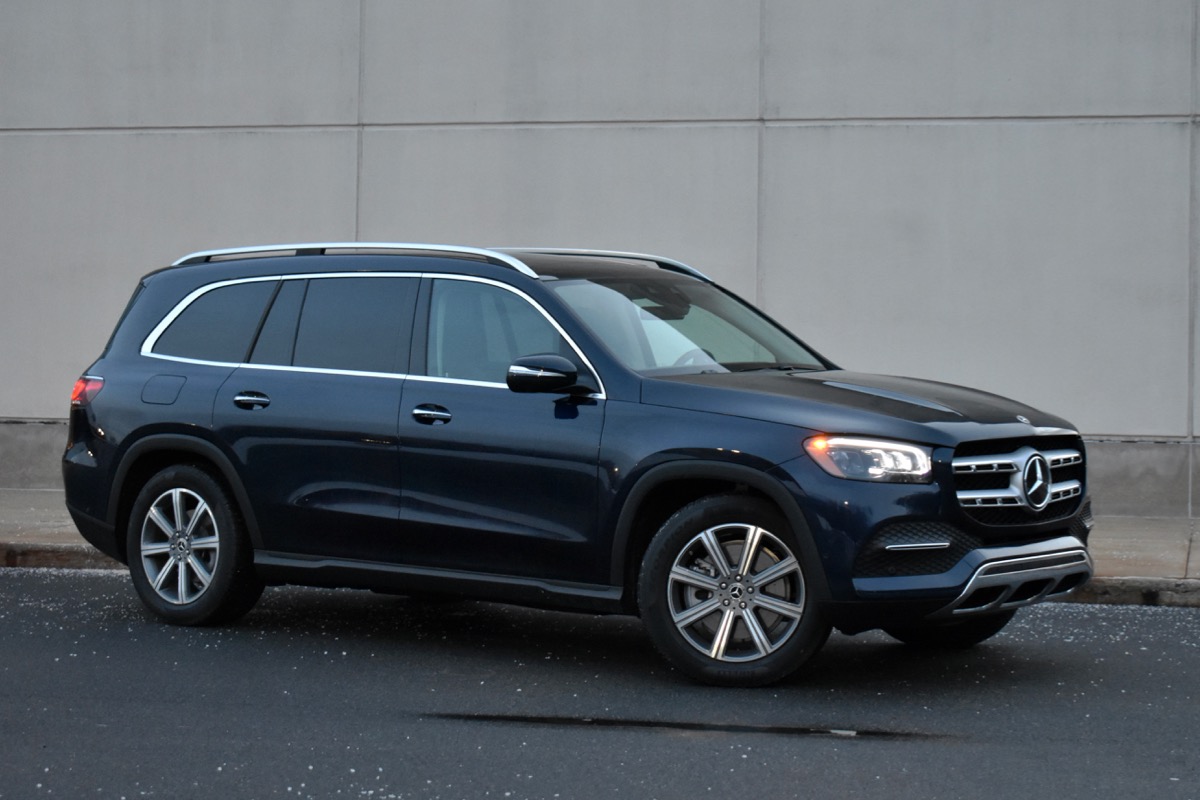
The three-row Mercedes-Benz GLS sits at the top of the automaker’s luxury SUV range in both size and status.
The SUV that’s now known as the GLS was launched for the 2007 model year as the GL-Class, when Mercedes decided it needed a bigger, more luxurious SUV to sit above the M-Class in its lineup. The GL-Class and M-Class were rebadged the Mercedes-Benz GLS-Class and GLE-Class, respectively, in 2014 when Mercedes introduced a new naming scheme across its lineup.
The current version of the GLS was introduced for the 2020 model year, and represents the model’s third generation. It’s aimed at other full-size luxury SUVs, including the BMW X7, Cadillac Escalade, Infiniti QX80, Land Rover Range Rover, Lincoln Navigator, and Lexus LX.
Four models are available in Canada: the base six-cylinder GLS 450 4Matic, the GLS 580 4Matic, the AMG GLS 63 4Matic+, and the Mercedes-Maybach GLS 600 4Matic. Availability is currently limited, and specifications for the 2022 model year are not available. However, they are expected to be very close to those listed for 2021, which were used as reference for the information provided here. We tested a U.S.-specification 2022 GLS 450 for this review.

In base GLS 450 form, that makes for a more subtle, less flashy look than the chrome-laden Cadillac Escalade, Land Rover Range Rover, or Lincoln Navigator. Mercedes was also confident enough to avoid a gaudy grille like protruding proboscises of the BMW X7 or Lexus LX.
However, buyers have the option for a bit more visual drama. The AMG GLS 63 performance model gets flared wheel arches, a more muscular grille and front bumper, prominent rectangular exhaust tips, and in Canada, AMG-specific 22-inch wheels. The Maybach version gets chrome everywhere, including the grille, window trim, and front-bumper mesh. It also gets a more traditional-looking hood ornament and power running boards, and is available with massive 23-inch wheels.
Similarly, the Maybach model is available with added luxuries like reclining rear seats, while the AMG version gets a more performance-oriented interior, with stainless steel trim and heavily bolstered Nappa leather seats. The Mercedes Air Balance Package perfume spritzer is also on the options list.
Our test car had a fairly basic interior by GLS standards, but it still looked pretty nice. It didn’t have reclining seats, but the (non-Nappa) leather upholstery, panoramic roof, and ambient lighting made the interior feel properly luxurious. We also liked some of the details, such as the intricate speaker grilles for the audio system, and the use of rectangular air vents, a more rugged touch in line with an SUV interior.
As with most other Mercedes models, the GLS also gets a digital instrument cluster and infotainment touchscreen housed together under one piece of glass. But we think this is the best integration of this hardware so far, thanks to an upright dashboard that frames the screens nicely.
Overall, the GLS 450’s interior felt appropriate for a luxury SUV. While perhaps too subdued for the nouveau riche (especially with our test car’s all-black trim), it felt high quality without being fragile. We could easily imagine ourselves surveying a country estate from behind the GLS’s three-spoke steering wheel.

The GLS 450 has a 3.0-litre turbocharged inline six-cylinder engine and nine-speed automatic transmission, assisted by the Mercedes EQ Boost mild-hybrid system. The gasoline engine produces 362 horsepower and 369 pound-feet of torque, and an electric motor can add 21 hp and 184 lb-ft of torque in short bursts. The electric motor also serves as the starter, allowing for a more aggressive engine start/stop system, and powers most accessories, reducing the engine’s workload.
Mercedes is also expected to resume production of the GLS 580 4Matic, AMG GLS 63, and Maybach GLS 600 4Matic, all of which uses a 4.0-litre twin-turbo V8, which produces up to 603 hp in the high-performance AMG version. All GLS models get standard 4Matic all-wheel drive (AWD), with a performance-tuned drivetrain for the Mercedes-AMG GLS 63.
We didn’t miss the V8 at all. The six-cylinder engine provided more than enough muscle to move this big SUV, and the electric assist was blended in nicely. Like the BMW X7 and the latest Range Rover, the GLS 450 also uses an inline-6 rather than the more common V6. Owing to better balance, inline-sixes are inherently smoother than V6 engines, making them a perfect fit for luxury vehicles.
However, we were left wishing for a bit more luxury-car refinement from the suspension. The GLS gets standard air suspension, which can raise and lower the ride height and negate impacts from even the gnarliest potholes. But our test car exhibited poor body control, bouncing over bumps and leaning disconcertingly in corners. We weren’t expecting a sports car, but this was simply too much motion to be truly comfortable.
Mercedes quotes a 3,500-kilogram (7,700-pound) maximum towing capacity for the GLS 450. That should provide plenty of capability, but some other big luxury SUVs offer more. The Lexus LX, for example can tow up to 3,630 kilograms (8,000 pounds), while the Lincoln Navigator has a 3,765-kilogram (8,300-pound) towing capacity in certain configurations.

The GLS comes standard in a seven-seat configuration with a 60/40 split-folding second-row bench seat and two third-row seats. An optional six-seat version ditches the second-row bench for individual captain’s chairs.
Second-row seats can slide forward and fold for access to the third row, while the standard bench seat can slide fore and aft as one piece, increasing legroom by 8.6 centimetres, according to Mercedes. Thanks to a fairly long wheelbase, second-row legroom is the best among full-size luxury SUVs, and the GLS is competitive in other measurements.
The GLS offers 355 litres of cargo space with all seats in place, and 2,400 litres with the second and third rows folded. As these specs show, leaving the rear seats in place really eats into cargo space, but that’s the case with all three-row vehicles. Cargo space expands to 1,209 litres with the third row folded, but that increases to 1,379 litres if you slide the second-row seats all the way forward.
Cargo space is a bit behind the larger Cadillac Escalade and Lincoln Navigator, which use platforms from full-size pickup trucks. Mercedes makes loading and unloading cargo easy, though, with one-touch power-folding second-row and third-row seats and a power tailgate. The GLS’s air suspension can also lower, which makes it easier to get things into the cargo area.
Overall, the GLS is well equipped to move people and stuff, but we did find a few small ergonomic issues. We liked the way the touchscreen/instrument cluster display combination looked, but the touchscreen was too far away to reach easily. The centre console had grab handles with no obvious purpose. And while Mercedes included clever two-piece sun visors with forward and side-facing elements, they weren’t big enough to actually block the sun.

The standard Mercedes-Benz User Experience (MBUX) infotainment system includes a 12.3-inch touchscreen, 12.3-inch digital instrument cluster, Bluetooth, Apple CarPlay/Android Auto connectivity, navigation, SiriusXM satellite radio, and natural-language voice recognition. A 13-speaker Burmester audio system and a head-up display are optional.
Mercedes gives users lots of choices, including voice recognition, a touchpad controller, small touchpads on the steering wheel, and the touchscreen itself. We found the voice recognition system, which responds to the prompt “Hey Mercedes,” to be the easiest. The Mercedes system understands normal speech better than most, and it means you don’t have to take your eyes off the road or your hands off the wheel.
It also means avoiding the cumbersome touchpad controller. Designed primarily for scrolling through menus, we found it to be too sensitive to use easily. It was much more difficult than the rotary controllers used by some other automakers for similar tasks.
Both the touchscreen and instrument cluster had good-looking graphics. The augmented-reality navigation feature available in the latest S-Class sedan, which projects arrows showing you where to turn, is standard in the GLS. Bizarrely, the embedded navigation system also suggested a route that would have added an hour to a trip for no apparent reason. We haven’t encountered this problem in other Mercedes vehicles, but it certainly drained our confidence in the GLS navigation system.

Standard safety features include forward collision warning, automatic emergency braking, a driver-attention monitor, automatic high beams, blind-spot monitoring (which can also warn if it’s unsafe to open a door when parked), Crosswind Assist (corrects for wind buffeting), lane-keep assist, parking assist, Trailer Stability Assist, and Pre Safe, which tightens the seat belts, closes the windows and sunroof, and adjusts seats in anticipation of a rollover. The audio system also emits a “pink noise” engineered to protect the ears from loud noises during a collision.
Despite that long list of features, Mercedes still leaves a lot on the table. You’ll have to pay extra for a surround-view camera system, adaptive cruise control, and Mercedes’s more advanced driver-assistance features. Some of these optional features include Active Steering Assist automated lane centring, Evasive Steering Assist, Active Lane Change Assist, Active Blind Spot Assist (which pulls the car back into its lane if another vehicle is detected), and Active Emergency Stop Assist (slows the car to a stop if the driver becomes unresponsive).
Crash-test ratings from the Insurance Institute for Highway Safety (IIHS) and National Highway Traffic Safety Administration (NHTSA) weren’t available at the time of publication.

Natural Resources Canada fuel consumption ratings for the Mercedes-Benz GLS 450 4Matic are 11.5 litres per 100 kilometres combined (12.8 city, 10.0 highway). Despite the mild-hybrid system, this is still a big, heavy, boxy vehicle, so these fairly poor fuel economy ratings aren’t too surprising. You’re not going to do any better with other large SUVs.
Ratings for the V8 models aren’t available because Mercedes initially withheld them from the North American market for 2022. For reference, the 2021 GLS 580 4Matic was rated at 13.0 L/100 km combined, while the AMG and Maybach versions were both rated at 14.8 L/100 km combined.
Mercedes offers a four-year, 80,000-kilometre, basic warranty and four-year, 80,000-kilometre, powertrain warranty.
Pricing starts at $101,900, not including a mandatory destination charge, which varies across Canada by market. Our test car had a few options that cost extra in Canada, including leather upholstery, heated/cooled front seats, a head-up display, five-zone climate control, soft-close doors, and a 360-degree camera. That would bring the as-tested MSRP to $111,190.
The GLS 450 does come fairly well-equipped. Most of the optional features listed above don’t fundamentally change the driving experience; more relevant features like AWD and air suspension are standard. However, Mercedes also makes buyers pay extra for some key features—such as leather seating and adaptive cruise control—that should be standard on a flagship SUV.
Overall, though, the GLS is a solid luxury SUV. It’s not as pretentious as the somewhat gimmicky BMW X7, and has more manageable packaging than the behemoth Cadillac Escalade, Infiniti QX80, and Lincoln Navigator. However, new versions of the Lexus LX and Range Rover are hitting showrooms, both with greater off-road capability than the GLS and a big dose of luxury. So, Mercedes may soon have to fight to keep its place in the full-size luxury SUV pecking order.
Note: Images show a US model.

User reviews for 2022 Mercedes-Benz GLS
Write a review2022 Mercedes-Benz GLS Pricing
Trims & specs
Air Conditioning
Active charcoal air filtration · Automatic climate control front air conditioning · Dual front air conditioning zones · Rear air conditioning: with independent controls · Single rear air conditioning zones
Airbags
Dual front airbags · Driver knee airbags · Passenger airbag deactivation: occupant sensing deactivation · Front side airbags · Rear side curtain airbags
Audio System
Antenna Type: diversity · Voice recognition audio system · Bluetooth auxiliary audio input · Premium Brand: Burmester · HD radio · Satellite Radio: SiriusXM · 2 subwoofers · Surround audio: 5.1 · Total Number of Speakers: 11 · 590 watts
Brakes
ABS: 4-wheel · Braking assist: hill start assist · Electronic parking brake: auto off · Front brake diameter: 14.8 · Front brake width: 1.4 · Front brakes: ventilated disc · Rear brake diameter: 13.6 · Rear brake width: 0.9 · Rear brakes: ventilated disc
Comfort Features
Armrests: rear center with cupholders · Center console trim: wood · Dash trim: wood · Door sill trim: illuminated scuff plate · Door trim: wood · Floor Mat Material: carpet · Floor Material: carpet · Floor Mats: front · Steering wheel trim: leather
Convenience Features
Active parking system: fully automated · Ambient lighting: color-adjustable · Assist handle: front · Cargo area power outlet: 12V · Cargo cover: retractable · Center console: with lighting · Cupholders: front · Dimming rearview mirror: auto-dimming · Easy entry: power driver seat · Footwell lights: color-adjustable · Memorized settings: steering wheel · Multi-function remote: trunk release · One-touch windows: 4 · Power outlet(s): USB-C rear · Power steering: electric · Power windows: lockout button · Reading lights: front · Rear power outlet: 115V · Steering wheel: power tilt and telescopic · Steering wheel mounted controls: multi-function screen controls · Storage: door pockets · Universal garage door opener: Homelink · Vanity mirrors: dual illuminating
Driver Seat
Adjustable lumbar support: 4-way power · Power adjustments: 14
Drivetrain
4WD Type: full time · Axle ratio: 3.27
Engine
Battery: maintenance-free · Electric Motor HP: 21 · Electric Motor Power Output (Kilowatts): 16 · Electric Motor Torque: 184 · Hybrid Gas Engine HP: 362 · Hybrid Gas Engine HP@RPM: 5500 · Hybrid Gas Engine Torque: 369 · Hybrid gas Engine Torque@RPM: 1600
Exterior Features
Door handle color: body-color with chrome accents · Exhaust: integrated exhaust · Exhaust tip color: chrome · Fender lip moldings: black · Front bumper color: body-color · Grille color: black with chrome accents · Mirror color: body-color · Rear bumper color: body-color · Rear spoiler: roofline spoiler · Rear spoiler color: body-color · Rear trunk/liftgate: liftgate · Rocker panel color: black · Window trim: chrome
Headrests
Front headrests: power adjustable · Number of front headrests: 2 · Number of rear headrests: 3 · Number of third row headrests: 2
Hybrid
Starter Type: motor/generator
In Car Entertainment
Connected in-car apps: Google search · Infotainment: Apply CarPlay ready · Infotainment screen size: 12.3 in.
Instrumentation
Fuel economy display: MPG · Instrument cluster screen size: 12.3 in. · Warnings and reminders: low fuel level
Lights
Daytime running lights: LED · Exterior entry lights: puddle lamps · Headlights: cornering · Tail and brake lights: LED
Mirrors
Exterior mirrors: power
Passenger Seat
Power adjustments: 14
Rear Seats
Type: 40-20-40 split bench
Roof
Moonroof: one-touch open/close · Roof rails: aluminum
Safety
Automatic emergency braking: front pedestrian · Camera system: surround view · Child seat anchors: LATCH system · Crumple zones: rear · Impact sensor: fuel cut-off · Parking sensors: rear · Pre-Collision Warning System: visual warning · Pre-collision warning system: pedestrian detection · Rearview monitor: in dash
Seatbelts
Emergency locking retractors: front and rear · Front seatbelts: 3-point · Seatbelt force limiters: front · Seatbelt pretensioners: front · Seatbelt warning sensor: driver and passenger · Second row seatbelts: 3-point · Third row seatbelts: 3-point
Seats
Driver seat power adjustments: height · Front seat type: bucket · Passenger seat power adjustments: 4-way power lumbar · Rear headrests: adjustable · Rear seat: power reclining · Rear seat folding: split · Third row headrests: adjustable · Third row seat folding: power · Upholstery: leatherette
Spare Tire
Mount Location: inside · Size: temporary
Spare Wheel
Rim Type: steel
Stability and Traction
Traction control: with trailer stability control
Steering
Steering ratio: 18.7
Suspension
Driver Adjustable Suspension: height · Front Shock Type: gas shock absorbers · Front Spring Type: pneumatic springs · Front Suspension Classification: independent · Front Suspension Type: strut · Leveling: self leveling suspension · Rear Shock Type: coil over shock · Rear Spring Type: pneumatic springs · Rear Suspension Classification: independent · Rear Suspension Type: multi-link · Stabilizer bar(s): rear · Suspension control: electronic
Telematics
Driver assistance app: roadside assistance · Electronic messaging assistance: with voice recognition · Navigation system: touch screen display · Phone: voice activated · Phone wireless data link: Bluetooth · Smart device app compatibility: Mercedes me · Smart device app function: vehicle location · Wifi: hotspot compatible
Third Row Seat
Type: 50-50 split bench
Tires
Type: all season
Tires and Rims
Wheel type: aluminum alloy
Wheels
Wheel spokes: 8
Windows
Front wipers: rain sensing · Liftgate window: fixed · Power windows: remote operation · Rear wiper: intermittent
Air Conditioning
Active charcoal air filtration · Automatic climate control front air conditioning · Dual front air conditioning zones · Rear air conditioning: with independent controls · Dual rear air conditioning zones · Automatic climate control third row air conditioning · Single third row air conditioning zones
Airbags
Dual front airbags · Driver knee airbags · Passenger airbag deactivation: occupant sensing deactivation · Front side airbags · Third row side curtain airbags
Audio System
Antenna Type: diversity · Voice recognition audio system · Memory card slot auxiliary audio input · Premium Brand: Burmester · AM/FM radio · Satellite Radio: SiriusXM · 2 subwoofers · Surround audio: 5.1 · Total Number of Speakers: 11 · 590 watts
Brakes
ABS: 4-wheel · Braking assist: hill start assist · Electronic parking brake: auto off · Front brake diameter: 14.8 · Front brake width: 1.4 · Front brakes: ventilated disc · Rear brake diameter: 13.6 · Rear brake width: 0.9 · Rear brakes: ventilated disc
Comfort Features
Armrests: rear center with cupholders · Center console trim: wood · Dash trim: wood · Door sill trim: illuminated scuff plate · Door trim: wood · Floor Mat Material: carpet · Floor Material: carpet · Floor Mats: front · Foot pedal trim: stainless steel · Steering wheel trim: leather
Convenience Features
Active parking system: fully automated · Ambient lighting: color-adjustable · Assist handle: rear · Cargo area power outlet: 12V · Cargo cover: retractable · Center console: front console with armrest and storage · Cupholders: front · Dimming rearview mirror: auto-dimming · Easy entry: power steering wheel · Footwell lights: color-adjustable · Memorized settings: steering wheel · Multi-function remote: keyless entry with panic alarm · One-touch windows: 4 · Power outlet(s): USB-C third row · Power steering: speed-proportional · Power windows: lockout button · Reading lights: third row · Rear power outlet: 115V · Steering wheel: power tilt and telescopic · Steering wheel mounted controls: audio · Storage: front seatback · Universal garage door opener: Homelink · Vanity mirrors: dual illuminating
Driver Seat
Adjustable lumbar support: 4-way power · Power adjustments: 14
Drivetrain
4WD Type: full time · Axle ratio: 3.27
Engine
Battery: lithium ion · Electric Motor HP: 21 · Electric Motor Power Output (Kilowatts): 16 · Electric Motor Torque: 184 · Hybrid Gas Engine HP: 483 · Hybrid Gas Engine HP@RPM: 5500 · Hybrid Gas Engine Torque: 516 · Hybrid gas Engine Torque@RPM: 2000
Exterior Features
Door handle color: body-color with chrome accents · Exhaust: integrated exhaust · Exhaust tip color: chrome · Front bumper color: body-color · Grille color: black with chrome accents · Mirror color: body-color · Rear bumper color: body-color · Rear spoiler: roofline spoiler · Rear spoiler color: body-color · Rear trunk/liftgate: power operated · Rocker panel color: black · Running boards: illuminated · Side door type: soft close · Window trim: chrome
Headrests
Front headrests: power adjustable · Number of front headrests: 2 · Number of rear headrests: 3 · Number of third row headrests: 2
Hybrid
Starter Type: motor/generator
In Car Entertainment
Connected in-car apps: Google search · Infotainment: MBUX · Infotainment screen size: 12.3 in.
Instrumentation
Fuel economy display: range · Instrument cluster screen size: 12.3 in. · Warnings and reminders: coolant temperature warning
Lights
Daytime running lights: LED · Exterior entry lights: puddle lamps · Headlights: LED · Tail and brake lights: LED
Mirrors
Exterior mirrors: power
Passenger Seat
Power adjustments: 14
Rear Seats
Type: 40-20-40 split bench
Roof
Moonroof: tilt/slide · Roof rails: aluminum
Safety
Automatic emergency braking: front · Camera system: surround view · Child seat anchors: LATCH system · Crumple zones: front · Impact sensor: post-collision safety system · Parking sensors: rear · Pre-Collision Warning System: audible warning · Pre-collision warning system: pedestrian detection · Rearview monitor: in dash
Seatbelts
Emergency locking retractors: front, rear, third, and fourth row · Front seatbelts: 3-point · Seatbelt force limiters: front · Seatbelt pretensioners: front · Seatbelt warning sensor: driver and passenger · Second row seatbelts: 3-point · Third row seatbelts: 3-point
Seats
Driver seat power adjustments: reclining · Front seat type: bucket · Passenger seat power adjustments: reclining · Rear headrests: adjustable · Rear seat: power reclining · Rear seat folding: split · Third row headrests: adjustable · Third row seat folding: split · Upholstery: leather
Spare Tire
Mount Location: inside · Size: temporary
Spare Wheel
Rim Type: steel
Stability and Traction
Traction control: with trailer stability control
Steering
Steering ratio: 18.7
Suspension
Driver Adjustable Suspension: ride control · Front Shock Type: gas shock absorbers · Front Spring Type: pneumatic springs · Front Suspension Classification: independent · Front Suspension Type: double wishbones · Leveling: self leveling suspension · Rear Shock Type: gas shock absorbers · Rear Spring Type: pneumatic springs · Rear Suspension Classification: independent · Rear Suspension Type: multi-link · Stabilizer bar(s): front · Suspension control: electronic
Telematics
Driver assistance app: roadside assistance · Electronic messaging assistance: with read function · Navigation system: hard drive navigation system · Phone: voice activated · Phone wireless data link: Bluetooth · Smart device app compatibility: Mercedes me · Smart device app function: lock operation · Wifi: hotspot compatible
Third Row Seat
Type: 50-50 split bench
Tires
Type: all season
Tires and Rims
Wheel type: aluminum alloy
Wheels
Wheel spokes: 5
Windows
Front wipers: variable intermittent · Liftgate window: fixed · Power windows: with safety reverse · Rear wiper: intermittent
Air Conditioning
Active charcoal air filtration · Automatic climate control front air conditioning · Dual front air conditioning zones · Automatic climate control rear air conditioning · Dual rear air conditioning zones · Automatic climate control third row air conditioning · Single third row air conditioning zones
Airbags
Dual front airbags · Driver knee airbags · Passenger airbag deactivation: occupant sensing deactivation · Front side airbags · Front side curtain airbags
Audio System
Antenna Type: mast · Voice recognition audio system · Bluetooth auxiliary audio input · Premium Brand: Burmester · HD radio · Satellite Radio: SiriusXM · 2 subwoofers · Surround audio: 5.1 · Total Number of Speakers: 11 · 590 watts
Brakes
ABS: 4-wheel · Braking assist: hill start assist · Electronic parking brake: auto off · Front brake diameter: 15.7 · Front brake width: 1.5 · Front brakes: ventilated disc · Rear brake diameter: 14.6 · Rear brake width: 1.3 · Rear brakes: ventilated disc
Comfort Features
Armrests: rear center with cupholders · Center console trim: wood · Dash trim: wood · Door sill trim: illuminated scuff plate · Door trim: wood · Floor Mat Material: carpet · Floor Material: carpet · Floor Mats: front · Foot pedal trim: stainless steel · Headliner trim: microfiber · Steering wheel trim: leather
Convenience Features
Active parking system: fully automated · Adaptive stop and go cruise control: semi-automatic · Ambient lighting: color-adjustable · Assist handle: rear · Autonomous lane guidance: lane centering · Cargo area power outlet: 12V · Cargo cover: retractable · Center console: with lighting · Cruise control: adaptive · Cupholders: front, rear and third row · Dimming rearview mirror: auto-dimming · Easy entry: power steering wheel · Footwell lights: color-adjustable · Memorized settings: side mirrors · Multi-function remote: keyless entry with panic alarm · One-touch windows: 4 · Power outlet(s): USB-C third row · Power steering: speed-proportional · Power windows: lockout button · Reading lights: rear · Rear power outlet: 12V · Steering wheel: power tilt and telescopic · Steering wheel mounted controls: voice recognition controls · Storage: front seatback · Universal garage door opener: Homelink · Vanity mirrors: dual illuminating
Driver Seat
Adjustable lumbar support: 4-way power · Power adjustments: 14
Drivetrain
4WD Type: on demand · Axle ratio: 3.27 · Locking differential: rear
Engine
Battery: lithium ion · Electric Motor HP: 21 · Electric Motor Power Output (Kilowatts): 16 · Electric Motor Torque: 184 · Exhaust: performance · Hybrid Gas Engine HP: 603 · Hybrid Gas Engine HP@RPM: 5750 · Hybrid Gas Engine Torque: 627 · Hybrid gas Engine Torque@RPM: 2500
Exterior Features
Door handle color: body-color with chrome accents · Exhaust: quad exhaust tips · Exhaust tip color: chrome · Front bumper color: body-color · Grille color: black with chrome accents · Mirror color: body-color · Rear bumper color: body-color · Rear spoiler: roofline spoiler · Rear spoiler color: body-color · Rear trunk/liftgate: sensor-activated · Rocker panel color: black · Running boards: stainless steel · Side door type: soft close · Window trim: chrome
Headrests
Front headrests: power adjustable · Number of front headrests: 2 · Number of rear headrests: 3 · Number of third row headrests: 2
Hybrid
Starter Type: starter/belt alternator
In Car Entertainment
Connected in-car apps: Google search · Infotainment: MBUX · Infotainment screen size: 12.3 in.
Instrumentation
Fuel economy display: MPG · Instrument cluster screen size: 12.3 in. · Warnings and reminders: coolant temperature warning
Lights
Daytime running lights: LED · Exterior entry lights: puddle lamps · Headlights: auto delay off · Tail and brake lights: LED
Mirrors
Exterior mirrors: power folding
Passenger Seat
Power adjustments: 14
Rear Seats
Type: 40-20-40 split bench
Roof
Moonroof: one-touch open/close · Moonroof / Sunroof: power sunshade · Rear moonroof: fixed glass · Roof rails: aluminum
Safety
Automatic emergency braking: front · Camera system: surround view · Child seat anchors: LATCH system · Cross Traffic Alert: rear · Crumple zones: front · Impact sensor: battery disconnect · Parking sensors: rear · Pre-Collision Warning System: vibrating steering wheel · Pre-collision warning system: pedestrian detection · Rearview monitor: in dash
Seatbelts
Emergency locking retractors: front, rear, third, and fourth row · Front seatbelts: 3-point · Seatbelt force limiters: front, rear and third row · Seatbelt pretensioners: front and rear · Seatbelt warning sensor: driver and passenger · Second row seatbelts: 3-point · Third row seatbelts: 3-point
Seats
Driver seat power adjustments: reclining · Front seat type: sport bucket · Passenger seat power adjustments: reclining · Rear headrests: adjustable · Rear seat: power reclining · Rear seat folding: split · Third row headrests: adjustable · Third row seat folding: flat · Upholstery: premium leather
Spare Tire
Mount Location: inside · Size: temporary
Spare Wheel
Rim Type: steel
Stability and Traction
Traction control: with trailer stability control
Steering
Steering ratio: 18.7
Suspension
Driver Adjustable Suspension: height · Front Shock Type: gas shock absorbers · Front Spring Type: pneumatic springs · Front Suspension Classification: independent · Front Suspension Type: double wishbones · Leveling: self leveling suspension · Rear Shock Type: gas shock absorbers · Rear Spring Type: pneumatic springs · Rear Suspension Classification: independent · Rear Suspension Type: multi-link · Stabilizer bar(s): front · Suspension control: electronic
Telematics
Driver assistance app: roadside assistance · Electronic messaging assistance: with read function · Navigation system: with voice recognition · Phone: voice activated · Phone wireless data link: Bluetooth · Smart device app compatibility: Mercedes me · Smart device app function: lock operation · Wifi: hotspot compatible
Third Row Seat
Type: 50-50 split bench
Tires
Type: performance
Tires and Rims
Wheel type: aluminum alloy
Wheels
Wheel spokes: 10
Windows
Front wipers: speed sensitive · Liftgate window: fixed · Power windows: with safety reverse · Rear wiper: with washer
Air Conditioning
Active charcoal air filtration · Automatic climate control front air conditioning · Dual front air conditioning zones · Automatic climate control rear air conditioning · Dual rear air conditioning zones
Airbags
Dual front airbags · Driver knee airbags · Passenger airbag deactivation: occupant sensing deactivation · Rear side airbags · Front side curtain airbags
Audio System
Antenna Type: diversity · Voice recognition audio system · Bluetooth auxiliary audio input · Premium Brand: Burmester · HD radio · Rear audio: rear volume control · Satellite Radio: SiriusXM · 1 subwoofer · Surround audio: 5.1 · Total number of speakers: 28 · Watts: 1590
Brakes
ABS: 4-wheel · Braking assist: hill start assist · Electronic parking brake: auto off · Front brakes: ventilated disc · Rear brakes: ventilated disc
Comfort Features
Armrests: heated front · Center console trim: wood · Dash trim: wood · Door sill trim: illuminated scuff plate · Door trim: wood · Floor Mat Material: carpet · Floor Material: carpet · Floor Mats: front · Foot pedal trim: stainless steel · Headliner trim: leather · Steering wheel trim: leather
Convenience Features
Active parking system: fully automated · Adaptive stop and go cruise control: semi-automatic · Ambient lighting: color-adjustable · Assist handle: rear · Autonomous lane guidance: lane centering · Cargo area power outlet: 12V · Cargo cover: retractable · Center console: with lighting · Cruise control: adaptive · Cupholders: heated · Dimming rearview mirror: auto-dimming · Easy entry: power steering wheel · Footwell lights: color-adjustable · Memorized settings: driver seat · Multi-function remote: trunk release · One-touch windows: 4 · Power outlet(s): USB-C front · Power steering: electric · Power windows: lockout button · Reading lights: front · Rear power outlet: 12V · Steering wheel: power tilt and telescopic · Steering wheel mounted controls: cruise controls · Storage: door pockets · Sunshade: power side window · Universal garage door opener: Homelink · Vanity mirrors: dual illuminating · Wireless charging station: rear
Driver Seat
Adjustable lumbar support: 4-way power · Power adjustments: 14
Drivetrain
4WD Type: on demand · Axle ratio: 3.27
Engine
Battery: maintenance-free · Electric Motor HP: 21 · Electric Motor Power Output (Kilowatts): 16 · Electric Motor Torque: 184 · Hybrid Gas Engine HP: 550 · Hybrid Gas Engine HP@RPM: 6000 · Hybrid Gas Engine Torque: 538 · Hybrid gas Engine Torque@RPM: 2500
Exterior Features
Door handle color: body-color with chrome accents · Exhaust: dual exhaust tips · Exhaust tip color: chrome · Fender lip moldings: black · Front bumper color: body-color · Grille color: black with chrome accents · Lower body step rails: power-retractable · Mirror color: body-color · Rear bumper color: body-color · Rear spoiler: roofline spoiler · Rear spoiler color: body-color · Rear trunk/liftgate: sensor-activated · Rocker panel color: black · Running boards: illuminated · Side door type: soft close · Window trim: chrome
Headrests
Adjustable rear headrests: power adjustable headrests · Front headrests: power adjustable · Number of front headrests: 2 · Number of rear headrests: 2
Hybrid
Starter Type: motor/generator
In Car Entertainment
Connected in-car apps: Google POIs · Infotainment: Apply CarPlay ready · Infotainment screen size: 12.3 in.
Instrumentation
Fuel economy display: MPG · Instrument cluster screen size: 12.3 in. · Warnings and reminders: low oil pressure
Lights
Daytime running lights: LED · Exterior entry lights: puddle lamps · Headlights: LED · Tail and brake lights: LED
Mirrors
Exterior mirrors: reverse gear tilt
Passenger Seat
Power adjustments: 14
Rear Seats
Type: bucket
Roof
Moonroof: sliding sunshade · Moonroof / Sunroof: power sunshade · Rear moonroof: fixed glass · Roof rails: aluminum
Safety
Automatic emergency braking: front pedestrian · Camera system: surround view · Child seat anchors: LATCH system · Cross Traffic Alert: rear · Crumple zones: rear · Impact sensor: fuel cut-off · Parking sensors: front · Pre-Collision Warning System: vibrating steering wheel · Pre-collision warning system: pedestrian detection · Rearview monitor: in dash · Traffic sign recognition: adaptive speed limiting
Seatbelts
Emergency locking retractors: front · Front seatbelts: 3-point · Seatbelt force limiters: front · Seatbelt pretensioners: front · Seatbelt warning sensor: driver and passenger · Second row seatbelts: 3-point
Seats
Driver seat power adjustments: height · Front seat type: bucket · Passenger seat power adjustments: height · Rear seat: power reclining · Rear seat folding: power · Upholstery: premium leather
Spare Tire
Mount Location: inside · Size: temporary
Spare Wheel
Rim Type: steel
Stability and Traction
Traction control: with trailer stability control
Steering
Steering ratio: 18.7
Suspension
Driver Adjustable Suspension: height · Front Shock Type: gas shock absorbers · Front Spring Type: pneumatic springs · Front Suspension Classification: independent · Front Suspension Type: double wishbones · Leveling: self leveling suspension · Rear Shock Type: coil over shock · Rear Spring Type: pneumatic springs · Rear Suspension Classification: independent · Rear Suspension Type: multi-link · Stabilizer bar(s): front · Suspension control: electronic
Telematics
Driver assistance app: roadside assistance · Electronic messaging assistance: with voice recognition · Navigation system: augmented reality · Phone: voice activated · Phone wireless data link: Bluetooth · Smart device app compatibility: Mercedes me · Smart device app function: horn/light operation · Wifi: hotspot compatible
Tires
Type: summer performance
Tires and Rims
Wheel type: aluminum alloy
Wheels
Wheel spokes: multi-spoke
Windows
Front wipers: integrated washer jets · Liftgate window: fixed · Power windows: with safety reverse · Rear wiper: intermittent
