2023 Ford F-150 Reviews, Pricing & Specs
Write a reviewPros
Class-leading towing and payload ratings
Impressive technology
Great safety ratings
Cons
Poor fuel economy (3.5-liter EcoBoost V6)
Poor ride quality (specific to test truck)
Some interior materials feel cheap
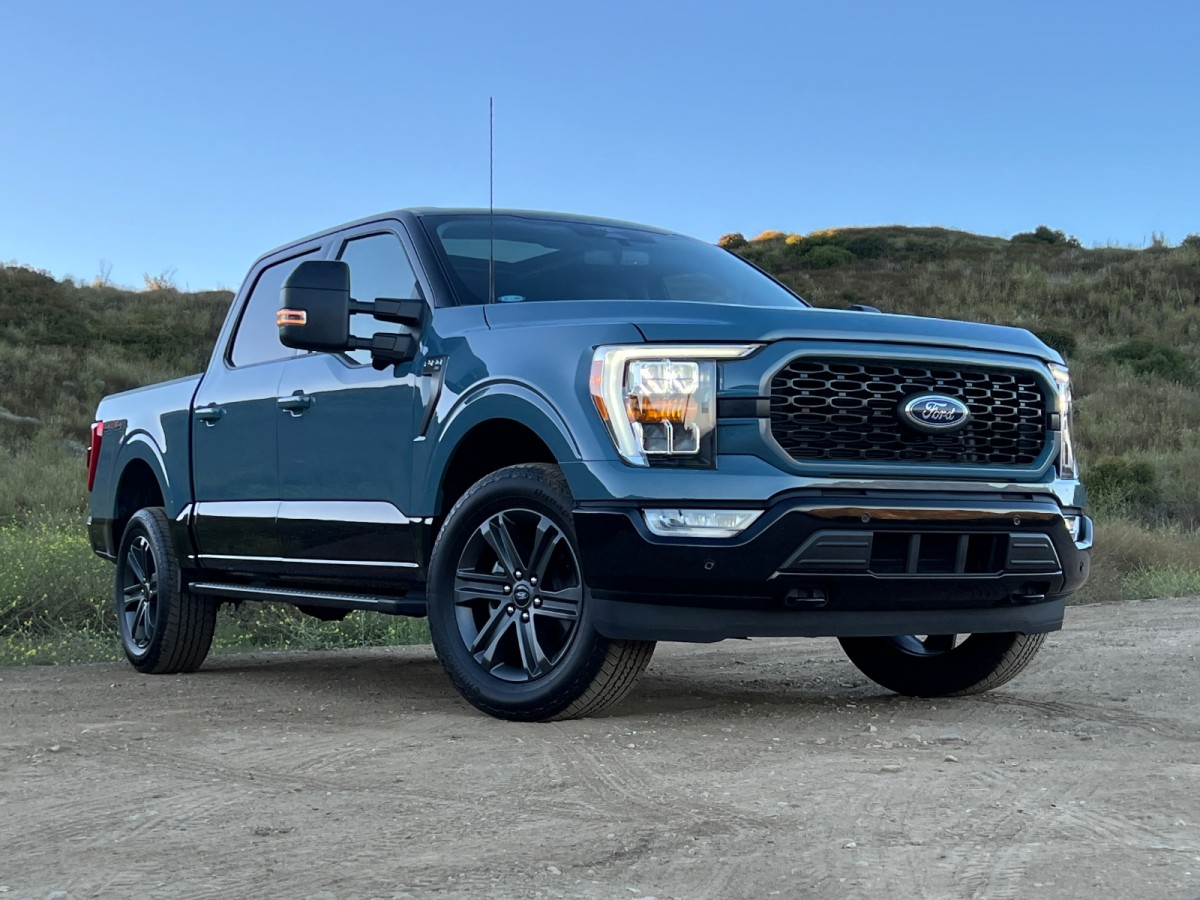
The Ford F-150 is the best-selling pickup truck for decades running for a reason. Many of them, actually.
This year, Ford expands the F-150 lineup yet again. The big news is the debut of the F-150 Raptor R, equipped with a supercharged 5.2-litre V8 engine making 700 horsepower and 640 pound-feet of torque. The new 2023 F-150 Raptor R also has exclusive R-tuned Fox live-valve shocks, standard 37-inch all-terrain tires, and a few other goodies to justify its presumably six-figure price tag (Canadian pricing has not been announced as of publication time).
The other new version of the 2023 Ford F-150 is more accessible: the XLT Heritage Edition. It has two-tone paint, unique cloth seat inserts, and exclusive 75 Years interior details. That’s the subject of this review.

When shopping for a new 2023 Ford F-150, it is helpful to set a budget and know what you need from a full-size, light-duty pickup truck. That’s because the number of configurations is seemingly endless.
For example, the 2023 F-150 model lineup includes regular, extended (Super Cab), and crew cab (SuperCrew) styles paired with short (5.5-foot), standard (6.5-foot), and long (8-foot) cargo bed lengths. Eight core trims range from the workhorse XL work truck to the Raptor performance truck, and multiple engines are available. Ford also sells an electric truck called the Ford F-150 Lightning, but that’s considered a separate model.
Prices range from $44,055 for the regular cab with two-wheel drive for a Ford F-150 XL to $105,275 for the high-performance F-150 Raptor. You’ll need to add a mandatory $2,395 charge to have it delivered to your local dealership, plus other fees.
Then you confront a lengthy optional equipment list. For example, our Ford F-150 XLT Super Crew test truck added four-wheel drive, a twin-turbocharged 3.5-litre V6 engine, a Max Trailer Tow Package, an XLT High Package, an XLT Sport Appearance Package, and a Heritage Edition Package. In addition, it also had a spray-in bedliner, a twin-panel moonroof, On-Board Scales with Smart Hitch technology, a 2.0-kWh Pro Power Onboard system, power-adjustable pedals, and manual telescopic and folding side mirrors. All of these extras bring the Canadian manufacturer’s suggested retail price (MSRP) to $77,675, including the destination charge.
The end result looked good, especially in Ford’s blue-gray Area 51 paint colour. The F-150’s styling is comfortingly familiar and inoffensively appealing, a common theme across all of its rivals except the somewhat wild-looking Toyota Tundra. Better yet, while the Ford F-150 breaks no new design ground, it also doesn’t stumble over unusual details or proportions that can turn customers off.
Inside, the F-150 adopts a modular, Lego-like approach, right down to the quality of some surface plastics. The emphasis here is on function, not form. However, similar to the exterior, Ford makes no egregious errors in the cabin.
The test truck had the available Ford Work Surface upgrade, which allows you to fold the transmission shifter and deploy a flat interior work surface on the centre console. However, this makes the truck’s shifter feel loose and flimsy. Also, the test truck’s steering wheel controls creaked under the pressure of a press, adding to a sense of cheapness.
Cloth seats are surprising in a truck at the as-tested price point, but we like them for their more agreeable surface temperature in cold and hot weather. Plus, the fabric Ford uses looks good and feels durable.
Overall, the 2023 Ford F-150 is an appealing truck, inside and out.

Ford offers numerous engine options in the F-150, and our test truck featured the optional twin-turbocharged 3.5-litre EcoBoost V6. It makes power specs of 400 horsepower and 500 pound-feet of torque, and while it may not emanate the satisfying signature note of a traditional V8, it certainly does produce effortless acceleration.
The V6 pairs with a 10-speed automatic transmission that, despite what you might assume, always picks the right gear at the right time and without delay. Rear-wheel drive is standard on lower grades, but our truck’s drivetrain also had an optional four-wheel-drive system with a two-speed transfer case. It lacked a full-time or automatic 4WD mode.
Ford says the 2023 F-150’s maximum towing capacity is 6,350 kilograms (14,000 pounds) and the maximum payload rating is 1,503 kilograms (3,315 pounds). Of course, this depends on the configuration and powertrain, so make sure you understand exactly what any F-150 that you purchase can handle. According to Ford, you can find this information on the truck’s doorjamb.
Our test truck had the standard suspension tuning, and when driving the F-150 unloaded it can feel harsh and skittish in town while floating, bobbing, and woozing down highways. It rides better than the last standard-tuned Chevrolet Silverado 1500 we drove but isn’t as composed as the Ram 1500. And while it can buck over speed humps and drainage dips, it isn’t as irritating as the Toyota Tacoma. We bet the F-150’s ride would improve with some people and cargo aboard or with a trailer attached. You could also try the FX4 Package, select the F-150 Tremor model, or upgrade to a Ford F-150 Lariat or higher to obtain an adaptive damping suspension.
Nevertheless, the F-150 feels structurally solid and provides secure handling, though the towing mirrors on the test truck were a liability on narrow roads with overgrown brush. The brakes are stout, resisting rumble, vibration, and fade during high-heat mountain descents. Again, the truck was unloaded, so we cannot comment on how the brakes might perform under more significant duress.
The steering is unremarkable, which means it isn’t a source of irritation. On winding roads with tight hairpin turns and in urban and suburban parking lots, you’ll get a workout. For long highway stints, the steering wheel has a spot at the six o’clock position for the driver to comfortably hold the rim. The F-150 we tested was also unexpectedly quiet inside at highway speeds.
According to Natural Resources Canada, our F-150 should have returned 12.1 litres per 100 kilometres in combined driving, but we averaged 13.8 L/100 km on our testing loop, falling short of expectations. But we’ll also admit to a minor addiction to the twin-turbo V6’s seemingly endless supply of thrust.

Trucks aren’t easy to climb into and out of, but step rails help even if they simultaneously reduce the breakover angle. You’ll need to assess whether or not they’re compatible with your lifestyle. But we wouldn’t be surprised if researchers could track a reduction in the nation’s divorce rate to their existence.
Once you’re aboard an F-150 XLT equipped like our test truck, you’ll find comfortable seats for five people. The optional High equipment package supplied power front seats, 10-way power adjustment for the driver and eight-way for the front passenger, and thanks to the optional power-adjustable pedals it was easy to find a perfect driving position. During a high-30s heat wave, nobody complained about the cloth seats, which saved seared thighs on the relentlessly sunny summer days.
Storage is everywhere. Under the front centre armrest, you’ll find a large bin. In addition, there are trays and cubbies on the centre console and door panels, and dual glove compartments. For added in-cab cargo room, you can flip the rear cushion up or fold the seatback flat. During our test, three people used the F-150 for a day at the beach, and the cab easily accommodated umbrellas, chairs, boogie boards, towels, a cooler, and a backpack.
The test truck’s cargo bed had a factory-applied spray-in bedliner and the 2.0-kW Pro Power Onboard system, which exports power from the truck to operate electric tools, appliances, etc. Climbing into the bed was a challenge without Ford’s available tailgate step (part of the Bed Utility Package), especially since the bed and bumpers lack integrated stepping points.

With XLT trim, the F-150 comes with Ford’s Sync 4 infotainment system, which the automaker can improve over time through over-the-air software updates.
Sync 4 includes a 12-inch touchscreen display, enhanced voice recognition, wireless Apple CarPlay and Android Auto, and SiriusXM 360L satellite radio with a complimentary three-month All Access subscription. In addition, Ford Pass Connect services are standard and provide access to a 4G LTE Wi-Fi hotspot. Our test truck also had an active subscription to a connected navigation system.
During our test drive evaluation, Sync 4 didn’t load as quickly as expected, especially the SiriusXM satellite radio service. In addition, Ford needs to use bolder graphics with more colour contrast for improved readability while driving. However, the system is easy to understand and use, and the voice recognition system passed every single one of our tests with flying colours. It is excellent. Also, the standard stereo offered decent sound, though Ford’s available eight-speaker Bang & Olufsen premium audio system is a worthy upgrade.
In addition to Sync 4, the test truck had remote engine starting, remote tailgate locking, an integrated trailer-brake controller, and Pro Trailer Backup Assist. The latter system provides semi-autonomous driving assistance when reversing the F-150 with a trailer attached, which can be a challenging and counter-intuitive task. In addition, the test truck’s On Board Scales with Smart Hitch helps prevent overloading the bed with payload and assists with determining the tongue weight of a trailer.

Our test truck had Ford Co-Pilot360 Assist 2.0, a comprehensive collection of advanced driving assistance systems (ADAS).
The standard 2.0 part of the package equips the F-150 with automatic high-beam headlights, forward collision warning with pedestrian detection, automatic emergency braking, lane-departure warning, lane-keeping assist, blind-spot monitoring, rear cross-traffic alert, rear parking sensors, and automatic reverse braking.
The Assist part of the package adds adaptive cruise control with stop-and-go capability, lane-centring assist, evasive steering assist, intersection assist for left turns, and a speed-sign recognition system.
Naturally, a driver can safely evaluate only a few of these technologies. Overall, the adaptive cruise control and lane-centring assist systems work well. However, at a mid-curve intersection, the lane assist wanted to hug the double yellow centre line and tug us into the left turn lane. Ultimately, the technology self-canceled mid-curve. Also, on tighter curves, the truck automatically slows to reduce speed, usually unnecessarily.
On a less challenging highway section, lane-centring assist did most of the heavy lifting. It proved accurate in this environment, though it displayed some minor indecision each time we passed by an exit ramp. It’s also a fairly aggressive system, perhaps because it is one step down from Ford’s hands-free Blue Cruise technology. So, you must make an effort to override it when the truck is steering in a way you’d prefer it did not.
Similarly, on the rural two-lane farm roads, the adaptive cruise and lane-centring worked well. The truck slowed smoothly when coming upon slower vehicles, and though the technology displayed a delay in response when passing, the F-150 quickly accelerated back up to speed after it no longer detected a vehicle ahead.
The more useful ADAS is the blind-spot monitoring and rear cross-traffic alert systems, which you’ll use regularly. Also, the test truck’s surround-view camera is indispensable when parking, especially in conjunction with the front and rear parking sensors.
In addition to these safety features, the F-150 has a post-collision braking system. Often overlooked by consumers in terms of its importance, this technology brings a vehicle to a stop as soon as possible following a collision in order to prevent the potential for injury in secondary accidents after the airbags have been deployed.
As far as crash-test ratings go, the F-150 SuperCrew earns high marks from the Insurance Institute for Highway Safety (IIHS) and nothing but five-star ratings from the National Highway Traffic Safety Administration (NHTSA), coupled with a four-star rollover resistance rating.

You may have heard that the average price of a new car in Canada is closing in on $50,000, and our love affair with pickup trucks and SUVs is helping to fuel that statistic. Case in point: the 2023 Ford F-150. Our test truck had several expensive upgrades, but it also had the second most-affordable trim level and cloth seats. Yet, the window sticker approaches $80,000. A King Ranch blows past that mark, and if you opt for a Platinum or Limited, and you’re looking at a new vehicle price of $90,000 to $100,000-plus to start.
Is that cost-effective? Not in our view, especially if you have no plans to tow a heavy trailer or haul a heavy load. Sure, you can buy a cheaper version of the F-150, but we checked to see what a modestly equipped regular cab XLT might cost, and with an engine upgrade, 4WD, the FX4 Off-Road Package, the Bed Utility Package, and a spray-in bedliner, the MSRP is still well over $60,000.
Of course, it’s not like you’re going to get a better deal elsewhere unless you decide to buy an ancient Ram 1500 Classic, the engineering for which dates back 15 years. So, you need to establish different criteria for determining value.
Our opinion is that the Ford F-150 is the best full-size, light-duty truck you can buy. It tows more weight, hauls more payload, provides impressive infotainment and safety technologies, and it’s quite safe in a collision. Plus, you can get a PowerBoost hybrid version with an electric motor, a fully electric version, and a beast of a performance version. The only rival that poses a significant threat to the Ford F-150 is the Ram 1500. As of this writing, during the 2023 model year, Chevy, GMC, Nissan, and Toyota are also-rans in this competition.
Note: Images show a US model.

User reviews for 2023 Ford F-150
Write a review2023 Ford F-150 Pricing
Trims & specs
Air Conditioning
Single front air conditioning zones
Airbags
Dual front airbags · Passenger airbag deactivation: occupant sensing deactivation · Front side airbags · Front side curtain airbags
Audio System
Antenna Type: mast · Auxiliary audio input: jack · AM/FM radio · Total Number of Speakers: 4 · 80 watts
Brakes
ABS: 4-wheel · Braking assist: hill start assist · Electronic parking brake: auto off · Front brake diameter: 13.8 · Front brake width: 1.34 · Front brakes: ventilated disc · Rear brake diameter: 13.2 · Rear brake width: 0.79 · Rear brakes: ventilated disc
Comfort Features
Armrests: front center · Door sill trim: scuff plate · Floor Material: rubber · Steering wheel trim: urethane
Convenience Features
Assist handle: front · Cupholders: front · Multi-function remote: keyless entry · One-touch windows: 2 · Power outlet(s): USB front · Power steering: electric · Reading lights: front · Steering wheel: tilt and telescopic · Steering wheel mounted controls: audio · Storage: door pockets · Vanity mirrors: passenger
Driver Seat
Manual adjustments: 4
Drivetrain
Axle ratio: 3.55
Engine
Alternator: 200 amps · Battery: maintenance-free
Exterior Features
Door handle color: black · Front bumper color: black · Grille color: black surround · Headlamp bezel color: black · Mirror color: black · Rear bumper color: black · Tailgate: EZ-Lift · Window trim: black
Headrests
Front headrests: adjustable · Number of front headrests: 3
In Car Entertainment
Connected in-car apps: Google POIs · Infotainment: SYNC · Infotainment screen size: 8 in. · Smartphone integration: wireless Android Auto
Instrumentation
Fuel economy display: MPG · Instrument cluster screen size: 4 in. · Warnings and reminders: low fuel level
Lights
Exterior entry lights: security approach lamps · Headlights: Auto on/off
Mirrors
Exterior mirrors: manual folding · Inside rearview mirror: manual day/night
Passenger Seat
Manual Adjustments: 4
Safety
Automatic emergency braking: front · Camera system: rearview · Crumple zones: front · Impact sensor: alert system · Parking sensors: rear · Pre-Collision Warning System: visual warning · Pre-collision warning system: pedestrian detection · Programmable safety key: MyKey · Rearview monitor: in dash
Seatbelts
Emergency locking retractors: front · Front seatbelts: 3-point · Seatbelt force limiters: front · Seatbelt pretensioners: front · Seatbelt warning sensor: driver and passenger
Seats
Driver seat manual adjustments: reclining · Front seat type: 40-20-40 split bench · Passenger seat manual adjustments: reclining · Upholstery: cloth
Spare Tire
Mount Location: underbody · Size: full-size
Spare Wheel
Rim Type: steel
Stability and Traction
Traction control: with trailer stability control
Steering
Steering ratio: 20.4
Suspension
Front Shock Type: gas shock absorbers · Front Spring Type: coil springs · Front Suspension Classification: independent · Front Suspension Type: double wishbones · Rear Shock Type: gas shock absorbers · Rear Spring Type: leaf springs · Rear Suspension Classification: solid live axle · Rear Suspension Type: multi-leaf · Stabilizer bar(s): front
Telematics
Electronic messaging assistance: with read function · Phone wireless data link: Bluetooth · Smart device app compatibility: FordPass Connect · Smart device app function: lock operation · Wifi: hotspot
Tires
Type: all season
Tires and Rims
Wheels: painted steel
Towing and Hauling
Trailer hitch: bumper hitch · Trailer wiring: 4-pin
Wheels
Wheel locks: spare only
Windows
Front wipers: variable intermittent · Power windows: with safety reverse · Solar-tinted glass: rear
Air Conditioning
Single front air conditioning zones
Airbags
Dual front airbags · Passenger airbag deactivation: occupant sensing deactivation · Front side airbags · Front side curtain airbags
Audio System
Antenna Type: mast · Auxiliary audio input: jack · AM/FM radio · Total Number of Speakers: 4 · 80 watts
Brakes
ABS: 4-wheel · Braking assist: hill start assist · Electronic parking brake: auto off · Front brake diameter: 13.8 · Front brake width: 1.34 · Front brakes: ventilated disc · Rear brake diameter: 13.2 · Rear brake width: 0.79 · Rear brakes: ventilated disc
Comfort Features
Armrests: front center · Door sill trim: scuff plate · Floor Material: rubber · Steering wheel trim: urethane
Convenience Features
Assist handle: front · Cupholders: front · Multi-function remote: keyless entry with panic alarm · One-touch windows: 2 · Power outlet(s): 12V front · Power steering: electric · Reading lights: front · Steering wheel: tilt and telescopic · Steering wheel mounted controls: multi-function screen controls · Storage: door pockets · Vanity mirrors: passenger
Driver Seat
Manual adjustments: 4
Drivetrain
Axle ratio: 3.55
Engine
Alternator: 200 amps · Battery: maintenance-free
Exterior Features
Door handle color: black · Front bumper color: black · Grille color: black surround · Headlamp bezel color: black · Mirror color: black · Rear bumper color: black · Tailgate: removable · Window trim: black
Headrests
Front headrests: adjustable · Number of front headrests: 3
In Car Entertainment
Connected in-car apps: Google POIs · Infotainment: SYNC · Infotainment screen size: 8 in. · Smartphone integration: wireless Android Auto
Instrumentation
Fuel economy display: MPG · Instrument cluster screen size: 4 in. · Warnings and reminders: low oil level
Lights
Exterior entry lights: security approach lamps · Headlights: auto delay off
Mirrors
Exterior mirrors: heated · Inside rearview mirror: manual day/night
Passenger Seat
Manual Adjustments: 4
Safety
Automatic emergency braking: front pedestrian · Camera system: rearview · Crumple zones: front · Impact sensor: door unlock · Parking sensors: rear · Pre-Collision Warning System: audible warning · Pre-collision warning system: pedestrian detection · Programmable safety key: MyKey · Rearview monitor: in dash
Seatbelts
Emergency locking retractors: front · Front seatbelts: 3-point · Seatbelt force limiters: front · Seatbelt pretensioners: front · Seatbelt warning sensor: driver and passenger
Seats
Driver seat manual adjustments: reclining · Front seat type: 40-20-40 split bench · Passenger seat manual adjustments: reclining · Upholstery: cloth
Spare Tire
Mount Location: underbody · Size: full-size
Spare Wheel
Rim Type: steel
Stability and Traction
Traction control: with trailer stability control
Steering
Steering ratio: 20.4
Suspension
Front Shock Type: gas shock absorbers · Front Spring Type: coil springs · Front Suspension Classification: independent · Front Suspension Type: strut · Rear Shock Type: gas shock absorbers · Rear Spring Type: leaf springs · Rear Suspension Classification: solid live axle · Rear Suspension Type: multi-leaf · Stabilizer bar(s): front
Telematics
Electronic messaging assistance: with read function · Phone wireless data link: Bluetooth · Smart device app compatibility: FordPass Connect · Smart device app function: lock operation · Wifi: hotspot
Tires
Type: all season
Tires and Rims
Wheels: painted steel
Towing and Hauling
Trailer hitch: bumper hitch · Trailer wiring: 4-pin
Wheels
Wheel locks: spare only
Windows
Front wipers: variable intermittent · Power windows: with safety reverse · Solar-tinted glass: rear
Air Conditioning
Single front air conditioning zones
Airbags
Dual front airbags · Passenger airbag deactivation: occupant sensing deactivation · Front side airbags · Rear side curtain airbags
Audio System
Antenna Type: mast · Bluetooth auxiliary audio input · AM/FM radio · Total Number of Speakers: 6 · 80 watts
Brakes
ABS: 4-wheel · Braking assist: hill start assist · Electronic parking brake: auto off · Front brake diameter: 13.8 · Front brake width: 1.34 · Front brakes: ventilated disc · Rear brake diameter: 13.2 · Rear brake width: 0.79 · Rear brakes: ventilated disc
Comfort Features
Armrests: front center · Door sill trim: scuff plate · Floor Material: rubber · Steering wheel trim: urethane
Convenience Features
Assist handle: front · Cupholders: front · Multi-function remote: keyless entry · One-touch windows: 2 · Power outlet(s): USB front · Power steering: electric · Reading lights: front · Rear power outlet: 12V · Steering wheel: tilt and telescopic · Steering wheel mounted controls: audio · Storage: accessory hook · Vanity mirrors: passenger
Driver Seat
Manual adjustments: 4
Drivetrain
Axle ratio: 3.55
Engine
Alternator: 200 amps · Battery: maintenance-free
Exterior Features
Door handle color: black · Front bumper color: black · Grille color: black surround · Headlamp bezel color: black · Mirror color: black · Rear bumper color: black · Side door type: dual rear-hinged access · Tailgate: removable · Window trim: black
Headrests
Front headrests: adjustable · Number of front headrests: 3 · Number of rear headrests: 3
In Car Entertainment
Connected in-car apps: Google search · Infotainment: SYNC · Infotainment screen size: 8 in. · Smartphone integration: wireless Apple CarPlay
Instrumentation
Fuel economy display: MPG · Instrument cluster screen size: 4 in. · Warnings and reminders: low fuel level
Lights
Exterior entry lights: security approach lamps · Headlights: wiper activated
Mirrors
Exterior mirrors: power · Inside rearview mirror: manual day/night
Passenger Seat
Manual Adjustments: 4
Rear Seats
Type: 60-40 split bench
Safety
Automatic emergency braking: front pedestrian · Camera system: rearview · Child seat anchors: LATCH system · Crumple zones: front · Impact sensor: alert system · Parking sensors: rear · Pre-Collision Warning System: audible warning · Pre-collision warning system: pedestrian detection · Programmable safety key: MyKey · Rearview monitor: in dash
Seatbelts
Emergency locking retractors: front · Front seatbelts: 3-point · Seatbelt force limiters: front · Seatbelt pretensioners: front · Seatbelt warning sensor: driver and passenger · Second row seatbelts: 3-point
Seats
Driver seat manual adjustments: reclining · Front seat type: 40-20-40 split bench · Passenger seat manual adjustments: reclining · Rear headrests: adjustable · Rear seat folding: folds up · Upholstery: cloth
Spare Tire
Mount Location: underbody · Size: full-size
Spare Wheel
Rim Type: steel
Stability and Traction
Traction control: with trailer stability control
Steering
Steering ratio: 17.4
Suspension
Front Shock Type: gas shock absorbers · Front Spring Type: coil springs · Front Suspension Classification: independent · Front Suspension Type: strut · Rear Shock Type: gas shock absorbers · Rear Spring Type: leaf springs · Rear Suspension Classification: solid live axle · Rear Suspension Type: multi-leaf · Stabilizer bar(s): front
Telematics
Electronic messaging assistance: with read function · Phone wireless data link: Bluetooth · Smart device app compatibility: FordPass Connect · Smart device app function: vehicle location · Wifi: hotspot
Tires
Type: all season
Tires and Rims
Wheels: painted steel
Towing and Hauling
Trailer hitch: bumper hitch · Trailer wiring: 4-pin
Wheels
Wheel locks: spare only
Windows
Front wipers: variable intermittent · Power windows: with safety reverse · Solar-tinted glass: rear
Air Conditioning
Single front air conditioning zones
Airbags
Dual front airbags · Passenger airbag deactivation: occupant sensing deactivation · Front side airbags · Front side curtain airbags
Audio System
Antenna Type: mast · USB auxiliary audio input · Touch screen display radio · Total Number of Speakers: 4 · 80 watts
Brakes
ABS: 4-wheel · Braking assist: hill start assist · Electronic parking brake: auto off · Front brake diameter: 13.8 · Front brake width: 1.34 · Front brakes: ventilated disc · Rear brake diameter: 13.2 · Rear brake width: 0.79 · Rear brakes: ventilated disc
Comfort Features
Armrests: front center · Door sill trim: scuff plate · Floor Material: rubber · Steering wheel trim: urethane
Convenience Features
Assist handle: front · Cupholders: front · Multi-function remote: keyless entry · One-touch windows: 2 · Power outlet(s): 12V front · Power steering: electric · Reading lights: front · Steering wheel: tilt and telescopic · Steering wheel mounted controls: cruise controls · Storage: door pockets · Vanity mirrors: passenger
Driver Seat
Manual adjustments: 4
Drivetrain
4WD Type: part time · Axle ratio: 3.55 · Transfer Case: electronic hi-lo gear selection
Engine
Alternator: 200 amps · Battery: maintenance-free
Exterior Features
Door handle color: black · Front bumper color: black · Grille color: black · Headlamp bezel color: black · Mirror color: black · Rear bumper color: black · Tailgate: EZ-Lift · Window trim: black
Headrests
Front headrests: adjustable · Number of front headrests: 3
In Car Entertainment
Connected in-car apps: Google POIs · Infotainment: SYNC · Infotainment screen size: 8 in. · Smartphone integration: wireless Android Auto
Instrumentation
Fuel economy display: MPG · Instrument cluster screen size: 4 in. · Warnings and reminders: low oil level
Lights
Exterior entry lights: security approach lamps · Headlights: wiper activated
Mirrors
Exterior mirrors: manual folding · Inside rearview mirror: manual day/night
Passenger Seat
Manual Adjustments: 4
Safety
Automatic emergency braking: front · Camera system: rearview · Crumple zones: front · Impact sensor: alert system · Parking sensors: rear · Pre-Collision Warning System: visual warning · Pre-collision warning system: pedestrian detection · Programmable safety key: MyKey · Rearview monitor: in dash
Seatbelts
Emergency locking retractors: front · Front seatbelts: 3-point · Seatbelt force limiters: front · Seatbelt pretensioners: front · Seatbelt warning sensor: driver and passenger
Seats
Driver seat manual adjustments: reclining · Front seat type: 40-20-40 split bench · Passenger seat manual adjustments: reclining · Upholstery: cloth
Spare Tire
Mount Location: underbody · Size: full-size
Spare Wheel
Rim Type: steel
Stability and Traction
Traction control: with trailer stability control
Steering
Steering ratio: 20.4
Suspension
Front Shock Type: gas shock absorbers · Front Spring Type: coil springs · Front Suspension Classification: independent · Front Suspension Type: double wishbones · Rear Shock Type: gas shock absorbers · Rear Spring Type: leaf springs · Rear Suspension Classification: solid live axle · Rear Suspension Type: multi-leaf · Stabilizer bar(s): front
Telematics
Electronic messaging assistance: with read function · Phone wireless data link: Bluetooth · Smart device app compatibility: FordPass Connect · Smart device app function: vehicle location · Wifi: hotspot
Tires
Type: all terrain
Tires and Rims
Wheels: painted steel
Towing and Hauling
Tow hooks: front · Trailer hitch: bumper hitch · Trailer wiring: 4-pin
Wheels
Wheel locks: spare only
Windows
Front wipers: variable intermittent · Power windows: with safety reverse · Solar-tinted glass: rear
Air Conditioning
Single front air conditioning zones
Airbags
Dual front airbags · Passenger airbag deactivation: occupant sensing deactivation · Front side airbags · Front side curtain airbags
Audio System
Antenna Type: mast · Bluetooth auxiliary audio input · Touch screen display radio · Total Number of Speakers: 4 · 80 watts
Brakes
ABS: 4-wheel · Braking assist: hill start assist · Electronic parking brake: auto off · Front brake diameter: 13.8 · Front brake width: 1.34 · Front brakes: ventilated disc · Rear brake diameter: 13.2 · Rear brake width: 0.79 · Rear brakes: ventilated disc
Comfort Features
Armrests: front center · Door sill trim: scuff plate · Floor Material: rubber · Steering wheel trim: urethane
Convenience Features
Assist handle: front · Cupholders: front · Multi-function remote: keyless entry · One-touch windows: 2 · Power outlet(s): 12V front · Power steering: electric · Reading lights: front · Steering wheel: tilt and telescopic · Steering wheel mounted controls: audio · Storage: accessory hook · Vanity mirrors: passenger
Driver Seat
Manual adjustments: 4
Drivetrain
4WD Type: part time · Axle ratio: 3.73 · Transfer Case: electronic hi-lo gear selection
Engine
Alternator: 200 amps · Battery: maintenance-free
Exterior Features
Door handle color: black · Front bumper color: black · Grille color: black surround · Headlamp bezel color: black · Mirror color: black · Rear bumper color: black · Tailgate: power locking · Window trim: black
Headrests
Front headrests: adjustable · Number of front headrests: 3
In Car Entertainment
Connected in-car apps: app marketplace integration · Infotainment: SYNC · Infotainment screen size: 8 in. · Smartphone integration: wireless Android Auto
Instrumentation
Fuel economy display: range · Instrument cluster screen size: 4 in. · Warnings and reminders: low oil level
Lights
Exterior entry lights: security approach lamps · Headlights: Halogen
Mirrors
Exterior mirrors: heated · Inside rearview mirror: manual day/night
Passenger Seat
Manual Adjustments: 4
Safety
Automatic emergency braking: front pedestrian · Camera system: rearview · Crumple zones: front · Impact sensor: post-collision safety system · Parking sensors: rear · Pre-Collision Warning System: visual warning · Pre-collision warning system: pedestrian detection · Programmable safety key: MyKey · Rearview monitor: in dash
Seatbelts
Emergency locking retractors: front · Front seatbelts: 3-point · Seatbelt force limiters: front · Seatbelt pretensioners: front · Seatbelt warning sensor: driver and passenger
Seats
Driver seat manual adjustments: reclining · Front seat type: 40-20-40 split bench · Passenger seat manual adjustments: reclining · Upholstery: cloth
Spare Tire
Mount Location: underbody · Size: full-size
Spare Wheel
Rim Type: steel
Stability and Traction
Traction control: with trailer stability control
Steering
Steering ratio: 20.4
Suspension
Front Shock Type: gas shock absorbers · Front Spring Type: coil springs · Front Suspension Classification: independent · Front Suspension Type: strut · Rear Shock Type: gas shock absorbers · Rear Spring Type: leaf springs · Rear Suspension Classification: solid live axle · Rear Suspension Type: multi-leaf · Stabilizer bar(s): front
Telematics
Electronic messaging assistance: with read function · Phone wireless data link: Bluetooth · Smart device app compatibility: FordPass Connect · Smart device app function: maintenance status · Wifi: hotspot
Tires
Type: all terrain
Tires and Rims
Wheels: painted steel
Towing and Hauling
Tow hooks: front · Trailer hitch: bumper hitch · Trailer wiring: 4-pin
Wheels
Wheel locks: spare only
Windows
Front wipers: variable intermittent · Power windows: with safety reverse · Solar-tinted glass: rear
Air Conditioning
Single front air conditioning zones
Airbags
Dual front airbags · Passenger airbag deactivation: occupant sensing deactivation · Front side airbags · Front side curtain airbags
Audio System
Antenna Type: mast · Bluetooth auxiliary audio input · Touch screen display radio · Total Number of Speakers: 6 · 80 watts
Brakes
ABS: 4-wheel · Braking assist: hill start assist · Electronic parking brake: auto off · Front brake diameter: 13.8 · Front brake width: 1.34 · Front brakes: ventilated disc · Rear brake diameter: 13.2 · Rear brake width: 0.79 · Rear brakes: ventilated disc
Comfort Features
Armrests: front center · Door sill trim: scuff plate · Floor Material: rubber · Steering wheel trim: urethane
Convenience Features
Assist handle: front · Cupholders: front · Multi-function remote: keyless entry · One-touch windows: 2 · Power outlet(s): USB-C rear · Power steering: electric · Reading lights: front · Rear power outlet: 12V · Steering wheel: tilt and telescopic · Steering wheel mounted controls: phone · Storage: door pockets · Vanity mirrors: passenger
Driver Seat
Manual adjustments: 4
Drivetrain
Axle ratio: 3.55
Engine
Alternator: 200 amps · Battery: maintenance-free
Exterior Features
Door handle color: black · Front bumper color: black · Grille color: black surround · Headlamp bezel color: black · Mirror color: black · Rear bumper color: black · Side door type: dual rear-hinged access · Tailgate: removable · Window trim: black
Headrests
Front headrests: adjustable · Number of front headrests: 3 · Number of rear headrests: 3
In Car Entertainment
Connected in-car apps: Google search · Infotainment: SYNC · Infotainment screen size: 8 in. · Smartphone integration: wireless Android Auto
Instrumentation
Fuel economy display: range · Instrument cluster screen size: 4 in. · Warnings and reminders: maintenance reminder
Lights
Exterior entry lights: security approach lamps · Headlights: wiper activated
Mirrors
Exterior mirrors: heated · Inside rearview mirror: manual day/night
Passenger Seat
Manual Adjustments: 4
Rear Seats
Type: 60-40 split bench
Safety
Automatic emergency braking: front · Camera system: rearview · Child seat anchors: LATCH system · Crumple zones: front · Impact sensor: post-collision safety system · Parking sensors: rear · Pre-Collision Warning System: visual warning · Pre-collision warning system: pedestrian detection · Programmable safety key: MyKey · Rearview monitor: in dash
Seatbelts
Emergency locking retractors: front · Front seatbelts: 3-point · Seatbelt force limiters: front · Seatbelt pretensioners: front · Seatbelt warning sensor: driver and passenger · Second row seatbelts: 3-point
Seats
Driver seat manual adjustments: reclining · Front seat type: 40-20-40 split bench · Passenger seat manual adjustments: reclining · Rear headrests: adjustable · Rear seat folding: split · Upholstery: cloth
Spare Tire
Mount Location: underbody · Size: full-size
Spare Wheel
Rim Type: steel
Stability and Traction
Traction control: with trailer stability control
Steering
Steering ratio: 17.4
Suspension
Front Shock Type: gas shock absorbers · Front Spring Type: coil springs · Front Suspension Classification: independent · Front Suspension Type: strut · Rear Shock Type: gas shock absorbers · Rear Spring Type: leaf springs · Rear Suspension Classification: solid live axle · Rear Suspension Type: multi-leaf · Stabilizer bar(s): front
Telematics
Electronic messaging assistance: with read function · Phone wireless data link: Bluetooth · Smart device app compatibility: FordPass Connect · Smart device app function: vehicle location · Wifi: hotspot
Tires
Type: all season
Tires and Rims
Wheels: painted steel
Towing and Hauling
Trailer hitch: bumper hitch · Trailer wiring: 4-pin
Wheels
Wheel locks: spare only
Windows
Front wipers: variable intermittent · Power windows: with safety reverse · Solar-tinted glass: rear
Air Conditioning
Single front air conditioning zones
Airbags
Dual front airbags · Passenger airbag deactivation: occupant sensing deactivation · Front side airbags · Front side curtain airbags
Audio System
Antenna Type: mast · Bluetooth auxiliary audio input · Touch screen display radio · Total Number of Speakers: 4 · 80 watts
Brakes
ABS: 4-wheel · Braking assist: hill start assist · Electronic parking brake: auto off · Front brake diameter: 13.8 · Front brake width: 1.34 · Front brakes: ventilated disc · Rear brake diameter: 13.2 · Rear brake width: 0.79 · Rear brakes: ventilated disc
Comfort Features
Armrests: front center · Door sill trim: scuff plate · Floor Mat Material: carpet · Floor Material: carpet · Floor Mats: front · Steering wheel trim: urethane
Convenience Features
Assist handle: front · Cupholders: front · Multi-function remote: keyless entry · One-touch windows: 2 · Power outlet(s): USB-C front · Power steering: electric · Reading lights: front · Steering wheel: tilt and telescopic · Steering wheel mounted controls: cruise controls · Storage: door pockets · Vanity mirrors: dual
Driver Seat
Adjustable lumbar support: manual · Manual adjustments: 6
Drivetrain
Axle ratio: 3.55
Engine
Alternator: 200 amps · Battery: maintenance-free
Exterior Features
Door handle color: black · Front bumper color: chrome · Grille color: black · Headlamp bezel color: black · Mirror color: black · Rear bumper color: chrome · Tailgate: removable · Window trim: black
Headrests
Front headrests: adjustable · Number of front headrests: 3
In Car Entertainment
Connected in-car apps: Google search · Infotainment: SYNC · Infotainment screen size: 8 in. · Smartphone integration: wireless Apple CarPlay
Instrumentation
Fuel economy display: MPG · Instrument cluster screen size: 4 in. · Warnings and reminders: maintenance reminder
Lights
Exterior entry lights: security approach lamps · Headlights: wiper activated
Mirrors
Exterior mirrors: manual folding · Inside rearview mirror: manual day/night
Passenger Seat
Adjustable lumbar support: manual · Manual Adjustments: 6
Safety
Automatic emergency braking: front · Camera system: rearview · Cross Traffic Alert: rear · Crumple zones: front · Impact sensor: post-collision safety system · Parking sensors: rear · Pre-Collision Warning System: visual warning · Pre-collision warning system: pedestrian detection · Programmable safety key: MyKey · Rearview monitor: in dash
Seatbelts
Emergency locking retractors: front · Front seatbelts: 3-point · Seatbelt force limiters: front · Seatbelt pretensioners: front · Seatbelt warning sensor: driver and passenger
Seats
Driver seat manual adjustments: reclining · Front seat type: 40-20-40 split bench · Passenger seat manual adjustments: reclining · Upholstery: cloth
Spare Tire
Mount Location: underbody · Size: full-size
Spare Wheel
Rim Type: steel
Stability and Traction
Traction control: with trailer stability control
Steering
Steering ratio: 20.4
Suspension
Front Shock Type: gas shock absorbers · Front Spring Type: coil springs · Front Suspension Classification: independent · Front Suspension Type: double wishbones · Rear Shock Type: gas shock absorbers · Rear Spring Type: leaf springs · Rear Suspension Classification: solid live axle · Rear Suspension Type: multi-leaf · Stabilizer bar(s): front
Telematics
Electronic messaging assistance: with read function · Phone wireless data link: Bluetooth · Smart device app compatibility: FordPass Connect · Smart device app function: vehicle location · Wifi: hotspot
Tires
Type: all season
Tires and Rims
Wheels: painted aluminum
Towing and Hauling
Trailer hitch: bumper hitch · Trailer wiring: 4-pin
Wheels
Wheel locks: spare only
Windows
Front wipers: variable intermittent · Power windows: with safety reverse · Solar-tinted glass: rear
Air Conditioning
Single front air conditioning zones
Airbags
Dual front airbags · Passenger airbag deactivation: occupant sensing deactivation · Front side airbags · Front side curtain airbags
Audio System
Antenna Type: mast · Auxiliary audio input: jack · AM/FM radio · Total Number of Speakers: 4 · 80 watts
Brakes
ABS: 4-wheel · Braking assist: hill start assist · Electronic parking brake: auto off · Front brake diameter: 13.8 · Front brake width: 1.34 · Front brakes: ventilated disc · Rear brake diameter: 13.2 · Rear brake width: 0.79 · Rear brakes: ventilated disc
Comfort Features
Armrests: front center · Door sill trim: scuff plate · Floor Mat Material: carpet · Floor Material: carpet · Floor Mats: front · Steering wheel trim: urethane
Convenience Features
Assist handle: front · Cupholders: front · Multi-function remote: keyless entry with panic alarm · One-touch windows: 2 · Power outlet(s): 12V front · Power steering: electric · Reading lights: front · Steering wheel: tilt and telescopic · Steering wheel mounted controls: multi-function screen controls · Storage: in seat cushion · Vanity mirrors: dual
Driver Seat
Adjustable lumbar support: manual · Manual adjustments: 6
Drivetrain
Axle ratio: 3.55
Engine
Alternator: 200 amps · Battery: maintenance-free
Exterior Features
Door handle color: black · Front bumper color: chrome · Grille color: chrome surround · Headlamp bezel color: black · Mirror color: black · Rear bumper color: chrome · Tailgate: removable · Window trim: black
Headrests
Front headrests: adjustable · Number of front headrests: 3
In Car Entertainment
Connected in-car apps: Google search · Infotainment: SYNC · Infotainment screen size: 8 in. · Smartphone integration: wireless Apple CarPlay
Instrumentation
Fuel economy display: range · Instrument cluster screen size: 4 in. · Warnings and reminders: maintenance reminder
Lights
Exterior entry lights: security approach lamps · Headlights: automatic high beam dimmer
Mirrors
Exterior mirrors: power · Inside rearview mirror: manual day/night
Passenger Seat
Adjustable lumbar support: manual · Manual Adjustments: 6
Safety
Automatic emergency braking: front pedestrian · Camera system: rearview · Cross Traffic Alert: rear · Crumple zones: front · Impact sensor: door unlock · Parking sensors: rear · Pre-Collision Warning System: audible warning · Pre-collision warning system: pedestrian detection · Programmable safety key: MyKey · Rearview monitor: in dash
Seatbelts
Emergency locking retractors: front · Front seatbelts: 3-point · Seatbelt force limiters: front · Seatbelt pretensioners: front · Seatbelt warning sensor: driver and passenger
Seats
Driver seat manual adjustments: reclining · Front seat type: 40-20-40 split bench · Passenger seat manual adjustments: reclining · Upholstery: cloth
Spare Tire
Mount Location: underbody · Size: full-size
Spare Wheel
Rim Type: steel
Stability and Traction
Traction control: with trailer stability control
Steering
Steering ratio: 20.4
Suspension
Front Shock Type: gas shock absorbers · Front Spring Type: coil springs · Front Suspension Classification: independent · Front Suspension Type: double wishbones · Rear Shock Type: gas shock absorbers · Rear Spring Type: leaf springs · Rear Suspension Classification: solid live axle · Rear Suspension Type: multi-leaf · Stabilizer bar(s): front
Telematics
Electronic messaging assistance: with read function · Phone wireless data link: Bluetooth · Smart device app compatibility: FordPass Connect · Smart device app function: engine start · Wifi: hotspot
Tires
Type: all season
Tires and Rims
Wheels: painted aluminum
Towing and Hauling
Trailer hitch: bumper hitch · Trailer wiring: 4-pin
Wheels
Wheel locks: spare only
Windows
Front wipers: variable intermittent · Power windows: with safety reverse · Solar-tinted glass: rear
Air Conditioning
Single front air conditioning zones
Airbags
Dual front airbags · Passenger airbag deactivation: occupant sensing deactivation · Front side airbags · Rear side curtain airbags
Audio System
Antenna Type: mast · Bluetooth auxiliary audio input · AM/FM radio · Total Number of Speakers: 6 · 80 watts
Brakes
ABS: 4-wheel · Braking assist: hill start assist · Electronic parking brake: auto off · Front brake diameter: 13.8 · Front brake width: 1.34 · Front brakes: ventilated disc · Rear brake diameter: 13.2 · Rear brake width: 0.79 · Rear brakes: ventilated disc
Comfort Features
Armrests: front center · Door sill trim: scuff plate · Floor Material: rubber · Steering wheel trim: urethane
Convenience Features
Assist handle: rear · Cupholders: front · Multi-function remote: keyless entry · One-touch windows: 2 · Power outlet(s): USB front · Power steering: electric · Power windows: lockout button · Reading lights: rear · Rear power outlet: 12V · Steering wheel: tilt and telescopic · Steering wheel mounted controls: audio · Storage: under rear seats · Vanity mirrors: passenger
Driver Seat
Manual adjustments: 4
Drivetrain
Axle ratio: 3.55
Engine
Alternator: 200 amps · Battery: maintenance-free
Exterior Features
Door handle color: black · Front bumper color: black · Grille color: black surround · Headlamp bezel color: black · Mirror color: black · Rear bumper color: black · Tailgate: power locking · Window trim: black
Headrests
Front headrests: adjustable · Number of front headrests: 3 · Number of rear headrests: 3
In Car Entertainment
Connected in-car apps: Google POIs · Infotainment: SYNC · Infotainment screen size: 8 in. · Smartphone integration: wireless Android Auto
Instrumentation
Fuel economy display: MPG · Instrument cluster screen size: 4 in. · Warnings and reminders: low fuel level
Lights
Exterior entry lights: security approach lamps · Headlights: Halogen
Mirrors
Exterior mirrors: heated · Inside rearview mirror: manual day/night
Passenger Seat
Manual Adjustments: 4
Rear Seats
Type: 60-40 split bench
Safety
Automatic emergency braking: front pedestrian · Camera system: rearview · Child seat anchors: LATCH system · Crumple zones: front · Impact sensor: post-collision safety system · Parking sensors: rear · Pre-Collision Warning System: audible warning · Pre-collision warning system: pedestrian detection · Programmable safety key: MyKey · Rearview monitor: in dash
Seatbelts
Emergency locking retractors: front · Front seatbelts: 3-point · Seatbelt force limiters: front · Seatbelt pretensioners: front · Seatbelt warning sensor: driver and passenger · Second row seatbelts: 3-point
Seats
Driver seat manual adjustments: reclining · Front seat type: 40-20-40 split bench · Passenger seat manual adjustments: reclining · Rear headrests: adjustable · Rear seat folding: folds up · Upholstery: cloth
Spare Tire
Mount Location: underbody · Size: full-size
Spare Wheel
Rim Type: steel
Stability and Traction
Traction control: with trailer stability control
Steering
Steering ratio: 17.4
Suspension
Front Shock Type: gas shock absorbers · Front Spring Type: coil springs · Front Suspension Classification: independent · Front Suspension Type: strut · Rear Shock Type: gas shock absorbers · Rear Spring Type: leaf springs · Rear Suspension Classification: solid live axle · Rear Suspension Type: multi-leaf · Stabilizer bar(s): front
Telematics
Electronic messaging assistance: with read function · Phone wireless data link: Bluetooth · Smart device app compatibility: FordPass Connect · Smart device app function: vehicle location · Wifi: hotspot
Tires
Type: all season
Tires and Rims
Wheels: painted steel
Towing and Hauling
Trailer hitch: bumper hitch · Trailer wiring: 4-pin
Wheels
Wheel locks: spare only
Windows
Front wipers: variable intermittent · Power windows: with safety reverse · Solar-tinted glass: rear
Air Conditioning
Single front air conditioning zones
Airbags
Dual front airbags · Passenger airbag deactivation: occupant sensing deactivation · Front side airbags · Rear side curtain airbags
Audio System
Antenna Type: mast · USB auxiliary audio input · AM/FM radio · Total Number of Speakers: 6 · 80 watts
Brakes
ABS: 4-wheel · Braking assist: hill start assist · Electronic parking brake: auto off · Front brake diameter: 13.8 · Front brake width: 1.34 · Front brakes: ventilated disc · Rear brake diameter: 13.2 · Rear brake width: 0.79 · Rear brakes: ventilated disc
Comfort Features
Armrests: front center · Door sill trim: scuff plate · Floor Material: rubber · Steering wheel trim: urethane
Convenience Features
Assist handle: rear · Cupholders: front · Multi-function remote: keyless entry · One-touch windows: 2 · Power outlet(s): 12V front · Power steering: electric · Power windows: lockout button · Reading lights: rear · Rear power outlet: 12V · Steering wheel: tilt and telescopic · Steering wheel mounted controls: audio · Storage: accessory hook · Vanity mirrors: passenger
Driver Seat
Manual adjustments: 4
Drivetrain
Axle ratio: 3.55
Engine
Alternator: 200 amps · Battery: maintenance-free
Exterior Features
Door handle color: black · Front bumper color: black · Grille color: black · Headlamp bezel color: black · Mirror color: black · Rear bumper color: black · Tailgate: power locking · Window trim: black
Headrests
Front headrests: adjustable · Number of front headrests: 3 · Number of rear headrests: 3
In Car Entertainment
Connected in-car apps: app marketplace integration · Infotainment: SYNC · Infotainment screen size: 8 in. · Smartphone integration: wireless Android Auto
Instrumentation
Fuel economy display: range · Instrument cluster screen size: 4 in. · Warnings and reminders: low oil level
Lights
Exterior entry lights: security approach lamps · Headlights: Halogen
Mirrors
Exterior mirrors: power · Inside rearview mirror: manual day/night
Passenger Seat
Manual Adjustments: 4
Rear Seats
Type: 60-40 split bench
Safety
Automatic emergency braking: front · Camera system: rearview · Child seat anchors: LATCH system · Crumple zones: front · Impact sensor: alert system · Parking sensors: rear · Pre-Collision Warning System: visual warning · Pre-collision warning system: pedestrian detection · Programmable safety key: MyKey · Rearview monitor: in dash
Seatbelts
Emergency locking retractors: front · Front seatbelts: 3-point · Seatbelt force limiters: front · Seatbelt pretensioners: front · Seatbelt warning sensor: driver and passenger · Second row seatbelts: 3-point
Seats
Driver seat manual adjustments: reclining · Front seat type: 40-20-40 split bench · Passenger seat manual adjustments: reclining · Rear headrests: adjustable · Rear seat folding: folds up · Upholstery: cloth
Spare Tire
Mount Location: underbody · Size: full-size
Spare Wheel
Rim Type: steel
Stability and Traction
Traction control: with trailer stability control
Steering
Steering ratio: 17.4
Suspension
Front Shock Type: gas shock absorbers · Front Spring Type: coil springs · Front Suspension Classification: independent · Front Suspension Type: strut · Rear Shock Type: gas shock absorbers · Rear Spring Type: leaf springs · Rear Suspension Classification: solid live axle · Rear Suspension Type: multi-leaf · Stabilizer bar(s): front
Telematics
Electronic messaging assistance: with read function · Phone wireless data link: Bluetooth · Smart device app compatibility: FordPass Connect · Smart device app function: horn/light operation · Wifi: hotspot
Tires
Type: all season
Tires and Rims
Wheels: painted steel
Towing and Hauling
Trailer hitch: bumper hitch · Trailer wiring: 4-pin
Wheels
Wheel locks: spare only
Windows
Front wipers: variable intermittent · Power windows: with safety reverse · Solar-tinted glass: rear
Air Conditioning
Single front air conditioning zones
Airbags
Dual front airbags · Passenger airbag deactivation: occupant sensing deactivation · Front side airbags · Front side curtain airbags
Audio System
Antenna Type: mast · Auxiliary audio input: jack · Touch screen display radio · Total Number of Speakers: 6 · 80 watts
Brakes
ABS: 4-wheel · Braking assist: hill start assist · Electronic parking brake: auto off · Front brake diameter: 13.8 · Front brake width: 1.34 · Front brakes: ventilated disc · Rear brake diameter: 13.2 · Rear brake width: 0.79 · Rear brakes: ventilated disc
Comfort Features
Armrests: front center · Door sill trim: scuff plate · Floor Material: rubber · Steering wheel trim: urethane
Convenience Features
Assist handle: front · Cupholders: front · Multi-function remote: keyless entry · One-touch windows: 2 · Power outlet(s): 12V front · Power steering: electric · Reading lights: front · Rear power outlet: 12V · Steering wheel: tilt and telescopic · Steering wheel mounted controls: phone · Storage: front seatback · Vanity mirrors: passenger
Driver Seat
Manual adjustments: 4
Drivetrain
4WD Type: part time · Axle ratio: 3.73 · Transfer Case: electronic hi-lo gear selection
Engine
Alternator: 200 amps · Battery: maintenance-free
Exterior Features
Door handle color: black · Front bumper color: black · Grille color: black · Headlamp bezel color: black · Mirror color: black · Rear bumper color: black · Side door type: dual rear-hinged access · Tailgate: EZ-Lift · Window trim: black
Headrests
Front headrests: adjustable · Number of front headrests: 3 · Number of rear headrests: 3
In Car Entertainment
Connected in-car apps: Google search · Infotainment: SYNC · Infotainment screen size: 8 in. · Smartphone integration: wireless Android Auto
Instrumentation
Fuel economy display: range · Instrument cluster screen size: 4 in. · Warnings and reminders: low oil level
Lights
Exterior entry lights: security approach lamps · Headlights: auto delay off
Mirrors
Exterior mirrors: heated · Inside rearview mirror: manual day/night
Passenger Seat
Manual Adjustments: 4
Rear Seats
Type: 60-40 split bench
Safety
Automatic emergency braking: front · Camera system: rearview · Child seat anchors: LATCH system · Crumple zones: front · Impact sensor: alert system · Parking sensors: rear · Pre-Collision Warning System: visual warning · Pre-collision warning system: pedestrian detection · Programmable safety key: MyKey · Rearview monitor: in dash
Seatbelts
Emergency locking retractors: front · Front seatbelts: 3-point · Seatbelt force limiters: front · Seatbelt pretensioners: front · Seatbelt warning sensor: driver and passenger · Second row seatbelts: 3-point
Seats
Driver seat manual adjustments: reclining · Front seat type: 40-20-40 split bench · Passenger seat manual adjustments: reclining · Rear headrests: adjustable · Rear seat folding: split · Upholstery: cloth
Spare Tire
Mount Location: underbody · Size: full-size
Spare Wheel
Rim Type: steel
Stability and Traction
Traction control: with trailer stability control
Steering
Steering ratio: 17.4
Suspension
Front Shock Type: gas shock absorbers · Front Spring Type: coil springs · Front Suspension Classification: independent · Front Suspension Type: double wishbones · Rear Shock Type: gas shock absorbers · Rear Spring Type: leaf springs · Rear Suspension Classification: solid live axle · Rear Suspension Type: multi-leaf · Stabilizer bar(s): front
Telematics
Electronic messaging assistance: with read function · Phone wireless data link: Bluetooth · Smart device app compatibility: FordPass Connect · Smart device app function: lock operation · Wifi: hotspot
Tires
Type: all terrain
Tires and Rims
Wheels: painted steel
Towing and Hauling
Tow hooks: front · Trailer hitch: bumper hitch · Trailer wiring: 4-pin
Wheels
Wheel locks: spare only
Windows
Front wipers: variable intermittent · Power windows: with safety reverse · Solar-tinted glass: rear
Air Conditioning
Single front air conditioning zones
Airbags
Dual front airbags · Passenger airbag deactivation: occupant sensing deactivation · Front side airbags · Rear side curtain airbags
Audio System
Antenna Type: mast · Bluetooth auxiliary audio input · AM/FM radio · Total Number of Speakers: 6 · 80 watts
Brakes
ABS: 4-wheel · Braking assist: hill start assist · Electronic parking brake: auto off · Front brake diameter: 13.8 · Front brake width: 1.34 · Front brakes: ventilated disc · Rear brake diameter: 13.2 · Rear brake width: 0.79 · Rear brakes: ventilated disc
Comfort Features
Door sill trim: scuff plate · Floor Material: rubber · Steering wheel trim: urethane
Convenience Features
Assist handle: front · Cupholders: front · Power outlet(s): 12V front · Power steering: electric · Power windows: lockout button · Reading lights: front · Steering wheel: tilt and telescopic · Steering wheel mounted controls: audio · Storage: accessory hook · Vanity mirrors: passenger
Driver Seat
Power adjustments: 8
Drivetrain
Axle ratio: 3.15
Engine
Battery: maintenance-free
Exterior Features
Door handle color: black · Front bumper color: black · Grille color: black surround · Mirror color: black · Rear bumper color: black · Tailgate: removable · Window trim: black
Headrests
Front headrests: adjustable · Number of front headrests: 3 · Number of rear headrests: 3
In Car Entertainment
Connected in-car apps: app marketplace integration · Infotainment: SYNC · Infotainment screen size: 8 in. · Smartphone integration: wireless Apple CarPlay
Instrumentation
Fuel economy display: range · Instrument cluster screen size: 4 in. · Warnings and reminders: low fuel level
Lights
Headlights: Halogen
Mirrors
Exterior mirrors: manual folding · Inside rearview mirror: manual day/night
Passenger Seat
Manual Adjustments: 4
Rear Seats
Type: 60-40 split bench · Upholstery: vinyl
Safety
Automatic emergency braking: front pedestrian · Camera system: rearview · Child seat anchors: LATCH system · Crumple zones: front · Impact sensor: alert system · Parking sensors: rear · Pre-Collision Warning System: audible warning · Pre-collision warning system: pedestrian detection · Rearview monitor: in dash
Seatbelts
Emergency locking retractors: front · Front seatbelts: 3-point · Seatbelt force limiters: front · Seatbelt pretensioners: front · Seatbelt warning sensor: driver and passenger · Second row seatbelts: 3-point
Seats
Driver seat power adjustments: reclining · Front seat type: split-bench · Passenger seat manual adjustments: reclining · Rear headrests: adjustable · Rear seat folding: folds up · Upholstery: cloth
Spare Tire
Mount Location: underbody · Size: full-size
Spare Wheel
Rim Type: steel
Stability and Traction
Traction control: with trailer stability control
Steering
Steering ratio: 17.4
Suspension
Front Shock Type: gas shock absorbers · Front Spring Type: coil springs · Front Suspension Classification: independent · Front Suspension Type: double wishbones · Rear Shock Type: gas shock absorbers · Rear Spring Type: leaf springs · Rear Suspension Classification: solid live axle · Rear Suspension Type: multi-leaf · Stabilizer bar(s): front
Telematics
Electronic messaging assistance: with read function · Phone wireless data link: Bluetooth · Smart device app compatibility: FordPass Connect · Smart device app function: lock operation · Wifi: hotspot
Tires
Type: all season
Tires and Rims
Wheels: painted steel
Towing and Hauling
Trailer hitch: bumper hitch · Trailer wiring: 4-pin
Wheels
Wheel locks: spare only
Windows
Front wipers: variable intermittent · Power windows: with safety reverse · Solar-tinted glass: rear
Air Conditioning
Single front air conditioning zones
Airbags
Dual front airbags · Passenger airbag deactivation: occupant sensing deactivation · Front side airbags · Front side curtain airbags
Audio System
Antenna Type: mast · USB auxiliary audio input · Touch screen display radio · Total Number of Speakers: 6 · 80 watts
Brakes
ABS: 4-wheel · Braking assist: hill start assist · Electronic parking brake: auto off · Front brake diameter: 13.8 · Front brake width: 1.34 · Front brakes: ventilated disc · Rear brake diameter: 13.2 · Rear brake width: 0.79 · Rear brakes: ventilated disc
Comfort Features
Door sill trim: scuff plate · Floor Material: rubber · Steering wheel trim: urethane
Convenience Features
Assist handle: rear · Cupholders: front · Power outlet(s): USB front · Power steering: electric · Power windows: lockout button · Reading lights: front · Steering wheel: tilt and telescopic · Steering wheel mounted controls: phone · Storage: front seatback · Vanity mirrors: passenger
Driver Seat
Power adjustments: 8
Drivetrain
Axle ratio: 3.15
Engine
Battery: maintenance-free
Exterior Features
Door handle color: black · Front bumper color: black · Grille color: black · Mirror color: black · Rear bumper color: black · Tailgate: removable · Window trim: black
Headrests
Front headrests: adjustable · Number of front headrests: 3 · Number of rear headrests: 3
In Car Entertainment
Connected in-car apps: Google search · Infotainment: SYNC · Infotainment screen size: 8 in. · Smartphone integration: wireless Android Auto
Instrumentation
Fuel economy display: MPG · Instrument cluster screen size: 4 in. · Warnings and reminders: low oil level
Lights
Headlights: auto delay off
Mirrors
Exterior mirrors: manual · Inside rearview mirror: manual day/night
Passenger Seat
Manual Adjustments: 4
Rear Seats
Type: 60-40 split bench · Upholstery: vinyl
Safety
Automatic emergency braking: front pedestrian · Camera system: rearview · Child seat anchors: LATCH system · Crumple zones: front · Impact sensor: alert system · Parking sensors: rear · Pre-Collision Warning System: audible warning · Pre-collision warning system: pedestrian detection · Rearview monitor: in dash
Seatbelts
Emergency locking retractors: front · Front seatbelts: 3-point · Seatbelt force limiters: front · Seatbelt pretensioners: front · Seatbelt warning sensor: driver and passenger · Second row seatbelts: 3-point
Seats
Driver seat power adjustments: reclining · Front seat type: split-bench · Passenger seat manual adjustments: reclining · Rear headrests: adjustable · Rear seat folding: folds up · Upholstery: cloth
Spare Tire
Mount Location: underbody · Size: full-size
Spare Wheel
Rim Type: steel
Stability and Traction
Traction control: with trailer stability control
Steering
Steering ratio: 17.4
Suspension
Front Shock Type: gas shock absorbers · Front Spring Type: coil springs · Front Suspension Classification: independent · Front Suspension Type: double wishbones · Rear Shock Type: gas shock absorbers · Rear Spring Type: leaf springs · Rear Suspension Classification: solid live axle · Rear Suspension Type: multi-leaf · Stabilizer bar(s): front
Telematics
Electronic messaging assistance: with read function · Phone wireless data link: Bluetooth · Smart device app compatibility: FordPass Connect · Smart device app function: vehicle location · Wifi: hotspot
Tires
Type: all season
Tires and Rims
Wheels: painted steel
Towing and Hauling
Trailer hitch: bumper hitch · Trailer wiring: 4-pin
Wheels
Wheel locks: spare only
Windows
Front wipers: variable intermittent · Power windows: with safety reverse · Solar-tinted glass: rear
Air Conditioning
Single front air conditioning zones
Airbags
Dual front airbags · Passenger airbag deactivation: occupant sensing deactivation · Front side airbags · Front side curtain airbags
Audio System
Antenna Type: mast · USB auxiliary audio input · Touch screen display radio · Total Number of Speakers: 6 · 80 watts
Brakes
ABS: 4-wheel · Braking assist: hill start assist · Electronic parking brake: auto off · Front brake diameter: 13.8 · Front brake width: 1.34 · Front brakes: ventilated disc · Rear brake diameter: 13.2 · Rear brake width: 0.79 · Rear brakes: ventilated disc
Comfort Features
Armrests: front center · Door sill trim: scuff plate · Floor Mat Material: carpet · Floor Material: carpet · Floor Mats: front · Steering wheel trim: urethane
Convenience Features
Assist handle: front · Cupholders: front · Multi-function remote: keyless entry · One-touch windows: 2 · Power outlet(s): 12V front · Power steering: electric · Reading lights: front · Rear power outlet: 12V · Steering wheel: tilt and telescopic · Steering wheel mounted controls: cruise controls · Storage: accessory hook · Vanity mirrors: dual
Driver Seat
Adjustable lumbar support: manual · Manual adjustments: 6
Drivetrain
Axle ratio: 3.55
Engine
Alternator: 200 amps · Battery: maintenance-free
Exterior Features
Door handle color: black · Front bumper color: chrome · Grille color: chrome surround · Headlamp bezel color: black · Mirror color: black · Rear bumper color: chrome · Side door type: dual rear-hinged access · Tailgate: removable · Window trim: black
Headrests
Front headrests: adjustable · Number of front headrests: 3 · Number of rear headrests: 3
In Car Entertainment
Connected in-car apps: Google search · Infotainment: SYNC · Infotainment screen size: 8 in. · Smartphone integration: wireless Apple CarPlay
Instrumentation
Fuel economy display: range · Instrument cluster screen size: 4 in. · Warnings and reminders: low fuel level
Lights
Exterior entry lights: security approach lamps · Headlights: auto delay off
Mirrors
Exterior mirrors: heated · Inside rearview mirror: manual day/night
Passenger Seat
Adjustable lumbar support: manual · Manual Adjustments: 6
Rear Seats
Type: 60-40 split bench
Safety
Automatic emergency braking: front · Camera system: rearview · Child seat anchors: LATCH system · Cross Traffic Alert: rear · Crumple zones: front · Impact sensor: alert system · Parking sensors: rear · Pre-Collision Warning System: visual warning · Pre-collision warning system: pedestrian detection · Programmable safety key: MyKey · Rearview monitor: in dash
Seatbelts
Emergency locking retractors: front · Front seatbelts: 3-point · Seatbelt force limiters: front · Seatbelt pretensioners: front · Seatbelt warning sensor: driver and passenger · Second row seatbelts: 3-point
Seats
Driver seat manual adjustments: reclining · Front seat type: 40-20-40 split bench · Passenger seat manual adjustments: reclining · Rear headrests: adjustable · Rear seat folding: folds up · Upholstery: cloth
Spare Tire
Mount Location: underbody · Size: full-size
Spare Wheel
Rim Type: steel
Stability and Traction
Traction control: with trailer stability control
Steering
Steering ratio: 17.4
Suspension
Front Shock Type: gas shock absorbers · Front Spring Type: coil springs · Front Suspension Classification: independent · Front Suspension Type: strut · Rear Shock Type: gas shock absorbers · Rear Spring Type: leaf springs · Rear Suspension Classification: solid live axle · Rear Suspension Type: multi-leaf · Stabilizer bar(s): front
Telematics
Electronic messaging assistance: with read function · Phone wireless data link: Bluetooth · Smart device app compatibility: FordPass Connect · Smart device app function: vehicle location · Wifi: hotspot
Tires
Type: all season
Tires and Rims
Wheels: painted aluminum
Towing and Hauling
Trailer hitch: bumper hitch · Trailer wiring: 4-pin
Wheels
Wheel locks: spare only
Windows
Front wipers: variable intermittent · Power windows: with safety reverse · Solar-tinted glass: rear
Air Conditioning
Single front air conditioning zones
Airbags
Dual front airbags · Passenger airbag deactivation: occupant sensing deactivation · Front side airbags · Front side curtain airbags
Audio System
Antenna Type: mast · USB auxiliary audio input · AM/FM radio · Total Number of Speakers: 4 · 80 watts
Brakes
ABS: 4-wheel · Braking assist: hill start assist · Electronic parking brake: auto off · Front brake diameter: 13.8 · Front brake width: 1.34 · Front brakes: ventilated disc · Rear brake diameter: 13.2 · Rear brake width: 0.79 · Rear brakes: ventilated disc
Comfort Features
Armrests: front center · Door sill trim: scuff plate · Floor Mat Material: carpet · Floor Material: carpet · Floor Mats: front · Steering wheel trim: urethane
Convenience Features
Assist handle: front · Cupholders: front · Multi-function remote: keyless entry · One-touch windows: 2 · Power outlet(s): 12V front · Power steering: electric · Reading lights: front · Steering wheel: tilt and telescopic · Steering wheel mounted controls: multi-function screen controls · Storage: accessory hook · Vanity mirrors: dual
Driver Seat
Adjustable lumbar support: manual · Manual adjustments: 6
Drivetrain
4WD Type: part time · Axle ratio: 3.55 · Transfer Case: electronic hi-lo gear selection
Engine
Alternator: 200 amps · Battery: maintenance-free
Exterior Features
Door handle color: black · Front bumper color: chrome · Grille color: chrome surround · Headlamp bezel color: black · Mirror color: black · Rear bumper color: chrome · Tailgate: power locking · Window trim: black
Headrests
Front headrests: adjustable · Number of front headrests: 3
In Car Entertainment
Connected in-car apps: app marketplace integration · Infotainment: SYNC · Infotainment screen size: 8 in. · Smartphone integration: wireless Android Auto
Instrumentation
Fuel economy display: MPG · Instrument cluster screen size: 4 in. · Warnings and reminders: low oil level
Lights
Exterior entry lights: security approach lamps · Headlights: Halogen
Mirrors
Exterior mirrors: heated · Inside rearview mirror: manual day/night
Passenger Seat
Adjustable lumbar support: manual · Manual Adjustments: 6
Safety
Automatic emergency braking: front pedestrian · Camera system: rearview · Cross Traffic Alert: rear · Crumple zones: front · Impact sensor: post-collision safety system · Parking sensors: rear · Pre-Collision Warning System: visual warning · Pre-collision warning system: pedestrian detection · Programmable safety key: MyKey · Rearview monitor: in dash
Seatbelts
Emergency locking retractors: front · Front seatbelts: 3-point · Seatbelt force limiters: front · Seatbelt pretensioners: front · Seatbelt warning sensor: driver and passenger
Seats
Driver seat manual adjustments: reclining · Front seat type: 40-20-40 split bench · Passenger seat manual adjustments: reclining · Upholstery: cloth
Spare Tire
Mount Location: underbody · Size: full-size
Spare Wheel
Rim Type: steel
Stability and Traction
Traction control: with trailer stability control
Steering
Steering ratio: 20.4
Suspension
Front Shock Type: gas shock absorbers · Front Spring Type: coil springs · Front Suspension Classification: independent · Front Suspension Type: strut · Rear Shock Type: gas shock absorbers · Rear Spring Type: leaf springs · Rear Suspension Classification: solid live axle · Rear Suspension Type: multi-leaf · Stabilizer bar(s): front
Telematics
Electronic messaging assistance: with read function · Phone wireless data link: Bluetooth · Smart device app compatibility: FordPass Connect · Smart device app function: vehicle location · Wifi: hotspot
Tires
Type: all terrain
Tires and Rims
Wheels: painted aluminum
Towing and Hauling
Tow hooks: front · Trailer hitch: bumper hitch · Trailer wiring: 4-pin
Wheels
Wheel locks: spare only
Windows
Front wipers: variable intermittent · Power windows: with safety reverse · Solar-tinted glass: rear
Air Conditioning
Single front air conditioning zones
Airbags
Dual front airbags · Passenger airbag deactivation: occupant sensing deactivation · Front side airbags · Front side curtain airbags
Audio System
Antenna Type: mast · Auxiliary audio input: jack · Touch screen display radio · Total Number of Speakers: 4 · 80 watts
Brakes
ABS: 4-wheel · Braking assist: hill start assist · Electronic parking brake: auto off · Front brake diameter: 13.8 · Front brake width: 1.34 · Front brakes: ventilated disc · Rear brake diameter: 13.2 · Rear brake width: 0.79 · Rear brakes: ventilated disc
Comfort Features
Armrests: front center · Door sill trim: scuff plate · Floor Mat Material: carpet · Floor Material: carpet · Floor Mats: front · Steering wheel trim: urethane
Convenience Features
Assist handle: front · Cupholders: front · Multi-function remote: keyless entry with panic alarm · One-touch windows: 2 · Power outlet(s): 12V front · Power steering: electric · Reading lights: front · Steering wheel: tilt and telescopic · Steering wheel mounted controls: cruise controls · Storage: in seat cushion · Vanity mirrors: dual
Driver Seat
Adjustable lumbar support: manual · Manual adjustments: 6
Drivetrain
4WD Type: part time · Axle ratio: 3.73 · Transfer Case: electronic hi-lo gear selection
Engine
Alternator: 200 amps · Battery: maintenance-free
Exterior Features
Door handle color: black · Front bumper color: chrome · Grille color: black · Headlamp bezel color: black · Mirror color: black · Rear bumper color: chrome · Tailgate: removable · Window trim: black
Headrests
Front headrests: adjustable · Number of front headrests: 3
In Car Entertainment
Connected in-car apps: app marketplace integration · Infotainment: SYNC · Infotainment screen size: 8 in. · Smartphone integration: wireless Apple CarPlay
Instrumentation
Fuel economy display: MPG · Instrument cluster screen size: 4 in. · Warnings and reminders: low oil level
Lights
Exterior entry lights: security approach lamps · Headlights: auto delay off
Mirrors
Exterior mirrors: manual folding · Inside rearview mirror: manual day/night
Passenger Seat
Adjustable lumbar support: manual · Manual Adjustments: 6
Safety
Automatic emergency braking: front · Camera system: rearview · Cross Traffic Alert: rear · Crumple zones: front · Impact sensor: post-collision safety system · Parking sensors: rear · Pre-Collision Warning System: audible warning · Pre-collision warning system: pedestrian detection · Programmable safety key: MyKey · Rearview monitor: in dash
Seatbelts
Emergency locking retractors: front · Front seatbelts: 3-point · Seatbelt force limiters: front · Seatbelt pretensioners: front · Seatbelt warning sensor: driver and passenger
Seats
Driver seat manual adjustments: reclining · Front seat type: 40-20-40 split bench · Passenger seat manual adjustments: reclining · Upholstery: cloth
Spare Tire
Mount Location: underbody · Size: full-size
Spare Wheel
Rim Type: steel
Stability and Traction
Traction control: with trailer stability control
Steering
Steering ratio: 20.4
Suspension
Front Shock Type: gas shock absorbers · Front Spring Type: coil springs · Front Suspension Classification: independent · Front Suspension Type: double wishbones · Rear Shock Type: gas shock absorbers · Rear Spring Type: leaf springs · Rear Suspension Classification: solid live axle · Rear Suspension Type: multi-leaf · Stabilizer bar(s): front
Telematics
Electronic messaging assistance: with read function · Phone wireless data link: Bluetooth · Smart device app compatibility: FordPass Connect · Smart device app function: engine start · Wifi: hotspot
Tires
Type: all terrain
Tires and Rims
Wheels: painted aluminum
Towing and Hauling
Tow hooks: front · Trailer hitch: bumper hitch · Trailer wiring: 4-pin
Wheels
Wheel locks: spare only
Windows
Front wipers: variable intermittent · Power windows: with safety reverse · Solar-tinted glass: rear
Air Conditioning
Single front air conditioning zones
Airbags
Dual front airbags · Passenger airbag deactivation: occupant sensing deactivation · Front side airbags · Rear side curtain airbags
Audio System
Antenna Type: mast · Bluetooth auxiliary audio input · AM/FM radio · Total Number of Speakers: 6 · 80 watts
Brakes
ABS: 4-wheel · Braking assist: hill start assist · Electronic parking brake: auto off · Front brake diameter: 13.8 · Front brake width: 1.34 · Front brakes: ventilated disc · Rear brake diameter: 13.2 · Rear brake width: 0.79 · Rear brakes: ventilated disc
Comfort Features
Armrests: front center · Door sill trim: scuff plate · Floor Mat Material: carpet · Floor Material: carpet · Floor Mats: front · Steering wheel trim: urethane
Convenience Features
Assist handle: front · Cupholders: front · Multi-function remote: keyless entry with panic alarm · One-touch windows: 2 · Power outlet(s): USB-C front · Power steering: electric · Reading lights: front · Rear power outlet: 12V · Steering wheel: tilt and telescopic · Steering wheel mounted controls: audio · Storage: accessory hook · Vanity mirrors: dual
Driver Seat
Adjustable lumbar support: manual · Manual adjustments: 6
Drivetrain
Axle ratio: 3.55
Engine
Alternator: 200 amps · Battery: maintenance-free
Exterior Features
Door handle color: black · Front bumper color: chrome · Grille color: chrome surround · Headlamp bezel color: black · Mirror color: black · Rear bumper color: chrome · Side door type: dual rear-hinged access · Tailgate: power locking · Window trim: black
Headrests
Front headrests: adjustable · Number of front headrests: 3 · Number of rear headrests: 3
In Car Entertainment
Connected in-car apps: Google search · Infotainment: SYNC · Infotainment screen size: 8 in. · Smartphone integration: wireless Android Auto
Instrumentation
Fuel economy display: range · Instrument cluster screen size: 4 in. · Warnings and reminders: low fuel level
Lights
Exterior entry lights: security approach lamps · Headlights: wiper activated
Mirrors
Exterior mirrors: heated · Inside rearview mirror: manual day/night
Passenger Seat
Adjustable lumbar support: manual · Manual Adjustments: 6
Rear Seats
Type: 60-40 split bench
Safety
Automatic emergency braking: rear · Camera system: rearview · Child seat anchors: LATCH system · Cross Traffic Alert: rear · Crumple zones: front · Impact sensor: door unlock · Parking sensors: rear · Pre-Collision Warning System: audible warning · Pre-collision warning system: pedestrian detection · Programmable safety key: MyKey · Rearview monitor: in dash
Seatbelts
Emergency locking retractors: front · Front seatbelts: 3-point · Seatbelt force limiters: front · Seatbelt pretensioners: front · Seatbelt warning sensor: driver and passenger · Second row seatbelts: 3-point
Seats
Driver seat manual adjustments: reclining · Front seat type: 40-20-40 split bench · Passenger seat manual adjustments: reclining · Rear headrests: adjustable · Rear seat folding: folds up · Upholstery: cloth
Spare Tire
Mount Location: underbody · Size: full-size
Spare Wheel
Rim Type: steel
Stability and Traction
Traction control: with trailer stability control
Steering
Steering ratio: 17.4
Suspension
Front Shock Type: gas shock absorbers · Front Spring Type: coil springs · Front Suspension Classification: independent · Front Suspension Type: strut · Rear Shock Type: gas shock absorbers · Rear Spring Type: leaf springs · Rear Suspension Classification: solid live axle · Rear Suspension Type: multi-leaf · Stabilizer bar(s): front
Telematics
Electronic messaging assistance: with read function · Phone wireless data link: Bluetooth · Smart device app compatibility: FordPass Connect · Smart device app function: maintenance status · Wifi: hotspot
Tires
Type: all season
Tires and Rims
Wheels: painted aluminum
Towing and Hauling
Trailer hitch: bumper hitch · Trailer wiring: 4-pin
Wheels
Wheel locks: spare only
Windows
Front wipers: variable intermittent · Power windows: with safety reverse · Solar-tinted glass: rear
Air Conditioning
Single front air conditioning zones
Airbags
Dual front airbags · Passenger airbag deactivation: occupant sensing deactivation · Front side airbags · Front side curtain airbags
Audio System
Antenna Type: mast · Bluetooth auxiliary audio input · Touch screen display radio · Total Number of Speakers: 6 · 80 watts
Brakes
ABS: 4-wheel · Braking assist: hill start assist · Electronic parking brake: auto off · Front brake diameter: 13.8 · Front brake width: 1.34 · Front brakes: ventilated disc · Rear brake diameter: 13.2 · Rear brake width: 0.79 · Rear brakes: ventilated disc
Comfort Features
Armrests: front center · Door sill trim: scuff plate · Floor Material: rubber · Steering wheel trim: urethane
Convenience Features
Assist handle: rear · Cupholders: front · Multi-function remote: keyless entry · One-touch windows: 2 · Power outlet(s): USB front · Power steering: electric · Power windows: lockout button · Reading lights: front · Rear power outlet: 12V · Steering wheel: tilt and telescopic · Steering wheel mounted controls: phone · Storage: under rear seats · Vanity mirrors: passenger
Driver Seat
Manual adjustments: 4
Drivetrain
4WD Type: part time · Axle ratio: 3.73 · Transfer Case: electronic hi-lo gear selection
Engine
Alternator: 200 amps · Battery: maintenance-free
Exterior Features
Door handle color: black · Front bumper color: black · Grille color: black · Headlamp bezel color: black · Mirror color: black · Rear bumper color: black · Tailgate: removable · Window trim: black
Headrests
Front headrests: adjustable · Number of front headrests: 3 · Number of rear headrests: 3
In Car Entertainment
Connected in-car apps: Google POIs · Infotainment: SYNC · Infotainment screen size: 8 in. · Smartphone integration: wireless Apple CarPlay
Instrumentation
Fuel economy display: range · Instrument cluster screen size: 4 in. · Warnings and reminders: low oil level
Lights
Exterior entry lights: security approach lamps · Headlights: Auto on/off
Mirrors
Exterior mirrors: heated · Inside rearview mirror: manual day/night
Passenger Seat
Manual Adjustments: 4
Rear Seats
Type: 60-40 split bench
Safety
Automatic emergency braking: front · Camera system: rearview · Child seat anchors: LATCH system · Crumple zones: front · Impact sensor: post-collision safety system · Parking sensors: rear · Pre-Collision Warning System: audible warning · Pre-collision warning system: pedestrian detection · Programmable safety key: MyKey · Rearview monitor: in dash
Seatbelts
Emergency locking retractors: front · Front seatbelts: 3-point · Seatbelt force limiters: front · Seatbelt pretensioners: front · Seatbelt warning sensor: driver and passenger · Second row seatbelts: 3-point
Seats
Driver seat manual adjustments: reclining · Front seat type: 40-20-40 split bench · Passenger seat manual adjustments: reclining · Rear headrests: adjustable · Rear seat folding: folds up · Upholstery: cloth
Spare Tire
Mount Location: underbody · Size: full-size
Spare Wheel
Rim Type: steel
Stability and Traction
Traction control: with trailer stability control
Steering
Steering ratio: 17.4
Suspension
Front Shock Type: gas shock absorbers · Front Spring Type: coil springs · Front Suspension Classification: independent · Front Suspension Type: double wishbones · Rear Shock Type: gas shock absorbers · Rear Spring Type: leaf springs · Rear Suspension Classification: solid live axle · Rear Suspension Type: multi-leaf · Stabilizer bar(s): front
Telematics
Electronic messaging assistance: with read function · Phone wireless data link: Bluetooth · Smart device app compatibility: FordPass Connect · Smart device app function: horn/light operation · Wifi: hotspot
Tires
Type: all terrain
Tires and Rims
Wheels: painted steel
Towing and Hauling
Tow hooks: front · Trailer hitch: bumper hitch · Trailer wiring: 4-pin
Wheels
Wheel locks: spare only
Windows
Front wipers: variable intermittent · Power windows: with safety reverse · Solar-tinted glass: rear
Air Conditioning
Single front air conditioning zones
Airbags
Dual front airbags · Passenger airbag deactivation: occupant sensing deactivation · Front side airbags · Front side curtain airbags
Audio System
Antenna Type: mast · Bluetooth auxiliary audio input · AM/FM radio · Total Number of Speakers: 6 · 80 watts
Brakes
ABS: 4-wheel · Braking assist: hill start assist · Electronic parking brake: auto off · Front brake diameter: 13.8 · Front brake width: 1.34 · Front brakes: ventilated disc · Rear brake diameter: 13.2 · Rear brake width: 0.79 · Rear brakes: ventilated disc
Comfort Features
Armrests: front center · Door sill trim: scuff plate · Floor Material: rubber · Steering wheel trim: urethane
Convenience Features
Assist handle: front · Cupholders: front · Multi-function remote: keyless entry with panic alarm · One-touch windows: 2 · Power outlet(s): USB rear · Power steering: electric · Reading lights: front · Rear power outlet: 12V · Steering wheel: tilt and telescopic · Steering wheel mounted controls: cruise controls · Storage: under rear seats · Vanity mirrors: passenger
Driver Seat
Manual adjustments: 4
Drivetrain
4WD Type: part time · Axle ratio: 3.31 · Transfer Case: electronic hi-lo gear selection
Engine
Alternator: 200 amps · Battery: maintenance-free
Exterior Features
Door handle color: black · Front bumper color: black · Grille color: black · Headlamp bezel color: black · Mirror color: black · Rear bumper color: black · Side door type: dual rear-hinged access · Tailgate: EZ-Lift · Window trim: black
Headrests
Front headrests: adjustable · Number of front headrests: 3 · Number of rear headrests: 3
In Car Entertainment
Connected in-car apps: app marketplace integration · Infotainment: SYNC · Infotainment screen size: 8 in. · Smartphone integration: wireless Android Auto
Instrumentation
Fuel economy display: MPG · Instrument cluster screen size: 4 in. · Warnings and reminders: maintenance reminder
Lights
Exterior entry lights: security approach lamps · Headlights: Auto on/off
Mirrors
Exterior mirrors: manual folding · Inside rearview mirror: manual day/night
Passenger Seat
Manual Adjustments: 4
Rear Seats
Type: 60-40 split bench
Safety
Automatic emergency braking: front · Camera system: rearview · Child seat anchors: LATCH system · Crumple zones: front · Impact sensor: alert system · Parking sensors: rear · Pre-Collision Warning System: audible warning · Pre-collision warning system: pedestrian detection · Programmable safety key: MyKey · Rearview monitor: in dash
Seatbelts
Emergency locking retractors: front · Front seatbelts: 3-point · Seatbelt force limiters: front · Seatbelt pretensioners: front · Seatbelt warning sensor: driver and passenger · Second row seatbelts: 3-point
Seats
Driver seat manual adjustments: reclining · Front seat type: 40-20-40 split bench · Passenger seat manual adjustments: reclining · Rear headrests: adjustable · Rear seat folding: folds up · Upholstery: cloth
Spare Tire
Mount Location: underbody · Size: full-size
Spare Wheel
Rim Type: steel
Stability and Traction
Traction control: with trailer stability control
Steering
Steering ratio: 17.4
Suspension
Front Shock Type: gas shock absorbers · Front Spring Type: coil springs · Front Suspension Classification: independent · Front Suspension Type: double wishbones · Rear Shock Type: gas shock absorbers · Rear Spring Type: leaf springs · Rear Suspension Classification: solid live axle · Rear Suspension Type: multi-leaf · Stabilizer bar(s): front
Telematics
Electronic messaging assistance: with read function · Phone wireless data link: Bluetooth · Smart device app compatibility: FordPass Connect · Smart device app function: maintenance status · Wifi: hotspot
Tires
Type: all terrain
Tires and Rims
Wheels: painted steel
Towing and Hauling
Tow hooks: front · Trailer hitch: bumper hitch · Trailer wiring: 4-pin
Wheels
Wheel locks: spare only
Windows
Front wipers: variable intermittent · Power windows: with safety reverse · Solar-tinted glass: rear
Air Conditioning
Single front air conditioning zones
Airbags
Dual front airbags · Passenger airbag deactivation: occupant sensing deactivation · Front side airbags · Front side curtain airbags
Audio System
Antenna Type: mast · Bluetooth auxiliary audio input · AM/FM radio · Total Number of Speakers: 6 · 80 watts
Brakes
ABS: 4-wheel · Braking assist: hill start assist · Electronic parking brake: auto off · Front brake diameter: 13.8 · Front brake width: 1.34 · Front brakes: ventilated disc · Rear brake diameter: 13.2 · Rear brake width: 0.79 · Rear brakes: ventilated disc
Comfort Features
Armrests: front center · Door sill trim: scuff plate · Floor Mat Material: carpet · Floor Material: carpet · Floor Mats: front · Steering wheel trim: urethane
Convenience Features
Assist handle: rear · Cupholders: front · Multi-function remote: keyless entry · One-touch windows: 2 · Power outlet(s): USB rear · Power steering: electric · Power windows: lockout button · Reading lights: rear · Rear power outlet: 12V · Steering wheel: tilt and telescopic · Steering wheel mounted controls: audio · Storage: door pockets · Vanity mirrors: dual
Driver Seat
Adjustable lumbar support: manual · Manual adjustments: 6
Drivetrain
Axle ratio: 3.55
Engine
Alternator: 200 amps · Battery: maintenance-free
Exterior Features
Door handle color: black · Front bumper color: chrome · Grille color: black · Headlamp bezel color: black · Mirror color: black · Rear bumper color: chrome · Tailgate: removable · Window trim: black
Headrests
Front headrests: adjustable · Number of front headrests: 3 · Number of rear headrests: 3
In Car Entertainment
Connected in-car apps: Google POIs · Infotainment: SYNC · Infotainment screen size: 8 in. · Smartphone integration: wireless Apple CarPlay
Instrumentation
Fuel economy display: range · Instrument cluster screen size: 4 in. · Warnings and reminders: low oil level
Lights
Exterior entry lights: security approach lamps · Headlights: wiper activated
Mirrors
Exterior mirrors: heated · Inside rearview mirror: manual day/night
Passenger Seat
Adjustable lumbar support: manual · Manual Adjustments: 6
Rear Seats
Type: 60-40 split bench
Safety
Automatic emergency braking: rear · Camera system: rearview · Child seat anchors: LATCH system · Cross Traffic Alert: rear · Crumple zones: front · Impact sensor: post-collision safety system · Parking sensors: rear · Pre-Collision Warning System: visual warning · Pre-collision warning system: pedestrian detection · Programmable safety key: MyKey · Rearview monitor: in dash
Seatbelts
Emergency locking retractors: front · Front seatbelts: 3-point · Seatbelt force limiters: front · Seatbelt pretensioners: front · Seatbelt warning sensor: driver and passenger · Second row seatbelts: 3-point
Seats
Driver seat manual adjustments: reclining · Front seat type: 40-20-40 split bench · Passenger seat manual adjustments: reclining · Rear headrests: adjustable · Rear seat folding: split · Upholstery: cloth
Spare Tire
Mount Location: underbody · Size: full-size
Spare Wheel
Rim Type: steel
Stability and Traction
Traction control: with trailer stability control
Steering
Steering ratio: 17.4
Suspension
Front Shock Type: gas shock absorbers · Front Spring Type: coil springs · Front Suspension Classification: independent · Front Suspension Type: strut · Rear Shock Type: gas shock absorbers · Rear Spring Type: leaf springs · Rear Suspension Classification: solid live axle · Rear Suspension Type: multi-leaf · Stabilizer bar(s): front
Telematics
Electronic messaging assistance: with read function · Phone wireless data link: Bluetooth · Smart device app compatibility: FordPass Connect · Smart device app function: maintenance status · Wifi: hotspot
Tires
Type: all season
Tires and Rims
Wheels: painted aluminum
Towing and Hauling
Trailer hitch: bumper hitch · Trailer wiring: 4-pin
Wheels
Wheel locks: spare only
Windows
Front wipers: variable intermittent · Power windows: with safety reverse · Solar-tinted glass: rear
Air Conditioning
Single front air conditioning zones
Airbags
Dual front airbags · Passenger airbag deactivation: occupant sensing deactivation · Front side airbags · Rear side curtain airbags
Audio System
Antenna Type: mast · USB auxiliary audio input · AM/FM radio · Total Number of Speakers: 6 · 80 watts
Brakes
ABS: 4-wheel · Braking assist: hill start assist · Electronic parking brake: auto off · Front brake diameter: 13.8 · Front brake width: 1.34 · Front brakes: ventilated disc · Rear brake diameter: 13.2 · Rear brake width: 0.79 · Rear brakes: ventilated disc
Comfort Features
Door sill trim: scuff plate · Floor Material: rubber · Steering wheel trim: urethane
Convenience Features
Assist handle: front · Cupholders: front · Power outlet(s): 12V front · Power steering: electric · Power windows: lockout button · Reading lights: rear · Steering wheel: tilt and telescopic · Steering wheel mounted controls: phone · Storage: accessory hook · Vanity mirrors: passenger
Driver Seat
Power adjustments: 8
Drivetrain
4WD Type: part time · Axle ratio: 3.31 · Transfer Case: electronic hi-lo gear selection
Engine
Battery: maintenance-free
Exterior Features
Door handle color: black · Front bumper color: black · Grille color: black · Mirror color: black · Rear bumper color: black · Tailgate: EZ-Lift · Window trim: black
Headrests
Front headrests: adjustable · Number of front headrests: 3 · Number of rear headrests: 3
In Car Entertainment
Connected in-car apps: app marketplace integration · Infotainment: SYNC · Infotainment screen size: 8 in. · Smartphone integration: wireless Apple CarPlay
Instrumentation
Fuel economy display: MPG · Instrument cluster screen size: 4 in. · Warnings and reminders: low oil level
Lights
Headlights: Halogen
Mirrors
Exterior mirrors: manual folding · Inside rearview mirror: manual day/night
Passenger Seat
Manual Adjustments: 4
Rear Seats
Type: 60-40 split bench · Upholstery: vinyl
Safety
Automatic emergency braking: front pedestrian · Camera system: rearview · Child seat anchors: LATCH system · Crumple zones: front · Impact sensor: alert system · Parking sensors: rear · Pre-Collision Warning System: visual warning · Pre-collision warning system: pedestrian detection · Rearview monitor: in dash
Seatbelts
Emergency locking retractors: front · Front seatbelts: 3-point · Seatbelt force limiters: front · Seatbelt pretensioners: front · Seatbelt warning sensor: driver and passenger · Second row seatbelts: 3-point
Seats
Driver seat power adjustments: reclining · Front seat type: split-bench · Passenger seat manual adjustments: reclining · Rear headrests: adjustable · Rear seat folding: folds up · Upholstery: cloth
Spare Tire
Mount Location: underbody · Size: full-size
Spare Wheel
Rim Type: steel
Stability and Traction
Traction control: with trailer stability control
Steering
Steering ratio: 17.4
Suspension
Front Shock Type: gas shock absorbers · Front Spring Type: coil springs · Front Suspension Classification: independent · Front Suspension Type: strut · Rear Shock Type: gas shock absorbers · Rear Spring Type: leaf springs · Rear Suspension Classification: solid live axle · Rear Suspension Type: multi-leaf · Stabilizer bar(s): front
Telematics
Electronic messaging assistance: with read function · Phone wireless data link: Bluetooth · Smart device app compatibility: FordPass Connect · Smart device app function: maintenance status · Wifi: hotspot
Tires
Type: all terrain
Tires and Rims
Wheels: painted steel
Towing and Hauling
Tow hooks: front · Trailer hitch: bumper hitch · Trailer wiring: 4-pin
Wheels
Wheel locks: spare only
Windows
Front wipers: variable intermittent · Power windows: with safety reverse · Solar-tinted glass: rear
Air Conditioning
Single front air conditioning zones
Airbags
Dual front airbags · Passenger airbag deactivation: occupant sensing deactivation · Front side airbags · Rear side curtain airbags
Audio System
Antenna Type: mast · Bluetooth auxiliary audio input · Touch screen display radio · Total Number of Speakers: 6 · 80 watts
Brakes
ABS: 4-wheel · Braking assist: hill start assist · Electronic parking brake: auto off · Front brake diameter: 13.8 · Front brake width: 1.34 · Front brakes: ventilated disc · Rear brake diameter: 13.2 · Rear brake width: 0.79 · Rear brakes: ventilated disc
Comfort Features
Door sill trim: scuff plate · Floor Material: rubber · Steering wheel trim: urethane
Convenience Features
Assist handle: front · Cupholders: front · Power outlet(s): 12V front · Power steering: electric · Power windows: lockout button · Reading lights: rear · Steering wheel: tilt and telescopic · Steering wheel mounted controls: audio · Storage: under rear seats · Vanity mirrors: passenger
Driver Seat
Power adjustments: 8
Drivetrain
4WD Type: part time · Axle ratio: 3.31 · Transfer Case: electronic hi-lo gear selection
Engine
Battery: maintenance-free
Exterior Features
Door handle color: black · Front bumper color: black · Grille color: black · Mirror color: black · Rear bumper color: black · Tailgate: removable · Window trim: black
Headrests
Front headrests: adjustable · Number of front headrests: 3 · Number of rear headrests: 3
In Car Entertainment
Connected in-car apps: Google search · Infotainment: SYNC · Infotainment screen size: 8 in. · Smartphone integration: wireless Apple CarPlay
Instrumentation
Fuel economy display: MPG · Instrument cluster screen size: 4 in. · Warnings and reminders: low fuel level
Lights
Headlights: auto delay off
Mirrors
Exterior mirrors: manual folding · Inside rearview mirror: manual day/night
Passenger Seat
Manual Adjustments: 4
Rear Seats
Type: 60-40 split bench · Upholstery: vinyl
Safety
Automatic emergency braking: front · Camera system: rearview · Child seat anchors: LATCH system · Crumple zones: front · Impact sensor: alert system · Parking sensors: rear · Pre-Collision Warning System: audible warning · Pre-collision warning system: pedestrian detection · Rearview monitor: in dash
Seatbelts
Emergency locking retractors: front · Front seatbelts: 3-point · Seatbelt force limiters: front · Seatbelt pretensioners: front · Seatbelt warning sensor: driver and passenger · Second row seatbelts: 3-point
Seats
Driver seat power adjustments: height · Front seat type: split-bench · Passenger seat manual adjustments: reclining · Rear headrests: adjustable · Rear seat folding: split · Upholstery: cloth
Spare Tire
Mount Location: underbody · Size: full-size
Spare Wheel
Rim Type: steel
Stability and Traction
Traction control: with trailer stability control
Steering
Steering ratio: 17.4
Suspension
Front Shock Type: gas shock absorbers · Front Spring Type: coil springs · Front Suspension Classification: independent · Front Suspension Type: strut · Rear Shock Type: gas shock absorbers · Rear Spring Type: leaf springs · Rear Suspension Classification: solid live axle · Rear Suspension Type: multi-leaf · Stabilizer bar(s): front
Telematics
Electronic messaging assistance: with read function · Phone wireless data link: Bluetooth · Smart device app compatibility: FordPass Connect · Smart device app function: maintenance status · Wifi: hotspot
Tires
Type: all terrain
Tires and Rims
Wheels: painted steel
Towing and Hauling
Tow hooks: front · Trailer hitch: bumper hitch · Trailer wiring: 4-pin
Wheels
Wheel locks: spare only
Windows
Front wipers: variable intermittent · Power windows: with safety reverse · Solar-tinted glass: rear
Air Conditioning
Single front air conditioning zones
Airbags
Dual front airbags · Passenger airbag deactivation: occupant sensing deactivation · Front side airbags · Rear side curtain airbags
Audio System
Antenna Type: mast · USB auxiliary audio input · AM/FM radio · Total Number of Speakers: 6 · 80 watts
Brakes
ABS: 4-wheel · Braking assist: hill start assist · Electronic parking brake: auto off · Front brake diameter: 13.8 · Front brake width: 1.34 · Front brakes: ventilated disc · Rear brake diameter: 13.2 · Rear brake width: 0.79 · Rear brakes: ventilated disc
Comfort Features
Armrests: front center · Door sill trim: scuff plate · Floor Mat Material: carpet · Floor Material: carpet · Floor Mats: front · Steering wheel trim: urethane
Convenience Features
Assist handle: front · Cupholders: front · Multi-function remote: keyless entry with panic alarm · One-touch windows: 2 · Power outlet(s): 12V front · Power steering: electric · Power windows: lockout button · Reading lights: front · Rear power outlet: 12V · Steering wheel: tilt and telescopic · Steering wheel mounted controls: phone · Storage: front seatback · Vanity mirrors: dual
Driver Seat
Adjustable lumbar support: manual · Manual adjustments: 6
Drivetrain
Axle ratio: 3.55
Engine
Alternator: 200 amps · Battery: maintenance-free
Exterior Features
Door handle color: black · Front bumper color: chrome · Grille color: black · Headlamp bezel color: black · Mirror color: black · Rear bumper color: chrome · Tailgate: removable · Window trim: black
Headrests
Front headrests: adjustable · Number of front headrests: 3 · Number of rear headrests: 3
In Car Entertainment
Connected in-car apps: Google search · Infotainment: SYNC · Infotainment screen size: 8 in. · Smartphone integration: wireless Android Auto
Instrumentation
Fuel economy display: range · Instrument cluster screen size: 4 in. · Warnings and reminders: maintenance reminder
Lights
Exterior entry lights: security approach lamps · Headlights: automatic high beam dimmer
Mirrors
Exterior mirrors: power · Inside rearview mirror: manual day/night
Passenger Seat
Adjustable lumbar support: manual · Manual Adjustments: 6
Rear Seats
Type: 60-40 split bench
Safety
Automatic emergency braking: front pedestrian · Camera system: rearview · Child seat anchors: LATCH system · Cross Traffic Alert: rear · Crumple zones: front · Impact sensor: alert system · Parking sensors: rear · Pre-Collision Warning System: visual warning · Pre-collision warning system: pedestrian detection · Programmable safety key: MyKey · Rearview monitor: in dash
Seatbelts
Emergency locking retractors: front · Front seatbelts: 3-point · Seatbelt force limiters: front · Seatbelt pretensioners: front · Seatbelt warning sensor: driver and passenger · Second row seatbelts: 3-point
Seats
Driver seat manual adjustments: reclining · Front seat type: 40-20-40 split bench · Passenger seat manual adjustments: reclining · Rear headrests: adjustable · Rear seat folding: split · Upholstery: cloth
Spare Tire
Mount Location: underbody · Size: full-size
Spare Wheel
Rim Type: steel
Stability and Traction
Traction control: with trailer stability control
Steering
Steering ratio: 17.4
Suspension
Front Shock Type: gas shock absorbers · Front Spring Type: coil springs · Front Suspension Classification: independent · Front Suspension Type: double wishbones · Rear Shock Type: gas shock absorbers · Rear Spring Type: leaf springs · Rear Suspension Classification: solid live axle · Rear Suspension Type: multi-leaf · Stabilizer bar(s): front
Telematics
Electronic messaging assistance: with read function · Phone wireless data link: Bluetooth · Smart device app compatibility: FordPass Connect · Smart device app function: engine start · Wifi: hotspot
Tires
Type: all season
Tires and Rims
Wheels: painted aluminum
Towing and Hauling
Trailer hitch: bumper hitch · Trailer wiring: 4-pin
Wheels
Wheel locks: spare only
Windows
Front wipers: variable intermittent · Power windows: with safety reverse · Solar-tinted glass: rear
Air Conditioning
Single front air conditioning zones
Airbags
Dual front airbags · Passenger airbag deactivation: occupant sensing deactivation · Front side airbags · Front side curtain airbags
Audio System
Antenna Type: mast · Bluetooth auxiliary audio input · Touch screen display radio · Total Number of Speakers: 6 · 80 watts
Brakes
ABS: 4-wheel · Braking assist: hill start assist · Electronic parking brake: auto off · Front brake diameter: 13.8 · Front brake width: 1.34 · Front brakes: ventilated disc · Rear brake diameter: 13.2 · Rear brake width: 0.79 · Rear brakes: ventilated disc
Comfort Features
Armrests: front center · Door sill trim: scuff plate · Floor Mat Material: carpet · Floor Material: carpet · Floor Mats: front · Steering wheel trim: urethane
Convenience Features
Assist handle: front · Cupholders: front · Multi-function remote: keyless entry · One-touch windows: 2 · Power outlet(s): USB-C front · Power steering: electric · Reading lights: front · Rear power outlet: 12V · Steering wheel: tilt and telescopic · Steering wheel mounted controls: cruise controls · Storage: front seatback · Vanity mirrors: dual
Driver Seat
Adjustable lumbar support: manual · Manual adjustments: 6
Drivetrain
4WD Type: part time · Axle ratio: 3.73 · Transfer Case: electronic hi-lo gear selection
Engine
Alternator: 200 amps · Battery: maintenance-free
Exterior Features
Door handle color: black · Front bumper color: chrome · Grille color: black · Headlamp bezel color: black · Mirror color: black · Rear bumper color: chrome · Side door type: dual rear-hinged access · Tailgate: power locking · Window trim: black
Headrests
Front headrests: adjustable · Number of front headrests: 3 · Number of rear headrests: 3
In Car Entertainment
Connected in-car apps: Google POIs · Infotainment: SYNC · Infotainment screen size: 8 in. · Smartphone integration: wireless Android Auto
Instrumentation
Fuel economy display: range · Instrument cluster screen size: 4 in. · Warnings and reminders: low oil level
Lights
Exterior entry lights: security approach lamps · Headlights: Halogen
Mirrors
Exterior mirrors: heated · Inside rearview mirror: manual day/night
Passenger Seat
Adjustable lumbar support: manual · Manual Adjustments: 6
Rear Seats
Type: 60-40 split bench
Safety
Automatic emergency braking: front · Camera system: rearview · Child seat anchors: LATCH system · Cross Traffic Alert: rear · Crumple zones: front · Impact sensor: door unlock · Parking sensors: rear · Pre-Collision Warning System: visual warning · Pre-collision warning system: pedestrian detection · Programmable safety key: MyKey · Rearview monitor: in dash
Seatbelts
Emergency locking retractors: front · Front seatbelts: 3-point · Seatbelt force limiters: front · Seatbelt pretensioners: front · Seatbelt warning sensor: driver and passenger · Second row seatbelts: 3-point
Seats
Driver seat manual adjustments: reclining · Front seat type: 40-20-40 split bench · Passenger seat manual adjustments: reclining · Rear headrests: adjustable · Rear seat folding: folds up · Upholstery: cloth
Spare Tire
Mount Location: underbody · Size: full-size
Spare Wheel
Rim Type: steel
Stability and Traction
Traction control: with trailer stability control
Steering
Steering ratio: 17.4
Suspension
Front Shock Type: gas shock absorbers · Front Spring Type: coil springs · Front Suspension Classification: independent · Front Suspension Type: double wishbones · Rear Shock Type: gas shock absorbers · Rear Spring Type: leaf springs · Rear Suspension Classification: solid live axle · Rear Suspension Type: multi-leaf · Stabilizer bar(s): front
Telematics
Electronic messaging assistance: with read function · Phone wireless data link: Bluetooth · Smart device app compatibility: FordPass Connect · Smart device app function: lock operation · Wifi: hotspot
Tires
Type: all terrain
Tires and Rims
Wheels: painted aluminum
Towing and Hauling
Tow hooks: front · Trailer hitch: bumper hitch · Trailer wiring: 4-pin
Wheels
Wheel locks: spare only
Windows
Front wipers: variable intermittent · Power windows: with safety reverse · Solar-tinted glass: rear
Air Conditioning
Single front air conditioning zones
Airbags
Dual front airbags · Passenger airbag deactivation: occupant sensing deactivation · Front side airbags · Front side curtain airbags
Audio System
Antenna Type: mast · USB auxiliary audio input · Touch screen display radio · Total Number of Speakers: 6 · 80 watts
Brakes
ABS: 4-wheel · Braking assist: hill start assist · Electronic parking brake: auto off · Front brake diameter: 13.8 · Front brake width: 1.34 · Front brakes: ventilated disc · Rear brake diameter: 13.2 · Rear brake width: 0.79 · Rear brakes: ventilated disc
Comfort Features
Armrests: front center · Door sill trim: scuff plate · Floor Material: rubber · Steering wheel trim: urethane
Convenience Features
Assist handle: rear · Cupholders: front · Multi-function remote: keyless entry · One-touch windows: 2 · Power outlet(s): USB-C rear · Power steering: electric · Power windows: lockout button · Reading lights: rear · Rear power outlet: 12V · Steering wheel: tilt and telescopic · Steering wheel mounted controls: cruise controls · Storage: under rear seats · Vanity mirrors: passenger
Driver Seat
Manual adjustments: 4
Drivetrain
4WD Type: part time · Axle ratio: 3.31 · Transfer Case: electronic hi-lo gear selection
Engine
Alternator: 200 amps · Battery: maintenance-free
Exterior Features
Door handle color: black · Front bumper color: black · Grille color: black · Headlamp bezel color: black · Mirror color: black · Rear bumper color: black · Tailgate: EZ-Lift · Window trim: black
Headrests
Front headrests: adjustable · Number of front headrests: 3 · Number of rear headrests: 3
In Car Entertainment
Connected in-car apps: Google POIs · Infotainment: SYNC · Infotainment screen size: 8 in. · Smartphone integration: wireless Android Auto
Instrumentation
Fuel economy display: range · Instrument cluster screen size: 4 in. · Warnings and reminders: low oil level
Lights
Exterior entry lights: security approach lamps · Headlights: auto delay off
Mirrors
Exterior mirrors: manual folding · Inside rearview mirror: manual day/night
Passenger Seat
Manual Adjustments: 4
Rear Seats
Type: 60-40 split bench
Safety
Automatic emergency braking: front · Camera system: rearview · Child seat anchors: LATCH system · Crumple zones: front · Impact sensor: alert system · Parking sensors: rear · Pre-Collision Warning System: visual warning · Pre-collision warning system: pedestrian detection · Programmable safety key: MyKey · Rearview monitor: in dash
Seatbelts
Emergency locking retractors: front · Front seatbelts: 3-point · Seatbelt force limiters: front · Seatbelt pretensioners: front · Seatbelt warning sensor: driver and passenger · Second row seatbelts: 3-point
Seats
Driver seat manual adjustments: reclining · Front seat type: 40-20-40 split bench · Passenger seat manual adjustments: reclining · Rear headrests: adjustable · Rear seat folding: folds up · Upholstery: cloth
Spare Tire
Mount Location: underbody · Size: full-size
Spare Wheel
Rim Type: steel
Stability and Traction
Traction control: with trailer stability control
Steering
Steering ratio: 17.4
Suspension
Front Shock Type: gas shock absorbers · Front Spring Type: coil springs · Front Suspension Classification: independent · Front Suspension Type: strut · Rear Shock Type: gas shock absorbers · Rear Spring Type: leaf springs · Rear Suspension Classification: solid live axle · Rear Suspension Type: multi-leaf · Stabilizer bar(s): front
Telematics
Electronic messaging assistance: with read function · Phone wireless data link: Bluetooth · Smart device app compatibility: FordPass Connect · Smart device app function: horn/light operation · Wifi: hotspot
Tires
Type: all terrain
Tires and Rims
Wheels: painted steel
Towing and Hauling
Tow hooks: front · Trailer hitch: bumper hitch · Trailer wiring: 4-pin
Wheels
Wheel locks: spare only
Windows
Front wipers: variable intermittent · Power windows: with safety reverse · Solar-tinted glass: rear
Air Conditioning
Single front air conditioning zones
Airbags
Dual front airbags · Passenger airbag deactivation: occupant sensing deactivation · Front side airbags · Front side curtain airbags
Audio System
Antenna Type: mast · Bluetooth auxiliary audio input · AM/FM radio · Total Number of Speakers: 6 · 80 watts
Brakes
ABS: 4-wheel · Braking assist: hill start assist · Electronic parking brake: auto off · Front brake diameter: 13.8 · Front brake width: 1.34 · Front brakes: ventilated disc · Rear brake diameter: 13.8 · Rear brake width: 0.94 · Rear brakes: ventilated disc
Comfort Features
Door sill trim: scuff plate · Floor Material: rubber · Steering wheel trim: urethane
Convenience Features
Assist handle: rear · Power outlet(s): 12V front · Power steering: electric · Power windows: lockout button · Reading lights: rear · Steering wheel: tilt and telescopic · Steering wheel mounted controls: multi-function screen controls · Storage: door pockets · Vanity mirrors: passenger
Driver Seat
Power adjustments: 8
Drivetrain
4WD Type: part time w/ on demand setting · Axle ratio: 3.31 · Locking differential: rear · Transfer Case: electronic hi-lo gear selection
Engine
Alternator: 240 amps · Battery: maintenance-free
Exterior Features
Door handle color: black · Front bumper color: black · Grille color: black surround · Mirror color: black · Rear bumper color: black · Skid plate(s): front · Tailgate: removable · Window trim: black
Headrests
Front headrests: adjustable · Number of front headrests: 2 · Number of rear headrests: 3
In Car Entertainment
Connected in-car apps: Google POIs · Infotainment: SYNC · Infotainment screen size: 8 in. · Smartphone integration: wireless Android Auto
Instrumentation
Fuel economy display: range · Instrument cluster screen size: 4 in. · Warnings and reminders: low oil level
Lights
Headlights: Auto on/off
Mirrors
Exterior mirrors: manual folding · Inside rearview mirror: manual day/night
Passenger Seat
Manual Adjustments: 4
Rear Seats
Type: 60-40 split bench · Upholstery: vinyl
Safety
Automatic emergency braking: front pedestrian · Camera system: rearview · Child seat anchors: LATCH system · Crumple zones: front · Impact sensor: alert system · Parking sensors: rear · Pre-Collision Warning System: audible warning · Pre-collision warning system: pedestrian detection · Rearview monitor: in dash
Seatbelts
Emergency locking retractors: front · Front seatbelts: 3-point · Seatbelt force limiters: front · Seatbelt pretensioners: front · Seatbelt warning sensor: driver and passenger · Second row seatbelts: 3-point
Seats
Driver seat power adjustments: height · Front seat type: bucket · Passenger seat manual adjustments: reclining · Rear headrests: adjustable · Rear seat folding: split · Upholstery: cloth
Spare Tire
Mount Location: underbody · Size: full-size
Spare Wheel
Rim Type: steel
Stability and Traction
Traction control: with trailer stability control
Steering
Steering ratio: 17.4
Suspension
Front Spring Type: coil springs · Front Suspension Classification: independent · Front Suspension Type: strut · Front shock type: monotube · Rear Shock Type: twin-tube gas shock absorbers · Rear Spring Type: leaf springs · Rear Suspension Classification: solid live axle · Rear Suspension Type: multi-leaf · Stabilizer bar(s): front
Telematics
Electronic messaging assistance: with read function · Phone wireless data link: Bluetooth
Tires
Type: all terrain
Tires and Rims
Wheels: painted aluminum
Towing and Hauling
Tow hooks: front · Trailer hitch: Class IV · Trailer wiring: 4-pin
Wheels
Wheel locks: spare only
Windows
Front wipers: variable intermittent · Power windows: with safety reverse · Solar-tinted glass: rear
Air Conditioning
Single front air conditioning zones
Airbags
Dual front airbags · Passenger airbag deactivation: occupant sensing deactivation · Front side airbags · Front side curtain airbags
Audio System
Antenna Type: mast · USB auxiliary audio input · AM/FM radio · Total Number of Speakers: 6 · 80 watts
Brakes
ABS: 4-wheel · Braking assist: hill start assist · Electronic parking brake: auto off · Front brake diameter: 13.8 · Front brake width: 1.34 · Front brakes: ventilated disc · Rear brake diameter: 13.2 · Rear brake width: 0.79 · Rear brakes: ventilated disc
Comfort Features
Armrests: front center · Door sill trim: scuff plate · Floor Mat Material: carpet · Floor Material: carpet · Floor Mats: front · Steering wheel trim: urethane
Convenience Features
Assist handle: rear · Cupholders: front · Multi-function remote: keyless entry · One-touch windows: 2 · Power outlet(s): 12V front · Power steering: electric · Power windows: lockout button · Reading lights: rear · Rear power outlet: 12V · Steering wheel: tilt and telescopic · Steering wheel mounted controls: audio · Storage: in seat cushion · Vanity mirrors: dual
Driver Seat
Adjustable lumbar support: manual · Manual adjustments: 6
Drivetrain
4WD Type: part time · Axle ratio: 3.73 · Transfer Case: electronic hi-lo gear selection
Engine
Alternator: 200 amps · Battery: maintenance-free
Exterior Features
Door handle color: black · Front bumper color: chrome · Grille color: black · Headlamp bezel color: black · Mirror color: black · Rear bumper color: chrome · Tailgate: EZ-Lift · Window trim: black
Headrests
Front headrests: adjustable · Number of front headrests: 3 · Number of rear headrests: 3
In Car Entertainment
Connected in-car apps: app marketplace integration · Infotainment: SYNC · Infotainment screen size: 8 in. · Smartphone integration: wireless Android Auto
Instrumentation
Fuel economy display: MPG · Instrument cluster screen size: 4 in. · Warnings and reminders: maintenance reminder
Lights
Exterior entry lights: security approach lamps · Headlights: Halogen
Mirrors
Exterior mirrors: manual folding · Inside rearview mirror: manual day/night
Passenger Seat
Adjustable lumbar support: manual · Manual Adjustments: 6
Rear Seats
Type: 60-40 split bench
Safety
Automatic emergency braking: front pedestrian · Camera system: rearview · Child seat anchors: LATCH system · Cross Traffic Alert: rear · Crumple zones: front · Impact sensor: post-collision safety system · Parking sensors: rear · Pre-Collision Warning System: visual warning · Pre-collision warning system: pedestrian detection · Programmable safety key: MyKey · Rearview monitor: in dash
Seatbelts
Emergency locking retractors: front · Front seatbelts: 3-point · Seatbelt force limiters: front · Seatbelt pretensioners: front · Seatbelt warning sensor: driver and passenger · Second row seatbelts: 3-point
Seats
Driver seat manual adjustments: reclining · Front seat type: 40-20-40 split bench · Passenger seat manual adjustments: reclining · Rear headrests: adjustable · Rear seat folding: split · Upholstery: cloth
Spare Tire
Mount Location: underbody · Size: full-size
Spare Wheel
Rim Type: steel
Stability and Traction
Traction control: with trailer stability control
Steering
Steering ratio: 17.4
Suspension
Front Shock Type: gas shock absorbers · Front Spring Type: coil springs · Front Suspension Classification: independent · Front Suspension Type: double wishbones · Rear Shock Type: gas shock absorbers · Rear Spring Type: leaf springs · Rear Suspension Classification: solid live axle · Rear Suspension Type: multi-leaf · Stabilizer bar(s): front
Telematics
Electronic messaging assistance: with read function · Phone wireless data link: Bluetooth · Smart device app compatibility: FordPass Connect · Smart device app function: horn/light operation · Wifi: hotspot
Tires
Type: all terrain
Tires and Rims
Wheels: painted aluminum
Towing and Hauling
Tow hooks: front · Trailer hitch: bumper hitch · Trailer wiring: 4-pin
Wheels
Wheel locks: spare only
Windows
Front wipers: variable intermittent · Power windows: with safety reverse · Solar-tinted glass: rear
Air Conditioning
Single front air conditioning zones
Airbags
Dual front airbags · Passenger airbag deactivation: occupant sensing deactivation · Front side airbags · Front side curtain airbags
Audio System
Antenna Type: mast · Auxiliary audio input: jack · AM/FM radio · Total Number of Speakers: 6 · 80 watts
Brakes
ABS: 4-wheel · Braking assist: hill start assist · Electronic parking brake: auto off · Front brake diameter: 13.8 · Front brake width: 1.34 · Front brakes: ventilated disc · Rear brake diameter: 13.2 · Rear brake width: 0.79 · Rear brakes: ventilated disc
Comfort Features
Armrests: front center · Door sill trim: scuff plate · Floor Mat Material: carpet · Floor Material: carpet · Floor Mats: front · Steering wheel trim: urethane
Convenience Features
Assist handle: front · Cupholders: front · Multi-function remote: keyless entry · One-touch windows: 2 · Power outlet(s): 12V front · Power steering: electric · Reading lights: front · Rear power outlet: 12V · Steering wheel: tilt and telescopic · Steering wheel mounted controls: cruise controls · Storage: door pockets · Vanity mirrors: dual
Driver Seat
Adjustable lumbar support: manual · Manual adjustments: 6
Drivetrain
4WD Type: part time · Axle ratio: 3.31 · Transfer Case: electronic hi-lo gear selection
Engine
Alternator: 200 amps · Battery: maintenance-free
Exterior Features
Door handle color: black · Front bumper color: chrome · Grille color: chrome surround · Headlamp bezel color: black · Mirror color: black · Rear bumper color: chrome · Side door type: dual rear-hinged access · Tailgate: EZ-Lift · Window trim: black
Headrests
Front headrests: adjustable · Number of front headrests: 3 · Number of rear headrests: 3
In Car Entertainment
Connected in-car apps: app marketplace integration · Infotainment: SYNC · Infotainment screen size: 8 in. · Smartphone integration: wireless Android Auto
Instrumentation
Fuel economy display: range · Instrument cluster screen size: 4 in. · Warnings and reminders: maintenance reminder
Lights
Exterior entry lights: security approach lamps · Headlights: automatic high beam dimmer
Mirrors
Exterior mirrors: power · Inside rearview mirror: manual day/night
Passenger Seat
Adjustable lumbar support: manual · Manual Adjustments: 6
Rear Seats
Type: 60-40 split bench
Safety
Automatic emergency braking: front · Camera system: rearview · Child seat anchors: LATCH system · Cross Traffic Alert: rear · Crumple zones: front · Impact sensor: door unlock · Parking sensors: rear · Pre-Collision Warning System: audible warning · Pre-collision warning system: pedestrian detection · Programmable safety key: MyKey · Rearview monitor: in dash
Seatbelts
Emergency locking retractors: front · Front seatbelts: 3-point · Seatbelt force limiters: front · Seatbelt pretensioners: front · Seatbelt warning sensor: driver and passenger · Second row seatbelts: 3-point
Seats
Driver seat manual adjustments: reclining · Front seat type: 40-20-40 split bench · Passenger seat manual adjustments: reclining · Rear headrests: adjustable · Rear seat folding: folds up · Upholstery: cloth
Spare Tire
Mount Location: underbody · Size: full-size
Spare Wheel
Rim Type: steel
Stability and Traction
Traction control: with trailer stability control
Steering
Steering ratio: 17.4
Suspension
Front Shock Type: gas shock absorbers · Front Spring Type: coil springs · Front Suspension Classification: independent · Front Suspension Type: double wishbones · Rear Shock Type: gas shock absorbers · Rear Spring Type: leaf springs · Rear Suspension Classification: solid live axle · Rear Suspension Type: multi-leaf · Stabilizer bar(s): front
Telematics
Electronic messaging assistance: with read function · Phone wireless data link: Bluetooth · Smart device app compatibility: FordPass Connect · Smart device app function: engine start · Wifi: hotspot
Tires
Type: all terrain
Tires and Rims
Wheels: painted aluminum
Towing and Hauling
Tow hooks: front · Trailer hitch: bumper hitch · Trailer wiring: 4-pin
Wheels
Wheel locks: spare only
Windows
Front wipers: variable intermittent · Power windows: with safety reverse · Solar-tinted glass: rear
Air Conditioning
Single front air conditioning zones
Airbags
Dual front airbags · Passenger airbag deactivation: occupant sensing deactivation · Front side airbags · Rear side curtain airbags
Audio System
Antenna Type: mast · USB auxiliary audio input · AM/FM radio · Total Number of Speakers: 6 · 80 watts
Brakes
ABS: 4-wheel · Braking assist: hill start assist · Electronic parking brake: auto off · Front brake diameter: 13.8 · Front brake width: 1.34 · Front brakes: ventilated disc · Rear brake diameter: 13.2 · Rear brake width: 0.79 · Rear brakes: ventilated disc
Comfort Features
Armrests: front center · Door sill trim: scuff plate · Floor Mat Material: carpet · Floor Material: carpet · Floor Mats: front · Steering wheel trim: urethane
Convenience Features
Assist handle: front · Cupholders: front · Multi-function remote: keyless entry · One-touch windows: 2 · Power outlet(s): 12V front · Power steering: electric · Power windows: lockout button · Reading lights: rear · Rear power outlet: 12V · Steering wheel: tilt and telescopic · Steering wheel mounted controls: phone · Storage: front seatback · Vanity mirrors: dual
Driver Seat
Adjustable lumbar support: manual · Manual adjustments: 6
Drivetrain
4WD Type: part time · Axle ratio: 3.31 · Transfer Case: electronic hi-lo gear selection
Engine
Alternator: 200 amps · Battery: maintenance-free
Exterior Features
Door handle color: black · Front bumper color: chrome · Grille color: chrome surround · Headlamp bezel color: black · Mirror color: black · Rear bumper color: chrome · Tailgate: power locking · Window trim: black
Headrests
Front headrests: adjustable · Number of front headrests: 3 · Number of rear headrests: 3
In Car Entertainment
Connected in-car apps: Google search · Infotainment: SYNC · Infotainment screen size: 8 in. · Smartphone integration: wireless Android Auto
Instrumentation
Fuel economy display: range · Instrument cluster screen size: 4 in. · Warnings and reminders: low oil level
Lights
Exterior entry lights: security approach lamps · Headlights: wiper activated
Mirrors
Exterior mirrors: power · Inside rearview mirror: manual day/night
Passenger Seat
Adjustable lumbar support: manual · Manual Adjustments: 6
Rear Seats
Type: 60-40 split bench
Safety
Automatic emergency braking: rear · Camera system: rearview · Child seat anchors: LATCH system · Cross Traffic Alert: rear · Crumple zones: front · Impact sensor: door unlock · Parking sensors: rear · Pre-Collision Warning System: audible warning · Pre-collision warning system: pedestrian detection · Programmable safety key: MyKey · Rearview monitor: in dash
Seatbelts
Emergency locking retractors: front · Front seatbelts: 3-point · Seatbelt force limiters: front · Seatbelt pretensioners: front · Seatbelt warning sensor: driver and passenger · Second row seatbelts: 3-point
Seats
Driver seat manual adjustments: reclining · Front seat type: 40-20-40 split bench · Passenger seat manual adjustments: reclining · Rear headrests: adjustable · Rear seat folding: split · Upholstery: cloth
Spare Tire
Mount Location: underbody · Size: full-size
Spare Wheel
Rim Type: steel
Stability and Traction
Traction control: with trailer stability control
Steering
Steering ratio: 17.4
Suspension
Front Shock Type: gas shock absorbers · Front Spring Type: coil springs · Front Suspension Classification: independent · Front Suspension Type: strut · Rear Shock Type: gas shock absorbers · Rear Spring Type: leaf springs · Rear Suspension Classification: solid live axle · Rear Suspension Type: multi-leaf · Stabilizer bar(s): front
Telematics
Electronic messaging assistance: with read function · Phone wireless data link: Bluetooth · Smart device app compatibility: FordPass Connect · Smart device app function: vehicle location · Wifi: hotspot
Tires
Type: all terrain
Tires and Rims
Wheels: painted aluminum
Towing and Hauling
Tow hooks: front · Trailer hitch: bumper hitch · Trailer wiring: 4-pin
Wheels
Wheel locks: spare only
Windows
Front wipers: variable intermittent · Power windows: with safety reverse · Solar-tinted glass: rear
Air Conditioning
Automatic climate control front air conditioning · Dual front air conditioning zones
Airbags
Dual front airbags · Passenger airbag deactivation: occupant sensing deactivation · Front side airbags · Rear side curtain airbags
Audio System
Antenna Type: diversity · Voice recognition audio system · Bluetooth auxiliary audio input · Premium Brand: Bang & Olufsen · AM/FM radio · Satellite Radio: SiriusXM · 1 subwoofer · Total Number of Speakers: 7 · Watts: 640
Brakes
ABS: 4-wheel · Braking assist: hill start assist · Electronic parking brake: auto off · Front brake diameter: 13.8 · Front brake width: 1.34 · Front brakes: ventilated disc · Rear brake diameter: 13.2 · Rear brake width: 0.79 · Rear brakes: ventilated disc
Comfort Features
Armrests: rear center folding with storage · Door sill trim: scuff plate · Floor Mat Material: carpet · Floor Material: carpet · Floor Mats: front · Steering wheel trim: leather
Convenience Features
Adjustable pedals: power · Ambient lighting: color · Assist handle: rear · Cargo area power outlet: 115V · Center console: front console with armrest and storage · Cupholders: rear · Dimming rearview mirror: auto-dimming · Easy entry: power driver seat · Front power outlet: 115V · Keyless entry: keypad · Memorized settings: 3 driver · Multi-function remote: proximity entry system · One-touch windows: 2 · Power outlet(s): USB front · Power steering: electric · Power windows: lockout button · Reading lights: front · Rear power outlet: 12V · Steering wheel: tilt and telescopic · Steering wheel mounted controls: audio · Storage: under rear seats · Vanity mirrors: dual illuminating
Driver Seat
Adjustable lumbar support: power · Power adjustments: 10
Drivetrain
Axle ratio: 3.55
Engine
Alternator: 200 amps · Battery: maintenance-free
Exterior Features
Door handle color: chrome · Exhaust tip color: chrome · Front bumper color: chrome · Grille color: chrome · Mirror color: chrome · Pickup bed light: tailgate illumination · Rear bumper color: chrome · Running boards: chrome · Tailgate: EZ-Lift · Window trim: black
Headrests
Front headrests: adjustable · Number of front headrests: 2 · Number of rear headrests: 3
In Car Entertainment
Connected in-car apps: Google search · Infotainment: SYNC · Infotainment screen size: 12 in. · Smartphone integration: wireless Apple CarPlay
Instrumentation
Fuel economy display: MPG · Instrument cluster screen size: 12 in. · Warnings and reminders: maintenance reminder
Lights
Daytime running lights: LED · Exterior entry lights: security approach lamps · Front fog lights: cornering · Headlights: wiper activated · Tail and brake lights: LED
Mirrors
Exterior mirrors: integrated turn signals
Passenger Seat
Adjustable lumbar support: power · Power adjustments: 10
Rear Seats
Type: 60-40 split bench
Safety
Automatic emergency braking: front pedestrian · Blind spot safety: trailer coverage · Camera system: rearview · Child seat anchors: LATCH system · Cross Traffic Alert: rear · Crumple zones: front · Impact sensor: post-collision safety system · Parking sensors: rear · Pre-Collision Warning System: visual warning · Pre-collision warning system: pedestrian detection · Programmable safety key: MyKey · Rearview monitor: in dash
Seatbelts
Emergency locking retractors: front · Front seatbelts: 3-point · Seatbelt force limiters: front · Seatbelt pretensioners: front · Seatbelt warning sensor: driver and passenger · Second row seatbelts: 3-point
Seats
Driver seat power adjustments: height · Front seat type: bucket · Passenger seat power adjustments: height · Rear headrests: adjustable · Rear seat folding: split · Upholstery: leather-trimmed
Security
Power door locks: anti-lockout
Spare Tire
Mount Location: underbody · Size: full-size
Spare Wheel
Rim Type: steel
Stability and Traction
Traction control: with trailer stability control
Steering
Steering ratio: 17.4
Suspension
Front Shock Type: gas shock absorbers · Front Spring Type: coil springs · Front Suspension Classification: independent · Front Suspension Type: strut · Rear Shock Type: gas shock absorbers · Rear Spring Type: leaf springs · Rear Suspension Classification: solid live axle · Rear Suspension Type: multi-leaf · Stabilizer bar(s): front
Telematics
Electronic messaging assistance: with voice recognition · Navigation system: with voice recognition · Phone: voice activated · Phone wireless data link: Bluetooth · Smart device app compatibility: FordPass Connect · Smart device app function: vehicle location · Wifi: hotspot
Tires
Type: all season
Tires and Rims
Wheels: chrome
Towing and Hauling
Trailer hitch: Class IV · Trailer wiring: 7-pin
Truck Features
Pickup truck sliding rear window: power horizontal
Wheels
Wheel locks: spare only
Windows
Front wipers: variable intermittent · Laminated glass: acoustic · Power windows: with safety reverse · Solar-tinted glass: rear
Air Conditioning
Automatic climate control front air conditioning · Dual front air conditioning zones
Airbags
Dual front airbags · Passenger airbag deactivation: occupant sensing deactivation · Front side airbags · Rear side curtain airbags
Audio System
Antenna Type: mast · Voice recognition audio system · Auxiliary audio input: jack · Premium Brand: Bang & Olufsen · Touch screen display radio · Satellite Radio: SiriusXM · 1 subwoofer · Total Number of Speakers: 7 · Watts: 640
Brakes
ABS: 4-wheel · Braking assist: hill start assist · Electronic parking brake: auto off · Front brake diameter: 13.8 · Front brake width: 1.34 · Front brakes: ventilated disc · Rear brake diameter: 13.2 · Rear brake width: 0.79 · Rear brakes: ventilated disc
Comfort Features
Armrests: rear center folding with storage · Door sill trim: scuff plate · Floor Mat Material: carpet · Floor Material: carpet · Floor Mats: front · Steering wheel trim: leather
Convenience Features
Adjustable pedals: power · Ambient lighting: color · Assist handle: rear · Cargo area power outlet: 115V · Center console: front console with armrest and storage · Cupholders: rear · Dimming rearview mirror: auto-dimming · Easy entry: power driver seat · Front power outlet: 115V · Keyless entry: keypad · Memorized settings: adjustable pedals · Multi-function remote: proximity entry system · One-touch windows: 2 · Power outlet(s): USB rear · Power steering: electric · Power windows: lockout button · Reading lights: front · Rear power outlet: 12V · Steering wheel: tilt and telescopic · Steering wheel mounted controls: voice recognition controls · Storage: accessory hook · Vanity mirrors: dual illuminating
Driver Seat
Adjustable lumbar support: power · Power adjustments: 10
Drivetrain
Axle ratio: 3.55
Engine
Alternator: 200 amps · Battery: maintenance-free
Exterior Features
Door handle color: chrome · Exhaust tip color: chrome · Front bumper color: chrome · Grille color: chrome · Mirror color: chrome · Pickup bed light: tailgate illumination · Rear bumper color: chrome · Running boards: chrome · Tailgate: removable · Window trim: black
Headrests
Front headrests: adjustable · Number of front headrests: 2 · Number of rear headrests: 3
In Car Entertainment
Connected in-car apps: Google POIs · Infotainment: SYNC · Infotainment screen size: 12 in. · Smartphone integration: wireless Android Auto
Instrumentation
Fuel economy display: MPG · Instrument cluster screen size: 12 in. · Warnings and reminders: maintenance reminder
Lights
Daytime running lights: LED · Exterior entry lights: security approach lamps · Front fog lights: LED · Headlights: Auto on/off · Tail and brake lights: LED
Mirrors
Exterior mirrors: integrated turn signals
Passenger Seat
Adjustable lumbar support: power · Power adjustments: 10
Rear Seats
Type: 60-40 split bench
Safety
Automatic emergency braking: front pedestrian · Blind spot safety: trailer coverage · Camera system: rearview · Child seat anchors: LATCH system · Cross Traffic Alert: rear · Crumple zones: front · Impact sensor: post-collision safety system · Parking sensors: rear · Pre-Collision Warning System: visual warning · Pre-collision warning system: pedestrian detection · Programmable safety key: MyKey · Rearview monitor: in dash
Seatbelts
Emergency locking retractors: front · Front seatbelts: 3-point · Seatbelt force limiters: front · Seatbelt pretensioners: front · Seatbelt warning sensor: driver and passenger · Second row seatbelts: 3-point
Seats
Driver seat power adjustments: height · Front seat type: bucket · Passenger seat power adjustments: height · Rear headrests: adjustable · Rear seat folding: split · Upholstery: leather-trimmed
Security
Power door locks: anti-lockout
Spare Tire
Mount Location: underbody · Size: full-size
Spare Wheel
Rim Type: steel
Stability and Traction
Traction control: with trailer stability control
Steering
Steering ratio: 17.4
Suspension
Front Shock Type: gas shock absorbers · Front Spring Type: coil springs · Front Suspension Classification: independent · Front Suspension Type: strut · Rear Shock Type: gas shock absorbers · Rear Spring Type: leaf springs · Rear Suspension Classification: solid live axle · Rear Suspension Type: multi-leaf · Stabilizer bar(s): front
Telematics
Electronic messaging assistance: with read function · Navigation system: with voice recognition · Phone: voice activated · Phone wireless data link: Bluetooth · Smart device app compatibility: FordPass Connect · Smart device app function: vehicle location · Wifi: hotspot
Tires
Type: all season
Tires and Rims
Wheels: chrome
Towing and Hauling
Trailer hitch: Class IV · Trailer wiring: 7-pin
Truck Features
Pickup truck sliding rear window: power horizontal
Wheels
Wheel locks: spare only
Windows
Front wipers: variable intermittent · Laminated glass: acoustic · Power windows: with safety reverse · Solar-tinted glass: rear
Air Conditioning
Automatic climate control front air conditioning · Dual front air conditioning zones
Airbags
Dual front airbags · Passenger airbag deactivation: occupant sensing deactivation · Front side airbags · Front side curtain airbags
Audio System
Antenna Type: mast · Voice recognition audio system · Bluetooth auxiliary audio input · Premium Brand: Bang & Olufsen · Touch screen display radio · Satellite Radio: SiriusXM · 1 subwoofer · Total Number of Speakers: 7 · Watts: 640
Brakes
ABS: 4-wheel · Braking assist: hill start assist · Electronic parking brake: auto off · Front brake diameter: 13.8 · Front brake width: 1.34 · Front brakes: ventilated disc · Rear brake diameter: 13.2 · Rear brake width: 0.79 · Rear brakes: ventilated disc
Comfort Features
Armrests: rear center folding with storage · Door sill trim: scuff plate · Floor Mat Material: carpet · Floor Material: carpet · Floor Mats: front · Steering wheel trim: leather
Convenience Features
Adjustable pedals: power · Ambient lighting: color · Assist handle: rear · Cargo area power outlet: 115V · Center console: front console with armrest and storage · Cupholders: rear · Dimming rearview mirror: auto-dimming · Easy entry: power driver seat · Front power outlet: 115V · Keyless entry: keypad · Memorized settings: side mirrors · Multi-function remote: proximity entry system · One-touch windows: 2 · Power outlet(s): 12V front · Power steering: electric · Power windows: lockout button · Reading lights: front · Rear power outlet: 12V · Steering wheel: tilt and telescopic · Steering wheel mounted controls: phone · Storage: under rear seats · Vanity mirrors: dual illuminating
Driver Seat
Adjustable lumbar support: power · Power adjustments: 10
Drivetrain
4WD Type: part time w/ on demand setting · Axle ratio: 3.55 · Transfer Case: electronic hi-lo gear selection
Engine
Alternator: 200 amps · Battery: maintenance-free
Exterior Features
Door handle color: chrome · Exhaust tip color: chrome · Front bumper color: chrome · Grille color: chrome surround · Mirror color: chrome · Pickup bed light: LED · Rear bumper color: chrome · Running boards: chrome · Tailgate: EZ-Lift · Window trim: black
Headrests
Front headrests: adjustable · Number of front headrests: 2 · Number of rear headrests: 3
In Car Entertainment
Connected in-car apps: app marketplace integration · Infotainment: SYNC · Infotainment screen size: 12 in. · Smartphone integration: wireless Apple CarPlay
Instrumentation
Fuel economy display: range · Instrument cluster screen size: 12 in. · Warnings and reminders: maintenance reminder
Lights
Daytime running lights: LED · Exterior entry lights: puddle lamps · Front fog lights: LED · Headlights: LED · Tail and brake lights: LED
Mirrors
Exterior mirrors: driver side auto-dimming
Passenger Seat
Adjustable lumbar support: power · Power adjustments: 10
Rear Seats
Type: 60-40 split bench
Safety
Automatic emergency braking: rear · Blind spot safety: trailer coverage · Camera system: rearview · Child seat anchors: LATCH system · Cross Traffic Alert: rear · Crumple zones: front · Impact sensor: alert system · Parking sensors: rear · Pre-Collision Warning System: audible warning · Pre-collision warning system: pedestrian detection · Programmable safety key: MyKey · Rearview monitor: in dash
Seatbelts
Emergency locking retractors: front · Front seatbelts: 3-point · Seatbelt force limiters: front · Seatbelt pretensioners: front · Seatbelt warning sensor: driver and passenger · Second row seatbelts: 3-point
Seats
Driver seat power adjustments: height · Front seat type: bucket · Passenger seat power adjustments: height · Rear headrests: adjustable · Rear seat folding: split · Upholstery: leather-trimmed
Security
Power door locks: anti-lockout
Spare Tire
Mount Location: underbody · Size: full-size
Spare Wheel
Rim Type: steel
Stability and Traction
Traction control: with trailer stability control
Steering
Steering ratio: 17.4
Suspension
Front Shock Type: gas shock absorbers · Front Spring Type: coil springs · Front Suspension Classification: independent · Front Suspension Type: double wishbones · Rear Shock Type: gas shock absorbers · Rear Spring Type: leaf springs · Rear Suspension Classification: solid live axle · Rear Suspension Type: multi-leaf · Stabilizer bar(s): front
Telematics
Electronic messaging assistance: with voice recognition · Navigation system: with voice recognition · Phone: voice activated · Phone wireless data link: Bluetooth · Smart device app compatibility: FordPass Connect · Smart device app function: lock operation · Wifi: hotspot
Tires
Type: all terrain
Tires and Rims
Wheels: chrome
Towing and Hauling
Tow hooks: front · Trailer hitch: Class IV · Trailer wiring: 4-pin
Truck Features
Pickup truck sliding rear window: power horizontal
Wheels
Wheel locks: spare only
Windows
Front wipers: variable intermittent · Laminated glass: acoustic · Power windows: with safety reverse · Solar-tinted glass: rear
Air Conditioning
Automatic climate control front air conditioning · Dual front air conditioning zones
Airbags
Dual front airbags · Passenger airbag deactivation: occupant sensing deactivation · Front side airbags · Rear side curtain airbags
Audio System
Antenna Type: diversity · Voice recognition audio system · Auxiliary audio input: jack · HD radio · Satellite Radio: SiriusXM · Total Number of Speakers: 6 · 80 watts
Brakes
ABS: 4-wheel · Braking assist: hill start assist · Electronic parking brake: auto off · Front brake diameter: 13.8 · Front brake width: 1.34 · Front brakes: ventilated disc · Rear brake diameter: 13.2 · Rear brake width: 0.79 · Rear brakes: ventilated disc
Comfort Features
Door sill trim: scuff plate · Floor Mat Material: carpet · Floor Material: carpet · Floor Mats: front · Steering wheel trim: urethane
Convenience Features
Assist handle: front · Cargo area power outlet: 115V · Center console: front console with armrest and storage · Cupholders: front · Dimming rearview mirror: auto-dimming · Front power outlet: 115V · Keyless entry: keypad · Multi-function remote: keyless entry with panic alarm · One-touch windows: 2 · Power outlet(s): 12V front · Power steering: electric · Power windows: lockout button · Reading lights: rear · Rear power outlet: 115V · Steering wheel: tilt and telescopic · Steering wheel mounted controls: voice recognition controls · Storage: door pockets · Vanity mirrors: passenger
Driver Seat
Adjustable lumbar support: power · Power adjustments: 10
Drivetrain
4WD Type: part time · Axle ratio: 3.73 · Locking differential: rear · Transfer Case: electronic hi-lo gear selection
Engine
Alternator: 240 amps · Battery: maintenance-free
Exterior Features
Door handle color: body-color · Exhaust: dual exhaust tips · Exhaust tip color: black · Front bumper color: body-color · Grille color: black · Mirror color: black · Rear bumper color: body-color · Running boards: black · Skid plate(s): front · Tailgate: power locking · Window trim: black
Headrests
Front headrests: adjustable · Number of front headrests: 2 · Number of rear headrests: 3
In Car Entertainment
Connected in-car apps: Google search · Infotainment: SYNC · Infotainment screen size: 12 in. · Smartphone integration: wireless Apple CarPlay
Instrumentation
Fuel economy display: range · Instrument cluster screen size: 8 in. · Warnings and reminders: maintenance reminder
Lights
Daytime running lights: LED · Exterior entry lights: puddle lamps · Front fog lights: cornering · Headlights: auto delay off
Mirrors
Exterior mirrors: power
Passenger Seat
Adjustable lumbar support: power · Power adjustments: 10
Rear Seats
Type: 60-40 split bench
Safety
Automatic emergency braking: front · Camera system: rearview · Child seat anchors: LATCH system · Cross Traffic Alert: rear · Crumple zones: front · Impact sensor: door unlock · Parking sensors: rear · Pre-Collision Warning System: audible warning · Pre-collision warning system: pedestrian detection · Programmable safety key: MyKey · Rearview monitor: in dash
Seatbelts
Emergency locking retractors: front · Front seatbelts: 3-point · Seatbelt force limiters: front · Seatbelt pretensioners: front · Seatbelt warning sensor: driver and passenger · Second row seatbelts: 3-point
Seats
Driver seat power adjustments: reclining · Front seat type: bucket · Passenger seat power adjustments: reclining · Rear headrests: adjustable · Rear seat folding: split · Upholstery: contrast stitching
Spare Tire
Mount Location: underbody · Size: full-size
Spare Wheel
Rim Type: steel
Stability and Traction
Traction control: with trailer stability control
Steering
Steering ratio: 17.4
Suspension
Front Spring Type: coil springs · Front Suspension Classification: independent · Front Suspension Type: strut · Front shock type: monotube · Rear Shock Type: twin-tube gas shock absorbers · Rear Spring Type: leaf springs · Rear Suspension Classification: solid live axle · Rear Suspension Type: multi-leaf · Stabilizer bar(s): front
Telematics
Electronic messaging assistance: with voice recognition · Navigation system: touch screen display · Phone: voice activated · Phone wireless data link: Bluetooth · Smart device app compatibility: FordPass Connect · Smart device app function: vehicle location · Wifi: hotspot
Tires
Type: all terrain
Tires and Rims
Wheels: painted aluminum
Towing and Hauling
Tow hooks: rear · Trailer hitch: Class IV · Trailer wiring: 4-pin
Wheels
Wheel locks: spare only
Windows
Front wipers: variable intermittent · Laminated glass: acoustic · Power windows: with safety reverse · Solar-tinted glass: rear
Air Conditioning
Automatic climate control front air conditioning · Dual front air conditioning zones
Airbags
Dual front airbags · Passenger airbag deactivation: occupant sensing deactivation · Front side airbags · Rear side curtain airbags
Audio System
Antenna Type: mast · Voice recognition audio system · USB auxiliary audio input · Premium Brand: Bang & Olufsen · Touch screen display radio · Satellite Radio: SiriusXM · 1 subwoofer · Total Number of Speakers: 7 · Watts: 640
Brakes
ABS: 4-wheel · Braking assist: hill start assist · Electronic parking brake: auto off · Front brake diameter: 13.8 · Front brake width: 1.34 · Front brakes: ventilated disc · Rear brake diameter: 13.2 · Rear brake width: 0.79 · Rear brakes: ventilated disc
Comfort Features
Armrests: rear center with cupholders · Door sill trim: scuff plate · Floor Mat Material: carpet · Floor Material: carpet · Floor Mats: front · Steering wheel trim: leather
Convenience Features
Adjustable pedals: power · Ambient lighting: color · Assist handle: front · Cargo area power outlet: 115V · Center console: front console with armrest and storage · Cupholders: front · Dimming rearview mirror: auto-dimming · Easy entry: power driver seat · Front power outlet: 115V · Keyless entry: keypad · Memorized settings: driver seat · Multi-function remote: keyless entry with panic alarm · One-touch windows: 2 · Power outlet(s): 12V front · Power steering: electric · Power windows: lockout button · Reading lights: front · Rear power outlet: 12V · Steering wheel: tilt and telescopic · Steering wheel mounted controls: audio · Storage: door pockets · Vanity mirrors: dual illuminating
Driver Seat
Adjustable lumbar support: power · Power adjustments: 10
Drivetrain
4WD Type: part time w/ on demand setting · Axle ratio: 3.31 · Transfer Case: electronic hi-lo gear selection
Engine
Alternator: 200 amps · Battery: maintenance-free
Exterior Features
Door handle color: chrome · Exhaust tip color: chrome · Front bumper color: chrome · Grille color: chrome surround · Mirror color: chrome · Pickup bed light: LED · Rear bumper color: chrome · Running boards: chrome · Tailgate: power open · Window trim: black
Headrests
Front headrests: adjustable · Number of front headrests: 2 · Number of rear headrests: 3
In Car Entertainment
Connected in-car apps: app marketplace integration · Infotainment: SYNC · Infotainment screen size: 12 in. · Smartphone integration: wireless Apple CarPlay
Instrumentation
Fuel economy display: range · Instrument cluster screen size: 12 in. · Warnings and reminders: maintenance reminder
Lights
Daytime running lights: LED · Exterior entry lights: puddle lamps · Front fog lights: LED · Headlights: automatic high beam dimmer · Tail and brake lights: LED
Mirrors
Exterior mirrors: power
Passenger Seat
Adjustable lumbar support: power · Power adjustments: 10
Rear Seats
Type: 60-40 split bench
Safety
Automatic emergency braking: rear · Blind spot safety: trailer coverage · Camera system: rearview · Child seat anchors: LATCH system · Cross Traffic Alert: rear · Crumple zones: front · Impact sensor: door unlock · Parking sensors: rear · Pre-Collision Warning System: audible warning · Pre-collision warning system: pedestrian detection · Programmable safety key: MyKey · Rearview monitor: in dash
Seatbelts
Emergency locking retractors: front · Front seatbelts: 3-point · Seatbelt force limiters: front · Seatbelt pretensioners: front · Seatbelt warning sensor: driver and passenger · Second row seatbelts: 3-point
Seats
Driver seat power adjustments: reclining · Front seat type: bucket · Passenger seat power adjustments: reclining · Rear headrests: adjustable · Rear seat folding: folds up · Upholstery: leather-trimmed
Security
Power door locks: anti-lockout
Spare Tire
Mount Location: underbody · Size: full-size
Spare Wheel
Rim Type: steel
Stability and Traction
Traction control: with trailer stability control
Steering
Steering ratio: 17.4
Suspension
Front Shock Type: gas shock absorbers · Front Spring Type: coil springs · Front Suspension Classification: independent · Front Suspension Type: double wishbones · Rear Shock Type: gas shock absorbers · Rear Spring Type: leaf springs · Rear Suspension Classification: solid live axle · Rear Suspension Type: multi-leaf · Stabilizer bar(s): front
Telematics
Electronic messaging assistance: with voice recognition · Navigation system: touch screen display · Phone: voice activated · Phone wireless data link: Bluetooth · Smart device app compatibility: FordPass Connect · Smart device app function: engine start · Wifi: hotspot
Tires
Type: all terrain
Tires and Rims
Wheels: chrome
Towing and Hauling
Tow hooks: front · Trailer hitch: Class IV · Trailer wiring: 7-pin
Truck Features
Pickup truck sliding rear window: power horizontal
Wheels
Wheel locks: spare only
Windows
Front wipers: variable intermittent · Laminated glass: acoustic · Power windows: with safety reverse · Solar-tinted glass: rear
Air Conditioning
Automatic climate control front air conditioning · Dual front air conditioning zones
Airbags
Dual front airbags · Passenger airbag deactivation: occupant sensing deactivation · Front side airbags · Front side curtain airbags
Audio System
Antenna Type: mast · Voice recognition audio system · USB auxiliary audio input · Premium Brand: Bang & Olufsen · Touch screen display radio · Satellite Radio: SiriusXM · 1 subwoofer · Total Number of Speakers: 7 · Watts: 640
Brakes
ABS: 4-wheel · Braking assist: hill start assist · Electronic parking brake: auto off · Front brake diameter: 13.8 · Front brake width: 1.34 · Front brakes: ventilated disc · Rear brake diameter: 13.2 · Rear brake width: 0.79 · Rear brakes: ventilated disc
Comfort Features
Armrests: rear center with cupholders · Center console trim: leather · Dash trim: wood · Door sill trim: scuff plate · Door trim: wood · Floor Mat Material: carpet · Floor Material: carpet · Floor Mats: front · Shift knob trim: leather · Steering wheel trim: leather
Convenience Features
Adaptive stop and go cruise control: semi-automatic · Adjustable pedals: power · Ambient lighting: color · Assist handle: rear · Autonomous lane guidance: lane centering · Cargo area power outlet: 115V · Center console: front console with armrest and storage · Cruise control: adaptive · Cupholders: front · Dimming rearview mirror: auto-dimming · Easy entry: power driver seat · Front power outlet: 115V · Keyless entry: keypad · Memorized settings: driver seat · Multi-function remote: keyless entry with panic alarm · One-touch windows: 2 · Power outlet(s): USB-C rear · Power steering: electric · Power windows: lockout button · Reading lights: rear · Rear power outlet: 12V · Steering wheel: power tilt and telescopic · Steering wheel mounted controls: voice recognition controls · Storage: under rear seats · Vanity mirrors: dual illuminating
Driver Seat
Adjustable lumbar support: power · Power adjustments: 10
Drivetrain
Axle ratio: 3.15
Engine
Alternator: 240 amps · Battery: maintenance-free
Exterior Features
Door handle color: body-color · Exhaust tip color: chrome · Front bumper color: accent color · Grille color: chrome surround · Mirror color: body-color · Paint: two-tone · Pickup bed light: tailgate illumination · Rear bumper color: accent · Running boards: accent color · Tailgate: removable · Window trim: black
Headrests
Front headrests: adjustable · Number of front headrests: 2 · Number of rear headrests: 3
In Car Entertainment
Connected in-car apps: app marketplace integration · Infotainment: SYNC · Infotainment screen size: 12 in. · Smartphone integration: wireless Android Auto
Instrumentation
Fuel economy display: MPG · Instrument cluster screen size: 12 in. · Warnings and reminders: maintenance reminder
Lights
Daytime running lights: LED · Exterior entry lights: puddle lamps · Front fog lights: LED · Headlights: auto delay off · Tail and brake lights: LED
Mirrors
Exterior mirrors: power folding
Passenger Seat
Adjustable lumbar support: power · Power adjustments: 10
Rear Seats
Type: 60-40 split bench
Safety
Automatic emergency braking: front · Blind spot safety: trailer coverage · Camera system: rearview · Child seat anchors: LATCH system · Cross Traffic Alert: rear · Crumple zones: front · Impact sensor: alert system · Parking sensors: rear · Pre-Collision Warning System: visual warning · Pre-collision warning system: intersection/junction turn · Programmable safety key: MyKey · Rearview monitor: in dash
Seatbelts
Emergency locking retractors: front · Front seatbelts: 3-point · Seatbelt force limiters: front · Seatbelt pretensioners: front · Seatbelt warning sensor: driver and passenger · Second row seatbelts: 3-point
Seats
Driver seat power adjustments: height · Front seat type: bucket · Passenger seat power adjustments: height · Rear headrests: adjustable · Rear seat folding: folds up · Upholstery: leather
Security
Power door locks: anti-lockout
Spare Tire
Mount Location: underbody · Size: full-size
Spare Wheel
Rim Type: steel
Stability and Traction
Traction control: with trailer stability control
Steering
Steering ratio: 17.4
Suspension
Front Shock Type: gas shock absorbers · Front Spring Type: coil springs · Front Suspension Classification: independent · Front Suspension Type: double wishbones · Rear Spring Type: leaf springs · Rear Suspension Classification: solid live axle · Rear Suspension Type: multi-leaf · Rear shock type: monotube · Stabilizer bar(s): front
Telematics
Electronic messaging assistance: with read function · Navigation system: touch screen display · Phone: voice activated · Phone wireless data link: Bluetooth · Smart device app compatibility: FordPass Connect · Smart device app function: horn/light operation · Wifi: hotspot
Tires
Type: all season
Tires and Rims
Wheels: aluminum with painted accents
Towing and Hauling
Trailer hitch: Class IV · Trailer wiring: 4-pin
Truck Features
Pickup truck sliding rear window: power horizontal
Wheels
Wheel locks: spare only
Windows
Front wipers: variable intermittent · Laminated glass: acoustic · Power windows: with safety reverse · Solar-tinted glass: rear
Air Conditioning
Automatic climate control front air conditioning · Dual front air conditioning zones
Airbags
Dual front airbags · Passenger airbag deactivation: occupant sensing deactivation · Front side airbags · Front side curtain airbags
Audio System
Antenna Type: diversity · Voice recognition audio system · Auxiliary audio input: jack · Premium Brand: Bang & Olufsen · Touch screen display radio · Satellite Radio: SiriusXM · 1 subwoofer · Total Number of Speakers: 7 · Watts: 640
Brakes
ABS: 4-wheel · Braking assist: hill start assist · Electronic parking brake: auto off · Front brake diameter: 13.8 · Front brake width: 1.34 · Front brakes: ventilated disc · Rear brake diameter: 13.2 · Rear brake width: 0.79 · Rear brakes: ventilated disc
Comfort Features
Armrests: rear center folding with storage · Center console trim: leather · Dash trim: wood · Door sill trim: scuff plate · Door trim: wood · Floor Mat Material: carpet · Floor Material: carpet · Floor Mats: front · Shift knob trim: leather · Steering wheel trim: leather
Convenience Features
Adaptive stop and go cruise control: semi-automatic · Adjustable pedals: power · Ambient lighting: color · Assist handle: front · Autonomous lane guidance: lane centering · Cargo area power outlet: 115V · Center console: front console with armrest and storage · Cruise control: adaptive · Cupholders: rear · Dimming rearview mirror: auto-dimming · Easy entry: power driver seat · Front power outlet: 115V · Keyless entry: keypad · Memorized settings: steering wheel · Multi-function remote: proximity entry system · One-touch windows: 2 · Power outlet(s): 12V front · Power steering: electric · Power windows: lockout button · Reading lights: front · Rear power outlet: 12V · Steering wheel: power tilt and telescopic · Steering wheel mounted controls: voice recognition controls · Storage: under rear seats · Vanity mirrors: dual illuminating
Driver Seat
Adjustable lumbar support: power · Power adjustments: 10
Drivetrain
Axle ratio: 3.15
Engine
Alternator: 240 amps · Battery: maintenance-free
Exterior Features
Door handle color: body-color · Exhaust tip color: chrome · Front bumper color: accent color · Grille color: chrome surround · Mirror color: body-color · Paint: two-tone · Pickup bed light: tailgate illumination · Rear bumper color: accent · Running boards: accent color · Tailgate: power locking · Window trim: black
Headrests
Front headrests: adjustable · Number of front headrests: 2 · Number of rear headrests: 3
In Car Entertainment
Connected in-car apps: app marketplace integration · Infotainment: SYNC · Infotainment screen size: 12 in. · Smartphone integration: wireless Android Auto
Instrumentation
Fuel economy display: MPG · Instrument cluster screen size: 12 in. · Warnings and reminders: low fuel level
Lights
Daytime running lights: LED · Exterior entry lights: security approach lamps · Front fog lights: LED · Headlights: LED · Tail and brake lights: LED
Mirrors
Exterior mirrors: power folding
Passenger Seat
Adjustable lumbar support: power · Power adjustments: 10
Rear Seats
Type: 60-40 split bench
Safety
Automatic emergency braking: front · Blind spot safety: trailer coverage · Camera system: rearview · Child seat anchors: LATCH system · Cross Traffic Alert: rear · Crumple zones: front · Impact sensor: post-collision safety system · Parking sensors: rear · Pre-Collision Warning System: visual warning · Pre-collision warning system: intersection/junction turn · Programmable safety key: MyKey · Rearview monitor: in dash
Seatbelts
Emergency locking retractors: front · Front seatbelts: 3-point · Seatbelt force limiters: front · Seatbelt pretensioners: front · Seatbelt warning sensor: driver and passenger · Second row seatbelts: 3-point
Seats
Driver seat power adjustments: reclining · Front seat type: bucket · Passenger seat power adjustments: reclining · Rear headrests: adjustable · Rear seat folding: split · Upholstery: leather
Security
Power door locks: anti-lockout
Spare Tire
Mount Location: underbody · Size: full-size
Spare Wheel
Rim Type: steel
Stability and Traction
Traction control: with trailer stability control
Steering
Steering ratio: 17.4
Suspension
Front Shock Type: gas shock absorbers · Front Spring Type: coil springs · Front Suspension Classification: independent · Front Suspension Type: double wishbones · Rear Spring Type: leaf springs · Rear Suspension Classification: solid live axle · Rear Suspension Type: multi-leaf · Rear shock type: monotube · Stabilizer bar(s): front
Telematics
Electronic messaging assistance: with voice recognition · Navigation system: with voice recognition · Phone: voice activated · Phone wireless data link: Bluetooth · Smart device app compatibility: FordPass Connect · Smart device app function: horn/light operation · Wifi: hotspot
Tires
Type: all season
Tires and Rims
Wheels: aluminum with painted accents
Towing and Hauling
Trailer hitch: Class IV · Trailer wiring: 4-pin
Truck Features
Pickup truck sliding rear window: power horizontal
Wheels
Wheel locks: spare only
Windows
Front wipers: rain sensing · Laminated glass: acoustic · Power windows: with safety reverse · Solar-tinted glass: rear
Air Conditioning
Automatic climate control front air conditioning · Dual front air conditioning zones
Airbags
Dual front airbags · Passenger airbag deactivation: occupant sensing deactivation · Front side airbags · Rear side curtain airbags
Audio System
Antenna Type: diversity · Voice recognition audio system · USB auxiliary audio input · Premium Brand: Bang & Olufsen · AM/FM radio · Satellite Radio: SiriusXM · 1 subwoofer · Total Number of Speakers: 7 · Watts: 640
Brakes
ABS: 4-wheel · Braking assist: hill start assist · Electronic parking brake: auto off · Front brake diameter: 13.8 · Front brake width: 1.34 · Front brakes: ventilated disc · Rear brake diameter: 13.2 · Rear brake width: 0.79 · Rear brakes: ventilated disc
Comfort Features
Armrests: rear center with cupholders · Center console trim: leather · Dash trim: aluminum · Door sill trim: scuff plate · Door trim: aluminum · Floor Mat Material: carpet · Floor Material: carpet · Floor Mats: front · Shift knob trim: leather · Steering wheel trim: leather
Convenience Features
Adaptive stop and go cruise control: semi-automatic · Adjustable pedals: power · Ambient lighting: color · Assist handle: front · Autonomous lane guidance: lane centering · Cargo area power outlet: 115V · Center console: front console with armrest and storage · Cruise control: adaptive · Cupholders: front · Dimming rearview mirror: auto-dimming · Easy entry: power driver seat · Front power outlet: 115V · Keyless entry: keypad · Memorized settings: steering wheel · Multi-function remote: keyless entry with panic alarm · One-touch windows: 2 · Power outlet(s): 12V front · Power steering: electric · Power windows: lockout button · Reading lights: rear · Rear power outlet: 115V · Steering wheel: power tilt and telescopic · Steering wheel mounted controls: audio · Storage: accessory hook · Vanity mirrors: dual illuminating
Driver Seat
Adjustable lumbar support: power · Power adjustments: 10
Drivetrain
Axle ratio: 3.15
Engine
Alternator: 240 amps · Battery: maintenance-free
Exterior Features
Door handle color: chrome · Exhaust tip color: chrome · Front bumper color: body-color · Grille color: chrome surround · Lower body step rails: power-retractable · Mirror color: chrome · Pickup bed light: LED · Rear bumper color: body-color · Running boards: black · Tailgate: removable · Window trim: chrome
Headrests
Front headrests: adjustable · Number of front headrests: 2 · Number of rear headrests: 3
In Car Entertainment
Connected in-car apps: app marketplace integration · Infotainment: SYNC · Infotainment screen size: 12 in. · Smartphone integration: wireless Apple CarPlay
Instrumentation
Fuel economy display: range · Instrument cluster screen size: 12 in. · Warnings and reminders: low oil level
Lights
Daytime running lights: LED · Exterior entry lights: puddle lamps · Front fog lights: cornering · Headlights: cornering · Tail and brake lights: LED
Mirrors
Exterior mirrors: power
Passenger Seat
Adjustable lumbar support: power · Power adjustments: 10
Rear Seats
Type: 60-40 split bench
Safety
Automatic emergency braking: front pedestrian · Blind spot safety: trailer coverage · Camera system: rearview · Child seat anchors: LATCH system · Cross Traffic Alert: rear · Crumple zones: front · Impact sensor: door unlock · Parking sensors: rear · Pre-Collision Warning System: audible warning · Pre-collision warning system: pedestrian detection · Programmable safety key: MyKey · Rearview monitor: in dash
Seatbelts
Emergency locking retractors: front · Front seatbelts: 3-point · Seatbelt force limiters: front · Seatbelt pretensioners: front · Seatbelt warning sensor: driver and passenger · Second row seatbelts: 3-point
Seats
Driver seat power adjustments: reclining · Front seat type: bucket · Passenger seat power adjustments: reclining · Rear headrests: adjustable · Rear seat folding: folds up · Upholstery: leather
Security
Power door locks: anti-lockout
Spare Tire
Mount Location: underbody · Size: full-size
Spare Wheel
Rim Type: steel
Stability and Traction
Traction control: with trailer stability control
Steering
Steering ratio: 17.4
Suspension
Front Shock Type: gas shock absorbers · Front Spring Type: coil springs · Front Suspension Classification: independent · Front Suspension Type: strut · Rear Spring Type: leaf springs · Rear Suspension Classification: solid live axle · Rear Suspension Type: multi-leaf · Rear shock type: monotube · Stabilizer bar(s): front
Telematics
Electronic messaging assistance: with voice recognition · Navigation system: touch screen display · Phone: voice activated · Phone wireless data link: Bluetooth · Smart device app compatibility: FordPass Connect · Smart device app function: horn/light operation · Wifi: hotspot
Tires
Type: all season
Tires and Rims
Wheels: polished aluminum
Towing and Hauling
Trailer hitch: Class IV · Trailer wiring: 4-pin
Truck Features
Pickup truck sliding rear window: power horizontal
Wheels
Wheel locks: spare only
Windows
Front wipers: rain sensing · Laminated glass: acoustic · Power windows: with safety reverse · Solar-tinted glass: rear
Air Conditioning
Automatic climate control front air conditioning · Dual front air conditioning zones
Airbags
Dual front airbags · Passenger airbag deactivation: occupant sensing deactivation · Front side airbags · Front side curtain airbags
Audio System
Antenna Type: mast · Voice recognition audio system · Bluetooth auxiliary audio input · Premium Brand: Bang & Olufsen · HD radio · Satellite Radio: SiriusXM · 1 subwoofer · Total Number of Speakers: 7 · Watts: 640
Brakes
ABS: 4-wheel · Braking assist: hill start assist · Electronic parking brake: auto off · Front brake diameter: 13.8 · Front brake width: 1.34 · Front brakes: ventilated disc · Rear brake diameter: 13.2 · Rear brake width: 0.79 · Rear brakes: ventilated disc
Comfort Features
Armrests: rear center folding with storage · Center console trim: aluminium · Dash trim: aluminum · Door sill trim: scuff plate · Door trim: aluminum · Floor Mat Material: carpet · Floor Material: carpet · Floor Mats: front · Shift knob trim: leather · Steering wheel trim: leather
Convenience Features
Adaptive stop and go cruise control: semi-automatic · Adjustable pedals: power · Ambient lighting: color · Assist handle: front · Autonomous lane guidance: lane centering · Cargo area power outlet: 115V · Center console: front console with armrest and storage · Cruise control: adaptive · Cupholders: rear · Dimming rearview mirror: auto-dimming · Easy entry: power driver seat · Front power outlet: 115V · Keyless entry: keypad · Memorized settings: side mirrors · Multi-function remote: proximity entry system · One-touch windows: 2 · Power outlet(s): USB-C rear · Power steering: electric · Power windows: lockout button · Reading lights: front · Rear power outlet: 12V · Steering wheel: power tilt and telescopic · Steering wheel mounted controls: cruise controls · Storage: under rear seats · Vanity mirrors: dual illuminating
Driver Seat
Adjustable lumbar support: power · Power adjustments: 10
Drivetrain
Axle ratio: 3.15
Engine
Alternator: 240 amps · Battery: maintenance-free
Exterior Features
Door handle color: chrome · Exhaust tip color: chrome · Front bumper color: body-color · Grille color: chrome surround · Lower body step rails: power-retractable · Mirror color: chrome · Pickup bed light: LED · Rear bumper color: body-color · Running boards: black · Tailgate: power locking · Window trim: chrome
Headrests
Front headrests: adjustable · Number of front headrests: 2 · Number of rear headrests: 3
In Car Entertainment
Connected in-car apps: app marketplace integration · Infotainment: SYNC · Infotainment screen size: 12 in. · Smartphone integration: wireless Android Auto
Instrumentation
Fuel economy display: MPG · Instrument cluster screen size: 12 in. · Warnings and reminders: low oil level
Lights
Daytime running lights: LED · Exterior entry lights: puddle lamps · Front fog lights: LED · Headlights: Auto on/off · Tail and brake lights: LED
Mirrors
Exterior mirrors: integrated turn signals
Passenger Seat
Adjustable lumbar support: power · Power adjustments: 10
Rear Seats
Type: 60-40 split bench
Safety
Automatic emergency braking: front pedestrian · Blind spot safety: trailer coverage · Camera system: rearview · Child seat anchors: LATCH system · Cross Traffic Alert: rear · Crumple zones: front · Impact sensor: alert system · Parking sensors: rear · Pre-Collision Warning System: visual warning · Pre-collision warning system: pedestrian detection · Programmable safety key: MyKey · Rearview monitor: in dash
Seatbelts
Emergency locking retractors: front · Front seatbelts: 3-point · Seatbelt force limiters: front · Seatbelt pretensioners: front · Seatbelt warning sensor: driver and passenger · Second row seatbelts: 3-point
Seats
Driver seat power adjustments: height · Front seat type: bucket · Passenger seat power adjustments: height · Rear headrests: adjustable · Rear seat folding: split · Upholstery: leather
Security
Power door locks: anti-lockout
Spare Tire
Mount Location: underbody · Size: full-size
Spare Wheel
Rim Type: steel
Stability and Traction
Traction control: with trailer stability control
Steering
Steering ratio: 17.4
Suspension
Front Shock Type: gas shock absorbers · Front Spring Type: coil springs · Front Suspension Classification: independent · Front Suspension Type: strut · Rear Spring Type: leaf springs · Rear Suspension Classification: solid live axle · Rear Suspension Type: multi-leaf · Rear shock type: monotube · Stabilizer bar(s): front
Telematics
Electronic messaging assistance: with read function · Navigation system: with voice recognition · Phone: voice activated · Phone wireless data link: Bluetooth · Smart device app compatibility: FordPass Connect · Smart device app function: vehicle location · Wifi: hotspot
Tires
Type: all season
Tires and Rims
Wheels: polished aluminum
Towing and Hauling
Trailer hitch: Class IV · Trailer wiring: 7-pin
Truck Features
Pickup truck sliding rear window: power horizontal
Wheels
Wheel locks: spare only
Windows
Front wipers: variable intermittent · Laminated glass: acoustic · Power windows: with safety reverse · Solar-tinted glass: rear
Air Conditioning
Automatic climate control front air conditioning · Dual front air conditioning zones
Airbags
Dual front airbags · Passenger airbag deactivation: occupant sensing deactivation · Front side airbags · Rear side curtain airbags
Audio System
Antenna Type: mast · Voice recognition audio system · Bluetooth auxiliary audio input · Premium Brand: Bang & Olufsen · AM/FM radio · Satellite Radio: SiriusXM · 1 subwoofer · Total Number of Speakers: 7 · Watts: 640
Brakes
ABS: 4-wheel · Braking assist: hill start assist · Electronic parking brake: auto off · Front brake diameter: 13.8 · Front brake width: 1.34 · Front brakes: ventilated disc · Rear brake diameter: 13.2 · Rear brake width: 0.79 · Rear brakes: ventilated disc
Comfort Features
Armrests: rear center folding with storage · Center console trim: wood · Dash trim: wood · Door sill trim: scuff plate · Door trim: wood · Floor Mat Material: carpet · Floor Material: carpet · Floor Mats: front · Shift knob trim: leather · Steering wheel trim: leather
Convenience Features
Adaptive stop and go cruise control: semi-automatic · Adjustable pedals: power · Ambient lighting: color · Assist handle: front · Autonomous lane guidance: lane centering · Cargo area power outlet: 115V · Center console: front console with armrest and storage · Cruise control: adaptive · Cupholders: front · Dimming rearview mirror: auto-dimming · Easy entry: power driver seat · Front power outlet: 115V · Keyless entry: keypad · Memorized settings: steering wheel · Multi-function remote: keyless entry with panic alarm · One-touch windows: 2 · Power outlet(s): USB-C front · Power steering: electric · Power windows: lockout button · Reading lights: rear · Rear power outlet: 115V · Steering wheel: power tilt and telescopic · Steering wheel mounted controls: voice recognition controls · Storage: under rear seats · Vanity mirrors: dual illuminating
Driver Seat
Adjustable lumbar support: power · Power adjustments: 10
Drivetrain
4WD Type: part time w/ on demand setting · Axle ratio: 3.31 · Transfer Case: electronic hi-lo gear selection
Engine
Alternator: 240 amps · Battery: maintenance-free
Exterior Features
Door handle color: body-color · Exhaust tip color: chrome · Front bumper color: accent color · Grille color: accent color · Mirror color: body-color · Paint: two-tone · Pickup bed light: LED · Rear bumper color: accent · Running boards: accent color · Tailgate: removable · Window trim: black
Headrests
Front headrests: adjustable · Number of front headrests: 2 · Number of rear headrests: 3
In Car Entertainment
Connected in-car apps: app marketplace integration · Infotainment: SYNC · Infotainment screen size: 12 in. · Smartphone integration: wireless Android Auto
Instrumentation
Fuel economy display: range · Instrument cluster screen size: 12 in. · Warnings and reminders: low oil level
Lights
Daytime running lights: LED · Exterior entry lights: puddle lamps · Front fog lights: cornering · Headlights: cornering · Tail and brake lights: LED
Mirrors
Exterior mirrors: driver side auto-dimming
Passenger Seat
Adjustable lumbar support: power · Power adjustments: 10
Rear Seats
Type: 60-40 split bench
Safety
Automatic emergency braking: intersection/junction turn · Blind spot safety: trailer coverage · Camera system: rearview · Child seat anchors: LATCH system · Cross Traffic Alert: rear · Crumple zones: front · Impact sensor: post-collision safety system · Parking sensors: rear · Pre-Collision Warning System: visual warning · Pre-collision warning system: intersection/junction turn · Programmable safety key: MyKey · Rearview monitor: in dash
Seatbelts
Emergency locking retractors: front · Front seatbelts: 3-point · Seatbelt force limiters: front · Seatbelt pretensioners: front · Seatbelt warning sensor: driver and passenger · Second row seatbelts: 3-point
Seats
Driver seat power adjustments: height · Front seat type: bucket · Passenger seat power adjustments: height · Rear headrests: adjustable · Rear seat folding: split · Upholstery: leather
Security
Power door locks: anti-lockout
Spare Tire
Mount Location: underbody · Size: full-size
Spare Wheel
Rim Type: steel
Stability and Traction
Traction control: with trailer stability control
Steering
Steering ratio: 17.4
Suspension
Front Shock Type: gas shock absorbers · Front Spring Type: coil springs · Front Suspension Classification: independent · Front Suspension Type: strut · Rear Spring Type: leaf springs · Rear Suspension Classification: solid live axle · Rear Suspension Type: multi-leaf · Rear shock type: monotube · Stabilizer bar(s): front
Telematics
Electronic messaging assistance: with voice recognition · Navigation system: with voice recognition · Phone: voice activated · Phone wireless data link: Bluetooth · Smart device app compatibility: FordPass Connect · Smart device app function: vehicle location · Wifi: hotspot
Tires
Type: all terrain
Tires and Rims
Wheels: aluminum with painted accents
Towing and Hauling
Tow hooks: front · Trailer hitch: Class IV · Trailer wiring: 4-pin
Truck Features
Pickup truck sliding rear window: power horizontal
Wheels
Wheel locks: spare only
Windows
Front wipers: variable intermittent · Laminated glass: acoustic · Power windows: with safety reverse · Solar-tinted glass: rear
Air Conditioning
Automatic climate control front air conditioning · Dual front air conditioning zones
Airbags
Dual front airbags · Passenger airbag deactivation: occupant sensing deactivation · Front side airbags · Front side curtain airbags
Audio System
Antenna Type: mast · Voice recognition audio system · Bluetooth auxiliary audio input · Premium Brand: Bang & Olufsen · Touch screen display radio · Satellite Radio: SiriusXM · 1 subwoofer · Total Number of Speakers: 7 · Watts: 640
Brakes
ABS: 4-wheel · Braking assist: hill start assist · Electronic parking brake: auto off · Front brake diameter: 13.8 · Front brake width: 1.34 · Front brakes: ventilated disc · Rear brake diameter: 13.2 · Rear brake width: 0.79 · Rear brakes: ventilated disc
Comfort Features
Armrests: rear center with cupholders · Center console trim: leather · Dash trim: wood · Door sill trim: scuff plate · Door trim: wood · Floor Mat Material: carpet · Floor Material: carpet · Floor Mats: front · Shift knob trim: leather · Steering wheel trim: leather
Convenience Features
Adaptive stop and go cruise control: semi-automatic · Adjustable pedals: power · Ambient lighting: color · Assist handle: front · Autonomous lane guidance: lane centering · Cargo area power outlet: 115V · Center console: front console with armrest and storage · Cruise control: adaptive · Cupholders: rear · Dimming rearview mirror: auto-dimming · Easy entry: power driver seat · Front power outlet: 115V · Keyless entry: keypad · Memorized settings: steering wheel · Multi-function remote: proximity entry system · One-touch windows: 2 · Power outlet(s): USB front · Power steering: electric · Power windows: lockout button · Reading lights: front · Rear power outlet: 12V · Steering wheel: power tilt and telescopic · Steering wheel mounted controls: phone · Storage: door pockets · Vanity mirrors: dual illuminating
Driver Seat
Adjustable lumbar support: power · Power adjustments: 10
Drivetrain
4WD Type: part time w/ on demand setting · Axle ratio: 3.31 · Transfer Case: electronic hi-lo gear selection
Engine
Alternator: 240 amps · Battery: maintenance-free
Exterior Features
Door handle color: body-color · Exhaust tip color: chrome · Front bumper color: accent color · Grille color: chrome surround · Mirror color: body-color · Paint: two-tone · Pickup bed light: tailgate illumination · Rear bumper color: accent · Running boards: accent color · Tailgate: EZ-Lift · Window trim: black
Headrests
Front headrests: adjustable · Number of front headrests: 2 · Number of rear headrests: 3
In Car Entertainment
Connected in-car apps: Google POIs · Infotainment: SYNC · Infotainment screen size: 12 in. · Smartphone integration: wireless Apple CarPlay
Instrumentation
Fuel economy display: MPG · Instrument cluster screen size: 12 in. · Warnings and reminders: maintenance reminder
Lights
Daytime running lights: LED · Exterior entry lights: security approach lamps · Front fog lights: LED · Headlights: Auto on/off · Tail and brake lights: LED
Mirrors
Exterior mirrors: integrated turn signals
Passenger Seat
Adjustable lumbar support: power · Power adjustments: 10
Rear Seats
Type: 60-40 split bench
Safety
Automatic emergency braking: front pedestrian · Blind spot safety: trailer coverage · Camera system: rearview · Child seat anchors: LATCH system · Cross Traffic Alert: rear · Crumple zones: front · Impact sensor: alert system · Parking sensors: rear · Pre-Collision Warning System: visual warning · Pre-collision warning system: pedestrian detection · Programmable safety key: MyKey · Rearview monitor: in dash
Seatbelts
Emergency locking retractors: front · Front seatbelts: 3-point · Seatbelt force limiters: front · Seatbelt pretensioners: front · Seatbelt warning sensor: driver and passenger · Second row seatbelts: 3-point
Seats
Driver seat power adjustments: height · Front seat type: bucket · Passenger seat power adjustments: height · Rear headrests: adjustable · Rear seat folding: split · Upholstery: leather
Security
Power door locks: anti-lockout
Spare Tire
Mount Location: underbody · Size: full-size
Spare Wheel
Rim Type: steel
Stability and Traction
Traction control: with trailer stability control
Steering
Steering ratio: 17.4
Suspension
Front Shock Type: gas shock absorbers · Front Spring Type: coil springs · Front Suspension Classification: independent · Front Suspension Type: strut · Rear Spring Type: leaf springs · Rear Suspension Classification: solid live axle · Rear Suspension Type: multi-leaf · Rear shock type: monotube · Stabilizer bar(s): front
Telematics
Electronic messaging assistance: with voice recognition · Navigation system: with voice recognition · Phone: voice activated · Phone wireless data link: Bluetooth · Smart device app compatibility: FordPass Connect · Smart device app function: engine start · Wifi: hotspot
Tires
Type: all terrain
Tires and Rims
Wheels: aluminum with painted accents
Towing and Hauling
Tow hooks: front · Trailer hitch: Class IV · Trailer wiring: 7-pin
Truck Features
Pickup truck sliding rear window: power horizontal
Wheels
Wheel locks: spare only
Windows
Front wipers: rain sensing · Laminated glass: acoustic · Power windows: with safety reverse · Solar-tinted glass: rear
Air Conditioning
Automatic climate control front air conditioning · Dual front air conditioning zones
Airbags
Dual front airbags · Passenger airbag deactivation: occupant sensing deactivation · Front side airbags · Rear side curtain airbags
Audio System
Antenna Type: mast · Voice recognition audio system · Bluetooth auxiliary audio input · Premium Brand: Bang & Olufsen · Touch screen display radio · Satellite Radio: SiriusXM · 1 subwoofer · Total Number of Speakers: 7 · Watts: 640
Brakes
ABS: 4-wheel · Braking assist: hill start assist · Electronic parking brake: auto off · Front brake diameter: 13.8 · Front brake width: 1.34 · Front brakes: ventilated disc · Rear brake diameter: 13.2 · Rear brake width: 0.79 · Rear brakes: ventilated disc
Comfort Features
Armrests: rear center with cupholders · Center console trim: wood · Dash trim: wood · Door sill trim: scuff plate · Door trim: wood · Floor Mat Material: carpet · Floor Material: carpet · Floor Mats: front · Shift knob trim: leather · Steering wheel trim: leather
Convenience Features
Adaptive stop and go cruise control: semi-automatic · Adjustable pedals: power · Ambient lighting: color · Assist handle: front · Autonomous lane guidance: lane centering · Cargo area power outlet: 115V · Center console: front console with armrest and storage · Cruise control: adaptive · Cupholders: rear · Dimming rearview mirror: auto-dimming · Easy entry: power driver seat · Front power outlet: 115V · Keyless entry: keypad · Memorized settings: side mirrors · Multi-function remote: proximity entry system · One-touch windows: 2 · Power outlet(s): USB rear · Power steering: electric · Power windows: lockout button · Reading lights: rear · Rear power outlet: 12V · Steering wheel: power tilt and telescopic · Steering wheel mounted controls: audio · Storage: accessory hook · Vanity mirrors: dual illuminating
Driver Seat
Adjustable lumbar support: power · Power adjustments: 10
Drivetrain
4WD Type: part time w/ on demand setting · Axle ratio: 3.31 · Transfer Case: electronic hi-lo gear selection
Engine
Alternator: 240 amps · Battery: maintenance-free
Exterior Features
Door handle color: chrome · Exhaust tip color: chrome · Front bumper color: body-color · Grille color: chrome surround · Lower body step rails: power-retractable · Mirror color: chrome · Pickup bed light: tailgate illumination · Rear bumper color: body-color · Running boards: black · Tailgate: EZ-Lift · Window trim: chrome
Headrests
Front headrests: adjustable · Number of front headrests: 2 · Number of rear headrests: 3
In Car Entertainment
Connected in-car apps: Google POIs · Infotainment: SYNC · Infotainment screen size: 12 in. · Smartphone integration: wireless Android Auto
Instrumentation
Fuel economy display: range · Instrument cluster screen size: 12 in. · Warnings and reminders: low oil level
Lights
Daytime running lights: LED · Exterior entry lights: puddle lamps · Front fog lights: LED · Headlights: cornering · Tail and brake lights: LED
Mirrors
Exterior mirrors: integrated turn signals
Passenger Seat
Adjustable lumbar support: power · Power adjustments: 10
Rear Seats
Type: 60-40 split bench
Safety
Automatic emergency braking: rear · Blind spot safety: trailer coverage · Camera system: rearview · Child seat anchors: LATCH system · Cross Traffic Alert: rear · Crumple zones: front · Impact sensor: post-collision safety system · Parking sensors: rear · Pre-Collision Warning System: audible warning · Pre-collision warning system: pedestrian detection · Programmable safety key: MyKey · Rearview monitor: in dash
Seatbelts
Emergency locking retractors: front · Front seatbelts: 3-point · Seatbelt force limiters: front · Seatbelt pretensioners: front · Seatbelt warning sensor: driver and passenger · Second row seatbelts: 3-point
Seats
Driver seat power adjustments: height · Front seat type: bucket · Passenger seat power adjustments: height · Rear headrests: adjustable · Rear seat folding: folds up · Upholstery: leather
Security
Power door locks: anti-lockout
Spare Tire
Mount Location: underbody · Size: full-size
Spare Wheel
Rim Type: steel
Stability and Traction
Traction control: with trailer stability control
Steering
Steering ratio: 17.4
Suspension
Front Shock Type: gas shock absorbers · Front Spring Type: coil springs · Front Suspension Classification: independent · Front Suspension Type: strut · Rear Spring Type: leaf springs · Rear Suspension Classification: solid live axle · Rear Suspension Type: multi-leaf · Rear shock type: monotube · Stabilizer bar(s): front
Telematics
Electronic messaging assistance: with read function · Navigation system: with voice recognition · Phone: voice activated · Phone wireless data link: Bluetooth · Smart device app compatibility: FordPass Connect · Smart device app function: engine start · Wifi: hotspot
Tires
Type: all terrain
Tires and Rims
Wheels: polished aluminum
Towing and Hauling
Tow hooks: front · Trailer hitch: Class IV · Trailer wiring: 7-pin
Truck Features
Pickup truck sliding rear window: power horizontal
Wheels
Wheel locks: spare only
Windows
Front wipers: rain sensing · Laminated glass: acoustic · Power windows: with safety reverse · Solar-tinted glass: rear
Air Conditioning
Automatic climate control front air conditioning · Dual front air conditioning zones
Airbags
Dual front airbags · Passenger airbag deactivation: occupant sensing deactivation · Front side airbags · Rear side curtain airbags
Audio System
Antenna Type: mast · Voice recognition audio system · Auxiliary audio input: jack · Premium Brand: Bang & Olufsen · Touch screen display radio · Satellite Radio: SiriusXM · 1 subwoofer · Total Number of Speakers: 7 · Watts: 640
Brakes
ABS: 4-wheel · Braking assist: hill start assist · Electronic parking brake: auto off · Front brake diameter: 13.8 · Front brake width: 1.34 · Front brakes: ventilated disc · Rear brake diameter: 13.2 · Rear brake width: 0.79 · Rear brakes: ventilated disc
Comfort Features
Armrests: rear center folding with storage · Center console trim: wood · Dash trim: aluminum · Door sill trim: scuff plate · Door trim: aluminum · Floor Mat Material: carpet · Floor Material: carpet · Floor Mats: front · Shift knob trim: leather · Steering wheel trim: leather
Convenience Features
Adaptive stop and go cruise control: semi-automatic · Adjustable pedals: power · Ambient lighting: color · Assist handle: rear · Autonomous lane guidance: lane centering · Cargo area power outlet: 115V · Center console: front console with armrest and storage · Cruise control: adaptive · Cupholders: rear · Dimming rearview mirror: auto-dimming · Easy entry: power driver seat · Front power outlet: 115V · Keyless entry: keypad · Memorized settings: steering wheel · Multi-function remote: proximity entry system · One-touch windows: 2 · Power outlet(s): USB-C front · Power steering: electric · Power windows: lockout button · Reading lights: rear · Rear power outlet: 12V · Steering wheel: power tilt and telescopic · Steering wheel mounted controls: cruise controls · Storage: under rear seats · Vanity mirrors: dual illuminating
Driver Seat
Adjustable lumbar support: power · Power adjustments: 10
Drivetrain
4WD Type: part time w/ on demand setting · Axle ratio: 3.31 · Transfer Case: electronic hi-lo gear selection
Engine
Alternator: 240 amps · Battery: maintenance-free
Exterior Features
Door handle color: chrome · Exhaust tip color: chrome · Front bumper color: body-color · Grille color: chrome · Lower body step rails: power-retractable · Mirror color: chrome · Pickup bed light: LED · Rear bumper color: body-color · Running boards: black · Tailgate: power locking · Window trim: chrome
Headrests
Front headrests: adjustable · Number of front headrests: 2 · Number of rear headrests: 3
In Car Entertainment
Connected in-car apps: Google search · Infotainment: SYNC · Infotainment screen size: 12 in. · Smartphone integration: wireless Apple CarPlay
Instrumentation
Fuel economy display: range · Instrument cluster screen size: 12 in. · Warnings and reminders: low oil level
Lights
Daytime running lights: LED · Exterior entry lights: puddle lamps · Front fog lights: LED · Headlights: Auto on/off · Tail and brake lights: LED
Mirrors
Exterior mirrors: integrated turn signals
Passenger Seat
Adjustable lumbar support: power · Power adjustments: 10
Rear Seats
Type: 60-40 split bench
Safety
Automatic emergency braking: intersection/junction turn · Blind spot safety: trailer coverage · Camera system: rearview · Child seat anchors: LATCH system · Cross Traffic Alert: rear · Crumple zones: front · Impact sensor: post-collision safety system · Parking sensors: rear · Pre-Collision Warning System: visual warning · Pre-collision warning system: intersection/junction turn · Programmable safety key: MyKey · Rearview monitor: in dash
Seatbelts
Emergency locking retractors: front · Front seatbelts: 3-point · Seatbelt force limiters: front · Seatbelt pretensioners: front · Seatbelt warning sensor: driver and passenger · Second row seatbelts: 3-point
Seats
Driver seat power adjustments: height · Front seat type: bucket · Passenger seat power adjustments: height · Rear headrests: adjustable · Rear seat folding: split · Upholstery: leather
Security
Power door locks: anti-lockout
Spare Tire
Mount Location: underbody · Size: full-size
Spare Wheel
Rim Type: steel
Stability and Traction
Traction control: with trailer stability control
Steering
Steering ratio: 17.4
Suspension
Front Shock Type: gas shock absorbers · Front Spring Type: coil springs · Front Suspension Classification: independent · Front Suspension Type: strut · Rear Spring Type: leaf springs · Rear Suspension Classification: solid live axle · Rear Suspension Type: multi-leaf · Rear shock type: monotube · Stabilizer bar(s): front
Telematics
Electronic messaging assistance: with voice recognition · Navigation system: with voice recognition · Phone: voice activated · Phone wireless data link: Bluetooth · Smart device app compatibility: FordPass Connect · Smart device app function: maintenance status · Wifi: hotspot
Tires
Type: all terrain
Tires and Rims
Wheels: polished aluminum
Towing and Hauling
Tow hooks: front · Trailer hitch: Class IV · Trailer wiring: 7-pin
Truck Features
Pickup truck sliding rear window: power horizontal
Wheels
Wheel locks: spare only
Windows
Front wipers: rain sensing · Laminated glass: acoustic · Power windows: with safety reverse · Solar-tinted glass: rear
Air Conditioning
Automatic climate control front air conditioning · Dual front air conditioning zones
Airbags
Dual front airbags · Passenger airbag deactivation: occupant sensing deactivation · Front side airbags · Rear side curtain airbags
Audio System
Antenna Type: mast · Voice recognition audio system · Auxiliary audio input: jack · Premium Brand: Bang & Olufsen · HD radio · Satellite Radio: SiriusXM · 1 subwoofer · Total Number of Speakers: 17 · Watts: 1080
Brakes
ABS: 4-wheel · Braking assist: hill start assist · Electronic parking brake: auto off · Front brake diameter: 13.8 · Front brake width: 1.34 · Front brakes: ventilated disc · Rear brake diameter: 13.2 · Rear brake width: 0.79 · Rear brakes: ventilated disc
Comfort Features
Door sill trim: aluminum · Floor Mat Material: vinyl/rubber · Floor Material: carpet · Floor Mats: front · Steering wheel trim: leather
Convenience Features
Adjustable pedals: power · Ambient lighting: color · Assist handle: front · Cargo area power outlet: 115V · Center console: front console with armrest and storage · Cupholders: front · Dimming rearview mirror: auto-dimming · Easy entry: power driver seat · Front power outlet: 115V · Keyless entry: keypad · Memorized settings: driver seat · Multi-function remote: keyless entry with panic alarm · One-touch windows: 2 · Power outlet(s): 12V front · Power steering: electric · Power windows: lockout button · Reading lights: front · Rear power outlet: 115V · Steering wheel: power tilt and telescopic · Steering wheel mounted controls: multi-function screen controls · Storage: front seatback · Vanity mirrors: dual
Driver Seat
Adjustable lumbar support: power · Power adjustments: 10
Drivetrain
4WD Type: part time w/ on demand setting · Axle ratio: 4.10 · Locking differential: rear · Transfer Case: electronic hi-lo gear selection
Engine
Alternator: 240 amps · Battery: maintenance-free
Exterior Features
Door handle color: body-color · Exhaust: dual exhaust tips · Exhaust tip color: black · Fender lip moldings: black · Front bumper color: black · Grille color: black · Headlamp bezel color: black · Mirror color: body-color · Pickup bed light: LED · Rear bumper color: black · Running boards: aluminum · Skid plate(s): front · Tailgate: power open · Window trim: black
Headrests
Front headrests: adjustable · Number of front headrests: 2 · Number of rear headrests: 3
In Car Entertainment
Connected in-car apps: Google POIs · Infotainment: SYNC · Infotainment screen size: 12 in. · Smartphone integration: wireless Android Auto
Instrumentation
Fuel economy display: MPG · Instrument cluster screen size: 12 in. · Warnings and reminders: maintenance reminder
Lights
Daytime running lights: LED · Exterior entry lights: security approach lamps · Front fog lights: LED · Headlights: automatic high beam dimmer · Tail and brake lights: LED
Mirrors
Exterior mirrors: power
Passenger Seat
Adjustable lumbar support: power · Power adjustments: 10
Rear Seats
Type: 60-40 split bench
Safety
Automatic emergency braking: front · Blind spot safety: trailer coverage · Camera system: surround view · Child seat anchors: LATCH system · Cross Traffic Alert: rear · Crumple zones: front · Impact sensor: door unlock · Parking sensors: rear · Pre-Collision Warning System: audible warning · Pre-collision warning system: pedestrian detection · Programmable safety key: MyKey · Rearview monitor: in dash
Seatbelts
Emergency locking retractors: front · Front seatbelts: 3-point · Seatbelt force limiters: front · Seatbelt pretensioners: front · Seatbelt warning sensor: driver and passenger · Second row seatbelts: 3-point
Seats
Driver seat power adjustments: reclining · Front seat type: bucket · Passenger seat power adjustments: reclining · Rear headrests: adjustable · Rear seat folding: folds up · Upholstery: leather-trimmed
Security
Power door locks: anti-lockout
Spare Tire
Mount Location: underbody · Size: full-size
Spare Wheel
Rim Type: steel
Stability and Traction
Traction control: with trailer stability control
Steering
Steering ratio: 17.2
Suspension
Driver Adjustable Suspension: ride control · Front Shock Type: gas shock absorbers · Front Spring Type: coil springs · Front Stabilizer Bar: diameter 32 mm · Front Suspension Classification: independent · Front Suspension Type: strut · Rear Shock Type: gas shock absorbers · Rear Spring Type: coil springs · Rear Suspension Classification: solid live axle · Rear Suspension Type: multi-link · Suspension control: electronic
Telematics
Electronic messaging assistance: with read function · Navigation system: touch screen display · Phone: voice activated · Phone wireless data link: Bluetooth · Smart device app compatibility: FordPass Connect · Smart device app function: engine start · Wifi: hotspot
Tires
Type: all terrain
Tires and Rims
Wheels: painted aluminum
Towing and Hauling
Tow hooks: rear · Trailer hitch: Class IV · Trailer wiring: 7-pin
Truck Features
Pickup truck sliding rear window: power horizontal
Wheels
Wheel locks: spare only
Windows
Front wipers: variable intermittent · Laminated glass: acoustic · Power windows: with safety reverse · Solar-tinted glass: rear
Air Conditioning
Automatic climate control front air conditioning · Dual front air conditioning zones
Airbags
Dual front airbags · Passenger airbag deactivation: occupant sensing deactivation · Front side airbags · Rear side curtain airbags
Audio System
Antenna Type: diversity · Voice recognition audio system · Auxiliary audio input: jack · Premium Brand: Bang & Olufsen · HD radio · Satellite Radio: SiriusXM · 1 subwoofer · Total Number of Speakers: 17 · Watts: 1080
Brakes
ABS: 4-wheel · Braking assist: hill start assist · Electronic parking brake: auto off · Front brake diameter: 13.8 · Front brake width: 1.34 · Front brakes: ventilated disc · Rear brake diameter: 13.2 · Rear brake width: 0.79 · Rear brakes: ventilated disc
Comfort Features
Armrests: rear center folding with storage · Center console trim: simulated carbon fiber · Dash trim: simulated carbon fiber · Door sill trim: illuminated scuff plate · Door trim: simulated carbon fiber · Floor Mat Material: vinyl/rubber · Floor Material: carpet · Floor Mats: front · Shift knob trim: leather · Steering wheel trim: leather
Convenience Features
Active parking system: driver controlled brake, gas and gear selection · Adaptive stop and go cruise control: semi-automatic · Adjustable pedals: power · Ambient lighting: color · Assist handle: front · Autonomous lane guidance: lane centering · Cargo area power outlet: 115V · Center console: front console with armrest and storage · Cruise control: adaptive · Cupholders: rear · Dimming rearview mirror: auto-dimming · Easy entry: power driver seat · Front power outlet: 115V · Keyless entry: keypad · Memorized settings: side mirrors · Multi-function remote: proximity entry system · One-touch windows: 2 · Power outlet(s): USB front · Power steering: speed-proportional · Power windows: lockout button · Reading lights: front · Rear power outlet: 12V · Steering wheel: power tilt and telescopic · Steering wheel mounted controls: phone · Storage: door pockets · Vanity mirrors: dual illuminating
Driver Seat
Adjustable lumbar support: power · Power adjustments: 10
Drivetrain
4WD Type: part time w/ on demand setting · Axle ratio: 3.73 · Transfer Case: electronic hi-lo gear selection
Engine
Alternator: 240 amps · Battery: maintenance-free · EV battery capacity: 1.5 kWh · Electric Motor Battery Type: lithium ion · Electric Motor HP: 47 · Electric Motor Power Output (Kilowatts): 35 · Electric Motor Torque: 221 · Hybrid Gas Engine HP: 375 · Hybrid Gas Engine HP@RPM: 5000 · Hybrid Gas Engine Torque: 470 · Hybrid gas Engine Torque@RPM: 3500
Exterior Features
Door handle color: aluminum · Exhaust tip color: chrome · Front bumper color: body-color · Grille color: chrome surround · Lower body step rails: power-retractable · Mirror color: body-color · Pickup bed light: tailgate illumination · Rear bumper color: body-color · Running boards: black · Tailgate: power close · Window trim: chrome
Headrests
Front headrests: adjustable · Number of front headrests: 2 · Number of rear headrests: 3
In Car Entertainment
Connected in-car apps: Google POIs · Infotainment: SYNC · Infotainment screen size: 12 in. · Smartphone integration: wireless Apple CarPlay
Instrumentation
Fuel economy display: range · Instrument cluster screen size: 12 in. · Warnings and reminders: low fuel level
Lights
Daytime running lights: LED · Exterior entry lights: security approach lamps · Front fog lights: LED · Headlights: Auto on/off · Tail and brake lights: LED
Mirrors
Exterior mirrors: integrated turn signals
Passenger Seat
Adjustable lumbar support: power · Power adjustments: 10
Rear Seats
Type: 60-40 split bench
Roof
Moonroof: power panoramic · Moonroof / Sunroof: power sunshade
Safety
Automatic emergency braking: intersection/junction turn · Blind spot safety: trailer coverage · Camera system: surround view · Child seat anchors: LATCH system · Cross Traffic Alert: rear · Crumple zones: front · Impact sensor: alert system · Parking sensors: rear · Pre-Collision Warning System: visual warning · Pre-collision warning system: intersection/junction turn · Programmable safety key: MyKey · Rearview monitor: in dash
Seatbelts
Emergency locking retractors: front · Front seatbelts: 3-point · Seatbelt force limiters: front · Seatbelt pretensioners: front · Seatbelt warning sensor: driver and passenger · Second row seatbelts: 3-point
Seats
Driver seat power adjustments: reclining · Front seat type: bucket · Passenger seat power adjustments: reclining · Rear headrests: adjustable · Rear seat folding: split · Upholstery: leather
Security
Power door locks: anti-lockout
Spare Tire
Mount Location: underbody · Size: full-size
Spare Wheel
Rim Type: steel
Stability and Traction
Traction control: with trailer stability control
Steering
Steering ratio: 17.4
Suspension
Front Shock Type: gas shock absorbers · Front Spring Type: coil springs · Front Suspension Classification: independent · Front Suspension Type: strut · Rear Spring Type: leaf springs · Rear Suspension Classification: solid live axle · Rear Suspension Type: multi-leaf · Rear shock type: monotube · Stabilizer bar(s): front
Telematics
Electronic messaging assistance: with read function · Navigation system: with voice recognition · Phone: voice activated · Phone wireless data link: Bluetooth · Smart device app compatibility: FordPass Connect · Smart device app function: maintenance status · Wifi: hotspot
Tires
Type: all season
Tires and Rims
Wheels: polished aluminum
Towing and Hauling
Tow hooks: front · Trailer hitch: Class IV · Trailer wiring: 7-pin
Truck Features
Pickup truck sliding rear window: power horizontal · Tailgate: Step
Wheels
Wheel locks: spare only
Windows
Front wipers: rain sensing · Laminated glass: acoustic · Power windows: with safety reverse · Solar-tinted glass: rear
