2023 Kia Niro Hybrid Plug-In Reviews, Pricing & Specs
Write a reviewPros
Stylish design
Spacious
Great warranty
Cons
Sluggish performance
Not much cargo space
All-wheel drive not available
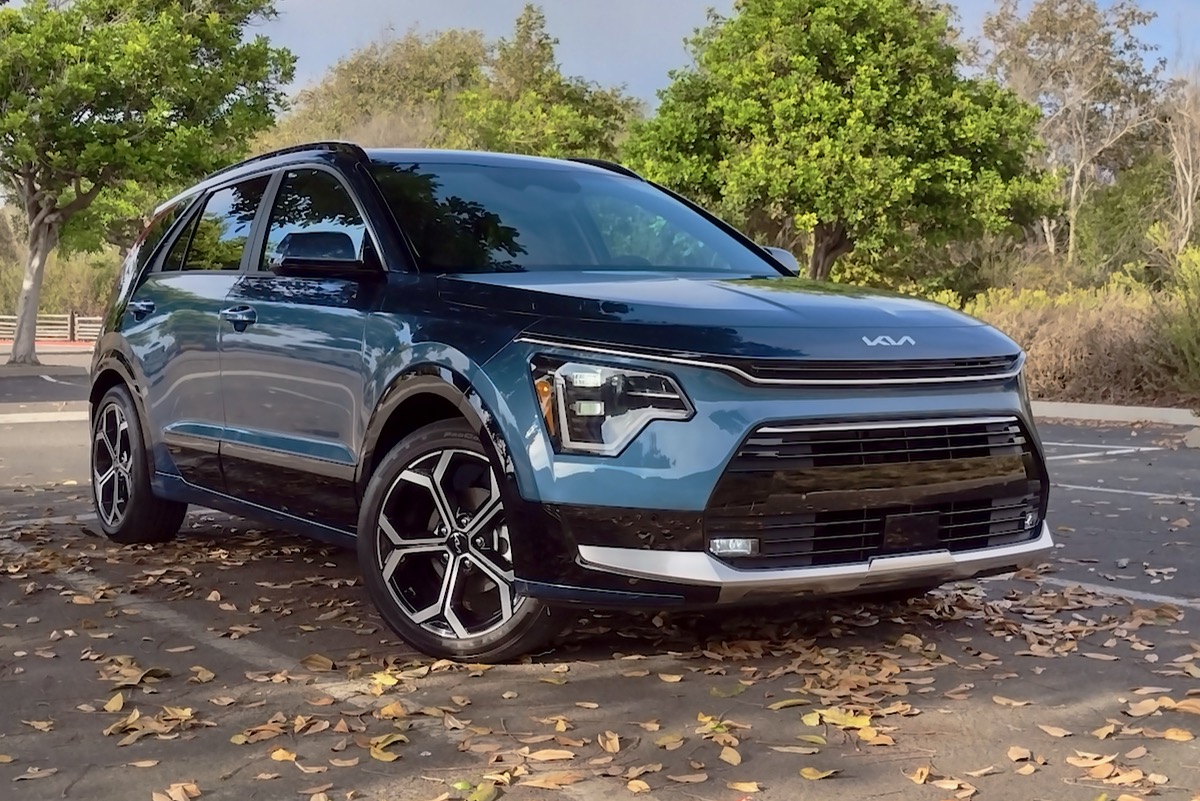
Dramatic new styling helps the redesigned 2023 Kia Niro stand out from the crowd.
The Kia Niro gets redesigned for 2023 model year, but keeps its trifecta of hybrid, plug-in hybrid, and all-electric powertrains. With the demise of its Hyundai Ioniq cousin (not to be confused with the Ioniq 5), the Niro is now the only vehicle sold in North America with those three powertrain options, ranging from a traditional hybrid to a fully electric vehicle.
The second-generation 2023 Kia Niro PHEV plug-in hybrid gets the same updates as its Kia Niro Hybrid and Niro EV siblings (which we’ll cover in separate reviews), including dramatic new styling and a revamped interior, plus more power and electric range than the previous-generation Niro PHEV, which dated back to the 2018 model year.
The plug-in hybrid market has shifted a bit since that first-generation Niro PHEV was launched. That version was considered significant because it wasn’t derived from a non-electrified model, but that no longer seems to be a priority for automakers or customers. Aside from the Toyota Prius Prime, most mainstream plug-in hybrids are now variants of existing crossovers, such as the Ford Escape PHEV, Hyundai Tucson Plug-In Hybrid, Mitsubishi Outlander Plug-In Hybrid, and Toyota RAV4 Prime—as well as Kia’s own Sportage PHEV.
So, the question for the 2023 Niro PHEV is, with plug-in hybrid versions of familiar crossover models now available, does a dedicated design still matter?
If you want people to know that you’re driving a plug-in hybrid, the Niro PHEV has you covered. While it shares styling with the other Niro variants, you’ll never be mistaken for driving an ordinary gasoline car like you might in a Sportage PHEV or other plug-in hybrid crossovers.
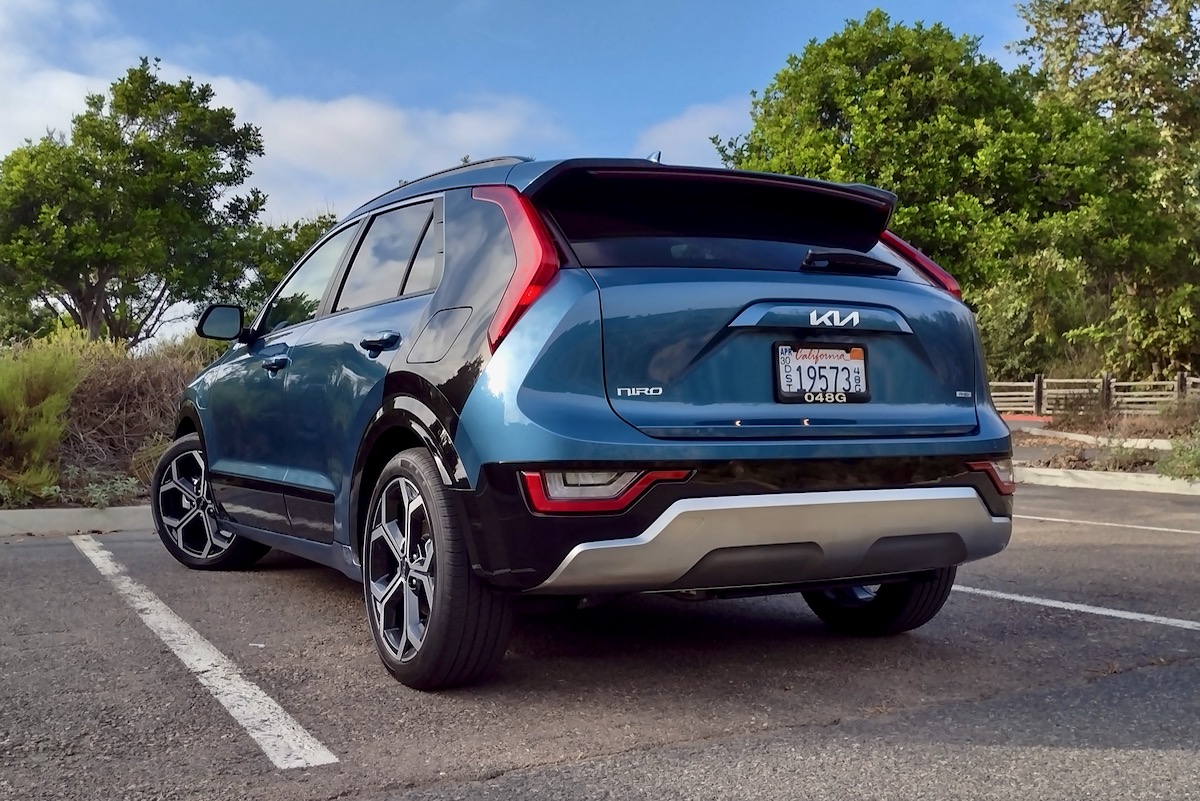
The redesigned Niro’s styling goes in a different direction from the somewhat staid first-generation model. Unusually shaped headlights and daytime running lights give the 2023 Niro a unique “face,” while the rear end incorporates tall vertical taillights and functional vents called “Air Blades” that direct air around them. Available contrasting cladding around the Air Blades, wheel arches, and lower doors will have passersby doing double takes.
The styling is functional as well as funky, Kia claims, contributing to a 0.29 coefficient of drag (Cd) that reduces wind resistance and helps improve efficiency. For reference, the Toyota Prius Prime is a bit slipperier at 0.25, but Kia achieved its figure with a more conventional two-box shape, taller roof, and more ground clearance. The 16 centimetres of ground clearance also provides the high-riding look many new car buyers find appealing.
In addition to reclothing the Niro in cyberpunk threads, Kia also made it slightly bigger. At 4,420 mm long, the new Niro is 6.3 centimetres longer than the 2022 model. That includes a 2 cm wheelbase stretch, to 2,720 mm. The new Niro rides on a platform called K3, which Kia says is distinct from the N3 platform used by most of its other recent gasoline and hybrid models, including the Sportage and Sorento crossovers.
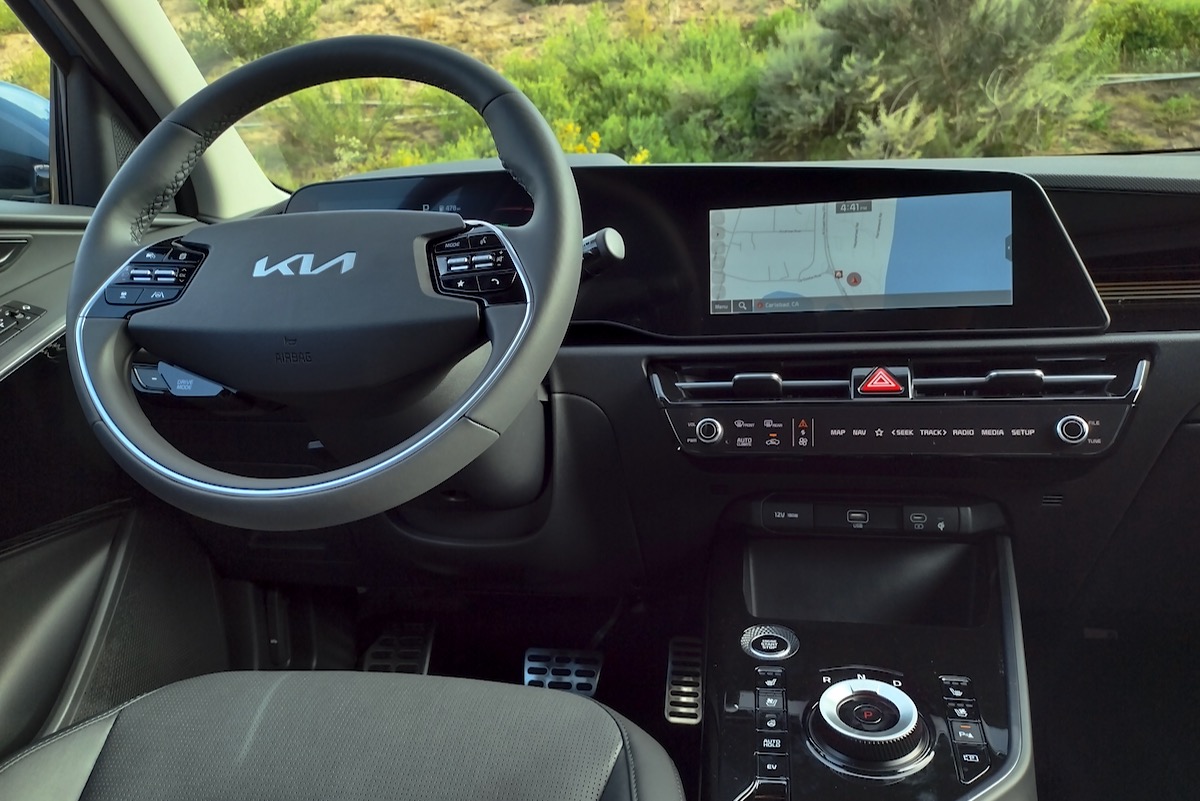
The interior gets a thorough revamp as well, the main styling feature being a crescent-shaped dashboard that nicely integrates the instrument cluster and touchscreen. Kia has also made a point of using environmentally friendly materials in the new Niro, including a headliner made from recycled wallpaper and seat material made from eucalyptus leaves. As a result, Kia claims the 2023 Niro interior is also 100% vegan. However, it also features large swathes of shiny black plastic, particularly on control surfaces where it will quickly show fingerprint smudges.
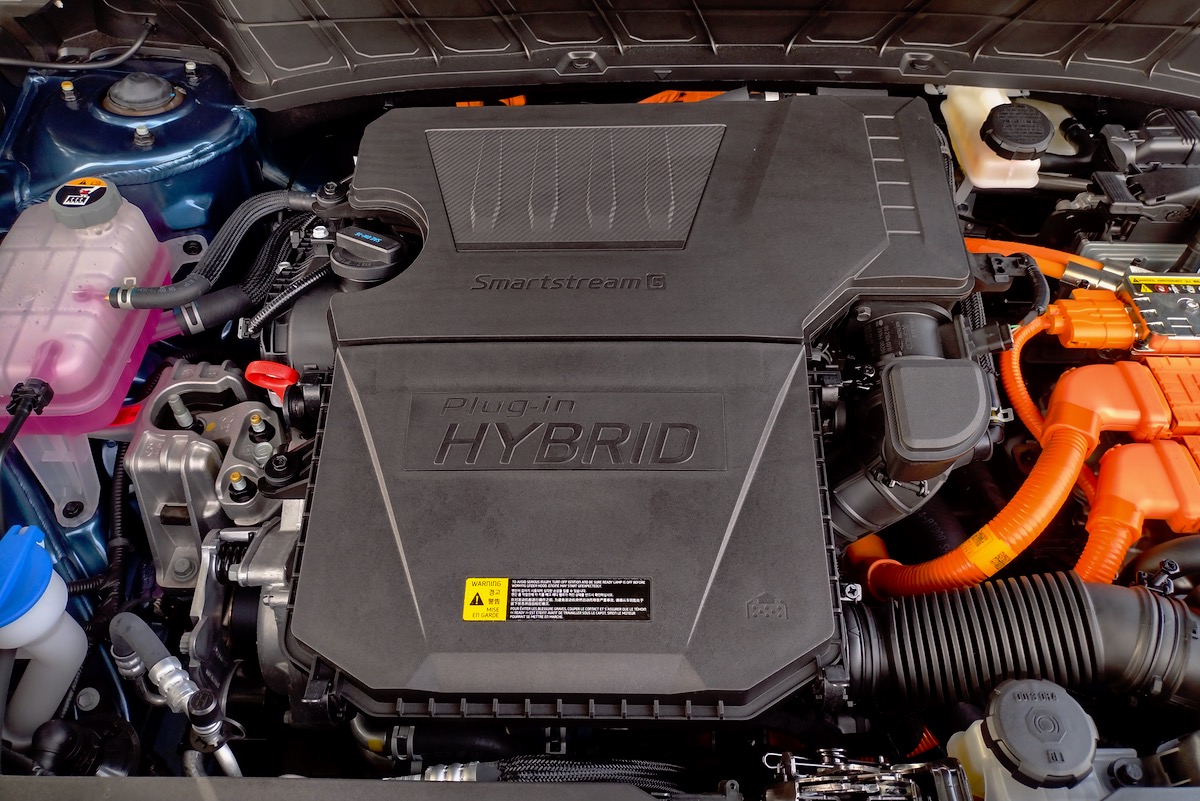
The Niro PHEV uses the same 1.6-litre four-cylinder engine and six-speed dual-clutch transmission as the Niro hybrid, but with a more powerful electric motor and 11.1-kWh battery pack. It produces better specs, the same 195 pound-feet of torque as the hybrid, but 180 horsepower, a 41-hp increase over the hybrid. The all-electric Niro EV has even more power, at 201 hp, but less torque, at 188 lb-ft. All three Niro variants are front-wheel drive (FWD).
With its dual-clutch transmission, the Niro PHEV felt more like a regular car than Toyota’s Prime plug-in hybrids. Power delivery is linear, with quick shifts from the automatic transmission. This probably isn’t the best thing for encouraging efficient driving, but letting the transmission run up and down through its gears is a more familiar experience for drivers coming from non-hybrids.
The powertrain didn’t really wake up until we switched into Sport mode, however; the default Eco mode allowed for quite a bit of lag between throttle application and actual acceleration. Sport and Eco are the only two modes you get in the Niro PHEV, but it’s hard to argue with Kia’s decision to keep things simple. And Kia’s leisurely estimated 0-100 km/h time of 9.6 seconds means you won’t be going that quickly in either drive mode.
The Niro PHEV didn’t excel in the ride or handling departments. Ride quality was tolerable but not comfortable, and the Kia quickly ran out of grip in corners. We also felt the steering got artificially heavy in Sport mode, although Kia is far from the only automaker guilty of that tuning sin. However, the Niro PHEV was never intended to be a performance car, and ride quality felt about average for a car from a mass-market brand. There just wasn’t anything remarkable about the driving experience.
Both the 2023 Niro PHEV and 2023 Niro Hybrid get a new Green Zone mode that automatically switches the car to electric power when driving through residential areas, or past hospitals and schools. This feature works automatically in the background using the car’s embedded navigation system, so the driver doesn’t need to turn it on. Indeed, we noticed the Niro PHEV switch to electric power while driving through a residential neighbourhood without any input from our end. Features like this are part of the reason why automakers still include their own navigation systems in new cars despite the rise of Apple CarPlay and Android Auto.
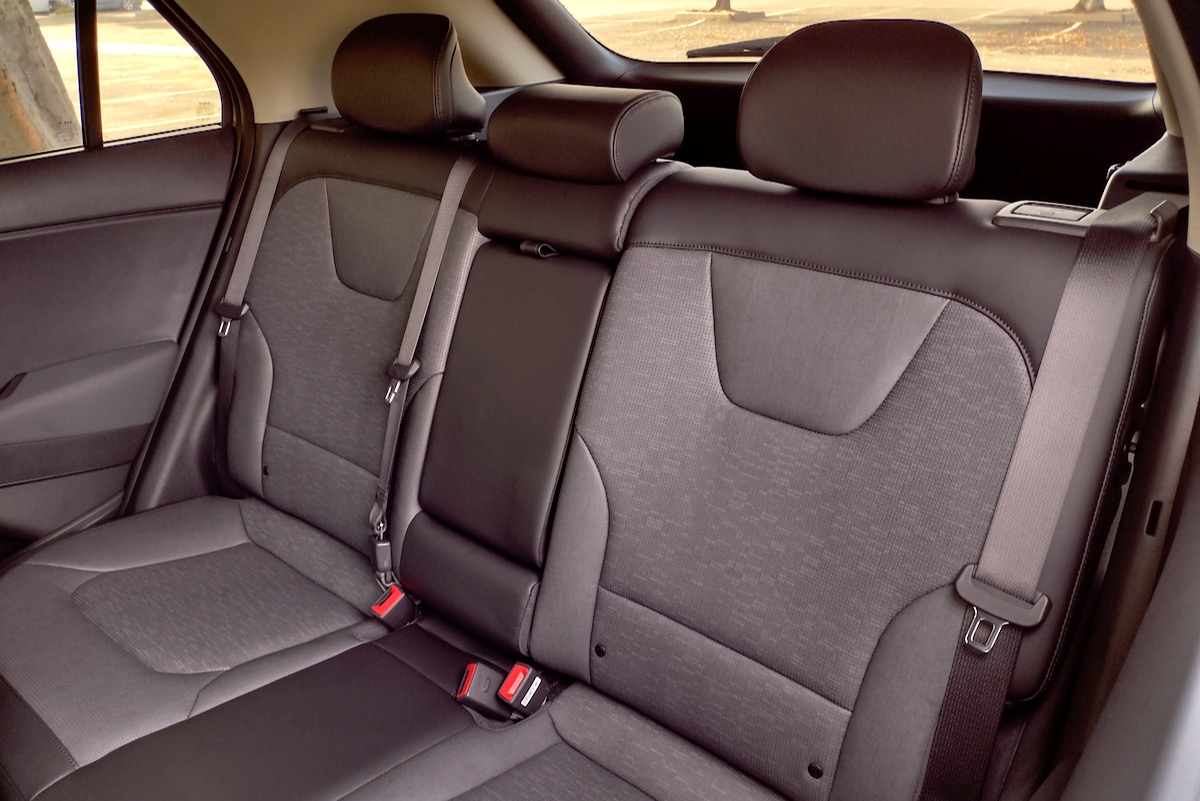
While not a traditional crossover, the Niro PHEV compares favourably to those vehicles on passenger space. It actually has more headroom and legroom in both rows than the Kia Sportage PHEV, despite the latter’s larger overall size. The Niro also has more headroom and rear-seat legroom than plug-in hybrid versions of the Ford Escape, Hyundai Tucson, and Toyota RAV4. The Toyota Prius Prime has more front-seat legroom, but that comes at the expense of rear-seat passengers. Heated cushions for the front seats and a heated steering wheel are standard.
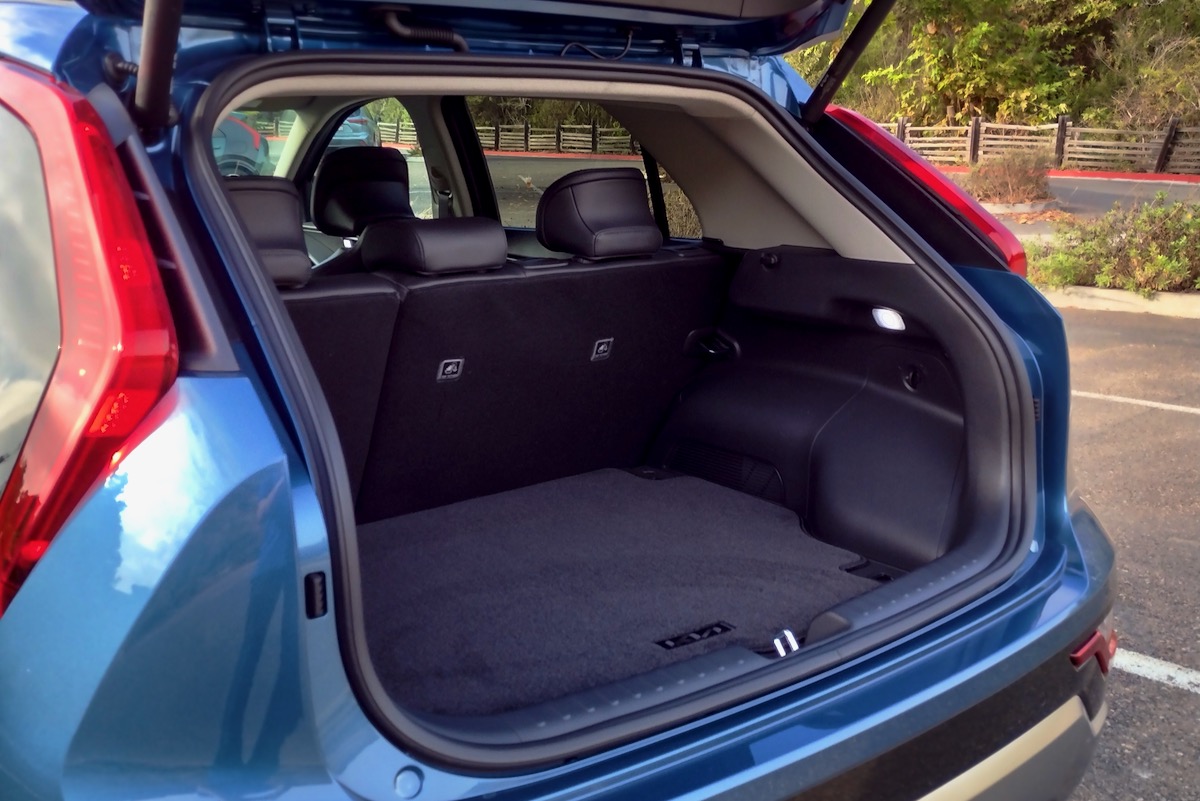
The Niro’s smaller footprint becomes apparent when looking at cargo space, however. At 549 litres with the rear seats in place, and 1,546 litres with the rear seats folded, the Niro offers substantially less cargo space than other plug-in hybrid crossovers. Even the Prius Prime hatchback boasts slightly more cargo space with its rear seats up, at 575 litres. Kia does at least offer a power liftgate—which is new to the Niro for 2023.
When it comes to interior functionality, the Niro is more like a compact hatchback than the crossover Kia perhaps wishes its customers would think of it as. Door-pocket storage space is limited, and the narrow centre console makes for a very small storage bin. Kia did at least find room for fancy cupholders with adjustable clips, and a generously sized phone tray, but they share space with lots of buttons, so the driver and front passenger will need to coordinate their movements to avoid spilled drinks.
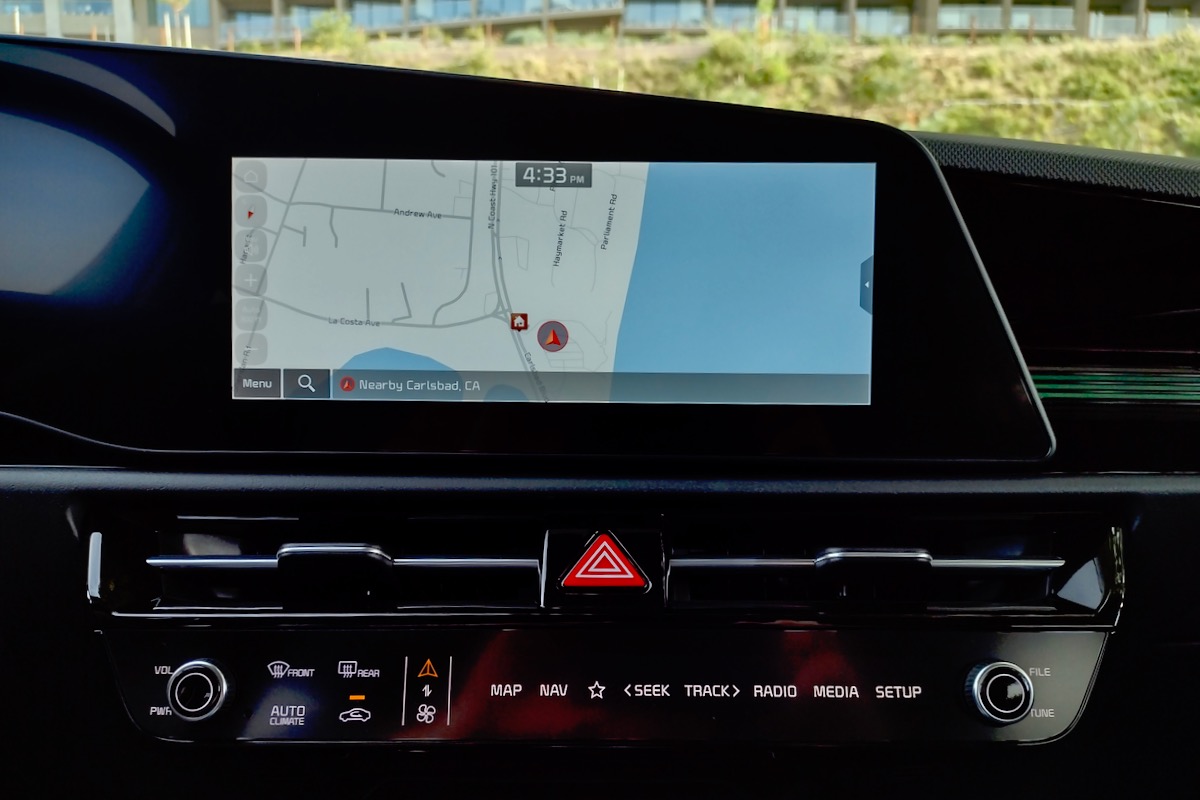
The standard infotainment system includes a 10.25-inch touchscreen, 10.25-inch digital instrument cluster, wired Apple CarPlay/Android Auto connectivity, and SiriusXM satellite radio.
As with other recent Kia models, we were impressed by the touchscreen’s responsiveness and graphics. What really stood out in the Niro, though, was how the touchscreen and digital instrument cluster were positioned on the dashboard. The two screens were placed side-by-side to make one continuous display, with the touchscreen perfectly positioned for use by both the driver and front-seat passenger. The instrument cluster was also easy to see through the steering wheel (from our driving position, at least) without blocking the view through the windshield.
The 2023 Niro also gets the digital control panel previously seen on the 2023 Sportage. This thin panel is actually a small touchscreen that takes the place of most analog buttons and knobs. It reduces dashboard clutter, and might appeal to tech-savvy buyers who prefer touch interfaces, but it does require toggling between different functions. For example, you can’t have audio volume and climate controls on the screen at the same time.
One more notable tech feature is Digital Key 2.0, which allows a smart device to serve as the key fob. Well, certain devices, at least. Currently, this feature is only compatible with the Apple Watch or recent iPhone and Samsung Galaxy smartphones.
Standard driver-assist features include forward collision warning (with pedestrian detection), automatic emergency braking, lane-keep assist, a driver attention monitor, rear cross-traffic alert, safe exit warning, rear occupant alert, highway driving assist, and blind-spot monitoring, designed to prevent collisions when pulling out of parallel parking spaces.
Unlike the Niro Hybrid, the Niro PHEV also gets standard adaptive cruise control with stop-and-go functionality and navigation-based curve prediction—features not normally included by other mainstream brands.
Crash-test ratings from the Insurance Institute for Highway Safety (IIHS) and National Highway Traffic Safety Administration (NHTSA) were not available at the time of publication.
Natural Resources Canada estimates the 2023 Kia Niro PHEV’s fuel consumption at 2.1 litres-equivalent per 100 kilometres overall, and 4.6 litres per 100 kilometres in the city, 4.9 on the highway, and 4.8 combined in hybrid mode. All-electric range is estimated at 55 kilometres with the standard 16-inch alloy wheels. That’s a 25% improvement over the previous-generation Niro, Kia notes. It’s also slightly more than the 53 km of driving range offered in the Hyundai Tucson Plug-In Hybrid, but less than the 68 km you get from a Toyota RAV4 Prime. And Kia’s own Sportage PHEV is expected to match the Niro PHEV in electric range. This long range allows the Niro PHEV to qualify for the full amount of federal and provincial electric vehicle purchase incentives.
In Canada, Kia offers a 5-year, 100,000-kilometre, comprehensive warranty including powertrain, and eight-year, 160,000-kilometre, electric drivetrain components warranty.
The 2023 Kia Niro Plug-in Hybrid is available in Canada in a single trim, the Plug-in Hybrid EX. Pricing starts at a new vehicle price of $40,583 before applicable rebates, including a destination charge of $2,449.
While it is a well-executed vehicle offering impressive interior space and competitive electric range, that may not be enough for the redesigned Niro PHEV to stand out from the plug-in hybrid versions of existing crossovers now crowding the market. While it lacks all-wheel drive (AWD), and its trimmer body shell cuts down on cargo space, the Niro PHEV doesn’t have a clear advantage over the crossovers on electric range.
However, with a lower price than most competitors, the Niro PHEV makes sense as a higher-value alternative, especially in parts of Canada that can capitalize on generous rebates. Otherwise, it’s main appeal will likely rest mostly on its styling and compact packaging.
Note: Images show a US model.

User reviews for 2023 Kia Niro Hybrid Plug-In
Write a review2023 Kia Niro Hybrid Plug-In Pricing
Trims & specs
Air Conditioning
Air filtration: ionizing · Automatic climate control front air conditioning · Dual front air conditioning zones
Airbags
Dual front airbags · Driver knee airbags · Passenger airbag deactivation: occupant sensing deactivation · Front side airbags · Front side curtain airbags
Audio System
Antenna Type: diversity · Voice recognition audio system · USB auxiliary audio input · Pandora internet radio · HD radio · Satellite Radio: SiriusXM · Total Number of Speakers: 6
Brakes
ABS: 4-wheel · Braking assist: hill start assist · Electronic parking brake: auto off · Front brake diameter: 11.0 · Front brakes: ventilated disc · Rear brake diameter: 11.2 · Rear brakes: disc
Comfort Features
Armrests: rear center with cupholders · Door sill trim: scuff plate · Floor Material: carpet · Shift knob trim: leather · Steering wheel trim: leather
Convenience Features
Adaptive stop and go cruise control: semi-automatic · Ambient lighting: color-adjustable · Assist handle: passenger side · Autonomous lane guidance: lane centering · Center console: front console with armrest and storage · Cruise control: adaptive · Cupholders: rear · Footwell lights: color-adjustable · Multi-function remote: keyless entry with panic alarm · One-touch windows: 1 · Power outlet(s): 12V front · Power steering: speed-proportional · Power windows: lockout button · Reading lights: front · Steering wheel: tilt and telescopic · Steering wheel mounted controls: audio · Storage: front seatback · Vanity mirrors: dual illuminating
Driver Seat
Adjustable lumbar support: power · Power adjustments: 10
Drivetrain
Axle ratio: 3.23
Engine
EV battery capacity: 11.1 kWh · Electric Charge Cord: 120 volt · Electric Motor Battery Type: lithium polymer · Electric Motor HP: 83 · Electric Motor Power Output (Kilowatts): 62 · Electric Motor Torque: 150 · Electric motor charger connector: SAE J1772 · Electric motor miles per charge: 33 · Hybrid Gas Engine HP: 104 · Hybrid Gas Engine HP@RPM: 5700 · Hybrid Gas Engine Torque: 106 · Hybrid gas Engine Torque@RPM: 4000
Exterior Features
Body side moldings: black · Door handle color: body-color · Fender lip moldings: black · Front bumper color: body-color · Grille color: black · Mirror color: body-color · Rear bumper color: body-color · Rear spoiler: roofline spoiler · Rear spoiler color: black · Rear trunk/liftgate: liftgate · Rocker panel color: black · Skid plate(s): front · Window trim: chrome
Headrests
Front headrests: adjustable · Number of front headrests: 2 · Number of rear headrests: 3
Hybrid
Starter Type: motor/generator
In Car Entertainment
Connected in-car apps: Google search · Infotainment: Android Auto ready · Infotainment screen size: 10.25 in.
Instrumentation
Fuel economy display: MPG · Instrument cluster screen size: 4.3 in. · Warnings and reminders: low fuel level
Lights
Daytime running lights: LED · Exterior entry lights: security approach lamps · Headlights: auto delay off · Tail and brake lights: LED
Mirrors
Exterior mirrors: power · Inside rearview mirror: manual day/night
Passenger Seat
Manual Adjustments: 6
Rear Seats
Type: 60-40 split bench
Roof
Roof rails: black
Safety
Automatic emergency braking: front pedestrian · Camera system: rearview · Child seat anchors: LATCH system · Cross Traffic Alert: rear · Crumple zones: front · Impact sensor: door unlock · Pre-Collision Warning System: audible warning · Pre-collision warning system: pedestrian detection · Rearview monitor: in dash
Seatbelts
Emergency locking retractors: front and rear · Front seatbelts: 3-point · Seatbelt force limiters: front · Seatbelt pretensioners: front · Seatbelt warning sensor: driver and passenger · Second row seatbelts: 3-point
Seats
Driver seat power adjustments: reclining · Front seat type: bucket · Passenger seat manual adjustments: height · Rear headrests: adjustable · Rear seat folding: split · Upholstery: cloth · Upholstery accents: leather-trimmed
Spare Tire
Kit: tire sealant
Steering
Steering ratio: 13.3 · Turns lock-to-lock: 2.7
Suspension
Front Arm Type: lower control arms · Front Shock Type: gas shock absorbers · Front Spring Type: coil springs · Front Suspension Classification: independent · Front Suspension Type: MacPherson struts · Rear Shock Type: twin-tube gas shock absorbers · Rear Spring Type: coil springs · Rear Suspension Classification: independent · Rear Suspension Type: multi-link · Stabilizer bar(s): front
Telematics
Driver assistance app: roadside assistance · Electronic messaging assistance: with read function · Navigation system: touch screen display · Phone: voice activated · Phone wireless data link: Bluetooth · Smart device app compatibility: Kia Access · Smart device app function: horn/light operation
Tires
Type: all season
Tires and Rims
Wheel type: aluminum alloy
Windows
Front wipers: variable intermittent · Laminated glass: acoustic · Liftgate window: fixed · Power windows: with safety reverse · Rear wiper: intermittent · Solar-tinted glass: front
Air Conditioning
Air filtration: ionizing · Automatic climate control front air conditioning · Dual front air conditioning zones
Airbags
Dual front airbags · Driver knee airbags · Passenger airbag deactivation: occupant sensing deactivation · Front side airbags · Rear side curtain airbags
Audio System
Antenna Type: mast · Voice recognition audio system · USB auxiliary audio input · Pandora internet radio · Premium Brand: Harman-Kardon · HD radio · Satellite Radio: SiriusXM · 1 subwoofer · Total Number of Speakers: 6
Brakes
ABS: 4-wheel · Braking assist: hill start assist · Electronic parking brake: auto off · Front brake diameter: 11.0 · Front brakes: ventilated disc · Rear brake diameter: 11.2 · Rear brakes: disc
Comfort Features
Armrests: rear center with cupholders · Door sill trim: scuff plate · Floor Material: carpet · Foot pedal trim: alloy · Shift knob trim: leather · Steering wheel trim: leather
Convenience Features
Adaptive stop and go cruise control: semi-automatic · Ambient lighting: color-adjustable · Assist handle: passenger side · Autonomous lane guidance: lane centering · Center console: front console with armrest and storage · Cruise control: adaptive · Cupholders: front · Dimming rearview mirror: auto-dimming · Footwell lights: color-adjustable · Memorized settings: driver side mirror · Multi-function remote: trunk release · One-touch windows: 2 · Power outlet(s): 12V front · Power steering: electric · Power windows: lockout button · Reading lights: front · Steering wheel: tilt and telescopic · Steering wheel mounted controls: paddle shifter · Storage: door pockets · Vanity mirrors: dual illuminating
Driver Seat
Adjustable lumbar support: power · Power adjustments: 10
Drivetrain
Axle ratio: 3.23
Engine
EV battery capacity: 11.1 kWh · Electric Charge Cord: 120 volt · Electric Motor Battery Type: lithium polymer · Electric Motor HP: 83 · Electric Motor Power Output (Kilowatts): 62 · Electric Motor Torque: 150 · Electric motor charger connector: SAE J1772 · Electric motor miles per charge: 32 · Hybrid Gas Engine HP: 104 · Hybrid Gas Engine HP@RPM: 5700 · Hybrid Gas Engine Torque: 106 · Hybrid gas Engine Torque@RPM: 4000
Exterior Features
Body side moldings: black · Door handle color: body-color with chrome accents · Fender lip moldings: black · Front bumper color: body-color · Grille color: chrome surround · Mirror color: body-color · Rear bumper color: body-color · Rear spoiler: roofline spoiler · Rear spoiler color: black · Rear trunk/liftgate: liftgate · Rocker panel color: black · Skid plate(s): front · Window trim: chrome
Headrests
Front headrests: adjustable · Number of front headrests: 2 · Number of rear headrests: 3
Hybrid
Starter Type: motor/generator
In Car Entertainment
Connected in-car apps: Google POIs · Infotainment: Apply CarPlay ready · Infotainment screen size: 10.25 in.
Instrumentation
Fuel economy display: range · Instrument cluster screen size: 4.3 in. · Warnings and reminders: low washer fluid
Lights
Daytime running lights: LED · Exterior entry lights: security approach lamps · Front fog lights: LED · Headlights: auto delay off · Tail and brake lights: LED
Mirrors
Exterior mirrors: power
Passenger Seat
Manual Adjustments: 6
Rear Seats
Type: 60-40 split bench
Roof
Moonroof: tilt/slide · Roof rails: black
Safety
Automatic emergency braking: intersection/junction turn · Camera system: rearview · Child seat anchors: LATCH system · Cross Traffic Alert: rear · Crumple zones: front · Impact sensor: door unlock · Pre-Collision Warning System: visual warning · Pre-collision warning system: intersection/junction turn · Rearview monitor: in dash
Seatbelts
Emergency locking retractors: front and rear · Front seatbelts: 3-point · Seatbelt force limiters: front · Seatbelt pretensioners: front · Seatbelt warning sensor: driver and passenger · Second row seatbelts: 3-point
Seats
Driver seat power adjustments: height · Front seat type: bucket · Passenger seat manual adjustments: height · Rear headrests: adjustable · Rear seat folding: split · Upholstery: leather-trimmed
Spare Tire
Kit: inflator kit
Steering
Steering ratio: 13.3 · Turns lock-to-lock: 2.7
Suspension
Front Arm Type: lower control arms · Front Shock Type: gas shock absorbers · Front Spring Type: coil springs · Front Suspension Classification: independent · Front Suspension Type: MacPherson struts · Rear Shock Type: twin-tube gas shock absorbers · Rear Spring Type: coil springs · Rear Suspension Classification: independent · Rear Suspension Type: multi-link · Stabilizer bar(s): rear
Telematics
Driver assistance app: roadside assistance · Electronic messaging assistance: with voice recognition · Navigation system: touch screen display · Phone: voice activated · Phone wireless data link: Bluetooth · Smart device app compatibility: Kia Access · Smart device app function: maintenance scheduling
Tires
Type: all season
Tires and Rims
Wheel type: aluminum alloy
Windows
Front wipers: rain sensing · Laminated glass: acoustic · Liftgate window: fixed · Power windows: with safety reverse · Rear wiper: intermittent · Solar-tinted glass: front
