2023 Porsche 911 Reviews, Pricing & Specs
Write a reviewPros
Fun to drive
Comfortable
Premium interior materials
Cons
Not much cargo space
Advanced safety features are not standard
Poor value for the money
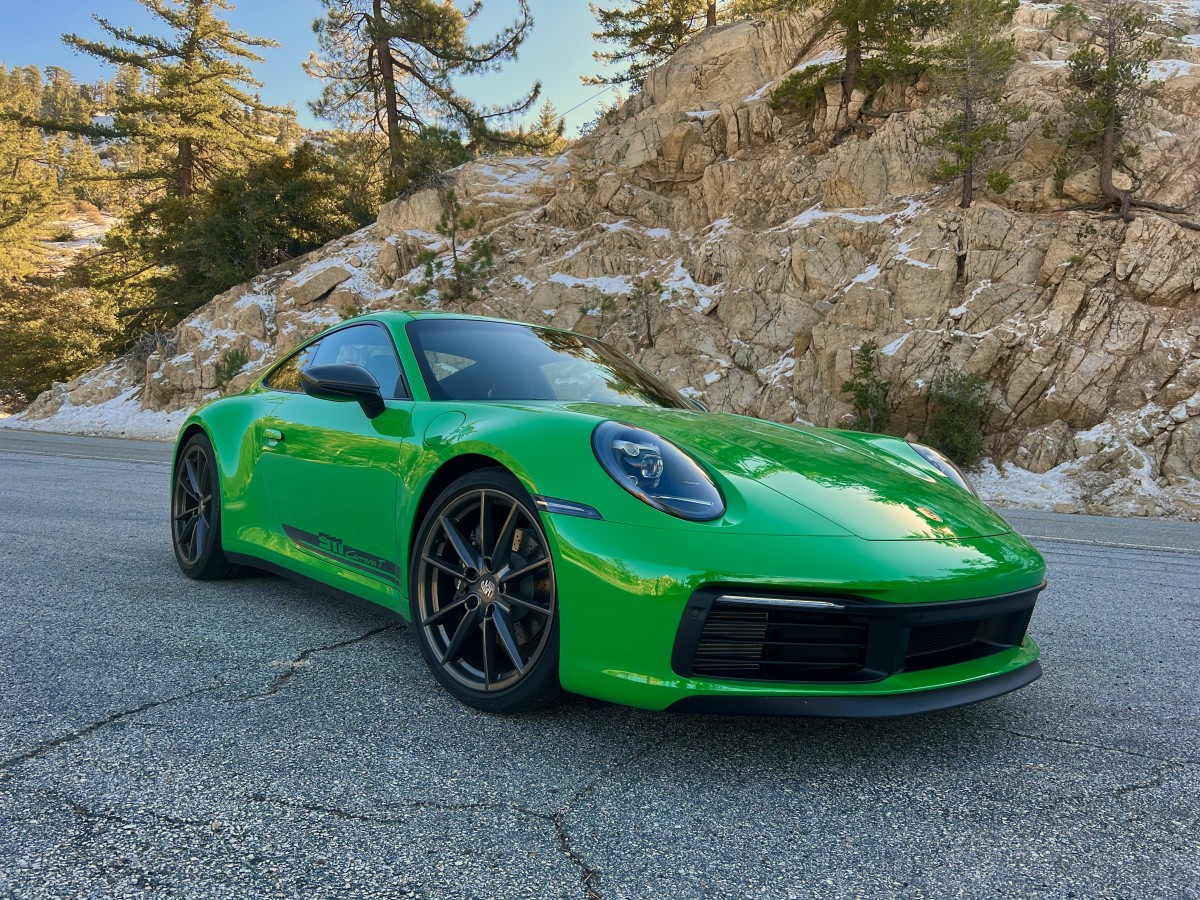
Few sports cars are as comprehensively good as the Porsche 911.

The Porsche 911 is an anomaly in the automotive world. Rather than completely rethink and redesign it every seven to ten years the way other manufacturers do with their sports cars, Porsche has slowly evolved the 911 over its 59-year history. As a result, it's one of the most recognizable vehicles ever produced, whether you're a "car person" or not.
The Porsche 911 is intended for drivers with a penchant for performance, which is evident in its low-slung and sleek shape. Overall styling is fairly tame for such an accomplished sports car, which is more of a compliment than a criticism, as it exudes more refinement and seriousness than some of its more flamboyant rivals. Some may call its design classy while others may consider it boring, but the excellent build quality and stirring performance are undeniable.
With a starting price above $100,000, Porsche 911 ownership is more exclusive than most vehicles and further enhances its aspirational mystique. Sure, it's rewarding to drive on a fun road and—at the high end of the lineup—it can dominate a racetrack. Regardless of which 911 model you might be considering, there are few vehicles that signal success without shouting it in the way some exotic cars do.
The 911 is also easier to live with than most sports cars, which is likely a byproduct of its broader appeal and long evolution. While it still has its limitations in regard to convenience, the 911 remains an accomplished and comfortable tourer that rivals are still using as a target.

The Porsche 911 has one of the most diverse trim lineups of any vehicle, with a dozen distinct models. For the vast majority of drivers, the rear-wheel drive based 379-horsepower 911 Carrera delivers more than enough performance. The Carrera 4 and any other 911 model with a 4 in its name adds all-wheel drive (AWD). The new Carrera T model uses the same flat-six engine in its powertrain, but it goes on a weight-saving diet with the removal of the rear seats and some sound insulation, and the addition of lightweight windows in place of the standard glass. It also increases driver engagement with a GT Sport steering wheel, seven-speed manual transmission, Sport Exhaust System, and several other performance enhancers.
The Carrera S increases power to 443 hp and includes many of the Carrera T's upgrades while the Carrera GTS pushes performance just a bit further with power specs of 473 hp. A new Sport Classic model brings some retro style with a throwback ducktail spoiler, and it also bumps output to 543 hp. At the top of the range are the 911 Turbo models that produce 572 or 640 hp from their twin-turbo six-cylinder engine, but they're not considered the sportiest in the lineup. That honor goes to the 502-hp Porsche 911 GT3 and 518-hp 911 GT3 RS. These non-turbo variants may not have the highest output numbers, but they are tuned more for high-performance driving on racetracks.
The outlier in the lineup is the new 911 Dakar which is inspired by the famous Paris-Dakar off-road rally race. It uses the GTS engine and is unusual for its lifted off-road suspension and other specific all-terrain features.
We had the pleasure of spending a day driving the new Carrera T, which represents the budget-conscious enthusiast's choice. The T proves that 379 hp is plenty, even for seasoned drivers on their favourite road or racetrack. It's the least expensive 911 that comes with a manual transmission, which is far more engaging and entertaining than the eight-speed automatic dual-clutch PDK transmission. The lightweight components and reduced sound insulation make it more exciting, but it's still very pleasant and comfortable when you're just commuting.
It's not until you get to the range-topping GT3 and GT3 RS models that you'll have to consider significant sacrifices to comfort in the name of performance. The stiffer suspension tunings make them great for high-performance cornering, however, they also noticeably reduce ride comfort. We recommend these track-focused variants for the rare shopper that prioritizes performance above all else. Otherwise, the rest of the 911 lineup (except for the Dakar) continues to deliver an optimal blend of sporty capabilities and relatively high levels of comfort and refinement.

The Porsche 911 pays homage to its storied past with design cues that are clearly inspired by previous generations while also including plenty of contemporary technology and features. The instrument panel sports a large central analog tachometer, which is a traditional Porsche trait. It's flanked by modern digital multifunction displays to provide the kind of control and connectivity expected of any new car. Many secondary controls are integrated into the centre infotainment touchscreen, but there are still a good amount of physical knobs and buttons to quickly adjust audio, climate, and drive modes.
The standard Sports Seats Plus are well cushioned for comfort on longer drives and provide ample lateral support when you're having fun on a twisting road. Available Full Bucket Seats feature carbon-fibre reinforced plastic (CFRP) and more aggressive side bolstering for the front seats, but larger passengers may find them too confining. There's plenty of space for taller occupants up front, but the rear seats are extraordinarily small, even for a sports coupe. Even child-sized passengers will feel cramped back there, so it's best to think of the 911 as a two-seater with a rear shelf to handle cargo overflow.
You'll likely need those rear seats for cargo since the 911 lacks a traditional trunk. Instead, you have a small 130-litre storage space under the hood. You could likely fit a few grocery bags in there but not much else. A typical carry-on rolling suitcase will have to be stowed in the rear passenger area. There's also not much in the way of interior storage for your personal items, either. You get only a multipurpose cupholder, a shallow armrest bin, and small door pockets, so our advice is to travel light.
If you opt for the Cabriolet (convertible) models, there are fewer sacrifices needed than other sports coupes since the rear seats are already inconveniently tiny. The folding fabric top deploys in only 12 seconds at speeds up to 50 km/h. The insulated top does an excellent job of quieting road and wind noise to the point where you might forget it's a convertible. With the top down, a power-folding mesh wind blocker greatly reduces wind buffeting. There are also the Targa and Targa 4 to consider, which allow for open-air driving without a fully retracting roof.
Interior materials are high quality, and the overall construction is reassuringly sturdy. The cabin is certainly up to the standards expected of a $100,000-plus sports car. The 911's ties to its past lend it a somewhat austere personality, but there are plenty of customization options to spice things up. Just mind the price, as Porsche options are known for being expensive.

At its core, the Porsche 911 is engineered for performance, putting comfort and convenience in a secondary role. That also applies to technology, but the 911 offers just enough in the way of features to keep it competitive with other sports cars. Apple CarPlay and Android Auto are standard and easier to use than the native Porsche interface for audio and navigation control. CarPlay can be run wirelessly, but Android Auto still requires a USB cable. The infotainment 10.9-inch touchscreen infotainment system is mounted lower on the dash than some other vehicles and can be more distracting to operate since you'll have to take your eyes off the road. Further complicating matters are the rather small on-screen buttons.
The base audio system is nothing to write home about, so we suggest upgrading to either the midgrade Bose or top-of-the-line Burmester systems, particularly for audiophiles. Many other tech features are related to performance and are less noticeable. The Sport Chrono package adds several sporty add-ons such as a lap timer with deeper analysis that can be extracted through a smartphone app. There are also numerous systems that can enhance performance or comfort through the selectable drive modes.
The optional front-axle lift system isn’t as exciting as some of the performance features, but it’s useful, nonetheless. With the touch of a button, the nose of the 911 lifts the adaptive suspension by about 4 centimetres to keep the chin spoiler from inelegantly scraping on driveways. As an added bonus, the system keeps track of locations so it can be set to automatically lift for frequently visited spots.

Crash test evaluations for the Porsche 911 have not been published by the National Highway Traffic Safety Administration (NHTSA) or the Insurance Institute for Highway Safety (IIHS). This is common for premium luxury and sports cars.
As a "driver’s car", the 911 doesn't come with the typical suite of safety and driver assistant features you'd find on other vehicles. Frontal collision warning with automatic emergency braking and lane-keep assist are standard on the base Carrera. A surround-view camera system and a lane change assist system, which adds blind-spot monitoring, are available as part of the optional Premium package. Other notable features include night vision and an integrated dashcam.

As an aspirational premium luxury sports car, the Porsche 911 is priced well outside of the typical shopper's budget. In Canada, the base 911 Carrera has a starting manufacturer’s suggested retail price (MSRP) of $130,700 (not including a $2,850 destination charge and other fees). Adding AWD will cost another $8,400 and opting for the convertible body style tacks on $14,600. The middle of the range is best represented by the 911 GTS and Carrera 4 GTS, which starts at $167,700 before fees, and prices climb steeply from there. Turbo models start in the $225,000 range while the new Dakar variant costs nearly $250,000.
Unless you plan on extracting the maximum amount of performance on a racetrack, we're confident Canadians will be more than pleased with the Porsche 911 Carrera 4. It has more than enough power to thrill even the most jaded of drivers and it's eligible for almost all the same options found in higher trims. We're particularly fond of the new Porsche 911 Carrera T as it's the least expensive model that can be had with a manual gearbox, but the T’s more raucous performance may be off-putting for more conservative drivers. It's difficult for us to justify the price of the Turbo and GT3 models since you can't really explore their performance potential on public roads. That makes them more of a one-upmanship option for purists to dangle over other 911 owners.
This wide variance in 911 model pricing opens it up to an equally wide array of competitors. The Chevrolet Corvette starts in the $80,000 range and delivers plenty of performance, though build quality isn't as impressive. The BMW 8 Series and higher-performing M8 are more luxurious and not quite as sporty, but they are certainly worth cross-shopping. Delving into the $200-000-plus territory, the Audi R8 and Aston Martin DB11 are worthy alternatives before you hit the prohibitively expensive exotics and supercars from Ferrari, Lamborghini, and McLaren.
Note: Images show a US model.

User reviews for 2023 Porsche 911
Write a review2023 Porsche 911 Pricing
Trims & specs
Air Conditioning
Active charcoal air filtration · Automatic climate control front air conditioning · Dual front air conditioning zones
Airbags
Dual front airbags · Passenger airbag deactivation: occupant sensing deactivation · Front side airbags · Front side curtain airbags
Audio System
Antenna Type: element · Voice recognition audio system · Memory card slot auxiliary audio input · Touch screen display radio · Satellite Radio: SiriusXM · Total Number of Speakers: 8 · 150 watts
Brakes
ABS: 4-wheel · Braking assist: hill start assist · Electronic parking brake: auto off · Front brake diameter: 13.0 · Front brake width: 1.34 · Front brakes: ventilated disc · Rear brake diameter: 13.0 · Rear brake width: 1.1 · Rear brakes: ventilated disc
Comfort Features
Cargo area floor mat material: carpet · Center console trim: leather · Dash trim: leather · Door sill trim: aluminum · Door trim: leather · Floor Mat Material: carpet · Floor Material: carpet · Floor Mats: front · Foot pedal trim: stainless steel · Shift knob trim: alloy · Steering wheel trim: leather
Convenience Features
Center console: front console with armrest and storage · Cupholders: front · Dimming rearview mirror: auto-dimming · Easy entry: manual driver and passenger seat · Multi-function remote: trunk release · One-touch windows: 2 · Power outlet(s): USB-C front · Power steering: speed-proportional · Power windows: lockout button · Reading lights: front · Steering wheel: tilt and telescopic · Steering wheel mounted controls: cruise controls · Storage: door pockets · Universal garage door opener: Homelink · Vanity mirrors: dual illuminating
Driver Seat
Power adjustments: 4
Drivetrain
Axle ratio: 3.39
Exterior Features
Door handle color: body-color · Exhaust: dual exhaust tips · Exhaust tip color: stainless-steel · Front bumper color: body-color · Grille color: black · Mirror color: body-color · Rear bumper color: body-color · Rear spoiler: electronically controlled · Rear spoiler color: body-color · Window trim: black
Headrests
Front headrests: integrated · Number of front headrests: 2 · Number of rear headrests: 2
In Car Entertainment
Connected in-car apps: Google POIs · Infotainment: Porsche Communication Management · Infotainment screen size: 10.9 in. · Smartphone integration: wireless Android Auto
Instrumentation
Fuel economy display: MPG · Instrument cluster screen size: 7 in. (dual) · Warnings and reminders: lamp failure
Lights
Daytime running lights: LED · Exterior entry lights: security approach lamps · Headlights: LED · Tail and brake lights: LED · Taillights: adaptive
Mirrors
Exterior mirrors: power
Passenger Seat
Power adjustments: 4
Rear Seats
Type: 50-50 split bench
Safety
Automatic emergency braking: front · Camera system: rearview · Child seat anchors: LATCH system · Crumple zones: front · Impact sensor: post-collision safety system · Parking sensors: front · Pre-Collision Warning System: visual warning · Pre-collision warning system: pedestrian detection · Rearview monitor: in dash
Seatbelts
Emergency locking retractors: front and rear · Front seatbelts: 3-point · Seatbelt force limiters: front and rear · Seatbelt pretensioners: front · Seatbelt warning sensor: driver and passenger · Second row seatbelts: 3-point
Seats
Driver seat power adjustments: reclining · Front seat type: sport bucket · Passenger seat power adjustments: height · Rear seat folding: split · Upholstery: leather-trimmed
Spare Tire
Kit: tire sealant
Suspension
Driver Adjustable Suspension: ride control · Front Arm Type: lower control arms · Front Shock Type: gas shock absorbers · Front Spring Type: coil springs · Front Suspension Classification: independent · Front Suspension Type: MacPherson struts · Rear Shock Type: gas shock absorbers · Rear Spring Type: coil springs · Rear Suspension Classification: independent · Rear Suspension Type: multi-link · Stabilizer bar(s): front · Suspension control: electronic
Telematics
Driver assistance app: roadside assistance · Navigation system: hard drive navigation system · Phone: voice activated · Phone wireless data link: Bluetooth · Smart device app compatibility: Porsche Connect · Smart device app function: security event/collision alert · Wifi: hotspot
Tires
Type: summer performance
Tires and Rims
Wheel type: aluminum alloy
Windows
Front wipers: variable intermittent · Power windows: with safety reverse
Air Conditioning
Active charcoal air filtration · Automatic climate control front air conditioning · Dual front air conditioning zones
Airbags
Dual front airbags · Passenger airbag deactivation: occupant sensing deactivation · Front side airbags · Front side curtain airbags
Audio System
Antenna Type: diversity · Voice recognition audio system · Bluetooth auxiliary audio input · Touch screen display radio · Satellite Radio: SiriusXM · Total Number of Speakers: 8 · 150 watts
Brakes
ABS: 4-wheel · Braking assist: hill start assist · Electronic parking brake: auto off · Front brake diameter: 13.0 · Front brake width: 1.34 · Front brakes: ventilated disc · Rear brake diameter: 13.0 · Rear brake width: 1.1 · Rear brakes: ventilated disc
Comfort Features
Cargo area floor mat material: carpet · Center console trim: leather · Dash trim: leather · Door sill trim: aluminum · Door trim: leather · Floor Mat Material: carpet · Floor Material: carpet · Floor Mats: front · Foot pedal trim: stainless steel · Shift knob trim: alloy · Steering wheel trim: leather
Convenience Features
Center console: front console with armrest and storage · Cupholders: front · Dimming rearview mirror: auto-dimming · Easy entry: manual driver seat · Multi-function remote: proximity entry system · One-touch windows: 2 · Power outlet(s): USB-C front · Power steering: electric · Power windows: lockout button · Reading lights: front · Steering wheel: tilt and telescopic · Steering wheel mounted controls: audio · Storage: accessory hook · Universal garage door opener: Homelink · Vanity mirrors: dual illuminating
Driver Seat
Power adjustments: 4
Drivetrain
4WD Type: full time · Axle ratio: 3.39
Exterior Features
Door handle color: body-color · Exhaust: dual exhaust tips · Exhaust tip color: stainless-steel · Front bumper color: body-color · Grille color: black · Mirror color: body-color · Rear bumper color: body-color · Rear spoiler: electronically controlled · Rear spoiler color: body-color · Window trim: black
Headrests
Front headrests: integrated · Number of front headrests: 2 · Number of rear headrests: 2
In Car Entertainment
Connected in-car apps: Google POIs · Infotainment: Porsche Communication Management · Infotainment screen size: 10.9 in. · Smartphone integration: wireless Android Auto
Instrumentation
Fuel economy display: range · Instrument cluster screen size: 7 in. (dual) · Warnings and reminders: low oil pressure
Lights
Daytime running lights: LED · Exterior entry lights: security approach lamps · Headlights: auto delay off · Tail and brake lights: LED · Taillights: adaptive
Mirrors
Exterior mirrors: manual folding
Passenger Seat
Power adjustments: 4
Rear Seats
Type: 50-50 split bench
Safety
Automatic emergency braking: front pedestrian · Camera system: rearview · Child seat anchors: LATCH system · Crumple zones: front · Impact sensor: post-collision safety system · Parking sensors: rear · Pre-Collision Warning System: visual warning · Pre-collision warning system: pedestrian detection · Rearview monitor: in dash
Seatbelts
Emergency locking retractors: front · Front seatbelts: 3-point · Seatbelt force limiters: front · Seatbelt pretensioners: front · Seatbelt warning sensor: driver and passenger · Second row seatbelts: 3-point
Seats
Driver seat power adjustments: height · Front seat type: sport bucket · Passenger seat power adjustments: reclining · Rear seat folding: split · Upholstery: leather-trimmed
Spare Tire
Kit: tire sealant
Suspension
Driver Adjustable Suspension: ride control · Front Arm Type: lower control arms · Front Shock Type: gas shock absorbers · Front Spring Type: coil springs · Front Suspension Classification: independent · Front Suspension Type: MacPherson struts · Rear Shock Type: gas shock absorbers · Rear Spring Type: coil springs · Rear Suspension Classification: independent · Rear Suspension Type: multi-link · Stabilizer bar(s): front · Suspension control: electronic
Telematics
Driver assistance app: roadside assistance · Navigation system: with voice recognition · Phone: voice activated · Phone wireless data link: Bluetooth · Smart device app compatibility: Porsche Connect · Smart device app function: maintenance status · Wifi: hotspot
Tires
Type: summer performance
Tires and Rims
Wheel type: aluminum alloy
Windows
Front wipers: variable intermittent · Power windows: with safety reverse
Air Conditioning
Active charcoal air filtration · Automatic climate control front air conditioning · Dual front air conditioning zones
Airbags
Dual front airbags · Passenger airbag deactivation: occupant sensing deactivation · Front side airbags · Front side curtain airbags
Audio System
Antenna Type: element · Voice recognition audio system · Memory card slot auxiliary audio input · Touch screen display radio · Satellite Radio: SiriusXM · Total Number of Speakers: 8 · 150 watts
Brakes
ABS: 4-wheel · Braking assist: hill start assist · Electronic parking brake: auto off · Front brake diameter: 13.0 · Front brake width: 1.34 · Front brakes: ventilated disc · Rear brake diameter: 13.0 · Rear brake width: 1.1 · Rear brakes: ventilated disc
Comfort Features
Cargo area floor mat material: carpet · Center console trim: leather · Dash trim: leather · Door sill trim: scuff plate · Door trim: leather · Floor Mat Material: carpet · Floor Material: carpet · Floor Mats: front · Foot pedal trim: stainless steel · Shift knob trim: alloy · Steering wheel trim: leather
Convenience Features
Center console: front console with armrest and storage · Cupholders: front · Dimming rearview mirror: auto-dimming · Multi-function remote: proximity entry system · One-touch windows: 2 · Power outlet(s): USB-C front · Power steering: speed-proportional · Power windows: lockout button · Reading lights: front · Steering wheel: tilt and telescopic · Steering wheel mounted controls: phone · Storage: door pockets · Universal garage door opener: Homelink · Vanity mirrors: dual illuminating
Driver Seat
Power adjustments: 4
Drivetrain
Axle ratio: 3.39 · Locking differential: rear
Engine
Exhaust: performance
Exterior Features
Door handle color: body-color · Exhaust: dual exhaust tips · Exhaust tip color: black · Front bumper color: body-color · Grille color: black · Mirror color: black · Rear bumper color: body-color · Rear spoiler: electronically controlled · Rear spoiler color: body-color · Window trim: black
Headrests
Front headrests: integrated · Number of front headrests: 2
In Car Entertainment
Connected in-car apps: Google POIs · Infotainment: Porsche Communication Management · Infotainment screen size: 10.9 in. · Smartphone integration: wireless Apple CarPlay
Instrumentation
Fuel economy display: MPG · Instrument cluster screen size: 7 in. (dual) · Warnings and reminders: maintenance reminder
Lights
Daytime running lights: LED · Exterior entry lights: security approach lamps · Headlights: Auto on/off · Tail and brake lights: LED · Taillights: adaptive
Mirrors
Exterior mirrors: manual folding
Passenger Seat
Power adjustments: 4
Safety
Automatic emergency braking: front pedestrian · Camera system: rearview · Crumple zones: rear · Impact sensor: post-collision safety system · Parking sensors: front · Pre-Collision Warning System: visual warning · Pre-collision warning system: pedestrian detection · Rearview monitor: in dash
Seatbelts
Emergency locking retractors: front · Front seatbelts: 3-point · Seatbelt force limiters: front · Seatbelt pretensioners: front · Seatbelt warning sensor: driver and passenger
Seats
Driver seat power adjustments: height · Front seat type: sport bucket · Passenger seat power adjustments: height · Upholstery: leather-trimmed · Upholstery accents: faux suede
Spare Tire
Kit: tire sealant
Suspension
Driver Adjustable Suspension: ride control · Front Arm Type: lower control arms · Front Shock Type: gas shock absorbers · Front Spring Type: coil springs · Front Suspension Classification: independent · Front Suspension Type: MacPherson struts · Rear Shock Type: gas shock absorbers · Rear Spring Type: coil springs · Rear Suspension Classification: independent · Rear Suspension Type: multi-link · Stabilizer bar(s): front · Suspension control: electronic
Telematics
Driver assistance app: roadside assistance · Navigation system: with voice recognition · Phone: voice activated · Phone wireless data link: Bluetooth · Smart device app compatibility: Porsche Connect · Smart device app function: maintenance status · Wifi: hotspot
Tires
Type: summer performance
Tires and Rims
Wheel type: aluminum alloy
Windows
Front wipers: rain sensing · Laminated glass: acoustic · Power windows: with safety reverse
Air Conditioning
Active charcoal air filtration · Automatic climate control front air conditioning · Dual front air conditioning zones
Airbags
Dual front airbags · Passenger airbag deactivation: occupant sensing deactivation · Front side airbags
Audio System
Antenna Type: diversity · Voice recognition audio system · Memory card slot auxiliary audio input · AM/FM radio · Satellite Radio: SiriusXM · Total Number of Speakers: 8 · 150 watts
Brakes
ABS: 4-wheel · Braking assist: hill start assist · Electronic parking brake: auto off · Front brake diameter: 13.0 · Front brake width: 1.34 · Front brakes: ventilated disc · Rear brake diameter: 13.0 · Rear brake width: 1.1 · Rear brakes: ventilated disc
Comfort Features
Cargo area floor mat material: carpet · Center console trim: leather · Dash trim: leather · Door sill trim: aluminum · Door trim: leather · Floor Mat Material: carpet · Floor Material: carpet · Floor Mats: front · Foot pedal trim: stainless steel · Shift knob trim: alloy · Steering wheel trim: leather
Convenience Features
Center console: front console with armrest and storage · Cupholders: front · Dimming rearview mirror: auto-dimming · Easy entry: manual driver and passenger seat · Multi-function remote: trunk release · One-touch windows: 2 · Power outlet(s): USB-C front · Power steering: speed-proportional · Power windows: lockout button · Reading lights: front · Steering wheel: tilt and telescopic · Steering wheel mounted controls: paddle shifter · Storage: accessory hook · Universal garage door opener: Homelink · Vanity mirrors: dual illuminating
Driver Seat
Power adjustments: 4
Drivetrain
Axle ratio: 3.39
Exterior Features
Door handle color: body-color · Exhaust: dual exhaust tips · Exhaust tip color: stainless-steel · Front bumper color: body-color · Grille color: black · Mirror color: body-color · Rear bumper color: body-color · Rear spoiler: lip · Rear spoiler color: body-color · Window trim: black
Headrests
Front headrests: integrated · Number of front headrests: 2 · Number of rear headrests: 2
In Car Entertainment
Connected in-car apps: Google POIs · Infotainment: Porsche Communication Management · Infotainment screen size: 10.9 in. · Smartphone integration: wireless Apple CarPlay
Instrumentation
Fuel economy display: range · Instrument cluster screen size: 7 in. (dual) · Warnings and reminders: low fuel level
Lights
Daytime running lights: LED · Exterior entry lights: security approach lamps · Headlights: Auto on/off · Tail and brake lights: LED · Taillights: adaptive
Mirrors
Exterior mirrors: auto-dimming
Passenger Seat
Power adjustments: 4
Rear Seats
Type: 50-50 split bench
Roof
Convertible rear window: glass · Convertible roof: soft top
Safety
Automatic emergency braking: front pedestrian · Camera system: rearview · Child seat anchors: LATCH system · Crumple zones: front · Impact sensor: post-collision safety system · Parking sensors: rear · Pre-Collision Warning System: visual warning · Pre-collision warning system: pedestrian detection · Rearview monitor: in dash
Seatbelts
Emergency locking retractors: front · Front seatbelts: 3-point · Seatbelt force limiters: front and rear · Seatbelt pretensioners: front · Seatbelt warning sensor: driver and passenger · Second row seatbelts: 3-point
Seats
Driver seat power adjustments: reclining · Front seat type: sport bucket · Passenger seat power adjustments: reclining · Rear seat folding: split · Upholstery: leather-trimmed
Spare Tire
Kit: tire sealant
Suspension
Driver Adjustable Suspension: ride control · Front Arm Type: lower control arms · Front Shock Type: gas shock absorbers · Front Spring Type: coil springs · Front Suspension Classification: independent · Front Suspension Type: MacPherson struts · Rear Shock Type: gas shock absorbers · Rear Spring Type: coil springs · Rear Suspension Classification: independent · Rear Suspension Type: multi-link · Stabilizer bar(s): rear · Suspension control: electronic
Telematics
Driver assistance app: roadside assistance · Navigation system: touch screen display · Phone: voice activated · Phone wireless data link: Bluetooth · Smart device app compatibility: Porsche Connect · Smart device app function: vehicle location · Wifi: hotspot
Tires
Type: summer performance
Tires and Rims
Wheel type: aluminum alloy
Windows
Front wipers: variable intermittent · Power windows: with safety reverse
Air Conditioning
Active charcoal air filtration · Automatic climate control front air conditioning · Dual front air conditioning zones
Airbags
Dual front airbags · Passenger airbag deactivation: occupant sensing deactivation · Front side airbags · Front side curtain airbags
Audio System
Antenna Type: diversity · Voice recognition audio system · USB auxiliary audio input · AM/FM radio · Satellite Radio: SiriusXM · Total Number of Speakers: 8 · 150 watts
Brakes
ABS: 4-wheel · Braking assist: hill start assist · Electronic parking brake: auto off · Front brake diameter: 13.8 · Front brake width: 1.34 · Front brakes: ventilated disc · Rear brake diameter: 13.8 · Rear brake width: 1.1 · Rear brakes: ventilated disc
Comfort Features
Cargo area floor mat material: carpet · Center console trim: leather · Dash trim: leather · Door sill trim: scuff plate · Door trim: leather · Floor Mat Material: carpet · Floor Material: carpet · Floor Mats: front · Foot pedal trim: stainless steel · Shift knob trim: alloy · Steering wheel trim: leather
Convenience Features
Center console: front console with armrest and storage · Cupholders: front · Dimming rearview mirror: auto-dimming · Easy entry: manual driver and passenger seat · Multi-function remote: proximity entry system · One-touch windows: 2 · Power outlet(s): USB-C front · Power steering: speed-proportional · Power windows: lockout button · Reading lights: front · Steering wheel: tilt and telescopic · Steering wheel mounted controls: paddle shifter · Storage: accessory hook · Universal garage door opener: Homelink · Vanity mirrors: dual illuminating
Driver Seat
Power adjustments: 4
Drivetrain
Axle ratio: 3.39 · Locking differential: rear
Exterior Features
Door handle color: body-color · Exhaust: quad exhaust tips · Exhaust tip color: stainless-steel · Front bumper color: body-color · Grille color: black · Mirror color: body-color · Rear bumper color: body-color · Rear spoiler: lip · Rear spoiler color: body-color · Window trim: black
Headrests
Front headrests: integrated · Number of front headrests: 2 · Number of rear headrests: 2
In Car Entertainment
Connected in-car apps: Google POIs · Infotainment: Porsche Communication Management · Infotainment screen size: 10.9 in. · Smartphone integration: wireless Android Auto
Instrumentation
Fuel economy display: range · Instrument cluster screen size: 7 in. (dual) · Warnings and reminders: maintenance reminder
Lights
Daytime running lights: LED · Exterior entry lights: security approach lamps · Headlights: Auto on/off · Tail and brake lights: LED · Taillights: adaptive
Mirrors
Exterior mirrors: auto-dimming
Passenger Seat
Power adjustments: 4
Rear Seats
Type: 50-50 split bench
Safety
Automatic emergency braking: front pedestrian · Camera system: rearview · Child seat anchors: LATCH system · Crumple zones: front · Impact sensor: post-collision safety system · Parking sensors: front · Pre-Collision Warning System: audible warning · Pre-collision warning system: pedestrian detection · Rearview monitor: in dash
Seatbelts
Emergency locking retractors: front and rear · Front seatbelts: 3-point · Seatbelt force limiters: front and rear · Seatbelt pretensioners: front · Seatbelt warning sensor: driver and passenger · Second row seatbelts: 3-point
Seats
Driver seat power adjustments: reclining · Front seat type: sport bucket · Passenger seat power adjustments: reclining · Rear seat folding: split · Upholstery: leather-trimmed · Upholstery accents: leather
Spare Tire
Kit: tire sealant
Suspension
Driver Adjustable Suspension: ride control · Front Arm Type: lower control arms · Front Shock Type: gas shock absorbers · Front Spring Type: coil springs · Front Suspension Classification: independent · Front Suspension Type: MacPherson struts · Rear Shock Type: gas shock absorbers · Rear Spring Type: coil springs · Rear Suspension Classification: independent · Rear Suspension Type: multi-link · Stabilizer bar(s): rear · Suspension control: electronic
Telematics
Driver assistance app: roadside assistance · Navigation system: with voice recognition · Phone: voice activated · Phone wireless data link: Bluetooth · Smart device app compatibility: Porsche Connect · Smart device app function: maintenance status · Wifi: hotspot
Tires
Type: summer performance
Tires and Rims
Wheel type: aluminum alloy
Windows
Front wipers: rain sensing · Power windows: with safety reverse
Air Conditioning
Active charcoal air filtration · Automatic climate control front air conditioning · Dual front air conditioning zones
Airbags
Dual front airbags · Passenger airbag deactivation: occupant sensing deactivation · Front side airbags
Audio System
Antenna Type: element · Voice recognition audio system · Memory card slot auxiliary audio input · HD radio · Satellite Radio: SiriusXM · Total Number of Speakers: 8 · 150 watts
Brakes
ABS: 4-wheel · Braking assist: hill start assist · Electronic parking brake: auto off · Front brake diameter: 13.0 · Front brake width: 1.34 · Front brakes: ventilated disc · Rear brake diameter: 13.0 · Rear brake width: 1.1 · Rear brakes: ventilated disc
Comfort Features
Cargo area floor mat material: carpet · Center console trim: leather · Dash trim: leather · Door sill trim: aluminum · Door trim: leather · Floor Mat Material: carpet · Floor Material: carpet · Floor Mats: front · Foot pedal trim: stainless steel · Shift knob trim: alloy · Steering wheel trim: leather
Convenience Features
Center console: front console with armrest and storage · Cupholders: front · Dimming rearview mirror: auto-dimming · Easy entry: manual driver and passenger seat · Multi-function remote: trunk release · One-touch windows: 2 · Power outlet(s): 12V front · Power steering: electric · Power windows: lockout button · Reading lights: front · Steering wheel: tilt and telescopic · Steering wheel mounted controls: cruise controls · Storage: door pockets · Universal garage door opener: Homelink · Vanity mirrors: dual illuminating
Driver Seat
Power adjustments: 4
Drivetrain
4WD Type: full time · Axle ratio: 3.39
Exterior Features
Door handle color: body-color · Exhaust: dual exhaust tips · Exhaust tip color: stainless-steel · Front bumper color: body-color · Grille color: black · Mirror color: body-color · Rear bumper color: body-color · Rear spoiler: electronically controlled · Rear spoiler color: body-color · Window trim: black
Headrests
Front headrests: integrated · Number of front headrests: 2 · Number of rear headrests: 2
In Car Entertainment
Connected in-car apps: Google search · Infotainment: Porsche Communication Management · Infotainment screen size: 10.9 in. · Smartphone integration: wireless Android Auto
Instrumentation
Fuel economy display: range · Instrument cluster screen size: 7 in. (dual) · Warnings and reminders: low oil pressure
Lights
Daytime running lights: LED · Exterior entry lights: security approach lamps · Headlights: LED · Tail and brake lights: LED · Taillights: adaptive
Mirrors
Exterior mirrors: power
Passenger Seat
Power adjustments: 4
Rear Seats
Type: 50-50 split bench
Roof
Convertible rear window: glass · Convertible roof: power
Safety
Automatic emergency braking: front · Camera system: rearview · Child seat anchors: LATCH system · Crumple zones: front · Impact sensor: post-collision safety system · Parking sensors: rear · Pre-Collision Warning System: visual warning · Pre-collision warning system: pedestrian detection · Rearview monitor: in dash
Seatbelts
Emergency locking retractors: front · Front seatbelts: 3-point · Seatbelt force limiters: front · Seatbelt pretensioners: front · Seatbelt warning sensor: driver and passenger · Second row seatbelts: 3-point
Seats
Driver seat power adjustments: reclining · Front seat type: sport bucket · Passenger seat power adjustments: reclining · Rear seat folding: split · Upholstery: leather-trimmed
Spare Tire
Kit: tire sealant
Suspension
Driver Adjustable Suspension: ride control · Front Arm Type: lower control arms · Front Shock Type: gas shock absorbers · Front Spring Type: coil springs · Front Suspension Classification: independent · Front Suspension Type: MacPherson struts · Rear Shock Type: gas shock absorbers · Rear Spring Type: coil springs · Rear Suspension Classification: independent · Rear Suspension Type: multi-link · Stabilizer bar(s): rear · Suspension control: electronic
Telematics
Driver assistance app: roadside assistance · Navigation system: hard drive navigation system · Phone: voice activated · Phone wireless data link: Bluetooth · Smart device app compatibility: Porsche Connect · Smart device app function: lock operation · Wifi: hotspot
Tires
Type: summer performance
Tires and Rims
Wheel type: aluminum alloy
Windows
Front wipers: variable intermittent · Power windows: with safety reverse
Air Conditioning
Active charcoal air filtration · Automatic climate control front air conditioning · Dual front air conditioning zones
Airbags
Dual front airbags · Passenger airbag deactivation: occupant sensing deactivation · Side airbags: front with head protection chambers
Audio System
Antenna Type: element · Voice recognition audio system · Bluetooth auxiliary audio input · Touch screen display radio · Satellite Radio: SiriusXM · Total Number of Speakers: 8 · 150 watts
Brakes
ABS: 4-wheel · Braking assist: hill start assist · Electronic parking brake: auto off · Front brake diameter: 13.0 · Front brake width: 1.34 · Front brakes: ventilated disc · Rear brake diameter: 13.0 · Rear brake width: 1.1 · Rear brakes: ventilated disc
Comfort Features
Cargo area floor mat material: carpet · Center console trim: leather · Dash trim: leather · Door sill trim: scuff plate · Door trim: leather · Floor Mat Material: carpet · Floor Material: carpet · Floor Mats: front · Foot pedal trim: stainless steel · Shift knob trim: alloy · Steering wheel trim: leather
Convenience Features
Center console: front console with armrest and storage · Cupholders: front · Dimming rearview mirror: auto-dimming · Easy entry: manual driver seat · Multi-function remote: proximity entry system · One-touch windows: 2 · Power outlet(s): USB-C front · Power steering: speed-proportional · Power windows: lockout button · Reading lights: front · Steering wheel: tilt and telescopic · Steering wheel mounted controls: multi-function screen controls · Storage: accessory hook · Universal garage door opener: Homelink · Vanity mirrors: dual illuminating
Driver Seat
Power adjustments: 4
Drivetrain
4WD Type: full time · Axle ratio: 3.39
Exterior Features
Door handle color: body-color · Exhaust: dual exhaust tips · Exhaust tip color: stainless-steel · Front bumper color: body-color · Grille color: black · Mirror color: body-color · Rear bumper color: body-color · Rear spoiler: electronically controlled · Rear spoiler color: body-color · Window trim: black
Headrests
Front headrests: integrated · Number of front headrests: 2 · Number of rear headrests: 2
In Car Entertainment
Connected in-car apps: Google POIs · Infotainment: Porsche Communication Management · Infotainment screen size: 10.9 in. · Smartphone integration: wireless Android Auto
Instrumentation
Fuel economy display: range · Instrument cluster screen size: 7 in. (dual) · Warnings and reminders: low fuel level
Lights
Daytime running lights: LED · Exterior entry lights: security approach lamps · Headlights: Auto on/off · Tail and brake lights: LED · Taillights: adaptive
Mirrors
Exterior mirrors: heated
Passenger Seat
Power adjustments: 4
Rear Seats
Type: 50-50 split bench
Roof
Convertible rear window: glass · Convertible roof: power
Safety
Automatic emergency braking: front pedestrian · Camera system: rearview · Child seat anchors: LATCH system · Crumple zones: rear · Impact sensor: post-collision safety system · Parking sensors: front · Pre-Collision Warning System: visual warning · Pre-collision warning system: pedestrian detection · Rearview monitor: in dash
Seatbelts
Emergency locking retractors: front · Front seatbelts: 3-point · Seatbelt force limiters: front · Seatbelt pretensioners: front · Seatbelt warning sensor: driver and passenger · Second row seatbelts: 3-point
Seats
Driver seat power adjustments: height · Front seat type: sport bucket · Passenger seat power adjustments: height · Rear seat folding: split · Upholstery: leather-trimmed
Spare Tire
Kit: tire sealant
Suspension
Driver Adjustable Suspension: ride control · Front Arm Type: lower control arms · Front Shock Type: gas shock absorbers · Front Spring Type: coil springs · Front Suspension Classification: independent · Front Suspension Type: MacPherson struts · Rear Shock Type: gas shock absorbers · Rear Spring Type: coil springs · Rear Suspension Classification: independent · Rear Suspension Type: multi-link · Stabilizer bar(s): rear · Suspension control: electronic
Telematics
Driver assistance app: roadside assistance · Navigation system: with voice recognition · Phone: voice activated · Phone wireless data link: Bluetooth · Smart device app compatibility: Porsche Connect · Smart device app function: maintenance status · Wifi: hotspot
Tires
Type: summer performance
Tires and Rims
Wheel type: aluminum alloy
Windows
Front wipers: rain sensing · Power windows: with safety reverse
Air Conditioning
Active charcoal air filtration · Automatic climate control front air conditioning · Dual front air conditioning zones
Airbags
Dual front airbags · Passenger airbag deactivation: occupant sensing deactivation · Front side airbags · Front side curtain airbags
Audio System
Antenna Type: element · Voice recognition audio system · Auxiliary audio input: jack · Touch screen display radio · Satellite Radio: SiriusXM · Total Number of Speakers: 8 · 150 watts
Brakes
ABS: 4-wheel · Braking assist: hill start assist · Electronic parking brake: auto off · Front brake diameter: 13.8 · Front brake width: 1.34 · Front brakes: ventilated disc · Rear brake diameter: 13.8 · Rear brake width: 1.1 · Rear brakes: ventilated disc
Comfort Features
Cargo area floor mat material: carpet · Center console trim: leather · Dash trim: leather · Door sill trim: scuff plate · Door trim: leather · Floor Mat Material: carpet · Floor Material: carpet · Floor Mats: front · Foot pedal trim: stainless steel · Shift knob trim: alloy · Steering wheel trim: leather
Convenience Features
Center console: front console with armrest and storage · Cupholders: front · Dimming rearview mirror: auto-dimming · Easy entry: manual driver seat · Multi-function remote: proximity entry system · One-touch windows: 2 · Power outlet(s): 12V front · Power steering: speed-proportional · Power windows: lockout button · Reading lights: front · Steering wheel: tilt and telescopic · Steering wheel mounted controls: cruise controls · Storage: accessory hook · Universal garage door opener: Homelink · Vanity mirrors: dual illuminating
Driver Seat
Power adjustments: 4
Drivetrain
4WD Type: full time · Axle ratio: 3.39 · Locking differential: rear
Exterior Features
Door handle color: body-color · Exhaust: quad exhaust tips · Exhaust tip color: stainless-steel · Front bumper color: body-color · Grille color: black · Mirror color: body-color · Rear bumper color: body-color · Rear spoiler: electronically controlled · Rear spoiler color: body-color · Window trim: black
Headrests
Front headrests: integrated · Number of front headrests: 2 · Number of rear headrests: 2
In Car Entertainment
Connected in-car apps: Google POIs · Infotainment: Porsche Communication Management · Infotainment screen size: 10.9 in. · Smartphone integration: wireless Android Auto
Instrumentation
Fuel economy display: range · Instrument cluster screen size: 7 in. (dual) · Warnings and reminders: low oil pressure
Lights
Daytime running lights: LED · Exterior entry lights: security approach lamps · Headlights: Auto on/off · Tail and brake lights: LED · Taillights: adaptive
Mirrors
Exterior mirrors: manual folding
Passenger Seat
Power adjustments: 4
Rear Seats
Type: 50-50 split bench
Safety
Automatic emergency braking: front · Camera system: rearview · Child seat anchors: LATCH system · Crumple zones: rear · Impact sensor: post-collision safety system · Parking sensors: front · Pre-Collision Warning System: visual warning · Pre-collision warning system: pedestrian detection · Rearview monitor: in dash
Seatbelts
Emergency locking retractors: front and rear · Front seatbelts: 3-point · Seatbelt force limiters: front and rear · Seatbelt pretensioners: front · Seatbelt warning sensor: driver and passenger · Second row seatbelts: 3-point
Seats
Driver seat power adjustments: height · Front seat type: sport bucket · Passenger seat power adjustments: height · Rear seat folding: split · Upholstery: leather-trimmed · Upholstery accents: leather
Spare Tire
Kit: tire sealant
Suspension
Driver Adjustable Suspension: ride control · Front Arm Type: lower control arms · Front Shock Type: gas shock absorbers · Front Spring Type: coil springs · Front Suspension Classification: independent · Front Suspension Type: MacPherson struts · Rear Shock Type: gas shock absorbers · Rear Spring Type: coil springs · Rear Suspension Classification: independent · Rear Suspension Type: multi-link · Stabilizer bar(s): front · Suspension control: electronic
Telematics
Driver assistance app: roadside assistance · Navigation system: with voice recognition · Phone: voice activated · Phone wireless data link: Bluetooth · Smart device app compatibility: Porsche Connect · Smart device app function: vehicle location · Wifi: hotspot
Tires
Type: summer performance
Tires and Rims
Wheel type: aluminum alloy
Windows
Front wipers: rain sensing · Power windows: with safety reverse
Air Conditioning
Active charcoal air filtration · Automatic climate control front air conditioning · Dual front air conditioning zones
Airbags
Dual front airbags · Passenger airbag deactivation: occupant sensing deactivation · Front side airbags
Audio System
Antenna Type: element · Voice recognition audio system · Bluetooth auxiliary audio input · AM/FM radio · Satellite Radio: SiriusXM · Total Number of Speakers: 8 · 150 watts
Brakes
ABS: 4-wheel · Braking assist: hill start assist · Electronic parking brake: auto off · Front brake diameter: 13.8 · Front brake width: 1.34 · Front brakes: ventilated disc · Rear brake diameter: 13.8 · Rear brake width: 1.1 · Rear brakes: ventilated disc
Comfort Features
Cargo area floor mat material: carpet · Center console trim: leather · Dash trim: leather · Door sill trim: aluminum · Door trim: leather · Floor Mat Material: carpet · Floor Material: carpet · Floor Mats: front · Foot pedal trim: stainless steel · Shift knob trim: alloy · Steering wheel trim: leather
Convenience Features
Center console: front console with armrest and storage · Cupholders: front · Dimming rearview mirror: auto-dimming · Easy entry: manual driver and passenger seat · Multi-function remote: trunk release · One-touch windows: 2 · Power outlet(s): USB-C front · Power steering: electric · Power windows: lockout button · Reading lights: front · Steering wheel: tilt and telescopic · Steering wheel mounted controls: audio · Storage: accessory hook · Universal garage door opener: Homelink · Vanity mirrors: dual illuminating
Driver Seat
Power adjustments: 4
Drivetrain
Axle ratio: 3.39 · Locking differential: rear
Exterior Features
Door handle color: body-color · Exhaust: quad exhaust tips · Exhaust tip color: stainless-steel · Front bumper color: body-color · Grille color: black · Mirror color: body-color · Rear bumper color: body-color · Rear spoiler: lip · Rear spoiler color: body-color · Window trim: black
Headrests
Front headrests: integrated · Number of front headrests: 2 · Number of rear headrests: 2
In Car Entertainment
Connected in-car apps: Google search · Infotainment: Porsche Communication Management · Infotainment screen size: 10.9 in. · Smartphone integration: wireless Android Auto
Instrumentation
Fuel economy display: MPG · Instrument cluster screen size: 7 in. (dual) · Warnings and reminders: lamp failure
Lights
Daytime running lights: LED · Exterior entry lights: security approach lamps · Headlights: LED · Tail and brake lights: LED · Taillights: adaptive
Mirrors
Exterior mirrors: power
Passenger Seat
Power adjustments: 4
Rear Seats
Type: 50-50 split bench
Roof
Convertible rear window: glass · Convertible roof: power
Safety
Automatic emergency braking: front pedestrian · Camera system: rearview · Child seat anchors: LATCH system · Crumple zones: front · Impact sensor: post-collision safety system · Parking sensors: front · Pre-Collision Warning System: audible warning · Pre-collision warning system: pedestrian detection · Rearview monitor: in dash
Seatbelts
Emergency locking retractors: front · Front seatbelts: 3-point · Seatbelt force limiters: front and rear · Seatbelt pretensioners: front · Seatbelt warning sensor: driver and passenger · Second row seatbelts: 3-point
Seats
Driver seat power adjustments: reclining · Front seat type: sport bucket · Passenger seat power adjustments: reclining · Rear seat folding: split · Upholstery: leather-trimmed · Upholstery accents: leather
Spare Tire
Kit: tire sealant
Suspension
Driver Adjustable Suspension: ride control · Front Arm Type: lower control arms · Front Shock Type: gas shock absorbers · Front Spring Type: coil springs · Front Suspension Classification: independent · Front Suspension Type: MacPherson struts · Rear Shock Type: gas shock absorbers · Rear Spring Type: coil springs · Rear Suspension Classification: independent · Rear Suspension Type: multi-link · Stabilizer bar(s): front · Suspension control: electronic
Telematics
Driver assistance app: roadside assistance · Navigation system: hard drive navigation system · Phone: voice activated · Phone wireless data link: Bluetooth · Smart device app compatibility: Porsche Connect · Smart device app function: lock operation · Wifi: hotspot
Tires
Type: summer performance
Tires and Rims
Wheel type: aluminum alloy
Windows
Front wipers: variable intermittent · Power windows: with safety reverse
Air Conditioning
Active charcoal air filtration · Automatic climate control front air conditioning · Dual front air conditioning zones
Airbags
Dual front airbags · Passenger airbag deactivation: occupant sensing deactivation · Front side airbags · Front side curtain airbags
Audio System
Antenna Type: diversity · Voice recognition audio system · Memory card slot auxiliary audio input · Touch screen display radio · Satellite Radio: SiriusXM · Total Number of Speakers: 8 · 150 watts
Brakes
ABS: 4-wheel · Braking assist: hill start assist · Electronic parking brake: auto off · Front brake diameter: 16.1 · Front brake width: 1.42 · Front brakes: ventilated disc · Rear brake diameter: 15.0 · Rear brake width: 1.18 · Rear brakes: ventilated disc
Comfort Features
Cargo area floor mat material: carpet · Center console trim: suede · Dash trim: aluminum · Door sill trim: scuff plate · Door trim: aluminum · Floor Mat Material: carpet · Floor Material: carpet · Floor Mats: front · Foot pedal trim: stainless steel · Interior accents: faux suede · Shift knob trim: alloy · Steering wheel trim: suede
Convenience Features
Center console: front console with armrest and storage · Cupholders: front · Dimming rearview mirror: auto-dimming · Easy entry: manual driver seat · Multi-function remote: proximity entry system · One-touch windows: 2 · Power outlet(s): USB-C front · Power steering: speed-proportional · Power windows: lockout button · Reading lights: front · Steering wheel: tilt and telescopic · Steering wheel mounted controls: paddle shifter · Storage: accessory hook · Universal garage door opener: Homelink · Vanity mirrors: dual illuminating
Driver Seat
Power adjustments: 4
Drivetrain
Axle ratio: 3.39 · Locking differential: rear
Exterior Features
Door handle color: body-color · Exhaust: dual exhaust tips · Exhaust tip color: black · Front bumper color: body-color · Grille color: black · Headlamp bezel color: black · Mirror color: body-color · Rear bumper color: body-color · Rear spoiler: electronically controlled · Rear spoiler color: body-color · Window trim: black
Headrests
Front headrests: integrated · Number of front headrests: 2 · Number of rear headrests: 2
In Car Entertainment
Connected in-car apps: Google search · Infotainment: Porsche Communication Management · Infotainment screen size: 10.9 in. · Smartphone integration: wireless Apple CarPlay
Instrumentation
Fuel economy display: range · Instrument cluster screen size: 7 in. (dual) · Warnings and reminders: maintenance reminder
Lights
Daytime running lights: LED · Exterior entry lights: security approach lamps · Headlights: cornering · Tail and brake lights: LED · Taillights: adaptive
Mirrors
Exterior mirrors: auto-dimming
Passenger Seat
Power adjustments: 4
Rear Seats
Type: 50-50 split bench
Safety
Automatic emergency braking: front pedestrian · Camera system: rearview · Child seat anchors: LATCH system · Crumple zones: rear · Impact sensor: post-collision safety system · Parking sensors: front · Pre-Collision Warning System: audible warning · Pre-collision warning system: pedestrian detection · Rearview monitor: in dash
Seatbelts
Emergency locking retractors: front and rear · Front seatbelts: 3-point · Seatbelt force limiters: front · Seatbelt pretensioners: front · Seatbelt warning sensor: driver and passenger · Second row seatbelts: 3-point
Seats
Driver seat power adjustments: height · Front seat type: sport bucket · Passenger seat power adjustments: height · Rear seat folding: split · Upholstery: leather · Upholstery accents: faux suede
Spare Tire
Kit: tire sealant
Suspension
Driver Adjustable Suspension: ride control · Front Arm Type: lower control arms · Front Shock Type: gas shock absorbers · Front Spring Type: coil springs · Front Suspension Classification: independent · Front Suspension Type: MacPherson struts · Rear Shock Type: gas shock absorbers · Rear Spring Type: coil springs · Rear Suspension Classification: independent · Rear Suspension Type: multi-link · Stabilizer bar(s): front · Suspension control: electronic
Telematics
Driver assistance app: roadside assistance · Navigation system: with voice recognition · Phone: voice activated · Phone wireless data link: Bluetooth · Smart device app compatibility: Porsche Connect · Smart device app function: maintenance status · Wifi: hotspot
Tires
Type: summer performance
Tires and Rims
Wheels: painted aluminum
Windows
Front wipers: rain sensing · Power windows: with safety reverse
Air Conditioning
Active charcoal air filtration · Automatic climate control front air conditioning · Dual front air conditioning zones
Airbags
Dual front airbags · Passenger airbag deactivation: occupant sensing deactivation · Front side airbags
Audio System
Antenna Type: element · Voice recognition audio system · USB auxiliary audio input · AM/FM radio · Satellite Radio: SiriusXM · Total Number of Speakers: 8 · 150 watts
Brakes
ABS: 4-wheel · Braking assist: hill start assist · Electronic parking brake: auto off · Front brake diameter: 13.8 · Front brake width: 1.34 · Front brakes: ventilated disc · Rear brake diameter: 13.8 · Rear brake width: 1.1 · Rear brakes: ventilated disc
Comfort Features
Cargo area floor mat material: carpet · Center console trim: leather · Dash trim: leather · Door sill trim: scuff plate · Door trim: leather · Floor Mat Material: carpet · Floor Material: carpet · Floor Mats: front · Foot pedal trim: stainless steel · Shift knob trim: alloy · Steering wheel trim: leather
Convenience Features
Center console: front console with armrest and storage · Cupholders: front · Dimming rearview mirror: auto-dimming · Easy entry: manual driver and passenger seat · Multi-function remote: trunk release · One-touch windows: 2 · Power outlet(s): 12V front · Power steering: electric · Power windows: lockout button · Reading lights: front · Steering wheel: tilt and telescopic · Steering wheel mounted controls: audio · Storage: door pockets · Universal garage door opener: Homelink · Vanity mirrors: dual illuminating
Driver Seat
Power adjustments: 4
Drivetrain
4WD Type: full time · Axle ratio: 3.39 · Locking differential: rear
Exterior Features
Door handle color: body-color · Exhaust: quad exhaust tips · Exhaust tip color: stainless-steel · Front bumper color: body-color · Grille color: black · Mirror color: body-color · Rear bumper color: body-color · Rear spoiler: electronically controlled · Rear spoiler color: body-color · Window trim: black
Headrests
Front headrests: integrated · Number of front headrests: 2 · Number of rear headrests: 2
In Car Entertainment
Connected in-car apps: Google search · Infotainment: Porsche Communication Management · Infotainment screen size: 10.9 in. · Smartphone integration: wireless Apple CarPlay
Instrumentation
Fuel economy display: MPG · Instrument cluster screen size: 7 in. (dual) · Warnings and reminders: low fuel level
Lights
Daytime running lights: LED · Exterior entry lights: security approach lamps · Headlights: LED · Tail and brake lights: LED · Taillights: adaptive
Mirrors
Exterior mirrors: power
Passenger Seat
Power adjustments: 4
Rear Seats
Type: 50-50 split bench
Roof
Convertible rear window: glass · Convertible roof: with wind blocker
Safety
Automatic emergency braking: front pedestrian · Camera system: rearview · Child seat anchors: LATCH system · Crumple zones: front · Impact sensor: post-collision safety system · Parking sensors: rear · Pre-Collision Warning System: visual warning · Pre-collision warning system: pedestrian detection · Rearview monitor: in dash
Seatbelts
Emergency locking retractors: front and rear · Front seatbelts: 3-point · Seatbelt force limiters: front and rear · Seatbelt pretensioners: front · Seatbelt warning sensor: driver and passenger · Second row seatbelts: 3-point
Seats
Driver seat power adjustments: reclining · Front seat type: sport bucket · Passenger seat power adjustments: reclining · Rear seat folding: split · Upholstery: leather-trimmed · Upholstery accents: leather
Spare Tire
Kit: tire sealant
Suspension
Driver Adjustable Suspension: ride control · Front Arm Type: lower control arms · Front Shock Type: gas shock absorbers · Front Spring Type: coil springs · Front Suspension Classification: independent · Front Suspension Type: MacPherson struts · Rear Shock Type: gas shock absorbers · Rear Spring Type: coil springs · Rear Suspension Classification: independent · Rear Suspension Type: multi-link · Stabilizer bar(s): front · Suspension control: electronic
Telematics
Driver assistance app: roadside assistance · Navigation system: hard drive navigation system · Phone: voice activated · Phone wireless data link: Bluetooth · Smart device app compatibility: Porsche Connect · Smart device app function: lock operation · Wifi: hotspot
Tires
Type: summer performance
Tires and Rims
Wheel type: aluminum alloy
Windows
Front wipers: variable intermittent · Power windows: with safety reverse
Air Conditioning
Active charcoal air filtration · Automatic climate control front air conditioning · Dual front air conditioning zones
Airbags
Dual front airbags · Passenger airbag deactivation: occupant sensing deactivation · Side airbags: front with head protection chambers
Audio System
Antenna Type: element · Voice recognition audio system · USB auxiliary audio input · HD radio · Satellite Radio: SiriusXM · Total Number of Speakers: 8 · 150 watts
Brakes
ABS: 4-wheel · Braking assist: hill start assist · Electronic parking brake: auto off · Front brake diameter: 13.8 · Front brake width: 1.34 · Front brakes: ventilated disc · Rear brake diameter: 13.8 · Rear brake width: 1.1 · Rear brakes: ventilated disc
Comfort Features
Cargo area floor mat material: carpet · Center console trim: leather · Dash trim: leather · Door sill trim: aluminum · Door trim: leather · Floor Mat Material: carpet · Floor Material: carpet · Floor Mats: front · Foot pedal trim: stainless steel · Shift knob trim: alloy · Steering wheel trim: leather
Convenience Features
Center console: front console with armrest and storage · Cupholders: front · Dimming rearview mirror: auto-dimming · Easy entry: manual driver seat · Multi-function remote: proximity entry system · One-touch windows: 2 · Power outlet(s): 12V front · Power steering: speed-proportional · Power windows: lockout button · Reading lights: front · Steering wheel: tilt and telescopic · Steering wheel mounted controls: audio · Storage: door pockets · Universal garage door opener: Homelink · Vanity mirrors: dual illuminating
Driver Seat
Power adjustments: 4
Drivetrain
4WD Type: full time · Axle ratio: 3.39 · Locking differential: rear
Exterior Features
Door handle color: body-color · Exhaust: quad exhaust tips · Exhaust tip color: stainless-steel · Front bumper color: body-color · Grille color: black · Mirror color: body-color · Rear bumper color: body-color · Rear spoiler: electronically controlled · Rear spoiler color: body-color · Window trim: black
Headrests
Front headrests: integrated · Number of front headrests: 2 · Number of rear headrests: 2
In Car Entertainment
Connected in-car apps: Google POIs · Infotainment: Porsche Communication Management · Infotainment screen size: 10.9 in. · Smartphone integration: wireless Apple CarPlay
Instrumentation
Fuel economy display: MPG · Instrument cluster screen size: 7 in. (dual) · Warnings and reminders: lamp failure
Lights
Daytime running lights: LED · Exterior entry lights: security approach lamps · Headlights: LED · Tail and brake lights: LED · Taillights: adaptive
Mirrors
Exterior mirrors: auto-dimming
Passenger Seat
Power adjustments: 4
Rear Seats
Type: 50-50 split bench
Roof
Convertible rear window: glass · Convertible roof: with wind blocker
Safety
Automatic emergency braking: front · Camera system: rearview · Child seat anchors: LATCH system · Crumple zones: front · Impact sensor: post-collision safety system · Parking sensors: front · Pre-Collision Warning System: audible warning · Pre-collision warning system: pedestrian detection · Rearview monitor: in dash
Seatbelts
Emergency locking retractors: front · Front seatbelts: 3-point · Seatbelt force limiters: front · Seatbelt pretensioners: front · Seatbelt warning sensor: driver and passenger · Second row seatbelts: 3-point
Seats
Driver seat power adjustments: reclining · Front seat type: sport bucket · Passenger seat power adjustments: reclining · Rear seat folding: split · Upholstery: leather-trimmed · Upholstery accents: leather
Spare Tire
Kit: tire sealant
Suspension
Driver Adjustable Suspension: ride control · Front Arm Type: lower control arms · Front Shock Type: gas shock absorbers · Front Spring Type: coil springs · Front Suspension Classification: independent · Front Suspension Type: MacPherson struts · Rear Shock Type: gas shock absorbers · Rear Spring Type: coil springs · Rear Suspension Classification: independent · Rear Suspension Type: multi-link · Stabilizer bar(s): front · Suspension control: electronic
Telematics
Driver assistance app: roadside assistance · Navigation system: with voice recognition · Phone: voice activated · Phone wireless data link: Bluetooth · Smart device app compatibility: Porsche Connect · Smart device app function: lock operation · Wifi: hotspot
Tires
Type: summer performance
Tires and Rims
Wheel type: aluminum alloy
Windows
Front wipers: rain sensing · Power windows: with safety reverse
Air Conditioning
Active charcoal air filtration · Automatic climate control front air conditioning · Dual front air conditioning zones
Airbags
Dual front airbags · Passenger airbag deactivation: occupant sensing deactivation · Front side airbags · Front side curtain airbags
Audio System
Antenna Type: element · Voice recognition audio system · Memory card slot auxiliary audio input · AM/FM radio · Satellite Radio: SiriusXM · Total Number of Speakers: 8 · 150 watts
Brakes
ABS: 4-wheel · Braking assist: hill start assist · Electronic parking brake: auto off · Front brake diameter: 16.1 · Front brake width: 1.42 · Front brakes: ventilated disc · Rear brake diameter: 15.0 · Rear brake width: 1.18 · Rear brakes: ventilated disc
Comfort Features
Cargo area floor mat material: carpet · Center console trim: suede · Dash trim: leather · Door sill trim: aluminum · Door trim: aluminum · Floor Mat Material: carpet · Floor Material: carpet · Floor Mats: front · Foot pedal trim: stainless steel · Interior accents: faux suede · Shift knob trim: alloy · Steering wheel trim: suede
Convenience Features
Center console: front console with armrest and storage · Cupholders: front · Dimming rearview mirror: auto-dimming · Easy entry: manual driver and passenger seat · Multi-function remote: trunk release · One-touch windows: 2 · Power outlet(s): USB-C front · Power steering: speed-proportional · Power windows: lockout button · Reading lights: front · Steering wheel: tilt and telescopic · Steering wheel mounted controls: paddle shifter · Storage: door pockets · Universal garage door opener: Homelink · Vanity mirrors: dual illuminating
Driver Seat
Power adjustments: 4
Drivetrain
4WD Type: full time · Axle ratio: 3.39 · Locking differential: rear
Exterior Features
Door handle color: body-color · Exhaust: dual exhaust tips · Exhaust tip color: black · Front bumper color: body-color · Grille color: black · Headlamp bezel color: black · Mirror color: body-color · Rear bumper color: body-color · Rear spoiler: electronically controlled · Rear spoiler color: body-color · Window trim: black
Headrests
Front headrests: integrated · Number of front headrests: 2 · Number of rear headrests: 2
In Car Entertainment
Connected in-car apps: Google search · Infotainment: Porsche Communication Management · Infotainment screen size: 10.9 in. · Smartphone integration: wireless Apple CarPlay
Instrumentation
Fuel economy display: range · Instrument cluster screen size: 7 in. (dual) · Warnings and reminders: low fuel level
Lights
Daytime running lights: LED · Exterior entry lights: security approach lamps · Headlights: automatic high beam dimmer · Tail and brake lights: LED · Taillights: adaptive
Mirrors
Exterior mirrors: power
Passenger Seat
Power adjustments: 4
Rear Seats
Type: 50-50 split bench
Safety
Automatic emergency braking: front pedestrian · Camera system: rearview · Child seat anchors: LATCH system · Crumple zones: front · Impact sensor: post-collision safety system · Parking sensors: rear · Pre-Collision Warning System: visual warning · Pre-collision warning system: pedestrian detection · Rearview monitor: in dash
Seatbelts
Emergency locking retractors: front and rear · Front seatbelts: 3-point · Seatbelt force limiters: front and rear · Seatbelt pretensioners: front · Seatbelt warning sensor: driver and passenger · Second row seatbelts: 3-point
Seats
Driver seat power adjustments: reclining · Front seat type: sport bucket · Passenger seat power adjustments: reclining · Rear seat folding: split · Upholstery: leather · Upholstery accents: faux suede
Spare Tire
Kit: tire sealant
Suspension
Driver Adjustable Suspension: ride control · Front Arm Type: lower control arms · Front Shock Type: gas shock absorbers · Front Spring Type: coil springs · Front Suspension Classification: independent · Front Suspension Type: MacPherson struts · Rear Shock Type: gas shock absorbers · Rear Spring Type: coil springs · Rear Suspension Classification: independent · Rear Suspension Type: multi-link · Stabilizer bar(s): rear · Suspension control: electronic
Telematics
Driver assistance app: roadside assistance · Navigation system: hard drive navigation system · Phone: voice activated · Phone wireless data link: Bluetooth · Smart device app compatibility: Porsche Connect · Smart device app function: vehicle location · Wifi: hotspot
Tires
Type: summer performance
Tires and Rims
Wheels: painted aluminum
Windows
Front wipers: variable intermittent · Power windows: with safety reverse
Air Conditioning
Active charcoal air filtration · Automatic climate control front air conditioning · Dual front air conditioning zones
Airbags
Dual front airbags · Passenger airbag deactivation: occupant sensing deactivation · Side airbags: front with head protection chambers
Audio System
Antenna Type: diversity · Voice recognition audio system · Bluetooth auxiliary audio input · HD radio · Satellite Radio: SiriusXM · Total Number of Speakers: 8 · 150 watts
Brakes
ABS: 4-wheel · Braking assist: hill start assist · Electronic parking brake: auto off · Front brake diameter: 16.1 · Front brake width: 1.42 · Front brakes: ventilated disc · Rear brake diameter: 15.0 · Rear brake width: 1.18 · Rear brakes: ventilated disc
Comfort Features
Cargo area floor mat material: carpet · Center console trim: aluminium · Dash trim: aluminum · Door sill trim: aluminum · Door trim: suede · Floor Mat Material: carpet · Floor Material: carpet · Floor Mats: front · Foot pedal trim: stainless steel · Interior accents: faux suede · Shift knob trim: alloy · Steering wheel trim: suede
Convenience Features
Center console: front console with armrest and storage · Cupholders: front · Dimming rearview mirror: auto-dimming · Easy entry: manual driver seat · Multi-function remote: proximity entry system · One-touch windows: 2 · Power outlet(s): USB-C front · Power steering: speed-proportional · Power windows: lockout button · Reading lights: front · Steering wheel: tilt and telescopic · Steering wheel mounted controls: paddle shifter · Storage: accessory hook · Universal garage door opener: Homelink · Vanity mirrors: dual illuminating
Driver Seat
Power adjustments: 4
Drivetrain
Axle ratio: 3.39 · Locking differential: rear
Exterior Features
Door handle color: body-color · Exhaust: dual exhaust tips · Exhaust tip color: black · Front bumper color: body-color · Grille color: black · Headlamp bezel color: black · Mirror color: body-color · Rear bumper color: body-color · Rear spoiler: lip · Rear spoiler color: body-color · Window trim: black
Headrests
Front headrests: integrated · Number of front headrests: 2 · Number of rear headrests: 2
In Car Entertainment
Connected in-car apps: Google POIs · Infotainment: Porsche Communication Management · Infotainment screen size: 10.9 in. · Smartphone integration: wireless Apple CarPlay
Instrumentation
Fuel economy display: MPG · Instrument cluster screen size: 7 in. (dual) · Warnings and reminders: coolant temperature warning
Lights
Daytime running lights: LED · Exterior entry lights: security approach lamps · Headlights: self-leveling · Tail and brake lights: LED · Taillights: adaptive
Mirrors
Exterior mirrors: heated
Passenger Seat
Power adjustments: 4
Rear Seats
Type: 50-50 split bench
Roof
Convertible rear window: glass · Convertible roof: soft top
Safety
Automatic emergency braking: front pedestrian · Camera system: rearview · Child seat anchors: LATCH system · Crumple zones: rear · Impact sensor: post-collision safety system · Parking sensors: front · Pre-Collision Warning System: visual warning · Pre-collision warning system: pedestrian detection · Rearview monitor: in dash
Seatbelts
Emergency locking retractors: front · Front seatbelts: 3-point · Seatbelt force limiters: front and rear · Seatbelt pretensioners: front · Seatbelt warning sensor: driver and passenger · Second row seatbelts: 3-point
Seats
Driver seat power adjustments: height · Front seat type: sport bucket · Passenger seat power adjustments: height · Rear seat folding: split · Upholstery: leather · Upholstery accents: faux suede
Spare Tire
Kit: tire sealant
Suspension
Driver Adjustable Suspension: ride control · Front Arm Type: lower control arms · Front Shock Type: gas shock absorbers · Front Spring Type: coil springs · Front Suspension Classification: independent · Front Suspension Type: MacPherson struts · Rear Shock Type: gas shock absorbers · Rear Spring Type: coil springs · Rear Suspension Classification: independent · Rear Suspension Type: multi-link · Stabilizer bar(s): front · Suspension control: electronic
Telematics
Driver assistance app: roadside assistance · Navigation system: with voice recognition · Phone: voice activated · Phone wireless data link: Bluetooth · Smart device app compatibility: Porsche Connect · Smart device app function: maintenance status · Wifi: hotspot
Tires
Type: summer performance
Tires and Rims
Wheels: painted aluminum
Windows
Front wipers: variable intermittent · Power windows: with safety reverse
Air Conditioning
Active charcoal air filtration · Automatic climate control front air conditioning · Dual front air conditioning zones
Airbags
Dual front airbags · Passenger airbag deactivation: occupant sensing deactivation · Side airbags: front with head protection chambers
Audio System
Antenna Type: diversity · Voice recognition audio system · Bluetooth auxiliary audio input · AM/FM radio · Satellite Radio: SiriusXM · Total Number of Speakers: 8 · 150 watts
Brakes
ABS: 4-wheel · Braking assist: hill start assist · Electronic parking brake: auto off · Front brake diameter: 16.1 · Front brake width: 1.42 · Front brakes: ventilated disc · Rear brake diameter: 15.0 · Rear brake width: 1.18 · Rear brakes: ventilated disc
Comfort Features
Cargo area floor mat material: carpet · Center console trim: suede · Dash trim: leather · Door sill trim: scuff plate · Door trim: suede · Floor Mat Material: carpet · Floor Material: carpet · Floor Mats: front · Foot pedal trim: stainless steel · Interior accents: faux suede · Shift knob trim: alloy · Steering wheel trim: suede
Convenience Features
Center console: front console with armrest and storage · Cupholders: front · Dimming rearview mirror: auto-dimming · Easy entry: manual driver seat · Multi-function remote: proximity entry system · One-touch windows: 2 · Power outlet(s): USB-C front · Power steering: speed-proportional · Power windows: lockout button · Reading lights: front · Steering wheel: tilt and telescopic · Steering wheel mounted controls: phone · Storage: door pockets · Universal garage door opener: Homelink · Vanity mirrors: dual illuminating
Driver Seat
Power adjustments: 4
Drivetrain
4WD Type: full time · Axle ratio: 3.39 · Locking differential: rear
Exterior Features
Door handle color: body-color · Exhaust: dual exhaust tips · Exhaust tip color: black · Front bumper color: body-color · Grille color: black · Headlamp bezel color: black · Mirror color: body-color · Rear bumper color: body-color · Rear spoiler: lip · Rear spoiler color: body-color · Window trim: black
Headrests
Front headrests: integrated · Number of front headrests: 2 · Number of rear headrests: 2
In Car Entertainment
Connected in-car apps: Google search · Infotainment: Porsche Communication Management · Infotainment screen size: 10.9 in. · Smartphone integration: wireless Android Auto
Instrumentation
Fuel economy display: MPG · Instrument cluster screen size: 7 in. (dual) · Warnings and reminders: maintenance reminder
Lights
Daytime running lights: LED · Exterior entry lights: security approach lamps · Headlights: Auto on/off · Tail and brake lights: LED · Taillights: adaptive
Mirrors
Exterior mirrors: manual folding
Passenger Seat
Power adjustments: 4
Rear Seats
Type: 50-50 split bench
Roof
Convertible rear window: glass · Convertible roof: soft top
Safety
Automatic emergency braking: front pedestrian · Camera system: rearview · Child seat anchors: LATCH system · Crumple zones: front · Impact sensor: post-collision safety system · Parking sensors: rear · Pre-Collision Warning System: visual warning · Pre-collision warning system: pedestrian detection · Rearview monitor: in dash
Seatbelts
Emergency locking retractors: front · Front seatbelts: 3-point · Seatbelt force limiters: front and rear · Seatbelt pretensioners: front · Seatbelt warning sensor: driver and passenger · Second row seatbelts: 3-point
Seats
Driver seat power adjustments: height · Front seat type: sport bucket · Passenger seat power adjustments: height · Rear seat folding: split · Upholstery: leather · Upholstery accents: faux suede
Spare Tire
Kit: tire sealant
Suspension
Driver Adjustable Suspension: ride control · Front Arm Type: lower control arms · Front Shock Type: gas shock absorbers · Front Spring Type: coil springs · Front Suspension Classification: independent · Front Suspension Type: MacPherson struts · Rear Shock Type: gas shock absorbers · Rear Spring Type: coil springs · Rear Suspension Classification: independent · Rear Suspension Type: multi-link · Stabilizer bar(s): rear · Suspension control: electronic
Telematics
Driver assistance app: roadside assistance · Navigation system: with voice recognition · Phone: voice activated · Phone wireless data link: Bluetooth · Smart device app compatibility: Porsche Connect · Smart device app function: security event/collision alert · Wifi: hotspot
Tires
Type: summer performance
Tires and Rims
Wheels: painted aluminum
Windows
Front wipers: variable intermittent · Power windows: with safety reverse
Air Conditioning
Active charcoal air filtration · Automatic climate control front air conditioning · Dual front air conditioning zones
Airbags
Dual front airbags · Passenger airbag deactivation: occupant sensing deactivation · Side airbags: front with head protection chambers
Audio System
Antenna Type: element · Voice recognition audio system · Bluetooth auxiliary audio input · Touch screen display radio · Satellite Radio: SiriusXM · Total Number of Speakers: 8 · 150 watts
Brakes
ABS: 4-wheel · Braking assist: hill start assist · Electronic parking brake: auto off · Front brake diameter: 16.1 · Front brake width: 1.42 · Front brakes: ventilated disc · Rear brake diameter: 15.0 · Rear brake width: 1.18 · Rear brakes: ventilated disc
Comfort Features
Cargo area floor mat material: carpet · Center console trim: aluminium · Dash trim: aluminum · Door sill trim: scuff plate · Door trim: suede · Floor Mat Material: carpet · Floor Material: carpet · Floor Mats: front · Foot pedal trim: stainless steel · Interior accents: faux suede · Shift knob trim: alloy · Steering wheel trim: suede
Convenience Features
Center console: front console with armrest and storage · Cupholders: front · Dimming rearview mirror: auto-dimming · Easy entry: manual driver seat · Multi-function remote: proximity entry system · One-touch windows: 2 · Power outlet(s): USB-C front · Power steering: electric · Power windows: lockout button · Reading lights: front · Steering wheel: tilt and telescopic · Steering wheel mounted controls: cruise controls · Storage: accessory hook · Universal garage door opener: Homelink · Vanity mirrors: dual illuminating
Driver Seat
Power adjustments: 4
Drivetrain
4WD Type: full time · Axle ratio: 3.39 · Locking differential: rear
Exterior Features
Door handle color: body-color · Exhaust: dual exhaust tips · Exhaust tip color: black · Front bumper color: body-color · Grille color: black · Headlamp bezel color: black · Mirror color: body-color · Rear bumper color: body-color · Rear spoiler: electronically controlled · Rear spoiler color: body-color · Window trim: black
Headrests
Front headrests: integrated · Number of front headrests: 2 · Number of rear headrests: 2
In Car Entertainment
Connected in-car apps: Google search · Infotainment: Porsche Communication Management · Infotainment screen size: 10.9 in. · Smartphone integration: wireless Android Auto
Instrumentation
Fuel economy display: range · Instrument cluster screen size: 7 in. (dual) · Warnings and reminders: maintenance reminder
Lights
Daytime running lights: LED · Exterior entry lights: security approach lamps · Headlights: Auto on/off · Tail and brake lights: LED · Taillights: adaptive
Mirrors
Exterior mirrors: manual folding
Rear Seats
Type: 50-50 split bench
Roof
Convertible rear window: glass · Convertible roof: soft top
Safety
Automatic emergency braking: front · Camera system: rearview · Child seat anchors: LATCH system · Crumple zones: rear · Impact sensor: post-collision safety system · Parking sensors: front · Pre-Collision Warning System: audible warning · Pre-collision warning system: pedestrian detection · Rearview monitor: in dash
Seatbelts
Emergency locking retractors: front and rear · Front seatbelts: 3-point · Seatbelt force limiters: front and rear · Seatbelt pretensioners: front · Seatbelt warning sensor: driver and passenger · Second row seatbelts: 3-point
Seats
Driver seat power adjustments: height · Front seat type: sport bucket · Passenger seat power adjustments: height · Rear seat folding: split · Upholstery: leather · Upholstery accents: faux suede
Spare Tire
Kit: tire sealant
Suspension
Driver Adjustable Suspension: ride control · Front Arm Type: lower control arms · Front Shock Type: gas shock absorbers · Front Spring Type: coil springs · Front Suspension Classification: independent · Front Suspension Type: MacPherson struts · Rear Shock Type: gas shock absorbers · Rear Spring Type: coil springs · Rear Suspension Classification: independent · Rear Suspension Type: multi-link · Stabilizer bar(s): front · Suspension control: electronic
Telematics
Driver assistance app: roadside assistance · Navigation system: with voice recognition · Phone: voice activated · Phone wireless data link: Bluetooth · Smart device app compatibility: Porsche Connect · Smart device app function: security event/collision alert · Wifi: hotspot
Tires
Type: summer performance
Tires and Rims
Wheels: painted aluminum
Windows
Front wipers: variable intermittent · Power windows: with safety reverse
Air Conditioning
Active charcoal air filtration · Automatic climate control front air conditioning · Dual front air conditioning zones
Airbags
Dual front airbags · Passenger airbag deactivation: occupant sensing deactivation · Front side airbags · Front side curtain airbags
Audio System
Antenna Type: element · Voice recognition audio system · Bluetooth auxiliary audio input · Touch screen display radio · Satellite Radio: SiriusXM · Total Number of Speakers: 8 · 150 watts
Brakes
ABS: 4-wheel · Electronic parking brake: auto off · Front brake diameter: 16.1 · Front brake width: 1.34 · Front brakes: ventilated disc · Rear brake diameter: 15.0 · Rear brake width: 1.18 · Rear brakes: ventilated disc
Comfort Features
Cargo area floor mat material: carpet · Center console trim: aluminium · Dash trim: leather · Door sill trim: scuff plate · Door trim: aluminum · Floor Mat Material: carpet · Floor Material: carpet · Floor Mats: front · Foot pedal trim: stainless steel · Shift knob trim: leather · Steering wheel trim: suede
Convenience Features
Center console: front console with armrest and storage · Cupholders: front · Multi-function remote: proximity entry system · One-touch windows: 2 · Power outlet(s): 12V front · Power steering: speed-proportional · Power windows: lockout button · Reading lights: front · Steering wheel: tilt and telescopic · Steering wheel mounted controls: multi-function screen controls · Storage: door pockets · Universal garage door opener: Homelink · Vanity mirrors: dual illuminating
Driver Seat
Power adjustments: 4
Drivetrain
Locking differential: rear
Engine
Exhaust: performance
Exterior Features
Door handle color: body-color · Exhaust: dual exhaust tips · Exhaust tip color: stainless-steel · Front bumper color: body-color · Grille color: black · Mirror color: body-color · Rear bumper color: body-color · Rear spoiler: lip · Rear spoiler color: body-color · Window trim: silver
Headrests
Front headrests: integrated · Number of front headrests: 2
In Car Entertainment
Connected in-car apps: Google search · Infotainment: Porsche Communication Management · Infotainment screen size: 10.9 in. · Smartphone integration: wireless Android Auto
Instrumentation
Fuel economy display: range · Instrument cluster screen size: 7 in. (dual) · Warnings and reminders: low fuel level
Lights
Daytime running lights: LED · Exterior entry lights: security approach lamps · Headlights: Auto on/off · Tail and brake lights: LED · Taillights: adaptive
Mirrors
Exterior mirrors: power · Inside rearview mirror: manual day/night
Passenger Seat
Power adjustments: 4
Safety
Automatic emergency braking: front · Camera system: rearview · Crumple zones: front · Impact sensor: post-collision safety system · Pre-Collision Warning System: visual warning · Pre-collision warning system: pedestrian detection · Rearview monitor: in dash
Seatbelts
Emergency locking retractors: front · Front seatbelts: 3-point · Seatbelt force limiters: front · Seatbelt pretensioners: front · Seatbelt warning sensor: driver and passenger
Seats
Driver seat power adjustments: height · Front seat type: sport bucket · Passenger seat power adjustments: height · Upholstery: leather-trimmed · Upholstery accents: cloth
Spare Tire
Kit: tire sealant
Suspension
Driver Adjustable Suspension: ride control · Front Shock Type: gas shock absorbers · Front Spring Type: coil springs · Front Suspension Classification: independent · Front Suspension Type: strut · Rear Shock Type: gas shock absorbers · Rear Spring Type: coil springs · Rear Suspension Classification: independent · Rear Suspension Type: multi-link · Stabilizer bar(s): rear · Suspension control: electronic
Telematics
Driver assistance app: roadside assistance · Navigation system: hard drive navigation system · Phone: voice activated · Phone wireless data link: Bluetooth · Smart device app compatibility: Porsche Connect · Smart device app function: vehicle location · Wifi: hotspot
Tires
Type: summer performance
Tires and Rims
Wheel type: aluminum alloy
Windows
Front wipers: variable intermittent · Laminated glass: acoustic · Power windows: with safety reverse
Air Conditioning
Active charcoal air filtration · Automatic climate control front air conditioning · Dual front air conditioning zones
Airbags
Dual front airbags · Passenger airbag deactivation: occupant sensing deactivation · Front side airbags · Front side curtain airbags
Audio System
Antenna Type: diversity · Voice recognition audio system · Bluetooth auxiliary audio input · AM/FM radio · Satellite Radio: SiriusXM · Total Number of Speakers: 8 · 150 watts
Brakes
ABS: 4-wheel · Electronic parking brake: auto off · Front brake diameter: 16.1 · Front brake width: 1.34 · Front brakes: ventilated disc · Rear brake diameter: 15.0 · Rear brake width: 1.18 · Rear brakes: ventilated disc
Comfort Features
Cargo area floor mat material: carpet · Center console trim: aluminium · Dash trim: aluminum · Door sill trim: scuff plate · Door trim: aluminum · Floor Mat Material: carpet · Floor Material: carpet · Floor Mats: front · Foot pedal trim: stainless steel · Headliner trim: Alcantara · Shift knob trim: leather · Steering wheel trim: suede
Convenience Features
Center console: front console with armrest and storage · Cupholders: front · Multi-function remote: trunk release · One-touch windows: 2 · Power outlet(s): USB-C front · Power steering: electric · Power windows: lockout button · Reading lights: front · Steering wheel: tilt and telescopic · Steering wheel mounted controls: audio · Storage: door pockets · Universal garage door opener: Homelink · Vanity mirrors: dual illuminating
Driver Seat
Power adjustments: 4
Drivetrain
Locking differential: rear
Engine
Exhaust: performance
Exterior Features
Door handle color: body-color · Exhaust: dual exhaust tips · Exhaust tip color: black · Front bumper color: body-color · Grille color: black · Mirror color: body-color · Rear bumper color: body-color · Rear spoiler: electronically controlled · Rear spoiler color: carbon fiber · Window trim: black
Headrests
Front headrests: integrated · Number of front headrests: 2
In Car Entertainment
Connected in-car apps: Google search · Infotainment: Porsche Communication Management · Infotainment screen size: 10.9 in. · Smartphone integration: wireless Apple CarPlay
Instrumentation
Fuel economy display: range · Instrument cluster screen size: 7 in. (dual) · Warnings and reminders: low fuel level
Lights
Daytime running lights: LED · Exterior entry lights: security approach lamps · Headlights: Auto on/off · Tail and brake lights: LED · Taillights: adaptive
Mirrors
Exterior mirrors: manual folding · Inside rearview mirror: manual day/night
Passenger Seat
Power adjustments: 4
Safety
Automatic emergency braking: front pedestrian · Camera system: rearview · Crumple zones: rear · Impact sensor: post-collision safety system · Pre-Collision Warning System: audible warning · Pre-collision warning system: pedestrian detection · Rearview monitor: in dash
Seatbelts
Emergency locking retractors: front · Front seatbelts: 3-point · Seatbelt force limiters: front · Seatbelt pretensioners: front · Seatbelt warning sensor: driver and passenger
Seats
Driver seat power adjustments: height · Front seat type: sport bucket · Passenger seat power adjustments: height · Upholstery: leather-trimmed · Upholstery accents: faux suede
Spare Tire
Kit: tire sealant
Suspension
Driver Adjustable Suspension: ride control · Front Shock Type: gas shock absorbers · Front Spring Type: coil springs · Front Suspension Classification: independent · Front Suspension Type: strut · Rear Shock Type: gas shock absorbers · Rear Spring Type: coil springs · Rear Suspension Classification: independent · Rear Suspension Type: multi-link · Stabilizer bar(s): rear · Suspension control: electronic
Telematics
Driver assistance app: roadside assistance · Navigation system: with voice recognition · Phone: voice activated · Phone wireless data link: Bluetooth · Smart device app compatibility: Porsche Connect · Smart device app function: security event/collision alert · Wifi: hotspot
Tires
Type: summer performance
Tires and Rims
Wheel type: aluminum alloy
Windows
Front wipers: variable intermittent · Laminated glass: acoustic · Power windows: with safety reverse
Air Conditioning
Active charcoal air filtration · Automatic climate control front air conditioning · Dual front air conditioning zones
Airbags
Dual front airbags · Passenger airbag deactivation: occupant sensing deactivation · Front side airbags · Front side curtain airbags
Audio System
Antenna Type: element · Voice recognition audio system · Memory card slot auxiliary audio input · Premium Brand: Bose · HD radio · Satellite Radio: SiriusXM · 1 subwoofer · Surround audio: 5.1 · Total Number of Speakers: 11 · Watts: 570
Brakes
ABS: 4-wheel · Braking assist: hill start assist · Electronic parking brake: auto off · Front brake diameter: 16.1 · Front brake width: 1.42 · Front brakes: ventilated disc · Rear brake diameter: 15.0 · Rear brake width: 1.18 · Rear brakes: ventilated disc
Comfort Features
Cargo area floor mat material: carpet · Center console trim: leather · Dash trim: leather · Door sill trim: scuff plate · Door trim: leather · Floor Mat Material: carpet · Floor Material: carpet · Floor Mats: front · Foot pedal trim: stainless steel · Headliner trim: Alcantara · Interior accents: faux suede · Shift knob trim: alloy · Steering wheel trim: leather
Convenience Features
Center console: front console with armrest and storage · Cupholders: front · Dimming rearview mirror: auto-dimming · Easy entry: manual driver and passenger seat · Memorized settings: side mirrors · Multi-function remote: proximity entry system · One-touch windows: 2 · Power outlet(s): 12V front · Power steering: speed-proportional · Power windows: lockout button · Reading lights: front · Steering wheel: power tilt and telescopic · Steering wheel mounted controls: paddle shifter · Storage: door pockets · Universal garage door opener: Homelink · Vanity mirrors: dual illuminating
Driver Seat
Adjustable lumbar support: 4-way power · Power adjustments: 14
Drivetrain
4WD Type: full time · Axle ratio: 3.02 · Locking differential: rear
Exterior Features
Door handle color: body-color · Exhaust: quad exhaust tips · Exhaust tip color: stainless-steel · Front bumper color: body-color · Grille color: black · Mirror color: body-color · Rear bumper color: body-color · Rear spoiler: wing · Rear spoiler color: body-color · Window trim: black
Headrests
Front headrests: integrated · Number of front headrests: 2 · Number of rear headrests: 2
In Car Entertainment
Connected in-car apps: Google search · Infotainment: Porsche Communication Management · Infotainment screen size: 10.9 in. · Smartphone integration: wireless Android Auto
Instrumentation
Fuel economy display: range · Instrument cluster screen size: 7 in. (dual) · Warnings and reminders: maintenance reminder
Lights
Daytime running lights: LED · Exterior entry lights: security approach lamps · Headlights: auto delay off · Tail and brake lights: LED · Taillights: adaptive
Mirrors
Exterior mirrors: auto-dimming
Passenger Seat
Power adjustments: 14
Rear Seats
Type: 50-50 split bench
Safety
Automatic emergency braking: front pedestrian · Camera system: rearview · Child seat anchors: LATCH system · Crumple zones: rear · Impact sensor: post-collision safety system · Parking sensors: rear · Pre-Collision Warning System: audible warning · Pre-collision warning system: pedestrian detection · Rearview monitor: in dash
Seatbelts
Emergency locking retractors: front and rear · Front seatbelts: 3-point · Seatbelt force limiters: front · Seatbelt pretensioners: front · Seatbelt warning sensor: driver and passenger · Second row seatbelts: 3-point
Seats
Driver seat power adjustments: height · Front seat type: sport bucket · Passenger seat power adjustments: 4-way power lumbar · Rear seat folding: split · Upholstery: leather
Spare Tire
Kit: tire sealant
Suspension
Driver Adjustable Suspension: ride control · Front Arm Type: lower control arms · Front Shock Type: gas shock absorbers · Front Spring Type: coil springs · Front Suspension Classification: independent · Front Suspension Type: MacPherson struts · Rear Shock Type: gas shock absorbers · Rear Spring Type: coil springs · Rear Suspension Classification: independent · Rear Suspension Type: multi-link · Stabilizer bar(s): rear · Suspension control: electronic
Telematics
Driver assistance app: roadside assistance · Navigation system: with voice recognition · Phone: voice activated · Phone wireless data link: Bluetooth · Smart device app compatibility: Porsche Connect · Smart device app function: vehicle location · Wifi: hotspot
Tires
Type: summer performance
Tires and Rims
Wheels: polished aluminum
Windows
Front wipers: rain sensing · Power windows: with safety reverse
Air Conditioning
Active charcoal air filtration · Automatic climate control front air conditioning · Dual front air conditioning zones
Airbags
Dual front airbags · Passenger airbag deactivation: occupant sensing deactivation · Front side airbags
Audio System
Antenna Type: diversity · Voice recognition audio system · Auxiliary audio input: jack · HD radio · Satellite Radio: SiriusXM · Total Number of Speakers: 8 · 150 watts
Brakes
ABS: 4-wheel · Braking assist: hill start assist · Electronic parking brake: auto off · Front brake diameter: 16.1 · Front brake width: 1.42 · Front brakes: ventilated disc · Rear brake diameter: 15.0 · Rear brake width: 1.18 · Rear brakes: ventilated disc
Comfort Features
Cargo area floor mat material: carpet · Center console trim: leather · Dash trim: leather · Door sill trim: aluminum · Door trim: leather · Floor Mat Material: carpet · Floor Material: carpet · Floor Mats: front · Foot pedal trim: stainless steel · Shift knob trim: aluminum · Steering wheel trim: leather
Convenience Features
Center console: front console with armrest and storage · Cupholders: front · Dimming rearview mirror: auto-dimming · Easy entry: manual driver and passenger seat · Memorized settings: side mirrors · Multi-function remote: trunk release · One-touch windows: 2 · Power outlet(s): 12V front · Power steering: electric · Power windows: lockout button · Reading lights: front · Steering wheel: tilt and telescopic · Steering wheel mounted controls: paddle shifter · Storage: door pockets · Universal garage door opener: Homelink · Vanity mirrors: dual illuminating
Driver Seat
Adjustable lumbar support: 4-way power · Power adjustments: 18
Drivetrain
4WD Type: full time · Locking differential: rear
Exterior Features
Door handle color: body-color · Exhaust: dual exhaust tips · Exhaust tip color: black · Front bumper color: body-color · Grille color: black · Headlamp bezel color: black · Mirror color: body-color · Rear bumper color: body-color · Rear spoiler: lip · Rear spoiler color: body-color · Window trim: black
Headrests
Front headrests: integrated · Number of front headrests: 2 · Number of rear headrests: 2
In Car Entertainment
Connected in-car apps: Google search · Infotainment: Porsche Communication Management · Infotainment screen size: 10.9 in. · Smartphone integration: wireless Apple CarPlay
Instrumentation
Fuel economy display: MPG · Instrument cluster screen size: 7 in. (dual) · Warnings and reminders: maintenance reminder
Lights
Daytime running lights: LED · Exterior entry lights: security approach lamps · Headlights: LED · Tail and brake lights: LED · Taillights: adaptive
Mirrors
Exterior mirrors: power
Passenger Seat
Power adjustments: 18
Rear Seats
Type: 50-50 split bench
Roof
Convertible rear window: glass · Convertible roof: power
Safety
Automatic emergency braking: front · Camera system: rearview · Child seat anchors: LATCH system · Crumple zones: front · Impact sensor: post-collision safety system · Parking sensors: rear · Pre-Collision Warning System: audible warning · Pre-collision warning system: pedestrian detection · Rearview monitor: in dash
Seatbelts
Emergency locking retractors: front · Front seatbelts: 3-point · Seatbelt force limiters: front and rear · Seatbelt pretensioners: front · Seatbelt warning sensor: driver and passenger · Second row seatbelts: 3-point
Seats
Driver seat power adjustments: reclining · Front seat type: sport bucket · Passenger seat power adjustments: 4-way power lumbar · Rear seat folding: split · Upholstery: contrast stitching · Upholstery accents: faux suede
Spare Tire
Kit: tire sealant
Suspension
Driver Adjustable Suspension: ride control · Front Arm Type: lower control arms · Front Shock Type: gas shock absorbers · Front Spring Type: coil springs · Front Suspension Classification: independent · Front Suspension Type: MacPherson struts · Rear Shock Type: gas shock absorbers · Rear Spring Type: coil springs · Rear Suspension Classification: independent · Rear Suspension Type: multi-link · Stabilizer bar(s): rear · Suspension control: electronic
Telematics
Driver assistance app: roadside assistance · Navigation system: hard drive navigation system · Phone: voice activated · Phone wireless data link: Bluetooth · Smart device app compatibility: Porsche Connect · Smart device app function: security event/collision alert · Wifi: hotspot
Tires
Type: summer performance
Tires and Rims
Wheels: painted aluminum
Windows
Front wipers: variable intermittent · Power windows: with safety reverse
Air Conditioning
Active charcoal air filtration · Automatic climate control front air conditioning · Dual front air conditioning zones
Airbags
Dual front airbags · Passenger airbag deactivation: occupant sensing deactivation · Side airbags: front with head protection chambers
Audio System
Antenna Type: diversity · Voice recognition audio system · Memory card slot auxiliary audio input · Premium Brand: Bose · HD radio · Satellite Radio: SiriusXM · 1 subwoofer · Surround audio: 5.1 · Total Number of Speakers: 11 · Watts: 570
Brakes
ABS: 4-wheel · Braking assist: hill start assist · Electronic parking brake: auto off · Front brake diameter: 16.1 · Front brake width: 1.42 · Front brakes: ventilated disc · Rear brake diameter: 15.0 · Rear brake width: 1.18 · Rear brakes: ventilated disc
Comfort Features
Cargo area floor mat material: carpet · Center console trim: leather · Dash trim: leather · Door sill trim: aluminum · Door trim: leather · Floor Mat Material: carpet · Floor Material: carpet · Floor Mats: front · Foot pedal trim: stainless steel · Shift knob trim: alloy · Steering wheel trim: leather
Convenience Features
Center console: front console with armrest and storage · Cupholders: front · Dimming rearview mirror: auto-dimming · Easy entry: manual driver and passenger seat · Memorized settings: side mirrors · Multi-function remote: trunk release · One-touch windows: 2 · Power outlet(s): USB-C front · Power steering: speed-proportional · Power windows: lockout button · Reading lights: front · Steering wheel: power tilt and telescopic · Steering wheel mounted controls: paddle shifter · Storage: door pockets · Universal garage door opener: Homelink · Vanity mirrors: dual illuminating
Driver Seat
Adjustable lumbar support: 4-way power · Power adjustments: 14
Drivetrain
4WD Type: full time · Axle ratio: 3.02 · Locking differential: rear
Exterior Features
Door handle color: body-color · Exhaust: quad exhaust tips · Exhaust tip color: stainless-steel · Front bumper color: body-color · Grille color: black · Mirror color: body-color · Rear bumper color: body-color · Rear spoiler: wing · Rear spoiler color: body-color · Window trim: black
Headrests
Front headrests: integrated · Number of front headrests: 2 · Number of rear headrests: 2
In Car Entertainment
Connected in-car apps: Google search · Infotainment: Porsche Communication Management · Infotainment screen size: 10.9 in. · Smartphone integration: wireless Android Auto
Instrumentation
Fuel economy display: range · Instrument cluster screen size: 7 in. (dual) · Warnings and reminders: maintenance reminder
Lights
Daytime running lights: LED · Exterior entry lights: security approach lamps · Headlights: automatic high beam dimmer · Tail and brake lights: LED · Taillights: adaptive
Mirrors
Exterior mirrors: auto-dimming
Passenger Seat
Power adjustments: 14
Rear Seats
Type: 50-50 split bench
Roof
Convertible rear window: glass · Convertible roof: power
Safety
Automatic emergency braking: front pedestrian · Camera system: rearview · Child seat anchors: LATCH system · Crumple zones: front · Impact sensor: post-collision safety system · Parking sensors: front · Pre-Collision Warning System: visual warning · Pre-collision warning system: pedestrian detection · Rearview monitor: in dash
Seatbelts
Emergency locking retractors: front · Front seatbelts: 3-point · Seatbelt force limiters: front · Seatbelt pretensioners: front · Seatbelt warning sensor: driver and passenger · Second row seatbelts: 3-point
Seats
Driver seat power adjustments: reclining · Front seat type: sport bucket · Passenger seat power adjustments: reclining · Rear seat folding: split · Upholstery: leather
Spare Tire
Kit: tire sealant
Suspension
Driver Adjustable Suspension: ride control · Front Arm Type: lower control arms · Front Shock Type: gas shock absorbers · Front Spring Type: coil springs · Front Suspension Classification: independent · Front Suspension Type: MacPherson struts · Rear Shock Type: gas shock absorbers · Rear Spring Type: coil springs · Rear Suspension Classification: independent · Rear Suspension Type: multi-link · Stabilizer bar(s): rear · Suspension control: electronic
Telematics
Driver assistance app: roadside assistance · Navigation system: touch screen display · Phone: voice activated · Phone wireless data link: Bluetooth · Smart device app compatibility: Porsche Connect · Smart device app function: security event/collision alert · Wifi: hotspot
Tires
Type: summer performance
Tires and Rims
Wheels: polished aluminum
Windows
Front wipers: variable intermittent · Power windows: with safety reverse
Air Conditioning
Active charcoal air filtration · Automatic climate control front air conditioning · Dual front air conditioning zones
Airbags
Dual front airbags · Passenger airbag deactivation: occupant sensing deactivation · Front side airbags · Front side curtain airbags
Audio System
Antenna Type: element · Voice recognition audio system · Memory card slot auxiliary audio input · Premium Brand: Bose · Touch screen display radio · Satellite Radio: SiriusXM · 1 subwoofer · Surround audio: 5.1 · Total Number of Speakers: 11 · Watts: 570
Brakes
ABS: 4-wheel · Braking assist: hill start assist · Electronic parking brake: auto off · Front brake diameter: 16.5 · Front brake width: 1.57 · Front brakes: carbon ceramic disc · Rear brake diameter: 15.4 · Rear brake width: 1.26 · Rear brakes: carbon ceramic disc
Comfort Features
Cargo area floor mat material: carpet · Center console trim: leather · Dash trim: leather · Door sill trim: scuff plate · Door trim: leather · Floor Mat Material: carpet · Floor Material: carpet · Floor Mats: front · Foot pedal trim: stainless steel · Headliner trim: Alcantara · Interior accents: faux suede · Shift knob trim: alloy · Steering wheel trim: leather
Convenience Features
Center console: front console with armrest and storage · Cupholders: front · Dimming rearview mirror: auto-dimming · Easy entry: manual driver seat · Memorized settings: side mirrors · Multi-function remote: trunk release · One-touch windows: 2 · Power outlet(s): USB-C front · Power steering: speed-proportional · Power windows: lockout button · Reading lights: front · Steering wheel: power tilt and telescopic · Steering wheel mounted controls: cruise controls · Storage: door pockets · Universal garage door opener: Homelink · Vanity mirrors: dual illuminating
Driver Seat
Adjustable lumbar support: 4-way power · Power adjustments: 18
Drivetrain
4WD Type: full time · Axle ratio: 3.02 · Locking differential: rear
Exterior Features
Door handle color: body-color · Exhaust: quad exhaust tips · Exhaust tip color: black · Front bumper color: body-color · Grille color: black · Mirror color: body-color · Rear bumper color: body-color · Rear spoiler: wing · Rear spoiler color: body-color · Window trim: black
Headrests
Front headrests: integrated · Number of front headrests: 2 · Number of rear headrests: 2
In Car Entertainment
Connected in-car apps: Google search · Infotainment: Porsche Communication Management · Infotainment screen size: 10.9 in. · Smartphone integration: wireless Apple CarPlay
Instrumentation
Fuel economy display: MPG · Instrument cluster screen size: 7 in. (dual) · Warnings and reminders: maintenance reminder
Lights
Daytime running lights: LED · Exterior entry lights: security approach lamps · Headlights: auto delay off · Tail and brake lights: LED · Taillights: adaptive
Mirrors
Exterior mirrors: auto-dimming
Passenger Seat
Power adjustments: 18
Rear Seats
Type: 50-50 split bench
Safety
Automatic emergency braking: front pedestrian · Camera system: rearview · Child seat anchors: LATCH system · Crumple zones: rear · Impact sensor: post-collision safety system · Parking sensors: rear · Pre-Collision Warning System: visual warning · Pre-collision warning system: pedestrian detection · Rearview monitor: in dash
Seatbelts
Emergency locking retractors: front and rear · Front seatbelts: 3-point · Seatbelt force limiters: front · Seatbelt pretensioners: front · Seatbelt warning sensor: driver and passenger · Second row seatbelts: 3-point
Seats
Driver seat power adjustments: height · Front seat type: sport bucket · Passenger seat power adjustments: 4-way power lumbar · Rear seat folding: split · Upholstery: leather
Spare Tire
Kit: tire sealant
Suspension
Driver Adjustable Suspension: ride control · Front Arm Type: lower control arms · Front Shock Type: gas shock absorbers · Front Spring Type: coil springs · Front Suspension Classification: independent · Front Suspension Type: MacPherson struts · Front stabilizer bar: active hydraulic mount · Rear Shock Type: gas shock absorbers · Rear Spring Type: coil springs · Rear Suspension Classification: independent · Rear Suspension Type: multi-link · Rear stabilizer bar: active hydraulic mount · Suspension control: electronic
Telematics
Driver assistance app: roadside assistance · Navigation system: touch screen display · Phone: voice activated · Phone wireless data link: Bluetooth · Smart device app compatibility: Porsche Connect · Smart device app function: security event/collision alert · Wifi: hotspot
Tires
Type: summer performance
Tires and Rims
Wheels: painted aluminum
Windows
Front wipers: rain sensing · Power windows: with safety reverse
Air Conditioning
Active charcoal air filtration · Automatic climate control front air conditioning · Dual front air conditioning zones
Airbags
Dual front airbags · Passenger airbag deactivation: occupant sensing deactivation · Front side airbags · Front side curtain airbags
Audio System
Antenna Type: element · Voice recognition audio system · USB auxiliary audio input · Premium Brand: Bose · AM/FM radio · Satellite Radio: SiriusXM · 1 subwoofer · Surround audio: 5.1 · Total Number of Speakers: 11 · Watts: 570
Brakes
ABS: 4-wheel · Braking assist: hill start assist · Electronic parking brake: auto off · Front brake diameter: 13.8 · Front brake width: 1.34 · Front brakes: ventilated disc · Rear brake diameter: 13.8 · Rear brake width: 1.1 · Rear brakes: ventilated disc
Comfort Features
Cargo area floor mat material: carpet · Center console trim: suede · Dash trim: aluminum · Door sill trim: aluminum · Door trim: suede · Floor Mat Material: carpet · Floor Material: carpet · Floor Mats: front · Foot pedal trim: aluminum · Headliner trim: Alcantara · Interior accents: faux suede · Shift knob trim: aluminum · Steering wheel trim: suede
Convenience Features
Center console: front console with armrest and storage · Cupholders: front · Dimming rearview mirror: auto-dimming · Multi-function remote: trunk release · One-touch windows: 2 · Power outlet(s): 12V front · Power steering: electric · Power windows: lockout button · Reading lights: front · Steering wheel: tilt and telescopic · Steering wheel mounted controls: paddle shifter · Storage: door pockets · Universal garage door opener: Homelink · Vanity mirrors: dual illuminating
Driver Seat
Power adjustments: 2
Drivetrain
4WD Type: full time · Locking differential: rear
Engine
Exhaust: performance
Exterior Features
Door handle color: body-color · Exhaust: integrated exhaust · Exhaust tip color: black · Fender lip moldings: black · Front bumper color: black · Grille color: black · Headlamp bezel color: black · Mirror color: body-color · Rear bumper color: black · Rear spoiler: wing · Rear spoiler color: carbon fiber · Skid plate(s): front and rear · Window trim: black
Headrests
Front headrests: integrated · Number of front headrests: 2
In Car Entertainment
Connected in-car apps: Google search · Infotainment: Porsche Communication Management · Infotainment screen size: 10.9 in. · Smartphone integration: wireless Android Auto
Instrumentation
Fuel economy display: range · Instrument cluster screen size: 7 in. (dual) · Warnings and reminders: low oil pressure
Lights
Daytime running lights: LED · Exterior entry lights: security approach lamps · Headlights: LED · Tail and brake lights: LED · Taillights: adaptive
Mirrors
Exterior mirrors: power folding
Passenger Seat
Power adjustments: 2
Safety
Automatic emergency braking: front pedestrian · Camera system: rearview · Crumple zones: front · Impact sensor: post-collision safety system · Parking sensors: front · Pre-Collision Warning System: visual warning · Pre-collision warning system: pedestrian detection · Rearview monitor: in dash
Seatbelts
Emergency locking retractors: front · Front seatbelts: 3-point · Seatbelt force limiters: front · Seatbelt pretensioners: front · Seatbelt warning sensor: driver and passenger
Seats
Driver seat manual adjustments: reclining · Driver seat power adjustments: height · Front seat type: sport bucket · Passenger seat manual adjustments: reclining · Passenger seat power adjustments: height · Upholstery: contrast stitching · Upholstery accents: faux suede
Spare Tire
Kit: tire sealant
Suspension
Driver Adjustable Suspension: ride control · Front Arm Type: lower control arms · Front Shock Type: gas shock absorbers · Front Spring Type: coil springs · Front Suspension Classification: independent · Front Suspension Type: MacPherson struts · Rear Shock Type: gas shock absorbers · Rear Spring Type: coil springs · Rear Suspension Classification: independent · Rear Suspension Type: multi-link · Stabilizer bar(s): rear · Suspension control: electronic
Telematics
Driver assistance app: roadside assistance · Navigation system: touch screen display · Phone: voice activated · Phone wireless data link: Bluetooth · Smart device app compatibility: Porsche Connect · Smart device app function: lock operation · Wifi: hotspot
Tires
Type: all terrain
Tires and Rims
Wheels: painted aluminum
Windows
Front wipers: variable intermittent · Laminated glass: acoustic · Power windows: with safety reverse
Air Conditioning
Active charcoal air filtration · Automatic climate control front air conditioning · Dual front air conditioning zones
Airbags
Dual front airbags · Passenger airbag deactivation: occupant sensing deactivation · Front side airbags · Front side curtain airbags
Audio System
Antenna Type: element · Voice recognition audio system · Memory card slot auxiliary audio input · Touch screen display radio · Satellite Radio: SiriusXM · Total Number of Speakers: 8 · 150 watts
Brakes
ABS: 4-wheel · Electronic parking brake: auto off · Front brake diameter: 16.1 · Front brake width: 1.34 · Front brakes: ventilated disc · Rear brake diameter: 15.0 · Rear brake width: 1.18 · Rear brakes: ventilated disc
Comfort Features
Cargo area floor mat material: carpet · Center console trim: carbon · Dash trim: carbon · Door sill trim: carbon · Door trim: leather · Floor Mat Material: carpet · Floor Material: carpet · Floor Mats: front · Foot pedal trim: stainless steel · Headliner trim: Alcantara · Shift knob trim: leather · Steering wheel trim: suede
Convenience Features
Center console: front console with armrest and storage · Cupholders: front · Multi-function remote: proximity entry system · One-touch windows: 2 · Power outlet(s): 12V front · Power steering: speed-proportional · Power windows: lockout button · Reading lights: front · Steering wheel: tilt and telescopic · Steering wheel mounted controls: paddle shifter · Storage: door pockets · Universal garage door opener: Homelink · Vanity mirrors: dual illuminating
Driver Seat
Power adjustments: 2
Drivetrain
Locking differential: rear
Engine
Exhaust: performance
Exterior Features
Door handle color: body-color · Exhaust: dual exhaust tips · Exhaust tip color: black · Front bumper color: body-color · Grille color: black · Mirror color: body-color · Rear bumper color: body-color · Rear spoiler: wing · Rear spoiler color: carbon fiber · Window trim: black
Headrests
Front headrests: integrated · Number of front headrests: 2
In Car Entertainment
Connected in-car apps: Google search · Infotainment: Porsche Communication Management · Infotainment screen size: 10.9 in. · Smartphone integration: wireless Android Auto
Instrumentation
Fuel economy display: MPG · Instrument cluster screen size: 7 in. (dual) · Warnings and reminders: low fuel level
Lights
Daytime running lights: LED · Exterior entry lights: security approach lamps · Headlights: Auto on/off · Tail and brake lights: LED · Taillights: adaptive
Mirrors
Exterior mirrors: power · Inside rearview mirror: manual day/night
Passenger Seat
Power adjustments: 2
Safety
Automatic emergency braking: front · Camera system: rearview · Crumple zones: rear · Impact sensor: post-collision safety system · Pre-Collision Warning System: visual warning · Pre-collision warning system: pedestrian detection · Rearview monitor: in dash
Seatbelts
Emergency locking retractors: front · Front seatbelts: 3-point · Seatbelt force limiters: front · Seatbelt pretensioners: front · Seatbelt warning sensor: driver and passenger
Seats
Driver seat manual adjustments: reclining · Driver seat power adjustments: height · Front seat type: sport bucket · Passenger seat manual adjustments: reclining · Passenger seat power adjustments: height · Upholstery: contrast stitching · Upholstery accents: faux suede
Spare Tire
Kit: tire sealant
Suspension
Driver Adjustable Suspension: ride control · Front Shock Type: gas shock absorbers · Front Spring Type: coil springs · Front Suspension Classification: independent · Front Suspension Type: strut · Rear Shock Type: gas shock absorbers · Rear Spring Type: coil springs · Rear Suspension Classification: independent · Rear Suspension Type: multi-link · Stabilizer bar(s): rear · Suspension control: electronic
Telematics
Driver assistance app: roadside assistance · Navigation system: with voice recognition · Phone: voice activated · Phone wireless data link: Bluetooth · Smart device app compatibility: Porsche Connect · Smart device app function: maintenance status · Wifi: hotspot
Tires
Type: summer performance
Tires and Rims
Wheel type: aluminum alloy
Windows
Front wipers: variable intermittent · Laminated glass: acoustic · Power windows: with safety reverse
Air Conditioning
Active charcoal air filtration · Automatic climate control front air conditioning · Dual front air conditioning zones
Airbags
Dual front airbags · Passenger airbag deactivation: occupant sensing deactivation · Side airbags: front with head protection chambers
Audio System
Antenna Type: diversity · Voice recognition audio system · Bluetooth auxiliary audio input · Premium Brand: Bose · HD radio · Satellite Radio: SiriusXM · 1 subwoofer · Surround audio: 5.1 · Total Number of Speakers: 11 · Watts: 570
Brakes
ABS: 4-wheel · Braking assist: hill start assist · Electronic parking brake: auto off · Front brake diameter: 16.5 · Front brake width: 1.57 · Front brakes: carbon ceramic disc · Rear brake diameter: 15.4 · Rear brake width: 1.26 · Rear brakes: carbon ceramic disc
Comfort Features
Cargo area floor mat material: carpet · Center console trim: leather · Dash trim: leather · Door sill trim: aluminum · Door trim: leather · Floor Mat Material: carpet · Floor Material: carpet · Floor Mats: front · Foot pedal trim: stainless steel · Shift knob trim: alloy · Steering wheel trim: leather
Convenience Features
Center console: front console with armrest and storage · Cupholders: front · Dimming rearview mirror: auto-dimming · Easy entry: manual driver seat · Memorized settings: side mirrors · Multi-function remote: proximity entry system · One-touch windows: 2 · Power outlet(s): 12V front · Power steering: speed-proportional · Power windows: lockout button · Reading lights: front · Steering wheel: power tilt and telescopic · Steering wheel mounted controls: audio · Storage: accessory hook · Universal garage door opener: Homelink · Vanity mirrors: dual illuminating
Driver Seat
Adjustable lumbar support: 4-way power · Power adjustments: 18
Drivetrain
4WD Type: full time · Axle ratio: 3.02 · Locking differential: rear
Exterior Features
Door handle color: body-color · Exhaust: quad exhaust tips · Exhaust tip color: black · Front bumper color: body-color · Grille color: black · Mirror color: body-color · Rear bumper color: body-color · Rear spoiler: wing · Rear spoiler color: body-color · Window trim: black
Headrests
Front headrests: integrated · Number of front headrests: 2 · Number of rear headrests: 2
In Car Entertainment
Connected in-car apps: Google POIs · Infotainment: Porsche Communication Management · Infotainment screen size: 10.9 in. · Smartphone integration: wireless Apple CarPlay
Instrumentation
Fuel economy display: MPG · Instrument cluster screen size: 7 in. (dual) · Warnings and reminders: lamp failure
Lights
Daytime running lights: LED · Exterior entry lights: security approach lamps · Headlights: cornering · Tail and brake lights: LED · Taillights: adaptive
Mirrors
Exterior mirrors: auto-dimming
Passenger Seat
Power adjustments: 18
Rear Seats
Type: 50-50 split bench
Roof
Convertible rear window: glass · Convertible roof: with wind blocker
Safety
Automatic emergency braking: front pedestrian · Camera system: rearview · Child seat anchors: LATCH system · Crumple zones: front · Impact sensor: post-collision safety system · Parking sensors: rear · Pre-Collision Warning System: audible warning · Pre-collision warning system: pedestrian detection · Rearview monitor: in dash
Seatbelts
Emergency locking retractors: front · Front seatbelts: 3-point · Seatbelt force limiters: front · Seatbelt pretensioners: front · Seatbelt warning sensor: driver and passenger · Second row seatbelts: 3-point
Seats
Driver seat power adjustments: reclining · Front seat type: sport bucket · Passenger seat power adjustments: reclining · Rear seat folding: split · Upholstery: leather
Spare Tire
Kit: tire sealant
Suspension
Driver Adjustable Suspension: ride control · Front Arm Type: lower control arms · Front Shock Type: gas shock absorbers · Front Spring Type: coil springs · Front Suspension Classification: independent · Front Suspension Type: MacPherson struts · Front stabilizer bar: active hydraulic mount · Rear Shock Type: gas shock absorbers · Rear Spring Type: coil springs · Rear Suspension Classification: independent · Rear Suspension Type: multi-link · Rear stabilizer bar: active hydraulic mount · Suspension control: electronic
Telematics
Driver assistance app: roadside assistance · Navigation system: with voice recognition · Phone: voice activated · Phone wireless data link: Bluetooth · Smart device app compatibility: Porsche Connect · Smart device app function: vehicle location · Wifi: hotspot
Tires
Type: summer performance
Tires and Rims
Wheels: painted aluminum
Windows
Front wipers: rain sensing · Power windows: with safety reverse
Air Conditioning
Active charcoal air filtration · Automatic climate control front air conditioning · Dual front air conditioning zones
Airbags
Dual front airbags · Passenger airbag deactivation: occupant sensing deactivation · Front side airbags · Front side curtain airbags
Audio System
Antenna Type: diversity · Voice recognition audio system · Auxiliary audio input: jack · Premium Brand: Bose · Touch screen display radio · Satellite Radio: SiriusXM · 1 subwoofer · Surround audio: 5.1 · Total Number of Speakers: 11 · Watts: 570
Brakes
ABS: 4-wheel · Braking assist: hill start assist · Electronic parking brake: auto off · Front brake diameter: 16.5 · Front brake width: 1.57 · Front brakes: carbon ceramic disc · Rear brake diameter: 15.4 · Rear brake width: 1.26 · Rear brakes: carbon ceramic disc
Comfort Features
Cargo area floor mat material: carpet · Center console trim: leather · Dash trim: wood · Door sill trim: aluminum · Door trim: wood · Floor Mat Material: carpet · Floor Material: carpet · Floor Mats: front · Foot pedal trim: stainless steel · Headliner trim: Alcantara · Shift knob trim: aluminum · Steering wheel trim: leather
Convenience Features
Center console: front console with armrest and storage · Cupholders: front · Dimming rearview mirror: auto-dimming · Easy entry: manual driver seat · Memorized settings: side mirrors · Multi-function remote: proximity entry system · One-touch windows: 2 · Power outlet(s): 12V front · Power steering: speed-proportional · Power windows: lockout button · Reading lights: front · Steering wheel: tilt and telescopic · Steering wheel mounted controls: audio · Storage: accessory hook · Universal garage door opener: Homelink · Vanity mirrors: dual illuminating
Driver Seat
Adjustable lumbar support: 4-way power · Power adjustments: 18
Drivetrain
Locking differential: rear
Engine
Exhaust: performance
Exterior Features
Door handle color: body-color · Exhaust: dual exhaust tips · Exhaust tip color: black · Front bumper color: body-color · Grille color: black · Mirror color: body-color · Rear bumper color: body-color · Rear spoiler: electronically controlled · Rear spoiler color: carbon fiber · Window trim: black
Headrests
Front headrests: integrated · Number of front headrests: 2 · Number of rear headrests: 2
In Car Entertainment
Connected in-car apps: Google POIs · Infotainment: Porsche Communication Management · Infotainment screen size: 10.9 in. · Smartphone integration: wireless Apple CarPlay
Instrumentation
Fuel economy display: MPG · Instrument cluster screen size: 7 in. (dual) · Warnings and reminders: lamp failure
Lights
Daytime running lights: LED · Exterior entry lights: security approach lamps · Headlights: LED · Tail and brake lights: LED · Taillights: adaptive
Mirrors
Exterior mirrors: power folding
Passenger Seat
Power adjustments: 18
Rear Seats
Type: 50-50 split bench
Safety
Automatic emergency braking: front · Camera system: rearview · Child seat anchors: LATCH system · Crumple zones: front · Impact sensor: post-collision safety system · Parking sensors: front · Pre-Collision Warning System: visual warning · Pre-collision warning system: pedestrian detection · Rearview monitor: in dash
Seatbelts
Emergency locking retractors: front · Front seatbelts: 3-point · Seatbelt force limiters: front and rear · Seatbelt pretensioners: front · Seatbelt warning sensor: driver and passenger · Second row seatbelts: 3-point
Seats
Driver seat power adjustments: reclining · Front seat type: sport bucket · Passenger seat power adjustments: reclining · Rear seat folding: split · Upholstery: leather
Spare Tire
Kit: tire sealant
Suspension
Driver Adjustable Suspension: height · Front Arm Type: lower control arms · Front Shock Type: gas shock absorbers · Front Spring Type: coil springs · Front Suspension Classification: independent · Front Suspension Type: MacPherson struts · Rear Shock Type: gas shock absorbers · Rear Spring Type: coil springs · Rear Suspension Classification: independent · Rear Suspension Type: multi-link · Stabilizer bar(s): front · Suspension control: electronic
Telematics
Driver assistance app: roadside assistance · Navigation system: with voice recognition · Phone: voice activated · Phone wireless data link: Bluetooth · Smart device app compatibility: Porsche Connect · Smart device app function: lock operation · Wifi: hotspot
Tires
Type: summer performance
Tires and Rims
Wheels: painted aluminum
Windows
Front wipers: variable intermittent · Power windows: with safety reverse
