2023 Toyota Tacoma Reviews, Pricing & Specs
Write a reviewPros
Stylish design
Great off-road capability
Excellent reputation for reliability
Cons
Poor fuel economy
Cramped back seat
Outdated technology
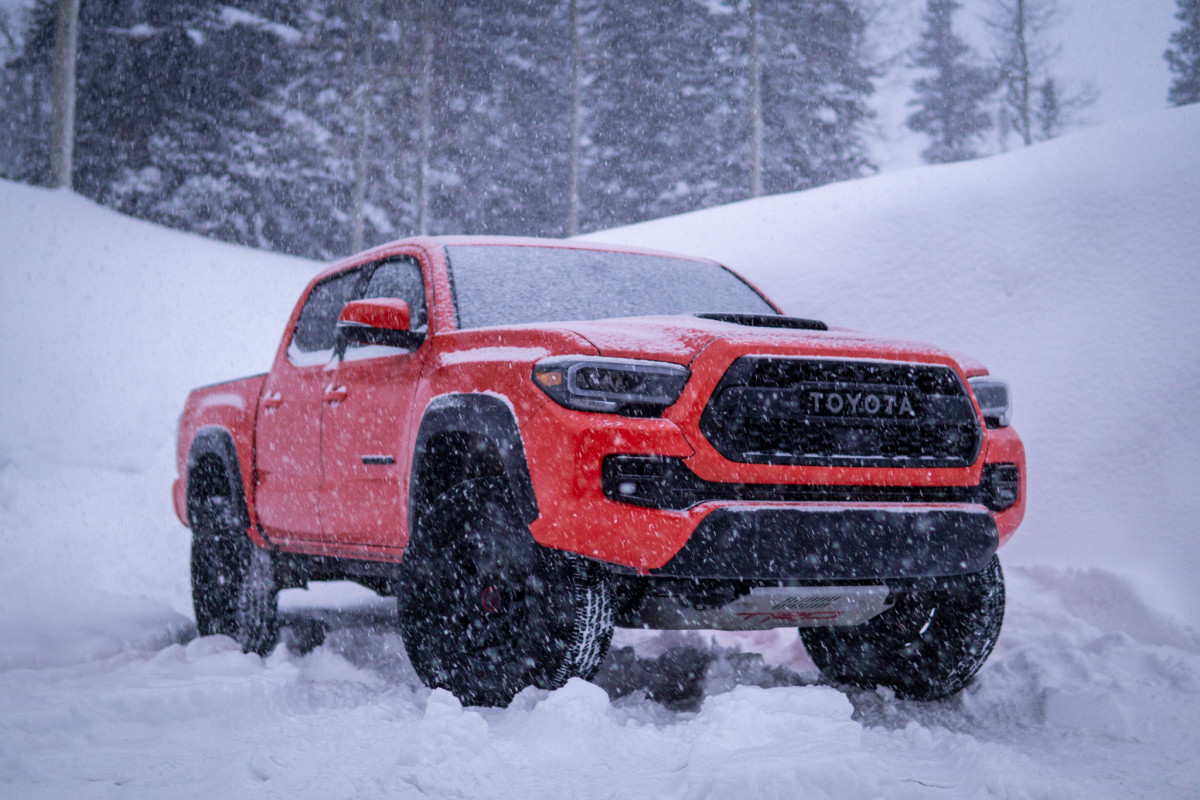
The tough little Toyota Tacoma looks ready for a refresh.
The Toyota Tacoma has reached “Legend” status: It’s the default choice for many shoppers, and for good reason. The Tacoma enjoys a hard-earned reputation for bullet-proof reliability. It’s the ideal size for many situations. It looks cool and, in TRD Pro trim, it can back up those looks with genuine off-road brilliance.
But heavy is the head that wears the crown, and the current Tacoma may be starting to buckle under the weight. With more powerful and more efficient options emerging in the compact and midsize truck space, Toyota is no longer the one-stop shop for shoppers. Luckily, a new Tacoma is just over the horizon.

When a Ford F-150, a Chevy Silverado, a Ram 1500, or a Toyota Tundra is just too big, look to the midsize truck segment. While the length of a full-size pickup truck like the Tundra can stretch almost 6.5 metres, the longest Tacomas come in more than half a metre shorter. Rather than looking stubby, however, the Tacoma carries an assertive stance. Its upright grille and tall bed make it look substantial without appearing huge.
Toyota sells the 2023 Tacoma in an array of trim levels, ranging from the base standard package and rising through SR5, TRD Sport, TRD Off-Road, and TRD Pro. Shoppers can also opt for the Trail Special Edition trim level or a Nightshade Edition. With multiple powertrain options, two available bed lengths, and a choice between the clamshell-doored access cab and a full four-door double cab, Toyota sells the Tacoma in a whopping 34 combinations with varying towing and payload capabilities.
We tested a TRD Pro trim level—in bright Solar Octane paint—during a snowy week. Against the near-constant whiteout backdrop, our bright orange truck looked truly awesome (even the drive-through attendant at Taco Bell complimented the paint job).
The 2023 Toyota Tacoma TRD Pro is about more than just paint, though. Toyota fits this range-topping, off-road-oriented trim with underbody skid pads, a TRD-tuned suspension and locking rear differential, 16-inch alloy wheels, a TRD sport exhaust, and a unique grille with “TOYOTA” spelled out in large letters and a TRD Pro tailgate badge. Tack on the hood scoop and blacked-out badging, and the TRD Pro is an undeniably cool pickup truck.
Inside, the Tacoma ranges from a spartan, fabric-and-plastic affair in base trim to a nicely appointed pickup complete with available leather upholstery and soft-touch materials. Our TRD Pro was equipped with Softex leather-trimmed upholstery, heated front seats, and a full set of all-weather floor mats. We appreciated the physical knobs for climate control, and the physical buttons flanking the infotainment system were also very easy to operate—even while wearing gloves.

In the US, Toyota equips lower-level Tacomas with a standard 2.7-litre four-cylinder engine. Making power specs of 159 horsepower and 180 pound-feet of torque, and managed by a standard six-speed automatic transmission, this engine fails to impress most shoppers in that market. Toyota doesn’t offer it here. Instead, with 278 horsepower and 265 pound-feet of torque, the standard 3.5-litre V6 engine is more satisfying and more capable. It also comes with a six-speed automatic transmission, but shoppers can opt for a six-speed manual.
In Canada, Toyota sells the Tacoma with standard four-wheel drive (4WD) (rear-wheel drive (RWD) is not offered in our market).
Despite the significant power advantage of the V6, the Tacoma isn’t a quick truck. It roars mightily when you depress the accelerator past its halfway point, which you’ll need to do every time you try to get up to highway speeds. Once you’re moving along with highway traffic, the wind and engine noise remains ever-present. Because our truck had all-terrain tires, we also dealt with more road noise than would be typical in a Tacoma with all-seasons.
In city driving, the V6 Tacoma is enjoyable to drive, relative to other pickups, offering decent acceleration from a stop. And, because our TRD Pro’s suspension was designed for driving off-road, it handled crumbling city streets without any problems. One seemingly unavoidable trait to our truck’s off-road orientation was its tendency to wander on paved roads. The steering, in particular, felt vague and demonstrated plenty of play off-centre when driving around town.
Fuel economy leaves a bit to be desired, but that’s somewhat expected in the midsize pickup truck segment. Natural Resources Canada estimates that the Tacoma will return 13.0 litres per 100 kilometres in city driving, 10.5 on the highway, and 11.9 combined. The Manual transmission hurts fuel economy in this truck—those models get 13.8 L/100 km city, 11.4 highway, and 12.7 combined. In TRD Off-road and TRD Pro guise, those figure lift slightly to 13.8/11.7/12.9. Our TRD Pro with an automatic transmission delivered a disappointing 14.4 L/100 km, although we did drive it at elevation and in winter conditions.
Not too long ago, Toyota competed against the old Nissan Frontier… and that was about it. Then, the Chevy Colorado and GMC Canyon arrived. Shortly thereafter, an updated Honda Ridgeline joined the party, followed quickly by the reintroduced Ford Ranger. Now, a new class of compact pickup trucks has emerged with the Hyundai Santa Cruz and the Ford Maverick, and many of the Tacoma’s competitors have also enjoyed generational redesigns. Considering the increased competition, the Tacoma is starting to look a bit old-school.
Toyota equipped our TRD Pro model with Goodyear Wrangler AT tires. Although they’re certainly more capable than a summer or dedicated on-road tire, it’s worth noting that these are not dedicated snow tires, nor do they come with the preferred “three-peak” winter designation.
With Multi-Terrain Select and Crawl control, our Tacoma was designed to operate off-road and at low speed.

As intimated earlier, shoppers have plenty of configuration choices with the Toyota Tacoma. The access-cab body style features clamshell-style doors and comes with a 1,872-millimetre (six-foot-one-inch) bed. Choose the double cab, and you’ll also get a choice between a long bed and a shorter, 1,537-millimetre (five-foot) bed.
No two-door regular cab is offered, but if you’re looking for a compact interior, the access cab will fit the bill. Although it offers available dual-zone climate control and technically offers seating for four, the rear seats are very tight, not very comfortable, and are extremely short on legroom. If you have plans to put anything more than a toolbox or a duffel bag in the back seat, we recommend the double cab (crew cab).
With four genuine doors, the double cab offers easier entry and egress, although the truck’s height may make it a chore for shorter drivers and passengers. Legroom is still tight in the backseat of the Tacoma double cab, but the quality of the seats is a huge improvement. A power-sliding rear window is available.
The front seats are a massive improvement over the rears, but they’re not without fault. We were pleased with the amount of cubby space up front, and we didn’t run short on legroom or headroom. However, the steering wheel doesn’t extend very far in the Tacoma, making it challenging for tall drivers to get comfortable. Similarly, the positioning of the front seat and the pedals had us feeling a bit like we were driving a park bench, as much as the power-adjustable driver seat on higher trims helps with making adjustments.
Outside, even the short bed was large enough to carry all of our gear for our test drive on the way to four days of skiing—multiple bags, a load of groceries, four pairs of skis (measuring between 170 and 190 centimeters), and a responsible amount of cheap beer.

The Tacoma is not a class-leading pickup truck when it comes to technology, but it nonetheless offers an intuitive and easy-to-use interface. Anchored by a 7-inch touchscreen in base trim and an 8-inch touchscreen in higher trims, all Tacomas benefit from Bluetooth connectivity, Apple CarPlay and Android Auto compatibility, and SiriusXM satellite radio (assuming you pay for a subscription to the latter service). The interface is simple, but it’s also a bit outdated. Wireless charging is available on higher trims. Toyota has begun to roll out its newer infotainment software in other cars, but the Tacoma looks a bit behind the times.
Our test truck was equipped with a premium, six-speaker JBL audio system, and two USB-A ports. Ultimately, while the Tacoma offers all the tech you’ll likely need, it doesn’t necessarily provide all the tech you’ll likely want. For that, you can look to competing trucks like the Chevrolet Colorado, Honda Ridgeline, and Nissan Frontier.

Advanced safety technology has become a point of pride for Toyota. The 2023 Tacoma comes equipped with Toyota Safety Sense (TSS), the company’s suite of features. This includes automatic emergency braking with pedestrian detection, adaptive cruise control, lane-departure alert, and automatic high beams.
Our TRD Pro also included blind-spot monitoring, rear- and side parking distance sensors, and a surround-view camera. However, other Toyotas benefit from a much more robust version of TSS. You won’t find lane-keeping assist or rear automatic emergency braking. As other vehicles on the market begin to offer more level 2 autonomous driving aids, the Tacoma does not.
As such, the 2023 Toyota Tacoma was not awarded a Top Safety Pick award from the Insurance Institute for Highway Safety (IIHS). In crash-test evaluations from the National Highway Traffic Safety Administration (NHTSA), the Tacoma scored four out of a possible five stars, overall. While it managed five starts in side-impact tests, it missed top marks in the frontal crash test and rollover tests.

The midsize pickup truck market has become incredibly competitive, and the segment’s pricing reflects that. With a starting price of $41,350 before its $1,930 destination charge and other fees, the Tacoma lines up closely with the Ford Ranger, but the top-level TRD Pro trim carries a much higher price than the less-capable Ranger Tremor.
Our TRD Pro test truck costs north of $60,000 Canadian before fees, which feels like a lot and, in fact, sits above the top MSRPs of the Ranger, Chevy Colorado, and Honda Ridgeline. However, it’s less expensive than a Jeep Gladiator Rubicon, and it’s likely more capable off-road than the Ranger, and certainly more capable than the Honda Ridgeline Black Edition.
When it comes to value, our eyes shift to the Nissan Frontier. While that truck starts at $40,998, its PRO-4X off-roading trim comes in at roughly $10,000 less than a Tacoma TRD Pro’s price. We’ve yet to test the 2023 Chevy Colorado ZR2, but that truck also looks like a worthy alternative, given that it boasts top-tier performance and carries a price tag in the high $50,000 range.
The Tacoma has earned its popularity, thanks to a reputation for reliability, great styling, and a trim lineup that encompasses everything from a run-of-the-mill work truck to a conquer-everything adventure vehicle. One look at the market shows that its competitive set has made major strides, and we look forward to seeing how Toyota innovates its legendary pickup for the 2024 model year.
Note: Images show a US model.

User reviews for 2023 Toyota Tacoma
Write a review2023 Toyota Tacoma Pricing
Trims & specs
Air Conditioning
Single front air conditioning zones
Airbags
Dual front airbags · Dual front knee airbags · Passenger airbag deactivation: occupant sensing deactivation · Front side airbags · Rear side curtain airbags
Audio System
Antenna Type: mast · Voice recognition audio system · Bluetooth auxiliary audio input · AM/FM radio · Satellite Radio: SiriusXM · Total Number of Speakers: 6
Brakes
ABS: 4-wheel · Braking assist: hill start assist · Front brake diameter: 10.8 · Front brakes: ventilated disc · Rear brake diameter: 10.0 · Rear brakes: drum
Comfort Features
Floor Material: carpet · Shift knob trim: urethane · Steering wheel trim: urethane
Convenience Features
Assist handle: rear · Center console: front console with armrest and storage · Cruise control: adaptive · Cupholders: rear · One-touch windows: 1 · Power outlet(s): 12V front · Power steering: speed-proportional · Power windows: lockout button · Reading lights: rear · Steering wheel: tilt and telescopic · Steering wheel mounted controls: phone · Storage: front seatback
Driver Seat
Adjustable lumbar support: manual · Manual adjustments: 4
Drivetrain
Axle ratio: 4.30
Engine
Battery: maintenance-free
Exterior Features
Door handle color: body-color · Exhaust tip color: stainless-steel · Front bumper color: body-color · Grille color: black · Mirror color: body-color · Rear bumper color: body-color · Rocker panel color: body-color · Side door type: dual rear-hinged access · Skid plate(s): engine · Tailgate: removable · Window trim: black
Headrests
Adjustable rear headrests: foldable · Front headrests: adjustable · Number of front headrests: 2 · Number of rear headrests: 2
In Car Entertainment
Connected in-car apps: Google POIs · Infotainment: Android Auto ready · Infotainment screen size: 7 in.
Instrumentation
Fuel economy display: range · Instrument cluster screen size: 4.2 in. · Warnings and reminders: low oil pressure
Lights
Headlights: auto delay off
Mirrors
Exterior mirrors: heated · Inside rearview mirror: manual day/night
Passenger Seat
Manual Adjustments: 4
Rear Seats
Type: jumpseats
Safety
Active head restraints: driver · Automatic emergency braking: front pedestrian · Camera system: rearview · Child seat anchors: LATCH system · Impact sensor: post-collision safety system · Pre-Collision Warning System: visual warning · Pre-collision warning system: pedestrian detection · Rearview monitor: in dash
Seatbelts
Emergency locking retractors: front and rear · Front seatbelts: 3-point · Seatbelt force limiters: front · Seatbelt pretensioners: front · Seatbelt warning sensor: driver and passenger · Second row seatbelts: 3-point
Seats
Driver seat manual adjustments: reclining · Front seat type: bucket · Passenger seat manual adjustments: reclining · Rear seat folding: folds up · Upholstery: cloth
Spare Tire
Mount Location: underbody · Size: full-size
Spare Wheel
Rim Type: steel
Steering
Steering ratio: 17.4 · Turns lock-to-lock: 3.40
Suspension
Front Shock Type: gas shock absorbers · Front Spring Type: coil springs · Front Stabilizer Bar: diameter 30 mm · Front Suspension Classification: independent · Front Suspension Type: double wishbones · Rear Shock Type: gas shock absorbers · Rear Spring Type: leaf springs · Rear Suspension Classification: solid live axle · Rear Suspension Type: multi-leaf · Stabilizer bar(s): rear
Telematics
Driver assistance app: roadside assistance · Electronic messaging assistance: with voice recognition · Phone: voice activated · Phone wireless data link: Bluetooth · Smart device app compatibility: Toyota Connected Services · Smart device app function: maintenance scheduling · Wifi: hotspot
Tires
Type: all season
Tires and Rims
Wheels: steel
Truck Features
Pickup truck sliding rear window: manual horizontal
Windows
Front wipers: variable intermittent
Air Conditioning
Single front air conditioning zones
Airbags
Dual front airbags · Dual front knee airbags · Passenger airbag deactivation: occupant sensing deactivation · Front side airbags · Rear side curtain airbags
Audio System
Antenna Type: diversity · Voice recognition audio system · Bluetooth auxiliary audio input · Touch screen display radio · Satellite Radio: SiriusXM · Total Number of Speakers: 6
Brakes
ABS: 4-wheel · Braking assist: hill start assist · Front brake diameter: 10.8 · Front brakes: ventilated disc · Rear brake diameter: 10.0 · Rear brakes: drum
Comfort Features
Floor Material: carpet · Shift knob trim: urethane · Steering wheel trim: urethane
Convenience Features
Assist handle: passenger side · Center console: front console with armrest and storage · Cruise control: adaptive · Cupholders: front · One-touch windows: 1 · Power outlet(s): 12V front · Power steering: speed-proportional · Power windows: lockout button · Reading lights: rear · Steering wheel: tilt and telescopic · Steering wheel mounted controls: audio · Storage: sunglasses holder
Driver Seat
Adjustable lumbar support: manual · Manual adjustments: 4
Drivetrain
Axle ratio: 4.30
Engine
Battery: maintenance-free
Exterior Features
Door handle color: body-color · Exhaust tip color: stainless-steel · Front bumper color: body-color · Grille color: body-color surround · Mirror color: body-color · Rear bumper color: body-color · Rocker panel color: body-color · Skid plate(s): engine · Tailgate: removable · Window trim: black
Headrests
Adjustable rear headrests: foldable · Front headrests: adjustable · Number of front headrests: 2 · Number of rear headrests: 3
In Car Entertainment
Connected in-car apps: Google search · Infotainment: Apply CarPlay ready · Infotainment screen size: 7 in.
Instrumentation
Fuel economy display: range · Instrument cluster screen size: 4.2 in. · Warnings and reminders: low fuel level
Lights
Headlights: auto delay off
Mirrors
Exterior mirrors: manual folding · Inside rearview mirror: manual day/night
Passenger Seat
Manual Adjustments: 4
Rear Seats
Type: 60-40 split bench
Safety
Active head restraints: driver · Automatic emergency braking: front pedestrian · Camera system: rearview · Child seat anchors: LATCH system · Impact sensor: fuel cut-off · Pre-Collision Warning System: visual warning · Pre-collision warning system: pedestrian detection · Rearview monitor: in dash
Seatbelts
Emergency locking retractors: front and rear · Front seatbelts: 3-point · Seatbelt force limiters: front · Seatbelt pretensioners: front · Seatbelt warning sensor: driver and passenger · Second row seatbelts: 3-point
Seats
Driver seat manual adjustments: reclining · Front seat type: bucket · Passenger seat manual adjustments: reclining · Rear headrests: adjustable · Rear seat folding: split · Upholstery: cloth
Spare Tire
Mount Location: underbody · Size: full-size
Spare Wheel
Rim Type: steel
Steering
Steering ratio: 17.4 · Turns lock-to-lock: 3.40
Suspension
Front Shock Type: gas shock absorbers · Front Spring Type: coil springs · Front Stabilizer Bar: diameter 30 mm · Front Suspension Classification: independent · Front Suspension Type: strut · Rear Shock Type: gas shock absorbers · Rear Spring Type: leaf springs · Rear Suspension Classification: solid live axle · Rear Suspension Type: multi-leaf · Stabilizer bar(s): rear
Telematics
Driver assistance app: roadside assistance · Electronic messaging assistance: with read function · Phone: voice activated · Phone wireless data link: Bluetooth · Smart device app compatibility: Toyota Connected Services · Smart device app function: vehicle location · Wifi: hotspot
Tires
Type: all season
Tires and Rims
Wheels: steel
Truck Features
Pickup truck sliding rear window: manual horizontal
Windows
Front wipers: variable intermittent
Air Conditioning
Single front air conditioning zones
Airbags
Dual front airbags · Dual front knee airbags · Passenger airbag deactivation: occupant sensing deactivation · Front side airbags · Front side curtain airbags
Audio System
Antenna Type: mast · Voice recognition audio system · Bluetooth auxiliary audio input · Touch screen display radio · Satellite Radio: SiriusXM · Total Number of Speakers: 6
Brakes
ABS: 4-wheel · Braking assist: hill start assist · Front brake diameter: 10.8 · Front brakes: ventilated disc · Rear brake diameter: 10.0 · Rear brakes: drum
Comfort Features
Floor Material: carpet · Shift knob trim: urethane · Steering wheel trim: leather
Convenience Features
Assist handle: passenger side · Center console: front console with armrest and storage · Cruise control: adaptive · Cupholders: front · Multi-function remote: keyless entry with panic alarm · One-touch windows: 1 · Power outlet(s): USB front · Power steering: hydraulic variable assist · Power windows: lockout button · Reading lights: rear · Steering wheel: tilt and telescopic · Steering wheel mounted controls: voice recognition controls · Storage: under rear seats
Driver Seat
Adjustable lumbar support: manual · Manual adjustments: 4
Drivetrain
Axle ratio: 4.30
Engine
Battery: maintenance-free
Exterior Features
Door handle color: body-color · Exhaust tip color: stainless-steel · Front bumper color: body-color · Grille color: body-color surround · Mirror color: body-color · Rear bumper color: chrome · Rocker panel color: body-color · Side door type: dual rear-hinged access · Skid plate(s): front · Tailgate: removable · Window trim: black
Headrests
Adjustable rear headrests: foldable · Front headrests: adjustable · Number of front headrests: 2 · Number of rear headrests: 2
In Car Entertainment
Connected in-car apps: Amazon Alexa · Infotainment: Apply CarPlay ready · Infotainment screen size: 8 in.
Instrumentation
Fuel economy display: range · Instrument cluster screen size: 4.2 in. · Warnings and reminders: low fuel level
Lights
Headlights: Halogen
Mirrors
Exterior mirrors: power · Inside rearview mirror: manual day/night
Passenger Seat
Manual Adjustments: 4
Rear Seats
Type: jumpseats
Safety
Active head restraints: driver · Automatic emergency braking: front pedestrian · Camera system: rearview · Child seat anchors: LATCH system · Impact sensor: door unlock · Pre-Collision Warning System: audible warning · Pre-collision warning system: pedestrian detection · Rearview monitor: in dash
Seatbelts
Emergency locking retractors: front and rear · Front seatbelts: 3-point · Seatbelt force limiters: front · Seatbelt pretensioners: front · Seatbelt warning sensor: driver and passenger · Second row seatbelts: 3-point
Seats
Driver seat manual adjustments: reclining · Front seat type: bucket · Passenger seat manual adjustments: reclining · Rear seat folding: folds up · Upholstery: cloth
Security
Power door locks: anti-lockout
Spare Tire
Mount Location: underbody · Size: full-size
Spare Wheel
Rim Type: steel
Steering
Steering ratio: 17.4 · Turns lock-to-lock: 3.40
Suspension
Front Shock Type: gas shock absorbers · Front Spring Type: coil springs · Front Stabilizer Bar: diameter 30 mm · Front Suspension Classification: independent · Front Suspension Type: strut · Rear Shock Type: gas shock absorbers · Rear Spring Type: leaf springs · Rear Suspension Classification: solid live axle · Rear Suspension Type: multi-leaf · Stabilizer bar(s): rear
Telematics
Driver assistance app: roadside assistance · Electronic messaging assistance: with voice recognition · Phone: voice activated · Phone wireless data link: Bluetooth · Smart device app compatibility: Toyota Connected Services · Smart device app function: vehicle location · Wifi: hotspot
Tires
Type: all season
Tires and Rims
Wheels: steel
Truck Features
Pickup truck sliding rear window: manual horizontal
Windows
Front wipers: variable intermittent
Air Conditioning
Automatic climate control front air conditioning · Dual front air conditioning zones
Airbags
Dual front airbags · Dual front knee airbags · Passenger airbag deactivation: occupant sensing deactivation · Front side airbags · Rear side curtain airbags
Audio System
Antenna Type: mast · Voice recognition audio system · Auxiliary audio input: jack · AM/FM radio · Satellite Radio: SiriusXM · Total Number of Speakers: 6
Brakes
ABS: 4-wheel · Braking assist: hill start assist · Front brake diameter: 10.8 · Front brakes: ventilated disc · Rear brake diameter: 10.0 · Rear brakes: drum
Comfort Features
Floor Material: carpet · Shift knob trim: urethane · Steering wheel trim: urethane
Convenience Features
Assist handle: passenger side · Center console: front console with armrest and storage · Cruise control: adaptive · Cupholders: rear · Multi-function remote: keyless entry · One-touch windows: 1 · Power outlet(s): 12V front · Power steering: speed-proportional · Power windows: lockout button · Reading lights: rear · Steering wheel: tilt and telescopic · Steering wheel mounted controls: audio · Storage: under rear seats
Driver Seat
Adjustable lumbar support: manual · Manual adjustments: 4
Drivetrain
Axle ratio: 3.91
Engine
Alternator: 130 amps · Battery: maintenance-free · Oil cooler: auxiliary
Exterior Features
Door handle color: body-color · Exhaust tip color: stainless-steel · Front bumper color: body-color · Grille color: black · Mirror color: body-color · Rear bumper color: body-color · Rocker panel color: body-color · Side door type: dual rear-hinged access · Skid plate(s): engine · Tailgate: removable · Window trim: black
Headrests
Adjustable rear headrests: foldable · Front headrests: adjustable · Number of front headrests: 2 · Number of rear headrests: 2
In Car Entertainment
Connected in-car apps: Google POIs · Infotainment: Android Auto ready · Infotainment screen size: 7 in.
Instrumentation
Fuel economy display: MPG · Instrument cluster screen size: 4.2 in. · Warnings and reminders: low oil pressure
Lights
Headlights: auto delay off
Mirrors
Exterior mirrors: heated · Inside rearview mirror: manual day/night
Passenger Seat
Manual Adjustments: 4
Rear Seats
Type: jumpseats
Safety
Active head restraints: driver · Automatic emergency braking: front pedestrian · Camera system: rearview · Child seat anchors: LATCH system · Impact sensor: fuel cut-off · Pre-Collision Warning System: audible warning · Pre-collision warning system: pedestrian detection · Rearview monitor: in dash
Seatbelts
Emergency locking retractors: front and rear · Front seatbelts: 3-point · Seatbelt force limiters: front · Seatbelt pretensioners: front · Seatbelt warning sensor: driver and passenger · Second row seatbelts: 3-point
Seats
Driver seat manual adjustments: reclining · Front seat type: bucket · Passenger seat manual adjustments: reclining · Rear seat folding: folds up · Upholstery: cloth
Spare Tire
Mount Location: underbody · Size: full-size
Spare Wheel
Rim Type: steel
Stability and Traction
Traction control: with trailer stability control
Steering
Steering ratio: 17.4 · Turns lock-to-lock: 3.40
Suspension
Front Shock Type: gas shock absorbers · Front Spring Type: coil springs · Front Stabilizer Bar: diameter 30 mm · Front Suspension Classification: independent · Front Suspension Type: double wishbones · Rear Shock Type: gas shock absorbers · Rear Spring Type: leaf springs · Rear Suspension Classification: solid live axle · Rear Suspension Type: multi-leaf · Stabilizer bar(s): rear
Telematics
Driver assistance app: roadside assistance · Electronic messaging assistance: with voice recognition · Phone: voice activated · Phone wireless data link: Bluetooth · Smart device app compatibility: Toyota Connected Services · Smart device app function: vehicle location · Wifi: hotspot
Tires
Type: all season
Tires and Rims
Wheels: steel
Towing and Hauling
Trailer hitch: Class IV · Trailer wiring: 7-pin
Truck Features
Pickup truck sliding rear window: manual horizontal
Windows
Front wipers: variable intermittent
Air Conditioning
Single front air conditioning zones
Airbags
Dual front airbags · Dual front knee airbags · Passenger airbag deactivation: occupant sensing deactivation · Front side airbags · Front side curtain airbags
Audio System
Antenna Type: mast · Voice recognition audio system · USB auxiliary audio input · Touch screen display radio · Satellite Radio: SiriusXM · Total Number of Speakers: 6
Brakes
ABS: 4-wheel · Braking assist: hill start assist · Front brake diameter: 10.8 · Front brakes: ventilated disc · Rear brake diameter: 10.0 · Rear brakes: drum
Comfort Features
Floor Material: carpet · Shift knob trim: urethane · Steering wheel trim: leather
Convenience Features
Assist handle: passenger side · Center console: front console with armrest and storage · Cruise control: adaptive · Cupholders: rear · Multi-function remote: proximity entry system · One-touch windows: 1 · Power outlet(s): USB front · Power steering: hydraulic variable assist · Power windows: lockout button · Reading lights: rear · Steering wheel: tilt and telescopic · Steering wheel mounted controls: cruise controls · Storage: sunglasses holder
Driver Seat
Adjustable lumbar support: manual · Manual adjustments: 4
Drivetrain
Axle ratio: 4.30
Engine
Battery: maintenance-free
Exterior Features
Door handle color: body-color · Exhaust tip color: stainless-steel · Front bumper color: body-color · Grille color: chrome accents · Mirror color: body-color · Rear bumper color: chrome · Rocker panel color: body-color · Skid plate(s): front · Tailgate: removable · Window trim: black
Headrests
Adjustable rear headrests: foldable · Front headrests: adjustable · Number of front headrests: 2 · Number of rear headrests: 3
In Car Entertainment
Connected in-car apps: Google POIs · Infotainment: Android Auto ready · Infotainment screen size: 8 in.
Instrumentation
Fuel economy display: MPG · Instrument cluster screen size: 4.2 in. · Warnings and reminders: lamp failure
Lights
Headlights: auto delay off
Mirrors
Exterior mirrors: manual folding · Inside rearview mirror: manual day/night
Passenger Seat
Manual Adjustments: 4
Rear Seats
Type: 60-40 split bench
Safety
Active head restraints: driver · Automatic emergency braking: front · Camera system: rearview · Child seat anchors: LATCH system · Impact sensor: post-collision safety system · Pre-Collision Warning System: visual warning · Pre-collision warning system: pedestrian detection · Rearview monitor: in dash
Seatbelts
Emergency locking retractors: front and rear · Front seatbelts: 3-point · Seatbelt force limiters: front · Seatbelt pretensioners: front · Seatbelt warning sensor: driver and passenger · Second row seatbelts: 3-point
Seats
Driver seat manual adjustments: reclining · Front seat type: bucket · Passenger seat manual adjustments: reclining · Rear headrests: adjustable · Rear seat folding: flip and fold · Upholstery: cloth
Security
Power door locks: anti-lockout
Spare Tire
Mount Location: underbody · Size: full-size
Spare Wheel
Rim Type: steel
Steering
Steering ratio: 17.4 · Turns lock-to-lock: 3.40
Suspension
Front Shock Type: gas shock absorbers · Front Spring Type: coil springs · Front Stabilizer Bar: diameter 30 mm · Front Suspension Classification: independent · Front Suspension Type: double wishbones · Rear Shock Type: gas shock absorbers · Rear Spring Type: leaf springs · Rear Suspension Classification: solid live axle · Rear Suspension Type: multi-leaf · Stabilizer bar(s): rear
Telematics
Driver assistance app: roadside assistance · Electronic messaging assistance: with read function · Phone: voice activated · Phone wireless data link: Bluetooth · Smart device app compatibility: Toyota Connected Services · Smart device app function: security event/collision alert · Wifi: hotspot
Tires
Type: all season
Tires and Rims
Wheels: steel
Truck Features
Pickup truck sliding rear window: manual horizontal
Windows
Front wipers: variable intermittent
Air Conditioning
Single front air conditioning zones
Airbags
Dual front airbags · Dual front knee airbags · Passenger airbag deactivation: occupant sensing deactivation · Front side airbags · Front side curtain airbags
Audio System
Antenna Type: diversity · Voice recognition audio system · Auxiliary audio input: jack · AM/FM radio · Satellite Radio: SiriusXM · Total Number of Speakers: 6
Brakes
ABS: 4-wheel · Braking assist: hill start assist · Front brake diameter: 10.8 · Front brakes: ventilated disc · Rear brake diameter: 10.0 · Rear brakes: drum
Comfort Features
Floor Material: carpet · Shift knob trim: urethane · Steering wheel trim: urethane
Convenience Features
Assist handle: passenger side · Center console: front console with armrest and storage · Cruise control: adaptive · Cupholders: rear · One-touch windows: 1 · Power outlet(s): USB-C front · Power steering: speed-proportional · Power windows: lockout button · Reading lights: front · Steering wheel: tilt and telescopic · Steering wheel mounted controls: multi-function screen controls · Storage: under rear seats
Driver Seat
Adjustable lumbar support: manual · Manual adjustments: 4
Drivetrain
4WD Type: part time · Axle ratio: 4.30 · Transfer Case: electronic hi-lo gear selection
Engine
Battery: maintenance-free
Exterior Features
Door handle color: body-color · Exhaust tip color: stainless-steel · Front bumper color: body-color · Grille color: black · Mirror color: body-color · Rear bumper color: body-color · Rocker panel color: body-color · Side door type: dual rear-hinged access · Skid plate(s): engine · Tailgate: removable · Window trim: black
Headrests
Adjustable rear headrests: foldable · Front headrests: adjustable · Number of front headrests: 2 · Number of rear headrests: 2
In Car Entertainment
Connected in-car apps: Google POIs · Infotainment: Apply CarPlay ready · Infotainment screen size: 7 in.
Instrumentation
Fuel economy display: MPG · Instrument cluster screen size: 4.2 in. · Warnings and reminders: lamp failure
Lights
Headlights: automatic high beam dimmer
Mirrors
Exterior mirrors: manual folding · Inside rearview mirror: manual day/night
Passenger Seat
Manual Adjustments: 4
Rear Seats
Type: jumpseats
Safety
Active head restraints: driver · Automatic emergency braking: front · Camera system: rearview · Child seat anchors: LATCH system · Impact sensor: door unlock · Pre-Collision Warning System: visual warning · Pre-collision warning system: pedestrian detection · Rearview monitor: in dash
Seatbelts
Emergency locking retractors: front and rear · Front seatbelts: 3-point · Seatbelt force limiters: front · Seatbelt pretensioners: front · Seatbelt warning sensor: driver and passenger · Second row seatbelts: 3-point
Seats
Driver seat manual adjustments: reclining · Front seat type: bucket · Passenger seat manual adjustments: reclining · Rear seat folding: folds up · Upholstery: cloth
Spare Tire
Mount Location: underbody · Size: full-size
Spare Wheel
Rim Type: steel
Steering
Steering ratio: 17.3 · Turns lock-to-lock: 3.6
Suspension
Front Shock Type: gas shock absorbers · Front Spring Type: coil springs · Front Stabilizer Bar: diameter 30 mm · Front Suspension Classification: independent · Front Suspension Type: double wishbones · Rear Shock Type: gas shock absorbers · Rear Spring Type: leaf springs · Rear Suspension Classification: solid live axle · Rear Suspension Type: multi-leaf · Stabilizer bar(s): rear
Telematics
Driver assistance app: roadside assistance · Electronic messaging assistance: with read function · Phone: voice activated · Phone wireless data link: Bluetooth · Smart device app compatibility: Toyota Connected Services · Smart device app function: maintenance scheduling · Wifi: hotspot
Tires
Type: all season
Tires and Rims
Wheels: steel
Truck Features
Pickup truck sliding rear window: manual horizontal
Windows
Front wipers: variable intermittent
Air Conditioning
Single front air conditioning zones
Airbags
Dual front airbags · Dual front knee airbags · Passenger airbag deactivation: occupant sensing deactivation · Front side airbags · Rear side curtain airbags
Audio System
Antenna Type: diversity · Voice recognition audio system · USB auxiliary audio input · AM/FM radio · Satellite Radio: SiriusXM · Total Number of Speakers: 6
Brakes
ABS: 4-wheel · Braking assist: hill start assist · Front brake diameter: 10.8 · Front brakes: ventilated disc · Rear brake diameter: 10.0 · Rear brakes: drum
Comfort Features
Floor Material: carpet · Shift knob trim: urethane · Steering wheel trim: leather
Convenience Features
Assist handle: passenger side · Center console: front console with armrest and storage · Cruise control: adaptive · Cupholders: rear · Multi-function remote: proximity entry system · One-touch windows: 1 · Power outlet(s): USB-C front · Power steering: speed-proportional · Power windows: lockout button · Reading lights: front · Steering wheel: tilt and telescopic · Steering wheel mounted controls: audio · Storage: front seatback
Driver Seat
Adjustable lumbar support: manual · Manual adjustments: 4
Drivetrain
4WD Type: part time · Axle ratio: 4.30 · Transfer Case: electronic hi-lo gear selection
Engine
Battery: maintenance-free
Exterior Features
Door handle color: body-color · Exhaust tip color: stainless-steel · Front bumper color: body-color · Grille color: chrome accents · Mirror color: body-color · Rear bumper color: chrome · Rocker panel color: body-color · Side door type: dual rear-hinged access · Skid plate(s): front · Tailgate: removable · Window trim: black
Headrests
Adjustable rear headrests: foldable · Front headrests: adjustable · Number of front headrests: 2 · Number of rear headrests: 2
In Car Entertainment
Connected in-car apps: Google search · Infotainment: Apply CarPlay ready · Infotainment screen size: 8 in.
Instrumentation
Fuel economy display: MPG · Instrument cluster screen size: 4.2 in. · Warnings and reminders: coolant temperature warning
Lights
Headlights: auto delay off
Mirrors
Exterior mirrors: heated · Inside rearview mirror: manual day/night
Passenger Seat
Manual Adjustments: 4
Rear Seats
Type: jumpseats
Safety
Active head restraints: driver · Automatic emergency braking: front pedestrian · Camera system: rearview · Child seat anchors: LATCH system · Impact sensor: post-collision safety system · Pre-Collision Warning System: visual warning · Pre-collision warning system: pedestrian detection · Rearview monitor: in dash
Seatbelts
Emergency locking retractors: front · Front seatbelts: 3-point · Seatbelt force limiters: front · Seatbelt pretensioners: front · Seatbelt warning sensor: driver and passenger · Second row seatbelts: 3-point
Seats
Driver seat manual adjustments: reclining · Front seat type: bucket · Passenger seat manual adjustments: reclining · Rear seat folding: folds up · Upholstery: cloth
Security
Power door locks: anti-lockout
Spare Tire
Mount Location: underbody · Size: full-size
Spare Wheel
Rim Type: steel
Steering
Steering ratio: 17.3 · Turns lock-to-lock: 3.6
Suspension
Front Shock Type: gas shock absorbers · Front Spring Type: coil springs · Front Stabilizer Bar: diameter 30 mm · Front Suspension Classification: independent · Front Suspension Type: strut · Rear Shock Type: gas shock absorbers · Rear Spring Type: leaf springs · Rear Suspension Classification: solid live axle · Rear Suspension Type: multi-leaf · Stabilizer bar(s): rear
Telematics
Driver assistance app: roadside assistance · Electronic messaging assistance: with voice recognition · Phone: voice activated · Phone wireless data link: Bluetooth · Smart device app compatibility: Toyota Connected Services · Smart device app function: vehicle location · Wifi: hotspot
Tires
Type: all season
Tires and Rims
Wheels: steel
Truck Features
Pickup truck sliding rear window: manual horizontal
Windows
Front wipers: variable intermittent
Air Conditioning
Automatic climate control front air conditioning · Dual front air conditioning zones
Airbags
Dual front airbags · Dual front knee airbags · Passenger airbag deactivation: occupant sensing deactivation · Front side airbags · Rear side curtain airbags
Audio System
Antenna Type: mast · Voice recognition audio system · Bluetooth auxiliary audio input · Touch screen display radio · Satellite Radio: SiriusXM · Total Number of Speakers: 6
Brakes
ABS: 4-wheel · Braking assist: hill start assist · Front brake diameter: 10.8 · Front brakes: ventilated disc · Rear brake diameter: 10.0 · Rear brakes: drum
Comfort Features
Floor Material: carpet · Shift knob trim: urethane · Steering wheel trim: leather
Convenience Features
Assist handle: rear · Center console: front console with armrest and storage · Cruise control: adaptive · Cupholders: front · Dimming rearview mirror: auto-dimming · Multi-function remote: proximity entry system · One-touch windows: 1 · Power outlet(s): USB-C front · Power steering: speed-proportional · Power windows: lockout button · Reading lights: front · Steering wheel: tilt and telescopic · Steering wheel mounted controls: phone · Storage: door pockets
Driver Seat
Adjustable lumbar support: power · Power adjustments: 10
Drivetrain
Axle ratio: 3.91
Engine
Alternator: 130 amps · Battery: maintenance-free · Oil cooler: auxiliary
Exterior Features
Door handle color: body-color · Exhaust tip color: stainless-steel · Fender lip moldings: body-color · Front bumper color: body-color · Grille color: body-color surround · Mirror color: body-color · Rear bumper color: chrome · Rocker panel color: body-color · Side door type: dual rear-hinged access · Skid plate(s): engine · Tailgate: removable · Window trim: black
Headrests
Adjustable rear headrests: foldable · Front headrests: adjustable · Number of front headrests: 2 · Number of rear headrests: 2
In Car Entertainment
Connected in-car apps: Google search · Infotainment: Android Auto ready · Infotainment screen size: 8 in.
Instrumentation
Fuel economy display: range · Instrument cluster screen size: 4.2 in. · Warnings and reminders: low fuel level
Lights
Headlights: auto delay off
Mirrors
Exterior mirrors: power
Passenger Seat
Manual Adjustments: 4
Rear Seats
Type: jumpseats
Safety
Active head restraints: driver · Automatic emergency braking: front pedestrian · Camera system: rearview · Child seat anchors: LATCH system · Impact sensor: door unlock · Pre-Collision Warning System: visual warning · Pre-collision warning system: pedestrian detection · Rearview monitor: in dash
Seatbelts
Emergency locking retractors: front and rear · Front seatbelts: 3-point · Seatbelt force limiters: front · Seatbelt pretensioners: front · Seatbelt warning sensor: driver and passenger · Second row seatbelts: 3-point
Seats
Driver seat power adjustments: height · Front seat type: bucket · Passenger seat manual adjustments: reclining · Rear seat folding: folds up · Upholstery: cloth
Security
Power door locks: anti-lockout
Spare Tire
Mount Location: underbody · Size: full-size
Spare Wheel
Rim Type: steel
Stability and Traction
Traction control: with trailer stability control
Steering
Steering ratio: 17.4 · Turns lock-to-lock: 3.40
Suspension
Front Shock Type: gas shock absorbers · Front Spring Type: coil springs · Front Stabilizer Bar: diameter 30 mm · Front Suspension Classification: independent · Front Suspension Type: strut · Rear Shock Type: gas shock absorbers · Rear Spring Type: leaf springs · Rear Suspension Classification: solid live axle · Rear Suspension Type: multi-leaf · Stabilizer bar(s): rear
Telematics
Driver assistance app: roadside assistance · Electronic messaging assistance: with read function · Phone: voice activated · Phone wireless data link: Bluetooth · Smart device app compatibility: Toyota Connected Services · Smart device app function: security event/collision alert · Wifi: hotspot
Tires
Type: all season
Tires and Rims
Wheels: painted aluminum
Towing and Hauling
Trailer hitch: Class IV · Trailer wiring: 7-pin
Truck Features
Pickup truck sliding rear window: manual horizontal
Windows
Front wipers: variable intermittent
Air Conditioning
Automatic climate control front air conditioning · Dual front air conditioning zones
Airbags
Dual front airbags · Dual front knee airbags · Passenger airbag deactivation: occupant sensing deactivation · Front side airbags · Rear side curtain airbags
Audio System
Antenna Type: diversity · Voice recognition audio system · Bluetooth auxiliary audio input · AM/FM radio · Satellite Radio: SiriusXM · Total Number of Speakers: 6
Brakes
ABS: 4-wheel · Braking assist: hill start assist · Front brake diameter: 10.8 · Front brakes: ventilated disc · Rear brake diameter: 10.0 · Rear brakes: drum
Comfort Features
Floor Material: carpet · Shift knob trim: urethane · Steering wheel trim: urethane
Convenience Features
Assist handle: rear · Center console: front console with armrest and storage · Cruise control: adaptive · Cupholders: front · Multi-function remote: keyless entry · One-touch windows: 1 · Power outlet(s): USB front · Power steering: speed-proportional · Power windows: lockout button · Reading lights: front · Steering wheel: tilt and telescopic · Steering wheel mounted controls: audio · Storage: door pockets
Driver Seat
Adjustable lumbar support: manual · Manual adjustments: 4
Drivetrain
4WD Type: part time · Axle ratio: 3.91 · Transfer Case: electronic hi-lo gear selection
Engine
Alternator: 130 amps · Battery: maintenance-free · Oil cooler: auxiliary
Exterior Features
Door handle color: body-color · Exhaust tip color: stainless-steel · Front bumper color: body-color · Grille color: body-color surround · Mirror color: body-color · Rear bumper color: body-color · Rocker panel color: body-color · Side door type: dual rear-hinged access · Skid plate(s): engine · Tailgate: removable · Window trim: black
Headrests
Adjustable rear headrests: foldable · Front headrests: adjustable · Number of front headrests: 2 · Number of rear headrests: 2
In Car Entertainment
Connected in-car apps: Google POIs · Infotainment: Android Auto ready · Infotainment screen size: 7 in.
Instrumentation
Fuel economy display: MPG · Instrument cluster screen size: 4.2 in. · Warnings and reminders: low fuel level
Lights
Headlights: auto delay off
Mirrors
Exterior mirrors: power · Inside rearview mirror: manual day/night
Passenger Seat
Manual Adjustments: 4
Rear Seats
Type: jumpseats
Safety
Active head restraints: driver · Automatic emergency braking: front pedestrian · Camera system: rearview · Child seat anchors: LATCH system · Impact sensor: post-collision safety system · Pre-Collision Warning System: visual warning · Pre-collision warning system: pedestrian detection · Rearview monitor: in dash
Seatbelts
Emergency locking retractors: front · Front seatbelts: 3-point · Seatbelt force limiters: front · Seatbelt pretensioners: front · Seatbelt warning sensor: driver and passenger · Second row seatbelts: 3-point
Seats
Driver seat manual adjustments: reclining · Front seat type: bucket · Passenger seat manual adjustments: reclining · Rear seat folding: folds up · Upholstery: cloth
Spare Tire
Mount Location: underbody · Size: full-size
Spare Wheel
Rim Type: steel
Stability and Traction
Traction control: with trailer stability control
Steering
Steering ratio: 17.3 · Turns lock-to-lock: 3.6
Suspension
Front Shock Type: gas shock absorbers · Front Spring Type: coil springs · Front Stabilizer Bar: diameter 30 mm · Front Suspension Classification: independent · Front Suspension Type: double wishbones · Rear Shock Type: gas shock absorbers · Rear Spring Type: leaf springs · Rear Suspension Classification: solid live axle · Rear Suspension Type: multi-leaf · Stabilizer bar(s): rear
Telematics
Driver assistance app: roadside assistance · Electronic messaging assistance: with voice recognition · Phone: voice activated · Phone wireless data link: Bluetooth · Smart device app compatibility: Toyota Connected Services · Smart device app function: maintenance scheduling · Wifi: hotspot
Tires
Type: all season
Tires and Rims
Wheels: steel
Towing and Hauling
Trailer hitch: Class IV · Trailer wiring: 7-pin
Truck Features
Pickup truck sliding rear window: manual horizontal
Windows
Front wipers: variable intermittent
Air Conditioning
Automatic climate control front air conditioning · Dual front air conditioning zones
Airbags
Dual front airbags · Dual front knee airbags · Passenger airbag deactivation: occupant sensing deactivation · Front side airbags · Rear side curtain airbags
Audio System
Antenna Type: diversity · Voice recognition audio system · USB auxiliary audio input · Touch screen display radio · Satellite Radio: SiriusXM · Total Number of Speakers: 6
Brakes
ABS: 4-wheel · Braking assist: hill start assist · Front brake diameter: 10.8 · Front brakes: ventilated disc · Rear brake diameter: 10.0 · Rear brakes: drum
Comfort Features
Floor Material: carpet · Shift knob trim: urethane · Steering wheel trim: urethane
Convenience Features
Assist handle: rear · Center console: front console with armrest and storage · Cruise control: adaptive · Cupholders: rear · One-touch windows: 1 · Power outlet(s): 12V front · Power steering: hydraulic variable assist · Power windows: lockout button · Reading lights: rear · Steering wheel: tilt and telescopic · Steering wheel mounted controls: audio · Storage: grocery bag holder
Driver Seat
Adjustable lumbar support: manual · Manual adjustments: 4
Drivetrain
4WD Type: part time · Axle ratio: 3.91 · Transfer Case: electronic hi-lo gear selection
Engine
Alternator: 130 amps · Battery: maintenance-free · Oil cooler: auxiliary
Exterior Features
Door handle color: body-color · Exhaust tip color: stainless-steel · Front bumper color: body-color · Grille color: black · Mirror color: body-color · Rear bumper color: body-color · Rocker panel color: body-color · Skid plate(s): engine · Tailgate: removable · Window trim: black
Headrests
Adjustable rear headrests: foldable · Front headrests: adjustable · Number of front headrests: 2 · Number of rear headrests: 3
In Car Entertainment
Connected in-car apps: Google POIs · Infotainment: Apply CarPlay ready · Infotainment screen size: 7 in.
Instrumentation
Fuel economy display: range · Instrument cluster screen size: 4.2 in. · Warnings and reminders: low oil pressure
Lights
Headlights: auto delay off
Mirrors
Exterior mirrors: heated · Inside rearview mirror: manual day/night
Passenger Seat
Manual Adjustments: 4
Rear Seats
Type: 60-40 split bench
Safety
Active head restraints: driver · Automatic emergency braking: front pedestrian · Camera system: rearview · Child seat anchors: LATCH system · Impact sensor: door unlock · Pre-Collision Warning System: audible warning · Pre-collision warning system: pedestrian detection · Rearview monitor: in dash
Seatbelts
Emergency locking retractors: front and rear · Front seatbelts: 3-point · Seatbelt force limiters: front · Seatbelt pretensioners: front · Seatbelt warning sensor: driver and passenger · Second row seatbelts: 3-point
Seats
Driver seat manual adjustments: reclining · Front seat type: bucket · Passenger seat manual adjustments: reclining · Rear headrests: adjustable · Rear seat folding: split · Upholstery: cloth
Spare Tire
Mount Location: underbody · Size: full-size
Spare Wheel
Rim Type: steel
Stability and Traction
Traction control: with trailer stability control
Steering
Steering ratio: 17.3 · Turns lock-to-lock: 3.6
Suspension
Front Shock Type: gas shock absorbers · Front Spring Type: coil springs · Front Stabilizer Bar: diameter 30 mm · Front Suspension Classification: independent · Front Suspension Type: strut · Rear Shock Type: gas shock absorbers · Rear Spring Type: leaf springs · Rear Suspension Classification: solid live axle · Rear Suspension Type: multi-leaf · Stabilizer bar(s): rear
Telematics
Driver assistance app: roadside assistance · Electronic messaging assistance: with voice recognition · Phone: voice activated · Phone wireless data link: Bluetooth · Smart device app compatibility: Toyota Connected Services · Smart device app function: maintenance status · Wifi: hotspot
Tires
Type: all season
Tires and Rims
Wheels: steel
Towing and Hauling
Trailer hitch: Class IV · Trailer wiring: 4-pin
Truck Features
Pickup truck sliding rear window: manual horizontal
Windows
Front wipers: variable intermittent
Air Conditioning
Automatic climate control front air conditioning · Dual front air conditioning zones
Airbags
Dual front airbags · Dual front knee airbags · Passenger airbag deactivation: occupant sensing deactivation · Front side airbags · Front side curtain airbags
Audio System
Antenna Type: diversity · Voice recognition audio system · Auxiliary audio input: jack · AM/FM radio · Satellite Radio: SiriusXM · Total Number of Speakers: 6
Brakes
ABS: 4-wheel · Braking assist: hill start assist · Front brake diameter: 10.8 · Front brakes: ventilated disc · Rear brake diameter: 10.0 · Rear brakes: drum
Comfort Features
Floor Material: carpet · Shift knob trim: urethane · Steering wheel trim: leather
Convenience Features
Assist handle: rear · Center console: front console with armrest and storage · Cruise control: adaptive · Cupholders: front · Dimming rearview mirror: auto-dimming · Multi-function remote: keyless entry with panic alarm · One-touch windows: 1 · Power outlet(s): 12V front · Power steering: hydraulic variable assist · Power windows: lockout button · Reading lights: front · Steering wheel: tilt and telescopic · Steering wheel mounted controls: audio · Storage: front seatback
Driver Seat
Adjustable lumbar support: power · Power adjustments: 10
Drivetrain
Axle ratio: 3.91
Engine
Alternator: 130 amps · Battery: maintenance-free · Oil cooler: auxiliary
Exterior Features
Door handle color: body-color · Exhaust tip color: stainless-steel · Fender lip moldings: body-color · Front bumper color: body-color · Grille color: body-color surround · Mirror color: body-color · Rear bumper color: chrome · Rocker panel color: body-color · Skid plate(s): front · Tailgate: removable · Window trim: black
Headrests
Adjustable rear headrests: foldable · Front headrests: adjustable · Number of front headrests: 2 · Number of rear headrests: 3
In Car Entertainment
Connected in-car apps: Amazon Alexa · Infotainment: Android Auto ready · Infotainment screen size: 8 in.
Instrumentation
Fuel economy display: MPG · Instrument cluster screen size: 4.2 in. · Warnings and reminders: low oil pressure
Lights
Headlights: auto delay off
Mirrors
Exterior mirrors: manual folding
Passenger Seat
Manual Adjustments: 4
Rear Seats
Type: 60-40 split bench
Safety
Active head restraints: driver · Automatic emergency braking: front · Camera system: rearview · Child seat anchors: LATCH system · Impact sensor: post-collision safety system · Pre-Collision Warning System: audible warning · Pre-collision warning system: pedestrian detection · Rearview monitor: in dash
Seatbelts
Emergency locking retractors: front and rear · Front seatbelts: 3-point · Seatbelt force limiters: front · Seatbelt pretensioners: front · Seatbelt warning sensor: driver and passenger · Second row seatbelts: 3-point
Seats
Driver seat power adjustments: reclining · Front seat type: bucket · Passenger seat manual adjustments: reclining · Rear headrests: adjustable · Rear seat folding: split · Upholstery: cloth
Security
Power door locks: anti-lockout
Spare Tire
Mount Location: underbody · Size: full-size
Spare Wheel
Rim Type: steel
Stability and Traction
Traction control: with trailer stability control
Steering
Steering ratio: 17.4 · Turns lock-to-lock: 3.40
Suspension
Front Shock Type: gas shock absorbers · Front Spring Type: coil springs · Front Stabilizer Bar: diameter 30 mm · Front Suspension Classification: independent · Front Suspension Type: double wishbones · Rear Shock Type: gas shock absorbers · Rear Spring Type: leaf springs · Rear Suspension Classification: solid live axle · Rear Suspension Type: multi-leaf · Stabilizer bar(s): rear
Telematics
Driver assistance app: roadside assistance · Electronic messaging assistance: with voice recognition · Phone: voice activated · Phone wireless data link: Bluetooth · Smart device app compatibility: Toyota Connected Services · Smart device app function: maintenance scheduling · Wifi: hotspot
Tires
Type: all season
Tires and Rims
Wheels: painted aluminum
Towing and Hauling
Trailer hitch: Class IV · Trailer wiring: 4-pin
Truck Features
Pickup truck sliding rear window: power horizontal
Windows
Front wipers: variable intermittent
Air Conditioning
Automatic climate control front air conditioning · Dual front air conditioning zones
Airbags
Dual front airbags · Dual front knee airbags · Passenger airbag deactivation: occupant sensing deactivation · Front side airbags · Front side curtain airbags
Audio System
Antenna Type: mast · Voice recognition audio system · USB auxiliary audio input · Touch screen display radio · Satellite Radio: SiriusXM · Total Number of Speakers: 6
Brakes
ABS: 4-wheel · Braking assist: hill start assist · Front brake diameter: 10.8 · Front brakes: ventilated disc · Rear brake diameter: 10.0 · Rear brakes: drum
Comfort Features
Floor Material: carpet · Shift knob trim: urethane · Steering wheel trim: leather
Convenience Features
Assist handle: rear · Center console: front console with armrest and storage · Cruise control: adaptive · Cupholders: rear · Dimming rearview mirror: auto-dimming · Multi-function remote: proximity entry system · One-touch windows: 1 · Power outlet(s): 12V front · Power steering: speed-proportional · Power windows: lockout button · Reading lights: front · Steering wheel: tilt and telescopic · Steering wheel mounted controls: phone · Storage: accessory hook
Driver Seat
Adjustable lumbar support: power · Power adjustments: 10
Drivetrain
Axle ratio: 3.91
Engine
Alternator: 130 amps · Battery: maintenance-free · Oil cooler: auxiliary
Exterior Features
Door handle color: body-color · Exhaust tip color: stainless-steel · Fender lip moldings: body-color · Front bumper color: body-color · Grille color: black · Mirror color: body-color · Rear bumper color: chrome · Rocker panel color: body-color · Skid plate(s): engine · Tailgate: removable · Window trim: black
Headrests
Adjustable rear headrests: foldable · Front headrests: adjustable · Number of front headrests: 2 · Number of rear headrests: 3
In Car Entertainment
Connected in-car apps: Amazon Alexa · Infotainment: Android Auto ready · Infotainment screen size: 8 in.
Instrumentation
Fuel economy display: range · Instrument cluster screen size: 4.2 in. · Warnings and reminders: low fuel level
Lights
Headlights: Halogen
Mirrors
Exterior mirrors: manual folding
Passenger Seat
Manual Adjustments: 4
Rear Seats
Type: 60-40 split bench
Safety
Active head restraints: driver · Automatic emergency braking: front pedestrian · Camera system: rearview · Child seat anchors: LATCH system · Impact sensor: fuel cut-off · Pre-Collision Warning System: visual warning · Pre-collision warning system: pedestrian detection · Rearview monitor: in dash
Seatbelts
Emergency locking retractors: front · Front seatbelts: 3-point · Seatbelt force limiters: front · Seatbelt pretensioners: front · Seatbelt warning sensor: driver and passenger · Second row seatbelts: 3-point
Seats
Driver seat power adjustments: height · Front seat type: bucket · Passenger seat manual adjustments: reclining · Rear headrests: adjustable · Rear seat folding: flip and fold · Upholstery: cloth
Security
Power door locks: anti-lockout
Spare Tire
Mount Location: underbody · Size: full-size
Spare Wheel
Rim Type: steel
Stability and Traction
Traction control: with trailer stability control
Steering
Steering ratio: 17.4 · Turns lock-to-lock: 3.40
Suspension
Front Shock Type: gas shock absorbers · Front Spring Type: coil springs · Front Stabilizer Bar: diameter 30 mm · Front Suspension Classification: independent · Front Suspension Type: strut · Rear Shock Type: gas shock absorbers · Rear Spring Type: leaf springs · Rear Suspension Classification: solid live axle · Rear Suspension Type: multi-leaf · Stabilizer bar(s): rear
Telematics
Driver assistance app: roadside assistance · Electronic messaging assistance: with read function · Phone: voice activated · Phone wireless data link: Bluetooth · Smart device app compatibility: Toyota Connected Services · Smart device app function: security event/collision alert · Wifi: hotspot
Tires
Type: all season
Tires and Rims
Wheels: painted aluminum
Towing and Hauling
Trailer hitch: Class IV · Trailer wiring: 4-pin
Truck Features
Pickup truck sliding rear window: power horizontal
Windows
Front wipers: variable intermittent
Air Conditioning
Automatic climate control front air conditioning · Dual front air conditioning zones
Airbags
Dual front airbags · Dual front knee airbags · Passenger airbag deactivation: occupant sensing deactivation · Front side airbags · Front side curtain airbags
Audio System
Antenna Type: diversity · Voice recognition audio system · Bluetooth auxiliary audio input · Touch screen display radio · Satellite Radio: SiriusXM · Total Number of Speakers: 6
Brakes
ABS: 4-wheel · Braking assist: hill start assist · Front brake diameter: 10.8 · Front brakes: ventilated disc · Rear brake diameter: 10.0 · Rear brakes: drum
Comfort Features
Floor Material: carpet · Shift knob trim: leather · Steering wheel trim: leather
Convenience Features
Assist handle: passenger side · Cargo area power outlet: 115V · Center console: front console with armrest and storage · Cruise control: adaptive · Cupholders: front · Dimming rearview mirror: auto-dimming · Multi-function remote: keyless entry with panic alarm · One-touch windows: 2 · Power outlet(s): 12V front · Power steering: hydraulic variable assist · Power windows: lockout button · Reading lights: rear · Steering wheel: tilt and telescopic · Steering wheel mounted controls: audio · Storage: sunglasses holder
Driver Seat
Adjustable lumbar support: power · Power adjustments: 10
Drivetrain
Axle ratio: 3.91
Engine
Alternator: 130 amps · Battery: maintenance-free · Oil cooler: auxiliary
Exterior Features
Door handle color: body-color · Exhaust tip color: stainless-steel · Fender lip moldings: body-color · Front bumper color: body-color · Grille color: body-color surround · Mirror color: body-color · Rear bumper color: body-color · Rocker panel color: body-color · Side door type: dual rear-hinged access · Skid plate(s): front · Tailgate: removable · Window trim: black
Headrests
Adjustable rear headrests: foldable · Front headrests: adjustable · Number of front headrests: 2 · Number of rear headrests: 2
In Car Entertainment
Connected in-car apps: Amazon Alexa · Infotainment: Apply CarPlay ready · Infotainment screen size: 8 in.
Instrumentation
Fuel economy display: range · Instrument cluster screen size: 4.2 in. · Warnings and reminders: low fuel level
Lights
Daytime running lights: LED · Headlights: Halogen
Mirrors
Exterior mirrors: manual folding
Passenger Seat
Manual Adjustments: 4
Rear Seats
Type: jumpseats
Safety
Active head restraints: driver · Automatic emergency braking: front pedestrian · Camera system: rearview · Child seat anchors: LATCH system · Impact sensor: post-collision safety system · Pre-Collision Warning System: visual warning · Pre-collision warning system: pedestrian detection · Rearview monitor: in dash
Seatbelts
Emergency locking retractors: front · Front seatbelts: 3-point · Seatbelt force limiters: front · Seatbelt pretensioners: front · Seatbelt warning sensor: driver and passenger · Second row seatbelts: 3-point
Seats
Driver seat power adjustments: reclining · Front seat type: bucket · Passenger seat manual adjustments: reclining · Rear seat folding: folds up · Upholstery: cloth
Security
Power door locks: anti-lockout
Spare Tire
Mount Location: underbody · Size: full-size
Spare Wheel
Rim Type: steel
Stability and Traction
Traction control: with trailer stability control
Steering
Steering ratio: 17.4 · Turns lock-to-lock: 3.40
Suspension
Front Shock Type: gas shock absorbers · Front Spring Type: coil springs · Front Stabilizer Bar: diameter 30 mm · Front Suspension Classification: independent · Front Suspension Type: double wishbones · Rear Shock Type: gas shock absorbers · Rear Spring Type: leaf springs · Rear Suspension Classification: solid live axle · Rear Suspension Type: multi-leaf · Stabilizer bar(s): rear
Telematics
Driver assistance app: roadside assistance · Electronic messaging assistance: with voice recognition · Phone: voice activated · Phone wireless data link: Bluetooth · Smart device app compatibility: Toyota Connected Services · Smart device app function: lock operation · Wifi: hotspot
Tires
Type: all season
Tires and Rims
Wheels: aluminum with painted accents
Towing and Hauling
Trailer hitch: Class IV · Trailer wiring: 4-pin
Truck Features
Pickup truck sliding rear window: manual horizontal
Windows
Front wipers: variable intermittent · Power windows: with safety reverse
Air Conditioning
Automatic climate control front air conditioning · Dual front air conditioning zones
Airbags
Dual front airbags · Dual front knee airbags · Passenger airbag deactivation: occupant sensing deactivation · Front side airbags · Rear side curtain airbags
Audio System
Antenna Type: mast · Voice recognition audio system · Auxiliary audio input: jack · AM/FM radio · Satellite Radio: SiriusXM · Total Number of Speakers: 6
Brakes
ABS: 4-wheel · Braking assist: hill start assist · Front brake diameter: 10.8 · Front brakes: ventilated disc · Rear brake diameter: 10.0 · Rear brakes: drum
Comfort Features
Floor Material: carpet · Shift knob trim: leather · Steering wheel trim: leather
Convenience Features
Assist handle: rear · Cargo area power outlet: 115V · Center console: front console with armrest and storage · Cruise control: adaptive · Cupholders: front · Dimming rearview mirror: auto-dimming · Multi-function remote: keyless entry with panic alarm · One-touch windows: 2 · Power outlet(s): 12V front · Power steering: hydraulic variable assist · Power windows: lockout button · Reading lights: rear · Steering wheel: tilt and telescopic · Steering wheel mounted controls: audio · Storage: under rear seats
Driver Seat
Adjustable lumbar support: power · Power adjustments: 10
Drivetrain
Axle ratio: 3.91
Engine
Alternator: 130 amps · Battery: maintenance-free · Oil cooler: auxiliary
Exterior Features
Door handle color: body-color · Exhaust tip color: stainless-steel · Fender lip moldings: body-color · Front bumper color: body-color · Grille color: body-color surround · Mirror color: body-color · Rear bumper color: body-color · Rocker panel color: body-color · Skid plate(s): engine · Tailgate: removable · Window trim: black
Headrests
Adjustable rear headrests: foldable · Front headrests: adjustable · Number of front headrests: 2 · Number of rear headrests: 3
In Car Entertainment
Connected in-car apps: Google POIs · Infotainment: Android Auto ready · Infotainment screen size: 8 in.
Instrumentation
Fuel economy display: MPG · Instrument cluster screen size: 4.2 in. · Warnings and reminders: maintenance reminder
Lights
Daytime running lights: LED · Headlights: auto delay off
Mirrors
Exterior mirrors: power
Passenger Seat
Manual Adjustments: 4
Rear Seats
Type: 60-40 split bench
Safety
Active head restraints: driver · Automatic emergency braking: front pedestrian · Camera system: rearview · Child seat anchors: LATCH system · Impact sensor: post-collision safety system · Pre-Collision Warning System: audible warning · Pre-collision warning system: pedestrian detection · Rearview monitor: in dash
Seatbelts
Emergency locking retractors: front · Front seatbelts: 3-point · Seatbelt force limiters: front · Seatbelt pretensioners: front · Seatbelt warning sensor: driver and passenger · Second row seatbelts: 3-point
Seats
Driver seat power adjustments: reclining · Front seat type: bucket · Passenger seat manual adjustments: reclining · Rear headrests: adjustable · Rear seat folding: flip and fold · Upholstery: cloth
Security
Power door locks: anti-lockout
Spare Tire
Mount Location: underbody · Size: full-size
Spare Wheel
Rim Type: steel
Stability and Traction
Traction control: with trailer stability control
Steering
Steering ratio: 17.4 · Turns lock-to-lock: 3.40
Suspension
Front Shock Type: gas shock absorbers · Front Spring Type: coil springs · Front Stabilizer Bar: diameter 30 mm · Front Suspension Classification: independent · Front Suspension Type: double wishbones · Rear Shock Type: gas shock absorbers · Rear Spring Type: leaf springs · Rear Suspension Classification: solid live axle · Rear Suspension Type: multi-leaf · Stabilizer bar(s): rear
Telematics
Driver assistance app: roadside assistance · Electronic messaging assistance: with voice recognition · Phone: voice activated · Phone wireless data link: Bluetooth · Smart device app compatibility: Toyota Connected Services · Smart device app function: security event/collision alert · Wifi: hotspot
Tires
Type: all season
Tires and Rims
Wheels: aluminum with painted accents
Towing and Hauling
Trailer hitch: Class IV · Trailer wiring: 7-pin
Truck Features
Pickup truck sliding rear window: power horizontal
Windows
Front wipers: variable intermittent · Power windows: with safety reverse
Air Conditioning
Automatic climate control front air conditioning · Dual front air conditioning zones
Airbags
Dual front airbags · Dual front knee airbags · Passenger airbag deactivation: occupant sensing deactivation · Front side airbags · Rear side curtain airbags
Audio System
Antenna Type: diversity · Voice recognition audio system · Bluetooth auxiliary audio input · Touch screen display radio · Satellite Radio: SiriusXM · Total Number of Speakers: 6
Brakes
ABS: 4-wheel · Braking assist: hill start assist · Front brake diameter: 10.8 · Front brakes: ventilated disc · Rear brake diameter: 10.0 · Rear brakes: drum
Comfort Features
Floor Material: carpet · Shift knob trim: leather · Steering wheel trim: leather
Convenience Features
Assist handle: passenger side · Cargo area power outlet: 115V · Center console: front console with armrest and storage · Cruise control: adaptive · Cupholders: rear · Dimming rearview mirror: auto-dimming · Multi-function remote: proximity entry system · One-touch windows: 2 · Power outlet(s): USB-C front · Power steering: speed-proportional · Power windows: lockout button · Reading lights: front · Steering wheel: tilt and telescopic · Steering wheel mounted controls: multi-function screen controls · Storage: grocery bag holder
Driver Seat
Adjustable lumbar support: power · Power adjustments: 10
Drivetrain
Axle ratio: 3.91 · Locking differential: rear
Engine
Alternator: 130 amps · Battery: maintenance-free · Oil cooler: auxiliary
Exterior Features
Door handle color: body-color · Exhaust tip color: stainless-steel · Fender lip moldings: black · Front bumper color: body-color · Grille color: body-color surround · Mirror color: body-color · Rear bumper color: chrome · Rocker panel color: body-color · Skid plate(s): engine · Tailgate: removable · Window trim: black
Headrests
Adjustable rear headrests: foldable · Front headrests: adjustable · Number of front headrests: 2 · Number of rear headrests: 3
In Car Entertainment
Connected in-car apps: Google POIs · Infotainment: Android Auto ready · Infotainment screen size: 8 in.
Instrumentation
Fuel economy display: range · Instrument cluster screen size: 4.2 in. · Warnings and reminders: lamp failure
Lights
Daytime running lights: LED · Headlights: auto delay off
Mirrors
Exterior mirrors: integrated turn signals
Passenger Seat
Manual Adjustments: 4
Rear Seats
Type: 60-40 split bench
Safety
Active head restraints: driver · Automatic emergency braking: front pedestrian · Camera system: rearview · Child seat anchors: LATCH system · Impact sensor: door unlock · Pre-Collision Warning System: audible warning · Pre-collision warning system: pedestrian detection · Rearview monitor: in dash
Seatbelts
Emergency locking retractors: front and rear · Front seatbelts: 3-point · Seatbelt force limiters: front · Seatbelt pretensioners: front · Seatbelt warning sensor: driver and passenger · Second row seatbelts: 3-point
Seats
Driver seat power adjustments: reclining · Front seat type: bucket · Passenger seat manual adjustments: reclining · Rear headrests: adjustable · Rear seat folding: flip and fold · Upholstery: cloth
Security
Power door locks: anti-lockout
Spare Tire
Mount Location: underbody · Size: full-size
Spare Wheel
Rim Type: steel
Stability and Traction
Traction control: with trailer stability control
Steering
Steering ratio: 17.4 · Turns lock-to-lock: 3.40
Suspension
Front Shock Type: gas shock absorbers · Front Spring Type: coil springs · Front Stabilizer Bar: diameter 30 mm · Front Suspension Classification: independent · Front Suspension Type: strut · Rear Shock Type: gas shock absorbers · Rear Spring Type: leaf springs · Rear Suspension Classification: solid live axle · Rear Suspension Type: multi-leaf · Stabilizer bar(s): rear
Telematics
Driver assistance app: roadside assistance · Electronic messaging assistance: with read function · Phone: voice activated · Phone wireless data link: Bluetooth · Smart device app compatibility: Toyota Connected Services · Smart device app function: maintenance status · Wifi: hotspot
Tires
Type: all season
Tires and Rims
Wheels: aluminum with painted accents
Towing and Hauling
Trailer hitch: Class IV · Trailer wiring: 7-pin
Truck Features
Pickup truck sliding rear window: power horizontal
Windows
Front wipers: variable intermittent · Power windows: with safety reverse
Air Conditioning
Automatic climate control front air conditioning · Dual front air conditioning zones
Airbags
Dual front airbags · Dual front knee airbags · Passenger airbag deactivation: occupant sensing deactivation · Front side airbags · Front side curtain airbags
Audio System
Antenna Type: diversity · Voice recognition audio system · Bluetooth auxiliary audio input · Touch screen display radio · Satellite Radio: SiriusXM · Total Number of Speakers: 6
Brakes
ABS: 4-wheel · Braking assist: hill start assist · Front brake diameter: 10.8 · Front brakes: ventilated disc · Rear brake diameter: 10.0 · Rear brakes: drum
Comfort Features
Floor Material: carpet · Shift knob trim: urethane · Steering wheel trim: leather
Convenience Features
Assist handle: rear · Center console: front console with armrest and storage · Cruise control: adaptive · Cupholders: front · Dimming rearview mirror: auto-dimming · Multi-function remote: keyless entry with panic alarm · One-touch windows: 1 · Power outlet(s): USB front · Power steering: speed-proportional · Power windows: lockout button · Reading lights: rear · Steering wheel: tilt and telescopic · Steering wheel mounted controls: audio · Storage: door pockets
Driver Seat
Adjustable lumbar support: power · Power adjustments: 10
Drivetrain
4WD Type: part time · Axle ratio: 3.91 · Transfer Case: electronic hi-lo gear selection
Engine
Alternator: 130 amps · Battery: maintenance-free · Oil cooler: auxiliary
Exterior Features
Door handle color: body-color · Exhaust tip color: stainless-steel · Fender lip moldings: body-color · Front bumper color: body-color · Grille color: black · Mirror color: body-color · Rear bumper color: chrome · Rocker panel color: body-color · Side door type: dual rear-hinged access · Skid plate(s): front · Tailgate: removable · Window trim: black
Headrests
Adjustable rear headrests: foldable · Front headrests: adjustable · Number of front headrests: 2 · Number of rear headrests: 2
In Car Entertainment
Connected in-car apps: Amazon Alexa · Infotainment: Android Auto ready · Infotainment screen size: 8 in.
Instrumentation
Fuel economy display: range · Instrument cluster screen size: 4.2 in. · Warnings and reminders: coolant temperature warning
Lights
Headlights: auto delay off
Mirrors
Exterior mirrors: manual folding
Passenger Seat
Manual Adjustments: 4
Rear Seats
Type: jumpseats
Safety
Active head restraints: driver · Automatic emergency braking: front · Camera system: rearview · Child seat anchors: LATCH system · Impact sensor: door unlock · Pre-Collision Warning System: visual warning · Pre-collision warning system: pedestrian detection · Rearview monitor: in dash
Seatbelts
Emergency locking retractors: front · Front seatbelts: 3-point · Seatbelt force limiters: front · Seatbelt pretensioners: front · Seatbelt warning sensor: driver and passenger · Second row seatbelts: 3-point
Seats
Driver seat power adjustments: reclining · Front seat type: bucket · Passenger seat manual adjustments: reclining · Rear seat folding: folds up · Upholstery: cloth
Security
Power door locks: anti-lockout
Spare Tire
Mount Location: underbody · Size: full-size
Spare Wheel
Rim Type: steel
Stability and Traction
Traction control: with trailer stability control
Steering
Steering ratio: 17.3 · Turns lock-to-lock: 3.6
Suspension
Front Shock Type: gas shock absorbers · Front Spring Type: coil springs · Front Stabilizer Bar: diameter 30 mm · Front Suspension Classification: independent · Front Suspension Type: double wishbones · Rear Shock Type: gas shock absorbers · Rear Spring Type: leaf springs · Rear Suspension Classification: solid live axle · Rear Suspension Type: multi-leaf · Stabilizer bar(s): rear
Telematics
Driver assistance app: roadside assistance · Electronic messaging assistance: with voice recognition · Phone: voice activated · Phone wireless data link: Bluetooth · Smart device app compatibility: Toyota Connected Services · Smart device app function: security event/collision alert · Wifi: hotspot
Tires
Type: all season
Tires and Rims
Wheels: painted aluminum
Towing and Hauling
Trailer hitch: Class IV · Trailer wiring: 4-pin
Truck Features
Pickup truck sliding rear window: manual horizontal
Windows
Front wipers: variable intermittent
Air Conditioning
Automatic climate control front air conditioning · Dual front air conditioning zones
Airbags
Dual front airbags · Dual front knee airbags · Passenger airbag deactivation: occupant sensing deactivation · Front side airbags · Rear side curtain airbags
Audio System
Antenna Type: diversity · Voice recognition audio system · Bluetooth auxiliary audio input · AM/FM radio · Satellite Radio: SiriusXM · Total Number of Speakers: 6
Brakes
ABS: 4-wheel · Braking assist: hill start assist · Front brake diameter: 10.8 · Front brakes: ventilated disc · Rear brake diameter: 10.0 · Rear brakes: drum
Comfort Features
Floor Material: carpet · Shift knob trim: leather · Steering wheel trim: leather
Convenience Features
Assist handle: passenger side · Cargo area power outlet: 115V · Center console: front console with armrest and storage · Cruise control: adaptive · Cupholders: rear · Dimming rearview mirror: auto-dimming · Multi-function remote: proximity entry system · One-touch windows: 2 · Power outlet(s): USB-C front · Power steering: speed-proportional · Power windows: lockout button · Reading lights: front · Steering wheel: tilt and telescopic · Steering wheel mounted controls: multi-function screen controls · Storage: door pockets
Driver Seat
Adjustable lumbar support: power · Power adjustments: 10
Drivetrain
Axle ratio: 3.91
Engine
Alternator: 130 amps · Battery: maintenance-free · Oil cooler: auxiliary
Exterior Features
Door handle color: body-color · Exhaust tip color: stainless-steel · Fender lip moldings: body-color · Front bumper color: body-color · Grille color: body-color surround · Mirror color: body-color · Rear bumper color: body-color · Rocker panel color: body-color · Skid plate(s): engine · Tailgate: removable · Window trim: black
Headrests
Adjustable rear headrests: foldable · Front headrests: adjustable · Number of front headrests: 2 · Number of rear headrests: 3
In Car Entertainment
Connected in-car apps: Google search · Infotainment: Android Auto ready · Infotainment screen size: 8 in.
Instrumentation
Fuel economy display: MPG · Instrument cluster screen size: 4.2 in. · Warnings and reminders: maintenance reminder
Lights
Daytime running lights: LED · Headlights: auto delay off
Mirrors
Exterior mirrors: integrated turn signals
Passenger Seat
Manual Adjustments: 4
Rear Seats
Type: 60-40 split bench
Safety
Active head restraints: driver · Automatic emergency braking: front pedestrian · Camera system: rearview · Child seat anchors: LATCH system · Impact sensor: fuel cut-off · Pre-Collision Warning System: visual warning · Pre-collision warning system: pedestrian detection · Rearview monitor: in dash
Seatbelts
Emergency locking retractors: front · Front seatbelts: 3-point · Seatbelt force limiters: front · Seatbelt pretensioners: front · Seatbelt warning sensor: driver and passenger · Second row seatbelts: 3-point
Seats
Driver seat power adjustments: reclining · Front seat type: bucket · Passenger seat manual adjustments: reclining · Rear headrests: adjustable · Rear seat folding: flip and fold · Upholstery: cloth
Security
Power door locks: anti-lockout
Spare Tire
Mount Location: underbody · Size: full-size
Spare Wheel
Rim Type: steel
Stability and Traction
Traction control: with trailer stability control
Steering
Steering ratio: 17.4 · Turns lock-to-lock: 3.40
Suspension
Front Shock Type: gas shock absorbers · Front Spring Type: coil springs · Front Stabilizer Bar: diameter 30 mm · Front Suspension Classification: independent · Front Suspension Type: double wishbones · Rear Shock Type: gas shock absorbers · Rear Spring Type: leaf springs · Rear Suspension Classification: solid live axle · Rear Suspension Type: multi-leaf · Stabilizer bar(s): rear
Telematics
Driver assistance app: roadside assistance · Electronic messaging assistance: with read function · Phone: voice activated · Phone wireless data link: Bluetooth · Smart device app compatibility: Toyota Connected Services · Smart device app function: security event/collision alert · Wifi: hotspot
Tires
Type: all season
Tires and Rims
Wheels: aluminum with painted accents
Towing and Hauling
Trailer hitch: Class IV · Trailer wiring: 7-pin
Truck Features
Pickup truck sliding rear window: power horizontal
Windows
Front wipers: variable intermittent · Power windows: with safety reverse
Air Conditioning
Automatic climate control front air conditioning · Single front air conditioning zones
Airbags
Dual front airbags · Dual front knee airbags · Passenger airbag deactivation: occupant sensing deactivation · Front side airbags · Front side curtain airbags
Audio System
Antenna Type: mast · Voice recognition audio system · Bluetooth auxiliary audio input · AM/FM radio · Satellite Radio: SiriusXM · Total Number of Speakers: 6
Brakes
ABS: 4-wheel · Braking assist: hill start assist · Front brake diameter: 10.8 · Front brakes: ventilated disc · Rear brake diameter: 10.0 · Rear brakes: drum
Comfort Features
Floor Material: carpet · Shift knob trim: leather · Steering wheel trim: leather
Convenience Features
Assist handle: passenger side · Cargo area power outlet: 115V · Center console: front console with armrest and storage · Cruise control: adaptive · Cupholders: front · Dimming rearview mirror: auto-dimming · Multi-function remote: keyless entry with panic alarm · One-touch windows: 2 · Power outlet(s): 12V front · Power steering: speed-proportional · Power windows: lockout button · Reading lights: rear · Steering wheel: tilt and telescopic · Steering wheel mounted controls: voice recognition controls · Storage: under rear seats
Driver Seat
Adjustable lumbar support: power · Power adjustments: 10
Drivetrain
4WD Type: part time · Axle ratio: 3.91 · Transfer Case: electronic hi-lo gear selection
Engine
Alternator: 130 amps · Battery: maintenance-free · Oil cooler: auxiliary
Exterior Features
Door handle color: body-color · Exhaust tip color: stainless-steel · Fender lip moldings: body-color · Front bumper color: body-color · Grille color: black · Mirror color: body-color · Rear bumper color: body-color · Rocker panel color: body-color · Side door type: dual rear-hinged access · Skid plate(s): front · Tailgate: removable · Window trim: black
Headrests
Adjustable rear headrests: foldable · Front headrests: adjustable · Number of front headrests: 2 · Number of rear headrests: 2
In Car Entertainment
Connected in-car apps: Amazon Alexa · Infotainment: Apply CarPlay ready · Infotainment screen size: 8 in.
Instrumentation
Fuel economy display: range · Instrument cluster screen size: 4.2 in. · Warnings and reminders: maintenance reminder
Lights
Daytime running lights: LED · Headlights: Halogen
Mirrors
Exterior mirrors: manual folding
Passenger Seat
Manual Adjustments: 4
Rear Seats
Type: jumpseats
Safety
Active head restraints: driver · Automatic emergency braking: front pedestrian · Camera system: rearview · Child seat anchors: LATCH system · Impact sensor: door unlock · Pre-Collision Warning System: visual warning · Pre-collision warning system: pedestrian detection · Rearview monitor: in dash
Seatbelts
Emergency locking retractors: front and rear · Front seatbelts: 3-point · Seatbelt force limiters: front · Seatbelt pretensioners: front · Seatbelt warning sensor: driver and passenger · Second row seatbelts: 3-point
Seats
Driver seat power adjustments: height · Front seat type: bucket · Passenger seat manual adjustments: reclining · Rear seat folding: folds up · Upholstery: cloth
Security
Power door locks: anti-lockout
Spare Tire
Mount Location: underbody · Size: full-size
Spare Wheel
Rim Type: steel
Stability and Traction
Traction control: with trailer stability control
Steering
Steering ratio: 17.3 · Turns lock-to-lock: 3.6
Suspension
Front Shock Type: gas shock absorbers · Front Spring Type: coil springs · Front Stabilizer Bar: diameter 30 mm · Front Suspension Classification: independent · Front Suspension Type: double wishbones · Rear Shock Type: gas shock absorbers · Rear Spring Type: leaf springs · Rear Suspension Classification: solid live axle · Rear Suspension Type: multi-leaf · Stabilizer bar(s): rear
Telematics
Driver assistance app: roadside assistance · Electronic messaging assistance: with read function · Phone: voice activated · Phone wireless data link: Bluetooth · Smart device app compatibility: Toyota Connected Services · Smart device app function: engine start · Wifi: hotspot
Tires
Type: all season
Tires and Rims
Wheels: aluminum with painted accents
Towing and Hauling
Trailer hitch: Class IV · Trailer wiring: 4-pin
Truck Features
Pickup truck sliding rear window: manual horizontal
Windows
Front wipers: variable intermittent · Power windows: with safety reverse
Air Conditioning
Automatic climate control front air conditioning · Dual front air conditioning zones
Airbags
Dual front airbags · Dual front knee airbags · Passenger airbag deactivation: occupant sensing deactivation · Front side airbags · Rear side curtain airbags
Audio System
Antenna Type: diversity · Voice recognition audio system · USB auxiliary audio input · AM/FM radio · Satellite Radio: SiriusXM · Total Number of Speakers: 6
Brakes
ABS: 4-wheel · Braking assist: hill start assist · Front brake diameter: 10.8 · Front brakes: ventilated disc · Rear brake diameter: 10.0 · Rear brakes: drum
Comfort Features
Floor Material: carpet · Shift knob trim: leather · Steering wheel trim: leather
Convenience Features
Assist handle: passenger side · Cargo area power outlet: 115V · Center console: front console with armrest and storage · Cruise control: adaptive · Cupholders: rear · Dimming rearview mirror: auto-dimming · Multi-function remote: keyless entry · One-touch windows: 2 · Power outlet(s): USB-C front · Power steering: speed-proportional · Power windows: lockout button · Reading lights: front · Steering wheel: tilt and telescopic · Steering wheel mounted controls: phone · Storage: accessory hook
Driver Seat
Adjustable lumbar support: power · Power adjustments: 10
Drivetrain
4WD Type: part time · Axle ratio: 4.30 · Transfer Case: electronic hi-lo gear selection
Engine
Alternator: 130 amps · Battery: maintenance-free · Oil cooler: auxiliary
Exterior Features
Door handle color: body-color · Exhaust tip color: stainless-steel · Fender lip moldings: body-color · Front bumper color: body-color · Grille color: body-color surround · Mirror color: body-color · Rear bumper color: body-color · Rocker panel color: body-color · Skid plate(s): engine · Tailgate: removable · Window trim: black
Headrests
Adjustable rear headrests: foldable · Front headrests: adjustable · Number of front headrests: 2 · Number of rear headrests: 3
In Car Entertainment
Connected in-car apps: Google POIs · Infotainment: Apply CarPlay ready · Infotainment screen size: 8 in.
Instrumentation
Fuel economy display: range · Instrument cluster screen size: 4.2 in. · Warnings and reminders: maintenance reminder
Lights
Daytime running lights: LED · Headlights: auto delay off
Mirrors
Exterior mirrors: integrated turn signals
Passenger Seat
Manual Adjustments: 4
Rear Seats
Type: 60-40 split bench
Safety
Active head restraints: driver · Automatic emergency braking: front pedestrian · Camera system: rearview · Child seat anchors: LATCH system · Impact sensor: fuel cut-off · Pre-Collision Warning System: visual warning · Pre-collision warning system: pedestrian detection · Rearview monitor: in dash
Seatbelts
Emergency locking retractors: front · Front seatbelts: 3-point · Seatbelt force limiters: front · Seatbelt pretensioners: front · Seatbelt warning sensor: driver and passenger · Second row seatbelts: 3-point
Seats
Driver seat power adjustments: reclining · Front seat type: bucket · Passenger seat manual adjustments: reclining · Rear headrests: adjustable · Rear seat folding: flip and fold · Upholstery: cloth
Security
Power door locks: anti-lockout
Spare Tire
Mount Location: underbody · Size: full-size
Spare Wheel
Rim Type: steel
Stability and Traction
Traction control: with trailer stability control
Steering
Steering ratio: 17.3 · Turns lock-to-lock: 3.6
Suspension
Front Shock Type: gas shock absorbers · Front Spring Type: coil springs · Front Stabilizer Bar: diameter 30 mm · Front Suspension Classification: independent · Front Suspension Type: strut · Rear Shock Type: gas shock absorbers · Rear Spring Type: leaf springs · Rear Suspension Classification: solid live axle · Rear Suspension Type: multi-leaf · Stabilizer bar(s): rear
Telematics
Driver assistance app: roadside assistance · Electronic messaging assistance: with voice recognition · Phone: voice activated · Phone wireless data link: Bluetooth · Smart device app compatibility: Toyota Connected Services · Smart device app function: security event/collision alert · Wifi: hotspot
Tires
Type: all season
Tires and Rims
Wheels: aluminum with painted accents
Towing and Hauling
Trailer hitch: Class IV · Trailer wiring: 7-pin
Truck Features
Pickup truck sliding rear window: power horizontal
Windows
Front wipers: variable intermittent · Power windows: with safety reverse
Air Conditioning
Automatic climate control front air conditioning · Dual front air conditioning zones
Airbags
Dual front airbags · Dual front knee airbags · Passenger airbag deactivation: occupant sensing deactivation · Front side airbags · Rear side curtain airbags
Audio System
Antenna Type: diversity · Voice recognition audio system · Auxiliary audio input: jack · Touch screen display radio · Satellite Radio: SiriusXM · Total Number of Speakers: 6
Brakes
ABS: 4-wheel · Braking assist: hill start assist · Front brake diameter: 10.8 · Front brakes: ventilated disc · Rear brake diameter: 10.0 · Rear brakes: drum
Comfort Features
Floor Material: carpet · Shift knob trim: leather · Steering wheel trim: leather
Convenience Features
Assist handle: passenger side · Cargo area power outlet: 115V · Center console: front console with armrest and storage · Cruise control: adaptive · Cupholders: front · Dimming rearview mirror: auto-dimming · Multi-function remote: proximity entry system · One-touch windows: 2 · Power outlet(s): USB-C front · Power steering: speed-proportional · Power windows: lockout button · Reading lights: rear · Steering wheel: tilt and telescopic · Steering wheel mounted controls: audio · Storage: accessory hook
Driver Seat
Adjustable lumbar support: power · Power adjustments: 10
Drivetrain
4WD Type: part time · Axle ratio: 4.30 · Locking differential: rear · Transfer Case: electronic hi-lo gear selection
Engine
Alternator: 130 amps · Battery: maintenance-free · Oil cooler: auxiliary
Exterior Features
Door handle color: body-color · Exhaust tip color: stainless-steel · Fender lip moldings: black · Front bumper color: body-color · Grille color: black · Mirror color: body-color · Rear bumper color: chrome · Rocker panel color: body-color · Skid plate(s): front · Tailgate: removable · Window trim: black
Headrests
Adjustable rear headrests: foldable · Front headrests: adjustable · Number of front headrests: 2 · Number of rear headrests: 3
In Car Entertainment
Connected in-car apps: Google POIs · Infotainment: Android Auto ready · Infotainment screen size: 8 in.
Instrumentation
Fuel economy display: MPG · Instrument cluster screen size: 4.2 in. · Warnings and reminders: coolant temperature warning
Lights
Daytime running lights: LED · Headlights: auto delay off
Mirrors
Exterior mirrors: integrated turn signals
Passenger Seat
Manual Adjustments: 4
Rear Seats
Type: 60-40 split bench
Safety
Active head restraints: driver · Automatic emergency braking: front · Camera system: rearview · Child seat anchors: LATCH system · Impact sensor: post-collision safety system · Pre-Collision Warning System: visual warning · Pre-collision warning system: pedestrian detection · Rearview monitor: in dash
Seatbelts
Emergency locking retractors: front · Front seatbelts: 3-point · Seatbelt force limiters: front · Seatbelt pretensioners: front · Seatbelt warning sensor: driver and passenger · Second row seatbelts: 3-point
Seats
Driver seat power adjustments: height · Front seat type: bucket · Passenger seat manual adjustments: reclining · Rear headrests: adjustable · Rear seat folding: split · Upholstery: cloth
Security
Power door locks: anti-lockout
Spare Tire
Mount Location: underbody · Size: full-size
Spare Wheel
Rim Type: steel
Stability and Traction
Traction control: with trailer stability control
Steering
Steering ratio: 17.3 · Turns lock-to-lock: 3.6
Suspension
Front Shock Type: gas shock absorbers · Front Spring Type: coil springs · Front Stabilizer Bar: diameter 30 mm · Front Suspension Classification: independent · Front Suspension Type: strut · Rear Shock Type: gas shock absorbers · Rear Spring Type: leaf springs · Rear Suspension Classification: solid live axle · Rear Suspension Type: multi-leaf · Stabilizer bar(s): rear
Telematics
Driver assistance app: roadside assistance · Electronic messaging assistance: with read function · Phone: voice activated · Phone wireless data link: Bluetooth · Smart device app compatibility: Toyota Connected Services · Smart device app function: vehicle location · Wifi: hotspot
Tires
Type: all season
Tires and Rims
Wheels: aluminum with painted accents
Towing and Hauling
Trailer hitch: Class IV · Trailer wiring: 7-pin
Truck Features
Pickup truck sliding rear window: power horizontal
Windows
Front wipers: variable intermittent · Power windows: with safety reverse
Air Conditioning
Automatic climate control front air conditioning · Dual front air conditioning zones
Airbags
Dual front airbags · Dual front knee airbags · Passenger airbag deactivation: occupant sensing deactivation · Front side airbags · Rear side curtain airbags
Audio System
Antenna Type: diversity · Voice recognition audio system · Bluetooth auxiliary audio input · AM/FM radio · Satellite Radio: SiriusXM · Total Number of Speakers: 6
Brakes
ABS: 4-wheel · Braking assist: hill start assist · Front brake diameter: 10.8 · Front brakes: ventilated disc · Rear brake diameter: 10.0 · Rear brakes: drum
Comfort Features
Floor Material: carpet · Shift knob trim: urethane · Steering wheel trim: leather
Convenience Features
Assist handle: rear · Center console: front console with armrest and storage · Cruise control: adaptive · Cupholders: front · Dimming rearview mirror: auto-dimming · Multi-function remote: proximity entry system · One-touch windows: 1 · Power outlet(s): USB-C front · Power steering: speed-proportional · Power windows: lockout button · Reading lights: rear · Steering wheel: tilt and telescopic · Steering wheel mounted controls: multi-function screen controls · Storage: accessory hook
Driver Seat
Adjustable lumbar support: power · Power adjustments: 10
Drivetrain
4WD Type: part time · Axle ratio: 3.91 · Transfer Case: electronic hi-lo gear selection
Engine
Alternator: 130 amps · Battery: maintenance-free · Oil cooler: auxiliary
Exterior Features
Door handle color: body-color · Exhaust tip color: stainless-steel · Fender lip moldings: body-color · Front bumper color: body-color · Grille color: black · Mirror color: body-color · Rear bumper color: chrome · Rocker panel color: body-color · Skid plate(s): front · Tailgate: removable · Window trim: black
Headrests
Adjustable rear headrests: foldable · Front headrests: adjustable · Number of front headrests: 2 · Number of rear headrests: 3
In Car Entertainment
Connected in-car apps: Amazon Alexa · Infotainment: Apply CarPlay ready · Infotainment screen size: 8 in.
Instrumentation
Fuel economy display: range · Instrument cluster screen size: 4.2 in. · Warnings and reminders: maintenance reminder
Lights
Headlights: Halogen
Mirrors
Exterior mirrors: manual folding
Passenger Seat
Manual Adjustments: 4
Rear Seats
Type: 60-40 split bench
Safety
Active head restraints: driver · Automatic emergency braking: front pedestrian · Camera system: rearview · Child seat anchors: LATCH system · Impact sensor: post-collision safety system · Pre-Collision Warning System: visual warning · Pre-collision warning system: pedestrian detection · Rearview monitor: in dash
Seatbelts
Emergency locking retractors: front · Front seatbelts: 3-point · Seatbelt force limiters: front · Seatbelt pretensioners: front · Seatbelt warning sensor: driver and passenger · Second row seatbelts: 3-point
Seats
Driver seat power adjustments: reclining · Front seat type: bucket · Passenger seat manual adjustments: reclining · Rear headrests: adjustable · Rear seat folding: flip and fold · Upholstery: cloth
Security
Power door locks: anti-lockout
Spare Tire
Mount Location: underbody · Size: full-size
Spare Wheel
Rim Type: steel
Stability and Traction
Traction control: with trailer stability control
Steering
Steering ratio: 17.3 · Turns lock-to-lock: 3.6
Suspension
Front Shock Type: gas shock absorbers · Front Spring Type: coil springs · Front Stabilizer Bar: diameter 30 mm · Front Suspension Classification: independent · Front Suspension Type: double wishbones · Rear Shock Type: gas shock absorbers · Rear Spring Type: leaf springs · Rear Suspension Classification: solid live axle · Rear Suspension Type: multi-leaf · Stabilizer bar(s): rear
Telematics
Driver assistance app: roadside assistance · Electronic messaging assistance: with voice recognition · Phone: voice activated · Phone wireless data link: Bluetooth · Smart device app compatibility: Toyota Connected Services · Smart device app function: maintenance status · Wifi: hotspot
Tires
Type: all season
Tires and Rims
Wheels: painted aluminum
Towing and Hauling
Trailer hitch: Class IV · Trailer wiring: 7-pin
Truck Features
Pickup truck sliding rear window: power horizontal
Windows
Front wipers: variable intermittent
Air Conditioning
Automatic climate control front air conditioning · Dual front air conditioning zones
Airbags
Dual front airbags · Dual front knee airbags · Passenger airbag deactivation: occupant sensing deactivation · Front side airbags · Front side curtain airbags
Audio System
Antenna Type: mast · Voice recognition audio system · USB auxiliary audio input · Touch screen display radio · Satellite Radio: SiriusXM · Total Number of Speakers: 6
Brakes
ABS: 4-wheel · Braking assist: hill start assist · Front brake diameter: 10.8 · Front brakes: ventilated disc · Rear brake diameter: 10.0 · Rear brakes: drum
Comfort Features
Floor Material: carpet · Shift knob trim: urethane · Steering wheel trim: leather
Convenience Features
Assist handle: passenger side · Center console: front console with armrest and storage · Cruise control: adaptive · Cupholders: rear · Dimming rearview mirror: auto-dimming · Multi-function remote: proximity entry system · One-touch windows: 1 · Power outlet(s): 12V front · Power steering: speed-proportional · Power windows: lockout button · Reading lights: front · Steering wheel: tilt and telescopic · Steering wheel mounted controls: voice recognition controls · Storage: grocery bag holder
Driver Seat
Adjustable lumbar support: power · Power adjustments: 10
Drivetrain
4WD Type: part time · Axle ratio: 3.91 · Transfer Case: electronic hi-lo gear selection
Engine
Alternator: 130 amps · Battery: maintenance-free · Oil cooler: auxiliary
Exterior Features
Door handle color: body-color · Exhaust tip color: stainless-steel · Fender lip moldings: body-color · Front bumper color: body-color · Grille color: chrome accents · Mirror color: body-color · Rear bumper color: chrome · Rocker panel color: body-color · Skid plate(s): front · Tailgate: removable · Window trim: black
Headrests
Adjustable rear headrests: foldable · Front headrests: adjustable · Number of front headrests: 2 · Number of rear headrests: 3
In Car Entertainment
Connected in-car apps: Google search · Infotainment: Android Auto ready · Infotainment screen size: 8 in.
Instrumentation
Fuel economy display: MPG · Instrument cluster screen size: 4.2 in. · Warnings and reminders: low fuel level
Lights
Headlights: automatic high beam dimmer
Mirrors
Exterior mirrors: heated
Passenger Seat
Manual Adjustments: 4
Rear Seats
Type: 60-40 split bench
Safety
Active head restraints: driver · Automatic emergency braking: front · Camera system: rearview · Child seat anchors: LATCH system · Impact sensor: fuel cut-off · Pre-Collision Warning System: audible warning · Pre-collision warning system: pedestrian detection · Rearview monitor: in dash
Seatbelts
Emergency locking retractors: front and rear · Front seatbelts: 3-point · Seatbelt force limiters: front · Seatbelt pretensioners: front · Seatbelt warning sensor: driver and passenger · Second row seatbelts: 3-point
Seats
Driver seat power adjustments: height · Front seat type: bucket · Passenger seat manual adjustments: reclining · Rear headrests: adjustable · Rear seat folding: flip and fold · Upholstery: cloth
Security
Power door locks: anti-lockout
Spare Tire
Mount Location: underbody · Size: full-size
Spare Wheel
Rim Type: steel
Stability and Traction
Traction control: with trailer stability control
Steering
Steering ratio: 17.3 · Turns lock-to-lock: 3.6
Suspension
Front Shock Type: gas shock absorbers · Front Spring Type: coil springs · Front Stabilizer Bar: diameter 30 mm · Front Suspension Classification: independent · Front Suspension Type: double wishbones · Rear Shock Type: gas shock absorbers · Rear Spring Type: leaf springs · Rear Suspension Classification: solid live axle · Rear Suspension Type: multi-leaf · Stabilizer bar(s): rear
Telematics
Driver assistance app: roadside assistance · Electronic messaging assistance: with read function · Phone: voice activated · Phone wireless data link: Bluetooth · Smart device app compatibility: Toyota Connected Services · Smart device app function: maintenance status · Wifi: hotspot
Tires
Type: all season
Tires and Rims
Wheels: painted aluminum
Towing and Hauling
Trailer hitch: Class IV · Trailer wiring: 7-pin
Truck Features
Pickup truck sliding rear window: power horizontal
Windows
Front wipers: variable intermittent
Air Conditioning
Automatic climate control front air conditioning · Dual front air conditioning zones
Airbags
Dual front airbags · Dual front knee airbags · Passenger airbag deactivation: occupant sensing deactivation · Front side airbags · Rear side curtain airbags
Audio System
Antenna Type: mast · Voice recognition audio system · USB auxiliary audio input · AM/FM radio · Satellite Radio: SiriusXM · Total Number of Speakers: 6
Brakes
ABS: 4-wheel · Braking assist: hill start assist · Front brake diameter: 10.8 · Front brakes: ventilated disc · Rear brake diameter: 10.0 · Rear brakes: drum
Comfort Features
Floor Material: carpet · Shift knob trim: leather · Steering wheel trim: leather
Convenience Features
Assist handle: rear · Cargo area power outlet: 115V · Center console: front console with armrest and storage · Cruise control: adaptive · Cupholders: front · Dimming rearview mirror: auto-dimming · Multi-function remote: keyless entry with panic alarm · One-touch windows: 2 · Power outlet(s): 12V front · Power steering: hydraulic variable assist · Power windows: lockout button · Reading lights: front · Steering wheel: tilt and telescopic · Steering wheel mounted controls: phone · Storage: front seatback
Driver Seat
Adjustable lumbar support: power · Power adjustments: 10
Drivetrain
4WD Type: part time · Axle ratio: 3.91 · Locking differential: rear · Transfer Case: electronic hi-lo gear selection
Engine
Alternator: 130 amps · Battery: maintenance-free · Oil cooler: auxiliary
Exterior Features
Door handle color: body-color · Exhaust tip color: stainless-steel · Fender lip moldings: black · Front bumper color: body-color · Grille color: body-color surround · Mirror color: body-color · Rear bumper color: chrome · Rocker panel color: body-color · Side door type: dual rear-hinged access · Skid plate(s): engine · Tailgate: removable · Window trim: black
Headrests
Adjustable rear headrests: foldable · Front headrests: adjustable · Number of front headrests: 2 · Number of rear headrests: 2
In Car Entertainment
Connected in-car apps: Google search · Infotainment: Apply CarPlay ready · Infotainment screen size: 8 in.
Instrumentation
Fuel economy display: range · Instrument cluster screen size: 4.2 in. · Warnings and reminders: low oil pressure
Lights
Daytime running lights: LED · Headlights: auto delay off
Mirrors
Exterior mirrors: power
Passenger Seat
Manual Adjustments: 4
Rear Seats
Type: jumpseats
Safety
Active head restraints: driver · Automatic emergency braking: front pedestrian · Camera system: rearview · Child seat anchors: LATCH system · Impact sensor: post-collision safety system · Pre-Collision Warning System: audible warning · Pre-collision warning system: pedestrian detection · Rearview monitor: in dash
Seatbelts
Emergency locking retractors: front · Front seatbelts: 3-point · Seatbelt force limiters: front · Seatbelt pretensioners: front · Seatbelt warning sensor: driver and passenger · Second row seatbelts: 3-point
Seats
Driver seat power adjustments: reclining · Front seat type: bucket · Passenger seat manual adjustments: reclining · Rear seat folding: folds up · Upholstery: cloth
Security
Power door locks: anti-lockout
Spare Tire
Mount Location: underbody · Size: full-size
Spare Wheel
Rim Type: steel
Stability and Traction
Traction control: with trailer stability control
Steering
Steering ratio: 17.3 · Turns lock-to-lock: 3.6
Suspension
Front Shock Type: gas shock absorbers · Front Spring Type: coil springs · Front Stabilizer Bar: diameter 30 mm · Front Suspension Classification: independent · Front Suspension Type: double wishbones · Rear Shock Type: gas shock absorbers · Rear Spring Type: leaf springs · Rear Suspension Classification: solid live axle · Rear Suspension Type: multi-leaf · Stabilizer bar(s): rear
Telematics
Driver assistance app: roadside assistance · Electronic messaging assistance: with voice recognition · Phone: voice activated · Phone wireless data link: Bluetooth · Smart device app compatibility: Toyota Connected Services · Smart device app function: lock operation · Wifi: hotspot
Tires
Type: all season
Tires and Rims
Wheels: aluminum with painted accents
Towing and Hauling
Trailer hitch: Class IV · Trailer wiring: 7-pin
Truck Features
Pickup truck sliding rear window: manual horizontal
Windows
Front wipers: variable intermittent · Power windows: with safety reverse
Air Conditioning
Automatic climate control front air conditioning · Dual front air conditioning zones
Airbags
Dual front airbags · Dual front knee airbags · Passenger airbag deactivation: occupant sensing deactivation · Front side airbags · Front side curtain airbags
Audio System
Antenna Type: diversity · Voice recognition audio system · Bluetooth auxiliary audio input · Touch screen display radio · Satellite Radio: SiriusXM · Total Number of Speakers: 6
Brakes
ABS: 4-wheel · Braking assist: hill start assist · Front brake diameter: 10.8 · Front brakes: ventilated disc · Rear brake diameter: 10.0 · Rear brakes: drum
Comfort Features
Floor Material: carpet · Shift knob trim: leather · Steering wheel trim: leather
Convenience Features
Assist handle: passenger side · Cargo area power outlet: 115V · Center console: front console with armrest and storage · Cruise control: adaptive · Cupholders: rear · Dimming rearview mirror: auto-dimming · Multi-function remote: proximity entry system · One-touch windows: 2 · Power outlet(s): USB front · Power steering: speed-proportional · Power windows: lockout button · Reading lights: front · Steering wheel: tilt and telescopic · Steering wheel mounted controls: voice recognition controls · Storage: sunglasses holder
Driver Seat
Adjustable lumbar support: power · Power adjustments: 10
Drivetrain
4WD Type: part time · Axle ratio: 3.91 · Transfer Case: electronic hi-lo gear selection
Engine
Alternator: 130 amps · Battery: maintenance-free · Oil cooler: auxiliary
Exterior Features
Door handle color: body-color · Exhaust tip color: stainless-steel · Fender lip moldings: body-color · Front bumper color: body-color · Grille color: black · Mirror color: body-color · Rear bumper color: body-color · Rocker panel color: body-color · Skid plate(s): front · Tailgate: removable · Window trim: black
Headrests
Adjustable rear headrests: foldable · Front headrests: adjustable · Number of front headrests: 2 · Number of rear headrests: 3
In Car Entertainment
Connected in-car apps: Amazon Alexa · Infotainment: Android Auto ready · Infotainment screen size: 8 in.
Instrumentation
Fuel economy display: MPG · Instrument cluster screen size: 4.2 in. · Warnings and reminders: low fuel level
Lights
Daytime running lights: LED · Headlights: Halogen
Mirrors
Exterior mirrors: manual folding
Passenger Seat
Manual Adjustments: 4
Rear Seats
Type: 60-40 split bench
Safety
Active head restraints: driver · Automatic emergency braking: front · Camera system: rearview · Child seat anchors: LATCH system · Impact sensor: post-collision safety system · Pre-Collision Warning System: visual warning · Pre-collision warning system: pedestrian detection · Rearview monitor: in dash
Seatbelts
Emergency locking retractors: front and rear · Front seatbelts: 3-point · Seatbelt force limiters: front · Seatbelt pretensioners: front · Seatbelt warning sensor: driver and passenger · Second row seatbelts: 3-point
Seats
Driver seat power adjustments: height · Front seat type: bucket · Passenger seat manual adjustments: reclining · Rear headrests: adjustable · Rear seat folding: split · Upholstery: cloth
Security
Power door locks: anti-lockout
Spare Tire
Mount Location: underbody · Size: full-size
Spare Wheel
Rim Type: steel
Stability and Traction
Traction control: with trailer stability control
Steering
Steering ratio: 17.3 · Turns lock-to-lock: 3.6
Suspension
Front Shock Type: gas shock absorbers · Front Spring Type: coil springs · Front Stabilizer Bar: diameter 30 mm · Front Suspension Classification: independent · Front Suspension Type: strut · Rear Shock Type: gas shock absorbers · Rear Spring Type: leaf springs · Rear Suspension Classification: solid live axle · Rear Suspension Type: multi-leaf · Stabilizer bar(s): rear
Telematics
Driver assistance app: roadside assistance · Electronic messaging assistance: with voice recognition · Phone: voice activated · Phone wireless data link: Bluetooth · Smart device app compatibility: Toyota Connected Services · Smart device app function: maintenance status · Wifi: hotspot
Tires
Type: all season
Tires and Rims
Wheels: aluminum with painted accents
Towing and Hauling
Trailer hitch: Class IV · Trailer wiring: 7-pin
Truck Features
Pickup truck sliding rear window: power horizontal
Windows
Front wipers: variable intermittent · Power windows: with safety reverse
Air Conditioning
Automatic climate control front air conditioning · Dual front air conditioning zones
Airbags
Dual front airbags · Dual front knee airbags · Passenger airbag deactivation: occupant sensing deactivation · Front side airbags · Rear side curtain airbags
Audio System
Antenna Type: diversity · Voice recognition audio system · Bluetooth auxiliary audio input · Touch screen display radio · Satellite Radio: SiriusXM · Total Number of Speakers: 6
Brakes
ABS: 4-wheel · Braking assist: hill start assist · Front brake diameter: 10.8 · Front brakes: ventilated disc · Rear brake diameter: 10.0 · Rear brakes: drum
Comfort Features
Floor Material: carpet · Shift knob trim: leather · Steering wheel trim: leather
Convenience Features
Assist handle: passenger side · Cargo area power outlet: 115V · Center console: front console with armrest and storage · Cruise control: adaptive · Cupholders: front · Dimming rearview mirror: auto-dimming · Multi-function remote: keyless entry with panic alarm · One-touch windows: 2 · Power outlet(s): 12V front · Power steering: speed-proportional · Power windows: lockout button · Reading lights: rear · Steering wheel: tilt and telescopic · Steering wheel mounted controls: cruise controls · Storage: door pockets
Driver Seat
Adjustable lumbar support: power · Power adjustments: 10
Drivetrain
4WD Type: part time · Axle ratio: 3.91 · Locking differential: rear · Transfer Case: electronic hi-lo gear selection
Engine
Alternator: 130 amps · Battery: maintenance-free · Oil cooler: auxiliary
Exterior Features
Door handle color: body-color · Exhaust tip color: stainless-steel · Fender lip moldings: black · Front bumper color: body-color · Grille color: body-color surround · Mirror color: body-color · Rear bumper color: chrome · Rocker panel color: body-color · Skid plate(s): engine · Tailgate: removable · Window trim: black
Headrests
Adjustable rear headrests: foldable · Front headrests: adjustable · Number of front headrests: 2 · Number of rear headrests: 3
In Car Entertainment
Connected in-car apps: Google search · Infotainment: Android Auto ready · Infotainment screen size: 8 in.
Instrumentation
Fuel economy display: range · Instrument cluster screen size: 4.2 in. · Warnings and reminders: maintenance reminder
Lights
Daytime running lights: LED · Headlights: automatic high beam dimmer
Mirrors
Exterior mirrors: heated
Passenger Seat
Manual Adjustments: 4
Rear Seats
Type: 60-40 split bench
Safety
Active head restraints: driver · Automatic emergency braking: front · Camera system: rearview · Child seat anchors: LATCH system · Impact sensor: door unlock · Pre-Collision Warning System: audible warning · Pre-collision warning system: pedestrian detection · Rearview monitor: in dash
Seatbelts
Emergency locking retractors: front and rear · Front seatbelts: 3-point · Seatbelt force limiters: front · Seatbelt pretensioners: front · Seatbelt warning sensor: driver and passenger · Second row seatbelts: 3-point
Seats
Driver seat power adjustments: reclining · Front seat type: bucket · Passenger seat manual adjustments: reclining · Rear headrests: adjustable · Rear seat folding: split · Upholstery: cloth
Security
Power door locks: anti-lockout
Spare Tire
Mount Location: underbody · Size: full-size
Spare Wheel
Rim Type: steel
Stability and Traction
Traction control: with trailer stability control
Steering
Steering ratio: 17.3 · Turns lock-to-lock: 3.6
Suspension
Front Shock Type: gas shock absorbers · Front Spring Type: coil springs · Front Stabilizer Bar: diameter 30 mm · Front Suspension Classification: independent · Front Suspension Type: strut · Rear Shock Type: gas shock absorbers · Rear Spring Type: leaf springs · Rear Suspension Classification: solid live axle · Rear Suspension Type: multi-leaf · Stabilizer bar(s): rear
Telematics
Driver assistance app: roadside assistance · Electronic messaging assistance: with voice recognition · Phone: voice activated · Phone wireless data link: Bluetooth · Smart device app compatibility: Toyota Connected Services · Smart device app function: security event/collision alert · Wifi: hotspot
Tires
Type: all season
Tires and Rims
Wheels: aluminum with painted accents
Towing and Hauling
Trailer hitch: Class IV · Trailer wiring: 4-pin
Truck Features
Pickup truck sliding rear window: power horizontal
Windows
Front wipers: variable intermittent · Power windows: with safety reverse
Air Conditioning
Automatic climate control front air conditioning · Dual front air conditioning zones
Airbags
Dual front airbags · Dual front knee airbags · Passenger airbag deactivation: occupant sensing deactivation · Front side airbags · Rear side curtain airbags
Audio System
Antenna Type: mast · Voice recognition audio system · Auxiliary audio input: jack · Premium Brand: JBL · HD radio · Satellite Radio: SiriusXM · 1 subwoofer · Total Number of Speakers: 6
Brakes
ABS: 4-wheel · Braking assist: hill start assist · Front brake diameter: 10.8 · Front brakes: ventilated disc · Rear brake diameter: 10.0 · Rear brakes: drum
Comfort Features
Floor Material: carpet · Shift knob trim: leather · Steering wheel trim: leather
Convenience Features
Assist handle: passenger side · Cargo area power outlet: 115V · Center console: front console with armrest and storage · Cruise control: adaptive · Cupholders: front · Dimming rearview mirror: auto-dimming · Multi-function remote: keyless entry with panic alarm · One-touch windows: 2 · Power outlet(s): 12V front · Power steering: hydraulic variable assist · Power windows: lockout button · Reading lights: rear · Steering wheel: tilt and telescopic · Steering wheel mounted controls: audio · Storage: lockable trunk in bed · Universal garage door opener: Homelink
Driver Seat
Adjustable lumbar support: power · Power adjustments: 10
Drivetrain
Axle ratio: 3.91
Engine
Alternator: 130 amps · Battery: maintenance-free · Oil cooler: auxiliary
Exterior Features
Door handle color: chrome · Exhaust tip color: stainless-steel · Fender lip moldings: body-color · Front bumper color: body-color · Grille color: body-color surround · Mirror color: chrome · Rear bumper color: body-color · Rocker panel color: body-color · Skid plate(s): front · Tailgate: removable · Window trim: black
Headrests
Adjustable rear headrests: foldable · Front headrests: adjustable · Number of front headrests: 2 · Number of rear headrests: 3
In Car Entertainment
Connected in-car apps: Amazon Alexa · Infotainment: Apply CarPlay ready · Infotainment screen size: 8 in.
Instrumentation
Fuel economy display: range · Instrument cluster screen size: 4.2 in. · Warnings and reminders: low fuel level
Lights
Daytime running lights: LED · Front fog lights: LED · Headlights: auto delay off
Mirrors
Exterior mirrors: power
Passenger Seat
Manual Adjustments: 4
Rear Seats
Type: 60-40 split bench
Roof
Moonroof: tilt/slide
Safety
Active head restraints: driver · Automatic emergency braking: front · Camera system: surround view · Child seat anchors: LATCH system · Cross Traffic Alert: rear · Impact sensor: fuel cut-off · Parking sensors: rear · Pre-Collision Warning System: audible warning · Pre-collision warning system: pedestrian detection · Rearview monitor: in dash
Seatbelts
Emergency locking retractors: front and rear · Front seatbelts: 3-point · Seatbelt force limiters: front · Seatbelt pretensioners: front · Seatbelt warning sensor: driver and passenger · Second row seatbelts: 3-point
Seats
Driver seat power adjustments: reclining · Front seat type: bucket · Passenger seat manual adjustments: reclining · Rear headrests: adjustable · Rear seat folding: split · Upholstery: leather-trimmed
Security
Power door locks: anti-lockout
Spare Tire
Mount Location: underbody · Size: full-size
Spare Wheel
Rim Type: steel
Stability and Traction
Traction control: with trailer stability control
Steering
Steering ratio: 17.4 · Turns lock-to-lock: 3.40
Suspension
Front Shock Type: gas shock absorbers · Front Spring Type: coil springs · Front Stabilizer Bar: diameter 30 mm · Front Suspension Classification: independent · Front Suspension Type: double wishbones · Rear Shock Type: gas shock absorbers · Rear Spring Type: leaf springs · Rear Suspension Classification: solid live axle · Rear Suspension Type: multi-leaf · Stabilizer bar(s): rear
Telematics
Driver assistance app: roadside assistance · Electronic messaging assistance: with voice recognition · Navigation system: touch screen display · Phone: voice activated · Phone wireless data link: Bluetooth · Smart device app compatibility: Toyota Connected Services · Smart device app function: security event/collision alert · Wifi: hotspot
Tires
Type: all season
Tires and Rims
Wheels: polished aluminum with painted accents
Towing and Hauling
Trailer hitch: Class IV · Trailer wiring: 4-pin
Truck Features
Pickup truck sliding rear window: power horizontal
Windows
Front wipers: variable intermittent · Power windows: with safety reverse
Air Conditioning
Automatic climate control front air conditioning · Dual front air conditioning zones
Airbags
Dual front airbags · Dual front knee airbags · Passenger airbag deactivation: occupant sensing deactivation · Front side airbags · Front side curtain airbags
Audio System
Antenna Type: diversity · Voice recognition audio system · Auxiliary audio input: jack · AM/FM radio · Satellite Radio: SiriusXM · Total Number of Speakers: 6
Brakes
ABS: 4-wheel · Braking assist: hill start assist · Front brake diameter: 10.8 · Front brakes: ventilated disc · Rear brake diameter: 10.0 · Rear brakes: drum
Comfort Features
Floor Material: carpet · Shift knob trim: urethane · Steering wheel trim: leather
Convenience Features
Assist handle: passenger side · Cargo area power outlet: 115V · Center console: front console with armrest and storage · Cruise control: adaptive · Cupholders: front · Dimming rearview mirror: auto-dimming · Multi-function remote: keyless entry with panic alarm · One-touch windows: 1 · Power outlet(s): 12V front · Power steering: hydraulic variable assist · Power windows: lockout button · Reading lights: rear · Steering wheel: tilt and telescopic · Steering wheel mounted controls: cruise controls · Storage: sunglasses holder
Driver Seat
Adjustable lumbar support: power · Power adjustments: 10
Drivetrain
4WD Type: part time · Axle ratio: 3.91 · Locking differential: rear · Transfer Case: electronic hi-lo gear selection
Engine
Alternator: 130 amps · Battery: maintenance-free · Oil cooler: auxiliary
Exterior Features
Door handle color: body-color · Exhaust tip color: stainless-steel · Fender lip moldings: black · Front bumper color: body-color · Grille color: black · Mirror color: body-color · Rear bumper color: body-color · Rocker panel color: body-color · Skid plate(s): front · Tailgate: removable · Window trim: black
Headrests
Adjustable rear headrests: foldable · Front headrests: adjustable · Number of front headrests: 2 · Number of rear headrests: 3
In Car Entertainment
Connected in-car apps: Amazon Alexa · Infotainment: Apply CarPlay ready · Infotainment screen size: 8 in.
Instrumentation
Fuel economy display: range · Instrument cluster screen size: 4.2 in. · Warnings and reminders: maintenance reminder
Lights
Headlights: Halogen
Mirrors
Exterior mirrors: manual folding
Passenger Seat
Manual Adjustments: 4
Rear Seats
Type: 60-40 split bench
Safety
Active head restraints: driver · Automatic emergency braking: front · Camera system: rearview · Child seat anchors: LATCH system · Impact sensor: fuel cut-off · Pre-Collision Warning System: visual warning · Pre-collision warning system: pedestrian detection · Rearview monitor: in dash
Seatbelts
Emergency locking retractors: front · Front seatbelts: 3-point · Seatbelt force limiters: front · Seatbelt pretensioners: front · Seatbelt warning sensor: driver and passenger · Second row seatbelts: 3-point
Seats
Driver seat power adjustments: height · Front seat type: bucket · Passenger seat manual adjustments: reclining · Rear headrests: adjustable · Rear seat folding: split · Upholstery: cloth
Security
Power door locks: anti-lockout
Spare Tire
Mount Location: underbody · Size: full-size
Spare Wheel
Rim Type: steel
Stability and Traction
Traction control: with trailer stability control
Steering
Steering ratio: 17.3 · Turns lock-to-lock: 3.6
Suspension
Front Shock Type: gas shock absorbers · Front Spring Type: coil springs · Front Stabilizer Bar: diameter 30 mm · Front Suspension Classification: independent · Front Suspension Type: double wishbones · Rear Shock Type: gas shock absorbers · Rear Spring Type: leaf springs · Rear Suspension Classification: solid live axle · Rear Suspension Type: multi-leaf · Stabilizer bar(s): rear
Telematics
Driver assistance app: roadside assistance · Electronic messaging assistance: with voice recognition · Phone: voice activated · Phone wireless data link: Bluetooth · Smart device app compatibility: Toyota Connected Services · Smart device app function: security event/collision alert · Wifi: hotspot
Tires
Type: all terrain
Tires and Rims
Wheels: painted aluminum
Towing and Hauling
Trailer hitch: Class IV · Trailer wiring: 4-pin
Truck Features
Pickup truck sliding rear window: power horizontal
Windows
Front wipers: variable intermittent
Air Conditioning
Automatic climate control front air conditioning · Dual front air conditioning zones
Airbags
Dual front airbags · Dual front knee airbags · Passenger airbag deactivation: occupant sensing deactivation · Front side airbags · Front side curtain airbags
Audio System
Antenna Type: mast · Voice recognition audio system · USB auxiliary audio input · Premium Brand: JBL · AM/FM radio · Satellite Radio: SiriusXM · 1 subwoofer · Total Number of Speakers: 6
Brakes
ABS: 4-wheel · Braking assist: hill start assist · Front brake diameter: 10.8 · Front brakes: ventilated disc · Rear brake diameter: 10.0 · Rear brakes: drum
Comfort Features
Floor Material: carpet · Shift knob trim: leather · Steering wheel trim: leather
Convenience Features
Assist handle: passenger side · Cargo area power outlet: 115V · Center console: front console with armrest and storage · Cruise control: adaptive · Cupholders: front · Dimming rearview mirror: auto-dimming · Multi-function remote: keyless entry with panic alarm · One-touch windows: 2 · Power outlet(s): 12V front · Power steering: speed-proportional · Power windows: lockout button · Reading lights: rear · Steering wheel: tilt and telescopic · Steering wheel mounted controls: cruise controls · Storage: door pockets · Universal garage door opener: Homelink
Driver Seat
Adjustable lumbar support: power · Power adjustments: 10
Drivetrain
4WD Type: part time · Axle ratio: 3.91 · Transfer Case: electronic hi-lo gear selection
Engine
Alternator: 130 amps · Battery: maintenance-free · Oil cooler: auxiliary
Exterior Features
Door handle color: chrome · Exhaust tip color: stainless-steel · Fender lip moldings: body-color · Front bumper color: body-color · Grille color: body-color surround · Mirror color: chrome · Rear bumper color: body-color · Rocker panel color: body-color · Skid plate(s): front · Tailgate: removable · Window trim: black
Headrests
Adjustable rear headrests: foldable · Front headrests: adjustable · Number of front headrests: 2 · Number of rear headrests: 3
In Car Entertainment
Connected in-car apps: Amazon Alexa · Infotainment: Android Auto ready · Infotainment screen size: 8 in.
Instrumentation
Fuel economy display: range · Instrument cluster screen size: 4.2 in. · Warnings and reminders: maintenance reminder
Lights
Daytime running lights: LED · Front fog lights: LED · Headlights: LED
Mirrors
Exterior mirrors: power
Passenger Seat
Manual Adjustments: 4
Rear Seats
Type: 60-40 split bench
Roof
Moonroof: tilt/slide
Safety
Active head restraints: driver · Automatic emergency braking: front · Camera system: surround view · Child seat anchors: LATCH system · Cross Traffic Alert: rear · Impact sensor: door unlock · Parking sensors: rear · Pre-Collision Warning System: visual warning · Pre-collision warning system: pedestrian detection · Rearview monitor: in dash
Seatbelts
Emergency locking retractors: front and rear · Front seatbelts: 3-point · Seatbelt force limiters: front · Seatbelt pretensioners: front · Seatbelt warning sensor: driver and passenger · Second row seatbelts: 3-point
Seats
Driver seat power adjustments: reclining · Front seat type: bucket · Passenger seat manual adjustments: reclining · Rear headrests: adjustable · Rear seat folding: flip and fold · Upholstery: leather-trimmed
Security
Power door locks: anti-lockout
Spare Tire
Mount Location: underbody · Size: full-size
Spare Wheel
Rim Type: steel
Stability and Traction
Traction control: with trailer stability control
Steering
Steering ratio: 17.3 · Turns lock-to-lock: 3.6
Suspension
Front Shock Type: gas shock absorbers · Front Spring Type: coil springs · Front Stabilizer Bar: diameter 30 mm · Front Suspension Classification: independent · Front Suspension Type: double wishbones · Rear Shock Type: gas shock absorbers · Rear Spring Type: leaf springs · Rear Suspension Classification: solid live axle · Rear Suspension Type: multi-leaf · Stabilizer bar(s): rear
Telematics
Driver assistance app: roadside assistance · Electronic messaging assistance: with read function · Navigation system: hard drive navigation system · Phone: voice activated · Phone wireless data link: Bluetooth · Smart device app compatibility: Toyota Connected Services · Smart device app function: security event/collision alert · Wifi: hotspot
Tires
Type: all season
Tires and Rims
Wheels: polished aluminum with painted accents
Towing and Hauling
Trailer hitch: Class IV · Trailer wiring: 4-pin
Truck Features
Pickup truck sliding rear window: power horizontal
Windows
Front wipers: variable intermittent · Power windows: with safety reverse
Air Conditioning
Automatic climate control front air conditioning · Dual front air conditioning zones
Airbags
Dual front airbags · Dual front knee airbags · Passenger airbag deactivation: occupant sensing deactivation · Front side airbags · Front side curtain airbags
Audio System
Antenna Type: diversity · Voice recognition audio system · Bluetooth auxiliary audio input · Premium Brand: JBL · AM/FM radio · Satellite Radio: SiriusXM · 1 subwoofer · Total Number of Speakers: 6
Brakes
ABS: 4-wheel · Braking assist: hill start assist · Front brake diameter: 10.8 · Front brakes: ventilated disc · Rear brake diameter: 10.0 · Rear brakes: drum
Comfort Features
Floor Material: carpet · Shift knob trim: leather · Steering wheel trim: leather
Convenience Features
Assist handle: passenger side · Cargo area power outlet: 115V · Center console: front console with armrest and storage · Cruise control: adaptive · Cupholders: rear · Dimming rearview mirror: auto-dimming · Multi-function remote: proximity entry system · One-touch windows: 2 · Power outlet(s): USB front · Power steering: speed-proportional · Power windows: lockout button · Reading lights: front · Steering wheel: tilt and telescopic · Steering wheel mounted controls: phone · Storage: grocery bag holder · Universal garage door opener: Homelink
Driver Seat
Adjustable lumbar support: power · Power adjustments: 10
Drivetrain
4WD Type: part time · Axle ratio: 3.91 · Transfer Case: electronic hi-lo gear selection
Engine
Alternator: 130 amps · Battery: maintenance-free · Oil cooler: auxiliary
Exterior Features
Door handle color: chrome · Exhaust tip color: stainless-steel · Fender lip moldings: body-color · Front bumper color: body-color · Grille color: grey · Mirror color: chrome · Rear bumper color: body-color · Rocker panel color: body-color · Skid plate(s): engine · Tailgate: removable · Window trim: black
Headrests
Adjustable rear headrests: foldable · Front headrests: adjustable · Number of front headrests: 2 · Number of rear headrests: 3
In Car Entertainment
Connected in-car apps: Google POIs · Infotainment: Android Auto ready · Infotainment screen size: 8 in.
Instrumentation
Fuel economy display: range · Instrument cluster screen size: 4.2 in. · Warnings and reminders: maintenance reminder
Lights
Daytime running lights: LED · Front fog lights: LED · Headlights: Auto on/off
Mirrors
Exterior mirrors: heated
Passenger Seat
Manual Adjustments: 4
Rear Seats
Type: 60-40 split bench
Roof
Moonroof: power glass
Safety
Active head restraints: driver · Automatic emergency braking: front pedestrian · Camera system: surround view · Child seat anchors: LATCH system · Cross Traffic Alert: rear · Impact sensor: fuel cut-off · Parking sensors: rear · Pre-Collision Warning System: visual warning · Pre-collision warning system: pedestrian detection · Rearview monitor: in dash
Seatbelts
Emergency locking retractors: front · Front seatbelts: 3-point · Seatbelt force limiters: front · Seatbelt pretensioners: front · Seatbelt warning sensor: driver and passenger · Second row seatbelts: 3-point
Seats
Driver seat power adjustments: height · Front seat type: bucket · Passenger seat manual adjustments: reclining · Rear headrests: adjustable · Rear seat folding: flip and fold · Upholstery: leather-trimmed
Security
Power door locks: anti-lockout
Spare Tire
Mount Location: underbody · Size: full-size
Spare Wheel
Rim Type: steel
Stability and Traction
Traction control: with trailer stability control
Steering
Steering ratio: 17.3 · Turns lock-to-lock: 3.6
Suspension
Front Shock Type: gas shock absorbers · Front Spring Type: coil springs · Front Stabilizer Bar: diameter 30 mm · Front Suspension Classification: independent · Front Suspension Type: double wishbones · Rear Shock Type: gas shock absorbers · Rear Spring Type: leaf springs · Rear Suspension Classification: solid live axle · Rear Suspension Type: multi-leaf · Stabilizer bar(s): rear
Telematics
Driver assistance app: roadside assistance · Electronic messaging assistance: with voice recognition · Navigation system: with voice recognition · Phone: voice activated · Phone wireless data link: Bluetooth · Smart device app compatibility: Toyota Connected Services · Smart device app function: vehicle location · Wifi: hotspot
Tires
Type: all season
Tires and Rims
Wheels: polished aluminum with painted accents
Towing and Hauling
Trailer hitch: Class IV · Trailer wiring: 4-pin
Truck Features
Pickup truck sliding rear window: power horizontal
Windows
Front wipers: variable intermittent · Power windows: with safety reverse
Air Conditioning
Automatic climate control front air conditioning · Dual front air conditioning zones
Airbags
Dual front airbags · Dual front knee airbags · Passenger airbag deactivation: occupant sensing deactivation · Front side airbags · Rear side curtain airbags
Audio System
Antenna Type: mast · Voice recognition audio system · Auxiliary audio input: jack · Premium Brand: JBL · HD radio · Satellite Radio: SiriusXM · 1 subwoofer · Total Number of Speakers: 6
Brakes
ABS: 4-wheel · Braking assist: hill start assist · Front brake diameter: 10.8 · Front brakes: ventilated disc · Rear brake diameter: 10.0 · Rear brakes: drum
Comfort Features
Floor Mat Material: vinyl/rubber · Floor Material: carpet · Floor Mats: front · Shift knob trim: leather · Steering wheel trim: leather
Convenience Features
Assist handle: rear · Cargo area power outlet: 115V · Center console: front console with armrest and storage · Cruise control: adaptive · Cupholders: front · Dimming rearview mirror: auto-dimming · Multi-function remote: keyless entry with panic alarm · One-touch windows: 2 · Power outlet(s): 12V front · Power steering: hydraulic variable assist · Power windows: lockout button · Reading lights: rear · Steering wheel: tilt and telescopic · Steering wheel mounted controls: audio · Storage: door pockets · Universal garage door opener: Homelink
Driver Seat
Adjustable lumbar support: power · Power adjustments: 10
Drivetrain
4WD Type: part time · Axle ratio: 4.30 · Locking differential: rear · Transfer Case: electronic hi-lo gear selection
Engine
Alternator: 130 amps · Battery: maintenance-free · Exhaust: performance · Oil cooler: auxiliary
Exterior Features
Door handle color: body-color · Exhaust tip color: black · Fender lip moldings: black · Front bumper color: body-color · Grille color: body-color surround · Headlamp bezel color: black · Mirror color: body-color · Rear bumper color: body-color · Rocker panel color: body-color · Skid plate(s): engine · Tailgate: removable · Window trim: black
Headrests
Adjustable rear headrests: foldable · Front headrests: adjustable · Number of front headrests: 2 · Number of rear headrests: 3
In Car Entertainment
Connected in-car apps: Amazon Alexa · Infotainment: Android Auto ready · Infotainment screen size: 8 in.
Instrumentation
Fuel economy display: range · Instrument cluster screen size: 4.2 in. · Warnings and reminders: maintenance reminder
Lights
Daytime running lights: LED · Front fog lights: LED · Headlights: automatic high beam dimmer
Mirrors
Exterior mirrors: power
Passenger Seat
Manual Adjustments: 4
Rear Seats
Type: 60-40 split bench
Roof
Moonroof: one-touch open/close
Safety
Active head restraints: driver · Automatic emergency braking: front · Camera system: surround view · Child seat anchors: LATCH system · Cross Traffic Alert: rear · Impact sensor: door unlock · Parking sensors: rear · Pre-Collision Warning System: audible warning · Pre-collision warning system: pedestrian detection · Rearview monitor: in dash
Seatbelts
Emergency locking retractors: front · Front seatbelts: 3-point · Seatbelt force limiters: front · Seatbelt pretensioners: front · Seatbelt warning sensor: driver and passenger · Second row seatbelts: 3-point
Seats
Driver seat power adjustments: reclining · Front seat type: bucket · Passenger seat manual adjustments: reclining · Rear headrests: adjustable · Rear seat folding: split · Upholstery: embroidered
Security
Power door locks: anti-lockout
Spare Tire
Mount Location: underbody · Size: full-size
Spare Wheel
Rim Type: steel
Stability and Traction
Traction control: with trailer stability control
Steering
Steering ratio: 17.3 · Turns lock-to-lock: 3.6
Suspension
Front Shock Type: gas shock absorbers · Front Spring Type: coil springs · Front Stabilizer Bar: diameter 30 mm · Front Suspension Classification: independent · Front Suspension Type: strut · Rear Shock Type: gas shock absorbers · Rear Spring Type: leaf springs · Rear Suspension Classification: solid live axle · Rear Suspension Type: multi-leaf · Stabilizer bar(s): rear
Telematics
Driver assistance app: roadside assistance · Electronic messaging assistance: with voice recognition · Navigation system: touch screen display · Phone: voice activated · Phone wireless data link: Bluetooth · Smart device app compatibility: Toyota Connected Services · Smart device app function: vehicle location · Wifi: hotspot
Tires
Type: all terrain
Tires and Rims
Wheels: painted aluminum
Towing and Hauling
Trailer hitch: Class IV · Trailer wiring: 4-pin
Truck Features
Pickup truck sliding rear window: power horizontal
Windows
Front wipers: variable intermittent · Power windows: with safety reverse
