2024 Chrysler Pacifica Hybrid Reviews, Pricing & Specs
Write a reviewPros
Stylish design
Comfortable
Impressive electric range
Cons
All-wheel drive not available
Poor value for money
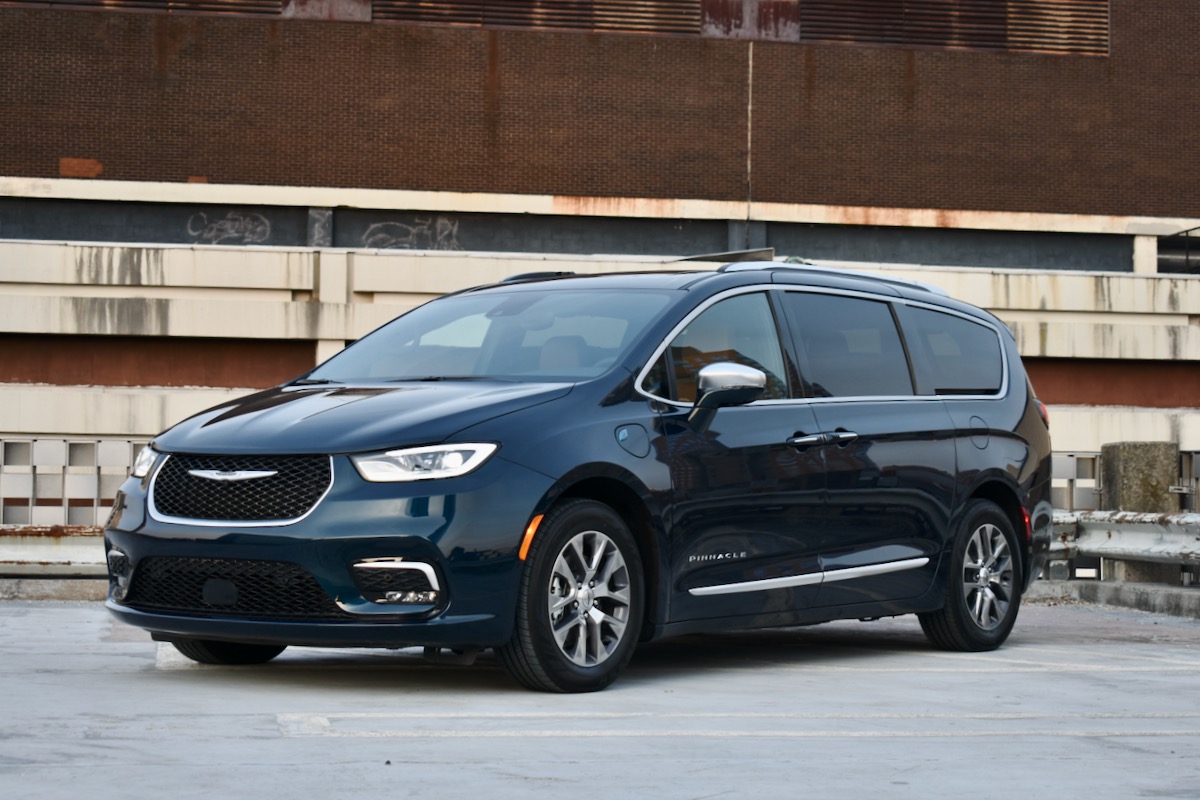
The 2024 Chrysler Pacifica is a great minivan and a great plug-in hybrid.
The Chrysler Pacifica Hybrid remains a great option for families who want the benefits of electrification without adopting a fully electric-vehicle lifestyle. Introduced for the 2017 model year and essentially unchanged for 2024, the Pacifica Hybrid is the only minivan available in Canada with a plug-in hybrid powertrain. That gives it an emissions advantage over the rival Honda Odyssey, Kia Carnival, and Toyota Sienna.
Verdict: A plug-in hybrid powertrain enhances a well-executed minivan. The Pacifica Hybrid is a niche choice, but we like it.

The Pacifica Hybrid shares its styling with the handsome non-hybrid Pacifica (covered in a separate review). The only real giveaways for the plug-in hybrid (PHEV) model are the charge port (located on the driver’s side front fender) and some badging. Chrysler is in good company, as it’s hard to think of a current plug-in hybrid — regardless of body style — that uses its design to advertise its powertrain. That idea seems to have died with the first-generation Toyota Prius Prime.
Even though it’s been around for almost a decade, the Pacifica still looks contemporary. The exterior is sleek and clean, with no extraneous details like those of other current minivans. The rounded front fascia, with a small grille nicely integrated with elliptical headlights, is a welcome contrast to the in-your-face appearance of other minivans. Chrysler owns the minivan aesthetic, and it doesn’t feel the need to compensate for anything.
For 2024, the Pacifica Hybrid is offered only in Select and Pinnacle trim levels, with the Select base model unique to the plug-in hybrid. This means the Pacifica Hybrid skips the Touring, Touring L, and Limited grades available with the non-hybrid powertrain. Both trims feature all-LED exterior lighting, including headlights, taillights, fog lights, and daytime running lights.
Select models come standard with 17-inch wheels, while the Pacifica Hybrid Pinnacle gets 18-inch wheels as standard equipment. The Pacifica Hybrid Select can also be upgraded to 18s with the S Appearance Package or Road Tripper Package. The former also includes darkened exterior trim and black seats with light grey stitching. The latter adds unique exterior trim and graphics, along with a cargo liner and all-weather floor mats. Even the base Select model is equipped similarly to a mid-level Pacifica Limited non-hybrid model, while the Pinnacle dials things up even further with Nappa leather upholstery and small pillows for the second-row seats. However, in our test car, we found premium elements like this clashed with the leftover bits from lower-level models, like the grained plastic on the door panels. Even some things Chrysler considers premium, such as the piano-black dashboard trim and metallic-looking bezels, looked a bit cheap.

Name aside, the Pacifica Hybrid is in fact a plug-in hybrid that can be charged from an external source like an all-electric car. This allows for a bigger battery pack, which in turn gives plug-in hybrids significant all-electric range that conventional hybrids can’t match. The Pacifica Hybrid’s powertrain builds on the one from the non-hybrid model. It uses the same 3.6-litre V6 engine (albeit running on the more efficient Atkinson cycle), but tacks on a two-motor hybrid system fed electricity from a 16-kilowatt-hour (kWh) battery pack. This makes a big difference in fuel economy (see below) but the spec sheet shows some compromises.
Total system output is 260 horsepower, compared to 287 hp for non-hybrid models. And while the standard Pacifica is available with all-wheel drive (AWD), the Pacifica Hybrid is only offered with front-wheel drive (FWD). Chrysler also doesn’t recommend towing with the plug-in hybrid, while other models have a respectable 1,630-kilogram (3,600-pound) towing capacity.
The horsepower deficit is more than made up for by electric-motor torque, which gets the Pacifica Hybrid off the line quickly and provides a nice punch when overtaking on the highway. The electric assistance also means the gasoline engine isn’t working as hard under low loads, so it’s making less noise most of the time. Because while this V6 has many good qualities, its exhaust note isn’t one of them.
Maximizing use of the all-electric driving mode is an important part of any PHEV, and Chrysler gets high marks in this area. A normal amount of pressure on the accelerator pedal doesn’t kick the gasoline engine on, nor does the Pacifica Hybrid feel too slow on electric power. The shift from electric to hybrid mode was a bit clunky, however. Regenerative braking also fell well short of one-pedal driving, although that’s not unusual for a plug-in hybrid.
Like the standard Pacifica, the well-tuned chassis offers a comfortable ride without being too floppy. The plug-in hybrid powertrain also makes an already-quiet vehicle even quieter, so it will be easier to converse with passengers in the second and third rows.

Vehicles like the Kia Sorento and Mazda CX-90 offer plug-in hybrid efficiency and three rows of seats, but the Pacifica Hybrid is the only vehicle currently on sale to combine a plug-in hybrid powertrain with the superior packaging of a minivan. Its low step-in height and sliding doors make accessing the rear seats much easier than in any crossover SUV.
Most interior dimensions carry over from the non-hybrid Pacifica, meaning the Pacifica Hybrid compares favourably to other minivans as well. First-row and second-row headroom and legroom are nearly identical to the competition. The Chrysler minivan offers slightly less third-row legroom than the Honda Odyssey and Toyota Sienna, but more than the Kia Carnival. And it has a slight advantage in third-row headroom as well.
However, the Pacifica Hybrid isn’t available with the Stow ‘n Go second-row seats offered in other Pacifica models, getting second-row captain’s chairs instead. The battery pack occupies the space these seats normally fold into to create a completely flat load floor, which also serves as underfloor storage when the seats are deployed. The Pacifica Hybrid still offers the same amount of above-floor cargo space as other Pacifica models, though, at 911 litres behind the third-row seats, 2,477 litres behind the second row, and 3,978 litres behind the first row. That’s also comparable to rival minivans. A power liftgate is standard as well.
Pacifica Hybrid Select models feature what Chrysler calls the Premium Console, with dual-level storage. Our Pacifica Hybrid Pinnacle test vehicle had the more elaborate Ultra Console, which adds a storage nook that Chrysler claims is big enough for a purse or laptop. However, reaching it is a bit awkward, in part because the openings around the side aren’t as big as in the Toyota Sienna, which also features a raised console with storage space beneath. It’s also hard to see why Chrysler bothered with a traditional console when the Pacifica has a rotary shifter mounted on the dashboard, negating some of the need for a full console. It’s also easy to confuse that shifter with the volume knob.
Pacifica Hybrids can also be equipped with the Stow ‘n Vac built-in vacuum cleaner available on non-hybrid models. While not exclusive to Chrysler, it’s hard to think of a more appropriate feature for a minivan.

Like other Pacifica models, the Pacifica Hybrid comes standard with a 10.1-inch touchscreen running the Uconnect 5 infotainment system that feels nearly ubiquitous across Stellantis products. Expected features like wireless Apple CarPlay/Android Auto connectivity and Bluetooth are included, along with SiriusXM with 360L satellite radio. Built-in navigation and a 19-speaker Harman Kardon audio system are available as well.
The Pacifica was one of the first vehicles to feature Uconnect 5 when it launched for the 2017 model year. All these years later, the system still feels current thanks to its inherent usability and strategic updates by Chrysler parent Stellantis. The main giveaway of the Pacifica’s age is the lack of a fully digital instrument cluster (the gauges are analog, with a 7-inch digital display in between). That might disappoint some tech nerds, but we had no issues with its functionality. We would have appreciated a shortcut button for the 360-degree camera system, though.
A maximum of 12 USB-C ports ensure people in all three rows have a place to plug in, while the optional FamCam rear-facing camera lets parents keep an eye on kids in the back seats. Unlike the Honda Odyssey and Kia Carnival, though, Chrysler doesn’t offer a rear-seat intercom system. The available Uconnect Theatre rear-seat entertainment system adds a pair of 10.1-inch touchscreens attached to the backs of the front seats, wireless headphones, remote controls, a Blu-ray/DVD player, and HDMI inputs. Amazon Fire TV connectivity is bundled with Uconnect Theatre, including parental controls and the ability to watch videos on the central touchscreen while the car is in park.

Complete Insurance Institute for Highway Safety (IIHS) safety ratings for the 2024 Chrysler Pacifica Hybrid were not available at the time of publication. The non-hybrid Pacifica was named a 2023 IIHS Top Safety Pick, but the plug-in hybrid is rated separately.
The National Highway Traffic Safety Administration (NHTSA) gave the 2024 Pacifica Hybrid a five-star overall safety rating, with a five-star side crash-test rating and four-star frontal and rollover ratings.
Safety features carry over from the non-hybrid Pacifica, meaning the Pacifica Hybrid comes standard with blind-spot monitoring with rear cross-traffic alert, forward-collision warning, automatic emergency braking with pedestrian detection, lane-departure warning, adaptive cruise control, and rear park assist. Pinnacle models get the aforementioned 360-degree camera system and parallel and perpendicular park assist.
An Emergency Vehicle Alert System is new for 2024. It shows warnings about nearby emergency vehicles or road hazards on the central touchscreen.

This plug-in hybrid minivan offers 51 kilometres of Natural Resources Canada-rated electric range at 2.9 litres-equivalent per 100 kilometres combined, and it also gets 8.0 L/100 km combined in hybrid mode. The fuel economy alone bests the Honda Odyssey and Kia Carnival — which only manage 10.6 and 11.1 L/100 km combined respectively from their non-hybrid V6 powertrains — before even considering the Chrysler’s all-electric driving capability.
When it’s time to recharge that 16-kWh battery pack, a 6.6-kilowatt onboard AC charger takes about two hours to do the job, assuming you have a 240-volt Level 2 charging station. For those who don’t have access to a charging station, consider the Toyota Sienna, which extracts a maximum 6.8 L/100 km combined from its standard hybrid powertrain.
Chrysler offers a three-year/60,000-kilometre basic warranty and five-year/100,000-kilometre powertrain warranty, plus a separate 10-year/160,000-kilometre warranty for the battery pack.
The base Pacifica Hybrid Select costs an estimated $62,290 with the mandatory destination charge (which can vary across the country), while the Pinnacle trim level costs an estimated $75,790 with destination. That works out to a premium of roughly $1,400 for the Select over a Pacifica Limited (the equivalent non-hybrid model) and $6,900 for the Pinnacle over the non-hybrid version of that trim level. Unfortunately, the federal iZEV rebate that previously applied to the Pacifica Hybrid is now on hold, though rebates are still available in some provinces. While our Pacifica Hybrid Pinnacle test car was an impressively versatile vehicle, it’s hard to call it a good value at its current MSRP. The monetary picture may look different for buyers who regularly plug their vehicles in to realize the maximum fuel savings and emissions reductions. Because while the Pacifica is a great plug-in hybrid, owners need to be ready to use it as such for it to be worthwhile.
Note: Images show a US model.

User reviews for 2024 Chrysler Pacifica Hybrid
Write a review2024 Chrysler Pacifica Hybrid Pricing
Trims & specs
Air Conditioning
Automatic climate control front air conditioning · Dual front air conditioning zones · Automatic climate control rear air conditioning · Single rear air conditioning zones · Second and third row rear heat vents
Airbags
Dual front airbags · Dual front knee airbags · Passenger airbag deactivation: occupant sensing deactivation · Front side airbags · Front side curtain airbags
Audio System
Antenna Type: diversity · Voice recognition audio system · Bluetooth auxiliary audio input · Pandora internet radio · Touch screen display radio · Satellite Radio: SiriusXM · Total Number of Speakers: 6
Brakes
ABS: 4-wheel · Braking assist: hill start assist · Electronic parking brake: auto off · Front brake diameter: 13.0 · Front brake width: 1.1 · Front brakes: ventilated disc · Rear brake diameter: 13.0 · Rear brake width: 0.47 · Rear brakes: disc
Comfort Features
Armrests: rear outboard seats · Door trim: vinyl · Floor Mat Material: carpet · Floor Material: carpet · Floor Mats: front · Steering wheel trim: leatherette
Convenience Features
Adaptive stop and go cruise control: semi-automatic · Assist handle: rear · Cargo area power outlet: 12V · Center console: front console with storage · Cruise control: adaptive · Cupholders: front, rear and third row · Easy entry: manual rear seat · Memorized settings: 2 driver · Multi-function remote: keyless entry with panic alarm · One-touch windows: 2 · Power outlet(s): USB-C rear · Power steering: electric · Power windows: lockout button · Reading lights: front · Steering wheel: tilt and telescopic · Steering wheel mounted controls: multi-function screen controls · Storage: grocery bag holder · Vanity mirrors: dual illuminating
Driver Seat
Adjustable lumbar support: 4-way power · Power adjustments: 8
Engine
Battery: 650 CCA · EV battery capacity: 16 kWh · EV on-board charger rating: 6.6 kW · Electric Charge Cord: 120 volt · Electric Motor Battery Type: lithium ion · Electric Motor HP: 114 · Electric Motor Power Output (Kilowatts): 85 · Electric Motor Torque: 231 · Electric motor charger connector: SAE J1772 · Electric motor charging time: 2 hours · Electric motor charging time (120V): 14 hours · Electric motor miles per charge: 32 · Hybrid Gas Engine HP: 220 · Hybrid Gas Engine HP@RPM: 5050 · Hybrid Gas Engine Torque: 235 · Hybrid gas Engine Torque@RPM: 3700
Exterior Features
Door handle color: body-color · Front bumper color: chrome accents · Grille color: black surround · License plate bracket: front · Mirror color: black · Rear bumper color: body-color · Rear spoiler: roofline spoiler · Rear spoiler color: body-color · Rear trunk/liftgate: liftgate · Rocker panel color: body-color · Side door type: dual power sliding · Window trim: chrome
Headrests
Front headrests: adjustable · Number of front headrests: 2 · Number of rear headrests: 2 · Number of third row headrests: 3
Hybrid
Starter Type: motor/generator
In Car Entertainment
Connected in-car apps: Google POIs · Infotainment: Uconnect · Infotainment screen size: 10.1 in. · Smartphone integration: wireless Apple CarPlay
Instrumentation
Fuel economy display: range · Instrument cluster screen size: 7 in. · Warnings and reminders: low battery
Lights
Daytime running lights: LED · Exterior entry lights: security approach lamps · Front fog lights: LED · Headlights: auto delay off · Tail and brake lights: LED
Mirrors
Exterior mirrors: integrated turn signals · Inside rearview mirror: manual day/night
Passenger Seat
Manual Adjustments: 4
Rear Seats
Type: removable captains chairs
Roof
OEM roof height: undefined
Safety
Automatic emergency braking: rear · Camera system: rearview · Child seat anchors: LATCH system · Cross Traffic Alert: rear · Crumple zones: rear · Impact sensor: fuel cut-off · Parking sensors: rear · Pre-Collision Warning System: visual warning · Pre-collision warning system: pedestrian detection · Rearview monitor: in dash
Seatbelts
Emergency locking retractors: front · Front seatbelts: 3-point · Seatbelt force limiters: front · Seatbelt pretensioners: front · Seatbelt warning sensor: driver and passenger · Second row seatbelts: 3-point · Third row seatbelts: 3-point
Seats
Driver seat power adjustments: height · Front seat type: bucket · Passenger seat manual adjustments: reclining · Rear headrests: adjustable · Rear seat manual adjustments: reclining · Third row headrests: foldable · Third row seat folding: split · Upholstery: perforated
Security
Power door locks: anti-lockout
Spare Tire
Kit: inflator kit
Steering
Steering ratio: 16.2 · Turns lock-to-lock: 3.1
Suspension
Front Arm Type: lower control arms · Front Shock Type: gas shock absorbers · Front Spring Type: coil springs · Front Suspension Classification: independent · Front Suspension Type: MacPherson struts · Rear Shock Type: twin-tube gas shock absorbers · Rear Spring Type: coil springs · Rear Suspension Classification: semi-independent · Rear Suspension Type: torsion bar · Stabilizer bar(s): front
Telematics
Driver assistance app: roadside assistance · Electronic messaging assistance: with voice recognition · Navigation app: TomTom · Navigation system: with voice recognition · Phone: voice activated · Phone wireless data link: Bluetooth · Smart device app compatibility: SiriusXM Guardian · Smart device app function: vehicle location · Wifi: hotspot
Third Row Seat
Type: 40-60 split bench
Tires
Type: all season
Tires and Rims
Wheels: painted aluminum
Windows
Front wipers: variable intermittent · Laminated glass: acoustic · Liftgate window: fixed · Power windows: with safety reverse · Rear wiper: with washer
Air Conditioning
Automatic climate control front air conditioning · Dual front air conditioning zones · Rear air conditioning: with independent controls · Single rear air conditioning zones · Second and third row rear heat vents
Airbags
Dual front airbags · Dual front knee airbags · Passenger airbag deactivation: occupant sensing deactivation · Front side airbags · Third row side curtain airbags
Audio System
Antenna Type: mast · Voice recognition audio system · USB auxiliary audio input · Pandora internet radio · Touch screen display radio · Satellite Radio: SiriusXM · Total Number of Speakers: 6
Brakes
ABS: 4-wheel · Braking assist: hill start assist · Electronic parking brake: auto off · Front brake diameter: 13.0 · Front brake width: 1.1 · Front brakes: ventilated disc · Rear brake diameter: 13.0 · Rear brake width: 0.47 · Rear brakes: disc
Comfort Features
Armrests: rear outboard seats · Door trim: vinyl · Floor Mat Material: carpet · Floor Material: carpet · Floor Mats: front · Steering wheel trim: leatherette
Convenience Features
Active parking system: driver controlled brake, gas and gear selection · Adaptive stop and go cruise control: semi-automatic · Assist handle: rear · Cargo area power outlet: 12V · Center console: front console with storage · Cruise control: adaptive · Cupholders: front, rear and third row · Easy entry: manual rear seat · Memorized settings: 2 driver · Multi-function remote: proximity entry system · One-touch windows: 2 · Power outlet(s): USB-C front · Power steering: electric · Power windows: lockout button · Reading lights: third row · Steering wheel: tilt and telescopic · Steering wheel mounted controls: multi-function screen controls · Storage: rear seatback · Vanity mirrors: dual illuminating
Driver Seat
Adjustable lumbar support: 4-way power · Power adjustments: 8
Engine
Battery: maintenance-free · EV battery capacity: 16 kWh · EV on-board charger rating: 6.6 kW · Electric Charge Cord: 120 volt · Electric Motor Battery Type: lithium ion · Electric Motor HP: 114 · Electric Motor Power Output (Kilowatts): 85 · Electric Motor Torque: 231 · Electric motor charger connector: SAE J1772 · Electric motor charging time: 2 hours · Electric motor charging time (120V): 14 hours · Electric motor miles per charge: 32 · Hybrid Gas Engine HP: 220 · Hybrid Gas Engine HP@RPM: 5050 · Hybrid Gas Engine Torque: 235 · Hybrid gas Engine Torque@RPM: 3700 · Oil cooler: auxiliary
Exterior Features
Body side moldings: black · Door handle color: body-color · Front bumper color: black accents · Grille color: black surround · License plate bracket: front · Mirror color: black · Rear bumper color: black accents · Rear spoiler: roofline spoiler · Rear spoiler color: body-color · Rear trunk/liftgate: power operated · Rocker panel color: body-color · Side door type: dual power sliding · Window trim: black
Headrests
Front headrests: adjustable · Number of front headrests: 2 · Number of rear headrests: 2 · Number of third row headrests: 3
Hybrid
Starter Type: motor/generator
In Car Entertainment
Connected in-car apps: Google POIs · Infotainment: Uconnect · Infotainment screen size: 10.1 in. · Smartphone integration: wireless Apple CarPlay
Instrumentation
Fuel economy display: MPG · Instrument cluster screen size: 7 in. · Warnings and reminders: low battery
Lights
Daytime running lights: LED · Exterior entry lights: security approach lamps · Front fog lights: LED · Headlights: Auto on/off · Tail and brake lights: LED
Mirrors
Exterior mirrors: heated · Inside rearview mirror: manual day/night
Passenger Seat
Manual Adjustments: 4
Rear Seats
Type: removable captains chairs
Roof
OEM roof height: undefined
Safety
Automatic emergency braking: front · Camera system: surround view · Child seat anchors: LATCH system · Cross Traffic Alert: rear · Crumple zones: rear · Impact sensor: post-collision safety system · Parking sensors: front · Pre-Collision Warning System: audible warning · Pre-collision warning system: pedestrian detection · Rearview monitor: in dash
Seatbelts
Emergency locking retractors: front · Front seatbelts: 3-point · Seatbelt force limiters: front · Seatbelt pretensioners: front · Seatbelt warning sensor: driver and passenger · Second row seatbelts: 3-point · Third row seatbelts: 3-point
Seats
Driver seat power adjustments: height · Front seat type: bucket · Passenger seat manual adjustments: reclining · Rear headrests: adjustable · Rear seat manual adjustments: reclining · Third row headrests: foldable · Third row seat folding: fold flat into floor · Upholstery: perforated
Security
Power door locks: anti-lockout
Spare Tire
Kit: inflator kit
Steering
Steering ratio: 16.2 · Turns lock-to-lock: 3.1
Suspension
Front Arm Type: lower control arms · Front Shock Type: gas shock absorbers · Front Spring Type: coil springs · Front Suspension Classification: independent · Front Suspension Type: MacPherson struts · Rear Shock Type: twin-tube gas shock absorbers · Rear Spring Type: coil springs · Rear Suspension Classification: semi-independent · Rear Suspension Type: torsion bar · Stabilizer bar(s): front
Telematics
Driver assistance app: roadside assistance · Electronic messaging assistance: with voice recognition · Navigation app: TomTom · Navigation system: with voice recognition · Phone: voice activated · Phone wireless data link: Bluetooth · Smart device app compatibility: SiriusXM Guardian · Smart device app function: engine start · Wifi: hotspot
Third Row Seat
Type: 40-60 split bench
Tires
Type: all season
Tires and Rims
Wheels: painted aluminum
Windows
Front wipers: rain sensing · Laminated glass: acoustic · Liftgate window: fixed · Power windows: with safety reverse · Rear wiper: intermittent
Air Conditioning
Automatic climate control front air conditioning · Dual front air conditioning zones · Rear air conditioning: with independent controls · Single rear air conditioning zones · Second and third row rear heat vents
Airbags
Dual front airbags · Dual front knee airbags · Passenger airbag deactivation: occupant sensing deactivation · Front side airbags · Front side curtain airbags
Audio System
Antenna Type: diversity · Voice recognition audio system · Bluetooth auxiliary audio input · Pandora internet radio · HD radio · Satellite Radio: SiriusXM · Total Number of Speakers: 6
Brakes
ABS: 4-wheel · Braking assist: hill start assist · Electronic parking brake: auto off · Front brake diameter: 13.0 · Front brake width: 1.1 · Front brakes: ventilated disc · Rear brake diameter: 13.0 · Rear brake width: 0.47 · Rear brakes: disc
Comfort Features
Armrests: rear outboard seats · Cargo area floor mat: rubber/vinyl · Door trim: vinyl · Floor Mat Material: vinyl/rubber · Floor Material: carpet · Floor Mats: front · Steering wheel trim: leatherette
Convenience Features
Active parking system: driver controlled brake, gas and gear selection · Adaptive stop and go cruise control: semi-automatic · Assist handle: rear · Cargo area power outlet: 12V · Center console: front console with storage · Cruise control: adaptive · Cupholders: illuminated · Easy entry: manual rear seat · Memorized settings: 2 driver · Multi-function remote: keyless entry with panic alarm · One-touch windows: 2 · Power outlet(s): 12V front · Power steering: electric · Power windows: lockout button · Reading lights: rear · Steering wheel: tilt and telescopic · Steering wheel mounted controls: cruise controls · Storage: in dash · Vanity mirrors: dual illuminating
Driver Seat
Adjustable lumbar support: 4-way power · Power adjustments: 8
Engine
Battery: 650 CCA · EV battery capacity: 16 kWh · EV on-board charger rating: 6.6 kW · Electric Charge Cord: 120 volt · Electric Motor Battery Type: lithium ion · Electric Motor HP: 114 · Electric Motor Power Output (Kilowatts): 85 · Electric Motor Torque: 231 · Electric motor charger connector: SAE J1772 · Electric motor charging time: 2 hours · Electric motor charging time (120V): 14 hours · Electric motor miles per charge: 32 · Hybrid Gas Engine HP: 220 · Hybrid Gas Engine HP@RPM: 5050 · Hybrid Gas Engine Torque: 235 · Hybrid gas Engine Torque@RPM: 3700 · Oil cooler: auxiliary
Exterior Features
Body side moldings: aluminum · Door handle color: aluminum · Front bumper color: aluminum accents · Grille color: aluminum surround · License plate bracket: front · Mirror color: aluminum · Rear bumper color: body-color · Rear spoiler: roofline spoiler · Rear spoiler color: body-color · Rear trunk/liftgate: power operated · Rocker panel color: body-color · Side door type: dual power sliding · Window trim: aluminum
Headrests
Front headrests: adjustable · Number of front headrests: 2 · Number of rear headrests: 2 · Number of third row headrests: 3
Hybrid
Starter Type: motor/generator
In Car Entertainment
Connected in-car apps: Amazon Alexa · Infotainment: Uconnect · Infotainment screen size: 10.1 in. · Smartphone integration: wireless Apple CarPlay
Instrumentation
Fuel economy display: MPG · Instrument cluster screen size: 7 in. · Warnings and reminders: coolant temperature warning
Lights
Daytime running lights: LED · Exterior entry lights: security approach lamps · Front fog lights: LED · Headlights: LED · Tail and brake lights: LED
Mirrors
Exterior mirrors: heated · Inside rearview mirror: manual day/night
Passenger Seat
Manual Adjustments: 4
Rear Seats
Type: removable captains chairs
Roof
OEM roof height: undefined · Roof rack color: black · Roof rails: black
Safety
Automatic emergency braking: front · Camera system: surround view · Child seat anchors: LATCH system · Cross Traffic Alert: rear · Crumple zones: front · Impact sensor: alert system · Parking sensors: front · Pre-Collision Warning System: visual warning · Pre-collision warning system: pedestrian detection · Rearview monitor: in dash
Seatbelts
Emergency locking retractors: front, rear, third, and fourth row · Front seatbelts: 3-point · Seatbelt force limiters: front · Seatbelt pretensioners: front · Seatbelt warning sensor: driver and passenger · Second row seatbelts: 3-point · Third row seatbelts: 3-point
Seats
Driver seat power adjustments: reclining · Front seat type: bucket · Passenger seat manual adjustments: reclining · Rear headrests: adjustable · Rear seat manual adjustments: reclining · Third row headrests: foldable · Third row seat folding: split · Upholstery: leatherette
Security
Power door locks: anti-lockout
Spare Tire
Kit: tire sealant
Steering
Steering ratio: 16.2 · Turns lock-to-lock: 3.1
Suspension
Front Arm Type: lower control arms · Front Shock Type: gas shock absorbers · Front Spring Type: coil springs · Front Suspension Classification: independent · Front Suspension Type: MacPherson struts · Rear Shock Type: twin-tube gas shock absorbers · Rear Spring Type: coil springs · Rear Suspension Classification: semi-independent · Rear Suspension Type: torsion bar · Stabilizer bar(s): front
Telematics
Driver assistance app: roadside assistance · Electronic messaging assistance: with read function · Navigation app: TomTom · Navigation system: with voice recognition · Phone: voice activated · Phone wireless data link: Bluetooth · Smart device app compatibility: SiriusXM Guardian · Smart device app function: lock operation · Wifi: hotspot
Third Row Seat
Type: 40-60 split bench
Tires
Type: all season
Tires and Rims
Wheels: aluminum with painted accents
Windows
Front wipers: speed sensitive · Laminated glass: acoustic · Liftgate window: fixed · Power windows: with safety reverse · Rear wiper: with washer
Air Conditioning
Automatic climate control front air conditioning · Dual front air conditioning zones · Rear air conditioning: with independent controls · Single rear air conditioning zones · Second and third row rear heat vents
Airbags
Dual front airbags · Dual front knee airbags · Passenger airbag deactivation: occupant sensing deactivation · Front side airbags · Front side curtain airbags
Audio System
Antenna Type: diversity · Voice recognition audio system · Auxiliary audio input: jack · Pandora internet radio · Premium Brand: Alpine · Touch screen display radio · Satellite Radio: SiriusXM · Total Number of Speakers: 13 · 506 watts
Brakes
ABS: 4-wheel · Braking assist: hill start assist · Electronic parking brake: auto off · Front brake diameter: 13.0 · Front brake width: 1.1 · Front brakes: ventilated disc · Rear brake diameter: 13.0 · Rear brake width: 0.47 · Rear brakes: disc
Comfort Features
Armrests: dual front · Door trim: vinyl · Floor Mat Material: carpet · Floor Material: carpet · Floor Mats: front · Steering wheel trim: leatherette
Convenience Features
Active parking system: driver controlled brake, gas and gear selection · Adaptive stop and go cruise control: semi-automatic · Assist handle: rear · Cargo area power outlet: 12V · Center console: front console with storage · Cruise control: adaptive · Cupholders: rear · Dimming rearview mirror: auto-dimming · Easy entry: manual rear seat · Memorized settings: driver seat · Multi-function remote: proximity entry system · One-touch windows: 4 · Power outlet(s): USB-C front · Power steering: speed-proportional · Power windows: lockout button · Reading lights: front · Steering wheel: tilt and telescopic · Steering wheel mounted controls: phone · Storage: grocery bag holder · Universal garage door opener: Homelink · Vanity mirrors: dual illuminating
Driver Seat
Adjustable lumbar support: 4-way power · Power adjustments: 8
Engine
Battery: 650 CCA · EV battery capacity: 16 kWh · EV on-board charger rating: 6.6 kW · Electric Charge Cord: 120 volt · Electric Motor Battery Type: lithium ion · Electric Motor HP: 114 · Electric Motor Power Output (Kilowatts): 85 · Electric Motor Torque: 231 · Electric motor charger connector: SAE J1772 · Electric motor charging time: 2 hours · Electric motor charging time (120V): 14 hours · Electric motor miles per charge: 32 · Hybrid Gas Engine HP: 220 · Hybrid Gas Engine HP@RPM: 5050 · Hybrid Gas Engine Torque: 235 · Hybrid gas Engine Torque@RPM: 3700
Exterior Features
Body side moldings: black · Door handle color: body-color · Front bumper color: body-color · Grille color: black · License plate bracket: front · Mirror color: black · Rear bumper color: body-color · Rear spoiler: roofline spoiler · Rear spoiler color: body-color · Rear trunk/liftgate: sensor-activated · Rocker panel color: body-color · Side door type: dual power sliding · Window trim: black
Headrests
Front headrests: adjustable · Number of front headrests: 2 · Number of rear headrests: 2 · Number of third row headrests: 3
Hybrid
Starter Type: motor/generator
In Car Entertainment
Connected in-car apps: Google POIs · Infotainment: Uconnect · Infotainment screen size: 10.1 in. · Smartphone integration: wireless Apple CarPlay
Instrumentation
Fuel economy display: range · Instrument cluster screen size: 7 in. · Warnings and reminders: low oil pressure
Lights
Daytime running lights: LED · Exterior entry lights: security approach lamps · Front fog lights: LED · Headlights: Auto on/off · Tail and brake lights: LED
Mirrors
Exterior mirrors: integrated turn signals
Passenger Seat
Adjustable lumbar support: power · Power adjustments: 8
Rear Seats
Type: removable captains chairs
Roof
Moonroof: anti-trapping feature · Moonroof / Sunroof: power sunshade · OEM roof height: undefined · Roof rack color: black · Roof rails: black
Safety
Automatic emergency braking: front pedestrian · Camera system: surround view · Child seat anchors: LATCH system · Cross Traffic Alert: rear · Crumple zones: rear · Impact sensor: post-collision safety system · Parking sensors: front · Pre-Collision Warning System: visual warning · Pre-collision warning system: pedestrian detection · Rearview monitor: in dash
Seatbelts
Emergency locking retractors: front and rear · Front seatbelts: 3-point · Seatbelt force limiters: front · Seatbelt pretensioners: front · Seatbelt warning sensor: driver and passenger · Second row seatbelts: 3-point · Third row seatbelts: 3-point
Seats
Driver seat power adjustments: height · Front seat type: bucket · Passenger seat power adjustments: height · Rear headrests: adjustable · Rear seat manual adjustments: reclining · Third row headrests: foldable · Third row seat folding: split · Upholstery: perforated
Security
Power door locks: anti-lockout
Spare Tire
Kit: inflator kit
Steering
Steering ratio: 16.2 · Turns lock-to-lock: 3.1
Suspension
Front Arm Type: lower control arms · Front Shock Type: gas shock absorbers · Front Spring Type: coil springs · Front Suspension Classification: independent · Front Suspension Type: MacPherson struts · Rear Shock Type: twin-tube gas shock absorbers · Rear Spring Type: coil springs · Rear Suspension Classification: semi-independent · Rear Suspension Type: torsion bar · Stabilizer bar(s): front
Telematics
Driver assistance app: roadside assistance · Electronic messaging assistance: with read function · Navigation app: TomTom · Navigation system: with voice recognition · Phone: voice activated · Phone wireless data link: Bluetooth · Smart device app compatibility: SiriusXM Guardian · Smart device app function: vehicle location · Wifi: hotspot
Third Row Seat
Type: 40-60 split bench
Tires
Type: all season
Tires and Rims
Wheels: painted aluminum
Windows
Front wipers: rain sensing · Laminated glass: acoustic · Liftgate window: fixed · Power windows: with safety reverse · Rear wiper: with washer
Air Conditioning
Automatic climate control front air conditioning · Dual front air conditioning zones · Rear air conditioning: with independent controls · Single rear air conditioning zones · Second and third row rear heat vents
Airbags
Dual front airbags · Dual front knee airbags · Passenger airbag deactivation: occupant sensing deactivation · Front side airbags · Third row side curtain airbags
Audio System
Antenna Type: mast · Voice recognition audio system · Auxiliary audio input: jack · Pandora internet radio · Premium Brand: Harman-Kardon · AM/FM radio · Rear audio: separate rear audio · Remote control: video · Satellite Radio: SiriusXM · Total speakers: 20 · Watts: 760
Brakes
ABS: 4-wheel · Braking assist: hill start assist · Electronic parking brake: auto off · Front brake diameter: 13.0 · Front brake width: 1.1 · Front brakes: ventilated disc · Rear brake diameter: 13.0 · Rear brake width: 0.47 · Rear brakes: disc
Comfort Features
Armrests: rear outboard seats · Door sill trim: chrome · Door trim: vinyl · Floor Mat Material: carpet · Floor Material: carpet · Floor Mats: front · Headliner trim: Alcantara · Steering wheel trim: leatherette
Convenience Features
Active parking system: driver controlled brake, gas and gear selection · Adaptive stop and go cruise control: semi-automatic · Assist handle: rear · Cargo area power outlet: 12V · Center console: front console with armrest and storage · Cruise control: adaptive · Cupholders: illuminated · Dimming rearview mirror: auto-dimming · Easy entry: manual rear seat · Memorized settings: 2 driver · Multi-function remote: keyless entry with panic alarm · One-touch windows: 4 · Power outlet(s): 12V front · Power steering: electric · Power windows: lockout button · Reading lights: rear · Rear power outlet: 115V · Steering wheel: tilt and telescopic · Steering wheel mounted controls: audio · Storage: rear seatback · Sunshade: side window · Universal garage door opener: Homelink · Vanity mirrors: dual illuminating
Driver Seat
Adjustable lumbar support: 4-way power · Power adjustments: 8
Engine
Battery: AGM · EV battery capacity: 16 kWh · EV on-board charger rating: 6.6 kW · Electric Charge Cord: 120 volt · Electric Motor Battery Type: lithium ion · Electric Motor HP: 114 · Electric Motor Power Output (Kilowatts): 85 · Electric Motor Torque: 231 · Electric motor charger connector: SAE J1772 · Electric motor charging time: 2 hours · Electric motor charging time (120V): 14 hours · Electric motor miles per charge: 32 · Hybrid Gas Engine HP: 220 · Hybrid Gas Engine HP@RPM: 5050 · Hybrid Gas Engine Torque: 235 · Hybrid gas Engine Torque@RPM: 3700
Exterior Features
Body side moldings: chrome · Door handle color: body-color with chrome accents · Front bumper color: chrome accents · Grille color: black · License plate bracket: front · Mirror color: chrome · Rear bumper color: body-color · Rear spoiler: roofline spoiler · Rear spoiler color: body-color · Rear trunk/liftgate: sensor-activated · Rocker panel color: body-color · Side door type: dual power sliding · Window trim: chrome
Headrests
Front headrests: adjustable · Number of front headrests: 2 · Number of rear headrests: 2 · Number of third row headrests: 3
Hybrid
Starter Type: motor/generator
In Car Entertainment
Connected in-car apps: Amazon Alexa · Infotainment: Uconnect · Infotainment screen size: 10.1 in. · Smartphone integration: wireless Android Auto · Video monitor location: dual rear · Video monitor size: 10 · Video system: auxiliary HDMI input
Instrumentation
Fuel economy display: range · Instrument cluster screen size: 7 in. · Warnings and reminders: turn off headlights
Lights
Daytime running lights: LED · Exterior entry lights: security approach lamps · Front fog lights: LED · Headlights: automatic high beam dimmer · Tail and brake lights: LED
Mirrors
Exterior mirrors: power folding
Passenger Seat
Adjustable lumbar support: power · Power adjustments: 8
Rear Seats
Type: removable captains chairs
Roof
Moonroof: one-touch open/close · Moonroof / Sunroof: power sunshade · OEM roof height: undefined · Roof rack color: chrome · Roof rails: chrome
Safety
Automatic emergency braking: front pedestrian · Camera system: surround view · Child seat anchors: LATCH system · Cross Traffic Alert: rear · Crumple zones: front · Impact sensor: door unlock · Parking sensors: front · Pre-Collision Warning System: visual warning · Pre-collision warning system: pedestrian detection · Rearview monitor: in dash
Seatbelts
Emergency locking retractors: front, rear, third, and fourth row · Front seatbelts: 3-point · Seatbelt force limiters: front · Seatbelt pretensioners: front · Seatbelt warning sensor: driver and passenger · Second row seatbelts: 3-point · Third row seatbelts: 3-point
Seats
Driver seat power adjustments: reclining · Front seat type: bucket · Passenger seat power adjustments: reclining · Rear headrests: adjustable · Rear seat manual adjustments: reclining · Third row headrests: foldable · Third row seat folding: fold flat into floor · Upholstery: premium leather
Security
Power door locks: anti-lockout
Spare Tire
Kit: tire sealant
Steering
Steering ratio: 16.2 · Turns lock-to-lock: 3.1
Suspension
Front Arm Type: lower control arms · Front Shock Type: gas shock absorbers · Front Spring Type: coil springs · Front Suspension Classification: independent · Front Suspension Type: MacPherson struts · Rear Shock Type: twin-tube gas shock absorbers · Rear Spring Type: coil springs · Rear Suspension Classification: semi-independent · Rear Suspension Type: torsion bar · Stabilizer bar(s): front
Telematics
Driver assistance app: roadside assistance · Electronic messaging assistance: with voice recognition · Navigation app: TomTom · Navigation system: touch screen display · Phone: voice activated · Phone wireless data link: Bluetooth · Smart device app compatibility: SiriusXM Guardian · Smart device app function: engine start · Wifi: hotspot
Third Row Seat
Type: 40-60 split bench
Tires
Type: all season
Tires and Rims
Wheels: aluminum with painted accents
Windows
Front wipers: speed sensitive · Laminated glass: acoustic front side · Liftgate window: fixed · Power windows: with safety reverse · Rear wiper: intermittent
