2024 Ford Mustang Reviews, Pricing & Specs
Write a reviewPros
Powerful engine
Great handling
Excellent value for money
Cons
Cramped back seat
Not much cargo space
Noisy
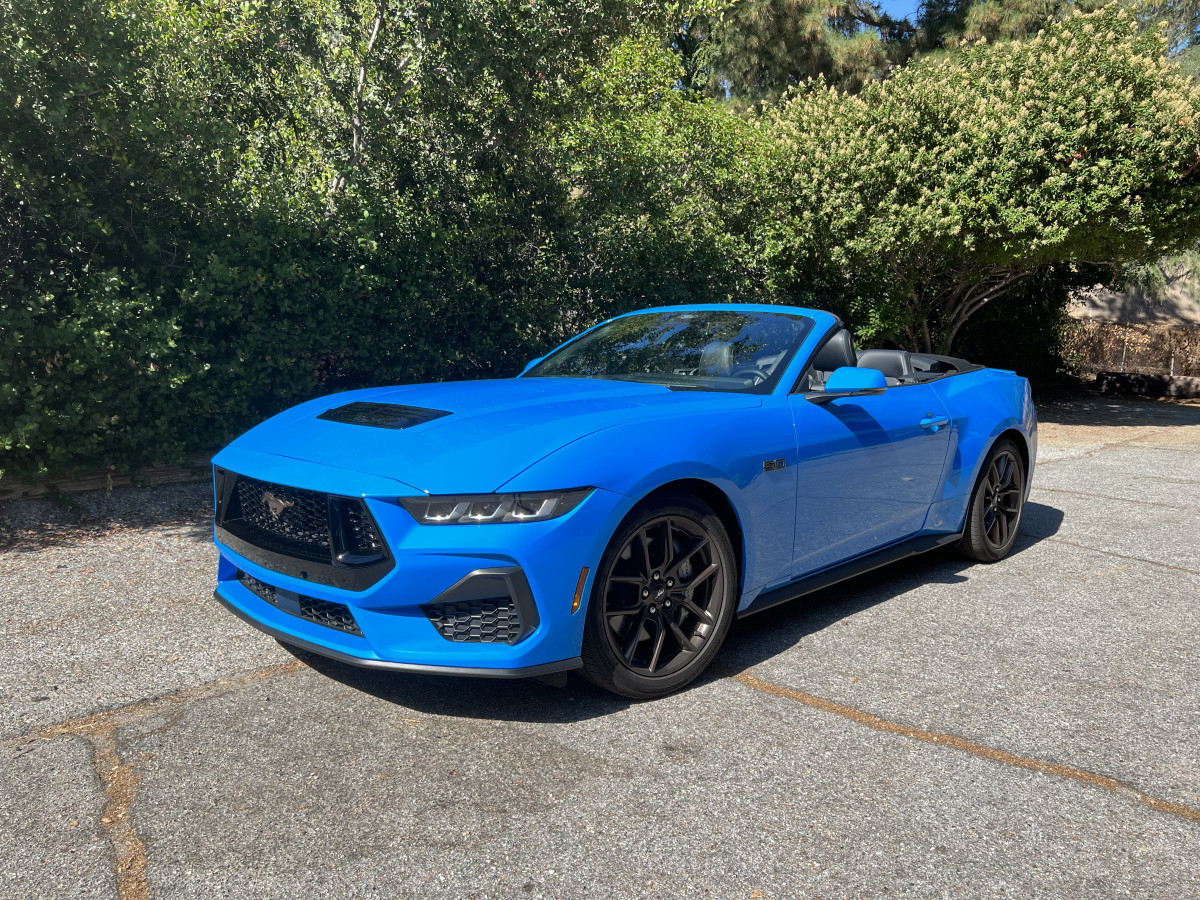
The 2024 Ford Mustang stands proud as the last remaining muscle car.
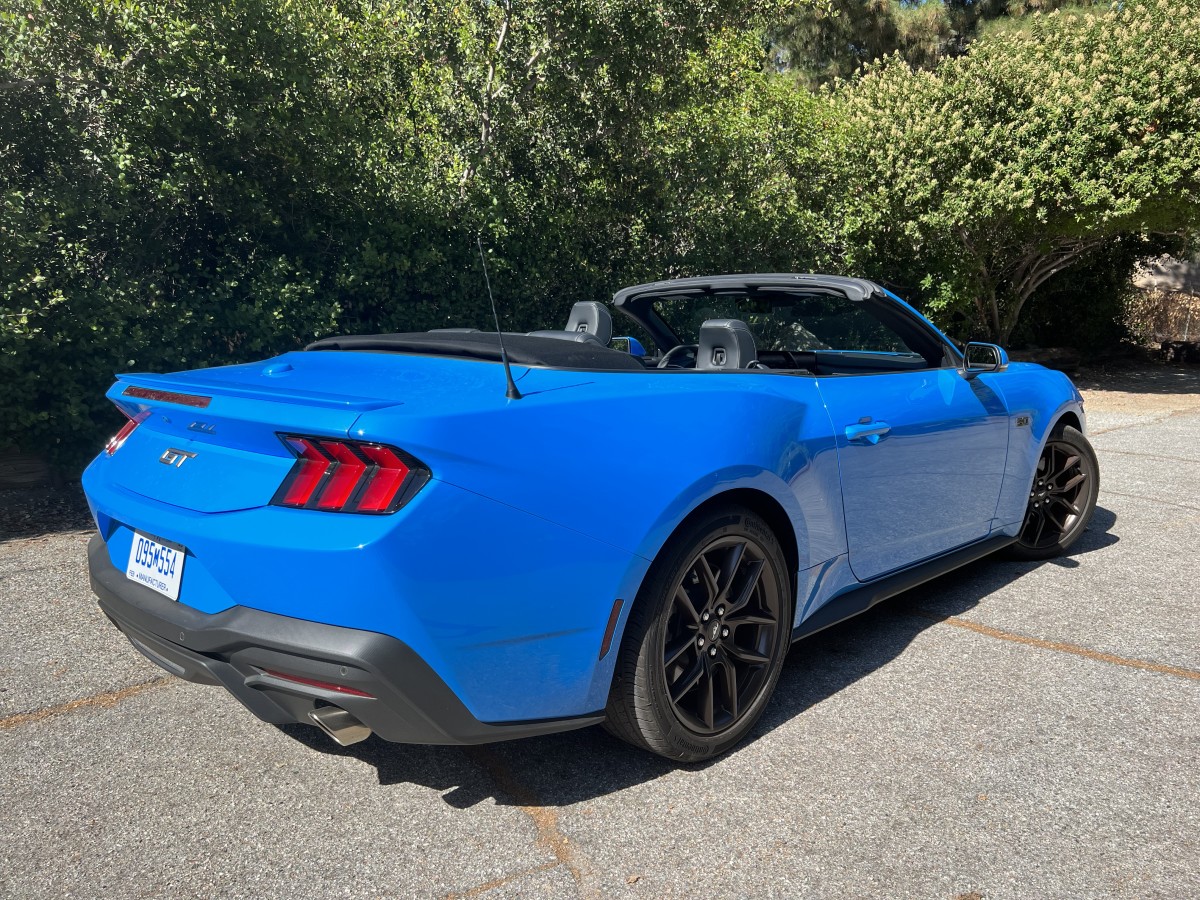
The 2024 Ford Mustang receives a style refresh with almost every body panel reworked. The front features a larger grille and narrower headlights, giving it a more aggressive face. The nose is also more upright and gives the impression it's charging headfirst into the wind instead of slicing through it. The profile view keeps the Mustang's classic long hood and shorter tail, but the rear fender flare has a more angular and pronounced look. The back end now features a deep-cut bevel that creates a sharply angled fascia and taillights, making it the most distinctive exterior trait. Overall, the changes are subtle but add some seriousness to the Mustang's impression, which we see as a positive.
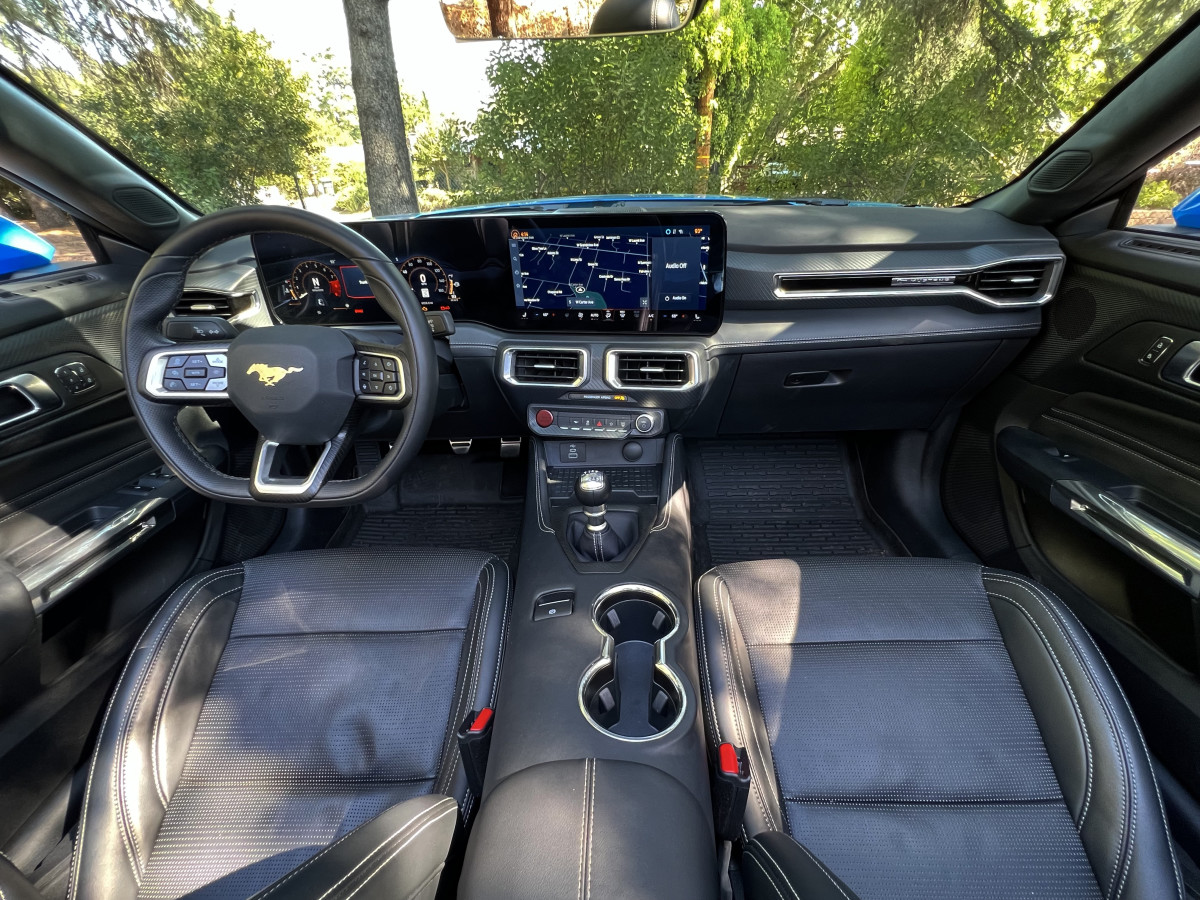
The interior gets a much more significant makeover, leaving behind the traditional dual-cowl dashboard for a more modern look that is bolstered by a striking glass panel that encloses the digital instrument panel and infotainment touchscreen. The middle of the dash has a cleaner appearance as the previous physical climate controls have been moved to the infotainment screen.
Other interior elements such as the centre console and doors are very similar to the previous Mustang, but materials quality is improved. There are fewer hard plastic surfaces, instead replaced by lightly padded sections that give the cabin a more upmarket impression.
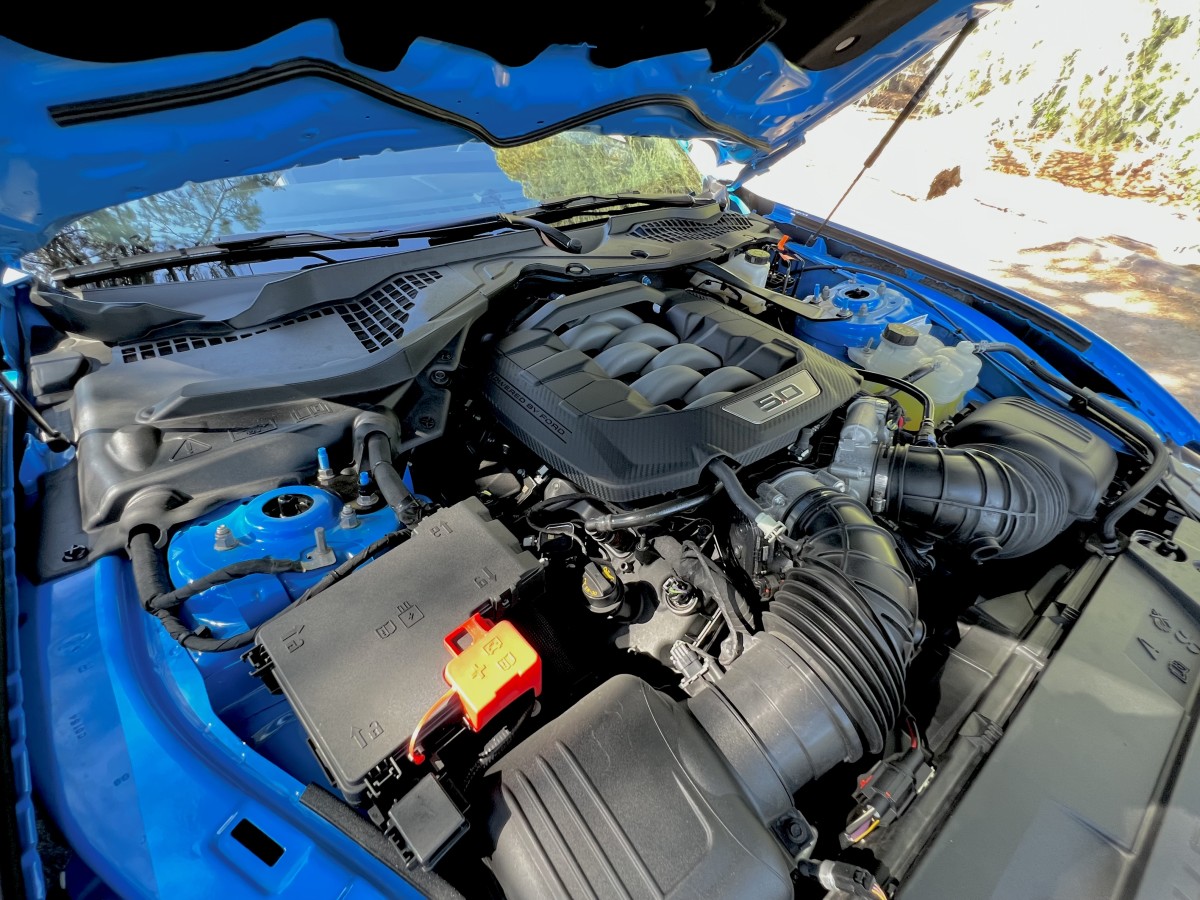
The new Mustang's entry-level engine is the EcoBoost 2.3-litre turbo four-cylinder that produces 315 horsepower and 350 pound-feet of torque. That spec represents a 5-horsepower gain over the previous engine. It's paired with a 10-speed automatic transmission that sends power to the rear wheels.
For a more complete muscle car experience, we recommend the Coyote 5.0-litre V8 in GT models that's good for 480 hp and 415 lb-ft of torque. With the optional Active Exhaust system, output increases slightly to 486 hp and 418 lb-ft. It comes standard with a six-speed manual transmission, and the 10-speed automatic is available as an option. Again, rear-wheel drive (RWD) drivetrain is your only option. At the top of the range is the Ford Mustang Dark Horse which produces 500 hp and adds several other performance enhancements.
The four-cylinder EcoBoost doesn't have the explosive acceleration the V8 GT has, but it should be more than adequate for the average driver. We expect it to reach 100 km/h in roughly 5.0 seconds, which is respectable in its own right. The GT should beat that time by at least half a second and is a much more inspiring powertrain choice. The manual transmission with rev matching is also an excellent way to increase driver engagement and is very easy to operate, even if you're new to stick shifts. The clutch pedal has an appropriate amount of effort and the friction zone is intuitively placed closer to the bottom of the stroke. That makes it easy to make smooth getaways and the tall first and second gears make it less of a chore in bumper-to-bumper traffic.
With the optional High Performance package, the EcoBoost's handling is almost as impressive as the GT's. The lighter engine up front allows for a slightly more responsive steering feel and the stickier and larger tires instill plenty of confidence. The package also adds a Torsen limited-slip differential and leather steering wheel for better grip on the road and in your hands. The upgraded Brembo brake calipers are also up to the task of getting the baby Mustang slowed in a hurry. The GT is the driver's choice in the lineup, even without any performance options. Power is abundant from idle to redline and it sounds glorious throughout. The EcoBoost also sounds great for a four-cylinder, with a deeper baritone than expected. Both engines tend to be rather loud, which is expected of a muscle car, but the droning can get taxing in sport mode.
All of this performance doesn't come at the expense of comfort, either. The ride quality is well-balanced between compliance and handling performance. You'll feel every imperfection in the pavement, but small and moderate bumps are well rounded over by the suspension. The available MagneRide adaptive suspension gives drivers a broader range of comfort and cornering, though the difference between Sport and Normal settings is rather subtle.
A new Electronic Drift Brake feature has been added to the Performance package and allows the driver to lock-up the rear wheels for some sideways-driving antics. It's a fun novelty that will certainly bring a squeal of joy to mischievous drivers, and we feel somewhat guilty for loving it as much as we do. It's obviously meant for use in controlled conditions, so please don't use it at the next cars and coffee gathering.
Overall, the 2024 Mustang doesn't break new ground, nor does it make significant performance gains over the previous generation. Considering it was already a top athlete in the class, that's not really a criticism. The Mustang is just as approachable and easy to drive as it ever was, and we fully expect future Shelby variants to appease the few that desire even more thrills.
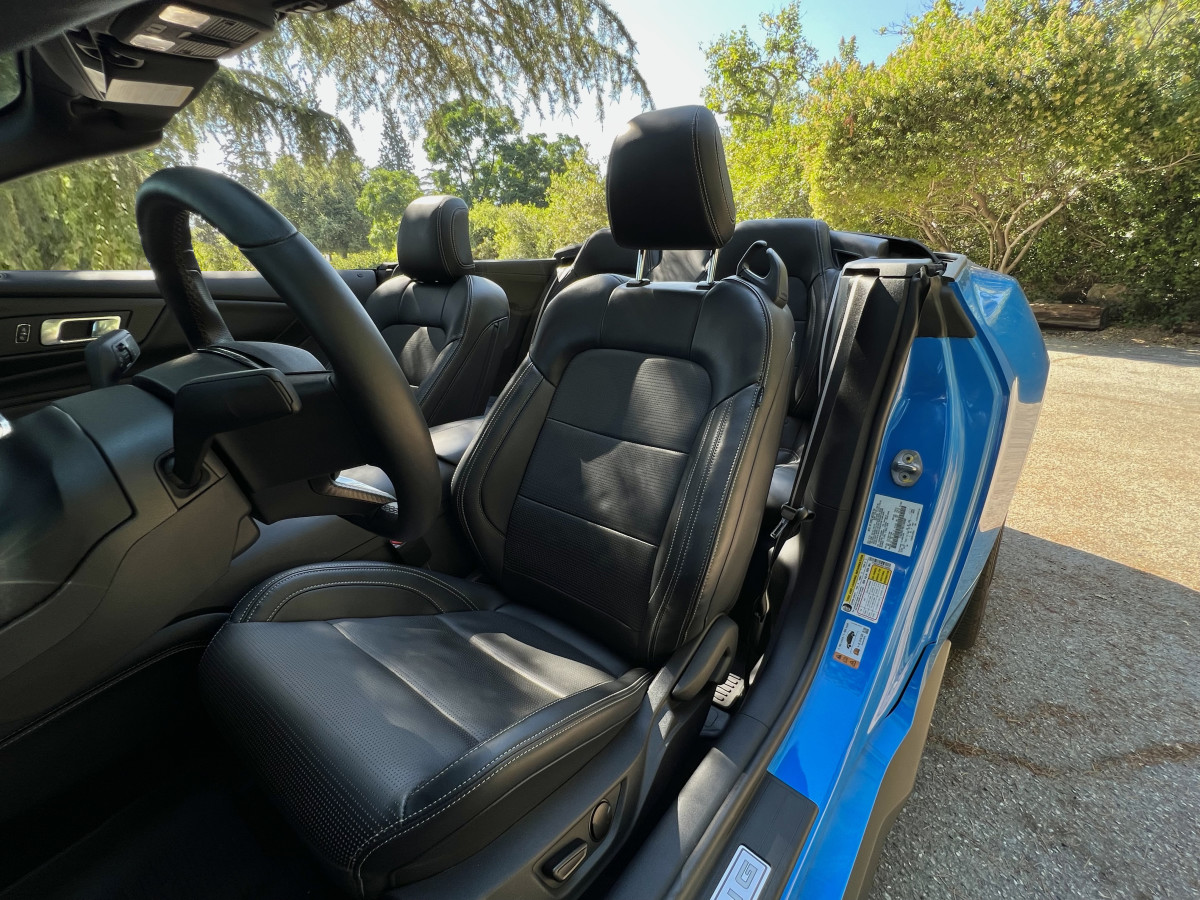
The 2024 Ford Mustang's front seats are accommodating for larger occupants and there's just enough space to not feel constrained. They offer plenty of cushioning for long-distance comfort and the available cooling does an excellent job of keeping you feeling fresh on a sweltering day. The rear seats, however, are very cramped and better suited to handle cargo overflow than passengers. In a pinch, they can come in handy for short trips. Note that heated front seats are not standard equipment.
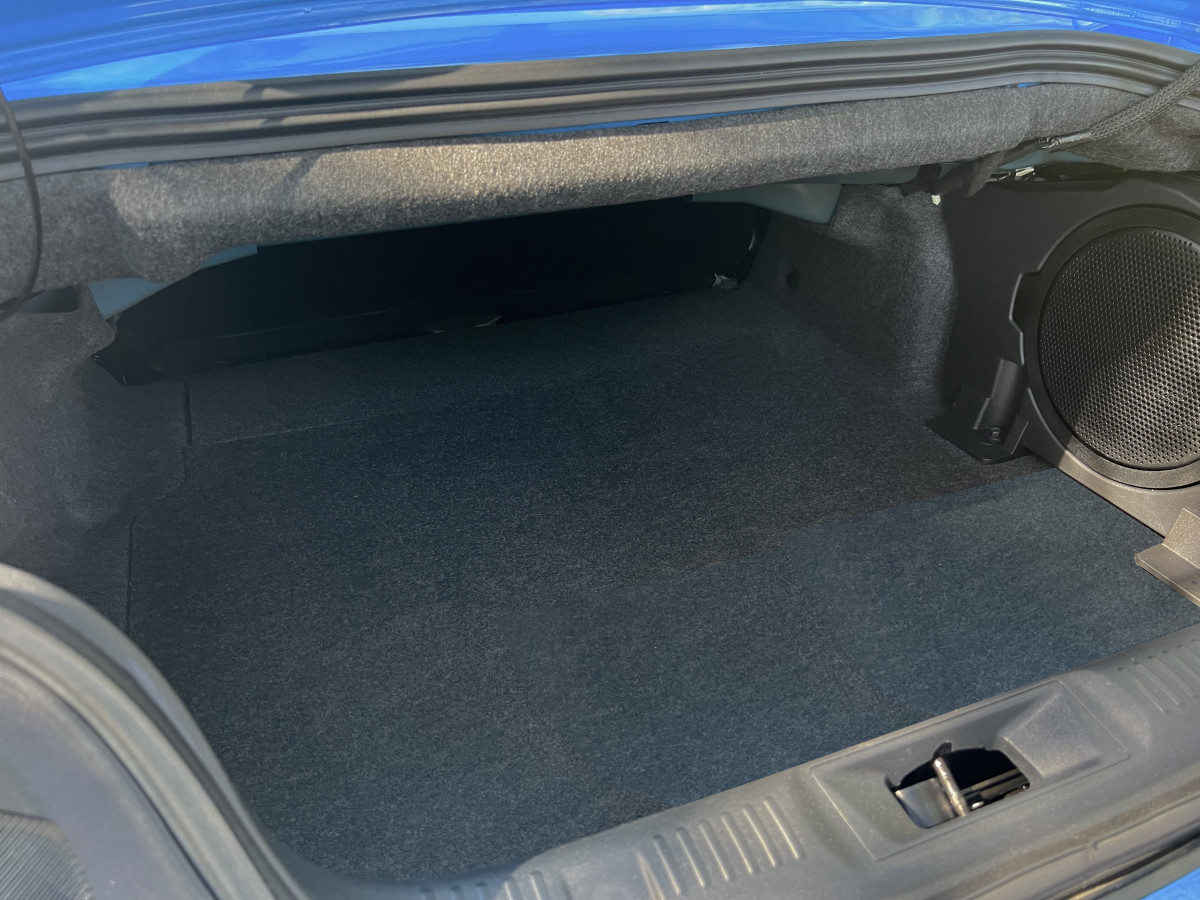
The convertible top is easy to operate. with a twist of a handle and push of a button. The top folds and deploys very quickly, and it delivers the classic open-air experience that is a relative rarity these days. The Mustang's more aerodynamic undertray should also cut down on buffeting. There is a slight sacrifice for taking the topless route though, and that's cargo capacity. The Mustang Convertible is limited to 291 litres of cargo, while the Fastback can hold up to 376 litres. That space should be adequate for a weekend getaway, though.
For smaller personal items, the Mustang is somewhat lacking. The cupholders are only about average in size, as are the door pockets and small centre armrest bin. There is at least a rubberized tray with an available wireless charging pad that keeps your phone in place.
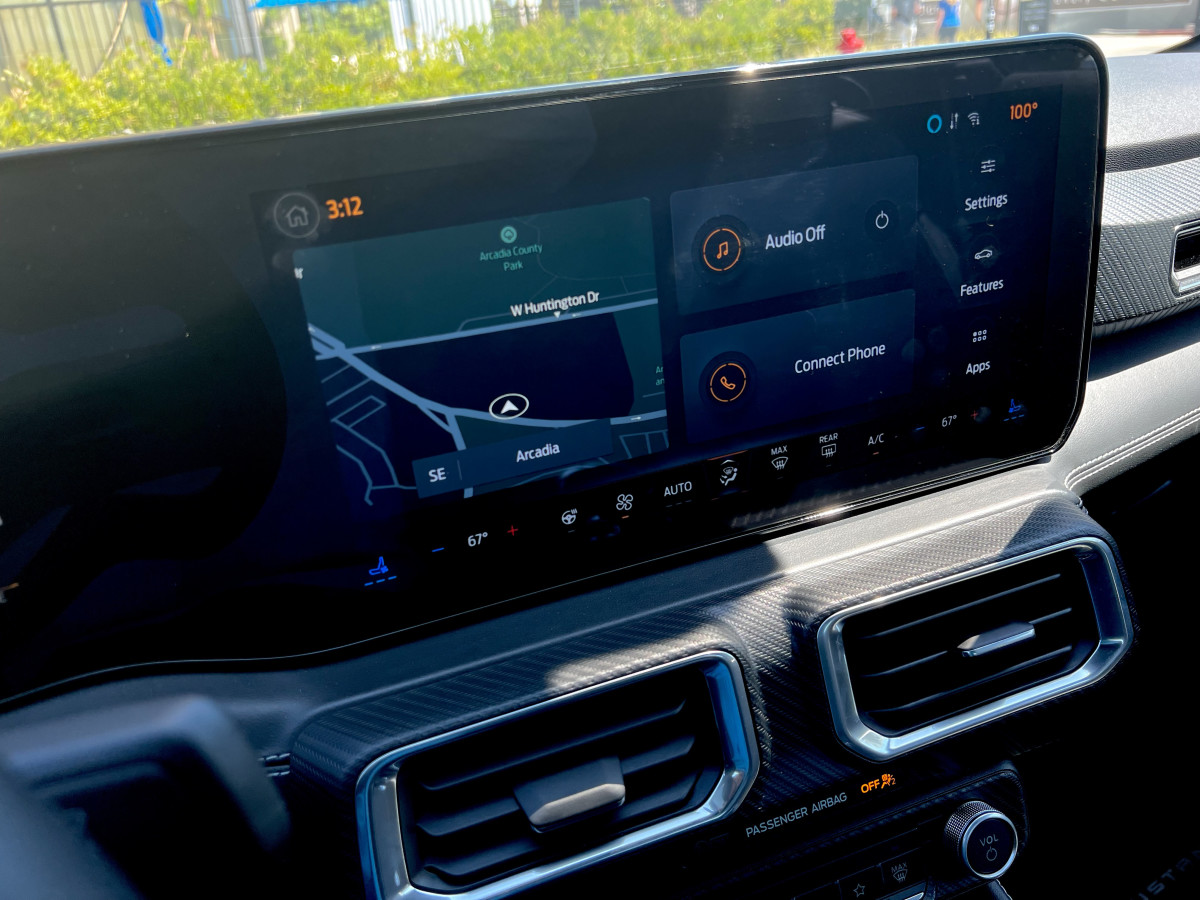
All 2024 Mustangs come with a large 13.2-inch infotainment touchscreen and a digital instrument cluster. Base models have two separate screens while Premium models have them in a single enclosure. The Sync 4 infotainment system benefits from sharp graphics and a logical menu structure that makes it easy to use. The responses to inputs can be rather slow, though. We're often opposed to placing primary climate controls in the touchscreen, but in this case, it seems to work well since the buttons remain at the bottom of the screen at all times. It also helps that once you set your desired temperature, the system does an excellent job of maintaining it with little or no adjustments needed.
We're glad to see a physical volume knob for the audio as well as a button just for the Mustang's performance features. A tap of this button on the centre stack brings up a menu of drive mode options and settings. The menus are deep and allow for a lot of customization, but they are well-organized to keep from being overwhelming. The gauge cluster is also customizable, with several themes to suit a variety of tastes. This includes a nostalgic nod to the Fox-body Mustangs that ran throughout the big 1980s. It even switches to the period-correct green glow at night.
More typical tech features are also included or available. Apple CarPlay and Android Auto are standard along with Amazon Alexa integration. A Wi-Fi hotspot is also included on all models and adds remote monitoring and control via a smartphone app. A native navigation system is optional, as is a 12-speaker Bang & Olufsen premium audio system.
Crash test results for the 2024 Ford Mustang are not yet available, but the previous generation on which this model is built received five (out of five) stars across the board in evaluations performed by the National Highway Traffic Safety Administration (NHTSA). The Insurance Institute for Highway Safety (IIHS) awarded its highest score of "Good" for all tests except for the driver-side small overlap test, where it scored a second-best "Acceptable" rating.
Standard safety features for all Mustangs include frontal collision warning with automatic emergency braking, lane-keep assist, a blind-spot monitor with rear cross-traffic alert, rear parking sensors, rain-sensing wipers, and automatic high beams. Adaptive cruise control and a safe passenger exit warning are available as options. All of these features function as they should, with no false alarms or glitches to report.
The base 2024 Ford Mustang EcoBoost has a new vehicle starting price of $39,195 (including $2,195 in destination charges and other fees). Stepping up to the V8-powered 2024 Ford Mustang GT will cost you $50,695 to start. If you're looking to go convertible, the EcoBoost starts at $46,095. The GT Convertible is available only in Mustang GT Premium trim and will set you back $62,395.
With the discontinuation of the Dodge Challenger in 2023, that leaves only the Chevrolet Camaro as the Mustang’s direct rival. But the Camaro is also being shelved at the end of the 2024 model year, meaning the Mustang will stand alone.
The Camaro starts a few thousand less for its four-cylinder model, but its 275 hp engine doesn't match the Mustang's 315 hp. Chevy offers a 335-hp V6 that is more comparable in price and performance, though. The V8 Camaro starts at $45,874 with fees, but its 455-hp output is at a slight disadvantage to the GT's 480-hp.
Natural Resources Canada estimates the four-cylinder EcoBoost will return 10.8 litres per 100 kilometres in the city, 7.1 on the highway, and 9.2 in combined driving. The Performance Pack increases the numbers to 11.1/8.2/9.8 The V8-powered GT is rated at 15.8 L/100 km city, 9.8 hwy, and 13.1 combined with the automatic transmission. The manual transmission raises fuel consumption figures to 16.6/10.2/13.8. These estimates compare favorably to the Camaro, which is estimated at 9.5 L/100 km combined for the four-cylinder automatic, 10.7 combined for the V6, and 14.9 combined for the top V8 manual or 15.1 for the thirstiest automatic version.
Other sports car alternatives include the Subaru BRZ and Toyota GR86 twins. Both start a few thousand dollars less than the EcoBoost Mustang. With only 228 horsepower, they're not quite as raucous but are still very entertaining to drive. If you're looking for a convertible, the minuscule Mazda MX-5 is always a solid choice. In the end, the 2024 Ford Mustang delivers more bang for the buck than any of these coupes or convertibles. It's a fitting conclusion to a six-decades-old history.
Note: Images show a US model.

User reviews for 2024 Ford Mustang
Write a review2024 Ford Mustang Pricing
Trims & specs
Air Conditioning
Single front air conditioning zones
Airbags
Dual front airbags · Dual front knee airbags · Passenger airbag deactivation: occupant sensing deactivation · Front side airbags · Rear side curtain airbags
Audio System
Antenna Type: mast · Voice recognition audio system · USB auxiliary audio input · Touch screen display radio · Total Number of Speakers: 6
Brakes
ABS: 4-wheel · Braking assist: hill start assist · Electronic parking brake: auto off · Front brake diameter: 12.6 · Front brake width: 1.18 · Front brakes: ventilated disc · Rear brake diameter: 12.6 · Rear brake width: 0.47 · Rear brakes: ventilated disc
Comfort Features
Dash trim: simulated carbon fiber · Door trim: simulated carbon fiber · Floor Mat Material: carpet · Floor Material: carpet · Floor Mats: front · Shift knob trim: leather · Steering wheel trim: vinyl
Convenience Features
Bottle holders: 2 · Center console: front console with armrest and storage · Cupholders: front · Easy entry: manual driver and passenger seat · Multi-function remote: trunk release · One-touch windows: 2 · Power outlet(s): 12V front · Power steering: speed-proportional · Reading lights: front · Steering wheel: tilt and telescopic · Steering wheel mounted controls: audio · Storage: door pockets · Vanity mirrors: dual illuminating
Driver Seat
Manual adjustments: 6
Drivetrain
Axle ratio: 3.15 · Limited slip differential: rear
Engine
Battery: maintenance-free
Exterior Features
Door handle color: body-color · Exhaust: dual exhaust tips · Exhaust tip color: chrome · Front bumper color: body-color · Grille color: black · Mirror color: body-color · Rear bumper color: body-color · Window trim: black
Headrests
Adjustable rear headrests: integrated headrests · Front headrests: adjustable · Number of front headrests: 2 · Number of rear headrests: 2
In Car Entertainment
Connected in-car apps: Google POIs · Infotainment: SYNC · Infotainment screen size: 13.2 in. · Smartphone integration: wireless Android Auto
Instrumentation
Fuel economy display: range · Instrument cluster screen size: 12.4 in. · Warnings and reminders: coolant temperature warning
Lights
Daytime running lights: LED · Headlights: Auto on/off · Tail and brake lights: LED
Mirrors
Exterior mirrors: power · Inside rearview mirror: manual day/night
Passenger Seat
Manual Adjustments: 4
Rear Seats
Type: 50-50 split bench
Safety
Automatic emergency braking: front · Camera system: rearview · Child seat anchors: LATCH system · Cross Traffic Alert: rear · Crumple zones: front · Impact sensor: post-collision safety system · Parking sensors: rear · Pre-Collision Warning System: audible warning · Pre-collision warning system: pedestrian detection · Programmable safety key: MyKey · Rearview monitor: in dash
Seatbelts
Emergency locking retractors: front · Front seatbelts: 3-point · Seatbelt force limiters: front · Seatbelt pretensioners: front · Seatbelt warning sensor: driver and passenger · Second row seatbelts: 3-point
Seats
Driver seat manual adjustments: height · Front seat type: bucket · Passenger seat manual adjustments: reclining · Rear seat folding: split · Upholstery: cloth
Security
Power door locks: anti-lockout
Spare Tire
Kit: tire sealant
Steering
Steering ratio: 15.5
Suspension
Front Arm Type: lateral links · Front Shock Type: gas shock absorbers · Front Spring Type: coil springs · Front Stabilizer Bar: diameter 32 mm · Front Suspension Classification: independent · Front Suspension Type: MacPherson struts · Rear Spring Type: coil springs · Rear Stabilizer Bar: diameter 22 mm · Rear Suspension Classification: independent · Rear Suspension Type: multi-link · Rear shock type: monotube
Telematics
Electronic messaging assistance: with read function · Phone: voice activated · Phone wireless data link: Bluetooth · Smart device app compatibility: FordPass Connect · Smart device app function: vehicle location · Wifi: hotspot
Tires
Type: all season
Tires and Rims
Wheels: painted aluminum
Windows
Front wipers: variable intermittent · Power windows: remote operation
Air Conditioning
Automatic climate control front air conditioning · Dual front air conditioning zones
Airbags
Dual front airbags · Dual front knee airbags · Passenger airbag deactivation: occupant sensing deactivation · Front side airbags · Rear side curtain airbags
Audio System
Antenna Type: mast · Voice recognition audio system · USB auxiliary audio input · HD radio · Satellite Radio: SiriusXM · Total Number of Speakers: 9
Brakes
ABS: 4-wheel · Braking assist: hill start assist · Electronic parking brake: auto off · Front brake diameter: 12.6 · Front brake width: 1.18 · Front brakes: ventilated disc · Rear brake diameter: 12.6 · Rear brake width: 0.47 · Rear brakes: ventilated disc
Comfort Features
Center console trim: leatherette · Dash Trim: Leatherette · Dash trim: simulated carbon fiber · Door sill trim: aluminum · Door trim: simulated carbon fiber · Floor Mat Material: carpet · Floor Material: carpet · Floor Mats: front · Foot pedal trim: aluminum · Shift knob trim: leather · Steering wheel trim: leather
Convenience Features
Ambient lighting: color-adjustable · Bottle holders: 2 · Center console: front console with armrest and storage · Cupholders: front · Dimming rearview mirror: auto-dimming · Easy entry: manual driver and passenger seat · Footwell lights: color-adjustable · Multi-function remote: keyless entry with panic alarm · One-touch windows: 2 · Power outlet(s): 12V front · Power steering: speed-proportional · Reading lights: front · Steering wheel: tilt and telescopic · Steering wheel mounted controls: audio · Storage: sunglasses holder · Vanity mirrors: dual illuminating
Driver Seat
Adjustable lumbar support: power · Power adjustments: 6
Drivetrain
Axle ratio: 3.15 · Limited slip differential: rear
Engine
Battery: maintenance-free
Exterior Features
Door handle color: body-color · Exhaust: dual exhaust tips · Exhaust tip color: chrome · Front bumper color: body-color · Grille color: black · Mirror color: body-color · Rear bumper color: body-color · Rear spoiler: decklid · Rear spoiler color: body-color · Window trim: black
Headrests
Adjustable rear headrests: integrated headrests · Front headrests: adjustable · Number of front headrests: 2 · Number of rear headrests: 2
In Car Entertainment
Connected in-car apps: app marketplace integration · Infotainment: SYNC · Infotainment screen size: 13.2 in. · Smartphone integration: wireless Android Auto
Instrumentation
Fuel economy display: range · Instrument cluster screen size: 12.4 in. · Warnings and reminders: lamp failure
Lights
Daytime running lights: LED · Exterior entry lights: security approach lamps · Headlights: automatic high beam dimmer · Tail and brake lights: LED
Mirrors
Exterior mirrors: manual folding
Passenger Seat
Power adjustments: 4
Rear Seats
Type: 50-50 split bench · Upholstery: vinyl
Safety
Automatic emergency braking: front pedestrian · Camera system: rearview · Child seat anchors: LATCH system · Cross Traffic Alert: rear · Crumple zones: front · Impact sensor: post-collision safety system · Parking sensors: rear · Pre-Collision Warning System: audible warning · Pre-collision warning system: pedestrian detection · Programmable safety key: MyKey · Rearview monitor: in dash
Seatbelts
Emergency locking retractors: front · Front seatbelts: 3-point · Seatbelt force limiters: front · Seatbelt pretensioners: front · Seatbelt warning sensor: driver and passenger · Second row seatbelts: 3-point
Seats
Driver seat manual adjustments: reclining · Driver seat power adjustments: height · Front seat type: bucket · Passenger seat manual adjustments: reclining · Passenger seat power adjustments: height · Rear seat folding: split · Upholstery: leatherette
Security
Power door locks: anti-lockout
Spare Tire
Kit: tire sealant
Steering
Steering ratio: 15.5
Suspension
Front Arm Type: lateral links · Front Shock Type: gas shock absorbers · Front Spring Type: coil springs · Front Stabilizer Bar: diameter 32 mm · Front Suspension Classification: independent · Front Suspension Type: MacPherson struts · Rear Spring Type: coil springs · Rear Stabilizer Bar: diameter 22 mm · Rear Suspension Classification: independent · Rear Suspension Type: multi-link · Rear shock type: monotube
Telematics
Electronic messaging assistance: with read function · Phone: voice activated · Phone wireless data link: Bluetooth · Smart device app compatibility: FordPass Connect · Smart device app function: engine start · Wifi: hotspot
Tires
Type: all season
Tires and Rims
Wheels: painted aluminum
Windows
Front wipers: variable intermittent · Power windows: with safety reverse
Air Conditioning
Automatic climate control front air conditioning · Dual front air conditioning zones
Airbags
Dual front airbags · Dual front knee airbags · Passenger airbag deactivation: occupant sensing deactivation · Front side airbags
Audio System
Antenna Type: diversity · Voice recognition audio system · Bluetooth auxiliary audio input · AM/FM radio · Satellite Radio: SiriusXM · Total Number of Speakers: 9
Brakes
ABS: 4-wheel · Braking assist: hill start assist · Electronic parking brake: auto off · Front brake diameter: 12.6 · Front brake width: 1.18 · Front brakes: ventilated disc · Rear brake diameter: 12.6 · Rear brake width: 0.47 · Rear brakes: ventilated disc
Comfort Features
Dash trim: simulated carbon fiber · Door trim: cloth · Floor Mat Material: carpet · Floor Material: carpet · Floor Mats: front · Shift knob trim: leather · Steering wheel trim: vinyl
Convenience Features
Bottle holders: 2 · Center console: front console with armrest and storage · Cupholders: front · Easy entry: manual driver seat · Multi-function remote: proximity entry system · One-touch windows: 2 · Power outlet(s): USB front · Power steering: electric · Reading lights: front · Steering wheel: tilt and telescopic · Steering wheel mounted controls: phone · Storage: door pockets · Vanity mirrors: dual illuminating
Driver Seat
Adjustable lumbar support: power · Power adjustments: 6
Drivetrain
Axle ratio: 3.15 · Limited slip differential: rear
Engine
Battery: maintenance-free
Exterior Features
Door handle color: body-color · Exhaust: dual exhaust tips · Exhaust tip color: chrome · Front bumper color: body-color · Grille color: black · Mirror color: body-color · Rear bumper color: body-color · Window trim: black
Headrests
Adjustable rear headrests: integrated headrests · Front headrests: adjustable · Number of front headrests: 2 · Number of rear headrests: 2
In Car Entertainment
Connected in-car apps: driving performance · Infotainment: SYNC · Infotainment screen size: 13.2 in. · Smartphone integration: wireless Android Auto
Instrumentation
Fuel economy display: range · Instrument cluster screen size: 12.4 in. · Warnings and reminders: lamp failure
Lights
Daytime running lights: LED · Headlights: LED · Tail and brake lights: LED
Mirrors
Exterior mirrors: manual folding · Inside rearview mirror: manual day/night
Passenger Seat
Manual Adjustments: 4
Rear Seats
Type: bench
Roof
Convertible rear window: glass · Convertible roof: power
Safety
Automatic emergency braking: rear · Camera system: rearview · Child seat anchors: LATCH system · Cross Traffic Alert: rear · Crumple zones: rear · Impact sensor: alert system · Parking sensors: rear · Pre-Collision Warning System: audible warning · Pre-collision warning system: pedestrian detection · Programmable safety key: MyKey · Rearview monitor: in dash
Seatbelts
Emergency locking retractors: front · Front seatbelts: 3-point · Seatbelt force limiters: front · Seatbelt pretensioners: front · Seatbelt warning sensor: driver and passenger · Second row seatbelts: 3-point
Seats
Driver seat manual adjustments: reclining · Driver seat power adjustments: height · Front seat type: bucket · Passenger seat manual adjustments: reclining · Upholstery: cloth
Security
Power door locks: anti-lockout
Spare Tire
Kit: tire sealant
Steering
Steering ratio: 15.5
Suspension
Front Arm Type: lateral links · Front Shock Type: gas shock absorbers · Front Spring Type: coil springs · Front Stabilizer Bar: diameter 32 mm · Front Suspension Classification: independent · Front Suspension Type: MacPherson struts · Rear Spring Type: coil springs · Rear Stabilizer Bar: diameter 20 mm · Rear Suspension Classification: independent · Rear Suspension Type: multi-link · Rear shock type: monotube
Telematics
Electronic messaging assistance: with read function · Phone: voice activated · Phone wireless data link: Bluetooth · Smart device app compatibility: FordPass Connect · Smart device app function: lock operation · Wifi: hotspot
Tires
Type: all season
Tires and Rims
Wheels: painted aluminum
Wheels
Wheel locks: front and rear
Windows
Front wipers: variable intermittent · Power windows: with safety reverse
Air Conditioning
Automatic climate control front air conditioning · Dual front air conditioning zones
Airbags
Dual front airbags · Dual front knee airbags · Passenger airbag deactivation: occupant sensing deactivation · Front side airbags
Audio System
Antenna Type: mast · Voice recognition audio system · Bluetooth auxiliary audio input · AM/FM radio · Satellite Radio: SiriusXM · Total Number of Speakers: 9
Brakes
ABS: 4-wheel · Braking assist: hill start assist · Electronic parking brake: auto off · Front brake diameter: 12.6 · Front brake width: 1.18 · Front brakes: ventilated disc · Rear brake diameter: 12.6 · Rear brake width: 0.47 · Rear brakes: ventilated disc
Comfort Features
Center console trim: leatherette · Dash Trim: Leatherette · Dash trim: simulated carbon fiber · Door sill trim: aluminum · Door trim: leatherette · Floor Mat Material: carpet · Floor Material: carpet · Floor Mats: front · Foot pedal trim: aluminum · Shift knob trim: leather · Steering wheel trim: leather
Convenience Features
Ambient lighting: color-adjustable · Bottle holders: 2 · Center console: locking · Cupholders: front · Dimming rearview mirror: auto-dimming · Easy entry: manual driver seat · Footwell lights: color-adjustable · Multi-function remote: proximity entry system · One-touch windows: 2 · Power outlet(s): 12V front · Power steering: speed-proportional · Reading lights: front · Steering wheel: tilt and telescopic · Steering wheel mounted controls: cruise controls · Storage: door pockets · Vanity mirrors: dual illuminating
Driver Seat
Adjustable lumbar support: power · Power adjustments: 6
Drivetrain
Axle ratio: 3.15 · Limited slip differential: rear
Engine
Battery: maintenance-free
Exterior Features
Door handle color: body-color · Exhaust: dual exhaust tips · Exhaust tip color: chrome · Front bumper color: body-color · Grille color: black · Mirror color: body-color · Rear bumper color: body-color · Rear spoiler: decklid · Rear spoiler color: body-color · Window trim: black
Headrests
Adjustable rear headrests: integrated headrests · Front headrests: adjustable · Number of front headrests: 2 · Number of rear headrests: 2
In Car Entertainment
Connected in-car apps: Google POIs · Infotainment: SYNC · Infotainment screen size: 13.2 in. · Smartphone integration: wireless Android Auto
Instrumentation
Fuel economy display: range · Instrument cluster screen size: 12.4 in. · Warnings and reminders: low oil pressure
Lights
Daytime running lights: LED · Exterior entry lights: security approach lamps · Headlights: LED · Tail and brake lights: LED
Mirrors
Exterior mirrors: heated
Passenger Seat
Power adjustments: 4
Rear Seats
Type: bench
Roof
Convertible rear window: glass · Convertible roof: power
Safety
Automatic emergency braking: front pedestrian · Camera system: rearview · Child seat anchors: LATCH system · Cross Traffic Alert: rear · Crumple zones: rear · Impact sensor: post-collision safety system · Parking sensors: rear · Pre-Collision Warning System: audible warning · Pre-collision warning system: pedestrian detection · Programmable safety key: MyKey · Rearview monitor: in dash
Seatbelts
Emergency locking retractors: front · Front seatbelts: 3-point · Seatbelt force limiters: front · Seatbelt pretensioners: front · Seatbelt warning sensor: driver and passenger · Second row seatbelts: 3-point
Seats
Driver seat manual adjustments: reclining · Driver seat power adjustments: height · Front seat type: bucket · Passenger seat manual adjustments: reclining · Passenger seat power adjustments: height · Upholstery: leatherette
Security
Power door locks: anti-lockout
Spare Tire
Kit: tire sealant
Steering
Steering ratio: 15.5
Suspension
Front Arm Type: lateral links · Front Shock Type: gas shock absorbers · Front Spring Type: coil springs · Front Stabilizer Bar: diameter 32 mm · Front Suspension Classification: independent · Front Suspension Type: MacPherson struts · Rear Spring Type: coil springs · Rear Stabilizer Bar: diameter 20 mm · Rear Suspension Classification: independent · Rear Suspension Type: multi-link · Rear shock type: monotube
Telematics
Electronic messaging assistance: with read function · Phone: voice activated · Phone wireless data link: Bluetooth · Smart device app compatibility: FordPass Connect · Smart device app function: lock operation · Wifi: hotspot
Tires
Type: all season
Tires and Rims
Wheels: painted aluminum
Wheels
Wheel locks: front and rear
Windows
Front wipers: variable intermittent · Power windows: with safety reverse
Air Conditioning
Single front air conditioning zones
Airbags
Dual front airbags · Dual front knee airbags · Passenger airbag deactivation: occupant sensing deactivation · Front side airbags · Front side curtain airbags
Audio System
Antenna Type: mast · Voice recognition audio system · USB auxiliary audio input · AM/FM radio · Total Number of Speakers: 6
Brakes
ABS: 4-wheel · Braking assist: hill start assist · Electronic parking brake: auto off · Front brake diameter: 13.9 · Front brake width: 1.26 · Front brakes: ventilated disc · Rear brake diameter: 13.8 · Rear brake width: 1.02 · Rear brakes: ventilated disc
Comfort Features
Dash trim: simulated carbon fiber · Door trim: cloth · Floor Mat Material: carpet · Floor Material: carpet · Floor Mats: front · Shift knob trim: leather · Steering wheel trim: leather
Convenience Features
Bottle holders: 2 · Center console: front console with armrest and storage · Cupholders: front · Dimming rearview mirror: auto-dimming · Easy entry: manual driver and passenger seat · Multi-function remote: trunk release · One-touch windows: 2 · Power outlet(s): 12V front · Power steering: electric · Reading lights: front · Steering wheel: tilt and telescopic · Steering wheel mounted controls: cruise controls · Storage: door pockets · Vanity mirrors: dual illuminating
Driver Seat
Manual adjustments: 6
Drivetrain
Axle ratio: 3.55 · Limited slip differential: rear
Engine
Battery: maintenance-free · Oil cooler: auxiliary
Exterior Features
Door handle color: body-color · Exhaust: dual exhaust tips · Exhaust tip color: chrome · Front bumper color: body-color · Grille color: black · Mirror color: body-color · Rear bumper color: body-color · Rear spoiler: decklid · Rear spoiler color: body-color · Window trim: black
Headrests
Adjustable rear headrests: integrated headrests · Front headrests: adjustable · Number of front headrests: 2 · Number of rear headrests: 2
In Car Entertainment
Connected in-car apps: Google search · Infotainment: SYNC · Infotainment screen size: 13.2 in. · Smartphone integration: wireless Apple CarPlay
Instrumentation
Fuel economy display: MPG · Instrument cluster screen size: 12.4 in. · Warnings and reminders: low oil level
Lights
Daytime running lights: LED · Front fog lights: LED · Headlights: auto delay off · Tail and brake lights: LED
Mirrors
Exterior mirrors: power
Passenger Seat
Manual Adjustments: 4
Rear Seats
Type: 50-50 split bench
Safety
Automatic emergency braking: rear · Camera system: rearview · Child seat anchors: LATCH system · Cross Traffic Alert: rear · Crumple zones: rear · Impact sensor: alert system · Parking sensors: rear · Pre-Collision Warning System: audible warning · Pre-collision warning system: pedestrian detection · Programmable safety key: MyKey · Rearview monitor: in dash
Seatbelts
Emergency locking retractors: front · Front seatbelts: 3-point · Seatbelt force limiters: front · Seatbelt pretensioners: front · Seatbelt warning sensor: driver and passenger · Second row seatbelts: 3-point
Seats
Driver seat manual adjustments: reclining · Front seat type: bucket · Passenger seat manual adjustments: reclining · Rear seat folding: split · Upholstery: cloth
Security
Power door locks: anti-lockout
Spare Tire
Mount Location: inside · Size: temporary
Spare Wheel
Rim Type: steel
Steering
Steering ratio: 15.5
Suspension
Front Arm Type: lateral links · Front Shock Type: gas shock absorbers · Front Spring Type: coil springs · Front Stabilizer Bar: diameter 32 mm · Front Suspension Classification: independent · Front Suspension Type: MacPherson struts · Rear Spring Type: coil springs · Rear Stabilizer Bar: diameter 22 mm · Rear Suspension Classification: independent · Rear Suspension Type: multi-link · Rear shock type: monotube
Telematics
Electronic messaging assistance: with read function · Phone: voice activated · Phone wireless data link: Bluetooth · Smart device app compatibility: FordPass Connect · Smart device app function: lock operation · Wifi: hotspot
Tires
Type: all season
Tires and Rims
Wheels: painted aluminum
Windows
Front wipers: rain sensing · Power windows: remote operation
Air Conditioning
Automatic climate control front air conditioning · Dual front air conditioning zones
Airbags
Dual front airbags · Dual front knee airbags · Passenger airbag deactivation: occupant sensing deactivation · Front side airbags · Front side curtain airbags
Audio System
Antenna Type: mast · Voice recognition audio system · Bluetooth auxiliary audio input · Touch screen display radio · Satellite Radio: SiriusXM · Total Number of Speakers: 9
Brakes
ABS: 4-wheel · Braking assist: hill start assist · Electronic parking brake: auto off · Front brake diameter: 13.9 · Front brake width: 1.26 · Front brakes: ventilated disc · Rear brake diameter: 13.8 · Rear brake width: 1.02 · Rear brakes: ventilated disc
Comfort Features
Center console trim: leatherette · Dash Trim: Leatherette · Dash trim: simulated carbon fiber · Door sill trim: aluminum · Door trim: leatherette · Floor Mat Material: carpet · Floor Material: carpet · Floor Mats: front · Foot pedal trim: aluminum · Shift knob trim: leather · Steering wheel trim: leather
Convenience Features
Ambient lighting: color-adjustable · Bottle holders: 2 · Center console: front console with armrest and storage · Cupholders: front · Dimming rearview mirror: auto-dimming · Easy entry: manual driver seat · Footwell lights: color-adjustable · Multi-function remote: trunk release · One-touch windows: 2 · Power outlet(s): USB front · Power steering: electric · Reading lights: front · Steering wheel: tilt and telescopic · Steering wheel mounted controls: voice recognition controls · Storage: door pockets · Universal garage door opener: Homelink · Vanity mirrors: dual illuminating
Driver Seat
Adjustable lumbar support: power · Power adjustments: 6
Drivetrain
Axle ratio: 3.55 · Limited slip differential: rear
Engine
Battery: maintenance-free · Oil cooler: auxiliary
Exterior Features
Door handle color: body-color · Exhaust: dual exhaust tips · Exhaust tip color: chrome · Front bumper color: body-color · Grille color: black · Mirror color: body-color · Rear bumper color: body-color · Rear spoiler: decklid · Rear spoiler color: body-color · Window trim: black
Headrests
Adjustable rear headrests: integrated headrests · Front headrests: adjustable · Number of front headrests: 2 · Number of rear headrests: 2
In Car Entertainment
Connected in-car apps: app marketplace integration · Infotainment: SYNC · Infotainment screen size: 13.2 in. · Smartphone integration: wireless Android Auto
Instrumentation
Fuel economy display: range · Instrument cluster screen size: 12.4 in. · Warnings and reminders: maintenance reminder
Lights
Daytime running lights: LED · Exterior entry lights: security approach lamps · Front fog lights: LED · Headlights: automatic high beam dimmer · Tail and brake lights: LED
Mirrors
Exterior mirrors: manual folding
Passenger Seat
Power adjustments: 4
Rear Seats
Type: 50-50 split bench · Upholstery: vinyl
Safety
Automatic emergency braking: front · Camera system: rearview · Child seat anchors: LATCH system · Cross Traffic Alert: rear · Crumple zones: rear · Impact sensor: alert system · Parking sensors: rear · Pre-Collision Warning System: audible warning · Pre-collision warning system: pedestrian detection · Programmable safety key: MyKey · Rearview monitor: in dash
Seatbelts
Emergency locking retractors: front · Front seatbelts: 3-point · Seatbelt force limiters: front · Seatbelt pretensioners: front · Seatbelt warning sensor: driver and passenger · Second row seatbelts: 3-point
Seats
Driver seat manual adjustments: reclining · Driver seat power adjustments: height · Front seat type: bucket · Passenger seat manual adjustments: reclining · Passenger seat power adjustments: height · Rear seat folding: split · Upholstery: leather-trimmed
Security
Power door locks: anti-lockout
Spare Tire
Mount Location: inside · Size: temporary
Spare Wheel
Rim Type: steel
Steering
Steering ratio: 15.5
Suspension
Front Arm Type: lateral links · Front Shock Type: gas shock absorbers · Front Spring Type: coil springs · Front Stabilizer Bar: diameter 32 mm · Front Suspension Classification: independent · Front Suspension Type: MacPherson struts · Rear Spring Type: coil springs · Rear Stabilizer Bar: diameter 22 mm · Rear Suspension Classification: independent · Rear Suspension Type: multi-link · Rear shock type: monotube
Telematics
Electronic messaging assistance: with read function · Phone: voice activated · Phone wireless data link: Bluetooth · Smart device app compatibility: FordPass Connect · Smart device app function: engine start · Wifi: hotspot
Tires
Type: all season
Tires and Rims
Wheels: painted aluminum
Windows
Front wipers: variable intermittent · Power windows: with safety reverse
Air Conditioning
Automatic climate control front air conditioning · Dual front air conditioning zones
Airbags
Dual front airbags · Dual front knee airbags · Passenger airbag deactivation: occupant sensing deactivation · Front side airbags
Audio System
Antenna Type: diversity · Voice recognition audio system · Bluetooth auxiliary audio input · AM/FM radio · Satellite Radio: SiriusXM · Total Number of Speakers: 9
Brakes
ABS: 4-wheel · Braking assist: hill start assist · Electronic parking brake: auto off · Front brake diameter: 13.9 · Front brake width: 1.26 · Front brakes: ventilated disc · Rear brake diameter: 13.8 · Rear brake width: 1.02 · Rear brakes: ventilated disc
Comfort Features
Center console trim: leatherette · Dash Trim: Leatherette · Dash trim: simulated carbon fiber · Door sill trim: aluminum · Door trim: leatherette · Floor Mat Material: carpet · Floor Material: carpet · Floor Mats: front · Foot pedal trim: aluminum · Shift knob trim: leather · Steering wheel trim: leather
Convenience Features
Ambient lighting: color-adjustable · Bottle holders: 2 · Center console: front console with armrest and storage · Cupholders: front · Dimming rearview mirror: auto-dimming · Easy entry: manual driver seat · Footwell lights: color-adjustable · Multi-function remote: keyless entry with panic alarm · One-touch windows: 2 · Power outlet(s): USB front · Power steering: electric · Reading lights: front · Steering wheel: tilt and telescopic · Steering wheel mounted controls: voice recognition controls · Storage: door pockets · Universal garage door opener: Homelink · Vanity mirrors: dual illuminating
Driver Seat
Adjustable lumbar support: power · Power adjustments: 6
Drivetrain
Axle ratio: 3.55 · Limited slip differential: rear
Engine
Battery: maintenance-free · Oil cooler: auxiliary
Exterior Features
Door handle color: body-color · Exhaust: dual exhaust tips · Exhaust tip color: chrome · Front bumper color: body-color · Grille color: black · Mirror color: body-color · Rear bumper color: body-color · Rear spoiler: decklid · Rear spoiler color: body-color · Window trim: black
Headrests
Adjustable rear headrests: integrated headrests · Front headrests: adjustable · Number of front headrests: 2 · Number of rear headrests: 2
In Car Entertainment
Connected in-car apps: app marketplace integration · Infotainment: SYNC · Infotainment screen size: 13.2 in. · Smartphone integration: wireless Android Auto
Instrumentation
Fuel economy display: MPG · Instrument cluster screen size: 12.4 in. · Warnings and reminders: coolant temperature warning
Lights
Daytime running lights: LED · Exterior entry lights: security approach lamps · Front fog lights: LED · Headlights: LED · Tail and brake lights: LED
Mirrors
Exterior mirrors: heated
Passenger Seat
Power adjustments: 4
Rear Seats
Type: bench
Roof
Convertible rear window: glass · Convertible roof: soft top
Safety
Automatic emergency braking: rear · Camera system: rearview · Child seat anchors: LATCH system · Cross Traffic Alert: rear · Crumple zones: rear · Impact sensor: alert system · Parking sensors: rear · Pre-Collision Warning System: audible warning · Pre-collision warning system: pedestrian detection · Programmable safety key: MyKey · Rearview monitor: in dash
Seatbelts
Emergency locking retractors: front · Front seatbelts: 3-point · Seatbelt force limiters: front · Seatbelt pretensioners: front · Seatbelt warning sensor: driver and passenger · Second row seatbelts: 3-point
Seats
Driver seat manual adjustments: reclining · Driver seat power adjustments: height · Front seat type: bucket · Passenger seat manual adjustments: reclining · Passenger seat power adjustments: height · Upholstery: leather-trimmed
Security
Power door locks: anti-lockout
Spare Tire
Mount Location: inside · Size: temporary
Spare Wheel
Rim Type: steel
Steering
Steering ratio: 15.5
Suspension
Front Arm Type: lateral links · Front Shock Type: gas shock absorbers · Front Spring Type: coil springs · Front Stabilizer Bar: diameter 32 mm · Front Suspension Classification: independent · Front Suspension Type: MacPherson struts · Rear Spring Type: coil springs · Rear Stabilizer Bar: diameter 20 mm · Rear Suspension Classification: independent · Rear Suspension Type: multi-link · Rear shock type: monotube
Telematics
Electronic messaging assistance: with read function · Phone: voice activated · Phone wireless data link: Bluetooth · Smart device app compatibility: FordPass Connect · Smart device app function: lock operation · Wifi: hotspot
Tires
Type: all season
Tires and Rims
Wheels: painted aluminum
Wheels
Wheel locks: front and rear
Windows
Front wipers: variable intermittent · Power windows: with safety reverse
Air Conditioning
Automatic climate control front air conditioning · Dual front air conditioning zones
Airbags
Dual front airbags · Dual front knee airbags · Passenger airbag deactivation: occupant sensing deactivation · Front side airbags · Rear side curtain airbags
Audio System
Antenna Type: diversity · Voice recognition audio system · USB auxiliary audio input · Premium Brand: Bang & Olufsen · HD radio · Satellite Radio: SiriusXM · 1 subwoofer · Total Number of Speakers: 11
Brakes
ABS: 4-wheel · Braking assist: hill start assist · Electronic parking brake: auto off · Front brake diameter: 15.4 · Front brake width: 1.42 · Front brakes: ventilated disc · Premium brakes: Brembo · Rear brake diameter: 14.0 · Rear brake width: 1.1 · Rear brakes: ventilated disc
Comfort Features
Center console trim: leatherette · Dash Trim: Leatherette · Dash trim: simulated carbon fiber · Door sill trim: aluminum · Door trim: simulated carbon fiber · Floor Mat Material: carpet · Floor Material: carpet · Floor Mats: front · Parking brake trim: leather · Shift knob trim: alloy · Steering wheel trim: leather
Convenience Features
Ambient lighting: color-adjustable · Bottle holders: 2 · Center console: front console with armrest and storage · Cruise control: adaptive · Cupholders: front · Dimming rearview mirror: auto-dimming · Easy entry: manual driver and passenger seat · Footwell lights: color-adjustable · Multi-function remote: trunk release · One-touch windows: 2 · Power outlet(s): 12V front · Power steering: speed-proportional · Reading lights: front · Steering wheel: tilt and telescopic · Steering wheel mounted controls: phone · Storage: door pockets · Universal garage door opener: Homelink · Vanity mirrors: dual illuminating
Driver Seat
Adjustable lumbar support: power · Power adjustments: 6
Drivetrain
Axle ratio: 3.73 · Limited slip differential: rear
Engine
Battery: maintenance-free · Exhaust: performance · Oil cooler: auxiliary
Exterior Features
Door handle color: body-color · Exhaust: quad exhaust tips · Exhaust tip color: black · Front bumper color: body-color · Grille color: black · Headlamp bezel color: black · Mirror color: black · Rear bumper color: body-color · Rear spoiler: wing · Rear spoiler color: body-color · Stripes: hood · Window trim: black
Headrests
Adjustable rear headrests: integrated headrests · Front headrests: adjustable · Number of front headrests: 2 · Number of rear headrests: 2
In Car Entertainment
Connected in-car apps: Google search · Infotainment: SYNC · Infotainment screen size: 13.2 in. · Smartphone integration: wireless Android Auto
Instrumentation
Fuel economy display: range · Instrument cluster screen size: 12.4 in. · Warnings and reminders: low oil level
Lights
Daytime running lights: LED · Exterior entry lights: puddle lamps · Headlights: Auto on/off · Tail and brake lights: LED
Mirrors
Exterior mirrors: integrated turn signals
Passenger Seat
Power adjustments: 4
Rear Seats
Type: 50-50 split bench
Safety
Automatic emergency braking: front · Camera system: rearview · Child seat anchors: LATCH system · Cross Traffic Alert: rear · Crumple zones: front · Impact sensor: alert system · Parking sensors: rear · Pre-Collision Warning System: visual warning · Pre-collision warning system: pedestrian detection · Programmable safety key: MyKey · Rearview monitor: in dash
Seatbelts
Emergency locking retractors: front · Front seatbelts: 3-point · Seatbelt force limiters: front · Seatbelt pretensioners: front · Seatbelt warning sensor: driver and passenger · Second row seatbelts: 3-point
Seats
Driver seat manual adjustments: reclining · Driver seat power adjustments: height · Front seat type: bucket · Passenger seat manual adjustments: reclining · Passenger seat power adjustments: height · Rear seat folding: split · Upholstery: cloth
Security
Power door locks: anti-lockout
Spare Tire
Kit: inflator kit
Steering
Steering ratio: 15.5
Suspension
Driver Adjustable Suspension: ride control · Front Arm Type: lateral links · Front Spring Type: coil springs · Front Stabilizer Bar: diameter 33 mm · Front Suspension Classification: independent · Front Suspension Type: MacPherson struts · Front shock type: monotube · Rear Spring Type: coil springs · Rear Stabilizer Bar: diameter 24 mm · Rear Suspension Classification: independent · Rear Suspension Type: multi-link · Rear shock type: monotube · Suspension control: magnetic
Telematics
Electronic messaging assistance: with read function · Navigation system: touch screen display · Phone: voice activated · Phone wireless data link: Bluetooth · Smart device app compatibility: FordPass Connect · Smart device app function: vehicle location · Wifi: hotspot
Tires
Type: summer performance
Tires and Rims
Wheels: painted aluminum
Windows
Front wipers: rain sensing · Power windows: remote operation
