2024 Subaru Outback Reviews, Pricing & Specs
Write a reviewPros
Great ride quaity
Spacious interior
Strong safety ratings
Cons
Underwhelming base engine
Dated infotainment system
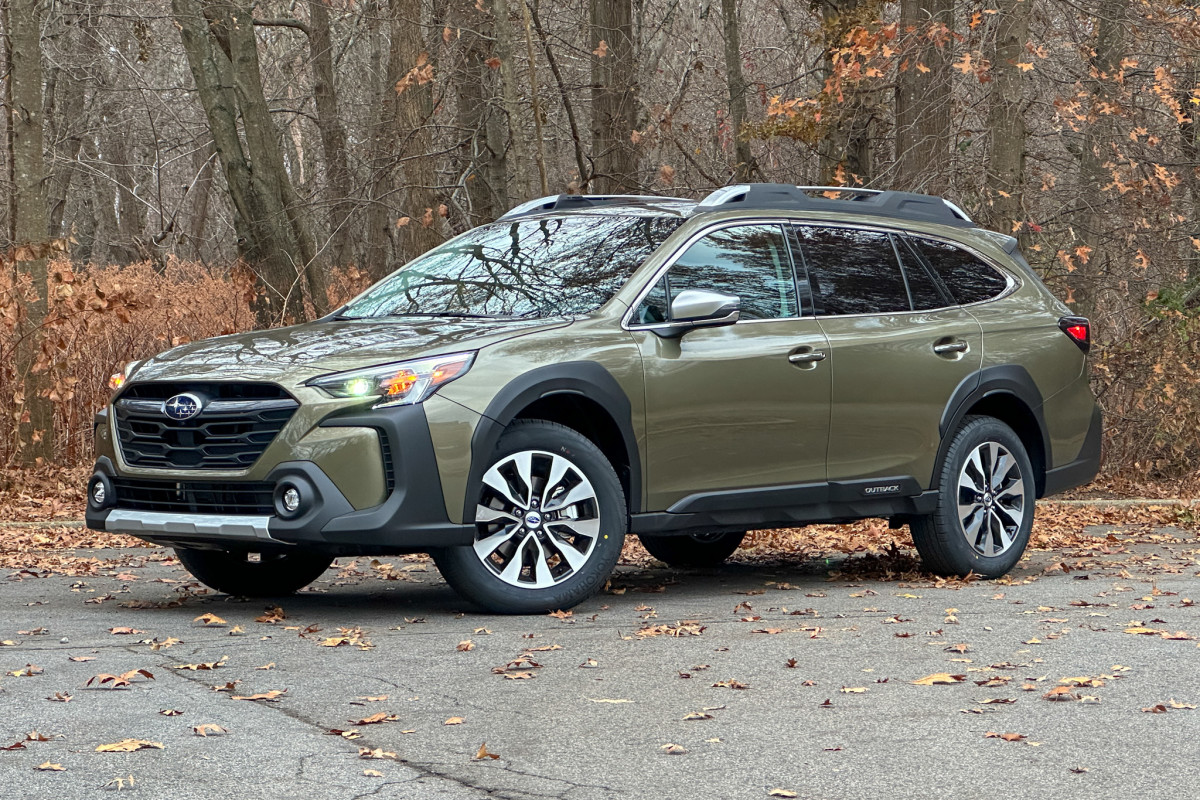
The Subaru Outback is one of the OGs of the midsize crossover world.
It dates back to the days of the raised station wagon, before a crossover was a must-have—or even a thing. It’s now in its sixth generation, and it was just refreshed last year, but while others have ballooned into mini-SUVs, the Outback has clung steadfastly to the station wagon shape.
In Canada, the 2024 Outback comes in Convenience, Touring, Onyx, Limited, Wilderness, Limited XT, and Premier XT trims. The bottom four trims come with the base engine, while the Wilderness and the two XT trims come with the higher-powered turbocharged mill. Updates for this year include feature-enriched trim levels and trim-specific aesthetic tweaks.
Verdict: Not everyone needs or wants a massive vehicle. With its higher ride height and excellent visibility, the Outback delivers the peace of mind many seek from an SUV in a smaller and more practical package. The broad trim spectrum means you can get a luxury experience at a lower price point or a no-nonsense version much cheaper.

The Wilderness trim level was tweaked for 2024, with a new front fascia and LED fog lights, but the Outback lineup otherwise looks just as it did following its 2023-model-year facelift. The dark grey cladding contrasted nicely with the Autumn Green Metallic of our Subaru Outback Premier XT tester. Describing it as a “green-tinged dark khaki” feels accurate but doesn’t do the colour justice; it’s surprisingly appealing in a way that basic champagne-beige colours have never been.
The different Outback trims have varying levels of black and chrome exterior fittings, with the most chrome appearing on the Premier XT trim. We don’t love chrome splashed all over a gargantuan SUV, but on the Outback, we found it tasteful. Wheel sizes and designs also differ by trim. Black 17-inch alloy wheels with a machine finish are standard, but the Wilderness trim gets a matte black version. The Outback Onyx sizes up to 18s in basic black, and the two Limited trims and Premier XT add a machine finish.
The interior on our top-trim test car was really nice, much better than what we might expect from a brand that’s always skewed more capable than luxurious. The Java Brown Nappa leather upholstery was both handsome and supple. The Outback Limited trims feature standard (not Nappa) leather seating surfaces, while Onyx and Wilderness get Subaru’s StarTex synthetic leather. Convenience and Touring trims come with cloth seats.

In true Subaru fashion, the Outback is powered by a “Boxer” horizontally opposed engine. The default for 2024 is a 2.5-litre flat-four, which makes 182 horsepower and 176 lb-ft of torque. Trims with the XT designation, however, are upgraded to a 2.4-litre turbocharged boxer four-cylinder engine, which comes standard on the Wilderness trim as well. The turbo setup makes 260 horsepower and 277 lb-ft of torque, and it ups the towing capacity from 1,225 to 1,587 kilograms (2,700 to 3,500 lbs). Subaru’s Symmetrical All-Wheel Drive (AWD) is standard, as is a Lineartronic continuously variable transmission (CVT).
Because it was the Premier XT, our test car had the more powerful engine, and we definitely felt it was a good fit. We’ve driven the Outback with the base engine in the past and found it underpowered, but the turbo powertrain manages the weight of the vehicle better. The CVT does a nice job imitating the sound and feel of eight distinct gears, which can be managed via the paddles mounted on the steering wheel. The brake pedal, helped along by the electronic booster, felt good beneath our feet. Steering feel was adequate, particularly when we reminded ourselves that the WRX is there for folks who want a sportier experience. For those looking for a comfortable ride, the Outback is a great choice. The reasonably sized wheels and substantial side walls likely contribute to this, but kudos are also owed to the engineering team responsible for the suspension.
Even the base Outback has 22 centimetres of ground clearance. If you need more for your off-road adventures, consider the Wilderness trim, which bumps that up to 24.1 centimetres. The Outback Wilderness also comes with all-terrain tires, and it gets an advanced, dual-function version of Subaru’s X-Mode, which includes selectable Snow/Dirt and Deep Snow/Mud modes.

Despite its sleeker proportions, the Subaru Outback does not compromise on interior space. In fact, comparing models equipped with a moonroof, the Outback has more head room up front (992 mm) than the Honda CR-V (970 mm) and the Toyota RAV4 (958 mm), and it falls short of the RAV4 in the back seat by roughly a centimetre while staying ahead of the CR-V. Subaru’s wagon also provides more front-row legroom than either model and bests the RAV4 for rear-seat legroom. The Outback’s lower profile has more of an impact on the cargo area, with a volume measuring 923 litres with all seats in place and 2,141 litres with the rear seats folded. Both the RAV4 and the CR-V do better on cargo space in a fully occupied vehicle, but limit passengers to the front row, and the Outback comes in ahead of the RAV4.
Specs can make a handy comparison tool, but they never tell the whole story. If you’re considering a vehicle purchase, you’ll want to know what it’s like to live with, and features are arguably a more important metric than measurements. So, let’s talk feature availability. Dual-zone climate control comes standard on all but the Convenience-trim Outback for 2024. Heated front seats, a heated steering wheel, and a power-adjustable driver’s seat are standard in Canada, and heated outboard rear seats come in early at the Onyx trim. You’ll have to move up to the Limited trim level if you want a powered front passenger’s seat. Ventilation is only available for the front seats and only at the Premier XT trim level. Subaru is a cold-climate aware automaker to say the least.
Subaru’s heated steering wheel is particularly good. The automaker takes a 360-degree approach, meaning there are no cold patches to startle you or make you think you’ve been burned. (We’ve been there.)
The hands-free power liftgate is standard from the Touring trim, as is the power moonroof. Raised roof rails with retractable cross bars are standard on the Outback. We particularly liked that the cross bars swivel to easily stow away when unneeded.

There’s something curiously comforting about old-school features. If you agree, you’ll want to take a good look at the Outback Premier XT, as that’s the only one that gets a CD player. And Subaru does appear to be hedging its bets on the technology front, with both USB-C and USB-A ports on all trims.
No one will be surprised to learn that our top-trim test car had the larger 11.6-inch portrait-oriented infotainment screen, but it is noteworthy that only the Convenience trim retains the dual-7-inch-screen system. The Subaru Starlink multimedia platform continues to look as though it time-traveled from the pre-Y2K era, but with standard Apple CarPlay and Android Auto connectivity, which becomes wireless starting with the Touring trim, we’re guessing most Outback owners’ interactions with the native system will be limited. Except when using climate controls, that is. Hard buttons for defoggers and temperature increase and decrease live alongside the screen, but fan speed, seat heating and ventilation, air-conditioning, and climate modes are all managed through the touchscreen. The climate menu remains anchored at the bottom of the screen regardless, which is a pro in terms of ease of access but arguably a con in terms of aesthetics.
Bluetooth and SiriusXM connectivity are standard, and nearly every trim gets a 12-speaker Harman Kardon premium audio system. The only exceptions to this are the Convenience model, with a four-speaker sound system, and Touring, with six speakers.

The 2024 Subaru Outback earned a Top Safety Pick award from the Insurance Institute for Highway Safety (IIHS), a laudable achievement but possibly a disappointment following the 2023 Outback’s Top Safety Pick+ designation. We explored the breakdown of the IIHS evaluation results and found no differences. Perhaps it’s a question of the competition getting better rather than the Outback getting worse. The National Highway Traffic Safety Administration (NHTSA) did give both the 2023 and 2024 models five stars overall.
Based on safety features alone, we would have said 2024 represents an improvement. For one thing, reverse automatic braking now comes standard starting with the Touring trim level. The EyeSight suite of advanced driver-assistance technologies is still standard, meaning all Outbacks get features like adaptive cruise control with lane-centring, automatic pre-collision braking, and lane-keep assist. The one exception in Canada is automatic emergency steering, which comes in at the Touring trim along with blind-spot monitoring with lane-change assist and rear cross-traffic alert. For 2024, Subaru has added a wide-angle camera which widens its field of view to better detect cyclists and pedestrians. Premier XT also gets a digital rearview mirror and a driver-attention monitor, which will intervene if it detects that the driver has lost focus or become unresponsive. (The latter is also included on the Limited trims.) A backup camera is of course standard, as is high-beam assist.

The fully loaded Outback Premier XT we tested stickers in Canada for $50,074, including the $2,295 destination fee. That’s uncomfortably close to the starting price of the Audi A4 allroad and the Volvo V60 Cross Country. Of course, these are really only part of the conversation by virtue of their wagon body style. Base MSRP for the 2024 Subaru Outback is $36,674 including destination, much more in line with the RAV4 and CR-V mentioned previously. Bear in mind, of course, that AWD is sometimes an extra cost on lower trims. On the Outback, it’s standard.
If we were shopping for a 2024 Outback, we’d want the turbocharged engine, meaning our least-expensive option would be the Subaru Outback Wilderness at $47,474. The good news is that this engine doesn’t do too much damage to your fuel economy. With the base engine, the Outback is Natural Resources Canada-rated for 9.2 litres per 100 kilometres in the city, 7.3 on the highway, and 8.3 combined. The turbo mill dings city efficiency the most, bringing it down to an estimated 10.6 L/100 km, but it should still hit 8.1 highway for 9.5 combined. Things look a bit worse for the Subaru Outback Wilderness, at 11.0 city, 9.0 highway, and 10.1 combined.
We called the 2023 model “the Swiss Army Knife of affordable automobiles.” With seven variants to choose from, the 2024 Subaru Outback continues to merit that description in our book.
Note: Images show a US model.

User reviews for 2024 Subaru Outback
Write a review2024 Subaru Outback Pricing
Trims & specs
Air Conditioning
Automatic climate control front air conditioning · Single front air conditioning zones
Airbags
Dual front airbags · Driver knee airbags · Passenger airbag deactivation: occupant sensing deactivation · Front side airbags · Rear side curtain airbags
Audio System
Antenna Type: mast · Voice recognition audio system · Auxiliary audio input: jack · Aha internet radio · IHeartRadio internet radio · AM/FM radio · Satellite Radio: SiriusXM · Total Number of Speakers: 4
Brakes
ABS: 4-wheel · Braking assist: hill start assist · Electronic parking brake: auto off · Front brake diameter: 12.4 · Front brakes: ventilated disc · Rear brake diameter: 11.8 · Rear brakes: ventilated disc
Comfort Features
Armrests: rear center with cupholders · Cargo area floor mat: rubber/vinyl · Center console trim: leatherette · Dash Trim: Leatherette · Dash trim: simulated carbon fiber · Door trim: leatherette · Floor Mat Material: carpet · Floor Material: carpet · Floor Mats: front · Shift knob trim: simulated leather · Steering wheel trim: urethane
Convenience Features
Adaptive stop and go cruise control: semi-automatic · Assist handle: front · Autonomous lane guidance: lane centering · Cargo area power outlet: 12V · Center console: front console with armrest and storage · Cruise control: adaptive · Cupholders: front · Multi-function remote: keyless entry with panic alarm · One-touch windows: 2 · Power outlet(s): 12V front · Power steering: electric · Power windows: lockout button · Reading lights: front · Steering wheel: tilt and telescopic · Steering wheel mounted controls: audio · Storage: in-floor · Vanity mirrors: dual illuminating
Driver Seat
Manual adjustments: 6
Drivetrain
4WD Type: full time · Axle ratio: 3.90
Engine
Alternator: 150 amps · Battery: maintenance-free
Exterior Features
Bumper detail: front underguard · Door handle color: body-color · Exhaust tip color: metallic · Fender lip moldings: black · Front bumper color: body-color · Grille color: black with chrome accents · Headlamp bezel color: black · Mirror color: black · Rear bumper color: black · Rear spoiler: roofline spoiler · Rear spoiler color: body-color · Rear trunk/liftgate: liftgate · Rocker panel color: black · Window trim: chrome
Headrests
Front headrests: adjustable · Number of front headrests: 2 · Number of rear headrests: 3
In Car Entertainment
Connected in-car apps: Google POIs · Infotainment: STARLINK · Infotainment screen size: 7 in. (dual)
Instrumentation
Fuel economy display: range · Instrument cluster screen size: 4.2 in. · Warnings and reminders: coolant temperature warning
Lights
Daytime running lights: LED · Exterior entry lights: security approach lamps · Front fog lights: LED · Headlights: automatic high beam dimmer
Mirrors
Exterior mirrors: power · Inside rearview mirror: manual day/night
Passenger Seat
Manual Adjustments: 4
Rear Seats
Type: 60-40 split bench
Roof
Roof rack color: black · Roof rails: black
Safety
Automatic emergency braking: front · Camera system: rearview · Camera system washer: rear · Child seat anchors: LATCH system · Crumple zones: front · Impact absorbing seats: dual front · Impact sensor: fuel cut-off · Pre-Collision Warning System: audible warning · Rearview monitor: in dash
Seatbelts
Emergency locking retractors: front · Front seatbelts: 3-point · Seatbelt force limiters: front · Seatbelt pretensioners: front · Seatbelt warning sensor: driver and passenger · Second row seatbelts: 3-point
Seats
Driver seat manual adjustments: reclining · Front seat type: bucket · Passenger seat manual adjustments: reclining · Rear headrests: adjustable · Rear seat folding: one-touch fold flat · Rear seat manual adjustments: reclining · Upholstery: contrast stitching
Security
Power door locks: anti-lockout
Spare Tire
Mount Location: inside · Size: temporary
Spare Wheel
Rim Type: steel
Steering
Steering ratio: 13.5 · Turns lock-to-lock: 2.7
Suspension
Front Arm Type: lower control arms · Front Shock Type: gas shock absorbers · Front Spring Type: coil springs · Front Suspension Classification: independent · Front Suspension Type: MacPherson struts · Rear Shock Type: gas shock absorbers · Rear Spring Type: coil springs · Rear Suspension Classification: independent · Rear Suspension Type: double wishbone · Stabilizer bar(s): front
Telematics
Electronic messaging assistance: with voice recognition · Phone: voice activated · Phone wireless data link: Bluetooth · Satellite communications: Turn-by-Turn Navigation · Smart device app compatibility: MySubaru · Wifi: hotspot compatible
Tires
Type: all season
Tires and Rims
Wheel type: aluminum alloy
Windows
Front wipers: variable intermittent · Laminated glass: acoustic · Liftgate window: fixed · Power windows: with safety reverse · Rear wiper: intermittent
Air Conditioning
Automatic climate control front air conditioning · Dual front air conditioning zones
Airbags
Dual front airbags · Driver knee airbags · Passenger airbag deactivation: occupant sensing deactivation · Front side airbags · Front side curtain airbags
Audio System
Antenna Type: mast · Voice recognition audio system · Bluetooth auxiliary audio input · Aha internet radio · Stitcher internet radio · Touch screen display radio · Satellite Radio: SiriusXM · Total Number of Speakers: 6
Brakes
ABS: 4-wheel · Braking assist: hill start assist · Electronic parking brake: auto off · Front brake diameter: 12.4 · Front brakes: ventilated disc · Rear brake diameter: 11.8 · Rear brakes: ventilated disc
Comfort Features
Armrests: rear center with cupholders · Cargo area floor mat: rubber/vinyl · Center console trim: leatherette · Dash Trim: Leatherette · Dash trim: simulated carbon fiber · Door trim: leatherette · Floor Mat Material: carpet · Floor Material: carpet · Floor Mats: front · Shift knob trim: leather · Steering wheel trim: leather
Convenience Features
Adaptive stop and go cruise control: semi-automatic · Assist handle: rear · Autonomous lane guidance: lane centering · Cargo area power outlet: 12V · Cargo cover: retractable · Center console: front console with armrest and storage · Cruise control: adaptive · Cupholders: rear · Multi-function remote: keyless entry · One-touch windows: 2 · Power outlet(s): USB rear · Power steering: electric · Power windows: lockout button · Reading lights: rear · Rear power outlet: 12V · Steering wheel: tilt and telescopic · Steering wheel mounted controls: voice recognition controls · Storage: sunglasses holder · Vanity mirrors: dual illuminating
Driver Seat
Adjustable lumbar support: power · Power adjustments: 10
Drivetrain
4WD Type: full time · Axle ratio: 3.90
Engine
Alternator: 150 amps · Battery: maintenance-free
Exterior Features
Bumper detail: front underguard · Door handle color: body-color · Exhaust tip color: metallic · Fender lip moldings: black · Front bumper color: body-color · Grille color: black with chrome accents · Headlamp bezel color: black · Mirror color: black · Rear bumper color: black · Rear spoiler: roofline spoiler · Rear spoiler color: body-color · Rear trunk/liftgate: liftgate · Rocker panel color: black · Window trim: chrome
Headrests
Front headrests: adjustable · Number of front headrests: 2 · Number of rear headrests: 3
In Car Entertainment
Connected in-car apps: Google POIs · Infotainment: STARLINK · Infotainment screen size: 11.6 in. · Smartphone integration: wireless Android Auto
Instrumentation
Fuel economy display: MPG · Instrument cluster screen size: 4.2 in. · Warnings and reminders: low washer fluid
Lights
Daytime running lights: LED · Exterior entry lights: security approach lamps · Front fog lights: LED · Headlights: auto delay off
Mirrors
Exterior mirrors: manual folding · Inside rearview mirror: manual day/night
Passenger Seat
Manual Adjustments: 4
Rear Seats
Type: 60-40 split bench
Roof
Roof rack color: black · Roof rails: black
Safety
Automatic emergency braking: front · Camera system: rearview · Camera system washer: rear · Child seat anchors: LATCH system · Crumple zones: rear · Impact absorbing seats: dual front · Impact sensor: fuel cut-off · Pre-Collision Warning System: audible warning · Rearview monitor: in dash
Seatbelts
Emergency locking retractors: front · Front seatbelts: 3-point · Seatbelt force limiters: front · Seatbelt pretensioners: front · Seatbelt warning sensor: driver and passenger · Second row seatbelts: 3-point
Seats
Driver seat power adjustments: height · Front seat type: bucket · Passenger seat manual adjustments: reclining · Rear headrests: adjustable · Rear seat folding: split · Rear seat manual adjustments: reclining · Upholstery: cloth
Security
Power door locks: anti-lockout
Spare Tire
Mount Location: inside · Size: temporary
Spare Wheel
Rim Type: steel
Steering
Steering ratio: 13.5 · Turns lock-to-lock: 2.7
Suspension
Front Arm Type: lower control arms · Front Shock Type: gas shock absorbers · Front Spring Type: coil springs · Front Suspension Classification: independent · Front Suspension Type: MacPherson struts · Rear Shock Type: gas shock absorbers · Rear Spring Type: coil springs · Rear Suspension Classification: independent · Rear Suspension Type: double wishbone · Stabilizer bar(s): front
Telematics
Driver assistance app: roadside assistance · Electronic messaging assistance: with voice recognition · Phone: voice activated · Phone wireless data link: Bluetooth · Satellite communications: Turn-by-Turn Navigation · Smart device app compatibility: MySubaru · Smart device app function: maintenance status · Wifi: hotspot compatible
Tires
Type: all season
Tires and Rims
Wheel type: aluminum alloy
Windows
Front wipers: variable intermittent · Laminated glass: acoustic · Liftgate window: fixed · Power windows: with safety reverse · Rear wiper: auto-on in reverse
Air Conditioning
Automatic climate control front air conditioning · Dual front air conditioning zones
Airbags
Dual front airbags · Driver knee airbags · Passenger airbag deactivation: occupant sensing deactivation · Front side airbags · Front side curtain airbags
Audio System
Antenna Type: diversity · Voice recognition audio system · Bluetooth auxiliary audio input · Aha internet radio · Stitcher internet radio · Premium Brand: Harman-Kardon · HD radio · Satellite Radio: SiriusXM · 1 subwoofer · Total Number of Speakers: 11 · 576 watts
Brakes
ABS: 4-wheel · Braking assist: hill start assist · Electronic parking brake: auto off · Front brake diameter: 12.4 · Front brakes: ventilated disc · Rear brake diameter: 11.8 · Rear brakes: ventilated disc
Comfort Features
Armrests: rear center with cupholders · Cargo area floor mat: rubber/vinyl · Center console trim: leatherette · Dash Trim: Leatherette · Door trim: metallic · Floor Mat Material: carpet · Floor Material: carpet · Floor Mats: front · Shift knob trim: leather · Steering wheel trim: leather
Convenience Features
Adaptive stop and go cruise control: semi-automatic · Assist handle: rear · Autonomous lane guidance: lane centering · Cargo area power outlet: 12V · Cargo cover: retractable · Center console: with lighting · Cruise control: adaptive · Cupholders: rear · Dimming rearview mirror: auto-dimming · Memorized settings: side mirrors · Multi-function remote: proximity entry system · One-touch windows: 4 · Power outlet(s): USB front · Power steering: speed-proportional · Power windows: lockout button · Reading lights: rear · Rear power outlet: 12V · Steering wheel: tilt and telescopic · Steering wheel mounted controls: multi-function screen controls · Storage: door pockets · Universal garage door opener: Homelink · Vanity mirrors: dual illuminating
Driver Seat
Adjustable lumbar support: power · Power adjustments: 12
Drivetrain
4WD Type: full time · Axle ratio: 3.90
Engine
Alternator: 150 amps · Battery: maintenance-free
Exterior Features
Bumper detail: front underguard · Door handle color: body-color · Exhaust tip color: metallic · Fender lip moldings: black · Front bumper color: body-color · Grille color: black with chrome accents · Headlamp bezel color: black · Mirror color: black · Rear bumper color: black · Rear spoiler: roofline spoiler · Rear spoiler color: body-color · Rear trunk/liftgate: liftgate · Rocker panel color: black · Window trim: chrome
Headrests
Front headrests: adjustable · Number of front headrests: 2 · Number of rear headrests: 3
In Car Entertainment
Connected in-car apps: SiriusXM Travel Link · Infotainment: STARLINK · Infotainment screen size: 11.6 in. · Smartphone integration: wireless Android Auto
Instrumentation
Fuel economy display: MPG · Instrument cluster screen size: 4.2 in. · Warnings and reminders: low washer fluid
Lights
Daytime running lights: LED · Exterior entry lights: security approach lamps · Front fog lights: LED · Headlights: LED
Mirrors
Exterior mirrors: reverse gear tilt
Passenger Seat
Power adjustments: 8
Rear Seats
Type: 60-40 split bench
Roof
Roof rack color: black · Roof rails: black
Safety
Automatic emergency braking: rear · Camera system: rearview · Camera system washer: rear · Child seat anchors: LATCH system · Cross Traffic Alert: rear · Crumple zones: front · Impact absorbing seats: dual front · Impact sensor: fuel cut-off · Parking sensors: rear · Pre-Collision Warning System: visual warning · Rearview monitor: in dash
Seatbelts
Emergency locking retractors: front · Front seatbelts: 3-point · Seatbelt force limiters: front · Seatbelt pretensioners: front · Seatbelt warning sensor: driver and passenger · Second row seatbelts: 3-point
Seats
Driver seat power adjustments: reclining · Front seat type: bucket · Passenger seat power adjustments: height · Rear headrests: adjustable · Rear seat folding: split · Rear seat manual adjustments: reclining · Upholstery: perforated
Security
Power door locks: anti-lockout
Spare Tire
Mount Location: inside · Size: temporary
Spare Wheel
Rim Type: steel
Steering
Steering ratio: 13.5 · Turns lock-to-lock: 2.7
Suspension
Front Arm Type: lower control arms · Front Shock Type: gas shock absorbers · Front Spring Type: coil springs · Front Suspension Classification: independent · Front Suspension Type: MacPherson struts · Rear Shock Type: gas shock absorbers · Rear Spring Type: coil springs · Rear Suspension Classification: independent · Rear Suspension Type: double wishbone · Stabilizer bar(s): front
Telematics
Driver assistance app: roadside assistance · Electronic messaging assistance: with read function · Phone: voice activated · Phone wireless data link: Bluetooth · Satellite communications: Turn-by-Turn Navigation · Smart device app compatibility: MySubaru · Smart device app function: horn/light operation · Wifi: hotspot compatible
Tires
Type: all season
Tires and Rims
Wheel type: aluminum alloy
Windows
Front wipers: variable intermittent · Laminated glass: acoustic · Liftgate window: fixed · Power windows: with safety reverse · Rear wiper: intermittent
Air Conditioning
Automatic climate control front air conditioning · Dual front air conditioning zones
Airbags
Dual front airbags · Driver knee airbags · Passenger airbag deactivation: occupant sensing deactivation · Front side airbags · Rear side curtain airbags
Audio System
Antenna Type: mast · Voice recognition audio system · Bluetooth auxiliary audio input · Aha internet radio · Pandora internet radio · Premium Brand: Harman-Kardon · HD radio · Satellite Radio: SiriusXM · 1 subwoofer · Total Number of Speakers: 11 · 576 watts
Brakes
ABS: 4-wheel · Braking assist: hill start assist · Electronic parking brake: auto off · Front brake diameter: 12.4 · Front brakes: ventilated disc · Rear brake diameter: 11.8 · Rear brakes: ventilated disc
Comfort Features
Armrests: rear center with cupholders · Cargo area floor mat: rubber/vinyl · Center console trim: leatherette · Dash Trim: Leatherette · Door trim: metallic · Floor Mat Material: carpet · Floor Material: carpet · Floor Mats: front · Shift knob trim: leather · Steering wheel trim: leather
Convenience Features
Adaptive stop and go cruise control: semi-automatic · Assist handle: front · Autonomous lane guidance: lane centering · Cargo area power outlet: 12V · Cargo cover: retractable · Center console: front console with armrest and storage · Cruise control: adaptive · Cupholders: front · Dimming rearview mirror: auto-dimming · Multi-function remote: trunk release · One-touch windows: 4 · Power outlet(s): 12V front · Power steering: speed-proportional · Power windows: lockout button · Reading lights: front · Rear power outlet: 12V · Steering wheel: tilt and telescopic · Steering wheel mounted controls: multi-function screen controls · Storage: door pockets · Universal garage door opener: Homelink · Vanity mirrors: dual illuminating
Driver Seat
Adjustable lumbar support: power · Power adjustments: 10
Drivetrain
4WD Type: full time · Axle ratio: 3.90
Engine
Alternator: 150 amps · Battery: maintenance-free
Exterior Features
Bumper detail: front underguard · Door handle color: body-color · Exhaust tip color: metallic · Fender lip moldings: black · Front bumper color: body-color · Grille color: black · Headlamp bezel color: black · Mirror color: black · Rear bumper color: black · Rear spoiler: roofline spoiler · Rear spoiler color: black · Rear trunk/liftgate: liftgate · Rocker panel color: black · Window trim: chrome
Headrests
Front headrests: adjustable · Number of front headrests: 2 · Number of rear headrests: 3
In Car Entertainment
Connected in-car apps: Yelp · Infotainment: STARLINK · Infotainment screen size: 11.6 in. · Smartphone integration: wireless Android Auto
Instrumentation
Fuel economy display: range · Instrument cluster screen size: 4.2 in. · Warnings and reminders: maintenance reminder
Lights
Daytime running lights: LED · Exterior entry lights: security approach lamps · Front fog lights: LED · Headlights: self-leveling
Mirrors
Exterior mirrors: integrated turn signals
Passenger Seat
Manual Adjustments: 4
Rear Seats
Type: 60-40 split bench
Roof
Moonroof: power glass · Roof rack color: black · Roof rails: black
Safety
Automatic emergency braking: rear · Camera system: rearview · Camera system washer: rear · Child seat anchors: LATCH system · Cross Traffic Alert: rear · Crumple zones: front · Impact absorbing seats: dual front · Impact sensor: fuel cut-off · Parking sensors: rear · Pre-Collision Warning System: audible warning · Rearview monitor: in dash
Seatbelts
Emergency locking retractors: front and rear · Front seatbelts: 3-point · Seatbelt force limiters: front · Seatbelt pretensioners: front · Seatbelt warning sensor: driver and passenger · Second row seatbelts: 3-point
Seats
Driver seat power adjustments: height · Front seat type: bucket · Passenger seat manual adjustments: reclining · Rear headrests: adjustable · Rear seat folding: split · Rear seat manual adjustments: reclining · Upholstery: contrast stitching
Security
Power door locks: anti-lockout
Spare Tire
Mount Location: inside · Size: temporary
Spare Wheel
Rim Type: steel
Steering
Steering ratio: 13.5 · Turns lock-to-lock: 2.7
Suspension
Front Arm Type: lower control arms · Front Shock Type: gas shock absorbers · Front Spring Type: coil springs · Front Suspension Classification: independent · Front Suspension Type: MacPherson struts · Rear Shock Type: gas shock absorbers · Rear Spring Type: coil springs · Rear Suspension Classification: independent · Rear Suspension Type: double wishbone · Stabilizer bar(s): rear
Telematics
Driver assistance app: roadside assistance · Electronic messaging assistance: with read function · Phone: voice activated · Phone wireless data link: Bluetooth · Satellite communications: Turn-by-Turn Navigation · Smart device app compatibility: MySubaru · Smart device app function: security event/collision alert · Wifi: hotspot compatible
Tires
Type: all season
Tires and Rims
Wheel type: aluminum alloy
Windows
Front wipers: variable intermittent · Laminated glass: acoustic · Liftgate window: fixed · Power windows: with safety reverse · Rear wiper: with washer
Air Conditioning
Automatic climate control front air conditioning · Dual front air conditioning zones
Airbags
Dual seat cushion front airbags · Driver knee airbags · Passenger airbag deactivation: occupant sensing deactivation · Front side airbags · Rear side curtain airbags
Audio System
Antenna Type: mast · Voice recognition audio system · Auxiliary audio input: jack · Aha internet radio · Pandora internet radio · Premium Brand: Harman-Kardon · AM/FM radio · Satellite Radio: SiriusXM · 1 subwoofer · Total Number of Speakers: 11 · 576 watts
Brakes
ABS: 4-wheel · Braking assist: hill start assist · Electronic parking brake: auto off · Front brake diameter: 12.4 · Front brakes: ventilated disc · Rear brake diameter: 11.8 · Rear brakes: ventilated disc
Comfort Features
Armrests: rear center with cupholders · Cargo area floor mat: rubber/vinyl · Center console trim: leatherette · Dash Trim: Leatherette · Door trim: leatherette · Floor Mat Material: carpet · Floor Material: carpet · Floor Mats: front · Shift knob trim: leather · Steering wheel trim: leather
Convenience Features
Adaptive stop and go cruise control: semi-automatic · Assist handle: rear · Autonomous lane guidance: lane centering · Camera System: Front · Cargo area power outlet: 12V · Cargo cover: retractable · Center console: with lighting · Cruise control: adaptive · Cupholders: rear · Dimming rearview mirror: auto-dimming · Memorized settings: liftgate · Multi-function remote: proximity entry system · One-touch windows: 4 · Power outlet(s): USB-C front · Power steering: electric · Power windows: lockout button · Reading lights: front · Rear power outlet: 12V · Steering wheel: tilt and telescopic · Steering wheel mounted controls: phone · Storage: grocery bag holder · Universal garage door opener: Homelink · Vanity mirrors: dual illuminating
Driver Seat
Adjustable lumbar support: power · Power adjustments: 10
Drivetrain
4WD Type: full time · Axle ratio: 4.11
Engine
Alternator: 190 amps · Battery: maintenance-free
Exterior Features
Bumper detail: front underguard · Door handle color: body-color · Exhaust: dual exhaust tips · Exhaust tip color: metallic · Fender lip moldings: black · Front bumper color: body-color · Grille color: black · Headlamp bezel color: black · Mirror color: black · Rear bumper color: black · Rear spoiler: roofline spoiler · Rear spoiler color: black · Rear trunk/liftgate: power operated · Rocker panel color: black · Window trim: chrome
Headrests
Front headrests: adjustable · Number of front headrests: 2 · Number of rear headrests: 3
In Car Entertainment
Connected in-car apps: Yelp · Infotainment: STARLINK · Infotainment screen size: 11.6 in. · Smartphone integration: wireless Android Auto
Instrumentation
Fuel economy display: range · Instrument cluster screen size: 4.2 in. · Warnings and reminders: maintenance reminder
Lights
Daytime running lights: LED · Exterior entry lights: security approach lamps · Front fog lights: LED · Headlights: wiper activated
Mirrors
Exterior mirrors: integrated turn signals
Passenger Seat
Power adjustments: 8
Rear Seats
Type: 60-40 split bench
Roof
Moonroof: power glass · Roof rack color: black · Roof rails: silver
Safety
Automatic emergency braking: rear · Camera system: rearview · Camera system washer: rear · Child seat anchors: LATCH system · Cross Traffic Alert: rear · Crumple zones: front · Impact absorbing seats: dual front · Impact sensor: fuel cut-off · Parking sensors: rear · Pre-Collision Warning System: visual warning · Rearview monitor: in dash
Seatbelts
Emergency locking retractors: front · Front seatbelts: 3-point · Seatbelt force limiters: front · Seatbelt pretensioners: front · Seatbelt warning sensor: driver and passenger · Second row seatbelts: 3-point
Seats
Driver seat power adjustments: height · Front seat type: bucket · Passenger seat power adjustments: height · Rear headrests: adjustable · Rear seat folding: split · Rear seat manual adjustments: reclining · Upholstery: contrast stitching
Security
Power door locks: anti-lockout
Spare Tire
Mount Location: inside · Size: temporary
Spare Wheel
Rim Type: steel
Steering
Steering ratio: 13.5 · Turns lock-to-lock: 2.7
Suspension
Front Arm Type: lower control arms · Front Shock Type: gas shock absorbers · Front Spring Type: coil springs · Front Suspension Classification: independent · Front Suspension Type: MacPherson struts · Rear Shock Type: gas shock absorbers · Rear Spring Type: coil springs · Rear Suspension Classification: independent · Rear Suspension Type: double wishbone · Stabilizer bar(s): rear
Telematics
Driver assistance app: roadside assistance · Electronic messaging assistance: with voice recognition · Navigation app: TomTom · Navigation system: with voice recognition · Phone: voice activated · Phone wireless data link: Bluetooth · Satellite communications: Turn-by-Turn Navigation · Smart device app compatibility: MySubaru · Smart device app function: vehicle location · Wifi: hotspot compatible
Tires
Type: all season
Tires and Rims
Wheel type: aluminum alloy
Windows
Front wipers: variable intermittent · Laminated glass: acoustic · Liftgate window: fixed · Power windows: with safety reverse · Rear wiper: with washer
Air Conditioning
Automatic climate control front air conditioning · Dual front air conditioning zones
Airbags
Dual seat cushion front airbags · Driver knee airbags · Passenger airbag deactivation: occupant sensing deactivation · Front side airbags · Rear side curtain airbags
Audio System
Antenna Type: mast · Voice recognition audio system · Bluetooth auxiliary audio input · Aha internet radio · Stitcher internet radio · Premium Brand: Harman-Kardon · AM/FM radio · Satellite Radio: SiriusXM · 1 subwoofer · Total Number of Speakers: 11 · 576 watts
Brakes
ABS: 4-wheel · Braking assist: hill start assist · Electronic parking brake: auto off · Front brake diameter: 12.4 · Front brakes: ventilated disc · Rear brake diameter: 11.8 · Rear brakes: ventilated disc
Comfort Features
Armrests: rear center with cupholders · Cargo area floor mat: rubber/vinyl · Center console trim: leatherette · Dash Trim: Leatherette · Dash trim: simulated carbon fiber · Door trim: leatherette · Floor Mat Material: carpet · Floor Material: carpet · Floor Mats: front · Foot pedal trim: alloy · Shift knob trim: leather · Steering wheel trim: leather
Convenience Features
Adaptive stop and go cruise control: semi-automatic · Assist handle: rear · Autonomous lane guidance: lane centering · Camera System: Front · Cargo area power outlet: 12V · Cargo cover: retractable · Center console: with lighting · Cruise control: adaptive · Cupholders: rear · Dimming rearview mirror: auto-dimming · Memorized settings: liftgate · Multi-function remote: proximity entry system · One-touch windows: 4 · Power outlet(s): USB-C rear · Power steering: electric · Power windows: lockout button · Reading lights: front · Rear power outlet: 12V · Steering wheel: tilt and telescopic · Steering wheel mounted controls: phone · Storage: grocery bag holder · Universal garage door opener: Homelink · Vanity mirrors: dual illuminating
Driver Seat
Adjustable lumbar support: power · Power adjustments: 10
Drivetrain
4WD Type: full time · Axle ratio: 4.44
Engine
Alternator: 190 amps · Battery: maintenance-free
Exterior Features
Bumper detail: front underguard · Door handle color: body-color · Exhaust: dual exhaust tips · Exhaust tip color: metallic · Fender lip moldings: black · Front bumper color: body-color · Grille color: black with chrome accents · Headlamp bezel color: black · Mirror color: black · Rear bumper color: black · Rear spoiler: roofline spoiler · Rear spoiler color: body-color · Rear trunk/liftgate: power operated · Rocker panel color: black · Skid plate(s): front · Window trim: black
Headrests
Front headrests: adjustable · Number of front headrests: 2 · Number of rear headrests: 3
In Car Entertainment
Connected in-car apps: Yelp · Infotainment: STARLINK · Infotainment screen size: 11.6 in. · Smartphone integration: wireless Android Auto
Instrumentation
Fuel economy display: range · Instrument cluster screen size: 4.2 in. · Warnings and reminders: low washer fluid
Lights
Daytime running lights: LED · Exterior entry lights: security approach lamps · Front fog lights: LED · Headlights: auto delay off
Mirrors
Exterior mirrors: integrated turn signals
Passenger Seat
Power adjustments: 8
Rear Seats
Type: 60-40 split bench · Upholstery: vinyl
Roof
Roof rails: black
Safety
Automatic emergency braking: front · Camera system: rearview · Camera system washer: rear · Child seat anchors: LATCH system · Cross Traffic Alert: rear · Crumple zones: front · Impact absorbing seats: dual front · Impact sensor: fuel cut-off · Parking sensors: rear · Pre-Collision Warning System: audible warning · Rearview monitor: in dash
Seatbelts
Emergency locking retractors: front and rear · Front seatbelts: 3-point · Seatbelt force limiters: front · Seatbelt pretensioners: front · Seatbelt warning sensor: driver and passenger · Second row seatbelts: 3-point
Seats
Driver seat power adjustments: reclining · Front seat type: bucket · Passenger seat power adjustments: reclining · Rear headrests: adjustable · Rear seat folding: split · Rear seat manual adjustments: reclining · Upholstery: vinyl
Security
Power door locks: anti-lockout
Spare Tire
Mount Location: inside · Size: full-size
Spare Wheel
Rim type: aluminum alloy
Steering
Steering ratio: 13.5 · Turns lock-to-lock: 2.7
Suspension
Front Arm Type: lower control arms · Front Shock Type: gas shock absorbers · Front Spring Type: coil springs · Front Suspension Classification: independent · Front Suspension Type: MacPherson struts · Rear Shock Type: gas shock absorbers · Rear Spring Type: coil springs · Rear Suspension Classification: independent · Rear Suspension Type: double wishbone · Stabilizer bar(s): rear
Telematics
Driver assistance app: roadside assistance · Electronic messaging assistance: with voice recognition · Phone: voice activated · Phone wireless data link: Bluetooth · Satellite communications: Turn-by-Turn Navigation · Smart device app compatibility: MySubaru · Smart device app function: maintenance status · Wifi: hotspot compatible
Tires
Type: all season
Tires and Rims
Wheel type: aluminum alloy
Windows
Front wipers: variable intermittent · Laminated glass: acoustic · Liftgate window: fixed · Power windows: with safety reverse · Rear wiper: intermittent
Air Conditioning
Automatic climate control front air conditioning · Dual front air conditioning zones
Airbags
Dual front airbags · Driver knee airbags · Passenger airbag deactivation: occupant sensing deactivation · Front side airbags · Front side curtain airbags
Audio System
Antenna Type: diversity · Voice recognition audio system · Bluetooth auxiliary audio input · Aha internet radio · Pandora internet radio · Premium Brand: Harman-Kardon · Touch screen display radio · Satellite Radio: SiriusXM · 1 subwoofer · Total Number of Speakers: 11 · 576 watts
Brakes
ABS: 4-wheel · Braking assist: hill start assist · Electronic parking brake: auto off · Front brake diameter: 12.4 · Front brakes: ventilated disc · Rear brake diameter: 11.8 · Rear brakes: ventilated disc
Comfort Features
Armrests: rear center with cupholders · Cargo area floor mat: rubber/vinyl · Center console trim: leatherette · Dash Trim: Leatherette · Door trim: leatherette · Floor Mat Material: carpet · Floor Material: carpet · Floor Mats: front · Shift knob trim: leather · Steering wheel trim: leather
Convenience Features
Adaptive stop and go cruise control: semi-automatic · Assist handle: front · Autonomous lane guidance: lane centering · Cargo area power outlet: 12V · Cargo cover: retractable · Center console: front console with armrest and storage · Cruise control: adaptive · Cupholders: rear · Dimming rearview mirror: auto-dimming · Memorized settings: liftgate · Multi-function remote: proximity entry system · One-touch windows: 4 · Power outlet(s): USB rear · Power steering: speed-proportional · Power windows: lockout button · Reading lights: front · Rear power outlet: 12V · Steering wheel: tilt and telescopic · Steering wheel mounted controls: multi-function screen controls · Storage: grocery bag holder · Universal garage door opener: Homelink · Vanity mirrors: dual illuminating
Driver Seat
Adjustable lumbar support: power · Power adjustments: 12
Drivetrain
4WD Type: full time · Axle ratio: 4.11
Engine
Alternator: 190 amps · Battery: maintenance-free
Exterior Features
Bumper detail: front underguard · Door handle color: body-color · Exhaust: dual exhaust tips · Exhaust tip color: metallic · Fender lip moldings: black · Front bumper color: body-color · Grille color: black with chrome accents · Headlamp bezel color: black · Mirror color: black · Rear bumper color: black · Rear spoiler: roofline spoiler · Rear spoiler color: body-color · Rear trunk/liftgate: liftgate · Rocker panel color: black · Window trim: chrome
Headrests
Front headrests: adjustable · Number of front headrests: 2 · Number of rear headrests: 3
In Car Entertainment
Connected in-car apps: Yelp · Infotainment: STARLINK · Infotainment screen size: 11.6 in. · Smartphone integration: wireless Apple CarPlay
Instrumentation
Fuel economy display: range · Instrument cluster screen size: 4.2 in. · Warnings and reminders: low fuel level
Lights
Daytime running lights: LED · Exterior entry lights: security approach lamps · Front fog lights: LED · Headlights: self-leveling
Mirrors
Exterior mirrors: reverse gear tilt
Passenger Seat
Power adjustments: 8
Rear Seats
Type: 60-40 split bench
Roof
Moonroof: sliding sunshade · Roof rack color: black · Roof rails: black
Safety
Automatic emergency braking: rear · Camera system: rearview · Camera system washer: rear · Child seat anchors: LATCH system · Cross Traffic Alert: rear · Crumple zones: rear · Impact absorbing seats: dual front · Impact sensor: fuel cut-off · Parking sensors: rear · Pre-Collision Warning System: visual warning · Rearview monitor: in dash
Seatbelts
Emergency locking retractors: front · Front seatbelts: 3-point · Seatbelt force limiters: front · Seatbelt pretensioners: front · Seatbelt warning sensor: driver and passenger · Second row seatbelts: 3-point
Seats
Driver seat power adjustments: height · Front seat type: bucket · Passenger seat power adjustments: height · Rear headrests: adjustable · Rear seat folding: split · Rear seat manual adjustments: reclining · Upholstery: perforated
Security
Power door locks: anti-lockout
Spare Tire
Mount Location: inside · Size: temporary
Spare Wheel
Rim Type: steel
Steering
Steering ratio: 13.5 · Turns lock-to-lock: 2.7
Suspension
Front Arm Type: lower control arms · Front Shock Type: gas shock absorbers · Front Spring Type: coil springs · Front Suspension Classification: independent · Front Suspension Type: MacPherson struts · Rear Shock Type: gas shock absorbers · Rear Spring Type: coil springs · Rear Suspension Classification: independent · Rear Suspension Type: double wishbone · Stabilizer bar(s): rear
Telematics
Driver assistance app: roadside assistance · Electronic messaging assistance: with voice recognition · Navigation app: TomTom · Navigation system: with voice recognition · Phone: voice activated · Phone wireless data link: Bluetooth · Satellite communications: Turn-by-Turn Navigation · Smart device app compatibility: MySubaru · Smart device app function: maintenance status · Wifi: hotspot compatible
Tires
Type: all season
Tires and Rims
Wheel type: aluminum alloy
Windows
Front wipers: variable intermittent · Laminated glass: acoustic · Liftgate window: fixed · Power windows: with safety reverse · Rear wiper: auto-on in reverse
Air Conditioning
Automatic climate control front air conditioning · Dual front air conditioning zones
Airbags
Dual seat cushion front airbags · Driver knee airbags · Passenger airbag deactivation: occupant sensing deactivation · Front side airbags · Rear side curtain airbags
Audio System
Antenna Type: diversity · Voice recognition audio system · Bluetooth auxiliary audio input · Aha internet radio · Pandora internet radio · Premium Brand: Harman-Kardon · HD radio · Remote CD changer location: in center console · Satellite Radio: SiriusXM · 1 subwoofer · Total Number of Speakers: 11 · 576 watts
Brakes
ABS: 4-wheel · Braking assist: hill start assist · Electronic parking brake: auto off · Front brake diameter: 12.4 · Front brakes: ventilated disc · Rear brake diameter: 11.8 · Rear brakes: ventilated disc
Comfort Features
Armrests: rear center with cupholders · Cargo area floor mat: rubber/vinyl · Center console trim: leatherette · Dash Trim: Leatherette · Door trim: metallic · Floor Mat Material: carpet · Floor Material: carpet · Floor Mats: front · Shift knob trim: leather · Steering wheel trim: leather
Convenience Features
Adaptive stop and go cruise control: semi-automatic · Assist handle: front · Autonomous lane guidance: lane centering · Camera System: Front · Cargo area power outlet: 12V · Cargo cover: retractable · Center console: with lighting · Cruise control: adaptive · Cupholders: rear · Dimming rearview mirror: auto-dimming · Memorized settings: liftgate · Multi-function remote: trunk release · One-touch windows: 4 · Power outlet(s): USB-C front · Power steering: speed-proportional · Power windows: lockout button · Reading lights: rear · Rear power outlet: 12V · Steering wheel: tilt and telescopic · Steering wheel mounted controls: paddle shifter · Storage: door pockets · Universal garage door opener: Homelink · Vanity mirrors: dual illuminating
Driver Seat
Adjustable lumbar support: power · Power adjustments: 12
Drivetrain
4WD Type: full time · Axle ratio: 3.90
Engine
Alternator: 150 amps · Battery: maintenance-free
Exterior Features
Bumper detail: front underguard · Door handle color: body-color with chrome accents · Exhaust tip color: metallic · Fender lip moldings: black · Front bumper color: body-color · Grille color: black with chrome accents · Headlamp bezel color: black · Mirror color: chrome · Rear bumper color: black · Rear spoiler: roofline spoiler · Rear spoiler color: body-color · Rear trunk/liftgate: power operated · Rocker panel color: black · Window trim: chrome
Headrests
Front headrests: adjustable · Number of front headrests: 2 · Number of rear headrests: 3
In Car Entertainment
Connected in-car apps: Yelp · Infotainment: STARLINK · Infotainment screen size: 11.6 in. · Smartphone integration: wireless Android Auto
Instrumentation
Fuel economy display: range · Instrument cluster screen size: 4.2 in. · Warnings and reminders: maintenance reminder
Lights
Daytime running lights: LED · Exterior entry lights: security approach lamps · Front fog lights: LED · Headlights: wiper activated
Mirrors
Exterior mirrors: power
Passenger Seat
Power adjustments: 8
Rear Seats
Type: 60-40 split bench
Roof
Moonroof: sliding sunshade · Roof rack color: black · Roof rails: silver
Safety
Automatic emergency braking: rear · Camera system: rearview · Camera system washer: rear · Child seat anchors: LATCH system · Cross Traffic Alert: rear · Crumple zones: front · Impact absorbing seats: dual front · Impact sensor: fuel cut-off · Parking sensors: rear · Pre-Collision Warning System: audible warning · Rearview monitor: in dash
Seatbelts
Emergency locking retractors: front · Front seatbelts: 3-point · Seatbelt force limiters: front · Seatbelt pretensioners: front · Seatbelt warning sensor: driver and passenger · Second row seatbelts: 3-point
Seats
Driver seat power adjustments: height · Front seat type: bucket · Passenger seat power adjustments: height · Rear headrests: adjustable · Rear seat folding: split · Rear seat manual adjustments: reclining · Upholstery: contrast stitching
Security
Power door locks: anti-lockout
Spare Tire
Mount Location: inside · Size: temporary
Spare Wheel
Rim Type: steel
Steering
Steering ratio: 13.5 · Turns lock-to-lock: 2.7
Suspension
Front Arm Type: lower control arms · Front Shock Type: gas shock absorbers · Front Spring Type: coil springs · Front Suspension Classification: independent · Front Suspension Type: MacPherson struts · Rear Shock Type: gas shock absorbers · Rear Spring Type: coil springs · Rear Suspension Classification: independent · Rear Suspension Type: double wishbone · Stabilizer bar(s): rear
Telematics
Driver assistance app: roadside assistance · Electronic messaging assistance: with read function · Navigation app: TomTom · Navigation system: touch screen display · Phone: voice activated · Phone wireless data link: Bluetooth · Satellite communications: Turn-by-Turn Navigation · Smart device app compatibility: MySubaru · Smart device app function: maintenance status · Wifi: hotspot compatible
Tires
Type: all season
Tires and Rims
Wheel type: aluminum alloy
Windows
Front wipers: variable intermittent · Laminated glass: acoustic · Liftgate window: fixed · Power windows: with safety reverse · Rear wiper: with washer
Air Conditioning
Automatic climate control front air conditioning · Dual front air conditioning zones
Airbags
Dual seat cushion front airbags · Driver knee airbags · Passenger airbag deactivation: occupant sensing deactivation · Front side airbags · Rear side curtain airbags
Audio System
Antenna Type: mast · Voice recognition audio system · Auxiliary audio input: jack · Aha internet radio · IHeartRadio internet radio · Premium Brand: Harman-Kardon · AM/FM radio · Remote CD changer location: in center console · Satellite Radio: SiriusXM · 1 subwoofer · Total Number of Speakers: 11 · 576 watts
Brakes
ABS: 4-wheel · Braking assist: hill start assist · Electronic parking brake: auto off · Front brake diameter: 12.4 · Front brakes: ventilated disc · Rear brake diameter: 11.8 · Rear brakes: ventilated disc
Comfort Features
Armrests: rear center with cupholders · Cargo area floor mat: rubber/vinyl · Center console trim: leatherette · Dash Trim: Leatherette · Door trim: metallic · Floor Mat Material: carpet · Floor Material: carpet · Floor Mats: front · Shift knob trim: leather · Steering wheel trim: leather
Convenience Features
Adaptive stop and go cruise control: semi-automatic · Assist handle: front · Autonomous lane guidance: lane centering · Camera System: Front · Cargo area power outlet: 12V · Cargo cover: retractable · Center console: with lighting · Cruise control: adaptive · Cupholders: front · Dimming rearview mirror: auto-dimming · Memorized settings: 2 driver · Multi-function remote: trunk release · One-touch windows: 4 · Power outlet(s): 12V front · Power steering: speed-proportional · Power windows: lockout button · Reading lights: front · Rear power outlet: 12V · Steering wheel: tilt and telescopic · Steering wheel mounted controls: paddle shifter · Storage: door pockets · Universal garage door opener: Homelink · Vanity mirrors: dual illuminating
Driver Seat
Adjustable lumbar support: power · Power adjustments: 12
Drivetrain
4WD Type: full time · Axle ratio: 4.11
Engine
Alternator: 190 amps · Battery: maintenance-free
Exterior Features
Bumper detail: front underguard · Door handle color: body-color with chrome accents · Exhaust: dual exhaust tips · Exhaust tip color: metallic · Fender lip moldings: black · Front bumper color: body-color · Grille color: black with chrome accents · Headlamp bezel color: black · Mirror color: chrome · Rear bumper color: black · Rear spoiler: roofline spoiler · Rear spoiler color: body-color · Rear trunk/liftgate: sensor-activated · Rocker panel color: black · Window trim: chrome
Headrests
Front headrests: adjustable · Number of front headrests: 2 · Number of rear headrests: 3
In Car Entertainment
Connected in-car apps: Yelp · Infotainment: STARLINK · Infotainment screen size: 11.6 in. · Smartphone integration: wireless Android Auto
Instrumentation
Fuel economy display: MPG · Instrument cluster screen size: 4.2 in. · Warnings and reminders: maintenance reminder
Lights
Daytime running lights: LED · Exterior entry lights: security approach lamps · Front fog lights: LED · Headlights: LED
Mirrors
Exterior mirrors: power
Passenger Seat
Power adjustments: 8
Rear Seats
Type: 60-40 split bench
Roof
Moonroof: power glass · Roof rack color: black · Roof rails: silver
Safety
Automatic emergency braking: rear · Camera system: rearview · Camera system washer: rear · Child seat anchors: LATCH system · Cross Traffic Alert: rear · Crumple zones: rear · Impact absorbing seats: dual front · Impact sensor: fuel cut-off · Parking sensors: rear · Pre-Collision Warning System: audible warning · Rearview monitor: in dash
Seatbelts
Emergency locking retractors: front · Front seatbelts: 3-point · Seatbelt force limiters: front · Seatbelt pretensioners: front · Seatbelt warning sensor: driver and passenger · Second row seatbelts: 3-point
Seats
Driver seat power adjustments: reclining · Front seat type: bucket · Passenger seat power adjustments: reclining · Rear headrests: adjustable · Rear seat folding: one-touch fold flat · Rear seat manual adjustments: reclining · Upholstery: leather-trimmed
Security
Power door locks: anti-lockout
Spare Tire
Mount Location: inside · Size: temporary
Spare Wheel
Rim Type: steel
Steering
Steering ratio: 13.5 · Turns lock-to-lock: 2.7
Suspension
Front Arm Type: lower control arms · Front Shock Type: gas shock absorbers · Front Spring Type: coil springs · Front Suspension Classification: independent · Front Suspension Type: MacPherson struts · Rear Shock Type: gas shock absorbers · Rear Spring Type: coil springs · Rear Suspension Classification: independent · Rear Suspension Type: double wishbone · Stabilizer bar(s): rear
Telematics
Driver assistance app: roadside assistance · Electronic messaging assistance: with voice recognition · Navigation app: TomTom · Navigation system: touch screen display · Phone: voice activated · Phone wireless data link: Bluetooth · Satellite communications: Turn-by-Turn Navigation · Smart device app compatibility: MySubaru · Smart device app function: security event/collision alert · Wifi: hotspot compatible
Tires
Type: all season
Tires and Rims
Wheel type: aluminum alloy
Windows
Front wipers: variable intermittent · Laminated glass: acoustic · Liftgate window: fixed · Power windows: with safety reverse · Rear wiper: intermittent
