2025 Honda Pilot Reviews, Pricing & Specs
Write a reviewPros
Practical for daily living
Plenty of cargo space
Great safety ratings
Cons
Unimpressive fuel economy
Technology looks outdated
Front passenger seat lacks adjustment
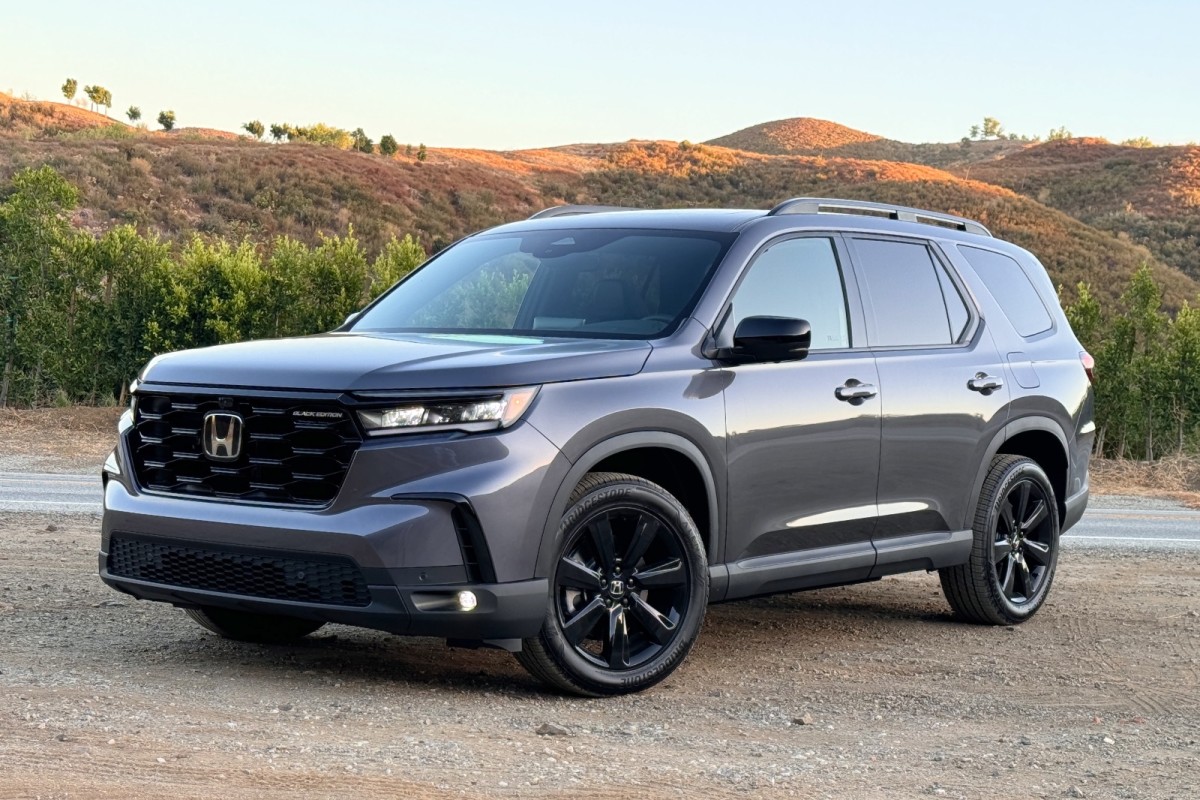
Roomy and relatively rugged, the 2025 Honda Pilot is a three-row midsize SUV that’s easy to live with.
Honda keeps it simple with the 2025 Pilot, offering a single powertrain and standard all-wheel drive (AWD) in Canada. Nearly all Pilots have eight-passenger seating, and with higher trims, the second-row centre section is removable to create a seven-passenger configuration. The Black Edition returns to the top of the lineup for 2025, equipped with blacked-out exterior trim and red interior accents.
Verdict: With the 2025 Pilot, Honda hasn’t messed with success. It is a roomy and practical daily driver that makes life easy, has plenty of power to effortlessly get up to speed, and is safe for transporting the people you love the most. However, it is time for Honda to offer a hybrid version.

In Canada, Honda sells the 2025 Pilot in Sport, EX-L, TrailSport, Touring, and Black Edition trim levels. The Sport is affordable but also does not have many appealing amenities, so we recommend an upgrade to the leather-lined EX-L model at a minimum. Prices range from $55,486 to $67,236, including the destination charge and dealer fees. For this review, we evaluated the U.S. version of the Pilot Black Edition. Note the Modern Steel paint colour shown is not available in Canada.
The Black Edition predictably features black wheels and blacked-out exterior trim with black badges. Inside, black leather seats await, with exclusive red perforation accents that give them a rosy tint. In addition, the cabin boasts red contrast stitching and red ambient lighting. Honda also embosses “Black Edition” on the front-seat head restraints and the floor mats.
Whether you like the Black Edition treatment is a decision only you can make, but know that some paint colours hide the black exterior trim. Fortunately, Honda offers this version of the Pilot with several paint colours that provide higher contrast against the black detailing.
Overall, the Pilot is an attractive SUV. Honda intentionally tried to make it look more rugged when the last redesign arrived in 2023, and the TrailSport trim level leverages that with added off-roading capability. However, the Black Edition’s custom look is more appropriate for the suburbs Pilots usually prowl.
Like most Hondas, the Pilot’s interior features thoughtful design and quality materials. However, the unimpressively sized digital driver display and infotainment system make the cabin appear dated, even if the technology is competitive. Unlike with some rivals, there isn’t a significant “wow factor” within the cabin unless you really get excited about practical storage solutions.

Honda pairs the Pilot’s 3.5-litre V6 engine with a 10-speed automatic transmission. The drivetrain generates 285 horsepower and 262 pound-feet of torque, enough to ensure the Pilot can tow up to 2,268 kilograms (5,000 pounds). Normal, Econ, Snow, Tow, Sport, Trail, and Sand driving modes are available.
In Canada, every Pilot comes with Honda’s Intelligent Variable Torque Management (i-VTM4) AWD system, offering hill descent control and up to 18.5 centimetres of ground clearance (21 centimetres for the TrailSport). The AWD system features torque vectoring, allowing up to 70 percent of engine output to flow to a single rear wheel (75 percent in the TrailSport).
Driving the Pilot is easy. The V6 supplies good acceleration, but the transmission sometimes feels slow to downshift and occasionally delivers unexpected power surges when using Normal mode. Sport mode helps resolve that.
Fuel economy isn’t impressive, especially in city-heavy driving, where we saw 15.9 litres per 100 kilometres. On our evaluation loop, the Pilot averaged 14.1 L/100 km, falling short of the official Natural Resources Canada rating of 11.2 L/100 km in combined driving. (NRCan estimates 11.0 L/100 km combined for lower trims and 11.8 for the TrailSport). Clearly, the time has come for a hybrid or plug-in hybrid version of this SUV.
We also think an adaptive-damping suspension system would benefit the Touring and Black Edition models. On undulating mountain roads, the test vehicle exhibited unwanted body motion, contributing to a soft ride quality. Ultimately, though, the handling proves predictable and secure in part due to the Black Edition’s 20-inch wheels and tires.
In typical driving situations, the compliant suspension is a benefit, particularly over speed bumps and humps, and the Pilot retains a traditional Honda connection with the road surface. Properly calibrated steering and braking systems add to the satisfying driving dynamics.
We didn’t take the Black Edition off-road, but previous experience in the TrailSport confirms the Pilot can tackle more challenging terrain than you might expect. However, if your plans involve overlanding, you may wish to choose a more capable rig designed for the rough stuff.

One area in which the Pilot excels is form and function. From its three rows of comfortable seats to the shelving carved into the dashboard and door panels, the Honda Pilot is thoughtfully outfitted for family duty.
Starting in the Black Edition’s front row, though, there is a potential deal-breaker. While the driver benefits from a 10-way power seat adjustment, the front passenger only gets a four-way adjustment. You cannot raise the right front seat, and you cannot tilt the cushion for added leg support. That’s unacceptable in an SUV designed for long family road trips. Aside from that omission, the front seats are comfortable and supportive and include heating (standard on all trims) and ventilation (standard on Touring and Black Edition). They’re wrapped in quality leather, too, and drivers will like the standard heated steering wheel when Old Man Winter makes his annual appearance.
The second-row seats are roomy but don’t offer as much leg support as we would like. The centre section is removable, allowing owners to create captain’s chairs with a pass-through to the third-row seat. There are smartphone holders in the seatback storage pockets, drink box and cup holders molded into the doors for easy access by younger children, and rear side window shades to keep the sun out of little ones’ eyes. Heated outboard second-row seats are included on every trim but the base Sport.
As long as the people in the second row are willing to slide up a bit, the Pilot’s third row is habitable for adults. We wouldn’t say it is comfortable, but a grown-up can ride back there for a little while before needing a break. Naturally, younger kids will fit just fine.
Using the remote engine starting system, you can heat or cool the interior before leaving home. The Pilot has an effective triple-zone automatic climate control system. A panoramic sunroof is included on the top three trims. Plus, a 32-ounce Hydro Flask fits in the cupholders on the centre console, which is kind of a big deal.
Open the hands-free power tailgate, and you’ll find 635 litres of cargo space behind the third-row seat (618 litres on the TrailSport trim). Under the load floor, there is a large storage well that accommodates the second-row seat middle section or plenty of sports equipment, grocery bags, and the like. Fold the third-row seat down to access between 1,685 and 1,702 litres of cargo room depending on the trim, or fold both rear rows to create a maximum of 3,219 litres.

After getting into a Honda Pilot and looking around, you might guess that it’s an older design. Compared to many rivals, the display screens are smaller, plainer in appearance, and presented as distinctly separate from one another. Don’t let appearances fool you. The digital driver display and the infotainment system provide the features people commonly want, even if neither goes above and beyond. Our Pilot Black Edition had the larger 10.2-inch digital gauge panel and a 9-inch touchscreen infotainment system. Highlights include wireless Apple CarPlay and Android Auto, SiriusXM satellite radio, text-messaging support, and wireless smartphone charging. In addition, the test vehicle had a navigation system, HondaLink subscription services, Wi-Fi access, and a 12-speaker Bose audio system.
We had some trouble with the wireless CarPlay function. After pairing an iPhone 16 and using it, we wanted to switch back to SiriusXM satellite radio. However, after a few seconds, CarPlay would resume. Ultimately, we unpaired the device and stuck with the native Honda system.
Unfortunately, Honda’s voice recognition system frequently provides hit-and-miss performance, requiring multiple attempts or rephrased requests to obtain the desired result. For example, it mistook a request for directions to Chipotle as “Closet Shop.”
We thought the Black Edition’s 12-speaker Bose Centerpoint audio system was adequate but no better in a segment where some impressive sound is available in rivals. Also, the wireless phone charging pad ought to be recessed because your device can easily move and quit charging.
Parents may find the Pilot’s CabinTalk feature helpful. It allows the driver to communicate with passengers over the stereo speakers. That keeps the yelling to a minimum. The test vehicle also had a small four-inch head-up display, another example of how the Pilot meets bare minimum technology expectations in the segment.

Honda equips every version of the 2025 Pilot with a comprehensive menu of standard Honda Sensing safety features. They include forward-collision warning, automatic emergency braking, lane-departure warning, lane-keep assist (branded Road Departure Mitigation), lane-centring assist (Lane Keeping Assist), blind-spot monitoring, rear cross-traffic alert, and adaptive cruise control. In addition, our Black Edition test vehicle had parking sensors and a multi-view camera system. When using the adaptive cruise control in thick traffic on the highway, the Pilot nearly accelerated into the back of a bright white full-size SUV that had moved into the gap ahead, forcing us to brake hard. Later, in free-flowing traffic, it allowed the Pilot’s speed to drop by nearly 10 km/h as the highway began to climb a mountain grade.
In another situation, as traffic came to a rapid stop that the adaptive cruise could not handle, we responded to a forward collision warning only to find the Pilot’s brake pedal feeling closer to the floor than normal, as though an invisible foot was already pressing it down. It also felt like a brick underfoot, very different from how it usually did. That was odd, unnatural, and distracting in a situation requiring driver focus.
Furthermore, the lane-centring assist system ruins the Pilot’s excellent steering feel, introducing an unpleasant artificiality. Lastly, the road sign recognition system regularly conveys inaccurate data. With 90 km/h showing on the display, we passed a large 100 km/h speed limit sign. It didn’t change.
Returning to the Pilot’s family-friendliness, the SUV earns high marks in crash tests. The Insurance Institute for Highway Safety (IIHS) calls it a Top Safety Pick+, while the National Highway Traffic Safety Administration (NHTSA) says it earns an overall rating of five stars.

The 2025 Honda Pilot is a mid-pack player in many respects, meeting expectations but rarely exceeding them. Regarding value, the price is competitive but isn’t a deal, and the warranty coverage is average at 3 years/60,000 kilometres for the new vehicle warranty and 5 years/100,000 kilometres for the powertrain.
Some rivals have more style and better combine contemporary design and technology with elements of luxury, such as the Hyundai Palisade and Kia Telluride. And both these models feature compelling technology.
In addition, there are more fuel-efficient alternatives offering hybrid and plug-in hybrid powertrains, such as the Toyota Grand Highlander and Mazda CX-90, respectively. The Volkswagen Atlas has more interior room, and there is a performance-tuned ST version of the Ford Explorer ready to hit the track instead of the trail.
With so many competitors offering something “extra,” the Pilot’s simplicity — as appealing as it might be — also suggests the Honda lacks anything but the TrailSport to set itself apart. Day-to-day reality is something else, though, and that’s where the Pilot shines brightest, by not shining brightly at all.
Note: Images and video show a US model.

User reviews for 2025 Honda Pilot
Write a review2025 Honda Pilot Pricing
Trims & specs
Air Conditioning
Automatic climate control front air conditioning · Dual front air conditioning zones · Automatic climate control rear air conditioning · Single rear air conditioning zones
Airbags
Dual front airbags · Dual front knee airbags · Passenger airbag deactivation: occupant sensing deactivation · Front side airbags · Rear side curtain airbags
Audio System
Antenna Type: mast · Voice recognition audio system · Bluetooth auxiliary audio input · IHeartRadio internet radio · AM/FM radio · 1 subwoofer · Total Number of Speakers: 6 · 240 watts
Brakes
ABS: 4-wheel · Braking assist: hill start assist · Electronic parking brake: auto off · Front brake diameter: 13.8 · Front brakes: ventilated disc · Rear brake diameter: 13.0 · Rear brakes: disc
Comfort Features
Armrests: rear center with cupholders · Floor Mat Material: carpet · Floor Material: carpet · Floor Mats: front · Steering wheel trim: leather
Convenience Features
Adaptive stop and go cruise control: semi-automatic · Assist handle: rear · Autonomous lane guidance: lane centering · Center console: front console with armrest and storage · Cruise control: adaptive · Cupholders: rear · Easy entry: power rear seat · Multi-function remote: proximity entry system · One-touch windows: 4 · Power outlet(s): USB front · Power steering: speed-proportional · Power windows: lockout button · Reading lights: front · Rear view camera: multi-view · Steering wheel: tilt and telescopic · Steering wheel mounted controls: multi-function screen controls · Storage: accessory hook
Driver Seat
Adjustable lumbar support: power · Power adjustments: 10
Drivetrain
Axle ratio: 4.17
Engine
Battery: AGM
Exterior Features
Door handle color: body-color · Exhaust: integrated exhaust · Exhaust tip color: chrome · Fender lip moldings: black · Front bumper color: body-color · Grille color: black · Mirror color: black · Rear bumper color: black · Rear spoiler: roofline spoiler · Rear spoiler color: body-color · Rear trunk/liftgate: liftgate · Rocker panel color: black · Window trim: black
Headrests
Front headrests: adjustable · Number of front headrests: 2 · Number of rear headrests: 3 · Number of third row headrests: 3
In Car Entertainment
Connected in-car apps: Google POIs · Infotainment: Android Auto ready · Infotainment screen size: 7 in.
Instrumentation
Fuel economy display: range · Instrument cluster screen size: 7 in. · Warnings and reminders: low battery
Lights
Daytime running lights: LED · Exterior entry lights: security approach lamps · Front fog lights: LED · Headlights: Auto on/off · Tail and brake lights: LED
Mirrors
Exterior mirrors: power · Inside rearview mirror: manual day/night
Passenger Seat
Power adjustments: 4
Rear Seats
Type: 40-20-40 split bench
Roof
Roof rails: black
Safety
Automatic emergency braking: front pedestrian · Camera system washer: rear · Child seat anchors: LATCH system · Cross Traffic Alert: rear · Crumple zones: rear · Impact sensor: alert system · Pre-Collision Warning System: audible warning · Pre-collision warning system: pedestrian detection · Rearview monitor: in dash
Seatbelts
Emergency locking retractors: front and rear · Front seatbelts: 3-point · Seatbelt force limiters: front · Seatbelt pretensioners: front · Seatbelt warning sensor: driver and passenger · Second row seatbelts: 3-point · Third row seatbelts: 3-point
Seats
Driver seat power adjustments: reclining · Front seat type: bucket · Passenger seat power adjustments: reclining · Rear headrests: adjustable · Rear seat folding: split · Third row headrests: adjustable · Third row seat folding: flat · Upholstery: cloth
Security
Power door locks: anti-lockout
Spare Tire
Mount Location: underbody · Size: temporary
Spare Wheel
Rim Type: steel
Steering
Steering ratio: 15 · Turns lock-to-lock: 3.0
Suspension
Front Arm Type: lower control arms · Front Shock Type: gas shock absorbers · Front Spring Type: coil springs · Front Stabilizer Bar: diameter 25 mm · Front Suspension Classification: independent · Front Suspension Type: MacPherson struts · Rear Shock Type: gas shock absorbers · Rear Spring Type: coil springs · Rear Stabilizer Bar: diameter 25 mm · Rear Suspension Classification: independent · Rear Suspension Type: multi-link
Telematics
Driver assistance app: roadside assistance · Electronic messaging assistance: with read function · Phone: voice activated · Phone wireless data link: Bluetooth · Smart device app compatibility: HondaLink · Smart device app function: maintenance status
Third Row Seat
Type: 40-60 split bench
Tires
Type: all season
Tires and Rims
Wheels: painted aluminum
Windows
Front wipers: variable intermittent · Liftgate window: fixed · Power windows: remote operation · Rear wiper: with washer
Air Conditioning
Automatic climate control front air conditioning · Dual front air conditioning zones · Automatic climate control rear air conditioning · Single rear air conditioning zones
Airbags
Dual front airbags · Dual front knee airbags · Passenger airbag deactivation: occupant sensing deactivation · Front side airbags · Third row side curtain airbags
Audio System
Antenna Type: mast · Voice recognition audio system · Bluetooth auxiliary audio input · IHeartRadio internet radio · AM/FM radio · 1 subwoofer · Total Number of Speakers: 6 · 240 watts
Brakes
ABS: 4-wheel · Braking assist: hill start assist · Electronic parking brake: auto off · Front brake diameter: 13.8 · Front brakes: ventilated disc · Rear brake diameter: 13.0 · Rear brakes: disc
Comfort Features
Armrests: rear center with cupholders · Floor Mat Material: carpet · Floor Material: carpet · Floor Mats: front · Steering wheel trim: leather
Convenience Features
Adaptive stop and go cruise control: semi-automatic · Assist handle: rear · Autonomous lane guidance: lane centering · Center console: front console with armrest and storage · Cruise control: adaptive · Cupholders: front · Easy entry: power rear seat · Multi-function remote: trunk release · One-touch windows: 4 · Power outlet(s): USB-C front · Power steering: speed-proportional · Power windows: lockout button · Reading lights: third row · Rear view camera: multi-view · Steering wheel: tilt and telescopic · Steering wheel mounted controls: audio · Storage: cargo tie-down anchors and hooks
Driver Seat
Adjustable lumbar support: power · Power adjustments: 10
Drivetrain
4WD Type: on demand · Axle ratio: 4.17
Engine
Battery: AGM
Exterior Features
Door handle color: body-color · Exhaust: integrated exhaust · Exhaust tip color: chrome · Fender lip moldings: black · Front bumper color: body-color · Grille color: black · Mirror color: black · Rear bumper color: black · Rear spoiler: roofline spoiler · Rear spoiler color: body-color · Rear trunk/liftgate: liftgate · Rocker panel color: black · Window trim: black
Headrests
Front headrests: adjustable · Number of front headrests: 2 · Number of rear headrests: 3 · Number of third row headrests: 3
In Car Entertainment
Connected in-car apps: Google search · Infotainment: HondaLink · Infotainment screen size: 7 in.
Instrumentation
Fuel economy display: range · Instrument cluster screen size: 7 in. · Warnings and reminders: low battery
Lights
Daytime running lights: LED · Exterior entry lights: security approach lamps · Front fog lights: LED · Headlights: auto delay off · Tail and brake lights: LED
Mirrors
Exterior mirrors: power · Inside rearview mirror: manual day/night
Passenger Seat
Power adjustments: 4
Rear Seats
Type: 40-20-40 split bench
Roof
Roof rails: black
Safety
Automatic emergency braking: front · Camera system washer: rear · Child seat anchors: LATCH system · Cross Traffic Alert: rear · Crumple zones: front · Impact sensor: alert system · Pre-Collision Warning System: audible warning · Pre-collision warning system: pedestrian detection · Rearview monitor: in dash
Seatbelts
Emergency locking retractors: front, rear, third, and fourth row · Front seatbelts: 3-point · Seatbelt force limiters: front · Seatbelt pretensioners: front · Seatbelt warning sensor: driver and passenger · Second row seatbelts: 3-point · Third row seatbelts: 3-point
Seats
Driver seat power adjustments: height · Front seat type: bucket · Passenger seat power adjustments: reclining · Rear headrests: adjustable · Rear seat folding: flat · Third row headrests: adjustable · Third row seat folding: flat · Upholstery: cloth
Security
Power door locks: anti-lockout
Spare Tire
Mount Location: underbody · Size: temporary
Spare Wheel
Rim Type: steel
Steering
Steering ratio: 15 · Turns lock-to-lock: 3.0
Suspension
Front Arm Type: lower control arms · Front Shock Type: gas shock absorbers · Front Spring Type: coil springs · Front Stabilizer Bar: diameter 25 mm · Front Suspension Classification: independent · Front Suspension Type: MacPherson struts · Rear Shock Type: coil over shock · Rear Spring Type: coil springs · Rear Stabilizer Bar: diameter 25 mm · Rear Suspension Classification: independent · Rear Suspension Type: multi-link
Telematics
Driver assistance app: roadside assistance · Electronic messaging assistance: with read function · Phone: voice activated · Phone wireless data link: Bluetooth · Smart device app compatibility: HondaLink · Smart device app function: maintenance scheduling
Third Row Seat
Type: 40-60 split bench
Tires
Type: all season
Tires and Rims
Wheels: painted aluminum
Windows
Front wipers: speed sensitive · Liftgate window: fixed · Power windows: remote operation · Rear wiper: intermittent
Air Conditioning
Automatic climate control front air conditioning · Dual front air conditioning zones · Automatic climate control rear air conditioning · Single rear air conditioning zones
Airbags
Dual front airbags · Dual front knee airbags · Passenger airbag deactivation: occupant sensing deactivation · Front side airbags · Third row side curtain airbags
Audio System
Antenna Type: diversity · Voice recognition audio system · USB auxiliary audio input · IHeartRadio internet radio · HD radio · Satellite Radio: SiriusXM · 1 subwoofer · Total Number of Speakers: 8 · 245 watts
Brakes
ABS: 4-wheel · Braking assist: hill start assist · Electronic parking brake: auto off · Front brake diameter: 13.8 · Front brakes: ventilated disc · Rear brake diameter: 13.0 · Rear brakes: disc
Comfort Features
Armrests: rear center with cupholders · Floor Mat Material: carpet · Floor Material: carpet · Floor Mats: front · Steering wheel trim: leather
Convenience Features
Adaptive stop and go cruise control: semi-automatic · Assist handle: front · Autonomous lane guidance: lane centering · Cargo area power outlet: 12V · Center console: front console with armrest and storage · Cruise control: adaptive · Cupholders: front · Dimming rearview mirror: auto-dimming · Easy entry: power rear seat · Memorized settings: driver seat · Multi-function remote: keyless entry with panic alarm · One-touch windows: 4 · Power outlet(s): 12V front · Power steering: electric · Power windows: lockout button · Reading lights: rear · Rear view camera: multi-view · Steering wheel: tilt and telescopic · Steering wheel mounted controls: audio · Storage: sunglasses holder · Sunshade: side window · Universal garage door opener: Homelink · Vanity mirrors: dual illuminating
Driver Seat
Adjustable lumbar support: power · Power adjustments: 10
Drivetrain
Axle ratio: 4.17
Engine
Battery: AGM
Exterior Features
Door handle color: body-color · Fender lip moldings: black · Front bumper color: body-color · Grille color: chrome accents · Mirror color: body-color · Rear bumper color: chrome accents · Rear spoiler: roofline spoiler · Rear spoiler color: body-color · Rear trunk/liftgate: power operated · Rocker panel color: black · Window trim: black
Headrests
Front headrests: adjustable · Number of front headrests: 2 · Number of rear headrests: 3 · Number of third row headrests: 3
In Car Entertainment
Connected in-car apps: Google POIs · Infotainment: HondaLink · Infotainment screen size: 9 in. · Smartphone integration: wireless Android Auto
Instrumentation
Fuel economy display: range · Instrument cluster screen size: 7 in. · Warnings and reminders: lamp failure
Lights
Daytime running lights: LED · Exterior entry lights: security approach lamps · Front fog lights: LED · Headlights: LED · Tail and brake lights: LED
Mirrors
Exterior mirrors: manual folding
Passenger Seat
Power adjustments: 4
Rear Seats
Type: 40-20-40 split bench
Safety
Automatic emergency braking: rear · Camera system washer: rear · Child seat anchors: LATCH system · Cross Traffic Alert: rear · Crumple zones: front · Impact sensor: alert system · Parking sensors: rear · Pre-Collision Warning System: visual warning · Pre-collision warning system: pedestrian detection · Rearview monitor: in dash
Seatbelts
Emergency locking retractors: front, rear, third, and fourth row · Front seatbelts: 3-point · Seatbelt force limiters: front and rear · Seatbelt pretensioners: front and rear · Seatbelt warning sensor: driver and passenger · Second row seatbelts: 3-point · Third row seatbelts: 3-point
Seats
Driver seat power adjustments: reclining · Front seat type: bucket · Passenger seat power adjustments: reclining · Rear headrests: adjustable · Rear seat folding: split · Third row headrests: adjustable · Third row seat folding: split · Upholstery: leather-trimmed
Security
Power door locks: anti-lockout
Spare Tire
Mount Location: underbody · Size: temporary
Spare Wheel
Rim Type: steel
Steering
Steering ratio: 15 · Turns lock-to-lock: 3.0
Suspension
Front Arm Type: lower control arms · Front Shock Type: gas shock absorbers · Front Spring Type: coil springs · Front Stabilizer Bar: diameter 25 mm · Front Suspension Classification: independent · Front Suspension Type: MacPherson struts · Rear Shock Type: gas shock absorbers · Rear Spring Type: coil springs · Rear Stabilizer Bar: diameter 25 mm · Rear Suspension Classification: independent · Rear Suspension Type: multi-link
Telematics
Driver assistance app: roadside assistance · Electronic messaging assistance: with read function · Phone: voice activated · Phone wireless data link: Bluetooth · Smart device app compatibility: HondaLink · Smart device app function: maintenance scheduling
Third Row Seat
Type: 40-60 split bench
Tires
Type: all season
Tires and Rims
Wheels: polished aluminum
Windows
Front wipers: speed sensitive · Laminated glass: acoustic · Liftgate window: fixed · Power windows: with safety reverse · Rear wiper: intermittent
Air Conditioning
Automatic climate control front air conditioning · Dual front air conditioning zones · Automatic climate control rear air conditioning · Single rear air conditioning zones
Airbags
Dual front airbags · Dual front knee airbags · Passenger airbag deactivation: occupant sensing deactivation · Front side airbags · Rear side curtain airbags
Audio System
Antenna Type: mast · Voice recognition audio system · Auxiliary audio input: jack · IHeartRadio internet radio · AM/FM radio · Satellite Radio: SiriusXM · 1 subwoofer · Total Number of Speakers: 8 · 245 watts
Brakes
ABS: 4-wheel · Braking assist: hill start assist · Electronic parking brake: auto off · Front brake diameter: 13.8 · Front brakes: ventilated disc · Rear brake diameter: 13.0 · Rear brakes: disc
Comfort Features
Armrests: rear center with cupholders · Floor Mat Material: carpet · Floor Material: carpet · Floor Mats: front · Steering wheel trim: leather
Convenience Features
Adaptive stop and go cruise control: semi-automatic · Assist handle: rear · Autonomous lane guidance: lane centering · Cargo area power outlet: 12V · Center console: front console with armrest and storage · Cruise control: adaptive · Cupholders: front · Dimming rearview mirror: auto-dimming · Easy entry: power rear seat · Memorized settings: 2 driver · Multi-function remote: keyless entry with panic alarm · One-touch windows: 4 · Power outlet(s): 12V front · Power steering: speed-proportional · Power windows: lockout button · Reading lights: front · Rear view camera: multi-view · Steering wheel: tilt and telescopic · Steering wheel mounted controls: paddle shifter · Storage: in-floor · Sunshade: side window · Universal garage door opener: Homelink · Vanity mirrors: dual illuminating
Driver Seat
Adjustable lumbar support: power · Power adjustments: 10
Drivetrain
Axle ratio: 4.17
Engine
Battery: AGM
Exterior Features
Door handle color: body-color · Fender lip moldings: black · Front bumper color: body-color · Grille color: black · Mirror color: body-color · Rear bumper color: black · Rear spoiler: roofline spoiler · Rear spoiler color: body-color · Rear trunk/liftgate: liftgate · Rocker panel color: chrome accents · Window trim: black
Headrests
Front headrests: adjustable · Number of front headrests: 2 · Number of rear headrests: 3 · Number of third row headrests: 3
In Car Entertainment
Connected in-car apps: Google search · Infotainment: HondaLink · Infotainment screen size: 9 in. · Smartphone integration: wireless Apple CarPlay
Instrumentation
Fuel economy display: MPG · Instrument cluster screen size: 7 in. · Warnings and reminders: maintenance reminder
Lights
Daytime running lights: LED · Exterior entry lights: security approach lamps · Front fog lights: LED · Headlights: automatic high beam dimmer · Tail and brake lights: LED
Mirrors
Exterior mirrors: manual folding
Passenger Seat
Power adjustments: 4
Rear Seats
Type: 40-20-40 split bench
Safety
Automatic emergency braking: rear · Camera system washer: rear · Child seat anchors: LATCH system · Cross Traffic Alert: rear · Crumple zones: front · Impact sensor: alert system · Parking sensors: front · Pre-Collision Warning System: visual warning · Pre-collision warning system: pedestrian detection · Rearview monitor: in dash
Seatbelts
Emergency locking retractors: front, rear, third, and fourth row · Front seatbelts: 3-point · Seatbelt force limiters: front · Seatbelt pretensioners: front and rear · Seatbelt warning sensor: driver and passenger · Second row seatbelts: 3-point · Third row seatbelts: 3-point
Seats
Driver seat power adjustments: reclining · Front seat type: bucket · Passenger seat power adjustments: reclining · Rear headrests: adjustable · Rear seat folding: flat · Third row headrests: adjustable · Third row seat folding: flat · Upholstery: leather-trimmed
Security
Power door locks: anti-lockout
Spare Tire
Mount Location: underbody · Size: temporary
Spare Wheel
Rim Type: steel
Steering
Steering ratio: 15 · Turns lock-to-lock: 3.0
Suspension
Front Arm Type: lower control arms · Front Shock Type: gas shock absorbers · Front Spring Type: coil springs · Front Stabilizer Bar: diameter 25 mm · Front Suspension Classification: independent · Front Suspension Type: MacPherson struts · Rear Shock Type: gas shock absorbers · Rear Spring Type: coil springs · Rear Stabilizer Bar: diameter 25 mm · Rear Suspension Classification: independent · Rear Suspension Type: multi-link
Telematics
Driver assistance app: roadside assistance · Electronic messaging assistance: with read function · Phone: voice activated · Phone wireless data link: Bluetooth · Smart device app compatibility: HondaLink · Smart device app function: maintenance scheduling
Third Row Seat
Type: 40-60 split bench
Tires
Type: all season
Tires and Rims
Wheels: polished aluminum
Windows
Front wipers: speed sensitive · Laminated glass: acoustic · Liftgate window: fixed · Power windows: remote operation · Rear wiper: intermittent
Air Conditioning
Automatic climate control front air conditioning · Dual front air conditioning zones · Automatic climate control rear air conditioning · Single rear air conditioning zones
Airbags
Dual front airbags · Dual front knee airbags · Passenger airbag deactivation: occupant sensing deactivation · Front side airbags · Third row side curtain airbags
Audio System
Antenna Type: mast · Voice recognition audio system · USB auxiliary audio input · IHeartRadio internet radio · AM/FM radio · Satellite Radio: SiriusXM · 1 subwoofer · Total Number of Speakers: 8 · 245 watts
Brakes
ABS: 4-wheel · Braking assist: hill start assist · Electronic parking brake: auto off · Front brake diameter: 13.8 · Front brakes: ventilated disc · Rear brake diameter: 13.0 · Rear brakes: disc
Comfort Features
Armrests: rear center with cupholders · Floor Mat Material: carpet · Floor Material: carpet · Floor Mats: front · Steering wheel trim: leather
Convenience Features
Adaptive stop and go cruise control: semi-automatic · Assist handle: rear · Autonomous lane guidance: lane centering · Cargo area power outlet: 12V · Center console: front console with armrest and storage · Cruise control: adaptive · Cupholders: front · Dimming rearview mirror: auto-dimming · Easy entry: power rear seat · Memorized settings: driver seat · Multi-function remote: trunk release · One-touch windows: 4 · Power outlet(s): 12V front · Power steering: electric · Power windows: lockout button · Reading lights: third row · Rear view camera: multi-view · Steering wheel: tilt and telescopic · Steering wheel mounted controls: audio · Storage: door pockets · Sunshade: side window · Universal garage door opener: Homelink · Vanity mirrors: dual illuminating
Driver Seat
Adjustable lumbar support: power · Power adjustments: 10
Drivetrain
4WD Type: on demand · Axle ratio: 4.17
Engine
Battery: AGM
Exterior Features
Door handle color: body-color · Fender lip moldings: black · Front bumper color: body-color · Grille color: black · Mirror color: body-color · Rear bumper color: black · Rear spoiler: roofline spoiler · Rear spoiler color: body-color · Rear trunk/liftgate: power operated · Rocker panel color: chrome accents · Window trim: black
Headrests
Front headrests: adjustable · Number of front headrests: 2 · Number of rear headrests: 3 · Number of third row headrests: 3
In Car Entertainment
Connected in-car apps: Google POIs · Infotainment: HondaLink · Infotainment screen size: 9 in. · Smartphone integration: wireless Apple CarPlay
Instrumentation
Fuel economy display: range · Instrument cluster screen size: 7 in. · Warnings and reminders: low battery
Lights
Daytime running lights: LED · Exterior entry lights: security approach lamps · Front fog lights: LED · Headlights: Auto on/off · Tail and brake lights: LED
Mirrors
Exterior mirrors: integrated turn signals
Passenger Seat
Power adjustments: 4
Rear Seats
Type: 40-20-40 split bench
Safety
Automatic emergency braking: rear · Camera system washer: rear · Child seat anchors: LATCH system · Cross Traffic Alert: rear · Crumple zones: front · Impact sensor: alert system · Parking sensors: rear · Pre-Collision Warning System: audible warning · Pre-collision warning system: pedestrian detection · Rearview monitor: in dash
Seatbelts
Emergency locking retractors: front, rear, third, and fourth row · Front seatbelts: 3-point · Seatbelt force limiters: front · Seatbelt pretensioners: front · Seatbelt warning sensor: driver and passenger · Second row seatbelts: 3-point · Third row seatbelts: 3-point
Seats
Driver seat power adjustments: reclining · Front seat type: bucket · Passenger seat power adjustments: reclining · Rear headrests: adjustable · Rear seat folding: flat · Third row headrests: adjustable · Third row seat folding: flat · Upholstery: leather-trimmed
Security
Power door locks: anti-lockout
Spare Tire
Mount Location: underbody · Size: temporary
Spare Wheel
Rim Type: steel
Steering
Steering ratio: 15 · Turns lock-to-lock: 3.0
Suspension
Front Arm Type: lower control arms · Front Shock Type: gas shock absorbers · Front Spring Type: coil springs · Front Stabilizer Bar: diameter 25 mm · Front Suspension Classification: independent · Front Suspension Type: MacPherson struts · Rear Shock Type: gas shock absorbers · Rear Spring Type: coil springs · Rear Stabilizer Bar: diameter 25 mm · Rear Suspension Classification: independent · Rear Suspension Type: multi-link
Telematics
Driver assistance app: roadside assistance · Electronic messaging assistance: with read function · Phone: voice activated · Phone wireless data link: Bluetooth · Smart device app compatibility: HondaLink · Smart device app function: maintenance scheduling
Third Row Seat
Type: 40-60 split bench
Tires
Type: all season
Tires and Rims
Wheels: polished aluminum
Windows
Front wipers: speed sensitive · Laminated glass: acoustic · Liftgate window: fixed · Power windows: remote operation · Rear wiper: intermittent
Air Conditioning
Automatic climate control front air conditioning · Dual front air conditioning zones · Rear air conditioning: with independent controls · Single rear air conditioning zones
Airbags
Dual front airbags · Dual front knee airbags · Passenger airbag deactivation: occupant sensing deactivation · Front side airbags · Third row side curtain airbags
Audio System
Antenna Type: mast · Voice recognition audio system · USB auxiliary audio input · IHeartRadio internet radio · Premium Brand: Bose · Touch screen display radio · Rear audio: separate rear audio · Satellite Radio: SiriusXM · 1 subwoofer · Total Number of Speakers: 11
Brakes
ABS: 4-wheel · Braking assist: hill start assist · Electronic parking brake: auto off · Front brake diameter: 13.8 · Front brakes: ventilated disc · Rear brake diameter: 13.0 · Rear brakes: disc
Comfort Features
Armrests: rear center with cupholders · Floor Mat Material: carpet · Floor Material: carpet · Floor Mats: front · Steering wheel trim: leather
Convenience Features
Adaptive stop and go cruise control: semi-automatic · Assist handle: rear · Autonomous lane guidance: lane centering · Cargo area power outlet: 12V · Center console: front console with armrest and storage · Cruise control: adaptive · Cupholders: illuminated · Dimming rearview mirror: auto-dimming · Easy entry: power rear seat · Memorized settings: driver seat · Multi-function remote: keyless entry with panic alarm · One-touch windows: 4 · Power outlet(s): 12V front · Power steering: electric · Power windows: lockout button · Reading lights: rear · Rear view camera: multi-view · Steering wheel: tilt and telescopic · Steering wheel mounted controls: voice recognition controls · Storage: sunglasses holder · Sunshade: side window · Universal garage door opener: Homelink · Vanity mirrors: dual illuminating
Driver Seat
Adjustable lumbar support: power · Power adjustments: 10
Drivetrain
Axle ratio: 4.17
Engine
Battery: AGM
Exterior Features
Door handle color: body-color · Exhaust: dual exhaust tips · Exhaust tip color: chrome · Fender lip moldings: black · Front bumper color: body-color · Grille color: chrome accents · Mirror color: body-color · Rear bumper color: black · Rear spoiler: roofline spoiler · Rear spoiler color: body-color · Rear trunk/liftgate: liftgate · Rocker panel color: chrome accents · Window trim: black
Headrests
Front headrests: adjustable · Number of front headrests: 2 · Number of rear headrests: 3 · Number of third row headrests: 3
In Car Entertainment
Connected in-car apps: Google POIs · Infotainment: HondaLink · Infotainment screen size: 9 in. · Smartphone integration: wireless Android Auto
Instrumentation
Fuel economy display: MPG · Instrument cluster screen size: 7 in. · Warnings and reminders: coolant temperature warning
Lights
Daytime running lights: LED · Exterior entry lights: security approach lamps · Front fog lights: LED · Headlights: LED · Tail and brake lights: LED
Mirrors
Exterior mirrors: power
Passenger Seat
Power adjustments: 4
Rear Seats
Type: folding removable center seat
Roof
Moonroof: tilt/slide · Roof rails: black
Safety
Automatic emergency braking: front · Camera system washer: rear · Child seat anchors: LATCH system · Cross Traffic Alert: rear · Crumple zones: rear · Impact sensor: alert system · Parking sensors: front · Pre-Collision Warning System: visual warning · Pre-collision warning system: pedestrian detection · Rearview monitor: in dash
Seatbelts
Emergency locking retractors: front, rear, third, and fourth row · Front seatbelts: 3-point · Seatbelt force limiters: front and rear · Seatbelt pretensioners: front and rear · Seatbelt warning sensor: driver and passenger · Second row seatbelts: 3-point · Third row seatbelts: 3-point
Seats
Driver seat power adjustments: reclining · Front seat type: bucket · Passenger seat power adjustments: reclining · Rear headrests: adjustable · Rear seat folding: flat · Third row headrests: adjustable · Third row seat folding: split · Upholstery: leather-trimmed
Security
Power door locks: anti-lockout
Spare Tire
Mount Location: underbody · Size: temporary
Spare Wheel
Rim Type: steel
Steering
Steering ratio: 15 · Turns lock-to-lock: 3.0
Suspension
Front Arm Type: lower control arms · Front Shock Type: gas shock absorbers · Front Spring Type: coil springs · Front Stabilizer Bar: diameter 26 mm · Front Suspension Classification: independent · Front Suspension Type: MacPherson struts · Rear Shock Type: gas shock absorbers · Rear Spring Type: coil springs · Rear Stabilizer Bar: diameter 18 mm · Rear Suspension Classification: independent · Rear Suspension Type: multi-link
Telematics
Driver assistance app: roadside assistance · Electronic messaging assistance: with read function · Navigation system: touch screen display · Phone: voice activated · Phone wireless data link: Bluetooth · Satellite communications: Turn-by-Turn Navigation · Smart device app compatibility: HondaLink · Smart device app function: lock operation · Wifi: hotspot
Third Row Seat
Type: 40-60 split bench
Tires
Type: all season
Tires and Rims
Wheels: polished aluminum
Windows
Front wipers: variable intermittent · Laminated glass: acoustic · Liftgate window: fixed · Power windows: with safety reverse · Rear wiper: auto-on in reverse
Air Conditioning
Automatic climate control front air conditioning · Dual front air conditioning zones · Rear air conditioning: with independent controls · Single rear air conditioning zones
Airbags
Dual front airbags · Dual front knee airbags · Passenger airbag deactivation: occupant sensing deactivation · Front side airbags · Front side curtain airbags
Audio System
Antenna Type: mast · Voice recognition audio system · Bluetooth auxiliary audio input · IHeartRadio internet radio · Touch screen display radio · Satellite Radio: SiriusXM · 1 subwoofer · Total Number of Speakers: 8 · 245 watts
Brakes
ABS: 4-wheel · Braking assist: hill start assist · Electronic parking brake: auto off · Front brake diameter: 13.8 · Front brakes: ventilated disc · Rear brake diameter: 13.0 · Rear brakes: disc
Comfort Features
Armrests: rear center with cupholders · Floor Mat Material: carpet · Floor Material: carpet · Floor Mats: front · Steering wheel trim: leather
Convenience Features
Adaptive stop and go cruise control: semi-automatic · Assist handle: rear · Autonomous lane guidance: lane centering · Cargo area power outlet: 12V · Center console: front console with armrest and storage · Cruise control: adaptive · Cupholders: front · Dimming rearview mirror: auto-dimming · Easy entry: power rear seat · Memorized settings: driver seat · Multi-function remote: keyless entry with panic alarm · One-touch windows: 4 · Power outlet(s): 12V front · Power steering: speed-proportional · Power windows: lockout button · Reading lights: third row · Rear view camera: multi-view · Steering wheel: tilt and telescopic · Steering wheel mounted controls: voice recognition controls · Storage: in-floor · Sunshade: side window · Universal garage door opener: Homelink · Vanity mirrors: dual illuminating
Driver Seat
Adjustable lumbar support: power · Power adjustments: 10
Drivetrain
4WD Type: on demand · Axle ratio: 4.17
Engine
Battery: AGM
Exterior Features
Door handle color: body-color · Fender lip moldings: black · Front bumper color: body-color · Grille color: black · Mirror color: body-color · Rear bumper color: chrome accents · Rear spoiler: roofline spoiler · Rear spoiler color: body-color · Rear trunk/liftgate: liftgate · Rocker panel color: chrome accents · Window trim: black
Headrests
Front headrests: adjustable · Number of front headrests: 2 · Number of rear headrests: 3 · Number of third row headrests: 3
In Car Entertainment
Connected in-car apps: Google search · Infotainment: HondaLink · Infotainment screen size: 9 in. · Smartphone integration: wireless Apple CarPlay
Instrumentation
Fuel economy display: range · Instrument cluster screen size: 7 in. · Warnings and reminders: maintenance reminder
Lights
Daytime running lights: LED · Exterior entry lights: security approach lamps · Front fog lights: LED · Headlights: automatic high beam dimmer · Tail and brake lights: LED
Mirrors
Exterior mirrors: power
Passenger Seat
Power adjustments: 4
Rear Seats
Type: 40-20-40 split bench
Safety
Automatic emergency braking: rear · Camera system washer: rear · Child seat anchors: LATCH system · Cross Traffic Alert: rear · Crumple zones: rear · Impact sensor: alert system · Parking sensors: rear · Pre-Collision Warning System: visual warning · Pre-collision warning system: pedestrian detection · Rearview monitor: in dash
Seatbelts
Emergency locking retractors: front, rear, third, and fourth row · Front seatbelts: 3-point · Seatbelt force limiters: front and rear · Seatbelt pretensioners: front and rear · Seatbelt warning sensor: driver and passenger · Second row seatbelts: 3-point · Third row seatbelts: 3-point
Seats
Driver seat power adjustments: height · Front seat type: bucket · Passenger seat power adjustments: reclining · Rear headrests: adjustable · Rear seat folding: split · Third row headrests: adjustable · Third row seat folding: flat · Upholstery: leather-trimmed
Security
Power door locks: anti-lockout
Spare Tire
Mount Location: underbody · Size: temporary
Spare Wheel
Rim Type: steel
Steering
Steering ratio: 15 · Turns lock-to-lock: 3.0
Suspension
Front Arm Type: lower control arms · Front Shock Type: gas shock absorbers · Front Spring Type: coil springs · Front Stabilizer Bar: diameter 25 mm · Front Suspension Classification: independent · Front Suspension Type: MacPherson struts · Rear Shock Type: coil over shock · Rear Spring Type: coil springs · Rear Stabilizer Bar: diameter 25 mm · Rear Suspension Classification: independent · Rear Suspension Type: multi-link
Telematics
Driver assistance app: roadside assistance · Electronic messaging assistance: with read function · Phone: voice activated · Phone wireless data link: Bluetooth · Smart device app compatibility: HondaLink · Smart device app function: maintenance scheduling
Third Row Seat
Type: 40-60 split bench
Tires
Type: all season
Tires and Rims
Wheels: polished aluminum
Windows
Front wipers: variable intermittent · Laminated glass: acoustic · Liftgate window: fixed · Power windows: remote operation · Rear wiper: intermittent
Air Conditioning
Automatic climate control front air conditioning · Dual front air conditioning zones · Automatic climate control rear air conditioning · Single rear air conditioning zones
Airbags
Dual front airbags · Dual front knee airbags · Passenger airbag deactivation: occupant sensing deactivation · Front side airbags · Rear side curtain airbags
Audio System
Antenna Type: diversity · Voice recognition audio system · USB auxiliary audio input · IHeartRadio internet radio · HD radio · Satellite Radio: SiriusXM · 1 subwoofer · Total Number of Speakers: 8 · 245 watts
Brakes
ABS: 4-wheel · Braking assist: hill start assist · Electronic parking brake: auto off · Front brake diameter: 13.8 · Front brakes: ventilated disc · Rear brake diameter: 13.0 · Rear brakes: disc
Comfort Features
Armrests: rear outboard seats · Floor Mat Material: vinyl/rubber · Floor Material: carpet · Floor Mats: front · Steering wheel trim: leather
Convenience Features
Adaptive stop and go cruise control: semi-automatic · Assist handle: front · Autonomous lane guidance: lane centering · Camera System: Side · Cargo area power outlet: 12V · Center console: front console with armrest and storage · Cruise control: adaptive · Cupholders: front · Dimming rearview mirror: auto-dimming · Easy entry: power rear seat · Memorized settings: driver seat · Multi-function remote: keyless entry with panic alarm · One-touch windows: 4 · Power outlet(s): 12V front · Power steering: speed-proportional · Power windows: lockout button · Reading lights: rear · Rear power outlet: 115V · Rear view camera: multi-view · Steering wheel: tilt and telescopic · Steering wheel mounted controls: paddle shifter · Storage: dual level cargo area · Sunshade: side window · Universal garage door opener: Homelink · Vanity mirrors: dual illuminating
Driver Seat
Adjustable lumbar support: power · Power adjustments: 10
Drivetrain
4WD Type: on demand · Axle ratio: 4.17
Engine
Battery: AGM
Exterior Features
Door handle color: black · Fender lip moldings: black · Front bumper color: body-color · Grille color: black · Mirror color: black · Rear bumper color: black · Rear spoiler: roofline spoiler · Rear spoiler color: body-color · Rear trunk/liftgate: power operated · Rocker panel color: black · Skid plate(s): engine · Window trim: black
Headrests
Front headrests: adjustable · Number of front headrests: 2 · Number of rear headrests: 2 · Number of third row headrests: 3
In Car Entertainment
Connected in-car apps: Google POIs · Infotainment: HondaLink · Infotainment screen size: 9 in. · Smartphone integration: wireless Android Auto
Instrumentation
Fuel economy display: range · Instrument cluster screen size: 7 in. · Warnings and reminders: coolant temperature warning
Lights
Daytime running lights: LED · Exterior entry lights: security approach lamps · Front fog lights: LED · Headlights: Auto on/off · Tail and brake lights: LED
Mirrors
Exterior mirrors: integrated turn signals
Passenger Seat
Power adjustments: 4
Rear Seats
Type: captains chairs
Roof
Moonroof: power panoramic · Roof rails: black
Safety
Automatic emergency braking: front pedestrian · Camera system washer: rear · Child seat anchors: LATCH system · Cross Traffic Alert: rear · Crumple zones: front · Impact sensor: alert system · Parking sensors: front · Pre-Collision Warning System: visual warning · Pre-collision warning system: pedestrian detection · Rearview monitor: in dash
Seatbelts
Emergency locking retractors: front and rear · Front seatbelts: 3-point · Seatbelt force limiters: front · Seatbelt pretensioners: front and rear · Seatbelt warning sensor: driver and passenger · Second row seatbelts: 3-point · Third row seatbelts: 3-point
Seats
Driver seat power adjustments: height · Front seat type: bucket · Passenger seat power adjustments: reclining · Rear headrests: adjustable · Rear seat folding: flat · Third row headrests: adjustable · Third row seat folding: split · Upholstery: contrast stitching
Security
Power door locks: anti-lockout
Spare Tire
Mount Location: underbody
Spare Wheel
Rim type: aluminum alloy
Steering
Steering ratio: 14.8 · Turns lock-to-lock: 3.0
Suspension
Front Arm Type: lower control arms · Front Shock Type: gas shock absorbers · Front Spring Type: coil springs · Front Stabilizer Bar: diameter 24 mm · Front Suspension Classification: independent · Front Suspension Type: MacPherson struts · Rear Shock Type: gas shock absorbers · Rear Spring Type: coil springs · Rear Stabilizer Bar: diameter 18 mm · Rear Suspension Classification: independent · Rear Suspension Type: multi-link
Telematics
Driver assistance app: roadside assistance · Electronic messaging assistance: with voice recognition · Phone: voice activated · Phone wireless data link: Bluetooth · Smart device app compatibility: HondaLink · Smart device app function: maintenance status
Third Row Seat
Type: 40-60 split bench
Tires
Type: all terrain
Tires and Rims
Spare tire size: full-size matching · Wheels: painted aluminum
Towing and Hauling
Trailer hitch: Class III · Trailer wiring: 4-pin
Windows
Front wipers: speed sensitive · Laminated glass: acoustic · Liftgate window: fixed · Power windows: with safety reverse · Rear wiper: with washer
Air Conditioning
Automatic climate control front air conditioning · Dual front air conditioning zones · Rear air conditioning: with independent controls · Single rear air conditioning zones
Airbags
Dual front airbags · Dual front knee airbags · Passenger airbag deactivation: occupant sensing deactivation · Front side airbags · Front side curtain airbags
Audio System
Antenna Type: mast · Voice recognition audio system · Bluetooth auxiliary audio input · IHeartRadio internet radio · Premium Brand: Bose · Touch screen display radio · Rear audio: separate rear audio · Satellite Radio: SiriusXM · 1 subwoofer · Total Number of Speakers: 11
Brakes
ABS: 4-wheel · Braking assist: hill start assist · Electronic parking brake: auto off · Front brake diameter: 13.8 · Front brakes: ventilated disc · Rear brake diameter: 13.0 · Rear brakes: disc
Comfort Features
Armrests: rear center with cupholders · Floor Mat Material: carpet · Floor Material: carpet · Floor Mats: front · Steering wheel trim: leather
Convenience Features
Adaptive stop and go cruise control: semi-automatic · Assist handle: front · Autonomous lane guidance: lane centering · Cargo area power outlet: 12V · Center console: front console with armrest and storage · Cruise control: adaptive · Cupholders: front, rear and third row · Dimming rearview mirror: auto-dimming · Easy entry: power rear seat · Memorized settings: side mirrors · Multi-function remote: proximity entry system · One-touch windows: 4 · Power outlet(s): USB front · Power steering: speed-proportional · Power windows: lockout button · Reading lights: third row · Rear view camera: multi-view · Steering wheel: tilt and telescopic · Steering wheel mounted controls: cruise controls · Storage: cargo tie-down anchors and hooks · Sunshade: side window · Universal garage door opener: Homelink · Vanity mirrors: dual illuminating
Driver Seat
Adjustable lumbar support: power · Power adjustments: 10
Drivetrain
Axle ratio: 4.17
Engine
Battery: AGM
Exterior Features
Door handle color: body-color · Exhaust: dual exhaust tips · Exhaust tip color: chrome · Fender lip moldings: black · Front bumper color: body-color · Grille color: black · Mirror color: body-color · Rear bumper color: chrome accents · Rear spoiler: roofline spoiler · Rear spoiler color: body-color · Rear trunk/liftgate: power operated · Rocker panel color: black · Window trim: black
Headrests
Front headrests: adjustable · Number of front headrests: 2 · Number of rear headrests: 3 · Number of third row headrests: 3
In Car Entertainment
Connected in-car apps: Google POIs · Infotainment: HondaLink · Infotainment screen size: 9 in. · Smartphone integration: wireless Android Auto
Instrumentation
Fuel economy display: MPG · Instrument cluster screen size: 7 in. · Warnings and reminders: low battery
Lights
Daytime running lights: LED · Exterior entry lights: security approach lamps · Front fog lights: LED · Headlights: Auto on/off · Tail and brake lights: LED
Mirrors
Exterior mirrors: heated
Passenger Seat
Power adjustments: 4
Rear Seats
Type: 40-20-40 split bench
Roof
Moonroof: anti-trapping feature · Roof rails: black
Safety
Automatic emergency braking: front · Camera system washer: rear · Child seat anchors: LATCH system · Cross Traffic Alert: rear · Crumple zones: rear · Impact sensor: alert system · Parking sensors: front · Pre-Collision Warning System: audible warning · Pre-collision warning system: pedestrian detection · Rearview monitor: in dash
Seatbelts
Emergency locking retractors: front · Front seatbelts: 3-point · Seatbelt force limiters: front and rear · Seatbelt pretensioners: front · Seatbelt warning sensor: driver and passenger · Second row seatbelts: 3-point · Third row seatbelts: 3-point
Seats
Driver seat power adjustments: height · Front seat type: bucket · Passenger seat power adjustments: reclining · Rear headrests: adjustable · Rear seat folding: split · Third row headrests: adjustable · Third row seat folding: flat · Upholstery: leather-trimmed
Security
Power door locks: anti-lockout
Spare Tire
Mount Location: underbody · Size: temporary
Spare Wheel
Rim Type: steel
Steering
Steering ratio: 15 · Turns lock-to-lock: 3.0
Suspension
Front Arm Type: lower control arms · Front Shock Type: gas shock absorbers · Front Spring Type: coil springs · Front Stabilizer Bar: diameter 26 mm · Front Suspension Classification: independent · Front Suspension Type: MacPherson struts · Rear Shock Type: coil over shock · Rear Spring Type: coil springs · Rear Stabilizer Bar: diameter 18 mm · Rear Suspension Classification: independent · Rear Suspension Type: multi-link
Telematics
Driver assistance app: roadside assistance · Electronic messaging assistance: with voice recognition · Navigation system: with voice recognition · Phone: voice activated · Phone wireless data link: Bluetooth · Satellite communications: Turn-by-Turn Navigation · Smart device app compatibility: HondaLink · Smart device app function: vehicle location · Wifi: hotspot
Third Row Seat
Type: 40-60 split bench
Tires
Type: all season
Tires and Rims
Wheels: polished aluminum
Windows
Front wipers: speed sensitive · Laminated glass: acoustic · Liftgate window: fixed · Power windows: with safety reverse · Rear wiper: auto-on in reverse
Air Conditioning
Automatic climate control front air conditioning · Dual front air conditioning zones · Automatic climate control rear air conditioning · Single rear air conditioning zones
Airbags
Dual front airbags · Dual front knee airbags · Passenger airbag deactivation: occupant sensing deactivation · Front side airbags · Front side curtain airbags
Audio System
Antenna Type: mast · Voice recognition audio system · USB auxiliary audio input · IHeartRadio internet radio · Premium Brand: Bose · Touch screen display radio · Rear audio: separate rear audio · Satellite Radio: SiriusXM · 1 subwoofer · Total Number of Speakers: 11
Brakes
ABS: 4-wheel · Braking assist: hill start assist · Electronic parking brake: auto off · Front brake diameter: 13.8 · Front brakes: ventilated disc · Rear brake diameter: 13.0 · Rear brakes: disc
Comfort Features
Armrests: rear center with cupholders · Floor Mat Material: carpet · Floor Material: carpet · Floor Mats: front · Steering wheel trim: leather
Convenience Features
Adaptive stop and go cruise control: semi-automatic · Assist handle: front · Autonomous lane guidance: lane centering · Cargo area power outlet: 12V · Center console: front console with armrest and storage · Cruise control: adaptive · Cupholders: front · Dimming rearview mirror: auto-dimming · Easy entry: power rear seat · Memorized settings: driver seat · Multi-function remote: trunk release · One-touch windows: 4 · Power outlet(s): USB-C third row · Power steering: speed-proportional · Power windows: lockout button · Reading lights: front · Rear view camera: multi-view · Steering wheel: tilt and telescopic · Steering wheel mounted controls: voice recognition controls · Storage: in-floor · Sunshade: side window · Universal garage door opener: Homelink · Vanity mirrors: dual illuminating
Driver Seat
Adjustable lumbar support: power · Power adjustments: 10
Drivetrain
4WD Type: on demand · Axle ratio: 4.17
Engine
Battery: AGM
Exterior Features
Door handle color: body-color · Exhaust: dual exhaust tips · Exhaust tip color: chrome · Fender lip moldings: black · Front bumper color: body-color · Grille color: black · Mirror color: body-color · Rear bumper color: black · Rear spoiler: roofline spoiler · Rear spoiler color: body-color · Rear trunk/liftgate: sensor-activated · Rocker panel color: black · Window trim: black
Headrests
Front headrests: adjustable · Number of front headrests: 2 · Number of rear headrests: 3 · Number of third row headrests: 3
In Car Entertainment
Connected in-car apps: Google POIs · Infotainment: HondaLink · Infotainment screen size: 9 in. · Smartphone integration: wireless Android Auto
Instrumentation
Fuel economy display: range · Instrument cluster screen size: 7 in. · Warnings and reminders: low fuel level
Lights
Daytime running lights: LED · Exterior entry lights: security approach lamps · Front fog lights: LED · Headlights: automatic high beam dimmer · Tail and brake lights: LED
Mirrors
Exterior mirrors: power
Passenger Seat
Power adjustments: 4
Rear Seats
Type: folding removable center seat
Roof
Moonroof: anti-trapping feature · Roof rails: black
Safety
Automatic emergency braking: front · Camera system washer: rear · Child seat anchors: LATCH system · Cross Traffic Alert: rear · Crumple zones: front · Impact sensor: alert system · Parking sensors: front · Pre-Collision Warning System: visual warning · Pre-collision warning system: pedestrian detection · Rearview monitor: in dash
Seatbelts
Emergency locking retractors: front, rear, third, and fourth row · Front seatbelts: 3-point · Seatbelt force limiters: front and rear · Seatbelt pretensioners: front and rear · Seatbelt warning sensor: driver and passenger · Second row seatbelts: 3-point · Third row seatbelts: 3-point
Seats
Driver seat power adjustments: reclining · Front seat type: bucket · Passenger seat power adjustments: reclining · Rear headrests: adjustable · Rear seat folding: flat · Third row headrests: adjustable · Third row seat folding: split · Upholstery: leather-trimmed
Security
Power door locks: anti-lockout
Spare Tire
Mount Location: underbody · Size: temporary
Spare Wheel
Rim Type: steel
Steering
Steering ratio: 15 · Turns lock-to-lock: 3.0
Suspension
Front Arm Type: lower control arms · Front Shock Type: gas shock absorbers · Front Spring Type: coil springs · Front Stabilizer Bar: diameter 26 mm · Front Suspension Classification: independent · Front Suspension Type: MacPherson struts · Rear Shock Type: gas shock absorbers · Rear Spring Type: coil springs · Rear Stabilizer Bar: diameter 18 mm · Rear Suspension Classification: independent · Rear Suspension Type: multi-link
Telematics
Driver assistance app: roadside assistance · Electronic messaging assistance: with read function · Navigation system: touch screen display · Phone: voice activated · Phone wireless data link: Bluetooth · Satellite communications: Turn-by-Turn Navigation · Smart device app compatibility: HondaLink · Smart device app function: send destination to vehicle · Wifi: hotspot
Third Row Seat
Type: 40-60 split bench
Tires
Type: all season
Tires and Rims
Wheels: polished aluminum
Windows
Front wipers: speed sensitive · Laminated glass: acoustic front side · Liftgate window: fixed · Power windows: remote operation · Rear wiper: intermittent
Air Conditioning
Automatic climate control front air conditioning · Dual front air conditioning zones · Automatic climate control rear air conditioning · Single rear air conditioning zones
Airbags
Dual front airbags · Dual front knee airbags · Passenger airbag deactivation: occupant sensing deactivation · Front side airbags · Third row side curtain airbags
Audio System
Antenna Type: diversity · Voice recognition audio system · Bluetooth auxiliary audio input · IHeartRadio internet radio · Premium Brand: Bose · AM/FM radio · Rear audio: separate rear audio · Satellite Radio: SiriusXM · 1 subwoofer · Total Number of Speakers: 11
Brakes
ABS: 4-wheel · Braking assist: hill start assist · Electronic parking brake: auto off · Front brake diameter: 13.8 · Front brakes: ventilated disc · Rear brake diameter: 13.0 · Rear brakes: disc
Comfort Features
Armrests: rear center with cupholders · Floor Mat Material: carpet · Floor Material: carpet · Floor Mats: front · Steering wheel trim: leather
Convenience Features
Adaptive stop and go cruise control: semi-automatic · Assist handle: rear · Autonomous lane guidance: lane centering · Cargo area power outlet: 12V · Center console: front console with armrest and storage · Cruise control: adaptive · Cupholders: rear · Dimming rearview mirror: auto-dimming · Easy entry: power rear seat · Memorized settings: 2 driver · Multi-function remote: trunk release · One-touch windows: 4 · Power outlet(s): USB front · Power steering: electric · Power windows: lockout button · Reading lights: front · Rear view camera: multi-view · Steering wheel: tilt and telescopic · Steering wheel mounted controls: audio · Storage: dual level cargo area · Sunshade: side window · Universal garage door opener: Homelink · Vanity mirrors: dual illuminating
Driver Seat
Adjustable lumbar support: power · Power adjustments: 10
Drivetrain
4WD Type: on demand · Axle ratio: 4.17
Engine
Battery: AGM
Exterior Features
Door handle color: body-color · Exhaust: dual exhaust tips · Exhaust tip color: chrome · Fender lip moldings: black · Front bumper color: body-color · Grille color: black · Mirror color: body-color · Rear bumper color: chrome accents · Rear spoiler: roofline spoiler · Rear spoiler color: body-color · Rear trunk/liftgate: liftgate · Rocker panel color: black · Window trim: black
Headrests
Front headrests: adjustable · Number of front headrests: 2 · Number of rear headrests: 3 · Number of third row headrests: 3
In Car Entertainment
Connected in-car apps: Google POIs · Infotainment: HondaLink · Infotainment screen size: 9 in. · Smartphone integration: wireless Apple CarPlay
Instrumentation
Fuel economy display: MPG · Instrument cluster screen size: 7 in. · Warnings and reminders: maintenance reminder
Lights
Daytime running lights: LED · Exterior entry lights: security approach lamps · Front fog lights: LED · Headlights: Auto on/off · Tail and brake lights: LED
Mirrors
Exterior mirrors: integrated turn signals
Passenger Seat
Power adjustments: 4
Rear Seats
Type: 40-20-40 split bench
Roof
Moonroof: tilt/slide · Roof rails: black
Safety
Automatic emergency braking: front pedestrian · Camera system washer: rear · Child seat anchors: LATCH system · Cross Traffic Alert: rear · Crumple zones: rear · Impact sensor: alert system · Parking sensors: front · Pre-Collision Warning System: audible warning · Pre-collision warning system: pedestrian detection · Rearview monitor: in dash
Seatbelts
Emergency locking retractors: front · Front seatbelts: 3-point · Seatbelt force limiters: front · Seatbelt pretensioners: front · Seatbelt warning sensor: driver and passenger · Second row seatbelts: 3-point · Third row seatbelts: 3-point
Seats
Driver seat power adjustments: height · Front seat type: bucket · Passenger seat power adjustments: reclining · Rear headrests: adjustable · Rear seat folding: flat · Third row headrests: adjustable · Third row seat folding: flat · Upholstery: leather-trimmed
Security
Power door locks: anti-lockout
Spare Tire
Mount Location: underbody · Size: temporary
Spare Wheel
Rim Type: steel
Steering
Steering ratio: 15 · Turns lock-to-lock: 3.0
Suspension
Front Arm Type: lower control arms · Front Shock Type: gas shock absorbers · Front Spring Type: coil springs · Front Stabilizer Bar: diameter 26 mm · Front Suspension Classification: independent · Front Suspension Type: MacPherson struts · Rear Shock Type: coil over shock · Rear Spring Type: coil springs · Rear Stabilizer Bar: diameter 18 mm · Rear Suspension Classification: independent · Rear Suspension Type: multi-link
Telematics
Driver assistance app: roadside assistance · Electronic messaging assistance: with voice recognition · Navigation system: with voice recognition · Phone: voice activated · Phone wireless data link: Bluetooth · Satellite communications: Turn-by-Turn Navigation · Smart device app compatibility: HondaLink · Smart device app function: send destination to vehicle · Wifi: hotspot
Third Row Seat
Type: 40-60 split bench
Tires
Type: all season
Tires and Rims
Wheels: polished aluminum
Windows
Front wipers: speed sensitive · Laminated glass: acoustic front side · Liftgate window: fixed · Power windows: remote operation · Rear wiper: intermittent
Air Conditioning
Automatic climate control front air conditioning · Dual front air conditioning zones · Automatic climate control rear air conditioning · Single rear air conditioning zones
Airbags
Dual front airbags · Dual front knee airbags · Passenger airbag deactivation: occupant sensing deactivation · Front side airbags · Front side curtain airbags
Audio System
Antenna Type: diversity · Voice recognition audio system · Bluetooth auxiliary audio input · IHeartRadio internet radio · Premium Brand: Bose · Touch screen display radio · Rear audio: separate rear audio · Satellite Radio: SiriusXM · 1 subwoofer · Total Number of Speakers: 11
Brakes
ABS: 4-wheel · Braking assist: hill start assist · Electronic parking brake: auto off · Front brake diameter: 13.8 · Front brakes: ventilated disc · Rear brake diameter: 13.0 · Rear brakes: disc
Comfort Features
Armrests: rear center with cupholders · Floor Mat Material: carpet · Floor Material: carpet · Floor Mats: front · Steering wheel trim: leather
Convenience Features
Adaptive stop and go cruise control: semi-automatic · Assist handle: rear · Autonomous lane guidance: lane centering · Camera System: Front · Cargo area power outlet: 12V · Center console: front console with armrest and storage · Cruise control: adaptive · Cupholders: front, rear and third row · Dimming rearview mirror: auto-dimming · Easy entry: power rear seat · Memorized settings: 2 driver · Multi-function remote: keyless entry with panic alarm · One-touch windows: 4 · Power outlet(s): USB-C third row · Power steering: electric · Power windows: lockout button · Reading lights: third row · Rear power outlet: 115V · Rear view camera: multi-view · Steering wheel: tilt and telescopic · Steering wheel mounted controls: voice recognition controls · Storage: sunglasses holder · Sunshade: side window · Universal garage door opener: Homelink · Vanity mirrors: dual illuminating
Driver Seat
Adjustable lumbar support: power · Power adjustments: 10
Drivetrain
4WD Type: on demand · Axle ratio: 4.17
Engine
Battery: AGM
Exterior Features
Door handle color: body-color · Exhaust: dual exhaust tips · Exhaust tip color: chrome · Fender lip moldings: black · Front bumper color: body-color · Grille color: black · Mirror color: body-color · Rear bumper color: black · Rear spoiler: roofline spoiler · Rear spoiler color: body-color · Rear trunk/liftgate: liftgate · Rocker panel color: chrome accents · Window trim: black
Headrests
Front headrests: adjustable · Number of front headrests: 2 · Number of rear headrests: 3 · Number of third row headrests: 3
In Car Entertainment
Connected in-car apps: Google search · Infotainment: HondaLink · Infotainment screen size: 9 in. · Smartphone integration: wireless Apple CarPlay
Instrumentation
Fuel economy display: range · Instrument cluster screen size: 10.2 in. · Warnings and reminders: low battery
Lights
Daytime running lights: LED · Exterior entry lights: security approach lamps · Front fog lights: LED · Headlights: auto delay off · Tail and brake lights: LED
Mirrors
Exterior mirrors: heated
Passenger Seat
Power adjustments: 4
Rear Seats
Type: 40-20-40 split bench
Roof
Moonroof: sliding sunshade · Roof rails: black
Safety
Automatic emergency braking: rear · Camera system washer: rear · Child seat anchors: LATCH system · Cross Traffic Alert: rear · Crumple zones: rear · Impact sensor: alert system · Parking sensors: front · Pre-Collision Warning System: visual warning · Pre-collision warning system: pedestrian detection · Rearview monitor: in dash
Seatbelts
Emergency locking retractors: front, rear, third, and fourth row · Front seatbelts: 3-point · Seatbelt force limiters: front and rear · Seatbelt pretensioners: front · Seatbelt warning sensor: driver and passenger · Second row seatbelts: 3-point · Third row seatbelts: 3-point
Seats
Driver seat power adjustments: height · Front seat type: bucket · Passenger seat power adjustments: reclining · Rear headrests: adjustable · Rear seat folding: flat · Third row headrests: adjustable · Third row seat folding: flat · Upholstery: leather-trimmed
Security
Power door locks: anti-lockout
Spare Tire
Mount Location: underbody · Size: temporary
Spare Wheel
Rim Type: steel
Steering
Steering ratio: 15 · Turns lock-to-lock: 3.0
Suspension
Front Arm Type: lower control arms · Front Shock Type: gas shock absorbers · Front Spring Type: coil springs · Front Stabilizer Bar: diameter 26 mm · Front Suspension Classification: independent · Front Suspension Type: MacPherson struts · Rear Shock Type: coil over shock · Rear Spring Type: coil springs · Rear Stabilizer Bar: diameter 18 mm · Rear Suspension Classification: independent · Rear Suspension Type: multi-link
Telematics
Driver assistance app: roadside assistance · Electronic messaging assistance: with voice recognition · Navigation system: hard drive navigation system · Phone: voice activated · Phone wireless data link: Bluetooth · Satellite communications: Turn-by-Turn Navigation · Smart device app compatibility: HondaLink · Smart device app function: lock operation · Wifi: hotspot
Third Row Seat
Type: 40-60 split bench
Tires
Type: all season
Tires and Rims
Wheels: polished aluminum
Windows
Front wipers: variable intermittent · Laminated glass: acoustic · Liftgate window: fixed · Power windows: with safety reverse · Rear wiper: auto-on in reverse
Air Conditioning
Automatic climate control front air conditioning · Dual front air conditioning zones · Rear air conditioning: with independent controls · Single rear air conditioning zones
Airbags
Dual front airbags · Dual front knee airbags · Passenger airbag deactivation: occupant sensing deactivation · Front side airbags · Third row side curtain airbags
Audio System
Antenna Type: mast · Voice recognition audio system · USB auxiliary audio input · IHeartRadio internet radio · Premium Brand: Bose · HD radio · Rear audio: separate rear audio · Satellite Radio: SiriusXM · 1 subwoofer · Total Number of Speakers: 11
Brakes
ABS: 4-wheel · Braking assist: hill start assist · Electronic parking brake: auto off · Front brake diameter: 13.8 · Front brakes: ventilated disc · Rear brake diameter: 13.0 · Rear brakes: disc
Comfort Features
Armrests: rear center with cupholders · Floor Mat Material: carpet · Floor Material: carpet · Floor Mats: front · Steering wheel trim: leather
Convenience Features
Adaptive stop and go cruise control: semi-automatic · Ambient lighting: color · Assist handle: front · Autonomous lane guidance: lane centering · Camera System: Side · Cargo area power outlet: 12V · Center console: front console with armrest and storage · Cruise control: adaptive · Cupholders: rear · Dimming rearview mirror: auto-dimming · Easy entry: power rear seat · Memorized settings: driver seat · Multi-function remote: proximity entry system · One-touch windows: 4 · Power outlet(s): USB front · Power steering: speed-proportional · Power windows: lockout button · Reading lights: front · Rear power outlet: 115V · Rear view camera: multi-view · Steering wheel: tilt and telescopic · Steering wheel mounted controls: paddle shifter · Storage: dual level cargo area · Sunshade: side window · Universal garage door opener: Homelink · Vanity mirrors: dual illuminating
Driver Seat
Adjustable lumbar support: power · Power adjustments: 10
Drivetrain
4WD Type: on demand · Axle ratio: 4.17
Engine
Battery: AGM
Exterior Features
Door handle color: body-color · Exhaust: dual exhaust tips · Exhaust tip color: chrome · Fender lip moldings: black · Front bumper color: body-color · Grille color: black · Mirror color: black · Rear bumper color: chrome accents · Rear spoiler: roofline spoiler · Rear spoiler color: body-color · Rear trunk/liftgate: power operated · Rocker panel color: black · Window trim: black
Headrests
Front headrests: adjustable · Number of front headrests: 2 · Number of rear headrests: 3 · Number of third row headrests: 3
In Car Entertainment
Connected in-car apps: Google search · Infotainment: HondaLink · Infotainment screen size: 9 in. · Smartphone integration: wireless Android Auto
Instrumentation
Fuel economy display: range · Instrument cluster screen size: 10.2 in. · Warnings and reminders: low battery
Lights
Daytime running lights: LED · Exterior entry lights: security approach lamps · Front fog lights: LED · Headlights: Auto on/off · Tail and brake lights: LED
Mirrors
Exterior mirrors: integrated turn signals
Passenger Seat
Power adjustments: 4
Rear Seats
Type: 40-20-40 split bench
Roof
Moonroof: power panoramic · Roof rails: black
Safety
Automatic emergency braking: front pedestrian · Camera system washer: rear · Child seat anchors: LATCH system · Cross Traffic Alert: rear · Crumple zones: rear · Impact sensor: alert system · Parking sensors: front · Pre-Collision Warning System: visual warning · Pre-collision warning system: pedestrian detection · Rearview monitor: in dash
Seatbelts
Emergency locking retractors: front and rear · Front seatbelts: 3-point · Seatbelt force limiters: front and rear · Seatbelt pretensioners: front and rear · Seatbelt warning sensor: driver and passenger · Second row seatbelts: 3-point · Third row seatbelts: 3-point
Seats
Driver seat power adjustments: height · Front seat type: bucket · Passenger seat power adjustments: reclining · Rear headrests: adjustable · Rear seat folding: flat · Third row headrests: adjustable · Third row seat folding: split · Upholstery: embroidered
Security
Power door locks: anti-lockout
Spare Tire
Mount Location: underbody · Size: temporary
Spare Wheel
Rim Type: steel
Steering
Steering ratio: 15 · Turns lock-to-lock: 3.0
Suspension
Front Arm Type: lower control arms · Front Shock Type: gas shock absorbers · Front Spring Type: coil springs · Front Stabilizer Bar: diameter 26 mm · Front Suspension Classification: independent · Front Suspension Type: MacPherson struts · Rear Shock Type: coil over shock · Rear Spring Type: coil springs · Rear Stabilizer Bar: diameter 18 mm · Rear Suspension Classification: independent · Rear Suspension Type: multi-link
Telematics
Driver assistance app: roadside assistance · Electronic messaging assistance: with read function · Navigation system: with voice recognition · Phone: voice activated · Phone wireless data link: Bluetooth · Satellite communications: Turn-by-Turn Navigation · Smart device app compatibility: HondaLink · Smart device app function: maintenance status · Wifi: hotspot
Third Row Seat
Type: 40-60 split bench
Tires
Type: all season
Tires and Rims
Wheels: painted aluminum
Windows
Front wipers: rain sensing · Laminated glass: acoustic · Liftgate window: fixed · Power windows: with safety reverse · Rear wiper: with washer
