2025 Honda Ridgeline Reviews, Pricing & Specs
Write a reviewPros
Comfortable
Great handling
Standard all-wheel drive
Cons
Limiting towing capacity for a midsize pickup
Outdated technology
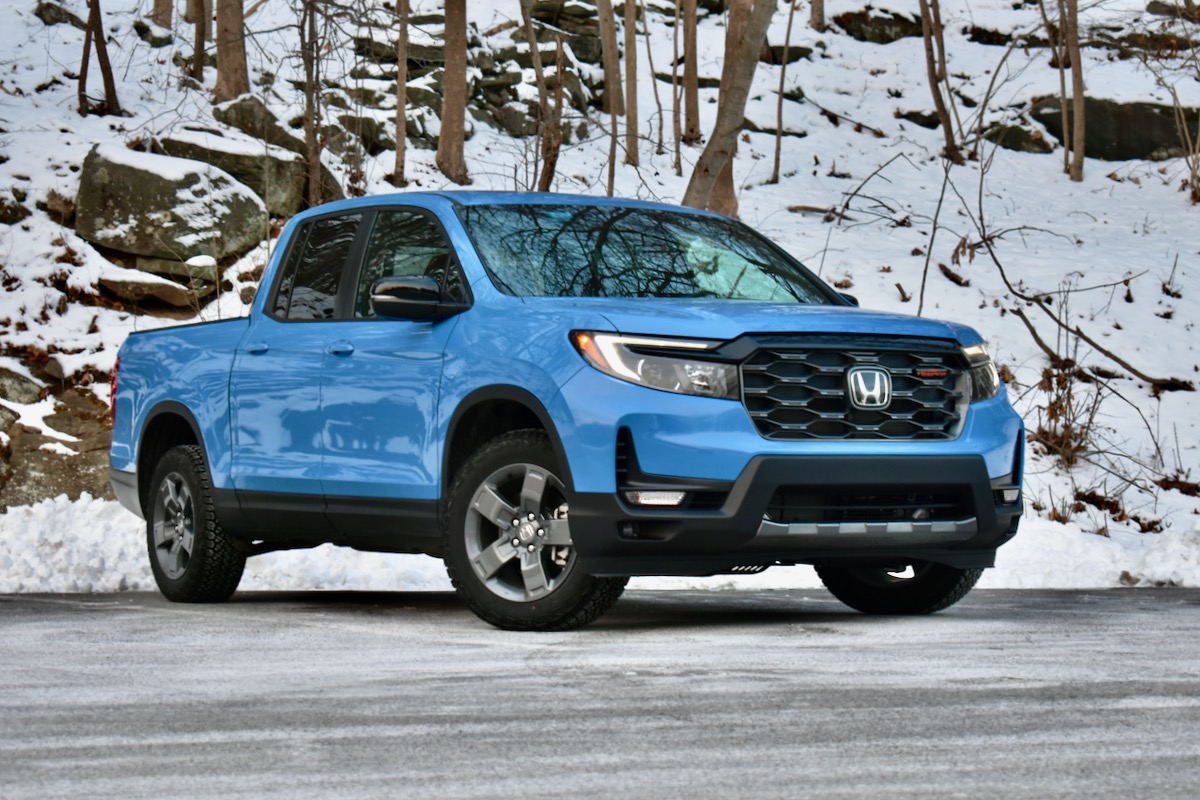
With the 2025 Ridgeline, Honda takes a different approach to midsize pickup trucks.
Honda isn’t known for pickup trucks, but that means it approaches them without any preconceived notions. The 2025 Honda Ridgeline takes a different approach than rivals like the Chevrolet Colorado, Ford Ranger, and Toyota Tacoma with crossover-like unibody construction and clever storage solutions. Having received a few updates for the 2024 model year, the 2025 Ridgeline carries over unchanged.
Verdict: It doesn’t offer the towing capacity or off-road capability of more traditional trucks, but the Ridgeline is much easier to live with.

The Ridgeline remains unique among pickups. Instead of the body-on-frame construction used by rivals like the Chevrolet Colorado, Ford Ranger, Nissan Frontier, and Toyota Tacoma, the Ridgeline is based on a unibody platform similar to most cars and crossover SUVs. The smaller Ford Maverick and Hyundai Santa Cruz are unibody vehicles as well, but the Ridgeline is the only midsize truck built this way.
Exterior styling doesn’t try to hide the fact that the Ridgeline is not like other trucks. Its snub nose hints at a platform designed for a transverse engine and front-wheel drive (FWD) like other Honda products, although all Ridgeline models have all-wheel drive (AWD). The current-generation Ridgeline also contrasts other midsize pickups with more curvaceous styling similar to the older versions of the Honda Pilot and Passport crossovers to which it’s closely related (along with the Odyssey minivan).
That styling also makes the Ridgeline look a bit dated, even within Honda’s current lineup. While Honda added a blockier grille for the 2021 model year and stamped “Ridgeline” lettering on the tailgate for 2024, updates haven’t kept pace with the more rugged makeovers the Pilot and Passport have received over the intervening years. But the Ridgeline still has clean lines that contrast the angry snarl of creases that make up most other current midsize pickups.
In Canada, Honda offers the 2025 Ridgeline in Sport, TrailSport, and range-topping Black Edition trim levels. Our test vehicle was a TrailSport, an off-road-focused trim introduced for the 2024 model year that includes all-terrain tires, unique suspension tuning, and a front skid plate. The Diffused Sky Blue Pearl paint, pewter grey alloy wheels, and orange trim are also unique to the TrailSport model.
The splashes of orange didn’t do much to liven up the interior of our test vehicle. Everything else was black, and mostly plastic, but with excellent fit and finish, an air of durability, and a decent amount of standard features like tri-zone automatic climate control. This is not a cab we’d be afraid of getting messy, something that can’t be said of certain competitors. Other midsize truck cabs may look nicer, but the Ridgeline’s looks like it was actually designed for work and play. It’s a true truck interior, in other words.

The Ridgeline continues in a single powertrain spec for 2025. A 3.5-litre V6 generating 280 horsepower and 262 pound-feet of torque sits under the hood. It’s coupled to a nine-speed automatic transmission with the aforementioned standard AWD.
The V6 and nine-speed gearbox remain an excellent combination. The V6 was smooth, responsive, and sounded great, while the transmission made the most of its nine forward ratios by kicking down quickly when extra revs were needed. The transmission also seemed a bit quicker running through the gears from a standing start than we remember. The engine start-stop system’s slowness remained though, so we found ourselves releasing pressure from the brake pedal a bit early to wake the engine up.
Unibody construction also continues to pay dividends in ride quality, handling, and overall refinement. It makes the Ridgeline feel more solid than traditional body-on-frame trucks and helps dampen road noise and vibration. The Ridgeline’s fully independent suspension and torque-vectoring AWD system also gives this truck impressively precise handling despite its size and fairly slow steering. Our Ridgeline TrailSport test vehicle’s all-terrain tires didn’t erode ride or handling, either.
Even in TrailSport guise, though, the Ridgeline offers limited off-road capability compared to rivals. Its car-like construction and lack of a mechanical four-wheel drive (4WD) system are hindrances, and the TrailSport is less extreme than the likes of the Toyota Tacoma Trailhunter or Ford Ranger Raptor. Unless you spend a lot of time on the trails, though, the Ridgeline should be more than adequate. And it’s still much nicer to drive where trucks spend most of their time: pavement.
A 2,268-kilogram (5,000-pound) maximum towing capacity and 718-kilogram (1,583-pound) maximum payload capacity aren’t class-leading. The Ridgeline comes close to its more traditional rivals in payload, but most other midsize pickups are available in at least one configuration that can tow up to 3,175 kilograms (7,000 pounds).

The Ridgeline is available in only one configuration: a four-door crew cab with a 5-foot, 4-inch bed. A crew cab with a short bed is by far the most popular configuration for pickups today, to the extent that Ford and General Motors dropped other cab styles and bed lengths with recent redesigns of their midsize trucks.
Honda also put a lot of thought into the design of the Ridgeline’s cargo box. Access is via a dual-action tailgate that can open to the side like the rear door of van, or down like a conventional tailgate. At 127 centimetres wide between the wheel wells, the bed can accommodate the standard 4x8 sheet of plywood laid flat. The box is also made from reinforced sheet molding compound, which makes a bedliner unnecessary, Honda claims. A power-sliding rear window is also standard in Canada.
Underneath the cargo floor is a 207-litre lockable in-bed trunk that provides precious covered cargo space. A drain plug means it can double as a cooler as well, while four built-in “exciters” that vibrate the bed can turn into a giant speaker to complete the tailgating experience. Honda also packaged the spare tire in a slot beneath the cargo box so you don’t have to climb under the truck to reach it.
Inside the cab, headroom and legroom are close to other midsize pickups. Front-seat occupants benefit from a high-and-wide centre console that keeps elbows from bumping and is the perfect height for easily grabbing drinks out of the cupholders. Rear-seat passengers fare less well as, despite a reasonable amount of space, the seats themselves could be more comfortable. That’s perhaps due to the upright angles needed to accommodate under-seat storage. On the top two trims, the outboard rear seats are heated.

All Ridgeline models come standard with a 9-inch touchscreen (with navigation on the Black Edition), Bluetooth, and wireless Apple CarPlay and Android Auto connectivity. SiriusXM satellite radio is also standard on all but the base Ridgeline Sport. Satellite-beamed tunes and podcasts play through a seven-speaker audio system in most models, but the Ridgeline Black Edition gets an eight-speaker system.
Wireless phone charging is standard as well, and the charging pad is ideally placed so that it doesn’t interfere with the rest of the centre console. But, in a testament to the Ridgeline’s age, the only data-capable USB port is USB-A, not USB-C (it’s a good thing Apple CarPlay and Android Auto are both wireless). A charging-only front USB-C is standard, while a pair of rear USB-C ports are included on the top Black Edition model.
The USB ports aren’t the only indication of the Ridgeline’s age relative to other midsize pickup trucks. The touchscreen is smaller than those of some rivals like the Chevy Colorado, GMC Canyon, and Toyota Tacoma, and the infotainment system’s default graphics bring to mind accounting software. None of this matters, though, as the low-tech interface is more functional than the screen-heavy interfaces of some of the Honda’s more recently redesigned rivals.
Like the rest of the interior, the Ridgeline’s user interface is no-nonsense. Honda was judicious in what functions were delegated to the touchscreen, and which ones were left to analog controls. The physical “Home” and “Back” buttons are much easier to use than on-screen widgets, and they nicely blend into the screen’s housing. The Ridgeline also features a volume knob and physical buttons and switches for its heated seats, heated steering wheel, and climate controls. Unlike a touchscreen, these can be easily used while wearing gloves—an important feature in a vehicle designed for outdoor work and play.

The 2025 Honda Ridgeline remains the only midsize pickup truck with a five-star overall safety rating from the National Highway Traffic Safety Administration (NHTSA). It also earned five stars in frontal and side crash tests from the federal safety agency, and four stars in rollover testing.
The Insurance Institute for Highway Safety (IIHS) hadn’t published full results under its updated crash-test regimen at press time. The Ridgeline did earn a top “Good” score in the updated side crash test, along with a “Good” score in the original version of the IIHS’s moderate front overlap test and an “Acceptable” score in the small overlap front test. Headlights received a “Marginal” rating.
Standard safety features include: forward collision warning, automatic emergency braking, lane-departure warning, lane-keep assist, adaptive cruise control, blind-spot monitoring, rear cross-traffic alert, and Road Departure Mitigation. These are typical features one would expect to find on any new vehicle.
The driver aids, branded collectively as Honda Sensing, performed mostly unobtrusively. We appreciated the large signal lights for the blind spot monitoring system mounted on the forward roof pillars, in particular. But the adaptive cruise control system was slow to accelerate when the road ahead was clear, leaving us feeling like sitting ducks in highway traffic. And the lack of a 360-degree camera system seems like a missed opportunity.

Most Ridgeline models return a Natural Resources Canada rating of 11.5 litres per 100 kilometres combined (12.8 city, 9.9 highway). TrailSport models are slightly less efficient at 11.6 L/100 km combined (12.8 city, 10.2 highway). Fuel economy is not bad in comparison to some of the Honda’s smaller-engine rivals. The turbo-four Ford Ranger and turbo-four hybrid Toyota Tacoma get similar fuel economy ratings. The Honda’s V6 is only disadvantaged in city fuel economy, and only by 0.1 to 0.2 litres per 100 kilometres.
When it comes to warranty coverage, Honda’s three-year, 60,000-kilometre, limited warranty and five-year, 100,000-kilometre, powertrain warranty align closely with what other brands offer. Pricing in Canada for the 2025 Honda Ridgeline starts at $54,626 for the base Sport model, including the mandatory destination charge and other fees. The Ridgeline TrailSport costs $58,126, while the top Black Edition has a price of $60,626. Standard AWD and a V6 engine make the Ridgeline a decent value compared to other midsize trucks, some of which still require upgrading to get four driven wheels or the choicest powertrain.
Despite the age of the current generation and its unorthodox engineering, the Ridgeline is a good, basic truck. Hardcore off-road enthusiasts, overlanders, or those with extensive towing needs should look elsewhere; the Ridgeline is not a hashtag lifestyle vehicle. But its overall refinement, clever design features, and no-nonsense interior make it an excellent truck for real life.
Note: Images show a US model.

User reviews for 2025 Honda Ridgeline
Write a review2025 Honda Ridgeline Pricing
Trims & specs
Air Conditioning
Automatic climate control front air conditioning · Dual front air conditioning zones · Automatic climate control rear air conditioning · Single rear air conditioning zones
Airbags
Dual front airbags · Passenger airbag deactivation: occupant sensing deactivation · Front side airbags · Rear side curtain airbags
Audio System
Antenna Type: mast · Voice recognition audio system · Bluetooth auxiliary audio input · IHeartRadio internet radio · AM/FM radio · 1 subwoofer · Total Number of Speakers: 6 · Watts: 215
Brakes
ABS: 4-wheel · Braking assist: hill start assist · Front brake diameter: 12.6 · Front brakes: ventilated disc · Rear brake diameter: 13.0 · Rear brakes: disc
Comfort Features
Armrests: rear center with cupholders · Center console trim: leatherette · Dash Trim: Leatherette · Dash trim: simulated alloy · Door trim: leatherette · Floor Mat Material: carpet · Floor Material: carpet · Floor Mats: front · Steering wheel trim: urethane
Convenience Features
Assist handle: rear · Autonomous lane guidance: lane centering · Center console: front console with armrest and storage · Cruise control: adaptive · Cupholders: front · Multi-function remote: keyless entry with panic alarm · One-touch windows: 2 · Power outlet(s): 12V front · Power steering: electric · Power windows: lockout button · Reading lights: rear · Rear power outlet: 12V · Rear view camera: multi-view · Steering wheel: tilt and telescopic · Steering wheel mounted controls: voice recognition controls · Storage: front seatback · Vanity mirrors: dual
Driver Seat
Manual adjustments: 6
Drivetrain
4WD Type: on demand · Axle ratio: 4.33
Engine
Alternator: 150 amps · Battery: AGM
Exterior Features
Door handle color: body-color · Exhaust: dual exhaust tips · Exhaust tip color: chrome · Fender lip moldings: black · Front bumper color: black · Grille color: black · Mirror color: black · Rear bumper color: black · Tailgate: dual-action · Window trim: black
Headrests
Front headrests: adjustable · Number of front headrests: 2 · Number of rear headrests: 3
In Car Entertainment
Connected in-car apps: Google POIs · Infotainment: HondaLink · Infotainment screen size: 9 in. · Smartphone integration: wireless Android Auto
Instrumentation
Fuel economy display: range · Instrument cluster screen size: 7 in. · Warnings and reminders: low battery
Lights
Exterior entry lights: security approach lamps · Front fog lights: LED · Headlights: automatic high beam dimmer · Tail and brake lights: LED
Mirrors
Exterior mirrors: power · Inside rearview mirror: manual day/night
Passenger Seat
Manual Adjustments: 4
Rear Seats
Type: 60-40 split bench
Safety
Automatic emergency braking: front · Child seat anchors: LATCH system · Cross Traffic Alert: rear · Crumple zones: front · Pre-Collision Warning System: vibrating steering wheel · Pre-collision warning system: pedestrian detection · Rearview monitor: in dash
Seatbelts
Emergency locking retractors: front · Front seatbelts: 3-point · Seatbelt force limiters: front · Seatbelt pretensioners: front · Seatbelt warning sensor: driver and passenger · Second row seatbelts: 3-point
Seats
Driver seat manual adjustments: reclining · Front seat type: bucket · Passenger seat manual adjustments: reclining · Rear headrests: adjustable · Rear seat folding: folds up · Upholstery: cloth
Security
Power door locks: anti-lockout
Spare Tire
Mount Location: inside · Size: temporary
Spare Wheel
Rim Type: steel
Steering
Steering ratio: 15.9 · Turns lock-to-lock: 3.0
Suspension
Front Arm Type: lower control arms · Front Shock Type: gas shock absorbers · Front Spring Type: coil springs · Front Stabilizer Bar: diameter 25 mm · Front Suspension Classification: independent · Front Suspension Type: MacPherson struts · Rear Shock Type: gas shock absorbers · Rear Spring Type: coil springs · Rear Suspension Classification: independent · Rear Suspension Type: multi-link · Rear stabilizer bar: diameter 27 mm
Telematics
Driver assistance app: roadside assistance · Electronic messaging assistance: with read function · Phone: voice activated · Phone wireless data link: Bluetooth · Smart device app compatibility: Amazon Alexa · Smart device app function: maintenance scheduling
Tires
Type: all season
Tires and Rims
Wheels: painted aluminum
Towing and Hauling
Trailer hitch: Class III · Trailer wiring: 7-pin
Windows
Front wipers: speed sensitive · Power windows: with safety reverse
Air Conditioning
Automatic climate control front air conditioning · Dual front air conditioning zones · Automatic climate control rear air conditioning · Single rear air conditioning zones
Airbags
Dual front airbags · Passenger airbag deactivation: occupant sensing deactivation · Front side airbags · Front side curtain airbags
Audio System
Antenna Type: mast · Voice recognition audio system · Bluetooth auxiliary audio input · IHeartRadio internet radio · AM/FM radio · 1 subwoofer · Total Number of Speakers: 6 · Watts: 215
Brakes
ABS: 4-wheel · Braking assist: hill start assist · Front brake diameter: 12.6 · Front brakes: ventilated disc · Rear brake diameter: 13.0 · Rear brakes: disc
Comfort Features
Armrests: rear center with cupholders · Center console trim: leatherette · Dash Trim: Leatherette · Dash trim: simulated alloy · Door trim: leatherette · Floor Mat Material: carpet · Floor Material: carpet · Floor Mats: front · Steering wheel trim: urethane
Convenience Features
Assist handle: rear · Autonomous lane guidance: lane centering · Center console: front console with armrest and storage · Cruise control: adaptive · Cupholders: rear · Multi-function remote: keyless entry with panic alarm · One-touch windows: 2 · Power outlet(s): 12V front · Power steering: electric · Power windows: lockout button · Reading lights: rear · Rear power outlet: 12V · Rear view camera: multi-view · Steering wheel: tilt and telescopic · Steering wheel mounted controls: voice recognition controls · Storage: front seatback · Universal garage door opener: Homelink · Vanity mirrors: dual
Driver Seat
Manual adjustments: 6
Drivetrain
4WD Type: on demand · Axle ratio: 4.33
Engine
Alternator: 150 amps · Battery: AGM
Exterior Features
Door handle color: body-color · Exhaust: dual exhaust tips · Exhaust tip color: chrome · Fender lip moldings: black · Front bumper color: black · Grille color: black · Mirror color: black · Rear bumper color: black · Tailgate: dual-action · Window trim: black
Headrests
Front headrests: adjustable · Number of front headrests: 2 · Number of rear headrests: 3
In Car Entertainment
Connected in-car apps: Google search · Infotainment: HondaLink · Infotainment screen size: 9 in. · Smartphone integration: wireless Apple CarPlay
Instrumentation
Fuel economy display: MPG · Instrument cluster screen size: 7 in. · Warnings and reminders: low oil pressure
Lights
Exterior entry lights: security approach lamps · Front fog lights: LED · Headlights: LED · Tail and brake lights: LED
Mirrors
Exterior mirrors: power · Inside rearview mirror: manual day/night
Passenger Seat
Manual Adjustments: 4
Rear Seats
Type: 60-40 split bench
Safety
Automatic emergency braking: front · Child seat anchors: LATCH system · Cross Traffic Alert: rear · Crumple zones: front · Pre-Collision Warning System: vibrating steering wheel · Pre-collision warning system: pedestrian detection · Rearview monitor: in dash
Seatbelts
Emergency locking retractors: front and rear · Front seatbelts: 3-point · Seatbelt force limiters: front · Seatbelt pretensioners: front · Seatbelt warning sensor: driver and passenger · Second row seatbelts: 3-point
Seats
Driver seat manual adjustments: reclining · Front seat type: bucket · Passenger seat manual adjustments: reclining · Rear headrests: adjustable · Rear seat folding: folds up · Upholstery: cloth
Security
Power door locks: anti-lockout
Spare Tire
Mount Location: inside · Size: temporary
Spare Wheel
Rim Type: steel
Steering
Steering ratio: 15.9 · Turns lock-to-lock: 3.0
Suspension
Front Arm Type: lower control arms · Front Shock Type: gas shock absorbers · Front Spring Type: coil springs · Front Stabilizer Bar: diameter 25 mm · Front Suspension Classification: independent · Front Suspension Type: MacPherson struts · Rear Shock Type: gas shock absorbers · Rear Spring Type: coil springs · Rear Suspension Classification: independent · Rear Suspension Type: multi-link · Rear stabilizer bar: diameter 27 mm
Telematics
Driver assistance app: roadside assistance · Electronic messaging assistance: with read function · Phone: voice activated · Phone wireless data link: Bluetooth · Smart device app compatibility: Amazon Alexa · Smart device app function: maintenance scheduling
Tires
Type: all terrain
Tires and Rims
Wheels: painted aluminum
Towing and Hauling
Trailer hitch: Class III · Trailer wiring: 7-pin
Windows
Front wipers: variable intermittent · Power windows: with safety reverse
Air Conditioning
Automatic climate control front air conditioning · Dual front air conditioning zones · Automatic climate control rear air conditioning · Single rear air conditioning zones
Airbags
Dual front airbags · Passenger airbag deactivation: occupant sensing deactivation · Front side airbags · Front side curtain airbags
Audio System
Antenna Type: mast · Voice recognition audio system · Bluetooth auxiliary audio input · IHeartRadio internet radio · Touch screen display radio · Satellite Radio: SiriusXM · 1 subwoofer · Total Number of Speakers: 6 · Watts: 215
Brakes
ABS: 4-wheel · Braking assist: hill start assist · Front brake diameter: 12.6 · Front brakes: ventilated disc · Rear brake diameter: 13.0 · Rear brakes: disc
Comfort Features
Armrests: rear center with cupholders · Center console trim: leather · Dash trim: leather · Door trim: simulated alloy · Floor Mat Material: carpet · Floor Material: carpet · Floor Mats: front · Steering wheel trim: leather
Convenience Features
Assist handle: front · Autonomous lane guidance: lane centering · Center console: front console with armrest and storage · Cruise control: adaptive · Cupholders: front · Dimming rearview mirror: auto-dimming · Easy entry: power driver seat · Memorized settings: side mirrors · Multi-function remote: keyless entry with panic alarm · One-touch windows: 2 · Power outlet(s): 12V front · Power steering: electric · Power windows: lockout button · Reading lights: rear · Rear power outlet: 12V · Rear view camera: multi-view · Steering wheel: tilt and telescopic · Steering wheel mounted controls: audio · Storage: door pockets · Universal garage door opener: Homelink · Vanity mirrors: dual illuminating
Driver Seat
Adjustable lumbar support: power · Power adjustments: 10
Drivetrain
4WD Type: on demand · Axle ratio: 4.33
Engine
Alternator: 150 amps · Battery: AGM
Exterior Features
Door handle color: body-color · Exhaust: dual exhaust tips · Exhaust tip color: chrome · Fender lip moldings: black · Front bumper color: black · Grille color: black · Mirror color: body-color · Rear bumper color: black · Tailgate: dual-action · Window trim: chrome
Headrests
Front headrests: adjustable · Number of front headrests: 2 · Number of rear headrests: 3
In Car Entertainment
Connected in-car apps: Google search · Infotainment: HondaLink · Infotainment screen size: 9 in. · Smartphone integration: wireless Apple CarPlay
Instrumentation
Fuel economy display: range · Instrument cluster screen size: 7 in. · Warnings and reminders: low oil pressure
Lights
Exterior entry lights: security approach lamps · Front fog lights: LED · Headlights: automatic high beam dimmer · Tail and brake lights: LED
Mirrors
Exterior mirrors: manual folding
Passenger Seat
Power adjustments: 4
Rear Seats
Type: 60-40 split bench
Roof
Moonroof: anti-trapping feature
Safety
Automatic emergency braking: front · Child seat anchors: LATCH system · Cross Traffic Alert: rear · Crumple zones: rear · Pre-Collision Warning System: visual warning · Pre-collision warning system: pedestrian detection · Rearview monitor: in dash
Seatbelts
Emergency locking retractors: front · Front seatbelts: 3-point · Seatbelt force limiters: front · Seatbelt pretensioners: front · Seatbelt warning sensor: driver and passenger · Second row seatbelts: 3-point
Seats
Driver seat power adjustments: reclining · Front seat type: bucket · Passenger seat power adjustments: reclining · Rear headrests: adjustable · Rear seat folding: folds up · Upholstery: leather-trimmed
Security
Power door locks: anti-lockout
Spare Tire
Mount Location: inside · Size: temporary
Spare Wheel
Rim Type: steel
Steering
Steering ratio: 15.9 · Turns lock-to-lock: 3.0
Suspension
Front Arm Type: lower control arms · Front Shock Type: gas shock absorbers · Front Spring Type: coil springs · Front Stabilizer Bar: diameter 25 mm · Front Suspension Classification: independent · Front Suspension Type: MacPherson struts · Rear Shock Type: gas shock absorbers · Rear Spring Type: coil springs · Rear Suspension Classification: independent · Rear Suspension Type: multi-link · Rear stabilizer bar: diameter 27 mm
Telematics
Driver assistance app: roadside assistance · Electronic messaging assistance: with read function · Phone: voice activated · Phone wireless data link: Bluetooth · Smart device app compatibility: Amazon Alexa · Smart device app function: maintenance scheduling
Tires
Type: all season
Tires and Rims
Wheels: painted aluminum
Towing and Hauling
Trailer hitch: Class III · Trailer wiring: 7-pin
Truck Features
Pickup truck sliding rear window: power horizontal
Windows
Front wipers: speed sensitive · Laminated glass: acoustic · Power windows: with safety reverse
Air Conditioning
Automatic climate control front air conditioning · Dual front air conditioning zones · Automatic climate control rear air conditioning · Single rear air conditioning zones
Airbags
Dual front airbags · Passenger airbag deactivation: occupant sensing deactivation · Front side airbags · Front side curtain airbags
Audio System
Antenna Type: diversity · Voice recognition audio system · USB auxiliary audio input · IHeartRadio internet radio · Touch screen display radio · Satellite Radio: SiriusXM · 1 subwoofer · Total Number of Speakers: 6 · Watts: 215
Brakes
ABS: 4-wheel · Braking assist: hill start assist · Front brake diameter: 12.6 · Front brakes: ventilated disc · Rear brake diameter: 13.0 · Rear brakes: disc
Comfort Features
Armrests: rear center with cupholders · Center console trim: simulated alloy · Dash trim: simulated alloy · Door trim: leather · Floor Mat Material: carpet · Floor Material: carpet · Floor Mats: front · Steering wheel trim: leather
Convenience Features
Assist handle: rear · Autonomous lane guidance: lane centering · Center console: front console with armrest and storage · Cruise control: adaptive · Cupholders: rear · Dimming rearview mirror: auto-dimming · Easy entry: power driver seat · Memorized settings: side mirrors · Multi-function remote: keyless entry with panic alarm · One-touch windows: 2 · Power outlet(s): 12V front · Power steering: electric · Power windows: lockout button · Reading lights: front · Rear power outlet: 12V · Rear view camera: multi-view · Steering wheel: tilt and telescopic · Steering wheel mounted controls: phone · Storage: front seatback · Universal garage door opener: Homelink · Vanity mirrors: dual illuminating
Driver Seat
Adjustable lumbar support: power · Power adjustments: 10
Drivetrain
4WD Type: on demand · Axle ratio: 4.33
Engine
Alternator: 150 amps · Battery: AGM
Exterior Features
Door handle color: body-color · Exhaust: dual exhaust tips · Exhaust tip color: chrome · Fender lip moldings: black · Front bumper color: black · Grille color: black · Mirror color: body-color · Rear bumper color: black · Tailgate: dual-action · Window trim: chrome
Headrests
Front headrests: adjustable · Number of front headrests: 2 · Number of rear headrests: 3
In Car Entertainment
Connected in-car apps: Google search · Infotainment: HondaLink · Infotainment screen size: 9 in. · Smartphone integration: wireless Android Auto
Instrumentation
Fuel economy display: range · Instrument cluster screen size: 7 in. · Warnings and reminders: low oil pressure
Lights
Exterior entry lights: security approach lamps · Front fog lights: LED · Headlights: automatic high beam dimmer · Tail and brake lights: LED
Mirrors
Exterior mirrors: manual folding
Passenger Seat
Power adjustments: 4
Rear Seats
Type: 60-40 split bench
Roof
Moonroof: sliding sunshade
Safety
Automatic emergency braking: front · Child seat anchors: LATCH system · Cross Traffic Alert: rear · Crumple zones: front · Pre-Collision Warning System: vibrating steering wheel · Pre-collision warning system: pedestrian detection · Rearview monitor: in dash
Seatbelts
Emergency locking retractors: front and rear · Front seatbelts: 3-point · Seatbelt force limiters: front · Seatbelt pretensioners: front · Seatbelt warning sensor: driver and passenger · Second row seatbelts: 3-point
Seats
Driver seat power adjustments: reclining · Front seat type: bucket · Passenger seat power adjustments: reclining · Rear headrests: adjustable · Rear seat folding: folds up · Upholstery: leather-trimmed
Security
Power door locks: anti-lockout
Spare Tire
Mount Location: inside · Size: temporary
Spare Wheel
Rim Type: steel
Steering
Steering ratio: 15.9 · Turns lock-to-lock: 3.0
Suspension
Front Arm Type: lower control arms · Front Shock Type: gas shock absorbers · Front Spring Type: coil springs · Front Stabilizer Bar: diameter 25 mm · Front Suspension Classification: independent · Front Suspension Type: MacPherson struts · Rear Shock Type: gas shock absorbers · Rear Spring Type: coil springs · Rear Suspension Classification: independent · Rear Suspension Type: multi-link · Rear stabilizer bar: diameter 27 mm
Telematics
Driver assistance app: roadside assistance · Electronic messaging assistance: with read function · Phone: voice activated · Phone wireless data link: Bluetooth · Smart device app compatibility: Amazon Alexa · Smart device app function: maintenance scheduling
Tires
Type: all terrain
Tires and Rims
Wheels: painted aluminum
Towing and Hauling
Trailer hitch: Class III · Trailer wiring: 7-pin
Truck Features
Pickup truck sliding rear window: power horizontal
Windows
Front wipers: variable intermittent · Laminated glass: acoustic · Power windows: with safety reverse
Air Conditioning
Automatic climate control front air conditioning · Dual front air conditioning zones · Automatic climate control rear air conditioning · Single rear air conditioning zones
Airbags
Dual front airbags · Passenger airbag deactivation: occupant sensing deactivation · Front side airbags · Front side curtain airbags
Audio System
Antenna Type: mast · Voice recognition audio system · Bluetooth auxiliary audio input · IHeartRadio internet radio · Touch screen display radio · Satellite Radio: SiriusXM · 1 subwoofer · Total Number of Speakers: 6 · Watts: 215
Brakes
ABS: 4-wheel · Braking assist: hill start assist · Front brake diameter: 12.6 · Front brakes: ventilated disc · Rear brake diameter: 13.0 · Rear brakes: disc
Comfort Features
Armrests: rear center with cupholders · Center console trim: simulated alloy · Dash trim: leather · Door trim: leather · Floor Mat Material: vinyl/rubber · Floor Material: carpet · Floor Mats: front · Steering wheel trim: leather
Convenience Features
Ambient lighting: color · Assist handle: front · Autonomous lane guidance: lane centering · Center console: front console with armrest and storage · Cruise control: adaptive · Cupholders: rear · Dimming rearview mirror: auto-dimming · Easy entry: power driver seat · Memorized settings: driver seat · Multi-function remote: proximity entry system · One-touch windows: 2 · Power outlet(s): USB-C front · Power steering: electric · Power windows: lockout button · Reading lights: front · Rear power outlet: 12V · Rear view camera: multi-view · Steering wheel: tilt and telescopic · Steering wheel mounted controls: phone · Storage: sunglasses holder · Universal garage door opener: Homelink · Vanity mirrors: dual illuminating
Driver Seat
Adjustable lumbar support: power · Power adjustments: 10
Drivetrain
4WD Type: on demand · Axle ratio: 4.33
Engine
Alternator: 150 amps · Battery: AGM
Exterior Features
Door handle color: body-color · Exhaust: dual exhaust tips · Exhaust tip color: chrome · Fender lip moldings: black · Front bumper color: black · Grille color: chrome accents · Mirror color: black · Rear bumper color: black · Tailgate: dual-action · Window trim: black
Headrests
Front headrests: adjustable · Number of front headrests: 2 · Number of rear headrests: 3
In Car Entertainment
Connected in-car apps: Google POIs · Infotainment: HondaLink · Infotainment screen size: 9 in. · Smartphone integration: wireless Apple CarPlay
Instrumentation
Fuel economy display: range · Instrument cluster screen size: 7 in. · Warnings and reminders: low oil pressure
Lights
Daytime running lights: LED · Exterior entry lights: security approach lamps · Front fog lights: LED · Headlights: Auto on/off · Tail and brake lights: LED
Mirrors
Exterior mirrors: reverse gear tilt
Passenger Seat
Power adjustments: 4
Rear Seats
Type: 60-40 split bench
Roof
Moonroof: tilt/slide
Safety
Automatic emergency braking: front pedestrian · Child seat anchors: LATCH system · Cross Traffic Alert: rear · Crumple zones: rear · Parking sensors: front · Pre-Collision Warning System: vibrating steering wheel · Pre-collision warning system: pedestrian detection · Rearview monitor: in dash
Seatbelts
Emergency locking retractors: front and rear · Front seatbelts: 3-point · Seatbelt force limiters: front · Seatbelt pretensioners: front · Seatbelt warning sensor: driver and passenger · Second row seatbelts: 3-point
Seats
Driver seat power adjustments: height · Front seat type: bucket · Passenger seat power adjustments: reclining · Rear headrests: adjustable · Rear seat folding: folds up · Upholstery: leather-trimmed
Security
Power door locks: anti-lockout
Spare Tire
Mount Location: inside · Size: temporary
Spare Wheel
Rim Type: steel
Steering
Steering ratio: 15.9 · Turns lock-to-lock: 3.0
Suspension
Front Arm Type: lower control arms · Front Shock Type: gas shock absorbers · Front Spring Type: coil springs · Front Stabilizer Bar: diameter 25 mm · Front Suspension Classification: independent · Front Suspension Type: MacPherson struts · Rear Shock Type: coil over shock · Rear Spring Type: coil springs · Rear Suspension Classification: independent · Rear Suspension Type: multi-link · Rear stabilizer bar: diameter 27 mm
Telematics
Driver assistance app: roadside assistance · Electronic messaging assistance: with read function · Navigation system: with voice recognition · Phone: voice activated · Phone wireless data link: Bluetooth · Smart device app compatibility: HondaLink · Smart device app function: maintenance scheduling
Tires
Type: all terrain
Tires and Rims
Wheels: painted aluminum
Towing and Hauling
Trailer hitch: Class III · Trailer wiring: 7-pin
Truck Features
Pickup truck sliding rear window: power horizontal
Windows
Front wipers: variable intermittent · Laminated glass: acoustic · Power windows: with safety reverse
Air Conditioning
Automatic climate control front air conditioning · Dual front air conditioning zones · Automatic climate control rear air conditioning · Single rear air conditioning zones
Airbags
Dual front airbags · Passenger airbag deactivation: occupant sensing deactivation · Front side airbags · Rear side curtain airbags
Audio System
Antenna Type: diversity · Voice recognition audio system · USB auxiliary audio input · IHeartRadio internet radio · Touch screen display radio · Rear audio: pickup bed · Satellite Radio: SiriusXM · 1 subwoofer · Total Number of Speakers: 7 · Watts: 540
Brakes
ABS: 4-wheel · Braking assist: hill start assist · Front brake diameter: 12.6 · Front brakes: ventilated disc · Rear brake diameter: 13.0 · Rear brakes: disc
Comfort Features
Armrests: rear center with cupholders · Center console trim: leather · Dash trim: leather · Door trim: leather · Floor Mat Material: carpet · Floor Material: carpet · Floor Mats: front · Steering wheel trim: leather
Convenience Features
Ambient lighting: color · Assist handle: front · Autonomous lane guidance: lane centering · Cargo area power outlet: 115V · Center console: front console with armrest and storage · Cruise control: adaptive · Cupholders: illuminated · Dimming rearview mirror: auto-dimming · Easy entry: power driver seat · Memorized settings: driver seat · Multi-function remote: keyless entry with panic alarm · One-touch windows: 2 · Power outlet(s): 12V front · Power steering: electric · Power windows: lockout button · Reading lights: rear · Rear power outlet: 12V · Rear view camera: multi-view · Steering wheel: tilt and telescopic · Steering wheel mounted controls: paddle shifter · Storage: sunglasses holder · Universal garage door opener: Homelink · Vanity mirrors: dual illuminating
Driver Seat
Adjustable lumbar support: power · Power adjustments: 10
Drivetrain
4WD Type: on demand · Axle ratio: 4.33
Engine
Alternator: 150 amps · Battery: AGM
Exterior Features
Door handle color: body-color · Exhaust: dual exhaust tips · Exhaust tip color: chrome · Fender lip moldings: black · Front bumper color: black · Grille color: black · Mirror color: black · Pickup bed light: LED · Rear bumper color: black · Tailgate: dual-action · Window trim: black
Headrests
Front headrests: adjustable · Number of front headrests: 2 · Number of rear headrests: 3
In Car Entertainment
Connected in-car apps: Google POIs · Infotainment: HondaLink · Infotainment screen size: 9 in. · Smartphone integration: wireless Apple CarPlay
Instrumentation
Fuel economy display: MPG · Instrument cluster screen size: 7 in. · Warnings and reminders: low oil pressure
Lights
Daytime running lights: LED · Exterior entry lights: security approach lamps · Front fog lights: LED · Headlights: LED · Tail and brake lights: LED
Mirrors
Exterior mirrors: power folding
Passenger Seat
Power adjustments: 4
Rear Seats
Type: 60-40 split bench
Roof
Moonroof: anti-trapping feature
Safety
Automatic emergency braking: front · Child seat anchors: LATCH system · Cross Traffic Alert: rear · Crumple zones: rear · Parking sensors: rear · Pre-Collision Warning System: audible warning · Pre-collision warning system: pedestrian detection · Rearview monitor: in dash
Seatbelts
Emergency locking retractors: front · Front seatbelts: 3-point · Seatbelt force limiters: front · Seatbelt pretensioners: front · Seatbelt warning sensor: driver and passenger · Second row seatbelts: 3-point
Seats
Driver seat power adjustments: reclining · Front seat type: bucket · Passenger seat power adjustments: reclining · Rear headrests: adjustable · Rear seat folding: folds up · Upholstery: leather-trimmed
Security
Power door locks: anti-lockout
Spare Tire
Mount Location: inside · Size: temporary
Spare Wheel
Rim Type: steel
Steering
Steering ratio: 15.9 · Turns lock-to-lock: 3.0
Suspension
Front Arm Type: lower control arms · Front Shock Type: gas shock absorbers · Front Spring Type: coil springs · Front Stabilizer Bar: diameter 25 mm · Front Suspension Classification: independent · Front Suspension Type: MacPherson struts · Rear Shock Type: gas shock absorbers · Rear Spring Type: coil springs · Rear Suspension Classification: independent · Rear Suspension Type: multi-link · Rear stabilizer bar: diameter 27 mm
Telematics
Driver assistance app: roadside assistance · Electronic messaging assistance: with read function · Navigation system: hard drive navigation system · Phone: voice activated · Phone wireless data link: Bluetooth · Smart device app compatibility: Amazon Alexa · Smart device app function: send destination to vehicle
Tires
Type: all season
Tires and Rims
Wheels: painted aluminum
Towing and Hauling
Trailer hitch: Class III · Trailer wiring: 7-pin
Truck Features
Pickup truck sliding rear window: power horizontal
Windows
Front wipers: variable intermittent · Laminated glass: acoustic · Power windows: with safety reverse
Air Conditioning
Automatic climate control front air conditioning · Dual front air conditioning zones · Automatic climate control rear air conditioning · Single rear air conditioning zones
Airbags
Dual front airbags · Passenger airbag deactivation: occupant sensing deactivation · Front side airbags · Front side curtain airbags
Audio System
Antenna Type: mast · Voice recognition audio system · USB auxiliary audio input · IHeartRadio internet radio · Touch screen display radio · Satellite Radio: SiriusXM · 1 subwoofer · Total Number of Speakers: 6 · Watts: 215
Brakes
ABS: 4-wheel · Braking assist: hill start assist · Front brake diameter: 12.6 · Front brakes: ventilated disc · Rear brake diameter: 13.0 · Rear brakes: disc
Comfort Features
Armrests: rear center with cupholders · Center console trim: leather · Dash trim: leather · Door trim: leather · Floor Mat Material: vinyl/rubber · Floor Material: carpet · Floor Mats: front · Steering wheel trim: leather
Convenience Features
Ambient lighting: color · Assist handle: front · Autonomous lane guidance: lane centering · Center console: front console with armrest and storage · Cruise control: adaptive · Cupholders: illuminated · Dimming rearview mirror: auto-dimming · Easy entry: power driver seat · Memorized settings: side mirrors · Multi-function remote: proximity entry system · One-touch windows: 2 · Power outlet(s): USB-C front · Power steering: electric · Power windows: lockout button · Reading lights: rear · Rear power outlet: 12V · Rear view camera: multi-view · Steering wheel: tilt and telescopic · Steering wheel mounted controls: multi-function screen controls · Storage: front seatback · Universal garage door opener: Homelink · Vanity mirrors: dual illuminating
Driver Seat
Adjustable lumbar support: power · Power adjustments: 10
Drivetrain
4WD Type: on demand · Axle ratio: 4.33
Engine
Alternator: 150 amps · Battery: AGM
Exterior Features
Door handle color: body-color · Exhaust: dual exhaust tips · Exhaust tip color: chrome · Fender lip moldings: black · Front bumper color: black · Grille color: black · Mirror color: black · Rear bumper color: black · Tailgate: dual-action · Window trim: black
Headrests
Front headrests: adjustable · Number of front headrests: 2 · Number of rear headrests: 3
In Car Entertainment
Connected in-car apps: Google POIs · Infotainment: HondaLink · Infotainment screen size: 9 in. · Smartphone integration: wireless Apple CarPlay
Instrumentation
Fuel economy display: range · Instrument cluster screen size: 7 in. · Warnings and reminders: maintenance reminder
Lights
Daytime running lights: LED · Exterior entry lights: security approach lamps · Front fog lights: LED · Headlights: Auto on/off · Tail and brake lights: LED
Mirrors
Exterior mirrors: integrated turn signals
Passenger Seat
Power adjustments: 4
Rear Seats
Type: 60-40 split bench
Roof
Moonroof: sliding sunshade
Safety
Automatic emergency braking: front · Child seat anchors: LATCH system · Cross Traffic Alert: rear · Crumple zones: front · Parking sensors: front · Pre-Collision Warning System: vibrating steering wheel · Pre-collision warning system: pedestrian detection · Rearview monitor: in dash
Seatbelts
Emergency locking retractors: front · Front seatbelts: 3-point · Seatbelt force limiters: front · Seatbelt pretensioners: front · Seatbelt warning sensor: driver and passenger · Second row seatbelts: 3-point
Seats
Driver seat power adjustments: height · Front seat type: bucket · Passenger seat power adjustments: reclining · Rear headrests: adjustable · Rear seat folding: folds up · Upholstery: contrast stitching
Security
Power door locks: anti-lockout
Spare Tire
Mount Location: inside · Size: temporary
Spare Wheel
Rim Type: steel
Steering
Steering ratio: 15.9 · Turns lock-to-lock: 3.0
Suspension
Front Arm Type: lower control arms · Front Shock Type: gas shock absorbers · Front Spring Type: coil springs · Front Stabilizer Bar: diameter 25 mm · Front Suspension Classification: independent · Front Suspension Type: MacPherson struts · Rear Shock Type: coil over shock · Rear Spring Type: coil springs · Rear Suspension Classification: independent · Rear Suspension Type: multi-link · Rear stabilizer bar: diameter 27 mm
Telematics
Driver assistance app: roadside assistance · Electronic messaging assistance: with read function · Navigation system: with voice recognition · Phone: voice activated · Phone wireless data link: Bluetooth · Smart device app compatibility: HondaLink · Smart device app function: maintenance status
Tires
Type: all terrain
Tires and Rims
Wheels: painted aluminum
Towing and Hauling
Trailer hitch: Class III · Trailer wiring: 7-pin
Truck Features
Pickup truck sliding rear window: power horizontal
Windows
Front wipers: variable intermittent · Laminated glass: acoustic · Power windows: with safety reverse
