2025 Mazda CX-50 Reviews, Pricing & Specs
Write a reviewPros
Stylish design
Fun to drive
Fuel-efficient
Cons
Not much cargo space
Limited rear-seat space
Outdated technology
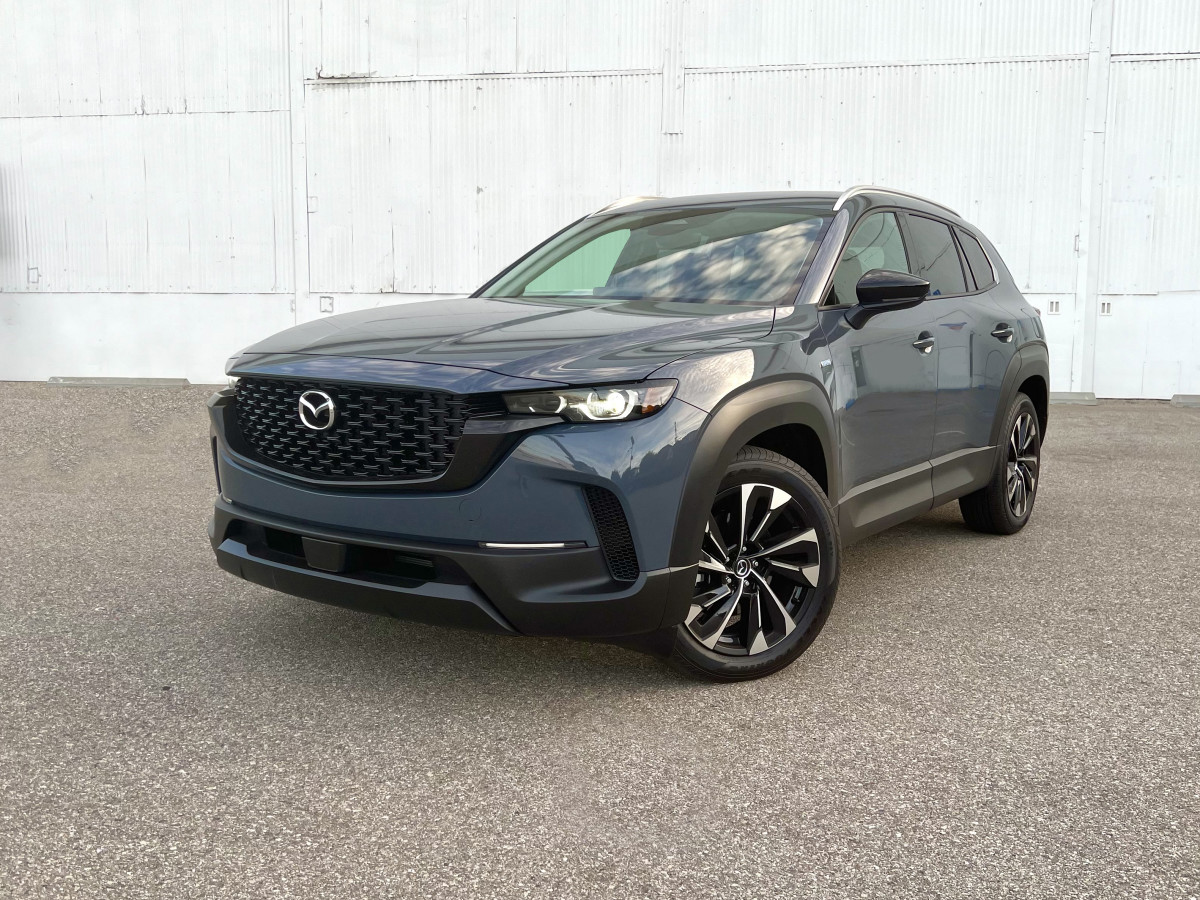
We rate the Mazda CX-50 as one of the best compact SUVs, and for 2025 it gets even better with an efficient hybrid powertrain.
The 2025 Mazda CX-50 is one of two compact SUVs in the automaker's portfolio, sitting below the bigger Mazda CX-90 and Mazda CX-70 and above the CX-30 subcompact crossover in the automaker’s lineup. It joined the existing Mazda CX-5 in 2023 rather than replacing it, which was an odd decision considering their similarities. Nevertheless, just like the Mazda3 sedan and hatchback and the MX-5 sports car, they're the fun yet refined choice in the class. The 2025 Mazda CX-50's new hybrid powertrain adds fuel efficiency to the mix, giving it an edge over its CX-5 sibling.
Verdict: The 2025 Mazda CX-50 Hybrid brings a potent yet efficient powertrain to an already sporty SUV. Combined with attractive styling and a near-luxury interior, it would be hard to beat if it weren't for its limited passenger and cargo spa

The 2025 Mazda CX-50 could be considered one of the more attractive choices in the compact SUV class. It takes a lot of the CX-5's styling elements but enhances them with more distinct fender flares and a wider grille. These give the CX-50 a more athletic and sportier stance while keeping the subtly elegant presence.
The new car’s interior features a traditional layout instead of the high-tech cockpits found in some competitors. The horizontal dashboard and the rest of the cabin are covered in classier materials than rivals, with plenty of soft-touch materials where you're likely to notice and sturdy plastics elsewhere. Distinct stitching adds a fashionable flair, and red leather upholstery (exclusive to the hybrid model) gives the interior some added life.
Running right down the middle of the seats is a decorative stripe for some visual interest, but its placement can look a bit odd to some. It can also be felt through clothing and in an awkward place in the seat of your pants. It was described by a passenger as feeling like thong undergarments, though perhaps not in a bad way. Rather, it just feels a bit weird.
Otherwise, the 2025 Mazda CX-50 finds a place above other compact SUVs and leans more toward the entry-level automotive luxury class, both in terms of design and interior quality.

The new CX-50 Hybrid SUV debuts a 2.5-litre four-cylinder engine that pairs with three electric motors, delivering 219 horsepower, 163 lb-ft of torque, and all-wheel drive (AWD), although it’s not really designed for serious off-road use. While the hybrid version of the CX-50 is new, the powertrain is not. It's the same engine and hybrid system found in the Toyota RAV4 Hybrid, which we consider a smart move since Toyota has much more experience in this area. Among the CX-50 lineup, this hybrid fills the gap between the 187 hp base engine and the 256 hp Turbo models.
Acceleration feels similar to the RAV4 Hybrid, and we expect it will reach 100 km/h somewhere between 7.5 and 8 seconds, the same as the Toyota counterpart. That's marginally slower than the CX-50 Turbo and should easily satisfy most shoppers. Throttle response is relatively quick, aided by the immediate power from the electric motors. Mazda’s new electronically controlled Continuously Variable Transmission (e-CVT) transmits the power and is designed to replicate the feel of a conventional automatic transmission.
The driving experience is where the CX-50 distinguishes itself from the rest of the class, with a sportier suspension tuning that allows for more engaging handling. Body roll is kept in check when cornering, and there's no sign of residual bounces from the driver’s seat. Even if you don't consider driving dynamics a priority, drivers will notice that the CX-50 feels more agile and confidence-inspiring if you need to take evasive maneuvers.
The sportier handling does result in a firmer ride quality, though. You'll feel more bumps in the road than you might in a competitor, but it's in no way harsh or intrusive. The CX-50 still rides smoothly enough to please the majority of passengers, and the cabin remains pleasantly quiet on the highway.

While the CX-50 is one of the more enjoyable SUVs to drive in its class, it comes up short against the competition in practicality and space. There's ample room in the front seats and the rear seats can accommodate average-sized adults, but the Honda CR-V Hybrid and Sportage Hybrid offer more headroom and legroom for taller and larger passengers.
Personal storage is also adequate, with a moderately sized armrest bin, cupholders, and door pockets. But again, rivals offer more and larger places to keep your personal items. There's an even bigger drawback when it comes to cargo. The CX-50 can hold as much as 826 litres behind the rear seats. That's 63 litres less than the non-hybrid CX-50 and significantly less than the class average. The CR-V Hybrid beats them both with 1,028 litres, as does the Kia Sportage at 1,119 litres.
The space itself is more usable than those figures suggest, and it's likely the CX-50 can still handle your day-to-day needs. Helping matters is a standard power liftgate and a large storage bin under the cargo floor. Remote rear seatback releases and hooks for shopping bags also add to the convenience.

On the surface, the CX-50 may seem to be a little behind the times in regard to technology, but in practice, it may be just right for some. The 10.25-inch horizontal infotainment system is mounted atop the dashboard, right in the driver's sightline and to the right of the steering wheel to reduce distraction. Unlike most systems, you control it with a dial that is mounted on the centre console, rather than the typical touchscreen. There is touchscreen functionality, but it only works with Apple CarPlay or Android Auto.
The dial controller is a throwback to the early days of infotainment when BMW, Audi, and Mercedes all had them. Some users prefer this setup because you don't have to pay as close attention as you would if you were trying to tap a small on-screen button. Instead, with each dial click, a different button is highlighted, and you only need to tap the dial to select it.
All CX-50 models come standard with wireless Apple CarPlay and Android Auto, and a wireless charging pad is standard on CX-50 Hybrid models in Canada as well. Base trims come with a basic eight-speaker audio system, and a 12-speaker Bose premium system is standard on the GT trim.

In crash tests conducted by the National Highway Traffic Safety Administration (NHTSA), the 2025 Mazda CX-50 Hybrid earned five-out-of-five stars in all evaluations except for rollover protection, where it received four stars. The Insurance Institute for Highway Safety (IIHS) gives all versions of the 2025 Mazda CX-50 a Top Safety Pick+ rating, its highest honour.
All CX-50 models come with driver assistance features including frontal collision warning with automatic emergency braking, a blind-spot monitor with rear cross-traffic warning, lane-keep assist, and adaptive cruise control. Secondary features include a driver attention monitor and automatic high beams. In our time with the CX-50 Hybrid, all systems functioned as designed with no false alarms. The adaptive cruise control is also notable for its smooth acceleration and stops.

In Canada, the 2025 Mazda CX-50 Hybrid has a starting MSRP of $46,137 (including the $2,195 destination charge and other fees) for the base GS-L trim. The range-topping GT trim rings in at $51,837. These prices are between $2,700 and $3,000 more than corresponding non-Hybrid CX-50s, but Natural Resources Canada estimates the Hybrid will return fuel economy of 6.2 litres per 100 kilometres in combined city and highway driving, compared to the standard engine's 8.9 L/100 km combined and the turbo’s 9.4 L/100 km combined.
According to NRCan’s annual fuel consumption estimates, you'll save roughly $840 in fuel annually by choosing the hybrid over the non-turbo CX-50. That means it should take roughly three and a half years to make back the hybrid’s price premium, making it a smart choice for most shoppers.
Compared to other hybrids in the class, the CX-50 is right up there with the best. The Honda CR-V Hybrid costs just shy of $5,000 more to start and is estimated at 6.4 L/100 km combined. The Kia Sportage Hybrid is rated at 6.2 L/100 km. Not surprisingly, the RAV4 Hybrid is similar to the CX-50 Hybrid, rating from 6.0 to 6.4 L/100 km depending on the model.
What isn't figured into the price is the CX-50's performance. Along with the rest of the Mazda fleet, it's noticeably more fun to drive and engaging than anything in the class. If that's a priority for you, the choice is simple. If you're like most shoppers looking for a compact SUV, space and practicality are more important. If that's the case for you, you'd be better served by the Honda CR-V, the Kia Sportage, or the Hyundai Tucson.
Note: Images show a US model.

User reviews for 2025 Mazda CX-50
Write a review2025 Mazda CX-50 Pricing
Trims & specs
Air Conditioning
Sun sensor climate control front air conditioning · Dual front air conditioning zones
Airbags
Dual front airbags · Dual front knee airbags · Passenger airbag deactivation: occupant sensing deactivation · Front side airbags · Rear side curtain airbags
Audio System
Antenna Type: element · Voice recognition audio system · USB auxiliary audio input · HD radio · Total Number of Speakers: 8
Brakes
ABS: 4-wheel · Braking assist: hill start assist · Electronic parking brake: auto off · Front brake diameter: 12.8 · Front brakes: ventilated disc · Rear brake diameter: 12.8 · Rear brakes: disc
Comfort Features
Armrests: rear center with cupholders · Dash Trim: Leatherette · Door trim: leatherette · Floor Mat Material: carpet · Floor Material: carpet · Floor Mats: front · Shift knob trim: leather · Steering wheel trim: leather
Convenience Features
Adaptive stop and go cruise control: semi-automatic · Assist handle: front · Cargo area power outlet: 12V · Center console: front console with armrest and storage · Cruise control: adaptive · Cupholders: rear · Multi-function remote: proximity entry system · One-touch windows: 4 · Power outlet(s): USB-C front · Power steering: speed-proportional · Power windows: lockout button · Reading lights: front · Steering wheel: tilt and telescopic · Steering wheel mounted controls: multi-function screen controls · Storage: front seatback · Vanity mirrors: dual illuminating
Driver Seat
Manual adjustments: 6
Drivetrain
4WD Type: on demand · Axle ratio: 4.37
Engine
Alternator: 100 amps · Battery: maintenance-free
Exterior Features
Door handle color: body-color · Exhaust: dual exhaust tips · Exhaust tip color: chrome · Fender lip moldings: black · Front bumper color: black · Grille color: black · Mirror color: black · Rear bumper color: black · Rear spoiler: roofline spoiler · Rear spoiler color: body-color · Rear trunk/liftgate: liftgate · Rocker panel color: black · Window trim: black
Headrests
Front headrests: adjustable · Number of front headrests: 2 · Number of rear headrests: 3
In Car Entertainment
Connected in-car apps: Google POIs · Infotainment: Mazda Connect · Infotainment screen size: 10.25 in. · Smartphone integration: wireless Android Auto
Instrumentation
Fuel economy display: MPG · Instrument cluster screen size: 7 in. · Warnings and reminders: coolant temperature warning
Lights
Daytime running lights: LED · Exterior entry lights: security approach lamps · Headlights: manual leveling · Tail and brake lights: LED
Mirrors
Exterior mirrors: integrated turn signals · Inside rearview mirror: manual day/night
Passenger Seat
Manual Adjustments: 4
Rear Seats
Type: 60-40 split bench
Roof
Roof rails: silver
Safety
Automatic emergency braking: front pedestrian · Camera system: rearview · Child seat anchors: LATCH system · Cross Traffic Alert: rear · Crumple zones: front · Evasive steering assist: head-on collision avoidance · Impact absorbing seats: dual front · Impact sensor: alert system · Pre-Collision Warning System: visual warning · Pre-collision warning system: pedestrian detection · Rearview monitor: in dash
Seatbelts
Emergency locking retractors: front · Front seatbelts: 3-point · Seatbelt force limiters: front · Seatbelt pretensioners: front and rear · Seatbelt warning sensor: driver and passenger · Second row seatbelts: 3-point
Seats
Driver seat manual adjustments: height · Front seat type: bucket · Passenger seat manual adjustments: reclining · Rear headrests: adjustable · Rear seat folding: one-touch fold flat · Upholstery: contrast stitching
Security
Power door locks: anti-lockout
Spare Tire
Mount Location: inside · Size: temporary
Spare Wheel
Rim Type: steel
Stability and Traction
Traction control: with trailer stability control
Steering
Steering ratio: 15.1 · Turns lock-to-lock: 2.7
Suspension
Front Arm Type: lower control arms · Front Shock Type: twin-tube gas shock absorbers · Front Spring Type: coil springs · Front Suspension Classification: independent · Front Suspension Type: MacPherson struts · Rear Shock Type: twin-tube gas shock absorbers · Rear Spring Type: coil springs · Rear Suspension Classification: semi-independent · Rear Suspension Type: torsion bar · Stabilizer bar(s): front
Telematics
Driver assistance app: roadside assistance · Electronic messaging assistance: with voice recognition · Phone: voice activated · Phone wireless data link: Bluetooth · Smart device app compatibility: MyMazda · Smart device app function: engine start · Wifi: hotspot
Tires
Type: all season
Tires and Rims
Wheels: painted aluminum
Windows
Front wipers: rain sensing · Liftgate window: fixed · Power windows: remote operation · Rear wiper: with washer
Air Conditioning
Sun sensor climate control front air conditioning · Dual front air conditioning zones
Airbags
Dual front airbags · Dual front knee airbags · Passenger airbag deactivation: occupant sensing deactivation · Front side airbags · Rear side curtain airbags
Audio System
Antenna Type: element · Voice recognition audio system · Bluetooth auxiliary audio input · HD radio · Total Number of Speakers: 8
Brakes
ABS: 4-wheel · Braking assist: hill start assist · Electronic parking brake: auto off · Front brake diameter: 12.8 · Front brakes: ventilated disc · Rear brake diameter: 12.8 · Rear brakes: disc
Comfort Features
Armrests: rear center with cupholders · Dash Trim: Leatherette · Door trim: leatherette · Floor Mat Material: carpet · Floor Material: carpet · Floor Mats: front · Shift knob trim: leather · Steering wheel trim: leather
Convenience Features
Adaptive stop and go cruise control: semi-automatic · Assist handle: front · Cargo area power outlet: 12V · Center console: front console with armrest and storage · Cruise control: adaptive · Cupholders: rear · Memorized settings: liftgate · Multi-function remote: proximity entry system · One-touch windows: 4 · Power outlet(s): USB-C front · Power steering: electric · Power windows: lockout button · Reading lights: front · Steering wheel: tilt and telescopic · Steering wheel mounted controls: multi-function screen controls · Storage: grocery bag holder · Vanity mirrors: dual illuminating
Driver Seat
Adjustable lumbar support: power · Power adjustments: 8
Drivetrain
4WD Type: on demand · Axle ratio: 4.37
Engine
Alternator: 100 amps · Battery: maintenance-free
Exterior Features
Door handle color: body-color · Exhaust: dual exhaust tips · Exhaust tip color: chrome · Fender lip moldings: black · Front bumper color: black · Grille color: black · Mirror color: black · Rear bumper color: black · Rear spoiler: roofline spoiler · Rear spoiler color: body-color · Rear trunk/liftgate: liftgate · Rocker panel color: black · Window trim: black
Headrests
Front headrests: adjustable · Number of front headrests: 2 · Number of rear headrests: 3
In Car Entertainment
Connected in-car apps: Google POIs · Infotainment: Mazda Connect · Infotainment screen size: 10.25 in. · Smartphone integration: wireless Android Auto
Instrumentation
Fuel economy display: range · Instrument cluster screen size: 7 in. · Warnings and reminders: low fuel level
Lights
Daytime running lights: LED · Exterior entry lights: security approach lamps · Headlights: Auto on/off · Tail and brake lights: LED
Mirrors
Exterior mirrors: integrated turn signals · Inside rearview mirror: manual day/night
Passenger Seat
Manual Adjustments: 4
Rear Seats
Type: 60-40 split bench
Roof
Roof rails: silver
Safety
Automatic emergency braking: front pedestrian · Camera system: rearview · Child seat anchors: LATCH system · Cross Traffic Alert: rear · Crumple zones: front · Evasive steering assist: head-on collision avoidance · Impact absorbing seats: dual front · Impact sensor: alert system · Pre-Collision Warning System: audible warning · Pre-collision warning system: pedestrian detection · Rearview monitor: in dash
Seatbelts
Emergency locking retractors: front and rear · Front seatbelts: 3-point · Seatbelt force limiters: front · Seatbelt pretensioners: front and rear · Seatbelt warning sensor: driver and passenger · Second row seatbelts: 3-point
Seats
Driver seat power adjustments: reclining · Front seat type: bucket · Passenger seat manual adjustments: reclining · Rear headrests: adjustable · Rear seat folding: one-touch fold flat · Upholstery: contrast stitching
Security
Power door locks: anti-lockout
Spare Tire
Mount Location: inside · Size: temporary
Spare Wheel
Rim Type: steel
Stability and Traction
Traction control: with trailer stability control
Steering
Steering ratio: 15.1 · Turns lock-to-lock: 2.7
Suspension
Front Arm Type: lower control arms · Front Shock Type: twin-tube gas shock absorbers · Front Spring Type: coil springs · Front Suspension Classification: independent · Front Suspension Type: MacPherson struts · Rear Shock Type: twin-tube gas shock absorbers · Rear Spring Type: coil springs · Rear Suspension Classification: semi-independent · Rear Suspension Type: torsion bar · Stabilizer bar(s): front
Telematics
Driver assistance app: roadside assistance · Electronic messaging assistance: with read function · Phone: voice activated · Phone wireless data link: Bluetooth · Smart device app compatibility: MyMazda · Smart device app function: security event/collision alert · Wifi: hotspot
Tires
Type: all season
Tires and Rims
Wheels: painted aluminum
Windows
Front wipers: rain sensing · Liftgate window: fixed · Power windows: remote operation · Rear wiper: intermittent
Air Conditioning
Sun sensor climate control front air conditioning · Dual front air conditioning zones
Airbags
Dual front airbags · Dual front knee airbags · Passenger airbag deactivation: occupant sensing deactivation · Rear side airbags · Rear side curtain airbags
Audio System
Antenna Type: element · Voice recognition audio system · USB auxiliary audio input · Touch screen display radio · Total Number of Speakers: 8
Brakes
ABS: 4-wheel · Braking assist: hill start assist · Electronic parking brake: auto off · Front brake diameter: 12.8 · Front brakes: ventilated disc · Rear brake diameter: 12.8 · Rear brakes: disc
Comfort Features
Armrests: rear center with cupholders · Dash Trim: Leatherette · Door trim: leatherette · Floor Mat Material: carpet · Floor Material: carpet · Floor Mats: front · Shift knob trim: leather · Steering wheel trim: leather
Convenience Features
Adaptive stop and go cruise control: semi-automatic · Assist handle: rear · Cargo area power outlet: 12V · Center console: front console with armrest and storage · Cruise control: adaptive · Cupholders: rear · Memorized settings: liftgate · Multi-function remote: proximity entry system · One-touch windows: 4 · Power outlet(s): 12V front · Power steering: speed-proportional · Power windows: lockout button · Reading lights: front · Steering wheel: tilt and telescopic · Steering wheel mounted controls: voice recognition controls · Storage: grocery bag holder · Vanity mirrors: dual illuminating
Driver Seat
Adjustable lumbar support: power · Power adjustments: 8
Drivetrain
4WD Type: on demand
Engine
Battery: maintenance-free · EV battery capacity: 1.6 kWh · Electric Motor Battery Type: nickel-metal hydride · Electric Motor HP: 118 · Electric Motor Power Output (Kilowatts): 88 · Electric Motor Torque: 149 · Hybrid Gas Engine HP: 176 · Hybrid Gas Engine HP@RPM: 5700 · Hybrid Gas Engine Torque: 163 · Hybrid gas Engine Torque@RPM: 3600
Exterior Features
Door handle color: body-color · Exhaust: dual exhaust tips · Exhaust tip color: chrome · Fender lip moldings: black · Front bumper color: black · Grille color: black · Mirror color: black · Rear bumper color: black · Rear spoiler: roofline spoiler · Rear spoiler color: body-color · Rear trunk/liftgate: power operated · Rocker panel color: black · Window trim: black
Headrests
Front headrests: adjustable · Number of front headrests: 2 · Number of rear headrests: 3
Hybrid
Starter Type: motor/generator
In Car Entertainment
Connected in-car apps: Google search · Infotainment: Mazda Connect · Infotainment screen size: 10.25 in. · Smartphone integration: wireless Android Auto
Instrumentation
Fuel economy display: range · Instrument cluster screen size: 7 in. · Warnings and reminders: maintenance reminder
Lights
Daytime running lights: LED · Exterior entry lights: security approach lamps · Headlights: Auto on/off · Tail and brake lights: LED
Mirrors
Exterior mirrors: integrated turn signals · Inside rearview mirror: manual day/night
Passenger Seat
Manual Adjustments: 4
Rear Seats
Type: 60-40 split bench
Roof
Roof rails: silver
Safety
Automatic emergency braking: front · Camera system: rearview · Child seat anchors: LATCH system · Cross Traffic Alert: rear · Crumple zones: rear · Evasive steering assist: head-on collision avoidance · Impact absorbing seats: dual front · Impact sensor: alert system · Pre-Collision Warning System: audible warning · Pre-collision warning system: pedestrian detection · Rearview monitor: in dash
Seatbelts
Emergency locking retractors: front and rear · Front seatbelts: 3-point · Seatbelt force limiters: front · Seatbelt pretensioners: front · Seatbelt warning sensor: driver and passenger · Second row seatbelts: 3-point
Seats
Driver seat power adjustments: height · Front seat type: bucket · Passenger seat manual adjustments: reclining · Rear headrests: adjustable · Rear seat folding: one-touch fold flat · Upholstery: contrast stitching
Security
Power door locks: anti-lockout
Spare Tire
Mount Location: inside · Size: temporary
Spare Wheel
Rim Type: steel
Stability and Traction
Traction control: with trailer stability control
Steering
Steering ratio: 15.1 · Turns lock-to-lock: 2.7
Suspension
Front Arm Type: lower control arms · Front Shock Type: twin-tube gas shock absorbers · Front Spring Type: coil springs · Front Suspension Classification: independent · Front Suspension Type: MacPherson struts · Rear Shock Type: twin-tube gas shock absorbers · Rear Spring Type: coil springs · Rear Suspension Classification: semi-independent · Rear Suspension Type: torsion bar · Stabilizer bar(s): front
Telematics
Driver assistance app: roadside assistance · Electronic messaging assistance: with read function · Phone: voice activated · Phone wireless data link: Bluetooth · Smart device app compatibility: MyMazda · Smart device app function: maintenance status · Wifi: hotspot
Tires
Type: all season
Tires and Rims
Wheels: painted aluminum
Windows
Front wipers: rain sensing · Liftgate window: fixed · Power windows: remote operation · Rear wiper: with washer
Air Conditioning
Sun sensor climate control front air conditioning · Dual front air conditioning zones
Airbags
Dual front airbags · Dual front knee airbags · Passenger airbag deactivation: occupant sensing deactivation · Front side airbags · Rear side curtain airbags
Audio System
Antenna Type: diversity · Voice recognition audio system · Bluetooth auxiliary audio input · Premium Brand: Bose · AM/FM radio · Satellite Radio: SiriusXM · 1 subwoofer · Total Number of Speakers: 11
Brakes
ABS: 4-wheel · Braking assist: hill start assist · Electronic parking brake: auto off · Front brake diameter: 12.8 · Front brakes: ventilated disc · Rear brake diameter: 12.8 · Rear brakes: disc
Comfort Features
Armrests: rear center with cupholders · Dash Trim: Leatherette · Door trim: leatherette · Floor Mat Material: carpet · Floor Material: carpet · Floor Mats: front · Shift knob trim: leather · Steering wheel trim: leather
Convenience Features
Adaptive stop and go cruise control: semi-automatic · Assist handle: front · Cargo area power outlet: 12V · Center console: front console with armrest and storage · Cruise control: adaptive · Cupholders: front · Memorized settings: liftgate · Multi-function remote: trunk release · One-touch windows: 4 · Power outlet(s): USB-C rear · Power steering: electric · Power windows: lockout button · Reading lights: rear · Steering wheel: tilt and telescopic · Steering wheel mounted controls: audio · Storage: cargo tie-down anchors and hooks · Vanity mirrors: dual illuminating
Driver Seat
Adjustable lumbar support: power · Power adjustments: 8
Drivetrain
4WD Type: on demand · Axle ratio: 4.37
Engine
Alternator: 100 amps · Battery: maintenance-free
Exterior Features
Door handle color: body-color · Exhaust: dual exhaust tips · Exhaust tip color: chrome · Fender lip moldings: black · Front bumper color: black · Grille color: black · Mirror color: black · Rear bumper color: black · Rear spoiler: roofline spoiler · Rear spoiler color: body-color · Rear trunk/liftgate: liftgate · Rocker panel color: black · Window trim: black
Headrests
Front headrests: adjustable · Number of front headrests: 2 · Number of rear headrests: 3
In Car Entertainment
Connected in-car apps: Google search · Infotainment: Mazda Connect · Infotainment screen size: 10.25 in. · Smartphone integration: wireless Apple CarPlay
Instrumentation
Fuel economy display: range · Instrument cluster screen size: 7 in. · Warnings and reminders: low fuel level
Lights
Daytime running lights: LED · Exterior entry lights: security approach lamps · Headlights: automatic high beam dimmer · Tail and brake lights: LED
Mirrors
Exterior mirrors: manual folding · Inside rearview mirror: manual day/night
Passenger Seat
Manual Adjustments: 4
Rear Seats
Type: 60-40 split bench
Roof
Moonroof: anti-trapping feature · Moonroof / Sunroof: power sunshade · Roof rails: silver
Safety
Automatic emergency braking: front · Camera system: rearview · Child seat anchors: LATCH system · Cross Traffic Alert: rear · Crumple zones: front · Evasive steering assist: head-on collision avoidance · Impact absorbing seats: dual front · Impact sensor: post-collision safety system · Pre-Collision Warning System: audible warning · Pre-collision warning system: pedestrian detection · Rearview monitor: in dash
Seatbelts
Emergency locking retractors: front and rear · Front seatbelts: 3-point · Seatbelt force limiters: front · Seatbelt pretensioners: front · Seatbelt warning sensor: driver and passenger · Second row seatbelts: 3-point
Seats
Driver seat power adjustments: height · Front seat type: bucket · Passenger seat manual adjustments: reclining · Rear headrests: adjustable · Rear seat folding: split · Upholstery: contrast stitching
Security
Power door locks: anti-lockout
Spare Tire
Mount Location: inside · Size: temporary
Spare Wheel
Rim Type: steel
Stability and Traction
Traction control: with trailer stability control
Steering
Steering ratio: 15.1 · Turns lock-to-lock: 2.7
Suspension
Front Arm Type: lower control arms · Front Shock Type: twin-tube gas shock absorbers · Front Spring Type: coil springs · Front Suspension Classification: independent · Front Suspension Type: MacPherson struts · Rear Shock Type: twin-tube gas shock absorbers · Rear Spring Type: coil springs · Rear Suspension Classification: semi-independent · Rear Suspension Type: torsion bar · Stabilizer bar(s): front
Telematics
Driver assistance app: roadside assistance · Electronic messaging assistance: with voice recognition · Phone: voice activated · Phone wireless data link: Bluetooth · Smart device app compatibility: MyMazda · Smart device app function: lock operation · Wifi: hotspot
Tires
Type: all season
Tires and Rims
Wheels: painted aluminum
Windows
Front wipers: variable intermittent · Liftgate window: fixed · Power windows: with safety reverse · Rear wiper: intermittent
Air Conditioning
Sun sensor climate control front air conditioning · Dual front air conditioning zones
Airbags
Dual front airbags · Dual front knee airbags · Passenger airbag deactivation: occupant sensing deactivation · Front side airbags · Rear side curtain airbags
Audio System
Antenna Type: mast · Voice recognition audio system · USB auxiliary audio input · Premium Brand: Bose · AM/FM radio · Satellite Radio: SiriusXM · 1 subwoofer · Total Number of Speakers: 11
Brakes
ABS: 4-wheel · Braking assist: hill start assist · Electronic parking brake: auto off · Front brake diameter: 12.8 · Front brakes: ventilated disc · Rear brake diameter: 12.8 · Rear brakes: disc
Comfort Features
Armrests: rear center with cupholders · Dash Trim: Leatherette · Door trim: leatherette · Floor Mat Material: carpet · Floor Material: carpet · Floor Mats: front · Shift knob trim: leather · Steering wheel trim: leather
Convenience Features
Adaptive stop and go cruise control: semi-automatic · Assist handle: rear · Cargo area power outlet: 12V · Center console: front console with armrest and storage · Cruise control: adaptive · Cupholders: rear · Dimming rearview mirror: auto-dimming · Memorized settings: 2 driver · Multi-function remote: trunk release · One-touch windows: 4 · Power outlet(s): USB-C front · Power steering: speed-proportional · Power windows: lockout button · Reading lights: front · Steering wheel: tilt and telescopic · Steering wheel mounted controls: multi-function screen controls · Storage: door pockets · Vanity mirrors: dual illuminating
Driver Seat
Adjustable lumbar support: power · Power adjustments: 8
Drivetrain
4WD Type: on demand
Engine
Battery: maintenance-free · EV battery capacity: 1.6 kWh · Electric Motor Battery Type: nickel-metal hydride · Electric Motor HP: 118 · Electric Motor Power Output (Kilowatts): 88 · Electric Motor Torque: 149 · Hybrid Gas Engine HP: 176 · Hybrid Gas Engine HP@RPM: 5700 · Hybrid Gas Engine Torque: 163 · Hybrid gas Engine Torque@RPM: 3600
Exterior Features
Door handle color: body-color · Exhaust: dual exhaust tips · Exhaust tip color: black · Fender lip moldings: black · Front bumper color: black · Grille color: black · Mirror color: black · Rear bumper color: black · Rear spoiler: roofline spoiler · Rear spoiler color: body-color · Rear trunk/liftgate: power operated · Rocker panel color: black · Window trim: black
Headrests
Front headrests: adjustable · Number of front headrests: 2 · Number of rear headrests: 3
Hybrid
Starter Type: motor/generator
In Car Entertainment
Connected in-car apps: Google POIs · Infotainment: Mazda Connect · Infotainment screen size: 10.25 in. · Smartphone integration: wireless Apple CarPlay
Instrumentation
Fuel economy display: range · Instrument cluster screen size: 7 in. · Warnings and reminders: low fuel level
Lights
Daytime running lights: LED · Exterior entry lights: security approach lamps · Headlights: Auto on/off · Tail and brake lights: LED
Mirrors
Exterior mirrors: power
Passenger Seat
Power adjustments: 6
Rear Seats
Type: 60-40 split bench
Roof
Moonroof: power panoramic · Moonroof / Sunroof: power sunshade · Roof rails: black
Safety
Automatic emergency braking: front pedestrian · Camera system: rearview · Child seat anchors: LATCH system · Cross Traffic Alert: rear · Crumple zones: front · Evasive steering assist: head-on collision avoidance · Impact absorbing seats: dual front · Impact sensor: door unlock · Pre-Collision Warning System: visual warning · Pre-collision warning system: pedestrian detection · Rearview monitor: in dash
Seatbelts
Emergency locking retractors: front · Front seatbelts: 3-point · Seatbelt force limiters: front and rear · Seatbelt pretensioners: front · Seatbelt warning sensor: driver and passenger · Second row seatbelts: 3-point
Seats
Driver seat power adjustments: height · Front seat type: bucket · Passenger seat power adjustments: height · Rear headrests: adjustable · Rear seat folding: split · Upholstery: leather
Security
Power door locks: anti-lockout
Spare Tire
Mount Location: inside · Size: temporary
Spare Wheel
Rim Type: steel
Stability and Traction
Traction control: with trailer stability control
Steering
Steering ratio: 15.1 · Turns lock-to-lock: 2.7
Suspension
Front Arm Type: lower control arms · Front Shock Type: twin-tube gas shock absorbers · Front Spring Type: coil springs · Front Suspension Classification: independent · Front Suspension Type: MacPherson struts · Rear Shock Type: twin-tube gas shock absorbers · Rear Spring Type: coil springs · Rear Suspension Classification: semi-independent · Rear Suspension Type: torsion bar · Stabilizer bar(s): front
Telematics
Driver assistance app: roadside assistance · Electronic messaging assistance: with voice recognition · Phone: voice activated · Phone wireless data link: Bluetooth · Smart device app compatibility: MyMazda · Smart device app function: security event/collision alert · Wifi: hotspot
Tires
Type: all season
Tires and Rims
Wheels: painted aluminum
Windows
Front wipers: speed sensitive · Liftgate window: fixed · Power windows: with safety reverse · Rear wiper: intermittent
Air Conditioning
Automatic climate control front air conditioning · Dual front air conditioning zones
Airbags
Dual front airbags · Dual front knee airbags · Passenger airbag deactivation: occupant sensing deactivation · Front side airbags · Front side curtain airbags
Audio System
Antenna Type: mast · Voice recognition audio system · USB auxiliary audio input · Premium Brand: Bose · HD radio · Satellite Radio: SiriusXM · 1 subwoofer · Total Number of Speakers: 11
Brakes
ABS: 4-wheel · Braking assist: hill start assist · Electronic parking brake: auto off · Front brake diameter: 12.8 · Front brakes: ventilated disc · Rear brake diameter: 12.8 · Rear brakes: disc
Comfort Features
Armrests: rear center with cupholders · Dash Trim: Leatherette · Door trim: leatherette · Floor Mat Material: carpet · Floor Material: carpet · Floor Mats: front · Shift knob trim: leather · Steering wheel trim: leather
Convenience Features
Adaptive stop and go cruise control: semi-automatic · Assist handle: rear · Cargo area power outlet: 12V · Center console: front console with armrest and storage · Cruise control: adaptive · Cupholders: rear · Dimming rearview mirror: auto-dimming · Memorized settings: driver seat · Multi-function remote: proximity entry system · One-touch windows: 4 · Power outlet(s): 12V front · Power steering: electric · Power windows: lockout button · Reading lights: front · Steering wheel: tilt and telescopic · Steering wheel mounted controls: cruise controls · Storage: in dash · Universal garage door opener: Homelink · Vanity mirrors: dual illuminating
Driver Seat
Adjustable lumbar support: power · Power adjustments: 8
Drivetrain
4WD Type: on demand · Axle ratio: 4.37
Engine
Alternator: 100 amps · Battery: maintenance-free
Exterior Features
Door handle color: body-color · Exhaust: dual exhaust tips · Exhaust tip color: chrome · Fender lip moldings: black · Front bumper color: black · Grille color: black · Mirror color: black · Rear bumper color: black · Rear spoiler: roofline spoiler · Rear spoiler color: body-color · Rear trunk/liftgate: liftgate · Rocker panel color: black · Window trim: black
Headrests
Front headrests: adjustable · Number of front headrests: 2 · Number of rear headrests: 3
In Car Entertainment
Connected in-car apps: Amazon Alexa · Infotainment: Mazda Connect · Infotainment screen size: 10.25 in. · Smartphone integration: wireless Apple CarPlay
Instrumentation
Fuel economy display: MPG · Instrument cluster screen size: 7 in. · Warnings and reminders: low fuel level
Lights
Daytime running lights: LED · Exterior entry lights: security approach lamps · Headlights: manual leveling · Tail and brake lights: LED
Mirrors
Exterior mirrors: heated
Passenger Seat
Power adjustments: 6
Rear Seats
Type: 60-40 split bench
Roof
Moonroof: one-touch open/close · Moonroof / Sunroof: power sunshade · Roof rails: silver
Safety
Automatic emergency braking: front pedestrian · Camera system: rearview · Child seat anchors: LATCH system · Cross Traffic Alert: rear · Crumple zones: rear · Evasive steering assist: head-on collision avoidance · Impact absorbing seats: dual front · Impact sensor: alert system · Pre-Collision Warning System: audible warning · Pre-collision warning system: pedestrian detection · Rearview monitor: in dash
Seatbelts
Emergency locking retractors: front and rear · Front seatbelts: 3-point · Seatbelt force limiters: front · Seatbelt pretensioners: front and rear · Seatbelt warning sensor: driver and passenger · Second row seatbelts: 3-point
Seats
Driver seat power adjustments: height · Front seat type: bucket · Passenger seat power adjustments: height · Rear headrests: adjustable · Rear seat folding: one-touch fold flat · Upholstery: leather
Security
Power door locks: anti-lockout
Spare Tire
Mount Location: inside · Size: temporary
Spare Wheel
Rim Type: steel
Stability and Traction
Traction control: with trailer stability control
Steering
Steering ratio: 15.1 · Turns lock-to-lock: 2.7
Suspension
Front Arm Type: lower control arms · Front Shock Type: twin-tube gas shock absorbers · Front Spring Type: coil springs · Front Suspension Classification: independent · Front Suspension Type: MacPherson struts · Rear Shock Type: twin-tube gas shock absorbers · Rear Spring Type: coil springs · Rear Suspension Classification: semi-independent · Rear Suspension Type: torsion bar · Stabilizer bar(s): front
Telematics
Driver assistance app: roadside assistance · Electronic messaging assistance: with read function · Phone: voice activated · Phone wireless data link: Bluetooth · Smart device app compatibility: MyMazda · Smart device app function: vehicle location · Wifi: hotspot
Tires
Type: all season
Tires and Rims
Wheels: painted aluminum
Windows
Front wipers: rain sensing · Liftgate window: fixed · Power windows: with safety reverse · Rear wiper: with washer
Air Conditioning
Automatic climate control front air conditioning · Dual front air conditioning zones
Airbags
Dual front airbags · Dual front knee airbags · Passenger airbag deactivation: occupant sensing deactivation · Front side airbags · Front side curtain airbags
Audio System
Antenna Type: diversity · Voice recognition audio system · USB auxiliary audio input · Premium Brand: Bose · Touch screen display radio · Satellite Radio: SiriusXM · 1 subwoofer · Total Number of Speakers: 11
Brakes
ABS: 4-wheel · Braking assist: hill start assist · Electronic parking brake: auto off · Front brake diameter: 12.8 · Front brakes: ventilated disc · Rear brake diameter: 12.8 · Rear brakes: disc
Comfort Features
Armrests: rear center with cupholders · Dash Trim: Leatherette · Door trim: leatherette · Floor Mat Material: carpet · Floor Material: carpet · Floor Mats: front · Shift knob trim: leather · Steering wheel trim: leather
Convenience Features
Adaptive stop and go cruise control: semi-automatic · Assist handle: front · Cargo area power outlet: 12V · Center console: front console with armrest and storage · Cruise control: adaptive · Cupholders: front · Dimming rearview mirror: auto-dimming · Memorized settings: driver seat · Multi-function remote: trunk release · One-touch windows: 4 · Power outlet(s): 12V front · Power steering: electric · Power windows: lockout button · Reading lights: rear · Steering wheel: tilt and telescopic · Steering wheel mounted controls: multi-function screen controls · Storage: door pockets · Universal garage door opener: Homelink · Vanity mirrors: dual illuminating
Driver Seat
Adjustable lumbar support: power · Power adjustments: 8
Drivetrain
4WD Type: on demand
Engine
Battery: maintenance-free · EV battery capacity: 1.6 kWh · Electric Motor Battery Type: nickel-metal hydride · Electric Motor HP: 118 · Electric Motor Power Output (Kilowatts): 88 · Electric Motor Torque: 149 · Hybrid Gas Engine HP: 176 · Hybrid Gas Engine HP@RPM: 5700 · Hybrid Gas Engine Torque: 163 · Hybrid gas Engine Torque@RPM: 3600
Exterior Features
Door handle color: body-color · Exhaust: dual exhaust tips · Exhaust tip color: chrome · Fender lip moldings: black · Front bumper color: black · Grille color: black · Mirror color: black · Rear bumper color: black · Rear spoiler: roofline spoiler · Rear spoiler color: body-color · Rear trunk/liftgate: power operated · Rocker panel color: black · Window trim: black
Headrests
Front headrests: adjustable · Number of front headrests: 2 · Number of rear headrests: 3
Hybrid
Starter Type: motor/generator
In Car Entertainment
Connected in-car apps: Amazon Alexa · Infotainment: Mazda Connect · Infotainment screen size: 10.25 in. · Smartphone integration: wireless Android Auto
Instrumentation
Fuel economy display: range · Instrument cluster screen size: 7 in. · Warnings and reminders: lamp failure
Lights
Daytime running lights: LED · Exterior entry lights: security approach lamps · Headlights: automatic high beam dimmer · Tail and brake lights: LED
Mirrors
Exterior mirrors: power folding
Passenger Seat
Power adjustments: 6
Rear Seats
Type: 60-40 split bench
Roof
Moonroof: tilt/slide · Moonroof / Sunroof: power sunshade · Roof rails: silver
Safety
Automatic emergency braking: front · Camera system: rearview · Child seat anchors: LATCH system · Cross Traffic Alert: rear · Crumple zones: front · Evasive steering assist: head-on collision avoidance · Impact absorbing seats: dual front · Impact sensor: door unlock · Pre-Collision Warning System: audible warning · Pre-collision warning system: pedestrian detection · Rearview monitor: in dash
Seatbelts
Emergency locking retractors: front and rear · Front seatbelts: 3-point · Seatbelt force limiters: front · Seatbelt pretensioners: front · Seatbelt warning sensor: driver and passenger · Second row seatbelts: 3-point
Seats
Driver seat power adjustments: height · Front seat type: bucket · Passenger seat power adjustments: height · Rear headrests: adjustable · Rear seat folding: one-touch fold flat · Upholstery: contrast stitching
Security
Power door locks: anti-lockout
Spare Tire
Mount Location: inside · Size: temporary
Spare Wheel
Rim Type: steel
Stability and Traction
Traction control: with trailer stability control
Steering
Steering ratio: 15.1 · Turns lock-to-lock: 2.7
Suspension
Front Arm Type: lower control arms · Front Shock Type: twin-tube gas shock absorbers · Front Spring Type: coil springs · Front Suspension Classification: independent · Front Suspension Type: MacPherson struts · Rear Shock Type: twin-tube gas shock absorbers · Rear Spring Type: coil springs · Rear Suspension Classification: semi-independent · Rear Suspension Type: torsion bar · Stabilizer bar(s): front
Telematics
Driver assistance app: roadside assistance · Electronic messaging assistance: with voice recognition · Phone: voice activated · Phone wireless data link: Bluetooth · Smart device app compatibility: MyMazda · Smart device app function: maintenance scheduling · Wifi: hotspot
Tires
Type: all season
Tires and Rims
Wheels: painted aluminum
Windows
Front wipers: variable intermittent · Liftgate window: fixed · Power windows: with safety reverse · Rear wiper: intermittent
Air Conditioning
Sun sensor climate control front air conditioning · Dual front air conditioning zones
Airbags
Dual front airbags · Dual front knee airbags · Passenger airbag deactivation: occupant sensing deactivation · Rear side airbags · Rear side curtain airbags
Audio System
Antenna Type: diversity · Voice recognition audio system · Bluetooth auxiliary audio input · Premium Brand: Bose · HD radio · Satellite Radio: SiriusXM · 1 subwoofer · Total Number of Speakers: 11
Brakes
ABS: 4-wheel · Braking assist: hill start assist · Electronic parking brake: auto off · Front brake diameter: 12.8 · Front brakes: ventilated disc · Rear brake diameter: 12.8 · Rear brakes: disc
Comfort Features
Armrests: rear center with cupholders · Dash Trim: Leatherette · Door trim: leatherette · Floor Mat Material: carpet · Floor Material: carpet · Floor Mats: front · Shift knob trim: leather · Steering wheel trim: leather
Convenience Features
Adaptive stop and go cruise control: semi-automatic · Assist handle: front · Cargo area power outlet: 12V · Center console: front console with armrest and storage · Cruise control: adaptive · Cupholders: front · Dimming rearview mirror: auto-dimming · Memorized settings: liftgate · Multi-function remote: keyless entry with panic alarm · One-touch windows: 4 · Power outlet(s): USB-C front · Power steering: speed-proportional · Power windows: lockout button · Reading lights: front · Steering wheel: tilt and telescopic · Steering wheel mounted controls: phone · Storage: door pockets · Universal garage door opener: Homelink · Vanity mirrors: dual illuminating
Driver Seat
Adjustable lumbar support: power · Power adjustments: 8
Drivetrain
4WD Type: on demand · Axle ratio: 3.84
Engine
Alternator: 150 amps · Battery: maintenance-free
Exterior Features
Door handle color: body-color · Exhaust: dual exhaust tips · Exhaust tip color: chrome · Fender lip moldings: black · Front bumper color: black · Grille color: black · Mirror color: black · Rear bumper color: chrome accents · Rear spoiler: roofline spoiler · Rear spoiler color: body-color · Rear trunk/liftgate: liftgate · Rocker panel color: black · Window trim: black
Headrests
Front headrests: adjustable · Number of front headrests: 2 · Number of rear headrests: 3
In Car Entertainment
Connected in-car apps: Google search · Infotainment: Mazda Connect · Infotainment screen size: 10.25 in. · Smartphone integration: wireless Android Auto
Instrumentation
Fuel economy display: MPG · Instrument cluster screen size: 7 in. · Warnings and reminders: maintenance reminder
Lights
Daytime running lights: LED · Exterior entry lights: security approach lamps · Headlights: automatic high beam dimmer · Tail and brake lights: LED
Mirrors
Exterior mirrors: reverse gear tilt
Passenger Seat
Power adjustments: 6
Rear Seats
Type: 60-40 split bench
Roof
Moonroof: power panoramic · Moonroof / Sunroof: power sunshade · Roof rails: silver
Safety
Automatic emergency braking: front pedestrian · Camera system: rearview · Child seat anchors: LATCH system · Cross Traffic Alert: rear · Crumple zones: front · Evasive steering assist: head-on collision avoidance · Impact absorbing seats: dual front · Impact sensor: alert system · Pre-Collision Warning System: visual warning · Pre-collision warning system: pedestrian detection · Rearview monitor: in dash · Traffic sign recognition: adaptive speed limiting
Seatbelts
Emergency locking retractors: front and rear · Front seatbelts: 3-point · Seatbelt force limiters: front and rear · Seatbelt pretensioners: front and rear · Seatbelt warning sensor: driver and passenger · Second row seatbelts: 3-point
Seats
Driver seat power adjustments: height · Front seat type: bucket · Passenger seat power adjustments: height · Rear headrests: adjustable · Rear seat folding: split · Upholstery: leather
Security
Power door locks: anti-lockout
Spare Tire
Mount Location: inside · Size: temporary
Spare Wheel
Rim Type: steel
Stability and Traction
Traction control: with trailer stability control
Steering
Steering ratio: 15.1 · Turns lock-to-lock: 2.7
Suspension
Front Arm Type: lower control arms · Front Shock Type: twin-tube gas shock absorbers · Front Spring Type: coil springs · Front Suspension Classification: independent · Front Suspension Type: MacPherson struts · Rear Shock Type: twin-tube gas shock absorbers · Rear Spring Type: coil springs · Rear Suspension Classification: semi-independent · Rear Suspension Type: torsion bar · Stabilizer bar(s): front
Telematics
Driver assistance app: roadside assistance · Electronic messaging assistance: with read function · Navigation system: touch screen display · Phone: voice activated · Phone wireless data link: Bluetooth · Smart device app compatibility: MyMazda · Smart device app function: maintenance scheduling · Wifi: hotspot
Tires
Type: all terrain
Tires and Rims
Wheels: painted aluminum
Wheels
Wheel locks: front and rear
Windows
Front wipers: speed sensitive · Liftgate window: fixed · Power windows: remote operation · Rear wiper: intermittent
Air Conditioning
Sun sensor climate control front air conditioning · Dual front air conditioning zones
Airbags
Dual front airbags · Dual front knee airbags · Passenger airbag deactivation: occupant sensing deactivation · Rear side airbags · Rear side curtain airbags
Audio System
Antenna Type: mast · Voice recognition audio system · Bluetooth auxiliary audio input · Premium Brand: Bose · AM/FM radio · Satellite Radio: SiriusXM · 1 subwoofer · Total Number of Speakers: 11
Brakes
ABS: 4-wheel · Braking assist: hill start assist · Electronic parking brake: auto off · Front brake diameter: 12.8 · Front brakes: ventilated disc · Rear brake diameter: 12.8 · Rear brakes: disc
Comfort Features
Armrests: rear center with cupholders · Dash Trim: Leatherette · Door trim: leatherette · Floor Mat Material: carpet · Floor Material: carpet · Floor Mats: front · Shift knob trim: leather · Steering wheel trim: leather
Convenience Features
Adaptive stop and go cruise control: semi-automatic · Assist handle: rear · Autonomous lane guidance: lane centering · Cargo area power outlet: 12V · Center console: front console with armrest and storage · Cruise control: adaptive · Cupholders: front · Dimming rearview mirror: auto-dimming · Memorized settings: 2 driver · Multi-function remote: trunk release · One-touch windows: 4 · Power outlet(s): USB-C rear · Power steering: speed-proportional · Power windows: lockout button · Reading lights: rear · Steering wheel: tilt and telescopic · Steering wheel mounted controls: audio · Storage: door pockets · Universal garage door opener: Homelink · Vanity mirrors: dual illuminating
Driver Seat
Adjustable lumbar support: power · Power adjustments: 8
Drivetrain
4WD Type: on demand · Axle ratio: 3.84
Engine
Alternator: 150 amps · Battery: maintenance-free
Exterior Features
Door handle color: body-color · Exhaust: dual exhaust tips · Exhaust tip color: chrome · Fender lip moldings: black · Front bumper color: chrome accents · Grille color: black · Mirror color: black · Rear bumper color: black · Rear spoiler: roofline spoiler · Rear spoiler color: body-color · Rear trunk/liftgate: power operated · Rocker panel color: black · Window trim: black
Headrests
Front headrests: adjustable · Number of front headrests: 2 · Number of rear headrests: 3
In Car Entertainment
Connected in-car apps: Google search · Infotainment: Mazda Connect · Infotainment screen size: 10.25 in. · Smartphone integration: wireless Android Auto
Instrumentation
Fuel economy display: range · Instrument cluster screen size: 7 in. · Warnings and reminders: maintenance reminder
Lights
Daytime running lights: LED · Exterior entry lights: security approach lamps · Headlights: automatic high beam dimmer · Tail and brake lights: LED
Mirrors
Exterior mirrors: power
Passenger Seat
Power adjustments: 6
Rear Seats
Type: 60-40 split bench
Roof
Moonroof: anti-trapping feature · Moonroof / Sunroof: power sunshade · Roof rails: silver
Safety
Automatic emergency braking: front pedestrian · Camera system: rearview · Child seat anchors: LATCH system · Cross Traffic Alert: rear · Crumple zones: front · Evasive steering assist: head-on collision avoidance · Impact absorbing seats: dual front · Impact sensor: post-collision safety system · Pre-Collision Warning System: audible warning · Pre-collision warning system: pedestrian detection · Rearview monitor: in dash · Traffic sign recognition: adaptive speed limiting
Seatbelts
Emergency locking retractors: front · Front seatbelts: 3-point · Seatbelt force limiters: front and rear · Seatbelt pretensioners: front · Seatbelt warning sensor: driver and passenger · Second row seatbelts: 3-point
Seats
Driver seat power adjustments: reclining · Front seat type: bucket · Passenger seat power adjustments: reclining · Rear headrests: adjustable · Rear seat folding: split · Upholstery: contrast stitching
Security
Power door locks: anti-lockout
Spare Tire
Mount Location: inside · Size: temporary
Spare Wheel
Rim Type: steel
Stability and Traction
Traction control: with trailer stability control
Steering
Steering ratio: 15.1 · Turns lock-to-lock: 2.7
Suspension
Front Arm Type: lower control arms · Front Shock Type: twin-tube gas shock absorbers · Front Spring Type: coil springs · Front Suspension Classification: independent · Front Suspension Type: MacPherson struts · Rear Shock Type: twin-tube gas shock absorbers · Rear Spring Type: coil springs · Rear Suspension Classification: semi-independent · Rear Suspension Type: torsion bar · Stabilizer bar(s): front
Telematics
Driver assistance app: roadside assistance · Electronic messaging assistance: with voice recognition · Navigation system: touch screen display · Phone: voice activated · Phone wireless data link: Bluetooth · Smart device app compatibility: MyMazda · Smart device app function: maintenance scheduling · Wifi: hotspot
Tires
Type: all season
Tires and Rims
Wheels: painted aluminum
Windows
Front wipers: speed sensitive · Liftgate window: fixed · Power windows: remote operation · Rear wiper: intermittent
Air Conditioning
Sun sensor climate control front air conditioning · Dual front air conditioning zones
Airbags
Dual front airbags · Dual front knee airbags · Passenger airbag deactivation: occupant sensing deactivation · Rear side airbags · Rear side curtain airbags
Audio System
Antenna Type: diversity · Voice recognition audio system · USB auxiliary audio input · Premium Brand: Bose · AM/FM radio · Satellite Radio: SiriusXM · 1 subwoofer · Total Number of Speakers: 11
Brakes
ABS: 4-wheel · Braking assist: hill start assist · Electronic parking brake: auto off · Front brake diameter: 12.8 · Front brakes: ventilated disc · Rear brake diameter: 12.8 · Rear brakes: disc
Comfort Features
Armrests: rear center with cupholders · Dash Trim: Leatherette · Door trim: leatherette · Floor Mat Material: carpet · Floor Material: carpet · Floor Mats: front · Shift knob trim: leather · Steering wheel trim: leather
Convenience Features
Adaptive stop and go cruise control: semi-automatic · Assist handle: front · Autonomous lane guidance: lane centering · Cargo area power outlet: 12V · Center console: front console with armrest and storage · Cruise control: adaptive · Cupholders: rear · Dimming rearview mirror: auto-dimming · Memorized settings: liftgate · Multi-function remote: proximity entry system · One-touch windows: 4 · Power outlet(s): USB-C rear · Power steering: speed-proportional · Power windows: lockout button · Reading lights: rear · Steering wheel: tilt and telescopic · Steering wheel mounted controls: audio · Storage: grocery bag holder · Universal garage door opener: Homelink · Vanity mirrors: dual illuminating
Driver Seat
Adjustable lumbar support: power · Power adjustments: 8
Drivetrain
4WD Type: on demand · Axle ratio: 3.84
Engine
Alternator: 150 amps · Battery: maintenance-free
Exterior Features
Door handle color: body-color · Exhaust: dual exhaust tips · Exhaust tip color: chrome · Fender lip moldings: black · Front bumper color: black · Grille color: black · Mirror color: black · Rear bumper color: chrome accents · Rear spoiler: roofline spoiler · Rear spoiler color: body-color · Rear trunk/liftgate: power operated · Rocker panel color: black · Window trim: black
Headrests
Front headrests: adjustable · Number of front headrests: 2 · Number of rear headrests: 3
In Car Entertainment
Connected in-car apps: Google POIs · Infotainment: Mazda Connect · Infotainment screen size: 10.25 in. · Smartphone integration: wireless Android Auto
Instrumentation
Fuel economy display: MPG · Instrument cluster screen size: 7 in. · Warnings and reminders: low fuel level
Lights
Daytime running lights: LED · Exterior entry lights: security approach lamps · Headlights: Auto on/off · Tail and brake lights: LED
Mirrors
Exterior mirrors: integrated turn signals
Passenger Seat
Power adjustments: 6
Rear Seats
Type: 60-40 split bench
Roof
Moonroof: power panoramic · Moonroof / Sunroof: power sunshade · Roof rails: silver
Safety
Automatic emergency braking: intersection/junction cross · Camera system: surround view · Child seat anchors: LATCH system · Cross Traffic Alert: rear · Crumple zones: rear · Evasive steering assist: head-on collision avoidance · Impact absorbing seats: dual front · Impact sensor: alert system · Parking sensors: rear · Pre-Collision Warning System: audible warning · Pre-collision warning system: intersection/junction turn · Rearview monitor: in dash · Traffic sign recognition: adaptive speed limiting
Seatbelts
Emergency locking retractors: front · Front seatbelts: 3-point · Seatbelt force limiters: front and rear · Seatbelt pretensioners: front · Seatbelt warning sensor: driver and passenger · Second row seatbelts: 3-point
Seats
Driver seat power adjustments: height · Front seat type: bucket · Passenger seat power adjustments: height · Rear headrests: adjustable · Rear seat folding: split · Upholstery: leather
Security
Power door locks: anti-lockout
Spare Tire
Mount Location: inside · Size: temporary
Spare Wheel
Rim Type: steel
Stability and Traction
Traction control: with trailer stability control
Steering
Steering ratio: 15.1 · Turns lock-to-lock: 2.7
Suspension
Front Arm Type: lower control arms · Front Shock Type: twin-tube gas shock absorbers · Front Spring Type: coil springs · Front Suspension Classification: independent · Front Suspension Type: MacPherson struts · Rear Shock Type: twin-tube gas shock absorbers · Rear Spring Type: coil springs · Rear Suspension Classification: semi-independent · Rear Suspension Type: torsion bar · Stabilizer bar(s): front
Telematics
Driver assistance app: roadside assistance · Electronic messaging assistance: with read function · Navigation system: with voice recognition · Phone: voice activated · Phone wireless data link: Bluetooth · Smart device app compatibility: MyMazda · Smart device app function: vehicle location · Wifi: hotspot
Tires
Type: all season
Tires and Rims
Wheels: painted aluminum
Windows
Front wipers: rain sensing · Liftgate window: fixed · Power windows: with safety reverse · Rear wiper: with washer
