2025 Mercedes-Benz S-Class Reviews, Pricing & Specs
Write a reviewPros
Multiple powertrain options
Comfortable
Premium interior materials
Cons
Not much cargo space
Frustrating capacitive touch controls
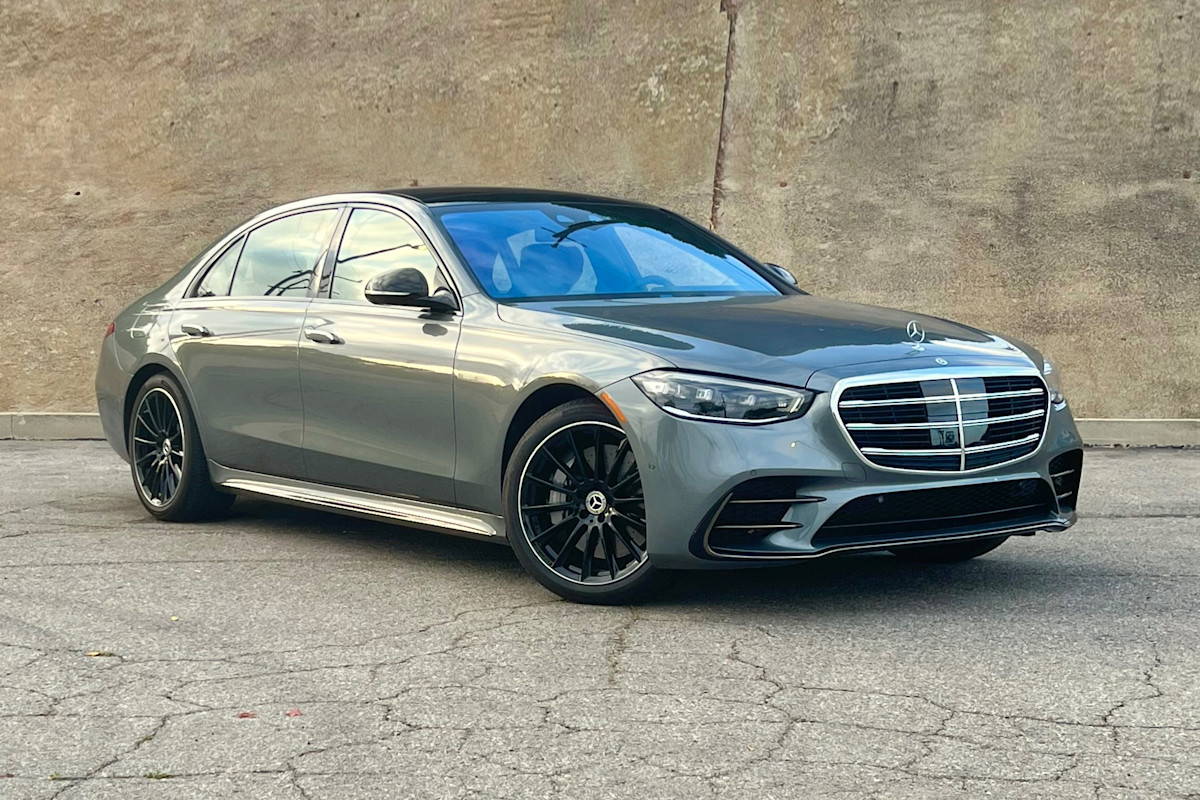
For ultimate luxury, it's difficult to beat the Mercedes-Benz S-Class.
The 2025 Mercedes-Benz S-Class is an automotive icon that fulfills its lofty expectations for comfort, performance, technology, and refinement. Last redesigned for the 2021 model year, the brand’s flagship sedan receives only small changes for 2025.
Verdict: Quite simply, the S-Class is the best luxury sedan that doesn't wear a Bentley or Rolls-Royce badge. With several models to choose from and a dizzying array of options, there seems to be a perfect match for a variety of tastes, provided you have a six-figure budget.

In a landscape dominated by SUVs, the 2025 Mercedes-Benz S-Class is a throwback to when stately sedans reigned supreme. Measuring 5,289 millimetres from nose to tail, this stately four-door still has a very strong presence on the road, offering shoppers a sleeker and more traditional form of luxury.
The current seventh-generation S-Class was introduced as a 2021 model, but it retains much of the character that has been evolving since the early 2000s. Compared to the previous generation, it has a more rounded and aerodynamic style with smoother body creases, a larger and reshaped grille, and retractable flush door handles. From the side, the long hood projects power, while the long wheelbase (the distance between front and rear wheels) suggests a palatially large passenger compartment. In North America, the S-Class is offered only with the longer wheelbase, but a standard-wheelbase model is available in other markets and measures 10 centimetres shorter from tip to tail.
Compared to other full-sized luxury sedans, the S-Class is arguably the classiest. The Audi A8 has a more modern personality, while the BMW 7 Series is an awkward mash-up of several competing styling elements that can charitably be described as "discordant". The same could be said for the oversized grilles on the Lexus LS and Genesis G90. Rounding out the class are the sporty Porsche Panamera and the uniquely Scandinavian Volvo S90.
On the inside, the S-Class dashboard has a striking horizontal layout that enhances the sense of width and space. It's interrupted by a pair of digital displays that seem clumsily placed when compared to the rest of the car's design. They look more like off-the-shelf tablets that were added as an afterthought rather than elegantly integrated.
Thankfully, the cabin is bathed in premium materials, from supple leather that smells divine to sturdy and attractive trim elements. There are several upholstery colours to choose from, as well as trim materials that include lacquered wood surfaces, a natural-grain walnut that adds some visual warmth, or the carbon-fibre-like dot pattern of our test vehicle. The praiseworthy Mercedes construction is also evident throughout the interior with no detectable creaks or squeaks. Surpassing this level of excellence would require a substantial budget increase to a Bentley, Rolls-Royce, or the even more luxurious Mercedes-Maybach S-Class.

Four S-Class models are available for 2025, largely distinguished by their powertrains. The entry-level S 500 comes with a turbocharged 3.0-litre inline-six that produces 442 horsepower and 413 pound-feet of torque. It should accelerate to 100 km/h in 4.9 seconds, according to Mercedes. The S 580 upgrades to a twin-turbo 4.0-litre V8 that increases power output to 496 hp and 516 lb-ft; it should be about half a second quicker to 100 km/h. All S-Class models are equipped with a nine-speed automatic transmission, and 4Matic all-wheel-drive (AWD) is standard, with a mild-hybrid system in the S 500 and S 580 to help boost efficiency.
At the top of the lineup is the AMG S 63 E Performance, from the Mercedes-AMG performance division. This plug-in hybrid combines a twin-turbo 4.0-litre V8 with an electric motor, which helps drive the rear wheels through its own dedicated gearbox. Together, they produce an impressive 791 hp and 1,055 lb-ft of torque, getting the S 63 from 0–100 km/h in an estimated 3.3 seconds. With the 13.1-kilowatt-hour battery pack fully charged, the S 63 is also capable of an estimated 26 kilometres of electric-only propulsion.
(Note the U.S.-spec vehicle driven for this review, the S 580e plug-in hybrid, is not available in Canada at the time of writing).
The S-Class’s suspension is understandably tuned for cosseting comfort and succeeds at delivering a smooth ride. On smooth roads, it feels more like you're floating above the surface. When encountering potholes or seams in the pavement, the standard air suspension ably filters them down to a subtle thump. Otherwise, the cabin remains blissfully silent.
Even though the suspension is on the soft side, the S-Class still feels confident on a winding road. Body roll when cornering is well-managed, and the nose keeps from dipping too much under braking. Despite its considerable length, the S-Class is surprisingly maneuverable in tight parking spots thanks to available rear axle steering that turns the rear wheels up to 4.5 degrees, allowing it to make impressively sharp turns at low speeds. It could make three-point turns a thing of the past.
Overall, the 2025 S-Class delivers the exact kind of driving experience expected of a top-tier luxury vehicle. After seven decades of development, it has become the standard by which others are judged.

The curvaceous front seats look and feel as wide as classic wingbacks or lounge chairs, with an abundance of space for larger occupants. They're well-shaped enough that they don't require a dizzying amount of adjustments, though the soft headrest pillows take some getting used to. Long road trips are made even more comfortable thanks to heating, ventilation, and a strong massage function that are standard on all models.
There's adequate, but not generous, space for your personal items up front. The cupholders, door pockets, and centre armrest bin are only moderately sized, but a standard wireless charging pad ensures a spot for your smartphone.
The rear seats are particularly important for luxury sedans, and the S-Class has some of the best. They're as accommodating as the front seats for taller passengers and are eligible for optional features that further enhance the experience. The available Pinnacle Trim package adds heating, ventilation, and massage functions, and an available executive passenger-side rear seat includes a power footrest and the ability to slide the front passenger seat well out of the way.
Behind those seats, the specs reveal a cargo capacity of 535 litres, which falls just shy of the average for the class. A centre pass-through door allows for longer items, and a handy flip-down hook will keep your shopping bags from releasing their contents.

All 2025 Mercedes-Benz S-Class models have a 12.3-inch digital instrument panel, a 12.8-inch infotainment touchscreen, a native navigation system with augmented reality video overlays, voice recognition, a Burmester surround-sound system, and interior ambient lighting.
Adding the Pinnacle Trim package adds rear-seat amenities such as an infotainment-system tablet, while a rear wireless charging pad and an entertainment system with two 11.6-inch displays are also available. Shoppers can also add a 3D instrument panel, augmented reality overlays in the head-up display, and a Burmester High-End 4D sound system.
In our test vehicle, the infotainment system benefitted from crisp graphics and quick responses, but we're not fans of the capacitive touch controls on the steering wheel and at the bottom of the touchscreen. A directional pad on the right stalk of the wheel controls the central display, but it's difficult to use, even when parked. While driving, it can be positively frustrating and distracting, leading us to prefer operating the system via the touchscreen. We also prefer having the touchscreen mounted higher on the dash to reduce distraction. As it is, we were forced to take our eyes off the road for the most mundane tasks.
The voice-control technology, however, is some of the best in the industry and is activated by saying, "Hey Mercedes," followed by your request. It's very accurate in deciphering a multitude of accents, but many features are dependent upon having an internet connection.

Standard advanced safety features include: forward collision warning with automatic emergency braking, adaptive cruise control, blind spot monitoring with rear cross-traffic alert, lane-keep assist, automated lane-change assist, evasive steering assistance, automatic reverse braking, a semi-automated parking system, and a surround-view camera system.
All these systems functioned flawlessly in our time with our S-Class without any false alarms or odd glitches. In particular, the adaptive cruise control is excellent. It features smooth transitions between acceleration and braking, allowing the driver to confidently rely on it whether on the open highway or in dense traffic.
To date, neither the U.S. National Highway Traffic Safety Administration (NHTSA) nor the Insurance Institute for Highway Safety (IIHS) have published crash test results for this S-Class generation. That's not unusual for high-end luxury vehicles, and Mercedes-Benz generally has an impeccable safety record.

The entry-level 2025 Mercedes-Benz S 500 has a manufacturer's suggested retail price (MSRP) of $147,500 (not including the destination charge or other fees, which vary at Mercedes-Benz dealerships across Canada). Stepping up to the V8-powered S 580 increases the price to $161,500, while the performance-focused AMG S 63 E Performance shoots up to $208,650. The Mercedes-Maybach versions of the S-Class can climb above $300,000.
The S 500 is the most efficient Canadian model with Natural Resources Canada-estimated fuel economy of 9.6 litres per 100 kilometres combined, while the V8-powered S 580 is rated at 12.0 L/100 km combined. The high-performance AMG variant has an electric range of 26 kilometres and a 13.0 L/100 km estimate under hybrid power.
By comparison, the Audi A8 is rated at 10.9 L/100 km combined, and the BMW 750e (plug-in hybrid) is rated at 55 kilometres of electric range and 9.4 L/100 km combined. Meanwhile, the Genesis G90 is rated at 11.8 L/100 km combined, and the Lexus LS at 9.2 to 11.2 L/100 km combined. The Genesis and Lexus also cost about $30,000 less to start, but they lack the polish and perfection that the S-Class delivers. The Audi and BMW also trail in this regard, but by a much smaller margin.

User reviews for 2025 Mercedes-Benz S-Class
Write a review2025 Mercedes-Benz S-Class Pricing
Trims & specs
Air Conditioning
Active charcoal air filtration · Automatic climate control front air conditioning · Dual front air conditioning zones
Airbags
Dual front airbags · Driver knee airbags · Passenger airbag deactivation: occupant sensing deactivation · Front side airbags · Front side curtain airbags
Audio System
Antenna Type: diversity · Voice recognition audio system · Bluetooth auxiliary audio input · Gracenote internet radio · Internet radio app: Spotify · Premium Brand: Burmester · HD radio · Satellite Radio: SiriusXM · 2 subwoofers · Surround audio: 5.1 · Total Number of Speakers: 13 · 710 watts
Brakes
ABS: 4-wheel · Braking assist: hill start assist · Electronic parking brake: auto off · Front brake diameter: 14.5 · Front brakes: ventilated disc · Rear brake diameter: 14.1 · Rear brakes: ventilated disc
Comfort Features
Armrests: rear center with cupholders · Center console trim: leather · Dash trim: wood · Door sill trim: illuminated scuff plate · Door trim: leather · Floor Mat Material: carpet · Floor Material: carpet · Floor Mats: front · Headliner trim: leather · Interior accents: wood · Steering wheel trim: wood
Convenience Features
Active parking system: fully automated · Adaptive stop and go cruise control: fully automated · Ambient lighting: color-adjustable · Assist handle: rear · Autonomous lane guidance: lane changing · Cargo area power outlet: 12V · Center console: front console with armrest and storage · Cruise control: adaptive · Cupholders: front · Dimming rearview mirror: auto-dimming · Easy entry: power steering wheel · Footwell lights: color-adjustable · Memorized settings: passenger seat · Multi-function remote: trunk release · One-touch windows: 4 · Power outlet(s): 12V front · Power steering: speed-proportional · Power windows: lockout button · Reading lights: front · Rear power outlet: 12V · Steering wheel: power tilt and telescopic · Steering wheel mounted controls: voice recognition controls · Storage: sunglasses holder · Sunshade: power side window · Universal garage door opener: Homelink · Vanity mirrors: dual illuminating
Driver Seat
Adjustable lumbar support: 4-way power · Power adjustments: 12
Drivetrain
4WD Type: full time · Axle ratio: 2.82
Engine
Alternator: 150 amps · Battery: 520 CCA · Electric Motor HP: 23 · Electric Motor Power Output (Kilowatts): 17 · Electric Motor Torque: 151 · Hybrid Gas Engine HP: 442 · Hybrid Gas Engine HP@RPM: 5800 · Hybrid Gas Engine Torque: 413 · Hybrid gas Engine Torque@RPM: 2200
Exterior Features
Body side moldings: chrome · Door handle color: body-color with chrome accents · Exhaust: dual exhaust tips · Exhaust tip color: chrome · Front bumper color: body-color · Grille color: black with chrome accents · Mirror color: body-color · Rear bumper color: body-color · Rear trunk/liftgate: sensor-activated · Side door type: soft close · Window trim: chrome
Headrests
Front headrests: power adjustable · Number of front headrests: 2 · Number of rear headrests: 2
Hybrid
Starter Type: motor/generator
In Car Entertainment
Connected in-car apps: app marketplace integration · Infotainment: MBUX · Infotainment screen size: 12.8 in. · Smartphone integration: wireless Android Auto
Instrumentation
Fuel economy display: MPG · Instrument cluster screen size: 12.3 in. · Warnings and reminders: low oil pressure
Lights
Daytime running lights: LED · Exterior entry lights: security approach lamps · Headlights: LED · Tail and brake lights: LED
Mirrors
Exterior mirrors: heated
Passenger Seat
Power adjustments: 12
Rear Seats
Type: bench
Roof
Moonroof: remote operation · Moonroof / Sunroof: power sunshade · Rear sunroof: power glass
Safety
Automatic emergency braking: rear · Camera system: surround view · Child seat anchors: LATCH system · Cross Traffic Alert: rear · Crumple zones: rear · Dash camera: front recording · Impact sensor: battery disconnect · Parking sensors: front · Pre-Collision Warning System: vibrating steering wheel · Pre-collision warning system: pedestrian detection · Rear pre-collision warning system: pedestrian detection · Rearview monitor: in dash · Traffic sign recognition: adaptive speed limiting
Seatbelts
Emergency locking retractors: front and rear · Front seatbelts: 3-point · Seatbelt force limiters: front and rear · Seatbelt pretensioners: front and rear · Seatbelt warning sensor: driver and passenger · Second row seatbelts: 3-point
Seats
Driver seat power adjustments: height · Front seat type: bucket · Passenger seat power adjustments: height · Rear headrests: adjustable · Upholstery: perforated
Steering
Steering ratio: 15.6
Suspension
Driver Adjustable Suspension: height · Front Shock Type: gas shock absorbers · Front Spring Type: pneumatic springs · Front Suspension Classification: independent · Front Suspension Type: multi-link · Leveling: self leveling suspension · Rear Shock Type: coil over shock · Rear Spring Type: pneumatic springs · Rear Suspension Classification: independent · Rear Suspension Type: multi-link · Stabilizer bar(s): front · Suspension control: electronic
Telematics
Driver assistance app: roadside assistance · Electronic messaging assistance: with voice recognition · Navigation system: augmented reality · Phone: voice activated · Phone wireless data link: Bluetooth · Smart device app compatibility: Mercedes me · Smart device app function: horn/light operation · Wifi: hotspot compatible
Tires
Type: all season
Tires and Rims
Wheel type: aluminum alloy
Wheels
Wheel spokes: 5
Windows
Front wipers: variable intermittent · Laminated glass: acoustic · Power windows: with safety reverse
Air Conditioning
Active charcoal air filtration · Automatic climate control front air conditioning · Dual front air conditioning zones
Airbags
Dual front airbags · Driver knee airbags · Passenger airbag deactivation: occupant sensing deactivation · Rear side airbags · Rear side curtain airbags
Audio System
Antenna Type: diversity · Voice recognition audio system · Bluetooth auxiliary audio input · Gracenote internet radio · Internet radio app: Spotify · Premium Brand: Burmester · Touch screen display radio · Satellite Radio: SiriusXM · 2 subwoofers · Surround audio: 5.1 · Total Number of Speakers: 13 · 710 watts
Brakes
ABS: 4-wheel · Braking assist: hill start assist · Electronic parking brake: auto off · Front brake diameter: 14.5 · Front brakes: ventilated disc · Rear brake diameter: 14.1 · Rear brakes: ventilated disc
Comfort Features
Armrests: rear center folding with storage and pass-thru · Center console trim: wood · Dash trim: wood · Door sill trim: illuminated scuff plate · Door trim: leather · Floor Mat Material: carpet · Floor Material: carpet · Floor Mats: front · Headliner trim: leather · Interior accents: wood · Steering wheel trim: leather
Convenience Features
Active parking system: fully automated · Adaptive stop and go cruise control: fully automated · Ambient lighting: color-adjustable · Assist handle: front · Autonomous lane guidance: lane changing · Cargo area power outlet: 12V · Center console: front console with armrest and storage · Cruise control: adaptive · Cupholders: rear · Dimming rearview mirror: auto-dimming · Easy entry: power driver seat · Footwell lights: color-adjustable · Memorized settings: audio system · Multi-function remote: keyless entry with panic alarm · One-touch windows: 4 · Power outlet(s): USB-C rear · Power steering: speed-proportional · Power windows: lockout button · Reading lights: rear · Rear power outlet: 115V · Steering wheel: power tilt and telescopic · Steering wheel mounted controls: paddle shifter · Storage: front seatback · Sunshade: power side window · Universal garage door opener: Homelink · Vanity mirrors: dual illuminating
Driver Seat
Adjustable lumbar support: 4-way power · Power adjustments: 12
Drivetrain
4WD Type: full time · Axle ratio: 2.82
Engine
Alternator: 150 amps · Battery: 520 CCA · EV battery capacity: 28.6 kWh · EV on-board charger rating: 9.6 kW · Electric Motor Battery Type: lithium ion · Electric Motor HP: 148 · Electric Motor Power Output (Kilowatts): 110 · Electric Motor Torque: 325 · Electric charge cord: autoswitching 110V/240V · Electric motor charger: DC fast charging · Electric motor charger connector: SAE J1772 · Electric motor charging time (240V): 2.25 hours · Electric motor miles per charge: 47 · Hybrid Gas Engine HP: 362 · Hybrid Gas Engine Torque: 369
Exterior Features
Body side moldings: chrome · Door handle color: body-color with chrome accents · Exhaust: integrated exhaust · Exhaust tip color: chrome · Front bumper color: body-color · Grille color: black with chrome accents · Mirror color: body-color · Rear bumper color: body-color · Rear trunk/liftgate: sensor-activated · Side door type: soft close · Window trim: chrome
Headrests
Front headrests: power adjustable · Number of front headrests: 2 · Number of rear headrests: 2
Hybrid
Starter Type: motor/generator
In Car Entertainment
Connected in-car apps: Google search · Infotainment: MBUX · Infotainment screen size: 12.8 in. · Smartphone integration: wireless Android Auto
Instrumentation
Fuel economy display: MPG · Instrument cluster screen size: 12.3 in. · Warnings and reminders: coolant temperature warning
Lights
Daytime running lights: LED · Exterior entry lights: security approach lamps · Headlights: Auto on/off · Tail and brake lights: LED
Mirrors
Exterior mirrors: integrated turn signals
Passenger Seat
Power adjustments: 12
Rear Seats
Type: bench
Roof
Moonroof: power panoramic · Moonroof / Sunroof: power sunshade · Rear sunroof: power glass
Safety
Automatic emergency braking: front · Camera system: surround view · Child seat anchors: LATCH system · Cross Traffic Alert: rear · Crumple zones: front · Dash camera: front recording · Impact sensor: battery disconnect · Parking sensors: front · Pre-Collision Warning System: vibrating steering wheel · Pre-collision warning system: pedestrian detection · Rear pre-collision warning system: pedestrian detection · Rearview monitor: in dash · Traffic sign recognition: adaptive speed limiting
Seatbelts
Emergency locking retractors: front · Front seatbelts: 3-point · Seatbelt force limiters: front and rear · Seatbelt pretensioners: front and rear · Seatbelt warning sensor: driver and passenger · Second row seatbelts: 3-point
Seats
Driver seat power adjustments: height · Front seat type: bucket · Passenger seat power adjustments: height · Rear headrests: adjustable · Upholstery: perforated
Steering
Steering ratio: 15.6
Suspension
Driver Adjustable Suspension: height · Front Shock Type: gas shock absorbers · Front Spring Type: pneumatic springs · Front Suspension Classification: independent · Front Suspension Type: strut · Leveling: self leveling suspension · Rear Shock Type: coil over shock · Rear Spring Type: pneumatic springs · Rear Suspension Classification: independent · Rear Suspension Type: multi-link · Stabilizer bar(s): front · Suspension control: electronic
Telematics
Driver assistance app: roadside assistance · Electronic messaging assistance: with read function · Navigation system: with voice recognition · Phone: voice activated · Phone wireless data link: Bluetooth · Smart device app compatibility: Mercedes me · Smart device app function: maintenance scheduling · Wifi: hotspot compatible
Tires
Type: all season
Tires and Rims
Wheel type: aluminum alloy
Wheels
Wheel spokes: 10
Windows
Front wipers: variable intermittent · Laminated glass: acoustic · Power windows: with safety reverse
Air Conditioning
Air filtration: ionizing · Automatic climate control front air conditioning · Dual front air conditioning zones
Airbags
Dual front airbags · Driver knee airbags · Passenger airbag deactivation: occupant sensing deactivation · Front side airbags · Rear side curtain airbags
Audio System
Antenna Type: element · Voice recognition audio system · Bluetooth auxiliary audio input · Gracenote internet radio · Internet radio app: Spotify · Premium Brand: Burmester · HD radio · Satellite Radio: SiriusXM · 2 subwoofers · Surround audio: 5.1 · Total Number of Speakers: 13 · 710 watts
Brakes
ABS: 4-wheel · Braking assist: hill start assist · Electronic parking brake: auto off · Front brake diameter: 14.5 · Front brakes: ventilated disc · Rear brake diameter: 14.1 · Rear brakes: ventilated disc
Comfort Features
Armrests: rear center folding with storage and pass-thru · Center console trim: wood · Dash trim: wood · Door sill trim: illuminated scuff plate · Door trim: leather · Floor Mat Material: carpet · Floor Material: carpet · Floor Mats: front · Headliner trim: leather · Interior accents: wood · Steering wheel trim: leather
Convenience Features
Active parking system: fully automated · Adaptive stop and go cruise control: fully automated · Ambient lighting: color-adjustable · Assist handle: front · Autonomous lane guidance: lane changing · Cargo area power outlet: 12V · Center console: front console with armrest and storage · Cruise control: adaptive · Cupholders: front · Dimming rearview mirror: auto-dimming · Easy entry: power driver seat · Footwell lights: color-adjustable · Memorized settings: side mirrors · Multi-function remote: trunk release · One-touch windows: 4 · Power outlet(s): USB-C front · Power steering: electric · Power windows: lockout button · Reading lights: rear · Rear power outlet: 115V · Steering wheel: power tilt and telescopic · Steering wheel mounted controls: audio · Storage: door pockets · Sunshade: power rear window · Universal garage door opener: Homelink · Vanity mirrors: dual illuminating
Driver Seat
Adjustable lumbar support: 4-way power · Power adjustments: 12
Drivetrain
4WD Type: full time · Axle ratio: 2.82
Engine
Alternator: 150 amps · Battery: maintenance-free · Electric Motor HP: 20 · Electric Motor Power Output (Kilowatts): 15 · Electric Motor Torque: 184 · Hybrid Gas Engine HP: 496 · Hybrid Gas Engine HP@RPM: 5500 · Hybrid Gas Engine Torque: 516 · Hybrid gas Engine Torque@RPM: 2000
Exterior Features
Body side moldings: chrome · Door handle color: body-color with chrome accents · Exhaust: integrated exhaust · Exhaust tip color: chrome · Front bumper color: body-color · Grille color: black with chrome accents · Mirror color: body-color · Rear bumper color: body-color · Rear trunk/liftgate: power operated · Side door type: soft close · Window trim: chrome
Headrests
Front headrests: power adjustable · Number of front headrests: 2 · Number of rear headrests: 2
Hybrid
Starter Type: motor/generator
In Car Entertainment
Connected in-car apps: Google POIs · Infotainment: MBUX · Infotainment screen size: 12.8 in. · Smartphone integration: wireless Android Auto
Instrumentation
Fuel economy display: range · Instrument cluster screen size: 12.3 in. · Warnings and reminders: maintenance reminder
Lights
Daytime running lights: LED · Exterior entry lights: security approach lamps · Headlights: auto delay off · Tail and brake lights: LED
Mirrors
Exterior mirrors: auto-dimming
Passenger Seat
Power adjustments: 12
Rear Seats
Type: bench
Roof
Moonroof: tilt/slide · Moonroof / Sunroof: power sunshade · Rear sunroof: power glass
Safety
Automatic emergency braking: front pedestrian · Camera system: surround view · Child seat anchors: LATCH system · Cross Traffic Alert: rear · Crumple zones: rear · Dash camera: front recording · Impact sensor: fuel cut-off · Parking sensors: rear · Pre-Collision Warning System: audible warning · Pre-collision warning system: pedestrian detection · Rear pre-collision warning system: pedestrian detection · Rearview monitor: in dash · Traffic sign recognition: adaptive speed limiting
Seatbelts
Emergency locking retractors: front · Front seatbelts: 3-point · Seatbelt force limiters: front · Seatbelt pretensioners: front · Seatbelt warning sensor: driver and passenger · Second row seatbelts: 3-point
Seats
Driver seat power adjustments: height · Front seat type: bucket · Passenger seat power adjustments: 4-way power lumbar · Rear headrests: adjustable · Upholstery: perforated
Steering
Steering ratio: 15.6
Suspension
Driver Adjustable Suspension: ride control · Front Shock Type: gas shock absorbers · Front Spring Type: pneumatic springs · Front Suspension Classification: independent · Front Suspension Type: multi-link · Leveling: self leveling suspension · Rear Shock Type: coil over shock · Rear Spring Type: pneumatic springs · Rear Suspension Classification: independent · Rear Suspension Type: multi-link · Stabilizer bar(s): rear · Suspension control: electronic
Telematics
Driver assistance app: roadside assistance · Electronic messaging assistance: with voice recognition · Navigation system: hard drive navigation system · Phone: voice activated · Phone wireless data link: Bluetooth · Smart device app compatibility: Mercedes me · Smart device app function: security event/collision alert · Wifi: hotspot compatible
Tires
Type: all season
Tires and Rims
Wheel type: aluminum alloy
Wheels
Wheel spokes: 5
Windows
Front wipers: variable intermittent · Laminated glass: acoustic · Power windows: remote operation
Air Conditioning
Active charcoal air filtration · Automatic climate control front air conditioning · Dual front air conditioning zones
Airbags
Dual front airbags · Driver knee airbags · Passenger airbag deactivation: occupant sensing deactivation · Rear side airbags · Rear side curtain airbags
Audio System
Antenna Type: element · Voice recognition audio system · Bluetooth auxiliary audio input · Gracenote internet radio · Internet radio app: Spotify · Premium Brand: Burmester · AM/FM radio · Satellite Radio: SiriusXM · 2 subwoofers · Surround audio: 5.1 · Total Number of Speakers: 13 · 710 watts
Brakes
ABS: 4-wheel · Braking assist: hill start assist · Electronic parking brake: auto off · Front brake diameter: 14.2 · Front brakes: ventilated disc · Rear brake diameter: 14.2 · Rear brakes: ventilated disc
Comfort Features
Armrests: heated front · Center console trim: leather · Dash trim: wood · Door sill trim: illuminated scuff plate · Door trim: leather · Floor Mat Material: carpet · Floor Material: carpet · Floor Mats: front · Foot pedal trim: stainless steel · Headliner trim: leather · Interior accents: wood · Steering wheel trim: leather
Convenience Features
Active parking system: fully automated · Adaptive stop and go cruise control: fully automated · Ambient lighting: color-adjustable · Assist handle: front · Autonomous lane guidance: lane changing · Cargo area power outlet: 12V · Center console: front console with armrest and storage · Cruise control: adaptive · Cupholders: front · Dimming rearview mirror: auto-dimming · Easy entry: power driver seat · Footwell lights: color-adjustable · Memorized settings: steering wheel · Multi-function remote: keyless entry with panic alarm · One-touch windows: 4 · Power outlet(s): 12V front · Power steering: speed-proportional · Power windows: lockout button · Reading lights: rear · Rear power outlet: 12V · Steering wheel: power tilt and telescopic · Steering wheel mounted controls: paddle shifter · Storage: front seatback · Sunshade: power side window · Universal garage door opener: Homelink · Vanity mirrors: dual illuminating
Driver Seat
Adjustable lumbar support: 4-way power · Power adjustments: 12
Drivetrain
4WD Type: on demand · Axle ratio: 2.82
Engine
Alternator: 150 amps · Battery: maintenance-free · EV battery capacity: 13.1 kWh · Electric Motor Battery Type: lithium ion · Electric Motor HP: 188 · Electric Motor Power Output (Kilowatts): 140 · Electric Motor Torque: 236 · Electric charge cord: autoswitching 110V/240V · Electric motor charger connector: SAE J1772 · Electric motor miles per charge: 16 · Hybrid Gas Engine HP: 604 · Hybrid Gas Engine HP@RPM: 5500 · Hybrid Gas Engine Torque: 664 · Hybrid gas Engine Torque@RPM: 2500
Exterior Features
Door handle color: body-color with chrome accents · Exhaust: integrated exhaust · Exhaust tip color: chrome · Front bumper color: body-color · Grille color: black with chrome accents · Mirror color: body-color · Rear bumper color: body-color · Rear trunk/liftgate: sensor-activated · Rocker panel color: chrome accents · Side door type: soft close · Window trim: chrome
Headrests
Front headrests: power adjustable · Number of front headrests: 2 · Number of rear headrests: 2
Hybrid
Starter Type: motor/generator
In Car Entertainment
Connected in-car apps: Google POIs · Infotainment: MBUX · Infotainment screen size: 12.8 in. · Smartphone integration: wireless Android Auto
Instrumentation
Fuel economy display: MPG · Instrument cluster screen size: 12.3 in. · Warnings and reminders: lamp failure
Lights
Daytime running lights: LED · Exterior entry lights: puddle lamps · Headlights: cornering · Tail and brake lights: LED
Mirrors
Exterior mirrors: heated
Passenger Seat
Power adjustments: 12
Rear Seats
Power adjustments: 4 · Type: bench
Roof
Moonroof: power panoramic · Moonroof / Sunroof: power sunshade · Rear sunroof: power glass
Safety
Automatic emergency braking: front · Camera system: surround view · Child seat anchors: LATCH system · Cross Traffic Alert: front · Crumple zones: front · Dash camera: front recording · Impact sensor: door unlock · Parking sensors: rear · Pre-Collision Warning System: audible warning · Pre-collision warning system: pedestrian detection · Rear pre-collision warning system: pedestrian detection · Rearview monitor: in dash · Traffic sign recognition: adaptive speed limiting
Seatbelts
Emergency locking retractors: front and rear · Front seatbelts: 3-point · Seatbelt force limiters: front · Seatbelt pretensioners: front and rear · Seatbelt warning sensor: driver and passenger · Second row seatbelts: 3-point
Seats
Driver seat power adjustments: height · Front seat type: sport bucket · Passenger seat power adjustments: 4-way power lumbar · Rear headrests: adjustable · Rear seat: ventilated · Upholstery: premium leather
Suspension
Driver Adjustable Suspension: ride control · Front Shock Type: gas shock absorbers · Front Spring Type: coil springs · Front Suspension Classification: independent · Front Suspension Type: strut · Leveling: self leveling suspension · Rear Shock Type: gas shock absorbers · Rear Spring Type: coil springs · Rear Suspension Classification: independent · Rear Suspension Type: multi-link · Stabilizer bar(s): rear · Suspension control: electronic
Telematics
Driver assistance app: roadside assistance · Electronic messaging assistance: with voice recognition · Navigation system: augmented reality · Phone: voice activated · Phone wireless data link: Bluetooth · Smart device app compatibility: Mercedes me · Smart device app function: maintenance scheduling · Wifi: hotspot compatible
Tires
Type: all season
Tires and Rims
Wheel type: aluminum alloy
Wheels
Wheel spokes: 10
Windows
Front wipers: rain sensing · Laminated glass: acoustic · Power windows: remote operation
Air Conditioning
Air filtration: ionizing · Automatic climate control front air conditioning · Dual front air conditioning zones · Automatic climate control rear air conditioning · Dual rear air conditioning zones
Airbags
Dual front airbags · Driver knee airbags · Passenger airbag deactivation: occupant sensing deactivation · Seat cushion airbags: rear · Front side airbags · Rear side curtain airbags
Audio System
Antenna Type: element · Voice recognition audio system · Memory card slot auxiliary audio input · Rear headphone jacks · Wireless headphones · Gracenote internet radio · Internet radio app: TIDAL · Premium Brand: Burmester · HD radio · Rear audio: rear volume control · Satellite Radio: SiriusXM · 3 subwoofers · Surround audio: 5.1 · Total number of speakers: 28 · Watts: 2150
Brakes
ABS: 4-wheel · Braking assist: hill start assist · Electronic parking brake: auto off · Front brake diameter: 14.6 · Front brake width: 1.4 · Front brakes: ventilated disc · Rear brake diameter: 14.4 · Rear brake width: 1.0 · Rear brakes: ventilated disc
Comfort Features
Armrests: rear center folding with storage · Cargo area floor mat material: carpet · Center console trim: wood · Dash trim: wood · Door sill trim: illuminated scuff plate · Door trim: leather · Floor Mat Material: carpet · Floor Material: carpet · Floor Mats: front · Foot pedal trim: stainless steel · Headliner trim: leather · Interior accents: wood · Steering wheel trim: leather
Convenience Features
Active parking system: fully automated · Adaptive stop and go cruise control: fully automated · Ambient lighting: color-adjustable · Assist handle: rear · Autonomous lane guidance: lane changing · Cargo area power outlet: 12V · Center console: front console with armrest and storage · Cruise control: adaptive · Cupholders: rear · Dimming rearview mirror: auto-dimming · Easy entry: power steering wheel · Footwell lights: color-adjustable · Memorized settings: driver seat · Multi-function remote: proximity entry system · One-touch windows: 4 · Power outlet(s): USB-C front · Power steering: speed-proportional · Power windows: lockout button · Reading lights: rear · Rear power outlet: 12V · Steering wheel: power tilt and telescopic · Steering wheel mounted controls: paddle shifter · Storage: door pockets · Sunshade: power rear window · Universal garage door opener: Homelink · Vanity mirrors: dual illuminating · Wireless charging station: rear
Driver Seat
Adjustable lumbar support: 4-way power · Power adjustments: 12
Drivetrain
4WD Type: full time
Engine
Alternator: 150 amps · Battery: maintenance-free · Electric Motor HP: 20 · Electric Motor Power Output (Kilowatts): 15 · Electric Motor Torque: 184 · Hybrid Gas Engine HP: 496 · Hybrid Gas Engine HP@RPM: 5500 · Hybrid Gas Engine Torque: 516 · Hybrid gas Engine Torque@RPM: 2000
Exterior Features
Body side moldings: chrome · Door handle color: body-color with chrome accents · Exhaust: integrated exhaust · Exhaust tip color: stainless-steel · Front bumper color: body-color · Grille color: black with chrome accents · Mirror color: body-color · Rear bumper color: body-color · Rear trunk/liftgate: power operated · Side door type: soft close · Window trim: chrome
Headrests
Adjustable rear headrests: power adjustable headrests · Front headrests: power adjustable · Number of front headrests: 2 · Number of rear headrests: 2
Hybrid
Starter Type: motor/generator
In Car Entertainment
Connected in-car apps: Google search · Infotainment: MBUX · Infotainment screen size: 12.8 in. · Smartphone integration: wireless Apple CarPlay · Video monitor location: dual rear · Video monitor size: 11.6 · Video system: DVD player
Instrumentation
Fuel economy display: range · Instrument cluster screen size: 12.3 in. · Warnings and reminders: low fuel level
Lights
Daytime running lights: LED · Exterior entry lights: puddle lamps · Headlights: wiper activated · Tail and brake lights: LED
Mirrors
Exterior mirrors: auto-dimming
Passenger Seat
Power adjustments: 12
Rear Seats
Power adjustments: 4 · Type: bench
Roof
Moonroof: power panoramic · Moonroof / Sunroof: power sunshade · Rear sunroof: power glass
Safety
Automatic emergency braking: front · Camera system: surround view · Child seat anchors: LATCH system · Cross Traffic Alert: rear · Crumple zones: front · Dash camera: front recording · Impact sensor: fuel cut-off · Parking sensors: rear · Pre-Collision Warning System: visual warning · Pre-collision warning system: pedestrian detection · Rear pre-collision warning system: pedestrian detection · Rearview monitor: in dash · Traffic sign recognition: adaptive speed limiting
Seatbelts
Emergency locking retractors: front · Front seatbelts: 3-point · Inflatable seatbelts: rear · Seatbelt force limiters: front · Seatbelt pretensioners: front and rear · Seatbelt warning sensor: driver and passenger · Second row seatbelts: 3-point
Seats
Driver seat power adjustments: reclining · Front seat type: bucket · Passenger seat power adjustments: 4-way power lumbar · Rear seat: ventilated · Upholstery: premium leather
Suspension
Driver Adjustable Suspension: ride control · Front Shock Type: gas shock absorbers · Front Spring Type: pneumatic springs · Front Suspension Classification: independent · Front Suspension Type: strut · Leveling: self leveling suspension · Rear Shock Type: gas shock absorbers · Rear Spring Type: pneumatic springs · Rear Suspension Classification: independent · Rear Suspension Type: multi-link · Stabilizer bar(s): rear · Suspension control: electronic
Telematics
Driver assistance app: roadside assistance · Electronic messaging assistance: with read function · Navigation system: with voice recognition · Phone: voice activated · Phone wireless data link: Bluetooth · Smart device app compatibility: Mercedes me · Smart device app function: maintenance status · Wifi: hotspot compatible
Tires
Type: all season
Tires and Rims
Wheel type: aluminum alloy
Wheels
Wheel spokes: 5
Windows
Front wipers: rain sensing · Laminated glass: infrared-reflecting · Power windows: remote operation
Air Conditioning
Air filtration: ionizing · Automatic climate control front air conditioning · Dual front air conditioning zones · Rear air conditioning: with independent controls · Dual rear air conditioning zones
Airbags
Dual front airbags · Driver knee airbags · Passenger airbag deactivation: occupant sensing deactivation · Seat cushion airbags: rear · Rear side airbags · Rear side curtain airbags
Audio System
Antenna Type: element · Voice recognition audio system · Memory card slot auxiliary audio input · Rear headphone jacks · Wireless headphones · Gracenote internet radio · Internet radio app: TIDAL · Premium Brand: Burmester · HD radio · Rear audio: rear volume control · Satellite Radio: SiriusXM · 3 subwoofers · Surround audio: 5.1 · Total number of speakers: 28 · Watts: 2150
Brakes
ABS: 4-wheel · Braking assist: hill start assist · Electronic parking brake: auto off · Front brake diameter: 14.6 · Front brake width: 1.4 · Front brakes: ventilated disc · Rear brake diameter: 14.4 · Rear brake width: 1.0 · Rear brakes: ventilated disc
Comfort Features
Armrests: rear center folding with storage · Cargo area floor mat material: carpet · Center console trim: wood · Dash trim: wood · Door sill trim: illuminated scuff plate · Door trim: leather · Floor Mat Material: carpet · Floor Material: carpet · Floor Mats: front · Foot pedal trim: stainless steel · Headliner trim: leather · Interior accents: wood · Steering wheel trim: leather
Convenience Features
Active parking system: fully automated · Adaptive stop and go cruise control: fully automated · Ambient lighting: color-adjustable · Assist handle: front · Autonomous lane guidance: lane changing · Cargo area power outlet: 12V · Center console: front console with armrest and storage · Cruise control: adaptive · Cupholders: front · Dimming rearview mirror: auto-dimming · Easy entry: power steering wheel · Footwell lights: color-adjustable · Memorized settings: side mirrors · Multi-function remote: proximity entry system · One-touch windows: 4 · Power outlet(s): USB-C rear · Power steering: speed-proportional · Power windows: lockout button · Reading lights: rear · Rear power outlet: 12V · Steering wheel: power tilt and telescopic · Steering wheel mounted controls: audio · Storage: door pockets · Sunshade: power side window · Universal garage door opener: Homelink · Vanity mirrors: dual illuminating · Wireless charging station: rear
Driver Seat
Adjustable lumbar support: 4-way power · Power adjustments: 12
Drivetrain
4WD Type: full time
Engine
Alternator: 150 amps · Battery: maintenance-free
Exterior Features
Body side moldings: chrome · Door handle color: body-color with chrome accents · Exhaust: integrated exhaust · Exhaust tip color: stainless-steel · Front bumper color: body-color · Grille color: black with chrome accents · Mirror color: body-color · Rear bumper color: body-color · Rear trunk/liftgate: power operated · Side door type: soft close · Window trim: chrome
Headrests
Adjustable rear headrests: power adjustable headrests · Front headrests: power adjustable · Number of front headrests: 2 · Number of rear headrests: 2
In Car Entertainment
Connected in-car apps: Google POIs · Infotainment: MBUX · Infotainment screen size: 12.8 in. · Smartphone integration: wireless Android Auto · Video monitor location: dual rear · Video monitor size: 11.6 · Video system: auxiliary audio/video input
Instrumentation
Fuel economy display: range · Instrument cluster screen size: 12.3 in. · Warnings and reminders: low oil level
Lights
Daytime running lights: LED · Exterior entry lights: security approach lamps · Headlights: Auto on/off · Tail and brake lights: LED
Mirrors
Exterior mirrors: auto-dimming
Passenger Seat
Power adjustments: 12
Rear Seats
Power adjustments: 4 · Type: bench
Roof
Moonroof: power panoramic · Moonroof / Sunroof: power sunshade · Rear sunroof: power glass
Safety
Automatic emergency braking: front pedestrian · Camera system: surround view · Child seat anchors: LATCH system · Cross Traffic Alert: front · Crumple zones: front · Dash camera: front recording · Impact sensor: battery disconnect · Parking sensors: rear · Pre-Collision Warning System: visual warning · Pre-collision warning system: pedestrian detection · Rear pre-collision warning system: pedestrian detection · Rearview monitor: in dash · Traffic sign recognition: adaptive speed limiting
Seatbelts
Emergency locking retractors: front · Front seatbelts: 3-point · Inflatable seatbelts: rear · Seatbelt force limiters: front and rear · Seatbelt pretensioners: front · Seatbelt warning sensor: driver and passenger · Second row seatbelts: 3-point
Seats
Driver seat power adjustments: reclining · Front seat type: bucket · Passenger seat power adjustments: reclining · Rear seat: ventilated · Upholstery: perforated
Suspension
Driver Adjustable Suspension: ride control · Front Shock Type: gas shock absorbers · Front Spring Type: pneumatic springs · Front Suspension Classification: independent · Front Suspension Type: strut · Leveling: self leveling suspension · Rear Shock Type: gas shock absorbers · Rear Spring Type: pneumatic springs · Rear Suspension Classification: independent · Rear Suspension Type: multi-link · Stabilizer bar(s): rear · Suspension control: electronic
Telematics
Driver assistance app: roadside assistance · Electronic messaging assistance: with voice recognition · Navigation system: with voice recognition · Phone: voice activated · Phone wireless data link: Bluetooth · Smart device app compatibility: Mercedes me · Smart device app function: maintenance status · Wifi: hotspot compatible
Tires
Type: all season
Tires and Rims
Wheel type: aluminum alloy
Wheels
Wheel spokes: 5
Windows
Front wipers: variable intermittent · Laminated glass: infrared-reflecting · Power windows: remote operation
