2025 Subaru Forester Reviews, Pricing & Specs
Write a reviewPros
Impressive noise reduction compared to its predecessor
Standard all-wheel drive
Confident handling in adverse conditions
Cons
Generic styling
Dated infotainment graphics
No hybrid options available
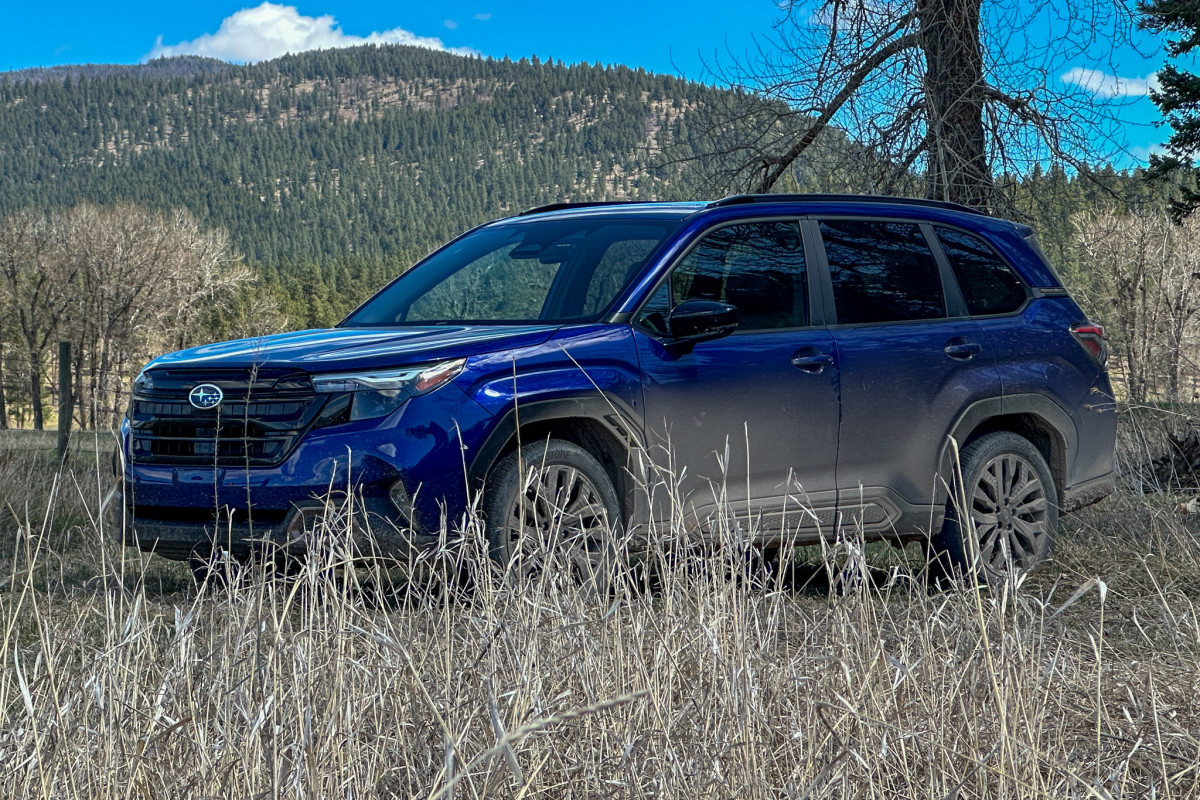
The Subaru Forester kicks off a fifth generation, but to call it "all-new" might be a bit of a stretch.
The Forester is one of Subaru's top sellers and one of the more popular compact crossovers in its segment as well, so it's hard to blame the automaker for not wanting to mess with a working formula. They seem to have focused more on refining an already popular car than creating a new car. In fact, the most obvious updates are to the vehicle's looks, which many would argue are inconsequential—but that's not a criticism.
Verdict: The 2025 Subaru Forester improves on the outgoing version with a better-equipped base model, more advanced tech and safety offerings, and a blessedly quieter cabin. If it's not the most beautiful crossover we've ever seen, well, at least that's authentic to the Forester brand.
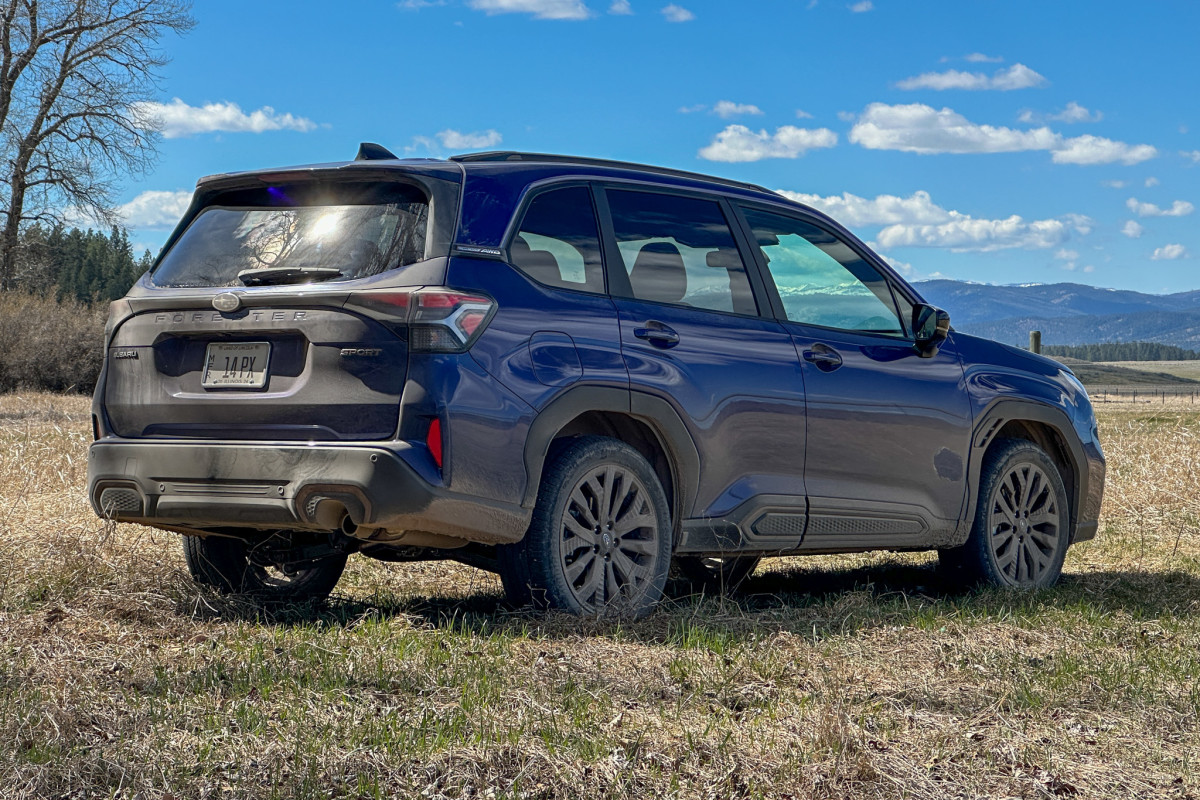
The Forester has never been known for its beauty. It’s a function-first compact SUV focused far more on practicality and capability than on looks, yet substantial attention has clearly been applied to the styling for 2025. In fact, the bulk of the changes most people will notice are visual. Its looks have been smoothed out and made, in our opinion, rather more generic, with less Forester or even Subaru DNA.
Steering-responsive LED headlights with welcome lighting come standard, and they flow into the shape of the grille to create what Subaru calls an “integrated shield effect.” The Forester Sport, which we tested, now features bronze rather than red identifying trim accents, a more grown-up differentiator we thought was attractive. The Sport trim’s bronze colouring carries over to its 19-inch wheels. Limited gets 18s, and the top Premier trim gets 19s. Sport and Premier trims also come standard with a low-profile roof rack. A new Subaru Forester Wilderness is in the works, but as of the new model’s launch, the only available Wilderness model will be a carry-over from the previous generation.
From the side, it’s clear that the large-greenhouse Forester shape has been maintained, but with some significant differences. The wheel arches are more geometric now, and the shape made up of all side windows together is more decisive, leveling off rather than flicking up at the rear end. Subaru has added black plastic pieces at the corners of both, which appears to separate the roof from the rest of the vehicle. Perhaps they are intentionally setting the stage for a two-toned paint job to come, or perhaps they just liked the cat-eye effect.
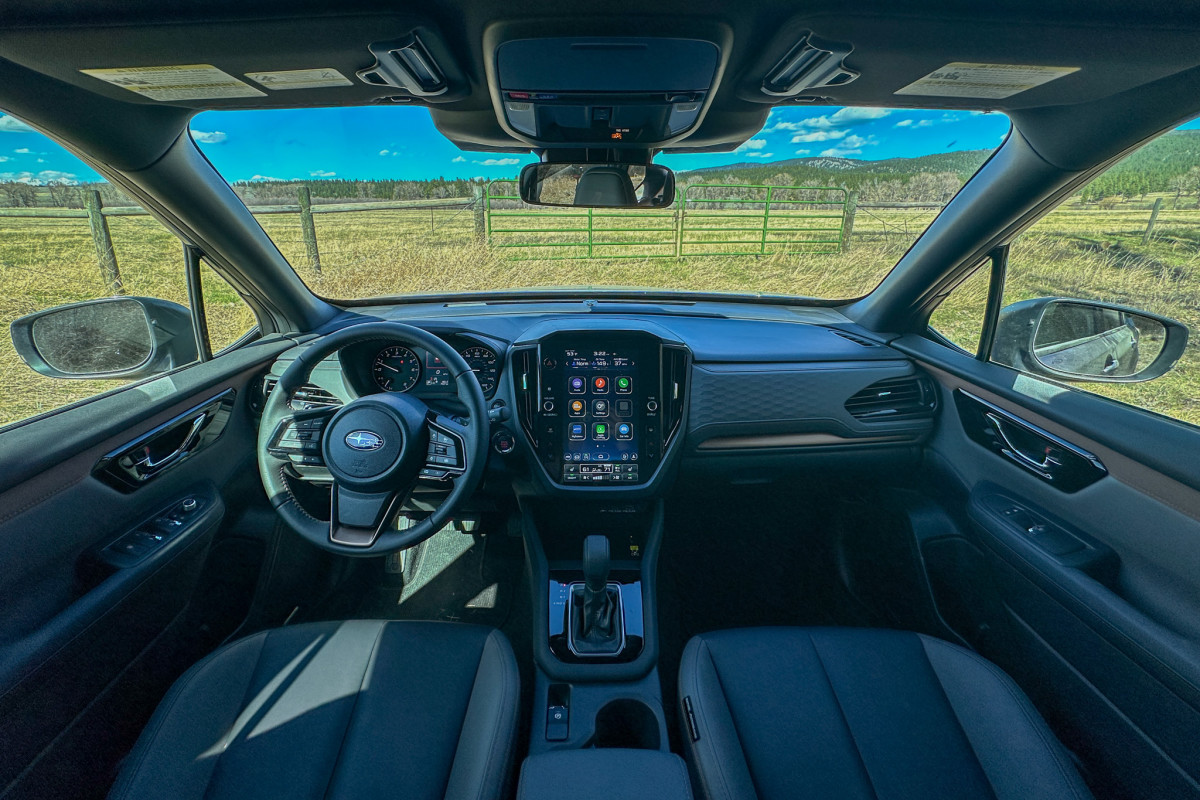
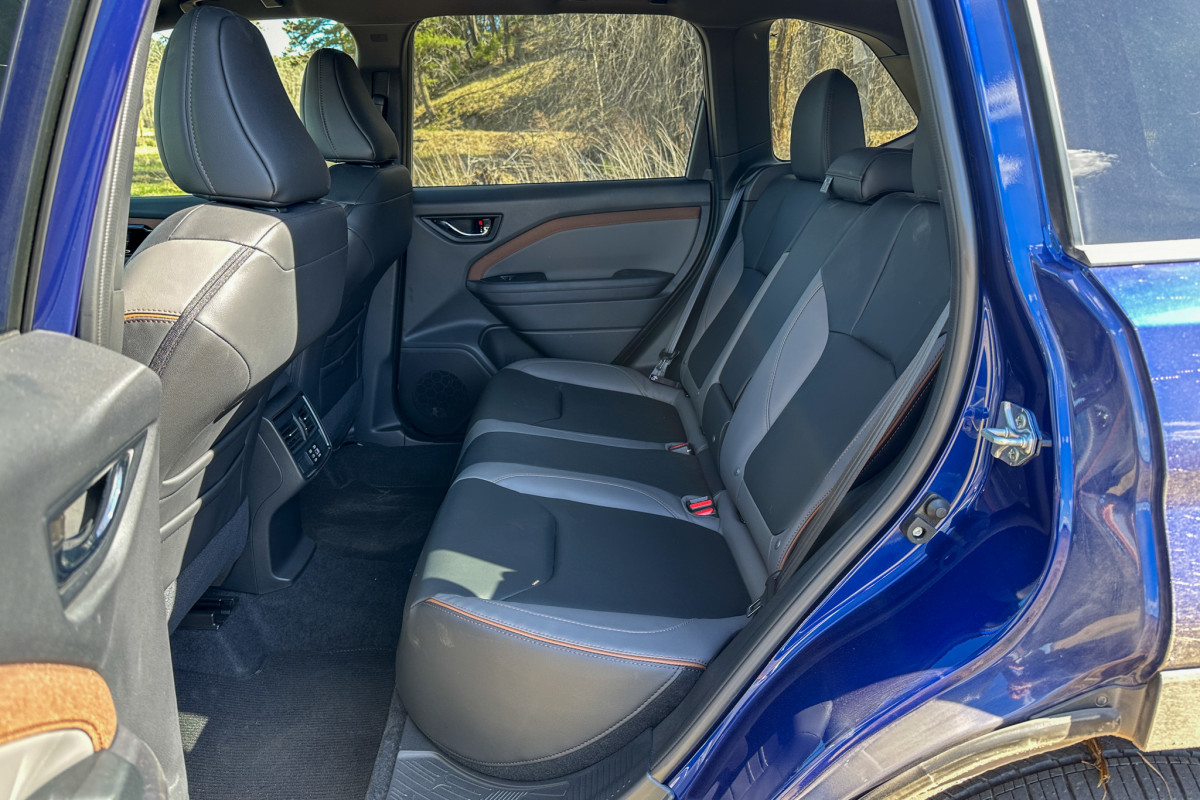
While the base Forester comes with cloth upholstery, trimmed with blue contrast stitching, the Forester Sport now gets the StarTex material previously seen in the 2024 Forester Wilderness. Though it’s not leather, it still feels nice and brings the added benefit of easy cleaning. And with the brown contrast stitching echoing the Sport’s bronze exterior accents, we did think it looked nice, too. Limited and Premier trims come with genuine leather seating surfaces. The Forester’s new interior features structural dash elements, which were attractive in person, not cheap-feeling as we worried they might be. Overall, the cabin now has a more designed and intentional look.
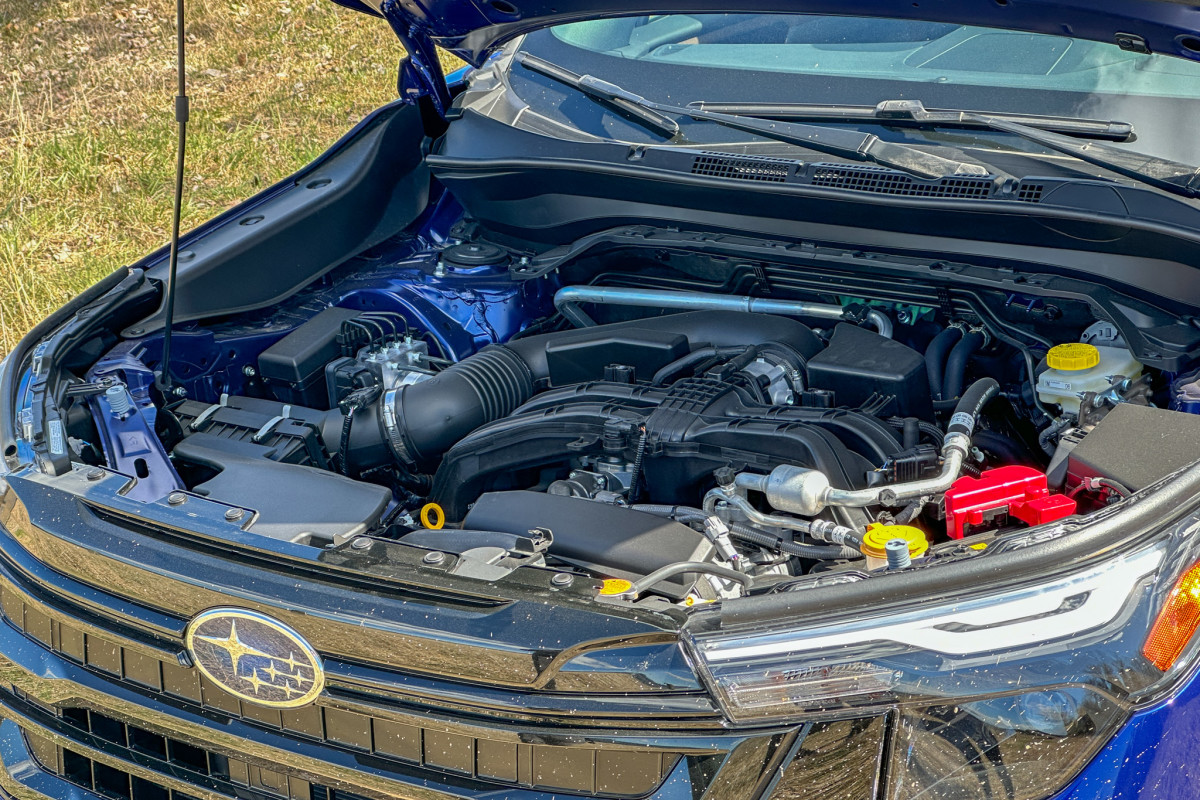
While the Forester’s body may be all-new, its powertrain is more of an update. Every 2025 Forester has a 2.5-litre Boxer four-cylinder engine under the hood, meaning every 2025 Forester makes 180 horsepower and 178 lb-ft of torque. (This represents an increase of two hp and a decrease of two lb-ft over the outgoing Forester.) Subaru’s Lineartonic continuously variable transmission (CVT) and Symmetrical All-Wheel Drive (AWD) system are both standard as well.
Boxer engines are not known for their tranquility. Subaru said they’d made the Forester quieter for 2025, but automakers often say that, so our expectations were not high. But we were genuinely impressed with the improvements. Accelerating to highway speeds still involves a good deal of noise, but cruising at a back-road-appropriate pace, we could barely hear the engine. It certainly wasn’t intrusive at low speeds.
Subaru’s X-Mode system is standard equipment in Canada. It is accompanied by a Hill Descent Control feature, and it manages engine output, transmission performance, and AWD for improved stability and traction on slippery surfaces or challenging terrain. The Forester Sport and higher trims get a dual-function version of X-Mode.
We were able to sample the Forester Sport’s performance both on- and off-road. We found acceleration to be about the same as the outgoing Forester: far from peppy, but it’ll get there in the end. We really liked the smooth, fluid feel of the steering, and we felt confident in the vehicle even when we weren’t so confident we were actually supposed to be this far off-road. It was stable and planted on a variety of surfaces, including snow, mud, and wood chips. X-Mode activated and de-activated itself seamlessly with no interruptions to the driving experience, except that it announced itself with an annoying beep every time. We were too focused on keeping it on the path (“road” would be a generous description at the point we’re thinking of) to search for a function that might turn off the sound effects.
Thanks to its standard, symmetrical AWD system, the Forester has never been a standout in terms of fuel economy. For 2025, Natural Resources Canada rates the Forester at 9.1 litres per 100 kilometres in the city, 7.2 on the highway, and 8.2 combined. A hybrid Forester is expected to follow this 2025 redesign, but fuel economy figures have not yet been announced for that one.
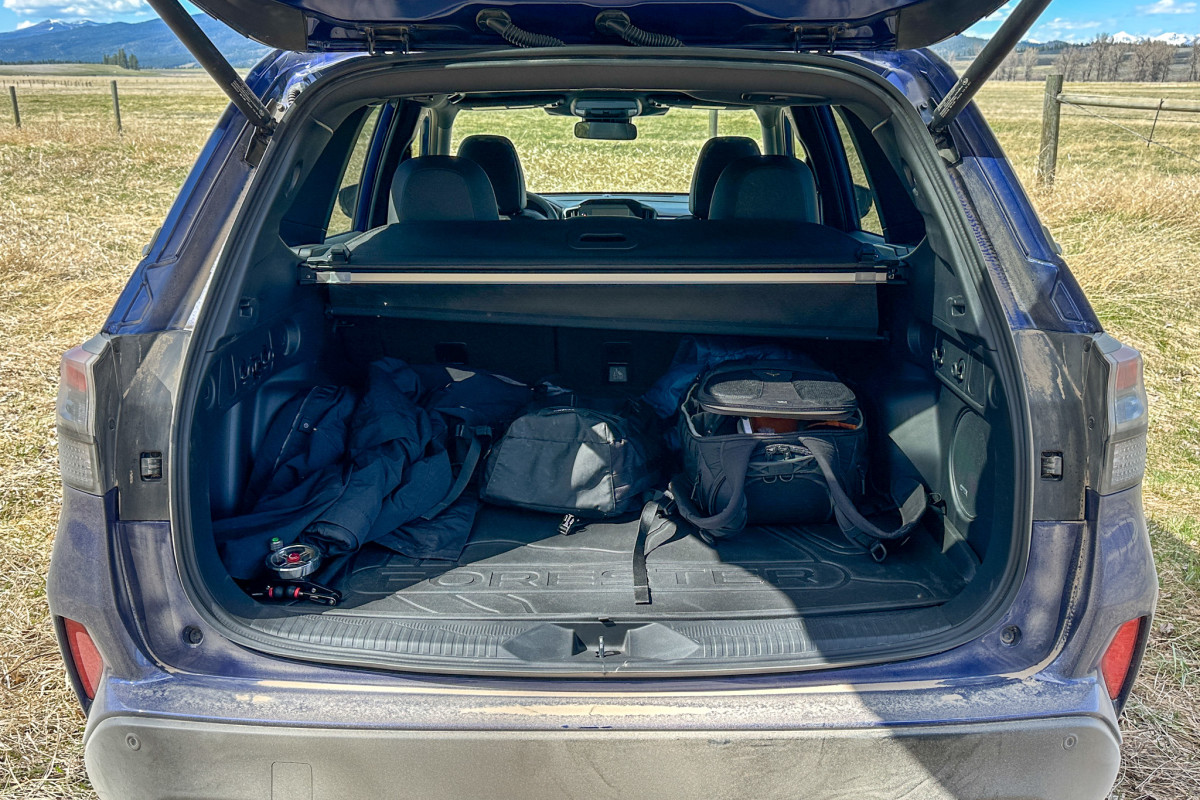
The 2025 Forester is the first Subaru ever to get a hands-free power liftgate. It becomes powered on the Touring trim and includes a foot-activated function. The more vertical angle of the rear glass has increased the Forester’s cargo space just a tick: It now measures 779 litres with the rear seats in place (or 838 litres on the base trim) and 1,957 litres with them folded down (2,107 litres on Convenience), compared to 762/818 and 1,957/2,101 previously. The cargo area is now equipped with eight standard heavy-duty hooks.
Cargo area volume easily surpasses the smaller Subaru Crosstrek and is competitive with the Subaru Outback, but it suffers just a tad compared with some competitors because the Forester provides a roomy second row. The Toyota RAV4, for example, offers 1,059 litres of cargo space with all seats in place, besting the Forester by more than 200 litres, but it’s roughly equivalent in total cargo volume.
Regardless of interior colour choice, the new Forester comes with a dark headliner, meant to resist or mask the marks that can accumulate from loading pets and gear in and out of a family vehicle. Heated front seats are standard in Canada, and the Touring trim gets a 10-way power-adjustable driver’s seat. The Limited trim level adds eight-way power adjustability to the front passenger’s seat, driver’s seat memory, and heated outboard rear seats, and the Forester Premier adds front-row seat ventilation.
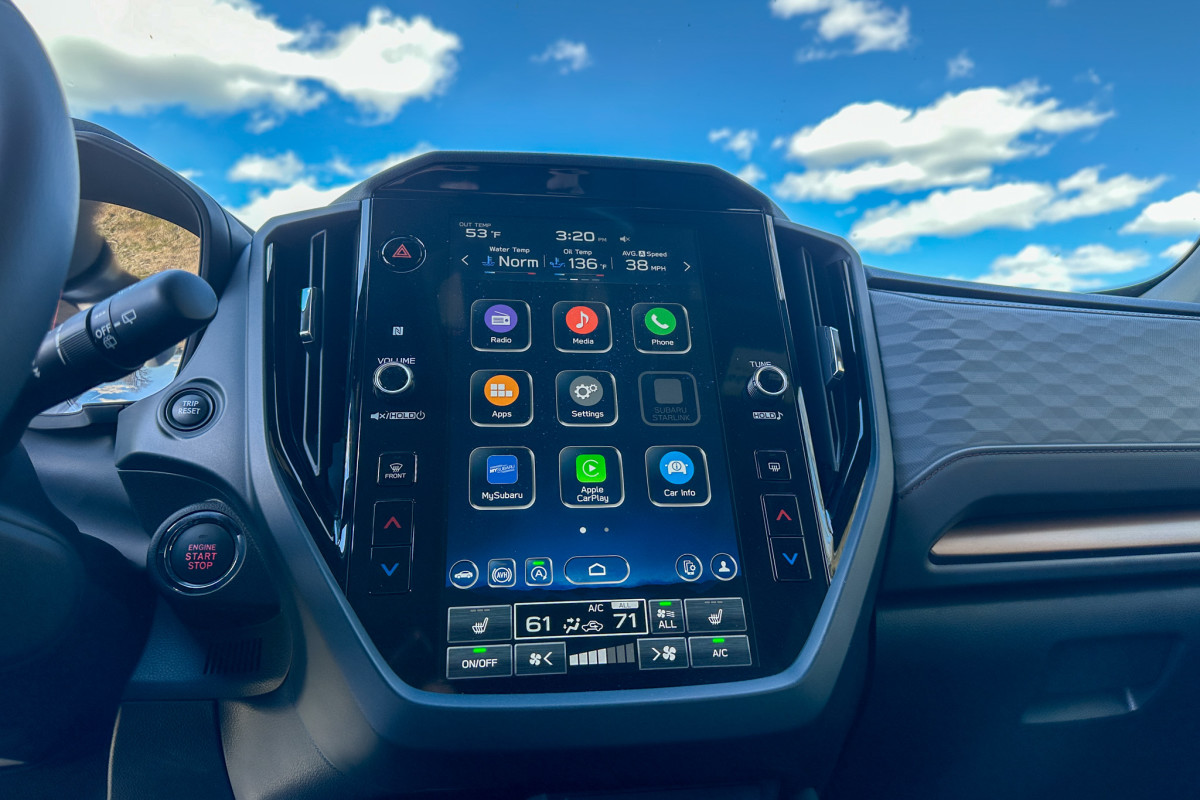
Subaru’s 11.6-inch Multimedia Plus infotainment system finally joins the Forester lineup for 2025. It’s standard on all but the base trim, and it includes wireless Apple CarPlay and Android Auto. The base Forester continues to provide two 7-inch touchscreens and wired smartphone projection. Touring and up also get dual USB-A and USB-C ports up front, as well as a wireless charging pad. (The base model supports both USB-A and USB-C but has fewer ports.) Bluetooth and SiriusXM are standard.
A navigation system becomes standard on the Limited and Premier trim levels. It’s voice-activated, powered by TomTom and SiriusXM Travel Link, and utilizes “what3words” technology. An 11-speaker Harman Kardon sound system also comes standard on the top three trims.
Subaru’s Starlink connected services suite is not new to the Forester model, but it does have additional capabilities for the 2025 Forester. These include a Valet Mode, Remote Vehicle Configuration, and a Trip Log and Driving Journal.
Starlink Connected Services is also involved in a new available safety feature: Emergency Stop Assist. When adaptive cruise control is in use, if the system detects that the driver has become unresponsive, it will first try to regain their attention. If it fails, it will slow the vehicle to a stop, notify emergency services, activate the hazard lights, and unlock the doors to allow access when help arrives. While adaptive cruise control is standard, Emergency Stop Assist is only available on vehicles equipped with the driver distraction-mitigation system, which essentially limits it to the Limited and Premier trims. Blind spot monitoring, rear cross-traffic alert, and a lane change assist system come in at the Touring grade.
Top-trim features aside, the 2025 Forester is still well-equipped on the safety front, as family vehicles are expected to be. In addition to a rear seat reminder system, Subaru’s EyeSight suite of advanced driver-assistance technology comes standard, and enhancements for 2025 include a wider field of view courtesy of a third standard camera which allows the system to spot cyclists and pedestrians earlier. An electric brake booster has been added as well.
The 2025 Subaru Forester is too new as of this writing to have been crash-tested by the Insurance Institute for Highway Safety (IIHS) or the National Highway Traffic Safety Administration (NHTSA). The 2024 model earned a Top Safety Pick award from the IIHS and a five-star rating from the NHTSA, so Subaru’s high hopes for this new and improved iteration seem justified.
Nobody likes to see a price increase. With a base price of $36,174, including the $2,295 destination charge and other fees, the 2025 Subaru Forester is roughly $1,500 more expensive than the outgoing Forester. That does come, however, with enhancements to the advanced safety features and other updates. At the other end of the spectrum, the fully loaded Forester Premier starts at $47,674 fees in, which represents a similar price increase.
As of this writing, 2025 model year prices are not yet available for the Forester’s key competitors, but since none are due for a redesign in 2025, we can speculate that pricing will look similar. We’ll also bear in mind that the Forester comes standard with AWD. The 2024 Toyota RAV4 LE with AWD started at $36,215, while the 2025 Honda CR-V with AWD starts at $40,661. (Both prices include destination and other fees.) By this metric, Subaru’s offering looks quite reasonable.
Note: Images show a US model.

User reviews for 2025 Subaru Forester
Write a review2025 Subaru Forester Pricing
Trims & specs
Air Conditioning
Automatic climate control front air conditioning · Dual front air conditioning zones
Airbags
Dual front airbags · Driver knee airbags · Passenger airbag deactivation: occupant sensing deactivation · Front side airbags · Rear side curtain airbags
Audio System
Antenna Type: mast · Voice recognition audio system · Auxiliary audio input: jack · Aha internet radio · Pandora internet radio · HD radio · Satellite Radio: SiriusXM · Total Number of Speakers: 4
Brakes
ABS: 4-wheel · Braking assist: hill start assist · Electronic parking brake: auto off · Front brake diameter: 12.4 · Front brakes: ventilated disc · Rear brake diameter: 11.8 · Rear brakes: ventilated disc
Comfort Features
Center console trim: leatherette · Dash Trim: Leatherette · Door trim: cloth · Floor Mat Material: carpet · Floor Material: carpet · Floor Mats: front · Shift knob trim: urethane · Steering wheel trim: urethane
Convenience Features
Adaptive stop and go cruise control: semi-automatic · Assist handle: front · Autonomous lane guidance: lane centering · Cargo area power outlet: 12V · Center console: with lighting · Console Insert: organizer tray · Cruise control: adaptive · Cupholders: rear · Multi-function remote: trunk release · One-touch windows: 1 · Power outlet(s): 12V front · Power steering: speed-proportional · Power windows: lockout button · Reading lights: front · Steering wheel: tilt and telescopic · Steering wheel mounted controls: phone · Storage: door pockets · Vanity mirrors: dual
Driver Seat
Manual adjustments: 6
Drivetrain
4WD Type: full time · Axle ratio: 3.70
Engine
Alternator: 150 amps · Battery: maintenance-free
Exterior Features
Bumper detail: front underguard · Door handle color: body-color · Exhaust tip color: stainless-steel · Fender lip moldings: black · Front bumper color: body-color · Grille color: black · Headlamp bezel color: black · Mirror color: black · Rear bumper color: black · Rear spoiler: roofline spoiler · Rear spoiler color: body-color · Rear trunk/liftgate: liftgate · Rocker panel color: black · Window trim: black
Headrests
Front headrests: adjustable · Number of front headrests: 2 · Number of rear headrests: 3
In Car Entertainment
Connected in-car apps: SiriusXM Travel Link · Infotainment: Apply CarPlay ready · Infotainment screen size: 7 in. (dual)
Instrumentation
Fuel economy display: MPG · Instrument cluster screen size: 4.2 in. · Warnings and reminders: maintenance reminder
Lights
Exterior entry lights: security approach lamps · Headlights: cornering · Tail and brake lights: LED
Mirrors
Exterior mirrors: power · Inside rearview mirror: manual day/night
Passenger Seat
Manual Adjustments: 4
Rear Seats
Type: 60-40 split bench
Roof
Roof rails: black
Safety
Automatic emergency braking: intersection/junction turn · Camera system: rearview · Camera system washer: rear · Child seat anchors: LATCH system · Crumple zones: rear · Impact absorbing seats: dual front · Impact sensor: fuel cut-off · Parking sensors: rear · Pre-Collision Warning System: audible warning · Pre-collision warning system: intersection/junction turn · Rearview monitor: in dash
Seatbelts
Emergency locking retractors: front · Front seatbelts: 3-point · Seatbelt force limiters: front · Seatbelt pretensioners: front · Seatbelt warning sensor: driver and passenger · Second row seatbelts: 3-point
Seats
Driver seat manual adjustments: height · Front seat type: bucket · Passenger seat manual adjustments: reclining · Rear headrests: adjustable · Rear seat folding: split · Upholstery: contrast stitching
Security
Power door locks: anti-lockout
Spare Tire
Mount Location: inside · Size: temporary
Spare Wheel
Rim Type: steel
Stability and Traction
Traction control: with trailer stability control
Steering
Steering ratio: 13.0 · Turns lock-to-lock: 2.6
Suspension
Front Arm Type: lower control arms · Front Shock Type: gas shock absorbers · Front Spring Type: coil springs · Front Suspension Classification: independent · Front Suspension Type: MacPherson struts · Rear Shock Type: gas shock absorbers · Rear Spring Type: coil springs · Rear Suspension Classification: independent · Rear Suspension Type: double wishbone · Stabilizer bar(s): rear
Telematics
Electronic messaging assistance: with voice recognition · Phone: voice activated · Phone wireless data link: Bluetooth · Smart device app compatibility: MySubaru
Tires
Type: all season
Tires and Rims
Wheels: painted aluminum
Windows
Front wipers: variable intermittent · Laminated glass: acoustic · Liftgate window: fixed · Power windows: with safety reverse · Rear wiper: intermittent
Air Conditioning
Automatic climate control front air conditioning · Dual front air conditioning zones
Airbags
Dual front airbags · Driver knee airbags · Passenger airbag deactivation: occupant sensing deactivation · Front side airbags · Front side curtain airbags
Audio System
Antenna Type: mast · Voice recognition audio system · Bluetooth auxiliary audio input · Aha internet radio · Pandora internet radio · Touch screen display radio · Satellite Radio: SiriusXM · Total Number of Speakers: 6
Brakes
ABS: 4-wheel · Braking assist: hill start assist · Electronic parking brake: auto off · Front brake diameter: 12.4 · Front brakes: ventilated disc · Rear brake diameter: 11.8 · Rear brakes: ventilated disc
Comfort Features
Armrests: rear center with cupholders · Center console trim: leatherette · Dash Trim: Leatherette · Door trim: cloth · Floor Mat Material: carpet · Floor Material: carpet · Floor Mats: front · Shift knob trim: simulated leather · Steering wheel trim: leather
Convenience Features
Adaptive stop and go cruise control: semi-automatic · Assist handle: front · Autonomous lane guidance: lane centering · Cargo area power outlet: 12V · Cargo cover: retractable · Center console: front console with armrest and storage · Console Insert: organizer tray · Cruise control: adaptive · Cupholders: front · Multi-function remote: proximity entry system · One-touch windows: 2 · Power outlet(s): 12V front · Power steering: speed-proportional · Power windows: lockout button · Reading lights: front · Steering wheel: tilt and telescopic · Steering wheel mounted controls: cruise controls · Storage: grocery bag holder · Vanity mirrors: dual illuminating
Driver Seat
Adjustable lumbar support: power · Power adjustments: 10
Drivetrain
4WD Type: full time · Axle ratio: 3.70
Engine
Alternator: 150 amps · Battery: maintenance-free
Exterior Features
Bumper detail: rear underguard · Door handle color: body-color · Exhaust tip color: stainless-steel · Fender lip moldings: black · Front bumper color: body-color · Grille color: black · Headlamp bezel color: black · Mirror color: black · Rear bumper color: black · Rear spoiler: roofline spoiler · Rear spoiler color: body-color · Rear trunk/liftgate: liftgate · Rocker panel color: black · Window trim: black
Headrests
Front headrests: adjustable · Number of front headrests: 2 · Number of rear headrests: 3
In Car Entertainment
Connected in-car apps: Google search · Infotainment: STARLINK · Infotainment screen size: 11.6 in. · Smartphone integration: wireless Apple CarPlay
Instrumentation
Fuel economy display: MPG · Instrument cluster screen size: 4.2 in. · Warnings and reminders: low fuel level
Lights
Exterior entry lights: security approach lamps · Front fog lights: LED · Headlights: wiper activated · Tail and brake lights: LED
Mirrors
Exterior mirrors: heated · Inside rearview mirror: manual day/night
Passenger Seat
Manual Adjustments: 4
Rear Seats
Type: 60-40 split bench
Roof
Moonroof: sliding sunshade · Roof rails: black
Safety
Automatic emergency braking: front · Camera system: rearview · Camera system washer: rear · Child seat anchors: LATCH system · Crumple zones: rear · Impact absorbing seats: dual front · Impact sensor: alert system · Parking sensors: rear · Pre-Collision Warning System: visual warning · Pre-collision warning system: intersection/junction turn · Rearview monitor: in dash
Seatbelts
Emergency locking retractors: front · Front seatbelts: 3-point · Seatbelt force limiters: front · Seatbelt pretensioners: front · Seatbelt warning sensor: driver and passenger · Second row seatbelts: 3-point
Seats
Driver seat power adjustments: reclining · Front seat type: bucket · Passenger seat manual adjustments: reclining · Rear headrests: adjustable · Rear seat folding: split · Rear seat manual adjustments: reclining · Upholstery: premium cloth
Security
Power door locks: anti-lockout
Spare Tire
Mount Location: inside · Size: temporary
Spare Wheel
Rim Type: steel
Stability and Traction
Traction control: with trailer stability control
Steering
Steering ratio: 13.0 · Turns lock-to-lock: 2.6
Suspension
Front Arm Type: lower control arms · Front Shock Type: gas shock absorbers · Front Spring Type: coil springs · Front Suspension Classification: independent · Front Suspension Type: MacPherson struts · Rear Shock Type: gas shock absorbers · Rear Spring Type: coil springs · Rear Suspension Classification: independent · Rear Suspension Type: double wishbone · Stabilizer bar(s): rear
Telematics
Driver assistance app: roadside assistance · Electronic messaging assistance: with read function · Phone: voice activated · Phone wireless data link: Bluetooth · Smart device app compatibility: MySubaru · Smart device app function: vehicle location · Wifi: hotspot compatible
Tires
Type: all season
Tires and Rims
Wheels: painted aluminum
Windows
Front wipers: variable intermittent · Laminated glass: acoustic · Liftgate window: fixed · Power windows: with safety reverse · Rear wiper: auto-on in reverse
Air Conditioning
Automatic climate control front air conditioning · Dual front air conditioning zones
Airbags
Dual front airbags · Driver knee airbags · Passenger airbag deactivation: occupant sensing deactivation · Front side airbags · Rear side curtain airbags
Audio System
Antenna Type: diversity · Voice recognition audio system · USB auxiliary audio input · Aha internet radio · Pandora internet radio · HD radio · Satellite Radio: SiriusXM · Total Number of Speakers: 6
Brakes
ABS: 4-wheel · Braking assist: hill start assist · Electronic parking brake: auto off · Front brake diameter: 12.4 · Front brakes: ventilated disc · Rear brake diameter: 11.8 · Rear brakes: ventilated disc
Comfort Features
Armrests: rear center with cupholders · Center console trim: leatherette · Dash Trim: Leatherette · Door trim: leatherette · Floor Mat Material: carpet · Floor Material: carpet · Floor Mats: front · Shift knob trim: simulated leather · Steering wheel trim: leather
Convenience Features
Adaptive stop and go cruise control: semi-automatic · Assist handle: front · Autonomous lane guidance: lane centering · Cargo area power outlet: 12V · Cargo cover: retractable · Center console: with lighting · Console Insert: organizer tray · Cruise control: adaptive · Cupholders: front · Multi-function remote: keyless entry with panic alarm · One-touch windows: 2 · Power outlet(s): 12V front · Power steering: speed-proportional · Power windows: lockout button · Reading lights: rear · Steering wheel: tilt and telescopic · Steering wheel mounted controls: paddle shifter · Storage: grocery bag holder · Vanity mirrors: dual illuminating
Driver Seat
Adjustable lumbar support: power · Power adjustments: 10
Drivetrain
4WD Type: full time · Axle ratio: 3.70
Engine
Alternator: 150 amps · Battery: maintenance-free
Exterior Features
Bumper detail: rear underguard · Door handle color: body-color · Exhaust tip color: stainless-steel · Fender lip moldings: black · Front bumper color: body-color · Grille color: black · Headlamp bezel color: black · Mirror color: black · Rear bumper color: black · Rear spoiler: roofline spoiler · Rear spoiler color: body-color · Rear trunk/liftgate: liftgate · Rocker panel color: black · Window trim: black
Headrests
Front headrests: adjustable · Number of front headrests: 2 · Number of rear headrests: 3
In Car Entertainment
Connected in-car apps: Google POIs · Infotainment: STARLINK · Infotainment screen size: 11.6 in. · Smartphone integration: wireless Apple CarPlay
Instrumentation
Fuel economy display: range · Instrument cluster screen size: 4.2 in. · Warnings and reminders: low washer fluid
Lights
Exterior entry lights: security approach lamps · Front fog lights: LED · Headlights: Auto on/off · Tail and brake lights: LED
Mirrors
Exterior mirrors: integrated turn signals · Inside rearview mirror: manual day/night
Passenger Seat
Manual Adjustments: 4
Rear Seats
Type: 60-40 split bench
Roof
Moonroof: power panoramic · Roof rails: black
Safety
Automatic emergency braking: intersection/junction turn · Camera system: rearview · Camera system washer: rear · Child seat anchors: LATCH system · Cross Traffic Alert: rear · Crumple zones: front · Impact absorbing seats: dual front · Impact sensor: alert system · Parking sensors: rear · Pre-Collision Warning System: visual warning · Pre-collision warning system: intersection/junction turn · Rearview monitor: in dash
Seatbelts
Emergency locking retractors: front and rear · Front seatbelts: 3-point · Seatbelt force limiters: front · Seatbelt pretensioners: front · Seatbelt warning sensor: driver and passenger · Second row seatbelts: 3-point
Seats
Driver seat power adjustments: reclining · Front seat type: bucket · Passenger seat manual adjustments: reclining · Rear headrests: adjustable · Rear seat folding: split · Rear seat manual adjustments: reclining · Upholstery: contrast stitching
Security
Power door locks: anti-lockout
Spare Tire
Mount Location: inside · Size: temporary
Spare Wheel
Rim Type: steel
Stability and Traction
Traction control: with trailer stability control
Steering
Steering ratio: 13.0 · Turns lock-to-lock: 2.6
Suspension
Front Arm Type: lower control arms · Front Shock Type: gas shock absorbers · Front Spring Type: coil springs · Front Suspension Classification: independent · Front Suspension Type: MacPherson struts · Rear Shock Type: gas shock absorbers · Rear Spring Type: coil springs · Rear Suspension Classification: independent · Rear Suspension Type: double wishbone · Stabilizer bar(s): rear
Telematics
Driver assistance app: roadside assistance · Electronic messaging assistance: with voice recognition · Phone: voice activated · Phone wireless data link: Bluetooth · Smart device app compatibility: MySubaru · Smart device app function: maintenance status · Wifi: hotspot compatible
Tires
Type: all season
Tires and Rims
Wheels: painted aluminum
Windows
Front wipers: variable intermittent · Laminated glass: acoustic · Liftgate window: fixed · Power windows: with safety reverse · Rear wiper: with washer
Air Conditioning
Automatic climate control front air conditioning · Dual front air conditioning zones
Airbags
Dual front airbags · Driver knee airbags · Passenger airbag deactivation: occupant sensing deactivation · Front side airbags · Front side curtain airbags
Audio System
Antenna Type: mast · Voice recognition audio system · Auxiliary audio input: jack · Aha internet radio · Pandora internet radio · Touch screen display radio · Satellite Radio: SiriusXM · Total Number of Speakers: 6
Brakes
ABS: 4-wheel · Braking assist: hill start assist · Electronic parking brake: auto off · Front brake diameter: 12.4 · Front brakes: ventilated disc · Rear brake diameter: 11.2 · Rear brakes: ventilated disc
Comfort Features
Armrests: rear center with cupholders · Cargo area floor mat: rubber/vinyl · Center console trim: leatherette · Dash trim: metallic · Door trim: leatherette · Floor Mat Material: vinyl/rubber · Floor Material: carpet · Floor Mats: front · Foot pedal trim: alloy · Shift knob trim: simulated leather · Steering wheel trim: leather
Convenience Features
Adaptive stop and go cruise control: semi-automatic · Assist handle: front · Autonomous lane guidance: lane centering · Camera System: Front · Cargo area power outlet: 12V · Cargo cover: retractable · Center console: front console with armrest and storage · Console Insert: organizer tray · Cruise control: adaptive · Cupholders: front · Multi-function remote: trunk release · One-touch windows: 2 · Power outlet(s): 12V front · Power steering: speed-proportional · Power windows: lockout button · Reading lights: rear · Rear power outlet: 12V · Steering wheel: tilt and telescopic · Steering wheel mounted controls: audio · Storage: front seatback · Vanity mirrors: dual illuminating
Driver Seat
Adjustable lumbar support: power · Power adjustments: 10
Drivetrain
4WD Type: full time · Axle ratio: 4.11 · Limited slip differential: rear
Engine
Alternator: 150 amps · Battery: maintenance-free · Oil cooler: auxiliary
Exterior Features
Bumper detail: rear underguard · Door handle color: body-color · Exhaust tip color: stainless-steel · Fender lip moldings: black · Front bumper color: chrome accents · Grille color: black · Headlamp bezel color: black · Mirror color: black · Rear bumper color: black · Rear spoiler: roofline spoiler · Rear spoiler color: body-color · Rear trunk/liftgate: liftgate · Rocker panel color: black · Skid plate(s): engine · Window trim: black
Headrests
Front headrests: adjustable · Number of front headrests: 2 · Number of rear headrests: 3
In Car Entertainment
Connected in-car apps: Yelp · Infotainment: Android Auto ready · Infotainment screen size: 8 in.
Instrumentation
Fuel economy display: MPG · Instrument cluster screen size: 4.2 in. · Warnings and reminders: low fuel level
Lights
Exterior entry lights: security approach lamps · Front fog lights: LED · Headlights: auto delay off · Tail and brake lights: LED
Mirrors
Exterior mirrors: power · Inside rearview mirror: manual day/night
Passenger Seat
Manual Adjustments: 4
Rear Seats
Type: 60-40 split bench
Roof
Moonroof: sliding sunshade · Roof rails: black
Safety
Automatic emergency braking: front · Camera system: rearview · Camera system washer: rear · Child seat anchors: LATCH system · Cross Traffic Alert: rear · Crumple zones: rear · Impact absorbing seats: dual front · Impact sensor: alert system · Parking sensors: rear · Pre-Collision Warning System: audible warning · Pre-collision warning system: pedestrian detection · Rearview monitor: in dash
Seatbelts
Emergency locking retractors: front and rear · Front seatbelts: 3-point · Seatbelt force limiters: front · Seatbelt pretensioners: front · Seatbelt warning sensor: driver and passenger · Second row seatbelts: 3-point
Seats
Driver seat power adjustments: height · Front seat type: bucket · Passenger seat manual adjustments: reclining · Rear headrests: adjustable · Rear seat folding: one-touch fold flat · Rear seat manual adjustments: reclining · Upholstery: contrast stitching · Upholstery accents: leatherette
Security
Power door locks: anti-lockout
Spare Tire
Mount Location: inside · Size: full-size
Spare Wheel
Rim Type: steel
Stability and Traction
Traction control: with trailer stability control
Steering
Steering ratio: 13.0 · Turns lock-to-lock: 2.6
Suspension
Front Arm Type: lower control arms · Front Shock Type: gas shock absorbers · Front Spring Type: coil springs · Front Suspension Classification: independent · Front Suspension Type: MacPherson struts · Rear Shock Type: gas shock absorbers · Rear Spring Type: coil springs · Rear Suspension Classification: independent · Rear Suspension Type: double wishbone · Stabilizer bar(s): rear
Telematics
Driver assistance app: roadside assistance · Electronic messaging assistance: with voice recognition · Phone: voice activated · Phone wireless data link: Bluetooth · Smart device app compatibility: MySubaru · Smart device app function: maintenance scheduling · Wifi: hotspot compatible
Tires
Type: all terrain
Tires and Rims
Wheels: painted aluminum
Windows
Front wipers: variable intermittent · Laminated glass: acoustic · Liftgate window: fixed · Power windows: with safety reverse · Rear wiper: intermittent
Air Conditioning
Automatic climate control front air conditioning · Dual front air conditioning zones
Airbags
Dual front airbags · Driver knee airbags · Passenger airbag deactivation: occupant sensing deactivation · Front side airbags · Front side curtain airbags
Audio System
Antenna Type: diversity · Voice recognition audio system · USB auxiliary audio input · Aha internet radio · Stitcher internet radio · AM/FM radio · Satellite Radio: SiriusXM · Total Number of Speakers: 6
Brakes
ABS: 4-wheel · Braking assist: hill start assist · Electronic parking brake: auto off · Front brake diameter: 12.4 · Front brakes: ventilated disc · Rear brake diameter: 11.8 · Rear brakes: ventilated disc
Comfort Features
Armrests: rear center with cupholders · Center console trim: leatherette · Dash Trim: Leatherette · Door trim: leatherette · Floor Mat Material: carpet · Floor Material: carpet · Floor Mats: front · Shift knob trim: simulated leather · Steering wheel trim: leather
Convenience Features
Adaptive stop and go cruise control: semi-automatic · Assist handle: rear · Autonomous lane guidance: lane centering · Cargo area power outlet: 12V · Cargo cover: retractable · Center console: front console with armrest and storage · Console Insert: organizer tray · Cruise control: adaptive · Cupholders: rear · Memorized settings: liftgate · Multi-function remote: keyless entry with panic alarm · One-touch windows: 2 · Power outlet(s): 12V front · Power steering: electric · Power windows: lockout button · Reading lights: front · Steering wheel: tilt and telescopic · Steering wheel mounted controls: multi-function screen controls · Storage: sunglasses holder · Vanity mirrors: dual illuminating
Driver Seat
Adjustable lumbar support: power · Power adjustments: 10
Drivetrain
4WD Type: full time · Axle ratio: 3.70
Engine
Alternator: 150 amps · Battery: maintenance-free
Exterior Features
Bumper detail: front underguard · Door handle color: body-color · Exhaust tip color: stainless-steel · Fender lip moldings: black · Front bumper color: body-color · Grille color: black · Headlamp bezel color: black · Mirror color: black · Rear bumper color: black · Rear spoiler: roofline spoiler · Rear spoiler color: body-color · Rear trunk/liftgate: sensor-activated · Rocker panel color: black · Window trim: black
Headrests
Front headrests: adjustable · Number of front headrests: 2 · Number of rear headrests: 3
In Car Entertainment
Connected in-car apps: Yelp · Infotainment: STARLINK · Infotainment screen size: 11.6 in. · Smartphone integration: wireless Apple CarPlay
Instrumentation
Fuel economy display: range · Instrument cluster screen size: 4.2 in. · Warnings and reminders: lamp failure
Lights
Exterior entry lights: security approach lamps · Front fog lights: LED · Headlights: self-leveling · Tail and brake lights: LED
Mirrors
Exterior mirrors: heated · Inside rearview mirror: manual day/night
Passenger Seat
Power adjustments: 8
Rear Seats
Type: 60-40 split bench
Roof
Moonroof: one-touch open/close · Roof rails: black
Safety
Automatic emergency braking: front pedestrian · Camera system: rearview · Camera system washer: rear · Child seat anchors: LATCH system · Cross Traffic Alert: rear · Crumple zones: rear · Impact absorbing seats: dual front · Impact sensor: fuel cut-off · Parking sensors: rear · Pre-Collision Warning System: visual warning · Pre-collision warning system: pedestrian detection · Rearview monitor: in dash
Seatbelts
Emergency locking retractors: front · Front seatbelts: 3-point · Seatbelt force limiters: front · Seatbelt pretensioners: front · Seatbelt warning sensor: driver and passenger · Second row seatbelts: 3-point
Seats
Driver seat power adjustments: reclining · Front seat type: bucket · Passenger seat power adjustments: reclining · Rear headrests: adjustable · Rear seat folding: one-touch fold flat · Rear seat manual adjustments: reclining · Upholstery: perforated
Security
Power door locks: anti-lockout
Spare Tire
Mount Location: inside · Size: temporary
Spare Wheel
Rim Type: steel
Stability and Traction
Traction control: with trailer stability control
Steering
Steering ratio: 13.0 · Turns lock-to-lock: 2.6
Suspension
Front Arm Type: lower control arms · Front Shock Type: gas shock absorbers · Front Spring Type: coil springs · Front Suspension Classification: independent · Front Suspension Type: MacPherson struts · Rear Shock Type: gas shock absorbers · Rear Spring Type: coil springs · Rear Suspension Classification: independent · Rear Suspension Type: double wishbone · Stabilizer bar(s): front
Telematics
Driver assistance app: roadside assistance · Electronic messaging assistance: with read function · Phone: voice activated · Phone wireless data link: Bluetooth · Smart device app compatibility: MySubaru · Smart device app function: lock operation · Wifi: hotspot compatible
Tires
Type: all season
Tires and Rims
Wheels: painted aluminum
Windows
Front wipers: variable intermittent · Laminated glass: acoustic · Liftgate window: fixed · Power windows: with safety reverse · Rear wiper: auto-on in reverse
Air Conditioning
Automatic climate control front air conditioning · Dual front air conditioning zones
Airbags
Dual front airbags · Driver knee airbags · Passenger airbag deactivation: occupant sensing deactivation · Front side airbags · Front side curtain airbags
Audio System
Antenna Type: mast · Voice recognition audio system · USB auxiliary audio input · Aha internet radio · Stitcher internet radio · Premium Brand: Harman-Kardon · HD radio · Satellite Radio: SiriusXM · 1 subwoofer · Total Number of Speakers: 10 · 576 watts
Brakes
ABS: 4-wheel · Braking assist: hill start assist · Electronic parking brake: auto off · Front brake diameter: 12.4 · Front brakes: ventilated disc · Rear brake diameter: 11.8 · Rear brakes: ventilated disc
Comfort Features
Armrests: rear center with cupholders · Center console trim: leatherette · Dash Trim: Leatherette · Door trim: leatherette · Floor Mat Material: carpet · Floor Material: carpet · Floor Mats: front · Shift knob trim: leather · Steering wheel trim: leather
Convenience Features
Adaptive stop and go cruise control: semi-automatic · Assist handle: front · Autonomous lane guidance: lane centering · Cargo area power outlet: 12V · Cargo cover: retractable · Center console: with lighting · Console Insert: organizer tray · Cruise control: adaptive · Cupholders: rear · Dimming rearview mirror: auto-dimming · Memorized settings: side mirrors · Multi-function remote: keyless entry with panic alarm · One-touch windows: 2 · Power outlet(s): 12V front · Power steering: electric · Power windows: lockout button · Reading lights: rear · Rearview mirror: camera-based · Steering wheel: tilt and telescopic · Steering wheel mounted controls: audio · Storage: in-floor · Vanity mirrors: dual illuminating
Driver Seat
Adjustable lumbar support: power · Power adjustments: 10
Drivetrain
4WD Type: full time · Axle ratio: 3.70
Engine
Alternator: 150 amps · Battery: maintenance-free
Exterior Features
Bumper detail: rear underguard · Door handle color: body-color · Exhaust tip color: stainless-steel · Fender lip moldings: black · Front bumper color: body-color · Grille color: black · Headlamp bezel color: black · Mirror color: black · Rear bumper color: black · Rear spoiler: roofline spoiler · Rear spoiler color: body-color · Rear trunk/liftgate: liftgate · Rocker panel color: black · Window trim: black
Headrests
Front headrests: adjustable · Number of front headrests: 2 · Number of rear headrests: 3
In Car Entertainment
Connected in-car apps: Google POIs · Infotainment: STARLINK · Infotainment screen size: 11.6 in. · Smartphone integration: wireless Apple CarPlay
Instrumentation
Fuel economy display: range · Instrument cluster screen size: 4.2 in. · Warnings and reminders: maintenance reminder
Lights
Exterior entry lights: security approach lamps · Front fog lights: LED · Headlights: automatic high beam dimmer · Tail and brake lights: LED
Mirrors
Exterior mirrors: manual folding
Passenger Seat
Power adjustments: 8
Rear Seats
Type: 60-40 split bench
Roof
Moonroof: one-touch open/close · Roof rails: black
Safety
Automatic emergency braking: front · Camera system: surround view · Camera system washer: rear · Child seat anchors: LATCH system · Cross Traffic Alert: rear · Crumple zones: front · Impact absorbing seats: dual front · Impact sensor: door unlock · Parking sensors: rear · Pre-Collision Warning System: audible warning · Pre-collision warning system: pedestrian detection · Rearview monitor: in dash
Seatbelts
Emergency locking retractors: front and rear · Front seatbelts: 3-point · Seatbelt force limiters: front · Seatbelt pretensioners: front · Seatbelt warning sensor: driver and passenger · Second row seatbelts: 3-point
Seats
Driver seat power adjustments: reclining · Front seat type: bucket · Passenger seat power adjustments: reclining · Rear headrests: adjustable · Rear seat folding: one-touch fold flat · Rear seat manual adjustments: reclining · Upholstery: leather-trimmed · Upholstery accents: faux suede
Security
Power door locks: anti-lockout
Spare Tire
Mount Location: inside · Size: temporary
Spare Wheel
Rim Type: steel
Stability and Traction
Traction control: with trailer stability control
Steering
Steering ratio: 13.0 · Turns lock-to-lock: 2.6
Suspension
Front Arm Type: lower control arms · Front Shock Type: gas shock absorbers · Front Spring Type: coil springs · Front Suspension Classification: independent · Front Suspension Type: MacPherson struts · Rear Shock Type: gas shock absorbers · Rear Spring Type: coil springs · Rear Suspension Classification: independent · Rear Suspension Type: double wishbone · Stabilizer bar(s): front
Telematics
Driver assistance app: roadside assistance · Electronic messaging assistance: with voice recognition · Navigation app: TomTom · Navigation system: touch screen display · Phone: voice activated · Phone wireless data link: Bluetooth · Satellite communications: Turn-by-Turn Navigation · Smart device app compatibility: MySubaru · Smart device app function: maintenance scheduling · Wifi: hotspot compatible
Tires
Type: all season
Tires and Rims
Wheels: painted aluminum
Windows
Front wipers: variable intermittent · Laminated glass: acoustic · Liftgate window: fixed · Power windows: with safety reverse · Rear wiper: auto-on in reverse
