2025 Volkswagen Tiguan Reviews, Pricing & Specs
Write a review$30,245 to $40,505
Original MSRP
6
of 10
expert review
avg user rating
(0 reviews)
Pros
Comfortable
Quiet cabin
Cons
Not much cargo space
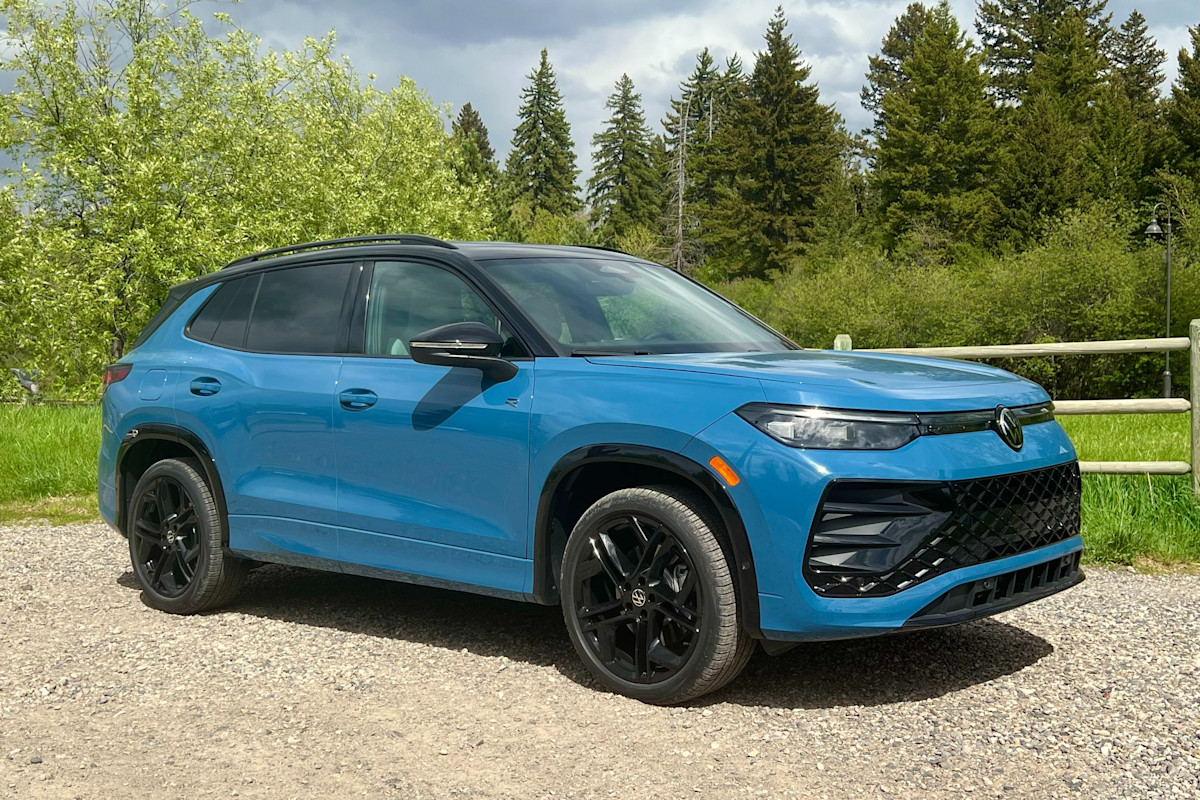
The redesigned 2025 Volkswagen Tiguan gets the fundamentals right.
The all-new 2025 Volkswagen Tiguan corrects the last generation's user interface issues while making incremental improvements throughout the rest of the vehicle. The company’s best-selling model in North America easily meets expectations for a compact SUV, and it’s the only entrant with that German look and feel. Otherwise, it doesn't distinguish itself from the rest of the pack.
Verdict: The new Tiguan is a handsome crossover and the only sub-luxury German option. However, amid an incredibly competitive field, the redesigned Tiguan does too little to separate itself from the crowd.

The 2025 Volkswagen Tiguan has been completely redesigned, marking the start of its third generation. This time around, it leaves behind much of its conventional compact SUV styling and adopts some of the sleek modernity that first appeared in VW's line of electric vehicles. That switch is most evident up front, where narrower headlights are joined in the centre by a plastic trim element that draws plenty of inspiration from the similarly sized ID.4 EV. In the top Highline R-Line trim, the VW badge and light bar are illuminated for more impact.
The grille — or at least the visual representation of the grille — appears larger than it did on the outgoing model and occupies the lower half of the front fascia. The actual grille openings are much smaller slits, though there are large air intakes flanking the grille. Combined, they take up almost the entirety of the front bumper and, to our eyes, may be too prominent. We wonder if more subtle grille styling could give the new car a sleeker and more streamlined appearance.
From the side, the rear seems to have a sportier tapering hatch, but that's mostly because of the roof pillar that is inset from the tail. It has a shallower angle than the actual hatch, and the fastback-like illusion is enhanced with a black contrasting roof and the dark-tinted windows. The hood also seems longer, and the nose sits a bit more upright and blunted. Front and rear overhangs have also been shortened, giving the Tiguan a slightly sportier silhouette. A sharply creased character line emerges at the front doors and continues over the rear wheel fenders, catching light and casting shadows to break up the vast expanses of sheet metal and make it look less "heavy."
Around the back, the previous Tiguan's conventional taillights have been replaced by a single bar that spans the liftgate. Just like the front, the logo and bar illuminate in the top trim. A hint of the front grille is stuck onto the rear bumper as a plastic trim piece and is just as proportionally oversized as the front. Overall, the exterior styling represents an evolution of previous themes, with a little influence from newer VW vehicles.
The Tiguan's interior receives a similar modernization, ditching the integrated centre touchscreen infotainment system with a tablet-like display that most other carmakers have implemented. It's joined by a digital instrument panel that is standard on all Tiguan trims. The dashboard itself is more minimalist than before. The physical climate controls have been moved to an anchored position at the bottom of the central touchscreen, eliminating the dash's previous centre stack and giving it a broader, more horizontal look that enhances the sensation of lateral space. The gear selector has also been moved from the centre console to the steering column, providing added storage space for your personal items.
Materials quality is what we'd consider about average for the compact SUV class, with soft-touch materials and padded sections where you're most likely to come into contact with them. The rear seats replace some of those nicer materials with plastic to ensure durability against children or pets. Covering the hard plastic centre console and door handles would noticeably improve the interior impression, giving it a slight advantage over many of its rivals.

Powering the 2025 Tiguan is a 2.0-litre turbocharged four-cylinder engine that is similar to the previous-gen Tiguan. Output increases to 201 horsepower from last year's 184 hp, but torque drops to 207 pound-feet compared to the previous 221 lb-ft. An eight-speed automatic transmission is the sole offering. In Canada, Volkswagen's 4Motion all-wheel drive (AWD) is standard.
Considering the similar power output to its predecessor, the new Tiguan will likely exhibit similar acceleration. We expect it will reach 100 km/h in 8.5 seconds or so, which is average for SUVs in this class. That's more than adequate for most drivers, and the Tiguan gets up to highway speeds with enough confidence that you're not compelled to floor the pedal. Unlike the previous Tiguan, this drivetrain delivers power more smoothly and linearly, with fewer surges or slow reactions.
Braking also instills confidence, with an appropriately weighted pedal that is easy to modulate and bring to a smooth stop that is free of lurches. The Tiguan's suspension is tuned to favour comfort and ably smooths over bumps and ruts in the road surface. It's not so soft as to make the SUV feel out of sorts on a winding mountain pass, though. It still exhibits plenty of its Germanic roots by cornering with just a hint of body roll that is well managed to keep it composed throughout the turn.
Adding to the comfortable atmosphere is the Tiguan's quiet cabin. Even on some coarser asphalt roads, tire noise is well-silenced and wind noise is undetectable at highway speeds.
The Tiguan isn't what we'd consider sporty, nor does it need to be. For the core customer, we think it's appropriately tuned for their mix of performance and comfort. There is a more powerful Turbo (with a capital "T") on the way for 2026, though. It will initially only be offered on the top Highline R-Line trim and increase output to 268 hp and 258 lb-ft. This will likely represent a more noticeable power boost and could be an intriguing alternative for more spirited drivers. On the flip side, Volkswagen has teased an upcoming hybrid powertrain, though we'll have to wait and see how much power it makes, how efficient it will be, and when it might arrive.

Unlike the last model, the 2025 VW Tiguan returns without a third row of seats. That may not be as much of a downgrade as it sounds since those seats were difficult to access, very limited in space, and very flat and minimally padded. And as a result of the third row delete, second row legroom increases by nearly 4 centimetres, giving longer-legged passengers plenty of room to stretch out. Headroom remains about the same and is enough to accommodate an average-sized adult, with room to spare.
As minor as it may initially sound, the most significant improvement is the elimination of most of the last Tiguan's capacitive-touch buttons. Unlike traditional buttons, these smooth and glossy elements were too easy to inadvertently activate, yet frustratingly annoying when they wouldn't register deliberate commands. The steering wheel has reverted to the old-style controls, which suffer from none of the capacitive-touch drawbacks and can be operated without having to take your eyes off the road.
From the driver's seat, outward visibility is comparable to most other small SUVs. The front roof pillars are narrow enough not to impede your view through sharp left turns, and the rear window is just big enough to show what's following you from a distance.
With the gear shifter out of the way, the centre console allows for more storage. Two moderately sized cupholders now occupy that space, along with a narrow slot that could hold your passenger's smartphone. Further back, a long and fairly deep armrest bin can easily swallow larger objects, and the armrest itself slides forward or backward and is height-adjustable to match your preferred position. Large door pockets can accept any overflow and are big enough for larger water bottles.
The 2025 Volkswagen Tiguan can hold up to 1,668 litres of cargo behind the first-row seatbacks. Curiously, cargo capacity behind the second row has not yet been finalized as of this writing. The last-generation Tiguan could accommodate as much as 1,065 litres, but this new cargo area at least looks smaller than before. The angled liftgate hatch limits loading of bulkier objects, but deep pockets behind the wheel humps could make for convenient and secure storage for smaller items. There is no notable under-floor storage as it's mostly taken up by the spare tire.
On the plus side, the Tiguan features remote seatback releases in the cargo area, and you can fold those rear seats flat with the floor with very little effort. Helping matters is a power liftgate that is standard on all but the base Tiguan Trendline trim, and hands-free operation is standard on the top Highline R-Line.

All Tiguan models come standard with a digital instrument panel and a 12.9-inch infotainment touchscreen. A 15-inch display is standard on the top trim and includes a native navigation system. We typically suggest upgrading to larger screens, but in this case, most drivers will find the standard touchscreen plenty big.
With standard wireless Apple CarPlay and Android Auto, we doubt many drivers will miss built-in navigation. Our smartphones typically have all the contact and travel information we need. Both CarPlay and Android Auto pair well with the standard wireless phone charger in the centre armrest bin. A spring-loaded clip securely holds your device to the side of the bin, and a built-in cooling fan ensures that it can both charge and wirelessly project without overheating.
Capacitive-touch sliders still adorn the infotainment screen frame, but thankfully, you won't have to interact with them much. A new volume knob is prominently situated on the centre console and is vastly easier to use than the slider. That knob also controls the various drive modes.
The standard audio has seven speakers, and it performs well for a base system. A 12-speaker Harman Kardon premium audio system is available on the top trim. Also offered is VW's Car-Net system that includes remote monitoring and control.

As of this writing, crash test results are not yet available from either the National Highway Traffic Safety Administration (NHTSA) or the Insurance Institute for Highway Safety (IIHS). Standard advanced safety features include forward collision warning with automatic emergency braking, adaptive cruise control, a blind-spot monitor with rear cross-traffic alert, lane-keep assist, safe passenger exit warnings, parking sensors, and automatic high beams. If the driver is incapacitated, the Emergency Assist system will automatically slow the vehicle to a stop and activate the hazard lights. Also included is post-collision braking that automatically clamps the brakes down in the event of a crash, reducing the likelihood of secondary impacts.
Stepping up to the Highline R-Line adds a head-up display, surround-view camera system, and a traffic sign reader.
In our time with the midrange Tiguan trim, all the safety and driver assist features functioned just as they should. We never experienced any false alarms or oversensitivity issues. The lane-keep assist also has a sensible amount of pull on the steering wheel, letting you know if you're starting to drift out of your lane, but not so strong as to make you feel as though you're fighting against the system.

The manufacturer's suggested retail price (MSRP) for the 2025 Volkswagen Tiguan in Canada starts at $39,331 for the base Trendline trim, including the $2,200 destination charge and other fees. Stepping up to Comfortline brings the price up to $42,831, while the Comfortline R-Line sport appearance package is priced at $46,331. The top Highline R-Line trim comes to $50,331. The base model comes very well equipped and should satisfy most shoppers in the compact SUV segment. Graduating to higher trims adds several niceties, but not much that will significantly change the Tiguan's character.
Natural Resources Canada estimates fuel economy in the 2025 Volkswagen Tiguan at 10.5 litres per 100 kilometres in city driving, 7.8 on the highway, and 9.3 combined.
Price-wise, the Tiguan is right in there with other top compact SUVs. The Mazda CX-50 represents the sportier side of the segment and further benefits from a luxury-adjacent interior in its top trims. On top of that, it also comes in a light off-road version. The Honda CR-V is an all-around leader in the class, delivering more family-friendly features, clever storage solutions, and a very fuel-efficient hybrid variant. There's also the value-oriented Kia Sportage and the related Hyundai Tucson, neither of which skimp on quality, but both come up a little short in terms of performance. The popular Toyota RAV4 also leaves some to be desired regarding driving dynamics, but it's also due for a full redesign in 2026.
As it stands, the 2025 VW Tiguan represents a comprehensive improvement over its predecessor, making it worthy of consideration against the best in class. It doesn't hold any distinctions to put it over the top, but more importantly, it doesn't have any drawbacks that could be considered a deal breaker. That gives it broad appeal for the majority of shoppers in this class. Knowing that a more powerful engine and a more efficient hybrid are on the way, its attractiveness should only grow.

User reviews for 2025 Volkswagen Tiguan
Write a review2025 Volkswagen Tiguan Pricing
Trims & specs
Air Conditioning
Automatic climate control front air conditioning · Dual front air conditioning zones
Airbags
Dual front airbags · Driver knee airbags · Passenger airbag deactivation: occupant sensing deactivation · Front side airbags · Rear side curtain airbags
Audio System
Antenna Type: diversity · Voice recognition audio system · Bluetooth auxiliary audio input · AM/FM radio · Satellite Radio: SiriusXM · Total Number of Speakers: 7
Brakes
ABS: 4-wheel · Braking assist: hill start assist · Electronic parking brake: auto off · Front brake diameter: 12.0 · Front brake width: 1.02 · Front brakes: ventilated disc · Rear brake diameter: 11.8 · Rear brake width: 0.47 · Rear brakes: disc
Comfort Features
Armrests: rear center with cupholders · Dash trim: metallic · Floor Material: cargo area carpet · Steering wheel trim: leatherette
Convenience Features
Adaptive stop and go cruise control: semi-automatic · Assist handle: rear · Autonomous lane guidance: lane centering · Cargo area power outlet: 12V · Center console: front console with armrest and storage · Cruise control: adaptive · Cupholders: front · Multi-function remote: proximity entry system · One-touch windows: 4 · Power outlet(s): USB-C rear · Power steering: speed-proportional · Power windows: lockout button · Reading lights: front · Steering wheel: tilt and telescopic · Steering wheel mounted controls: multi-function screen controls · Storage: dual level cargo area · Vanity mirrors: dual illuminating
Driver Seat
Manual adjustments: 6
Drivetrain
Axle ratio: 2.94
Engine
Battery: maintenance-free
Exterior Features
Door handle color: body-color · Fender lip moldings: black · Front bumper color: body-color · Grille color: black · Mirror color: body-color · Rear spoiler: roofline spoiler · Rear spoiler color: body-color · Rear trunk/liftgate: liftgate · Rocker panel color: silver · Window trim: chrome
Headrests
Front headrests: adjustable · Number of front headrests: 2 · Number of rear headrests: 3
In Car Entertainment
Connected in-car apps: Google search · Infotainment: MIB4 · Infotainment screen size: 12.9 in. · Smartphone integration: wireless Apple CarPlay
Instrumentation
Fuel economy display: range · Instrument cluster screen size: 10.25 in. · Warnings and reminders: lamp failure
Lights
Daytime running lights: LED · Exterior entry lights: security approach lamps · Headlights: Auto on/off · Tail and brake lights: LED
Mirrors
Exterior mirrors: integrated turn signals · Inside rearview mirror: manual day/night
Passenger Seat
Manual Adjustments: 6
Rear Seats
Type: 60-40 split bench
Roof
Roof rails: silver
Safety
Automatic emergency braking: front pedestrian · Camera system: rearview · Camera system washer: rear · Child seat anchors: LATCH system · Cross Traffic Alert: rear · Crumple zones: front · Impact sensor: fuel cut-off · Parking sensors: rear · Pre-Collision Warning System: audible warning · Pre-collision warning system: pedestrian detection · Rearview monitor: in dash
Seatbelts
Emergency locking retractors: front and rear · Front seatbelts: 3-point · Seatbelt force limiters: front · Seatbelt pretensioners: front and rear · Seatbelt warning sensor: driver and passenger · Second row seatbelts: 3-point
Seats
Driver seat manual adjustments: reclining · Front seat type: bucket · Passenger seat manual adjustments: reclining · Rear seat folding: split · Upholstery: cloth
Security
Power door locks: anti-lockout
Spare Tire
Mount Location: inside · Size: temporary
Spare Wheel
Rim Type: steel
Stability and Traction
Traction control: with trailer stability control
Steering
Steering ratio: 13.3 · Turns lock-to-lock: 2.6
Suspension
Front Arm Type: lower control arms · Front Shock Type: gas shock absorbers · Front Spring Type: coil springs · Front Suspension Classification: independent · Front Suspension Type: MacPherson struts · Rear Shock Type: gas shock absorbers · Rear Spring Type: coil springs · Rear Suspension Classification: independent · Rear Suspension Type: multi-link · Stabilizer bar(s): front
Telematics
Driver assistance app: roadside assistance · Electronic messaging assistance: with voice recognition · Phone: voice activated · Phone wireless data link: Bluetooth · Smart device app compatibility: Car-Net · Smart device app function: vehicle location · Wifi: hotspot
Tires
Type: all season
Tires and Rims
Wheels: polished aluminum
Towing and Hauling
Trailer hitch: ready
Wheels
Wheel locks: front and rear
Windows
Front wipers: rain sensing · Liftgate window: fixed · Power windows: with safety reverse · Rear wiper: with washer
Air Conditioning
Automatic climate control front air conditioning · Dual front air conditioning zones
Airbags
Dual front airbags · Driver knee airbags · Passenger airbag deactivation: occupant sensing deactivation · Front side airbags · Front side curtain airbags
Audio System
Antenna Type: diversity · Voice recognition audio system · USB auxiliary audio input · HD radio · Satellite Radio: SiriusXM · Total Number of Speakers: 7
Brakes
ABS: 4-wheel · Braking assist: hill start assist · Electronic parking brake: auto off · Front brake diameter: 13.4 · Front brake width: 1.18 · Front brakes: ventilated disc · Rear brake diameter: 11.8 · Rear brake width: 0.47 · Rear brakes: disc
Comfort Features
Armrests: rear center with cupholders · Dash trim: metallic · Floor Material: carpet · Steering wheel trim: leatherette
Convenience Features
Adaptive stop and go cruise control: semi-automatic · Assist handle: rear · Autonomous lane guidance: lane centering · Cargo area power outlet: 12V · Center console: dual level · Cruise control: adaptive · Cupholders: front · Multi-function remote: trunk release · One-touch windows: 4 · Power outlet(s): 12V front · Power steering: electric · Power windows: lockout button · Reading lights: front · Steering wheel: tilt and telescopic · Steering wheel mounted controls: cruise controls · Storage: cargo tie-down anchors and hooks · Vanity mirrors: dual illuminating
Driver Seat
Manual adjustments: 6
Drivetrain
4WD Type: on demand · Axle ratio: 2.94
Engine
Battery: maintenance-free
Exterior Features
Door handle color: body-color · Fender lip moldings: black · Front bumper color: body-color · Grille color: black · Mirror color: body-color · Rear spoiler: roofline spoiler · Rear spoiler color: body-color · Rear trunk/liftgate: liftgate · Rocker panel color: silver · Window trim: chrome
Headrests
Front headrests: adjustable · Number of front headrests: 2 · Number of rear headrests: 3
In Car Entertainment
Connected in-car apps: ChatGPT · Infotainment: MIB4 · Infotainment screen size: 12.9 in. · Smartphone integration: wireless Apple CarPlay
Instrumentation
Fuel economy display: MPG · Instrument cluster screen size: 10.25 in. · Warnings and reminders: maintenance reminder
Lights
Daytime running lights: LED · Exterior entry lights: security approach lamps · Headlights: cornering · Tail and brake lights: LED
Mirrors
Exterior mirrors: power · Inside rearview mirror: manual day/night
Passenger Seat
Manual Adjustments: 6
Rear Seats
Type: 60-40 split bench
Roof
Roof rails: silver
Safety
Automatic emergency braking: front · Camera system: rearview · Camera system washer: rear · Child seat anchors: LATCH system · Cross Traffic Alert: rear · Crumple zones: front · Impact sensor: door unlock · Parking sensors: rear · Pre-Collision Warning System: audible warning · Pre-collision warning system: pedestrian detection · Rearview monitor: in dash
Seatbelts
Emergency locking retractors: front · Front seatbelts: 3-point · Seatbelt force limiters: front · Seatbelt pretensioners: front and rear · Seatbelt warning sensor: driver and passenger · Second row seatbelts: 3-point
Seats
Driver seat manual adjustments: reclining · Front seat type: bucket · Passenger seat manual adjustments: reclining · Rear seat folding: flat · Upholstery: cloth
Security
Power door locks: anti-lockout
Spare Tire
Mount Location: inside · Size: temporary
Spare Wheel
Rim Type: steel
Stability and Traction
Traction control: with trailer stability control
Steering
Steering ratio: 13.3 · Turns lock-to-lock: 2.6
Suspension
Front Arm Type: lower control arms · Front Shock Type: gas shock absorbers · Front Spring Type: coil springs · Front Suspension Classification: independent · Front Suspension Type: MacPherson struts · Rear Shock Type: gas shock absorbers · Rear Spring Type: coil springs · Rear Suspension Classification: independent · Rear Suspension Type: multi-link · Stabilizer bar(s): front
Telematics
Driver assistance app: roadside assistance · Electronic messaging assistance: with voice recognition · Phone: voice activated · Phone wireless data link: Bluetooth · Smart device app compatibility: Amazon Alexa · Smart device app function: security event/collision alert · Wifi: hotspot
Tires
Type: all season
Tires and Rims
Wheels: polished aluminum
Towing and Hauling
Trailer hitch: ready
Wheels
Wheel locks: front and rear
Windows
Front wipers: speed sensitive · Liftgate window: fixed · Power windows: with safety reverse · Rear wiper: intermittent
Air Conditioning
Automatic climate control front air conditioning · Dual front air conditioning zones
Airbags
Dual front airbags · Driver knee airbags · Passenger airbag deactivation: occupant sensing deactivation · Rear side airbags · Front side curtain airbags
Audio System
Antenna Type: diversity · Voice recognition audio system · Bluetooth auxiliary audio input · Touch screen display radio · Satellite Radio: SiriusXM · Total Number of Speakers: 7
Brakes
ABS: 4-wheel · Braking assist: hill start assist · Electronic parking brake: auto off · Front brake diameter: 12.0 · Front brake width: 1.02 · Front brakes: ventilated disc · Rear brake diameter: 11.8 · Rear brake width: 0.47 · Rear brakes: disc
Comfort Features
Armrests: rear center with cupholders · Dash trim: metallic · Floor Material: carpet · Steering wheel trim: leatherette
Convenience Features
Adaptive stop and go cruise control: semi-automatic · Ambient lighting: color-adjustable · Assist handle: rear · Autonomous lane guidance: lane centering · Cargo area power outlet: 12V · Center console: front console with armrest and storage · Cruise control: adaptive · Cupholders: front · Dimming rearview mirror: auto-dimming · Footwell lights: color-adjustable · Multi-function remote: keyless entry with panic alarm · One-touch windows: 4 · Power outlet(s): 12V front · Power steering: speed-proportional · Power windows: lockout button · Reading lights: front · Steering wheel: tilt and telescopic · Steering wheel mounted controls: cruise controls · Storage: dual level cargo area · Vanity mirrors: dual illuminating
Driver Seat
Adjustable lumbar support: power · Power adjustments: 8
Drivetrain
Axle ratio: 2.94
Engine
Battery: maintenance-free
Exterior Features
Door handle color: body-color · Fender lip moldings: black · Front bumper color: body-color · Grille color: black · Mirror color: body-color · Rear spoiler: roofline spoiler · Rear spoiler color: body-color · Rear trunk/liftgate: liftgate · Rocker panel color: silver · Window trim: chrome
Headrests
Front headrests: adjustable · Number of front headrests: 2 · Number of rear headrests: 3
In Car Entertainment
Connected in-car apps: ChatGPT · Infotainment: MIB4 · Infotainment screen size: 12.9 in. · Smartphone integration: wireless Android Auto
Instrumentation
Fuel economy display: range · Instrument cluster screen size: 10.25 in. · Warnings and reminders: coolant temperature warning
Lights
Daytime running lights: LED · Exterior entry lights: security approach lamps · Headlights: cornering · Tail and brake lights: LED
Mirrors
Exterior mirrors: heated
Passenger Seat
Manual Adjustments: 6
Rear Seats
Type: 60-40 split bench
Roof
Roof rails: silver
Safety
Automatic emergency braking: rear · Camera system: rearview · Camera system washer: rear · Child seat anchors: LATCH system · Cross Traffic Alert: rear · Crumple zones: rear · Impact sensor: post-collision safety system · Parking sensors: rear · Pre-Collision Warning System: visual warning · Pre-collision warning system: pedestrian detection · Rearview monitor: in dash
Seatbelts
Emergency locking retractors: front and rear · Front seatbelts: 3-point · Seatbelt force limiters: front · Seatbelt pretensioners: front and rear · Seatbelt warning sensor: driver and passenger · Second row seatbelts: 3-point
Seats
Driver seat power adjustments: reclining · Front seat type: bucket · Passenger seat manual adjustments: height · Rear seat folding: flat · Upholstery: leatherette
Security
Power door locks: anti-lockout
Spare Tire
Mount Location: inside · Size: temporary
Spare Wheel
Rim Type: steel
Stability and Traction
Traction control: with trailer stability control
Steering
Steering ratio: 13.3 · Turns lock-to-lock: 2.6
Suspension
Front Arm Type: lower control arms · Front Shock Type: gas shock absorbers · Front Spring Type: coil springs · Front Suspension Classification: independent · Front Suspension Type: MacPherson struts · Rear Shock Type: gas shock absorbers · Rear Spring Type: coil springs · Rear Suspension Classification: independent · Rear Suspension Type: multi-link · Stabilizer bar(s): rear
Telematics
Driver assistance app: roadside assistance · Electronic messaging assistance: with read function · Phone: voice activated · Phone wireless data link: Bluetooth · Smart device app compatibility: Car-Net · Smart device app function: vehicle location · Wifi: hotspot
Tires
Type: all season
Tires and Rims
Wheels: polished aluminum with painted accents
Towing and Hauling
Trailer hitch: ready
Wheels
Wheel locks: front and rear
Windows
Front wipers: rain sensing · Liftgate window: fixed · Power windows: with safety reverse · Rear wiper: auto-on in reverse
Air Conditioning
Automatic climate control front air conditioning · Dual front air conditioning zones
Airbags
Dual front airbags · Driver knee airbags · Passenger airbag deactivation: occupant sensing deactivation · Rear side airbags · Rear side curtain airbags
Audio System
Antenna Type: mast · Voice recognition audio system · Bluetooth auxiliary audio input · HD radio · Satellite Radio: SiriusXM · Total Number of Speakers: 7
Brakes
ABS: 4-wheel · Braking assist: hill start assist · Electronic parking brake: auto off · Front brake diameter: 13.4 · Front brake width: 1.18 · Front brakes: ventilated disc · Rear brake diameter: 11.8 · Rear brake width: 0.47 · Rear brakes: disc
Comfort Features
Armrests: rear center with cupholders · Dash trim: metallic · Floor Material: carpet · Steering wheel trim: leatherette
Convenience Features
Adaptive stop and go cruise control: semi-automatic · Ambient lighting: color-adjustable · Assist handle: passenger side · Autonomous lane guidance: lane centering · Cargo area power outlet: 12V · Center console: front console with armrest and storage · Cruise control: adaptive · Cupholders: front · Dimming rearview mirror: auto-dimming · Footwell lights: color-adjustable · Multi-function remote: trunk release · One-touch windows: 4 · Power outlet(s): USB-C front · Power steering: electric · Power windows: lockout button · Reading lights: rear · Steering wheel: tilt and telescopic · Steering wheel mounted controls: audio · Storage: front seatback · Vanity mirrors: dual illuminating
Driver Seat
Adjustable lumbar support: power · Power adjustments: 8
Drivetrain
4WD Type: on demand · Axle ratio: 2.94
Engine
Battery: maintenance-free
Exterior Features
Door handle color: body-color · Fender lip moldings: black · Front bumper color: body-color · Grille color: black · Mirror color: body-color · Rear spoiler: roofline spoiler · Rear spoiler color: body-color · Rear trunk/liftgate: power operated · Rocker panel color: silver · Window trim: chrome
Headrests
Front headrests: adjustable · Number of front headrests: 2 · Number of rear headrests: 3
In Car Entertainment
Connected in-car apps: Google search · Infotainment: MIB4 · Infotainment screen size: 12.9 in. · Smartphone integration: wireless Apple CarPlay
Instrumentation
Fuel economy display: MPG · Instrument cluster screen size: 10.25 in. · Warnings and reminders: maintenance reminder
Lights
Daytime running lights: LED · Exterior entry lights: security approach lamps · Headlights: automatic high beam dimmer · Tail and brake lights: LED
Mirrors
Exterior mirrors: power
Passenger Seat
Manual Adjustments: 6
Rear Seats
Type: 60-40 split bench
Roof
Roof rails: silver
Safety
Automatic emergency braking: rear · Camera system: rearview · Camera system washer: rear · Child seat anchors: LATCH system · Cross Traffic Alert: rear · Crumple zones: front · Impact sensor: door unlock · Parking sensors: rear · Pre-Collision Warning System: visual warning · Pre-collision warning system: pedestrian detection · Rearview monitor: in dash
Seatbelts
Emergency locking retractors: front and rear · Front seatbelts: 3-point · Seatbelt force limiters: front and rear · Seatbelt pretensioners: front and rear · Seatbelt warning sensor: driver and passenger · Second row seatbelts: 3-point
Seats
Driver seat power adjustments: reclining · Front seat type: bucket · Passenger seat manual adjustments: reclining · Rear seat folding: flat · Upholstery: perforated
Security
Power door locks: anti-lockout
Spare Tire
Mount Location: inside · Size: temporary
Spare Wheel
Rim Type: steel
Stability and Traction
Traction control: with trailer stability control
Steering
Steering ratio: 13.3 · Turns lock-to-lock: 2.6
Suspension
Front Arm Type: lower control arms · Front Shock Type: gas shock absorbers · Front Spring Type: coil springs · Front Suspension Classification: independent · Front Suspension Type: MacPherson struts · Rear Shock Type: gas shock absorbers · Rear Spring Type: coil springs · Rear Suspension Classification: independent · Rear Suspension Type: multi-link · Stabilizer bar(s): rear
Telematics
Driver assistance app: roadside assistance · Electronic messaging assistance: with read function · Phone: voice activated · Phone wireless data link: Bluetooth · Smart device app compatibility: Amazon Alexa · Smart device app function: security event/collision alert · Wifi: hotspot
Tires
Type: all season
Tires and Rims
Wheels: polished aluminum with painted accents
Towing and Hauling
Trailer hitch: ready
Wheels
Wheel locks: front and rear
Windows
Front wipers: variable intermittent · Liftgate window: fixed · Power windows: with safety reverse · Rear wiper: intermittent
Air Conditioning
Automatic climate control front air conditioning · Dual front air conditioning zones
Airbags
Dual front airbags · Driver knee airbags · Passenger airbag deactivation: occupant sensing deactivation · Front side airbags · Rear side curtain airbags
Audio System
Antenna Type: diversity · Voice recognition audio system · Bluetooth auxiliary audio input · AM/FM radio · Satellite Radio: SiriusXM · Total Number of Speakers: 7
Brakes
ABS: 4-wheel · Braking assist: hill start assist · Electronic parking brake: auto off · Front brake diameter: 12.0 · Front brake width: 1.02 · Front brakes: ventilated disc · Rear brake diameter: 11.8 · Rear brake width: 0.47 · Rear brakes: disc
Comfort Features
Armrests: rear center with cupholders · Dash trim: metallic · Door sill trim: scuff plate · Floor Material: carpet · Foot pedal trim: stainless steel · Steering wheel trim: leather
Convenience Features
Adaptive stop and go cruise control: semi-automatic · Ambient lighting: color-adjustable · Assist handle: rear · Autonomous lane guidance: lane centering · Cargo area power outlet: 12V · Center console: front console with armrest and storage · Cruise control: adaptive · Cupholders: rear · Dimming rearview mirror: auto-dimming · Footwell lights: color-adjustable · Multi-function remote: proximity entry system · One-touch windows: 4 · Power outlet(s): USB-C front · Power steering: speed-proportional · Power windows: lockout button · Reading lights: front · Steering wheel: tilt and telescopic · Steering wheel mounted controls: audio · Storage: dual level cargo area · Vanity mirrors: dual illuminating
Driver Seat
Adjustable lumbar support: power · Power adjustments: 8
Drivetrain
Axle ratio: 2.94
Engine
Battery: maintenance-free
Exterior Features
Door handle color: body-color · Fender lip moldings: black · Front bumper color: body-color · Grille color: black · Mirror color: black · Rear spoiler: roofline spoiler · Rear spoiler color: body-color · Rear trunk/liftgate: liftgate · Rocker panel color: body-color · Window trim: black
Headrests
Front headrests: adjustable · Number of front headrests: 2 · Number of rear headrests: 3
In Car Entertainment
Connected in-car apps: Google POIs · Infotainment: MIB4 · Infotainment screen size: 12.9 in. · Smartphone integration: wireless Android Auto
Instrumentation
Fuel economy display: range · Instrument cluster screen size: 10.25 in. · Warnings and reminders: low fuel level
Lights
Daytime running lights: LED · Exterior entry lights: security approach lamps · Headlights: Auto on/off · Tail and brake lights: LED
Mirrors
Exterior mirrors: heated
Passenger Seat
Manual Adjustments: 6
Rear Seats
Type: 60-40 split bench
Roof
Moonroof: power panoramic · Moonroof / Sunroof: power sunshade · Roof rails: black
Safety
Automatic emergency braking: rear · Camera system: rearview · Camera system washer: rear · Child seat anchors: LATCH system · Cross Traffic Alert: rear · Crumple zones: front · Impact sensor: door unlock · Parking sensors: front · Pre-Collision Warning System: visual warning · Pre-collision warning system: pedestrian detection · Rearview monitor: in dash
Seatbelts
Emergency locking retractors: front and rear · Front seatbelts: 3-point · Seatbelt force limiters: front · Seatbelt pretensioners: front and rear · Seatbelt warning sensor: driver and passenger · Second row seatbelts: 3-point
Seats
Driver seat power adjustments: reclining · Front seat type: bucket · Passenger seat manual adjustments: reclining · Rear seat folding: split · Upholstery: perforated
Security
Power door locks: anti-lockout
Spare Tire
Mount Location: inside · Size: temporary
Spare Wheel
Rim Type: steel
Stability and Traction
Traction control: with trailer stability control
Steering
Steering ratio: 13.3 · Turns lock-to-lock: 2.6
Suspension
Front Arm Type: lower control arms · Front Shock Type: gas shock absorbers · Front Spring Type: coil springs · Front Suspension Classification: independent · Front Suspension Type: MacPherson struts · Rear Shock Type: gas shock absorbers · Rear Spring Type: coil springs · Rear Suspension Classification: independent · Rear Suspension Type: multi-link · Stabilizer bar(s): front
Telematics
Driver assistance app: roadside assistance · Electronic messaging assistance: with read function · Phone: voice activated · Phone wireless data link: Bluetooth · Smart device app compatibility: Car-Net · Smart device app function: maintenance status · Wifi: hotspot
Tires
Type: all season
Tires and Rims
Wheels: painted aluminum
Towing and Hauling
Trailer hitch: ready
Wheels
Wheel locks: front and rear
Windows
Front wipers: speed sensitive · Liftgate window: fixed · Power windows: with safety reverse · Rear wiper: with washer
Air Conditioning
Automatic climate control front air conditioning · Dual front air conditioning zones
Airbags
Dual front airbags · Driver knee airbags · Passenger airbag deactivation: occupant sensing deactivation · Rear side airbags · Rear side curtain airbags
Audio System
Antenna Type: mast · Voice recognition audio system · USB auxiliary audio input · Touch screen display radio · Satellite Radio: SiriusXM · Total Number of Speakers: 7
Brakes
ABS: 4-wheel · Braking assist: hill start assist · Electronic parking brake: auto off · Front brake diameter: 13.4 · Front brake width: 1.18 · Front brakes: ventilated disc · Rear brake diameter: 11.8 · Rear brake width: 0.47 · Rear brakes: disc
Comfort Features
Armrests: rear center with cupholders · Dash trim: metallic · Door sill trim: scuff plate · Floor Material: carpet · Foot pedal trim: stainless steel · Steering wheel trim: leather
Convenience Features
Adaptive stop and go cruise control: semi-automatic · Ambient lighting: color-adjustable · Assist handle: passenger side · Autonomous lane guidance: lane centering · Cargo area power outlet: 12V · Center console: dual level · Cruise control: adaptive · Cupholders: front · Dimming rearview mirror: auto-dimming · Footwell lights: color-adjustable · Multi-function remote: trunk release · One-touch windows: 4 · Power outlet(s): 12V front · Power steering: electric · Power windows: lockout button · Reading lights: rear · Steering wheel: tilt and telescopic · Steering wheel mounted controls: cruise controls · Storage: door pockets · Vanity mirrors: dual illuminating
Driver Seat
Adjustable lumbar support: power · Power adjustments: 8
Drivetrain
4WD Type: on demand · Axle ratio: 2.94
Engine
Battery: maintenance-free
Exterior Features
Door handle color: body-color · Fender lip moldings: black · Front bumper color: body-color · Grille color: black · Mirror color: black · Rear spoiler: roofline spoiler · Rear spoiler color: body-color · Rear trunk/liftgate: liftgate · Rocker panel color: body-color · Window trim: black
Headrests
Front headrests: adjustable · Number of front headrests: 2 · Number of rear headrests: 3
In Car Entertainment
Connected in-car apps: Google search · Infotainment: MIB4 · Infotainment screen size: 12.9 in. · Smartphone integration: wireless Apple CarPlay
Instrumentation
Fuel economy display: MPG · Instrument cluster screen size: 10.25 in. · Warnings and reminders: low fuel level
Lights
Daytime running lights: LED · Exterior entry lights: security approach lamps · Headlights: cornering · Tail and brake lights: LED
Mirrors
Exterior mirrors: power
Passenger Seat
Manual Adjustments: 6
Rear Seats
Type: 60-40 split bench
Roof
Moonroof: tilt/slide · Moonroof / Sunroof: power sunshade · Roof rails: black
Safety
Automatic emergency braking: front · Camera system: rearview · Camera system washer: rear · Child seat anchors: LATCH system · Cross Traffic Alert: rear · Crumple zones: rear · Impact sensor: alert system · Parking sensors: rear · Pre-Collision Warning System: audible warning · Pre-collision warning system: pedestrian detection · Rearview monitor: in dash
Seatbelts
Emergency locking retractors: front and rear · Front seatbelts: 3-point · Seatbelt force limiters: front · Seatbelt pretensioners: front · Seatbelt warning sensor: driver and passenger · Second row seatbelts: 3-point
Seats
Driver seat power adjustments: height · Front seat type: bucket · Passenger seat manual adjustments: height · Rear seat folding: split · Upholstery: perforated
Security
Power door locks: anti-lockout
Spare Tire
Mount Location: inside · Size: temporary
Spare Wheel
Rim Type: steel
Stability and Traction
Traction control: with trailer stability control
Steering
Steering ratio: 13.3 · Turns lock-to-lock: 2.6
Suspension
Front Arm Type: lower control arms · Front Shock Type: gas shock absorbers · Front Spring Type: coil springs · Front Suspension Classification: independent · Front Suspension Type: MacPherson struts · Rear Shock Type: gas shock absorbers · Rear Spring Type: coil springs · Rear Suspension Classification: independent · Rear Suspension Type: multi-link · Stabilizer bar(s): rear
Telematics
Driver assistance app: roadside assistance · Electronic messaging assistance: with read function · Phone: voice activated · Phone wireless data link: Bluetooth · Smart device app compatibility: Car-Net · Smart device app function: maintenance status · Wifi: hotspot
Tires
Type: all season
Tires and Rims
Wheels: painted aluminum
Towing and Hauling
Trailer hitch: ready
Wheels
Wheel locks: front and rear
Windows
Front wipers: rain sensing · Liftgate window: fixed · Power windows: with safety reverse · Rear wiper: with washer
Air Conditioning
Automatic climate control front air conditioning · Dual front air conditioning zones · Automatic climate control rear air conditioning · Single rear air conditioning zones
Airbags
Dual front airbags · Driver knee airbags · Passenger airbag deactivation: occupant sensing deactivation · Rear side airbags · Rear side curtain airbags
Audio System
Antenna Type: diversity · Voice recognition audio system · USB auxiliary audio input · Premium Brand: Harman-Kardon · AM/FM radio · Satellite Radio: SiriusXM · 1 subwoofer · Total Number of Speakers: 11 · 700 watts
Brakes
ABS: 4-wheel · Braking assist: hill start assist · Electronic parking brake: auto off · Front brake diameter: 13.4 · Front brake width: 1.18 · Front brakes: ventilated disc · Rear brake diameter: 11.8 · Rear brake width: 0.47 · Rear brakes: disc
Comfort Features
Armrests: rear center with cupholders · Dash trim: wood · Door sill trim: scuff plate · Floor Material: cargo area carpet · Foot pedal trim: stainless steel · Steering wheel trim: leather
Convenience Features
Active parking system: fully automated · Adaptive stop and go cruise control: semi-automatic · Ambient lighting: color-adjustable · Assist handle: rear · Autonomous lane guidance: lane centering · Cargo area power outlet: 12V · Cargo cover: retractable · Center console: dual level · Cruise control: adaptive · Cupholders: rear · Dimming rearview mirror: auto-dimming · Easy entry: power driver seat · Footwell lights: color-adjustable · Memorized settings: 3 driver · Multi-function remote: proximity entry system · One-touch windows: 4 · Power outlet(s): USB-C front · Power steering: speed-proportional · Power windows: lockout button · Reading lights: rear · Steering wheel: tilt and telescopic · Steering wheel mounted controls: cruise controls · Storage: dual level cargo area · Vanity mirrors: dual illuminating
Driver Seat
Adjustable lumbar support: 4-way power · Power adjustments: 10
Drivetrain
4WD Type: on demand · Axle ratio: 2.94
Engine
Battery: maintenance-free
Exterior Features
Door handle color: body-color · Fender lip moldings: black · Front bumper color: body-color · Grille color: black · Illuminated accent: rear emblem · Mirror color: body-color · Rear spoiler: roofline spoiler · Rear spoiler color: body-color · Rear trunk/liftgate: liftgate · Rocker panel color: body-color · Window trim: chrome
Headrests
Front headrests: adjustable · Number of front headrests: 2 · Number of rear headrests: 3
In Car Entertainment
Connected in-car apps: Google search · Infotainment: MIB4 · Infotainment screen size: 15 in. · Smartphone integration: wireless Android Auto
Instrumentation
Fuel economy display: MPG · Instrument cluster screen size: 10.25 in. · Warnings and reminders: maintenance reminder
Lights
Daytime running lights: LED · Exterior entry lights: security approach lamps · Headlights: Auto on/off · Tail and brake lights: LED
Mirrors
Exterior mirrors: integrated turn signals
Passenger Seat
Power adjustments: 10
Rear Seats
Type: 60-40 split bench
Roof
Moonroof: power panoramic · Moonroof / Sunroof: power sunshade · Roof rails: silver
Safety
Automatic emergency braking: front · Camera system: surround view · Camera system washer: rear · Child seat anchors: LATCH system · Cross Traffic Alert: rear · Crumple zones: front · Impact sensor: post-collision safety system · Parking sensors: rear · Pre-Collision Warning System: audible warning · Pre-collision warning system: pedestrian detection · Rearview monitor: in dash · Traffic sign recognition: adaptive speed limiting
Seatbelts
Emergency locking retractors: front · Front seatbelts: 3-point · Seatbelt force limiters: front and rear · Seatbelt pretensioners: front · Seatbelt warning sensor: driver and passenger · Second row seatbelts: 3-point
Seats
Driver seat power adjustments: reclining · Front seat type: bucket · Passenger seat power adjustments: reclining · Rear seat folding: split · Upholstery: leather-trimmed
Security
Power door locks: anti-lockout
Spare Tire
Mount Location: inside · Size: temporary
Spare Wheel
Rim Type: steel
Stability and Traction
Traction control: with trailer stability control
Steering
Steering ratio: 13.3 · Turns lock-to-lock: 2.6
Suspension
Front Arm Type: lower control arms · Front Shock Type: gas shock absorbers · Front Spring Type: coil springs · Front Suspension Classification: independent · Front Suspension Type: MacPherson struts · Rear Shock Type: gas shock absorbers · Rear Spring Type: coil springs · Rear Suspension Classification: independent · Rear Suspension Type: multi-link · Stabilizer bar(s): front
Telematics
Driver assistance app: roadside assistance · Electronic messaging assistance: with read function · Navigation system: with voice recognition · Phone: voice activated · Phone wireless data link: Bluetooth · Smart device app compatibility: Car-Net · Smart device app function: vehicle location · Wifi: hotspot
Tires
Type: all season
Tires and Rims
Wheels: polished aluminum with painted accents
Towing and Hauling
Trailer hitch: ready
Wheels
Wheel locks: front and rear
Windows
Front wipers: speed sensitive · Laminated glass: infrared-reflecting · Liftgate window: fixed · Power windows: with safety reverse · Rear wiper: with washer
