2026 Chevrolet Silverado 1500 Reviews, Pricing & Specs
Write a review$36,900 to $71,800
Original MSRP
5.3
of 10
expert review
avg user rating
(0 reviews)
Pros
Spacious
Easy-to-use technology
Diesel engine option
Cons
Poor fuel economy
Blind-spot warning not standard
Concerning safety ratings
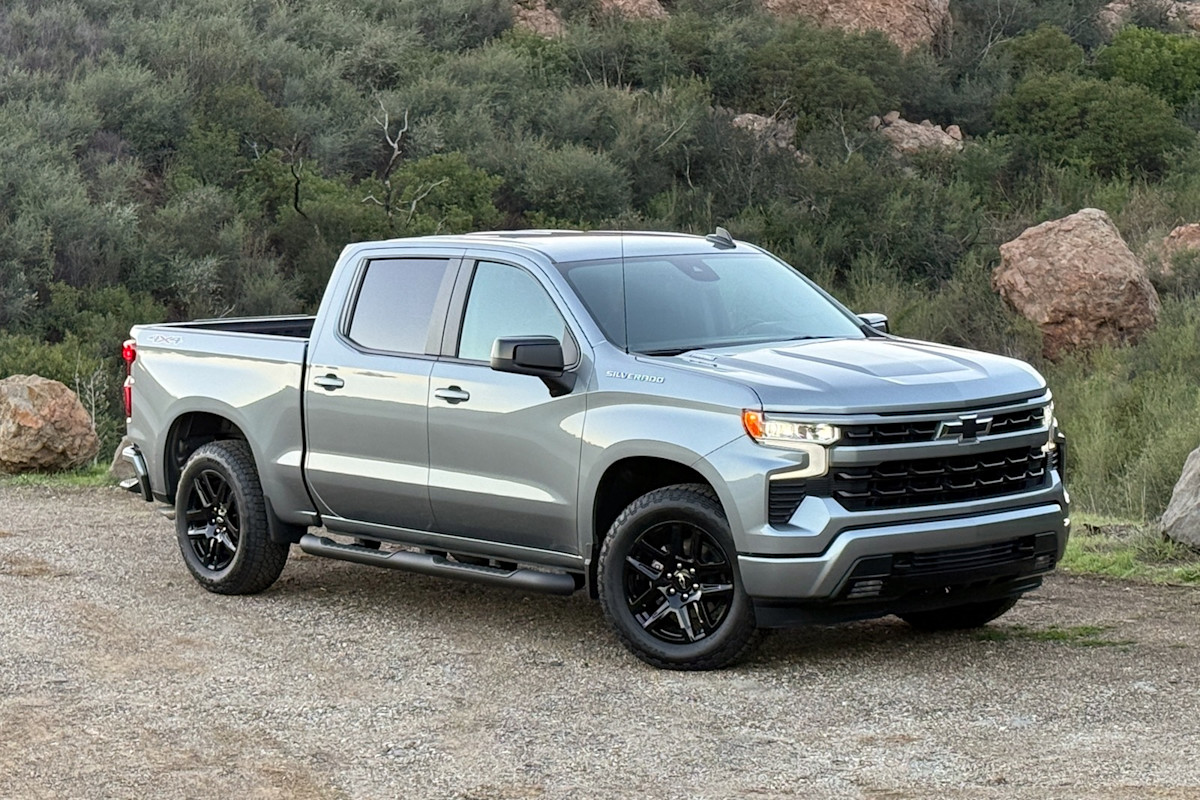
A redesign is necessary if Chevrolet wants the Silverado 1500 to be broadly competitive.
Chevy sells a 2026 Silverado 1500 to meet almost any need, and it’s one of the only trucks in its class with a diesel engine option (the other one is the similar GMC Sierra 1500). The in-cab technology in most trim levels is also impressive. Otherwise, the Silverado falls short in key areas, including performance, fuel economy, safety, and towing technology. That said, the value equation is compelling enough to overcome these flaws—for now.
Verdict: Chevrolet needs to go back to the drawing board to design and engineer a competitive full-size pickup truck. Keep the Duramax, the Google Built-in infotainment system, the CornerStep bumpers, and the Super Cruise option. Ditch everything else because brand loyalty can’t support sales forever and time is running out.

The 2026 Chevy Silverado 1500 lineup is vast. The truck is available in regular cab, extended cab, and crew cab styles with short, standard, and long cargo-bed lengths. Rear-wheel drive (RWD) and four-wheel drive (4WD) are available as well as turbocharged four-cylinder, turbocharged diesel six-cylinder, and two V8 engines. Chevrolet also offers nine trim levels: WT (work truck), Custom, LT, RST, Custom Trail Boss, LT Trail Boss, LTZ, High Country, and ZR2.
Base prices in Canada range from $52,043 to $98,563, including the $2,700 destination charge and other fees. For this test drive, we grabbed the keys of a Silverado 1500 RST 4WD with a crew cab, short bed, the standard turbocharged 2.7-litre four-cylinder engine, Sterling Grey paint, and a handful of optional features. In Canada, this configuration comes with a starting price before options of $71,043 including fees.
Inside, the RST is basic but livable. Modern technology and decent-quality materials are paired with a front bench seat and cloth upholstery to provide six-passenger seating in a roomy cabin, while metallic accents add some much-needed visual contrast. The interior design is more sophisticated than the average pickup because trucks generally either look cluttered or like half-finished projects with exposed structural elements.
Due to the front bench seat, the transmission shifter is an old-school lever on the steering column—a delightful throwback to a past era that we enjoyed using. However, when placed in Drive, it blocks access to the stereo volume knob.

Equipped with Chevy’s TurboMax turbo-four powertrain, the Silverado boasts 310 horsepower and 430 pound-feet of torque, the latter available at a relatively low 3,000 rpm. The 2.7-litre four-cylinder engine motivated our test truck through an eight-speed automatic transmission and an Autotrac 4WD system with low range.
According to Natural Resources Canada, it should have returned 12.8 litres per 100 kilometres in combined driving. With Autotrac in Auto mode, we averaged 15.3 L/100 km on our mountainous testing loop (16.2 L/100 km in city-only driving). Those results did not include off-roading and suggest that, if fuel economy is a priority, the available Duramax 3.0-litre turbodiesel inline-six might be worth the $4,190 surcharge on a Silverado RST. The Duramax is rated to get 10.1 L/100 km with 4WD in combined driving.
While the TurboMax engine is powerful enough for daily driving, it doesn’t sound good at idle or when accelerating, and mid-range punch for passing is in short supply. The TurboMax engine also caps the Silverado Crew Cab 4WD at 4,080 kilograms (9,000 pounds) of towing capacity—just 590 kilograms (1,300 pounds) more than the midsize Chevy Colorado—while the Duramax can handle up to 5,900 kilograms (13,000 pounds). You lose about 68 kilograms (150 pounds) of maximum payload capacity with the Duramax, but that trade-off seems worthwhile, especially in light of the TurboMax's disappointing real-world fuel economy.
We didn't venture off-road due to poor local trail conditions following a series of rainstorms, and other versions of the Silverado such as the Trail Boss and ZR2 are better equipped for that anyway. Instead, the RST handled daily driver duties in the suburbs and an evaluation route including city, highway, mountain, coastal, and rural environments. It’s competent in all those situations but boring to drive, partly because of the engine’s bleating under acceleration. The steering also feels slow, light, and disconnected, and the RST’s suspension bucks over speed humps, vibrates over speed bumps, and makes the truck skitter on bumpy mid-curve pavement.
More concerning was the brake overheating notification we received while driving in the mountains following a couple of hard braking events to avoid debris in the roadway. The digital instrumentation warned us to “reduce braking to avoid overheating.” That’s helpful, of course, but a worry in a vehicle designed to tow heavy loads. Aside from those two hard braking events, we weren't driving in an unusual manner while descending to sea level from about 550 metres (1,800 feet) of elevation.

Bench seats used to be common in pickup trucks, but these days a centre console usually separates the driver's seat and the front passenger seat. Our Silverado RST’s 40/20/40 bench seat was unusual and ensured the truck could carry six people if necessary.
The RST comes with cloth upholstery, a heated steering wheel, heated outboard front seats, and a 10-way power-adjustable driver’s seat. It was firm but reasonably comfortable, though after a couple of hours it just felt hard. Because the Silverado is a full-size pickup, it offers plenty of room for taller, larger people. The available step rails significantly help with entry and exit, but they also restrict the truck’s breakover angle when you’re off-roading.
Rear-seat room seems limitless on the three-person bench, which provides plenty of legroom and good thigh support. Something under the driver’s seat was clicking when our feet pushed away to exit the truck, suggesting that whatever it was could break. Chevy provides rear-seat passengers with small floor-level climate control vents, USB charging ports, a power outlet, and decent storage, but no centre armrest.
When you don’t need the Silverado RST’s front centre seating position, the backrest folds down to create a storage console with armrests, cupholders, and storage trays. All you’re really giving up is the console-mounted shifter. In addition to the storage provided by the makeshift console, the truck has a deep dash-top tray tucked behind the infotainment screen, upper and lower glove compartments, the usual door-panel storage locations, and front under-seat storage. Rear under-seat storage is optional.
The RST is ready to carry cargo with its EZ Lower and Lift tailgate equipped with power locking and remote release. CornerStep bumpers make it easy to climb into the bed when necessary, and LED cargo area lighting helps to find or secure items after dark. A spray-in bedliner is optional and encourages owners to use the truck as, well, a truck.

Two different interiors are available within the Silverado lineup. In the WT, Custom, and Custom Trail Boss, you get a dashboard designed to standards that existed during what we’ll call the “old GM era”. It has cheap plastic, doughy topography, and busy and unsophisticated looks.
All other Silverados benefit from the same superior dashboard in our RST, which has a modern appearance, clean lines, smooth surfaces, and impressive technology. In front of the driver, a 12.3-inch digital display conveys vehicle data, while the 13.4-inch touchscreen infotainment system provides split-screen functionality to show the navigation map and media information. The infotainment system features Google Built-in, including Google Maps, access to apps via the Google Play Store, and Google Assistant.
Google Assistant is excellent technology, and while we had to finesse our conversational requests for directions to a Starbucks and a Chipotle, the system proved fast, responsive, and accurate. Wireless Apple CarPlay and Android Auto connectivity is supported as well if you prefer. Pairing an iPhone to the Silverado proved effortless, and it was no trouble to stream Apple Music or Pandora to the six stereo speakers. They won’t satisfy audiophiles (a Bose premium sound system is available for them), but they sounded decent enough to us. SiriusXM 360L and OnStar connected services with Wi-Fi hotspot access are also available.
Our Silverado RST also had a towing package with a hitch receiver, trailer connections, a trailer brake controller, and Hitch View and Hitch Guidance technology to make the task easier. However, no matter how much money you have to spend, you can’t get a semi-automated trailer reversing system on this truck. Rivals such as Ford and Toyota offer that feature.

Chevy's Safety Assist is standard on every Silverado 1500 trim level. It's a package of driver assistance systems that includes forward collision warning with pedestrian detection, automatic emergency braking, lane departure warning, lane keep assist, and automatic high-beam headlights. The Silverado also has a rear-seat reminder system, a Buckle to Drive system for an extra layer of safety (which you can turn off), and Teen Driver technology. If you have a young driver in your household, Teen Driver allows you to monitor how they’re driving and using the truck when they’re away from home.
However, our test truck lacked other common driver assist features including blind-spot monitors, rear cross-traffic alert, and parking sensors. The left-side blind spot mirror and high-definition reversing camera helped to alleviate visibility issues, but in some parking situations we missed having the sensors. And without lane centring assist, adaptive cruise control, or Chevy’s Super Cruise hands-free highway driving assistance technology, we had few safety features to evaluate aside from the lane departure warning and lane keeping assist systems. They did not cause undue irritation, and when lane keeping was necessary to correct course, it did so decisively.
At the time of writing, the U.S. National Highway Traffic Safety Administration (NHTSA) had not released crash-test ratings for the 2026 Silverado 1500, while results from the Insurance Institute for Highway Safety (IIHS) were subpar. The IIHS gave the Silverado a “Marginal” rating in the small overlap front evaluation, a “Poor” rating in the updated moderate overlap frontal impact test, and an “Acceptable” rating in the updated side impact test. Headlights and front-crash prevention tech received “Poor” and “Acceptable” ratings respectively.

Chevy prices the Silverado a little lower than other full-size pickup trucks but not by enough to make a significant difference in cost-effectiveness. The fuel-efficient Duramax turbodiesel engine is what gives the Silverado 1500 a leg up over its rivals because they don’t offer an equivalent.
The Silverado’s IIHS safety ratings are worse than those of rival full-size trucks, too. The Ford F-150 and the Ram 1500 received the same “Poor” rating in the updated moderate overlap front assessment but have better ratings in other categories. In this class, the Toyota Tundra is the safety rock star with a Top Safety Pick+ award for the 2025 model year.
Overall, the Silverado RST seems like decent value. The Ram 1500 Black Express, Ford F-150 XLT, and Toyota Tundra SR5 are all more affordably priced and similarly themed. Over at the GMC dealership, a Sierra 1500 Elevation is available with similar equipment for a slightly higher price than you’ll pay for a new Silverado.

User reviews for 2026 Chevrolet Silverado 1500
Write a review2026 Chevrolet Silverado 1500 Pricing
Trims & specs
Air Conditioning
Single front air conditioning zones
Airbags
Dual front airbags · Passenger airbag deactivation: occupant sensing deactivation · Front side airbags · Front side curtain airbags
Audio System
Antenna Type: mast · Bluetooth auxiliary audio input · AM/FM radio · Total Number of Speakers: 2
Brakes
ABS: 4-wheel · Braking assist: hill start assist · Electronic parking brake: auto off · Front brake diameter: 13.5 · Front brake width: 1.18 · Front brakes: ventilated disc · Rear brake diameter: 13.6 · Rear brake width: 0.79 · Rear brakes: ventilated disc
Comfort Features
Armrests: front center · Floor Material: rubber · Steering wheel trim: urethane
Convenience Features
Assist handle: front · Cupholders: front · Multi-function remote: keyless entry with panic alarm · One-touch windows: 2 · Power outlet(s): USB front · Power steering: electric · Reading lights: front · Steering wheel: tilt-adjustable · Steering wheel mounted controls: cruise controls · Storage: in seat cushion
Driver Seat
Manual adjustments: 4
Drivetrain
Axle ratio: 3.42
Engine
Battery: 730 CCA
Exterior Features
Bumper detail: rear integrated corner step · Door handle color: black · Front bumper color: black · Grille color: black · Mirror color: black · Rear bumper color: black · Tailgate: removable · Window trim: black
Headrests
Front headrests: adjustable · Number of front headrests: 2
In Car Entertainment
Connected in-car apps: Google search · Infotainment: Chevrolet Infotainment System · Infotainment screen size: 7 in. · Smartphone integration: wireless Android Auto
Instrumentation
Fuel economy display: MPG · Instrument cluster screen size: 3.5 in. · Warnings and reminders: low fuel level
Lights
Headlights: wiper activated
Mirrors
Exterior mirrors: manual folding · Inside rearview mirror: manual day/night
Passenger Seat
Manual Adjustments: 4
Safety
Automatic emergency braking: front · Camera system: rearview · Impact sensor: alert system · Pre-Collision Warning System: visual warning · Pre-collision warning system: pedestrian detection · Programmable safety key: MyKey · Rearview monitor: in dash
Seatbelts
Emergency locking retractors: front · Front seatbelts: 3-point · Seatbelt pretensioners: front · Seatbelt warning sensor: driver and passenger
Seats
Driver seat manual adjustments: reclining · Front seat type: 40-20-40 split bench · Passenger seat manual adjustments: reclining · Upholstery: vinyl
Security
Power door locks: anti-lockout
Spare Tire
Mount Location: underbody · Size: full-size
Spare Wheel
Rim Type: steel
Stability and Traction
Traction control: with trailer stability control
Suspension
Front Arm Type: upper and lower control arms · Front Shock Type: twin-tube gas shock absorbers · Front Spring Type: coil springs · Front Stabilizer Bar: diameter 33 mm · Front Suspension Classification: independent · Front Suspension Type: strut · Rear Shock Type: twin-tube gas shock absorbers · Rear Spring Type: leaf springs · Rear Suspension Classification: solid live axle · Rear Suspension Type: multi-leaf
Telematics
Electronic messaging assistance: with voice recognition · Phone: voice activated · Phone wireless data link: Bluetooth · Satellite communications: Turn-by-Turn Navigation · Smart device app compatibility: myChevrolet with Connected Access · Smart device app function: vehicle location · Wifi: hotspot
Tires
Type: all season
Tires and Rims
Wheels: painted steel
Towing and Hauling
Tow hooks: front
Wheels
Wheel locks: spare only
Windows
Front wipers: variable intermittent · Power windows: with safety reverse
Air Conditioning
Single front air conditioning zones
Airbags
Dual front airbags · Passenger airbag deactivation: occupant sensing deactivation · Front side airbags · Front side curtain airbags
Audio System
Antenna Type: mast · USB auxiliary audio input · Touch screen display radio · Total Number of Speakers: 2
Brakes
ABS: 4-wheel · Braking assist: hill start assist · Electronic parking brake: auto off · Front brake diameter: 13.5 · Front brake width: 1.18 · Front brakes: ventilated disc · Rear brake diameter: 13.6 · Rear brake width: 0.79 · Rear brakes: ventilated disc
Comfort Features
Armrests: front center · Floor Material: rubber · Steering wheel trim: urethane
Convenience Features
Assist handle: front · Cupholders: front · Multi-function remote: keyless entry · One-touch windows: 2 · Power outlet(s): 12V front · Power steering: electric · Reading lights: front · Steering wheel: tilt-adjustable · Steering wheel mounted controls: cruise controls · Storage: in seat cushion
Driver Seat
Manual adjustments: 4
Drivetrain
Axle ratio: 3.42
Engine
Battery: maintenance-free
Exterior Features
Bumper detail: rear integrated corner step · Door handle color: black · Front bumper color: black · Grille color: black · Mirror color: black · Rear bumper color: black · Tailgate: removable · Window trim: black
Headrests
Front headrests: adjustable · Number of front headrests: 2
In Car Entertainment
Connected in-car apps: Google search · Infotainment: Chevrolet Infotainment System · Infotainment screen size: 7 in. · Smartphone integration: wireless Android Auto
Instrumentation
Fuel economy display: range · Instrument cluster screen size: 3.5 in. · Warnings and reminders: low battery
Lights
Headlights: wiper activated
Mirrors
Exterior mirrors: manual folding · Inside rearview mirror: manual day/night
Passenger Seat
Manual Adjustments: 4
Safety
Automatic emergency braking: front · Camera system: rearview · Impact sensor: alert system · Pre-Collision Warning System: audible warning · Pre-collision warning system: pedestrian detection · Programmable safety key: MyKey · Rearview monitor: in dash
Seatbelts
Emergency locking retractors: front · Front seatbelts: 3-point · Seatbelt pretensioners: front · Seatbelt warning sensor: driver and passenger
Seats
Driver seat manual adjustments: reclining · Front seat type: 40-20-40 split bench · Passenger seat manual adjustments: reclining · Upholstery: vinyl
Security
Power door locks: anti-lockout
Spare Tire
Mount Location: underbody · Size: full-size
Spare Wheel
Rim Type: steel
Stability and Traction
Traction control: with trailer stability control
Suspension
Front Arm Type: upper and lower control arms · Front Shock Type: twin-tube gas shock absorbers · Front Spring Type: coil springs · Front Stabilizer Bar: diameter 33 mm · Front Suspension Classification: independent · Front Suspension Type: strut · Rear Shock Type: twin-tube gas shock absorbers · Rear Spring Type: leaf springs · Rear Suspension Classification: solid live axle · Rear Suspension Type: multi-leaf
Telematics
Electronic messaging assistance: with voice recognition · Phone: voice activated · Phone wireless data link: Bluetooth · Satellite communications: Turn-by-Turn Navigation · Smart device app compatibility: myChevrolet with Connected Access · Smart device app function: maintenance status · Wifi: hotspot
Tires
Type: all season
Tires and Rims
Wheels: painted steel
Towing and Hauling
Tow hooks: front
Wheels
Wheel locks: spare only
Windows
Front wipers: variable intermittent · Power windows: with safety reverse
Air Conditioning
Single front air conditioning zones
Airbags
Dual front airbags · Passenger airbag deactivation: occupant sensing deactivation · Front side airbags · Front side curtain airbags
Audio System
Antenna Type: mast · Bluetooth auxiliary audio input · AM/FM radio · Total Number of Speakers: 6
Brakes
ABS: 4-wheel · Braking assist: hill start assist · Electronic parking brake: auto off · Front brake diameter: 13.5 · Front brake width: 1.18 · Front brakes: ventilated disc · Rear brake diameter: 13.6 · Rear brake width: 0.79 · Rear brakes: ventilated disc
Comfort Features
Armrests: front center · Floor Material: rubber · Steering wheel trim: urethane
Convenience Features
Assist handle: rear · Cupholders: front · Multi-function remote: keyless entry · One-touch windows: 4 · Power outlet(s): 12V front · Power steering: electric · Power windows: lockout button · Reading lights: front · Steering wheel: tilt-adjustable · Steering wheel mounted controls: cruise controls · Storage: door pockets
Driver Seat
Manual adjustments: 4
Drivetrain
Axle ratio: 3.42
Engine
Battery: heavy duty
Exterior Features
Bumper detail: rear integrated corner step · Door handle color: black · Front bumper color: black · Grille color: black · Mirror color: black · Rear bumper color: black · Tailgate: removable · Window trim: black
Headrests
Adjustable rear headrests: foldable · Front headrests: adjustable · Number of front headrests: 2 · Number of rear headrests: 3
In Car Entertainment
Connected in-car apps: Google search · Infotainment: Chevrolet Infotainment System · Infotainment screen size: 7 in. · Smartphone integration: wireless Apple CarPlay
Instrumentation
Fuel economy display: range · Instrument cluster screen size: 3.5 in. · Warnings and reminders: low oil pressure
Lights
Headlights: Halogen
Mirrors
Exterior mirrors: manual folding · Inside rearview mirror: manual day/night
Passenger Seat
Manual Adjustments: 4
Rear Seats
Type: 60-40 split bench
Safety
Automatic emergency braking: front · Camera system: rearview · Child seat anchors: LATCH system · Impact sensor: alert system · Pre-Collision Warning System: visual warning · Pre-collision warning system: pedestrian detection · Programmable safety key: MyKey · Rearview monitor: in dash
Seatbelts
Emergency locking retractors: front · Front seatbelts: 3-point · Seatbelt pretensioners: front · Seatbelt warning sensor: driver and passenger · Second row seatbelts: 3-point
Seats
Driver seat manual adjustments: reclining · Front seat type: 40-20-40 split bench · Passenger seat manual adjustments: reclining · Rear seat folding: folds up · Upholstery: vinyl
Security
Power door locks: anti-lockout
Spare Tire
Mount Location: underbody · Size: full-size
Spare Wheel
Rim Type: steel
Stability and Traction
Traction control: with trailer stability control
Suspension
Front Arm Type: upper and lower control arms · Front Shock Type: twin-tube gas shock absorbers · Front Spring Type: coil springs · Front Stabilizer Bar: diameter 33 mm · Front Suspension Classification: independent · Front Suspension Type: strut · Rear Shock Type: twin-tube gas shock absorbers · Rear Spring Type: leaf springs · Rear Suspension Classification: solid live axle · Rear Suspension Type: multi-leaf
Telematics
Electronic messaging assistance: with read function · Phone: voice activated · Phone wireless data link: Bluetooth · Satellite communications: Turn-by-Turn Navigation · Smart device app compatibility: myChevrolet with Connected Access · Smart device app function: engine start · Wifi: hotspot
Tires
Type: all season
Tires and Rims
Wheels: painted steel
Towing and Hauling
Tow hooks: front
Wheels
Wheel locks: spare only
Windows
Front wipers: variable intermittent · Power windows: with safety reverse
Air Conditioning
Single front air conditioning zones
Airbags
Dual front airbags · Passenger airbag deactivation: occupant sensing deactivation · Front side airbags · Front side curtain airbags
Audio System
Antenna Type: mast · USB auxiliary audio input · AM/FM radio · Total Number of Speakers: 2
Brakes
ABS: 4-wheel · Braking assist: hill start assist · Electronic parking brake: auto off · Front brake diameter: 13.5 · Front brake width: 1.18 · Front brakes: ventilated disc · Rear brake diameter: 13.6 · Rear brake width: 0.79 · Rear brakes: ventilated disc
Comfort Features
Armrests: front center · Floor Material: rubber · Steering wheel trim: urethane
Convenience Features
Assist handle: front · Cupholders: front · Multi-function remote: keyless entry with panic alarm · One-touch windows: 2 · Power outlet(s): USB front · Power steering: electric · Reading lights: front · Steering wheel: tilt-adjustable · Steering wheel mounted controls: cruise controls · Storage: door pockets
Driver Seat
Manual adjustments: 4
Drivetrain
4WD Type: part time w/ on demand setting · Axle ratio: 3.42 · Transfer Case: electronic
Engine
Battery: heavy duty
Exterior Features
Bumper detail: rear integrated corner step · Door handle color: black · Front bumper color: black · Grille color: black · Mirror color: black · Rear bumper color: black · Tailgate: removable · Window trim: black
Headrests
Front headrests: adjustable · Number of front headrests: 2
In Car Entertainment
Connected in-car apps: Google POIs · Infotainment: Chevrolet Infotainment System · Infotainment screen size: 7 in. · Smartphone integration: wireless Android Auto
Instrumentation
Fuel economy display: MPG · Instrument cluster screen size: 3.5 in. · Warnings and reminders: coolant temperature warning
Lights
Headlights: automatic high beam dimmer
Mirrors
Exterior mirrors: heated · Inside rearview mirror: manual day/night
Passenger Seat
Manual Adjustments: 4
Safety
Automatic emergency braking: front pedestrian · Camera system: rearview · Impact sensor: alert system · Pre-Collision Warning System: audible warning · Pre-collision warning system: pedestrian detection · Programmable safety key: MyKey · Rearview monitor: in dash
Seatbelts
Emergency locking retractors: front · Front seatbelts: 3-point · Seatbelt pretensioners: front · Seatbelt warning sensor: driver and passenger
Seats
Driver seat manual adjustments: reclining · Front seat type: 40-20-40 split bench · Passenger seat manual adjustments: reclining · Upholstery: vinyl
Security
Power door locks: anti-lockout
Spare Tire
Mount Location: underbody · Size: full-size
Spare Wheel
Rim Type: steel
Stability and Traction
Traction control: with trailer stability control
Suspension
Front Arm Type: upper and lower control arms · Front Shock Type: twin-tube gas shock absorbers · Front Spring Type: coil springs · Front Stabilizer Bar: diameter 33 mm · Front Suspension Classification: independent · Front Suspension Type: strut · Rear Shock Type: twin-tube gas shock absorbers · Rear Spring Type: leaf springs · Rear Suspension Classification: solid live axle · Rear Suspension Type: multi-leaf
Telematics
Electronic messaging assistance: with voice recognition · Phone: voice activated · Phone wireless data link: Bluetooth · Satellite communications: OnStar · Smart device app compatibility: myChevrolet with Connected Access · Smart device app function: vehicle location · Wifi: hotspot
Tires
Type: all season
Tires and Rims
Wheels: painted steel
Towing and Hauling
Tow hooks: front
Wheels
Wheel locks: spare only
Windows
Front wipers: variable intermittent · Power windows: with safety reverse
Air Conditioning
Single front air conditioning zones
Airbags
Dual front airbags · Passenger airbag deactivation: occupant sensing deactivation · Front side airbags · Front side curtain airbags
Audio System
Antenna Type: mast · USB auxiliary audio input · AM/FM radio · Total Number of Speakers: 2
Brakes
ABS: 4-wheel · Braking assist: hill start assist · Electronic parking brake: auto off · Front brake diameter: 13.5 · Front brake width: 1.18 · Front brakes: ventilated disc · Rear brake diameter: 13.6 · Rear brake width: 0.79 · Rear brakes: ventilated disc
Comfort Features
Armrests: front center · Floor Material: rubber · Steering wheel trim: urethane
Convenience Features
Assist handle: front · Cupholders: front · Multi-function remote: keyless entry with panic alarm · One-touch windows: 2 · Power outlet(s): 12V front · Power steering: electric · Reading lights: front · Steering wheel: tilt-adjustable · Steering wheel mounted controls: cruise controls · Storage: in seat cushion
Driver Seat
Manual adjustments: 4
Drivetrain
4WD Type: part time w/ on demand setting · Axle ratio: 3.42 · Transfer Case: electronic
Engine
Battery: heavy duty
Exterior Features
Bumper detail: rear integrated corner step · Door handle color: black · Front bumper color: black · Grille color: black · Mirror color: black · Rear bumper color: black · Tailgate: removable · Window trim: black
Headrests
Front headrests: adjustable · Number of front headrests: 2
In Car Entertainment
Connected in-car apps: Google search · Infotainment: Chevrolet Infotainment System · Infotainment screen size: 7 in. · Smartphone integration: wireless Android Auto
Instrumentation
Fuel economy display: MPG · Instrument cluster screen size: 3.5 in. · Warnings and reminders: lamp failure
Lights
Headlights: automatic high beam dimmer
Mirrors
Exterior mirrors: manual folding · Inside rearview mirror: manual day/night
Passenger Seat
Manual Adjustments: 4
Safety
Automatic emergency braking: front pedestrian · Camera system: rearview · Impact sensor: alert system · Pre-Collision Warning System: visual warning · Pre-collision warning system: pedestrian detection · Programmable safety key: MyKey · Rearview monitor: in dash
Seatbelts
Emergency locking retractors: front · Front seatbelts: 3-point · Seatbelt pretensioners: front · Seatbelt warning sensor: driver and passenger
Seats
Driver seat manual adjustments: reclining · Front seat type: 40-20-40 split bench · Passenger seat manual adjustments: reclining · Upholstery: vinyl
Security
Power door locks: anti-lockout
Spare Tire
Mount Location: underbody · Size: full-size
Spare Wheel
Rim Type: steel
Stability and Traction
Traction control: with trailer stability control
Suspension
Front Arm Type: upper and lower control arms · Front Shock Type: twin-tube gas shock absorbers · Front Spring Type: coil springs · Front Stabilizer Bar: diameter 33 mm · Front Suspension Classification: independent · Front Suspension Type: strut · Rear Shock Type: twin-tube gas shock absorbers · Rear Spring Type: leaf springs · Rear Suspension Classification: solid live axle · Rear Suspension Type: multi-leaf
Telematics
Electronic messaging assistance: with voice recognition · Phone: voice activated · Phone wireless data link: Bluetooth · Satellite communications: OnStar · Smart device app compatibility: myChevrolet with Connected Access · Smart device app function: engine start · Wifi: hotspot
Tires
Type: all season
Tires and Rims
Wheels: painted steel
Towing and Hauling
Tow hooks: front
Wheels
Wheel locks: spare only
Windows
Front wipers: variable intermittent · Power windows: with safety reverse
Air Conditioning
Single front air conditioning zones
Airbags
Dual front airbags · Passenger airbag deactivation: occupant sensing deactivation · Front side airbags · Front side curtain airbags
Audio System
Antenna Type: mast · USB auxiliary audio input · Touch screen display radio · Satellite Radio: SiriusXM · Total Number of Speakers: 6
Brakes
ABS: 4-wheel · Braking assist: hill start assist · Electronic parking brake: auto off · Front brake diameter: 13.5 · Front brake width: 1.18 · Front brakes: ventilated disc · Rear brake diameter: 13.6 · Rear brake width: 0.79 · Rear brakes: ventilated disc
Comfort Features
Armrests: front center · Floor Mat Material: vinyl/rubber · Floor Material: carpet · Floor Mats: front · Steering wheel trim: urethane
Convenience Features
Assist handle: rear · Cargo area power outlet: 115V · Cupholders: front · Front power outlet: 115V · Multi-function remote: keyless entry with panic alarm · One-touch windows: 4 · Power outlet(s): USB front · Power steering: electric · Power windows: lockout button · Reading lights: front · Steering wheel: tilt-adjustable · Steering wheel mounted controls: cruise controls · Storage: front seatback
Driver Seat
Adjustable lumbar support: power · Power adjustments: 10
Drivetrain
Axle ratio: 3.42
Engine
Alternator: 220 amps · Battery: maintenance-free
Exterior Features
Bumper detail: rear integrated corner step · Door handle color: black · Front bumper color: body-color · Grille color: body-color · Mirror color: black · Pickup bed light: LED · Rear bumper color: body-color · Tailgate: removable · Window trim: black
Headrests
Adjustable rear headrests: foldable · Front headrests: adjustable · Number of front headrests: 2 · Number of rear headrests: 3
In Car Entertainment
Connected in-car apps: Google search · Infotainment: Chevrolet Infotainment System · Infotainment screen size: 7 in. · Smartphone integration: wireless Android Auto
Instrumentation
Fuel economy display: range · Instrument cluster screen size: 3.5 in. · Warnings and reminders: coolant temperature warning
Lights
Headlights: automatic high beam dimmer
Mirrors
Exterior mirrors: heated · Inside rearview mirror: manual day/night
Passenger Seat
Manual Adjustments: 4
Rear Seats
Type: 60-40 split bench
Safety
Automatic emergency braking: front · Camera system: rearview · Child seat anchors: LATCH system · Impact sensor: alert system · Pre-Collision Warning System: audible warning · Pre-collision warning system: pedestrian detection · Programmable safety key: MyKey · Rearview monitor: in dash
Seatbelts
Emergency locking retractors: front · Front seatbelts: 3-point · Seatbelt pretensioners: front · Seatbelt warning sensor: driver and passenger · Second row seatbelts: 3-point
Seats
Driver seat power adjustments: height · Front seat type: 40-20-40 split bench · Passenger seat manual adjustments: reclining · Rear seat folding: folds up · Upholstery: cloth
Security
Power door locks: anti-lockout
Spare Tire
Mount Location: underbody · Size: full-size
Spare Wheel
Rim Type: steel
Stability and Traction
Traction control: with trailer stability control
Suspension
Front Arm Type: upper and lower control arms · Front Shock Type: twin-tube gas shock absorbers · Front Spring Type: coil springs · Front Stabilizer Bar: diameter 33 mm · Front Suspension Classification: independent · Front Suspension Type: strut · Rear Shock Type: twin-tube gas shock absorbers · Rear Spring Type: leaf springs · Rear Suspension Classification: solid live axle · Rear Suspension Type: multi-leaf
Telematics
Driver assistance app: roadside assistance · Electronic messaging assistance: with read function · Phone: voice activated · Phone wireless data link: Bluetooth · Satellite communications: OnStar · Smart device app compatibility: myChevrolet with Connected Access · Smart device app function: engine start · Wifi: hotspot
Tires
Type: all season
Tires and Rims
Wheels: painted aluminum
Towing and Hauling
Tow hooks: front · Trailer wiring: 4-pin
Wheels
Wheel locks: spare only
Windows
Front wipers: variable intermittent · Power windows: with safety reverse
Air Conditioning
Single front air conditioning zones
Airbags
Dual front airbags · Passenger airbag deactivation: occupant sensing deactivation · Front side airbags · Front side curtain airbags
Audio System
Antenna Type: mast · Bluetooth auxiliary audio input · Touch screen display radio · Total Number of Speakers: 6
Brakes
ABS: 4-wheel · Braking assist: hill start assist · Electronic parking brake: auto off · Front brake diameter: 13.5 · Front brake width: 1.18 · Front brakes: ventilated disc · Rear brake diameter: 13.6 · Rear brake width: 0.79 · Rear brakes: ventilated disc
Comfort Features
Armrests: front center · Floor Material: rubber · Steering wheel trim: urethane
Convenience Features
Assist handle: rear · Cupholders: front · Multi-function remote: keyless entry · One-touch windows: 4 · Power outlet(s): USB front · Power steering: electric · Power windows: lockout button · Reading lights: front · Steering wheel: tilt-adjustable · Steering wheel mounted controls: cruise controls · Storage: in seat cushion
Driver Seat
Manual adjustments: 4
Drivetrain
Axle ratio: 3.42
Engine
Battery: maintenance-free
Exterior Features
Bumper detail: rear integrated corner step · Door handle color: black · Front bumper color: black · Grille color: black · Mirror color: black · Rear bumper color: black · Tailgate: removable · Window trim: black
Headrests
Adjustable rear headrests: foldable · Front headrests: adjustable · Number of front headrests: 2 · Number of rear headrests: 3
In Car Entertainment
Connected in-car apps: Google search · Infotainment: Chevrolet Infotainment System · Infotainment screen size: 7 in. · Smartphone integration: wireless Apple CarPlay
Instrumentation
Fuel economy display: MPG · Instrument cluster screen size: 3.5 in. · Warnings and reminders: low fuel level
Lights
Headlights: wiper activated
Mirrors
Exterior mirrors: manual · Inside rearview mirror: manual day/night
Passenger Seat
Manual Adjustments: 4
Rear Seats
Type: 60-40 split bench
Safety
Automatic emergency braking: front · Camera system: rearview · Child seat anchors: LATCH system · Impact sensor: alert system · Pre-Collision Warning System: visual warning · Pre-collision warning system: pedestrian detection · Programmable safety key: MyKey · Rearview monitor: in dash
Seatbelts
Emergency locking retractors: front · Front seatbelts: 3-point · Seatbelt pretensioners: front · Seatbelt warning sensor: driver and passenger · Second row seatbelts: 3-point
Seats
Driver seat manual adjustments: reclining · Front seat type: 40-20-40 split bench · Passenger seat manual adjustments: reclining · Rear seat folding: folds up · Upholstery: vinyl
Security
Power door locks: anti-lockout
Spare Tire
Mount Location: underbody · Size: full-size
Spare Wheel
Rim Type: steel
Stability and Traction
Traction control: with trailer stability control
Suspension
Front Arm Type: upper and lower control arms · Front Shock Type: twin-tube gas shock absorbers · Front Spring Type: coil springs · Front Stabilizer Bar: diameter 33 mm · Front Suspension Classification: independent · Front Suspension Type: strut · Rear Shock Type: twin-tube gas shock absorbers · Rear Spring Type: leaf springs · Rear Suspension Classification: solid live axle · Rear Suspension Type: multi-leaf
Telematics
Electronic messaging assistance: with read function · Phone: voice activated · Phone wireless data link: Bluetooth · Satellite communications: Turn-by-Turn Navigation · Smart device app compatibility: myChevrolet with Connected Access · Smart device app function: vehicle location · Wifi: hotspot
Tires
Type: all season
Tires and Rims
Wheels: painted steel
Towing and Hauling
Tow hooks: front
Wheels
Wheel locks: spare only
Windows
Front wipers: variable intermittent · Power windows: with safety reverse
Air Conditioning
Single front air conditioning zones
Airbags
Dual front airbags · Passenger airbag deactivation: occupant sensing deactivation · Front side airbags · Front side curtain airbags
Audio System
Antenna Type: mast · USB auxiliary audio input · AM/FM radio · Total Number of Speakers: 6
Brakes
ABS: 4-wheel · Braking assist: hill start assist · Electronic parking brake: auto off · Front brake diameter: 13.5 · Front brake width: 1.18 · Front brakes: ventilated disc · Rear brake diameter: 13.6 · Rear brake width: 0.79 · Rear brakes: ventilated disc
Comfort Features
Armrests: front center · Floor Material: rubber · Steering wheel trim: urethane
Convenience Features
Assist handle: front · Cupholders: front · Multi-function remote: keyless entry with panic alarm · One-touch windows: 4 · Power outlet(s): USB front · Power steering: electric · Power windows: lockout button · Reading lights: front · Steering wheel: tilt-adjustable · Steering wheel mounted controls: cruise controls · Storage: door pockets
Driver Seat
Manual adjustments: 4
Drivetrain
Axle ratio: 3.42
Engine
Battery: 730 CCA
Exterior Features
Bumper detail: rear integrated corner step · Door handle color: black · Front bumper color: black · Grille color: black · Mirror color: black · Rear bumper color: black · Tailgate: removable · Window trim: black
Headrests
Adjustable rear headrests: foldable · Front headrests: adjustable · Number of front headrests: 2 · Number of rear headrests: 3
In Car Entertainment
Connected in-car apps: Google POIs · Infotainment: Chevrolet Infotainment System · Infotainment screen size: 7 in. · Smartphone integration: wireless Android Auto
Instrumentation
Fuel economy display: range · Instrument cluster screen size: 3.5 in. · Warnings and reminders: low battery
Lights
Headlights: automatic high beam dimmer
Mirrors
Exterior mirrors: manual folding · Inside rearview mirror: manual day/night
Passenger Seat
Manual Adjustments: 4
Rear Seats
Type: 60-40 split bench
Safety
Automatic emergency braking: front · Camera system: rearview · Child seat anchors: LATCH system · Impact sensor: alert system · Pre-Collision Warning System: audible warning · Pre-collision warning system: pedestrian detection · Programmable safety key: MyKey · Rearview monitor: in dash
Seatbelts
Emergency locking retractors: front · Front seatbelts: 3-point · Seatbelt pretensioners: front · Seatbelt warning sensor: driver and passenger · Second row seatbelts: 3-point
Seats
Driver seat manual adjustments: reclining · Front seat type: 40-20-40 split bench · Passenger seat manual adjustments: reclining · Rear seat folding: folds up · Upholstery: vinyl
Security
Power door locks: anti-lockout
Spare Tire
Mount Location: underbody · Size: full-size
Spare Wheel
Rim Type: steel
Stability and Traction
Traction control: with trailer stability control
Suspension
Front Arm Type: upper and lower control arms · Front Shock Type: twin-tube gas shock absorbers · Front Spring Type: coil springs · Front Stabilizer Bar: diameter 33 mm · Front Suspension Classification: independent · Front Suspension Type: strut · Rear Shock Type: twin-tube gas shock absorbers · Rear Spring Type: leaf springs · Rear Suspension Classification: solid live axle · Rear Suspension Type: multi-leaf
Telematics
Electronic messaging assistance: with voice recognition · Phone: voice activated · Phone wireless data link: Bluetooth · Satellite communications: Turn-by-Turn Navigation · Smart device app compatibility: myChevrolet with Connected Access · Smart device app function: engine start · Wifi: hotspot
Tires
Type: all season
Tires and Rims
Wheels: painted steel
Towing and Hauling
Tow hooks: front
Wheels
Wheel locks: spare only
Windows
Front wipers: variable intermittent · Power windows: with safety reverse
Air Conditioning
Single front air conditioning zones
Airbags
Dual front airbags · Passenger airbag deactivation: occupant sensing deactivation · Front side airbags · Rear side curtain airbags
Audio System
Antenna Type: mast · Bluetooth auxiliary audio input · Touch screen display radio · Total Number of Speakers: 6
Brakes
ABS: 4-wheel · Braking assist: hill start assist · Electronic parking brake: auto off · Front brake diameter: 13.5 · Front brake width: 1.18 · Front brakes: ventilated disc · Rear brake diameter: 13.6 · Rear brake width: 0.79 · Rear brakes: ventilated disc
Comfort Features
Armrests: front center · Floor Material: rubber · Steering wheel trim: urethane
Convenience Features
Assist handle: front · Cupholders: front · Multi-function remote: keyless entry · One-touch windows: 4 · Power outlet(s): USB front · Power steering: electric · Power windows: lockout button · Reading lights: front · Steering wheel: tilt-adjustable · Steering wheel mounted controls: cruise controls · Storage: in seat cushion
Driver Seat
Manual adjustments: 4
Drivetrain
4WD Type: part time w/ on demand setting · Axle ratio: 3.42 · Transfer Case: electronic
Engine
Battery: 730 CCA
Exterior Features
Bumper detail: rear integrated corner step · Door handle color: black · Front bumper color: black · Grille color: black · Mirror color: black · Rear bumper color: black · Tailgate: removable · Window trim: black
Headrests
Adjustable rear headrests: foldable · Front headrests: adjustable · Number of front headrests: 2 · Number of rear headrests: 3
In Car Entertainment
Connected in-car apps: Google search · Infotainment: Chevrolet Infotainment System · Infotainment screen size: 7 in. · Smartphone integration: wireless Android Auto
Instrumentation
Fuel economy display: range · Instrument cluster screen size: 3.5 in. · Warnings and reminders: low battery
Lights
Headlights: wiper activated
Mirrors
Exterior mirrors: manual · Inside rearview mirror: manual day/night
Passenger Seat
Manual Adjustments: 4
Rear Seats
Type: 60-40 split bench
Safety
Automatic emergency braking: front pedestrian · Camera system: rearview · Child seat anchors: LATCH system · Impact sensor: alert system · Pre-Collision Warning System: visual warning · Pre-collision warning system: pedestrian detection · Programmable safety key: MyKey · Rearview monitor: in dash
Seatbelts
Emergency locking retractors: front · Front seatbelts: 3-point · Seatbelt pretensioners: front · Seatbelt warning sensor: driver and passenger · Second row seatbelts: 3-point
Seats
Driver seat manual adjustments: reclining · Front seat type: 40-20-40 split bench · Passenger seat manual adjustments: reclining · Rear seat folding: folds up · Upholstery: vinyl
Security
Power door locks: anti-lockout
Spare Tire
Mount Location: underbody · Size: full-size
Spare Wheel
Rim Type: steel
Stability and Traction
Traction control: with trailer stability control
Suspension
Front Arm Type: upper and lower control arms · Front Shock Type: twin-tube gas shock absorbers · Front Spring Type: coil springs · Front Stabilizer Bar: diameter 33 mm · Front Suspension Classification: independent · Front Suspension Type: strut · Rear Shock Type: twin-tube gas shock absorbers · Rear Spring Type: leaf springs · Rear Suspension Classification: solid live axle · Rear Suspension Type: multi-leaf
Telematics
Electronic messaging assistance: with voice recognition · Phone: voice activated · Phone wireless data link: Bluetooth · Satellite communications: OnStar · Smart device app compatibility: myChevrolet with Connected Access · Smart device app function: maintenance status · Wifi: hotspot
Tires
Type: all season
Tires and Rims
Wheels: painted steel
Towing and Hauling
Tow hooks: front
Wheels
Wheel locks: spare only
Windows
Front wipers: variable intermittent · Power windows: with safety reverse
Air Conditioning
Single front air conditioning zones
Airbags
Dual front airbags · Passenger airbag deactivation: occupant sensing deactivation · Front side airbags · Front side curtain airbags
Audio System
Antenna Type: diversity · Bluetooth auxiliary audio input · Touch screen display radio · Satellite Radio: SiriusXM · Total Number of Speakers: 6
Brakes
ABS: 4-wheel · Braking assist: hill start assist · Electronic parking brake: auto off · Front brake diameter: 13.5 · Front brake width: 1.18 · Front brakes: ventilated disc · Rear brake diameter: 13.6 · Rear brake width: 0.79 · Rear brakes: ventilated disc
Comfort Features
Armrests: front center · Floor Mat Material: vinyl/rubber · Floor Material: carpet · Floor Mats: front · Steering wheel trim: urethane
Convenience Features
Assist handle: front · Cargo area power outlet: 115V · Cupholders: front · Front power outlet: 115V · Multi-function remote: keyless entry · One-touch windows: 4 · Power outlet(s): 12V front · Power steering: electric · Power windows: lockout button · Reading lights: front · Steering wheel: tilt-adjustable · Steering wheel mounted controls: cruise controls · Storage: front seatback
Driver Seat
Adjustable lumbar support: power · Power adjustments: 10
Drivetrain
Axle ratio: 3.42
Engine
Alternator: 220 amps · Battery: heavy duty
Exterior Features
Bumper detail: rear integrated corner step · Door handle color: black · Front bumper color: body-color · Grille color: body-color · Mirror color: black · Pickup bed light: LED · Rear bumper color: body-color · Tailgate: removable · Window trim: black
Headrests
Adjustable rear headrests: foldable · Front headrests: adjustable · Number of front headrests: 2 · Number of rear headrests: 3
In Car Entertainment
Connected in-car apps: Google search · Infotainment: Chevrolet Infotainment System · Infotainment screen size: 7 in. · Smartphone integration: wireless Apple CarPlay
Instrumentation
Fuel economy display: MPG · Instrument cluster screen size: 3.5 in. · Warnings and reminders: coolant temperature warning
Lights
Headlights: auto delay off
Mirrors
Exterior mirrors: manual folding · Inside rearview mirror: manual day/night
Passenger Seat
Manual Adjustments: 4
Rear Seats
Type: 60-40 split bench
Safety
Automatic emergency braking: front · Camera system: rearview · Child seat anchors: LATCH system · Impact sensor: alert system · Pre-Collision Warning System: visual warning · Pre-collision warning system: pedestrian detection · Programmable safety key: MyKey · Rearview monitor: in dash
Seatbelts
Emergency locking retractors: front · Front seatbelts: 3-point · Seatbelt pretensioners: front · Seatbelt warning sensor: driver and passenger · Second row seatbelts: 3-point
Seats
Driver seat power adjustments: height · Front seat type: 40-20-40 split bench · Passenger seat manual adjustments: reclining · Rear seat folding: folds up · Upholstery: cloth
Security
Power door locks: anti-lockout
Spare Tire
Mount Location: underbody · Size: full-size
Spare Wheel
Rim Type: steel
Stability and Traction
Traction control: with trailer stability control
Suspension
Front Arm Type: upper and lower control arms · Front Shock Type: twin-tube gas shock absorbers · Front Spring Type: coil springs · Front Stabilizer Bar: diameter 33 mm · Front Suspension Classification: independent · Front Suspension Type: strut · Rear Shock Type: twin-tube gas shock absorbers · Rear Spring Type: leaf springs · Rear Suspension Classification: solid live axle · Rear Suspension Type: multi-leaf
Telematics
Driver assistance app: roadside assistance · Electronic messaging assistance: with read function · Phone: voice activated · Phone wireless data link: Bluetooth · Satellite communications: Turn-by-Turn Navigation · Smart device app compatibility: myChevrolet with Connected Access · Smart device app function: horn/light operation · Wifi: hotspot
Tires
Type: all season
Tires and Rims
Wheels: painted aluminum
Towing and Hauling
Tow hooks: front · Trailer wiring: 4-pin
Wheels
Wheel locks: spare only
Windows
Front wipers: variable intermittent · Power windows: with safety reverse
Air Conditioning
Single front air conditioning zones
Airbags
Dual front airbags · Passenger airbag deactivation: occupant sensing deactivation · Front side airbags · Front side curtain airbags
Audio System
Antenna Type: mast · USB auxiliary audio input · Touch screen display radio · Satellite Radio: SiriusXM · Total Number of Speakers: 6
Brakes
ABS: 4-wheel · Braking assist: hill start assist · Electronic parking brake: auto off · Front brake diameter: 13.5 · Front brake width: 1.18 · Front brakes: ventilated disc · Rear brake diameter: 13.6 · Rear brake width: 0.79 · Rear brakes: ventilated disc
Comfort Features
Armrests: front center · Floor Mat Material: vinyl/rubber · Floor Material: carpet · Floor Mats: front · Steering wheel trim: urethane
Convenience Features
Assist handle: front · Cargo area power outlet: 115V · Cupholders: front · Front power outlet: 115V · Multi-function remote: keyless entry with panic alarm · One-touch windows: 4 · Power outlet(s): 12V front · Power steering: electric · Power windows: lockout button · Reading lights: front · Steering wheel: tilt-adjustable · Steering wheel mounted controls: cruise controls · Storage: front seatback
Driver Seat
Adjustable lumbar support: power · Power adjustments: 10
Drivetrain
4WD Type: part time w/ on demand setting · Axle ratio: 3.42 · Transfer Case: electronic
Engine
Alternator: 220 amps · Battery: heavy duty
Exterior Features
Bumper detail: rear integrated corner step · Door handle color: black · Front bumper color: body-color · Grille color: body-color · Mirror color: black · Pickup bed light: LED · Rear bumper color: body-color · Tailgate: power locking · Window trim: black
Headrests
Adjustable rear headrests: foldable · Front headrests: adjustable · Number of front headrests: 2 · Number of rear headrests: 3
In Car Entertainment
Connected in-car apps: Google POIs · Infotainment: Chevrolet Infotainment System · Infotainment screen size: 7 in. · Smartphone integration: wireless Android Auto
Instrumentation
Fuel economy display: MPG · Instrument cluster screen size: 3.5 in. · Warnings and reminders: coolant temperature warning
Lights
Headlights: automatic high beam dimmer
Mirrors
Exterior mirrors: manual folding · Inside rearview mirror: manual day/night
Passenger Seat
Manual Adjustments: 4
Rear Seats
Type: 60-40 split bench
Safety
Automatic emergency braking: front · Camera system: rearview · Child seat anchors: LATCH system · Impact sensor: alert system · Pre-Collision Warning System: visual warning · Pre-collision warning system: pedestrian detection · Programmable safety key: MyKey · Rearview monitor: in dash
Seatbelts
Emergency locking retractors: front · Front seatbelts: 3-point · Seatbelt pretensioners: front · Seatbelt warning sensor: driver and passenger · Second row seatbelts: 3-point
Seats
Driver seat power adjustments: reclining · Front seat type: 40-20-40 split bench · Passenger seat manual adjustments: reclining · Rear seat folding: folds up · Upholstery: cloth
Security
Power door locks: anti-lockout
Spare Tire
Mount Location: underbody · Size: full-size
Spare Wheel
Rim Type: steel
Stability and Traction
Traction control: with trailer stability control
Suspension
Front Arm Type: upper and lower control arms · Front Shock Type: twin-tube gas shock absorbers · Front Spring Type: coil springs · Front Stabilizer Bar: diameter 33 mm · Front Suspension Classification: independent · Front Suspension Type: strut · Rear Shock Type: twin-tube gas shock absorbers · Rear Spring Type: leaf springs · Rear Suspension Classification: solid live axle · Rear Suspension Type: multi-leaf
Telematics
Driver assistance app: roadside assistance · Electronic messaging assistance: with read function · Phone: voice activated · Phone wireless data link: Bluetooth · Satellite communications: OnStar · Smart device app compatibility: myChevrolet with Connected Access · Smart device app function: lock operation · Wifi: hotspot
Tires
Type: all season
Tires and Rims
Wheels: painted aluminum
Towing and Hauling
Tow hooks: front · Trailer wiring: 4-pin
Wheels
Wheel locks: spare only
Windows
Front wipers: variable intermittent · Power windows: with safety reverse
Air Conditioning
Single front air conditioning zones
Airbags
Dual front airbags · Passenger airbag deactivation: occupant sensing deactivation · Front side airbags · Rear side curtain airbags
Audio System
Antenna Type: mast · Bluetooth auxiliary audio input · AM/FM radio · Total Number of Speakers: 6
Brakes
ABS: 4-wheel · Braking assist: hill start assist · Electronic parking brake: auto off · Front brake diameter: 13.5 · Front brake width: 1.18 · Front brakes: ventilated disc · Rear brake diameter: 13.6 · Rear brake width: 0.79 · Rear brakes: ventilated disc
Comfort Features
Armrests: front center · Floor Material: rubber · Steering wheel trim: urethane
Convenience Features
Assist handle: front · Cupholders: front · Multi-function remote: keyless entry with panic alarm · One-touch windows: 4 · Power outlet(s): 12V front · Power steering: electric · Power windows: lockout button · Reading lights: front · Steering wheel: tilt-adjustable · Steering wheel mounted controls: cruise controls · Storage: in seat cushion
Driver Seat
Manual adjustments: 4
Drivetrain
4WD Type: part time w/ on demand setting · Axle ratio: 3.42 · Transfer Case: electronic
Engine
Battery: maintenance-free
Exterior Features
Bumper detail: rear integrated corner step · Door handle color: black · Front bumper color: black · Grille color: black · Mirror color: black · Rear bumper color: black · Tailgate: removable · Window trim: black
Headrests
Adjustable rear headrests: foldable · Front headrests: adjustable · Number of front headrests: 2 · Number of rear headrests: 3
In Car Entertainment
Connected in-car apps: Google search · Infotainment: Chevrolet Infotainment System · Infotainment screen size: 7 in. · Smartphone integration: wireless Android Auto
Instrumentation
Fuel economy display: MPG · Instrument cluster screen size: 3.5 in. · Warnings and reminders: low battery
Lights
Headlights: Halogen
Mirrors
Exterior mirrors: manual folding · Inside rearview mirror: manual day/night
Passenger Seat
Manual Adjustments: 4
Rear Seats
Type: 60-40 split bench
Safety
Automatic emergency braking: front pedestrian · Camera system: rearview · Child seat anchors: LATCH system · Impact sensor: alert system · Pre-Collision Warning System: audible warning · Pre-collision warning system: pedestrian detection · Programmable safety key: MyKey · Rearview monitor: in dash
Seatbelts
Emergency locking retractors: front · Front seatbelts: 3-point · Seatbelt pretensioners: front · Seatbelt warning sensor: driver and passenger · Second row seatbelts: 3-point
Seats
Driver seat manual adjustments: reclining · Front seat type: 40-20-40 split bench · Passenger seat manual adjustments: reclining · Rear seat folding: folds up · Upholstery: vinyl
Security
Power door locks: anti-lockout
Spare Tire
Mount Location: underbody · Size: full-size
Spare Wheel
Rim Type: steel
Stability and Traction
Traction control: with trailer stability control
Suspension
Front Arm Type: upper and lower control arms · Front Shock Type: twin-tube gas shock absorbers · Front Spring Type: coil springs · Front Stabilizer Bar: diameter 33 mm · Front Suspension Classification: independent · Front Suspension Type: strut · Rear Shock Type: twin-tube gas shock absorbers · Rear Spring Type: leaf springs · Rear Suspension Classification: solid live axle · Rear Suspension Type: multi-leaf
Telematics
Electronic messaging assistance: with read function · Phone: voice activated · Phone wireless data link: Bluetooth · Satellite communications: OnStar · Smart device app compatibility: myChevrolet with Connected Access · Smart device app function: maintenance status · Wifi: hotspot
Tires
Type: all season
Tires and Rims
Wheels: painted steel
Towing and Hauling
Tow hooks: front
Wheels
Wheel locks: spare only
Windows
Front wipers: variable intermittent · Power windows: with safety reverse
Air Conditioning
Single front air conditioning zones
Airbags
Dual front airbags · Passenger airbag deactivation: occupant sensing deactivation · Front side airbags · Rear side curtain airbags
Audio System
Antenna Type: mast · Bluetooth auxiliary audio input · AM/FM radio · Total Number of Speakers: 6
Brakes
ABS: 4-wheel · Braking assist: hill start assist · Electronic parking brake: auto off · Front brake diameter: 13.5 · Front brake width: 1.18 · Front brakes: ventilated disc · Rear brake diameter: 13.6 · Rear brake width: 0.79 · Rear brakes: ventilated disc
Comfort Features
Armrests: front center · Floor Material: rubber · Steering wheel trim: urethane
Convenience Features
Assist handle: rear · Cupholders: front · Multi-function remote: keyless entry with panic alarm · One-touch windows: 4 · Power outlet(s): 12V front · Power steering: electric · Power windows: lockout button · Reading lights: front · Steering wheel: tilt-adjustable · Steering wheel mounted controls: cruise controls · Storage: door pockets
Driver Seat
Manual adjustments: 4
Drivetrain
4WD Type: part time w/ on demand setting · Axle ratio: 3.42 · Transfer Case: electronic
Engine
Battery: maintenance-free
Exterior Features
Bumper detail: rear integrated corner step · Door handle color: black · Front bumper color: black · Grille color: black · Mirror color: black · Rear bumper color: black · Tailgate: removable · Window trim: black
Headrests
Adjustable rear headrests: foldable · Front headrests: adjustable · Number of front headrests: 2 · Number of rear headrests: 3
In Car Entertainment
Connected in-car apps: Google POIs · Infotainment: Chevrolet Infotainment System · Infotainment screen size: 7 in. · Smartphone integration: wireless Apple CarPlay
Instrumentation
Fuel economy display: range · Instrument cluster screen size: 3.5 in. · Warnings and reminders: low fuel level
Lights
Headlights: automatic high beam dimmer
Mirrors
Exterior mirrors: manual folding · Inside rearview mirror: manual day/night
Passenger Seat
Manual Adjustments: 4
Rear Seats
Type: 60-40 split bench
Safety
Automatic emergency braking: front pedestrian · Camera system: rearview · Child seat anchors: LATCH system · Impact sensor: alert system · Pre-Collision Warning System: visual warning · Pre-collision warning system: pedestrian detection · Programmable safety key: MyKey · Rearview monitor: in dash
Seatbelts
Emergency locking retractors: front · Front seatbelts: 3-point · Seatbelt pretensioners: front · Seatbelt warning sensor: driver and passenger · Second row seatbelts: 3-point
Seats
Driver seat manual adjustments: reclining · Front seat type: 40-20-40 split bench · Passenger seat manual adjustments: reclining · Rear seat folding: folds up · Upholstery: vinyl
Security
Power door locks: anti-lockout
Spare Tire
Mount Location: underbody · Size: full-size
Spare Wheel
Rim Type: steel
Stability and Traction
Traction control: with trailer stability control
Suspension
Front Arm Type: upper and lower control arms · Front Shock Type: twin-tube gas shock absorbers · Front Spring Type: coil springs · Front Stabilizer Bar: diameter 33 mm · Front Suspension Classification: independent · Front Suspension Type: strut · Rear Shock Type: twin-tube gas shock absorbers · Rear Spring Type: leaf springs · Rear Suspension Classification: solid live axle · Rear Suspension Type: multi-leaf
Telematics
Electronic messaging assistance: with voice recognition · Phone: voice activated · Phone wireless data link: Bluetooth · Satellite communications: Turn-by-Turn Navigation · Smart device app compatibility: myChevrolet with Connected Access · Smart device app function: engine start · Wifi: hotspot
Tires
Type: all season
Tires and Rims
Wheels: painted steel
Towing and Hauling
Tow hooks: front
Wheels
Wheel locks: spare only
Windows
Front wipers: variable intermittent · Power windows: with safety reverse
Air Conditioning
Automatic climate control front air conditioning · Dual front air conditioning zones
Airbags
Dual front airbags · Passenger airbag deactivation: occupant sensing deactivation · Front side airbags · Rear side curtain airbags
Audio System
Antenna Type: diversity · Voice recognition audio system · USB auxiliary audio input · Touch screen display radio · Satellite Radio: SiriusXM · Total Number of Speakers: 6
Brakes
ABS: 4-wheel · Braking assist: hill start assist · Electronic parking brake: auto off · Front brake diameter: 13.5 · Front brake width: 1.18 · Front brakes: ventilated disc · Rear brake diameter: 13.6 · Rear brake width: 0.79 · Rear brakes: ventilated disc
Comfort Features
Armrests: front center · Dash trim: simulated wood · Door trim: simulated wood · Floor Mat Material: vinyl/rubber · Floor Material: carpet · Floor Mats: front · Steering wheel trim: leatherette
Convenience Features
Assist handle: front · Cargo area power outlet: 115V · Cupholders: front · Front power outlet: 115V · Multi-function remote: proximity entry system · One-touch windows: 4 · Power outlet(s): USB-C front · Power steering: electric · Power windows: lockout button · Reading lights: front · Steering wheel: tilt and telescopic · Steering wheel mounted controls: multi-function screen controls · Storage: in seat cushion
Driver Seat
Adjustable lumbar support: power · Power adjustments: 10
Drivetrain
Axle ratio: 3.42 · Locking differential: rear
Engine
Battery: maintenance-free
Exterior Features
Bumper detail: rear integrated corner step · Door handle color: body-color · Front bumper color: chrome · Grille color: chrome · Mirror color: chrome · Pickup bed light: LED · Rear bumper color: chrome · Tailgate: power locking · Window trim: black
Headrests
Adjustable rear headrests: foldable · Front headrests: adjustable · Number of front headrests: 2 · Number of rear headrests: 3
In Car Entertainment
Connected in-car apps: app marketplace integration · Infotainment: Google Built-In · Infotainment screen size: 13.4 in. · Smartphone integration: wireless Apple CarPlay
Instrumentation
Fuel economy display: MPG · Instrument cluster screen size: 12.3 in. · Warnings and reminders: lamp failure
Lights
Daytime running lights: LED · Headlights: LED
Mirrors
Exterior mirrors: manual folding · Inside rearview mirror: manual day/night
Passenger Seat
Manual Adjustments: 4
Rear Seats
Type: 60-40 split bench
Safety
Automatic emergency braking: front pedestrian · Camera system: rearview · Child seat anchors: LATCH system · Impact sensor: alert system · Pre-Collision Warning System: audible warning · Pre-collision warning system: pedestrian detection · Programmable safety key: MyKey · Rearview monitor: in dash
Seatbelts
Emergency locking retractors: front · Front seatbelts: 3-point · Seatbelt pretensioners: front · Seatbelt warning sensor: driver and passenger · Second row seatbelts: 3-point
Seats
Driver seat power adjustments: reclining · Front seat type: 40-20-40 split bench · Passenger seat manual adjustments: reclining · Rear seat folding: folds up · Upholstery: cloth
Security
Power door locks: anti-lockout
Spare Tire
Mount Location: underbody · Size: full-size
Spare Wheel
Rim type: aluminum alloy
Stability and Traction
Traction control: with trailer stability control
Suspension
Front Arm Type: upper and lower control arms · Front Shock Type: twin-tube gas shock absorbers · Front Spring Type: coil springs · Front Stabilizer Bar: diameter 33 mm · Front Suspension Classification: independent · Front Suspension Type: strut · Rear Shock Type: twin-tube gas shock absorbers · Rear Spring Type: leaf springs · Rear Suspension Classification: solid live axle · Rear Suspension Type: multi-leaf
Telematics
Driver assistance app: roadside assistance · Electronic messaging assistance: with read function · Navigation system: with voice recognition · Phone: voice activated · Phone wireless data link: Bluetooth · Satellite communications: OnStar · Smart device app compatibility: myChevrolet with Connected Access · Smart device app function: lock operation · Wifi: hotspot
Tires
Type: all season
Tires and Rims
Wheels: painted aluminum
Towing and Hauling
Trailer wiring: 4-pin
Wheels
Wheel locks: spare only
Windows
Front wipers: variable intermittent · Power windows: with safety reverse
Air Conditioning
Single front air conditioning zones
Airbags
Dual front airbags · Passenger airbag deactivation: occupant sensing deactivation · Front side airbags · Rear side curtain airbags
Audio System
Antenna Type: diversity · Bluetooth auxiliary audio input · AM/FM radio · Satellite Radio: SiriusXM · Total Number of Speakers: 6
Brakes
ABS: 4-wheel · Braking assist: hill start assist · Electronic parking brake: auto off · Front brake diameter: 13.5 · Front brake width: 1.18 · Front brakes: ventilated disc · Rear brake diameter: 13.6 · Rear brake width: 0.79 · Rear brakes: ventilated disc
Comfort Features
Armrests: front center · Floor Mat Material: vinyl/rubber · Floor Material: carpet · Floor Mats: front · Steering wheel trim: urethane
Convenience Features
Assist handle: front · Cargo area power outlet: 115V · Cupholders: front · Front power outlet: 115V · Multi-function remote: keyless entry · One-touch windows: 4 · Power outlet(s): USB front · Power steering: electric · Power windows: lockout button · Reading lights: front · Steering wheel: tilt-adjustable · Steering wheel mounted controls: cruise controls · Storage: in seat cushion
Driver Seat
Adjustable lumbar support: power · Power adjustments: 10
Drivetrain
4WD Type: part time w/ on demand setting · Axle ratio: 3.42 · Transfer Case: electronic
Engine
Alternator: 220 amps · Battery: 730 CCA
Exterior Features
Bumper detail: rear integrated corner step · Door handle color: black · Front bumper color: body-color · Grille color: body-color · Mirror color: black · Pickup bed light: LED · Rear bumper color: body-color · Tailgate: removable · Window trim: black
Headrests
Adjustable rear headrests: foldable · Front headrests: adjustable · Number of front headrests: 2 · Number of rear headrests: 3
In Car Entertainment
Connected in-car apps: Google search · Infotainment: Chevrolet Infotainment System · Infotainment screen size: 7 in. · Smartphone integration: wireless Apple CarPlay
Instrumentation
Fuel economy display: MPG · Instrument cluster screen size: 3.5 in. · Warnings and reminders: coolant temperature warning
Lights
Headlights: wiper activated
Mirrors
Exterior mirrors: heated · Inside rearview mirror: manual day/night
Passenger Seat
Manual Adjustments: 4
Rear Seats
Type: 60-40 split bench
Safety
Automatic emergency braking: front pedestrian · Camera system: rearview · Child seat anchors: LATCH system · Impact sensor: alert system · Pre-Collision Warning System: visual warning · Pre-collision warning system: pedestrian detection · Programmable safety key: MyKey · Rearview monitor: in dash
Seatbelts
Emergency locking retractors: front · Front seatbelts: 3-point · Seatbelt pretensioners: front · Seatbelt warning sensor: driver and passenger · Second row seatbelts: 3-point
Seats
Driver seat power adjustments: height · Front seat type: 40-20-40 split bench · Passenger seat manual adjustments: reclining · Rear seat folding: folds up · Upholstery: cloth
Security
Power door locks: anti-lockout
Spare Tire
Mount Location: underbody · Size: full-size
Spare Wheel
Rim Type: steel
Stability and Traction
Traction control: with trailer stability control
Suspension
Front Arm Type: upper and lower control arms · Front Shock Type: twin-tube gas shock absorbers · Front Spring Type: coil springs · Front Stabilizer Bar: diameter 33 mm · Front Suspension Classification: independent · Front Suspension Type: strut · Rear Shock Type: twin-tube gas shock absorbers · Rear Spring Type: leaf springs · Rear Suspension Classification: solid live axle · Rear Suspension Type: multi-leaf
Telematics
Driver assistance app: roadside assistance · Electronic messaging assistance: with read function · Phone: voice activated · Phone wireless data link: Bluetooth · Satellite communications: OnStar · Smart device app compatibility: myChevrolet with Connected Access · Smart device app function: vehicle location · Wifi: hotspot
Tires
Type: all season
Tires and Rims
Wheels: painted aluminum
Towing and Hauling
Tow hooks: front · Trailer wiring: 4-pin
Wheels
Wheel locks: spare only
Windows
Front wipers: variable intermittent · Power windows: with safety reverse
Air Conditioning
Automatic climate control front air conditioning · Dual front air conditioning zones
Airbags
Dual front airbags · Passenger airbag deactivation: occupant sensing deactivation · Front side airbags · Front side curtain airbags
Audio System
Antenna Type: diversity · Voice recognition audio system · USB auxiliary audio input · AM/FM radio · Satellite Radio: SiriusXM · Total Number of Speakers: 6
Brakes
ABS: 4-wheel · Braking assist: hill start assist · Electronic parking brake: auto off · Front brake diameter: 13.5 · Front brake width: 1.18 · Front brakes: ventilated disc · Rear brake diameter: 13.6 · Rear brake width: 0.79 · Rear brakes: ventilated disc
Comfort Features
Armrests: front center · Dash trim: simulated wood · Door trim: simulated wood · Floor Mat Material: vinyl/rubber · Floor Material: carpet · Floor Mats: front · Steering wheel trim: leatherette
Convenience Features
Assist handle: rear · Cargo area power outlet: 115V · Cupholders: front · Front power outlet: 115V · Multi-function remote: keyless entry with panic alarm · One-touch windows: 4 · Power outlet(s): USB-C front · Power steering: electric · Power windows: lockout button · Reading lights: front · Steering wheel: tilt and telescopic · Steering wheel mounted controls: voice recognition controls · Storage: in seat cushion
Driver Seat
Adjustable lumbar support: power · Power adjustments: 10
Drivetrain
4WD Type: part time w/ on demand setting · Axle ratio: 3.42 · Locking differential: rear · Transfer Case: electronic
Engine
Alternator: 220 amps · Battery: heavy duty
Exterior Features
Bumper detail: rear integrated corner step · Door handle color: body-color · Front bumper color: chrome · Grille color: chrome · Mirror color: chrome · Pickup bed light: LED · Rear bumper color: chrome · Tailgate: power open · Window trim: black
Headrests
Adjustable rear headrests: foldable · Front headrests: adjustable · Number of front headrests: 2 · Number of rear headrests: 3
In Car Entertainment
Connected in-car apps: app marketplace integration · Infotainment: Chevrolet Infotainment System · Infotainment screen size: 13.4 in. · Smartphone integration: wireless Android Auto
Instrumentation
Fuel economy display: range · Instrument cluster screen size: 12.3 in. · Warnings and reminders: maintenance reminder
Lights
Daytime running lights: LED · Headlights: auto delay off
Mirrors
Exterior mirrors: manual folding · Inside rearview mirror: manual day/night
Passenger Seat
Manual Adjustments: 4
Rear Seats
Type: 60-40 split bench
Safety
Automatic emergency braking: front · Camera system: rearview · Child seat anchors: LATCH system · Impact sensor: alert system · Pre-Collision Warning System: audible warning · Pre-collision warning system: pedestrian detection · Programmable safety key: MyKey · Rearview monitor: in dash
Seatbelts
Emergency locking retractors: front · Front seatbelts: 3-point · Seatbelt pretensioners: front · Seatbelt warning sensor: driver and passenger · Second row seatbelts: 3-point
Seats
Driver seat power adjustments: height · Front seat type: 40-20-40 split bench · Passenger seat manual adjustments: reclining · Rear seat folding: folds up · Upholstery: cloth
Security
Power door locks: anti-lockout
Spare Tire
Mount Location: underbody · Size: full-size
Spare Wheel
Rim Type: steel · Rim type: aluminum alloy
Stability and Traction
Traction control: with trailer stability control
Suspension
Front Arm Type: upper and lower control arms · Front Shock Type: twin-tube gas shock absorbers · Front Spring Type: coil springs · Front Stabilizer Bar: diameter 33 mm · Front Suspension Classification: independent · Front Suspension Type: strut · Rear Shock Type: twin-tube gas shock absorbers · Rear Spring Type: leaf springs · Rear Suspension Classification: solid live axle · Rear Suspension Type: multi-leaf
Telematics
Driver assistance app: roadside assistance · Electronic messaging assistance: with voice recognition · Navigation system: touch screen display · Phone: voice activated · Phone wireless data link: Bluetooth · Satellite communications: Turn-by-Turn Navigation · Smart device app compatibility: myChevrolet with Connected Access · Smart device app function: horn/light operation · Wifi: hotspot
Tires
Type: all season
Tires and Rims
Wheels: painted aluminum
Towing and Hauling
Tow hooks: front · Trailer wiring: 4-pin
Wheels
Wheel locks: spare only
Windows
Front wipers: variable intermittent · Power windows: with safety reverse
Air Conditioning
Single front air conditioning zones
Airbags
Dual front airbags · Passenger airbag deactivation: occupant sensing deactivation · Front side airbags · Rear side curtain airbags
Audio System
Antenna Type: mast · Bluetooth auxiliary audio input · AM/FM radio · Satellite Radio: SiriusXM · Total Number of Speakers: 6
Brakes
ABS: 4-wheel · Braking assist: hill start assist · Electronic parking brake: auto off · Front brake diameter: 13.5 · Front brake width: 1.18 · Front brakes: ventilated disc · Rear brake diameter: 13.6 · Rear brake width: 0.79 · Rear brakes: ventilated disc
Comfort Features
Armrests: front center · Floor Mat Material: vinyl/rubber · Floor Material: carpet · Floor Mats: front · Steering wheel trim: urethane
Convenience Features
Assist handle: rear · Cargo area power outlet: 115V · Cupholders: front · Front power outlet: 115V · Multi-function remote: keyless entry · One-touch windows: 4 · Power outlet(s): USB front · Power steering: electric · Power windows: lockout button · Reading lights: front · Steering wheel: tilt-adjustable · Steering wheel mounted controls: cruise controls · Storage: door pockets
Driver Seat
Adjustable lumbar support: power · Power adjustments: 10
Drivetrain
4WD Type: part time w/ on demand setting · Axle ratio: 3.42 · Transfer Case: electronic
Engine
Alternator: 220 amps · Battery: maintenance-free
Exterior Features
Bumper detail: rear integrated corner step · Door handle color: black · Front bumper color: body-color · Grille color: body-color · Mirror color: black · Pickup bed light: LED · Rear bumper color: body-color · Tailgate: removable · Window trim: black
Headrests
Adjustable rear headrests: foldable · Front headrests: adjustable · Number of front headrests: 2 · Number of rear headrests: 3
In Car Entertainment
Connected in-car apps: Google search · Infotainment: Chevrolet Infotainment System · Infotainment screen size: 7 in. · Smartphone integration: wireless Apple CarPlay
Instrumentation
Fuel economy display: range · Instrument cluster screen size: 3.5 in. · Warnings and reminders: maintenance reminder
Lights
Headlights: wiper activated
Mirrors
Exterior mirrors: heated · Inside rearview mirror: manual day/night
Passenger Seat
Manual Adjustments: 4
Rear Seats
Type: 60-40 split bench
Safety
Automatic emergency braking: front pedestrian · Camera system: rearview · Child seat anchors: LATCH system · Impact sensor: alert system · Pre-Collision Warning System: visual warning · Pre-collision warning system: pedestrian detection · Programmable safety key: MyKey · Rearview monitor: in dash
Seatbelts
Emergency locking retractors: front · Front seatbelts: 3-point · Seatbelt pretensioners: front · Seatbelt warning sensor: driver and passenger · Second row seatbelts: 3-point
Seats
Driver seat power adjustments: height · Front seat type: 40-20-40 split bench · Passenger seat manual adjustments: reclining · Rear seat folding: folds up · Upholstery: cloth
Security
Power door locks: anti-lockout
Spare Tire
Mount Location: underbody · Size: full-size
Spare Wheel
Rim Type: steel
Stability and Traction
Traction control: with trailer stability control
Suspension
Front Arm Type: upper and lower control arms · Front Shock Type: twin-tube gas shock absorbers · Front Spring Type: coil springs · Front Stabilizer Bar: diameter 33 mm · Front Suspension Classification: independent · Front Suspension Type: strut · Rear Shock Type: twin-tube gas shock absorbers · Rear Spring Type: leaf springs · Rear Suspension Classification: solid live axle · Rear Suspension Type: multi-leaf
Telematics
Driver assistance app: roadside assistance · Electronic messaging assistance: with read function · Phone: voice activated · Phone wireless data link: Bluetooth · Satellite communications: OnStar · Smart device app compatibility: myChevrolet with Connected Access · Smart device app function: vehicle location · Wifi: hotspot
Tires
Type: all season
Tires and Rims
Wheels: painted aluminum
Towing and Hauling
Tow hooks: front · Trailer wiring: 7-pin
Wheels
Wheel locks: spare only
Windows
Front wipers: variable intermittent · Power windows: with safety reverse
Air Conditioning
Automatic climate control front air conditioning · Dual front air conditioning zones
Airbags
Dual front airbags · Passenger airbag deactivation: occupant sensing deactivation · Front side airbags · Front side curtain airbags
Audio System
Antenna Type: diversity · Voice recognition audio system · USB auxiliary audio input · AM/FM radio · Satellite Radio: SiriusXM · Total Number of Speakers: 6
Brakes
ABS: 4-wheel · Braking assist: hill start assist · Electronic parking brake: auto off · Front brake diameter: 13.5 · Front brake width: 1.18 · Front brakes: ventilated disc · Rear brake diameter: 13.6 · Rear brake width: 0.79 · Rear brakes: ventilated disc
Comfort Features
Armrests: front center · Dash trim: simulated wood · Door trim: simulated wood · Floor Mat Material: vinyl/rubber · Floor Material: carpet · Floor Mats: front · Steering wheel trim: leatherette
Convenience Features
Assist handle: front · Cargo area power outlet: 115V · Cupholders: front · Front power outlet: 115V · Multi-function remote: keyless entry with panic alarm · One-touch windows: 4 · Power outlet(s): USB front · Power steering: electric · Power windows: lockout button · Reading lights: front · Steering wheel: tilt and telescopic · Steering wheel mounted controls: audio · Storage: door pockets
Driver Seat
Adjustable lumbar support: power · Power adjustments: 10
Drivetrain
Axle ratio: 3.42 · Locking differential: rear
Engine
Battery: maintenance-free
Exterior Features
Bumper detail: rear integrated corner step · Door handle color: body-color · Front bumper color: chrome · Grille color: chrome · Mirror color: chrome · Pickup bed light: LED · Rear bumper color: chrome · Tailgate: power locking · Window trim: black
Headrests
Adjustable rear headrests: foldable · Front headrests: adjustable · Number of front headrests: 2 · Number of rear headrests: 3
In Car Entertainment
Connected in-car apps: app marketplace integration · Infotainment: Chevrolet Infotainment System · Infotainment screen size: 13.4 in. · Smartphone integration: wireless Android Auto
Instrumentation
Fuel economy display: MPG · Instrument cluster screen size: 12.3 in. · Warnings and reminders: low fuel level
Lights
Daytime running lights: LED · Headlights: auto delay off
Mirrors
Exterior mirrors: power · Inside rearview mirror: manual day/night
Passenger Seat
Manual Adjustments: 4
Rear Seats
Type: 60-40 split bench
Safety
Automatic emergency braking: front · Camera system: rearview · Child seat anchors: LATCH system · Impact sensor: alert system · Pre-Collision Warning System: audible warning · Pre-collision warning system: pedestrian detection · Programmable safety key: MyKey · Rearview monitor: in dash
Seatbelts
Emergency locking retractors: front · Front seatbelts: 3-point · Seatbelt pretensioners: front · Seatbelt warning sensor: driver and passenger · Second row seatbelts: 3-point
Seats
Driver seat power adjustments: reclining · Front seat type: 40-20-40 split bench · Passenger seat manual adjustments: reclining · Rear seat folding: folds up · Upholstery: cloth
Security
Power door locks: anti-lockout
Spare Tire
Mount Location: underbody · Size: full-size
Spare Wheel
Rim type: aluminum alloy
Stability and Traction
Traction control: with trailer stability control
Suspension
Front Arm Type: upper and lower control arms · Front Shock Type: twin-tube gas shock absorbers · Front Spring Type: coil springs · Front Stabilizer Bar: diameter 33 mm · Front Suspension Classification: independent · Front Suspension Type: strut · Rear Shock Type: twin-tube gas shock absorbers · Rear Spring Type: leaf springs · Rear Suspension Classification: solid live axle · Rear Suspension Type: multi-leaf
Telematics
Driver assistance app: roadside assistance · Electronic messaging assistance: with voice recognition · Navigation system: touch screen display · Phone: voice activated · Phone wireless data link: Bluetooth · Satellite communications: Turn-by-Turn Navigation · Smart device app compatibility: myChevrolet with Connected Access · Smart device app function: engine start · Wifi: hotspot
Tires
Type: all season
Tires and Rims
Wheels: painted aluminum
Towing and Hauling
Trailer wiring: 4-pin
Wheels
Wheel locks: spare only
Windows
Front wipers: variable intermittent · Power windows: with safety reverse
Air Conditioning
Automatic climate control front air conditioning · Dual front air conditioning zones
Airbags
Dual front airbags · Passenger airbag deactivation: occupant sensing deactivation · Front side airbags · Front side curtain airbags
Audio System
Antenna Type: diversity · Voice recognition audio system · USB auxiliary audio input · AM/FM radio · Satellite Radio: SiriusXM · Total Number of Speakers: 6
Brakes
ABS: 4-wheel · Braking assist: hill start assist · Electronic parking brake: auto off · Front brake diameter: 13.5 · Front brake width: 1.18 · Front brakes: ventilated disc · Rear brake diameter: 13.6 · Rear brake width: 0.79 · Rear brakes: ventilated disc
Comfort Features
Armrests: front center · Dash trim: simulated wood · Door trim: simulated wood · Floor Mat Material: vinyl/rubber · Floor Material: carpet · Floor Mats: front · Steering wheel trim: leatherette
Convenience Features
Assist handle: rear · Cargo area power outlet: 115V · Cupholders: front · Front power outlet: 115V · Multi-function remote: proximity entry system · One-touch windows: 4 · Power outlet(s): USB rear · Power steering: electric · Power windows: lockout button · Reading lights: front · Steering wheel: tilt and telescopic · Steering wheel mounted controls: cruise controls · Storage: in seat cushion
Driver Seat
Adjustable lumbar support: power · Power adjustments: 10
Drivetrain
Axle ratio: 3.42 · Locking differential: rear
Engine
Battery: heavy duty
Exterior Features
Bumper detail: rear integrated corner step · Door handle color: body-color · Front bumper color: chrome · Grille color: chrome · Mirror color: chrome · Pickup bed light: LED · Rear bumper color: chrome · Tailgate: power open · Window trim: black
Headrests
Adjustable rear headrests: foldable · Front headrests: adjustable · Number of front headrests: 2 · Number of rear headrests: 3
In Car Entertainment
Connected in-car apps: Google POIs · Infotainment: Chevrolet Infotainment System · Infotainment screen size: 13.4 in. · Smartphone integration: wireless Apple CarPlay
Instrumentation
Fuel economy display: range · Instrument cluster screen size: 12.3 in. · Warnings and reminders: low battery
Lights
Daytime running lights: LED · Headlights: LED
Mirrors
Exterior mirrors: manual folding · Inside rearview mirror: manual day/night
Passenger Seat
Manual Adjustments: 4
Rear Seats
Type: 60-40 split bench
Safety
Automatic emergency braking: front pedestrian · Camera system: rearview · Child seat anchors: LATCH system · Impact sensor: alert system · Pre-Collision Warning System: audible warning · Pre-collision warning system: pedestrian detection · Programmable safety key: MyKey · Rearview monitor: in dash
Seatbelts
Emergency locking retractors: front · Front seatbelts: 3-point · Seatbelt pretensioners: front · Seatbelt warning sensor: driver and passenger · Second row seatbelts: 3-point
Seats
Driver seat power adjustments: reclining · Front seat type: 40-20-40 split bench · Passenger seat manual adjustments: reclining · Rear seat folding: folds up · Upholstery: cloth
Security
Power door locks: anti-lockout
Spare Tire
Mount Location: underbody · Size: full-size
Spare Wheel
Rim type: aluminum alloy
Stability and Traction
Traction control: with trailer stability control
Suspension
Front Arm Type: upper and lower control arms · Front Shock Type: twin-tube gas shock absorbers · Front Spring Type: coil springs · Front Stabilizer Bar: diameter 33 mm · Front Suspension Classification: independent · Front Suspension Type: strut · Rear Shock Type: twin-tube gas shock absorbers · Rear Spring Type: leaf springs · Rear Suspension Classification: solid live axle · Rear Suspension Type: multi-leaf
Telematics
Driver assistance app: roadside assistance · Electronic messaging assistance: with voice recognition · Navigation system: with voice recognition · Phone: voice activated · Phone wireless data link: Bluetooth · Satellite communications: OnStar · Smart device app compatibility: myChevrolet with Connected Access · Smart device app function: horn/light operation · Wifi: hotspot
Tires
Type: all season
Tires and Rims
Wheels: painted aluminum
Towing and Hauling
Trailer wiring: 7-pin
Wheels
Wheel locks: spare only
Windows
Front wipers: variable intermittent · Power windows: with safety reverse
Air Conditioning
Automatic climate control front air conditioning · Dual front air conditioning zones
Airbags
Dual front airbags · Passenger airbag deactivation: occupant sensing deactivation · Front side airbags · Rear side curtain airbags
Audio System
Antenna Type: diversity · Voice recognition audio system · Bluetooth auxiliary audio input · Touch screen display radio · Satellite Radio: SiriusXM · Total Number of Speakers: 6
Brakes
ABS: 4-wheel · Braking assist: hill start assist · Electronic parking brake: auto off · Front brake diameter: 13.5 · Front brake width: 1.18 · Front brakes: ventilated disc · Rear brake diameter: 13.6 · Rear brake width: 0.79 · Rear brakes: ventilated disc
Comfort Features
Armrests: front center · Dash trim: simulated wood · Door trim: simulated wood · Floor Mat Material: vinyl/rubber · Floor Material: carpet · Floor Mats: front · Steering wheel trim: leatherette
Convenience Features
Assist handle: front · Cargo area power outlet: 115V · Cupholders: front · Front power outlet: 115V · Multi-function remote: proximity entry system · One-touch windows: 4 · Power outlet(s): USB-C front · Power steering: electric · Power windows: lockout button · Reading lights: front · Steering wheel: tilt and telescopic · Steering wheel mounted controls: audio · Storage: in seat cushion
Driver Seat
Adjustable lumbar support: power · Power adjustments: 10
Drivetrain
4WD Type: part time w/ on demand setting · Axle ratio: 3.42 · Locking differential: rear · Transfer Case: electronic
Engine
Alternator: 220 amps · Battery: 730 CCA
Exterior Features
Bumper detail: rear integrated corner step · Door handle color: body-color · Front bumper color: chrome · Grille color: chrome · Mirror color: chrome · Pickup bed light: LED · Rear bumper color: chrome · Tailgate: removable · Window trim: black
Headrests
Adjustable rear headrests: foldable · Front headrests: adjustable · Number of front headrests: 2 · Number of rear headrests: 3
In Car Entertainment
Connected in-car apps: Google Assistant · Infotainment: Google Built-In · Infotainment screen size: 13.4 in. · Smartphone integration: wireless Apple CarPlay
Instrumentation
Fuel economy display: MPG · Instrument cluster screen size: 12.3 in. · Warnings and reminders: low battery
Lights
Daytime running lights: LED · Headlights: Auto on/off
Mirrors
Exterior mirrors: heated · Inside rearview mirror: manual day/night
Passenger Seat
Manual Adjustments: 4
Rear Seats
Type: 60-40 split bench
Safety
Automatic emergency braking: front · Camera system: rearview · Child seat anchors: LATCH system · Impact sensor: alert system · Pre-Collision Warning System: visual warning · Pre-collision warning system: pedestrian detection · Programmable safety key: MyKey · Rearview monitor: in dash
Seatbelts
Emergency locking retractors: front · Front seatbelts: 3-point · Seatbelt pretensioners: front · Seatbelt warning sensor: driver and passenger · Second row seatbelts: 3-point
Seats
Driver seat power adjustments: height · Front seat type: 40-20-40 split bench · Passenger seat manual adjustments: reclining · Rear seat folding: folds up · Upholstery: cloth
Security
Power door locks: anti-lockout
Spare Tire
Mount Location: underbody · Size: full-size
Spare Wheel
Rim Type: steel · Rim type: aluminum alloy
Stability and Traction
Traction control: with trailer stability control
Suspension
Front Arm Type: upper and lower control arms · Front Shock Type: twin-tube gas shock absorbers · Front Spring Type: coil springs · Front Stabilizer Bar: diameter 33 mm · Front Suspension Classification: independent · Front Suspension Type: strut · Rear Shock Type: twin-tube gas shock absorbers · Rear Spring Type: leaf springs · Rear Suspension Classification: solid live axle · Rear Suspension Type: multi-leaf
Telematics
Driver assistance app: roadside assistance · Electronic messaging assistance: with voice recognition · Navigation system: with voice recognition · Phone: voice activated · Phone wireless data link: Bluetooth · Satellite communications: OnStar · Smart device app compatibility: myChevrolet with Connected Access · Smart device app function: maintenance status · Wifi: hotspot
Tires
Type: all season
Tires and Rims
Wheels: painted aluminum
Towing and Hauling
Tow hooks: front · Trailer wiring: 4-pin
Wheels
Wheel locks: spare only
Windows
Front wipers: variable intermittent · Power windows: with safety reverse
Air Conditioning
Automatic climate control front air conditioning · Dual front air conditioning zones
Airbags
Dual front airbags · Passenger airbag deactivation: occupant sensing deactivation · Front side airbags · Rear side curtain airbags
Audio System
Antenna Type: mast · Voice recognition audio system · Bluetooth auxiliary audio input · Touch screen display radio · Satellite Radio: SiriusXM · Total Number of Speakers: 6
Brakes
ABS: 4-wheel · Braking assist: hill start assist · Electronic parking brake: auto off · Front brake diameter: 13.5 · Front brake width: 1.18 · Front brakes: ventilated disc · Rear brake diameter: 13.6 · Rear brake width: 0.79 · Rear brakes: ventilated disc
Comfort Features
Armrests: front center · Dash trim: simulated wood · Door trim: simulated wood · Floor Mat Material: vinyl/rubber · Floor Material: carpet · Floor Mats: front · Steering wheel trim: leatherette
Convenience Features
Assist handle: rear · Cargo area power outlet: 115V · Cupholders: front · Front power outlet: 115V · Multi-function remote: proximity entry system · One-touch windows: 4 · Power outlet(s): USB-C front · Power steering: electric · Power windows: lockout button · Reading lights: front · Steering wheel: tilt and telescopic · Steering wheel mounted controls: cruise controls · Storage: front seatback
Driver Seat
Adjustable lumbar support: power · Power adjustments: 10
Drivetrain
Axle ratio: 3.42 · Locking differential: rear
Engine
Battery: heavy duty
Exterior Features
Bumper detail: rear integrated corner step · Door handle color: body-color · Front bumper color: body-color · Grille color: body-color · Mirror color: black · Pickup bed light: LED · Rear bumper color: body-color · Tailgate: removable · Window trim: black
Headrests
Adjustable rear headrests: foldable · Front headrests: adjustable · Number of front headrests: 2 · Number of rear headrests: 3
In Car Entertainment
Connected in-car apps: app marketplace integration · Infotainment: Google Built-In · Infotainment screen size: 13.4 in. · Smartphone integration: wireless Android Auto
Instrumentation
Fuel economy display: range · Instrument cluster screen size: 12.3 in. · Warnings and reminders: lamp failure
Lights
Daytime running lights: LED · Front fog lights: LED · Headlights: automatic high beam dimmer · Tail and brake lights: LED
Mirrors
Exterior mirrors: heated · Inside rearview mirror: manual day/night
Passenger Seat
Manual Adjustments: 4
Rear Seats
Type: 60-40 split bench
Safety
Automatic emergency braking: front · Camera system: rearview · Child seat anchors: LATCH system · Impact sensor: alert system · Pre-Collision Warning System: visual warning · Pre-collision warning system: pedestrian detection · Programmable safety key: MyKey · Rearview monitor: in dash
Seatbelts
Emergency locking retractors: front · Front seatbelts: 3-point · Seatbelt pretensioners: front · Seatbelt warning sensor: driver and passenger · Second row seatbelts: 3-point
Seats
Driver seat power adjustments: reclining · Front seat type: 40-20-40 split bench · Passenger seat manual adjustments: reclining · Rear seat folding: folds up · Upholstery: cloth
Security
Power door locks: anti-lockout
Spare Tire
Mount Location: underbody · Size: full-size
Spare Wheel
Rim Type: steel
Stability and Traction
Traction control: with trailer stability control
Suspension
Front Arm Type: upper and lower control arms · Front Shock Type: twin-tube gas shock absorbers · Front Spring Type: coil springs · Front Stabilizer Bar: diameter 33 mm · Front Suspension Classification: independent · Front Suspension Type: strut · Rear Shock Type: twin-tube gas shock absorbers · Rear Spring Type: leaf springs · Rear Suspension Classification: solid live axle · Rear Suspension Type: multi-leaf
Telematics
Driver assistance app: roadside assistance · Electronic messaging assistance: with read function · Navigation system: touch screen display · Phone: voice activated · Phone wireless data link: Bluetooth · Satellite communications: Turn-by-Turn Navigation · Smart device app compatibility: myChevrolet with Connected Access · Smart device app function: engine start · Wifi: hotspot
Tires
Type: all season
Tires and Rims
Wheels: painted aluminum
Towing and Hauling
Tow hooks: front · Trailer wiring: 7-pin
Wheels
Wheel locks: spare only
Windows
Front wipers: variable intermittent · Power windows: with safety reverse
Air Conditioning
Automatic climate control front air conditioning · Dual front air conditioning zones
Airbags
Dual front airbags · Passenger airbag deactivation: occupant sensing deactivation · Front side airbags · Front side curtain airbags
Audio System
Antenna Type: mast · Voice recognition audio system · Bluetooth auxiliary audio input · Touch screen display radio · Satellite Radio: SiriusXM · Total Number of Speakers: 6
Brakes
ABS: 4-wheel · Braking assist: hill start assist · Electronic parking brake: auto off · Front brake diameter: 13.5 · Front brake width: 1.18 · Front brakes: ventilated disc · Rear brake diameter: 13.6 · Rear brake width: 0.79 · Rear brakes: ventilated disc
Comfort Features
Armrests: front center · Dash trim: simulated wood · Door trim: simulated wood · Floor Mat Material: vinyl/rubber · Floor Material: carpet · Floor Mats: front · Steering wheel trim: leatherette
Convenience Features
Assist handle: rear · Cargo area power outlet: 115V · Cupholders: front · Front power outlet: 115V · Multi-function remote: proximity entry system · One-touch windows: 4 · Power outlet(s): USB-C front · Power steering: electric · Power windows: lockout button · Reading lights: front · Steering wheel: tilt and telescopic · Steering wheel mounted controls: audio · Storage: in seat cushion
Driver Seat
Adjustable lumbar support: power · Power adjustments: 10
Drivetrain
4WD Type: part time w/ on demand setting · Axle ratio: 3.42 · Locking differential: rear · Transfer Case: electronic
Engine
Battery: heavy duty
Exterior Features
Bumper detail: rear integrated corner step · Door handle color: body-color · Front bumper color: body-color · Grille color: body-color · Mirror color: black · Pickup bed light: LED · Rear bumper color: body-color · Tailgate: power open · Window trim: black
Headrests
Adjustable rear headrests: foldable · Front headrests: adjustable · Number of front headrests: 2 · Number of rear headrests: 3
In Car Entertainment
Connected in-car apps: app marketplace integration · Infotainment: Google Built-In · Infotainment screen size: 13.4 in. · Smartphone integration: wireless Apple CarPlay
Instrumentation
Fuel economy display: range · Instrument cluster screen size: 12.3 in. · Warnings and reminders: low battery
Lights
Daytime running lights: LED · Front fog lights: LED · Headlights: LED · Tail and brake lights: LED
Mirrors
Exterior mirrors: manual folding · Inside rearview mirror: manual day/night
Passenger Seat
Manual Adjustments: 4
Rear Seats
Type: 60-40 split bench
Safety
Automatic emergency braking: front pedestrian · Camera system: rearview · Child seat anchors: LATCH system · Impact sensor: alert system · Pre-Collision Warning System: audible warning · Pre-collision warning system: pedestrian detection · Programmable safety key: MyKey · Rearview monitor: in dash
Seatbelts
Emergency locking retractors: front · Front seatbelts: 3-point · Seatbelt pretensioners: front · Seatbelt warning sensor: driver and passenger · Second row seatbelts: 3-point
Seats
Driver seat power adjustments: reclining · Front seat type: 40-20-40 split bench · Passenger seat manual adjustments: reclining · Rear seat folding: folds up · Upholstery: cloth
Security
Power door locks: anti-lockout
Spare Tire
Mount Location: underbody · Size: full-size
Spare Wheel
Rim Type: steel
Stability and Traction
Traction control: with trailer stability control
Suspension
Front Arm Type: upper and lower control arms · Front Shock Type: twin-tube gas shock absorbers · Front Spring Type: coil springs · Front Stabilizer Bar: diameter 33 mm · Front Suspension Classification: independent · Front Suspension Type: strut · Rear Shock Type: twin-tube gas shock absorbers · Rear Spring Type: leaf springs · Rear Suspension Classification: solid live axle · Rear Suspension Type: multi-leaf
Telematics
Driver assistance app: roadside assistance · Electronic messaging assistance: with voice recognition · Navigation system: with voice recognition · Phone: voice activated · Phone wireless data link: Bluetooth · Satellite communications: OnStar · Smart device app compatibility: myChevrolet with Connected Access · Smart device app function: lock operation · Wifi: hotspot
Tires
Type: all season
Tires and Rims
Wheels: painted aluminum
Towing and Hauling
Tow hooks: front · Trailer wiring: 7-pin
Wheels
Wheel locks: spare only
Windows
Front wipers: variable intermittent · Power windows: with safety reverse
Air Conditioning
Single front air conditioning zones
Airbags
Dual front airbags · Passenger airbag deactivation: occupant sensing deactivation · Front side airbags · Rear side curtain airbags
Audio System
Antenna Type: diversity · Bluetooth auxiliary audio input · AM/FM radio · Satellite Radio: SiriusXM · Total Number of Speakers: 6
Brakes
ABS: 4-wheel · Braking assist: hill start assist · Electronic parking brake: auto off · Front brake diameter: 13.5 · Front brake width: 1.18 · Front brakes: ventilated disc · Rear brake diameter: 13.6 · Rear brake width: 0.79 · Rear brakes: ventilated disc
Comfort Features
Armrests: front center · Floor Mat Material: vinyl/rubber · Floor Material: carpet · Floor Mats: front · Steering wheel trim: urethane
Convenience Features
Assist handle: rear · Cargo area power outlet: 115V · Cupholders: front · Front power outlet: 115V · Multi-function remote: keyless entry · One-touch windows: 4 · Power outlet(s): USB rear · Power steering: electric · Power windows: lockout button · Reading lights: front · Steering wheel: tilt-adjustable · Steering wheel mounted controls: cruise controls · Storage: door pockets
Driver Seat
Adjustable lumbar support: power · Power adjustments: 10
Drivetrain
4WD Type: part time w/ on demand setting · Axle ratio: 3.42 · Locking differential: rear · Transfer Case: electronic hi-lo gear selection
Engine
Battery: maintenance-free
Exterior Features
Bumper detail: rear integrated corner step · Door handle color: black · Front bumper color: black · Grille color: black · Mirror color: black · Pickup bed light: LED · Rear bumper color: black · Skid plate(s): engine · Tailgate: power locking · Window trim: black
Headrests
Adjustable rear headrests: foldable · Front headrests: adjustable · Number of front headrests: 2 · Number of rear headrests: 3
In Car Entertainment
Connected in-car apps: Google search · Infotainment: Chevrolet Infotainment System · Infotainment screen size: 7 in. · Smartphone integration: wireless Android Auto
Instrumentation
Fuel economy display: MPG · Instrument cluster screen size: 3.5 in. · Warnings and reminders: maintenance reminder
Lights
Headlights: Halogen
Mirrors
Exterior mirrors: heated · Inside rearview mirror: manual day/night
Passenger Seat
Manual Adjustments: 4
Rear Seats
Type: 60-40 split bench
Safety
Automatic emergency braking: front pedestrian · Camera system: rearview · Child seat anchors: LATCH system · Impact sensor: alert system · Pre-Collision Warning System: audible warning · Pre-collision warning system: pedestrian detection · Programmable safety key: MyKey · Rearview monitor: in dash
Seatbelts
Emergency locking retractors: front · Front seatbelts: 3-point · Seatbelt pretensioners: front · Seatbelt warning sensor: driver and passenger · Second row seatbelts: 3-point
Seats
Driver seat power adjustments: height · Front seat type: 40-20-40 split bench · Passenger seat manual adjustments: reclining · Rear seat folding: folds up · Upholstery: cloth
Security
Power door locks: anti-lockout
Spare Tire
Mount Location: underbody · Size: full-size
Spare Wheel
Rim Type: steel
Stability and Traction
Traction control: with trailer stability control
Suspension
Front Arm Type: upper and lower control arms · Front Spring Type: coil springs · Front Stabilizer Bar: diameter 33 mm · Front Suspension Classification: independent · Front Suspension Type: strut · Front shock type: monotube · Rear Spring Type: leaf springs · Rear Suspension Classification: solid live axle · Rear Suspension Type: multi-leaf · Rear shock type: monotube
Telematics
Driver assistance app: roadside assistance · Electronic messaging assistance: with read function · Phone: voice activated · Phone wireless data link: Bluetooth · Satellite communications: OnStar · Smart device app compatibility: myChevrolet with Connected Access · Smart device app function: vehicle location · Wifi: hotspot
Tires
Type: all terrain
Tires and Rims
Wheels: painted aluminum
Towing and Hauling
Tow hooks: front · Trailer wiring: 7-pin
Wheels
Wheel locks: spare only
Windows
Front wipers: variable intermittent · Power windows: with safety reverse
Air Conditioning
Single front air conditioning zones
Airbags
Dual front airbags · Passenger airbag deactivation: occupant sensing deactivation · Front side airbags · Front side curtain airbags
Audio System
Antenna Type: mast · Bluetooth auxiliary audio input · Touch screen display radio · Satellite Radio: SiriusXM · Total Number of Speakers: 6
Brakes
ABS: 4-wheel · Braking assist: hill start assist · Electronic parking brake: auto off · Front brake diameter: 13.5 · Front brake width: 1.18 · Front brakes: ventilated disc · Rear brake diameter: 13.6 · Rear brake width: 0.79 · Rear brakes: ventilated disc
Comfort Features
Armrests: front center · Floor Mat Material: vinyl/rubber · Floor Material: carpet · Floor Mats: front · Steering wheel trim: urethane
Convenience Features
Assist handle: rear · Cargo area power outlet: 115V · Cupholders: front · Front power outlet: 115V · Multi-function remote: keyless entry with panic alarm · One-touch windows: 4 · Power outlet(s): USB front · Power steering: electric · Power windows: lockout button · Reading lights: front · Steering wheel: tilt-adjustable · Steering wheel mounted controls: cruise controls · Storage: front seatback
Driver Seat
Adjustable lumbar support: power · Power adjustments: 10
Drivetrain
4WD Type: part time w/ on demand setting · Axle ratio: 3.42 · Locking differential: rear · Transfer Case: electronic hi-lo gear selection
Engine
Battery: maintenance-free
Exterior Features
Bumper detail: rear integrated corner step · Door handle color: black · Front bumper color: black · Grille color: black · Mirror color: black · Pickup bed light: LED · Rear bumper color: black · Skid plate(s): front · Tailgate: removable · Window trim: black
Headrests
Adjustable rear headrests: foldable · Front headrests: adjustable · Number of front headrests: 2 · Number of rear headrests: 3
In Car Entertainment
Connected in-car apps: Google search · Infotainment: Chevrolet Infotainment System · Infotainment screen size: 7 in. · Smartphone integration: wireless Apple CarPlay
Instrumentation
Fuel economy display: range · Instrument cluster screen size: 3.5 in. · Warnings and reminders: lamp failure
Lights
Headlights: automatic high beam dimmer
Mirrors
Exterior mirrors: heated · Inside rearview mirror: manual day/night
Passenger Seat
Manual Adjustments: 4
Rear Seats
Type: 60-40 split bench
Safety
Automatic emergency braking: front pedestrian · Camera system: rearview · Child seat anchors: LATCH system · Impact sensor: alert system · Pre-Collision Warning System: audible warning · Pre-collision warning system: pedestrian detection · Programmable safety key: MyKey · Rearview monitor: in dash
Seatbelts
Emergency locking retractors: front · Front seatbelts: 3-point · Seatbelt pretensioners: front · Seatbelt warning sensor: driver and passenger · Second row seatbelts: 3-point
Seats
Driver seat power adjustments: height · Front seat type: 40-20-40 split bench · Passenger seat manual adjustments: reclining · Rear seat folding: folds up · Upholstery: cloth
Security
Power door locks: anti-lockout
Spare Tire
Mount Location: underbody · Size: full-size
Spare Wheel
Rim Type: steel
Stability and Traction
Traction control: with trailer stability control
Suspension
Front Arm Type: upper and lower control arms · Front Spring Type: coil springs · Front Stabilizer Bar: diameter 33 mm · Front Suspension Classification: independent · Front Suspension Type: strut · Front shock type: monotube · Rear Spring Type: leaf springs · Rear Suspension Classification: solid live axle · Rear Suspension Type: multi-leaf · Rear shock type: monotube
Telematics
Driver assistance app: roadside assistance · Electronic messaging assistance: with voice recognition · Phone: voice activated · Phone wireless data link: Bluetooth · Satellite communications: OnStar · Smart device app compatibility: myChevrolet with Connected Access · Smart device app function: engine start · Wifi: hotspot
Tires
Type: all terrain
Tires and Rims
Wheels: painted aluminum
Towing and Hauling
Tow hooks: front · Trailer wiring: 7-pin
Wheels
Wheel locks: spare only
Windows
Front wipers: variable intermittent · Power windows: with safety reverse
Air Conditioning
Automatic climate control front air conditioning · Dual front air conditioning zones
Airbags
Dual front airbags · Passenger airbag deactivation: occupant sensing deactivation · Front side airbags · Rear side curtain airbags
Audio System
Antenna Type: mast · Voice recognition audio system · USB auxiliary audio input · AM/FM radio · Satellite Radio: SiriusXM · Total Number of Speakers: 6
Brakes
ABS: 4-wheel · Braking assist: hill start assist · Electronic parking brake: auto off · Front brake diameter: 13.5 · Front brake width: 1.18 · Front brakes: ventilated disc · Rear brake diameter: 13.6 · Rear brake width: 0.79 · Rear brakes: ventilated disc
Comfort Features
Armrests: front center · Dash trim: simulated wood · Door trim: simulated wood · Floor Mat Material: vinyl/rubber · Floor Material: carpet · Floor Mats: front · Steering wheel trim: leatherette
Convenience Features
Assist handle: rear · Cargo area power outlet: 115V · Cupholders: front · Front power outlet: 115V · Multi-function remote: keyless entry with panic alarm · One-touch windows: 4 · Power outlet(s): USB-C front · Power steering: electric · Power windows: lockout button · Reading lights: front · Steering wheel: tilt and telescopic · Steering wheel mounted controls: audio · Storage: in seat cushion
Driver Seat
Adjustable lumbar support: power · Power adjustments: 10
Drivetrain
4WD Type: part time w/ on demand setting · Axle ratio: 3.42 · Locking differential: rear · Transfer Case: electronic
Engine
Battery: maintenance-free
Exterior Features
Bumper detail: rear integrated corner step · Door handle color: body-color · Front bumper color: chrome · Grille color: chrome · Mirror color: chrome · Pickup bed light: LED · Rear bumper color: chrome · Tailgate: power locking · Window trim: black
Headrests
Adjustable rear headrests: foldable · Front headrests: adjustable · Number of front headrests: 2 · Number of rear headrests: 3
In Car Entertainment
Connected in-car apps: app marketplace integration · Infotainment: Chevrolet Infotainment System · Infotainment screen size: 13.4 in. · Smartphone integration: wireless Android Auto
Instrumentation
Fuel economy display: range · Instrument cluster screen size: 12.3 in. · Warnings and reminders: maintenance reminder
Lights
Daytime running lights: LED · Headlights: automatic high beam dimmer
Mirrors
Exterior mirrors: manual folding · Inside rearview mirror: manual day/night
Passenger Seat
Manual Adjustments: 4
Rear Seats
Type: 60-40 split bench
Safety
Automatic emergency braking: front · Camera system: rearview · Child seat anchors: LATCH system · Impact sensor: alert system · Pre-Collision Warning System: audible warning · Pre-collision warning system: pedestrian detection · Programmable safety key: MyKey · Rearview monitor: in dash
Seatbelts
Emergency locking retractors: front · Front seatbelts: 3-point · Seatbelt pretensioners: front · Seatbelt warning sensor: driver and passenger · Second row seatbelts: 3-point
Seats
Driver seat power adjustments: reclining · Front seat type: 40-20-40 split bench · Passenger seat manual adjustments: reclining · Rear seat folding: folds up · Upholstery: cloth
Security
Power door locks: anti-lockout
Spare Tire
Mount Location: underbody · Size: full-size
Spare Wheel
Rim type: aluminum alloy
Stability and Traction
Traction control: with trailer stability control
Suspension
Front Arm Type: upper and lower control arms · Front Shock Type: twin-tube gas shock absorbers · Front Spring Type: coil springs · Front Stabilizer Bar: diameter 33 mm · Front Suspension Classification: independent · Front Suspension Type: strut · Rear Shock Type: twin-tube gas shock absorbers · Rear Spring Type: leaf springs · Rear Suspension Classification: solid live axle · Rear Suspension Type: multi-leaf
Telematics
Driver assistance app: roadside assistance · Electronic messaging assistance: with read function · Navigation system: touch screen display · Phone: voice activated · Phone wireless data link: Bluetooth · Satellite communications: Turn-by-Turn Navigation · Smart device app compatibility: myChevrolet with Connected Access · Smart device app function: engine start · Wifi: hotspot
Tires
Type: all season
Tires and Rims
Wheels: painted aluminum
Towing and Hauling
Tow hooks: front · Trailer wiring: 7-pin
Wheels
Wheel locks: spare only
Windows
Front wipers: variable intermittent · Power windows: with safety reverse
Air Conditioning
Automatic climate control front air conditioning · Dual front air conditioning zones
Airbags
Dual front airbags · Passenger airbag deactivation: occupant sensing deactivation · Front side airbags · Front side curtain airbags
Audio System
Antenna Type: mast · Voice recognition audio system · USB auxiliary audio input · Touch screen display radio · Satellite Radio: SiriusXM · Total Number of Speakers: 6
Brakes
ABS: 4-wheel · Braking assist: hill start assist · Electronic parking brake: auto off · Front brake diameter: 13.5 · Front brake width: 1.18 · Front brakes: ventilated disc · Rear brake diameter: 13.6 · Rear brake width: 0.79 · Rear brakes: ventilated disc
Comfort Features
Armrests: front center · Dash trim: simulated wood · Door trim: simulated wood · Floor Mat Material: vinyl/rubber · Floor Material: carpet · Floor Mats: front · Steering wheel trim: leatherette
Convenience Features
Assist handle: rear · Cargo area power outlet: 115V · Cupholders: front · Front power outlet: 115V · Multi-function remote: keyless entry with panic alarm · One-touch windows: 4 · Power outlet(s): USB rear · Power steering: electric · Power windows: lockout button · Reading lights: front · Steering wheel: tilt and telescopic · Steering wheel mounted controls: cruise controls · Storage: front seatback
Driver Seat
Adjustable lumbar support: power · Power adjustments: 10
Drivetrain
4WD Type: part time w/ on demand setting · Axle ratio: 3.42 · Locking differential: rear · Transfer Case: electronic
Engine
Battery: heavy duty
Exterior Features
Bumper detail: rear integrated corner step · Door handle color: body-color · Front bumper color: body-color · Grille color: body-color · Mirror color: black · Pickup bed light: LED · Rear bumper color: body-color · Tailgate: power open · Window trim: black
Headrests
Adjustable rear headrests: foldable · Front headrests: adjustable · Number of front headrests: 2 · Number of rear headrests: 3
In Car Entertainment
Connected in-car apps: app marketplace integration · Infotainment: Chevrolet Infotainment System · Infotainment screen size: 13.4 in. · Smartphone integration: wireless Apple CarPlay
Instrumentation
Fuel economy display: MPG · Instrument cluster screen size: 12.3 in. · Warnings and reminders: maintenance reminder
Lights
Daytime running lights: LED · Front fog lights: LED · Headlights: automatic high beam dimmer · Tail and brake lights: LED
Mirrors
Exterior mirrors: power · Inside rearview mirror: manual day/night
Passenger Seat
Manual Adjustments: 4
Rear Seats
Type: 60-40 split bench
Safety
Automatic emergency braking: front · Camera system: rearview · Child seat anchors: LATCH system · Impact sensor: alert system · Pre-Collision Warning System: visual warning · Pre-collision warning system: pedestrian detection · Programmable safety key: MyKey · Rearview monitor: in dash
Seatbelts
Emergency locking retractors: front · Front seatbelts: 3-point · Seatbelt pretensioners: front · Seatbelt warning sensor: driver and passenger · Second row seatbelts: 3-point
Seats
Driver seat power adjustments: height · Front seat type: 40-20-40 split bench · Passenger seat manual adjustments: reclining · Rear seat folding: folds up · Upholstery: cloth
Security
Power door locks: anti-lockout
Spare Tire
Mount Location: underbody · Size: full-size
Spare Wheel
Rim Type: steel
Stability and Traction
Traction control: with trailer stability control
Suspension
Front Arm Type: upper and lower control arms · Front Shock Type: twin-tube gas shock absorbers · Front Spring Type: coil springs · Front Stabilizer Bar: diameter 33 mm · Front Suspension Classification: independent · Front Suspension Type: strut · Rear Shock Type: twin-tube gas shock absorbers · Rear Spring Type: leaf springs · Rear Suspension Classification: solid live axle · Rear Suspension Type: multi-leaf
Telematics
Driver assistance app: roadside assistance · Electronic messaging assistance: with read function · Navigation system: touch screen display · Phone: voice activated · Phone wireless data link: Bluetooth · Satellite communications: Turn-by-Turn Navigation · Smart device app compatibility: myChevrolet with Connected Access · Smart device app function: engine start · Wifi: hotspot
Tires
Type: all season
Tires and Rims
Wheels: painted aluminum
Towing and Hauling
Tow hooks: front · Trailer wiring: 4-pin
Wheels
Wheel locks: spare only
Windows
Front wipers: variable intermittent · Power windows: with safety reverse
Air Conditioning
Automatic climate control front air conditioning · Dual front air conditioning zones
Airbags
Dual front airbags · Passenger airbag deactivation: occupant sensing deactivation · Front side airbags · Front side curtain airbags
Audio System
Antenna Type: diversity · Voice recognition audio system · Bluetooth auxiliary audio input · Touch screen display radio · Satellite Radio: SiriusXM · Total Number of Speakers: 6
Brakes
ABS: 4-wheel · Braking assist: hill start assist · Electronic parking brake: auto off · Front brake diameter: 13.5 · Front brake width: 1.18 · Front brakes: ventilated disc · Rear brake diameter: 13.6 · Rear brake width: 0.79 · Rear brakes: ventilated disc
Comfort Features
Armrests: front center · Dash trim: simulated wood · Door trim: simulated wood · Floor Mat Material: vinyl/rubber · Floor Material: carpet · Floor Mats: front · Steering wheel trim: leatherette
Convenience Features
Assist handle: rear · Cargo area power outlet: 115V · Cupholders: front · Front power outlet: 115V · Multi-function remote: keyless entry with panic alarm · One-touch windows: 4 · Power outlet(s): USB front · Power steering: electric · Power windows: lockout button · Reading lights: front · Steering wheel: tilt and telescopic · Steering wheel mounted controls: phone · Storage: in seat cushion
Driver Seat
Adjustable lumbar support: power · Power adjustments: 10
Drivetrain
4WD Type: part time w/ on demand setting · Axle ratio: 3.42 · Locking differential: rear · Transfer Case: electronic
Engine
Battery: maintenance-free
Exterior Features
Bumper detail: rear integrated corner step · Door handle color: body-color · Front bumper color: body-color · Grille color: body-color · Mirror color: black · Pickup bed light: LED · Rear bumper color: body-color · Tailgate: removable · Window trim: black
Headrests
Adjustable rear headrests: foldable · Front headrests: adjustable · Number of front headrests: 2 · Number of rear headrests: 3
In Car Entertainment
Connected in-car apps: Google Assistant · Infotainment: Google Built-In · Infotainment screen size: 13.4 in. · Smartphone integration: wireless Android Auto
Instrumentation
Fuel economy display: range · Instrument cluster screen size: 12.3 in. · Warnings and reminders: coolant temperature warning
Lights
Daytime running lights: LED · Front fog lights: LED · Headlights: LED · Tail and brake lights: LED
Mirrors
Exterior mirrors: heated · Inside rearview mirror: manual day/night
Passenger Seat
Manual Adjustments: 4
Rear Seats
Type: 60-40 split bench
Safety
Automatic emergency braking: front · Camera system: rearview · Child seat anchors: LATCH system · Impact sensor: alert system · Pre-Collision Warning System: audible warning · Pre-collision warning system: pedestrian detection · Programmable safety key: MyKey · Rearview monitor: in dash
Seatbelts
Emergency locking retractors: front · Front seatbelts: 3-point · Seatbelt pretensioners: front · Seatbelt warning sensor: driver and passenger · Second row seatbelts: 3-point
Seats
Driver seat power adjustments: height · Front seat type: 40-20-40 split bench · Passenger seat manual adjustments: reclining · Rear seat folding: folds up · Upholstery: cloth
Security
Power door locks: anti-lockout
Spare Tire
Mount Location: underbody · Size: full-size
Spare Wheel
Rim Type: steel
Stability and Traction
Traction control: with trailer stability control
Suspension
Front Arm Type: upper and lower control arms · Front Shock Type: twin-tube gas shock absorbers · Front Spring Type: coil springs · Front Stabilizer Bar: diameter 33 mm · Front Suspension Classification: independent · Front Suspension Type: strut · Rear Shock Type: twin-tube gas shock absorbers · Rear Spring Type: leaf springs · Rear Suspension Classification: solid live axle · Rear Suspension Type: multi-leaf
Telematics
Driver assistance app: roadside assistance · Electronic messaging assistance: with read function · Navigation system: touch screen display · Phone: voice activated · Phone wireless data link: Bluetooth · Satellite communications: Turn-by-Turn Navigation · Smart device app compatibility: myChevrolet with Connected Access · Smart device app function: lock operation · Wifi: hotspot
Tires
Type: all season
Tires and Rims
Wheels: painted aluminum
Towing and Hauling
Tow hooks: front · Trailer wiring: 4-pin
Wheels
Wheel locks: spare only
Windows
Front wipers: variable intermittent · Power windows: with safety reverse
Air Conditioning
Automatic climate control front air conditioning · Dual front air conditioning zones
Airbags
Dual front airbags · Passenger airbag deactivation: occupant sensing deactivation · Front side airbags · Front side curtain airbags
Audio System
Antenna Type: diversity · Voice recognition audio system · Bluetooth auxiliary audio input · Premium Brand: Bose · AM/FM radio · Satellite Radio: SiriusXM · 1 subwoofer · Total Number of Speakers: 6
Brakes
ABS: 4-wheel · Braking assist: hill start assist · Electronic parking brake: auto off · Front brake diameter: 13.5 · Front brake width: 1.18 · Front brakes: ventilated disc · Rear brake diameter: 13.6 · Rear brake width: 0.79 · Rear brakes: ventilated disc
Comfort Features
Armrests: rear center with cupholders · Center console trim: simulated wood · Dash trim: simulated wood · Door trim: simulated wood · Floor Mat Material: vinyl/rubber · Floor Material: carpet · Floor Mats: front · Steering wheel trim: leatherette
Convenience Features
Assist handle: rear · Cargo area power outlet: 115V · Center console: front console with armrest and storage · Cupholders: front · Dimming rearview mirror: auto-dimming · Easy entry: power driver seat · Front power outlet: 115V · Memorized settings: steering wheel · Multi-function remote: keyless entry with panic alarm · One-touch windows: 4 · Power outlet(s): USB rear · Power steering: electric · Power windows: lockout button · Reading lights: front · Steering wheel: power tilt and telescopic · Steering wheel mounted controls: phone · Storage: under rear seats · Vanity mirrors: dual illuminating
Driver Seat
Adjustable lumbar support: power · Power adjustments: 10
Drivetrain
Axle ratio: 3.23 · Locking differential: rear
Engine
Battery: maintenance-free
Exterior Features
Bumper detail: rear integrated corner step · Door handle color: chrome · Front bumper color: chrome · Grille color: chrome · Mirror color: chrome · Pickup bed light: LED · Rear bumper color: chrome · Tailgate: power locking · Window trim: chrome
Headrests
Adjustable rear headrests: foldable · Front headrests: adjustable · Number of front headrests: 2 · Number of rear headrests: 3
In Car Entertainment
Connected in-car apps: app marketplace integration · Infotainment: Chevrolet Infotainment System · Infotainment screen size: 13.4 in. · Smartphone integration: wireless Apple CarPlay
Instrumentation
Fuel economy display: MPG · Instrument cluster screen size: 12.3 in. · Warnings and reminders: coolant temperature warning
Lights
Daytime running lights: LED · Exterior entry lights: puddle lamps · Front fog lights: LED · Headlights: LED · Tail and brake lights: LED
Mirrors
Exterior mirrors: power folding
Passenger Seat
Adjustable lumbar support: power · Power adjustments: 10
Rear Seats
Type: 60-40 split bench
Safety
Automatic emergency braking: rear · Blind spot safety: trailer coverage · Camera system: trailer view · Child seat anchors: LATCH system · Cross Traffic Alert: rear · Impact sensor: alert system · Parking sensors: front · Pre-Collision Warning System: vibrating driver seat · Pre-collision warning system: pedestrian detection · Programmable safety key: MyKey · Rear pre-collision warning system: pedestrian detection · Rearview monitor: in dash
Seatbelts
Emergency locking retractors: front · Front seatbelts: 3-point · Seatbelt pretensioners: front · Seatbelt warning sensor: driver and passenger · Second row seatbelts: 3-point
Seats
Driver seat power adjustments: reclining · Front seat type: bucket · Passenger seat power adjustments: reclining · Rear seat folding: folds up · Upholstery: perforated
Security
Power door locks: anti-lockout
Spare Tire
Mount Location: underbody · Size: full-size
Spare Wheel
Rim Type: steel
Stability and Traction
Traction control: with trailer stability control
Suspension
Front Arm Type: upper and lower control arms · Front Shock Type: twin-tube gas shock absorbers · Front Spring Type: coil springs · Front Stabilizer Bar: diameter 33 mm · Front Suspension Classification: independent · Front Suspension Type: strut · Rear Shock Type: twin-tube gas shock absorbers · Rear Spring Type: leaf springs · Rear Suspension Classification: solid live axle · Rear Suspension Type: multi-leaf
Telematics
Driver assistance app: roadside assistance · Electronic messaging assistance: with voice recognition · Navigation system: touch screen display · Phone: voice activated · Phone wireless data link: Bluetooth · Satellite communications: Turn-by-Turn Navigation · Smart device app compatibility: myChevrolet with Connected Access · Smart device app function: lock operation · Wifi: hotspot
Tires
Type: all season
Tires and Rims
Wheels: polished aluminum
Towing and Hauling
Tow hooks: front · Trailer wiring: 4-pin
Wheels
Wheel locks: spare only
Windows
Front wipers: variable intermittent · Power windows: with safety reverse
Air Conditioning
Automatic climate control front air conditioning · Dual front air conditioning zones
Airbags
Dual front airbags · Passenger airbag deactivation: occupant sensing deactivation · Front side airbags · Rear side curtain airbags
Audio System
Antenna Type: diversity · Voice recognition audio system · Bluetooth auxiliary audio input · Touch screen display radio · Satellite Radio: SiriusXM · Total Number of Speakers: 6
Brakes
ABS: 4-wheel · Braking assist: hill start assist · Electronic parking brake: auto off · Front brake diameter: 13.5 · Front brake width: 1.18 · Front brakes: ventilated disc · Rear brake diameter: 13.6 · Rear brake width: 0.79 · Rear brakes: ventilated disc
Comfort Features
Armrests: front center · Dash trim: simulated wood · Door trim: simulated wood · Floor Mat Material: vinyl/rubber · Floor Material: carpet · Floor Mats: front · Steering wheel trim: leatherette
Convenience Features
Assist handle: rear · Cargo area power outlet: 115V · Cupholders: front · Front power outlet: 115V · Multi-function remote: keyless entry with panic alarm · One-touch windows: 4 · Power outlet(s): USB rear · Power steering: electric · Power windows: lockout button · Reading lights: front · Steering wheel: tilt and telescopic · Steering wheel mounted controls: phone · Storage: front seatback
Driver Seat
Adjustable lumbar support: power · Power adjustments: 10
Drivetrain
4WD Type: part time w/ on demand setting · Axle ratio: 3.23 · Locking differential: rear · Transfer Case: electronic hi-lo gear selection
Engine
Battery: maintenance-free
Exterior Features
Bumper detail: rear integrated corner step · Door handle color: black · Front bumper color: black · Grille color: black · Mirror color: black · Pickup bed light: LED · Rear bumper color: black · Skid plate(s): front · Tailgate: EZ-Lift · Window trim: black
Headrests
Adjustable rear headrests: foldable · Front headrests: adjustable · Number of front headrests: 2 · Number of rear headrests: 3
In Car Entertainment
Connected in-car apps: Google POIs · Infotainment: Google Built-In · Infotainment screen size: 13.4 in. · Smartphone integration: wireless Android Auto
Instrumentation
Fuel economy display: range · Instrument cluster screen size: 12.3 in. · Warnings and reminders: low oil pressure
Lights
Daytime running lights: LED · Front fog lights: LED · Headlights: Auto on/off · Tail and brake lights: LED
Mirrors
Exterior mirrors: manual folding · Inside rearview mirror: manual day/night
Passenger Seat
Manual Adjustments: 4
Rear Seats
Type: 60-40 split bench
Safety
Automatic emergency braking: front pedestrian · Camera system: rearview · Child seat anchors: LATCH system · Impact sensor: alert system · Pre-Collision Warning System: audible warning · Pre-collision warning system: pedestrian detection · Programmable safety key: MyKey · Rearview monitor: in dash
Seatbelts
Emergency locking retractors: front · Front seatbelts: 3-point · Seatbelt pretensioners: front · Seatbelt warning sensor: driver and passenger · Second row seatbelts: 3-point
Seats
Driver seat power adjustments: height · Front seat type: 40-20-40 split bench · Passenger seat manual adjustments: reclining · Rear seat folding: folds up · Upholstery: cloth
Security
Power door locks: anti-lockout
Spare Tire
Mount Location: underbody · Size: full-size
Spare Wheel
Rim Type: steel
Stability and Traction
Traction control: with trailer stability control
Suspension
Front Arm Type: upper and lower control arms · Front Spring Type: coil springs · Front Stabilizer Bar: diameter 33 mm · Front Suspension Classification: independent · Front Suspension Type: strut · Front shock type: monotube · Rear Spring Type: leaf springs · Rear Suspension Classification: solid live axle · Rear Suspension Type: multi-leaf · Rear shock type: monotube
Telematics
Driver assistance app: roadside assistance · Electronic messaging assistance: with voice recognition · Navigation system: with voice recognition · Phone: voice activated · Phone wireless data link: Bluetooth · Satellite communications: OnStar · Smart device app compatibility: myChevrolet with Connected Access · Smart device app function: maintenance status · Wifi: hotspot
Tires
Type: all terrain
Tires and Rims
Wheels: painted aluminum
Towing and Hauling
Tow hooks: front · Trailer wiring: 7-pin
Wheels
Wheel locks: spare only
Windows
Front wipers: variable intermittent · Power windows: with safety reverse
Air Conditioning
Automatic climate control front air conditioning · Dual front air conditioning zones
Airbags
Dual front airbags · Passenger airbag deactivation: occupant sensing deactivation · Front side airbags · Rear side curtain airbags
Audio System
Antenna Type: diversity · Voice recognition audio system · USB auxiliary audio input · Premium Brand: Bose · AM/FM radio · Satellite Radio: SiriusXM · 1 subwoofer · Total Number of Speakers: 6
Brakes
ABS: 4-wheel · Braking assist: hill start assist · Electronic parking brake: auto off · Front brake diameter: 13.5 · Front brake width: 1.18 · Front brakes: ventilated disc · Rear brake diameter: 13.6 · Rear brake width: 0.79 · Rear brakes: ventilated disc
Comfort Features
Armrests: rear center with cupholders · Center console trim: simulated wood · Dash trim: simulated wood · Door trim: simulated wood · Floor Mat Material: vinyl/rubber · Floor Material: carpet · Floor Mats: front · Steering wheel trim: leatherette
Convenience Features
Assist handle: rear · Cargo area power outlet: 115V · Center console: front console with armrest and storage · Cupholders: front · Dimming rearview mirror: auto-dimming · Easy entry: power driver seat · Front power outlet: 115V · Memorized settings: steering wheel · Multi-function remote: keyless entry with panic alarm · One-touch windows: 4 · Power outlet(s): USB rear · Power steering: electric · Power windows: lockout button · Reading lights: front · Steering wheel: power tilt and telescopic · Steering wheel mounted controls: cruise controls · Storage: under rear seats · Vanity mirrors: dual illuminating
Driver Seat
Adjustable lumbar support: power · Power adjustments: 10
Drivetrain
4WD Type: part time w/ on demand setting · Axle ratio: 3.23 · Locking differential: rear · Transfer Case: electronic
Engine
Battery: maintenance-free
Exterior Features
Bumper detail: rear integrated corner step · Door handle color: chrome · Front bumper color: chrome · Grille color: chrome · Mirror color: chrome · Pickup bed light: LED · Rear bumper color: chrome · Tailgate: power open · Window trim: chrome
Headrests
Adjustable rear headrests: foldable · Front headrests: adjustable · Number of front headrests: 2 · Number of rear headrests: 3
In Car Entertainment
Connected in-car apps: app marketplace integration · Infotainment: Chevrolet Infotainment System · Infotainment screen size: 13.4 in. · Smartphone integration: wireless Android Auto
Instrumentation
Fuel economy display: range · Instrument cluster screen size: 12.3 in. · Warnings and reminders: low fuel level
Lights
Daytime running lights: LED · Exterior entry lights: puddle lamps · Front fog lights: LED · Headlights: LED · Tail and brake lights: LED
Mirrors
Exterior mirrors: power folding
Passenger Seat
Adjustable lumbar support: power · Power adjustments: 10
Rear Seats
Type: 60-40 split bench
Safety
Automatic emergency braking: front · Blind spot safety: trailer coverage · Camera system: surround view · Child seat anchors: LATCH system · Cross Traffic Alert: rear · Impact sensor: alert system · Parking sensors: rear · Pre-Collision Warning System: vibrating driver seat · Pre-collision warning system: pedestrian detection · Programmable safety key: MyKey · Rear pre-collision warning system: pedestrian detection · Rearview monitor: in dash
Seatbelts
Emergency locking retractors: front · Front seatbelts: 3-point · Seatbelt pretensioners: front · Seatbelt warning sensor: driver and passenger · Second row seatbelts: 3-point
Seats
Driver seat power adjustments: reclining · Front seat type: bucket · Passenger seat power adjustments: height · Rear seat folding: folds up · Upholstery: leather-trimmed
Security
Power door locks: anti-lockout
Spare Tire
Mount Location: underbody · Size: full-size
Spare Wheel
Rim Type: steel
Stability and Traction
Traction control: with trailer stability control
Suspension
Front Arm Type: upper and lower control arms · Front Shock Type: twin-tube gas shock absorbers · Front Spring Type: coil springs · Front Stabilizer Bar: diameter 33 mm · Front Suspension Classification: independent · Front Suspension Type: strut · Rear Shock Type: twin-tube gas shock absorbers · Rear Spring Type: leaf springs · Rear Suspension Classification: solid live axle · Rear Suspension Type: multi-leaf
Telematics
Driver assistance app: roadside assistance · Electronic messaging assistance: with voice recognition · Navigation system: touch screen display · Phone: voice activated · Phone wireless data link: Bluetooth · Satellite communications: Turn-by-Turn Navigation · Smart device app compatibility: myChevrolet with Connected Access · Smart device app function: lock operation · Wifi: hotspot
Tires
Type: all season
Tires and Rims
Wheels: polished aluminum
Towing and Hauling
Tow hooks: front · Trailer wiring: 4-pin
Wheels
Wheel locks: spare only
Windows
Front wipers: rain sensing · Power windows: with safety reverse
Air Conditioning
Automatic climate control front air conditioning · Dual front air conditioning zones
Airbags
Dual front airbags · Passenger airbag deactivation: occupant sensing deactivation · Front side airbags · Rear side curtain airbags
Audio System
Antenna Type: mast · Voice recognition audio system · USB auxiliary audio input · AM/FM radio · Satellite Radio: SiriusXM · Total Number of Speakers: 6
Brakes
ABS: 4-wheel · Braking assist: hill start assist · Electronic parking brake: auto off · Front brake diameter: 13.5 · Front brake width: 1.18 · Front brakes: ventilated disc · Rear brake diameter: 13.6 · Rear brake width: 0.79 · Rear brakes: ventilated disc
Comfort Features
Armrests: front center · Dash trim: simulated wood · Door trim: simulated wood · Floor Mat Material: vinyl/rubber · Floor Material: carpet · Floor Mats: front · Steering wheel trim: leatherette
Convenience Features
Assist handle: rear · Cargo area power outlet: 115V · Cupholders: front · Front power outlet: 115V · Multi-function remote: proximity entry system · One-touch windows: 4 · Power outlet(s): USB rear · Power steering: electric · Power windows: lockout button · Reading lights: front · Steering wheel: tilt and telescopic · Steering wheel mounted controls: multi-function screen controls · Storage: front seatback
Driver Seat
Adjustable lumbar support: power · Power adjustments: 10
Drivetrain
4WD Type: part time w/ on demand setting · Axle ratio: 3.23 · Locking differential: rear · Transfer Case: electronic hi-lo gear selection
Engine
Battery: 730 CCA
Exterior Features
Bumper detail: rear integrated corner step · Door handle color: black · Front bumper color: black · Grille color: black · Mirror color: black · Pickup bed light: LED · Rear bumper color: black · Skid plate(s): engine · Tailgate: removable · Window trim: black
Headrests
Adjustable rear headrests: foldable · Front headrests: adjustable · Number of front headrests: 2 · Number of rear headrests: 3
In Car Entertainment
Connected in-car apps: Google Assistant · Infotainment: Google Built-In · Infotainment screen size: 13.4 in. · Smartphone integration: wireless Android Auto
Instrumentation
Fuel economy display: MPG · Instrument cluster screen size: 12.3 in. · Warnings and reminders: low battery
Lights
Daytime running lights: LED · Front fog lights: LED · Headlights: Auto on/off · Tail and brake lights: LED
Mirrors
Exterior mirrors: heated · Inside rearview mirror: manual day/night
Passenger Seat
Manual Adjustments: 4
Rear Seats
Type: 60-40 split bench
Safety
Automatic emergency braking: front · Camera system: rearview · Child seat anchors: LATCH system · Impact sensor: alert system · Pre-Collision Warning System: audible warning · Pre-collision warning system: pedestrian detection · Programmable safety key: MyKey · Rearview monitor: in dash
Seatbelts
Emergency locking retractors: front · Front seatbelts: 3-point · Seatbelt pretensioners: front · Seatbelt warning sensor: driver and passenger · Second row seatbelts: 3-point
Seats
Driver seat power adjustments: height · Front seat type: 40-20-40 split bench · Passenger seat manual adjustments: reclining · Rear seat folding: folds up · Upholstery: cloth
Security
Power door locks: anti-lockout
Spare Tire
Mount Location: underbody · Size: full-size
Spare Wheel
Rim Type: steel
Stability and Traction
Traction control: with trailer stability control
Suspension
Front Arm Type: upper and lower control arms · Front Spring Type: coil springs · Front Stabilizer Bar: diameter 33 mm · Front Suspension Classification: independent · Front Suspension Type: strut · Front shock type: monotube · Rear Spring Type: leaf springs · Rear Suspension Classification: solid live axle · Rear Suspension Type: multi-leaf · Rear shock type: monotube
Telematics
Driver assistance app: roadside assistance · Electronic messaging assistance: with voice recognition · Navigation system: with voice recognition · Phone: voice activated · Phone wireless data link: Bluetooth · Satellite communications: OnStar · Smart device app compatibility: myChevrolet with Connected Access · Smart device app function: maintenance status · Wifi: hotspot
Tires
Type: all terrain
Tires and Rims
Wheels: painted aluminum
Towing and Hauling
Tow hooks: front · Trailer wiring: 4-pin
Wheels
Wheel locks: spare only
Windows
Front wipers: variable intermittent · Power windows: with safety reverse
Air Conditioning
Automatic climate control front air conditioning · Dual front air conditioning zones
Airbags
Dual front airbags · Passenger airbag deactivation: occupant sensing deactivation · Front side airbags · Rear side curtain airbags
Audio System
Antenna Type: diversity · Voice recognition audio system · Bluetooth auxiliary audio input · Premium Brand: Bose · Touch screen display radio · Satellite Radio: SiriusXM · 1 subwoofer · Total Number of Speakers: 6
Brakes
ABS: 4-wheel · Braking assist: hill start assist · Electronic parking brake: auto off · Front brake diameter: 13.5 · Front brake width: 1.18 · Front brakes: ventilated disc · Rear brake diameter: 13.6 · Rear brake width: 0.79 · Rear brakes: ventilated disc
Comfort Features
Armrests: rear center with cupholders · Center console trim: simulated wood · Dash trim: simulated wood · Door trim: simulated wood · Floor Mat Material: vinyl/rubber · Floor Material: carpet · Floor Mats: front · Steering wheel trim: leatherette
Convenience Features
Assist handle: front · Cargo area power outlet: 115V · Center console: front console with armrest and storage · Cupholders: front · Dimming rearview mirror: auto-dimming · Easy entry: power driver seat · Front power outlet: 115V · Memorized settings: steering wheel · Multi-function remote: proximity entry system · One-touch windows: 4 · Power outlet(s): USB front · Power steering: electric · Power windows: lockout button · Reading lights: front · Steering wheel: power tilt and telescopic · Steering wheel mounted controls: multi-function screen controls · Storage: under rear seats · Vanity mirrors: dual illuminating
Driver Seat
Adjustable lumbar support: power · Power adjustments: 10
Drivetrain
4WD Type: part time w/ on demand setting · Axle ratio: 3.23 · Locking differential: rear · Transfer Case: electronic
Engine
Battery: 730 CCA
Exterior Features
Bumper detail: rear integrated corner step · Door handle color: chrome · Front bumper color: chrome · Grille color: chrome · Mirror color: chrome · Pickup bed light: LED · Rear bumper color: chrome · Tailgate: power locking · Window trim: chrome
Headrests
Adjustable rear headrests: foldable · Front headrests: adjustable · Number of front headrests: 2 · Number of rear headrests: 3
In Car Entertainment
Connected in-car apps: Google Assistant · Infotainment: Google Built-In · Infotainment screen size: 13.4 in. · Smartphone integration: wireless Apple CarPlay
Instrumentation
Fuel economy display: MPG · Instrument cluster screen size: 12.3 in. · Warnings and reminders: low fuel level
Lights
Daytime running lights: LED · Exterior entry lights: puddle lamps · Front fog lights: LED · Headlights: wiper activated · Tail and brake lights: LED
Mirrors
Exterior mirrors: power
Passenger Seat
Adjustable lumbar support: power · Power adjustments: 10
Rear Seats
Type: 60-40 split bench
Safety
Automatic emergency braking: front pedestrian · Blind spot safety: trailer coverage · Camera system: surround view · Child seat anchors: LATCH system · Cross Traffic Alert: rear · Impact sensor: alert system · Parking sensors: front · Pre-Collision Warning System: visual warning · Pre-collision warning system: pedestrian detection · Programmable safety key: MyKey · Rear pre-collision warning system: pedestrian detection · Rearview monitor: in dash
Seatbelts
Emergency locking retractors: front · Front seatbelts: 3-point · Seatbelt pretensioners: front · Seatbelt warning sensor: driver and passenger · Second row seatbelts: 3-point
Seats
Driver seat power adjustments: reclining · Front seat type: bucket · Passenger seat power adjustments: height · Rear seat folding: folds up · Upholstery: perforated
Security
Power door locks: anti-lockout
Spare Tire
Mount Location: underbody · Size: full-size
Spare Wheel
Rim Type: steel
Stability and Traction
Traction control: with trailer stability control
Suspension
Front Arm Type: upper and lower control arms · Front Shock Type: twin-tube gas shock absorbers · Front Spring Type: coil springs · Front Stabilizer Bar: diameter 33 mm · Front Suspension Classification: independent · Front Suspension Type: strut · Rear Shock Type: twin-tube gas shock absorbers · Rear Spring Type: leaf springs · Rear Suspension Classification: solid live axle · Rear Suspension Type: multi-leaf
Telematics
Driver assistance app: roadside assistance · Electronic messaging assistance: with voice recognition · Navigation system: with voice recognition · Phone: voice activated · Phone wireless data link: Bluetooth · Satellite communications: Turn-by-Turn Navigation · Smart device app compatibility: myChevrolet with Connected Access · Smart device app function: vehicle location · Wifi: hotspot
Tires
Type: all season
Tires and Rims
Wheels: polished aluminum
Towing and Hauling
Tow hooks: front · Trailer wiring: 7-pin
Wheels
Wheel locks: spare only
Windows
Front wipers: rain sensing · Power windows: with safety reverse
Air Conditioning
Automatic climate control front air conditioning · Dual front air conditioning zones
Airbags
Dual front airbags · Passenger airbag deactivation: occupant sensing deactivation · Front side airbags · Rear side curtain airbags
Audio System
Antenna Type: diversity · Voice recognition audio system · Bluetooth auxiliary audio input · Premium Brand: Bose · AM/FM radio · Satellite Radio: SiriusXM · 1 subwoofer · Total Number of Speakers: 6
Brakes
ABS: 4-wheel · Braking assist: hill start assist · Electronic parking brake: auto off · Front brake diameter: 13.5 · Front brake width: 1.18 · Front brakes: ventilated disc · Rear brake diameter: 13.6 · Rear brake width: 0.79 · Rear brakes: ventilated disc
Comfort Features
Armrests: rear center with cupholders · Center console trim: simulated wood · Dash trim: simulated wood · Door trim: simulated wood · Floor Mat Material: carpet · Floor Material: carpet · Floor Mats: front · Steering wheel trim: leatherette
Convenience Features
Adaptive stop and go cruise control: semi-automatic · Assist handle: rear · Cargo area power outlet: 115V · Center console: front console with armrest and storage · Cruise control: adaptive · Cupholders: front · Dimming rearview mirror: auto-dimming · Easy entry: power driver seat · Front power outlet: 115V · Memorized settings: 2 driver · Multi-function remote: keyless entry with panic alarm · One-touch windows: 4 · Power outlet(s): USB front · Power steering: electric · Power windows: lockout button · Reading lights: front · Steering wheel: power tilt and telescopic · Steering wheel mounted controls: paddle shifter · Storage: front seatback · Universal garage door opener: Homelink · Vanity mirrors: dual illuminating
Driver Seat
Adjustable lumbar support: power · Power adjustments: 10
Drivetrain
Axle ratio: 3.23 · Locking differential: rear
Engine
Battery: maintenance-free
Exterior Features
Bumper detail: rear integrated corner step · Door handle color: chrome · Exhaust: dual exhaust tips · Exhaust tip color: polished aluminum · Front bumper color: body-color · Grille color: chrome · Mirror color: silver-painted · Pickup bed light: LED · Pickup bed liner: spray-on · Rear bumper color: body-color · Running boards: chrome · Tailgate: power close · Window trim: chrome
Headrests
Adjustable rear headrests: foldable · Front headrests: adjustable · Number of front headrests: 2 · Number of rear headrests: 3
In Car Entertainment
Connected in-car apps: Google search · Infotainment: Chevrolet Infotainment System · Infotainment screen size: 13.4 in. · Smartphone integration: wireless Apple CarPlay
Instrumentation
Fuel economy display: range · Instrument cluster screen size: 12.3 in. · Warnings and reminders: lamp failure
Lights
Daytime running lights: LED · Exterior entry lights: puddle lamps · Front fog lights: LED · Headlights: LED · Tail and brake lights: LED
Mirrors
Exterior mirrors: power folding
Passenger Seat
Adjustable lumbar support: power · Power adjustments: 10
Rear Seats
Type: 60-40 split bench
Safety
Automatic emergency braking: rear · Blind spot safety: trailer coverage · Camera system: cargo area · Child seat anchors: LATCH system · Cross Traffic Alert: rear · Impact sensor: alert system · Parking sensors: front · Pre-Collision Warning System: audible warning · Pre-collision warning system: pedestrian detection · Programmable safety key: MyKey · Rear pre-collision warning system: pedestrian detection · Rearview monitor: in dash
Seatbelts
Emergency locking retractors: front · Front seatbelts: 3-point · Seatbelt pretensioners: front · Seatbelt warning sensor: driver and passenger · Second row seatbelts: 3-point
Seats
Driver seat power adjustments: reclining · Front seat type: bucket · Passenger seat power adjustments: reclining · Rear seat folding: folds up · Upholstery: leather-trimmed
Security
Power door locks: anti-lockout
Spare Tire
Mount Location: underbody · Size: full-size
Spare Wheel
Rim Type: steel
Stability and Traction
Traction control: with trailer stability control
Suspension
Front Arm Type: upper and lower control arms · Front Shock Type: twin-tube gas shock absorbers · Front Spring Type: coil springs · Front Stabilizer Bar: diameter 33 mm · Front Suspension Classification: independent · Front Suspension Type: strut · Rear Shock Type: twin-tube gas shock absorbers · Rear Spring Type: leaf springs · Rear Suspension Classification: solid live axle · Rear Suspension Type: multi-leaf
Telematics
Driver assistance app: roadside assistance · Electronic messaging assistance: with voice recognition · Navigation system: touch screen display · Phone: voice activated · Phone wireless data link: Bluetooth · Satellite communications: Turn-by-Turn Navigation · Smart device app compatibility: myChevrolet with Connected Access · Smart device app function: horn/light operation · Wifi: hotspot
Tires
Type: all season
Tires and Rims
Wheels: aluminum with painted accents
Towing and Hauling
Tow hooks: front · Trailer wiring: 4-pin
Truck Features
Pickup truck sliding rear window: power horizontal
Wheels
Wheel locks: spare only
Windows
Front wipers: variable intermittent · Power windows: with safety reverse
Air Conditioning
Automatic climate control front air conditioning · Dual front air conditioning zones
Airbags
Dual front airbags · Passenger airbag deactivation: occupant sensing deactivation · Front side airbags · Rear side curtain airbags
Audio System
Antenna Type: mast · Voice recognition audio system · Bluetooth auxiliary audio input · Premium Brand: Bose · Touch screen display radio · Satellite Radio: SiriusXM · 1 subwoofer · Total Number of Speakers: 6
Brakes
ABS: 4-wheel · Braking assist: hill start assist · Electronic parking brake: auto off · Front brake diameter: 13.5 · Front brake width: 1.18 · Front brakes: ventilated disc · Rear brake diameter: 13.6 · Rear brake width: 0.79 · Rear brakes: ventilated disc
Comfort Features
Armrests: rear center with cupholders · Center console trim: simulated wood · Dash trim: simulated wood · Door trim: simulated wood · Floor Mat Material: carpet · Floor Material: carpet · Floor Mats: front · Steering wheel trim: leatherette
Convenience Features
Adaptive stop and go cruise control: semi-automatic · Assist handle: rear · Cargo area power outlet: 115V · Center console: front console with armrest and storage · Cruise control: adaptive · Cupholders: front · Dimming rearview mirror: auto-dimming · Easy entry: power driver seat · Front power outlet: 115V · Memorized settings: steering wheel · Multi-function remote: vehicle and key memory · One-touch windows: 4 · Power outlet(s): USB-C front · Power steering: electric · Power windows: lockout button · Reading lights: front · Steering wheel: power tilt and telescopic · Steering wheel mounted controls: voice recognition controls · Storage: under rear seats · Universal garage door opener: Homelink · Vanity mirrors: dual illuminating
Driver Seat
Adjustable lumbar support: power · Power adjustments: 10
Drivetrain
4WD Type: part time w/ on demand setting · Axle ratio: 3.23 · Locking differential: rear · Transfer Case: electronic hi-lo gear selection
Engine
Battery: 730 CCA
Exterior Features
Bumper detail: rear integrated corner step · Door handle color: chrome · Exhaust: dual exhaust tips · Exhaust tip color: polished aluminum · Front bumper color: body-color · Grille color: chrome · Mirror color: silver-painted · Pickup bed light: LED · Pickup bed liner: spray-on · Rear bumper color: body-color · Running boards: chrome · Tailgate: power locking · Window trim: chrome
Headrests
Adjustable rear headrests: foldable · Front headrests: adjustable · Number of front headrests: 2 · Number of rear headrests: 3
In Car Entertainment
Connected in-car apps: app marketplace integration · Infotainment: Chevrolet Infotainment System · Infotainment screen size: 13.4 in. · Smartphone integration: wireless Android Auto
Instrumentation
Fuel economy display: range · Instrument cluster screen size: 12.3 in. · Warnings and reminders: coolant temperature warning
Lights
Daytime running lights: LED · Exterior entry lights: security approach lamps · Front fog lights: LED · Headlights: auto delay off · Tail and brake lights: LED
Mirrors
Exterior mirrors: heated
Passenger Seat
Adjustable lumbar support: power · Power adjustments: 10
Rear Seats
Type: 60-40 split bench
Safety
Automatic emergency braking: front · Blind spot safety: trailer coverage · Camera system: surround view · Child seat anchors: LATCH system · Cross Traffic Alert: rear · Impact sensor: alert system · Parking sensors: front · Pre-Collision Warning System: audible warning · Pre-collision warning system: pedestrian detection · Programmable safety key: MyKey · Rear pre-collision warning system: pedestrian detection · Rearview monitor: in dash
Seatbelts
Emergency locking retractors: front · Front seatbelts: 3-point · Seatbelt pretensioners: front · Seatbelt warning sensor: driver and passenger · Second row seatbelts: 3-point
Seats
Driver seat power adjustments: height · Front seat type: bucket · Passenger seat power adjustments: height · Rear seat folding: folds up · Upholstery: leather-trimmed
Security
Power door locks: anti-lockout
Spare Tire
Mount Location: underbody · Size: full-size
Spare Wheel
Rim Type: steel
Stability and Traction
Traction control: with trailer stability control
Suspension
Front Arm Type: upper and lower control arms · Front Shock Type: twin-tube gas shock absorbers · Front Spring Type: coil springs · Front Stabilizer Bar: diameter 33 mm · Front Suspension Classification: independent · Front Suspension Type: strut · Rear Shock Type: twin-tube gas shock absorbers · Rear Spring Type: leaf springs · Rear Suspension Classification: solid live axle · Rear Suspension Type: multi-leaf
Telematics
Driver assistance app: roadside assistance · Electronic messaging assistance: with voice recognition · Navigation system: touch screen display · Phone: voice activated · Phone wireless data link: Bluetooth · Satellite communications: Turn-by-Turn Navigation · Smart device app compatibility: myChevrolet with Connected Access · Smart device app function: engine start · Wifi: hotspot
Tires
Type: all terrain
Tires and Rims
Wheels: aluminum with painted accents
Towing and Hauling
Tow hooks: front · Trailer wiring: 4-pin
Truck Features
Pickup truck sliding rear window: power horizontal
Wheels
Wheel locks: spare only
Windows
Front wipers: variable intermittent · Power windows: with safety reverse
Air Conditioning
Automatic climate control front air conditioning · Dual front air conditioning zones
Airbags
Dual front airbags · Passenger airbag deactivation: occupant sensing deactivation · Front side airbags · Front side curtain airbags
Audio System
Antenna Type: mast · Voice recognition audio system · USB auxiliary audio input · Premium Brand: Bose · AM/FM radio · Satellite Radio: SiriusXM · 1 subwoofer · Total Number of Speakers: 6
Brakes
ABS: 4-wheel · Braking assist: hill start assist · Electronic parking brake: auto off · Front brake diameter: 13.5 · Front brake width: 1.18 · Front brakes: ventilated disc · Rear brake diameter: 13.6 · Rear brake width: 0.79 · Rear brakes: ventilated disc
Comfort Features
Armrests: rear center with cupholders · Center console trim: simulated wood · Dash trim: simulated wood · Door trim: simulated wood · Floor Mat Material: carpet · Floor Material: carpet · Floor Mats: front · Steering wheel trim: leatherette
Convenience Features
Adaptive stop and go cruise control: semi-automatic · Assist handle: rear · Cargo area power outlet: 115V · Center console: front console with armrest and storage · Cruise control: adaptive · Cupholders: rear · Dimming rearview mirror: auto-dimming · Easy entry: power driver seat · Front power outlet: 115V · Memorized settings: driver seat · Multi-function remote: proximity entry system · One-touch windows: 4 · Power outlet(s): USB-C front · Power steering: electric · Power windows: lockout button · Reading lights: front · Steering wheel: power tilt and telescopic · Steering wheel mounted controls: multi-function screen controls · Storage: under rear seats · Universal garage door opener: Homelink · Vanity mirrors: dual illuminating
Driver Seat
Adjustable lumbar support: power · Power adjustments: 10
Drivetrain
4WD Type: part time w/ on demand setting · Axle ratio: 3.23 · Locking differential: rear · Transfer Case: electronic hi-lo gear selection
Engine
Battery: 730 CCA
Exterior Features
Bumper detail: rear integrated corner step · Door handle color: chrome · Exhaust: dual exhaust tips · Exhaust tip color: polished aluminum · Front bumper color: body-color · Grille color: chrome · Mirror color: silver-painted · Pickup bed light: LED · Pickup bed liner: spray-on · Rear bumper color: body-color · Running boards: chrome · Tailgate: removable · Window trim: chrome
Headrests
Adjustable rear headrests: foldable · Front headrests: adjustable · Number of front headrests: 2 · Number of rear headrests: 3
In Car Entertainment
Connected in-car apps: Google Assistant · Infotainment: Google Built-In · Infotainment screen size: 13.4 in. · Smartphone integration: wireless Android Auto
Instrumentation
Fuel economy display: range · Instrument cluster screen size: 12.3 in. · Warnings and reminders: low battery
Lights
Daytime running lights: LED · Exterior entry lights: puddle lamps · Front fog lights: LED · Headlights: wiper activated · Tail and brake lights: LED
Mirrors
Exterior mirrors: heated
Passenger Seat
Adjustable lumbar support: power · Power adjustments: 10
Rear Seats
Type: 60-40 split bench
Safety
Automatic emergency braking: GM enhanced automatic emergency braking (UGN) · Blind spot safety: trailer coverage · Camera system: trailer view · Child seat anchors: LATCH system · Cross Traffic Alert: rear · Impact sensor: alert system · Parking sensors: front · Pre-Collision Warning System: vibrating driver seat · Pre-collision warning system: pedestrian detection · Programmable safety key: MyKey · Rear pre-collision warning system: pedestrian detection · Rearview monitor: in dash
Seatbelts
Emergency locking retractors: front · Front seatbelts: 3-point · Seatbelt pretensioners: front · Seatbelt warning sensor: driver and passenger · Second row seatbelts: 3-point
Seats
Driver seat power adjustments: height · Front seat type: bucket · Passenger seat power adjustments: height · Rear seat folding: folds up · Upholstery: perforated
Security
Power door locks: anti-lockout
Spare Tire
Mount Location: underbody · Size: full-size
Spare Wheel
Rim Type: steel
Stability and Traction
Traction control: with trailer stability control
Suspension
Front Arm Type: upper and lower control arms · Front Shock Type: twin-tube gas shock absorbers · Front Spring Type: coil springs · Front Stabilizer Bar: diameter 33 mm · Front Suspension Classification: independent · Front Suspension Type: strut · Rear Shock Type: twin-tube gas shock absorbers · Rear Spring Type: leaf springs · Rear Suspension Classification: solid live axle · Rear Suspension Type: multi-leaf
Telematics
Driver assistance app: roadside assistance · Electronic messaging assistance: with read function · Navigation system: with voice recognition · Phone: voice activated · Phone wireless data link: Bluetooth · Satellite communications: OnStar · Smart device app compatibility: myChevrolet with Connected Access · Smart device app function: vehicle location · Wifi: hotspot
Tires
Type: all terrain
Tires and Rims
Wheels: aluminum with painted accents
Towing and Hauling
Tow hooks: front · Trailer wiring: 7-pin
Truck Features
Pickup truck sliding rear window: power horizontal
Wheels
Wheel locks: spare only
Windows
Front wipers: rain sensing · Power windows: with safety reverse
Air Conditioning
Automatic climate control front air conditioning · Dual front air conditioning zones
Airbags
Dual front airbags · Passenger airbag deactivation: occupant sensing deactivation · Front side airbags · Front side curtain airbags
Audio System
Antenna Type: diversity · Voice recognition audio system · Bluetooth auxiliary audio input · Premium Brand: Bose · AM/FM radio · Satellite Radio: SiriusXM · 1 subwoofer · Total Number of Speakers: 6
Brakes
ABS: 4-wheel · Braking assist: hill start assist · Electronic parking brake: auto off · Front brake diameter: 13.5 · Front brake width: 1.18 · Front brakes: ventilated disc · Rear brake diameter: 13.6 · Rear brake width: 0.79 · Rear brakes: ventilated disc
Comfort Features
Armrests: rear center with cupholders · Center console trim: simulated carbon fiber · Dash trim: simulated carbon fiber · Door trim: simulated carbon fiber · Floor Mat Material: vinyl/rubber · Floor Material: carpet · Floor Mats: front · Steering wheel trim: leatherette
Convenience Features
Adaptive stop and go cruise control: semi-automatic · Assist handle: rear · Cargo area power outlet: 115V · Center console: front console with armrest and storage · Cruise control: adaptive · Cupholders: rear · Dimming rearview mirror: auto-dimming · Easy entry: power driver seat · Front power outlet: 115V · Memorized settings: 2 driver · Multi-function remote: vehicle and key memory · One-touch windows: 4 · Power outlet(s): USB front · Power steering: electric · Power windows: lockout button · Reading lights: front · Rearview mirror: camera-based · Steering wheel: power tilt and telescopic · Steering wheel mounted controls: audio · Storage: front seatback · Universal garage door opener: Homelink · Vanity mirrors: dual illuminating
Driver Seat
Adjustable lumbar support: power · Power adjustments: 10
Drivetrain
4WD Type: part time w/ on demand setting · Axle ratio: 3.23 · Locking differential: front · Transfer Case: electronic hi-lo gear selection
Engine
Alternator: 220 amps · Battery: heavy duty · Battery rating: 850 CCA
Exterior Features
Bumper detail: rear integrated corner step · Door handle color: black · Exhaust: dual exhaust tips · Exhaust tip color: stainless-steel · Front bumper color: black · Grille color: black · Headlamp bezel color: black · Mirror color: black · Pickup bed light: LED · Pickup bed liner: spray-on · Rear bumper color: black · Skid plate(s): front · Tailgate: power locking · Window trim: black
Headrests
Adjustable rear headrests: foldable · Front headrests: adjustable · Number of front headrests: 2 · Number of rear headrests: 3
In Car Entertainment
Connected in-car apps: app marketplace integration · Infotainment: Chevrolet Infotainment System · Infotainment screen size: 13.4 in. · Smartphone integration: wireless Android Auto
Instrumentation
Fuel economy display: MPG · Instrument cluster screen size: 12.3 in. · Warnings and reminders: coolant temperature warning
Lights
Daytime running lights: LED · Exterior entry lights: puddle lamps · Front fog lights: LED · Headlights: automatic high beam dimmer · Tail and brake lights: LED
Mirrors
Exterior mirrors: power folding
Passenger Seat
Adjustable lumbar support: power · Power adjustments: 10
Rear Seats
Type: 60-40 split bench
Safety
Automatic emergency braking: front · Blind spot safety: trailer coverage · Camera system: surround view · Child seat anchors: LATCH system · Cross Traffic Alert: rear · Impact sensor: alert system · Parking sensors: front · Pre-Collision Warning System: vibrating driver seat · Pre-collision warning system: pedestrian detection · Programmable safety key: MyKey · Rear pre-collision warning system: pedestrian detection · Rearview monitor: in dash
Seatbelts
Emergency locking retractors: front · Front seatbelts: 3-point · Seatbelt pretensioners: front · Seatbelt warning sensor: driver and passenger · Second row seatbelts: 3-point
Seats
Driver seat power adjustments: reclining · Front seat type: bucket · Passenger seat power adjustments: reclining · Rear seat folding: folds up · Upholstery: leather-trimmed
Security
Power door locks: anti-lockout
Spare Tire
Mount Location: underbody · Size: full-size
Spare Wheel
Rim type: aluminum alloy
Stability and Traction
Traction control: with trailer stability control
Suspension
Front Arm Type: upper and lower control arms · Front Spring Type: coil springs · Front Stabilizer Bar: diameter 33 mm · Front Suspension Classification: independent · Front Suspension Type: strut · Front shock type: spool valve · Rear Spring Type: leaf springs · Rear Suspension Classification: solid live axle · Rear Suspension Type: multi-leaf · Rear shock type: spool valve
Telematics
Driver assistance app: roadside assistance · Electronic messaging assistance: with voice recognition · Navigation system: touch screen display · Phone: voice activated · Phone wireless data link: Bluetooth · Satellite communications: OnStar · Smart device app compatibility: myChevrolet with Connected Access · Smart device app function: engine start · Wifi: hotspot
Tires
Type: all terrain
Tires and Rims
Wheels: aluminum with painted accents
Towing and Hauling
Tow hooks: front · Trailer wiring: 4-pin
Truck Features
Pickup truck sliding rear window: power horizontal · Tailgate: Step
Wheels
Wheel locks: spare only
Windows
Front wipers: variable intermittent · Power windows: with safety reverse
