2026 Toyota 4Runner Reviews, Pricing & Specs

Pros & cons
What we like
Off-road master
Can carry the family
Available hybrid
What to consider
Firm, jiggly ride
Poor second-row comfort
Hybrid isn’t very efficient
The CarGurus verdict
The old-school SUV connotes adventure, and the 2026 Toyota 4Runner is here to serve that purpose.
Shoppers looking for an old-school SUV should be careful what they wish for. The Toyota 4Runner compromises passenger comfort and interior space to make it one of the better off-roaders on the market. It’s offered as a hybrid, but fuel economy is never as good as in typical crossover SUVs, which will be more comfortable and more affordable. That makes mainstream crossovers better choices for most. But for those who want adventure while carrying passengers, the 4Runner makes sense.
Verdict: The 4Runner’s closest rivals are the Jeep Wrangler and Ford Bronco. Compared to them, the 4Runner can carry more passengers and offers better fuel economy thanks to an available hybrid powertrain. If adventure is a priority, the 4Runner is a great choice. But those who want a five- or seven-passenger SUV for daily family duty would be better off with a crossover.
out of 10 expert review
Look & feel
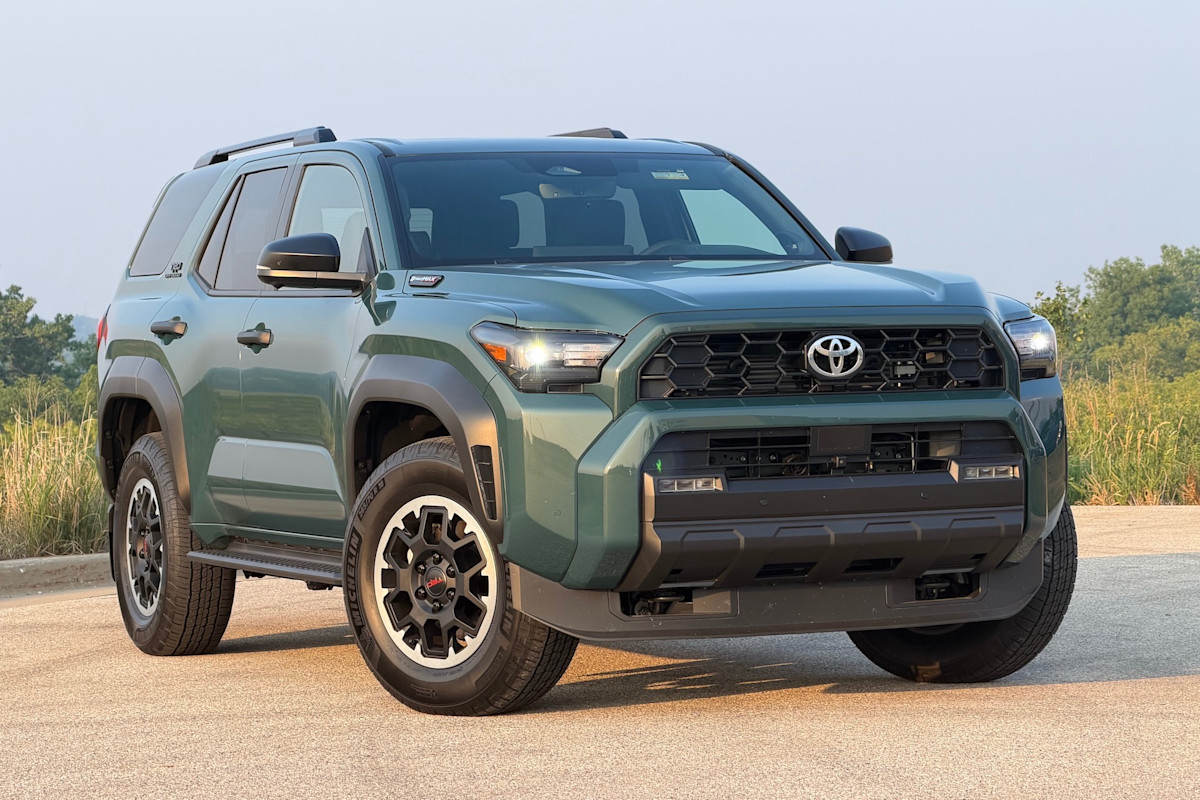
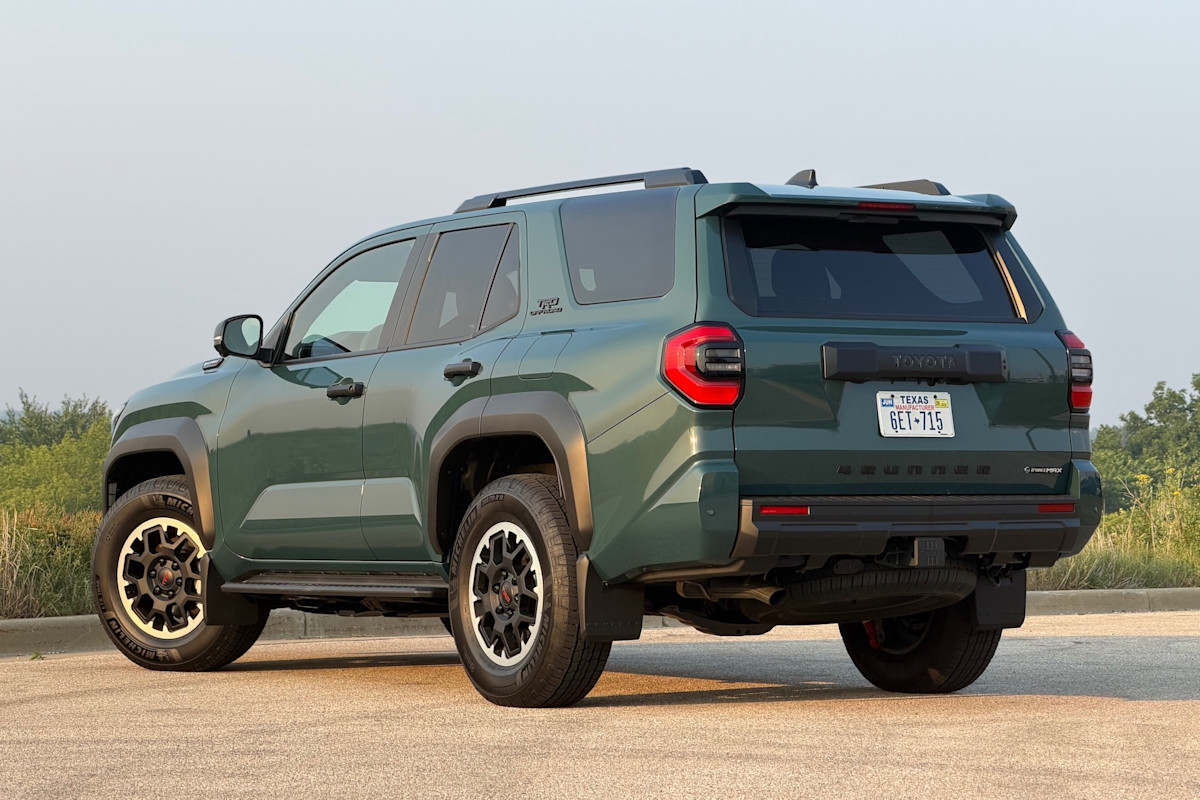
Toyota’s 4Runner and Tacoma pickup share a lot in terms of design, and it's hard to tell the two apart from the front. The 4Runner has a muscular look with pronounced haunches at each wheel and black wheel flares for the off-road models. The sheet metal is creased and angled — perhaps too much — and the creases are especially deep along the sides.
Up front, the grille sits high and rests above a lower intake with an underbite, especially on the TRD Pro and Trailhunter models, which get their own bumpers for better approach angles. Those models also have heritage-inspired front ends with “Toyota” lettering on the grille and an integrated light bar. In another nod to the original 4Runner of the 1980s, the rear side windows extend into the roof. Wheel sizes range from 17 to 20 inches.
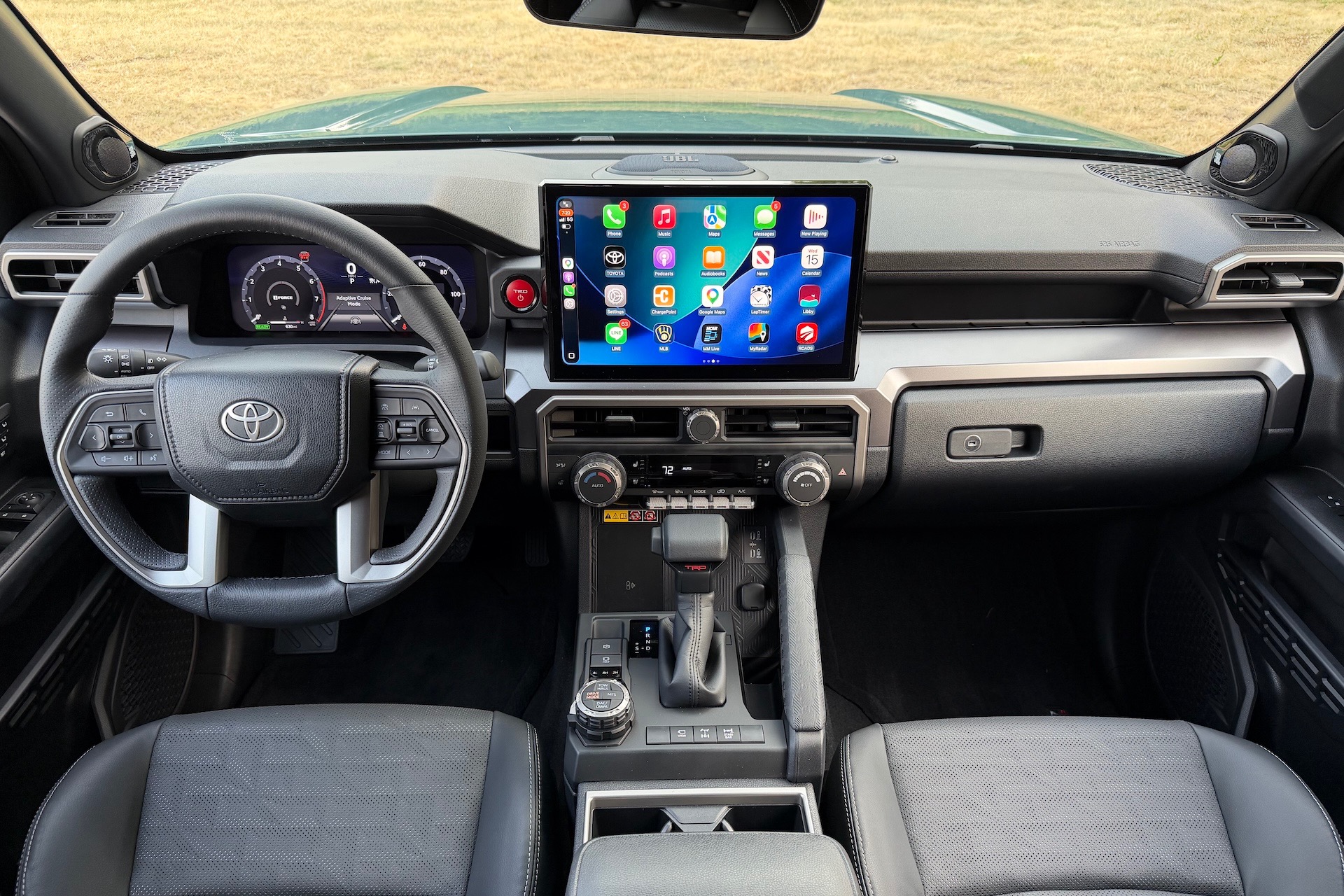
The 4Runner’s interior has a simple and utilitarian look. It features chunky control dials that are easy to operate with gloved hands, and an abundance of hard plastic adorns the dash, centre console, and door tops. Only the centre console bin cover and door armrests are soft to the touch.
Cloth upholstery comes standard. Synthetic leather is standard on the off-road-oriented models because it’s easy to clean. Leather upholstery is standard for the Limited and Platinum trims. But even with leather, this never looks like a high-end cabin.
Performance
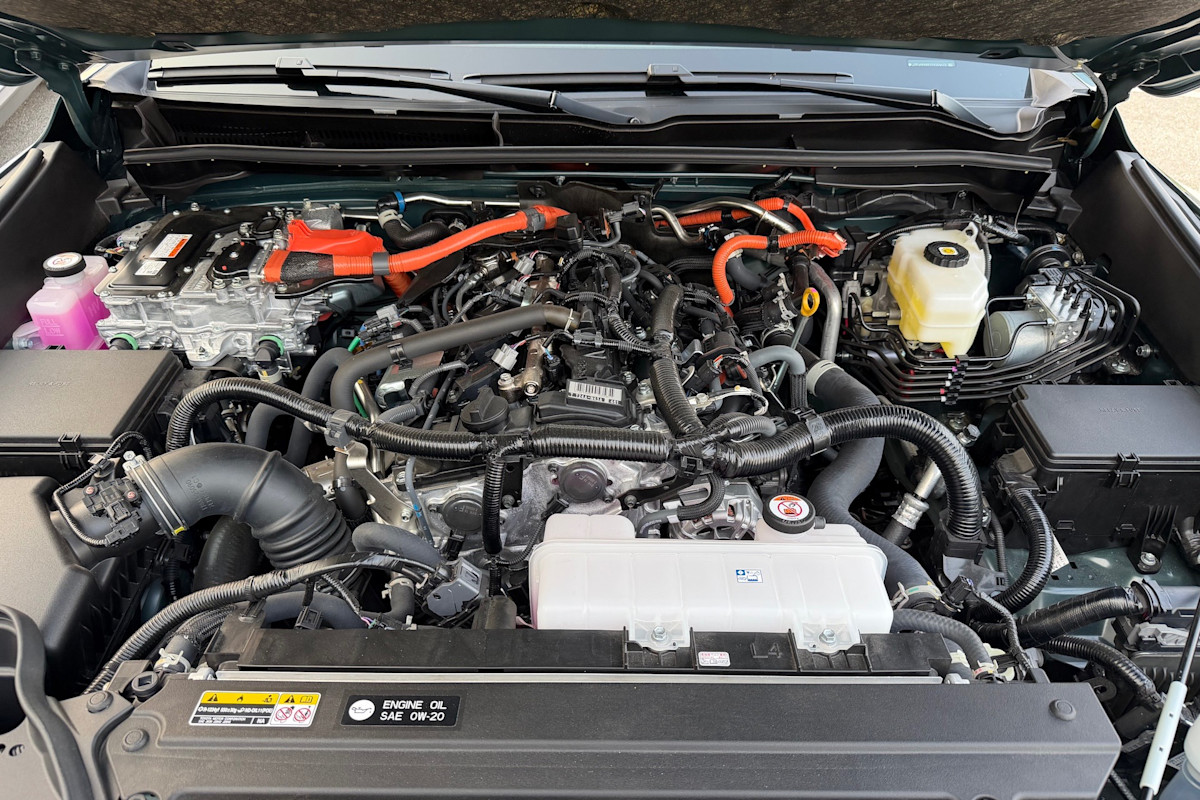
In Canada, the 4Runner comes with a choice of two powertrains and two four-wheel-drive (4WD) systems. The base engine, which Toyota calls i-Force, is a turbocharged 2.4-litre four-cylinder that generates 278 horsepower and 317 pound-feet of torque. The i-Force Max hybrid adds an electric motor to increase output to 326 hp and 465 lb-ft.
Our 4Runner test unit was in U.S. specification featuring the TRD Off-Road Premium package and the hybrid powertrain. (Note: this combination is not available in Canada.)
Despite the big torque figure, the 4Runner hybrid isn’t all that quick with a mid-to-low seven-second 0 to 100 km/h time. The eight-speed automatic transmission is well matched to the engine, and its tuning and the throttle response become more aggressive in the Sport drive mode. The 4Runner hybrid is quick enough for any daily need, but it doesn’t match what’s expected given the torque figure. The torque is good for off-roading, however, giving the 4Runner the oomph to pull itself up hills and out of ruts, especially in its low-range 4Lo setting with the Crawl Control engaged.
Speaking of 4Lo, the 4Runner is offered with either part-time or full-time 4WD. The TRD Off-Road Premium package has the part-time system, which also has 4Hi and 2Hi settings. Using either of the 4WD settings allows drivers of more off-road-oriented 4Runners to pick from six Multi-Terrain System (MTS) drive modes, which include Deep Snow, Mud, Sand, Dirt, Auto, and Rock. Each mode controls the throttle, traction control, and braking to help the 4Runner navigate such terrain. The more street-oriented Limited and Platinum models get a full-time 4WD system with a locking centre differential that’s much easier to use.
Our tester had several features to improve off-roading. Every TRD Off-Road Premium gets a locking rear differential, Bilstein remote-reservoir dampers, running boards, an extra 2.5 centimetres of ground clearance for a total of 23.1 cm, 18-inch wheels with 33-inch all-terrain tires, the MTS system, and a Multi-Terrain Monitor, which uses the surround-view camera to provide several extra views to aid off-roading.
The Trailhunter and TRD Pro go even further. Both sit another 2.5 cm higher off the ground, come standard with disconnecting sway bars and unique front bumpers to improve the approach angle from 19 to 33 degrees, and have pre-wired auxiliary switches for aftermarket accessories. The TRD Pro also has Fox adjustable remote-reservoir shocks, an aluminum front skid plate, and underbody protection for the transfer case and gas tank. The Trailhunter has a snorkel on the passenger-side A-pillar, Old Man Emu shocks for both on- and off-road performance, rock rails, an on-board compressor, a roof rack instead of roof rails, a composite gas tank skid plate, and steel skid plates for the front end, transfer case, and rear differential.
The TRD Off-Road Premium, TRD Pro, and Trailhunter packages are serious off-roaders, but their on-road dynamics are compromised. With its body-on-frame platform, the 4Runner suffers from the jiggle and bounding of a pickup over bumps, and that’s magnified with these off-road-focused models. Our TRD Off-Road Premium tester’s Bilstein dampers were rather firm, so the suspension didn’t quell bumps all that well despite the tall-sidewall 265/70R18 Michelin LTX Trail all-terrain tires.
Handling also suffers. The tall ride height causes notable lean in corners, and while the steering is direct with some decent heft, it’s rather slow. The Limited and Platinum ride lower and have full-time 4WD, so they are easier to live with on the street, but their handling still can’t match that of unibody crossovers.
Form & function
The 4Runner can be had with two rows of seats for a five-passenger capacity or three rows to seat up to seven.
The front seats are the best, although they only come with manual adjustment as standard. Heated front seats are standard in Canada, and all versions but the base and the TRD Sport package get power front seat adjustments. A heated steering wheel is standard in all versions but the base model.
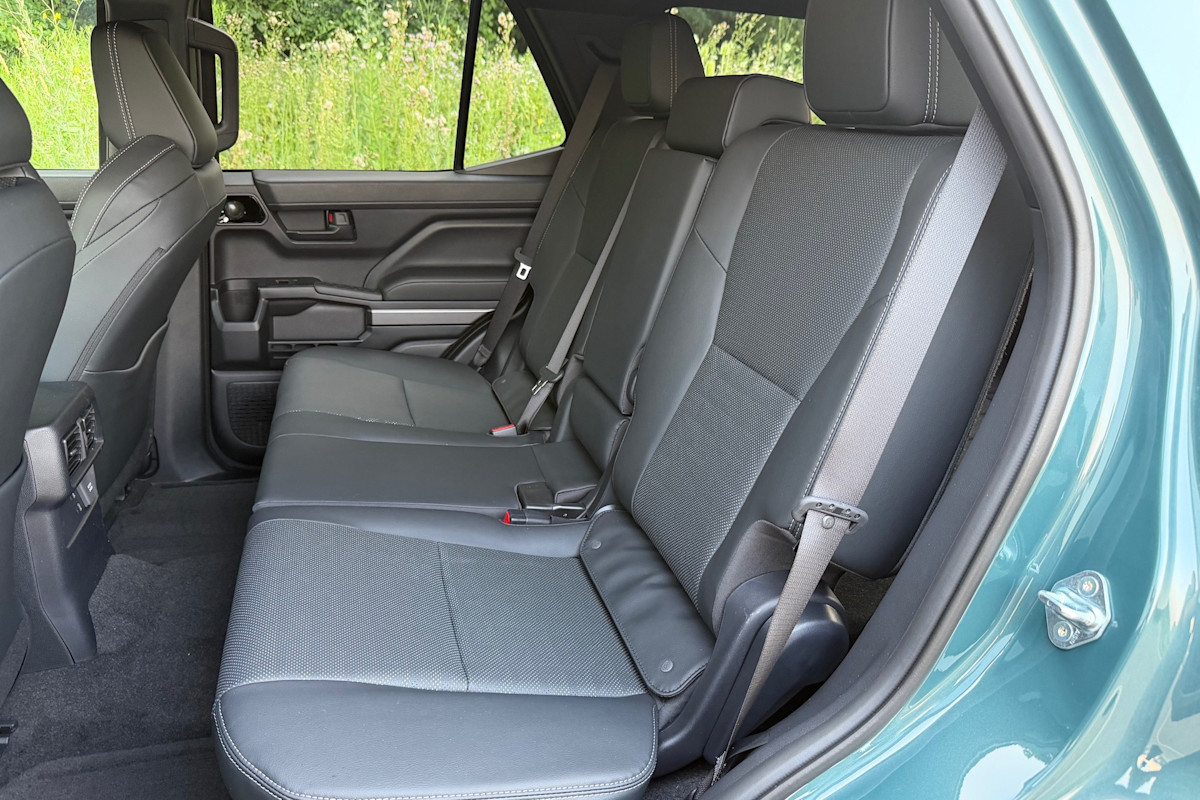
There's decent space in the second row, but the seats aren't that comfortable. Headroom and legroom are good, but the seat bottoms sit too low to offer the thigh support needed for comfort on any trip longer than about half an hour. It’s also tough to get in there due to short rear doors and a high step-in height. The Platinum trim adds heated second-row seats.
We drove the two-row 4Runner and can’t imagine the three-row version would be any good. We suspect it has a low seat bottom with even worse thigh support than the second-row seats. Legroom checks in at a measly 808 millimetres, so the two people you put back there will likely have to be kids.
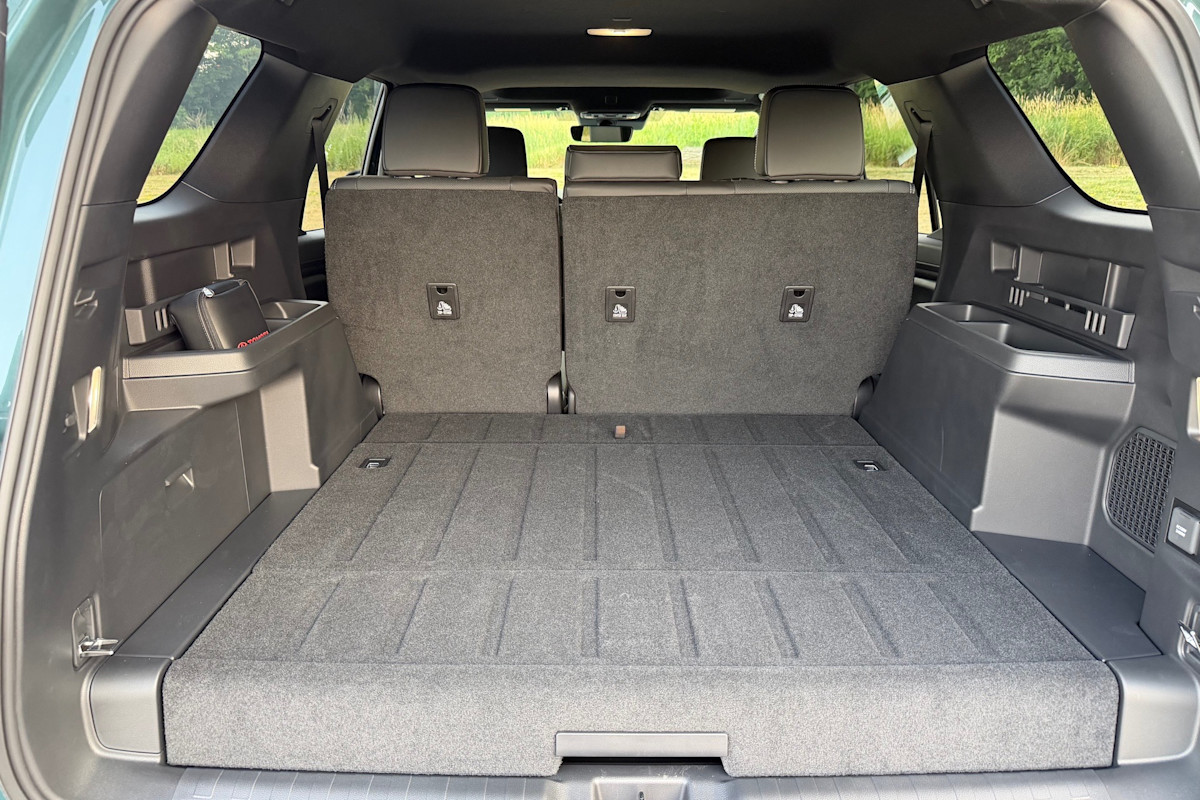
Cargo space is about as spacious as the 4Runner’s midsize rivals, but the space isn’t quite as accessible. Hybrid two-row models have 1,206 litres of space behind the second row and 2,339 litres behind the first row. With the gas powertrain, the three-row configuration has 343 litres behind the third row, 1,269 litres behind the second row, and 2,381 litres with all the seats folded.
That second row can fold flat as a step up from the rest of the load floor, or the seat bottoms can tilt up to create a flat load floor that isn’t as long. Models with the hybrid powertrain lose space because of a higher load floor that creates a higher liftover height to load items.
Technology
The 4Runner comes standard with a 7-inch digital instrument cluster and an 8-inch touchscreen. However, the instrument cluster expands to 12.3 inches in all but the base model, and the touchscreen grows to 14 inches beginning at the TRD Off-Road Premium package.
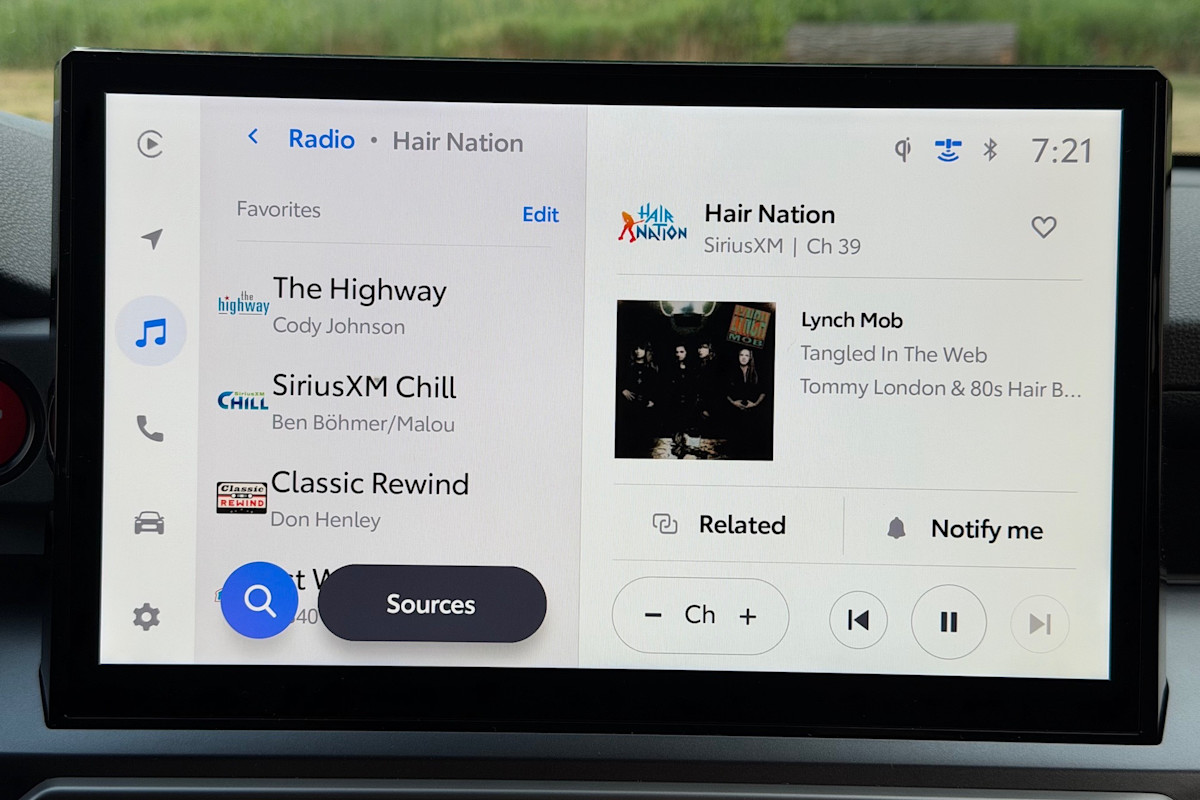
Our tester had the 14-inch screen, which could use a bit more pizazz. It lacks a home screen and looks like a white sheet of paper during the day without any distinctive design elements. However, it’s large and close at hand, so it’s easy to use. A line of icons along its left side provides quick access to functions such as navigation, phone, and entertainment. The screen reacts quickly to commands and generally performs well.
The 4Runner comes with a three-year trial of Remote Connect, which provides remote control of vehicle functions through the Toyota app; a subscription of up to 10 years to Safety Connect, which offers emergency assistance and a stolen vehicle locator, and Service Connect, which sends maintenance updates and vehicle health reports. Drive Connect, which adds a voice assistant, cloud-based navigation and traffic updates, and more, has a three-year trial with some packages and requires a subscription from day one on others.
Our tester also had the 12.3-inch digital instrument cluster, which provides three areas of programmable information. A five-way controller on the left side of the steering wheel lets the driver choose what’s in those spots. It’s the usual stuff such as the trip computer, current media, a compass, and fuel economy, plus useful vehicle status information such as pitch and roll, a turbo gauge, and temperature gauges.
Other standard tech features include wireless Apple CarPlay and Android Auto, a three-month satellite radio trial, and on all but the base model, a wireless phone charger. The standard radio has eight speakers, while most 4Runner packages add a 14-speaker JBL audio system with a removable portable Bluetooth speaker.
Safety
Toyota equips every 4Runner with its Safety Sense 3.0 suite of safety features. It consists of forward collision warning with pedestrian detection, automatic emergency braking, adaptive cruise control, lane departure warning, lane keep assist, road sign recognition, and high beam assist. Also standard — but oddly not considered part of Safety Sense — are blind spot monitoring and rear cross-traffic alert.
Newly redesigned vehicles usually score well in crash tests, but the 4Runner has mixed crash scores despite being overhauled for 2025. It received four out of five stars overall from the U.S. National Highway Traffic Safety Administration (NHTSA) in a segment where most vehicles get five. The culprits are four-star ratings in the frontal crash and rollover evaluations.
It also got mixed results from the Insurance Institute for Highway Safety (IIHS). The 4Runner received a Marginal score in the moderate front overlap crash test, headlights that rate Poor to Acceptable to Good depending on the package, and an incomplete rating in the small front overlap test because it’s only been tested on one side. It did get Good ratings in the updated side crash test and for its vehicle-to-vehicle and vehicle-to-pedestrian front crash prevention systems, though.
Cost-effectiveness
In Canada, the 2026 Toyota 4Runner is available in eight configurations. All are meant for off-roading, but four in particular ramp up the equipment for more capability. The lineup consists of the gas-only models, which are the standard package, TRD Sport, TRD Off-Road Premium, and the seven-passenger Limited; and the hybrid models, which have a standard package, Platinum (with or without fixed running boards), TRD Pro, and Trailhunter. Prices start at $57,450 and top out at $87,584, including the $1,930 destination charge.
The most affordable way into the hybrid powertrain is the $71,137 standard package. Its hybrid powertrain delivers a Natural Resources Canada-rated 10.4 litres per 100 kilometres in the city, 9.6 on the highway, and 10.0 combined. That’s not much better than the non-hybrid versions, which rate at 11.2 L/100 km combined. The Limited and Platinum packages are slightly different due to equipment changes. The window sticker fuel economy rating is not easy to achieve, either. In our 210 kilometres of mixed city and highway driving in the i-Force Max hybrid, we averaged just 14.6 L/100 km.
The 4Runner is purpose-built for adventure, so we recommend choosing one of the three off-road-focused models and using it exactly that way. Otherwise, pick a crossover with more on-road and passenger comfort.
What owners say
Because It’s made in Japan, the quality and materials in the vehicle is outstanding.
February 18, 2026Trims & specs
Base MSRP N/A | Seating 7 |
Engine N/A | Cargo Capacity 1371 L |
Combined MPG N/A | Drivetrain N/A |
Base MSRP N/A | Seating 7 |
Engine 2.4L 278 hp I4 | Cargo Capacity 1371 L |
Combined MPG 22 | Drivetrain 4X4 |
Base MSRP N/A | Seating 5 |
Engine 2.4L 278 hp I4 | Cargo Capacity 1371 L |
Combined MPG 22 | Drivetrain 4X4 |
Base MSRP N/A | Seating 5 |
Engine 2.4L 278 hp I4 | Cargo Capacity 1371 L |
Combined MPG 22 | Drivetrain 4X4 |
Base MSRP N/A | Seating 7 |
Engine N/A | Cargo Capacity 1371 L |
Combined MPG N/A | Drivetrain N/A |
Base MSRP N/A | Seating 5 |
Engine N/A | Cargo Capacity 1371 L |
Combined MPG N/A | Drivetrain N/A |
Base MSRP N/A | Seating 5 |
Engine 2.4L 278 hp I4 | Cargo Capacity 1371 L |
Combined MPG 22 | Drivetrain 4X4 |
Base MSRP N/A | Seating 5 |
Engine N/A | Cargo Capacity 1371 L |
Combined MPG N/A | Drivetrain N/A |
Base MSRP N/A | Seating 5 |
Engine 2.4L 278 hp I4 | Cargo Capacity 1371 L |
Combined MPG 22 | Drivetrain 4X4 |
Base MSRP N/A | Seating 7 |
Engine 2.4L 278 hp I4 | Cargo Capacity 1371 L |
Combined MPG 22 | Drivetrain AWD |


Pricing trends
Current avg. market price
$72,773
Trending down by 5.0% this month
May 2026 - November 2026


