2027 Kia Seltos Reviews, Pricing & Specs


Pros & cons
What we like
Stylish design
Spacious
Impressive technology
What to consider
Sluggish performance (standard engine)
Soft and springy ride at times
Lacks standard blind-spot warning
The CarGurus verdict
The redesigned 2027 Kia Seltos leaps from class zero to class hero.
Where the previous Kia Seltos was forgettable, the redesigned version makes a statement, and there is deep substance beneath its bold surface. From its roomy interior and cargo area to its advanced infotainment and safety tech, the Seltos sets new standards in its segment. Unfortunately, until the new Seltos Hybrid arrives, the powertrains are still lacking.
Verdict: The 2027 Kia Seltos is one of the best subcompact SUVs on the market. However, buyers might want to wait for the Seltos Hybrid, which will offer the most appealing blend of power, fuel efficiency, features, and style.
out of 10 expert review
Look & feel
In Canada, Kia sells the new Seltos in LX, EX, EX Premium, X-Line, and X-Line Limited trim levels, at prices ranging from $30,630 to $43,430, including the $2,135 destination charge. The base LX has standard front-wheel drive (FWD) and available all-wheel drive (AWD), while the latter is standard on all other versions. The top-shelf X-Line trims get a turbocharged engine.
We spent a week test-driving the U.S. equivalent of the X-Line Limited. It came fully loaded with a long list of desirable features such as the fanciest dashboard displays, a Harman Kardon premium sound system, ventilated front seats, camera-based visibility aids, and advanced Highway Driving Assist technology. These features and more account for its $43,430 price tag.
That’s steep for a subcompact SUV, but the X-Line Limited rarely looks or feels like it should cost less, especially in the context of top-trim prices for more popular compact SUVs. Drivers will occasionally spot something that reminds them of how affordable the base LX trim level is, but otherwise the top-of-the-line model seems worth the money.
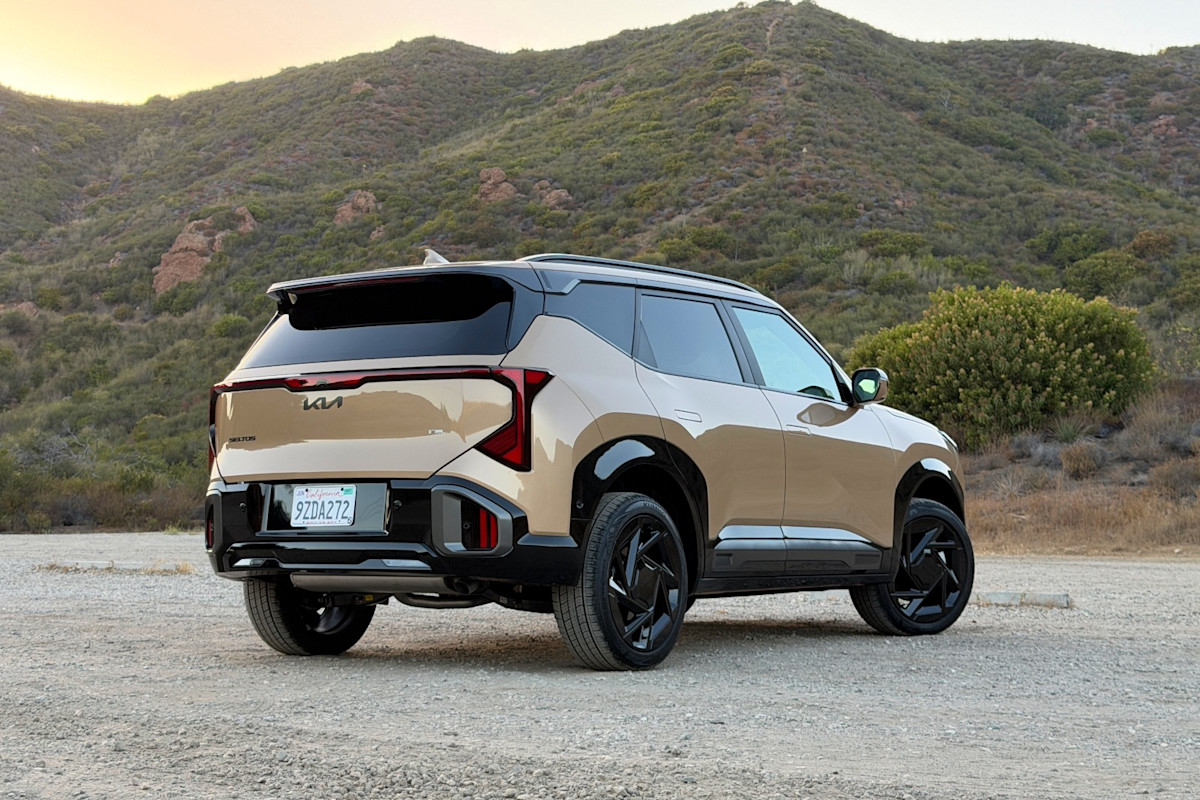
For starters, the Seltos sure doesn’t look cheap. The styling is a terrific mashup of Kia EV9 and Kia Telluride elements shrunk down to the Seltos’s subcompact size. The Seltos looks technical and tough, and the Terrain Brown paint resulted in at least one conversation with a pedestrian who stopped in his tracks at the sight of this Kia.
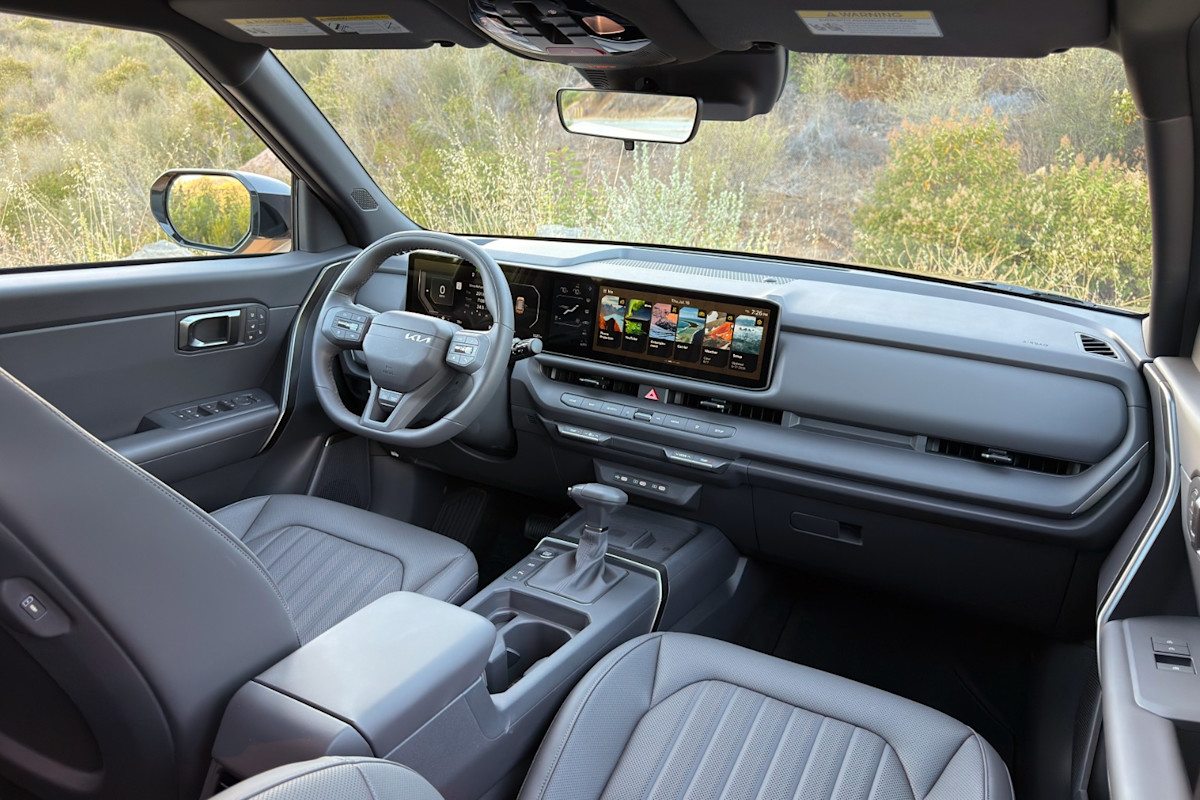
Inside, the EV9/Telluride theme continues with an available panoramic display screen, simple but intuitive controls, and quality materials. The transmission shifter feels solid and smooth, conveying a sense of excellence and attention to detail that extends to the robust interior door handle pulls, the artificial leather upholstery, and the overall build quality.
However, even with its panoramic glass sunroof letting in extra light, the X-Line Limited model’s Saturn Black interior is dark and dreary. It's begging for a high-contrast light grey or amber brown colour option to elevate the cabin beyond the competition. Interestingly, a black and grey motif is exactly what you’ll find in non-X-Line trims.
Performance
Every 2027 Seltos that’s not in an X-Line configuration is equipped with a 2.0-litre four-cylinder engine and a continuously variable transmission (CVT). The LX FWD has a torsion beam rear suspension. With AWD, Kia swaps that for a more sophisticated multi-link independent rear suspension.
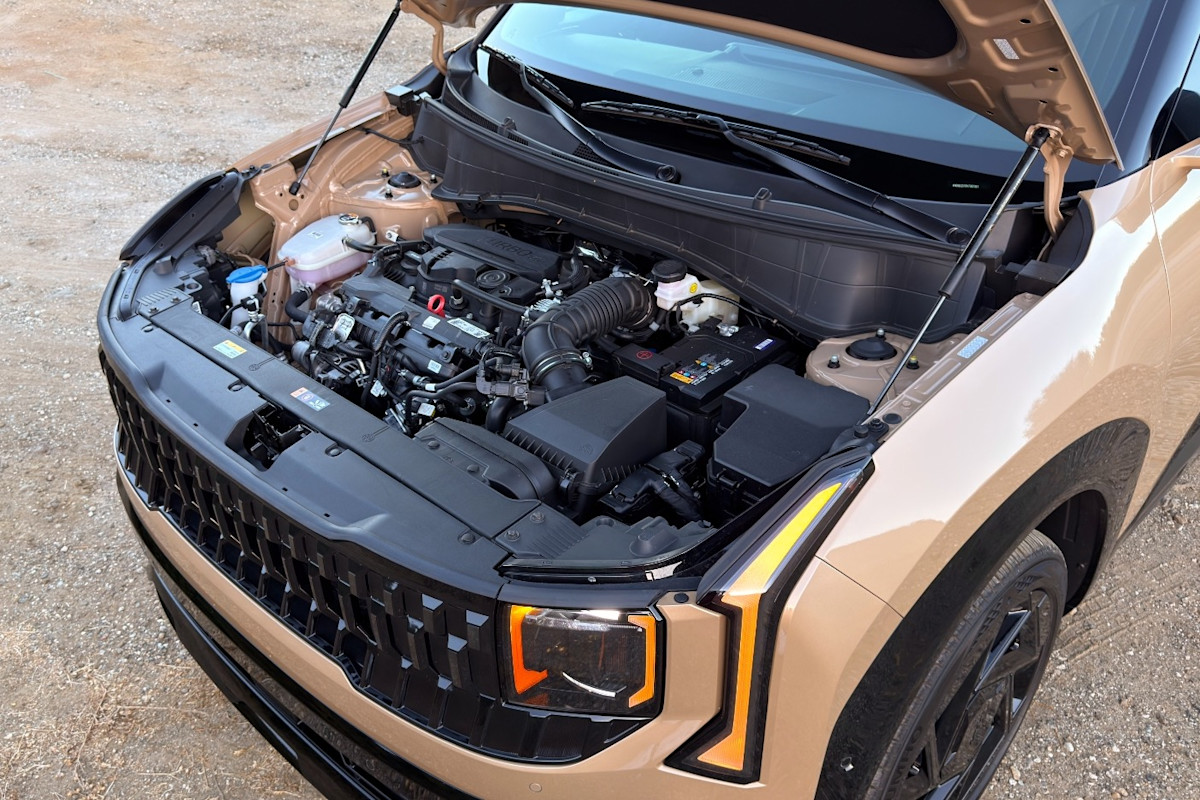
While we spent most of our time in an AWD X-Line Limited model, we also briefly sampled a Seltos with FWD. Because the 2.0-litre makes only 147 horsepower and 132 pound-feet of torque, it is slow when merging onto a fast-flowing highway, passing other vehicles, or accelerating up a hill. In those situations, the CVT creates quite a racket, too, and the ride isn’t as composed due to the unsophisticated rear suspension design. However, for a typical small SUV buyer in typical driving situations, it's an adequate powertrain.
The X-Line trims introduce a rousing turbocharged 1.6-litre four-cylinder whipping up 190 hp and 195 lb-ft of torque. It pairs with an eight-speed automatic and a torque-vectoring AWD system with a 4WD Lock function and a Terrain driving mode. These models sit on 19-inch wheels and offer 16 centimetres of ground clearance, so they likely aren’t a suitable replacement for a Subaru Crosstrek for those planning to travel far from civilization.
A Seltos Hybrid is scheduled to arrive in early 2027. At the time of writing, Kia hadn’t announced many details about it other than to confirm that it will use a 1.6-litre four-cylinder engine, a six-speed dual-clutch automatic transmission, and an available e-AWD system. If that gas engine is turbocharged like the one in the larger Kia Sportage Hybrid, the Seltos Hybrid will offer plenty of power and impressive fuel economy.
In the meantime, for those who can’t wait and don’t mind the X-Line Limited’s official Natural Resources Canada fuel economy rating of 9.0 litres per 100 kilometres in combined city and highway driving, we think it’s satisfying to drive. In Normal mode, it averaged 8.9 L/100 km on our fuel economy evaluation route, which is a 50:50 mix of city and highway driving in a relatively flat area.
However, the powertrain can seem a little lazy in Normal mode. There's a small delay in response when accelerating from a stop or when turning left across traffic, and the transmission resists downshifting when trying to pass or quickly change lanes. Switching to Sport mode cures much of that behaviour but may result in added fuel consumption.
On a multi-lane highway, the Seltos soaked up expansion joints and bridge crossings that can cause a jittery ride in many vehicles. But on lumpy mountain roads, the Seltos rocked, rolled, and bounced. With the optional independent rear suspension, the handling is secure and the Seltos is even tossable, but all that body motion could cause passengers to feel a little ill on imperfect roads.
The new Seltos shines brightest in urban environments. With its small size, boxy dimensions, tall ride height, and impressive outward visibility, it’s a snap to park and maneuver. It's easy to see all around in thick traffic, including a good distance forward to tell when other vehicles ahead are slowing down.
Form & function
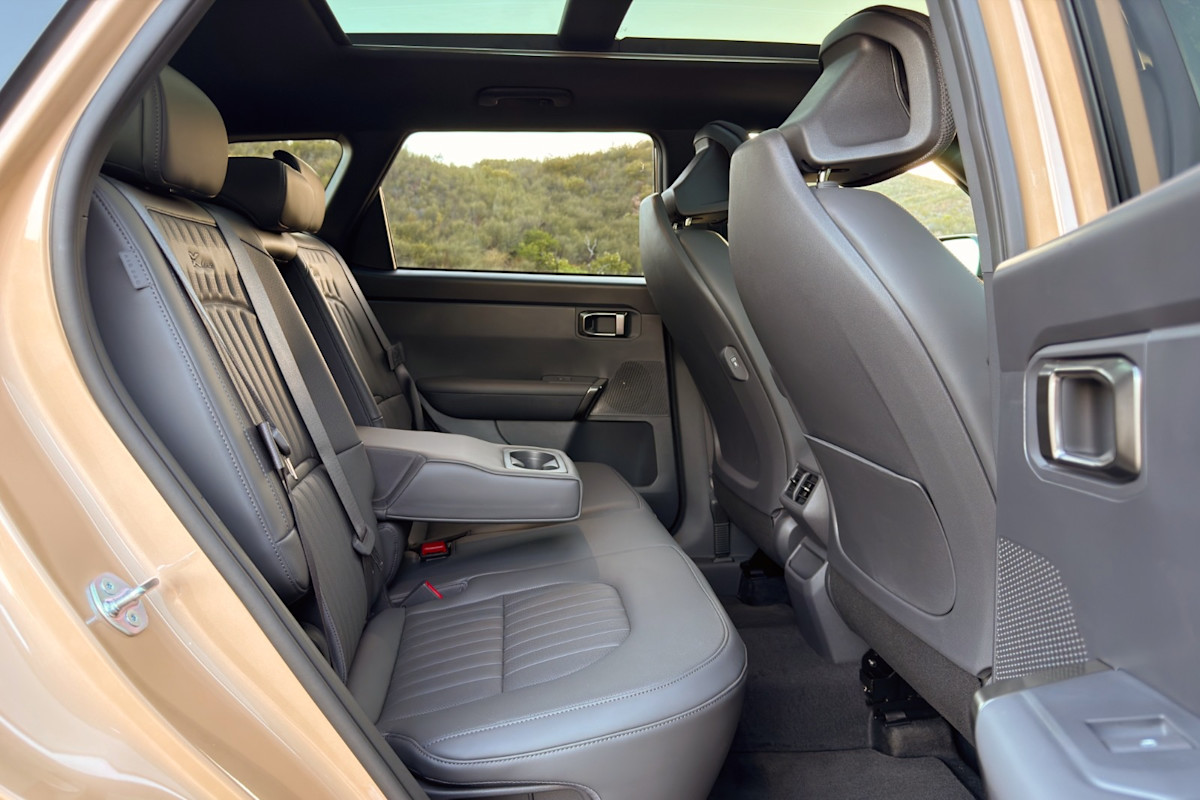
One of the best things about the new Kia Seltos is its interior space. Four large adults easily fit into this small SUV, and kids of all ages will think the back seat is particularly spacious. Not only that, but the cargo area is especially practical, offering nearly as much utility as some compact crossovers in the next class up.
Our loaded test vehicle had heated and ventilated front seats, a thick-rimmed heated steering wheel, and seemingly endless power adjustments to ensure a driver could find a perfect seating position. Even lower trim levels are well equipped, though: the standard manual seat-height adjuster for the front passenger seat is a particularly thoughtful touch that other automakers miss.
The EX Premium and X-Line trims add a “relaxation seat” mode for the driver, which lowers and reclines the seat. This is apparently for napping or watching streaming video through the centre touchscreen display.
Rear seat room is remarkably spacious for this segment, and the seat is comfortable for longer trips thanks to a bottom cushion shaped to provide proper leg support. Our test vehicle even had rear air conditioning vents, dual USB charging ports, and a centre armrest equipped with cupholders.
Though Kia uses a traditional PRNDL shifter in the Seltos, storage space is reasonably good. Each door panel has a small tray embedded into the armrest and a bottle holder nestled into the lower pocket, and the bin under the centre armrest is a decent size. Kia tucks a wireless smartphone charger under the dashboard ahead of the shifter on most trims, and it has a rubber surface to stop devices from sliding off when rounding a corner.
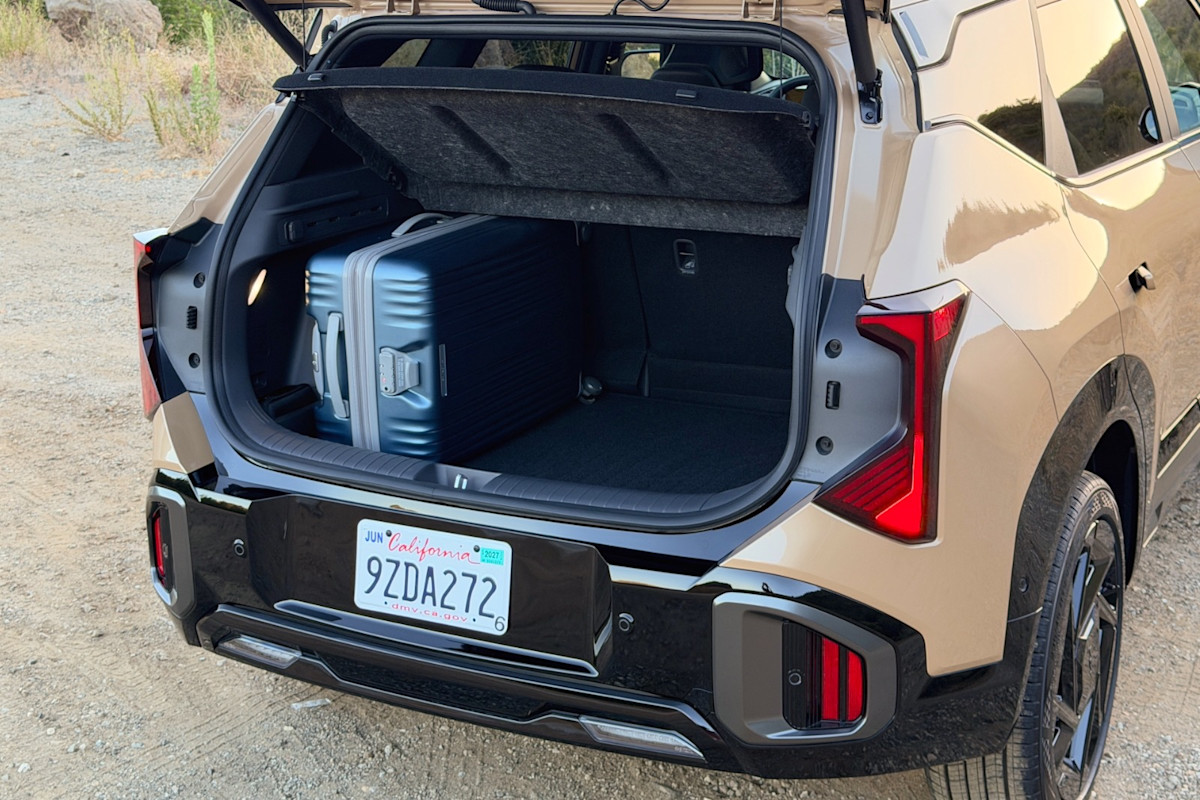
An available “smart” hands-free power liftgate opens after a few seconds as long as the key fob is close. Unlike kick-activated systems, the smart liftgate doesn't require the driver to wave a foot under the bumper or bump an elbow into a sensor to activate it, so both feet remain planted while both hands are full. However, it also means that those who linger behind the Seltos might unintentionally cause the liftgate to open (automatic opening can be turned off).
When the liftgate does open, it reveals up to 786 litres of cargo space behind the back seat. The load floor is a dual-level design, meaning it can be kept in a raised position with hidden storage underneath or dropped to maximize carrying capacity. With the load floor down, a full-size suitcase loaded on its side fits into the Seltos under the optional cargo cover without any trouble.
Fold the back seat down and the Seltos can hold 1,817 litres of cargo. For comparison purposes, the Subaru Forester — which is in the class above — offers 1,957 litres behind the first row when equipped with a panoramic sunroof and 779 litres behind the back seat.
Technology
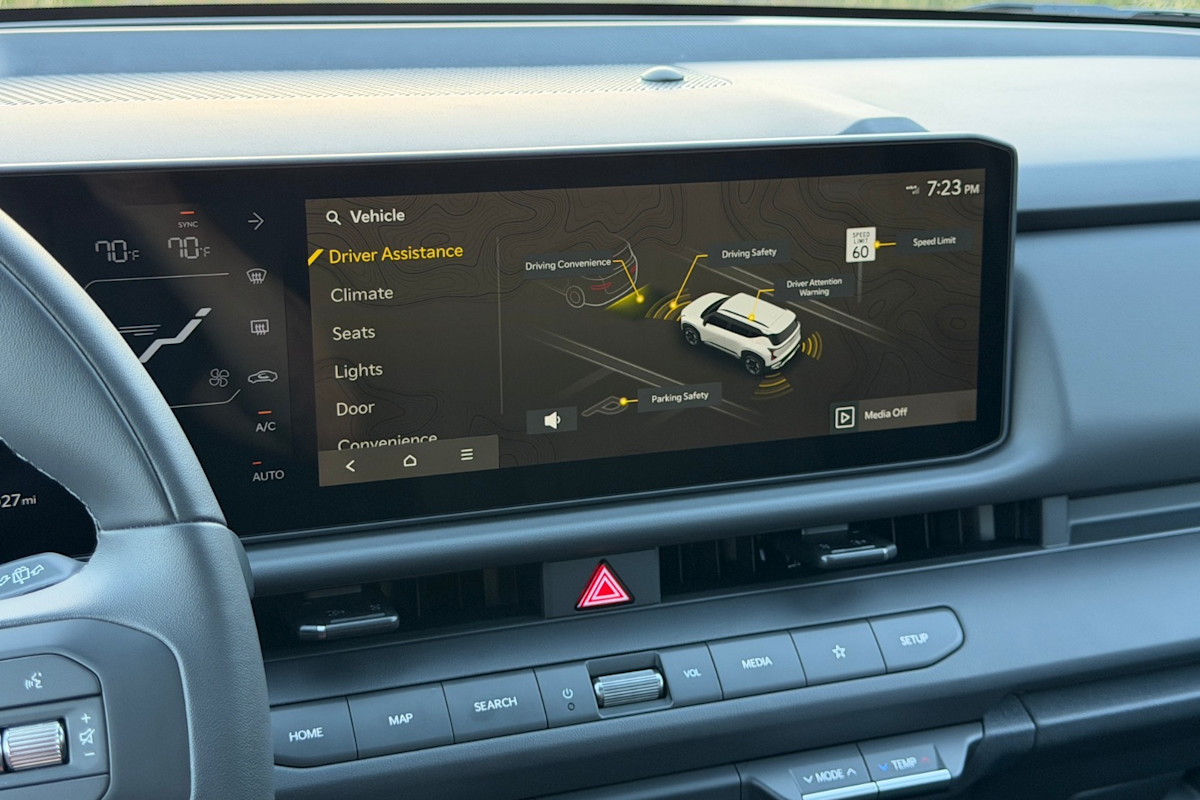
Our test vehicle had an impressive panoramic display containing a 12.3-inch digital instrumentation panel, a 5-inch climate control panel, and a 12.3-inch infotainment touchscreen. The latter is standard for 2027, but the driver display and climate panel are not.
We found the steering wheel blocks the driver's ability to see the climate panel. That’s an issue only when the front and rear defog/defrost functions are required or when activating or deactivating the automatic mode. Kia provides toggles on the dashboard for temperature adjustment, fan speed, and fan mode. Likewise, there is a physical volume knob, steering wheel controls for volume and radio tuning, and large shortcut buttons for the infotainment system’s primary menus and settings. Drivers can also program the Star button as a custom shortcut.
The infotainment system features wireless Apple CarPlay and Android Auto, SiriusXM satellite radio, and Kia Connect connected services. Our test car came with a complimentary three-year subscription to the Kia Connect Ultimate plan, which equips the Seltos with numerous safety and convenience features such as Kia Connect Voice Assist voice recognition. We found it accurate but slow to respond, so we mostly relied on Apple CarPlay, which worked flawlessly.
One feature we really like about the Seltos, and Kias in general, is Leading Vehicle Departure Alert. When the car is sitting in traffic, at an intersection waiting for a light to change, during the commute on a highway, or in a long drive-thru line, this feature will notify the driver when the vehicle ahead has started moving again. Worth noting: it won't prevent honking if the Seltos happens to be first in line.
Safety
As buyers would expect in a brand-new vehicle, the Seltos is equipped with a generous list of standard driver assistance features.
Forward collision warning with pedestrian and cyclist detection, automatic emergency braking with intersection turning assist, front and rear parking sensors, lane departure warning, lane keep assist, lane centring assist, blind spot monitoring, and rear cross-traffic alert are standard on all trim levels in Canada. When using the lane centring feature, the standard hands-on-detection steering wheel reduces system warnings to keep the driver's hands on the wheel, minimizing distraction and annoyance.
Adaptive cruise control is also standard, and Kia’s Highway Driving Assist (HDA) technology comes in on the EX Premium grade. Highway Drive Assist 2, which can also assist with lane changes, is equipped only on the X-Line Limited. We used HDA extensively, and while it can struggle in moderate traffic on densely packed multi-lane highways, it demonstrates remarkable sophistication in lighter traffic. And that hands-on steering wheel detection feature makes HDA a real pleasure to use.
The X-Line Limited also adds a camera-based blind spot monitor that shows a live camera view of the blind spots within the digital instrumentation panel once a turn signal is activated. It’s a neat feature, but we don’t find it replaces checking the side mirrors and the traditional blind spot warning lights and notifications.
A surround-view camera system is also equipped on the X-Line Limited along with additional side parking sensors and rear automatic braking. We experienced the latter feature while reversing into a parking space with people gathered behind the SUV; it was jarring and unpleasant but effective.
At the time of writing, the U.S. National Highway Traffic Safety Administration (NHTSA) and the Insurance Institute for Highway Safety (IIHS) had not published safety ratings for the 2027 Seltos.
Cost-effectiveness
Considering this small crossover SUV’s appealing design, cavernous cabin, and impressive technology, it seems like a bargain even before factoring in Kia’s generous 5-year/100,000-kilometre nearly bumper-to-bumper warranty and three-year Kia Connect trial subscription.
However, our X-Line Limited test vehicle’s MSRP of $43,430 is an eye-popper that makes a case for investigating Kia’s own Sportage lineup in addition to larger alternatives from other automakers. Still, among its competitors, the top-of-the-line Seltos is not alone in this price territory. For example, a similarly equipped but less powerful Toyota Corolla Cross runs just over $42,000 (albeit as a hybrid), and a turbocharged Mazda CX-30 that’s much smaller inside costs almost $45,000, so our test vehicle’s price is not extraordinary in context.
That said, if cost effectiveness is a priority, we think buyers should wait for the upcoming 2027 Kia Seltos Hybrid. It might not cost less to buy, but it should save money at the gas pump and seems like it will offer a more satisfying driving experience.
What owners say
Trims & specs
Base MSRP N/A | Seating 5 |
Engine 2.0L 147 hp I4 | Cargo Capacity 787 L |
Combined MPG 30 | Drivetrain FWD |
Base MSRP N/A | Seating 5 |
Engine 2.0L 147 hp I4 | Cargo Capacity 787 L |
Combined MPG 30 | Drivetrain FWD |
Base MSRP N/A | Seating 5 |
Engine 2.0L 147 hp I4 | Cargo Capacity 787 L |
Combined MPG 30 | Drivetrain FWD |
Base MSRP N/A | Seating 5 |
Engine 2.0L 147 hp I4 | Cargo Capacity 787 L |
Combined MPG 28 | Drivetrain AWD |
Base MSRP N/A | Seating 5 |
Engine 1.6L 190 hp I4 | Cargo Capacity 787 L |
Combined MPG 27 | Drivetrain AWD |
Base MSRP N/A | Seating 5 |
Engine 2.0L 147 hp I4 | Cargo Capacity 787 L |
Combined MPG 28 | Drivetrain AWD |
Base MSRP N/A | Seating N/A |
Engine N/A | Cargo Capacity N/A |
Combined MPG N/A | Drivetrain N/A |
Base MSRP N/A | Seating 5 |
Engine 2.0L 147 hp I4 | Cargo Capacity 787 L |
Combined MPG 28 | Drivetrain AWD |
Base MSRP N/A | Seating 5 |
Engine 2.0L 147 hp I4 | Cargo Capacity 787 L |
Combined MPG 28 | Drivetrain AWD |


Pricing trends
Current avg. market price
$33,223
Price unchanged this month
October 2026 - November 2026

