The Canadian auto market is more electrified than ever, and hybrid and plug-in hybrid cars sit right in the sweet spot for shoppers who want lower fuel bills without committing fully to a battery-electric vehicle. With fluctuating gas prices, long highway distances between cities, and winters that can challenge EV range, a hybrid or plug-in hybrid offers the best of both worlds—meaningful fuel savings on daily commutes and the freedom of a gas tank for those heading out of town.
From efficient compact sedans and sporty coupes to subcompact SUVs with standard all-wheel drive and even a luxury executive sedan, the hybrid and plug-in hybrid car segment in Canada has never been more diverse. We've rounded up the top-rated options on the market right now, based on expert reviews, owner feedback, and deal availability across CarGurus.
About this guide
The cars in this guide have been selected to represent the best options currently available. Our recommendations are the result of a unique three-part scoring system that takes into account real-world tests from our team of expert reviewers, ratings from real-life owners who live with these cars every day, and an analysis of market data from CarGurus to identify which models offer the highest percentage of good and great deals. This combined approach ensures our list highlights cars that are not only great to own but also good value to buy. For more information, scroll to the bottom of this page.
Best Hybrid and Plug-In Hybrid Cars in Canada in 2026
CarGurus expert rating: 9.0 out of 10
CarGurus user rating: 4.8 out of 5
Percentage of good/great deals available on CarGurus: 22.0%
Overall CarGurus rating: 4.4 out of 5
| Pros |
Cons |
| Fuel-efficient |
Sluggish performance |
| Standard all-wheel drive |
Not much cargo space |
| Easy-to-use technology |
Noisy engine under acceleration |
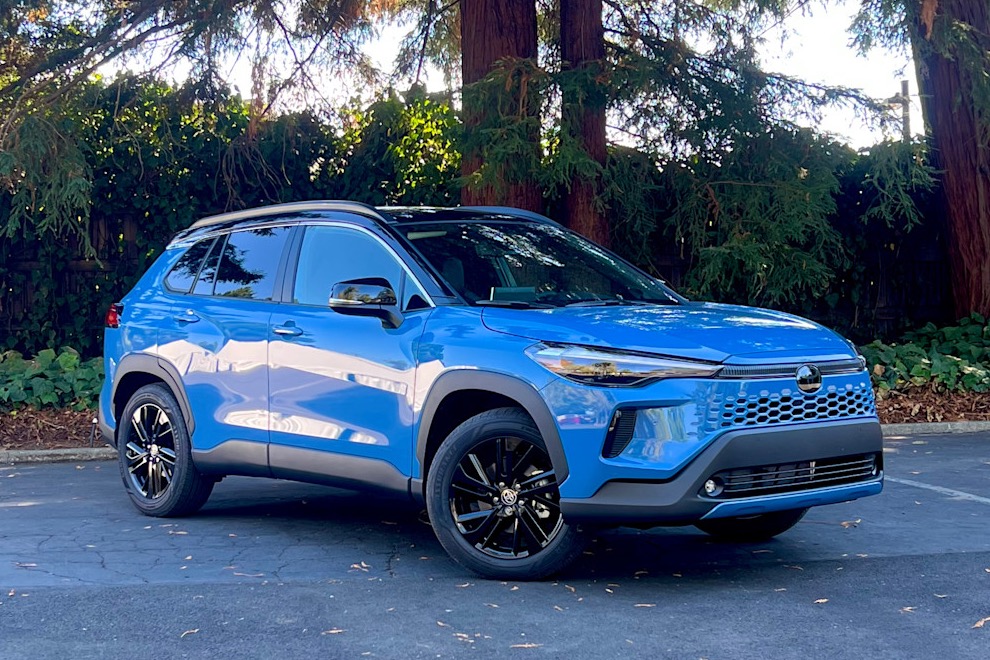
If fuel economy is a priority in a subcompact SUV, the lightly refreshed Toyota Corolla Cross Hybrid is an excellent choice for Canadian drivers. It's powered by a 2.0-litre four-cylinder engine paired with electric motors to create an on-demand all-wheel-drive system, producing a combined 196 horsepower. This setup not only provides confident traction for winter driving but also delivers impressive efficiency, with Natural Resources Canada estimating a combined fuel consumption of just 5.6 L/100 km. It stands out as one of the most efficient options available without stepping up to a plug-in hybrid or fully electric vehicle.
Inside, the Corolla Cross Hybrid offers a practical and comfortable cabin equipped with straightforward, easy-to-use technology, including a standard 10.5-inch central touchscreen with wireless Apple CarPlay and Android Auto. While rear legroom is somewhat snug, the front seats provide plenty of space, and the cargo area accommodates up to 609 litres of gear. It also comes standard with the comprehensive Toyota Safety Sense 3.0 suite.
The CarGurus Verdict: "It's not very exciting to drive, but the Corolla Cross delivers on comfort, safety, and ease of use." - Mark Takahashi, CarGurus contributor
Read our full Toyota Corolla Cross Hybrid review
Search for Toyota Corolla Cross Hybrid
See all

CarGurus expert rating: 7.8 out of 10
CarGurus user rating: 4.3 out of 5
Percentage of good/great deals available on CarGurus: 30.5%
Overall CarGurus rating: 4.5 out of 5
| Pros |
Cons |
| Comfortable |
Poor fuel economy |
| Impressive technology |
Noisy |
| Standard advanced safety features |
Unimpressive stereo |
A staple on Canadian roads for decades, the Toyota Corolla makes its strongest case yet when equipped with the hybrid powertrain. The standard gas model uses a 169-horsepower 2.0-litre engine, but it's the Corolla Hybrid that truly shines for budget- and eco-minded shoppers. Available with front-wheel drive or all-wheel drive—a welcome option for snowy commutes—the hybrid variant returns up to 4.7 L/100 km combined, making it one of the most affordable ways to slash fuel bills.
The cabin keeps things simple and intuitive, with an available 10.5-inch touchscreen running wireless Apple CarPlay and Android Auto. The driving position is comfortable, and the trunk's 371 litres of cargo space can swallow full-size suitcases for weekend trips. Every Corolla comes standard with the Toyota Safety Sense 3.0 suite, bundling a generous helping of driver-assistance tech that adds real peace of mind on highway drives.
The CarGurus Verdict: "The Toyota Corolla rightfully has a reputation for being boring. However, the current 12th-generation model is also more stylish, technologically advanced, and rewarding to drive than previous Corollas." - Christian Wardlaw, CarGurus contributor
Read our full Toyota Corolla review
CarGurus expert rating: 8.0 out of 10
CarGurus user rating: 4.5 out of 5
Percentage of good/great deals available on CarGurus: 29.9%
Overall CarGurus rating: 4.3 out of 5
| Pros |
Cons |
| Stylish design |
Cheap interior materials |
| Fuel-efficient |
Lack of headroom for taller drivers |
| Great handling |
Not much cargo space |
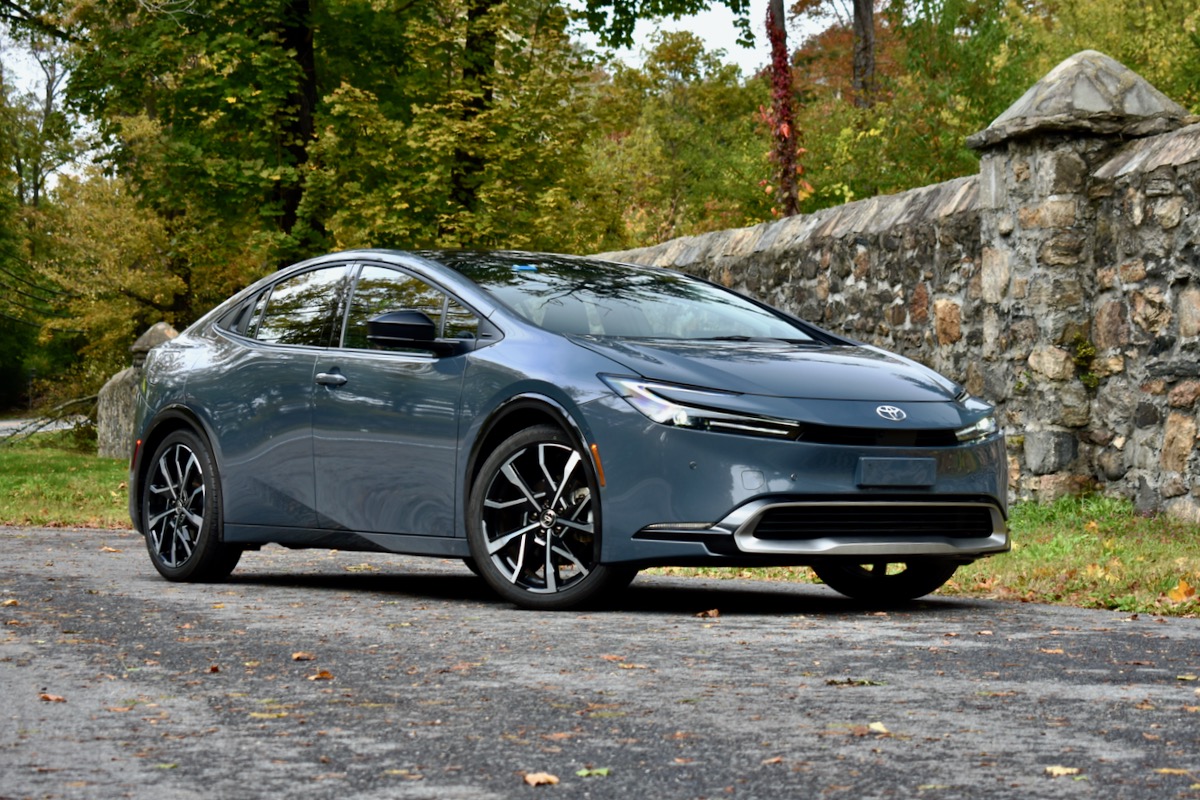
The Toyota Prius Plug-In Hybrid continues to redefine what an eco-friendly commuter car can look like, pairing iconic efficiency with genuinely striking, supercar-inspired styling. A 2.0-litre four-cylinder engine teams with a 13.6-kWh battery and dual electric motors for a total system output of 220 horsepower. This front-wheel-drive powertrain delivers a Natural Resources Canada-estimated all-electric range of up to 72 kilometres on the SE trim, meaning many Canadians could complete their daily commute without burning a drop of fuel. Expect a combined rating of around 4.5 L/100 km when the gas engine fires up.
The driver-focused, low-slung seating position feels closer to a sports car than a traditional hybrid hatchback. While the sleek roofline trades some interior volume—cargo room measures 575 litres behind the rear seats—the Prius Plug-In is plenty practical for daily duties. A 7-inch digital cluster and wireless Apple CarPlay and Android Auto are standard, with higher trims adding a 12.3-inch touchscreen and a premium JBL audio system. Taut suspension and quick steering make this hybrid surprisingly playful, and it qualifies for available provincial and territorial EV rebate programs.
The CarGurus Verdict: "A stylish alternative to other plug-in hybrids and an efficient commuter car, the Prius Plug-In Hybrid is let down by a chintzy interior." - Stephen Edelstein, CarGurus contributor
Read our full Toyota Prius Plug-In Hybrid review
Search for Toyota Prius Plug-In Hybrid
See all
CarGurus expert rating: 8.0 out of 10
CarGurus user rating: 4.6 out of 5
Percentage of good/great deals available on CarGurus: 23.4%
Overall CarGurus rating: 4.3 out of 5
| Pros |
Cons |
| Fuel-efficient |
Noisy |
| Fun to drive |
No front-passenger seat height adjuster |
| Great safety ratings |
Restrictive paint, interior, wheel, and equipment packaging |
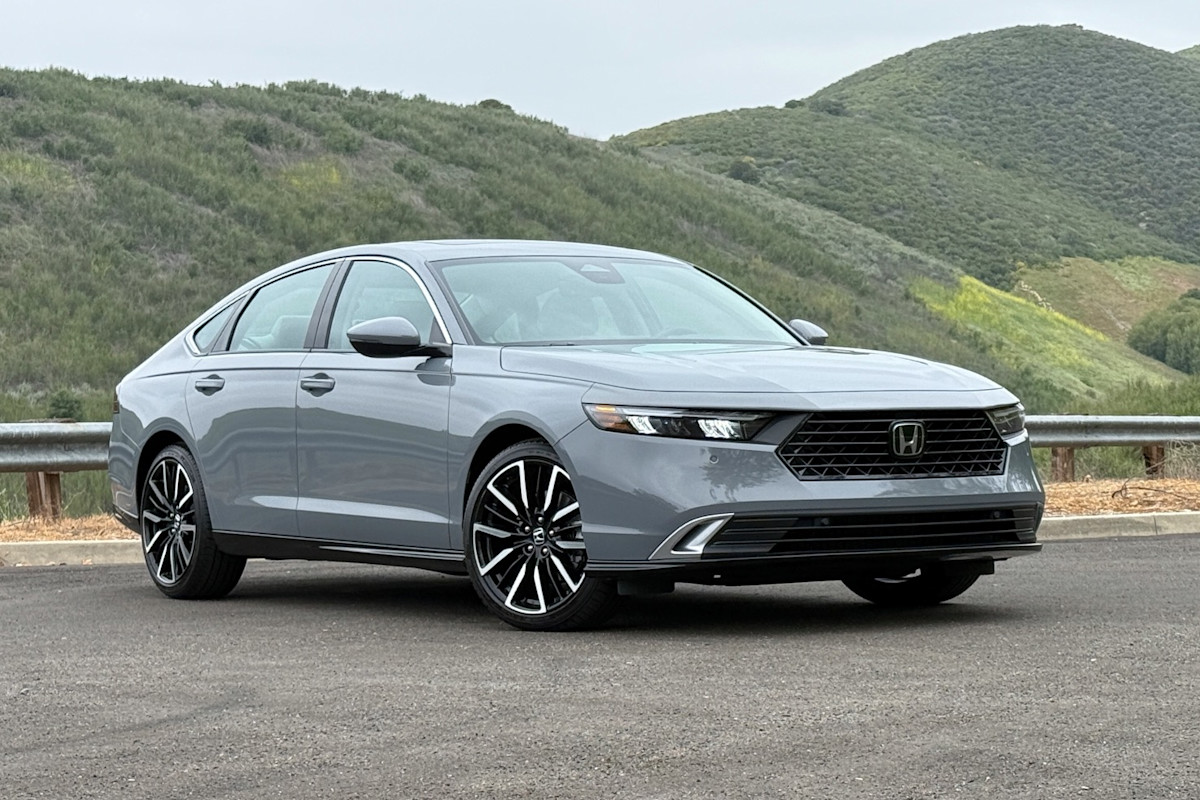
The Honda Accord Hybrid is a smart pick for Canadian families who want efficiency without giving up driving enjoyment. Its sophisticated two-motor hybrid system combines a 2.0-litre four-cylinder gas engine with a high-torque electric motor for a total of 204 horsepower and 247 pound-feet of torque. With the electric motor doing most of the heavy lifting, this midsize sedan returns an impressive 5.3 L/100 km combined per Natural Resources Canada. The trunk's segment-leading 473 litres also means there's no shortage of room for luggage when it's time for a road trip.
The Accord Hybrid's chassis tuning, precise steering, and flat cornering make it a surprisingly engaging drive. Inside, Honda has added standard wireless Apple CarPlay and Android Auto, wireless smartphone charging, and rear air conditioning vents to keep everyone happy. Safety hits all the marks, too; the standard Honda Sensing suite includes adaptive cruise control, lane-centring assist, and more, while top scores from both the NHTSA and IIHS round out the package.
The CarGurus Verdict: "The Honda Accord Hybrid is roomy, comfortable, great to drive, safe in a collision, and budget-friendly." - Christian Wardlaw, CarGurus contributor
Read our full Honda Accord Hybrid review
Search for Honda Accord Hybrid
See all
CarGurus expert rating: 7.2 out of 10
CarGurus user rating: 5.0 out of 5
Percentage of good/great deals available on CarGurus: 27.4%
Overall CarGurus rating: 4.3 out of 5
| Pros |
Cons |
| Stylish design |
Inconsistent power delivery |
| Fuel-efficient |
Sluggish performance |
| Great warranty |
Interior materials feel cheap |
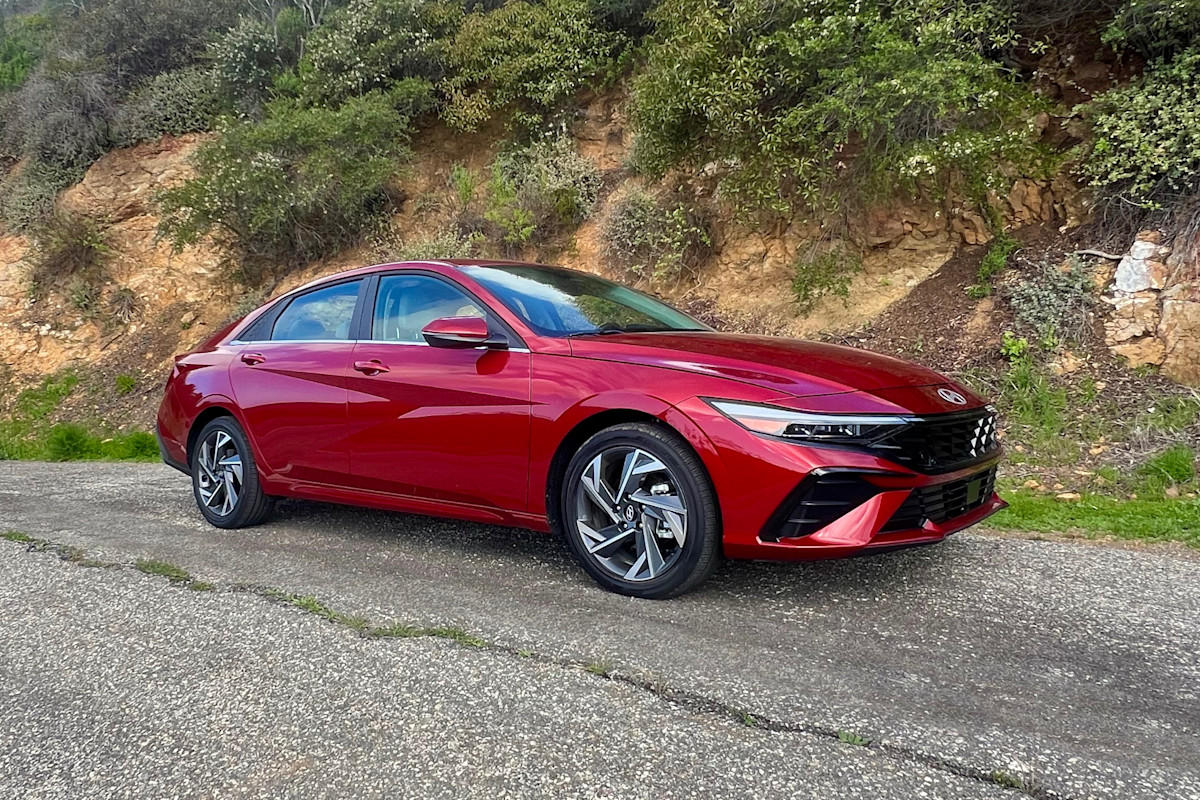
The Hyundai Elantra Hybrid carves out a niche in the Canadian market with its sharp styling and accessible pricing. A 1.6-litre four-cylinder works alongside an electric motor to make a combined 139 horsepower, with power sent to the front wheels through a six-speed dual-clutch automatic. Acceleration isn't its strong suit, but with fuel economy estimates of 4.8 L/100 km in the city and 4.5 L/100 km on the highway, the trade-off makes sense for daily commuters. A bonus is that the traditional geared transmission avoids the droning soundtrack that's common with continuously variable transmissions in other hybrids.
The cabin offers plenty of tech, with the Luxury Hybrid trim adding a 10.25-inch digital instrument panel and matching touchscreen display. There's enough room for adults front and rear, and heated front seats come standard to take the chill off Canadian mornings. The 402-litre trunk is competitive for the compact class and easily handles groceries or weekend luggage. Physical climate controls and a traditional gear selector keep things simple and intuitive—a refreshing detail in an era of menu-driven interfaces.
The CarGurus Verdict: "The Elantra Hybrid is great value, but its unrefined hybrid powertrain and cheap-feeling interior have it following, rather than leading, the class." - Mark Takahashi, CarGurus contributor
Read our full Hyundai Elantra Hybrid review
Search for Hyundai Elantra Hybrid
See all
CarGurus expert rating: 7.5 out of 10
CarGurus user rating: 4.1 out of 5
Percentage of good/great deals available on CarGurus: 30.4%
Overall CarGurus rating: 4.2 out of 5
| Pros |
Cons |
| Fuel-efficient |
All-wheel drive not available |
| Comfortable |
|
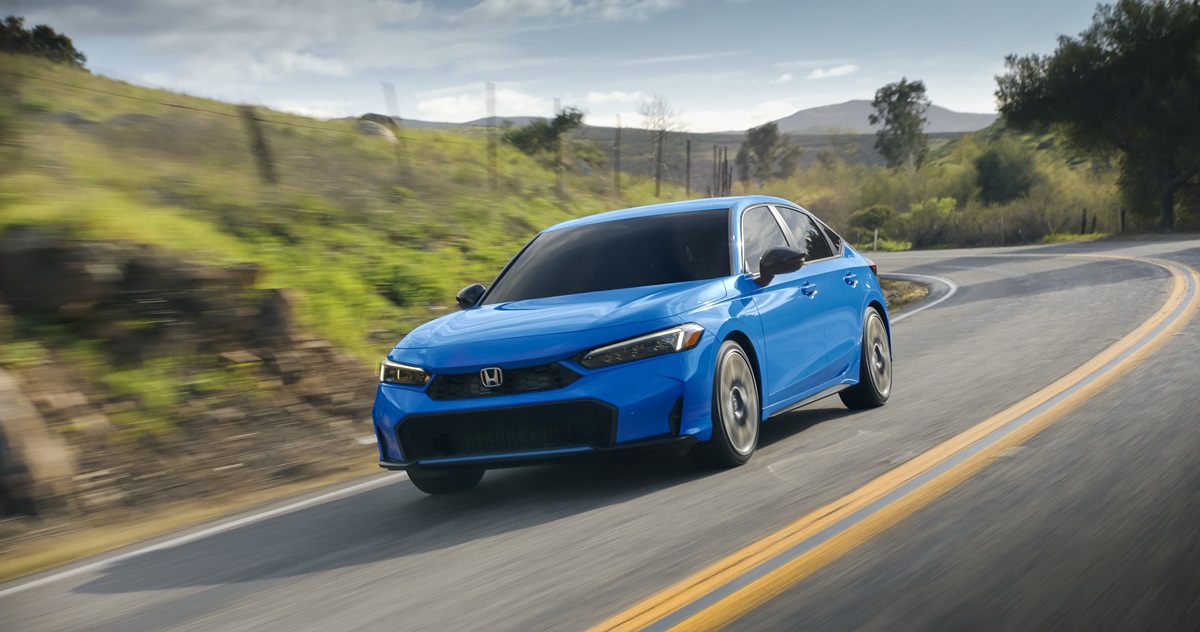
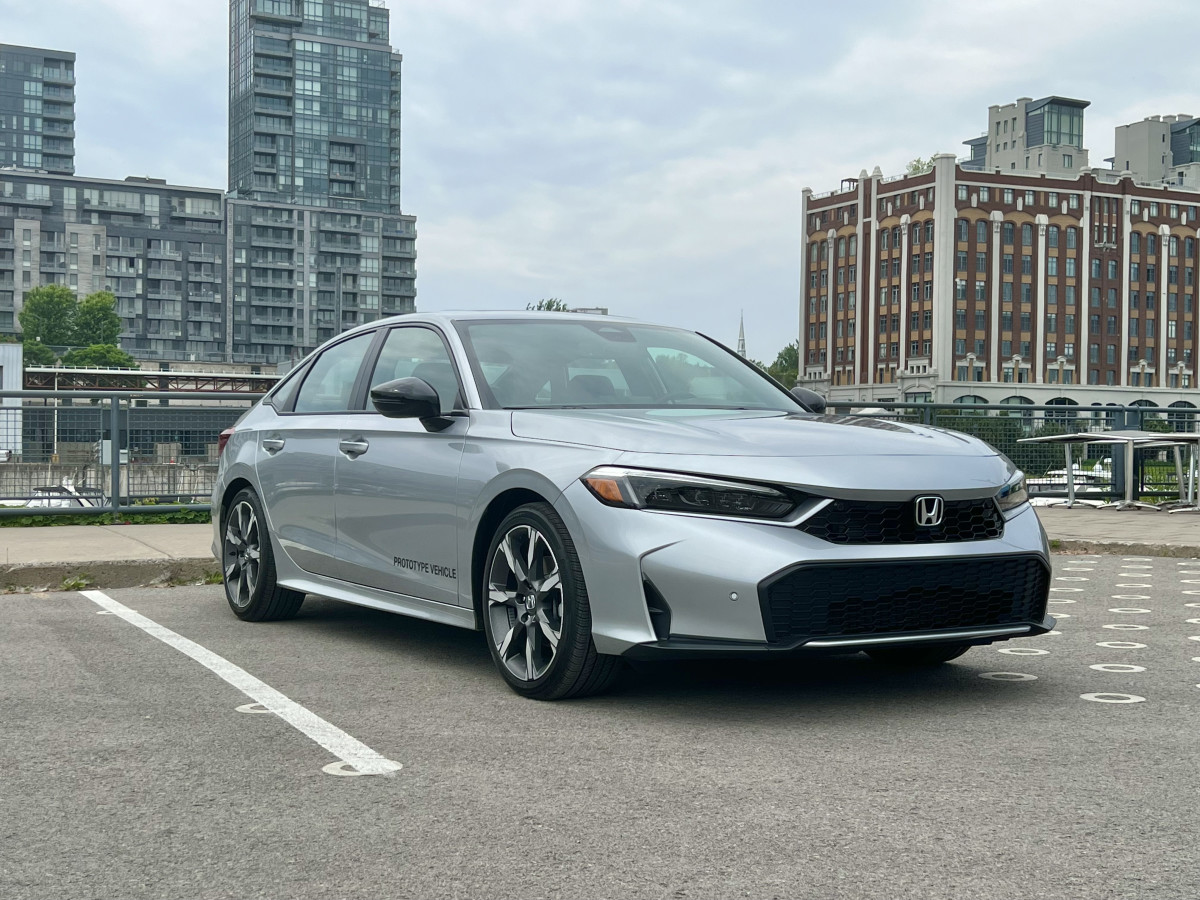
The Honda Civic Hybrid arrives as a game-changer for Canadian shoppers who want big fuel-economy gains without sacrificing the practicality for which the Civic is known. Offered in both sedan and hatchback body styles, it pairs a 2.0-litre four-cylinder with two electric motors to produce a healthy 200 horsepower and 232 pound-feet of torque. The result is instantaneous, near-silent acceleration off the line that takes the stress out of city commutes and highway merges. Sedan models offer 419 litres of trunk space, with a low liftover height and wide opening that easily swallow groceries, sports gear, or a couple of suitcases.
On the road, the Civic Hybrid feels refined and confident, with a smooth, continuously variable transmission and steering wheel-mounted paddles that adjust regenerative braking levels on the fly. Active noise cancellation keeps the cabin impressively quiet on long highway drives. Where it really shines, though, is at the pump: Natural Resources Canada rates the sedan at just 4.8 L/100 km combined. Premium interior materials, the intuitive Google built-in infotainment system on top trims, and strong safety ratings round out a compelling package.
The CarGurus Verdict: "The Honda Civic Hybrid gains an advantage over the rest with its more engaging driving manners and more conventional interior. It represents an easier transition from traditional non-hybrids with no discernable drawbacks besides price." - Mark Takahashi, CarGurus contributor
Read our full Honda Civic Hybrid review
Search for Honda Civic Hybrid
See all

CarGurus expert rating: 7.0 out of 10
CarGurus user rating: 4.7 out of 5
Percentage of good/great deals available on CarGurus: 21.5%
Overall CarGurus rating: 4.2 out of 5
| Pros |
Cons |
| Stylish design |
Real-world fuel economy falls short of EPA ratings |
| Easy-to-use technology |
Cramped back seat |
| Great safety ratings |
Not much cargo space |
The Toyota Prius remains a standard-bearer in the Canadian hybrid segment, and its sleek, aerodynamic redesign has fully shed the model's previously awkward image. Offered here in XLE and Limited trims with standard all-wheel drive—a real bonus for winter traction—it pairs a 2.0-litre four-cylinder gas engine with electric motors for a peppy 196 horsepower. The low, swoopy profile gives it a sporty vibe, but it remains practical, with 575 litres of cargo space behind the rear seats for groceries, gear, or weekend luggage.
The interior has been modernized with the latest Toyota Audio Multimedia system, including standard wireless Apple CarPlay and Android Auto. Safety is a strong suit, with Toyota Safety Sense 3.0 included on every trim and top-tier ratings from independent agencies to back it up. While Natural Resources Canada rates the Prius at 4.8 L/100 km combined, real-world figures can be higher depending on the conditions. Even so, the combination of futuristic styling, standard AWD, and advanced tech keeps it firmly in the conversation.
The CarGurus Verdict: "The point of the Toyota Prius is fuel economy, but our test car averaged 6.0 litres per 100 kilometres, falling significantly short of the Natural Resources Canada estimate. That certainly isn't superior to roomier hybrid cars from Honda, Hyundai, or from within Toyota's own lineup." - Christian Wardlaw, CarGurus contributor
Read our full Toyota Prius review
CarGurus expert rating: 6.7 out of 10
CarGurus user rating: 4.6 out of 5
Percentage of good/great deals available on CarGurus: 37.3%
Overall CarGurus rating: 4.2 out of 5
| Pros |
Cons |
| Fun to drive |
Potentially polarizing design |
| Comfortable |
Occasional digital voice assistant quirks |
| Impressive technology |
Not much cargo space |
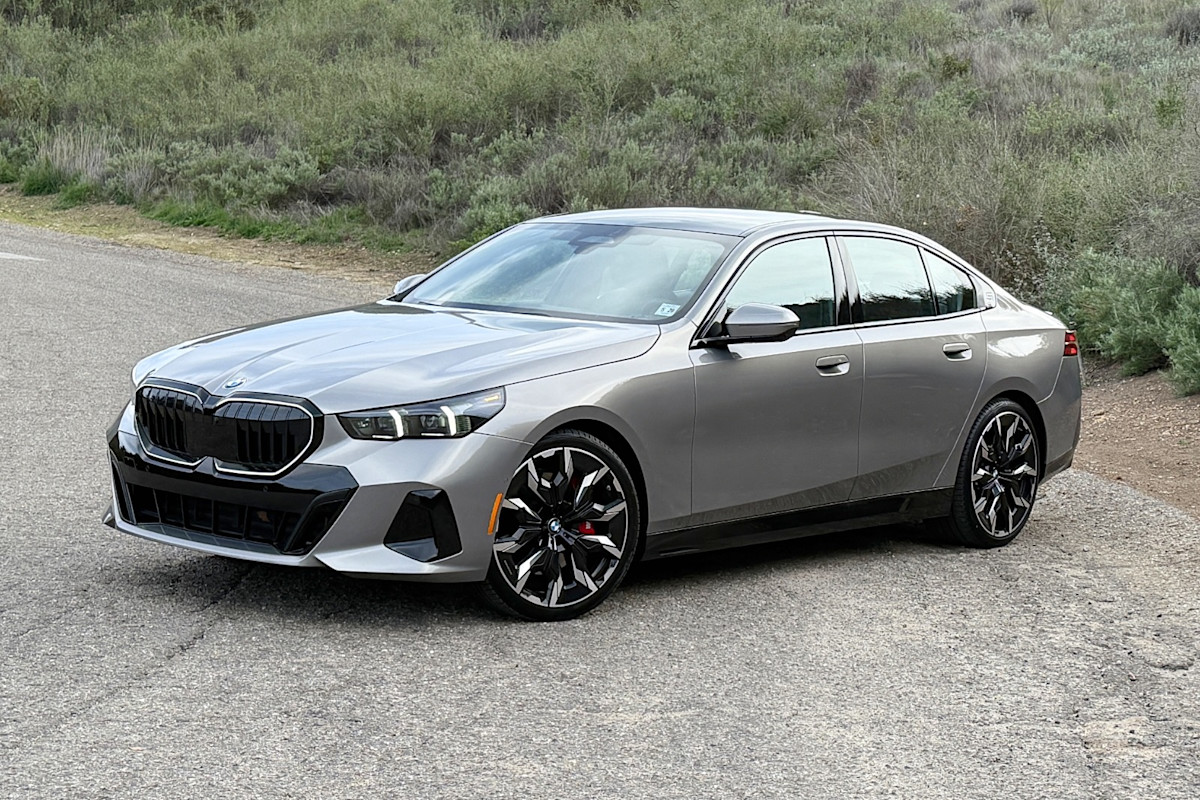
For luxury shoppers, the BMW 5 Series brings electrification to the executive sedan segment in compelling fashion. The Canadian lineup spans the 530i with its 48-volt mild-hybrid system to the 550e and high-performance M5 plug-in hybrids. In the 530i, a 2.0-litre turbocharged four-cylinder paired with mild-hybrid assistance produces a combined 255 horsepower and 295 pound-feet of torque. Standard xDrive all-wheel drive provides sure-footed traction for winter, and the powertrain still manages an efficient 7.9 L/100 km combined.
The interior blends Bauhaus-inspired minimalism with high-end materials, dominated by the BMW Curved Display that houses the latest infotainment system. Passengers enjoy plush, supportive seating with available heating and ventilation—ideal for Canada's long stretches of highway. The mild-hybrid battery and compact spare tire live under the trunk floor, yet there's still 521 litres of cargo space to work with. Advanced driver-assistance features and an impressively tight turning radius round out an executive sedan that feels every bit as modern as it looks.
The CarGurus Verdict: "Putting BMW's love-it-or-hate-it design aside, the 5 Series is a sensational automobile offering the right blend of luxury, technology, and performance." - Christian Wardlaw, CarGurus contributor
Read our full BMW 5 Series review
CarGurus expert rating: 6.2 out of 10
CarGurus user rating: 0.0 out of 5
Percentage of good/great deals available on CarGurus: 0.0%
Overall CarGurus rating: 3.5 out of 5
| Pros |
Cons |
| Stylish design |
Cramped back seat |
| Fuel-efficient |
Overly sensitive safety features |
| Fun to drive |
|
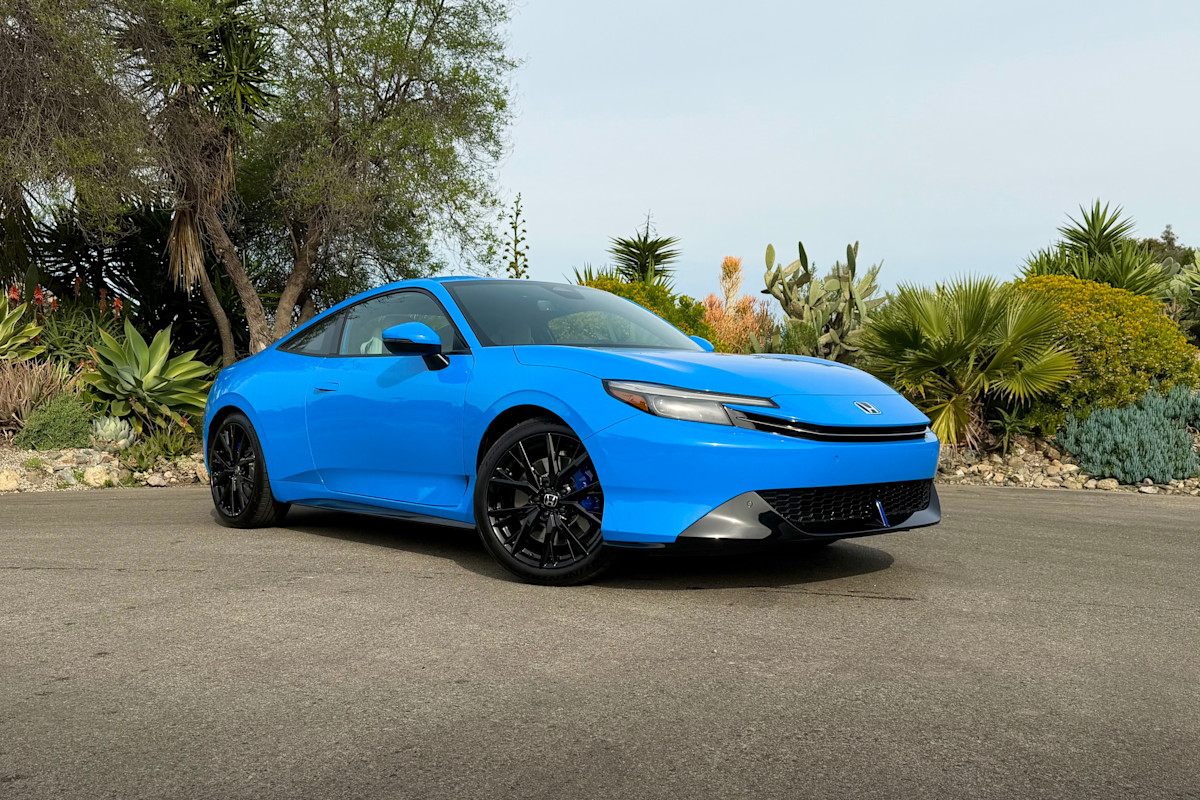
The revived Honda Prelude returns as a sleek, sporty coupe that balances head-turning style with modern hybrid efficiency—an unusual but welcome combination. Borrowing the Civic Hybrid's powertrain, it pairs a 2.0-litre four-cylinder with two electric motors for a combined 200 horsepower and 232 pound-feet of torque. The gas engine primarily acts as a generator, which helps return an impressive 5.4 L/100 km combined. The result is a spirited driving experience that doesn't punish drivers at the pumps.
This is also the first hatchback in Prelude history, and that decision pays dividends in practicality: 427 litres of cargo space behind the rear seats rivals a number of midsize sedans. The back seats are best reserved for occasional passengers or extra storage, but the front of the cabin offers comfortable, supportive sport seats and an intuitive 9-inch infotainment system with Google built-in. Engaging handling, distinctive design, and hybrid efficiency combine to redefine what a modern sporty coupe can be.
The CarGurus Verdict: "With head-turning style and a near-luxury interior, the all-new 2026 Honda Prelude is a standout among the few other sporty coupes on the market." - Mark Takahashi, CarGurus contributor
Read our full Honda Prelude review
FAQ
What's the difference between a hybrid and a plug-in hybrid?
A traditional hybrid uses a small battery and electric motor to assist a gas engine, and recharges itself through regenerative braking and engine power—it never needs to be plugged in. A plug-in hybrid (PHEV) has a much larger battery that can be charged from a wall outlet or charging station. It allows the car to travel a meaningful distance—often around 40 to 80 kilometres—on electricity alone before the gas engine takes over.
Do hybrids and plug-in hybrids qualify for Canadian EV rebates?
The federal iZEV rebate program for new vehicles was paused in early 2025, but several provinces still offer their own incentives. Quebec and British Columbia, for example, have provincial rebate programs that apply to eligible plug-in hybrids with sufficient electric range. Standard (non-plug-in) hybrids typically do not qualify for these EV-focused rebates.
Are hybrids good for cold Canadian winters?
Yes. Modern hybrids handle Canadian winters well, though there is a small drop in fuel economy and, for PHEVs, in electric range when temperatures plummet. Many hybrids on this list—including the Toyota Corolla Cross Hybrid and the Toyota Prius—come with standard or available all-wheel drive for added winter confidence.
How much can I save on fuel with a hybrid?
Depending on the model and the driving habits, hybrids can cut fuel consumption by 30% to 50% compared to a similar gas-only vehicle. A plug-in hybrid driven mostly on electricity can reduce gas spending even more, especially if a daily commute fits within its electric range.
Do hybrid batteries need to be replaced often?
Hybrid batteries are designed to last the life of the vehicle, and most automakers back them with extended warranties—often eight years or 160,000 kilometres in Canada. Real-world experience with hybrids such as the Toyota Prius and Honda Accord Hybrid shows that batteries routinely last well beyond that, especially with normal use.
Are plug-in hybrids worth it if I can't charge at home?
Buyers get the most value out of a PHEV if they can charge it overnight at home or at work, because that's where they can maximize cheap electric driving. Without regular charging, a plug-in hybrid still functions as a regular hybrid, but buyers would be paying extra for a larger battery they aren't fully using. In that case, a traditional hybrid is usually the smarter financial choice.
What Makes CarGurus Best Cars Guides Different?
Most car-buying websites publish lists of the best cars across a variety of categories, with recommendations driven primarily by editorial expertise. Here's what makes our best cars guides different: we combine the insights and verdicts of our team of car-testing experts with other factors that we know matter to buyers—real owner experiences and current market value.
Our expert reviewers come from some of North America and Canada's most trusted automotive publications, bringing hands-on experience testing vehicles. They put each car through its paces and create detailed reviews covering everything from form and function to performance and cost effectiveness.
But we don't stop there. We also analyze hundreds of thousands of used car listings on CarGurus.ca to track which models consistently offer the highest percentage of great deals relative to how many are listed for sale. Then we factor in user reviews and ratings gathered on CarGurus to hear from people who actually live with these cars every day. Our best cars algorithm combines expert ratings, user reviews, and the percentage of listings rated as good or great deals into a final Overall CarGurus Rating—a three-way approach that reveals not just which cars excel on paper, but which ones deliver real satisfaction and value when you're ready to buy.
*The CarGurus market data in this guide was last updated in June 2026. Values were accurate at time of publication and should be used as a guide only.*
Related Topics: