Introduced for the 2014 model year as the replacement for the BMW 3 Series coupe and convertible, the BMW 4 Series is a successor to the line of two-door 3 Series models that stretches back to the first-generation model introduced in 1977. As part of a drive to unify its naming and product strategy, BMW decided to rename the sleeker 3 Series spin-offs as "4 Series" models from the sixth generation onwards. There’s some logic to it, with odd numbers for sedans and hatchbacks and even numbers for coupes and convertibles, although there are some anomalies—as we’ll see.
As with its predecessors, the first-generation 4 Series shares most of its mechanical parts with the concurrent 3 Series sedan (which was launched for 2012) but has a lower, sleeker body. One big change was the introduction of a new body style, in the shape of the 4 Series Gran Coupe. This is essentially a five-door version of the two-door coupe, gaining two rear doors plus a "fastback"-style hatchback tailgate.
The BMW M4 arrived in 2014 as the high-performance version of the 4 Series with the same range of upgrades over the standard car as the M3 gets over the 3 Series. There are coupe and convertible versions but no M4 Gran Coupe. Here, we’re focusing on the core 4 Series models.
The second-generation 4 Series, introduced for 2021, marked a change in philosophy. While it, too, shares many of its mechanical and interior parts with the equivalent 3 Series, there’s a far greater differentiation in appearance with the BMW 4 Series Coupe having a much more muscular look, a less sedan-like profile, and no "Hoffmeister kink" to the window line. Then there’s the front grille, a towering new interpretation of BMW’s twin kidney grille. This generation also saw the introduction of the BMW i4, an electric, zero-emissions version of the 4 Series that’s marketed as a separate model entirely.
The 4 Series offers a range of engine, transmission and drivetrain combinations. Over the course of the two generations, there have been turbocharged four-cylinder and six-cylinder engines available, with the choice of rear-wheel drive or "XDrive" all-wheel drive, all with an automatic transmission as standard. Every version is very well equipped and all manner of high-tech features are available, either as standard, as individual options, or as part of option packs. Trim levels include M Sport, which gives a sportier look and feel.
Here’s our guide to the BMW 4 Series, with advice on which models you can buy, the best and worst versions, and how much you can expect to pay.
BMW 4 Series Buying Guide: Cost, Reliability, and the Best Years to Buy
Frequently Asked Questions
Which BMW 4 Series years are the best?
Every BMW 4 Series is powerful, good to drive, and well equipped. But for the most luxurious experience and the most up-to-date tech, the second-generation model is your best bet. Just make sure you can live with the divisive looks.
What are the worst BMW 4 Series years?
The BMW 4 Series is a premium model that hasn’t been around for long. All versions are powerful and good to drive. Reliability surveys suggest there are no bad years as such, although, as with any car, earlier versions tend to have teething troubles that get sorted out later in the production run.
Is a used BMW 4 Series a good deal?
You pay a premium for the BMW 4 Series, but for many buyers it’s worth it for the high-end image and excellent handling. All versions have a punchy turbocharged engine and lots of equipment, so it’s a good deal as long as you can find one at a price that suits.
BMW 4 Series Pros and Cons
Pros:
- Enjoyable to drive, with powerful turbocharged engines
- High-quality interior with lots of tech
- Very well-equipped, especially post-2020 models
Cons:
- Some versions are expensive
- Styling of second-generation model not to all tastes
- Limited boot space in first-generation convertible
BMW 4 Series Generations
Second Generation (2021-present)
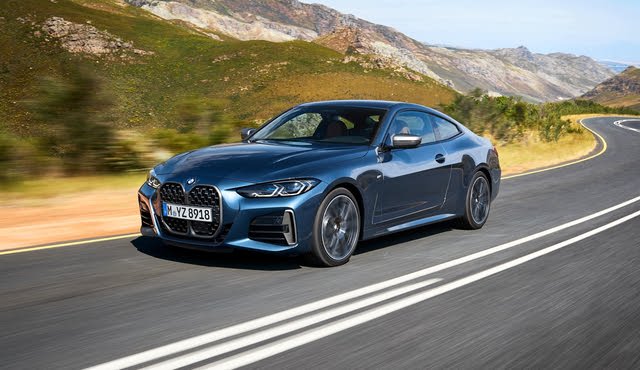
The new BMW 4 Series provoked lots of debate when it was launched for the 2021 model year. The main topic of conversation was its grille—a new, vertical, and extremely large interpretation of the brand’s familiar kidney grille. The exterior design was also markedly different from the 3 Series sedan on which it was based, with muscle-car vibes and little in the way of traditional BMW styling cues.
It’s safe to say not everyone is a fan, but the new design and nearly 13 centimetres of added length over the first-generation model give the 4 Series a more distinct character than before. Design aside, the current 4 Series is largely business as usual because it shares most of its mechanical and interior parts with the concurrent BMW 3 Series—in this case, the seventh-generation model that was introduced for 2019. As with the first-generation car, there are two-door coupe and convertible body styles, and the five-door 4 Series Gran Coupe. This time round, the 4 Series Convertible has a folding cloth roof, unlike its metal-lidded predecessor.
There’s a bit more of everything when comparing the second-generation BMW 4 Series to the first, and that starts with more power. At launch, the range comprised the 430i, which has an inline 2.0-litre four-cylinder engine, and the M440i xDrive, which has a 3.0-litre inline six with mild-hybrid technology. Both are turbocharged with outputs of 255 horsepower for the 430i and 382 horsepower for the M440i.
An eight-speed automatic transmission is standard. In 2021, the cabriolets came with rear-wheel drive (RWD) in Canada, while the coupes were equipped with BMW’s xDrive all-wheel drive (AWD) system. By 2022, all 4 Series cars sold in Canada came with standard AWD.
Updates have been minor over the years. In 2023, the BMW Curved Display replaced the previous separate display and touchscreen on the dashboard. The new setup combines a 12.3-inch driver display with a 14.9-inch centre screen to form a single display that curves gently towards the driver. A facelift in early 2024 for the 2025 model year brought mild design tweaks. The controversial grille remains, albeit with slightly different materials, while there were new interior trims, new exterior colour options, new designs for steering wheels and revised LED headlights and taillights. The mild-hybrid system was also updated and added to the 430i.
This 4 Series model has always been incredibly well-equipped. Standard features for BMW 430i and BMW 430i xDrive models include LED headlights, wireless Apple CarPlay and Android Auto integration, SensaTec (artificial leather) upholstery, and a rear-view camera. BMW M440i models add a range of BMW M Sport extras. A huge range of individual options to personalize the look of the car and add extra luxury and tech features are available.
BMW 4 Series models of this era haven’t been on sale long enough for an accurate assessment of their long-term reliability, but early signs are encouraging. Just a handful of owners have raised issues on CarComplaints.com, and it’s a similar story for the latest BMW 3 Series it shares many parts with. BMW was among the top 10 carmakers in the 2024 edition of the Consumer Reports predicted reliability survey, and the brand’s reputation for dependability has been solid in recent years.
Prices for a used example of the latest BMW 4 Series start from about $37,000, a little over half the MSRP of a brand-new entry-level 430i coupe. That suggests it’s a car that will hold its value well in the long run, so although it’s far from cheap, the 4 Series could represent a decent long-term investment.
First Generation (2014-2020)
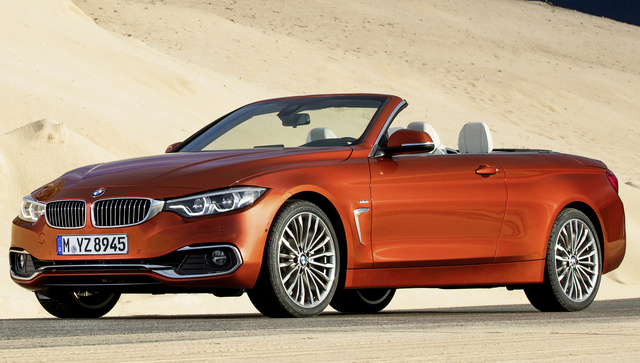
The first-generation BMW 4 Series was introduced for the 2014 model year. Some observers questioned why BMW didn’t simply retain the 3 Series badging it had used for the previous coupe and convertible spin-offs from its midsize sedan. At the time, BMW argued that the 4 Series "represents something more than its 3 Series cousins—3+1, if you will." It also pointed out that the switch to an even number brings it into line with the larger 6 Series and 8 Series coupe and convertible models.
The first-generation 4 Series still shared much with the sixth-generation 3 Series, although the only shared external metal panel was the hood. The front fenders were actually the same shape, but the 4 Series had an additional arrow-shaped air vent behind its front wheels. Length and width were almost identical, but the 4 Series was lower and looked sleeker.
The BMW 4 Series Convertible of this era closely followed the lines of the coupe. As with many convertibles of the time, it had a folding metal roof rather than a fabric one. It provided extra security and refinement, but it did add weight and complexity, and it took up some trunk space when folded.
The other innovation in terms of body styles was the addition of an entirely new one in the shape of the BMW 4 Series Gran Coupe. It was a five-door hatchback version of the coupe, similar in concept to the Audi A5 Sportback that had been on sale in most markets since 2009.
There were plenty of different versions to choose from, but the 4 Series had a smaller model range than the 3 Series, omitting some of the more cost-oriented variants. That means that all versions came with ample power and equipment. Initially, the lineup consisted of 428i and 435i models, both of which have a turbo, with the 428i having an inline four-cylinder engine and the 435i an inline 6. Each came with rear-wheel drive (RWD) as standard or BMW’s xDrive all-wheel drive (AWD) system as an option. Transmission choices were a six-speed manual or an eight-speed automatic transmission.
With 240 horsepower for the 428i and 300 horsepower for the 435i, both are quick, with a 0-96 km/h time of between 4.7 and 5.7 seconds for coupe models (convertible models add an extra half a second or so). The engines were upgraded for the 2017 model year, becoming the 430i (248 horsepower) and 440i (320 horsepower).
Even base models fare well for equipment, with standard specs including 17-inch alloy wheels, xenon headlights, automatic climate control, power front seats and BMW’s easy-to-use iDrive operating system. An update in early 2017 brought a range of cosmetic and tech upgrades, including LED headlights for all models and a stiffer suspension for a sharper drive.
While it hasn’t topped any independent reliability surveys, the first-generation 4 Series seems to be a generally dependable car. It pays to find one with a good service history, of course, and be aware that BMW repairs have a reputation for being on the costly side.
You can pick up an early, high-kilometre BMW 4 Series starting from $10,000, but we’d suggest it’s worth setting aside the extra $5,000 or so you’ll need to find one that has less than 150,000 kilometres on the odometer. Late-model, low-odometer cars go for up to $40,000. A well-looked-after BMW 4 Series Convertible could make a great second car—budget at least $20,000 for a good one with fewer than 150,000 kilometres.
Related Topics