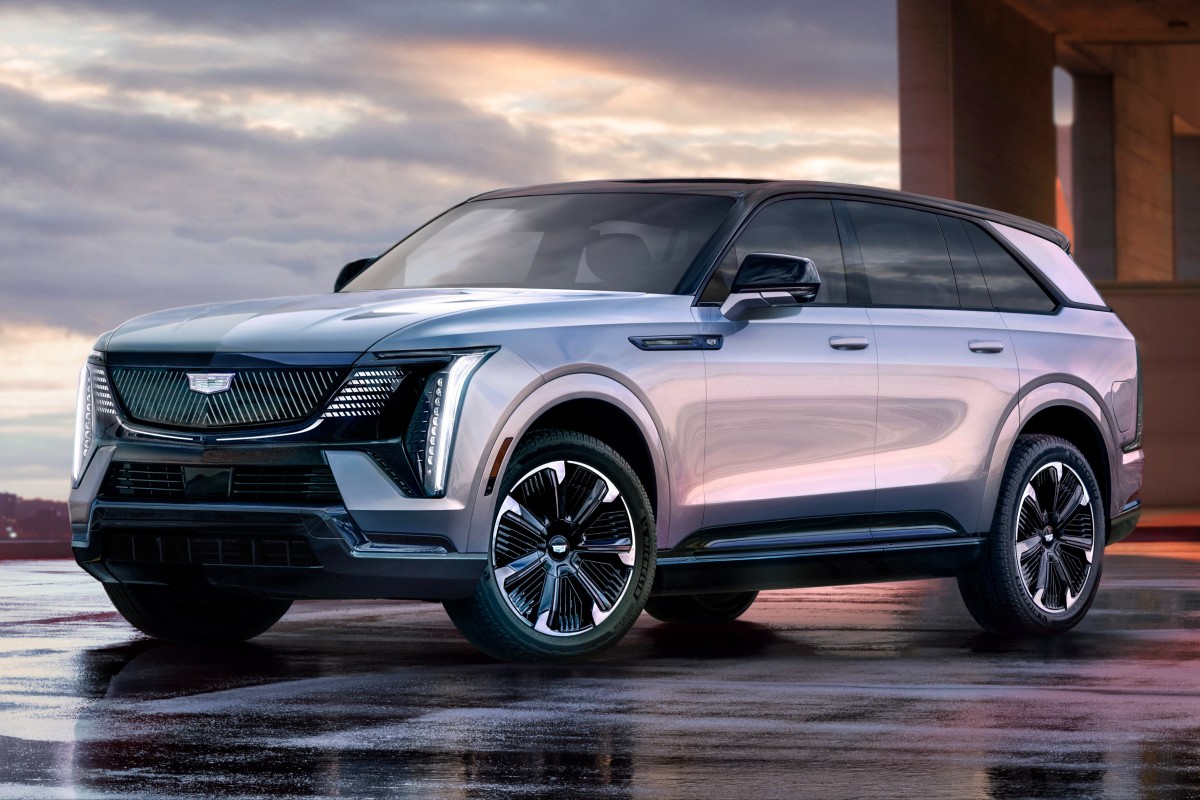
Attention-grabbing exterior styling with oversized grilles, large alloy wheels, powerful V8 engines (and, more recently, optional turbocharged inline-six diesel engines and even a supercharged V8 engine in the Escalade-V series) and increasingly luxurious interior finishes have long been the Escalade ESV’s calling card. With well over 30 centimetres of additional distance between its front and rear axles than the standard Escalade, today’s Cadillac Escalade ESV stands out as the plushest possible way (at least from an American automaker) to carry a family’s worth of people and their belongings.
Cadillac Escalade ESV Buying Guide: Cost, Reliability, and the Best Years to Buy
Frequently Asked Questions
Which Cadillac Escalade ESV years are the best?
First-generation (2003-2006) and second-generation (2007-2013) Cadillac Escalade models have proven generally reliable. While complaints about fragile door handles have been reported, the Escalade ESV’s powertrains across these two generations are durable. The first-generation Escalade ESV’s 6.0-litre V8 engine spun out 345 horsepower and 380 lb-ft of torque. The second-generation Escalade ESV’s larger 6.2-litre V8 engine’s 403 hp and 417 lb-ft make it more powerful and, for many, more desirable.
The second-generation Cadillac Escalade ESV’s graceful styling, improved driving dynamics, and reasonably solid reliability scores make it the best option for would-be shoppers looking for a large and luxurious used SUV for well under half the price of the current Escalade ESV.
What are the worst Cadillac Escalade ESV years?
According to CarComplaints.com, the 2015 and 2016 Cadillac Escalade model years have been the most problematic. The most frequently reported complaint is a loud tapping noise from the engine, which may come from the 6.2-litre V8 engine’s Active Fuel Management (AFM) system that uses specially designed engine lifters to deactivate certain cylinders and improve fuel efficiency. This system was replaced in 2019 with an updated Dynamic Fuel Management (DFM) system that was more advanced.
While the Escalade ESV’s 6.2-litre V8 engine makes lots of power (420 horsepower and 460 lb-ft of torque), it has recently been plagued by reports of early failures. Both the L86 (AFM) and L87 (DFM) versions of the 6.2-litre V8 engine have had their fair share of negative press, which makes the entire 2015-2020 Cadillac Escalade lineup difficult to recommend.
Is a used Cadillac Escalade ESV a good deal?
There are only so many vehicles that can comfortably seat an entire family of seven or eight with second-row and third-row rear seats large enough for adults. There are even fewer that qualify as full-size luxury SUVs with leather upholstery and enough cargo space to allow all those family members to actually travel on road trips. A used Escalade ESV therefore may very well represent a good deal.
If the Escalade’s luxury trappings aren’t required, the Chevrolet Suburban offers the same interior capacity, and the Ford Expedition (or an older, heavy-duty Excursion) are also reasonable alternatives that can potentially save a buyer a few thousand dollars. And, of course, there’s always the option of a much more efficient minivan or a super spacious Mercedes-Benz Sprinter, though potential Escalade ESV buyers are unlikely to be cross-shopping vans.
Cadillac Escalade ESV Pros and Cons
Pros
- Powerful engines
- Spacious interior and lots of cargo space
- Premium interior materials
Cons
- Poor fuel economy
- Outdated technology on older models
- Poor value for the money
Cadillac Escalade ESV Generations
Cadillac Escalade ESV Fourth Generation (2021-present)
The latest and greatest Cadillac Escalade — which for the fourth generation in a row included a long-wheelbase Escalade ESV variant — launched for the 2021 model year. With an overall length of 5,765 millimetres, the ESV is over 38 centimetres longer than the standard (but still full-size) Escalade. The majority of that extra length is between the front and rear axle with a wheelbase that’s around over 35 centimetres longer than the regular Escalade’s, while the ESV’s 1,175 litres of cargo space expands on the standard version’s 722 litres. All versions of the Cadillac Escalade received independent rear suspension in this generation for the first time, improving ride and handling and increasing the cargo capacity.
Cadillac offered the 2021 Escalade ESV three-row SUV in several trim levels including Luxury, Premium Luxury, and Premium Luxury Platinum plus Sport and Sport Platinum with gloss black trim in place of the chrome bits of the Luxury-branded models. Each version got unique 22-inch alloy wheels — Bright Silver in the Luxury, polished in the Premium Luxury, polished with Dark Android and low-gloss finishes in the Sport, laser-etched in the Premium Luxury Platinum and Sport Platinum — and unique front fascia and grille treatments. Some trim levels were also available with an Illumination Package or an Onyx Package.
The 2021 Cadillac Escalade ESV was equipped with either a gas 6.2-litre V8 engine or a 3.0-litre turbo-diesel engine, both hooked up to a 10-speed automatic transmission. The fourth-generation Escalade ESV continues to come with standard four-wheel drive (4WD) in Canada. In its most efficient form with the turbo-diesel engine, the Escalade delivers 11.7 litres per 100 kilometres in the city, 9.0 on the highway, and 10.5 combined. The V8-powered Escalade ESV, on the other hand, gets 15.0 L/100 km combined. Adaptive suspension equipped with air ride technology and magnetic ride control are optional.
Standard features included leatherette seats with optional real semi-aniline leather seats. The front seats boast 12-way power adjustments, and both the front seats and second-row rear seats are heated. Optional upgrades include 16-way power adjustable ventilated seats with massaging functions and a power third row to go along with the standard power second row.
Cadillac’s infotainment system is spread across three OLED screens that together created a single 38-inch curved screen. Standard features included Apple CarPlay and Android Auto, along with a subscription-based Wi-Fi hotspot. A 19-speaker AKG audio system is standard and a top-shelf 36-speaker AKG Studio Reference audio system is optional. Driver assistance technology includes automatic emergency braking, lane-departure warning and lane-keeping assist.
GM’s impressive Super Cruise package is available and allows drivers to keep their hands off the steering wheel in certain circumstances. Starting with the Premium Luxury Platinum trim level, Night Vision thermal imaging is added to help spot pedestrians and animals in the dark.
Standard features for 2022 included lane departure warning and lane keep assist across all Escalade ESV trim levels, though some advanced driver assistance technologies, including adaptive cruise control, were reserved for the upper trim levels.
Cadillac added a V-Series model to the Escalade and Escalade ESV range for the 2023 model year. Included with the new Cadillac Escalade-V ESV are a 682-horsepower supercharged V8 engine, standard all-wheel drive (not 4WD), 24-inch alloy wheels, Brembo brakes, and a retuned air ride suspension setup. While fuel efficiency is hardly the point of the Escalade-V ESV, its 20.8 L/100 km city, 13.8 highway, and 17.7 combined ratings are still, well… terrible.
Super Cruise was standardized on every Escalade ESV except the base trim level in 2024. Much bigger news came for the 2025 model year when the Cadillac Escalade and Escalade ESV received a refresh that included a 55-inch infotainment screen that swept from one side of the dashboard all the way to the other. Unfortunately, Cadillac dropped its optional turbo-diesel engine in 2025, too.
At the time of writing, the most recent Cadillac Escalade ESV carried a base MSRP in Canada of $133,526 including destination charges and fees. The MSRP of the 2026 Escalade ESV V-Series was a stratospheric $217,399. On the Canadian used vehicle market, the Escalade ESV is a relatively rare find. Fourth-generation examples range from $70,000 for early examples to over $100,000 for 2024 examples (though several still have surprisingly high kilometre counts).
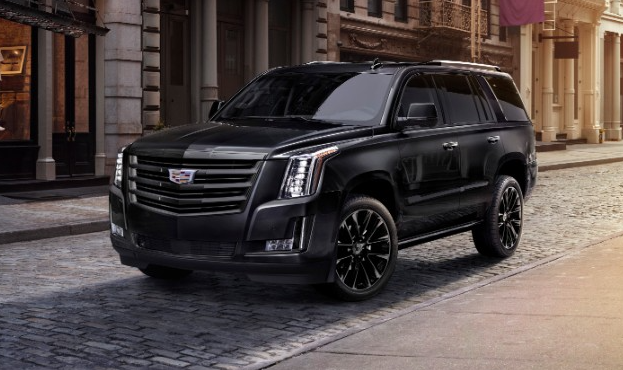
Cadillac Escalade ESV Third Generation (2015-2020)
A new Cadillac Escalade debuted for the 2015 model year, and the extended-wheelbase ESV version launched simultaneously. With three rows of seats, the Escalade ESV could transport eight passengers in comfort with plenty of cargo space for their belongings. The third row of the ESV had 25 centimetres more legroom than the regular version thanks to a 35-centimetre increase in the wheelbase. With all seats folded — easier than before thanks to a power-operated third row — the Escalade ESV offered up to 3,426 litres of space inside. On the downside, that power third row meant the rear cargo area floor had to be raised, which made it trickier to load bulky objects.
Power for the third-generation Escalade ESV came from a 6.2-litre V8 engine that produced 420 horsepower and 460 lb-ft of torque. At first, the 2015 Cadillac Escalade ESV used a six-speed automatic transmission, but most third-generation models were equipped with an eight-speed unit (that was so troublesome that it resulted in a class action lawsuit against General Motors).
The Cadillac Escalade ESV could tow as much as 3,675 kilograms (8,100 pounds) thanks to its powerful V8 engine, but fuel efficiency was poor with Natural Resources Canada ratings of 14.3 litres per 100 kilometres combined with standard four-wheel drive.
Standard features for the base model included 20-inch chrome alloy wheels, magnetic ride control suspension, a rear camera mirror, automatic LED headlamps, a hands-free power liftgate, keyless ignition and entry, and much more. Stepping up to the Luxury edition brought 22-inch alloy wheels, power-folding second-row seats, a head-up display, driver assistance tech including blind spot monitoring, lane departure warning, rear cross-traffic alert, forward collision alert, and a safety alert driver seat that buzzed the driver’s bottom to inform them of any alerts. Premium trim came with a rear-seat entertainment system, adaptive cruise control, and collision mitigation. Platinum Escalade ESV models got heated and ventilated front seats with massage functions, a freezer mode for the centre console to keep stuff cool, and dual rear-seat screens for the rear-seat entertainment system.
Prices for a third-generation Cadillac Escalade ESV on the Canadian used vehicle market range from $25,000 for early-model high-kilometre units to just over $50,000 for newer and lower-kilometre examples. However, as noted above, the third-generation Escalade ESV has proven problematic for owners, making it difficult to recommend.
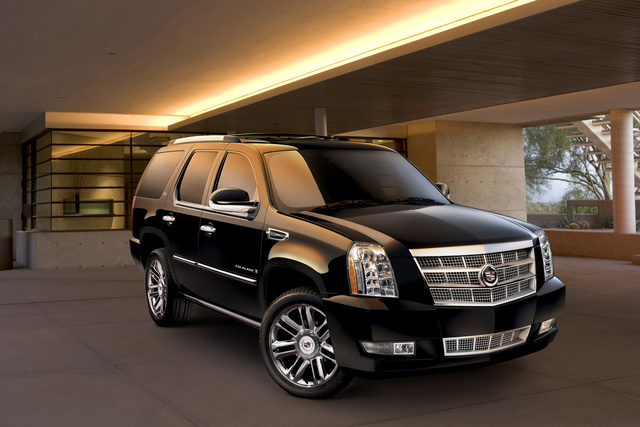
Cadillac Escalade ESV Second Generation (2007-2013)
The second-generation Cadillac Escalade ESV arrived in 2007, a year after the latest version of the regular-size Escalade hit dealerships. As before, the Escalade ESV was based on the Chevrolet Suburban chassis, whereas the standard Escalade was more than 30 centimetres shorter and built atop the Chevy Tahoe’s bones. The Escalade ESV was capable of seating up to eight passengers with roomy second row and third row seats, and even with all three rows in their upright and locked positions, the Escalade ESV offered 1,302 litres of cargo space. It could also tow up to 3,530 kilograms (7,800 pounds).
While the pair of Cadillac Escalade full-size SUVs may have been mechanically related to less-expensive models from General Motors, they differed in many ways. A high-output 6.2-litre V8 engine was a standard feature of the Escalade ESV, and it sent 403 horsepower through a six-speed automatic transmission to all four wheels. Despite its enormous size — the 2007 ESV weighed in at nearly 2,700 kilograms (6,000 pounds) and measured 5,664 millimetres long on a 3,302-millimetre wheelbase — the new fully boxed frame (stiffness was up 49% over the old frame) and redesigned suspension and steering gear meant it rode and handled much better than the previous version. Fuel economy even improved to slightly, though 16.4 L/100 km combined still wasn’t anything to celebrate.
A set of 18-inch alloy wheels was standard along with leather seats, power-adjustable and heated front seats, three-zone automatic climate control, a power liftgate, remote start, and a 10-speaker Bose-branded audio system. An Ultra Luxury Collection Package increased those alloy wheels to 22-inches and added a heated and leather-wrapped steering wheel, ventilated front seats, a navigation system, a rearview camera, a DVD-based rear-seat entertainment system, and more.
While there was a single trim level for 2007, a new Cadillac Escalade ESV Platinum edition was offered in 2008. It included pretty much everything that was optional with lesser Escalade ESV trim levels and added magnetic ride control suspension for the first time on GM’s full-size luxury SUV. The Platinum also got a unique grille and upgraded leather seats.
Bluetooth, navigation, and E85 fuel compatibility came in 2009, and a Side Blind Zone Alert system and magnetic ride control suspension were optional on multiple trim levels. Active Fuel Management was a new standard feature for 2010, and new trim levels included Luxury and Premium that both sat below the top-shelf Platinum trim level. The second-generation Cadillac Escalade ESV ran through the 2013 model year.
The Cadillac Escalade ESV is already a low-volume seller in Canada. Add in our harsh winters, and the result is you won’t find many second-generation Escalade ESVs around today — and the ones you will find are workhorses with close to or more than 200,000 kilometres on the odometer. We found a handful of units nationwide with prices ranging from $8,000 to $20,000.
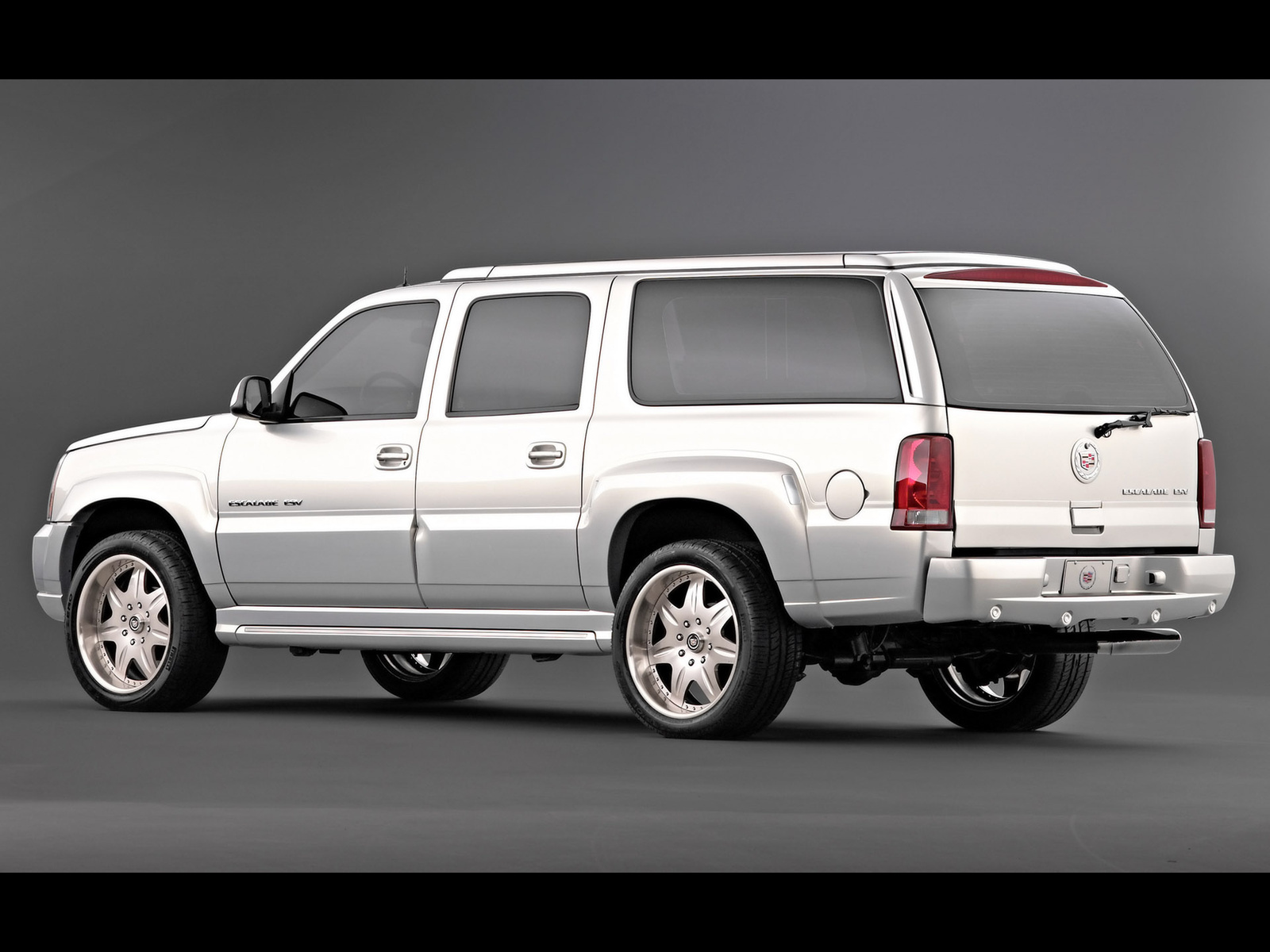
Cadillac Escalade ESV First Generation (2003-2006)
The Cadillac Escalade first hit the market for the 1999 model year, but the extended-wheelbase Escalade ESV didn’t arrive until 2003 when the second-generation Escalade hit dealerships. While a 5.3-litre V8 engine was standard with the regular Cadillac Escalade, the Escalade ESV came standard with a larger and more powerful 6.0-litre V8 engine. The Escalade ESV’s 345-horsepower rating was the highest of any GM-made SUV at the time, though it was also offered in some trucks including the Chevrolet Silverado SS and later the GMC Sierra Denali.
A Platinum edition Escalade ESV appeared in 2004 for $97,700 — at the time, an extremely high MSRP — and standard features included 20-inch alloy wheels (the largest on any production SUV that year) and a big chrome grille. The Platinum package’s big wheels and heavy dose of chrome would become hallmarks of the Cadillac Escalade and its long-wheelbase Escalade ESV variant that continue to the present day.
Based on our research, not many Escalade ESVs from this era have survived. We were not able to find any examples available on the Canadian used vehicle market.
Related Topics