The GMC Yukon XL debuted for the 2000 model year but can trace its history back much further than that. The large SUV is directly related to the long-running Chevrolet Suburban, and in fact it was preceded by the GMC Suburban that ran alongside its counterpart from Chevrolet from 1973 through 1999. Before that, GMC called its version of GM’s full-size SUV the Carryall, an apt name for a huge wagon that could haul a family’s worth of people and belongings with ease.
GMC Yukon XL Buying Guide: Cost, Reliability, and the Best Years to Buy
Search for GMC Yukon XL
See all


Just as the Chevrolet Suburban is the long-wheelbase version of the Chevrolet Tahoe, the Yukon XL adds an extra 30 centimetres or more to the wheelbase of the shorter GMC Yukon three-row SUV. This results in more room for passengers in the third row and a great deal more cargo space behind that rear seat. In its most recent iteration, the Yukon XL is offered with three powertrain options, all hooked up to a 10-speed automatic transmission. A 5.3-litre V8 engine is standard, while a powerful 6.2-litre V8 engine and an efficient 3.0-litre Duramax turbo diesel engine are optional.
The 2026 GMC Yukon XL is offered in Elevation, AT4, AT4 Ultimate, Denali, and Denali Ultimate trim levels.
GMC Yukon XL Buying Guide: Cost, Reliability, and the Best Years to Buy
- Frequently Asked Questions
- GMC Yukon XL Pros and Cons
- GMC Yukon XL Generations
- GMC Yukon XL Fourth Generation (2021-present)
- GMC Yukon XL Third Generation (2015-2020)
- GMC Yukon XL Second Generation (2007-2014)
- GMC Yukon XL First Generation (2000-2006)
Frequently Asked Questions
Which GMC Yukon XL years are the best?
Considering how many different versions of the GMC Yukon XL have been offered over the years, it’s difficult to recommend a single year or generation as the best overall. From 2000 through 2013, GMC offered a heavy-duty version of the Yukon XL badged 2500 and equipped with more powerful engines, stronger transmissions and drivetrain components, and stiff suspension setups. While these Yukon XL HD models are useful for towing and hauling big loads, they aren’t as comfortable as their standard-duty siblings, which means only a small subset of buyers might want one.
Discounting the heavy-duty Yukon XL variants, the first-generation models from 2000 through 2006 were quite reliable, though they’re now quite hard to find in Canada. The second-generation GMC Yukon XL models built between 2008 and 2014 also have good reliability scores, but CarComplaints.com singles out the 2007 model as more troublesome. This isn’t surprising considering it was the first model year of a new generation.
It’s difficult to make a call on the third-generation GMC Yukon XL, which was built between 2015 and 2020. Models powered by the standard 5.3-litre V8 engine have fewer reported problems than those with the larger 6.2-litre V8 engine, as do versions with six-speed automatic transmissions instead of eight-speeders. Buyers looking for a reliable large SUV should consider sticking with the smaller engine and the older transmission.
Those who value fuel efficiency and are in the market for a lightly used long-wheelbase SUV that can seat up to eight passengers should keep an eye out for 2021 or later GMC Yukon XL models powered by the available 3.0-litre Duramax turbo diesel engine. With estimated fuel economy ratings of between 10.1 and 10.7 litres per 100 kilometres combined depending on model year, the turbo diesel engine gets much better fuel economy than the standard 5.3-litre V8 engine (13.2 to 14.5 L/100 km combined) or its main rival from Ford, the Expedition Max, which is powered by a turbocharged V6 engine (13.1 L/100 km combined).
What are the worst GMC Yukon XL years?
The 2015 GMC Yukon XL is statistically the least reliable of all model years according to CarComplaints.com. Any third-generation GMC Yukon XL powered by a 6.2-litre V8 engine or equipped with an eight-speed automatic transmission is more likely to have problems than other versions.
Buyers who don’t need extreme trailering or hauling capability should avoid heavy-duty Yukon XL models, particularly those powered by the gargantuan 8.1-litre V8 engine that was offered from 2001 through 2006 (though these have all but gone extinct in Canada anyway). They return dismal fuel economy and ride harshly when they aren’t loaded up with cargo.
Is a used GMC Yukon XL a good deal?
Yes, a used GMC Yukon XL is a good deal as long as its potential buyer truly requires spacious second- and third-row seats and extensive cargo capacity. In lower trim levels such as SLE and SLT, a third-generation GMC Yukon XL from 2016 or later with a six-speed automatic transmission and reasonable odometer reading in the $40,000 range could prove to be one of the least expensive ways to transport a large family and their belongings in comfort, especially if the would-be buyer needs or wants four-wheel drive.
A newer Yukon XL powered by the optional 3.0-litre Duramax turbo diesel engine could also appeal to buyers looking for a large SUV that’s comparatively fuel efficient (though bear in mind that diesel often costs more than gasoline at the pump).
Buyers who want a luxurious large SUV with options such as full-grain leather seating surfaces, a heated steering wheel, magnetic ride control, and even GM’s Super Cruise semi-automated driver assistance technology can find what they’re looking for in the GMC Yukon XL Denali or Denali Ultimate trim levels. The Denali-branded GMC models are almost as luxurious as the closely related Cadillac Escalade ESV, but their grilles and wheels aren’t quite as gaudy, so they still look fancy but a little less ostentatious than a comparable Escalade.
GMC Yukon XL Pros and Cons
Pros
- Multiple powertrains
- Plenty of cargo space
- Spacious third row
Cons
- Poor fuel economy
- Poor handling compared to car-based crossovers
- Outdated technology in older models
GMC Yukon XL Generations
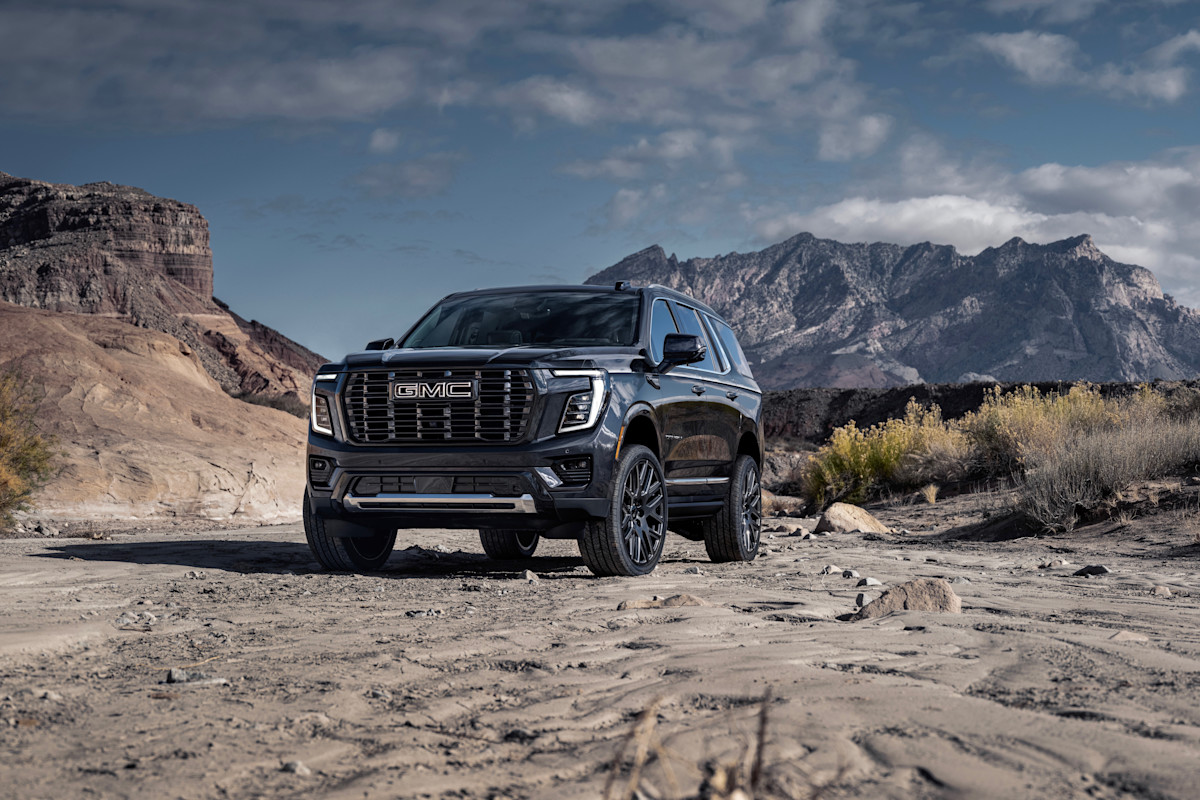
GMC Yukon XL Fourth Generation (2021-present)
The latest and greatest GMC Yukon XL debuted for the 2021 model year. As before, the XL variant adds more than 30 centimetres between the front and rear axles, stretching the wheelbase and adding additional passenger and cargo space. Unlike older Yukon XL models, the fourth generation features a new independent rear suspension design that replaces the old-school solid rear axle. This change greatly improves the Yukon XL’s ride and handling and allowed the large SUV’s designers to make a more comfortable third-row seat and add more cargo capacity. A power sliding centre console is optional and can slide fore and aft up to 25 centimetres.
Four-corner air ride adaptive suspension was also new for 2021. It improves the full-size SUV’s ride comfort and is also capable of lowering the Yukon XL for easier entry and loading or raising the vehicle to provide additional ground clearance for off-roading. A 5.3-litre V8 engine is standard and a 6.2-litre V8 engine or 3.0-litre Duramax turbo-diesel engine are optional.
The 2021 GMC Yukon XL was sold in four trim levels. The base Yukon trim was called SLE, and standard features included 18-inch aluminum wheels, LED headlamps, a 10.2-inch touchscreen infotainment system with wireless Apple CarPlay and Android Auto compatibility, and eight-passenger seating. Standard driver assistance features included automatic emergency braking with forward-collision warning, blind spot monitoring, rear cross-traffic alert, and lane keep assist. A trailering package was optional. Also available was a nine-passenger seating setup with a front bench.
The next rung was the Yukon XL SLT trim level, which benefited from 20-inch aluminum wheels, a power liftgate, heated and ventilated front seats, leather seating surfaces, and a nine-speaker Bose audio system.
New for 2021 was the GMC Yukon XL AT4 trim level, designed for off-road enthusiasts. Standard features included four-wheel drive, a unique front fascia and grille, dark aluminum wheels with all-terrain tires, front recovery hooks, and skid plates. A Technology Package added the surround vision system and a head-up display, while a Premium Capability package offered four-corner air ride adaptive suspension and an electronic limited-slip differential. At the top of the Yukon XL lineup sat the Denali, which came standard with a 420 horsepower 6.2-litre V8 engine. The 2021 GMC Yukon XL Denali’s standard features included the Technology Package, navigation, and a 14-speaker Bose audio system. Optional packages included Denali Ultimate, which came standard with pretty much everything GMC had to offer, including 22-inch aluminum wheels, the Max Trailering Package, the best Bose audio system with Centerpoint technology that created an immersive sound experience, a rear-seat entertainment system, and power retractable side steps.
For the 2022 model year, the 6.2-litre V8 engine was made standard for the Yukon XL AT4. A 12-inch driver information centre also came standard, and the infotainment system with Google Built-In technology could accept voice commands. The Denali Ultimate became its own separate trim level on top of the regular-grade Yukon XL Denali in 2023, and Super Cruise semi-automated driver assistance technology became an option.
Exterior styling was updated for 2024, and the infotainment system was upgraded. A Yukon XL AT4 Ultimate trim level was added for 2025 that included an Obsidian Rush (black with red stitching) full-grain leather seating surfaces. The Denali Ultimate got Woodland Mahogany (a deep and luxurious brown hue) full-grain leather seating surfaces, and the base trim level was renamed Yukon Elevation. Night Vision became an option in 2025, helping the driver detect people or animals in the dark. The infotainment system with Google Built-In was enlarged to 16.8 inches, and the optional Duramax turbo-diesel engine’s power rose from 277 to 305 horsepower.
At the time of writing, the 2026 GMC Yukon XL carries a starting MSRP in Canada of $101,492, including a $2,700 destination charge plus other fees and the federal luxury tax, which applies to the portion of the purchase price over $100,000. The most expensive version before options is the Denali Ultimate with the optional 6.2-litre V8, which is priced at $148,772 including the destination charge, other fees, and the luxury tax.
Listings at CarGurus.ca for fourth-generation GMC Yukon XLs range in price from $45,000 for high-kilometre early model units in low trim levels to $110,000 or more for like-new AT4, Denali, and Denali Ultimate models.
GMC Yukon XL Third Generation (2015-2020)
The third-generation GMC Yukon XL showed up for the 2015 model year along with the regular-length GMC Yukon and its twins from Chevrolet, the Tahoe and extended-wheelbase Suburban full-size SUVs. As before, all Yukon trim levels were based on a traditional truck-based chassis with a solid rear axle. Although the third row folded flat, its truck-like rear-end design meant it had a higher cargo area floor than car-based crossovers and, importantly, its chief rival, the Ford Expedition.
The base trim was called the Yukon XL SLE, and standard features included a 5.3-litre V8 engine, eight-passenger seating, 18-inch aluminum wheels, an eight-inch infotainment system screen, three-zone climate control, a Bose-branded audio system, and General Motors OnStar technology. A Driver Alert Package was optional and included forward collision alert with automatic emergency braking, lane departure warning, lane keep assist, lane change alert and a vibrating safety alert seat. A nine-passenger seating configuration was available.
The GMC Yukon XL SLT added the Driver Alert Package as a standard feature and also included the SLE’s optional Convenience Package with a hands-free power liftgate and power adjustable pedals. The SLT also got a locking rear differential, a heated steering wheel, heated and ventilated front seats, heated second-row seats with power-folding functionality (the third row was also powered in the SLT), and leather seating surfaces.
The third-generation GMC Yukon XL Denali trim level got the larger 6.2-litre V8 engine as a standard feature along with magnetic ride control suspension, 20-inch aluminum wheels, an upgraded Bose audio system, and, of course, a fancy chrome grille. A Denali Touring Package added a sunroof, a head-up display, navigation and a rear-seat entertainment system. Adaptive cruise control with frontal crash mitigation were optional on the Denali and SLT. OnStar was later upgraded to include Wi-Fi hotspot connectivity.
GMC’s IntelliLink touchscreen infotainment system was upgraded for the 2016 model year and received Apple CarPlay compatibility. Automatic low-speed emergency braking showed up for the 2017 model year, and the head-up display became a standard feature for the Yukon XL Denali trim level. For the 2019 model year, GMC upgraded the Denali trim level with a desirable 10-speed automatic transmission, and the Denali Ultimate Package debuted with 22-inch aluminum wheels and came loaded with all the goodies that were optional on lower trim levels.
In Canada, used third-generation GMC Yukon XLs range in price from roughly $20,000 for very high-kilometre units to $50,000 for later models with odometer readings of 150,000 kilometres or less.
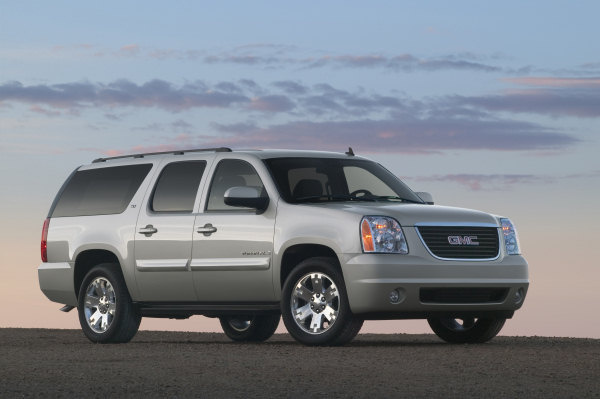
GMC Yukon XL Second Generation (2007-2014)
General Motors rolled out a new generation of full-size SUVs for the 2007 model year. As before, the Yukon XL variant was over 30 centimetres longer than the regular Yukon, and most of that was added to the wheelbase to improve passenger- and cargo-carrying capability. Once again, a solid rear axle made for a truck-like ride and a big lift to load heavy objects into the cargo area.
A 5.3-litre V8 engine was standard with the second-generation GMC Yukon XL in SLE and SLT trim levels, and its 320-horsepower rating was a big improvement on the previous generation. The heavy-duty GMC Yukon XL 2500 came with a bigger 6.0-litre V8 engine with 366 hp, while the upmarket GMC Yukon XL Denali trim level got a unique 6.2-litre V8 engine that produced 403 hp and sent its power to all four wheels courtesy of a standard AWD system. The Denali also got a six-speed automatic in place of the other trim levels’ older four-speed automatic units in 2007. For 2008, though, the Yukon XL 2500 also got a six-speed automatic. Navigation was added to GMC’s OnStar package for 2008, offering turn-by-turn directions. All 2009 GMC Yukon XL models got a six-speed automatic transmission in 2009.
The heavy-duty GMC Yukon XL 2500 was dropped for the 2014 model year, which would be the final version of the second-generation of GMC’s large SUVs.
Second-generation GMC Yukon XLs are becoming rare in Canada, and most units that are still around have very high odometer readings. If you can find one in good condition near you, you shouldn’t need to pay more than $17,000 to pick it up.
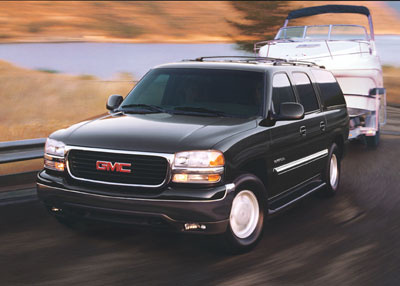
GMC Yukon XL First Generation (2000-2006)
The GMC Yukon XL nameplate first appeared in 2000, affixed to the latest version of the largest full-size SUV models from General Motors. Older versions from GMC carried the same Suburban name as the extended-wheelbase SUVs from Chevrolet. The Yukon XL was offered in both 1500 and 2500 classes with a 5.3-litre V8 engine replacing the old 5.7-litre V8 of older Suburbans. A 6.0-litre V8 engine was optional with the 2500 in 2000.
A massive 8.1-litre V8 engine with 340 hp and 455 lb-ft of torque was added as an option on the GMC Yukon XL 2500 model for 2001, making it more powerful than the V10 engine Ford offered in its extra-large Excursion SUV.
The now well-known Denali trim level first appeared on the GMC Yukon XL for the 2001 model year, complete with its own unique chrome grille. The Denali received a 6.0-litre V8 engine as a standard feature along with standard all-wheel drive.
A Quadrasteer four-wheel steering system was made available for the 2003 model year, making the big Yukon XL 2500 more maneuverable in parking lots. GM’s Stabilitrak stability control system also appeared in 2003. The Quadrasteer system was dropped for the first-generation Yukon XL’s final 2006 model year.
First-generation GMC Yukon XLs are now an exceptionally rare find on the Canadian used vehicle market. Any serviceable unit you’re able to track down should be priced well below $10,000.
Related Topics


by Jeremy Korzeniewski
Jeremy Korzeniewski grew up as the son of an automotive engineer in a family obsessed with cars and trucks and turned that passion into a career in 2006 when he accepted a position with Autoblog. Over the next 18 years, Jeremy published more than 8,000 articles while serving as a Senior Editor and has contributed to respected brands that include Yahoo, Edmunds, Robb Report and AutoGuide. Jeremy is also an avid motorcyclist and spends the majority of his evenings at home with his wife hoping to cook up a delicious meal for dinner.
The content above is for informational purposes only and should be independently verified. Please see our Terms of Use for more details.

