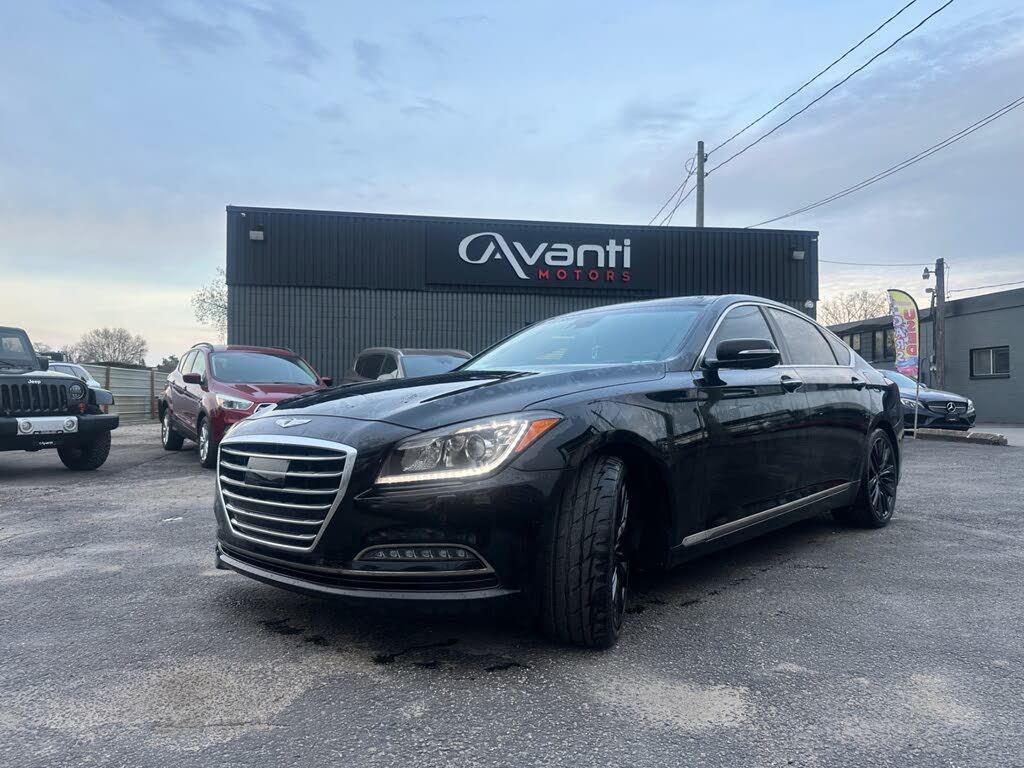
Before Hyundai launched its luxury Genesis brand, it created the five-passenger Hyundai Genesis sedan to put its toe in the premium automotive market. While it was packed with amenities at a reasonable price, it didn’t quite win over the die-hard luxury vehicle buyers keen to show off their German badges at the valet stand.
But the Korean automaker did win over those who wanted understated luxury without the premium price tag. The Hyundai Genesis became the precursor for the Genesis brand, which launched in 2015, and it eventually turned into the Genesis G80. The Hyundai Equus, positioned above the Genesis in the Hyundai lineup, then became the Genesis G90.
The growth of Genesis as a luxury brand in its own right is testament to the demand for affordable luxury cars. The Genesis G80 and the G90 were just the beginning, and we now see a full lineup of Genesis models including the Genesis G70, the Genesis GV80 SUV, and the related Genesis GV80 Coupe. Genesis Motors even has electric models such as the Genesis GV60, the Genesis Electrified GV70, and the Genesis Electrified G80.
And to think it all started with a midsize sports sedan from a South Korean automaker keen to take on German luxury.
Hyundai Genesis: Cost, Reliability, and the Best Years to Buy
Frequently Asked Questions
Which Hyundai Genesis years are the best?
Hands down, the best year to buy for the Hyundai Genesis is the 2014 model year. As well as being the last year of the first generation (it’s always better to buy later in the cycle), it’s also the only model year with no recalls. According to CarComplaints.com and the U.S. National Highway Traffic Safety Administration (NHTSA), it also has the fewest complaints. If you can’t find a 2014 model, consider the 2010 or 2016 model years, which have fewer complaints and recalls than others.
What are the worst Hyundai Genesis years?
According to CarComplaints.com, the worst year to buy is the 2012 model year due to engine problems. NHTSA also logs a high number of complaints and the highest number of recalls for the 2015 model year.
Is a used Hyundai Genesis a good deal?
The Hyundai Genesis is a very good deal. If you opt for the 2014 model year, for example, you’ll likely pay less than $15,000 for a low-kilometre vehicle, which high-kilometre cars can be found for less than $10,000. While the price will increase slightly if you opt for a 2016 model, we still think it’s a good deal.
Hyundai Genesis Pros and Cons
Pros:
- Good tech for its time
- Well-powered engine
- Lots of high-end amenities
Cons:
- Unoriginal design
- Not up to German-car handling standards
- Hyundai brand isn’t associated with luxury
Hyundai Genesis Generations
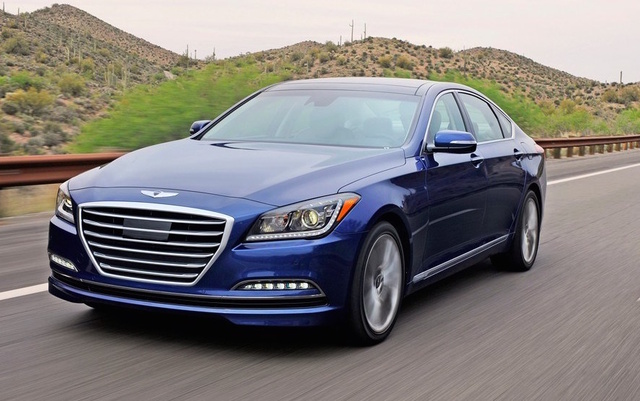
Hyundai Genesis Second Generation (2015–2016)
The short-lived second-generation Hyundai Genesis debuted for the 2015 model year with serious changes to its style as well as the driving experience. It got a new chassis, a new infotainment system, and overhauled suspension, making it more competitive with the likes of the BMW 5 Series, Audi A6, Lexus GS, and Mercedes-Benz E-Class.
The 3.8- and 5.0-litre engines carried on with this new generation of the full-size Genesis sedan, even though they had slightly less horsepower than the 2014 models. They were both still mated to an eight-speed automatic transmission. In Canada, all-wheel drive (AWD) was standard.
Even the later Genesis was still considered a bargain with all its standard features, which included navigation, Bluetooth functionality, a hands-free Smart Trunk opener, heated front seats, 12-way power adjustable driver’s seat, paddle shifters, and push-button start. Available features included a head-up display, a 16-way power adjustable driver’s seat, 17-speaker Lexicon surround sound system, an upgraded 9.2-inch high-definition touchscreen infotainment system, a rearview camera, front and rear parking sensors, headlight washers, a power rear sunshade, and lane keep assist.
The second and final model year of this generation saw few changes. The Genesis got HID headlights and LED daytime running lights, and LED fog lights were available with the 3.8. The 5.0 was by this point a fully loaded trim with all the bells and whistles.
On the Canadian used vehicle market, pricing is generally between $10,000 and $20,000 for a model with less than 200,000 kilometres. Models with the 5.0-litre engine command a slight premium.
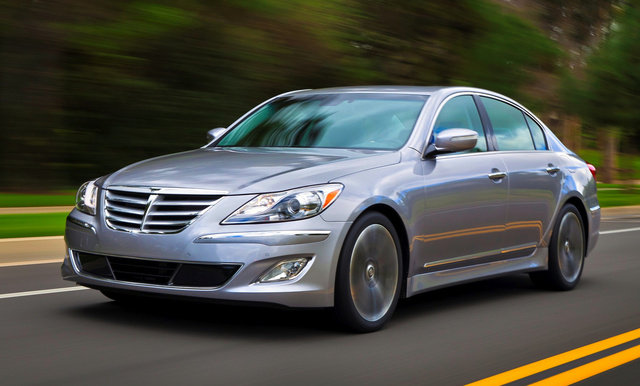
Hyundai Genesis First Generation (2009–2014)
The first-generation midsize Hyundai Genesis entered North America for the 2009 model year and was benchmarked against the BMW 5 Series. In fact, when Hyundai first revealed this new luxury sedan, John Krafcik, Hyundai’s then-vice president for product development, said: “Genesis offers the performance of a BMW 5 Series, the interior packaging of a 7 Series, at the price of a 3 Series.”
At launch, the Genesis was rear-wheel drive and had two powertrain options: a 290-hp 3.8-litre V6 and a 375-hp 4.6-litre V8. Both powertrains had a six-speed automatic transmission.
One of the biggest selling points was the amount of luxury amenities you got as standard. The likes of cruise control, automatic headlights, dual-zone automatic climate control, leather seats, heated front seats, and remote keyless entry were all included in the base price. While a seven-speaker audio system was standard, there was the option of a 17-speaker Lexicon premium audio system.
More tech was added for the 2010 model year. Adaptive cruise control was included with the Technology Package, and the seven-inch navigation system was made available with the 3.8 models and became standard on the 4.6 models. The 2011 changes were limited to the 4.6 model, which got an additional 10 hp and more standard features such as heated and cooled front seats, front and rear parking sensors, adaptive cruise control, and a rearview camera.
Though all models were refreshed for the 2012 model year, including a new eight-speed automatic transmission, the bigger news was the addition of a second V8 powertrain. The 2012 Genesis added a 429-hp 5.0-litre V8 in a new R-Spec model. This model took closer aim at the BMW 5 Series, adding a sport suspension system as well as transmission and steering calibrations. The 4.6-litre V8 was dropped.
For a vehicle in this generation with less than 200,000 kilometres, you’ll spend between $7,000 and $12,000. We found mostly 3.8 models available for less than $10,000.
Related Topics