Born as a cost-effective luxury large SUV competitor to the Lincoln Navigator and the Cadillac Escalade, the Infiniti QX80 has evolved significantly over its three generations. While premium amenities were always standard, the QX80 now offers a high level of tech, even with base models, with plenty more as you climb the trim levels. What was once a segment of three now includes the original, full-size, body-on-frame SUVs, along with bougie unibody competitors such as the BMW X7, the Land Rover Range Rover, the Mercedes-Benz GLS, and the body-on-frame Lexus LX.
While the Infiniti QX80 has shared a lot with the Nissan Armada throughout the years (and still does), the premium materials and extra tech features such as the biometric cooling system and the driver-focused individual audio system help better set it apart than previous generations.
While some will lament the loss of the V8 engine in the latest version, the new twin-turbo V6 offers 50 more horsepower, along with a small improvement in fuel economy.
Infiniti has always placed an emphasis on safety features and tech, so it makes sense that it won the Top Safety Pick+ award from the Insurance Institute for Highway Safety (IIHS) on its first time out of the gate. The U.S. National Highway Traffic Safety Administration (NHTSA) gave it an overall four-star rating starting in 2019, although the 2025 model hadn’t been rated at the time of writing. Our buyer’s guide tells you what you need to know about buying a new or used Infiniti QX80.
Infiniti QX80: Cost, Reliability, and the Best Years to Buy
Frequently Asked Questions
Which Infiniti QX80 years are the best?
The Infiniti QX80 has been fairly problem free according to CarComplaints.com, and skimming through recalls and complaints on NHTSA.gov shows similar results. In fact, the QX80 has had only three recalls since 2020, one in 2020 and two in 2021. Looking at 2022 and 2023, the last two years of the previous generation, there were no recalls or investigations, so they’re definitely the years to look for if you’re after a relatively new example.
What are the worst Infiniti QX80 years?
Though the QX80 has been remarkably free of recalls and complaints, there are some years to avoid. CarComplaints.com calls 2005 the worst model year because of high repair costs and more problems at lower mileages. It’s worth pointing out that the 2011 model year had the most complaints, many of which relate to peeling paint. In the second generation, CarComplaints.com dubbed 2014 the worst model year due to electrical problems, but 2019 logged the most overall complaints for battery drain.
Is a used Infiniti QX80 a good deal?
A used Infiniti QX80 is a pretty good deal considering that the national average purchase price for 2022 models—vehicles that are likely just coming off lease—is about 50% off the original MSRP. That gets you modern amenities such as wireless Apple CarPlay and a large 12.3-inch infotainment screen, plus the likes of heated front seats, a heated steering wheel, leather upholstery, remote start, a power moonroof, a tri-zone, climate control system, and 20-inch wheels for a relatively affordable sum.
Infiniti QX80 Pros and Cons
Pros:
- Powerful engines
- Plenty of cargo space
- Impressive audio system
Cons:
- Small third row
- Bad fuel economy
- Poor ride quality
Infiniti QX80 Generations
Infiniti QX80 Third Generation (2025–present)
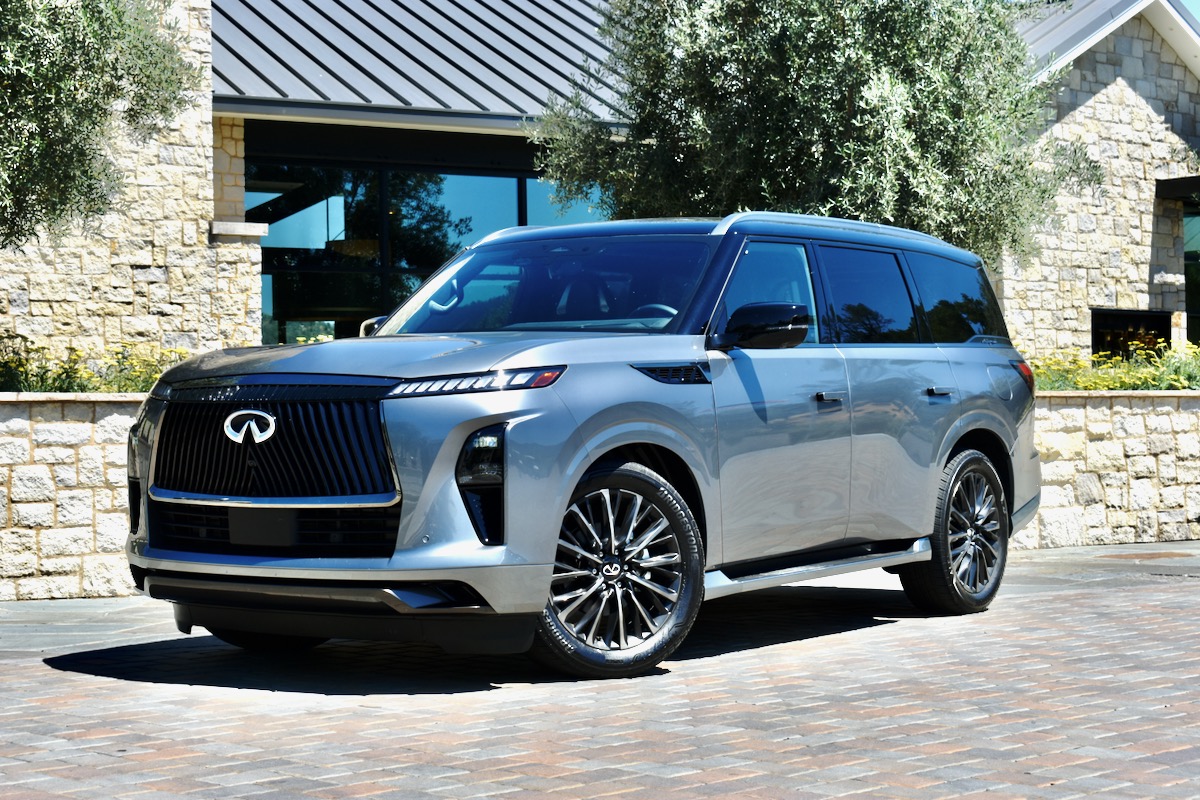
The new QX80 got a swish redesign for the 2025 model year. The most notable change is that the V8 powertrain was ditched after two decades. In its place is a more powerful 3.5-litre twin-turbo V6 that delivers 450 horsepower and 516 lb-ft of torque, running through a nine-speed automatic transmission. The maximum towing capacity is still 3,850 kilograms, and a full-on four-wheel drive (4WD) drivetrain is standard in Canada rather than AWD—although it doesn’t scream “off-road” when you look at it.
While previous generations represented the affordable luxury option in the class, the third generation has gone decidedly upmarket in design and in price. It’s grown about 2.5 centimetres in length and 7.5 cm in width, and it heralds a bold, curvaceous design. The big grille has crept up onto the hood via an all-new trim piece, and there’s a new stacked headlight setup. At the back, the taillights are full-width and include more than 300 LEDs.
At launch, the new Infiniti QX80 had four trim levels: QX80 Pure, QX80 Luxe, QX80 Sensory trim, and QX80 Autograph. It offered seating for seven or eight in all but the top Infiniti QX80 Autograph trim, which only seated seven. Standard specs included a dual-screen 14.3-inch gauge cluster/infotainment touchscreen display, Infiniti InTouch with a Google built-in operating system, a 14-speaker Klipsch premium audio system, wireless Apple CarPlay and Android Auto functionality, leather-appointed seating, and the hands-on ProPilot Assist 1.1 system that included steering assist and adaptive cruise control.
For 2026, the Infiniti QX80’s Pure trim level has been dropped for 2026, and the Sensory trim has been replaced with a new Sport trim with exclusive 22-inch wheels and black exterior accents.
Standard driver assistance features includes automatic emergency braking with pedestrian detection, predictive forward collision warning, blind spot monitoring, rear cross-traffic alert, blind spot intervention, and lane departure prevention.
With an emphasis on advanced technology, the third-generation QX80 includes an in-car camera, electronic air suspension and dynamic digital suspension, wide front-view camera angles, a head-up display, an invisible hood view camera angle, and available features such as massaging front and second-row seats, a camera in the rearview mirror, heated third-row seats, and a 64-colour personalized ambient lighting system.
It also touts innovative tech such as biometric cooling, which uses an infrared sensor to detect when a passenger is hot and automatically adjusts the temperature and air flow. Plus, the Autograph trim offers the hands-free ProPilot Assist 2.1 for highway driving. There’s also the 24-speaker Klipsch Reference premier audio system, which can focus audio elements such as navigation directions or phone calls to the driver’s seat.
The third-generation QX80 is brand new at the time of writing. The base dealership MSRP in Canada for the QX80 Luxe is $112,655 including fees at the time of writing. The top-tier and tech-loaded Autograph starts at $139,055.
Infiniti QX80 Second Generation (2011–2024)
The second-generation of Infiniti’s full-size SUV was splintered. The first three years fell under the QX56 moniker, but the remaining 11 years of this very long generation were badged QX80 when it was renamed in 2013.
In a move to separate the Infiniti QX56 from the Nissan Armada, the QX56/QX80 was based on the Nissan Patrol and production was shifted to Japan. It was longer and wider than its predecessor by about 2.5 centimetres, and it was sold in Canada with standard 4WD throughout this generation. Though still equipped with a 5.6-litre V8, this was a new engine for the QX56. It had direct injection and VVEL variable valve timing, delivering 400 hp through a seven-speed automatic transmission, and a maximum towing capacity of 3,850 kilograms.
It came standard with a 13-speaker Bose audio system, leather seats, push-button start, tri-zone climate control, an eight-inch infotainment system screen with navigation, Bluetooth phone connectivity, and Infiniti’s Around View camera. Options included a rear-seat entertainment system, blind spot monitoring, lane departure prevention, adaptive headlights, heated and ventilated front seats, heated rear seats, and semi-aniline leather seats. Second-row captain’s chairs allowed seating for up to seven passengers, or a second-row bench could be equipped for the same price to create eight seats.
The 2014 renaming was followed by a facelift the following year, comprising a new grille, LED daytime running lights, a refreshed interior, and new safety technology. A new top-tier QX80 trim called Limited was introduced, which essentially included all package options as standard.
The Infiniti QX80 got a second refresh in 2018 with a redesigned grille, hood, LED headlights, full LED taillights, and an upgraded interior. In 2019, the base trim became the Infiniti QX80 Luxe trim and added more standard safety equipment such as emergency braking with pedestrian detection and forward collision warning. In 2022, the two-screen infotainment setup was replaced with a new 12.3-inch infotainment screen and standard wireless charging was added. The final two model years of this generation were largely unchanged.
There are lots of options when it comes to used second-generation models. Under the QX56 badge, prices typically range from $15,000 to $25,000, though these are becoming less common in Canada. QX80s start at roughly $18,000 for 2014-2015 units with higher odometer readings, while nearly new higher-trim models top out at roughly $70,000, a saving of roughly $20,000 over their original manufacturer’s suggested retail price (MSRP).
Infiniti QX80 First Generation (2004–2010)
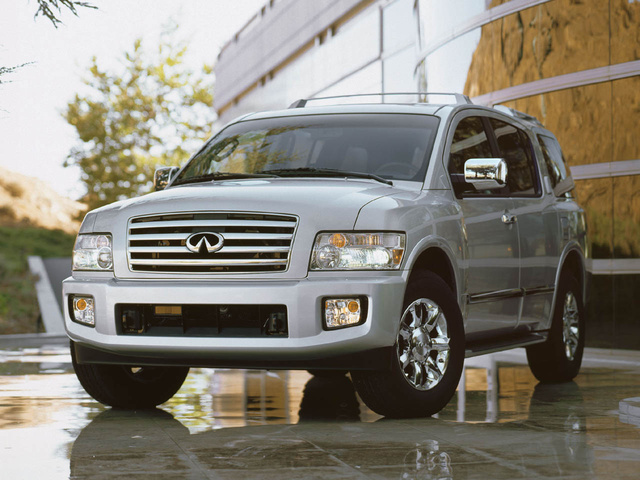
The full-size, three-row SUV from Infiniti was initially called the QX56. It was based on the first-generation Nissan Armada, and both vehicles shared a platform with the Nissan Titan. When it was introduced, it competed with the Cadillac Escalade and the Lincoln Navigator, making it the only imported full-size, three-row SUV available.
It was equipped with a 320 hp, 5.6-litre V8 engine and paired with a five-speed automatic transmission. In Canada, 4WD was standard equipment from the start. Luxury amenities included a 10-speaker Bose sound system, DVD-based navigation, leather seats, dual automatic climate controls, a rearview monitor, heated front seats, and adaptive cruise control. Seven- and eight-passenger configurations were available.
If you’re pining for an early QX56, you’ll find very few are left in Canada. If you can be patient enough to wait for the right listing to come up, you could be able to score one with a decent odometer reading in good condition for $10,000 or less.
Related Topics