Quirky yet practical, the Kia Soul is a subcompact hatchback with a similar ethos to boxy Japanese cars such as the Nissan Cube, the Scion xB. Along with the Forte sedan and Sportage SUV, the Soul played a major part in recalibrating Kia's public image away from decrepit, bottom-dollar discount cars to an appealing but still value-conscious brand. The Soul was well-made, affordable, and funky enough to stand out while tempering the total weirdness of the Cube or tinier microcars such as the Smart ForTwo and the Scion iQ.
Discontinued after the 2025 model year, the Soul was available in three generations starting in the 2010 model year. An electric version, the Soul EV, was available in Canada for the 2015 to 2023 model years. Later Soul models have more connectivity, safety, power, and convenience features. All are essentially the same in size and purpose. There is a lot of space inside a Soul, and a lot of standard features across all trims.
Our buying guide looks at how the model has evolved over time, and which are the best and worst versions to buy.
Kia Soul Buying Guide: Cost, Reliability, and the Best Years to Buy
Frequently Asked Questions
Which Kia Soul years are the best?
The final model years, 2024 and 2025, are the best. They offer the most modern features and safety, and in some cases they’re still new or like-new at reasonable prices.
Which Kia Soul years are the worst?
Early first-generation Souls are old but not problematic. Engine problems can be an issue for 2012 to 2016 second-generation cars, and a recall was issued due to a number of engine failures and fires. The 2021 to 2023 models are also subject to a recall due to engine issues (in particular, piston rings that can damage the cylinders), and engine replacements were common. Even if the car was repaired, the repair may not be sufficient to last long-term as Kia dealers installed vibration sensors on many cars without replacing the engines. The 2023 Soul also had side curtain airbags that could randomly deploy.
Is a used Kia Soul a good deal?
The Kia Soul can be a good deal if you’re looking for a car that’s small and affordable yet practical, but check that any recall work has been done.
Pros and Cons
Pros:
- Unique styling
- Lots of room
- Good value
Cons:
- Noisy first-generation model
- Earlier models are slow
- Some concerns over reliability and recalls
Kia Soul Generations
Kia Soul Third Generation (2020-2025)
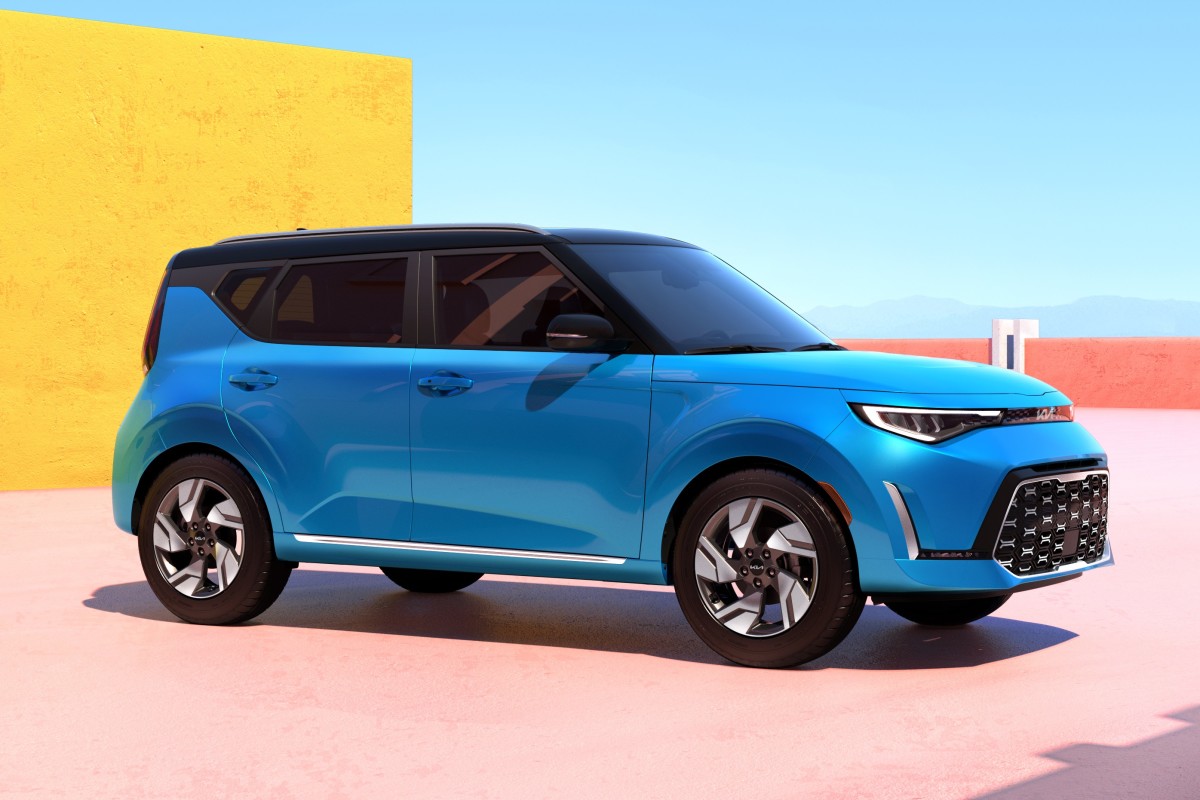
The third-generation Soul was built on a new chassis with Kia's most current technology, powertrains, and safety features. While frivolous features such as a "Hey! Yo!" mode for the audio-syncing speaker lights were introduced, there were more worthwhile upgrades in the form of dual-zone climate control and wireless phone charging, as well as a three-centimetre longer wheelbase and 5.5-centimetre longer total length that allowed for more comfort and interior space.
A new 2.0-litre inline four-cylinder engine made 147 horsepower and 132 pound-feet of torque to replace the base 1.6-litre. The previous six-speed automatic switched to a continuously variable transmission (CVT). Fuel economy was rated at 7.9 litres per 100 kilometres, an improvement of about 10% over the previous model. In Canada, the turbo engine was discontinued.
In Canada, trims included LX, EX, EX 20th Anniversary Edition, EX+, EX Premium, GT-Line Premium, EX Limited, and GT-Line Limited. Available features included a 10.25-inch touchscreen that was standard beginning at the EX Premium trim, rear privacy glass, a head-up display, and 10-speaker Harman Kardon stereo with a subwoofer. Available driver assist features included automatic high-beam headlights, lane-keep assist, lane-change assist, driver attention warning, blind spot monitoring, and rear cross-traffic collision avoidance assist. Heated front seats and side mirrors were standard.
For 2021, the GT-Line Premium and EX Limited trims were deleted.
For 2022, a larger eight-inch touchscreen infotainment system became standard and the Soul adopted the brand’s new logo.
The 2023 Soul received revised front and rear fascias, optional LED headlights, and updated wheels. Highway Drive Assist, a semi-automated feature, was optional on the GT-Line Limited.
No major changes were made in Canada in 2024 or 2025 before the Kia Soul was discontinued.
Although the Kia Soul EV was discontinued in the United States in 2019, it continued in Canada into this generation and was sold for model years 2020 through 2023. It received a power boost to 134 hp and 291 lb-ft of torque and had two battery options: a 39.2-kWh battery with an estimated 248 km of range, and a 64-kWh battery with 383 km of range. There were no significant changes made to this model across its four model years.
Prices for a clean Kia Soul of this generation range from just over $10,000 for high-kilometre 2020 examples to as high as $30,000 for later, low-kilometre models. Kia Soul EVs are priced between $15,000 and $25,000 on average.
Kia Soul Second Generation (2014-2019)
The second-generation Kia Soul kept the original's formula and footprint, but it looked much neater. While the overall shape was similar, its smoother sides, higher front grille, and more balanced proportions made it look less like a tall hatchback and more like a scaled-down SUV.
The chassis was slightly longer, wider, and stiffer. Kia promised a quieter cabin, a flatter torque curve for better performance, and suspension upgrades to make it handle better and ride smoother. The tailgate opened six centimetres higher for easier access to the cargo area, which had 532 litres of space. Interior features were upgraded, and a wealth of circular design elements and extra soft-touch materials gave it a more high-end look and feel.
In Canada, the initial second-generation trim line-up consisted of LX, EX, and SX with a variety of packages available. Base LX models had 16-inch steel wheels, power windows and locks, heated mirrors, a six-speaker stereo, and Bluetooth as standard. The EX had 17-inch alloy wheels, air conditioning, heated front seats, roof rails, keyless entry, and cruise control. The top SX trim added a heated steering wheel, a cooled glove box, a rear-view camera, keyless entry and push-button start, leather upholstery, and 18-inch wheels.
The 1.6-litre inline four-cylinder now made 130 hp and 118 lb-ft of torque. A six-speed manual transmission was standard, while a six-speed automatic was optional with this engine. The upper trims had a 2.0-litre inline four-cylinder updated with direct injection that made 164 hp and 151 lb-ft of torque.
The new Kia Soul EV was introduced in 2015 as an electric version with 149 kilometres of estimated range from its 27-kWh battery. The single motor made 109 hp and 210 lb-ft of torque.
The 2017 Soul introduced a 1.6-litre turbocharged inline four-cylinder with 201 hp and a seven-speed dual-clutch automatic transmission on the SX and SX Tech trims, which also now included larger front brakes, a D-shaped steering wheel, and xenon headlights. Blind-spot monitors with rear cross-traffic alert became available. Driving modes were added to all trims. A power front passenger seat was also newly optional. Additional features on the Soul EV included a pedestrian warning sound, faster charging, new wheels, and other minor upgrades.
The 2018 Soul lost its manual transmission as well as the base configuration it came with. Forward emergency braking and adaptive cruise control became optional.
For 2019, a backup camera was standard (as required by law) along with automatic headlights.
Used prices at the time of writing ranged from $4,000 to $17,000 at CarGurus.ca, depending on model year and odometer reading. Kia Soul EVs from this generation average between $6,000 and $15,000.
Kia Soul First Generation (2010-2013)
Unlike the Rondo, Spectra, Optima, and the rest of Kia's lineup in 2008, the Soul was created by American designers in southern California, not South Korea. The digital breakdancing hamsters in the ads were playful, but the Soul as a car was serious. Kia had been selling bland, cheap vehicles for more than a decade, and low prices alone would not carry it into the future. A four-door, front-wheel-drive "hamstermobile" aimed at young people was the thinking behind the inaugural model (although like Scion, the Soul would become more popular among old people).
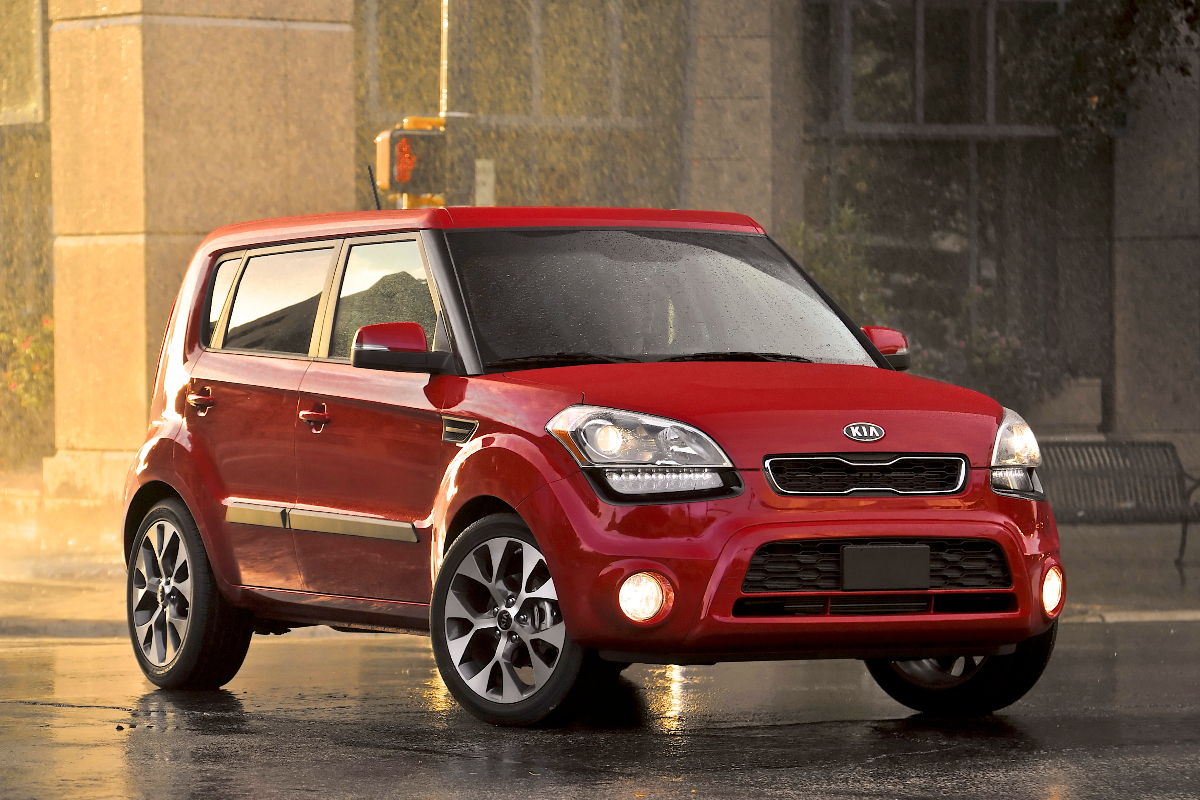
Oversized blobs for headlights, vertical taillights, big wheels pushed to the corners, a nearly vertical tailgate, and a boxy shape made the Soul look like a lowered, downscaled commercial van. Inside, when optioned up, the speakers had accent lighting that could sync to the beat of music and random splashes of red covered the steering wheel airbag cover and the dash.
The Soul was merely okay to drive with a 1.6-litre or 2.0-litre four-cylinder engine with no more than 142 hp and the choice of a five-speed manual (a loose and roughshod gearbox that was best avoided) or four-speed automatic transmission. The powertrain was gutless. It was the body style, the immense interior space for a small car, and the novelty of driving something with a personality from a brand that wasn’t known for interesting cars that gave the Soul some showroom appeal.
The initial Kia Soul trim levels broke convention with names like 2u, 4u, 4u Retro, and 4u Burner, while the 1.6-litre engine came with the base model with no trim name. The base car had 15-inch steel wheels, power windows and locks, active front headrests, Bluetooth, heated power mirrors, body-coloured external details, and a four-speaker stereo, while air conditioning was optional.
The 2u added privacy glass, cruise control, keyless entry, 16-inch alloy wheels, and roof rails. What little amenities it had were offset by four-wheel disc brakes when most economy cars still had rear drums and stability control (not mandated until 2012).
The 4u had 18-inch alloy wheels, a sunroof, fog lights, the beat-syncing stereo, a sport-tuned suspension, chrome door handles, and SiriusXM satellite radio. 4u Retro and 4u Burner were available appearance packages. The MSRP ranged from $16,800 to $23,100.
For 2011, Kia made the four-wheel disc brakes and stability control standard along with anti-lock brakes. A new Luxury trim came with body-coloured bumpers, automatic climate control, keyless entry with push-button start, leather seats, a centre console armrest, and a rear-view camera.
The 2012 Soul upgraded to six-speed automatic and manual transmissions, improved power (138 hp on the 1.6-litre, 164 hp on the 2.0-litre) and better fuel efficiency. New projector headlights with LED running lamps, LED taillights, new wheels, and a reshaped hood and bumpers were the major changes. A new seven-inch touchscreen with navigation was available.
For 2013, Bluetooth and audio controls on the steering wheel became standard.
Used examples can be had for $3,000, but expect to pay somewhere between $5,000 and $10,000 if you want one with a sensible odometer reading. As with any car of this age, finding one with a good maintenance history and taking a decent test drive could help you avoid a dud.
Related Topics