The Mercedes-Benz GLE is a luxury SUV that’s one of the German manufacturer’s core models. It’s been available since the 2016 model year but has a lineage that stretches back to the first M-Class model of 1998. In fact, the first-generation GLE is simply a facelifted, renamed version of the M-Class that was introduced for the 2012 model year. Over the years, the M-Class/GLE has changed remarkably little in character and feel. It’s gained more high-tech features but has remained a fairly conservative and conventional SUV alternative to Mercedes-Benz’s E-Class sedan and wagon.
Mercedes-Benz’s decision to rename the M-Class for 2016 was part of a wider renaming strategy to create a “simpler, more transparent and more logical system,” as the company puts it. Since that point, all SUVs have had a model name starting with GL, a tribute to the long-running G-Wagen, followed by a letter relating to which core model series it belonged to: A, B, C, E or S. The GLA is the SUV equivalent of the A-Class, and so on. The introduction of Mercedes-Benz’s EQ range of electric cars subsequently muddied the waters, although Mercedes-Benz has since announced that it will phase out EQ branding for future models.
Anyway, back to the GLE. While it’s slightly more rugged in look and feel than some rivals, it’s always been a car more focused on family luxury than go-anywhere ability, although an off-road option pack has been available for selected models. Sharing much of its tech and engines with the concurrent E-Class, the GLE has been at the forefront of the segment for technology, introducing countless convenience and safety innovations. It has adopted hybrid technology more recently, but there’s no pure-electric version due to the emergence of Mercedes-Benz’s EQ electric sub-brand.
Thanks to the GLE’s advanced tech and gentle design evolution over the years, the first-generation model—an updated third-generation M-Class, remember—looks and feels surprisingly up-to-date today. The brand’s 4Matic all-wheel drive (AWD) is standard, and all versions have an automatic transmission. High-powered AMG GLE models have a range of mods to make them look and feel sportier, and they’re seriously quick with most having a 0-96 km/h time of less than five seconds.
The major shift from M-Class to GLE was the introduction of the GLE Coupe, a sleeker and sportier variant with a sloping rear body section but similarly spacious interior designed to compete with cars such as the BMW X6 and the Porsche Cayenne. Hybrid technology arrived in the GLE, too, with the addition of a plug-in hybrid model that wasn’t popular but was the shape of things to come.
The second-generation Mercedes-Benz GLE was introduced for 2020. It has a similar look and proportions to its predecessor, but is slightly larger and adds the option of third-row seats for seven-seat capacity. As before, it’s lavishly equipped and available with a range of powerful engines. Mercedes-Benz is increasingly moving away from large-capacity engines, instead using turbocharged and electrified powertrains to get more power but lower fuel consumption and emissions.
Our guide to the Mercedes-Benz GLE has all the details on its evolution over the years, which models are available, and how much you’re likely to pay for one.
Mercedes-Benz GLE-Class Buying Guide: Cost, Reliability, and the Best Years to Buy
Frequently Asked Questions
Which Mercedes-Benz GLE-Class years are the best?
The best years for Mercedes-Benz GLE reliability are from 2020 on—the current, second-generation model. Mercedes-Benz’s record as a brand in independent reliability and customer satisfaction surveys is merely average, but the latest GLE is proving generally dependable.
What are the worst Mercedes-Benz GLE-Class years?
The earliest years of the first-generation Mercedes-Benz GLE are the worst for reliability, although there aren’t any common major issues to worry about. Electrical and air suspension glitches are the main problems.
Is a used Mercedes-Benz GLE-Class a good deal?
The Mercedes-Benz GLE can be a good deal if you’re looking for a comfortable, practical SUV with a premium look and feel. It’s not the most exciting car in its segment, but it ticks a lot of boxes and there’s a wide range of models to choose from.
Mercedes-Benz GLE-Class Pros and Cons
Pros:
- Lots of powertrain options, including hybrids
- High-quality interior
- Quiet, comfortable, and spacious
Cons:
- High-end versions are expensive
- Heavy fuel consumption for some models
- The BMW X5 is sportier to drive
Mercedes-Benz GLE-Class Generations
Second generation (2020-present)
The second-generation Mercedes-Benz GLE arrived for the 2020 model year. Built for North America at Mercedes-Benz’s factory in Tuscaloosa, Alabama, it’s slightly larger than before. The most significant change is a 7.8-centimetre increase in wheelbase that provides extra rear legroom. Five seats are standard, but optional third-row seats can be specified on a new build.
While the exterior is a clear continuation of the stylistic themes established by the M-Class, the interior represents a dramatic change with its sweeping dashboard design, huge display screens and (for some models) ambient lighting that gives off nightclub vibes. The second-gen M-Class also introduced numerous cutting-edge safety and luxury features as well as a number of electrified powertrains. The choice of standard SUV or coupe body styles is carried over from the first GLE and, as before, the coupe is a fraction lower and longer with a sleeker rear end and only available with the higher-powered engine options.
Most models have had some form of hybrid technology from the start. The exception is the entry-level GLE 350, which has a turbocharged 2.0-litre inline-four gas engine with standard 4Matic all-wheel drive in Canada. Next up is the GLE 450, which has a 3.0-litre inline-six turbo engine with mild-hybrid technology (labelled EQ Boost) and 362 horsepower—a 107 horsepower step up over the GLE 350 models.
The lower-powered AMG model, the Mercedes-AMG GLE 53, has a turbocharged 3.0-litre inline-six with mild-hybrid technology delivering 429 horsepower. At the top of the pile is the Mercedes-AMG GLE 63 S, which gives a staggering 603 horsepower and 627 lb-ft of torque from its 4.0-litre biturbo V8, along with a 0-100 km/h time of just 3.9 seconds. It too is a mild hybrid, but don’t expect great fuel economy: Natural Resources Canada combined fuel economy is rated at 15.2 L/100 km combined.
An update in 2023 brought mild hybrid technology to the GLE 350 models (but no increase in power) and a small increase in power for the GLE 450. At the same time, the entire range gained new designs for the front bumper and grille, headlight and taillight lenses and steering wheel. There’s also a new MBUX infotainment system, along with wireless Apple CarPlay and Android Auto integration and a number of small trim and spec updates.
A new GLE 450e plug-in hybrid model joined the range for 2024, combining a 2.0-litre four-cylinder engine with a 134-horsepower electric motor for a total of 381 horsepower and a pure-electric range of 80 kilometres.
Standard equipment depends on the engine, with more power equalling more features, but even the earliest entry-level models have a rear-view camera, a power tailgate, heated and electrically adjustable front seats, an electric steering column adjustment, dual-zone climate control, a power sunroof, Apple CarPlay and Android Auto integration, and LED headlights. MB-Tex (artificial leather) is standard, with genuine leather or Nappa leather optional. Option packs include the Premium Package, MBUX Technology Package, AMG Line Exterior package, and AMG Line interior package. Standalone options include soft-close doors and a selection of different alloy wheel designs and interior trim inserts.
The Mercedes-Benz GLE looks and feels like a well-engineered car, and it seems to be proving so with a solid reputation for reliability. Warranty cover for new cars is a run-of-the-mill four years or 80,000 kilometres, whichever comes sooner.
At the time of writing, the MSRP for a new, entry-level Mercedes-Benz GLE 350 is just under $83,000 before fees. Prices for 2019 models start at about $26,000, but if you want one that’s covered less than 100,000 kilometres, you’re looking at more like $35,000. You’ll pay more for a coupe version and more again for a Mercedes-AMG model.
First generation (2016-2019)
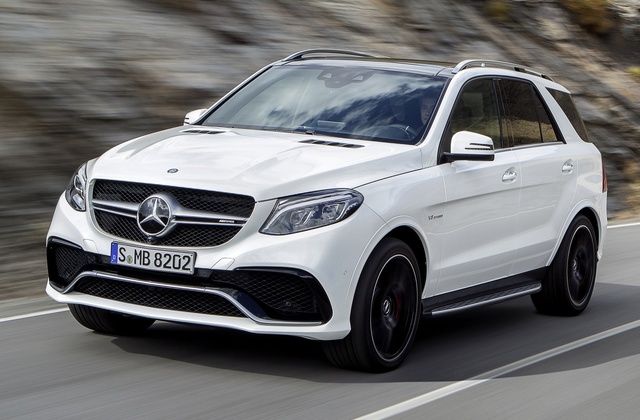
The first-generation Mercedes-Benz GLE is among a handful of cars that started out with one name and ended up with another. In 2016, what was the M-Class became the GLE thanks to Mercedes-Benz’s decision to simplify its naming structure in the wake of a proliferation of new models.
Now, it makes sense; at the time, it seemed a little confusing. The new name coincided with a range of updates to the outgoing M-Class (which had been on sale since 2011), but these were no more than the typical round of mild, mid-life updates. The big change was the addition of a new body style in the shape of the GLE Coupe. It looked sleeker thanks to nearly 9 centimetres of additional length, a roofline that’s 7.5 cm lower, and a more tapered shape from the front doors backwards. You got less boot space and rear seat space as a result, but it was still a large, practical car. The GLE SUV and GLE Coupe models had essentially the same interior and mechanical components, although some of the engine and trim combinations varied slightly.
Despite being on sale for only four years, the first GLE managed to pack in a lot of different drivetrains. Most were powerful, some were very powerful, and all had 4Matic all-wheel drive as standard in Canada. The sole diesel option was the GLE 350d, a short-lived model that’s very rare on the used market. The GLE 400 had a twin-turbo 3.5-litre V6, while the first model year also featured GLE 450 AMG Sport and GLE 550 models.
The AMG models provided prodigious power. First to arrive was the AMG GLE 63 S with 577 horsepower respectively. The AMG GLE 43 Coupe followed later. With ‘just’ 362 horsepower (385 for later versions) it might seem something of an ‘AMG-lite’ model, but it was still very fast. Most models had a seven-speed automatic transmission, but the AMG 43 models and later versions of the GLE 400 had a nine-speed auto.
All versions were well-equipped, with standard features based on which engine the car had rather than selectable trim levels. Option packs could be added when new, and some were standard for the higher-output engines. At the very least, the earliest entry-level models came with a power tailgate, heated and electrically adjustable front seats, a power sunroof, Bluetooth, and artificial leather upholstery. Available features included a Harman/Kardon sound system, blind spot assist, lane keeping assist, a rear-view camera, keyless go, a navigation system, and full leather upholstery. AMG GLE models added a range of extras, including a surround-view camera system and LED headlights.
Despite Mercedes-Benz’s mid-table showing in most customer satisfaction and reliability surveys of this era, the GLE itself has a good reputation for reliability. Electrical glitches aren’t unknown, while the air suspension fitted to some models can be problematic and expensive to fix. It pays to check that it functions properly on a test drive.
Prices for high-kilometre examples start just over $20,000. If you want a car with less than 150,000 kilometres on the clock, expect to pay at least $25,000—and more again for a higher-powered model. Bank on at least $27,000 for an AMG GLE 43 and $45,000 and beyond for a late, high-spec AMG GLE 63 S.
Related Topics: