As the roomiest vehicle in the Mercedes-Benz lineup, the GLS offers three rows of seating for six or seven people and up to 2,400 litres of cargo space. Even so, the GLS is not the tallest, the longest, or the most expensive Mercedes. An S-Class is lengthier and offers a palatial back seat, more so than even the Maybach version of the GLS, while the G-Class towers several centimetres higher. Rather, the GLS is a midsize SUV built for families that combines the comfort and space of the S-Class luxury sedan with a modicum of off-road capability from the G-Class — hence the name "GLS."
Mercedes-Benz GLS Buying Guide: Cost, Reliability, and the Best Years to Buy
Search for Mercedes-Benz GLS
See all


The GLS SUV is available in two generations starting from 2017. The first was a refresh of the second-generation GL-Class, its former name during the 2007-2016 model years and which we cover separately. The GLS competes with other three-row luxury SUVs including the Audi Q7, BMW X7, Cadillac Escalade (and by extension the related Chevrolet Tahoe and GMC Yukon), Infiniti QX80, Lexus LX, and Lincoln Navigator.
Mercedes-Benz GLS Buying Guide: Cost, Reliability, and the Best Years to Buy
- Frequently Asked Questions
- Pros and Cons
- Mercedes-Benz GLS Generations
- Mercedes-Benz GLS Second Generation (2020-Present)
- Mercedes-Benz GLS First Generation (2017-2019)
Frequently Asked Questions
Which Mercedes-Benz GLS years are the best?
We recommend 2021 and later GLS models as the second generation represented a marked improvement in performance, interior quality, and style. As usual, it’s best to avoid the first model year of any new car generation to swerve issues with early production runs, which are usually ironed out later on.
Which Mercedes-Benz GLS years are the worst?
There are no real worst years. Note that the 2017 version is a renamed refresh of an existing model, the GL, which started its lifecycle for 2013, so there are no major problems in buying this first model year of the GLS.
Is a used Mercedes-Benz GLS a good deal?
Yes. Across all model years, the GLS lists on CarGurus.ca for an average price of just under $70,000. For a vehicle that starts at $130,000 new without options, there is great value in buying a used GLS.
Pros and Cons
Pros:
- Comfortable
- Premium interior materials
- Easy-to-use technology
Cons:
- AMG Line Package impedes entry/exit
- Third-row seat access
- Touch-sensing controls
Mercedes-Benz GLS Generations
Mercedes-Benz GLS Second Generation (2020-Present)
In its second generation, the GLS fell in line with the curvier, smoother Mercedes-Benz design language on the outside and its wide-screened, tech-forward cabin on the inside. The wheelbase was stretched by about five centimetres, and the body was just over six centimetres longer. Total cargo space increased from 2,300 to 2,400 litres. Even so, front headroom decreased, but extra comfort and safety features, along with more power and efficiency, made up for it. The base MSRP without options was $88,100 to $140,100 for the first 2020 model.
The GLS 450, with 362 horsepower and 369 pound-feet of torque, had an identical power output from an entirely new six-cylinder engine. While displacing the same 3.0 litres, the new engine used an inline arrangement and a single turbo instead of a vee and two turbos. A 48-volt mild hybrid system called EQ Boost replaced the starter motor and accessory belt to reduce fuel consumption, enable faster and smoother engine restarts, and provide electric torque from a standstill.
Fuel economy was improved markedly at a Natural Resources Canada-estimated 11.4 litres per 100 kilometres combined versus the 2019 model's 13.2 L/100 km combined. The nine-speed automatic transmission, 4Matic all-wheel drive, and Airmatic air suspension carried over from the previous generation as standard, with the exception of the standard Adaptive Damping System, which was previously optional.
More safety features were added including Car-to-X communication, which could send and receive alerts to and from other Mercedes-Benz vehicles, and Exit Warning Assist, which used the blind spot sensors to alert passengers of fast-moving vehicles or cyclists near the door when parked. Formerly optional safety spec was now standard including blind spot assist, 360-degree cameras, adaptive headlamps, auto high beams, and parking assist. Heated front seats, MB-Tex upholstery, a sunroof, dual 12.3-inch displays with MBUX (Mercedes-Benz User Experience) multimedia infotainment and touchscreen functionality, navigation, a Burmester surround sound stereo, SiriusXM, nine USB-C ports, wireless charging, and three years of Mercedes Me Connect services were standard. Power-folding third row seats, power-adjustable second-row seats, and 19-inch wheels were also standard.
A Mercedes-specific seating function that is never advertised is one of the most useful features on the GLS. Fold down any part of the second or third row, and the car will automatically adjust the seat in front so the rear seat can clear the space. Return the seat upright, and the adjusted seat will return back to its original position. This eliminates having to walk around a big SUV multiple times when one seat doesn't fold all the way down or a headrest or something else is blocking its path. It's so practical and not featured in any other SUV we’ve tested.
The Mercedes-Benz GLS 580, also with hybrid assist, offered a new 4.0-litre V8 Biturbo that made 483 hp and 516 lb-ft of torque. Soft-close doors, 21-inch wheels, five-zone climate control, and cooled and massaging multicontour front seats came standard and were optional with the Mercedes-Benz GLS 450. Captain's chairs for the second row were a no-cost option with both trims, and Nappa leather was optional with both.
A slew of option packages could deck out a GLS extensively. Available features comprised heated armrests for the front and second rows, massaging and cooling second-row seats, heated third-row seats, heated and cooled cupholders for the front and second rows, a head-up display, a 25-speaker stereo, Nappa leather, extra window insulation for a quieter cabin, windshield wipers with dozens of tiny holes for the washer fluid (Magic Vision Control), perfume (Air Balance), spa programs (Energizing Comfort), semi-automated driving, wheels up to 23 inches, the ability to lean the SUV into curves like a motorcycle (E-Active Body Control), and a low-range transfer case.
For 2021, Mercedes-Benz made four-zone climate control, cooled front seats, and 20-inch wheels standard with the GLS 450. The AMG GLS 63 returned with 603 hp and 627 lb-ft of torque, this time using an upgraded version of the GLS 580's 4.0-litre twin-turbo V8 with hybrid assist and a nine-speed Speedshift transmission. For 2022, the AMG Line package with a unique grille was newly optional with the regular trims.
For 2023, the panoramic moonroof became standard on the GLS 450. The 2024 model was a refresh with new lighting, bumpers, and a taller and more upright grille meant to mimic old Mercedes models with the big metal radiators. Horsepower was increased to 375 on the GLS 450 and to 510 on the GLS 580. The GLS63 sported new wheel designs, a new steering wheel, new hood badges, red brake calipers, and new puddle lights. The performance exhaust became standard.
For 2025, a fingerprint scanner was standard on all trims, along with new exterior and interior colours as part of the Manufaktur Signature range of (very expensive) options across all three trims. The AMG received embossed headrests and offered the option of deep-pile floor mats as part of the Manufaktur Signature Interior package.
Base prices for the 2026 GLS start at $132,744 for the GLS 450 including destination charges, fees, and the federal luxury tax, which applies to the portion of the purchase price above $100,000. The GLS 580 starts at $165,144 for the GLS 580, and the AMG GLS 63 starts at $226,256 at the time of writing.
Average list prices on CarGurus for the second-generation Mercedes-Benz GLS in our research ranged from just under $50,000 for high-kilometre 2020 models to $190,000 for ultra-luxury Mercedes-Maybach GLS 600 units.
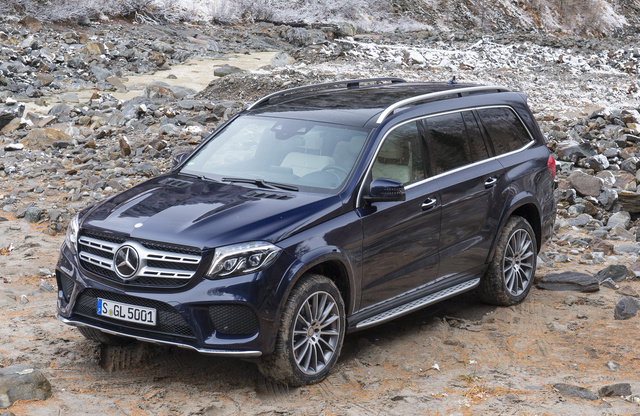
Mercedes-Benz GLS First Generation (2017-2019)
Mercedes-Benz began renaming its SUVs before this generation's three-year production run to align their price and size with the upward progression of its popular C, E, and S models. The GL became the GLS after the midsize ML and the compact GLK took the names GLE and GLC respectively for 2015. The subcompact GLA was introduced that same year. The slightly bigger but still tiny GLB came last for 2020.
In reality, the first 2017 GLS was a refreshed GL, which had been on sale since the 2013 model year. It featured significant updates including restyled bumpers and grilles, brighter headlights and taillights, new LED running lamps, new wheels, a nine-speed automatic transmission that replaced the seven-speed, a standard air suspension, and an updated dashboard, steering wheel, and infotainment system. Base prices in Canada ranged from $82,900 to $132,900 before options and fees.
Four trims were originally announced, all with standard 4Matic all-wheel drive. The GLS 350d, formerly the GL 350 BlueTEC, was a diesel with up to 457 pound-feet of torque. The GLS 450 came with a 3.0-litre twin-turbo V6 with 362 horsepower and 369 lb-ft of torque, along with the same level of standard equipment including 19-inch wheels, Airmatic air suspension, a backup camera, forward emergency braking, Attention Assist, dual-zone climate, sunroof, heated front seats with MB-Tex upholstery, burl walnut trim, power-folding third row seats, auto-dimming and power-folding mirrors, and an eight-inch touchscreen. Cargo space was 295 litres behind the third row, 1,398 litres behind the second row, and 2,300 litres with both rows folded.
The GLS 550 upped the ante with a 4.7-litre twin-turbo V8 good for 449 hp and 516 lb-ft of torque. Extra standard features with this trim included 21-inch wheels, blind spot assist, lane keeping assist, proximity entry (Keyless-Go), soft-close doors, three-zone climate, front multicontour seats with cooling, ambient lighting, illuminated running boards, navigation with real-time traffic and SiriusXM, an in-dash DVD/CD player, voice control, parking sensors, 360-degree cameras, adaptive LED headlights, auto high beams, Apple CarPlay, Android Auto, a Logic7 surround sound system by Harman/Kardon, and leather. Many of these features were optional on the lower trims.
The AMG GLS 63, with a hand-built 5.5-litre twin-turbo V8 producing 577 hp and 561 lb-ft of torque, came with a special Speedshift Plus seven-speed transmission for faster shifting and AMG Performance all-wheel drive that skewed more of the torque to the rear wheels for enhanced handling. Upgraded brakes, tires, and suspension components also contributed to a sportier look and feel. A unique feature, Active Curve System, adjusted the torsion of the anti-roll bars for even flatter cornering and less body roll. Standard safety features included the Driver Assistance Package for semi-automated driving (Distance Pilot Distronic, Steering Pilot, Active Lane Keeping Assist, and more). A panoramic moonroof and heated second-row seats also came standard. Red brake calipers and either burl walnut or aluminum trim were no-cost extras. A black set of 21-inch wheels, two sets of 22-inch wheels, carbon fibre interior trim, and a D-shaped steering wheel with Alcantara trim were optional.
Standalone options for all trims included power second-row seats for easier access to the third row, heated steering wheel, a wood and leather steering wheel, heated and cooled front cupholders, an air purifier, second row window shades, rear seat entertainment, and a Bang & Olufsen stereo.
For 2018, in the wake of the Volkswagen diesel emissions scandal, Mercedes-Benz dropped the GLS 350d from the lineup. Very few examples of the GLS 350d, if any, ever arrived in Canada. Average list prices on CarGurus for the 2017 to 2019 Mercedes-Benz GLS were between $25,000 and $50,000 at the time of writing.
Related Topics



by Clifford Atiyeh
Clifford Atiyeh has hosted, directed, and produced more than 300 series-length videos for CarGurus since 2016. He has reported and photographed for dozens of websites, magazines, and newspapers over 20 years, including The Boston Globe, Car and Driver, and Road & Track. Clifford runs CHA Creative, which provides industry analysis and brand marketing to automotive clients.
The content above is for informational purposes only and should be independently verified. Please see our Terms of Use for more details.

