When it comes to buying a new vehicle in Canada, few factors carry as much weight as reliability. Our climate is unforgiving, our commutes can be long, and the cost of unexpected repairs is something no one wants to face. That's why choosing a car that has proven itself dependable—whether through robust engineering, a strong warranty, or a track record of high owner satisfaction—remains one of the smartest decisions a Canadian buyer can make heading into 2026.
The models featured in this guide span everything from efficient hybrid sedans and everyday commuter cars to luxury sport sedans and even a bona fide sports car. What they all have in common is a reputation for going the distance, backed by expert reviews, real-world owner feedback, and value-conscious pricing data from the CarGurus marketplace. Whether you're shopping for your first new car or replacing a long-serving family favourite, these are the vehicles most likely to reward your investment with years of dependable service.
About this guide
The cars in this guide have been selected to represent the best options currently available. Our recommendations are the result of a unique three-part scoring system that takes into account real-world tests from our team of expert reviewers, ratings from real-life owners who live with these cars every day, and insights from J.D. Power’s 2026 U.S. Vehicle Dependability Study as well as other trusted surveys to compile this list of the most reliable cars available in Canada. This combined approach ensures our list highlights cars that are not only great to own but also good value to buy. For more information, scroll to the bottom of this page.
Most Reliable Cars in Canada in 2026
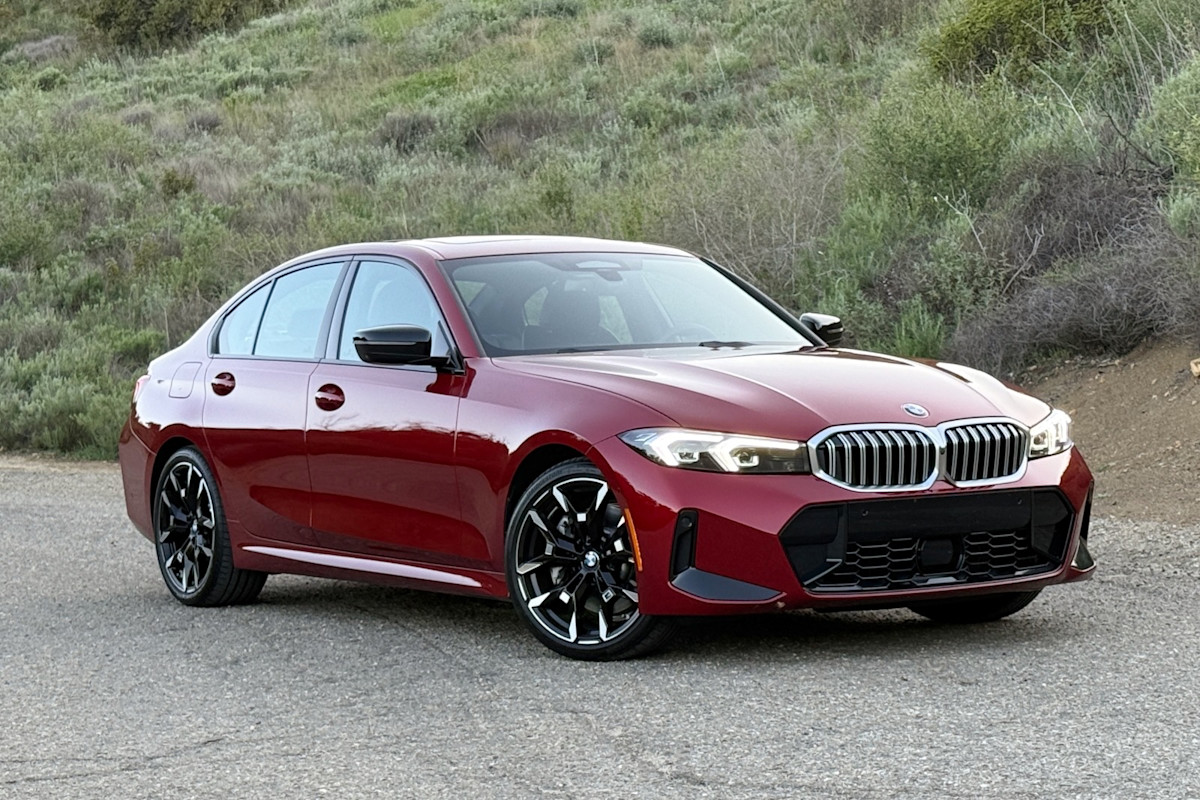
CarGurus expert rating: 8.0 out of 10
CarGurus user rating: 4.6 out of 5
Percentage of good/great deals available on CarGurus: 31.4%
Overall CarGurus rating: 4.6 out of 5
| Pros |
Cons |
| Fun to drive |
Snug interior |
| Easy-to-use technology |
Front seat comfort on longer trips, hot days |
| Great safety ratings |
Confusing, inconsistent names for technology |
The BMW 3 Series continues to set the benchmark for compact luxury sports sedans, offering a compelling blend of performance and everyday usability that Canadian drivers can rely on. Built with robust materials and exceptional construction quality, the 3 Series exudes durability from the moment you close the door with a decisive thunk. Under the hood, the 330i xDrive features a turbocharged 2.0-litre four-cylinder engine paired with a 48-volt mild-hybrid system, delivering a smooth 255 hp and 295 pound-feet of torque. With standard xDrive all-wheel drive in Canada, this sedan provides confident traction and stability during harsh winter conditions, making it a dependable choice for year-round commuting.
Inside, the 3 Series offers a snug, tailored fit with high-quality SensaTec artificial leather and supportive sport seats designed for long-term endurance. The cabin is highly functional, featuring 478 litres of trunk space and a 40/20/40-split folding rear seat that easily accommodates skis or larger cargo. On the technology front, the upgraded iDrive 8.5 infotainment system and standard Active Guard safety features, including forward collision warning and automatic emergency braking, ensure a secure and connected driving experience. Earning top five-star crash-test ratings from the NHTSA, the 3 Series proves that thrilling driving dynamics do not have to come at the expense of safety and reliability.
The CarGurus Verdict: 'The 2025 BMW 3 Series isn't perfect, but it's perfectly enjoyable to drive. Also, for a car nearing the end of its current generation, it offers remarkably advanced technology.' - Christian Wardlaw, CarGurus contributor
Read our full 2025 BMW 3 Series review

CarGurus expert rating: 8.0 out of 10
CarGurus user rating: 4.5 out of 5
Percentage of good/great deals available on CarGurus: 31.6%
Overall CarGurus rating: 4.5 out of 5
| Pros |
Cons |
| Fuel-efficient |
Noisy engine |
| Competitively priced |
Finicky voice assistant |
| All-wheel drive available on every trim |
|
Now in its ninth generation and offered exclusively as a hybrid, the Toyota Camry builds on decades of proven dependability in the Canadian midsize sedan segment. Every model comes standard with the Toyota Safety Sense 3.0 driver assistance suite—adaptive cruise control, lane-tracing assist, and a pre-collision system all included—giving families peace of mind on every trip. The redesigned cabin pairs an updated dashboard layout with an 8-inch infotainment touchscreen that supports wireless Apple CarPlay and Android Auto, and the trunk swallows 428 litres of gear for weekend escapes or the weekly grocery run.
Powering the Camry is Toyota's fifth-generation hybrid system, which combines a 2.5-litre four-cylinder engine with electric motors. Front-drive versions produce 225 hp, while the electronic all-wheel-drive setup—standard on most Canadian trims—bumps output to 232 hp. That AWD system delivers welcome winter traction with barely any efficiency penalty, returning an estimated 5.1 L/100 km combined. The hybrid transitions between power sources so seamlessly you'll rarely notice, resulting in a planted, refined ride that's ideal for daily driving.
The CarGurus Verdict: 'Toyota knows its audience. The new 2025 Toyota Camry gives the people what they want, with up-to-date styling and tech, a strong value proposition helped along by excellent fuel economy, and, most importantly, no fatal flaws that might push a brand loyalist out of their comfort zone.' - Natalie Harrington, CarGurus contributor
Read our full 2025 Toyota Camry review
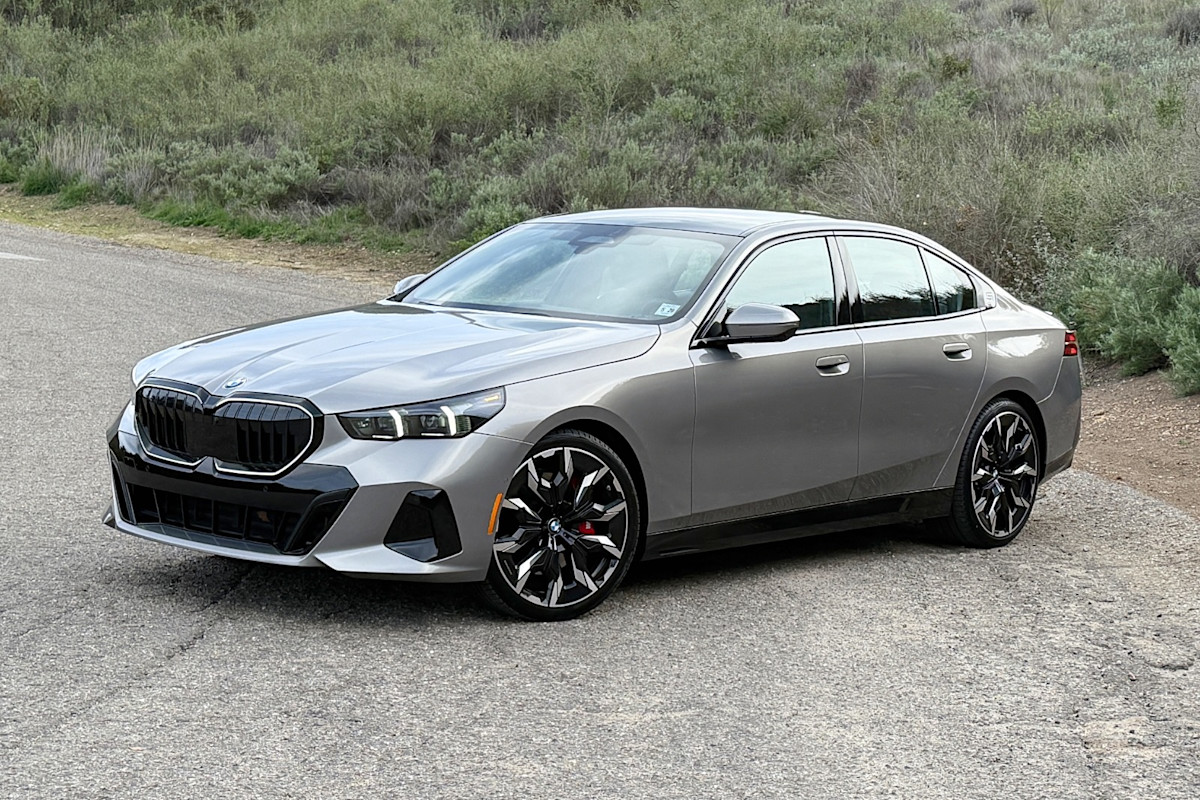
CarGurus expert rating: 8.0 out of 10
CarGurus user rating: 4.6 out of 5
Percentage of good/great deals available on CarGurus: 37.3%
Overall CarGurus rating: 4.4 out of 5
| Pros |
Cons |
| Fun to drive |
Potentially polarizing design |
| Comfortable |
Occasional digital voice assistant quirks |
| Impressive technology |
Not much cargo space |
Stepping up in size and prestige, the BMW 5 Series carries a well-earned reputation for long-haul dependability without asking buyers to give up premium features. Canadian models get xDrive all-wheel drive as standard equipment, which is a considerable advantage when winter arrives. The 530i's turbocharged 2.0-litre four-cylinder engine works with a mild-hybrid system to produce a combined 255 hp and 295 lb-ft of torque, and it manages 7.9 L/100 km combined—efficient numbers for a full-size luxury sedan, meaning fewer detours to the fuel pump.
Step inside and you're greeted by a cabin engineered to look and feel great years down the road. Available Merino leather, meticulous stitching, and BMW's Curved Display—which houses a 14.9-inch touchscreen and cloud-based navigation—give the interior a genuinely modern character. The trunk holds a claimed 521 litres, and while the load floor isn't the deepest, it swallows suitcases and grocery hauls easily. Add in a comprehensive suite of advanced driver assistance systems, quiet cabin isolation, and BMW's typically vault-like build quality, and the 5 Series proves itself a trustworthy long-term partner on Canadian roads.
The CarGurus Verdict: 'Putting BMW's love-it-or-hate-it design aside, the 2026 5 Series is a sensational automobile offering the right blend of luxury, technology, and performance. Quiet, comfortable, and infused with quality, it's a great place to spend time no matter the road ahead.' - Christian Wardlaw, CarGurus contributor
[Read our full 2026 BMW 5 Series review](https://www.cargurus.ca/research/2026-BMW-5 Series-c33911)
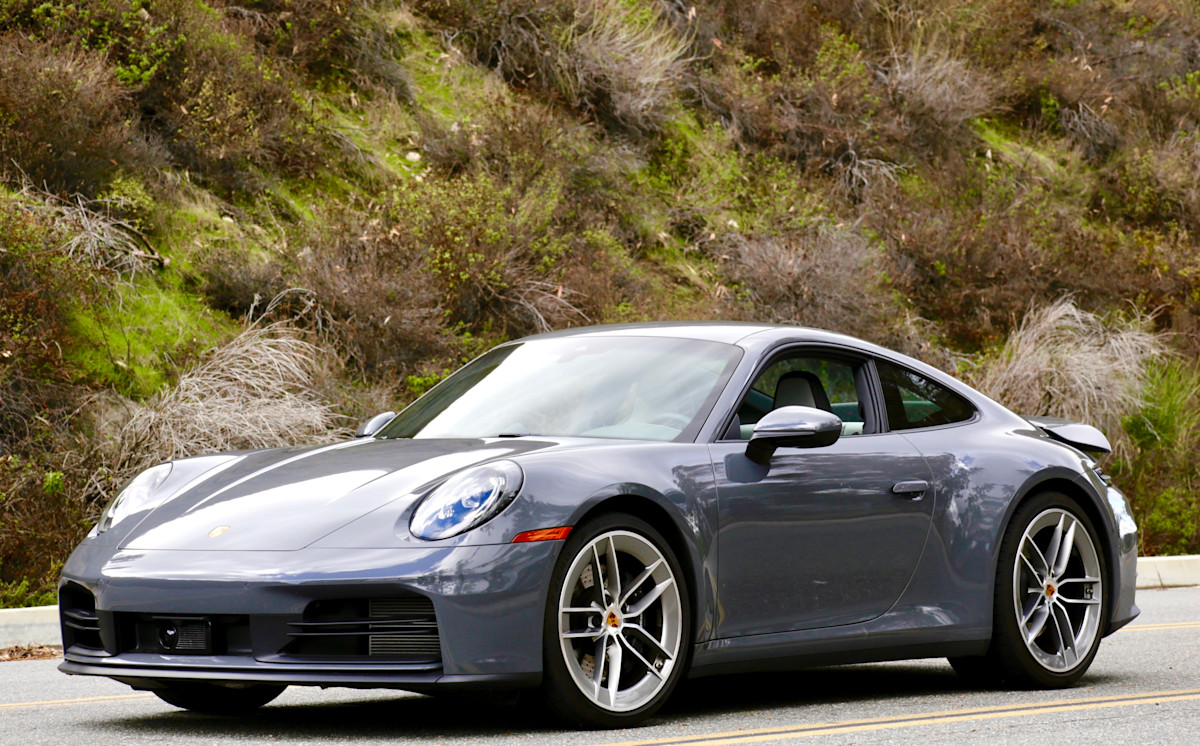
CarGurus expert rating: 8.8 out of 10
CarGurus user rating: 4.7 out of 5
Percentage of good/great deals available on CarGurus: 29.5%
Overall CarGurus rating: 4.4 out of 5
| Pros |
Cons |
| Excellent overall performance |
Wind buffeting on the highway |
| Comfortable, simplistic interior |
Slightly confusing tech |
| Solid daily livability |
No more manual transmission for the base model |
Yes, a Porsche can absolutely earn its place on a reliability list—and the Porsche 911 has been quietly making that case for decades. The updated 992.2-generation Carrera uses a 3.0-litre twin-turbo flat-six that produces 389 hp and 332 lb-ft of torque, feeding a lightning-quick eight-speed dual-clutch automatic. Beyond the numbers, though, it's the meticulous German build quality and everyday drivability that make this iconic rear-engine coupe such a dependable performance machine, whether you're commuting downtown or carving up cottage-country back roads.
The Carrera's cabin balances driver focus with genuine daily usability. Materials are top-shelf, the ergonomic layout is refreshingly uncluttered, and a new fully digital 12.6-inch instrument cluster puts the important information right where you need it. Even the front trunk offers a useful 4.6 cubic feet of space—enough for a weekend bag or a run to the store. Combined with a suite of modern driver assistance features and Porsche's legendary engineering standards, the 911 continues to prove that supercar-adjacent thrills and long-term dependability can share the same garage.
The CarGurus Verdict: 'Between its thrilling performance, excellent ride, great usability, and handsome looks, it's hard to fault the latest-generation Porsche 911 Carrera.' - Peter Nelson, CarGurus contributor
Read our full 2025 Porsche 911 review

CarGurus expert rating: 6.8 out of 10
CarGurus user rating: 4.5 out of 5
Percentage of good/great deals available on CarGurus: 28.7%
Overall CarGurus rating: 4.4 out of 5
| Pros |
Cons |
| Choice of body styles |
All-wheel drive not available |
| Enjoyable to drive |
Noisy at speed |
| Premium interior materials |
Outdated technology |
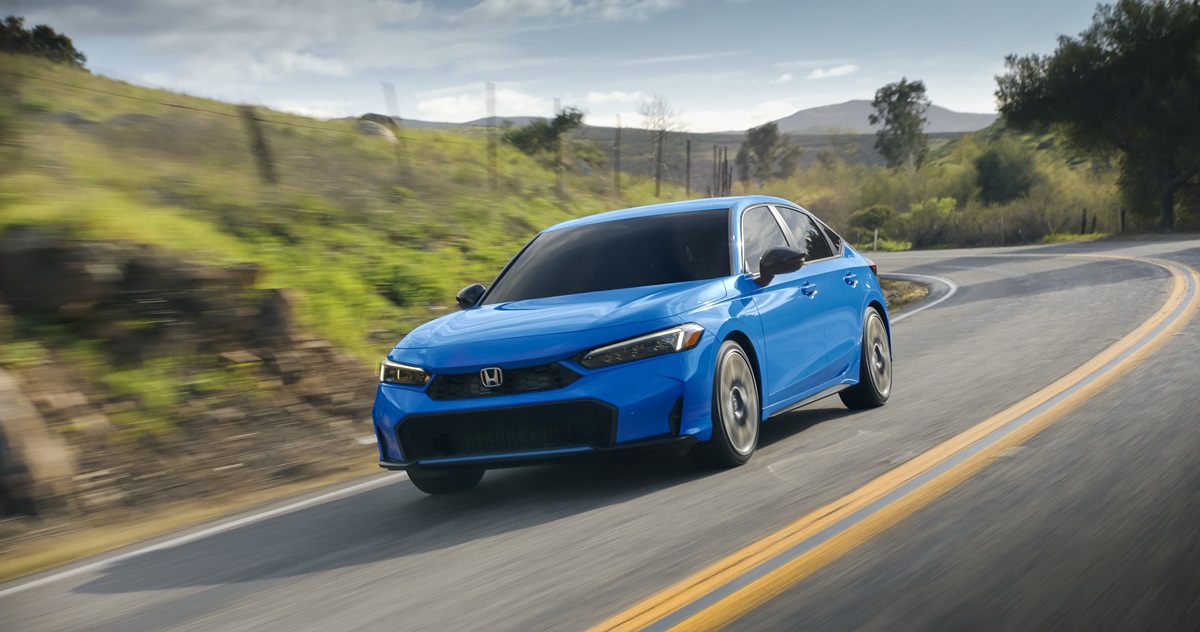
Assembled right here in Alliston, Ontario, the Honda Civic remains a cornerstone of Canadian motoring and a benchmark for compact-car dependability. Whether you prefer the sedan or the hatchback, you get a spacious interior, quality materials—including a neat metal honeycomb mesh trim—and a genuinely thoughtful ergonomic layout designed to hold up to years of daily driving. The trunk offers 419 litres of usable space, and the whole package delivers the kind of low-drama, low-cost ownership experience Civic buyers have come to expect.
Base LX and Sport trims use a 2.0-litre four-cylinder engine that produces 150 hp and 133 lb-ft of torque, mated to a smooth continuously variable transmission that's earned a well-deserved reputation for durability. Combined fuel economy comes in at 6.9 L/100 km, and shoppers who want even better efficiency can step up to Honda's excellent hybrid powertrain. On the road, precise steering and a nicely tuned suspension make the Civic more engaging than its practical mission would suggest. In short, this is a car you buy, drive for years, and hardly ever think about—which is exactly the point.
The CarGurus Verdict: 'This is the kind of new car that you buy, drive for a long time, spend very little to keep running, and it just works for years and years.' - Christian Wardlaw, CarGurus contributor
Read our full 2026 Honda Civic review

CarGurus expert rating: 7.0 out of 10
CarGurus user rating: 4.3 out of 5
Percentage of good/great deals available on CarGurus: 30.5%
Overall CarGurus rating: 4.4 out of 5
| Pros |
Cons |
| Comfortable |
Poor fuel economy |
| Impressive technology |
Noisy |
| Standard advanced safety features |
Stereo is lacking |
Any conversation about dependable transportation eventually circles back to the Toyota Corolla, and for good reason. Built on a proven platform with a global track record for longevity, it's engineered to shrug off harsh winters and demanding daily commutes without complaint. The standard 2.0-litre four-cylinder engine produces 169 hp and pairs with a clever continuously variable transmission that includes a physical launch gear to smooth out and quicken acceleration from a stop. That mechanical straightforwardness is a big reason Corolla long-term ownership costs remain so low.
Practicality is baked in as well. The sedan's 371-litre trunk swallows groceries, luggage, or a well-stocked winter emergency kit with room to spare, and the cabin comes equipped with modern must-haves like an available 10.5-inch touchscreen and the Toyota Safety Sense 3.0 driver assistance suite (which includes adaptive cruise control and lane centring as standard). Combine that with strong fuel efficiency and the Corolla's ironclad reputation, and you have a compact sedan that continues to be one of the safest, smartest investments in the Canadian market.
The CarGurus Verdict: 'The Toyota Corolla rightfully has a reputation for being boring. However, the current 12th-generation model is also more stylish, technologically advanced, and rewarding to drive than previous Corollas.' - Christian Wardlaw, CarGurus contributor
Read our full 2025 Toyota Corolla review
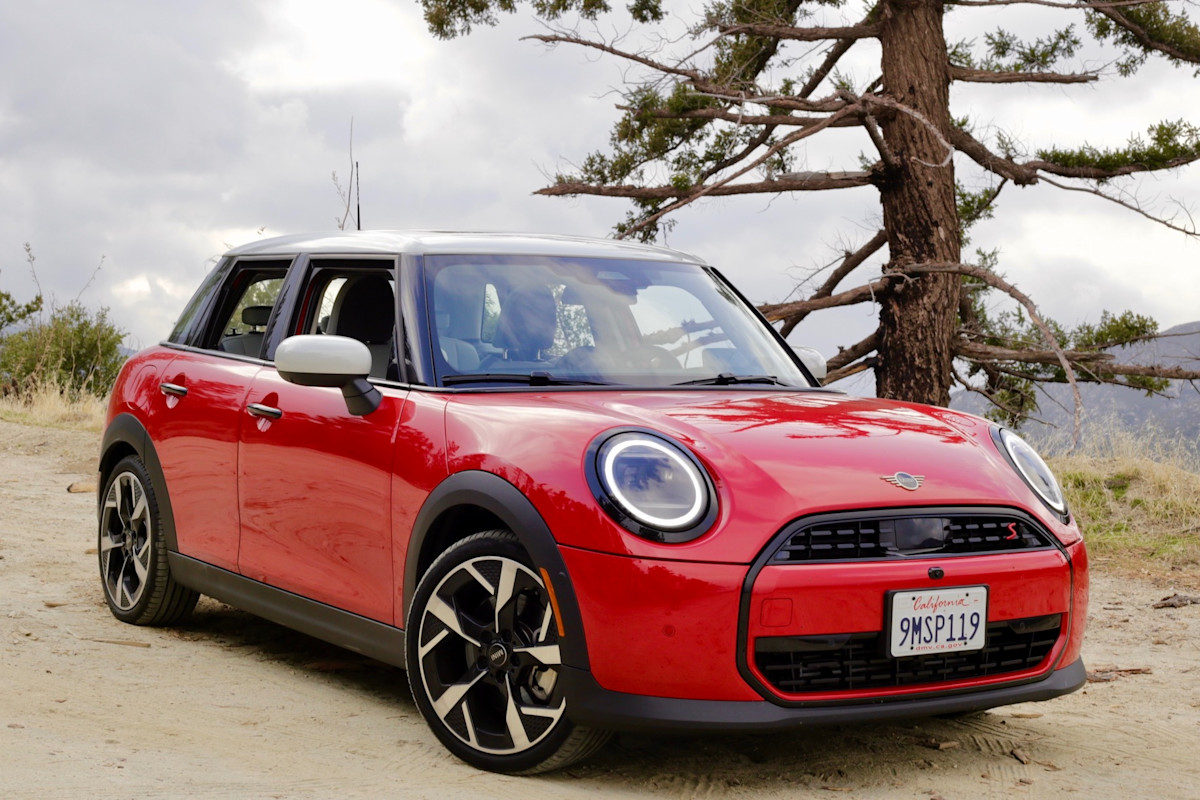
CarGurus expert rating: 7.0 out of 10
CarGurus user rating: 4.6 out of 5
Percentage of good/great deals available on CarGurus: 29.4%
Overall CarGurus rating: 4.3 out of 5
| Pros |
Cons |
| Vivacious power output in S model |
Terrible infotainment |
| Sporty dynamics |
No ability to independently shift gears without ponying up |
| Spacious interior for its size |
High base price |
Freshly redesigned, the Mini Cooper retains all the personality that made it a hit in the first place, while adding a healthy dose of modern refinement Canadian owners will appreciate over the long haul. Despite the subcompact footprint, its boxy silhouette is surprisingly practical—there's 252 litres of cargo space behind the rear seats, and folding the 60/40 split-folding seatbacks unlocks a genuinely useful 948 litres. That makes it just as capable of tackling downtown parallel parking as it is a weekend trip out of the city.
The Cooper S variant packs a turbocharged 2.0-litre four-cylinder engine good for 201 hp and 221 lb-ft of torque, and it channels that punchy output through a seven-speed dual-clutch automatic to the front wheels. Power delivery is linear and eager, making highway merges effortless while still returning combined fuel economy of between 7.3 and 7.9 L/100 km. In other words, the Mini nails the balance between playful and pragmatic—a rare combination in the small-car segment.
The CarGurus Verdict: 'Although substantially larger than the original BMW Mini that reached North American shores in 2002, and no longer offering a manual transmission as standard, the new Mini Cooper continues to be a stylish and fun-to-drive way of getting around.' - Peter Nelson, CarGurus contributor
Read our full 2025 Mini Cooper review

CarGurus expert rating: 7.8 out of 10
CarGurus user rating: 4.4 out of 5
Percentage of good/great deals available on CarGurus: 38.7%
Overall CarGurus rating: 4.2 out of 5
| Pros |
Cons |
| Stylish design |
Cramped back seat |
| Great handling |
Outdated technology |
| Manual transmission available |
|
For driving enthusiasts who don't want to gamble on long-term dependability, the Toyota GR86 offers a rare combination of affordable sports-car thrills and Toyota's rock-solid engineering. Co-developed with Subaru, this rear-drive coupe is powered by a 2.4-litre boxer-four engine that produces 228 hp and 184 lb-ft of torque. You can pick between an engaging six-speed manual or a quick-shifting automatic, and either choice comes attached to a nimble chassis that includes a standard limited-slip differential. It's just as happy tackling a favourite back road as it is handling the daily grind.
The interior stays true to the GR86's driving-first mission, with a straightforward, driver-focused cockpit, supportive seats, and controls built to last. The rear seats are technically there, but they're best treated as bonus storage—the surprisingly practical 178-litre trunk, meanwhile, easily fits a carry-on and a backpack for weekend trips. Fuel economy is commendable too, at 9.7 L/100 km combined with the automatic. All told, the GR86 delivers the kind of genuine driving joy that's usually associated with much more expensive—and much less dependable—metal.
The CarGurus Verdict: 'The 2025 Toyota GR86 is a nimble little sports car, perfect for those who want cheap thrills, good looks, and a manual transmission option.' - Emme Hall, CarGurus contributor
Read our full 2025 Toyota GR86 review

CarGurus expert rating: 6.7 out of 10
CarGurus user rating: 4.7 out of 5
Percentage of good/great deals available on CarGurus: 21.5%
Overall CarGurus rating: 4.2 out of 5
| Pros |
Cons |
| Stylish design |
Real-world fuel economy falls short of EPA ratings |
| Easy-to-use technology |
Cramped back seat |
| Great safety ratings |
Not much cargo space |
The Toyota Prius continues its long-running reign as a fuel-economy champion, but a striking new design has made it easier than ever to recommend to Canadian shoppers focused on efficiency and dependability. Built on Toyota's proven TNGA platform, the fifth-generation hybrid combines a 2.0-litre four-cylinder engine with electric motors for a combined 196 hp, and standard all-wheel drive gives Canadian owners the winter confidence they need. Inside, you'll find either an 8-inch or available 12.3-inch touchscreen and a genuinely modern feel—though the swoopy roofline does mean taller passengers may find rear headroom tight.
Safety and long-term dependability are big parts of the Prius story, too. Standard Toyota Safety Sense 3.0 helps it earn top marks from both the IIHS and NHTSA, and cargo capacity of 575 litres behind the rear seats (expandable via a 60/40-split folding rear bench) covers most everyday needs. During our testing, real-world efficiency landed at 6.0 L/100 km—a bit shy of the 4.8 L/100 km NRCan combined estimate, but still impressive for a stylish, well-equipped hybrid sedan built to run for the long haul.
The CarGurus Verdict: 'The point of the 2025 Toyota Prius is fuel economy, but our test car averaged 6.0 litres per 100 kilometres, falling significantly short of the Natural Resources Canada estimate of 4.8 L/100 km in combined driving.' - Christian Wardlaw, CarGurus contributor
Read our full 2025 Toyota Prius review
CarGurus expert rating: 6.2 out of 10
CarGurus user rating: 5.0 out of 5
Percentage of good/great deals available on CarGurus: 27.4%
Overall CarGurus rating: 4.2 out of 5
| Pros |
Cons |
| Stylish design |
Inconsistent power delivery |
| Fuel-efficient |
Sluggish performance |
| Great warranty |
Interior materials feel cheap |
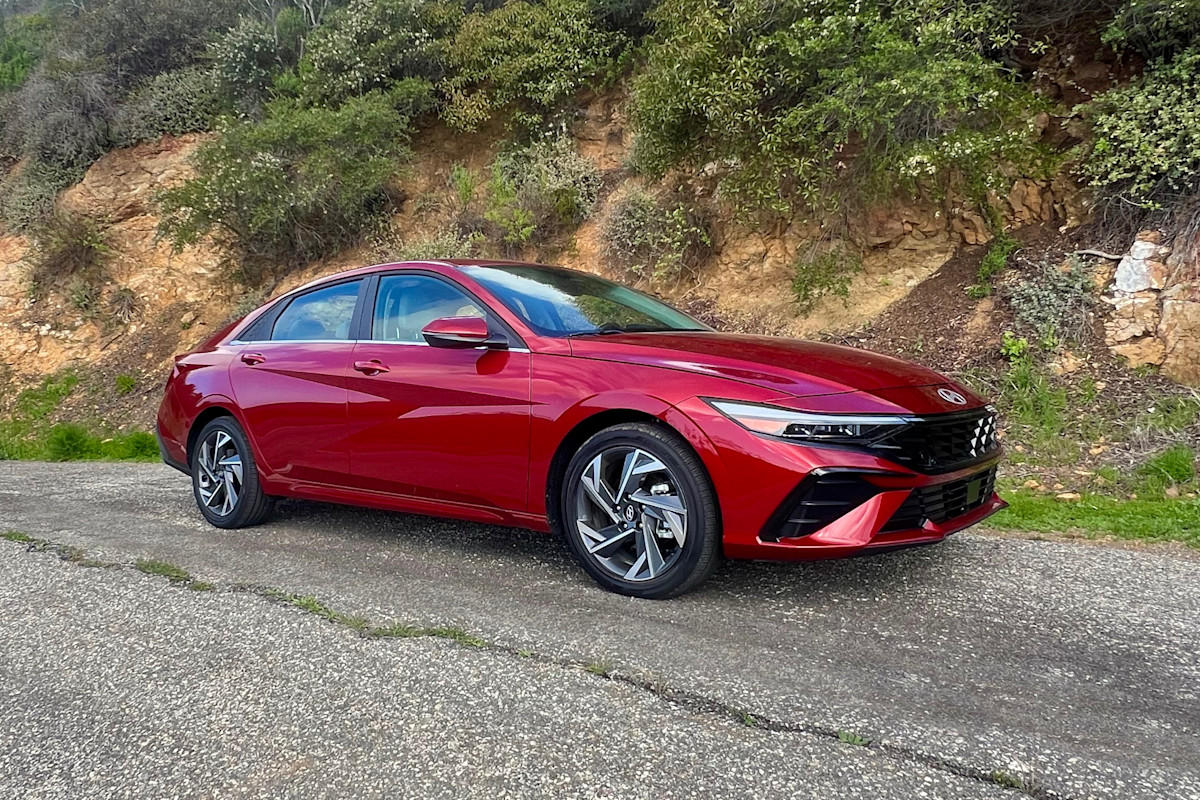
Rounding out the list is the Hyundai Elantra Hybrid, a budget-friendly compact sedan that leans hard into efficiency and long-term peace of mind. A 1.6-litre four-cylinder engine works with an electric motor to produce a combined 139 hp, delivered to the front wheels via a six-speed dual-clutch automatic. It won't set your hair on fire, but it will return an estimated 4.7 L/100 km combined—and Hyundai backs the whole package with one of the best warranties in the business: five years or 100,000 kilometres comprehensive coverage, plus eight years or 160,000 kilometres on hybrid components. That's real reassurance for Canadian drivers logging serious kilometres each year.
Inside, the Elantra Hybrid keeps things sensible and driver-friendly, retaining physical knobs and buttons for the climate controls—a genuine perk when you're wearing winter gloves. Heated front seats come standard (as they should), and the 402-litre trunk with a 60/40 split-folding rear seat means it's ready for larger loads too. Safety is well covered by a comprehensive standard suite that includes forward collision warning, blind-spot monitoring, and Hyundai's Highway Driving Assist, and the sedan pulls top marks from both the NHTSA and IIHS. It's an accessible, dependable option for anyone shopping the efficient end of the sedan market.
The CarGurus Verdict: 'The Elantra Hybrid is a great value, but its unrefined hybrid powertrain and cheap-feeling interior have it following, rather than leading, the class.' - Mark Takahashi, CarGurus contributor
Read our full 2025 Hyundai Elantra Hybrid review
Search for Hyundai Elantra Hybrid
See all
FAQ
What makes a car reliable in Canadian conditions?
Reliability in Canada often comes down to a combination of proven engineering, durable materials, and features that can handle extreme cold and salt-laden roads. Vehicles with well-tested powertrains, standard or available all-wheel drive, heated seats, and comprehensive warranty coverage typically stand up best to our climate. Brand track record and owner satisfaction data—like the CarGurus user ratings referenced in this guide—are also strong indicators.
Are hybrid vehicles as reliable as gas-only cars?
In many cases, yes—and sometimes even more so. Modern hybrid systems from brands like Toyota and Hyundai have been on the road for decades and have proven exceptionally dependable. Regenerative braking reduces wear on brake components, and hybrid battery packs are typically covered by lengthy warranties (eight years or more), which provides added long-term peace of mind.
Do I need all-wheel drive for a reliable Canadian winter?
All-wheel drive helps with traction in snow and slush, but it isn't strictly required for winter driving. A front-wheel-drive vehicle equipped with a proper set of winter tires will outperform an all-wheel-drive vehicle on all-season tires in most winter scenarios. That said, several picks on this list—including the Toyota Camry, Toyota Prius, and the BMW sedans—offer AWD as standard or optional equipment for extra confidence.
How important is warranty coverage when shopping for a reliable car?
Warranty coverage matters, especially if you plan to keep the car past the typical three-year mark. Hyundai and Kia offer some of the longest standard warranties in the industry, while Toyota, Honda, and BMW back their vehicles with reputations built on decades of consistent quality. Look at both the bumper-to-bumper and powertrain terms, plus any hybrid or battery coverage if applicable.
Are luxury cars like the BMW 3 Series, 5 Series, and Porsche 911 really reliable?
While luxury vehicles typically cost more to maintain than mainstream models, the ones on this list have earned strong reliability ratings from expert reviewers and owners alike. Regular maintenance at a qualified dealer or independent specialist, along with careful attention to service intervals, is key to keeping any luxury vehicle running dependably for the long term.
What is the CarGurus overall rating and how is it calculated?
The CarGurus overall rating combines three components: our expert reviewer's hands-on evaluation, aggregated user ratings from real owners who live with the vehicle every day, and marketplace data measuring the percentage of good and great deals available on CarGurus. This three-part approach helps identify vehicles that are not only excellent to own but also represent solid value at the point of purchase.
What Makes CarGurus Best Cars Guides Different?
Most car-buying websites publish lists of the best cars across a variety of categories, with recommendations driven primarily by editorial expertise. Here's what makes our best cars guides different: we combine the insights and verdicts of our team of car-testing experts with other factors that we know matter to buyers — real owner experiences and current market value.
Our expert reviewers come from some of North America and Canada's most trusted automotive publications, bringing hands-on experience testing vehicles. They put each car through its paces and create detailed reviews covering everything from form and function to performance and cost effectiveness.
But we don't stop there. We also analyze hundreds of thousands of used car listings on CarGurus.ca to track which models consistently offer the highest percentage of great deals relative to how many are listed for sale. Then we factor in user reviews and ratings gathered on CarGurus to hear from people who actually live with these cars every day. Our best cars algorithm combines expert ratings, user reviews, and the percentage of listings rated as good or great deals into a final Overall CarGurus Rating — a three-way approach that reveals not just which cars excel on paper, but which ones deliver real satisfaction and value when you're ready to buy.
*The CarGurus market data in this guide was last updated in July 2026. Values were accurate at time of publication and should be used as a guide only.*
Related Topics: