Few cars have generated so much enthusiasm in so little time as the Subaru WRX. It may have come from the mainstream bones of the Subaru Impreza, but with its turbocharged four-cylinder Boxer engine and all-wheel-drive powertrain, it didn’t take long for the sport compact car to earn its reputation as a high-performance, rally-bred machine.
Subaru WRX Buying Guide: Cost, Reliability, and the Best Years to Buy
Search for Subaru WRX
See all


Since its start for the 2002 model year, the WRX lineup has variously been offered as a four-door sedan, five-door hatchback, and five-door station wagon. It has been available in both standard WRX and more potent Subaru WRX STI forms and with various trim levels ranging from bare bones to near luxury. In any case, the Subaru WRX has consistently delivered a driving experience that caters to enthusiasts who yearn for a practical sports car.
The latest version of the Subaru WRX debuted for the 2022 model year. In Canada, the 2026 edition is offered in WRX Sport, WRX Sport-tech, WRX GT, WRX tS, and WRX Kaminari Edition trim levels. Pricing starts at $41,232 (all prices include a mandatory $2,095 delivery charge) with a six-speed manual transmission. Only the GT trim is available with the automatic Subaru Performance Transmission with paddle shifters, priced at $49,632. All WRX models include Subaru’s Symmetrical All-Wheel Drive as standard.
Subaru WRX Buying Guide: Cost, Reliability, and the Best Years to Buy
- Frequently Asked Questions
- Subaru WRX Pros and Cons
- Subaru WRX Generations
- Subaru WRX Fifth Generation (2022-Present)
- Subaru WRX Fourth Generation (2015-2021)
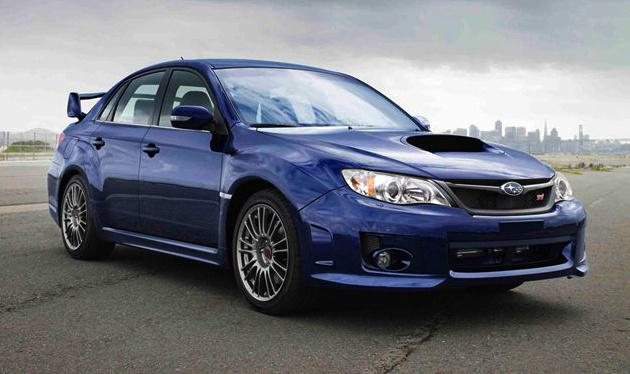
- Subaru WRX Third Generation (2008-2014)
- Subaru WRX Second Generation (2002-2007)
- Subaru WRX First Generation (1992-2002)
Frequently Asked Questions
Which Subaru WRX years are the best?
Early Subaru WRX models — the bugeye, blobeye, and hawkeye editions from 2002 through 2007 — have fewer complaints on tracking sites like CarComplaints.com than more recent models. However, because the WRX was originally an upgrade package that kept the Impreza name, it can be difficult to tell exactly which model an owner had problems with. That said, the number of well-cared-for Impreza WRX models from the second and third generation is dwindling.
You may face a limited number of choices if you’re shopping for a specific body style. Subaru offered a WRX wagon in the second generation (the first WRX offered in North America) along with the standard sedan. For the third generation, the WRX was available in both sedan and hatchback body styles. Fourth- and fifth-generation WRX models were only offered in sedan form.
What are the worst Subaru WRX years?
Subaru WRX models from 2008, 2012, and 2015 have the highest number of complaints from owners. Besides those model years, there are some common trouble areas buyers should be aware of. Because of the WRX’s AWD drivetrain, hard launches can have highly detrimental effects on the transmission and axles. That means any used WRX you’re considering, and especially older models, should be checked by a mechanic if you have any questions about how the car was treated.
Is a used Subaru WRX a good deal?
The car most directly comparable to early Subaru WRX and WRX STI models is the Mitsubishi Lancer Evolution (sold in the United States from 2003 through 2015 and in Canada from 2007 to 2015). The WRX is a better deal and easier to find on the used market than the Evolution, which is bordering on collectible. More recently, high-performance versions of the Honda Civic (most notably the Civic Type R), Toyota GR Corolla, and Volkswagen Golf R are legitimate compact car competitors. And again, the WRX is a comparatively good deal versus those cars on the used market.
The Hyundai Elantra N that went on sale for the 2022 model year is a strong WRX competitor. It’s similarly priced and worth considering if you don’t need the Subaru’s all-wheel drive.
Subaru WRX Pros and Cons
Pros:
- Fun to drive
- Great handling
- Standard all-wheel drive
Cons:
- Outdated technology
- Cramped back seat in older models
- Poor fuel economy
Subaru WRX Generations
Subaru WRX Fifth Generation (2022-Present)
The latest and greatest Subaru WRX debuted for the 2022 model year, available as a sedan only and based on the same Subaru Global Platform as the Impreza. As has always been the case, the new WRX came standard with a turbocharged Subaru Boxer engine and standard Symmetrical All-Wheel Drive. For 2022, that four-cylinder engine was a 2.4-litre unit producing 271 horsepower (at 5,600 rpm) and 258 lb-ft of torque (from 2,000 to 5,200 rpm, a broader torque curve than the outgoing engine).
Active torque vectoring was also standard equipment for 2022, and transmission options included a standard six-speed manual or a new Subaru Performance Transmission with adaptive shift control for rev-matching downshifts under braking. There was no longer a Subaru WRX STI available.
While driving enthusiasts appreciate that Subaru still offers a six-speed manual transmission in the WRX, the continuously variable transmission (CVT) features paddle shifters on the steering wheel and can shift through eight pre-selected ratios. The WRX GT model, which isn’t offered with the six-speed manual transmission, features adaptive dampers with comfort, normal, and sport settings. Adaptive electronic dampers are equipped on the tS and Kaminari Edition trims. Most of Subaru’s EyeSight driver assist suite, which includes a lane departure prevention function, advanced adaptive cruise control with lane centring, automatic emergency steering, and reverse automatic braking, is equipped on all trims, though reverse automatic braking and a vehicle hold function on the adaptive cruise control are exclusive to the CVT.
Subaru WRX models with the six-speed manual transmission received Natural Resources Canada estimated fuel economy ratings of 12.4 litres per 100 kilometres in the city, 9.0 on the highway, and 10.9 combined. WRX models with the CVT are rated at 12.7 L/100 km city, 9.4 highway, and 11.2 combined.
The 2022 Subaru WRX came in base, Sport, and Sport-tech trims. In Base trim, standard equipment included 17-inch alloy wheels, LED headlights, keyless entry and keyless ignition, a leather-wrapped steering wheel, automatic climate control, heated front seats and side mirrors, and a pair of seven-inch touchscreens to handle infotainment duties. Apple CarPlay and Android Auto were included, as was six-speaker audio system.
The WRX Sport gained 18-inch wheels, LED fog lights, a sunroof, dual-zone climate control, and an 11.6-inch touchscreen in place of the two small screens of the base model, running Subaru’s STARLINK multimedia system. It also gained Subaru’s EyeSight driver assistance suite as well as blind spot monitoring, rear cross-traffic alert, and lane change assist.
The Subaru WRX Sport-tech came standard with adaptive headlights, faux leather seats with microsuede inserts, on-board navigation, and heated rear seats.
At the top of the WRX lineup was the WRX GT, which launched in Canada for 2024 with adaptive dampers and an 11-speaker Harman Kardon audio system (which eventually became standard across most of the line-up).
A new WRX tS trim level was added for the 2025 model year, bringing with it a Brembo braking system, 19-inch alloy wheels, Recaro sport seats, and retuned suspension settings for increased performance. As with the WRX GT, the WRX tS had adaptive dampers, but it didn’t have a moonroof. A new WRX Kaminari Edition was announced for 2026 based on the WRX tS. Only 150 Kaminari Edition models will be sold in Canada, each painted Sunrise Yellow outside and featuring matching contrast stitching inside.
The earliest model years of the Subaru WRX’s fifth generation are starting to look good on the Canadian used vehicle market. A number of cars with less than 100,000 kilometres on the odometer are available for between $25,000 and $30,000, though it’s worth noting these are heavily concentrated in Ontario and Quebec.
Subaru WRX Fourth Generation (2015-2021)
The Subaru WRX was redesigned for the 2015 model year, again based on the Impreza (the latest version of which had debuted a few years prior). The new platform brought more interior space, better fuel efficiency, and a stiffer chassis. Unlike previous versions, the new model wasn’t called Impreza WRX, carrying only the WRX designation.
The fourth-generation WRX came standard with a 2.0-litre turbocharged Subaru Boxer engine. With specs that included 268 hp at 5,600 rpm and 258 lb-ft from 2,000 to 5,200 rpm, performance was improved over previous WRX models. A six-speed manual transmission replaced the previous five-speed manual, and a CVT was available for those who wanted an automatic. Subaru’s Symmetrical All-Wheel Drive remained standard and newly featured AWD torque vectoring to improve handling. The Subaru WRX STI returned for this generation, powered by a 2.5-litre four-cylinder Boxer engine that made 305 horsepower. The STI-tuned model got a Brembo braking system, stiffer suspension, sharper steering, and an adjustable centre differential.
In Canada, the 2015 Subaru WRX was offered in base, WRX Sport, and WRX Sport-tech trim levels as well as the WRX STI. The base and Sport trim levels got cloth upholstery, while the Limited gained a leather interior and STI models got grippy leather and suede seats. All WRX models received cruise control, but advanced tech such as adaptive cruise control wasn’t available.
For the 2016 model year, all WRX models received an upgraded touchscreen that could integrate with a smartphone. A Hikari Edition model — based on the WRX STI and painted a retina-searing shade of blue with an Alcantara interior and blue stitching — was also introduced for 2016.
For the 2018 model year, the Subaru WRX got a slight exterior refresh, updated suspension tuning, and available Recaro front seats. A Raiu Edition was added for 2019, while the WRX STI got a bump from 305 hp to 310 hp. A WRX STI Kanrai Edition was added for 2020.
Prices for the fourth-generation Subaru WRX on the Canadian used vehicle market range from $10,000 for early-model high-kilometre units to $35,000 for newer, lower-kilometre, and customized vehicles. The WRX STI commands a premium with some used examples commanding prices above $40,000.

Subaru WRX Third Generation (2008-2014)
The Subaru Impreza WRX was completely redesigned for the 2008 model year, gaining more room inside, a new dual-wishbone rear suspension setup, and a completely new exterior design. The Subaru WRX STI was initially solely offered in hatchback form, though the regular-grade WRX remained available as a sedan.
The Subaru WRX offered 224 hp and 226 lb-ft of torque from its Boxer engine, while the WRX STI managed to coax 305 hp and 290 lb-ft out of its upgraded engine. A five-speed manual transmission or a four-speed automatic transmission were offered with the WRX, but the STI got a six-speed manual. As always, AWD was standard.
For 2009, the Subaru WRX was offered only with a manual transmission in Canada. A WRX265 model launched with the same turbocharger as STI models to gain a 41-hp boost for a total output of 265 hp and 244 lb-ft. The WRX STI kept its ratings of 305 hp and 290 lb-ft.
The WRX265’s powertrain became the default for the 2010 model year, and the Subaru WRX Limited trim level came with a six-CD stereo, sunroof, fog lights, and leather upholstery. A sedan version of the WRX STI was brought back for 2011, and although the regular Impreza got a major redesign for 2012, the WRX and WRX STI stuck with the old chassis. Apart from a Tsurugi Edition in 2014, not much changed in the latter years of this generation.
Third-generation Subaru WRXs are becoming scarce in Canada. Prices on the used vehicle market range from $8,000 for high-kilometre units to $20,000 or more for WRX STIs in good condition.

Subaru WRX Second Generation (2002-2007)
An all-new Subaru Impreza showed up in 2002, and with it the WRX arrived in North America. With a 2.0-litre Boxer engine producing 227 hp and standard AWD, the 2002 Subaru WRX introduced our continent to a new rally-inspired class of sport compact cars. With its large round headlights, the first WRX sold here was nicknamed the Bugeye. Both five-speed manual and four-speed automatic transmission options were available.
The 2004 Subaru WRX received fresh front-end styling that replaced the Bugeye headlights. The Subaru WRX STI also launched in North America for the 2004 model year with an upgraded 2.5-litre Boxer engine producing 300 horsepower. A six-speed manual transmission was the only offering in the WRX STI.
The Subaru WRX received more power in 2006 courtesy of a displacement bump from 2.0 litres to 2.5 litres. Horsepower became an even 230 in the WRX, while the WRX STI stayed the same as before.
Second-generation Subaru WRXs are hard to come by on the Canadian used vehicle market. We found exactly one unit in our research, a 2003 Subaru Impreza WRX with 44,500 kilometres on the odometer listed for $12,000.

Subaru WRX First Generation (1992-2002)
When the Subaru Impreza was launched for the 1992 model year, the Japanese automaker included a rally-inspired WRX trim level that stood for “World Rally eXperimental.” The first WRX’s turbocharged engine spun out 237 horsepower and featured standard AWD. Subaru Tecnica International, the automaker’s racing division, was called on to create a WRX STI edition with even greater performance. The first-generation Subaru WRX was built from 1992 through 2002 and was never officially imported to or sold in North America. With some research, you may find some that have been imported into Canada under classic car allowances from the Japanese Domestic Market (JDM).
Related Topics


by Jeremy Korzeniewski
Jeremy Korzeniewski grew up as the son of an automotive engineer in a family obsessed with cars and trucks and turned that passion into a career in 2006 when he accepted a position with Autoblog. Over the next 18 years, Jeremy published more than 8,000 articles while serving as a Senior Editor and has contributed to respected brands that include Yahoo, Edmunds, Robb Report and AutoGuide. Jeremy is also an avid motorcyclist and spends the majority of his evenings at home with his wife hoping to cook up a delicious meal for dinner.
The content above is for informational purposes only and should be independently verified. Please see our Terms of Use for more details.

