Canadian drivers know that conquering this country's vast landscape—whether that means navigating a snow-choked secondary highway in February, towing a boat to a remote lake, or tackling a rocky logging road on the way to a backcountry campsite—demands a vehicle that's genuinely built for the job. A true 4x4 SUV combines low-range gearing, robust four-wheel-drive systems, and serious ground clearance with the everyday practicality of a family hauler. From rugged off-road specialists to luxury flagships, the options available to Canadian shoppers in 2026 are more diverse than ever.
We've gathered the best 4x4 SUVs currently on sale, drawing on hands-on evaluations from our expert review team, feedback from real owners, and CarGurus market data that reveals which models offer the strongest value. Whether buyers prioritize off-road prowess, towing muscle, or interior refinement, there's a vehicle on this list that should fit the bill.
About this guide
The cars in this guide have been selected to represent the best options currently available. Our recommendations are the result of a unique three-part scoring system that takes into account real-world tests from our team of expert reviewers, ratings from real-life owners who live with these cars every day, and an analysis of market data from CarGurus to identify which models offer the highest percentage of good and great deals. This combined approach ensures our list highlights cars that are not only great to own but also good value to buy. For more information, scroll to the bottom of this page.
The Best 4x4 SUVs to Buy in Canada in 2026
CarGurus expert rating: 7.5 out of 10
CarGurus user rating: 4.5 out of 5
Percentage of good/great deals available on CarGurus: 31.3%
Overall CarGurus rating: 4.5 out of 5
| Pros |
Cons |
| Stylish design |
Middling fuel economy |
| Small but mighty Hurricane 4 Turbo engine |
Poor value for money |
| It's a towing and off-road champ |
|
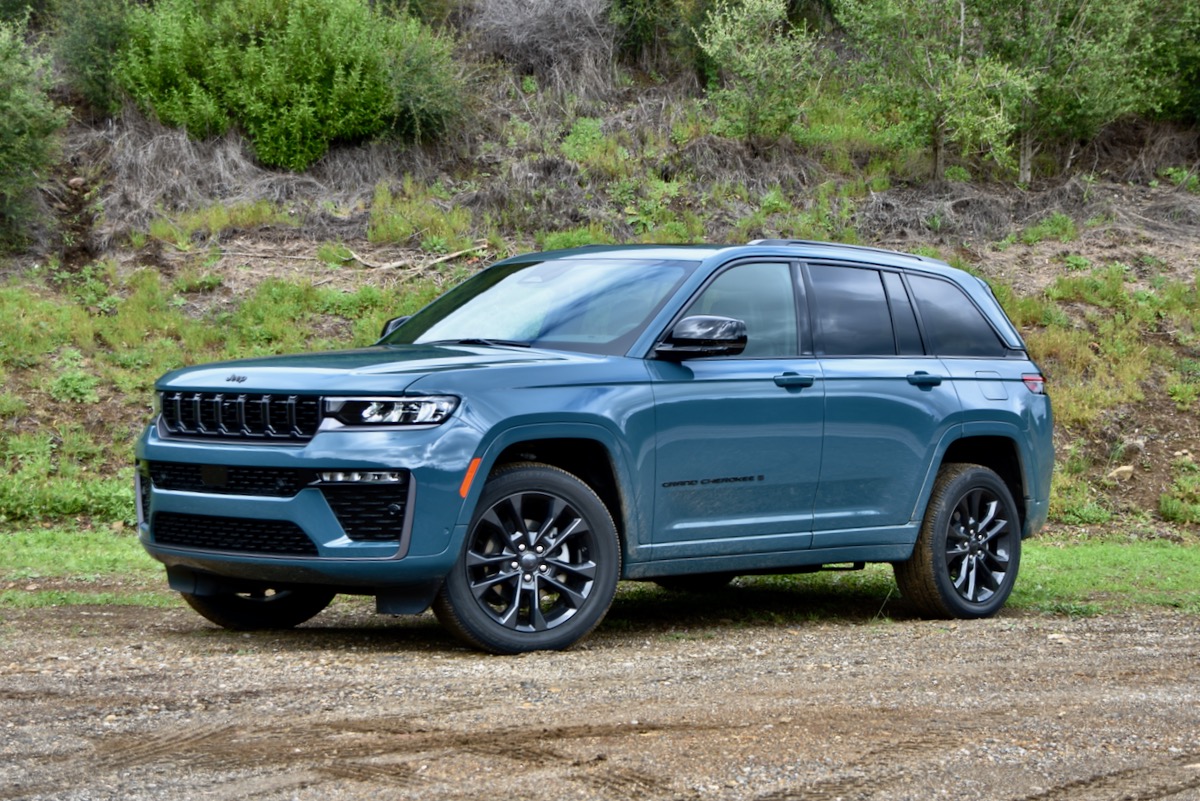
A perennial favourite among Canadian shoppers, the Jeep Grand Cherokee leads the pack of midsize 4x4 SUVs thanks to a balanced mix of trail capability, on-road refinement, and a long list of available trims. The headline for the latest model year is a new Hurricane 4 Turbo engine, a turbocharged inline-four that produces 324 horsepower and 332 pound-feet of torque—meaningful gains over the outgoing Pentastar V6. Paired with an eight-speed automatic and standard four-wheel drive, the Grand Cherokee can tow up to 2,810 kilograms, making light work of small trailers and powersports cargo.
The cabin pairs rugged practicality with genuinely premium touches, and the Uconnect 5 infotainment system—available with a 12.3-inch touchscreen—remains one of the most accessible in the segment. Two-row models offer 1,067 litres of cargo space behind the second row, opening up to 2,004 litres with the rear seats folded. Where the Grand Cherokee really sets itself apart, though, is when the pavement ends. Available Quadra-Trac four-wheel-drive systems and a Selec-Terrain drive-mode selector give it credible chops in snow, sand, and mud — exactly what you want in a Canadian winter.
The CarGurus Verdict: "The turbo-four engine is impressive, but it can't account for the lack of a hybrid powertrain—or the price tag for the best version of this grand dame of SUVs." - Stephen Edelstein, CarGurus contributor
Read our full Jeep Grand Cherokee review
Search for Jeep Grand Cherokee
See all

CarGurus expert rating: 7.7 out of 10
CarGurus user rating: 4.5 out of 5
Percentage of good/great deals available on CarGurus: 29.7%
Overall CarGurus rating: 4.4 out of 5
| Pros |
Cons |
| Stylish design |
Poor fuel economy |
| Fun to drive |
Advanced safety features are not standard |
| Impressive off-road capability |
Poor value for money |
The Ford Bronco was reborn for adventure, and it shows. Every Bronco rolls out of the factory with four-wheel drive and a two-speed transfer case, while higher trims such as the Badlands and the Raptor add a more sophisticated 4WD system with an Automatic mode that's a real asset on unpredictable Canadian roads. A fully independent front suspension also means the Bronco doesn't beat up drivers on the daily commute.
A 2.3-litre turbocharged four-cylinder making 300 horsepower is the standard motivator, with an available 2.7-litre EcoBoost V6 stepping things up to 330 horsepower for buyers who want more pulling power. Four-door models—easily the family-friendly choice—offer 1,084 litres of cargo room behind the rear seats with the soft top, expanding to 2,350 litres when folded. Combine that with Ford's standard G.O.A.T. (Goes Over Any Type of Terrain) modes, removable doors and roof panels, and retro styling, and it adds up to a 4x4 with serious personality.
The CarGurus Verdict: "Consider carefully how you plan to use your car day-in and day-out before deciding to buy a new Bronco. While the Bronco is an extremely fun beast that's a blast to play with on-road and off, it requires some serious compromises to use as a daily driver, and it's hardly a bargain." - Jeremy Korzeniewski, CarGurus contributor
Read our full Ford Bronco review

CarGurus expert rating: 6.2 out of 10
CarGurus user rating: 4.6 out of 5
Percentage of good/great deals available on CarGurus: 28.0%
Overall CarGurus rating: 4.3 out of 5
| Pros |
Cons |
| Stylish design |
Limited rear-seat space |
| Excellent off-road abilities |
|
| Relatively fuel efficient |
|
The sixth-generation Toyota 4Runner has a thoroughly modern approach but preserves the tough reputation that built such a loyal Canadian following. Gone is the old V6, replaced by a lineup of more efficient turbocharged four-cylinder powertrains. The pick of the litter is the Hybrid i-Force Max, which pairs a 2.4-litre turbo four with an electric motor for a robust 326 horsepower and 465 pound-feet of torque. That kind of low-end grunt is invaluable when crawling over rocks or pulling out of a snowy driveway, and also pays dividends in highway refinement.
The cabin leans into a purposeful, adventure-ready aesthetic with chunky controls drivers can operate while wearing gloves and a wealth of off-road tech displays. The longer wheelbase frees up generous front-seat space, although back-seat occupants and gear share what's left. Standard models swallow 48.4 cubic feet of cargo behind the second row, while the Hybrid gives up a bit of that to its battery, dropping to 42.6 cubic feet. Standard part-time four-wheel drive, substantial ground clearance, and Toyota's terrain management programs round out a package that's ready for whatever Canadian backcountry throws at it.
The CarGurus Verdict: "Toyota doesn't throw out the formula with its newly redesigned 4Runner. Instead, it keeps many of the features shoppers have loved for over a decade, while also adding a more contemporary selection of four-cylinder powertrains." - Mark Takahashi, CarGurus contributor
Read our full Toyota 4Runner review
CarGurus expert rating: 7.8 out of 10
CarGurus user rating: 4.7 out of 5
Percentage of good/great deals available on CarGurus: 24.5%
Overall CarGurus rating: 4.3 out of 5
| Pros |
Cons |
| Distinctive design |
Not much cargo space |
| Powerful engines |
Uncomfortable seats |
| Impressive off-road capability |
Poor value for money |
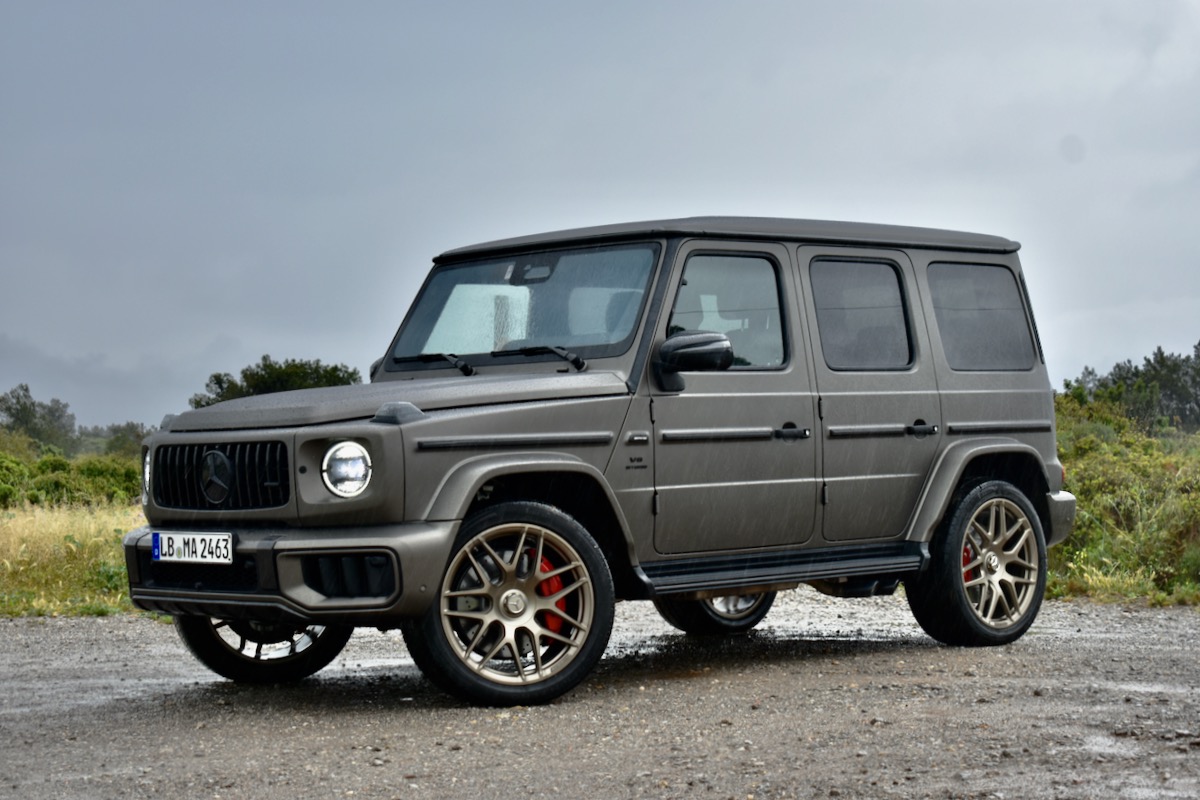
There's nothing else on the road quite like the Mercedes-Benz G-Class. Its unmistakable boxy silhouette wraps around a permanent four-wheel-drive system with three locking differentials—front, centre, and rear—that gives it the kind of off-road credibility very few luxury SUVs can match. The cabin, meanwhile, is pure Mercedes: dual 12.3-inch screens, top-shelf materials, and a commanding view of the world from a driver's seat that sits high above everything else. Cargo room is modest at 640 litres behind the rear seats—a function of that iconic boxy geometry—but the G-Class can still tow up to 3,500 kilograms.
The base G 550 introduces a new turbocharged 3.0-litre inline-six pushing out 443 horsepower and 413 pound-feet of torque, backed by a mild-hybrid system for extra low-speed punch. Step up to the AMG G 63 and you get the unmistakable bellow of a twin-turbo 4.0-litre V8 producing a staggering 577 horsepower and 627 pound-feet of torque. The AMG also gets a new Active Ride Control suspension that counteracts body roll, which makes hustling such a tall, heavy SUV across rough terrain a far less dramatic experience than drivers would expect.
The CarGurus Verdict: "The new G-Wagen is rougher around the edges than other luxury SUVs, but it still delivers when it comes to off-road capability and creature comforts." - Stephen Edelstein, CarGurus contributor
Read our full Mercedes-Benz G-Class review
Search for Mercedes-Benz G-Class
See all
CarGurus expert rating: 7.7 out of 10
CarGurus user rating: 4.6 out of 5
Percentage of good/great deals available on CarGurus: 14.6%
Overall CarGurus rating: 4.2 out of 5
| Pros |
Cons |
| Stylish design |
Poor fuel economy |
| Impressive off-roading capability |
Poor handling |
| Easy-to-use technology |
Uncomfortable back seat |
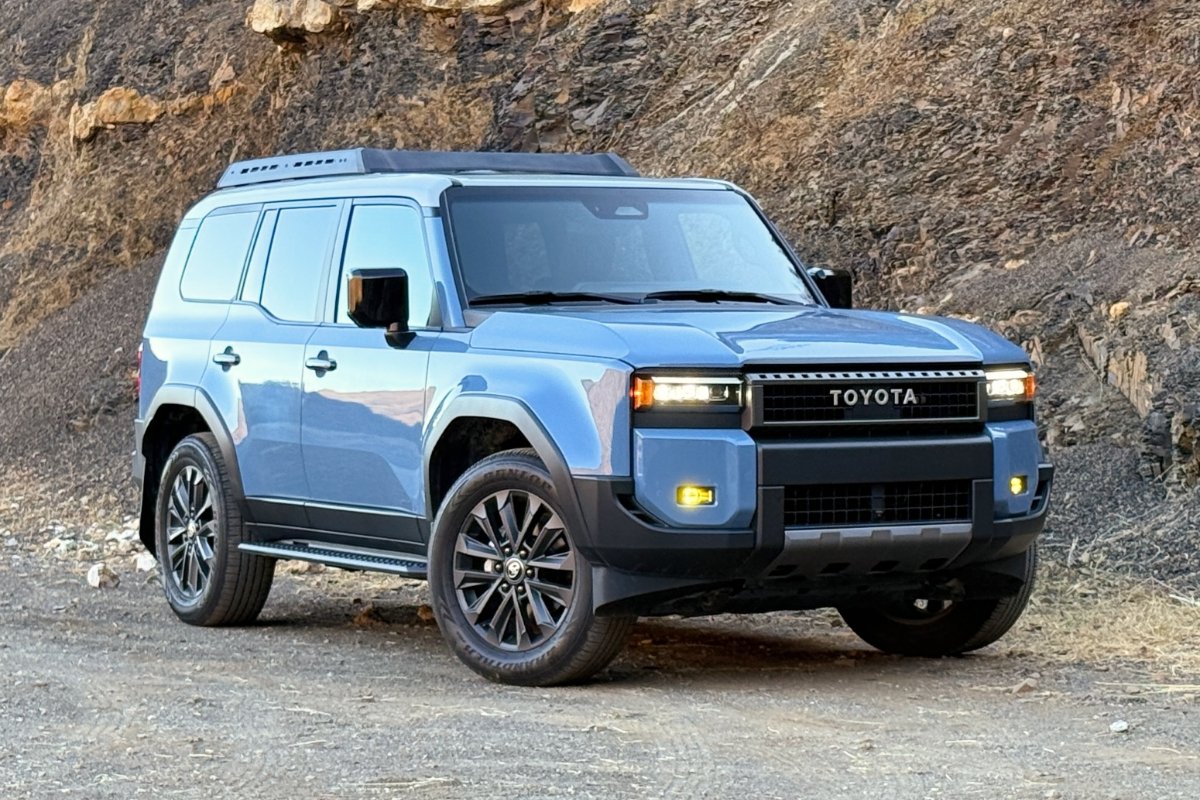
After a notable absence, the Toyota Land Cruiser is back in Canadian showrooms, this time reimagined as a midsize, two-row 4x4 that's all about getting away from civilization. The upright, no-nonsense two-box silhouette helps to maximize approach and departure angles, while also providing the kind of outward visibility that makes navigating tight trails much less stressful. Inside, the cabin trades flash for function, but still feels modern, with a generous 1,062 litres of cargo space behind the rear seats that swells to 2,324 litres with the 60/40-split seats folded.
Every Land Cruiser gets Toyota's i-Force Max hybrid system, combining a 2.4-litre turbo four-cylinder with an electric motor for a healthy 326 horsepower and 465 pound-feet of torque. Power flows through a full-time four-wheel-drive system with electronic locking rear and centre differentials, while ground clearance of up to 21.5 centimetres and tech such as Crawl Control and Multi-Terrain Select ensure things stay capable when the going gets nasty. The catch? Real-world fuel economy doesn't quite live up to the hybrid promise on paper.
The CarGurus Verdict: "There is a lot to like about the Land Cruiser, especially if you don't care about fuel economy. In exchange for feeding this beast, you'll get an impressive daily driver and weekend adventurer." - Christian Wardlaw, CarGurus contributor
Read our full Toyota Land Cruiser review
Search for Toyota Land Cruiser
See all
CarGurus expert rating: 6.8 out of 10
CarGurus user rating: 4.5 out of 5
Percentage of good/great deals available on CarGurus: 31.2%
Overall CarGurus rating: 4.2 out of 5
| Pros |
Cons |
| Brilliant diesel engine |
Tight cargo space with all rows in place |
| Huge touchscreen upgrade |
Thirsty V8 engines |
| High towing capacity |
|
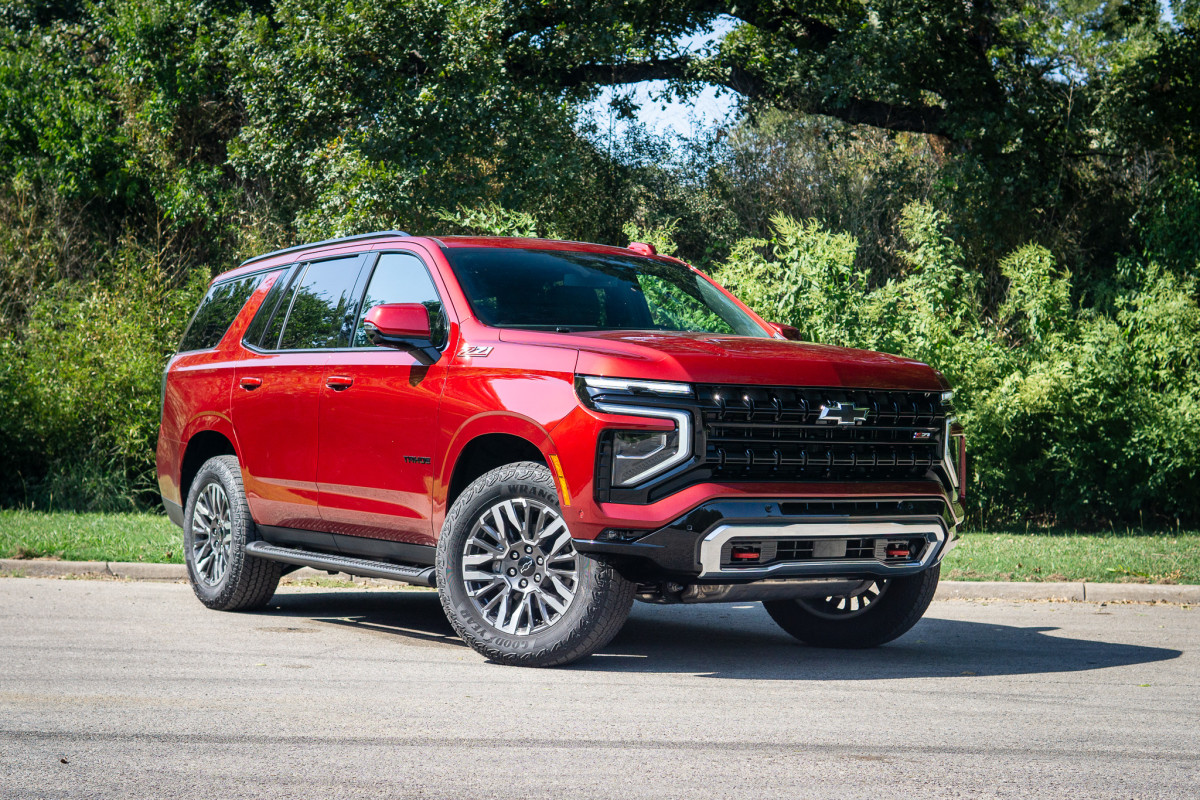
For buyers who need a full-size 4x4 SUV with serious passenger space and plenty of muscle, the Chevrolet Tahoe is hard to overlook. Four-wheel drive is standard on nearly every trim, so the Tahoe is well-suited to brutal Canadian winters and the occasional foray onto a logging road. Engine options include a couple of capable gasoline V8s, but the headliner is the upgraded 3.0-litre inline-six turbodiesel, which produces a smooth 305 horsepower and a meaty 495 pound-feet of torque, while also returning impressive highway fuel economy as low as 9.7 L/100 km.
Inside, the Tahoe takes a noticeable step up, headlined by a 17.7-inch touchscreen and seating for up to nine. Maximum cargo space stretches to 3,474 litres with the rear seats folded flat, although the 722 litres available behind a raised third row is on the snug side relative to its overall footprint. Towing is another high point: a V8-equipped 4WD Tahoe can pull up to 3,720 kilograms (8,200 pounds), and the diesel isn't far behind at 3,629 kilograms (8,000 pounds). For families who routinely tow or who simply need to move a lot of people and gear, that combination is tough to beat.
The CarGurus Verdict: "Although the Tahoe receives only mild mechanical updates, its interior takes a healthy step forward. An upgraded diesel engine also helps separate the Tahoe from the field, offering impressive fuel economy and excellent performance." - Matt Smith, CarGurus Head of Content
Read our full Chevrolet Tahoe review
CarGurus expert rating: 6.8 out of 10
CarGurus user rating: 4.6 out of 5
Percentage of good/great deals available on CarGurus: 25.7%
Overall CarGurus rating: 4.2 out of 5
| Pros |
Cons |
| Powerful engines |
Thirsty engines |
| Impressive technology |
Tech requires additional subscription |
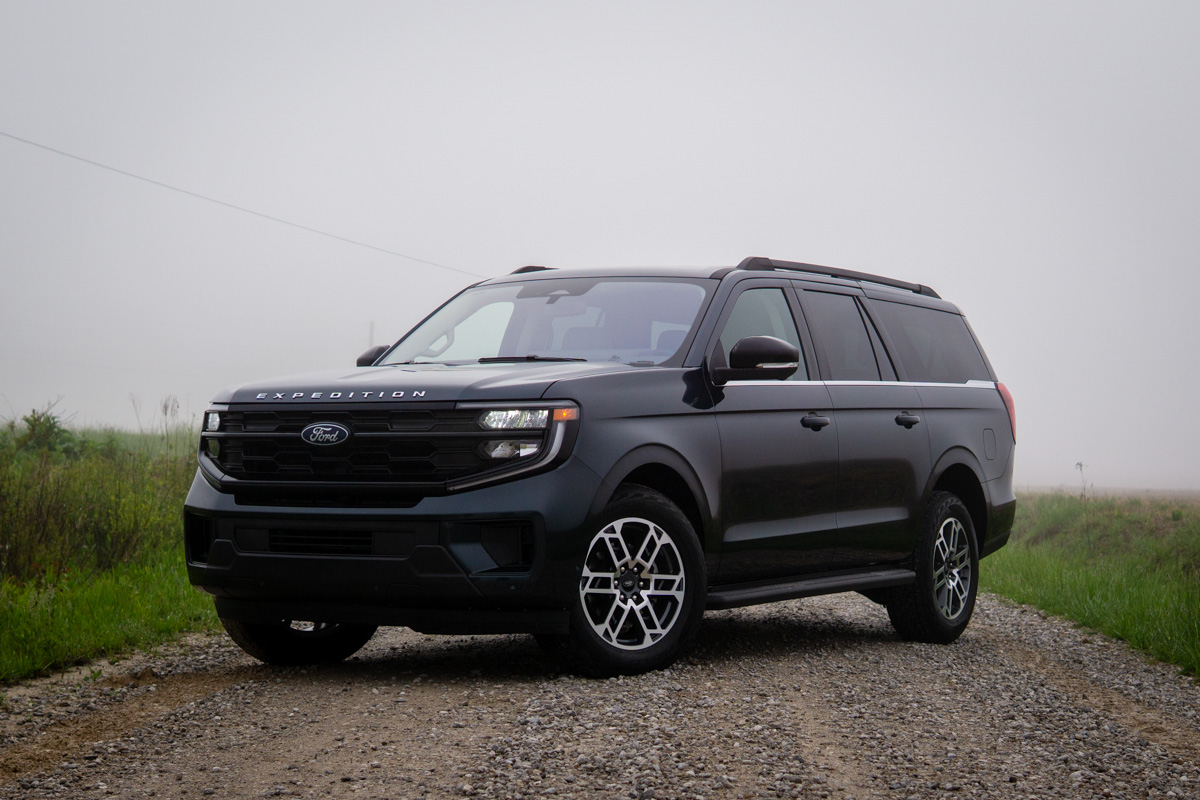
For Canadian buyers who genuinely need maximum interior volume, the Ford Expedition is one of the only games in town. Every Expedition sold in Canada gets four-wheel drive, an integrated trailer brake controller, and a two-speed automatic transfer case as standard equipment—useful gear for severe winters and weekend towing duty. The standard-wheelbase model already serves up 611 litres behind the third row and a whopping 3,072 litres maximum, but for buyers who want even more, the Expedition MAX cranks cargo capacity up to 3,485 litres.
Every variant uses a twin-turbocharged 3.5-litre V6 that lays down 400 horsepower and 480 pound-feet of torque in standard tune. Off-road enthusiasts will be drawn to the new Tremor trim, which dials up power to 440 horsepower and 510 pound-feet of torque while bolting on 33-inch all-terrain tires, skid plates, and an electronic locking rear differential. Combined fuel economy of 13.3 L/100 km isn't exactly thrifty, but it's the price of admission for an SUV that can tow up to 4,350 kilograms.
The CarGurus Verdict: "The Tremor is undeniably cool, and for such a large vehicle, the Expedition is surprisingly easy to drive in everyday circumstances. With a starting price just over $82,000 before fees in Canada, there's no disputing that Ford's selling an expensive vehicle, but it offers a ton of standard equipment." - Matt Smith, CarGurus Head of Content
Read our full Ford Expedition review
CarGurus expert rating: 7.5 out of 10
CarGurus user rating: 4.6 out of 5
Percentage of good/great deals available on CarGurus: 25.5%
Overall CarGurus rating: 4.2 out of 5
| Pros |
Cons |
| Stylish design |
Poor ride quality |
| Powerful engine |
Cramped back seats |
| Impressive technology |
Too few physical controls |
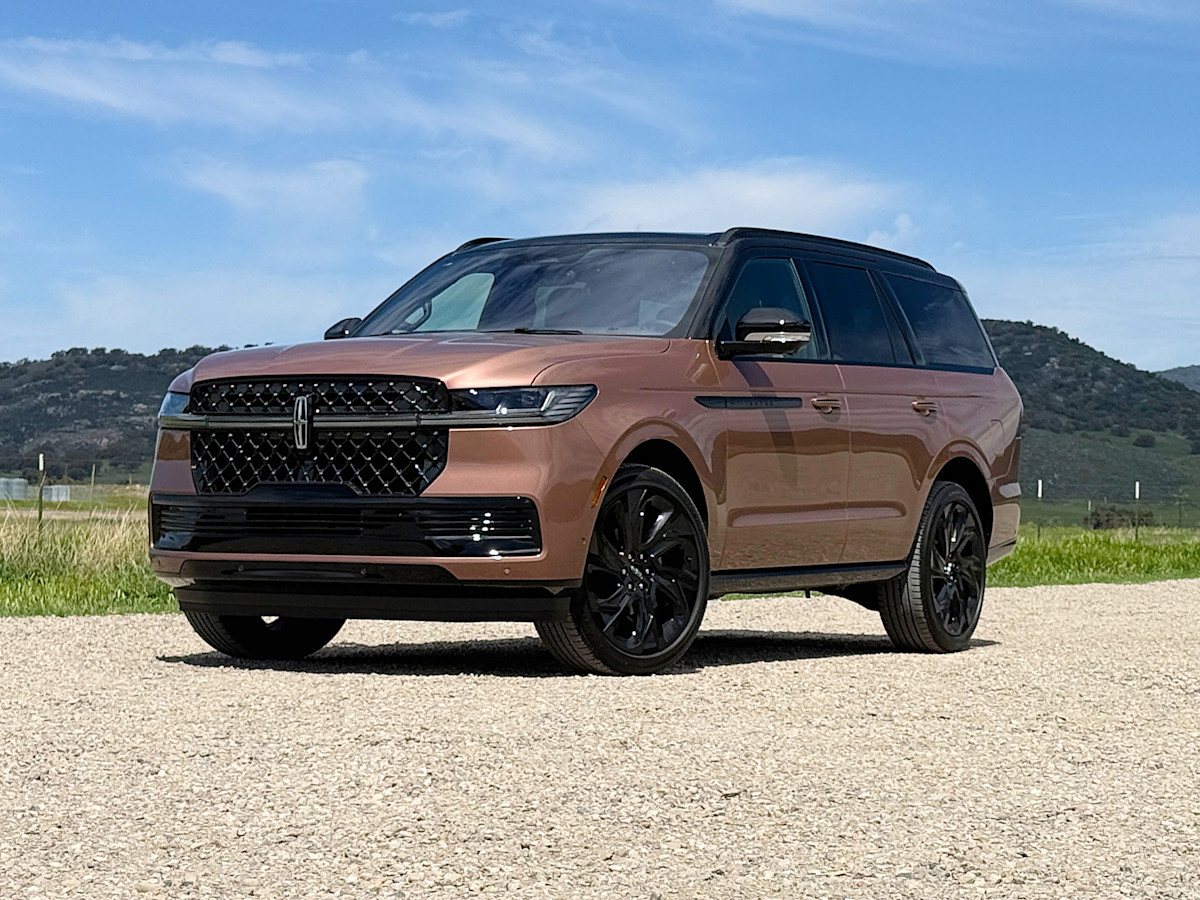
A fully redesigned Lincoln Navigator brings a more contemporary luxury angle to the full-size 4x4 SUV class. It rides on the same body-on-frame architecture as the Ford Expedition, but the execution is anything but ordinary: 22.6 centimetres of ground clearance, standard four-wheel drive, and a twin-turbo 3.5-litre V6 making 440 horsepower and 510 pound-feet of torque. A 10-speed automatic handles shifts smoothly, and tow ratings stretch to 3,950 kilograms (8,700 pounds)—enough for sizeable boats or travel trailers headed to the cottage.
Inside, the Navigator commits to a clean, modern aesthetic anchored by a sweeping 48-inch panoramic display and high-grade materials. A clever 40/20/40-split third row improves flexibility for families juggling passengers and long items such as skis. Standard-length models offer 611 litres behind the third row and up to 3,030 litres with both rear rows down, while the Navigator L pushes maximum cargo room to 3,443 litres—accessed through a new Split Gate tailgate that splits horizontally for added versatility.
The CarGurus Verdict: "At its heart, the Lincoln Navigator is a truck-based, full-size luxury SUV that shares plenty with the more affordable Ford Expedition. In exchange for the premium you'll pay, the Navigator has exclusive design, materials, and features, and the luxurious Black Label trim is almost decadent inside." - Christian Wardlaw, CarGurus contributor
Read our full Lincoln Navigator review
Search for Lincoln Navigator
See all

CarGurus expert rating: 5.3 out of 10
CarGurus user rating: 4.6 out of 5
Percentage of good/great deals available on CarGurus: 28.0%
Overall CarGurus rating: 4.1 out of 5
| Pros |
Cons |
| Multiple body styles |
Poor fuel economy |
| Multiple powertrain options |
Poor handling (on pavement) |
| Fun to drive |
Poor visibility (to the rear) |
Few 4x4 SUVs offer the breadth of versatility the Land Rover Defender does. Available in 90, 110, and 130 body styles, it caters to everyone from solo adventurers to families needing genuine three-row seating. Standard all-wheel drive, a low-range setting, and an adaptive air suspension that lifts the body up to 29 centimetres off the ground give the Defender bona fide off-road chops, while a turbocharged 3.0-litre six-cylinder mild-hybrid powertrain delivers 395 horsepower and 406 pound-feet of torque. Towing capacity tops out at 3,720 kilograms, putting it firmly in the company of more truck-like alternatives.
The cabin pairs the Defender's industrial-meets-luxury design language with thoughtful storage and modern tech that's easy to live with day to day. Buyers who go for the stretched Defender 130 get a usable third row and added passenger flexibility. Cargo room in the 130 starts at 433 litres behind the third row, opens up to 1,237 litres with that row folded, and stretches to a maximum 2,520 litres—plenty for ski gear, mountain bikes, or camping kit.
The CarGurus Verdict: "There is a Land Rover Defender for almost anyone, and any of them can take you farther into the wilderness than you expect. They're rugged but refined, comfortable yet capable, and plenty of fun to drive." - Christian Wardlaw, CarGurus contributor
Read our full Land Rover Defender review
Search for Land Rover Defender
See all
FAQ
What's the difference between a 4x4 SUV and an all-wheel-drive SUV?
A 4x4 (or four-wheel-drive) system is typically designed with serious off-road use in mind, often featuring a two-speed transfer case with a low-range gear set that multiplies torque for crawling over obstacles or up steep inclines. All-wheel drive, on the other hand, is generally optimized for on-road traction in slippery conditions such as rain and snow, and usually doesn't include a low range. For drivers who regularly venture off-pavement or tow heavy loads, a true 4x4 is the better choice.
Do I really need a 4x4 SUV for Canadian winters?
Not necessarily. For most urban and suburban Canadian drivers, an AWD SUV equipped with a proper set of winter tires will handle the vast majority of conditions just fine. A 4x4 with low-range gearing makes more sense for those who live rurally, frequently drive on unplowed roads, tow heavy trailers, or pursue activities such as hunting, fishing, or overlanding in remote areas.
Which 4x4 SUV offers the highest towing capacity?
Among the SUVs on this list, the Ford Expedition leads the pack with a maximum towing capacity of 4,350 kilograms. The Lincoln Navigator follows closely at 3,950 kilograms, while the Land Rover Defender and the Chevrolet Tahoe both come in at 3,720 kilograms when properly equipped.
Are 4x4 SUVs much less fuel efficient than regular SUVs?
Generally, yes. The added weight of a robust four-wheel-drive system, plus the typically larger engines and heavier-duty construction found in dedicated 4x4 SUVs take a toll on fuel economy. That said, hybrid powertrains such as Toyota's i-Force Max in the 4Runner and Land Cruiser, and diesel options such as the Chevrolet Tahoe's 3.0-litre inline-six, can significantly close the gap.
What's the most off-road-capable SUV on this list?
That's a tough call, but the Mercedes-Benz G-Class, the Land Rover Defender, the Ford Bronco, and the Toyota Land Cruiser are all exceptionally capable. The G-Class stands out for its three locking differentials, while the Defender offers up to 29 centimetres of ground clearance with its air suspension. The Bronco's removable doors and roof give it a uniquely adventurous character, and the Land Cruiser blends Toyota reliability with serious trail hardware.
Is buying a used 4x4 SUV a good idea?
It can be a great way to get more vehicle for your money, but mechanical inspection is critical. 4x4 systems have more moving parts than two-wheel-drive setups, and SUVs that have seen heavy off-road use can hide expensive issues with differentials, transfer cases, and suspension components. Always check the vehicle history and, ideally, have a qualified mechanic look it over before committing to buy.
What Makes CarGurus Best Cars Guides Different?
Most car-buying websites publish lists of the best cars across a variety of categories, with recommendations driven primarily by editorial expertise. Here's what makes our best cars guides different: we combine the insights and verdicts of our team of car-testing experts with other factors that we know matter to buyers—real owner experiences and current market value.
Our expert reviewers come from some of North America and Canada's most trusted automotive publications, bringing hands-on experience testing vehicles. They put each car through its paces and create detailed reviews covering everything from form and function to performance and cost effectiveness.
But we don't stop there. We also analyze hundreds of thousands of used car listings on CarGurus.ca to track which models consistently offer the highest percentage of great deals relative to how many are listed for sale. Then we factor in user reviews and ratings gathered on CarGurus to hear from people who actually live with these cars every day. Our best cars algorithm combines expert ratings, user reviews, and the percentage of listings rated as good or great deals into a final Overall CarGurus Rating—a three-way approach that reveals not just which cars excel on paper, but which ones deliver real satisfaction and value when you're ready to buy.
*The CarGurus market data in this guide was last updated in June 2026. Values were accurate at time of publication and should be used as a guide only.*
Related Topics: