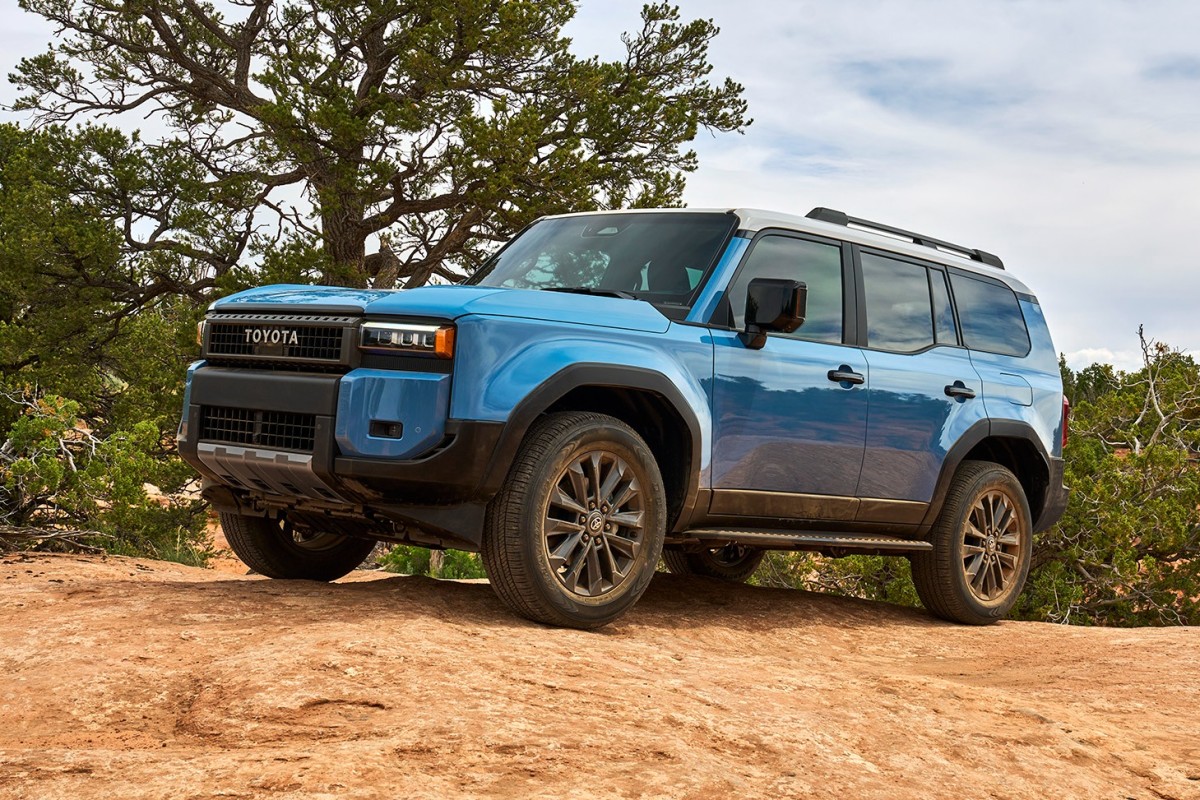
For 2024, Toyota released the latest version of the Land Cruiser and brought it back to Canada for the first time since 1996. When it landed, the eight-gen Land Cruiser represented a major departure from the version our American neighbours had come to love with half the number of cylinders and the addition of a hybrid drivetrain.
While the 2024 and newer Land Cruiser may be a significantly different vehicle that its fans had known for decades, it's still exceptionally capable off-road. Even if it's not as luxurious as before, it stands out as a premium machine that excels in on-road comfort and modern conveniences. Our buyer's guide explains all.
Toyota Land Cruiser Buying Guide: Cost, Reliability, and the Best Years to Buy
Frequently Asked Questions
Which Toyota Land Cruiser years are the best?
The Toyota Land Cruiser has a well-earned reputation for reliability that spans every model and generation. The model we're calling the eighth generation, which launched for the 2024 model year, is too new and too distinct from past Land Cruisers to recommend based on predicted reliability. However, since much of its powertrain and chassis is shared across multiple OEM product lines, we don't expect it to be particularly troublesome.
The seventh-generation Land Cruiser, sold from 2008 through 2021 in the United States and often referred to by enthusiasts as the 200 Series, is known to be extremely reliable. The same can be said for its sixth-generation predecessor or 100 Series Land Cruiser. Both of these Land Cruiser generations used tried-and-true V8 engines hooked up to transmissions known for reliability and durability.
As of this writing, Land Cruisers from model year 2011 or older qualify for import into Canada under classic car exemptions. You may find the occasional unit for sale on the Canadian used vehicle market, but it’s more likely you’ll need to undertake the import process yourself. Among domestic units, be cautious that you’ll likely be shopping both American and Japanese domestic market (JDM) units, and the latter may be fitted with right-hand drive.
What are the worst Toyota Land Cruiser years?
There aren't any Land Cruiser generations with reliability concerns, but that doesn't mean any used Land Cruiser will be completely free of common problems. The usual used vehicle rules still apply, including a pre-purchase inspection and a thorough test drive. While the fifth-generation (1991 to 1997) and the fourth-generation (1980 to 1990) Land Cruiser featured inline-six-cylinder engines also known for their reliability, they are getting older and are likely to have accrued a lot of klicks. As such, it's important to make sure any older Land Cruiser has been taken care of and regularly maintained.
As legendarily durable as the Land Cruiser may be, it is not immune to the passage of time. Old cars are more susceptible to rust, brittle plastic, and dried-out rubber components that may require replacement. Its tough nature means it's ripe for off-road themed aftermarket modifications, too, so it's always wise to look out for those and consider how hard the car has been used. What's more, the older a Land Cruiser is, the less likely it is to have the modern creature comforts today's buyers expect.
Is a used Toyota Land Cruiser a good deal?
In Canada, it’s hard to categorize any Land Cruiser as a good deal. The latest generation is too new to have any savings passed on through the used vehicle market as of yet. Older units are few and far between, and the ones you will find are likely to be collector quality with some of the import and restoration costs passed on to you as the buyer. On the other hand, the Land Cruiser has long been one of the most reliable, and therefore among the most desirable, off-roaders around. If well cared for, it should offer many years of reliability as well as excellent resale value.
If you're shopping for a Land Cruiser from 2024 or 2025, it's also worth checking out the Lexus GX that was also redesigned for the 2024 model year. The GX 550 features much of the technology and design that makes the new Land Cruiser so capable in the dirt and mud, but it features a twin-turbo V6 engine that's well suited to a rugged and luxurious SUV.
Toyota Land Cruiser Pros and Cons
Pros
- Excellent off-road ability
- Comfortable
- Highly reliable
Cons
- No third row with latest models
- Not much cargo space
- More expensive than competitors
Toyota Land Cruiser Generations
Eighth Generation (2024-Present)
The eighth and current generation of the Toyota Land Cruiser, launched for the 2024 model year, marked the nameplate’s first appearance in the Canadian market since 1996. It retained its body-on-frame design (as opposed to car-based crossover utility vehicles) but took the storied nameplate in a new direction.
In place of the previous model's big naturally aspirated 5.7-litre V8 engine was a turbocharged four-cylinder boosted by an electric motor. A relatively small 1.87-kWh battery pack juiced the 48-horsepower electric motor, while total output from the hybrid powertrain was 326 horsepower and 465 lb-ft of torque. Those are impressive figures, but in reality, the latest Land Cruisers felt merely adequately powerful on the road.
The overall experience of the eighth-generation Land Cruiser, known as the Land Cruiser 250 Series, was one of comfort. The ride was well controlled, and while the four-cylinder engine vibrated and could sometimes sound unrefined, it worked well with the eight-speed automatic transmission and full-time four-wheel-drive system to provide confident performance on any surface.
In particularly strenuous off-road situations, the two-speed transfer case could be locked into 4Lo, while electronically controlled locking rear and centre differentials were standard. A Crawl Control function acted as a low-speed, off-road cruise control and offered five selectable speeds. Downhill assist control, also standard, helps the driver navigate downhill off-road sections by limiting speed.
The 2024 Land Cruiser launched with four trims, including a First Edition model that sat atop the range. Three versions of the eighth-generation Land Cruiser were available for 2025 and 2026. The base edition was called Land Cruiser 1958. 2026 pricing started at $74,677 (including destination) and featured round headlights. It was offered in two colours, black or brown sugar metallic, with a black cloth interior.
Opting for the upmarket Land Cruiser model (the one that lacked the 1958 badge) brought a more extensive colour palette with heritage-inspired blues and browns plus leatherette seats. The $83,447 Land Cruiser had a more modern face with rectangular headlights on either side of the grille, along with superior off-road equipment such as a stabilizer disconnect mechanism that improved front-axle articulation and a Multi-Terrain Select system with modes for dirt, sand, mud, rock and deep snow.
Inside, where the 1958 had a seven-inch screen in front of the driver, the Land Cruiser featured a much nicer 12.3-inch digital gauge cluster and a Multi-Terrain Monitor with selectable front, side, or rear views of the vehicle's surroundings at low speeds. Heated and ventilated seats were also standard on the pricier version, along with a power moonroof and Qi-compatible wireless charging.
Adding the Premium package to the higher-priced Land Cruiser increased the cost by $6,217 and added features such as 20-inch alloy wheels, illuminated running boards, a 14-speaker JBL sound system, leather upholstery, a centre console cooler box, a digital rear-view mirror, digital key functionality, a head-up display, lane change assist, front cross-traffic alert, traffic jam assist, and more.
Unlike the last few versions of the Land Cruiser, the eighth-generation model did not offer a third row of seats. There was plenty of room for the front two occupants, but rear-seat legroom could be a bit tight for tall passengers. Cargo space behind the second row was 1,062 litres, and a raised rear cargo floor meant it was a hefty lift to put heavy items in the back.
The new Land Cruiser with its hybrid powertrain delivered very good fuel economy. Natural Resources Canada estimated the eighth-generation Land Cruiser to deliver 10.7 litres per 100 kilometres in the city, 9.5 on the highway, and 10.1 combined, but it did require premium unleaded fuel. This version of the Land Cruiser could tow up to 2,722 kilograms (6,000 pounds).
Toyota offered a different machine known as the Land Cruiser 300 Series in many other markets outside North America, while a version of the Land Cruiser 300 was sold in Lexus dealers here as the Lexus LX.
As of this writing, used Toyota Land Cruisers don’t present an appreciable discount for Canadian buyers versus buying new.
Seventh Generation (2008-2021)
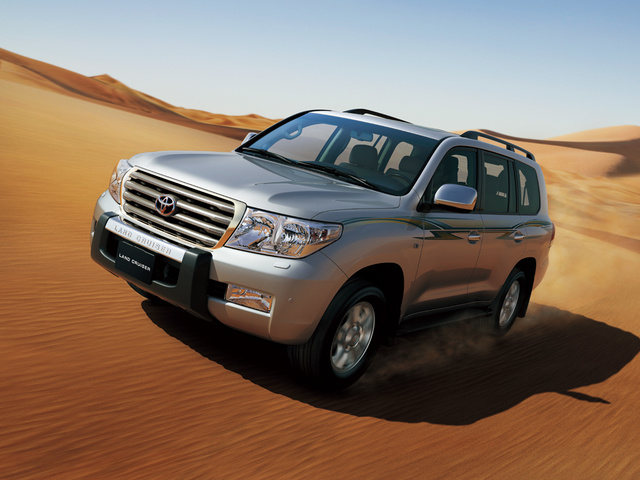
The seventh-generation Toyota Land Cruiser was not sold new in Canada. However, it was available in the United States, and any units that are 15 years old or older qualify for import into Canada under classic cars exemptions. As of this writing, this means units from 2011 and earlier can be imported into Canada.
This generation of Land Cruiser had a reputation as a bruising off-roader that oozed luxury and off-road capability. Its 5.7-litre V8 engine produced 381 hp and 401 lb-ft of torque, and it provided effortless power. It also effortlessly drank regular-unleaded fuel: a conversion from EPA ratings yields a woeful 16.8 L/100 km combined. On the plus side, its towing capacity of between 3,675 kilograms (8,100 pounds) and 3,855 kilograms (8,500 pounds) meant it was more capable of pulling larger campers or boats than the eighth-generation Land Cruiser that replaced it.
The seventh-generation Land Cruiser's rugged driveline included a full-time four-wheel drive system with a Torsen differential that could automatically send power to the axle with more traction or be locked into a 50:50 power split between the front and rear axles. Multi-Terrain Select traction assist came standard and provided settings for rock, loose rock, rock and dirt, and mud and sand. The Land Cruiser's multi-terrain monitor boasted several camera views and an inclinometer so drivers could more easily monitor the scene outside. Other desirable off-road gear that came standard included a kinetic dynamic suspension system (KDSS) sway bar disconnect, which improved front axle articulation, and a whole suite of skid plates to protect the undercarriage.
In the U.S., this generation came standard with three rows of seats. The rearmost seats could fold down above the floor but also swing up on either side to offer a taller cargo area and up to 1,172 litres of volume, though it didn't offer the cavernous cargo capacity of some full-size SUVs such as the Chevrolet Suburban or the Cadillac Escalade ESV. The sliding second row meant it was possible to put adults in the third row when necessary.
An initial refresh in 2013 added what was then the latest version of Toyota's infotainment system, and a second update in 2016 brought a dual-screen entertainment system for rear-seat passengers as well as Bluetooth connectivity, a wireless device charger, blind spot monitoring, rear cross-traffic alert, pedestrian detection, and automatic emergency braking. An eight-speed automatic transmission replaced the previous six-speed unit, and that dropped towing capacity from 3,855 kilograms (8,500 pounds) to 3,675 kilograms (8,100 pounds).
Because it was on sale for a long time, the seventh-generation Land Cruiser's technology package was severely out of date when it ended production in 2021, after which the nameplate took a two-year hiatus in the U.S. market. Apple CarPlay and Android Auto, which by then were staples of large SUVs, were nowhere to be found. A number of buttons, dials, and switches on the dashboard and the steering wheel may be a boon for buyers who don't like to use touchscreens, but those used to more modern systems may balk at the software on the relatively small nine-inch screen.
The Lexus version of the seventh-gen Land Cruiser was known as the LX 570, which was available in Canada throughout this generation’s run.
The very small handful of seventh-generation Land Cruisers we found on sale in Canada during our research were priced between $50,000 and $65,000. If you go shopping south of the border, expect to pay between USD$40,000 and USD$50,000 for a low-mileage Land Cruiser that qualifies for Canadian import.
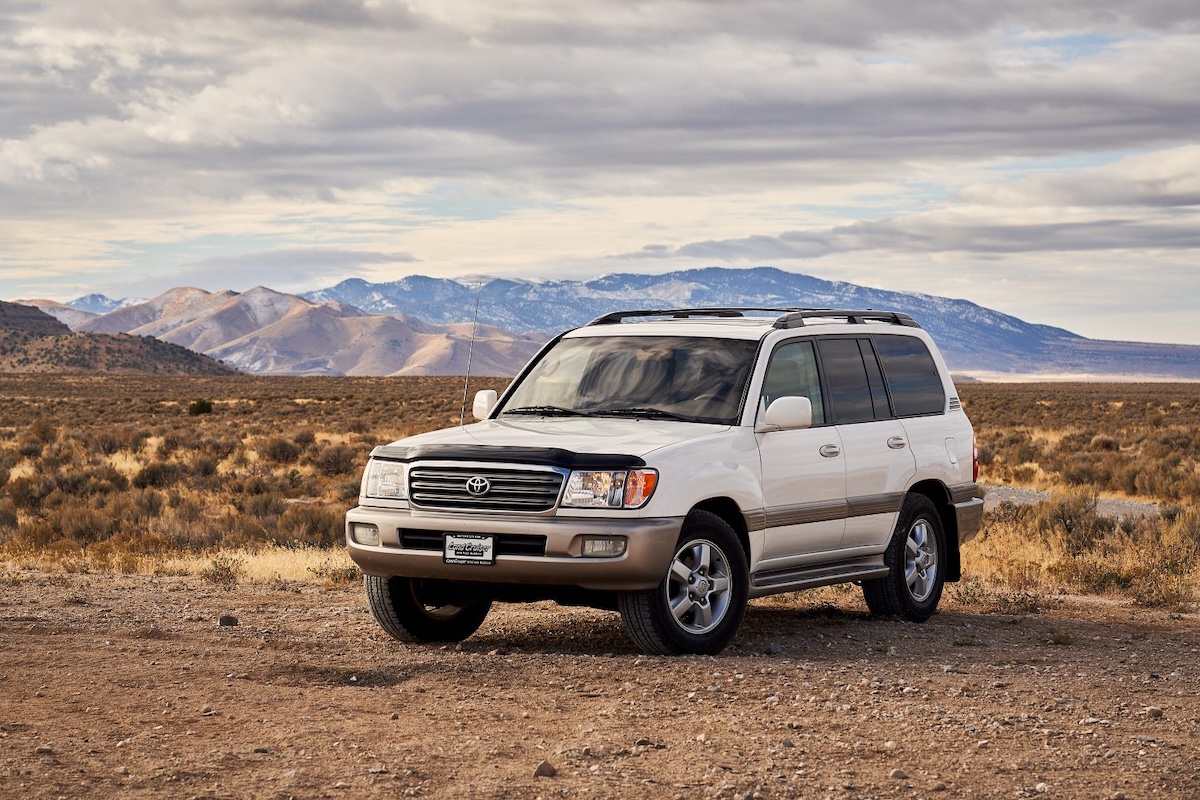
Sixth Generation (1998-2007)
The sixth-generation model, known as the Toyota Land Cruiser 100 Series to enthusiasts, was not sold in Canada but now qualifies for import into the country under classic car exemptions. It was the first to be fitted with a V8 engine. The 4.7-litre unit produced 230 horsepower and 320 lb-ft of torque. It was initially paired with a four-speed automatic transmission, but it gained a more modern five-speed unit in 2003. It also got five more ponies that year and was bumped to 275 hp in 2006 and 265 hp in 2007. Engines in the sixth-generation Toyota Land Cruiser use timing belts that must be replaced at regular intervals, often quoted as every nine years or 90,000 miles (145,000 kilometres).
In addition to the modern V8 engine, the sixth-generation Toyota Land Cruiser was fitted with independent front suspension in place of the previous version's solid front axle. This improved on-road ride and handling but reduced front-axle articulation. That's mostly an issue for hardcore off-roading, meaning the compromise was worth it for most buyers.
The sixth-generation Land Cruiser had a maximum towing rating of 2,950 kilograms (6,500 pounds) and could seat up to seven across three rows of seats. With all seats in place, there was 589 litres of cargo capacity, but with both rear rows folded flat cargo volume swelled to 2,571 litres.
Lexus sold a version of the sixth-generation Land Cruiser with an upgraded interior and a few additional options as the LX 470, which was available in the Canadian market.
Since this generation of Land Cruiser has qualified for import into Canada for longer than the seventh-gen version, you’re more likely to find a domestic unit for sale. However, it remains quite rare and very expensive with prices landing anywhere between the low $20,000s into the mid-$50,000s. We spotted some right-hand drive JDM units among the American imports during our research, so keep an eye out for this if it’s a feature you’d rather avoid.
In the U.S., the sixth-generation Toyota Land Cruiser is common. Prices for high-mileage examples that are otherwise in solid condition sell in the USD$15,000-$20,000 range, while lower mileage examples sometimes carry significantly higher price tags.
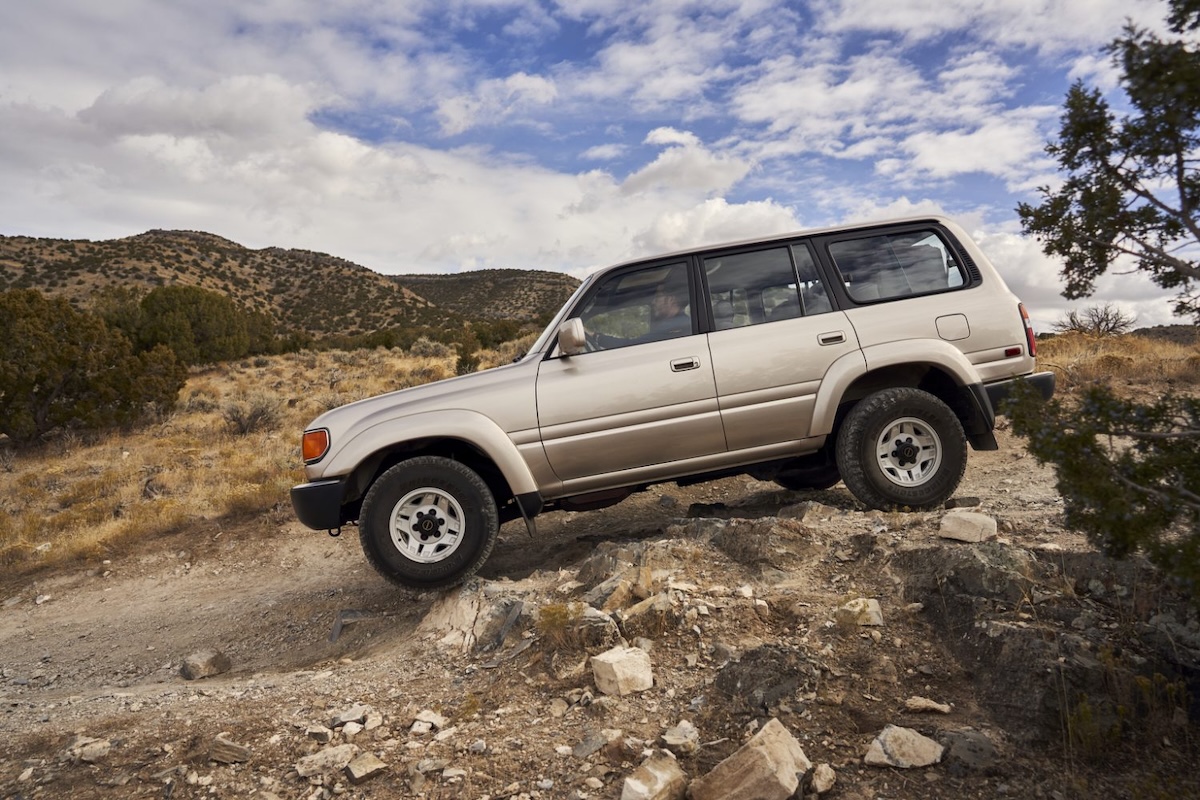
Fifth Generation (1991-1997)
Toyota released the fifth-generation Land Cruiser in North America for the 1991 model year. Initially powered by a 4.0-litre inline-six engine that produced 155 horsepower, the Land Cruiser benefited greatly from a new 4.5-litre 1FZ-FE inline-six in 1993 that spun out 212 horsepower and 275 lb-ft of torque, raising towing capacity from 1,587 kilograms (3,500 pounds) to 2,268 kilograms (5,000 pounds). Also in 1993, Toyota added front and rear locking differentials to the options sheet.
The fifth generation, also known as the 80 Series Land Cruiser, was refreshed in 1995. This was also the first year that the automaker sold the Land Cruiser in Lexus dealerships, badged as the LX 450. The Lexus version had an upmarket leather interior with high-quality finishings to go with its higher price.
There are still a few Land Cruisers of this generation kicking around in Canada alongside some U.S. and right-hand drive JDM imports. Pricing runs the gamut and could be anywhere from $15,000 all the way to $60,000 depending on odometer reading, condition, and any modifications or restoration work.
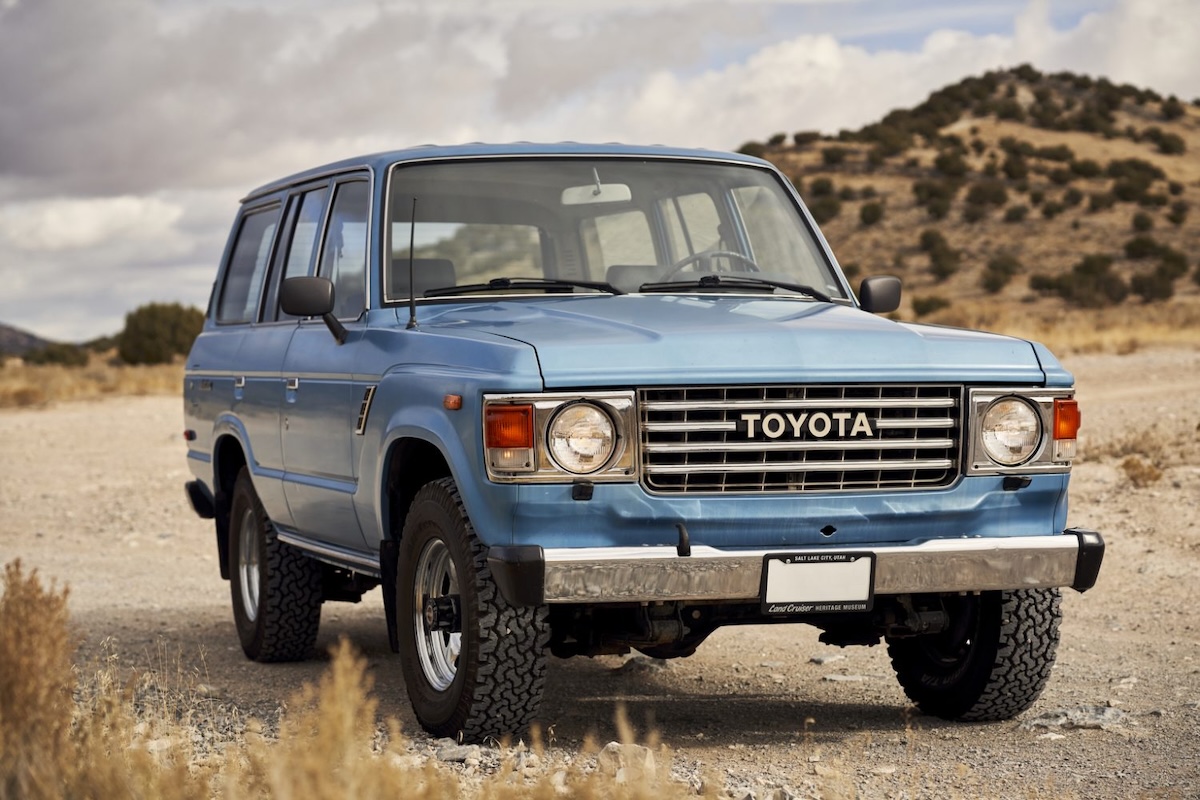
Fourth Generation (1980-1990)
In 1980, Toyota introduced what we'll refer to as the fourth-generation Land Cruiser. Known to enthusiasts as the 60 Series, this is the version that became truly commonplace in North America.
At first, the fourth-generation Toyota Land Cruiser used a 4.2-litre inline-six engine, known more for its durability than its power. At 135 horsepower and 210 lb-ft of torque, the Land Cruiser wasn't fast, but it was reliable. A smaller but more-powerful 4.0-litre inline-six arrived in 1988 with 155 hp and 220 lb-ft, making the Land Cruiser better suited for our highways.
The fourth-generation Land Cruiser was the final version sold in North America to feature solid front and rear axles. A heavy-duty four-door 70-Series FJ Land Cruiser entered production in 1984 and was sold in Canada until 1987. It's still produced in 2025 for several international markets.
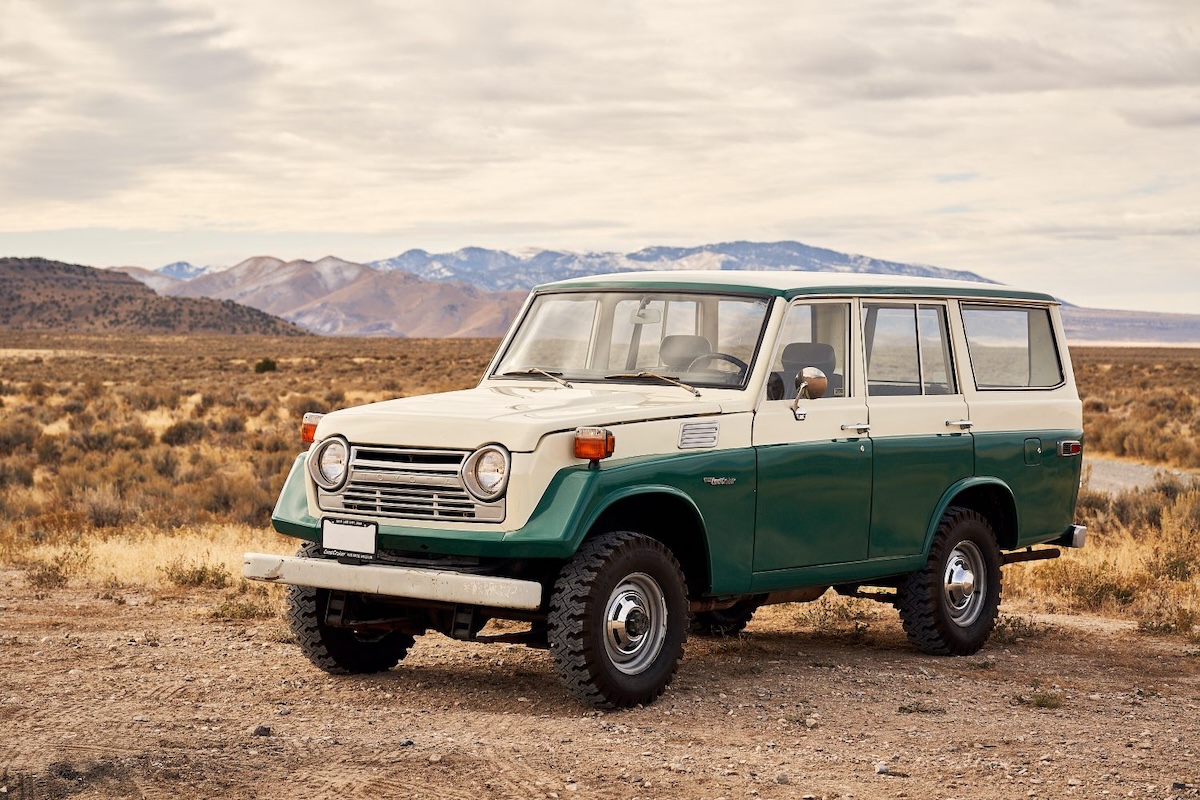
Third Generation (1967-1980)
Toyota separated the Land Cruiser lineup into two distinct vehicle segments when it introduced the 55 Series in 1967. There was a heavy-duty model known as the FJ40 with two doors and seriously rugged underpinnings, while the new FJ55 boasted four doors and an extended wheelbase to make it more appropriate for family use.
The first FJ55 models had an inline-six-cylinder engine with 125 horsepower under the hood. The engine's low power, coupled with the four-door's heavy body and chassis, helped the first Land Cruiser station wagon earn the nickname "iron pig." A 4.2-litre version of the engine with 135 hp debuted in 1975.
Second Generation (1960-1983)
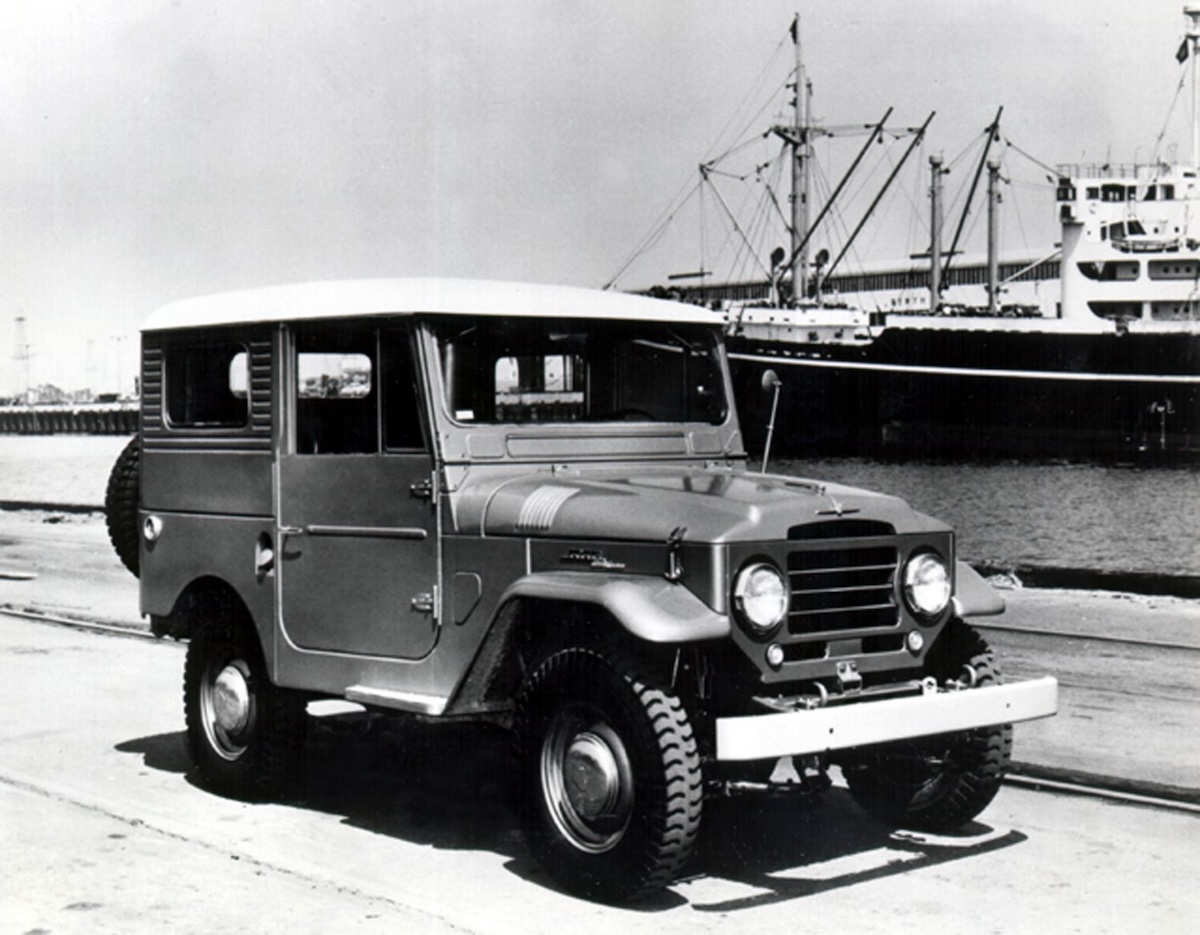
The Toyota FJ40 was introduced in 1960 and would go on to become one of the most popular and durable off-road vehicles sold anywhere in the world. It was basic by modern standards with solid front and rear axles, an un-stressed inline-six engine designed for dependability, and an interior devoid of creature comforts.
Toyota sold the FJ40 in North America through the 1983 model year. The 'J' in the FJ40's name still stood for Jeep, though most of us know the machine as the Land Cruiser. Like the FJ55 four-door, the FJ40 received a 4.2-litre inline-six engine in 1975, and that was the powerplant that would continue to beat under the off-roader's hood until it ended production.
These FJ models were similar in capability to the Jeep Wrangler or its CJ-badged predecessors. The Toyota FJ Cruiser, built between 2007 and 2014, was considered a spiritual successor to the classic FJ.
First Generation (1958-1962)
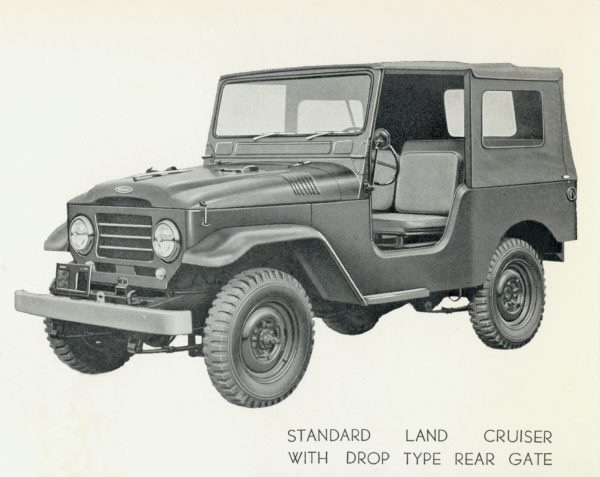
The very first prototype of the SUV that would later be known as the Land Cruiser was developed by Toyota at the request of the United States military. Instead of shipping jeeps all over the world, it was decided that a basic off-roader built in Japan would be desirable for use in Asian countries. Although the Americans did not end up commissioning Toyota to build the vehicle, the resulting machine was further refined and offered for sale in Japan. In 1958, the Toyota FJ25 entered the North American market.
This first-generation Toyota Land Cruiser used a 3.9-litre inline-six powerplant that was initially designed using an old Chevrolet engine as inspiration.
Related Topics