2025 Nissan Rogue Reviews, Pricing & Specs
Write a reviewPros
Comfortable ride
Good fuel economy
Upscale interior
Cons
Modest acceleration and passing power
Upper trims less of a value
Some rivals are sportier, more fun to drive
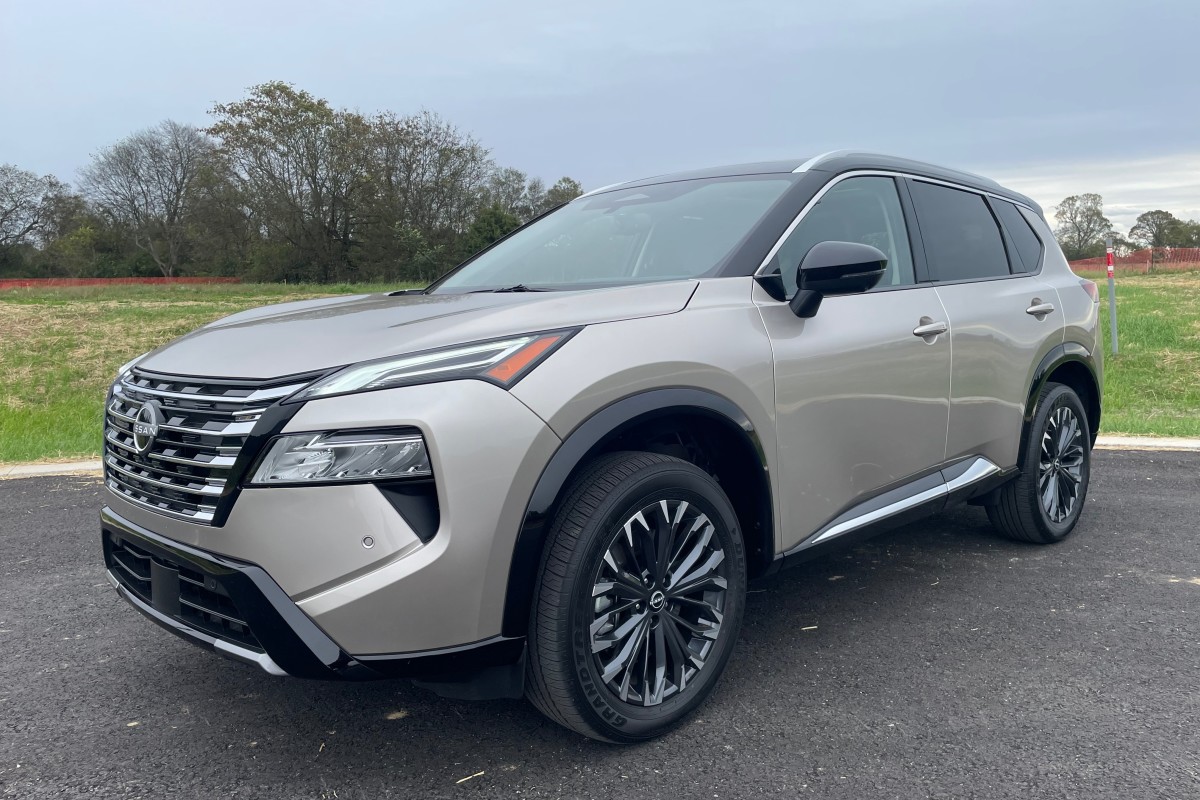
The 2025 Nissan Rogue is an attractive, practical, and value-packed five-passenger compact SUV.
The 2025 Nissan Rogue is one of the main players in the highly competitive compact SUV segment. Ever since the first Rogue went on sale for the 2008 model year, Nissan has made sure to constantly update and improve what’s now the automaker’s best-selling model in North America.
For the 2025 model year, the Rogue gets a little off-road bravado added to its winning recipe. The Rogue Rock Creek trim is equipped with adventure gear like all-terrain tires, a tubular roof rack, a surround-view camera system, and hill descent control. It also has trim-specific exterior design touches like red trim pieces on the alloy wheels and front grille and “Rock Creek” badges on the front seats. Nissan’s ProPilot Assist 2.1 highway driving assist system is also newly available on the Rogue.
Verdict: With its reasonable price tag and impressive array of comfort features and tech touches, the Rogue is aimed right at the heart of the compact SUV segment. This year’s improvements add a little more polish to the Rogue, particularly with the outdoorsy Rock Creek model and latest generation of Nissan’s hands-free highway driving technology. This is an extremely well-rounded choice, though not everything is perfect.

In Canada, the Nissan Rogue begins the 2025 model year with six trims: the base S, SV, Midnight Edition, SV Premium, SL, and range-topping Platinum. Of these, the SV has often been the volume model since it maintains an attainable price of $40,685 (including a $2,030 destination charge and other fees) and adds sought-after features like an eight-way power-adjustable driver’s seat, two rear USB-C ports, a subscription-based Wi-Fi hot spot, dual-zone climate control, adaptive cruise control, and a power liftgate. All-wheel drive (AWD), heated front seats, a heated steering wheel, keyless entry, remote start, and dual-zone climate control are standard on every Rogue sold in Canada.
The new Rock Creek trim will join the Rogue line-up later in 2025. This trim was originally destined only for the U.S., but Nissan had a change of heart and decided to bring it to Canada. Pricing and arrival date details were not available as of this writing, but it’s expected to begin deliveries sometime in 2025.
As for us, our recent test drive was of the top-of-the-line Platinum trim, which has just about anything and everything that can be loaded onto the Rogue. Standard fare consists of semi-aniline leather seating surfaces, a power-adjustable front passenger seat, heated rear seats, a panoramic sunroof, and 10-speaker Bose audio system.
Perched on the dashboard is a 12.3-inch infotainment touchscreen with Google built-in capability. Found in both the SL and Platinum models, it comes packed with tech goodies like satellite radio, wireless Apple CarPlay and Android Auto, and Amazon Alexa. Of course, it also unlocks a wide range of Google-based apps, including extremely precise and user-friendly Google navigation. This proved its worth on the unfamiliar and mostly rural roads we navigated during our test drive.
Finished in Champagne Silver Metallic (one of nine available exterior colours) our tester also came with the two-tone colour combo, which is required with this paint but optional with others. This primarily consists of a black roof to lend a sportier and more aggressive look. It’s a handsome design flourish, though we think the Rogue is attractive without it, too. A blocky shape, large grille and thin headlights lend the Rogue a bit of attitude in a vehicle segment not usually known for bold styling. Our test vehicle also rode on a sleek set of 19-inch alloy wheels finished in a combination of black with silver accents.
But wait, our Rogue Platinum also included the optional Tech Package ($4,400). This brings along ProPilot Assist 2.1 highway driving assist, rain-sensing windshield wipers, a driver attention monitor, and an upgraded surround-view parking camera.

So, our Rogue tester came with everything short of a flame paint job along its flanks and underbody LED strobe lighting (for the record, these are not on Nissan’s option sheet). One thing sorely missing — not only from our test vehicle, but every Rogue trim — is a dollop more horsepower to provide stronger acceleration.
As it stands, the 201-horsepower turbocharged 1.5-litre three-cylinder provides decent grunt for routine driving, so long as you’re not in a hurry. And yes, the three-cylinder arrangement is one cylinder short of the compact SUV norm of a four-cylinder engine lurking under the hood. Only Ford offers a similarly sized turbo three-cylinder as the base engine in its Escape SUV. So long as we didn’t ask too much of it, the drivetrain got the Rogue up to speed without too much fuss or engine noise. It comes paired to a continuously variable automatic transmission (CVT) that feeds power to all four wheels as standard in Canada.
Nissan has years of experience working with CVTs and, to its credit, the one in the Rogue proved smooth and nicely faded into the background during our drive. Too often CVTs help to provide better fuel economy, but at the expense of refinement and engine noise. We were pleased to discover this isn’t the case in the Rogue.
Also deserving praise is the light and accurate steering. It doesn’t offer the last word in driving excitement (the Mazda CX-5 has livelier reflexes, for example) though we doubt many compact SUV shoppers place scalpel-sharp steering high on their list of priorities. Braking was also a no-nonsense experience. Pedal feel is smooth and without any hint of grabbiness at lower speeds.

Sliding behind the wheel of the Rogue, it’s immediately clear Nissan has done its homework in terms of creating a quality driving environment. Yes, the quilted leather seating and other upmarket trim pieces in our Platinum model help sweeten the deal. Yet, even in base format, the cabin of the Rogue wouldn’t look out of place in a vehicle costing considerably more.
We’re particularly fond of the chunky and slightly flat-bottom steering wheel, and the fact Nissan opted not to bury every conceivable control within a touchscreen interface. Want to quickly adjust temperature and fan settings? There’s a handy row of HVAC controls within easy reach, directly below the infotainment touchscreen, along with buttons for the heated seats and heated steering wheel.
Also worth praise are the comfortable and supportive front seats. Finding the right seating position took only a moment. Granted, pulling away and then discovering the side mirrors had been folded in wasn’t our proudest moment, but Nissan can’t be faulted for that journalistic oversight.
Rear legroom measures in at 978 millimetres, a competitive figure among compact SUVs. For comparison, a Toyota RAV4 offers 960 mm of rear legroom, while the Honda CR-V provides 1,042 mm. Behind the split-folding second row is 1,028 litres of cargo space. It’s not a class-leading amount, granted, though it's a wide and easy space to utilize. The cargo floor isn’t back-strainingly high, plus our tester came with the available Divide-and-Hide storage system. These are basically two compartments hidden in the floor of the cargo hold whose covers double as separators.
Storage space throughout the cabin is generous and creative. A particularly nice touch is a compartment located beneath the centre console, directly below the gearshift and front cupholders. It’s a perfect place to put a purse or other valuables, keeping them out of sight of prying eyes. Or, if you like to eat on the road, consider it a convenient (but hopefully temporary) place to toss a greasy burger wrapper and fry holder. Hey, you do you, we won’t judge.

Serving duty in the bottom four trims is an 8-inch infotainment touchscreen with wired Apple CarPlay and Android Auto capability. It gets the job done, yet there’s no denying the extra fingertip acreage afforded by the larger 12.3-inch screen found upper trims makes scrolling through controls and menus easier. Better still, you can leave the phone cords at home because the bigger screen comes with wireless smartphone connectivity.
While not every Rogue will have the same degree of tech content as found in our Platinum test vehicle, it does help to assess which deserve praise and which could use tweaking.
By and large, the infotainment system was simple and familiar in operation. Response times to inputs are quick and the graphics are crisp. Spending more than an afternoon behind the wheel might reveal a few quirks but, during our time with it, the system never had us struggling to comprehend its interface. Google navigation was especially useful when opting to veer away from the designated drive route without turning a small detour into an hours-long delay.
Since the majority of our drive was on rural roads, time spent with ProPilot was for relatively short stretches of highway driving. It does allow for hands-free operation on pre-mapped roads and proved seamless while in operation.
A wireless charging pad at the base of the centre console provided a solid jolt of juice when needed. Its recessed design also kept mobile phones from flying when we got ambitious while zipping around tight corners.

The National Highway Traffic and Safety Administration (NHTSA) gave the 2025 Rogue a five-star rating, the highest possible score, for its results in crash testing. The Insurance Institute for Highway Safety (IIHS) scores the Rogue with top marks of “Good” in all but one category, the exception being a mid-range “Acceptable” score for its side impact test.
In terms of standard safety content, the Rogue is fitted with forward and reverse automatic emergency braking, front pedestrian detection, blind-spot monitoring, rear cross-traffic alert, intersection assist, lane departure warning, rear parking sensors, a driver attention monitor, and automatic high-beam headlights.
Notable options include a head-up instrument display, two versions of ProPilot (Assist and Assist 2.1), a surround-view parking camera system, and traffic sign recognition.

A lot of the Rogue’s cost-effectiveness depends on how high a shopper goes when considering the ideal trim. The base S trim has a temptingly low entry fee hovering around $37,000, except we’ve pointed out stepping up to the SV trim brings along a wide roster of features for not much extra cash outlay.
As for our Rogue Platinum tester, with all its bells and whistles the final Canadian price ends up at $53,465, including destination. That’s a pretty big ask for many SUV shoppers, except the final result certainly looked and felt very luxurious for what at heart is a mainstream compact SUV. The only non-premium aspect proved to be the modest acceleration provided by the turbo three-cylinder.
At least the drivetrain is kind to a fuel budget. The Rogue delivers a Natural Resources Canada-estimated 7.6 litres per 100 kilometres combined in a mix of city and highway driving, making it the most efficient non-electrified vehicle in its class.
At the end of the day, the Rogue left us impressed with its easy-going driving demeanour, supportive seating, robust and attractive cabin, and roomy cargo hold. It doesn’t deliver a knock-out punch to the competition in any one key category. Neither does it significantly stumble in any way that would prevent it from being well worthy of a test drive for anyone hunting for an attractive and well-rounded small SUV.
Note: Images show a US model.

User reviews for 2025 Nissan Rogue
Write a review2025 Nissan Rogue Pricing
Trims & specs
Air Conditioning
Single front air conditioning zones
Airbags
Dual front airbags · Dual front knee airbags · Passenger airbag deactivation: occupant sensing deactivation · Front side airbags · Rear side curtain airbags
Audio System
Antenna Type: mast · Voice recognition audio system · Bluetooth auxiliary audio input · IHeartRadio internet radio · AM/FM radio · Satellite Radio: SiriusXM · Total Number of Speakers: 4
Brakes
ABS: 4-wheel · Braking assist: hill start assist · Electronic parking brake: auto off · Front brake diameter: 11.7 · Front brake width: 1.02 · Front brakes: ventilated disc · Rear brake diameter: 11.5 · Rear brake width: .63 · Rear brakes: ventilated disc
Comfort Features
Armrests: rear center with cupholders · Floor Material: cargo area carpet · Shift knob trim: urethane · Steering wheel trim: urethane
Convenience Features
Assist handle: rear · Center console: front console with armrest and storage · Cupholders: front · Multi-function remote: keyless entry · One-touch windows: 1 · Power outlet(s): 12V front · Power steering: speed-proportional · Power windows: lockout button · Reading lights: rear · Steering wheel: tilt and telescopic · Steering wheel mounted controls: audio · Storage: cargo tie-down anchors and hooks · Vanity mirrors: dual
Driver Seat
Manual adjustments: 6
Drivetrain
Axle ratio: 5.68
Engine
Alternator: 150 amps · Battery: maintenance-free
Exterior Features
Door handle color: black · Exhaust tip color: stainless-steel · Fender lip moldings: black · Front bumper color: body-color · Grille color: black with chrome accents · Mirror color: black · Rear bumper color: body-color · Rear spoiler: roofline spoiler · Rear spoiler color: body-color · Rear trunk/liftgate: liftgate · Rocker panel color: black · Window trim: chrome
Headrests
Front headrests: adjustable · Number of front headrests: 2 · Number of rear headrests: 3
In Car Entertainment
Connected in-car apps: Google search · Infotainment: Apply CarPlay ready · Infotainment screen size: 8 in.
Instrumentation
Fuel economy display: MPG · Instrument cluster screen size: 7 in. · Warnings and reminders: coolant temperature warning
Lights
Daytime running lights: LED · Headlights: LED · Tail and brake lights: LED
Mirrors
Exterior mirrors: manual folding · Inside rearview mirror: manual day/night
Passenger Seat
Manual Adjustments: 4
Rear Seats
Type: 60-40 split bench
Safety
Automatic emergency braking: rear · Camera system: rearview · Child seat anchors: LATCH system · Cross Traffic Alert: rear · Crumple zones: front · Parking sensors: rear · Pre-Collision Warning System: audible warning · Pre-collision warning system: intersection/junction turn · Rearview monitor: in dash
Seatbelts
Emergency locking retractors: front and rear · Front seatbelts: 3-point · Seatbelt force limiters: front and rear · Seatbelt pretensioners: front and rear · Seatbelt warning sensor: driver and passenger · Second row seatbelts: 3-point
Seats
Driver seat manual adjustments: reclining · Front seat type: bucket · Passenger seat folding: folds flat · Passenger seat manual adjustments: reclining · Rear headrests: adjustable · Rear seat folding: split · Rear seat manual adjustments: reclining · Upholstery: cloth
Security
Power door locks: anti-lockout
Spare Tire
Mount Location: inside · Size: temporary
Spare Wheel
Rim Type: steel
Steering
Steering ratio: 14.3 · Turns lock-to-lock: 2.5
Suspension
Front Arm Type: lower control arms · Front Shock Type: twin-tube gas shock absorbers · Front Spring Type: coil springs · Front Stabilizer Bar: diameter 24 mm · Front Suspension Classification: independent · Front Suspension Type: MacPherson struts · Rear Shock Type: twin-tube gas shock absorbers · Rear Spring Type: coil springs · Rear Stabilizer Bar: diameter 28 mm · Rear Suspension Classification: independent · Rear Suspension Type: multi-link
Telematics
Electronic messaging assistance: with voice recognition · Phone: voice activated · Phone wireless data link: Bluetooth
Tires
Type: all season
Tires and Rims
Wheel type: aluminum alloy
Windows
Front wipers: variable intermittent · Liftgate window: fixed · Power windows: with safety reverse · Rear wiper: intermittent · Solar-tinted glass: front
Air Conditioning
Automatic climate control front air conditioning · Dual front air conditioning zones
Airbags
Dual front airbags · Dual front knee airbags · Passenger airbag deactivation: occupant sensing deactivation · Front side airbags · Front side curtain airbags
Audio System
Antenna Type: diversity · Voice recognition audio system · USB auxiliary audio input · IHeartRadio internet radio · AM/FM radio · Satellite Radio: SiriusXM · Total Number of Speakers: 6
Brakes
ABS: 4-wheel · Braking assist: hill start assist · Electronic parking brake: auto off · Front brake diameter: 11.7 · Front brake width: 1.02 · Front brakes: ventilated disc · Rear brake diameter: 11.5 · Rear brake width: .63 · Rear brakes: ventilated disc
Comfort Features
Armrests: rear center with cupholders · Floor Material: carpet · Shift knob trim: urethane · Steering wheel trim: leatherette
Convenience Features
Adaptive stop and go cruise control: semi-automatic · Assist handle: rear · Autonomous lane guidance: lane centering · Center console: front console with armrest and storage · Cruise control: adaptive · Cupholders: rear · Multi-function remote: keyless entry with panic alarm · One-touch windows: 1 · Power outlet(s): USB-C front · Power steering: electric · Power windows: lockout button · Reading lights: front · Steering wheel: tilt and telescopic · Steering wheel mounted controls: voice recognition controls · Storage: front seatback · Vanity mirrors: dual illuminating
Driver Seat
Adjustable lumbar support: power · Power adjustments: 8
Drivetrain
Axle ratio: 5.68
Engine
Alternator: 150 amps · Battery: maintenance-free
Exterior Features
Door handle color: body-color · Exhaust tip color: stainless-steel · Fender lip moldings: black · Front bumper color: body-color · Grille color: black with chrome accents · Mirror color: body-color · Rear bumper color: body-color · Rear spoiler: roofline spoiler · Rear spoiler color: body-color · Rear trunk/liftgate: liftgate · Rocker panel color: black · Window trim: chrome
Headrests
Front headrests: adjustable · Number of front headrests: 2 · Number of rear headrests: 3
In Car Entertainment
Connected in-car apps: Google search · Infotainment: Apply CarPlay ready · Infotainment screen size: 8 in.
Instrumentation
Fuel economy display: MPG · Instrument cluster screen size: 7 in. · Warnings and reminders: lamp failure
Lights
Daytime running lights: LED · Headlights: LED · Tail and brake lights: LED
Mirrors
Exterior mirrors: heated · Inside rearview mirror: manual day/night
Passenger Seat
Manual Adjustments: 4
Rear Seats
Type: 60-40 split bench
Safety
Automatic emergency braking: front · Camera system: rearview · Child seat anchors: LATCH system · Cross Traffic Alert: rear · Crumple zones: front · Impact sensor: post-collision safety system · Parking sensors: rear · Pre-Collision Warning System: vibrating steering wheel · Pre-collision warning system: intersection/junction turn · Rearview monitor: in dash
Seatbelts
Emergency locking retractors: front · Front seatbelts: 3-point · Seatbelt force limiters: front and rear · Seatbelt pretensioners: front and rear · Seatbelt warning sensor: driver and passenger · Second row seatbelts: 3-point
Seats
Driver seat power adjustments: reclining · Front seat type: bucket · Passenger seat folding: folds flat · Passenger seat manual adjustments: reclining · Rear headrests: adjustable · Rear seat folding: split · Rear seat manual adjustments: reclining · Upholstery: cloth
Security
Power door locks: anti-lockout
Spare Tire
Mount Location: inside · Size: temporary
Spare Wheel
Rim Type: steel
Steering
Steering ratio: 14.3 · Turns lock-to-lock: 2.5
Suspension
Front Arm Type: lower control arms · Front Shock Type: twin-tube gas shock absorbers · Front Spring Type: coil springs · Front Stabilizer Bar: diameter 24 mm · Front Suspension Classification: independent · Front Suspension Type: MacPherson struts · Rear Shock Type: twin-tube gas shock absorbers · Rear Spring Type: coil springs · Rear Stabilizer Bar: diameter 28 mm · Rear Suspension Classification: independent · Rear Suspension Type: multi-link
Telematics
Driver assistance app: roadside assistance · Electronic messaging assistance: with voice recognition · Phone: voice activated · Phone wireless data link: Bluetooth · Smart device app compatibility: NissanConnect · Smart device app function: lock operation · Wifi: hotspot
Tires
Type: all season
Tires and Rims
Wheel type: aluminum alloy
Windows
Front wipers: variable intermittent · Liftgate window: fixed · Power windows: with safety reverse · Rear wiper: auto-on in reverse · Solar-tinted glass: front
Air Conditioning
Single front air conditioning zones
Airbags
Dual front airbags · Dual front knee airbags · Passenger airbag deactivation: occupant sensing deactivation · Front side airbags · Rear side curtain airbags
Audio System
Antenna Type: mast · Voice recognition audio system · USB auxiliary audio input · IHeartRadio internet radio · AM/FM radio · Satellite Radio: SiriusXM · Total Number of Speakers: 4
Brakes
ABS: 4-wheel · Braking assist: hill start assist · Electronic parking brake: auto off · Front brake diameter: 11.7 · Front brake width: 1.02 · Front brakes: ventilated disc · Rear brake diameter: 11.5 · Rear brake width: .63 · Rear brakes: ventilated disc
Comfort Features
Armrests: rear center with cupholders · Floor Material: cargo area carpet · Shift knob trim: urethane · Steering wheel trim: urethane
Convenience Features
Assist handle: front · Center console: front console with armrest and storage · Cupholders: rear · Multi-function remote: keyless entry with panic alarm · One-touch windows: 1 · Power outlet(s): USB-C front · Power steering: electric · Power windows: lockout button · Reading lights: rear · Steering wheel: tilt and telescopic · Steering wheel mounted controls: cruise controls · Storage: door pockets · Vanity mirrors: dual
Driver Seat
Manual adjustments: 6
Drivetrain
4WD Type: on demand · Axle ratio: 5.68
Engine
Alternator: 150 amps · Battery: maintenance-free
Exterior Features
Door handle color: black · Exhaust tip color: stainless-steel · Fender lip moldings: black · Front bumper color: body-color · Grille color: black with chrome accents · Mirror color: black · Rear bumper color: body-color · Rear spoiler: roofline spoiler · Rear spoiler color: body-color · Rear trunk/liftgate: liftgate · Rocker panel color: black · Window trim: chrome
Headrests
Front headrests: adjustable · Number of front headrests: 2 · Number of rear headrests: 3
In Car Entertainment
Connected in-car apps: Google search · Infotainment: NissanConnect · Infotainment screen size: 8 in.
Instrumentation
Fuel economy display: MPG · Instrument cluster screen size: 7 in. · Warnings and reminders: low fuel level
Lights
Daytime running lights: LED · Headlights: auto delay off · Tail and brake lights: LED
Mirrors
Exterior mirrors: power · Inside rearview mirror: manual day/night
Passenger Seat
Manual Adjustments: 4
Rear Seats
Type: 60-40 split bench
Safety
Automatic emergency braking: front · Camera system: rearview · Child seat anchors: LATCH system · Cross Traffic Alert: rear · Crumple zones: front · Parking sensors: rear · Pre-Collision Warning System: visual warning · Pre-collision warning system: intersection/junction turn · Rearview monitor: in dash
Seatbelts
Emergency locking retractors: front and rear · Front seatbelts: 3-point · Seatbelt force limiters: front · Seatbelt pretensioners: front and rear · Seatbelt warning sensor: driver and passenger · Second row seatbelts: 3-point
Seats
Driver seat manual adjustments: height · Front seat type: bucket · Passenger seat folding: folds flat · Passenger seat manual adjustments: reclining · Rear headrests: adjustable · Rear seat folding: split · Rear seat manual adjustments: reclining · Upholstery: cloth
Security
Power door locks: anti-lockout
Spare Tire
Mount Location: inside · Size: temporary
Spare Wheel
Rim Type: steel
Steering
Steering ratio: 14.3 · Turns lock-to-lock: 2.5
Suspension
Front Arm Type: lower control arms · Front Shock Type: twin-tube gas shock absorbers · Front Spring Type: coil springs · Front Stabilizer Bar: diameter 24 mm · Front Suspension Classification: independent · Front Suspension Type: MacPherson struts · Rear Shock Type: twin-tube gas shock absorbers · Rear Spring Type: coil springs · Rear Stabilizer Bar: diameter 28 mm · Rear Suspension Classification: independent · Rear Suspension Type: multi-link
Telematics
Electronic messaging assistance: with read function · Phone: voice activated · Phone wireless data link: Bluetooth
Tires
Type: all season
Tires and Rims
Wheel type: aluminum alloy
Windows
Front wipers: variable intermittent · Liftgate window: fixed · Power windows: with safety reverse · Rear wiper: intermittent · Solar-tinted glass: front
Air Conditioning
Automatic climate control front air conditioning · Dual front air conditioning zones
Airbags
Dual front airbags · Dual front knee airbags · Passenger airbag deactivation: occupant sensing deactivation · Rear side airbags · Rear side curtain airbags
Audio System
Antenna Type: diversity · Voice recognition audio system · USB auxiliary audio input · IHeartRadio internet radio · AM/FM radio · Satellite Radio: SiriusXM · Total Number of Speakers: 6
Brakes
ABS: 4-wheel · Braking assist: hill start assist · Electronic parking brake: auto off · Front brake diameter: 11.7 · Front brake width: 1.02 · Front brakes: ventilated disc · Rear brake diameter: 11.5 · Rear brake width: .63 · Rear brakes: ventilated disc
Comfort Features
Armrests: rear center with cupholders · Floor Material: cargo area carpet · Shift knob trim: urethane · Steering wheel trim: leatherette
Convenience Features
Adaptive stop and go cruise control: semi-automatic · Assist handle: front · Autonomous lane guidance: lane centering · Center console: front console with armrest and storage · Cruise control: adaptive · Cupholders: front · Multi-function remote: trunk release · One-touch windows: 1 · Power outlet(s): 12V front · Power steering: electric · Power windows: lockout button · Reading lights: rear · Steering wheel: tilt and telescopic · Steering wheel mounted controls: paddle shifter · Storage: door pockets · Vanity mirrors: dual illuminating
Driver Seat
Adjustable lumbar support: power · Power adjustments: 8
Drivetrain
4WD Type: on demand · Axle ratio: 5.68
Engine
Alternator: 150 amps · Battery: maintenance-free
Exterior Features
Door handle color: body-color · Exhaust tip color: stainless-steel · Fender lip moldings: black · Front bumper color: body-color · Grille color: black with chrome accents · Mirror color: body-color · Rear bumper color: body-color · Rear spoiler: roofline spoiler · Rear spoiler color: body-color · Rear trunk/liftgate: liftgate · Rocker panel color: black · Window trim: chrome
Headrests
Front headrests: adjustable · Number of front headrests: 2 · Number of rear headrests: 3
In Car Entertainment
Connected in-car apps: Google POIs · Infotainment: Android Auto ready · Infotainment screen size: 8 in.
Instrumentation
Fuel economy display: range · Instrument cluster screen size: 7 in. · Warnings and reminders: maintenance reminder
Lights
Daytime running lights: LED · Headlights: auto delay off · Tail and brake lights: LED
Mirrors
Exterior mirrors: power · Inside rearview mirror: manual day/night
Passenger Seat
Manual Adjustments: 4
Rear Seats
Type: 60-40 split bench
Safety
Automatic emergency braking: intersection/junction turn · Camera system: rearview · Child seat anchors: LATCH system · Cross Traffic Alert: rear · Crumple zones: front · Impact sensor: alert system · Parking sensors: rear · Pre-Collision Warning System: visual warning · Pre-collision warning system: intersection/junction turn · Rearview monitor: in dash
Seatbelts
Emergency locking retractors: front · Front seatbelts: 3-point · Seatbelt force limiters: front · Seatbelt pretensioners: front and rear · Seatbelt warning sensor: driver and passenger · Second row seatbelts: 3-point
Seats
Driver seat power adjustments: reclining · Front seat type: bucket · Passenger seat folding: folds flat · Passenger seat manual adjustments: reclining · Rear headrests: adjustable · Rear seat folding: split · Rear seat manual adjustments: reclining · Upholstery: cloth
Security
Power door locks: anti-lockout
Spare Tire
Mount Location: inside · Size: temporary
Spare Wheel
Rim Type: steel
Steering
Steering ratio: 14.3 · Turns lock-to-lock: 2.5
Suspension
Front Arm Type: lower control arms · Front Shock Type: twin-tube gas shock absorbers · Front Spring Type: coil springs · Front Stabilizer Bar: diameter 24 mm · Front Suspension Classification: independent · Front Suspension Type: MacPherson struts · Rear Shock Type: twin-tube gas shock absorbers · Rear Spring Type: coil springs · Rear Stabilizer Bar: diameter 28 mm · Rear Suspension Classification: independent · Rear Suspension Type: multi-link
Telematics
Driver assistance app: roadside assistance · Electronic messaging assistance: with read function · Phone: voice activated · Phone wireless data link: Bluetooth · Smart device app compatibility: NissanConnect · Smart device app function: engine start · Wifi: hotspot
Tires
Type: all season
Tires and Rims
Wheel type: aluminum alloy
Windows
Front wipers: variable intermittent · Liftgate window: fixed · Power windows: with safety reverse · Rear wiper: intermittent · Solar-tinted glass: front
Air Conditioning
Automatic climate control front air conditioning · Dual front air conditioning zones
Airbags
Dual front airbags · Dual front knee airbags · Passenger airbag deactivation: occupant sensing deactivation · Rear side airbags · Rear side curtain airbags
Audio System
Antenna Type: mast · Voice recognition audio system · USB auxiliary audio input · IHeartRadio internet radio · Touch screen display radio · Satellite Radio: SiriusXM · Total Number of Speakers: 6
Brakes
ABS: 4-wheel · Braking assist: hill start assist · Electronic parking brake: auto off · Front brake diameter: 11.7 · Front brake width: 1.02 · Front brakes: ventilated disc · Rear brake diameter: 11.5 · Rear brake width: .63 · Rear brakes: ventilated disc
Comfort Features
Armrests: rear center with cupholders · Floor Material: cargo area carpet · Shift knob trim: leather · Steering wheel trim: leatherette
Convenience Features
Adaptive stop and go cruise control: semi-automatic · Assist handle: front · Autonomous lane guidance: lane centering · Cargo area power outlet: 12V · Center console: front console with armrest and storage · Cruise control: adaptive · Cupholders: front · Multi-function remote: trunk release · One-touch windows: 1 · Power outlet(s): 12V front · Power steering: speed-proportional · Power windows: lockout button · Reading lights: rear · Steering wheel: tilt and telescopic · Steering wheel mounted controls: audio · Storage: cargo tie-down anchors and hooks · Vanity mirrors: dual illuminating
Driver Seat
Adjustable lumbar support: power · Power adjustments: 8
Drivetrain
4WD Type: on demand · Axle ratio: 5.68
Engine
Alternator: 150 amps · Battery: maintenance-free
Exterior Features
Door handle color: body-color · Exhaust tip color: stainless-steel · Fender lip moldings: black · Front bumper color: body-color · Grille color: black · Mirror color: black · Rear bumper color: body-color · Rear spoiler: roofline spoiler · Rear spoiler color: body-color · Rear trunk/liftgate: liftgate · Rocker panel color: black · Window trim: chrome
Headrests
Front headrests: adjustable · Number of front headrests: 2 · Number of rear headrests: 3
In Car Entertainment
Connected in-car apps: Google search · Infotainment: NissanConnect · Infotainment screen size: 8 in.
Instrumentation
Fuel economy display: MPG · Instrument cluster screen size: 7 in. · Warnings and reminders: maintenance reminder
Lights
Daytime running lights: LED · Headlights: LED · Tail and brake lights: LED
Mirrors
Exterior mirrors: manual folding · Inside rearview mirror: manual day/night
Passenger Seat
Manual Adjustments: 4
Rear Seats
Type: 60-40 split bench
Roof
Roof rack color: black · Roof rails: black
Safety
Automatic emergency braking: intersection/junction turn · Camera system: surround view · Child seat anchors: LATCH system · Cross Traffic Alert: rear · Crumple zones: front · Impact sensor: post-collision safety system · Parking sensors: rear · Pre-Collision Warning System: visual warning · Pre-collision warning system: intersection/junction turn · Rearview monitor: in dash
Seatbelts
Emergency locking retractors: front · Front seatbelts: 3-point · Seatbelt force limiters: front and rear · Seatbelt pretensioners: front · Seatbelt warning sensor: driver and passenger · Second row seatbelts: 3-point
Seats
Driver seat power adjustments: height · Front seat type: bucket · Passenger seat folding: folds flat · Passenger seat manual adjustments: reclining · Rear headrests: adjustable · Rear seat folding: split · Rear seat manual adjustments: reclining · Upholstery: leatherette · Upholstery accents: cloth
Security
Power door locks: anti-lockout
Spare Tire
Mount Location: inside · Size: temporary
Spare Wheel
Rim Type: steel
Steering
Steering ratio: 14.3 · Turns lock-to-lock: 2.5
Suspension
Front Arm Type: lower control arms · Front Shock Type: twin-tube gas shock absorbers · Front Spring Type: coil springs · Front Stabilizer Bar: diameter 24 mm · Front Suspension Classification: independent · Front Suspension Type: MacPherson struts · Rear Shock Type: twin-tube gas shock absorbers · Rear Spring Type: coil springs · Rear Stabilizer Bar: diameter 28 mm · Rear Suspension Classification: independent · Rear Suspension Type: multi-link
Telematics
Driver assistance app: roadside assistance · Electronic messaging assistance: with voice recognition · Phone: voice activated · Phone wireless data link: Bluetooth · Smart device app compatibility: NissanConnect · Smart device app function: security event/collision alert · Wifi: hotspot
Tires
Type: all terrain
Tires and Rims
Wheels: painted aluminum
Windows
Front wipers: variable intermittent · Liftgate window: fixed · Power windows: with safety reverse · Rear wiper: intermittent · Solar-tinted glass: front
Air Conditioning
Automatic climate control front air conditioning · Dual front air conditioning zones
Airbags
Dual front airbags · Dual front knee airbags · Passenger airbag deactivation: occupant sensing deactivation · Front side airbags · Front side curtain airbags
Audio System
Antenna Type: mast · Voice recognition audio system · Bluetooth auxiliary audio input · IHeartRadio internet radio · AM/FM radio · Satellite Radio: SiriusXM · Total Number of Speakers: 6
Brakes
ABS: 4-wheel · Braking assist: hill start assist · Electronic parking brake: auto off · Front brake diameter: 11.7 · Front brake width: 1.02 · Front brakes: ventilated disc · Rear brake diameter: 11.5 · Rear brake width: .63 · Rear brakes: ventilated disc
Comfort Features
Armrests: rear center with cupholders · Door trim: leatherette · Floor Material: carpet · Shift knob trim: leather · Steering wheel trim: leatherette
Convenience Features
Adaptive stop and go cruise control: fully automated · Assist handle: rear · Autonomous lane guidance: lane centering · Center console: front console with armrest and storage · Cruise control: adaptive · Cupholders: front · Dimming rearview mirror: auto-dimming · Multi-function remote: keyless entry with panic alarm · One-touch windows: 1 · Power outlet(s): 12V front · Power steering: electric · Power windows: lockout button · Reading lights: front · Steering wheel: tilt and telescopic · Steering wheel mounted controls: phone · Storage: in-floor · Vanity mirrors: dual illuminating
Driver Seat
Adjustable lumbar support: power · Power adjustments: 8
Drivetrain
Axle ratio: 5.68
Engine
Alternator: 150 amps · Battery: maintenance-free
Exterior Features
Door handle color: body-color · Exhaust tip color: stainless-steel · Fender lip moldings: black · Front bumper color: body-color · Grille color: black with chrome accents · Mirror color: body-color · Rear bumper color: body-color · Rear spoiler: roofline spoiler · Rear spoiler color: body-color · Rear trunk/liftgate: liftgate · Rocker panel color: black · Window trim: chrome
Headrests
Front headrests: adjustable · Number of front headrests: 2 · Number of rear headrests: 3
In Car Entertainment
Connected in-car apps: Google Assistant · Infotainment: NissanConnect · Infotainment screen size: 12.3 in. · Smartphone integration: wireless Apple CarPlay
Instrumentation
Fuel economy display: MPG · Instrument cluster screen size: 12.3 in. · Warnings and reminders: maintenance reminder
Lights
Daytime running lights: LED · Headlights: automatic high beam dimmer · Tail and brake lights: LED
Mirrors
Exterior mirrors: manual folding
Passenger Seat
Power adjustments: 4
Rear Seats
Type: 60-40 split bench
Roof
Roof rails: silver
Safety
Automatic emergency braking: front pedestrian · Camera system: surround view · Child seat anchors: LATCH system · Cross Traffic Alert: rear · Crumple zones: front · Impact sensor: alert system · Parking sensors: front · Pre-Collision Warning System: visual warning · Pre-collision warning system: pedestrian detection · Rearview monitor: in dash · Traffic sign recognition: adaptive speed limiting
Seatbelts
Emergency locking retractors: front and rear · Front seatbelts: 3-point · Seatbelt force limiters: front and rear · Seatbelt pretensioners: front and rear · Seatbelt warning sensor: driver and passenger · Second row seatbelts: 3-point
Seats
Driver seat power adjustments: height · Front seat type: bucket · Passenger seat folding: folds flat · Passenger seat power adjustments: reclining · Rear headrests: adjustable · Rear seat folding: split · Rear seat manual adjustments: reclining · Upholstery: leather-trimmed
Security
Power door locks: anti-lockout
Spare Tire
Mount Location: inside · Size: temporary
Spare Wheel
Rim Type: steel
Steering
Steering ratio: 14.3 · Turns lock-to-lock: 2.5
Suspension
Front Arm Type: lower control arms · Front Shock Type: twin-tube gas shock absorbers · Front Spring Type: coil springs · Front Stabilizer Bar: diameter 24 mm · Front Suspension Classification: independent · Front Suspension Type: MacPherson struts · Rear Shock Type: twin-tube gas shock absorbers · Rear Spring Type: coil springs · Rear Stabilizer Bar: diameter 28 mm · Rear Suspension Classification: independent · Rear Suspension Type: multi-link
Telematics
Driver assistance app: roadside assistance · Electronic messaging assistance: with voice recognition · Navigation system: touch screen display · Phone: voice activated · Phone wireless data link: Bluetooth · Smart device app compatibility: NissanConnect · Smart device app function: send destination to vehicle · Wifi: hotspot
Tires
Type: all season
Tires and Rims
Wheel type: aluminum alloy
Windows
Front wipers: variable intermittent · Liftgate window: fixed · Power windows: with safety reverse · Rear wiper: intermittent · Solar-tinted glass: front
Air Conditioning
Automatic climate control front air conditioning · Dual front air conditioning zones
Airbags
Dual front airbags · Dual front knee airbags · Passenger airbag deactivation: occupant sensing deactivation · Rear side airbags · Rear side curtain airbags
Audio System
Antenna Type: diversity · Voice recognition audio system · USB auxiliary audio input · Pandora internet radio · Touch screen display radio · Satellite Radio: SiriusXM · Total Number of Speakers: 6
Brakes
ABS: 4-wheel · Braking assist: hill start assist · Electronic parking brake: auto off · Front brake diameter: 11.7 · Front brake width: 1.02 · Front brakes: ventilated disc · Rear brake diameter: 11.5 · Rear brake width: .63 · Rear brakes: ventilated disc
Comfort Features
Armrests: rear center with cupholders · Door trim: leatherette · Floor Material: cargo area carpet · Shift knob trim: leather · Steering wheel trim: leatherette
Convenience Features
Adaptive stop and go cruise control: fully automated · Assist handle: front · Autonomous lane guidance: lane centering · Center console: front console with armrest and storage · Cruise control: adaptive · Cupholders: front · Dimming rearview mirror: auto-dimming · Multi-function remote: keyless entry with panic alarm · One-touch windows: 1 · Power outlet(s): 12V front · Power steering: speed-proportional · Power windows: lockout button · Reading lights: rear · Steering wheel: tilt and telescopic · Steering wheel mounted controls: paddle shifter · Storage: front seatback · Vanity mirrors: dual illuminating
Driver Seat
Adjustable lumbar support: power · Power adjustments: 8
Drivetrain
4WD Type: on demand · Axle ratio: 5.68
Engine
Alternator: 150 amps · Battery: maintenance-free
Exterior Features
Door handle color: body-color · Exhaust tip color: stainless-steel · Fender lip moldings: black · Front bumper color: body-color · Grille color: black with chrome accents · Mirror color: body-color · Rear bumper color: body-color · Rear spoiler: roofline spoiler · Rear spoiler color: body-color · Rear trunk/liftgate: power operated · Rocker panel color: black · Window trim: chrome
Headrests
Front headrests: adjustable · Number of front headrests: 2 · Number of rear headrests: 3
In Car Entertainment
Connected in-car apps: Google POIs · Infotainment: NissanConnect · Infotainment screen size: 12.3 in. · Smartphone integration: wireless Android Auto
Instrumentation
Fuel economy display: range · Instrument cluster screen size: 12.3 in. · Warnings and reminders: coolant temperature warning
Lights
Daytime running lights: LED · Headlights: automatic high beam dimmer · Tail and brake lights: LED
Mirrors
Exterior mirrors: integrated turn signals
Passenger Seat
Power adjustments: 4
Rear Seats
Type: 60-40 split bench
Roof
Roof rails: silver
Safety
Automatic emergency braking: intersection/junction turn · Camera system: surround view · Child seat anchors: LATCH system · Cross Traffic Alert: rear · Crumple zones: front · Impact sensor: alert system · Parking sensors: rear · Pre-Collision Warning System: vibrating steering wheel · Pre-collision warning system: intersection/junction turn · Rearview monitor: in dash · Traffic sign recognition: adaptive speed limiting
Seatbelts
Emergency locking retractors: front and rear · Front seatbelts: 3-point · Seatbelt force limiters: front and rear · Seatbelt pretensioners: front · Seatbelt warning sensor: driver and passenger · Second row seatbelts: 3-point
Seats
Driver seat power adjustments: reclining · Front seat type: bucket · Passenger seat folding: folds flat · Passenger seat power adjustments: reclining · Rear headrests: adjustable · Rear seat folding: split · Rear seat manual adjustments: reclining · Upholstery: leather-trimmed
Security
Power door locks: anti-lockout
Spare Tire
Mount Location: inside · Size: temporary
Spare Wheel
Rim Type: steel
Steering
Steering ratio: 14.3 · Turns lock-to-lock: 2.5
Suspension
Front Arm Type: lower control arms · Front Shock Type: twin-tube gas shock absorbers · Front Spring Type: coil springs · Front Stabilizer Bar: diameter 24 mm · Front Suspension Classification: independent · Front Suspension Type: MacPherson struts · Rear Shock Type: twin-tube gas shock absorbers · Rear Spring Type: coil springs · Rear Stabilizer Bar: diameter 28 mm · Rear Suspension Classification: independent · Rear Suspension Type: multi-link
Telematics
Driver assistance app: roadside assistance · Electronic messaging assistance: with voice recognition · Navigation system: over-the-air map updates (OTA) · Phone: voice activated · Phone wireless data link: Bluetooth · Smart device app compatibility: NissanConnect · Smart device app function: engine start · Wifi: hotspot
Tires
Type: all season
Tires and Rims
Wheel type: aluminum alloy
Windows
Front wipers: variable intermittent · Liftgate window: fixed · Power windows: with safety reverse · Rear wiper: with washer · Solar-tinted glass: front
Air Conditioning
Automatic climate control front air conditioning · Dual front air conditioning zones
Airbags
Dual front airbags · Dual front knee airbags · Passenger airbag deactivation: occupant sensing deactivation · Front side airbags · Front side curtain airbags
Audio System
Antenna Type: mast · Voice recognition audio system · Bluetooth auxiliary audio input · Pandora internet radio · Premium Brand: Bose · Touch screen display radio · Satellite Radio: SiriusXM · 2 subwoofers · Total Number of Speakers: 8
Brakes
ABS: 4-wheel · Braking assist: hill start assist · Electronic parking brake: auto off · Front brake diameter: 11.7 · Front brake width: 1.02 · Front brakes: ventilated disc · Rear brake diameter: 11.5 · Rear brake width: .63 · Rear brakes: ventilated disc
Comfort Features
Armrests: rear center with cupholders · Door trim: leatherette · Floor Material: carpet · Shift knob trim: leather · Steering wheel trim: leatherette
Convenience Features
Adaptive stop and go cruise control: fully automated · Assist handle: rear · Autonomous lane guidance: lane centering · Center console: front console with armrest and storage · Cruise control: adaptive · Cupholders: front · Dimming rearview mirror: auto-dimming · Easy entry: power driver seat · Memorized settings: driver seat · Multi-function remote: keyless entry with panic alarm · One-touch windows: 1 · Power outlet(s): 12V front · Power steering: electric · Power windows: lockout button · Reading lights: rear · Steering wheel: tilt and telescopic · Steering wheel mounted controls: paddle shifter · Storage: dual level cargo area · Vanity mirrors: dual illuminating
Driver Seat
Adjustable lumbar support: power · Power adjustments: 8
Drivetrain
Axle ratio: 5.68
Engine
Alternator: 150 amps · Battery: maintenance-free
Exterior Features
Door handle color: body-color · Exhaust tip color: stainless-steel · Fender lip moldings: black · Front bumper color: body-color · Grille color: black with chrome accents · Mirror color: body-color · Rear bumper color: body-color · Rear spoiler: roofline spoiler · Rear spoiler color: body-color · Rear trunk/liftgate: power operated · Rocker panel color: chrome accents · Window trim: chrome
Headrests
Front headrests: adjustable · Number of front headrests: 2 · Number of rear headrests: 3
In Car Entertainment
Connected in-car apps: Google Assistant · Infotainment: Google Built-In · Infotainment screen size: 12.3 in. · Smartphone integration: wireless Android Auto
Instrumentation
Fuel economy display: MPG · Instrument cluster screen size: 12.3 in. · Warnings and reminders: low oil pressure
Lights
Daytime running lights: LED · Headlights: Auto on/off · Tail and brake lights: LED
Mirrors
Exterior mirrors: integrated turn signals
Passenger Seat
Power adjustments: 4
Rear Seats
Type: 60-40 split bench
Roof
Moonroof: tilt/slide · Moonroof / Sunroof: power sunshade · Roof rails: silver
Safety
Automatic emergency braking: rear · Camera system: surround view · Child seat anchors: LATCH system · Cross Traffic Alert: rear · Crumple zones: rear · Impact sensor: post-collision safety system · Parking sensors: front · Pre-Collision Warning System: vibrating steering wheel · Pre-collision warning system: intersection/junction turn · Rearview monitor: in dash · Traffic sign recognition: adaptive speed limiting
Seatbelts
Emergency locking retractors: front and rear · Front seatbelts: 3-point · Seatbelt force limiters: front and rear · Seatbelt pretensioners: front and rear · Seatbelt warning sensor: driver and passenger · Second row seatbelts: 3-point
Seats
Driver seat power adjustments: height · Front seat type: bucket · Passenger seat folding: folds flat · Passenger seat power adjustments: reclining · Rear headrests: adjustable · Rear seat folding: split · Rear seat manual adjustments: reclining · Upholstery: perforated
Security
Power door locks: anti-lockout
Spare Tire
Mount Location: inside · Size: temporary
Spare Wheel
Rim Type: steel
Steering
Steering ratio: 14.3 · Turns lock-to-lock: 2.5
Suspension
Front Arm Type: lower control arms · Front Shock Type: twin-tube gas shock absorbers · Front Spring Type: coil springs · Front Stabilizer Bar: diameter 24 mm · Front Suspension Classification: independent · Front Suspension Type: MacPherson struts · Rear Shock Type: twin-tube gas shock absorbers · Rear Spring Type: coil springs · Rear Stabilizer Bar: diameter 28 mm · Rear Suspension Classification: independent · Rear Suspension Type: multi-link
Telematics
Driver assistance app: roadside assistance · Electronic messaging assistance: with voice recognition · Navigation system: over-the-air map updates (OTA) · Phone: voice activated · Phone wireless data link: Bluetooth · Smart device app compatibility: NissanConnect · Smart device app function: horn/light operation · Wifi: hotspot
Tires
Type: all season
Tires and Rims
Wheels: aluminum with painted accents
Windows
Front wipers: variable intermittent · Liftgate window: fixed · Power windows: with safety reverse · Rear wiper: auto-on in reverse · Solar-tinted glass: front
Air Conditioning
Automatic climate control front air conditioning · Dual front air conditioning zones
Airbags
Dual front airbags · Dual front knee airbags · Passenger airbag deactivation: occupant sensing deactivation · Rear side airbags · Front side curtain airbags
Audio System
Antenna Type: mast · Voice recognition audio system · Bluetooth auxiliary audio input · Pandora internet radio · Premium Brand: Bose · Touch screen display radio · Satellite Radio: SiriusXM · 2 subwoofers · Total Number of Speakers: 8
Brakes
ABS: 4-wheel · Braking assist: hill start assist · Electronic parking brake: auto off · Front brake diameter: 11.7 · Front brake width: 1.02 · Front brakes: ventilated disc · Rear brake diameter: 11.5 · Rear brake width: .63 · Rear brakes: ventilated disc
Comfort Features
Armrests: rear center with cupholders · Door trim: leatherette · Floor Material: carpet · Shift knob trim: leather · Steering wheel trim: leatherette
Convenience Features
Adaptive stop and go cruise control: fully automated · Assist handle: front · Autonomous lane guidance: lane centering · Center console: front console with armrest and storage · Cruise control: adaptive · Cupholders: rear · Dimming rearview mirror: auto-dimming · Easy entry: power driver seat · Memorized settings: 2 driver · Multi-function remote: proximity entry system · One-touch windows: 1 · Power outlet(s): USB-C front · Power steering: speed-proportional · Power windows: lockout button · Reading lights: rear · Steering wheel: tilt and telescopic · Steering wheel mounted controls: voice recognition controls · Storage: dual level cargo area · Vanity mirrors: dual illuminating
Driver Seat
Adjustable lumbar support: power · Power adjustments: 8
Drivetrain
4WD Type: on demand · Axle ratio: 5.68
Engine
Alternator: 150 amps · Battery: maintenance-free
Exterior Features
Door handle color: body-color · Exhaust tip color: stainless-steel · Fender lip moldings: black · Front bumper color: body-color · Grille color: black with chrome accents · Mirror color: body-color · Rear bumper color: body-color · Rear spoiler: roofline spoiler · Rear spoiler color: body-color · Rear trunk/liftgate: liftgate · Rocker panel color: chrome accents · Window trim: chrome
Headrests
Front headrests: adjustable · Number of front headrests: 2 · Number of rear headrests: 3
In Car Entertainment
Connected in-car apps: Amazon Alexa · Infotainment: Google Built-In · Infotainment screen size: 12.3 in. · Smartphone integration: wireless Apple CarPlay
Instrumentation
Fuel economy display: range · Instrument cluster screen size: 12.3 in. · Warnings and reminders: maintenance reminder
Lights
Daytime running lights: LED · Headlights: wiper activated · Tail and brake lights: LED
Mirrors
Exterior mirrors: manual folding
Passenger Seat
Power adjustments: 4
Rear Seats
Type: 60-40 split bench
Roof
Moonroof: power panoramic · Moonroof / Sunroof: power sunshade · Roof rails: silver
Safety
Automatic emergency braking: front · Camera system: surround view · Child seat anchors: LATCH system · Cross Traffic Alert: rear · Crumple zones: rear · Impact sensor: alert system · Parking sensors: front · Pre-Collision Warning System: vibrating steering wheel · Pre-collision warning system: pedestrian detection · Rearview monitor: in dash · Traffic sign recognition: adaptive speed limiting
Seatbelts
Emergency locking retractors: front · Front seatbelts: 3-point · Seatbelt force limiters: front and rear · Seatbelt pretensioners: front · Seatbelt warning sensor: driver and passenger · Second row seatbelts: 3-point
Seats
Driver seat power adjustments: height · Front seat type: bucket · Passenger seat folding: folds flat · Passenger seat power adjustments: reclining · Rear headrests: adjustable · Rear seat folding: split · Rear seat manual adjustments: reclining · Upholstery: perforated
Security
Power door locks: anti-lockout
Spare Tire
Mount Location: inside · Size: temporary
Spare Wheel
Rim Type: steel
Steering
Steering ratio: 14.3 · Turns lock-to-lock: 2.5
Suspension
Front Arm Type: lower control arms · Front Shock Type: twin-tube gas shock absorbers · Front Spring Type: coil springs · Front Stabilizer Bar: diameter 24 mm · Front Suspension Classification: independent · Front Suspension Type: MacPherson struts · Rear Shock Type: twin-tube gas shock absorbers · Rear Spring Type: coil springs · Rear Stabilizer Bar: diameter 28 mm · Rear Suspension Classification: independent · Rear Suspension Type: multi-link
Telematics
Driver assistance app: roadside assistance · Electronic messaging assistance: with voice recognition · Navigation system: over-the-air map updates (OTA) · Phone: voice activated · Phone wireless data link: Bluetooth · Smart device app compatibility: NissanConnect · Smart device app function: maintenance status · Wifi: hotspot
Tires
Type: all season
Tires and Rims
Wheels: aluminum with painted accents
Windows
Front wipers: variable intermittent · Liftgate window: fixed · Power windows: with safety reverse · Rear wiper: auto-on in reverse · Solar-tinted glass: front
