2026 Chevrolet Corvette E-Ray Reviews, Pricing & Specs
Write a review$108,600 to $126,550
Original MSRP
7.3
of 10
expert review
avg user rating
(0 reviews)
Pros
Great handling
Easy-to-use technology
Impressive performance
Cons
Poor fuel economy
Steep price increase over a base Corvette
Less-engaging driving experience
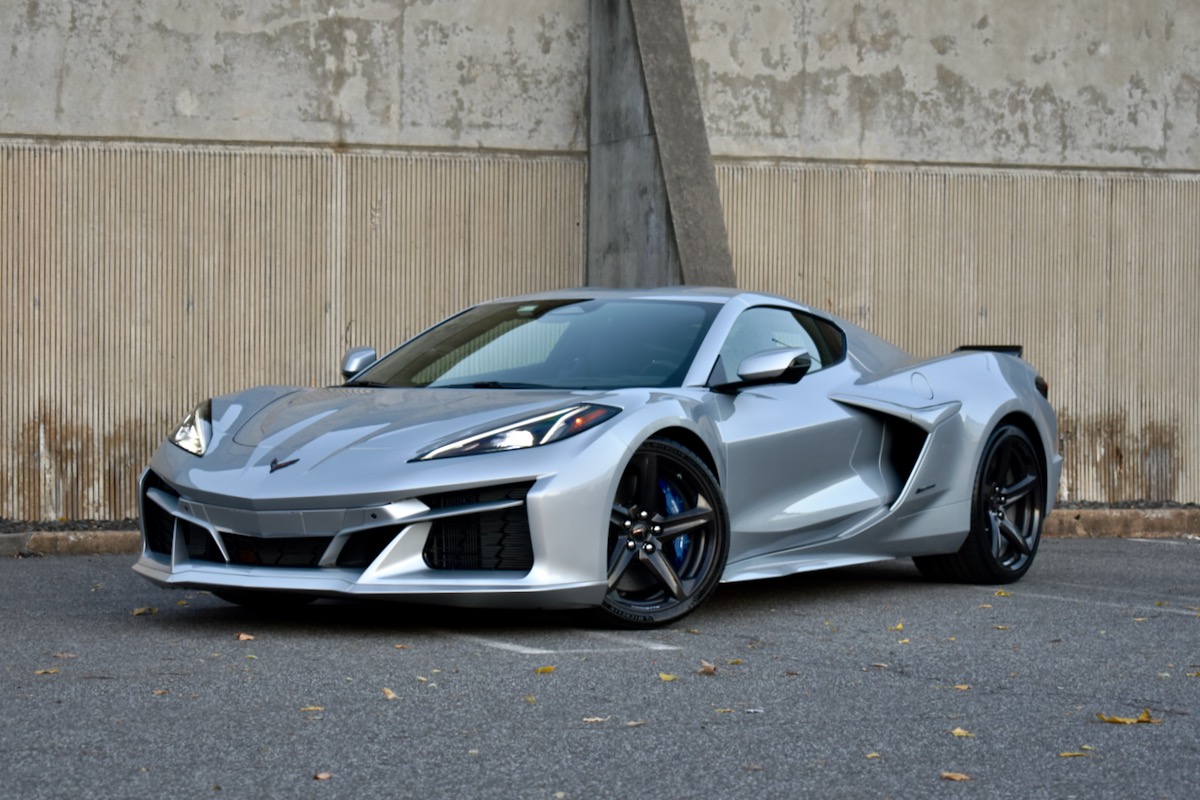
This hybrid sports car boasts impressive performance and everyday usability.
The Corvette may be the last passenger car in Chevrolet’s North American lineup, but Chevy has grown the ‘Vette into a family of models in its own right. For the 2026 model year, there are now five Corvette variants to choose from, starting with the base Stingray and encompassing high-performance Z06, ZR1, and ZR1X. The subject of this review, the 2026 Chevrolet Corvette E-Ray, is a hybrid that offers more power and sharper performance than the Corvette Stingray, but in a less hardcore package than the other models. Like those other models, the E-Ray gets a redesigned dashboard and other small changes for 2026.
Verdict: The E-Ray hybrid gains some performance over the already-impressive Corvette Stingray, but it loses some personality.

When it launched as a 2020 model, the current-generation C8 Corvette marked the most radical change since its introduction. This eighth-generation Corvette switched from a front-engine to a mid-engine layout, fulfilling a dream of legendary Corvette chief engineer Zora Arkus-Duntov while giving the Corvette proportions normally seen on supercars from the likes of Ferrari and Lamborghini, plus a transparent engine cover that nicely shows off the small-block V8. Even six model years in, that still makes any C8 Corvette a striking sight, even if many passersby may not be able to identify it as a ‘Vette.
The E-Ray joined the lineup for the 2024 model year and pushed even further away from Corvette orthodoxy. It’s the first Corvette with a hybrid powertrain and the first with all-wheel drive (AWD) instead of the traditional rear-wheel drive (RWD). Chevy naturally wanted to distinguish the groundbreaking E-Ray from the base Stingray, and to do that it borrowed the widebody styling from the Z06. The resulting front end, with its puffed-out cheeks and mouthguard-like grille insert, isn’t exactly graceful, but the wider fenders housing massive 275/30ZR-20 front and 345/25ZR-21 rear tires give the E-Ray a serious appearance. The staggered wheel-and-tire setup (standard practice on the Corvette) includes one-inch-larger wheels than the Stingray, at 20 inches in the front and 21 inches in back. Carbon fibre wheels are also available starting from an eye-watering $14,995 a set.
Like other Corvette models, the E-Ray is available as a hardtop convertible or as a coupe with a lift-out roof panel. For 2026, an electrochromic roof with adjustable tint is also available. E-Ray trim levels include 1LZ, 2LZ, and 3LZ, with similar standard features to the corresponding Stingray trim levels. The powertrain and chassis upgrades would mostly account for the difference in base prices between the Stingray and E-Ray, although the Canadian federal government’s luxury tax on the portion of the price above $100,000 can make that difference spike pretty quickly.
While the base interior is nice, that could be a tough pill to swallow at the E-Ray’s starting price point. Our sample 3LZ coupe had carbon fibre interior trim and Santorini Blue leather upholstery that made it feel more special, but at significant extra cost.
For 2026, all Corvette models get a new centre console and instrument panel that eliminates the controversial “button wall” of controls on the divider between the driver and passenger seats. Most buttons and knobs are now below the main touchscreen, making them easier for the driver to reach but pretty much inaccessible to the passenger. The dashboard display now wraps around the driver in a manner similar to some current Cadillac models, expanding screen space without changing the cockpit’s overall look.

GM has long shunned hybrids in favour of all-electric vehicles, so it’s surprising that the automaker is selling any hybrids today, let alone a hybrid Corvette. But the C8 Corvette’s mid-engine architecture makes the perfect platform. A 6.2-litre V8 engine powers the rear wheels through an eight-speed dual-clutch automatic transmission as in the Corvette Stingray, while an electric motor drives the front wheels with power supplied by a 1.1-kilowatt-hour battery pack mounted in the tunnel between the seats. The front motor provides a dab of instant torque off the line, and Stealth mode lets you start the car on electric power to avoid startling the neighbors.
The hybrid system contributes 160 horsepower and 125 pound-feet of torque, giving the E-Ray a total system output of 655 hp. As with other hybrids, calculating a true combined torque figure is impossible because the torque curves of the gasoline engine and electric motor don’t align. Still, the E-Ray has just 15 hp less than a Corvette Z06 and actually reaches 100 km/h 0.1 second quicker, according to Chevy, at 2.5 seconds. Only the ZR1 and ZR1X (which also employs a hybrid system) are quicker, but they both have over 1,000 hp. The E-Ray is also a few tenths quicker than a Porsche 911 Carrera GTS—another sports car icon that recently got a hybrid update.
In addition to its bigger wheels and wider tires, the E-Ray comes standard with carbon-ceramic brakes and Magnetic Ride Control magnetorheological dampers. That levels up the chassis compared to a base Corvette Stingray, although that car’s Z51 performance package brings it pretty close to the standard E-Ray setup while adding summer tires (all-seasons are the default for both the non-Z51 Stingray and E-Ray).
What does this all mean for the driving experience? Mostly good things. Powering the front axle can take away some steering feel, but the E-Ray’s helm is pretty much the same as that of a Stingray on public roads. The steering is a bit heavy for our liking but also fast enough that, outside of parking, only small inputs are required. Magnetic Ride Control still provides an impressively smooth ride for a sports car, but the E-Ray’s bigger tires erode that somewhat with harsher pavement impacts.
Powertrain response is also similar to non-hybrid Corvettes, albeit only when switching from the default Tour mode to Sport. (There are also Track, Weather, and My Modes.) This smooths out power delivery appreciably while also giving the steering a bit more liveliness. Like the Stingray, the E-Ray is much friendlier than its aquatic namesake. Just don’t expect the AWD system to take the place of driver skill when launching off the line. Most of the power still goes to the rear wheels, and there’s no way to mechanically shunt it to the front when traction is limited.
And while the E-Ray’s specs are impressive, the hybrid powertrain isn’t the most engaging. The big V8 doesn’t have to work that hard at normal speeds, and with electric assist it’s even more laid back. Unless you’re trying to test Chevy’s zero to 100 km/h claim, the E-Ray feels a bit bored. It still has impressive bandwidth, but it doesn’t feel as dramatic as the non-hybrid Stingray.

No two-seat sports car is truly practical, but the C8 Corvette is better than most. Like the standard Corvette, the E-Ray coupe has 356 litres of cargo space split between front and rear trunks. However, the lift-out roof panel takes up the entire rear trunk, so cargo space is effectively halved if you decide to drive with an open roof. And the Corvette is also a pure two-seater with no space behind the seats for storage.
Headroom and legroom are comparable to what you get in a Mercedes-AMG GT, but that front-engine car doesn’t provide the expansive view offered by the mid-engine Corvette. Sitting closer to the front wheels behind a canopy-like windshield just feels special. It also makes it easier to sense where the front of the car is, which is good because the views from the onboard camera system aren’t very helpful. Visibility through the slot-like rear window isn’t great, but large exterior mirrors, blind-spot monitoring, and a standard rear camera mirror negate this issue.
Like the Corvette Stingray, the E-Ray is available with GT1, GT2, and Competition Sport seats. Our test car had the GT2 seats, which have added bolstering compared to the GT1 seats but don’t compromise on comfort like the Competition Sport seats intended for track use. The enlarged thigh bolsters make getting in and out a little more difficult, but once in place we felt secure without being squeezed. Heating and ventilation are standard with 2LZ and 3LZ trim levels regardless of seat choice.
The Corvette’s square steering wheel might look a bit odd, but it doesn’t present any functional issues. A fast steering rack means large inputs aren’t required outside of parking lot maneuvers, and the square shape ensures a clear view of the instrument cluster. And while it’s not very satisfying to shift this 655-hp sports car into drive by pulling a toggle, that shift mechanism frees up precious space in the cockpit. The drive mode selector and camera-view button are downsized for the same reason, but they’re placed in line with the shifter so they’re at least easy to find.

For the 2026 model year, all Corvettes receive an overhauled dashboard display including a 12.7-inch central touchscreen, 14-inch digital instrument cluster and, for the first time in a Corvette, a smaller 6.6-inch touchscreen that sits to the driver’s left and provides supplementary information like battery state of charge, hybrid system status, and a g-meter. While GM is phasing out Apple CarPlay and Android Auto connectivity, it’s still included in Corvette models for 2026.
We appreciate that Chevy kept analog climate controls, and their new location makes for a more natural feel without the need to reach as far. However, the rearrangement of controls still doesn’t address the main issue with the old configuration: passengers can’t easily access anything. That’s perhaps to be expected in a driver-focused car like this, but it makes it harder for a passenger to act as your co-pilot on long trips.
As with the previous infotainment system, the main touchscreen is easy to use. The menus aren’t too deep or convoluted, so it’s easy to find what you need just by poking around. And like other recent GM systems, the Corvette integrates Google apps including Google Maps, Google Assistant voice recognition, and the Google Play app store.
The gauge cluster features multiple configurations, all with a simple layout perfect for a driver’s car. The new supplementary 6.6-inch touchscreen helps with that, displaying secondary information so it doesn’t clutter the main cluster.
The base 1LZ trim level comes with the same Bose 10-speaker sound system as non-hybrid Corvette Stingray models. Our 3LZ test car and the mid-level 2LZ have a 14-speaker Bose system, but less-sensitive ears probably won’t be able to tell the difference. In our experience, the exhaust note was the only music we needed.
The optional Performance Data Recorder helps get the most out of track sessions by recording high-definition video and data traces. Drivers can analyze these recordings to improve their technique, just like the pros do.

It may be a sports car, but the Corvette E-Ray still has most of the expected array of driver assist features. The list includes: rear park assist, automatic emergency braking, forward collision warning, lane keep assist, and lane departure warning. However, blind-spot monitors and rear cross-traffic alert are not standard, and adaptive cruise control isn’t available.
Safety ratings from the Insurance Institute for Highway Safety (IIHS) and U.S. National Highway Traffic Safety Administration (NHTSA) were not available at the time of publication. That’s often the case for low-volume cars like the Corvette.

Hybrids are usually all about fuel efficiency, but that’s not really the case here. The E-Ray averages 12.7 litres per 100 kilometres combined according to Natural Resources Canada, a slightly higher figure than the 12.5 L/100km combined in the base Corvette Stingray. However, the E-Ray is a lot more powerful, and our 12.5 L/100 km observed average indicates that the NRCan ratings can be matched while still driving this sports car the way it was designed to be driven.
Warranty coverage is similar to other Chevrolet models, including a three-year/60,000-kilometre bumper-to-bumper warranty, five-year/100,000-kilometre powertrain warranty, and an eight-year/160,000-kilometre warranty for the hybrid battery. The latter is the same warranty included with all-electric models like the Blazer EV and Equinox EV.
The E-Ray is a big step up in performance from the Stingray, but it’s also a big step up in price. The hybrid Corvette starts at $161,852 for the coupe, including a $2,700 destination charge and other fees plus the estimated federal luxury tax, which applies to the portion of the price above $100,000. That spikes the E-Ray’s de facto starting price to nearly $70,000 more than a Stingray coupe, although the latter’s $93,342 starting price is below that $100,000 threshold, so the prices align more readily with higher trims and more options.
The E-Ray also costs $12,000 less than the Corvette Z06 while matching it in straight-line acceleration and having a more laid-back character that’s better suited to daily use. Pricing for the E-Ray convertible starts at $172,652 with destination, a similar premium to what you’ll pay for a Stingray or Z06 convertible.
Looking at the competition, the Porsche 911 Carrera GTS also offers a hybrid powertrain, but it costs about $50,000 more than the E-Ray. The Mercedes-AMG GT 43 has a slightly lower base price, but you have to settle for a turbo-four engine with a mild-hybrid system. The Ferrari 296 GTB and McLaren Artura also combine mid-engine looks and hybrid power, but they’re in another league when it comes to price and exclusivity. So, the E-Ray maintains the Corvette’s reputation as a bargain relative to European sports cars.
But if it’s a bargain you’re looking for, the Corvette Stingray is even more compelling. It’s still plenty quick and feels a lot more engaging in everyday driving than the E-Ray. The hybrid drivetrain is an impressive technical achievement, but it seems aimed at Corvette fans looking to split the difference between a Stingray and Z06.

User reviews for 2026 Chevrolet Corvette E-Ray
Write a review2026 Chevrolet Corvette E-Ray Pricing
Trims & specs
Air Conditioning
Automatic climate control front air conditioning · Dual front air conditioning zones
Airbags
Dual front airbags · Passenger airbag deactivation: occupant sensing deactivation · Front side airbags
Audio System
Antenna Type: element · Voice recognition audio system · Bluetooth auxiliary audio input · Premium Brand: Bose · AM/FM radio · Satellite Radio: SiriusXM · Total Number of Speakers: 10
Brakes
ABS: 4-wheel · Braking assist: hill start assist · Electronic parking brake: auto off · Front brake diameter: 15.7 · Front brake width: 1.5 · Front brakes: carbon ceramic disc · Premium brakes: Brembo · Rear brake diameter: 15.4 · Rear brake width: 1.34 · Rear brakes: carbon ceramic disc
Comfort Features
Floor Mat Material: carpet · Floor Material: carpet · Floor Mats: front · Steering wheel trim: leather
Convenience Features
Cargo area power outlet: 12V · Center console: front console with armrest and storage · Cupholders: covered · Dimming rearview mirror: auto-dimming · Multi-function remote: keyless entry with panic alarm · One-touch windows: 2 · Power outlet(s): 12V front · Power steering: electric · Reading lights: front · Rearview mirror: camera-based · Steering wheel: power tilt and telescopic · Steering wheel mounted controls: audio · Storage: door pockets · Vanity mirrors: dual illuminating
Driver Seat
Power adjustments: 8
Drivetrain
4WD Type: on demand · Axle ratio: 3.55 · Limited slip differential: rear
Engine
Battery: maintenance-free · EV battery capacity: 1.9 kWh · Electric Motor Battery Type: lithium ion · Electric Motor HP: 160 · Electric Motor Power Output (Kilowatts): 120 · Electric Motor Torque: 125 · Electric motor miles per charge: 3 · Exhaust: performance · Hybrid Gas Engine HP: 490 · Hybrid Gas Engine HP@RPM: 6450 · Hybrid Gas Engine Torque: 465 · Hybrid gas Engine Torque@RPM: 5150 · Oil cooler: auxiliary
Exterior Features
Door handle color: black · Exhaust: quad exhaust tips · Exhaust tip color: stainless-steel · Front bumper color: body-color · Grille color: black · Mirror color: body-color · Rear bumper color: body-color · Rear spoiler: lip · Rear spoiler color: body-color · Rear trunk/liftgate: soft close · Window trim: black
Headrests
Front headrests: integrated · Number of front headrests: 2
In Car Entertainment
Connected in-car apps: app marketplace integration · Infotainment: Google Built-In · Infotainment screen size: 12.7 in. · Smartphone integration: wireless Apple CarPlay
Instrumentation
Fuel economy display: MPG · Instrument cluster screen size: 14 in. · Warnings and reminders: low oil level
Lights
Daytime running lights: LED · Exterior entry lights: security approach lamps · Headlights: auto delay off · Tail and brake lights: LED
Mirrors
Exterior mirrors: manual folding
Passenger Seat
Power adjustments: 8
Roof
Convertible roof: targa roof
Safety
Automatic emergency braking: front pedestrian · Camera system: rearview · Crumple zones: front · Parking sensors: rear · Pre-Collision Warning System: audible warning · Pre-collision warning system: pedestrian detection · Programmable safety key: MyKey · Rearview monitor: in dash
Seatbelts
Emergency locking retractors: front · Front seatbelts: 3-point · Seatbelt pretensioners: front · Seatbelt warning sensor: driver and passenger
Seats
Driver seat power adjustments: reclining · Front seat type: sport bucket · Passenger seat power adjustments: reclining · Upholstery: leather
Security
Power door locks: anti-lockout
Steering
Steering ratio: 15.7
Suspension
Driver Adjustable Suspension: ride control · Front Arm Type: short and long arm (SLA) · Front Spring Type: coil springs · Front Suspension Classification: independent · Front Suspension Type: strut · Front shock type: monotube · Rear Shock Type: coil over shock · Rear Spring Type: coil springs · Rear Suspension Classification: independent · Rear Suspension Type: short and long arm · Rear shock type: monotube · Stabilizer bar(s): front · Suspension control: magnetic
Telematics
Driver assistance app: roadside assistance · Electronic messaging assistance: with voice recognition · Navigation system: with voice recognition · Phone: voice activated · Phone wireless data link: Bluetooth · Satellite communications: OnStar · Smart device app compatibility: Google Assistant · Smart device app function: send destination to vehicle · Wifi: hotspot
Tires
Type: summer performance
Tires and Rims
Wheels: painted aluminum
Windows
Front wipers: variable intermittent · Power windows: with safety reverse
Air Conditioning
Automatic climate control front air conditioning · Dual front air conditioning zones
Airbags
Dual front airbags · Passenger airbag deactivation: occupant sensing deactivation · Front side airbags
Audio System
Antenna Type: diversity · Voice recognition audio system · USB auxiliary audio input · Premium Brand: Bose · AM/FM radio · Satellite Radio: SiriusXM · 2 subwoofers · Total Number of Speakers: 12
Brakes
ABS: 4-wheel · Braking assist: hill start assist · Electronic parking brake: auto off · Front brake diameter: 15.7 · Front brake width: 1.5 · Front brakes: carbon ceramic disc · Premium brakes: Brembo · Rear brake diameter: 15.4 · Rear brake width: 1.34 · Rear brakes: carbon ceramic disc
Comfort Features
Floor Mat Material: carpet · Floor Material: carpet · Floor Mats: front · Steering wheel trim: leather
Convenience Features
Cargo area power outlet: 12V · Center console: front console with armrest and storage · Cupholders: front · Dimming rearview mirror: auto-dimming · Memorized settings: steering wheel · Multi-function remote: keyless entry with panic alarm · One-touch windows: 2 · Power outlet(s): 12V front · Power steering: electric · Reading lights: front · Rearview mirror: camera-based · Steering wheel: power tilt and telescopic · Steering wheel mounted controls: phone · Storage: rear bulkhead · Universal garage door opener: Homelink · Vanity mirrors: dual illuminating
Driver Seat
Adjustable lumbar support: power · Power adjustments: 8
Drivetrain
4WD Type: on demand · Axle ratio: 3.55 · Limited slip differential: rear
Engine
Battery: maintenance-free · EV battery capacity: 1.9 kWh · Electric Motor Battery Type: lithium ion · Electric Motor HP: 160 · Electric Motor Power Output (Kilowatts): 120 · Electric Motor Torque: 125 · Electric motor miles per charge: 3 · Exhaust: performance · Hybrid Gas Engine HP: 490 · Hybrid Gas Engine HP@RPM: 6450 · Hybrid Gas Engine Torque: 465 · Hybrid gas Engine Torque@RPM: 5150 · Oil cooler: auxiliary
Exterior Features
Door handle color: black · Exhaust: quad exhaust tips · Exhaust tip color: stainless-steel · Front bumper color: body-color · Grille color: black · Mirror color: body-color · Rear bumper color: body-color · Rear spoiler: lip · Rear spoiler color: body-color · Rear trunk/liftgate: soft close · Window trim: black
Headrests
Front headrests: integrated · Number of front headrests: 2
In Car Entertainment
Connected in-car apps: app marketplace integration · Infotainment: Google Built-In · Infotainment screen size: 12.7 in. · Smartphone integration: wireless Android Auto
Instrumentation
Fuel economy display: MPG · Instrument cluster screen size: 14 in. · Warnings and reminders: low battery
Lights
Daytime running lights: LED · Exterior entry lights: security approach lamps · Headlights: automatic high beam dimmer · Tail and brake lights: LED
Mirrors
Exterior mirrors: power
Passenger Seat
Adjustable lumbar support: power · Power adjustments: 8
Roof
Convertible roof: targa roof
Safety
Automatic emergency braking: front pedestrian · Camera system: rearview · Cross Traffic Alert: rear · Crumple zones: front · Dash camera: front recording · Parking sensors: rear · Pre-Collision Warning System: visual warning · Pre-collision warning system: pedestrian detection · Programmable safety key: MyKey · Rearview monitor: in dash
Seatbelts
Emergency locking retractors: front · Front seatbelts: 3-point · Seatbelt pretensioners: front · Seatbelt warning sensor: driver and passenger
Seats
Driver seat power adjustments: reclining · Front seat type: sport bucket · Passenger seat power adjustments: reclining · Upholstery: perforated
Security
Power door locks: anti-lockout
Steering
Steering ratio: 15.7
Suspension
Driver Adjustable Suspension: ride control · Front Arm Type: short and long arm (SLA) · Front Spring Type: coil springs · Front Suspension Classification: independent · Front Suspension Type: strut · Front shock type: monotube · Rear Shock Type: coil over shock · Rear Spring Type: coil springs · Rear Suspension Classification: independent · Rear Suspension Type: short and long arm · Rear shock type: monotube · Stabilizer bar(s): rear · Suspension control: magnetic
Telematics
Driver assistance app: roadside assistance · Electronic messaging assistance: with voice recognition · Navigation system: touch screen display · Phone: voice activated · Phone wireless data link: Bluetooth · Satellite communications: Turn-by-Turn Navigation · Smart device app compatibility: Google Assistant · Smart device app function: engine start · Wifi: hotspot
Tires
Type: summer performance
Tires and Rims
Wheels: painted aluminum
Windows
Front wipers: variable intermittent · Power windows: with safety reverse
Air Conditioning
Automatic climate control front air conditioning · Dual front air conditioning zones
Airbags
Dual front airbags · Passenger airbag deactivation: occupant sensing deactivation · Front side airbags
Audio System
Antenna Type: element · Voice recognition audio system · Bluetooth auxiliary audio input · Premium Brand: Bose · Touch screen display radio · Satellite Radio: SiriusXM · Total Number of Speakers: 10
Brakes
ABS: 4-wheel · Braking assist: hill start assist · Electronic parking brake: auto off · Front brake diameter: 15.7 · Front brake width: 1.5 · Front brakes: carbon ceramic disc · Premium brakes: Brembo · Rear brake diameter: 15.4 · Rear brake width: 1.34 · Rear brakes: carbon ceramic disc
Comfort Features
Floor Mat Material: carpet · Floor Material: carpet · Floor Mats: front · Steering wheel trim: leather
Convenience Features
Cargo area power outlet: 12V · Center console: front console with armrest and storage · Cupholders: front · Dimming rearview mirror: auto-dimming · Multi-function remote: proximity entry system · One-touch windows: 2 · Power outlet(s): USB-C front · Power steering: speed-proportional · Reading lights: front · Rearview mirror: camera-based · Steering wheel: power tilt and telescopic · Steering wheel mounted controls: cruise controls · Storage: cargo tie-down anchors and hooks · Vanity mirrors: dual illuminating
Driver Seat
Power adjustments: 8
Drivetrain
4WD Type: on demand · Axle ratio: 3.55 · Limited slip differential: rear
Engine
Battery: maintenance-free · EV battery capacity: 1.9 kWh · Electric Motor Battery Type: lithium ion · Electric Motor HP: 160 · Electric Motor Power Output (Kilowatts): 120 · Electric Motor Torque: 125 · Electric motor miles per charge: 3 · Exhaust: performance · Hybrid Gas Engine HP: 490 · Hybrid Gas Engine HP@RPM: 6450 · Hybrid Gas Engine Torque: 465 · Hybrid gas Engine Torque@RPM: 5150 · Oil cooler: auxiliary
Exterior Features
Door handle color: black · Exhaust: quad exhaust tips · Exhaust tip color: stainless-steel · Front bumper color: body-color · Grille color: black · Mirror color: body-color · Rear bumper color: body-color · Rear spoiler: lip · Rear spoiler color: body-color · Rear trunk/liftgate: soft close · Window trim: black
Headrests
Front headrests: integrated · Number of front headrests: 2
In Car Entertainment
Connected in-car apps: Google search · Infotainment: Google Built-In · Infotainment screen size: 12.7 in. · Smartphone integration: wireless Apple CarPlay
Instrumentation
Fuel economy display: MPG · Instrument cluster screen size: 14 in. · Warnings and reminders: low oil level
Lights
Daytime running lights: LED · Exterior entry lights: security approach lamps · Headlights: auto delay off · Tail and brake lights: LED
Mirrors
Exterior mirrors: power
Passenger Seat
Power adjustments: 8
Roof
Convertible rear window: glass · Convertible roof: remote operation
Safety
Automatic emergency braking: front pedestrian · Camera system: rearview · Crumple zones: rear · Parking sensors: rear · Pre-Collision Warning System: visual warning · Pre-collision warning system: pedestrian detection · Programmable safety key: MyKey · Rearview monitor: in dash
Seatbelts
Emergency locking retractors: front · Front seatbelts: 3-point · Seatbelt pretensioners: front · Seatbelt warning sensor: driver and passenger
Seats
Driver seat power adjustments: height · Front seat type: sport bucket · Passenger seat power adjustments: height · Upholstery: perforated
Security
Power door locks: anti-lockout
Steering
Steering ratio: 15.7
Suspension
Driver Adjustable Suspension: ride control · Front Arm Type: short and long arm (SLA) · Front Spring Type: coil springs · Front Suspension Classification: independent · Front Suspension Type: strut · Front shock type: monotube · Rear Shock Type: coil over shock · Rear Spring Type: coil springs · Rear Suspension Classification: independent · Rear Suspension Type: short and long arm · Rear shock type: monotube · Stabilizer bar(s): rear · Suspension control: magnetic
Telematics
Driver assistance app: roadside assistance · Electronic messaging assistance: with read function · Navigation system: with voice recognition · Phone: voice activated · Phone wireless data link: Bluetooth · Satellite communications: Turn-by-Turn Navigation · Smart device app compatibility: myChevrolet with Connected Access · Smart device app function: vehicle location · Wifi: hotspot
Tires
Type: summer performance
Tires and Rims
Wheels: painted aluminum
Windows
Front wipers: variable intermittent · Power windows: with safety reverse
Air Conditioning
Automatic climate control front air conditioning · Dual front air conditioning zones
Airbags
Dual front airbags · Passenger airbag deactivation: occupant sensing deactivation · Front side airbags
Audio System
Antenna Type: diversity · Voice recognition audio system · USB auxiliary audio input · Premium Brand: Bose · AM/FM radio · Satellite Radio: SiriusXM · 2 subwoofers · Total Number of Speakers: 12
Brakes
ABS: 4-wheel · Braking assist: hill start assist · Electronic parking brake: auto off · Front brake diameter: 15.7 · Front brake width: 1.5 · Front brakes: carbon ceramic disc · Premium brakes: Brembo · Rear brake diameter: 15.4 · Rear brake width: 1.34 · Rear brakes: carbon ceramic disc
Comfort Features
Center console trim: leather · Dash trim: leather · Door trim: leather · Floor Mat Material: carpet · Floor Material: carpet · Floor Mats: front · Headliner trim: Alcantara · Interior accents: faux suede · Steering wheel trim: leather
Convenience Features
Cargo area power outlet: 12V · Center console: front console with armrest and storage · Cupholders: front · Dimming rearview mirror: auto-dimming · Memorized settings: steering wheel · Multi-function remote: trunk release · One-touch windows: 2 · Power outlet(s): 12V front · Power steering: electric · Reading lights: front · Rearview mirror: camera-based · Steering wheel: power tilt and telescopic · Steering wheel mounted controls: voice recognition controls · Storage: in dash · Universal garage door opener: Homelink · Vanity mirrors: dual illuminating
Driver Seat
Adjustable lumbar support: power · Power adjustments: 8
Drivetrain
4WD Type: on demand · Axle ratio: 3.55 · Limited slip differential: rear
Engine
Battery: maintenance-free · EV battery capacity: 1.9 kWh · Electric Motor Battery Type: lithium ion · Electric Motor HP: 160 · Electric Motor Power Output (Kilowatts): 120 · Electric Motor Torque: 125 · Electric motor miles per charge: 3 · Exhaust: performance · Hybrid Gas Engine HP: 490 · Hybrid Gas Engine HP@RPM: 6450 · Hybrid Gas Engine Torque: 465 · Hybrid gas Engine Torque@RPM: 5150 · Oil cooler: auxiliary
Exterior Features
Door handle color: black · Exhaust: quad exhaust tips · Exhaust tip color: stainless-steel · Front bumper color: body-color · Grille color: black · Mirror color: body-color · Rear bumper color: body-color · Rear spoiler: lip · Rear spoiler color: body-color · Rear trunk/liftgate: soft close · Window trim: black
Headrests
Front headrests: integrated · Number of front headrests: 2
In Car Entertainment
Connected in-car apps: app marketplace integration · Infotainment: Google Built-In · Infotainment screen size: 12.7 in. · Smartphone integration: wireless Apple CarPlay
Instrumentation
Fuel economy display: MPG · Instrument cluster screen size: 14 in. · Warnings and reminders: low battery
Lights
Daytime running lights: LED · Exterior entry lights: security approach lamps · Headlights: auto delay off · Tail and brake lights: LED
Mirrors
Exterior mirrors: power
Passenger Seat
Adjustable lumbar support: power · Power adjustments: 8
Roof
Convertible roof: targa roof
Safety
Automatic emergency braking: front · Camera system: rearview · Cross Traffic Alert: rear · Crumple zones: front · Dash camera: front recording · Parking sensors: rear · Pre-Collision Warning System: visual warning · Pre-collision warning system: pedestrian detection · Programmable safety key: MyKey · Rearview monitor: in dash
Seatbelts
Emergency locking retractors: front · Front seatbelts: 3-point · Seatbelt pretensioners: front · Seatbelt warning sensor: driver and passenger
Seats
Driver seat power adjustments: height · Front seat type: sport bucket · Passenger seat power adjustments: height · Upholstery: perforated
Security
Power door locks: anti-lockout
Steering
Steering ratio: 15.7
Suspension
Driver Adjustable Suspension: ride control · Front Arm Type: short and long arm (SLA) · Front Spring Type: coil springs · Front Suspension Classification: independent · Front Suspension Type: strut · Front shock type: monotube · Rear Shock Type: coil over shock · Rear Spring Type: coil springs · Rear Suspension Classification: independent · Rear Suspension Type: short and long arm · Rear shock type: monotube · Stabilizer bar(s): rear · Suspension control: magnetic
Telematics
Driver assistance app: roadside assistance · Electronic messaging assistance: with voice recognition · Navigation system: touch screen display · Phone: voice activated · Phone wireless data link: Bluetooth · Satellite communications: Turn-by-Turn Navigation · Smart device app compatibility: Google Assistant · Smart device app function: vehicle location · Wifi: hotspot
Tires
Type: summer performance
Tires and Rims
Wheels: painted aluminum
Windows
Front wipers: variable intermittent · Power windows: with safety reverse
Air Conditioning
Automatic climate control front air conditioning · Dual front air conditioning zones
Airbags
Dual front airbags · Passenger airbag deactivation: occupant sensing deactivation · Front side airbags
Audio System
Antenna Type: element · Voice recognition audio system · Bluetooth auxiliary audio input · Premium Brand: Bose · Touch screen display radio · Satellite Radio: SiriusXM · 2 subwoofers · Total Number of Speakers: 12
Brakes
ABS: 4-wheel · Braking assist: hill start assist · Electronic parking brake: auto off · Front brake diameter: 15.7 · Front brake width: 1.5 · Front brakes: carbon ceramic disc · Premium brakes: Brembo · Rear brake diameter: 15.4 · Rear brake width: 1.34 · Rear brakes: carbon ceramic disc
Comfort Features
Floor Mat Material: carpet · Floor Material: carpet · Floor Mats: front · Steering wheel trim: leather
Convenience Features
Cargo area power outlet: 12V · Center console: front console with armrest and storage · Cupholders: front · Dimming rearview mirror: auto-dimming · Memorized settings: side mirrors · Multi-function remote: vehicle and key memory · One-touch windows: 2 · Power outlet(s): USB front · Power steering: speed-proportional · Reading lights: front · Rearview mirror: camera-based · Steering wheel: power tilt and telescopic · Steering wheel mounted controls: multi-function screen controls · Storage: cargo tie-down anchors and hooks · Universal garage door opener: Homelink · Vanity mirrors: dual illuminating
Driver Seat
Adjustable lumbar support: power · Power adjustments: 8
Drivetrain
4WD Type: on demand · Axle ratio: 3.55 · Limited slip differential: rear
Engine
Battery: maintenance-free · EV battery capacity: 1.9 kWh · Electric Motor Battery Type: lithium ion · Electric Motor HP: 160 · Electric Motor Power Output (Kilowatts): 120 · Electric Motor Torque: 125 · Electric motor miles per charge: 3 · Exhaust: performance · Hybrid Gas Engine HP: 490 · Hybrid Gas Engine HP@RPM: 6450 · Hybrid Gas Engine Torque: 465 · Hybrid gas Engine Torque@RPM: 5150 · Oil cooler: auxiliary
Exterior Features
Door handle color: black · Exhaust: quad exhaust tips · Exhaust tip color: stainless-steel · Front bumper color: body-color · Grille color: black · Mirror color: body-color · Rear bumper color: body-color · Rear spoiler: lip · Rear spoiler color: body-color · Rear trunk/liftgate: soft close · Window trim: black
Headrests
Front headrests: integrated · Number of front headrests: 2
In Car Entertainment
Connected in-car apps: driving performance · Infotainment: Google Built-In · Infotainment screen size: 12.7 in. · Smartphone integration: wireless Apple CarPlay
Instrumentation
Fuel economy display: range · Instrument cluster screen size: 14 in. · Warnings and reminders: maintenance reminder
Lights
Daytime running lights: LED · Exterior entry lights: security approach lamps · Headlights: auto delay off · Tail and brake lights: LED
Mirrors
Exterior mirrors: power
Passenger Seat
Adjustable lumbar support: power · Power adjustments: 8
Roof
Convertible rear window: glass · Convertible roof: power retractable hard top
Safety
Automatic emergency braking: front · Camera system: rearview · Cross Traffic Alert: rear · Crumple zones: rear · Dash camera: front recording · Parking sensors: rear · Pre-Collision Warning System: visual warning · Pre-collision warning system: pedestrian detection · Programmable safety key: MyKey · Rearview monitor: in dash
Seatbelts
Emergency locking retractors: front · Front seatbelts: 3-point · Seatbelt pretensioners: front · Seatbelt warning sensor: driver and passenger
Seats
Driver seat power adjustments: height · Front seat type: sport bucket · Passenger seat power adjustments: height · Upholstery: leather
Security
Power door locks: anti-lockout
Steering
Steering ratio: 15.7
Suspension
Driver Adjustable Suspension: ride control · Front Arm Type: short and long arm (SLA) · Front Spring Type: coil springs · Front Suspension Classification: independent · Front Suspension Type: strut · Front shock type: monotube · Rear Shock Type: coil over shock · Rear Spring Type: coil springs · Rear Suspension Classification: independent · Rear Suspension Type: short and long arm · Rear shock type: monotube · Stabilizer bar(s): rear · Suspension control: magnetic
Telematics
Driver assistance app: roadside assistance · Electronic messaging assistance: with read function · Navigation system: touch screen display · Phone: voice activated · Phone wireless data link: Bluetooth · Satellite communications: Turn-by-Turn Navigation · Smart device app compatibility: myChevrolet with Connected Access · Smart device app function: vehicle location · Wifi: hotspot
Tires
Type: summer performance
Tires and Rims
Wheels: painted aluminum
Windows
Front wipers: variable intermittent · Power windows: with safety reverse
Air Conditioning
Automatic climate control front air conditioning · Dual front air conditioning zones
Airbags
Dual front airbags · Passenger airbag deactivation: occupant sensing deactivation · Front side airbags
Audio System
Antenna Type: diversity · Voice recognition audio system · USB auxiliary audio input · Premium Brand: Bose · Touch screen display radio · Satellite Radio: SiriusXM · 2 subwoofers · Total Number of Speakers: 12
Brakes
ABS: 4-wheel · Braking assist: hill start assist · Electronic parking brake: auto off · Front brake diameter: 15.7 · Front brake width: 1.5 · Front brakes: carbon ceramic disc · Premium brakes: Brembo · Rear brake diameter: 15.4 · Rear brake width: 1.34 · Rear brakes: carbon ceramic disc
Comfort Features
Center console trim: leather · Dash trim: leather · Door trim: leather · Floor Mat Material: carpet · Floor Material: carpet · Floor Mats: front · Headliner trim: Alcantara · Interior accents: faux suede · Steering wheel trim: carbon
Convenience Features
Cargo area power outlet: 12V · Center console: front console with armrest and storage · Cupholders: front · Dimming rearview mirror: auto-dimming · Memorized settings: side mirrors · Multi-function remote: trunk release · One-touch windows: 2 · Power outlet(s): 12V front · Power steering: speed-proportional · Reading lights: front · Rearview mirror: camera-based · Steering wheel: power tilt and telescopic · Steering wheel mounted controls: audio · Storage: door pockets · Universal garage door opener: Homelink · Vanity mirrors: dual illuminating
Driver Seat
Adjustable lumbar support: power · Power adjustments: 8
Drivetrain
4WD Type: on demand · Axle ratio: 3.55 · Limited slip differential: rear
Engine
Battery: maintenance-free · EV battery capacity: 1.9 kWh · Electric Motor Battery Type: lithium ion · Electric Motor HP: 160 · Electric Motor Power Output (Kilowatts): 120 · Electric Motor Torque: 125 · Electric motor miles per charge: 3 · Exhaust: performance · Hybrid Gas Engine HP: 490 · Hybrid Gas Engine HP@RPM: 6450 · Hybrid Gas Engine Torque: 465 · Hybrid gas Engine Torque@RPM: 5150 · Oil cooler: auxiliary
Exterior Features
Door handle color: black · Exhaust: quad exhaust tips · Exhaust tip color: stainless-steel · Front bumper color: body-color · Grille color: black · Mirror color: body-color · Rear bumper color: body-color · Rear spoiler: lip · Rear spoiler color: body-color · Rear trunk/liftgate: soft close · Window trim: black
Headrests
Front headrests: integrated · Number of front headrests: 2
In Car Entertainment
Connected in-car apps: app marketplace integration · Infotainment: Google Built-In · Infotainment screen size: 12.7 in. · Smartphone integration: wireless Android Auto
Instrumentation
Fuel economy display: MPG · Instrument cluster screen size: 14 in. · Warnings and reminders: low fuel level
Lights
Daytime running lights: LED · Exterior entry lights: security approach lamps · Headlights: LED · Tail and brake lights: LED
Mirrors
Exterior mirrors: power
Passenger Seat
Adjustable lumbar support: power · Power adjustments: 8
Roof
Convertible rear window: glass · Convertible roof: power retractable hard top
Safety
Automatic emergency braking: front · Camera system: rearview · Cross Traffic Alert: rear · Crumple zones: front · Dash camera: front recording · Parking sensors: rear · Pre-Collision Warning System: audible warning · Pre-collision warning system: pedestrian detection · Programmable safety key: MyKey · Rearview monitor: in dash
Seatbelts
Emergency locking retractors: front · Front seatbelts: 3-point · Seatbelt pretensioners: front · Seatbelt warning sensor: driver and passenger
Seats
Driver seat power adjustments: height · Front seat type: sport bucket · Passenger seat power adjustments: height · Upholstery: leather
Security
Power door locks: anti-lockout
Steering
Steering ratio: 15.7
Suspension
Driver Adjustable Suspension: ride control · Front Arm Type: short and long arm (SLA) · Front Spring Type: coil springs · Front Suspension Classification: independent · Front Suspension Type: strut · Front shock type: monotube · Rear Shock Type: coil over shock · Rear Spring Type: coil springs · Rear Suspension Classification: independent · Rear Suspension Type: short and long arm · Rear shock type: monotube · Stabilizer bar(s): front · Suspension control: magnetic
Telematics
Driver assistance app: roadside assistance · Electronic messaging assistance: with read function · Navigation system: touch screen display · Phone: voice activated · Phone wireless data link: Bluetooth · Satellite communications: Turn-by-Turn Navigation · Smart device app compatibility: Google Assistant · Smart device app function: lock operation · Wifi: hotspot
Tires
Type: summer performance
Tires and Rims
Wheels: painted aluminum
Windows
Front wipers: variable intermittent · Power windows: with safety reverse
