2026 Hyundai Palisade Hybrid Reviews, Pricing & Specs
Write a review$44,160 to $58,780
Original MSRP
8.3
of 10
expert review
avg user rating
(0 reviews)
Pros
Excellent fuel economy
Powerful engine
Comfortable interior
Cons
Not as spacious as segment leaders
Engine sounds unrefined at times
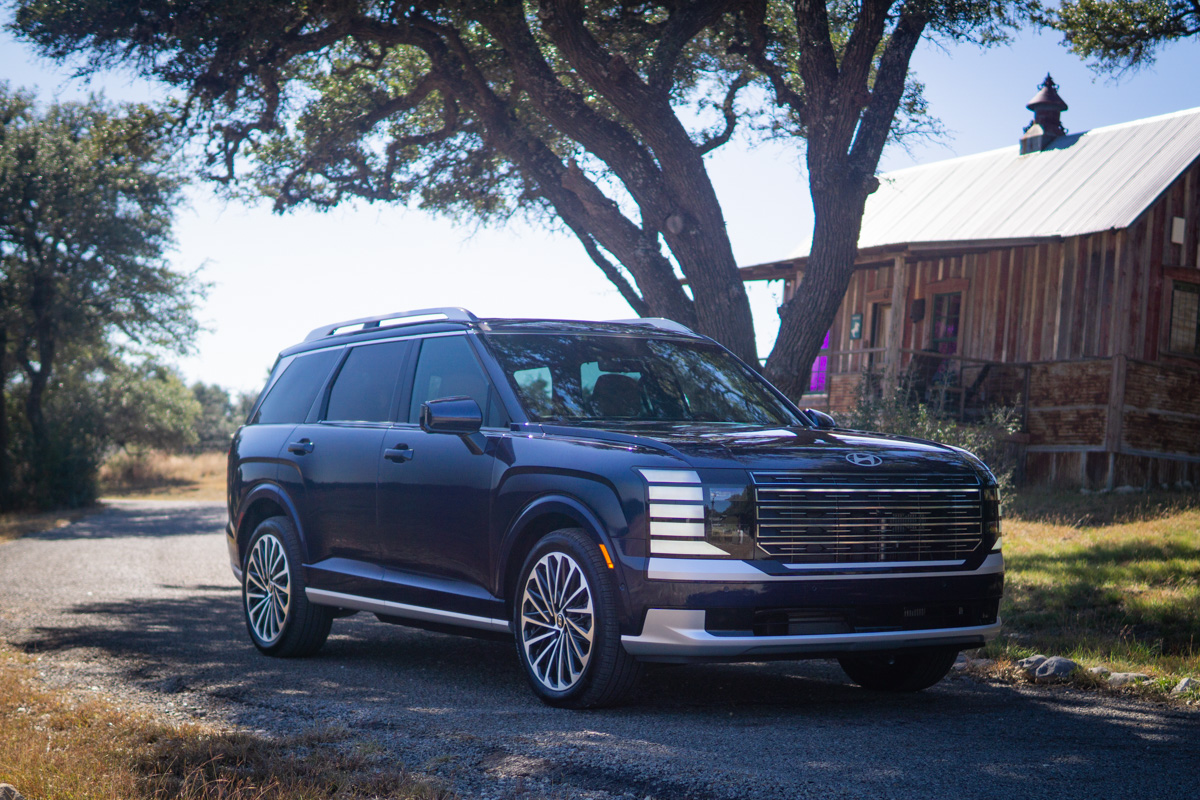
A new hybrid engine for the 2026 Hyundai Palisade proves that the best can still get better.
Redesigned for 2026, the new Hyundai Palisade brings more than just fresh looks. For the first time, Hyundai is now offering a hybrid powertrain with its big three-row, family SUV. Capable of traveling more than 950 kilometres on a single tank of fuel, the Palisade Hybrid solves one of the only downsides of the market’s best three-row SUV: fuel efficiency. The Palisade Hybrid delivers more than just great fuel economy, though. It’s more powerful than the gas model, and in higher trim levels the Palisade Hybrid feels more luxurious than its competition.
Verdict: Simply put, Hyundai currently sells the best mass-market three-row crossover SUV in North America. The 2026 Hyundai Palisade looks good, drives well, and feels special — and it will keep you away from the gas station, too.

In Canada, Hyundai sells the 2026 Palisade Hybrid in two trim levels: Luxury and Ultimate Calligraphy. These integrate into the gas-only Palisade line-up, which includes Preferred Trend, the outdoorsy XRT Pro, and Ultimate Calligraphy. While the top trim is predictably more impressive than its less-expensive counterpart, no Palisade trim lacks style or presence.
The base Luxury trim comes standard with 20-inch alloy wheels. The front of every Palisade features a massive grille with horizontal slats framed by LED projector headlights and a stack of five huge LED daytime running lights.
Along the profile, the Palisade comes standard with body-colour, heated side mirrors. They’re all power-operable (essentially all vehicle side mirrors are these days), but the Luxury Hybrid adds power-folding to their feature list. Acoustic side glass on the front and rear windows is standard on all trims.
The rear view of the Palisade is equally handsome. Wide-spaced letters spelling the vehicle’s name rest below a large Hyundai emblem, and stacks of five LED taillights wrap around the rear corners. Below the bumper, the exhaust is tucked inconspicuously away. It’s a hint that this Palisade is about peaceful, efficient driving rather than outright performance.
The 2026 Hyundai Palisade is even more impressive on the inside. The base gas-only trim levels come standard with H-Tex synthetic leatherette upholstery, eight-way power adjustment for the driver’s seat (with two-way lumbar support), and three-stage heating elements for the driver’s and front-passenger seat.
Move up the trim ladder and you can add features like four-way lumbar adjustment, seat ventilation, integrated driver’s seat memory settings, and on the Ultimate Calligraphy trim, beautiful Nappa leather upholstery.
The Palisade’s interior design is also a delight. Filled with organic and natural shapes, everything feels like it has been fit together with care. While the Toyota Grand Highlander — Hyundai’s chief competitor in this space, along with the Kia Telluride — has cubbies that feel 3D printed into cost-effective trim pieces, the Palisade’s storage solutions feel thoughtfully considered and engineered. Overall, there is just a richer feeling of craftsmanship inside the Palisade than you’ll find in other non-luxury crossovers.

“Hybrid” no longer means slow, even when it’s applied to a big, three-row crossover. Once upon a time, seating for seven meant the vehicle would lumber down the highway and roll through twisty backroads. Hyundai turned that stereotype on its head when it launched the first Palisade for the 2020 model year. The Palisade Hybrid continues its deserved reputation as a fun-to-drive family car in 2026.
First, the powertrain. Although the all-gas Palisade still employs a naturally aspirated V6 engine, the hybrid relies on a 2.5-litre turbocharged four-cylinder paired with two electric motors and a 1.65-kWh battery. On its own, the turbo-four engine produces 258 horsepower and 260 pound-feet of torque. That’s more than the Grand Highlander’s base hybrid engine, but Hyundai’s not quite done. Tack on the combined horsepower provided by the electric motors, and the 2026 Hyundai Palisade makes a total of 329 horsepower and 339 pound-feet of torque. It’s enough that the Palisade never lags, whether around town or while passing slower vehicles on the highway.
Some credit for the Palisade Hybrid’s impressive performance goes to its advanced eight-speed automatic transmission and propulsion systems. The 2026 Palisade carts around Hyundai’s next-generation hybrid system, which eliminates the old platform’s starter motor and auxiliary belts, instead handling their functions via a more capable electric motor connected directly to the engine. That motor supports a second unit, primarily responsible for vehicle propulsion, when needed. In low-speed situations or under light and smooth acceleration, the Palisade can disconnect the P1 and engine via a clutch, relying instead solely on the more powerful P2 motor.
The result is an optimized powertrain that produces more power while consuming less fuel. Further, the advanced hybrid system helps with handling as the Palisade can adjust the power distribution from the engine and motors to aid in load leveling. Or at least that’s the theoretical result. In practice, few shoppers will be able to notice any of that dynamic load leveling while driving.
What drivers will notice, however, is an astounding lack of noise and vibration inside the Palisade’s cabin. More noise-absorbing carpet has been spread across the Palisade’s floor to keep road and tire noise at bay, and the acoustic glass in the Palisade’s windows does a commendable job of keeping wind and engine noise at a reasonable hush. Under hard acceleration, the engine’s thrum will creep into the cabin, and we found it to be unpleasant, typical of low-strung, turbocharged four-cylinders. But otherwise, this is a delightfully peaceful vehicle for a long road trip.
The steering feel, likewise, is sharper than we’d generally expect from a three-row crossover. There’s virtually no play off-centre when cruising down the highway, and the wheel demonstrates nice weight and balance when turning. The pedals, on the other hand, feel a bit squishy. They’re not bad or out-of-line with the expectations for a big family SUV, but the combination of a quick, responsive steering wheel and soft pedal feel means the driver’s inputs don’t feel particularly unified in the Palisade.

With 2,455 litres of total cargo capacity, the 2026 Palisade Hybrid trails the Chevrolet Traverse, Toyota Grand Highlander and Honda Pilot, which offer 2,764, 2,761, and 3,166 litres respectively. However, it does offer more than other three-row crossovers, notably the 2026 Ford Explorer, Nissan Pathfinder, and Mazda CX-90 (2,415, 2,280, and 2,101 litres, respectively).
The Palisade Hybrid doesn’t offer quite as much second-row legroom due to the battery’s position under the front passenger seat. However, you’ll still get more than most of the competition. The third row is a different story. Although the Palisade entered as a new standard-bearer for usable third rows in the crossover market, the competition quickly took note and caught up. Third-row legroom trails the Grand Highlander, Honda Pilot, and Ford Explorer, measuring a maximum of 815 millimetres. Way-back headroom is a similar story. At 957 mm, the ceiling in the Palisade Hybrid’s third row is shorter than the Pilot and the Explorer, although it’s more than a centimetre higher than the Grand Highlander’s.
Beyond measurements, however, the Hyundai Palisade offers a more comfortable cabin than the competition. Dual-zone climate control with second-row HVAC controls come standard on every Palisade Hybrid, as do a total of seven 100-watt USB-C power outlets, two in each row plus a data port. We had no issues getting comfortable in either the driver or passenger seat, and we found the second row plenty spacious enough for a fully grown adult. The Palisade Hybrid comes standard with a second-row bench seat and seating for eight, but captain’s chairs are available on the Luxury Hybrid and standard on XRT Pro and both Ultimate Calligraphy trims.
Finally, the Palisade is awash with cubbies for smaller items. The centre console has an open area ahead of it with a rubberized cargo space big enough for a purse. A small shelf lives partially hidden ahead of the front passenger seat, and the front doors each have a small lip by their handle big enough to accommodate a phone or a pair of sunglasses.

The 2026 Hyundai Palisade Hybrid comes extremely well equipped with a standard 12.3-inch touchscreen and a matching 12.3-inch digital instrument cluster. 12.3 inches isn’t small, but it also doesn’t dominate the dash like the oversized touchscreens in many vehicles today. We did, however, find that it’s a bit far of a reach from the passenger’s seat to the screen.
HD and Sirius XM satellite radio are supported, as are wireless Android Auto and wireless Apple CarPlay. The standard Driver Talk intercom system makes communicating between the first and third rows easier.
All trims but the base model add a 14-speaker Bose stereo, while most other tech features are standard throughout the lineup. A standard, 15-watt wireless charging pad sits between the front seats, but it’s not ventilated and we found it overheated our phone on a warm day. One of our favourite features (limited to the Ultimate Calligraphy trim) is a built-in dashcam. Covering front and rear views, the dashcam records to a 64GB SD card that can be upgraded to 512GB. Dashcams are becoming increasingly popular, particularly in congested areas, so it’s great to get this feature from the factory rather than having to wire an aftermarket unit.
Finally, the 2026 Hyundai Palisade Hybrid introduces “Stay Mode.” This setting allows you to run the climate control and infotainment system while the gas engine is off. The vehicle must be in Park and the hybrid battery must have more than 35% charge. Drivers can set their navigation system for a destination to ensure that the battery reaches 80% before arrival.

Every Palisade comes standard with a suite of advanced driver assistance systems (ADAS), ranging from blind-spot warning and rear cross-traffic assist to automatic emergency braking with pedestrian and cyclist detection. Hyundai’s terrific blind-view monitor, which displays a camera feed of the respective blind spot in the gauge cluster when you flick a turn signal, has typically been reserved for the most expensive trim levels. That isn’t the case with the 2026 Palisade Hybrid. Blind-view monitor is standard on the XRT Pro and up, including both hybrid trims. Finally, the rear doors feature a standard safe-exit alert indicator that glows red when there’s traffic coming from behind.
We tested the Palisade along a 300-plus kilometre route that at times had plenty of cyclists. Between the bikers and the other drivers on the road, we never encountered a false step from the car’s ADAS tech.
At the time of this writing, neither the U.S. National Highway Safety Administration nor the Insurance Institute for Highway Safety (IIHS) have crash-tested the 2026 Hyundai Palisade or Palisade Hybrid. The 2025 Palisade received a Top Safety Pick rating from the IIHS, the institute’s second-highest honour.

The 2026 Hyundai Palisade Hybrid starts at $63,546 for the Luxury trim. The top-tier Ultimate Calligraphy rings in at $68,746 including the $2,100 destination charge and other fees.
Paying well over sixty thousand dollars for a Hyundai feels like a lot, but it’s in line with the only other big three-row hybrid crossover, the Toyota Grand Highlander Hybrid. Better yet, in Ultimate Calligraphy trim, the Palisade Hybrid doesn't feel like your typical Hyundai. Nappa leather, an unbelievably quiet interior, and outstanding performance matched by even more astounding efficiency make this the best all-around option in the three-row crossover segment, hybrid or not.
Speaking of efficiency, the Palisade Hybrid delivers excellent fuel economy given its impressive power output. Natural Resources Canada rates the Palisade Hybrid at 8.3 litres per 100 kilometres in the city, 7.9 on the highway, and 8.1 combined. The gas-powered Palisade averages 13.4 L/100 km city, 10.0 highway, and 11.9 combined. The XRT Pro’s off-roading equipment raises its fuel consumption slightly to 14.3 L/100 km city, 10.6 highway, and 12.7 combined.
For reference, the Toyota Grand Highlander Hybrid is the only direct competitor to the Palisade Hybrid. Although it bests the Palisade Hybrid in terms of pure fuel economy at 7.0 L/100 km combined, its hybrid engine makes just 245 horsepower. Toyota also offers a Hybrid Max powertrain that produces 362 horsepower and 400 pound-feet of torque, but fuel economy takes a hit at 8.8 L/100 km combined. All of this is to say that while Toyota will give you a frugal three-row or a powerful one, the Hyundai Palisade Hybrid doesn’t make you choose between the two.

User reviews for 2026 Hyundai Palisade Hybrid
Write a review2026 Hyundai Palisade Hybrid Pricing
Trims & specs
Air Conditioning
Automatic climate control front air conditioning · Dual front air conditioning zones · Rear air conditioning: with independent controls · Single rear air conditioning zones · Second and third row rear heat vents
Airbags
Dual front airbags · Driver knee airbags · Passenger airbag deactivation: occupant sensing deactivation · Rear side airbags · Rear side curtain airbags
Audio System
Antenna Type: mast · Voice recognition audio system · USB auxiliary audio input · HD radio · Satellite Radio: SiriusXM · Total Number of Speakers: 6
Brakes
ABS: 4-wheel · Braking assist: hill start assist · Electronic parking brake: auto off · Front brake diameter: 13.6 · Front brake width: 1.18 · Front brakes: ventilated disc · Rear brake diameter: 12.8 · Rear brake width: 0.79 · Rear brakes: disc
Comfort Features
Armrests: rear outboard seats · Center console trim: metallic · Dash Trim: Leatherette · Door trim: metallic · Floor Material: carpet · Steering wheel trim: leather
Convenience Features
Adaptive stop and go cruise control: semi-automatic · Assist handle: front · Autonomous lane guidance: lane centering · Cargo area power outlet: 12V · Center console: front console with armrest and storage · Cruise control: adaptive · Cupholders: front · Dimming rearview mirror: auto-dimming · Easy entry: manual rear seat · Memorized settings: liftgate · Multi-function remote: keyless entry with panic alarm · One-touch windows: 2 · Power outlet(s): USB-C third row · Power steering: speed-proportional · Power windows: lockout button · Reading lights: rear · Steering wheel: tilt and telescopic · Steering wheel mounted controls: audio · Storage: front seatback · Sunshade: side window · Vanity mirrors: dual illuminating
Driver Seat
Adjustable lumbar support: power · Power adjustments: 8
Drivetrain
Axle ratio: 3.76
Engine
Battery: maintenance-free · EV battery capacity: 1.65 kWh · Electric Motor Battery Type: lithium ion · Electric Motor HP: 89 · Electric Motor Power Output (Kilowatts): 66 · Electric Motor Torque: 270 · Hybrid Gas Engine HP: 258 · Hybrid Gas Engine HP@RPM: 5800 · Hybrid Gas Engine Torque: 260 · Hybrid gas Engine Torque@RPM: 4500
Exterior Features
Door handle color: body-color · Fender lip moldings: body-color · Front bumper color: body-color · Grille color: black with chrome accents · Mirror color: body-color · Rear bumper color: body-color · Rear spoiler: roofline spoiler · Rear spoiler color: body-color · Rear trunk/liftgate: sensor-activated · Rocker panel color: silver · Window trim: chrome
Headrests
Front headrests: adjustable · Number of front headrests: 2 · Number of rear headrests: 2 · Number of third row headrests: 3
In Car Entertainment
Connected in-car apps: Google search · Infotainment: Blue Link · Infotainment screen size: 12.3 in. · Smartphone integration: wireless Android Auto
Instrumentation
Fuel economy display: range · Instrument cluster screen size: 12.3 in. · Warnings and reminders: low oil pressure
Lights
Daytime running lights: LED · Exterior entry lights: security approach lamps · Headlights: LED · Tail and brake lights: LED
Mirrors
Exterior mirrors: power
Passenger Seat
Manual Adjustments: 6
Rear Seats
Type: captains chairs
Roof
Roof rails: silver
Safety
Automatic emergency braking: intersection/junction turn · Camera system: rearview · Camera system washer: rear · Child seat anchors: LATCH system · Cross Traffic Alert: rear · Crumple zones: front · Impact sensor: door unlock · Parking sensors: rear · Pre-Collision Warning System: audible warning · Pre-collision warning system: intersection/junction turn · Rearview monitor: in dash · Traffic sign recognition: adaptive speed limiting
Seatbelts
Emergency locking retractors: front and rear · Front seatbelts: 3-point · Seatbelt force limiters: front · Seatbelt pretensioners: front and rear · Seatbelt warning sensor: driver and passenger · Second row seatbelts: 3-point · Third row seatbelts: 3-point
Seats
Driver seat power adjustments: reclining · Front seat type: bucket · Passenger seat manual adjustments: reclining · Rear headrests: adjustable · Rear seat folding: power · Rear seat manual adjustments: reclining · Third row headrests: foldable · Third row manual adjustments: reclining · Third row seat folding: split · Upholstery: leatherette
Security
Power door locks: anti-lockout
Spare Tire
Kit: tire sealant
Stability and Traction
Traction control: with trailer stability control
Steering
Steering ratio: 14.3 · Turns lock-to-lock: 2.8
Suspension
Front Arm Type: lower control arms · Front Shock Type: gas shock absorbers · Front Spring Type: coil springs · Front Suspension Classification: independent · Front Suspension Type: MacPherson struts · Leveling: self leveling suspension · Rear Shock Type: gas shock absorbers · Rear Spring Type: coil springs · Rear Suspension Classification: independent · Rear Suspension Type: multi-link · Stabilizer bar(s): front
Telematics
Driver assistance app: roadside assistance · Electronic messaging assistance: with read function · Navigation system: touch screen display · Phone: voice activated · Phone wireless data link: Bluetooth · Smart device app compatibility: MyHyundai with Blue Link · Smart device app function: horn/light operation · Wifi: hotspot
Third Row Seat
Type: 40-60 split bench
Tires
Type: all season
Tires and Rims
Wheel type: aluminum alloy
Towing and Hauling
Trailer hitch: ready · Trailer wiring: 7-pin
Windows
Front wipers: variable intermittent · Laminated glass: acoustic front side · Liftgate window: fixed · Power windows: with safety reverse · Rear wiper: intermittent · Solar-tinted glass: front
Air Conditioning
Automatic climate control front air conditioning · Dual front air conditioning zones · Rear air conditioning: with independent controls · Single rear air conditioning zones · Second and third row rear heat vents
Airbags
Dual front airbags · Driver knee airbags · Passenger airbag deactivation: occupant sensing deactivation · Rear side airbags · Rear side curtain airbags
Audio System
Antenna Type: mast · Voice recognition audio system · Bluetooth auxiliary audio input · AM/FM radio · Satellite Radio: SiriusXM · Total Number of Speakers: 6
Brakes
ABS: 4-wheel · Braking assist: hill start assist · Electronic parking brake: auto off · Front brake diameter: 13.6 · Front brake width: 1.18 · Front brakes: ventilated disc · Rear brake diameter: 12.8 · Rear brake width: 0.79 · Rear brakes: disc
Comfort Features
Armrests: rear center with cupholders · Center console trim: metallic · Dash Trim: Leatherette · Door trim: metallic · Floor Material: carpet · Steering wheel trim: leather
Convenience Features
Adaptive stop and go cruise control: semi-automatic · Assist handle: front · Autonomous lane guidance: lane centering · Cargo area power outlet: 12V · Center console: front console with armrest and storage · Cruise control: adaptive · Cupholders: front · Dimming rearview mirror: auto-dimming · Easy entry: manual rear seat · Memorized settings: liftgate · Multi-function remote: proximity entry system · One-touch windows: 2 · Power outlet(s): USB-C front · Power steering: electric · Power windows: lockout button · Reading lights: front · Steering wheel: tilt and telescopic · Steering wheel mounted controls: paddle shifter · Storage: in-floor · Sunshade: side window · Vanity mirrors: dual illuminating
Driver Seat
Adjustable lumbar support: power · Power adjustments: 8
Drivetrain
Axle ratio: 3.76
Engine
Battery: maintenance-free · EV battery capacity: 1.65 kWh · Electric Motor Battery Type: lithium ion · Electric Motor HP: 89 · Electric Motor Power Output (Kilowatts): 66 · Electric Motor Torque: 270 · Hybrid Gas Engine HP: 258 · Hybrid Gas Engine HP@RPM: 5800 · Hybrid Gas Engine Torque: 260 · Hybrid gas Engine Torque@RPM: 4500
Exterior Features
Door handle color: body-color · Fender lip moldings: body-color · Front bumper color: body-color · Grille color: black with chrome accents · Mirror color: body-color · Rear bumper color: body-color · Rear spoiler: roofline spoiler · Rear spoiler color: body-color · Rear trunk/liftgate: liftgate · Rocker panel color: silver · Window trim: chrome
Headrests
Front headrests: adjustable · Number of front headrests: 2 · Number of rear headrests: 3 · Number of third row headrests: 3
In Car Entertainment
Connected in-car apps: Google POIs · Infotainment: Blue Link · Infotainment screen size: 12.3 in. · Smartphone integration: wireless Apple CarPlay
Instrumentation
Fuel economy display: MPG · Instrument cluster screen size: 12.3 in. · Warnings and reminders: low oil pressure
Lights
Daytime running lights: LED · Exterior entry lights: security approach lamps · Headlights: Auto on/off · Tail and brake lights: LED
Mirrors
Exterior mirrors: integrated turn signals
Passenger Seat
Manual Adjustments: 6
Rear Seats
Type: 60-40 split bench
Roof
Roof rails: silver
Safety
Automatic emergency braking: intersection/junction turn · Camera system: rearview · Camera system washer: rear · Child seat anchors: LATCH system · Cross Traffic Alert: rear · Crumple zones: front · Impact sensor: alert system · Parking sensors: front · Pre-Collision Warning System: vibrating steering wheel · Pre-collision warning system: intersection/junction turn · Rearview monitor: in dash · Traffic sign recognition: adaptive speed limiting
Seatbelts
Emergency locking retractors: front · Front seatbelts: 3-point · Seatbelt force limiters: front and rear · Seatbelt pretensioners: front, rear and third row · Seatbelt warning sensor: driver and passenger · Second row seatbelts: 3-point · Third row seatbelts: 3-point
Seats
Driver seat power adjustments: height · Front seat type: bucket · Passenger seat manual adjustments: reclining · Rear headrests: adjustable · Rear seat folding: flat · Rear seat manual adjustments: reclining · Third row headrests: foldable · Third row manual adjustments: reclining · Third row seat folding: flat · Upholstery: leatherette
Security
Power door locks: anti-lockout
Spare Tire
Kit: inflator kit
Stability and Traction
Traction control: with trailer stability control
Steering
Steering ratio: 14.3 · Turns lock-to-lock: 2.8
Suspension
Front Arm Type: lower control arms · Front Shock Type: gas shock absorbers · Front Spring Type: coil springs · Front Suspension Classification: independent · Front Suspension Type: MacPherson struts · Leveling: self leveling suspension · Rear Shock Type: gas shock absorbers · Rear Spring Type: coil springs · Rear Suspension Classification: independent · Rear Suspension Type: multi-link · Stabilizer bar(s): front
Telematics
Driver assistance app: roadside assistance · Electronic messaging assistance: with read function · Navigation system: with voice recognition · Phone: voice activated · Phone wireless data link: Bluetooth · Smart device app compatibility: MyHyundai with Blue Link · Smart device app function: vehicle location · Wifi: hotspot
Third Row Seat
Type: 40-60 split bench
Tires
Type: all season
Tires and Rims
Wheel type: aluminum alloy
Towing and Hauling
Trailer hitch: ready · Trailer wiring: 7-pin
Windows
Front wipers: variable intermittent · Laminated glass: acoustic · Liftgate window: fixed · Power windows: with safety reverse · Rear wiper: with washer · Solar-tinted glass: front
Air Conditioning
Automatic climate control front air conditioning · Dual front air conditioning zones · Automatic climate control rear air conditioning · Single rear air conditioning zones · Second and third row rear heat vents
Airbags
Dual front airbags · Driver knee airbags · Passenger airbag deactivation: occupant sensing deactivation · Front side airbags · Front side curtain airbags
Audio System
Antenna Type: mast · Voice recognition audio system · Bluetooth auxiliary audio input · HD radio · Satellite Radio: SiriusXM · Total Number of Speakers: 6
Brakes
ABS: 4-wheel · Braking assist: hill start assist · Electronic parking brake: auto off · Front brake diameter: 13.6 · Front brake width: 1.18 · Front brakes: ventilated disc · Rear brake diameter: 12.8 · Rear brake width: 0.79 · Rear brakes: disc
Comfort Features
Armrests: rear outboard seats · Center console trim: metallic · Dash Trim: Leatherette · Door trim: metallic · Floor Material: carpet · Steering wheel trim: leather
Convenience Features
Adaptive stop and go cruise control: semi-automatic · Assist handle: front · Autonomous lane guidance: lane centering · Cargo area power outlet: 12V · Center console: front console with armrest and storage · Cruise control: adaptive · Cupholders: front, rear and third row · Dimming rearview mirror: auto-dimming · Easy entry: manual rear seat · Memorized settings: liftgate · Multi-function remote: keyless entry with panic alarm · One-touch windows: 2 · Power outlet(s): USB-C third row · Power steering: speed-proportional · Power windows: lockout button · Reading lights: rear · Steering wheel: tilt and telescopic · Steering wheel mounted controls: paddle shifter · Storage: in-floor · Sunshade: side window · Vanity mirrors: dual illuminating
Driver Seat
Adjustable lumbar support: power · Power adjustments: 8
Drivetrain
4WD Type: on demand · Axle ratio: 3.76
Engine
Battery: maintenance-free · EV battery capacity: 1.65 kWh · Electric Motor Battery Type: lithium ion · Electric Motor HP: 89 · Electric Motor Power Output (Kilowatts): 66 · Electric Motor Torque: 270 · Hybrid Gas Engine HP: 258 · Hybrid Gas Engine HP@RPM: 5800 · Hybrid Gas Engine Torque: 260 · Hybrid gas Engine Torque@RPM: 4500
Exterior Features
Door handle color: body-color · Fender lip moldings: body-color · Front bumper color: body-color · Grille color: black with chrome accents · Mirror color: body-color · Rear bumper color: body-color · Rear spoiler: roofline spoiler · Rear spoiler color: body-color · Rear trunk/liftgate: sensor-activated · Rocker panel color: silver · Window trim: chrome
Headrests
Front headrests: adjustable · Number of front headrests: 2 · Number of rear headrests: 2 · Number of third row headrests: 3
In Car Entertainment
Connected in-car apps: Google search · Infotainment: Blue Link · Infotainment screen size: 12.3 in. · Smartphone integration: wireless Android Auto
Instrumentation
Fuel economy display: range · Instrument cluster screen size: 12.3 in. · Warnings and reminders: low fuel level
Lights
Daytime running lights: LED · Exterior entry lights: security approach lamps · Headlights: automatic high beam dimmer · Tail and brake lights: LED
Mirrors
Exterior mirrors: power
Passenger Seat
Manual Adjustments: 6
Rear Seats
Type: captains chairs
Roof
Roof rails: silver
Safety
Automatic emergency braking: intersection/junction turn · Camera system: rearview · Camera system washer: rear · Child seat anchors: LATCH system · Cross Traffic Alert: rear · Crumple zones: front · Impact sensor: door unlock · Parking sensors: rear · Pre-Collision Warning System: vibrating steering wheel · Pre-collision warning system: intersection/junction turn · Rearview monitor: in dash · Traffic sign recognition: adaptive speed limiting
Seatbelts
Emergency locking retractors: front · Front seatbelts: 3-point · Seatbelt force limiters: front · Seatbelt pretensioners: front and rear · Seatbelt warning sensor: driver and passenger · Second row seatbelts: 3-point · Third row seatbelts: 3-point
Seats
Driver seat power adjustments: height · Front seat type: bucket · Passenger seat manual adjustments: height · Rear headrests: adjustable · Rear seat folding: power · Rear seat manual adjustments: reclining · Third row headrests: foldable · Third row manual adjustments: reclining · Third row seat folding: split · Upholstery: leatherette
Security
Power door locks: anti-lockout
Spare Tire
Kit: tire sealant
Stability and Traction
Traction control: with trailer stability control
Steering
Steering ratio: 14.3 · Turns lock-to-lock: 2.8
Suspension
Front Arm Type: lower control arms · Front Shock Type: gas shock absorbers · Front Spring Type: coil springs · Front Suspension Classification: independent · Front Suspension Type: MacPherson struts · Leveling: self leveling suspension · Rear Shock Type: gas shock absorbers · Rear Spring Type: coil springs · Rear Suspension Classification: independent · Rear Suspension Type: multi-link · Stabilizer bar(s): rear
Telematics
Driver assistance app: roadside assistance · Electronic messaging assistance: with read function · Navigation system: touch screen display · Phone: voice activated · Phone wireless data link: Bluetooth · Smart device app compatibility: MyHyundai with Blue Link · Smart device app function: maintenance status · Wifi: hotspot
Third Row Seat
Type: 40-60 split bench
Tires
Type: all season
Tires and Rims
Wheel type: aluminum alloy
Towing and Hauling
Trailer hitch: ready · Trailer wiring: 7-pin
Windows
Front wipers: variable intermittent · Laminated glass: acoustic front side · Liftgate window: fixed · Power windows: with safety reverse · Rear wiper: intermittent · Solar-tinted glass: front
Air Conditioning
Automatic climate control front air conditioning · Dual front air conditioning zones · Automatic climate control rear air conditioning · Single rear air conditioning zones · Second and third row rear heat vents
Airbags
Dual front airbags · Driver knee airbags · Passenger airbag deactivation: occupant sensing deactivation · Rear side airbags · Rear side curtain airbags
Audio System
Antenna Type: diversity · Voice recognition audio system · USB auxiliary audio input · Touch screen display radio · Satellite Radio: SiriusXM · Total Number of Speakers: 6
Brakes
ABS: 4-wheel · Braking assist: hill start assist · Electronic parking brake: auto off · Front brake diameter: 13.6 · Front brake width: 1.18 · Front brakes: ventilated disc · Rear brake diameter: 12.8 · Rear brake width: 0.79 · Rear brakes: disc
Comfort Features
Armrests: rear center with cupholders · Center console trim: metallic · Dash Trim: Leatherette · Door trim: metallic · Floor Material: carpet · Steering wheel trim: leather
Convenience Features
Adaptive stop and go cruise control: semi-automatic · Assist handle: front · Autonomous lane guidance: lane centering · Cargo area power outlet: 12V · Center console: front console with armrest and storage · Cruise control: adaptive · Cupholders: rear · Dimming rearview mirror: auto-dimming · Easy entry: manual rear seat · Memorized settings: liftgate · Multi-function remote: proximity entry system · One-touch windows: 2 · Power outlet(s): USB-C front · Power steering: speed-proportional · Power windows: lockout button · Reading lights: front · Steering wheel: tilt and telescopic · Steering wheel mounted controls: phone · Storage: in-floor · Sunshade: side window · Vanity mirrors: dual illuminating
Driver Seat
Adjustable lumbar support: power · Power adjustments: 8
Drivetrain
4WD Type: on demand · Axle ratio: 3.76
Engine
Battery: maintenance-free · EV battery capacity: 1.65 kWh · Electric Motor Battery Type: lithium ion · Electric Motor HP: 89 · Electric Motor Power Output (Kilowatts): 66 · Electric Motor Torque: 270 · Hybrid Gas Engine HP: 258 · Hybrid Gas Engine HP@RPM: 5800 · Hybrid Gas Engine Torque: 260 · Hybrid gas Engine Torque@RPM: 4500
Exterior Features
Door handle color: body-color · Fender lip moldings: body-color · Front bumper color: body-color · Grille color: black with chrome accents · Mirror color: body-color · Rear bumper color: body-color · Rear spoiler: roofline spoiler · Rear spoiler color: body-color · Rear trunk/liftgate: sensor-activated · Rocker panel color: silver · Window trim: chrome
Headrests
Front headrests: adjustable · Number of front headrests: 2 · Number of rear headrests: 3 · Number of third row headrests: 3
In Car Entertainment
Connected in-car apps: Google POIs · Infotainment: Blue Link · Infotainment screen size: 12.3 in. · Smartphone integration: wireless Android Auto
Instrumentation
Fuel economy display: range · Instrument cluster screen size: 12.3 in. · Warnings and reminders: low oil pressure
Lights
Daytime running lights: LED · Exterior entry lights: security approach lamps · Headlights: Auto on/off · Tail and brake lights: LED
Mirrors
Exterior mirrors: integrated turn signals
Passenger Seat
Manual Adjustments: 6
Rear Seats
Type: 60-40 split bench
Roof
Roof rails: silver
Safety
Automatic emergency braking: front pedestrian · Camera system: rearview · Camera system washer: rear · Child seat anchors: LATCH system · Cross Traffic Alert: rear · Crumple zones: front · Impact sensor: alert system · Parking sensors: rear · Pre-Collision Warning System: vibrating steering wheel · Pre-collision warning system: pedestrian detection · Rearview monitor: in dash · Traffic sign recognition: adaptive speed limiting
Seatbelts
Emergency locking retractors: front · Front seatbelts: 3-point · Seatbelt force limiters: front · Seatbelt pretensioners: front, rear and third row · Seatbelt warning sensor: driver and passenger · Second row seatbelts: 3-point · Third row seatbelts: 3-point
Seats
Driver seat power adjustments: height · Front seat type: bucket · Passenger seat manual adjustments: height · Rear headrests: adjustable · Rear seat folding: power · Rear seat manual adjustments: reclining · Third row headrests: foldable · Third row manual adjustments: reclining · Third row seat folding: split · Upholstery: leatherette
Security
Power door locks: anti-lockout
Spare Tire
Kit: inflator kit
Stability and Traction
Traction control: with trailer stability control
Steering
Steering ratio: 14.3 · Turns lock-to-lock: 2.8
Suspension
Front Arm Type: lower control arms · Front Shock Type: gas shock absorbers · Front Spring Type: coil springs · Front Suspension Classification: independent · Front Suspension Type: MacPherson struts · Leveling: self leveling suspension · Rear Shock Type: gas shock absorbers · Rear Spring Type: coil springs · Rear Suspension Classification: independent · Rear Suspension Type: multi-link · Stabilizer bar(s): front
Telematics
Driver assistance app: roadside assistance · Electronic messaging assistance: with voice recognition · Navigation system: with voice recognition · Phone: voice activated · Phone wireless data link: Bluetooth · Smart device app compatibility: MyHyundai with Blue Link · Smart device app function: maintenance status · Wifi: hotspot
Third Row Seat
Type: 40-60 split bench
Tires
Type: all season
Tires and Rims
Wheel type: aluminum alloy
Towing and Hauling
Trailer hitch: ready · Trailer wiring: 7-pin
Windows
Front wipers: variable intermittent · Laminated glass: acoustic · Liftgate window: fixed · Power windows: with safety reverse · Rear wiper: with washer · Solar-tinted glass: front
Air Conditioning
Automatic climate control front air conditioning · Dual front air conditioning zones · Rear air conditioning: with independent controls · Single rear air conditioning zones · Second and third row rear heat vents
Airbags
Dual front airbags · Driver knee airbags · Passenger airbag deactivation: occupant sensing deactivation · Front side airbags · Rear side curtain airbags
Audio System
Antenna Type: diversity · Voice recognition audio system · Bluetooth auxiliary audio input · Touch screen display radio · Satellite Radio: SiriusXM · Total Number of Speakers: 6
Brakes
ABS: 4-wheel · Braking assist: hill start assist · Electronic parking brake: auto off · Front brake diameter: 13.6 · Front brake width: 1.18 · Front brakes: ventilated disc · Rear brake diameter: 12.8 · Rear brake width: 0.79 · Rear brakes: disc
Comfort Features
Armrests: rear outboard seats · Center console trim: metallic · Dash Trim: Leatherette · Door trim: metallic · Floor Material: carpet · Steering wheel trim: leather
Convenience Features
Adaptive stop and go cruise control: semi-automatic · Ambient lighting: color-adjustable · Assist handle: rear · Autonomous lane guidance: lane centering · Cargo area power outlet: 12V · Center console: front console with armrest and storage · Cruise control: adaptive · Cupholders: front · Dimming rearview mirror: auto-dimming · Easy entry: manual rear seat · Memorized settings: driver seat · Multi-function remote: keyless entry with panic alarm · One-touch windows: 2 · Power outlet(s): USB-C rear · Power steering: electric · Power windows: lockout button · Reading lights: third row · Steering wheel: tilt and telescopic · Steering wheel mounted controls: paddle shifter · Storage: accessory hook · Sunshade: side window · Universal garage door opener: Homelink · Vanity mirrors: dual illuminating
Driver Seat
Adjustable lumbar support: 4-way power · Power adjustments: 8
Drivetrain
Axle ratio: 3.76
Engine
Battery: maintenance-free · EV battery capacity: 1.65 kWh · Electric Motor Battery Type: lithium ion · Electric Motor HP: 89 · Electric Motor Power Output (Kilowatts): 66 · Electric Motor Torque: 270 · Hybrid Gas Engine HP: 258 · Hybrid Gas Engine HP@RPM: 5800 · Hybrid Gas Engine Torque: 260 · Hybrid gas Engine Torque@RPM: 4500
Exterior Features
Door handle color: body-color · Fender lip moldings: body-color · Front bumper color: body-color · Grille color: black with chrome accents · Mirror color: body-color · Rear bumper color: body-color · Rear spoiler: roofline spoiler · Rear spoiler color: body-color · Rear trunk/liftgate: power operated · Rocker panel color: silver · Window trim: chrome
Headrests
Front headrests: adjustable · Number of front headrests: 2 · Number of rear headrests: 2 · Number of third row headrests: 3
In Car Entertainment
Connected in-car apps: Google POIs · Infotainment: Blue Link · Infotainment screen size: 12.3 in. · Smartphone integration: wireless Android Auto
Instrumentation
Fuel economy display: range · Instrument cluster screen size: 12.3 in. · Warnings and reminders: low battery
Lights
Daytime running lights: LED · Exterior entry lights: security approach lamps · Headlights: automatic high beam dimmer · Tail and brake lights: LED
Mirrors
Exterior mirrors: auto-dimming
Passenger Seat
Adjustable lumbar support: power · Power adjustments: 8
Rear Seats
Type: captains chairs
Roof
Moonroof: tilt/slide · Moonroof / Sunroof: power sunshade · Roof rails: silver
Safety
Automatic emergency braking: intersection/junction turn · Blind spot safety: passenger side camera · Camera system: surround view · Camera system washer: rear · Child seat anchors: LATCH system · Cross Traffic Alert: rear · Crumple zones: front · Impact sensor: door unlock · Parking sensors: rear · Pre-Collision Warning System: audible warning · Pre-collision warning system: intersection/junction turn · Rearview monitor: in dash · Traffic sign recognition: adaptive speed limiting
Seatbelts
Emergency locking retractors: front and rear · Front seatbelts: 3-point · Seatbelt force limiters: front and rear · Seatbelt pretensioners: front and rear · Seatbelt warning sensor: driver and passenger · Second row seatbelts: 3-point · Third row seatbelts: 3-point
Seats
Driver seat power adjustments: height · Front seat type: bucket · Passenger seat power adjustments: height · Rear headrests: adjustable · Rear seat: ventilated · Rear seat folding: power · Rear seat manual adjustments: reclining · Third row headrests: foldable · Third row manual adjustments: reclining · Third row seat folding: split · Upholstery: leatherette
Security
Power door locks: anti-lockout
Spare Tire
Kit: tire sealant
Stability and Traction
Traction control: with trailer stability control
Steering
Steering ratio: 14.3 · Turns lock-to-lock: 2.8
Suspension
Front Arm Type: lower control arms · Front Shock Type: gas shock absorbers · Front Spring Type: coil springs · Front Suspension Classification: independent · Front Suspension Type: MacPherson struts · Leveling: self leveling suspension · Rear Shock Type: gas shock absorbers · Rear Spring Type: coil springs · Rear Suspension Classification: independent · Rear Suspension Type: multi-link · Stabilizer bar(s): front
Telematics
Driver assistance app: roadside assistance · Electronic messaging assistance: with read function · Navigation system: over-the-air map updates (OTA) · Phone: voice activated · Phone wireless data link: Bluetooth · Smart device app compatibility: MyHyundai with Blue Link · Smart device app function: security event/collision alert · Wifi: hotspot
Third Row Seat
Type: 40-60 split bench
Tires
Type: all season
Tires and Rims
Wheel type: aluminum alloy
Towing and Hauling
Trailer hitch: ready · Trailer wiring: 7-pin
Windows
Front wipers: variable intermittent · Laminated glass: acoustic front side · Liftgate window: fixed · Power windows: with safety reverse · Rear wiper: intermittent · Solar-tinted glass: front
Air Conditioning
Automatic climate control front air conditioning · Dual front air conditioning zones · Rear air conditioning: with independent controls · Single rear air conditioning zones · Second and third row rear heat vents
Airbags
Dual front airbags · Driver knee airbags · Passenger airbag deactivation: occupant sensing deactivation · Front side airbags · Front side curtain airbags
Audio System
Antenna Type: diversity · Voice recognition audio system · USB auxiliary audio input · Touch screen display radio · Satellite Radio: SiriusXM · Total Number of Speakers: 6
Brakes
ABS: 4-wheel · Braking assist: hill start assist · Electronic parking brake: auto off · Front brake diameter: 13.6 · Front brake width: 1.18 · Front brakes: ventilated disc · Rear brake diameter: 12.8 · Rear brake width: 0.79 · Rear brakes: disc
Comfort Features
Armrests: rear center with cupholders · Center console trim: metallic · Dash Trim: Leatherette · Door trim: metallic · Floor Material: carpet · Steering wheel trim: leather
Convenience Features
Adaptive stop and go cruise control: semi-automatic · Ambient lighting: color-adjustable · Assist handle: rear · Autonomous lane guidance: lane centering · Cargo area power outlet: 12V · Center console: front console with armrest and storage · Cruise control: adaptive · Cupholders: front · Dimming rearview mirror: auto-dimming · Easy entry: manual rear seat · Memorized settings: 2 driver · Multi-function remote: keyless entry with panic alarm · One-touch windows: 2 · Power outlet(s): 12V front · Power steering: electric · Power windows: lockout button · Reading lights: third row · Steering wheel: tilt and telescopic · Steering wheel mounted controls: voice recognition controls · Storage: in-floor · Sunshade: side window · Universal garage door opener: Homelink · Vanity mirrors: dual illuminating
Driver Seat
Adjustable lumbar support: 4-way power · Power adjustments: 8
Drivetrain
4WD Type: on demand · Axle ratio: 3.76
Engine
Battery: maintenance-free · EV battery capacity: 1.65 kWh · Electric Motor Battery Type: lithium ion · Electric Motor HP: 89 · Electric Motor Power Output (Kilowatts): 66 · Electric Motor Torque: 270 · Hybrid Gas Engine HP: 258 · Hybrid Gas Engine HP@RPM: 5800 · Hybrid Gas Engine Torque: 260 · Hybrid gas Engine Torque@RPM: 4500
Exterior Features
Door handle color: body-color · Fender lip moldings: body-color · Front bumper color: body-color · Grille color: black with chrome accents · Mirror color: body-color · Rear bumper color: body-color · Rear spoiler: roofline spoiler · Rear spoiler color: body-color · Rear trunk/liftgate: power operated · Rocker panel color: silver · Window trim: chrome
Headrests
Front headrests: adjustable · Number of front headrests: 2 · Number of rear headrests: 3 · Number of third row headrests: 3
In Car Entertainment
Connected in-car apps: Amazon Alexa · Infotainment: Blue Link · Infotainment screen size: 12.3 in. · Smartphone integration: wireless Android Auto
Instrumentation
Fuel economy display: MPG · Instrument cluster screen size: 12.3 in. · Warnings and reminders: low oil pressure
Lights
Daytime running lights: LED · Exterior entry lights: security approach lamps · Headlights: automatic high beam dimmer · Tail and brake lights: LED
Mirrors
Exterior mirrors: heated
Passenger Seat
Adjustable lumbar support: power · Power adjustments: 8
Rear Seats
Type: 60-40 split bench
Roof
Moonroof: one-touch open/close · Moonroof / Sunroof: power sunshade · Roof rails: silver
Safety
Automatic emergency braking: front · Blind spot safety: passenger side camera · Camera system: surround view · Camera system washer: rear · Child seat anchors: LATCH system · Cross Traffic Alert: rear · Crumple zones: front · Impact sensor: door unlock · Parking sensors: front · Pre-Collision Warning System: vibrating steering wheel · Pre-collision warning system: pedestrian detection · Rearview monitor: in dash · Traffic sign recognition: adaptive speed limiting
Seatbelts
Emergency locking retractors: front and rear · Front seatbelts: 3-point · Seatbelt force limiters: front and rear · Seatbelt pretensioners: front and rear · Seatbelt warning sensor: driver and passenger · Second row seatbelts: 3-point · Third row seatbelts: 3-point
Seats
Driver seat power adjustments: height · Front seat type: bucket · Passenger seat power adjustments: height · Rear headrests: adjustable · Rear seat: ventilated · Rear seat folding: power · Rear seat manual adjustments: reclining · Third row headrests: foldable · Third row manual adjustments: reclining · Third row seat folding: flat · Upholstery: leatherette
Security
Power door locks: anti-lockout
Spare Tire
Kit: tire sealant
Stability and Traction
Traction control: with trailer stability control
Steering
Steering ratio: 14.3 · Turns lock-to-lock: 2.8
Suspension
Front Arm Type: lower control arms · Front Shock Type: gas shock absorbers · Front Spring Type: coil springs · Front Suspension Classification: independent · Front Suspension Type: MacPherson struts · Leveling: self leveling suspension · Rear Shock Type: gas shock absorbers · Rear Spring Type: coil springs · Rear Suspension Classification: independent · Rear Suspension Type: multi-link · Stabilizer bar(s): front
Telematics
Driver assistance app: roadside assistance · Electronic messaging assistance: with voice recognition · Navigation system: touch screen display · Phone: voice activated · Phone wireless data link: Bluetooth · Smart device app compatibility: MyHyundai with Blue Link · Smart device app function: engine start · Wifi: hotspot
Third Row Seat
Type: 40-60 split bench
Tires
Type: all season
Tires and Rims
Wheel type: aluminum alloy
Towing and Hauling
Trailer hitch: ready · Trailer wiring: 7-pin
Windows
Front wipers: variable intermittent · Laminated glass: acoustic · Liftgate window: fixed · Power windows: with safety reverse · Rear wiper: with washer · Solar-tinted glass: front
Air Conditioning
Automatic climate control front air conditioning · Dual front air conditioning zones · Rear air conditioning: with independent controls · Single rear air conditioning zones · Second and third row rear heat vents
Airbags
Dual front airbags · Driver knee airbags · Passenger airbag deactivation: occupant sensing deactivation · Front side airbags · Front side curtain airbags
Audio System
Antenna Type: mast · Voice recognition audio system · Bluetooth auxiliary audio input · Touch screen display radio · Satellite Radio: SiriusXM · Total Number of Speakers: 6
Brakes
ABS: 4-wheel · Braking assist: hill start assist · Electronic parking brake: auto off · Front brake diameter: 13.6 · Front brake width: 1.18 · Front brakes: ventilated disc · Rear brake diameter: 12.8 · Rear brake width: 0.79 · Rear brakes: disc
Comfort Features
Armrests: rear outboard seats · Center console trim: metallic · Dash Trim: Leatherette · Door trim: metallic · Floor Material: carpet · Steering wheel trim: leather
Convenience Features
Adaptive stop and go cruise control: semi-automatic · Ambient lighting: color-adjustable · Assist handle: rear · Autonomous lane guidance: lane centering · Cargo area power outlet: 12V · Center console: front console with armrest and storage · Cruise control: adaptive · Cupholders: rear · Dimming rearview mirror: auto-dimming · Easy entry: manual rear seat · Memorized settings: liftgate · Multi-function remote: proximity entry system · One-touch windows: 2 · Power outlet(s): USB-C front · Power steering: speed-proportional · Power windows: lockout button · Reading lights: front · Steering wheel: tilt and telescopic · Steering wheel mounted controls: paddle shifter · Storage: accessory hook · Sunshade: side window · Universal garage door opener: Homelink · Vanity mirrors: dual illuminating
Driver Seat
Adjustable lumbar support: 4-way power · Power adjustments: 8
Drivetrain
4WD Type: on demand · Axle ratio: 3.76
Engine
Battery: maintenance-free · EV battery capacity: 1.65 kWh · Electric Motor Battery Type: lithium ion · Electric Motor HP: 89 · Electric Motor Power Output (Kilowatts): 66 · Electric Motor Torque: 270 · Hybrid Gas Engine HP: 258 · Hybrid Gas Engine HP@RPM: 5800 · Hybrid Gas Engine Torque: 260 · Hybrid gas Engine Torque@RPM: 4500
Exterior Features
Door handle color: body-color · Fender lip moldings: body-color · Front bumper color: body-color · Grille color: black with chrome accents · Mirror color: body-color · Rear bumper color: body-color · Rear spoiler: roofline spoiler · Rear spoiler color: body-color · Rear trunk/liftgate: power operated · Rocker panel color: silver · Window trim: chrome
Headrests
Front headrests: adjustable · Number of front headrests: 2 · Number of rear headrests: 2 · Number of third row headrests: 3
In Car Entertainment
Connected in-car apps: Google POIs · Infotainment: Blue Link · Infotainment screen size: 12.3 in. · Smartphone integration: wireless Android Auto
Instrumentation
Fuel economy display: MPG · Instrument cluster screen size: 12.3 in. · Warnings and reminders: maintenance reminder
Lights
Daytime running lights: LED · Exterior entry lights: security approach lamps · Headlights: Auto on/off · Tail and brake lights: LED
Mirrors
Exterior mirrors: integrated turn signals
Passenger Seat
Adjustable lumbar support: power · Power adjustments: 8
Rear Seats
Type: captains chairs
Roof
Moonroof: one-touch open/close · Moonroof / Sunroof: power sunshade · Roof rails: silver
Safety
Automatic emergency braking: intersection/junction turn · Blind spot safety: passenger side camera · Camera system: surround view · Camera system washer: rear · Child seat anchors: LATCH system · Cross Traffic Alert: rear · Crumple zones: front · Impact sensor: door unlock · Parking sensors: front · Pre-Collision Warning System: vibrating steering wheel · Pre-collision warning system: intersection/junction turn · Rearview monitor: in dash · Traffic sign recognition: adaptive speed limiting
Seatbelts
Emergency locking retractors: front · Front seatbelts: 3-point · Seatbelt force limiters: front and rear · Seatbelt pretensioners: front, rear and third row · Seatbelt warning sensor: driver and passenger · Second row seatbelts: 3-point · Third row seatbelts: 3-point
Seats
Driver seat power adjustments: height · Front seat type: bucket · Passenger seat power adjustments: height · Rear headrests: adjustable · Rear seat: ventilated · Rear seat folding: power · Rear seat manual adjustments: reclining · Third row headrests: foldable · Third row manual adjustments: reclining · Third row seat folding: split · Upholstery: leatherette
Security
Power door locks: anti-lockout
Spare Tire
Kit: inflator kit
Stability and Traction
Traction control: with trailer stability control
Steering
Steering ratio: 14.3 · Turns lock-to-lock: 2.8
Suspension
Front Arm Type: lower control arms · Front Shock Type: gas shock absorbers · Front Spring Type: coil springs · Front Suspension Classification: independent · Front Suspension Type: MacPherson struts · Leveling: self leveling suspension · Rear Shock Type: gas shock absorbers · Rear Spring Type: coil springs · Rear Suspension Classification: independent · Rear Suspension Type: multi-link · Stabilizer bar(s): rear
Telematics
Driver assistance app: roadside assistance · Electronic messaging assistance: with read function · Navigation system: over-the-air map updates (OTA) · Phone: voice activated · Phone wireless data link: Bluetooth · Smart device app compatibility: MyHyundai with Blue Link · Smart device app function: maintenance status · Wifi: hotspot
Third Row Seat
Type: 40-60 split bench
Tires
Type: all season
Tires and Rims
Wheel type: aluminum alloy
Towing and Hauling
Trailer hitch: ready · Trailer wiring: 7-pin
Windows
Front wipers: variable intermittent · Laminated glass: acoustic · Liftgate window: fixed · Power windows: with safety reverse · Rear wiper: intermittent · Solar-tinted glass: front
Air Conditioning
Automatic climate control front air conditioning · Dual front air conditioning zones · Rear air conditioning: with independent controls · Single rear air conditioning zones · Second and third row rear heat vents
Airbags
Dual front airbags · Driver knee airbags · Passenger airbag deactivation: occupant sensing deactivation · Rear side airbags · Rear side curtain airbags
Audio System
Antenna Type: mast · Voice recognition audio system · USB auxiliary audio input · AM/FM radio · Satellite Radio: SiriusXM · Total Number of Speakers: 6
Brakes
ABS: 4-wheel · Braking assist: hill start assist · Electronic parking brake: auto off · Front brake diameter: 13.6 · Front brake width: 1.18 · Front brakes: ventilated disc · Rear brake diameter: 12.8 · Rear brake width: 0.79 · Rear brakes: disc
Comfort Features
Armrests: rear center with cupholders · Center console trim: metallic · Dash Trim: Leatherette · Door trim: metallic · Floor Material: carpet · Steering wheel trim: leather
Convenience Features
Adaptive stop and go cruise control: semi-automatic · Ambient lighting: color-adjustable · Assist handle: front · Autonomous lane guidance: lane centering · Cargo area power outlet: 12V · Center console: front console with armrest and storage · Cruise control: adaptive · Cupholders: front · Dimming rearview mirror: auto-dimming · Easy entry: manual rear seat · Memorized settings: side mirrors · Multi-function remote: trunk release · One-touch windows: 2 · Power outlet(s): 12V front · Power steering: electric · Power windows: lockout button · Reading lights: third row · Steering wheel: tilt and telescopic · Steering wheel mounted controls: audio · Storage: door pockets · Sunshade: side window · Universal garage door opener: Homelink · Vanity mirrors: dual illuminating
Driver Seat
Adjustable lumbar support: 4-way power · Power adjustments: 8
Drivetrain
Axle ratio: 3.76
Engine
Battery: maintenance-free · EV battery capacity: 1.65 kWh · Electric Motor Battery Type: lithium ion · Electric Motor HP: 89 · Electric Motor Power Output (Kilowatts): 66 · Electric Motor Torque: 270 · Hybrid Gas Engine HP: 258 · Hybrid Gas Engine HP@RPM: 5800 · Hybrid Gas Engine Torque: 260 · Hybrid gas Engine Torque@RPM: 4500
Exterior Features
Door handle color: body-color · Fender lip moldings: body-color · Front bumper color: body-color · Grille color: black with chrome accents · Mirror color: body-color · Rear bumper color: body-color · Rear spoiler: roofline spoiler · Rear spoiler color: body-color · Rear trunk/liftgate: power operated · Rocker panel color: silver · Window trim: chrome
Headrests
Front headrests: adjustable · Number of front headrests: 2 · Number of rear headrests: 3 · Number of third row headrests: 3
In Car Entertainment
Connected in-car apps: Amazon Alexa · Infotainment: Blue Link · Infotainment screen size: 12.3 in. · Smartphone integration: wireless Android Auto
Instrumentation
Fuel economy display: range · Instrument cluster screen size: 12.3 in. · Warnings and reminders: turn off headlights
Lights
Daytime running lights: LED · Exterior entry lights: security approach lamps · Headlights: automatic high beam dimmer · Tail and brake lights: LED
Mirrors
Exterior mirrors: auto-dimming
Passenger Seat
Adjustable lumbar support: power · Power adjustments: 8
Rear Seats
Type: 60-40 split bench
Roof
Moonroof: tilt/slide · Moonroof / Sunroof: power sunshade · Roof rails: silver
Safety
Automatic emergency braking: front · Blind spot safety: passenger side camera · Camera system: surround view · Camera system washer: rear · Child seat anchors: LATCH system · Cross Traffic Alert: rear · Crumple zones: front · Impact sensor: door unlock · Parking sensors: rear · Pre-Collision Warning System: audible warning · Pre-collision warning system: pedestrian detection · Rearview monitor: in dash · Traffic sign recognition: adaptive speed limiting
Seatbelts
Emergency locking retractors: front · Front seatbelts: 3-point · Seatbelt force limiters: front and rear · Seatbelt pretensioners: front · Seatbelt warning sensor: driver and passenger · Second row seatbelts: 3-point · Third row seatbelts: 3-point
Seats
Driver seat power adjustments: reclining · Front seat type: bucket · Passenger seat power adjustments: reclining · Rear headrests: adjustable · Rear seat: ventilated · Rear seat folding: flat · Rear seat manual adjustments: reclining · Third row headrests: foldable · Third row manual adjustments: reclining · Third row seat folding: split · Upholstery: leatherette
Security
Power door locks: anti-lockout
Spare Tire
Kit: tire sealant
Stability and Traction
Traction control: with trailer stability control
Steering
Steering ratio: 14.3 · Turns lock-to-lock: 2.8
Suspension
Front Arm Type: lower control arms · Front Shock Type: gas shock absorbers · Front Spring Type: coil springs · Front Suspension Classification: independent · Front Suspension Type: MacPherson struts · Leveling: self leveling suspension · Rear Shock Type: gas shock absorbers · Rear Spring Type: coil springs · Rear Suspension Classification: independent · Rear Suspension Type: multi-link · Stabilizer bar(s): rear
Telematics
Driver assistance app: roadside assistance · Electronic messaging assistance: with voice recognition · Navigation system: touch screen display · Phone: voice activated · Phone wireless data link: Bluetooth · Smart device app compatibility: MyHyundai with Blue Link · Smart device app function: vehicle location · Wifi: hotspot
Third Row Seat
Type: 40-60 split bench
Tires
Type: all season
Tires and Rims
Wheel type: aluminum alloy
Towing and Hauling
Trailer hitch: ready · Trailer wiring: 7-pin
Windows
Front wipers: variable intermittent · Laminated glass: acoustic front side · Liftgate window: fixed · Power windows: with safety reverse · Rear wiper: intermittent · Solar-tinted glass: front
Air Conditioning
Automatic climate control front air conditioning · Dual front air conditioning zones · Automatic climate control rear air conditioning · Single rear air conditioning zones · Second and third row rear heat vents
Airbags
Dual front airbags · Driver knee airbags · Passenger airbag deactivation: occupant sensing deactivation · Front side airbags · Rear side curtain airbags
Audio System
Antenna Type: mast · Voice recognition audio system · USB auxiliary audio input · Premium Brand: Bose · AM/FM radio · Satellite Radio: SiriusXM · 1 subwoofer · Surround audio: 5.1 · Total Number of Speakers: 13
Brakes
ABS: 4-wheel · Braking assist: hill start assist · Electronic parking brake: auto off · Front brake diameter: 13.6 · Front brake width: 1.18 · Front brakes: ventilated disc · Rear brake diameter: 12.8 · Rear brake width: 0.79 · Rear brakes: disc
Comfort Features
Armrests: rear outboard seats · Center console trim: metallic · Dash Trim: Leatherette · Door trim: metallic · Floor Material: carpet · Steering wheel trim: leather
Convenience Features
Adaptive stop and go cruise control: semi-automatic · Ambient lighting: color-adjustable · Assist handle: rear · Autonomous lane guidance: lane centering · Cargo area power outlet: 12V · Center console: front console with armrest and storage · Cruise control: adaptive · Cupholders: front · Dimming rearview mirror: auto-dimming · Easy entry: manual rear seat · Memorized settings: driver seat · Multi-function remote: trunk release · One-touch windows: 2 · Power outlet(s): USB-C third row · Power steering: speed-proportional · Power windows: lockout button · Reading lights: third row · Rear power outlet: 115V · Steering wheel: tilt and telescopic · Steering wheel mounted controls: paddle shifter · Storage: door pockets · Sunshade: side window · Universal garage door opener: Homelink · Vanity mirrors: dual illuminating
Driver Seat
Adjustable lumbar support: 4-way power · Power adjustments: 8
Drivetrain
Axle ratio: 3.76
Engine
Battery: maintenance-free · EV battery capacity: 1.65 kWh · Electric Motor Battery Type: lithium ion · Electric Motor HP: 89 · Electric Motor Power Output (Kilowatts): 66 · Electric Motor Torque: 270 · Hybrid Gas Engine HP: 258 · Hybrid Gas Engine HP@RPM: 5800 · Hybrid Gas Engine Torque: 260 · Hybrid gas Engine Torque@RPM: 4500
Exterior Features
Door handle color: body-color · Fender lip moldings: black · Front bumper color: body-color · Grille color: black with chrome accents · Mirror color: body-color · Rear bumper color: body-color · Rear spoiler: roofline spoiler · Rear spoiler color: body-color · Rear trunk/liftgate: sensor-activated · Rocker panel color: silver · Window trim: chrome
Headrests
Front headrests: adjustable · Number of front headrests: 2 · Number of rear headrests: 2 · Number of third row headrests: 3
In Car Entertainment
Connected in-car apps: Google POIs · Infotainment: Blue Link · Infotainment screen size: 12.3 in. · Smartphone integration: wireless Apple CarPlay
Instrumentation
Fuel economy display: MPG · Instrument cluster screen size: 12.3 in. · Warnings and reminders: low washer fluid
Lights
Daytime running lights: LED · Exterior entry lights: security approach lamps · Headlights: automatic high beam dimmer · Tail and brake lights: LED
Mirrors
Exterior mirrors: power
Passenger Seat
Adjustable lumbar support: power · Power adjustments: 8
Rear Seats
Type: captains chairs
Roof
Moonroof: tilt/slide · Moonroof / Sunroof: power sunshade · Rear sunroof: power glass · Roof rails: silver
Safety
Automatic emergency braking: intersection/junction turn · Blind spot safety: passenger side camera · Camera system: surround view · Camera system washer: rear · Child seat anchors: LATCH system · Cross Traffic Alert: rear · Crumple zones: front · Impact sensor: door unlock · Parking sensors: front · Pre-Collision Warning System: visual warning · Pre-collision warning system: intersection/junction turn · Rearview monitor: in dash · Traffic sign recognition: adaptive speed limiting
Seatbelts
Emergency locking retractors: front and rear · Front seatbelts: 3-point · Seatbelt force limiters: front and rear · Seatbelt pretensioners: front · Seatbelt warning sensor: driver and passenger · Second row seatbelts: 3-point · Third row seatbelts: 3-point
Seats
Driver seat power adjustments: reclining · Front seat type: bucket · Passenger seat power adjustments: reclining · Rear headrests: adjustable · Rear seat: ventilated · Rear seat folding: power · Rear seat manual adjustments: reclining · Third row headrests: foldable · Third row seat: heated · Third row seat folding: power · Upholstery: leather-trimmed
Security
Power door locks: anti-lockout
Spare Tire
Kit: tire sealant
Stability and Traction
Traction control: with trailer stability control
Steering
Steering ratio: 14.3 · Turns lock-to-lock: 2.8
Suspension
Front Arm Type: lower control arms · Front Shock Type: gas shock absorbers · Front Spring Type: coil springs · Front Suspension Classification: independent · Front Suspension Type: MacPherson struts · Leveling: self leveling suspension · Rear Shock Type: gas shock absorbers · Rear Spring Type: coil springs · Rear Suspension Classification: independent · Rear Suspension Type: multi-link · Stabilizer bar(s): rear
Telematics
Driver assistance app: roadside assistance · Electronic messaging assistance: with voice recognition · Navigation system: touch screen display · Phone: voice activated · Phone wireless data link: Bluetooth · Smart device app compatibility: MyHyundai with Blue Link · Smart device app function: security event/collision alert · Wifi: hotspot
Third Row Seat
Type: 40-60 split bench
Tires
Type: all season
Tires and Rims
Wheels: painted aluminum
Towing and Hauling
Trailer hitch: receiver hitch · Trailer wiring: 7-pin
Windows
Front wipers: variable intermittent · Laminated glass: acoustic rear side · Liftgate window: fixed · Power windows: with safety reverse · Rear wiper: intermittent · Solar-tinted glass: front
Air Conditioning
Automatic climate control front air conditioning · Dual front air conditioning zones · Automatic climate control rear air conditioning · Single rear air conditioning zones · Second and third row rear heat vents
Airbags
Dual front airbags · Driver knee airbags · Passenger airbag deactivation: occupant sensing deactivation · Front side airbags · Front side curtain airbags
Audio System
Antenna Type: diversity · Voice recognition audio system · Bluetooth auxiliary audio input · Premium Brand: Bose · AM/FM radio · Satellite Radio: SiriusXM · 1 subwoofer · Surround audio: 5.1 · Total Number of Speakers: 13
Brakes
ABS: 4-wheel · Braking assist: hill start assist · Electronic parking brake: auto off · Front brake diameter: 13.6 · Front brake width: 1.18 · Front brakes: ventilated disc · Rear brake diameter: 12.8 · Rear brake width: 0.79 · Rear brakes: disc
Comfort Features
Armrests: rear outboard seats · Center console trim: metallic · Dash Trim: Leatherette · Door trim: metallic · Floor Material: carpet · Steering wheel trim: leather
Convenience Features
Adaptive stop and go cruise control: semi-automatic · Ambient lighting: color-adjustable · Assist handle: rear · Autonomous lane guidance: lane centering · Cargo area power outlet: 12V · Center console: front console with armrest and storage · Cruise control: adaptive · Cupholders: front, rear and third row · Dimming rearview mirror: auto-dimming · Easy entry: manual rear seat · Memorized settings: 2 driver · Multi-function remote: trunk release · One-touch windows: 2 · Power outlet(s): 12V front · Power steering: electric · Power windows: lockout button · Reading lights: third row · Rear power outlet: 115V · Steering wheel: tilt and telescopic · Steering wheel mounted controls: voice recognition controls · Storage: front seatback · Sunshade: side window · Universal garage door opener: Homelink · Vanity mirrors: dual illuminating
Driver Seat
Adjustable lumbar support: 4-way power · Power adjustments: 8
Drivetrain
4WD Type: on demand · Axle ratio: 3.76
Engine
Battery: maintenance-free · EV battery capacity: 1.65 kWh · Electric Motor Battery Type: lithium ion · Electric Motor HP: 89 · Electric Motor Power Output (Kilowatts): 66 · Electric Motor Torque: 270 · Hybrid Gas Engine HP: 258 · Hybrid Gas Engine HP@RPM: 5800 · Hybrid Gas Engine Torque: 260 · Hybrid gas Engine Torque@RPM: 4500
Exterior Features
Door handle color: body-color · Fender lip moldings: black · Front bumper color: body-color · Grille color: black with chrome accents · Mirror color: body-color · Rear bumper color: body-color · Rear spoiler: roofline spoiler · Rear spoiler color: body-color · Rear trunk/liftgate: liftgate · Rocker panel color: silver · Window trim: chrome
Headrests
Front headrests: adjustable · Number of front headrests: 2 · Number of rear headrests: 2 · Number of third row headrests: 3
In Car Entertainment
Connected in-car apps: Amazon Alexa · Infotainment: Blue Link · Infotainment screen size: 12.3 in. · Smartphone integration: wireless Apple CarPlay
Instrumentation
Fuel economy display: MPG · Instrument cluster screen size: 12.3 in. · Warnings and reminders: low washer fluid
Lights
Daytime running lights: LED · Exterior entry lights: security approach lamps · Headlights: LED · Tail and brake lights: LED
Mirrors
Exterior mirrors: heated
Passenger Seat
Adjustable lumbar support: power · Power adjustments: 8
Rear Seats
Type: captains chairs
Roof
Moonroof: anti-trapping feature · Moonroof / Sunroof: power sunshade · Rear sunroof: power glass · Roof rails: silver
Safety
Automatic emergency braking: rear · Blind spot safety: passenger side camera · Camera system: surround view · Camera system washer: rear · Child seat anchors: LATCH system · Cross Traffic Alert: rear · Crumple zones: front · Impact sensor: door unlock · Parking sensors: front · Pre-Collision Warning System: vibrating steering wheel · Pre-collision warning system: pedestrian detection · Rearview monitor: in dash · Traffic sign recognition: adaptive speed limiting
Seatbelts
Emergency locking retractors: front and rear · Front seatbelts: 3-point · Seatbelt force limiters: front and rear · Seatbelt pretensioners: front and rear · Seatbelt warning sensor: driver and passenger · Second row seatbelts: 3-point · Third row seatbelts: 3-point
Seats
Driver seat power adjustments: reclining · Front seat type: bucket · Passenger seat power adjustments: reclining · Rear headrests: adjustable · Rear seat: ventilated · Rear seat folding: power · Rear seat manual adjustments: reclining · Third row headrests: foldable · Third row seat: heated · Third row seat folding: flat · Upholstery: leather-trimmed
Security
Power door locks: anti-lockout
Spare Tire
Kit: inflator kit
Stability and Traction
Traction control: with trailer stability control
Steering
Steering ratio: 14.3 · Turns lock-to-lock: 2.8
Suspension
Front Arm Type: lower control arms · Front Shock Type: gas shock absorbers · Front Spring Type: coil springs · Front Suspension Classification: independent · Front Suspension Type: MacPherson struts · Leveling: self leveling suspension · Rear Shock Type: gas shock absorbers · Rear Spring Type: coil springs · Rear Suspension Classification: independent · Rear Suspension Type: multi-link · Stabilizer bar(s): front
Telematics
Driver assistance app: roadside assistance · Electronic messaging assistance: with voice recognition · Navigation system: touch screen display · Phone: voice activated · Phone wireless data link: Bluetooth · Smart device app compatibility: MyHyundai with Blue Link · Smart device app function: phone as a key · Wifi: hotspot
Third Row Seat
Type: 40-60 split bench
Tires
Type: all season
Tires and Rims
Wheels: painted aluminum
Towing and Hauling
Trailer hitch: receiver hitch · Trailer wiring: 7-pin
Windows
Front wipers: variable intermittent · Laminated glass: acoustic · Liftgate window: fixed · Power windows: with safety reverse · Rear wiper: with washer · Solar-tinted glass: front
Air Conditioning
Automatic climate control front air conditioning · Dual front air conditioning zones · Rear air conditioning: with independent controls · Single rear air conditioning zones · Second and third row rear heat vents
Airbags
Dual front airbags · Driver knee airbags · Passenger airbag deactivation: occupant sensing deactivation · Front side airbags · Front side curtain airbags
Audio System
Antenna Type: diversity · Voice recognition audio system · Bluetooth auxiliary audio input · Premium Brand: Bose · Touch screen display radio · Satellite Radio: SiriusXM · 1 subwoofer · Surround audio: 5.1 · Total Number of Speakers: 13
Brakes
ABS: 4-wheel · Braking assist: hill start assist · Electronic parking brake: auto off · Front brake diameter: 13.6 · Front brake width: 1.18 · Front brakes: ventilated disc · Rear brake diameter: 12.8 · Rear brake width: 0.79 · Rear brakes: disc
Comfort Features
Armrests: rear outboard seats · Center console trim: metallic · Dash Trim: Leatherette · Door sill trim: scuff plate · Door trim: metallic · Floor Material: carpet · Headliner trim: Alcantara · Steering wheel trim: leather
Convenience Features
Adaptive stop and go cruise control: semi-automatic · Ambient lighting: color-adjustable · Assist handle: rear · Autonomous lane guidance: lane changing · Cargo area power outlet: 12V · Center console: front console with armrest and storage · Cruise control: adaptive · Cupholders: front, rear and third row · Dimming rearview mirror: auto-dimming · Easy entry: power rear seat · Memorized settings: side mirrors · Multi-function remote: keyless entry with panic alarm · One-touch windows: 4 · Power outlet(s): USB-C third row · Power steering: electric · Power windows: lockout button · Reading lights: rear · Rear power outlet: 115V · Rearview mirror: camera-based · Remote parking assist: key fob operated · Steering wheel: tilt and telescopic · Steering wheel mounted controls: cruise controls · Storage: in-floor · Sunshade: side window · Universal garage door opener: Homelink · Vanity mirrors: dual illuminating
Driver Seat
Active driver support: active bolstering · Adjustable lumbar support: 4-way power · Power adjustments: 8
Drivetrain
Axle ratio: 3.76
Engine
Battery: maintenance-free · EV battery capacity: 1.65 kWh · Electric Motor Battery Type: lithium ion · Electric Motor HP: 89 · Electric Motor Power Output (Kilowatts): 66 · Electric Motor Torque: 270 · Hybrid Gas Engine HP: 258 · Hybrid Gas Engine HP@RPM: 5800 · Hybrid Gas Engine Torque: 260 · Hybrid gas Engine Torque@RPM: 4500
Exterior Features
Door handle color: body-color · Fender lip moldings: body-color · Front bumper color: body-color · Grille color: black with chrome accents · Mirror color: body-color · Rear bumper color: body-color · Rear spoiler: roofline spoiler · Rear spoiler color: body-color · Rear trunk/liftgate: sensor-activated · Rocker panel color: silver · Window trim: chrome
Headrests
Front headrests: adjustable · Number of front headrests: 2 · Number of rear headrests: 2 · Number of third row headrests: 3
In Car Entertainment
Connected in-car apps: Amazon Alexa · Infotainment: Blue Link · Infotainment screen size: 12.3 in. · Smartphone integration: wireless Apple CarPlay
Instrumentation
Fuel economy display: MPG · Instrument cluster screen size: 12.3 in. · Warnings and reminders: turn off headlights
Lights
Daytime running lights: LED · Exterior entry lights: security approach lamps · Headlights: automatic high beam dimmer · Tail and brake lights: LED
Mirrors
Exterior mirrors: auto-dimming
Passenger Seat
Adjustable lumbar support: power · Power adjustments: 8
Rear Seats
Power adjustments: 4 · Type: captains chairs
Roof
Moonroof: anti-trapping feature · Moonroof / Sunroof: power sunshade · Rear sunroof: power glass · Roof rails: silver
Safety
Automatic emergency braking: front · Blind spot safety: passenger side camera · Camera system: surround view · Camera system washer: rear · Child seat anchors: LATCH system · Cross Traffic Alert: rear · Crumple zones: front · Dash camera: front recording · Evasive steering assist: head-on collision avoidance · Impact sensor: door unlock · Parking sensors: front · Pre-Collision Warning System: vibrating steering wheel · Pre-collision warning system: pedestrian detection · Rearview monitor: in dash · Traffic sign recognition: adaptive speed limiting
Seatbelts
Emergency locking retractors: front and rear · Front seatbelts: 3-point · Seatbelt force limiters: front and rear · Seatbelt pretensioners: front and rear · Seatbelt warning sensor: driver and passenger · Second row seatbelts: 3-point · Third row seatbelts: 3-point
Seats
Driver seat power adjustments: reclining · Front seat type: bucket · Passenger seat power adjustments: reclining · Rear headrests: adjustable · Rear seat: power reclining · Rear seat folding: power · Third row headrests: foldable · Third row seat: heated · Third row seat folding: split · Upholstery: premium leather
Security
Power door locks: anti-lockout
Spare Tire
Kit: tire sealant
Stability and Traction
Traction control: with trailer stability control
Steering
Steering ratio: 14.3 · Turns lock-to-lock: 2.8
Suspension
Front Arm Type: lower control arms · Front Shock Type: gas shock absorbers · Front Spring Type: coil springs · Front Suspension Classification: independent · Front Suspension Type: MacPherson struts · Leveling: self leveling suspension · Rear Shock Type: gas shock absorbers · Rear Spring Type: coil springs · Rear Suspension Classification: independent · Rear Suspension Type: multi-link · Stabilizer bar(s): front
Telematics
Driver assistance app: roadside assistance · Electronic messaging assistance: with voice recognition · Navigation system: touch screen display · Phone: voice activated · Phone wireless data link: Bluetooth · Smart device app compatibility: MyHyundai with Blue Link · Smart device app function: maintenance scheduling · Wifi: hotspot
Third Row Seat
Type: 40-60 split bench
Tires
Type: all season
Tires and Rims
Wheel type: aluminum alloy
Towing and Hauling
Trailer hitch: receiver hitch · Trailer wiring: 7-pin
Windows
Front wipers: variable intermittent · Laminated glass: acoustic front side · Liftgate window: fixed · Power windows: with safety reverse · Rear wiper: with washer · Solar-tinted glass: front
Air Conditioning
Automatic climate control front air conditioning · Dual front air conditioning zones · Automatic climate control rear air conditioning · Single rear air conditioning zones · Second and third row rear heat vents
Airbags
Dual front airbags · Driver knee airbags · Passenger airbag deactivation: occupant sensing deactivation · Rear side airbags · Front side curtain airbags
Audio System
Antenna Type: mast · Voice recognition audio system · USB auxiliary audio input · Premium Brand: Bose · Touch screen display radio · Satellite Radio: SiriusXM · 1 subwoofer · Surround audio: 5.1 · Total Number of Speakers: 13
Brakes
ABS: 4-wheel · Braking assist: hill start assist · Electronic parking brake: auto off · Front brake diameter: 13.6 · Front brake width: 1.18 · Front brakes: ventilated disc · Rear brake diameter: 12.8 · Rear brake width: 0.79 · Rear brakes: disc
Comfort Features
Armrests: rear outboard seats · Center console trim: metallic · Dash Trim: Leatherette · Door sill trim: scuff plate · Door trim: metallic · Floor Material: carpet · Headliner trim: Alcantara · Steering wheel trim: leather
Convenience Features
Adaptive stop and go cruise control: semi-automatic · Ambient lighting: color-adjustable · Assist handle: rear · Autonomous lane guidance: lane changing · Cargo area power outlet: 12V · Center console: front console with armrest and storage · Cruise control: adaptive · Cupholders: front · Dimming rearview mirror: auto-dimming · Easy entry: power rear seat · Memorized settings: driver seat · Multi-function remote: keyless entry with panic alarm · One-touch windows: 4 · Power outlet(s): USB-C third row · Power steering: electric · Power windows: lockout button · Reading lights: rear · Rear power outlet: 115V · Rearview mirror: camera-based · Remote parking assist: key fob operated · Steering wheel: tilt and telescopic · Steering wheel mounted controls: audio · Storage: front seatback · Sunshade: side window · Universal garage door opener: Homelink · Vanity mirrors: dual illuminating
Driver Seat
Active driver support: active bolstering · Adjustable lumbar support: 4-way power · Power adjustments: 8
Drivetrain
4WD Type: on demand · Axle ratio: 3.76
Engine
Battery: maintenance-free · EV battery capacity: 1.65 kWh · Electric Motor Battery Type: lithium ion · Electric Motor HP: 89 · Electric Motor Power Output (Kilowatts): 66 · Electric Motor Torque: 270 · Hybrid Gas Engine HP: 258 · Hybrid Gas Engine HP@RPM: 5800 · Hybrid Gas Engine Torque: 260 · Hybrid gas Engine Torque@RPM: 4500
Exterior Features
Door handle color: body-color · Fender lip moldings: body-color · Front bumper color: body-color · Grille color: black with chrome accents · Mirror color: body-color · Rear bumper color: body-color · Rear spoiler: roofline spoiler · Rear spoiler color: body-color · Rear trunk/liftgate: sensor-activated · Rocker panel color: silver · Window trim: chrome
Headrests
Front headrests: adjustable · Number of front headrests: 2 · Number of rear headrests: 2 · Number of third row headrests: 3
In Car Entertainment
Connected in-car apps: Amazon Alexa · Infotainment: Blue Link · Infotainment screen size: 12.3 in. · Smartphone integration: wireless Android Auto
Instrumentation
Fuel economy display: MPG · Instrument cluster screen size: 12.3 in. · Warnings and reminders: turn off headlights
Lights
Daytime running lights: LED · Exterior entry lights: security approach lamps · Headlights: automatic high beam dimmer · Tail and brake lights: LED
Mirrors
Exterior mirrors: power
Passenger Seat
Adjustable lumbar support: power · Power adjustments: 8
Rear Seats
Power adjustments: 4 · Type: captains chairs
Roof
Moonroof: power glass · Moonroof / Sunroof: power sunshade · Rear sunroof: power glass · Roof rails: silver
Safety
Automatic emergency braking: rear pedestrian · Blind spot safety: passenger side camera · Camera system: surround view · Camera system washer: rear · Child seat anchors: LATCH system · Cross Traffic Alert: rear · Crumple zones: front · Dash camera: rear recording · Evasive steering assist: head-on collision avoidance · Impact sensor: door unlock · Parking sensors: front · Pre-Collision Warning System: audible warning · Pre-collision warning system: intersection/junction cross · Rearview monitor: in dash · Traffic sign recognition: adaptive speed limiting
Seatbelts
Emergency locking retractors: front and rear · Front seatbelts: 3-point · Seatbelt force limiters: front and rear · Seatbelt pretensioners: front · Seatbelt warning sensor: driver and passenger · Second row seatbelts: 3-point · Third row seatbelts: 3-point
Seats
Driver seat power adjustments: height · Front seat type: bucket · Passenger seat power adjustments: height · Rear headrests: adjustable · Rear seat: power reclining · Rear seat folding: power · Third row headrests: foldable · Third row seat: heated · Third row seat folding: flat · Upholstery: premium leather
Security
Power door locks: anti-lockout
Spare Tire
Kit: inflator kit
Stability and Traction
Traction control: with trailer stability control
Steering
Steering ratio: 14.3 · Turns lock-to-lock: 2.8
Suspension
Front Arm Type: lower control arms · Front Shock Type: gas shock absorbers · Front Spring Type: coil springs · Front Suspension Classification: independent · Front Suspension Type: MacPherson struts · Leveling: self leveling suspension · Rear Shock Type: gas shock absorbers · Rear Spring Type: coil springs · Rear Suspension Classification: independent · Rear Suspension Type: multi-link · Stabilizer bar(s): rear
Telematics
Driver assistance app: roadside assistance · Electronic messaging assistance: with voice recognition · Navigation system: touch screen display · Phone: voice activated · Phone wireless data link: Bluetooth · Smart device app compatibility: MyHyundai with Blue Link · Smart device app function: phone as a key · Wifi: hotspot
Third Row Seat
Type: 40-60 split bench
Tires
Type: all season
Tires and Rims
Wheel type: aluminum alloy
Towing and Hauling
Trailer hitch: receiver hitch · Trailer wiring: 7-pin
Windows
Front wipers: variable intermittent · Laminated glass: acoustic front side · Liftgate window: fixed · Power windows: with safety reverse · Rear wiper: intermittent · Solar-tinted glass: front
