2026 Subaru Uncharted Reviews, Pricing & Specs



Pros & cons
What we like
Fun to drive
Standard advanced safety features
Easy-to-use technology
What to consider
Cramped back seat
Not much cargo space
The CarGurus verdict
It’s not the fastest, but the 2026 Uncharted is Subaru’s most fun EV.
The 2026 Subaru Uncharted is the smallest and most affordable of Subaru’s three-vehicle EV lineup, slotting beneath the Trailseeker and Solterra with a Crosstrek-sized footprint and a Canadian starting price of $45,827 (including destination). Available in front-wheel-drive (FWD) and all-wheel-drive (AWD) configurations with up to 338 horsepower, the Uncharted prioritizes driving engagement over outright practicality, and it largely delivers. Most trims also qualify for government EV rebates.
Verdict: The Uncharted is the Subaru EV you buy because you want to enjoy the drive, not because you need the most practical option. The Sport trim at $52,827 before rebates is the sweet spot, pairing AWD and 338 hp with a well-equipped cabin at a competitive price.
out of 10 expert review
Look & feel
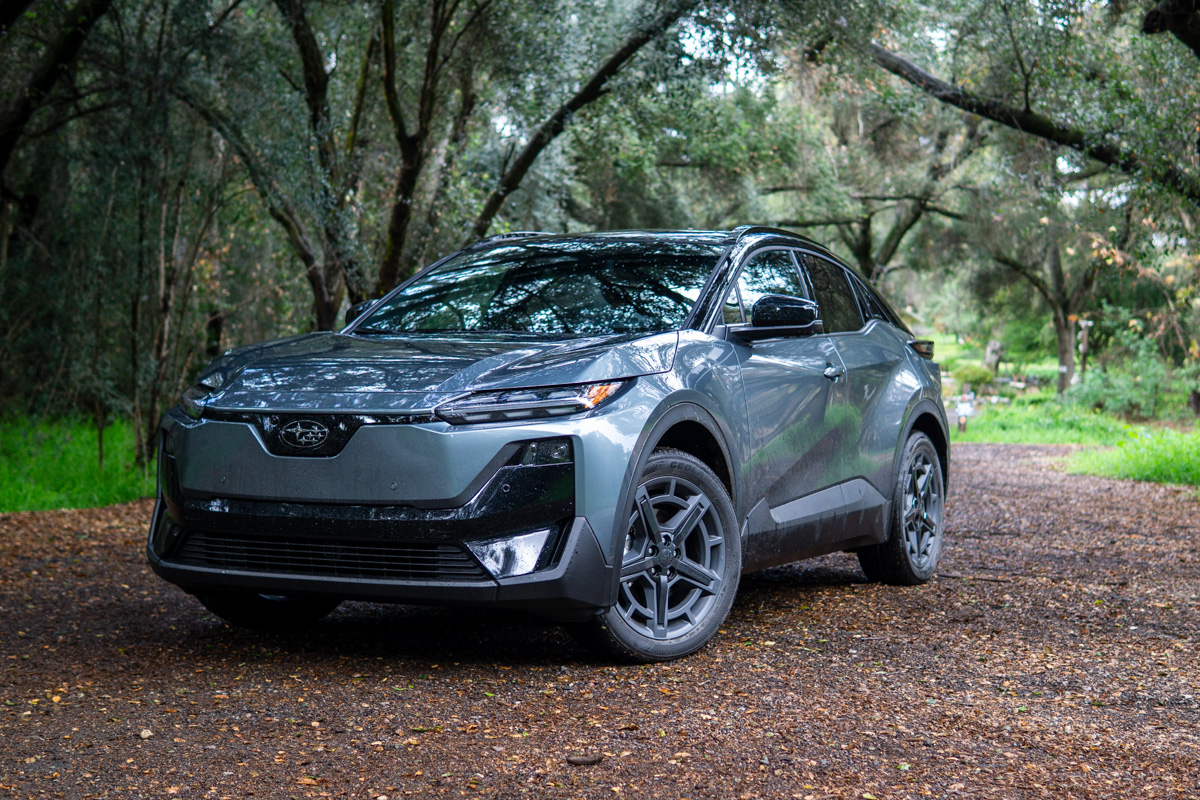
The Uncharted is the subcompact, city-friendly entry in Subaru's EV lineup. Where the Trailseeker channels electric Outback energy with roof rails and body cladding, the Uncharted goes for something sleeker: a fastback silhouette with a split roof spoiler, body-colour door handles, and an active grille shutter. At 4,515 millimetres long on a 2,750-millimetres wheelbase, it's nearly 18 centimetres shorter than the Solterra and a full 33 cm shorter than the Trailseeker, but it doesn't feel small in person.
The front end is dominated by a large illuminated six-star Subaru badge. The GT trim we tested wore 20-inch alloy wheels with a gunmetal finish and Coastal Wolf Gray Metallic paint. (Note the test vehicle is in U.S. specification and this exterior colour is not offered in Canada.) All told, the Uncharted has a sharp, put-together look. The 18-inch wheels on the base and LR trims are less visually exciting, hidden under full gloss-black covers. Five exterior colours are available, though only the GT trim level gets the two-tone roof.
Around back, wide-spaced SUBARU lettering stretches across the rear gate with Uncharted badging on the left and an AWD badge on the right (on Sport and GT models). The door-mounted rear handles are a design touch you don't see often, and they contribute to the clean side profile. The sloping roofline also looks great, though as we'll get to later, it does come at a cost to rear headroom and cargo space.
Inside, the cabin is well-assembled, if a bit more practical than luxurious. Soft-touch materials cover the upper door cards and the top of the dashboard, while harder plastics appear lower down on the doors and centre console. A bronze-orange trim strip runs the full width of the dashboard on Sport and GT models, adding some visual spark to the interior. The StarTex synthetic upholstery on Sport and GT trims strikes a good balance between soft and supportive, while the base and LR trims are fitted with cloth seats. The large centre console opens from both the left and right sides, and a lower storage bin is lined with carpet to keep loose items from rattling around. The door pockets, however, are hard plastic with no lining, so expect your sunglasses to announce every bump in the road.
The squared-off steering wheel is a quirky Subaru signature shared with the Trailseeker. It's there for a functional reason: the flat top keeps sightlines clear to the driver information display, which sits atop the dash rather than under a traditional hood. You get used to it quickly, and it adds to the Uncharted's slightly unconventional personality. In total, the Uncharted definitely doesn't feel luxurious, but it feels well built and well thought out. For a subcompact EV at this price, that's the right target.

Performance
Most Subaru Uncharted trims share the same 74.7-kilowatt-hour lithium-ion battery pack, while the base model’s battery measures 57.7 kWh. There is also a notable drivetrain split across the lineup. The base trim comes with FWD and a single electric motor producing 165 hp, while the LR trim bumps that to 221 hp with the same configuration and the larger battery. Yes, a FWD Subaru is as unusual as it sounds. Sport and GT trims, however, right the ship with dual-motor Symmetrical AWD plus a combined 338 hp, more than what’s offered in standard-fare AWD versions of the Hyundai Ioniq 5.
Manufacturer-estimated range sits at 399 kilometres for the base model, 496 km for the LR, and 438 km for the Sport and GT trims, which are heavier and ride on larger 20-inch wheels. No official figures from Natural Resources Canada are available as of this writing.
We tested the GT trim level, and the dual-motor setup delivers the goods. There’s the immediate, back-of-the-seat shove that has become a hallmark of electric vehicles, but the Subaru Uncharted pairs it with something many EVs in this class lack: excellent steering. The steering feel is direct, predictable, and linear. It's the kind of setup that makes the car feel smaller and more agile than it actually is. In a segment full of numb steering racks, this stands out.
The suspension is a four-wheel independent arrangement with MacPherson struts up front and a double wishbone in the rear. Subaru says they spent significant development time tuning the chassis for stability and grip on loose surfaces, and on the winding roads where we tested it, the payoff was obvious. The Uncharted feels nimble through corners, composed over mid-corner bumps, and confident under hard braking. The ride isn’t quite as settled as the longer-wheelbase Trailseeker, and you feel more of the road surface as a result. That’s a fair trade given one car is a practicality-focused wagon and the other is a fun sportback.
We observed 16.4 kilowatt-hours per 100 kilometres during our drive, which included a mix of spirited — very spirited — back-road driving and some highway cruising. That’s a respectable number given that we weren’t exactly hypermiling.
Sport and GT trims get Subaru’s X-Mode traction management system with Snow/Dirt and Deep Snow/Mud settings, along with Grip Control and Downhill Assist Control. Drive modes include Eco, Normal, and Power. The base and LR trim levels are limited to Eco and Snow modes. In Power mode, a hard launch from a stop produced mild wheel spin on wet pavement before the AWD system caught up, but the result was a roughly 5-second sprint to 100 km/h — and we weren’t pushing full throttle.
Regenerative braking is controlled through four modes via steering-wheel paddle switches. The strongest setting provides one-pedal-style deceleration without being overly aggressive, and toggling between modes becomes second nature after a while.
Charging is handled through a standard NACS port on the right fender, compatible with Tesla Superchargers and the broader NACS network. DC fast charging peaks at 150 kW, with Subaru claiming a 10-to-80-percent fill in approximately 28 minutes. A battery preconditioning system activates automatically when you route to a charger through the navigation system, or it can be triggered manually via the driver information screen. At home, an 11-kW onboard charger handles a full Level 2 charge in about seven hours.

Form & function
The Subaru Uncharted’s fastback roofline is one of its best visual assets, but it doesn’t do the car any favours in terms of everyday practicality. This is the smallest of Subaru’s three EVs, and the rear seat and cargo area reflect that.
Rear legroom measures 817 millimetres, which is adequate for average-height adults but tight for anyone taller. Your knees will have space, but foot room under the front seats is limited. Rear headroom measures 953 mm without the moonroof, dropping to 924 mm on the GT with its panoramic glass roof. If you’re feeling cramped, the sloping roofline is the culprit, and middle-seat passengers feel it the most. If you regularly carry adults in the back, the Trailseeker’s 897 mm of rear legroom and more upright roofline make a meaningful difference.
Cargo space behind the second row is 651 litres, while folding the seatbacks bring that figure to 1,685 litres. A power rear liftgate is standard on all trims but the base model, and the 60/40 split-folding rear seatback expands the capacity when needed. These aren’t class-leading numbers, and like with rear-seat space, if practicality is your focus Subaru has two other EVs that will better fit your bill.
Up front, the Uncharted is comfortable. Heated front seats are standard in Canada and paired with heated side mirrors. The LR, Sport, and GT trims add a heated steering wheel, while heated rear outboard seats are equipped on the Sport and GT. Dual-zone automatic climate control is standard across the board.
The Subaru Uncharted is not the EV you buy for maximum utility. Instead, test-drive this one knowing you’re trading some practicality for a striking design and excellent driving manners.

Technology
Every Subaru Uncharted comes standard with a 14-inch touchscreen running Subaru's multimedia system, which is built on Toyota's infotainment platform. If you've used a recent Toyota product, it will feel familiar. Wireless Apple CarPlay and Android Auto are standard, and the system is responsive enough that you won't find yourself jabbing at the screen waiting for it to catch up.
Below the touchscreen, physical knobs handle the climate controls and volume. That’s about it for physical controls, though. Most settings live in the touchscreen itself. The driver information display is a 7-inch LCD unit mounted on top of the dashboard rather than recessed behind the steering wheel. It's functional and easy to read, though it can feel modest next to the large centre screen beside it. There's no head-up display available on any trim.
Standard dual wireless charging pads sit side by side in the centre console, and USB-C ports are provided for both front and rear passengers. A digital key is standard on all trims with a Remote Connect subscription, which comes with a three-year trial and is a nice inclusion at this price point.
The GT trim adds a Harman Kardon 11-speaker sound system, which is a significant step up from the six-speaker base setup. There is no mid-tier audio upgrade between the two, so if sound quality matters to you, the GT is the only option. The GT also adds a digital rearview mirror with HomeLink.
Where the tech story gets complicated is with subscriptions. Subaru's Intelligent Assistant voice control, the cloud-based navigation system, Traffic Jam Assist, and low-speed hands-free driving all require an active Drive Connect subscription, and Subaru does not offer a trial period. If these features are important to you and you plan to own long-term, be sure to factor in the ongoing cost.

Safety
Subaru's EyeSight driver assistance suite comes standard on every Uncharted trim level, and the feature list is extensive. Pre-collision braking, emergency steering assist, intersection collision avoidance, lane departure prevention, lane change assist, advanced adaptive cruise control, emergency driving stop, road sign assist, and a distraction mitigation system are all included from the base trim. Blind-spot monitoring, rear cross-traffic alert, safe exit assist, and a parking support brake system with object and vehicle detection round out the standard equipment.
Eight airbags are standard, including driver and front passenger knee airbags, front seat side airbags, and side curtain airbags with a rollover sensor.
The GT trim builds on that foundation with a 360-degree surround-view monitor. Traffic jam assist and low-speed hands-free driving at speeds up to 40 km/h on supported roads are also available on all trims, though both features require an active Drive Connect subscription to function.
No Insurance Institute for Highway Safety (IIHS) or U.S. National Highway Traffic Safety Administration (NHTSA) crash test ratings are available for the 2026 Subaru Uncharted as of this writing. Subaru has historically performed well in IIHS testing across its lineup, but that track record alone isn't a substitute for actual test data on a new platform.
The battery is covered by an eight-year, 160,000-kilometre warranty.

Cost-effectiveness
In Canada, the 2026 Subaru Uncharted starts at $45,827 (including a $2,295 destination charge and other fees) for the base FWD, making it the least expensive EV in Subaru's lineup. The FWD LR trim is priced at $49,827, the Sport at $52,827, and the GT at $54,827. The base, LR, and Sport trims all having a before-fees MSRP of less than $50,000, which means they qualify for the federal government’s $5,000 rebate through the EVAP program. These trims also qualify for provincial and territorial rebate programs where they still exist.
The price on the FWD trims looks compelling on paper, but Subaru has said these will be produced in limited numbers. Most Canadian buyers will end up in a Sport. At $52,827, you get dual-motor AWD, 338 horsepower, StarTex upholstery, X-Mode, a heated steering wheel, and heated outboard rear seats while still having access to the $5,000 federal rebate.
The GT adds the Harman Kardon audio system, panoramic glass roof, ventilated front seats, 20-inch wheels, and a digital rearview mirror for $54,827. Factoring in the rebate, that amounts to a nearly $7,000 jump in price. Whether that’s worth it depends on how much you value the audio upgrade and the panoramic roof since the performance hardware is identical to the Sport.
In terms of running costs, the 74.7-kWh battery and 16.4 kWh/100 km observed efficiency make the Uncharted relatively inexpensive to fuel on electricity. Home charging on a Level 2 setup is the most cost-effective approach, and the 11-kW onboard charger's seven-hour full charge means overnight replenishment is straightforward.
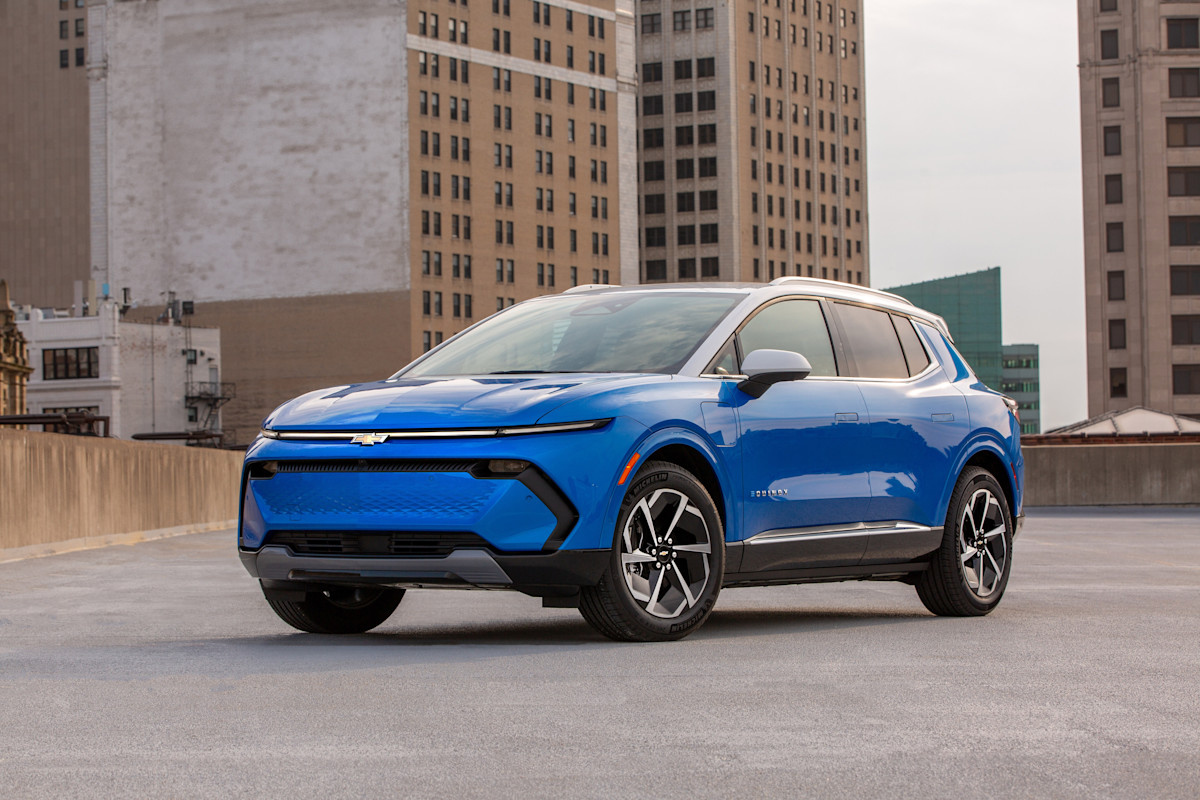
Cross-shopping at this price, the Chevy Equinox EV, Hyundai Kona EV, Kia Niro EV, and the Toyota C-HR (which shares a platform with the Uncharted) all compete for attention. It can feel like a niche player given its curious shape, but the Uncharted's driving dynamics still give it an edge over most of those competitors for shoppers who prioritize driving enjoyment over practicality.

What owners say
Trims & specs
Base MSRP N/A | Seating 5 |
Engine N/A | Cargo Capacity 651 L |
Combined MPG N/A | Drivetrain N/A |
Base MSRP N/A | Seating N/A |
Engine N/A | Cargo Capacity N/A |
Combined MPG N/A | Drivetrain N/A |
Base MSRP N/A | Seating 5 |
Engine N/A | Cargo Capacity 651 L |
Combined MPG N/A | Drivetrain N/A |
Base MSRP N/A | Seating N/A |
Engine N/A | Cargo Capacity N/A |
Combined MPG N/A | Drivetrain N/A |
Base MSRP N/A | Seating 5 |
Engine N/A | Cargo Capacity 651 L |
Combined MPG N/A | Drivetrain N/A |