2026 Toyota Grand Highlander Reviews, Pricing & Specs




Pros & cons
What we like
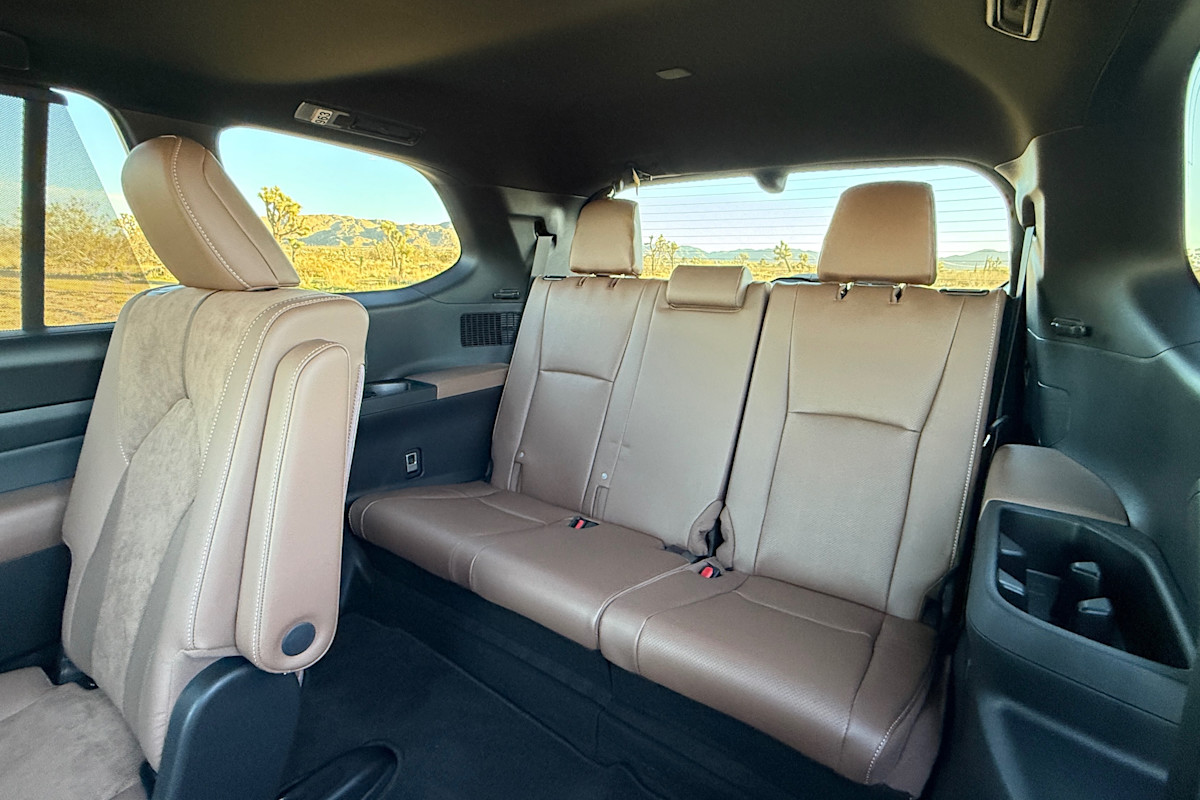
Spacious third row
Standard advanced safety features
Multiple powertrain options
What to consider
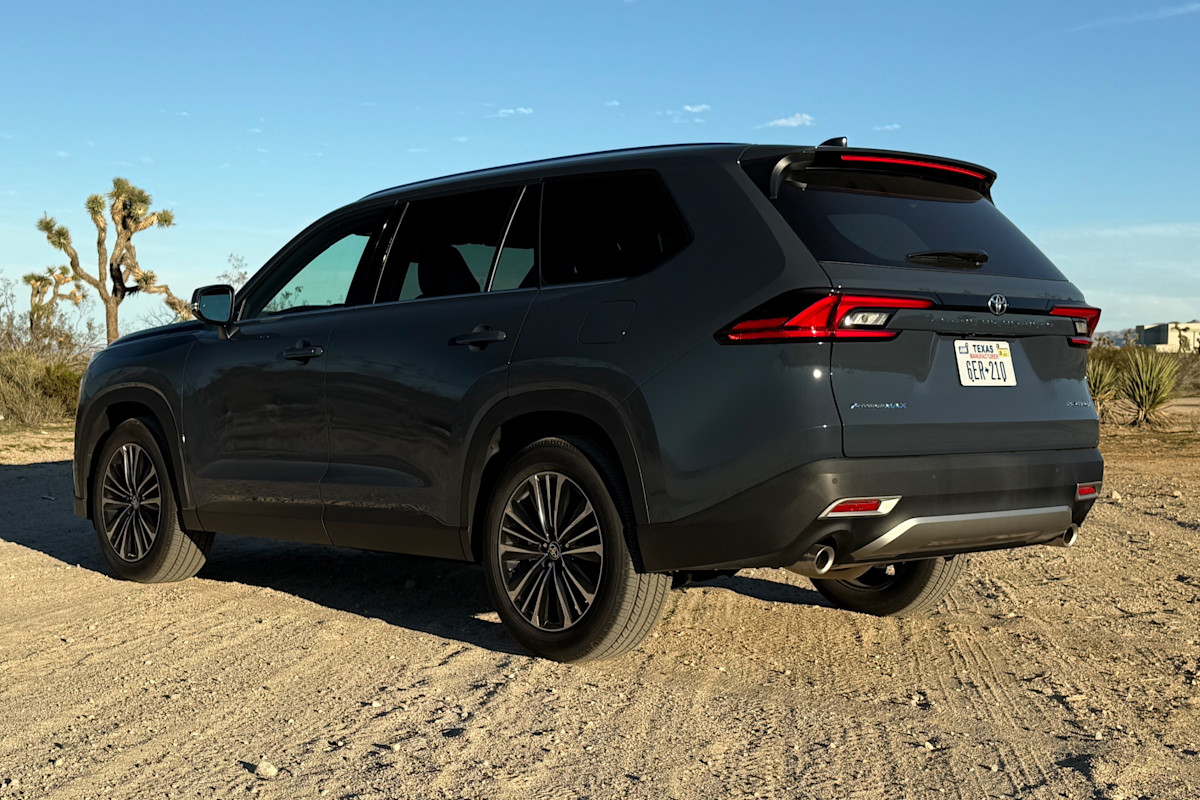
Uninspired styling
Some technology only available with a subscription
The CarGurus verdict
This three-row crossover SUV offers plenty of space and hybrid powertrain options.
Toyota offers a total of four SUVs with three rows of seats, so it might be tough to decide which one is right for you and your family. While the adventurous will likely gravitate to the 4Runner or Sequoia, those who frequent hockey games and the school pick-up line should stick to the Highlander or Grand Highlander. Both are excellent choices, but if you’ve got bigger kids with more gear, then the 2026 Toyota Grand Highlander belongs on your shortlist.
The Grand Highlander was introduced for the 2024 model year and enters 2026 unchanged. In addition to good fuel economy and lots of power, it provides plenty of space for cargo and people — even in the third row. However, the exterior styling feels stale and some of the infotainment features require a subscription.
Verdict: Despite a few small foibles, the 2026 Toyota Grand Highlander is perfect for active families who need a bit of extra space and comfort.
out of 10 expert review
Look & feel
The Grand Highlander comes in different trims depending on powertrain choice. In Canada, the standard non-hybrid powertrain comes in XLE and Limited trims, while the hybrid is offered in XLE, Limited and the more powerful Platinum Hybrid Max. For this test drive, we had the latter top spec.
The exterior styling isn’t much to write home about. The front fascia features a wide, flat-bottomed grille, the silhouette is boxy, and the style lines are minimal. XLE trims get 18-inch wheels, but the rest of the lineup is graced with 20-inch alloys.
While the base XLE trim and the gas-only Limited come standard with a second-row bench seat to accommodate eight folks total, the Limited Hybrid allows buyers to choose between the bench or captain’s chairs for no additional cost and the Platinum Hybrid Max comes with captain’s chairs by default.
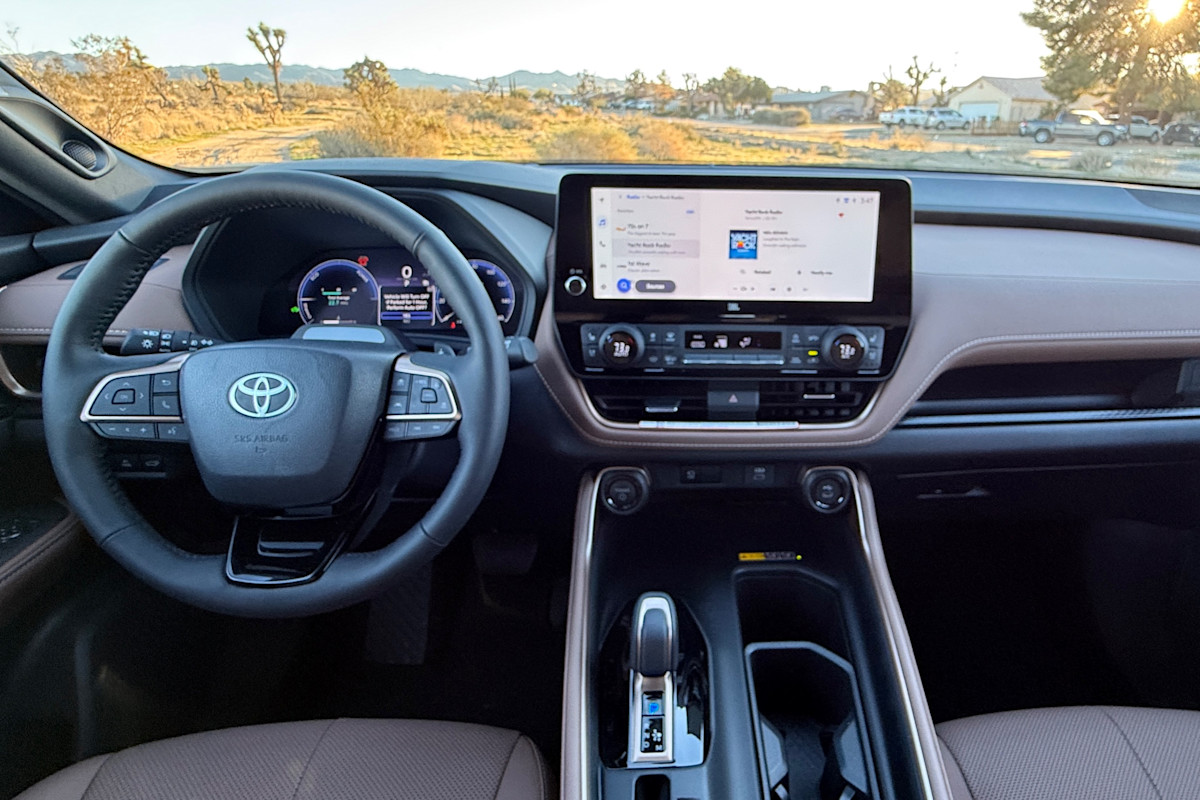
We found our Platinum Hybrid Max test vehicle’s brown interior more practical than alluring. Fake wood trim doesn’t help matters, but the seats are trimmed with leather and Ultrasuede, and there are some bronze accents scattered throughout the cabin. The materials are in line with the Grand Highlander’s price point. There isn’t anything too fancy, but it’s a nice place to spend a commute. With ambient lighting and a panoramic glass roof, the cabin feels light, airy, and spacious.
Performance
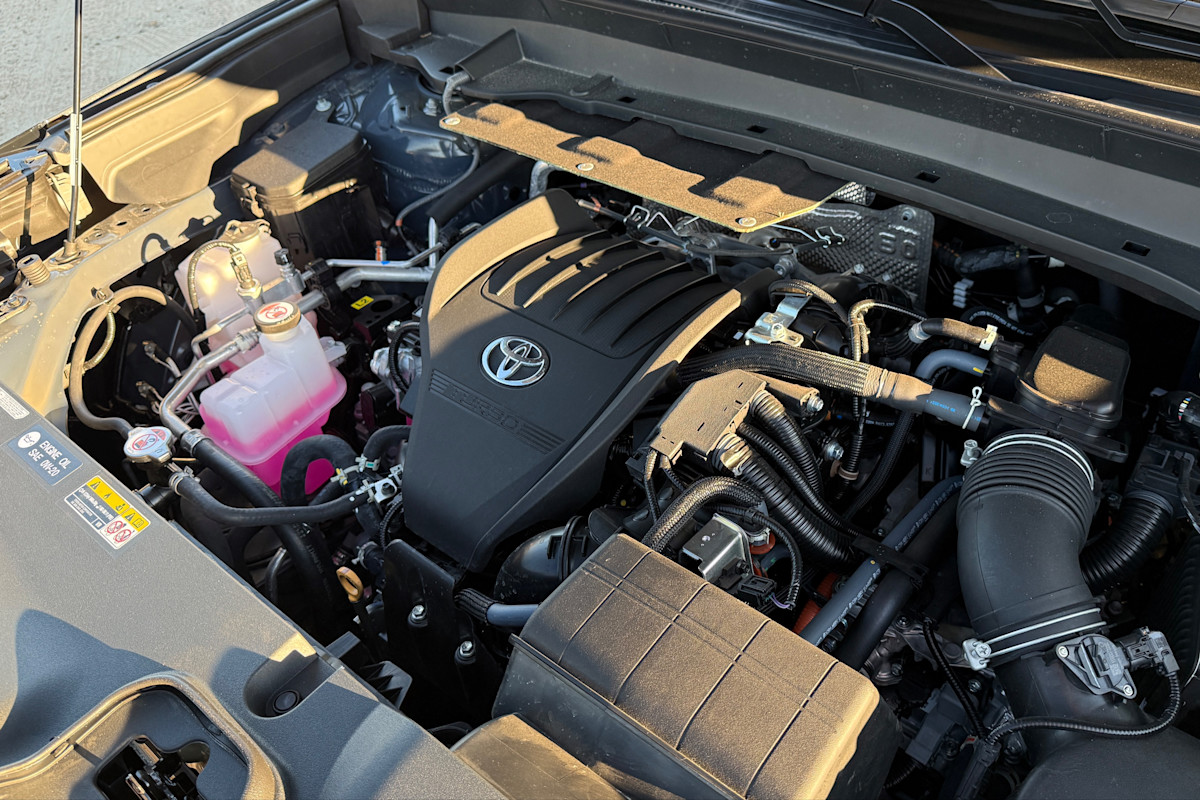
The non-hybrid Grand Highlander has a turbocharged 2.4-litre four-cylinder engine under the hood with 265 horsepower. The lower-level hybrid powertrain has a 2.5-litre inline-four but only produces 245 hp, while the Hybrid Max powertrain combines the 2.4-litre turbo-four with the hybrid system for 362 hp.
In Canada, all-wheel drive (AWD) is standard, but the AWD system is a bit different for each powertrain. The non-hybrid Grand Highlander uses a conventional driveshaft to send power to the rear wheels, while the hybrid has a dedicated electric motor at the rear axle. Both default to FWD unless extra traction is needed. The Hybrid Max has full-time AWD, which Toyota says provides straight-line stability and agility in corners.
And sure, the Hybrid Max can handle a turn or two, but it’s not a performance vehicle. The Sport drive mode produces no discernible differences in throttle or transmission responses, although the Grand Highlander does accelerate quickly and the brakes feel firm and confident. Folks who enjoy driving might find the steering a bit too light, but it makes for easy cruising.
Our Hybrid Max tester came with Toyota’s Multi-Terrain Select system with settings for mud and sand, rock and dirt, and snow. These settings change up the AWD system for maximum traction, but with all-season tires and large overhangs, we don’t recommend going too far from civilization. If you need three rows in an off-roader, get the Sequoia.
Form & function
Every trim level gets three-zone climate control with physical buttons and knobs to select temperature and air flow. In Canada, heated front seats and a heated steering wheel are standard, while upper trims get heated and ventilated front and outboard second row seats. The third row is remarkably spacious with roughly 15 centimetres more legroom than the standard Highlander. Sitting back there for longer periods will be easy, even for those approaching six feet tall.
Those with kids will find it easy to install a rear-facing car seat in the second row, and some trims get retractable window shades to keep the sun off the precious cargo. Parents will also find two sets of anchors in the third row (they can often be difficult to find, but Toyota makes it simple). Plus, the third row is easy to access thanks to the substantial adjustability of the second row.
We love the inclusion of a storage shelf built right into the dash for the front-seat passenger, and the cubby in front of the shifter is a great spot for keys and wallets. There are two standard-size cupholders and one that can accommodate a giant gas-station soda. In the Platinum Hybrid Max, second-row passengers get a removable centre console along with large door pockets and sturdy cup holders. Even the third row is treated to individual cup holders and storage with plenty of room for tablets, phones, and the like.
When you’re not hauling people, you can haul plenty of cargo. The 586 litres of space behind the third row expands to 1,640 litres when the rear seats are folded and 2,761 litres when the second row is stowed. Access is via a power liftgate on all trims, and you can activate it with your foot on upper trims.
If you have any weekend toys that need to be transported to the campsite or the lake, then you’ll want to look at the gas or Hybrid Max powertrains as both can tow up to 2,268 kilograms (5,000 pounds) when properly equipped. The standard hybrid is only rated for 1,587 kilograms (3,500 pounds).

Technology
All trims get a 12.3-inch infotainment screen as well as wireless Apple CarPlay and Android Auto, and we found it easy to connect our phone. The screen’s graphics are sharp, and the infotainment system responds to inputs quickly. Some menus can be a bit confusing, but it’s generally easy to use. However, keep in mind that voice assistant, navigation, and the ability to use your phone in lieu of a key are part of a subscription service. A 7-inch digital gauge cluster is the default, but higher trims come with a customizable 12.3-inch digital instrument cluster.
Our Grand Highlander Platinum Hybrid Max tester also came with the available digital rearview camera mirror. This is a great feature for larger vehicles as it gives a wide-angle display of what’s happening at the rear of the car without any headrests or cargo getting in the way. It’s easy to switch to the standard mirror if you need a quick glance at the little ones in the third row. However, there isn’t any kind of voice amplifier system like Honda’s Cabin Talk, so be prepared to raise your voice to communicate with the last row.
Also included on the top Platinum Hybrid Max is an excellent 360-degree camera system. Not only is it crisp and clear, but it features a see-through bird’s-eye view of the vehicle when backing up. If you’re worried about running over toys left in the driveway or other obstacles, this feature is a welcome relief.
Finally, top trims also get a 10-inch head-up display that shows speed, road signs, and navigation. It adjusts to your eyeline with a few button-presses and is bright enough to see even while wearing polarized sunglasses.
Every trim gets seven USB-C ports and two 12-volt outlets plus a wireless charging pad in the front. The Limited trim with the non-hybrid powertrain gets one 120-volt outlet, while the Limited Hybrid and the Platinum Hybrid Max get one with an output of 1,500 watts.

Safety
Every Grand Highlander gets the Toyota Safety Sense 3.0 suite of driving aids, which includes automatic emergency braking with pedestrian detection, lane departure warning, lane tracing assist, automatic high beams, adaptive cruise control, and Proactive Driving Assist, which provides gentle control inputs to help the driver avoid obstacles. For some reason, a blind spot monitor with rear cross-traffic alert and safe exit assist is not officially part of Toyota Safety Sense 3.0 but is standard across all trims.
Traffic jam assist is only offered on the top Platinum Hybrid Max trim. This operates the gas, steering, and brakes at speeds below 40 km/h and is a godsend during busy commutes. You still need to pay attention to the road, but it definitely takes some of the stress out of bumper-to-bumper driving.
However, Proactive Driving Assist is best turned off. This system is meant to provide slight assistance with braking and steering, but it’s just too non-committal for us. We’d prefer the car to either completely take over duties — with driver supervision — or not intervene at all. This feature lies somewhere in the middle. No, thanks.
The U.S. National Highway Traffic Safety Administration (NHTSA) gives the 2026 Toyota Grand Highlander an overall safety rating of five out of five stars. The Insurance Institute for Highway Safety (IIHS) rates the Grand Highlander with mostly top “Good” scores across the board, except for a mid score of “Acceptable” for headlights and the small overlap front crash test.
Cost-effectiveness
If fuel economy is your biggest concern, you’ll want to stick with the standard hybrid powertrain. The hybrid is rated by Natural Resources Canada at 7.0 litres per 100 kilometres combined, a very impressive number for the class. The regular gas engine looks like a guzzler by comparison at 10.0 L/100 km combined in XLE trim and 10.7 L/100 km combined in Limited. Our turbo Platinum Hybrid Max tester fares slightly better than the non-hybrid, returning an estimated 8.8 L/100 km combined. During our time with the car, we managed 9.2 L/100 km with plenty of highway klicks.
Every Grand Highlander comes with a three-year/60,000-kilometre limited warranty and a five-year/100,000-kilometre powertrain warranty. Hybrid components are warrantied for eight years or 160,000 kilometres, while the battery itself gets a 10-year/240,000-kilometre guarantee. Roadside assistance is included for three years with no kilometre limit.
Pricing starts at $55,257 (including Toyota Canada’s $1,930 destination charge and other fees) for a base Grand Highlander XLE with the non-hybrid powertrain. The XLE Hybrid starts at $58,657 including fees. The Limited starts at $62,392 for the gas-only powertrain and $65,992 for the hybrid. Our Platinum Hybrid Max tester costs $70,252, including destination.
The XLE or Limited hybrid models represent the best value. While the Platinum’s extras are nice, the standard hybrid models have better fuel economy.
You won’t find a ton of midsize, three-row hybrid crossovers, but the new Hyundai Palisade Hybrid is a strong contender. It starts at $63,546 and comes with standard heated and ventilated front and outboard second-row seats and an in-car intercom — and it averages 8.1 L/100 km combined. It’s down on power a bit compared with the Grand Highlander Hybrid Max, but at 329 ponies, it bests the 245 hp available from the standard Grand Highlander hybrid. If you’re only interested in a gas engine, a non-electrified Palisade starts at $56,746.
If you’re looking for some all-electric range, then the Mazda CX-90 plug-in hybrid starts at $57,346. Not only is it a well-appointed three-row SUV, but it can cover up to 43 kilometres in EV mode and boasts Mazda’s excellent handling dynamics.
It’s tough to find anything negative to say about the 2026 Toyota Grand Highlander. Sure, we wish it were a bit more stylish and some of the technology is subscription-only. But on the whole, it’s a well-rounded, roomy SUV for families that need space, security and comfort.
What owners say
Trims & specs
Base MSRP N/A | Seating 7 |
Engine 2.4L 265 hp I4 | Cargo Capacity 583 L |
Combined MPG 23 | Drivetrain AWD |
Base MSRP N/A | Seating 8 |
Engine 2.4L 265 hp I4 | Cargo Capacity 583 L |
Combined MPG 24 | Drivetrain AWD |
Base MSRP N/A | Seating 8 |
Engine 2.4L 265 hp I4 | Cargo Capacity 583 L |
Combined MPG 24 | Drivetrain FWD |
Base MSRP N/A | Seating 8 |
Engine 2.4L 265 hp I4 | Cargo Capacity 583 L |
Combined MPG 23 | Drivetrain AWD |
Base MSRP N/A | Seating 8 |
Engine 2.4L 265 hp I4 | Cargo Capacity 583 L |
Combined MPG 24 | Drivetrain FWD |
Base MSRP N/A | Seating 8 |
Engine 2.4L 265 hp I4 | Cargo Capacity 583 L |
Combined MPG 24 | Drivetrain AWD |
Base MSRP N/A | Seating 8 |
Engine 2.4L 265 hp I4 | Cargo Capacity 583 L |
Combined MPG 24 | Drivetrain FWD |


Pricing trends
Current avg. market price
$62,035
Trending down by 2.1% this month
June 2026 - November 2026